• Skip to main content
  • Skip to header right navigation
  • Skip to after header navigation
  • Skip to site footer
MyZA

MyZA

News, Directory, Events and Other Stuff

  • Social Media
  • Sport
  • World News
  • Home
  • Submit News
  • Directory
  • Events
  • Stratlec
  • TFSA
  • News
    • APO
    • Today’s Sport News
    • Todays Social Media and Tech Headlines
    • Today’s World News
    • Today’s SA Financial News
  • Contact
You are here: Home / Archives for mining

mining

19 April 2024

Kubayi talks tough on lawlessness and poor-performing contractors

Location: News

Kubayi talks tough on lawlessness and poor-performing contractors

The days of contractors abandoning government housing projects are over and people invading private properties must come to an end.

This was the warning from Human Settlements Minister, Mmamoloko Kubayi, during a recent community engagement and hand over of title deeds at the Dan Tloome Mega Human Settlements Project in Johannesburg.

Kubayi’s tough stance on lawlessness followed as the qualifying beneficiaries complained about not being allocated houses, while their houses are being invaded. 

“We are acting against invaders of private properties. Please do us a favour and move out of a house or property that does not belong to you,” Kubayi told illegal occupants.

Regarding the projects that have not been completed on time, Kubayi warned contractors that the days of not completing work on time and within budget are over, saying it has cost the government millions with already limited resources “thus denying people of their constitutional rights of access to adequate housing”.

“My appeal to all contractors is please help us to hand over finished houses to beneficiaries [and] if you are subcontracting, please do the work. My mandate is to deliver a finished house,” Kubayi said.

While this development is a step in the right direction, Kubayi was adamant that there should not even be a single project that is delayed or blocked due to contractors not honouring their contractual obligations.

Gauteng Human Settlements and Infrastructure Development MEC, Lebogang Maile, issued a stern warning to poor-performing contractors, saying their actions work against government’s commitment to provide housing for the poor.

“We cannot have a contractor that fails to deliver and still be kept onsite. The resources we use belong to the people and must be used for their benefits, nothing else,” Maile said.

Before the community engagement where title deeds were issued to several beneficiaries, Kubayi, Maile and the City of Johannesburg Mayor, Kabelo Gwamanda, launched two social housing projects, named the Ekhaya Gardens and Fochville Social Housing.

Ekhaya Gardens has a total of 333 units and is close to Roodepoort Central Business District, while the Fochville Social Housing, with a capacity of 258 units, is strategically placed within the mining and industrial sectors of the greater West Rand Municipality.

The two social housing projects will provide much-needed decent and affordable rental accommodation to people earning between R1 850 and R22 000 per month. 

The launch comes a few days after the successful launch of Townlands in Tshwane, the current largest social housing project in the country with 1 200 units.

Between 2019 and 2024, the Department of Human Settlements through its agency, the Social Housing Regulatory Authority (SHRA), has managed to deliver over 13 000 units resulting in close to 50 000 rental and affordable units delivered over the years. – SAnews.gov.za


GabiK
Fri, 04/19/2024 - 11:22

497 views
Read moreKubayi talks tough on lawlessness and poor-performing contractors
16 April 2024

Fintechs should develop products that address the exact needs of their customers (By Mike Cook)

Location: News
Mukuru

By Mike Cook, Mukuru Head of Wallet and VAS; Lorraine Nyawo, Mukuru Head of Product Domain: Financial Services (www.Mukuru.com)​.

All around the world businesses are pulling out the stops to achieve growth in what can best be described as challenging economic conditions. Africa is no exception. The continent has long been recognised for its immense potential, and as such businesses across sectors are investing heavily into the continent. Advancements in technology make serving the unbanked and underserved populations in Africa more viable than ever before. However, that does not mean growth comes easily. It is a hyper competitive and complex environment where genuinely understanding your customer is key to growth.

Even with this textbook understanding, there is a strong urge to take the “build it and they will come” approach because we can get caught up in our own technology and view problems from our frame of reference while ignoring the customer. This is typified in the African market where we see multiple shiny apps being dropped across markets with massive investments behind them only to be followed by a scaling down of operations as customer uptake and usage have not met expectations.

Instead, leading fintechs that show consistent growth have a deep understanding of their customers' needs and then constantly listen to their customers. Having a deep understanding of customer needs results in innovative solutions. But that is only half of what you need. Listening to customers as you build those solutions is what guarantees market adoption and success. It also allows you to discover further unmet needs. Without listening you fall into the trap of building it and hoping customers will come.

The point here is that you need to listen to customers that are already talking to you. Yes, A fintech can listen directly to its customers in the form of focus groups or formal surveys where customers can engage and tell it directly and clearly what they don't like, what they do, and what they want. But in a fast-paced environment it is not always possible to engage in traditional research to uncover what your customers are saying. More importantly, businesses need to develop the capacity to use existing touch points where customers are already talking to them to gather the insights needed for successful product development.

Social media is a massively useful tool for this. If a business is using its social media only as a marketing or customer service tool it is missing the boat. By mining the comments coming through social media channels, including positive and negative feedback, businesses have a treasure trove of data on their customers' voice.

Internal support tickets are another avenue. Whether customers are emailing, submitting comments through various platforms or calling into a contact centre, they are telling you about their problems. Often, this information starts and stops with frontline staff. Fintechs, or any businesses, need to have the right processes to gather that information effectively and feed it up to the product development team.

Of course, it is great when customers explicitly tell you what they want or need through these channels but regardless of what they say, every interaction can implicitly give you direction. For example, if customers continue to complain about something, they may not be telling you what to do or what to change, but they are telling you that your current solution is not working. An effective business must address those problems because that's how to genuinely serve customers.

Of course, listening is only worth anything if you do something about it. The amount of data and insights being mined can become overwhelming and so businesses need a quick way of scoring opportunities. It is impossible to have all possible information to calculate the most accurate return on investment. Rather, the business needs a quick, effectively designed scoring system or process that can help decision-makers weigh up revenue opportunities and customer service opportunities.

The team needs to balance these opportunities based on the business's long-term strategy and on what the most pressing need is for customers. This is important because in a highly competitive world, customer retention is golden. Beyond this, an effective scoring system keeps the development roadmap full.

Beyond scoring, prioritising opportunities is also influenced by where a business is in its development cycle, which development teams have immediate capacity, and which of the top opportunities can fit into the development roadmap immediately. Certainly, from an innovative fintech's perspective, the goal should be to get a Minimum Viable Product (MVP) out of the gates as quickly as possible as opposed to chasing the Rolls Royce solution at the outset. This is critical if the fintech wishes to be agile and relevant as opposed to producing one shiny, state-of-the-art product a year with no real knowledge of how customers will react to it.

One of the most important ways a fintech can listen to its customers is to gauge how they engage with its products. By using agile methods and principles, and building iteratively — from getting an MVP into testing and then exposed to the market, all the way through phase two and three development — a successful fintech is able to use its tight feedback loops to continually listen to customers. This way the product's development is influenced by the needs of the customer all through its development, meaning the product is effectively serving needs and not just being pushed into the market.

A customer may not understand or use a product the way it was designed — this is incredibly useful information during development phases. Mukuru develops with a finger on the pulse of feedback loops because developing products for the unbanked is not the same as developing products out of Silicon Valley: Solutions don't yet exist and they need to be built from scratch.

Of course, not all resources can go into new features and a portion of development should go into maintenance and support for live products — after all, the brand promise must be kept. It's a balancing act that each company must manage.

This is how fintechs such as Mukuru evolve into next-generation digital financial services providers. The brand promise is pinned on growing diverse products on the same platform, using the same payment rails and methods that customers have used and grown to trust.

This is, at its core, financial inclusion because it takes the unbanked and underserved on a journey from remittances, to wallets, to the ability to purchase online goods and services, to credit, funeral cover and more. None of this is possible without developing products based on the exact needs of your customer base.

Distributed by APO Group on behalf of Mukuru.

About Mukuru:
Mukuru is a leading next generation financial services platform in Southern Africa that offers affordable and reliable financial services to a customer base of over 13 million across Africa, Asia and Europe.

With over 100 million transactions to date, our core was built providing international money transfers and from this base, we've developed a set of services to address the broader financial needs of our customers. We now operate in over 50 countries and across over 300 remittance corridors.

We are a business that puts the customer at the centre of everything we do, and for that reason, we serve clients across physical and digital channels, by various payment methods (cash, card, wallet) as well as a range of engagement platforms including WhatsApp, USSD, contact centre, App, website, agents and a branch and booth network.

Mukuru has, for the fourth consecutive year, been listed as one of the top 100 Cross Border Payments businesses in the world in the 2023 FXC Intelligence Top 100 Cross-Border Payment Companies (https://apo-opa.co/48HwI0k), one of only six African companies to receive this accolade.

In April 2023, Mukuru officially ranked sixth on the 2023 LinkedIn Top Companies List in South Africa.

Mukuru was celebrated for innovation and excellence at the 2023 Africa Tech Festival Awards, receiving the Fintech Innovation of the Year Award - an acknowledgment of the transformative power of financial technology in driving economic growth, financial inclusion, and digital transformation.

Further information can be found at https://www.Mukuru.com.

Media files
Mukuru
Download logo
Read moreFintechs should develop products that address the exact needs of their customers (By Mike Cook)
15 April 2024

Efficiency and Reliability: Pumping and Wastewater Solutions

Location: MyPR

In the realm of industrial processes and municipal infrastructure, efficient handling of fluids and wastewater is essential for smooth operations and environmental sustainability. From transferring fluids to managing sewage, a reliable pumping system is the backbone of these applications. Let’s explore the diverse range of pumping solutions, from centrifugal pumps to sewage pumps, and understand …

Read moreEfficiency and Reliability: Pumping and Wastewater Solutions
12 April 2024

Mineware Consulting attend Mining Health & Safety Conference in Ontario

Location: MyPR

Mineware Consulting, a leading provider of operational software solutions for the local and international mining industry, will be attending the Mining Health & Safety Conference in Ontario, taking place on April 16th to 18th, 2024. With a gathering of approximately 300 attendees annually, the conference serves as a pivotal platform for learning and sharing insights …

Read moreMineware Consulting attend Mining Health & Safety Conference in Ontario
12 April 2024

Alexkor vs Creecy in environment court battle

Location: News

The state mining company is challenging an environmental compliance notice

Read moreAlexkor vs Creecy in environment court battle
11 April 2024

Massification of skills development and job creation programmes to combat unemployment

Location: News

Massification of skills development and job creation programmes to combat unemployment

By Minister Thulas Nxesi

I believe that we can all agree that, at the end of the day, a decisive reduction in the unacceptably high level of unemployment is dependent on higher economic growth resulting in more jobs. This process is led by business investing in the private sector with resultant economic development and rising employment.

Nonetheless, as the President has argued, government as the largest employer in the country and a large-scale procurer of goods and services, has a major role to play both to create an environment conducive to investment, growth and development, but also to directly mitigate the impact of unemployment through social protection measures, demand-led training, targeted job creation and preservation.

To this end government, has strived to strengthen and expand its programmes for skills development and job creation, particularly in respect of the youth, seeking to mobilise and coordinate resources across government. In so doing, government has also sought to deepen and increase the areas of cooperation with the private sector. Initially focused on the strategic areas of energy security, port and inland logistics, and crime and corruption, cooperation has been expanded to include issues of skills and employment.

Which brings us to the expanded roll-out of government jobs and skills projects. First, I need to flag that this orientation and vision has a very long pedigree. Indeed, it is captured in the National Development Plan 2030 adopted in 2011. The earlier example of the Expanded Public Works Programme has been in existence for over two decades, and is utilised by local governments of all political persuasions.

So the present roll out of UIF Labour Activation Programmes (LAP) which started on April 6th in Gauteng – in tandem with the provincial Nasi Ispani Project - is part of this long tradition, expanded now to pool resources across departments and provinces, and in partnership with the private sector.

Following the 2019 elections, the mandate of the old Labour Department was expanded to become the Department of Employment and Labour. The reconfiguring of the Department to reflect the mandate has been taking place ever since. Part of this process is to leverage the existing resources of the Department for job creation and preservation. The Labour Department had long been involved in skills training of the unemployed. One of the things we did after 2019 was to re-orientate training towards in-demand and scarce skills with the guarantee of a job at the end of the programme, replacing the previous training for training’s sake mentality. Another critical part of the reconfiguration of the Department was to undertake a structural architecture review of the funds – the UIF and Compensation Fund – carried out by an independent analyst, and with the express purpose of greatly strengthening client service and ensuring necessary financial controls, systems, governance, accountability, risk and compliance mechanisms are in place.

I need to say more about the central role of the UIF in the work of the Department. The UIF is best known for paying out unemployment and maternity benefits, drawing on the contributions of employers and employees, but, in fact the UIF Act gives it a much larger mandate to mitigate unemployment, and includes funding:

  • Job preservation in the form of the temporary employer/employee relief scheme (TERS) – administered by the CCMA enabling distressed companies to continue to pay their employees, and the business turnaround and recovery programme run by Productivity South Africa;
  • training of the unemployed for employment (now anchored on a demand-led approach, with jobs at the end of it);

And job creation through:

  • supporting enterprise development and entrepreneurship; and
  • economic growth and job creation through investment of the reserves of UIF and the CF.

It was in furtherance of this mandate that the UIF established the LAP, where these kind of programmes have been running since before 2019, and will continue after the 2024 election. (The bizarre claim that the current LAP projects are a ‘rip off’ of the irregular Thuja proposal is historically inaccurate.) The decision of government to ‘massify skills development and job creation’ in response to persistent high levels of unemployment and sluggish growth utilises the LAP platform – expanded to pool resources across departments and entities, and to partner with the private sector. The funding model for the current expanded LAP provides a sliding scale of funding support for programmes with 70% of partners contributing, and a maximum 30% would being non-contributors (i.e. receiving 100% UIF/LAP funding), together with projects across government departments and entities on a rand-for-rand funding basis, for example including working with the IDC and the Department of Basic Education to recruit and pay salaries for Teacher Assistants designed to employ 200,000 unemployed graduates (part of the Presidential Youth Employment Stimulus programme).

The current expanded LAP ‘Training for Employment and Entrepreneurship’ programme sets ambitious targets: 2 million opportunities over three years, consisting of jobs preserved and created; demand-led skills training and entrepreneurial opportunities. Currently, 333 projects have been recommended for implementation across every province, with planned some 704,000 beneficiaries. Some 55,000 opportunities were announced for Gauteng on 6th April with the launch of the Nasi Ispani Project, supported and jointly funded by the LAP across 24 sectors: Agriculture, Services, IT, Construction, Engineering, Wholesale and retail, safety and security, hospitality, social services, textile, transport, furniture manufacturing; education, energy, food and beverage, health and wellness, aviation, insurance, jewellery, hygiene, arts and culture, and financial sector. The partnering with the Gauteng provincial government seeks to ensure that government maximises the impact of its spending by pooling resources and eliminating duplication.

I also need to flag that the LAP projects have been – or still are to be - subject to meticulous quality assurance processes to ensure:

  • they are compliant – with policy and legislation;
  • all necessary controls are in place;
  • there is capacity and necessary resources in place,
  • and that these programmes produce real outcomes in terms of jobs and entrepreneurial prospects.

Labour activation programmes are not a silver bullet to end the challenge of unemployment, but they are a viable force-multiplier that can be used together with other initiatives and interventions as part of a response to mitigate unemployment. 

The sectors and industries that will contribute significantly to the creation of these opportunities include economically growing and in-demand sectors such as agriculture, ICT, construction, engineering, manufacturing, education, transport and mining. 

An initial amount of R15 billion has been budgeted for the expanded LAP roll-out, eventually rising to R23.8 billion funding permitting. Opportunities will run between 12 and 36 months. The money invested in the plan will be recouped by the UIF through contributions and revenue generated from investments, as has been in the past sustainability model of the Fund.

There is this saying that: “the proof is in the pudding.” The UIF has proven that it is capable of taking strategic measures when required – such as the Covid-TERS benefits – distributing R64 billion to 5 million laid off workers and their families during the pandemic – whilst remaining financially sound.

The official national launch of the expanded LAP programme takes place in KZN on 16th April with a progressive roll-out of projects province by province, district by district culminating in the Northern Cape on the 9th May to coincide with the Presidential Imbizo in Kimberly.

Details of other launches and the impact to be derived from these projects will be communicated on an ongoing basis. This demonstrates our serious commitment to creating opportunities for our people, and to embed these processes and programmes into the future.

*Thulas Nxesi is the Minister of Employment and Labour.*

Neo
Thu, 04/11/2024 - 11:26

350 views
Read moreMassification of skills development and job creation programmes to combat unemployment
11 April 2024

Growth of artisanal and small-scale miners key to transformation

Location: News

Growth of artisanal and small-scale miners key to transformation

Mineral Resources and Energy Deputy Minister, Dr Nobuhle Nkabane, has assured artisanal and small scale miners that government will continue to provide support and assistance to facilitate their growth in the mining sector.

The Deputy Minister was delivering a keynote address at the inaugural Artisanal Small-Scale Miners and Emerging Miners Symposium hosted by Mintek in Randburg on Thursday.

“As part of government’s efforts to grow a globally competitive and transformed mining sector, the department…introduced the artisanal and small-scale mining policy in 2002. At the core of this mining policy is the need for all stakeholders to collaborate and work together on the training and development of artisanal and small-scale miners to mine the marginal deposits that are considered less valuable by large mining companies.

“As part of DMRE’s [Department of Mineral Resources and Energy] efforts aimed at facilitating and opening up funding opportunities for these miners, in January this year, the department published an invitation for artisanal miners and small-scale miners to apply for the funding designated to assist with financial provision for rehabilitation and capital equipment,” she said.

Some 21 companies have been shortlisted to receive funding and added to that, the department has launched a R400 million exploration fund to assist in exploration and discoveries and increase junior miners, amongst others.

She emphasised that it is the duty of the industry and organisations like Mintek (South Africa’s mineral research and technology organisation) and government to ensure that the mining sector is transformed.

“All of us here should ask ourselves what legacy are we going to leave. If we don’t want to be part of transforming the sector, who else is going to do that because we are given that responsibility of transforming the sector.

“How are we going to do it? We must support small scale and artisanal miners. It should not be the responsibility of a single person; it should be our responsibility. The fact of the matter is that our current development will be spearheaded by [Small, Medium and Micro Enterprises] including the artisanal and small-scale miners,” she said. – SAnews.gov.za

NeoB
Thu, 04/11/2024 - 12:16

115 views
Read moreGrowth of artisanal and small-scale miners key to transformation
7 April 2024

SAPS makes strides in crime fighting operations

Location: News

SAPS makes strides in crime fighting operations

Police Minister Bheki Cele says combating crime through decisive police action and robust community involvement remains at the heart of policing in the country.

“We all can agree that crime is [at unacceptable] levels and communities have called on the SAPS [South African Police Service] to respond to their crime concerns,” Cele said.

Addressing media on the Police Take Down Successes of Police Counter Operations in Pretoria on Sunday, Cele said in the past few of days, SAPS has intercepted armed and dangerous gangs, who have left a reign of terror and fear in their wake.

“A group of 11 youngsters terrorising the community of Mariannhill in KwaZulu- Natal was intercepted, and nine were shot and killed during the arrest,” Cele said.

Cele said over 20 would-be cash-in-transit (CIT) robbers in Witbank, Mpumalanga, were also stopped in their tracks through coordinated responses by the police and private security.

“Five of the suspects were killed during gunfire exchange with police in their attempt to evade arrest. Eight of CIT robbers were arrested and another nine managed to escape.

“There is no doubt that these criminals and many others are ruthless and arrogant. Their actions demonstrate that they will eliminate anything and anyone that stands in their way.

“Criminals have waged a war on communities and are so brazen, they are testing the authority of the State by attacking police officers,” Cele said.

Cele said police remain unapologetic in their aggressive and decisive response to crime.

“This Ministry remains in full support of police work that results in safer communities. We will forever welcome the arrest of criminals and for them to have their day in court.

“But criminals are warned that if they engage the police instead of surrendering themselves; they will come out short.

“We are clear police will continue to protect communities and push back hard on criminality. Not on our watch will we allow criminals to walk all over communities and certainly not the country’s law enforcement,” Cele said.

Cele said the SAPS Crime Intelligence Division has been rejuvenated and bolstered to identify and infiltrate syndicates.

He said intervention units and tactical response teams of the SAPS continue to be capacitated.

“The Directorate for Priority Crimes Investigations and overall detection of organised crime is sharper than ever. The combination of all these policing services is decisively responding to crime especially to violent and serious crime.

“Without an ounce of hesitation, officers on the ground will protect their lives and preserve the lives of innocent community members when the need arises,” Cele said.

He said takedowns by the police are not isolated and are not coincidental.

“They are as a direct result of reliable and strong intelligence coupled by sharp tactical readiness of police units who are trained to neutralise any threat and protect lives,” he said.

According to Cele, from April 2023 to date, 1 171 intelligence-led takedowns were conducted by the SAPS.

To date, 3 749 suspects have been apprehended during intelligence-led takedowns. These include 173 for murder, 57 for extortion and kidnapping, 164 for property-related crimes and 269 for vehicle-related crimes.

Cele said 768 suspects have been arrested for possession of illegal firearms.

“Four hundred and eighty-eight and 79 suspects were arrested for robberies and CIT robberies, respectively; 1 510 drug-related and 214 illicit mining arrests were made from April to date during intelligence-led takedowns,” he said. – SAnews.gov.za

Edwin
Sun, 04/07/2024 - 11:16

642 views
Read moreSAPS makes strides in crime fighting operations
7 April 2024

Navigating the World of Specialized Pumps

Location: MyPR

In various sectors, pumps play a pivotal role in facilitating the movement of liquids and gases, driving critical processes, and ensuring efficiency and productivity. From irrigating vast agricultural fields to processing food, extracting minerals, managing municipal water systems, supporting industrial operations, and enabling refrigeration, specialized pumps are at the heart of vital systems. This blog …

Read moreNavigating the World of Specialized Pumps
7 April 2024

Operation Shanela nets over 500 000 suspects

Location: News

Operation Shanela nets over 500 000 suspects

Police Minister Bheki Cele says 551 506 suspects have been arrested for various crimes across the country since May 2023 when Operation Shanela was introduced.

“Over 500 000 suspected criminals have been removed from society  and brought before the courts to answer for their alleged crimes,” Cele said.

Addressing media in Pretoria on Sunday on the Police Take Down Successes of Police Counter Operations , Cele said police on the ground are each week pushing back on crime through high density operations in identified high crime areas across the country through Operation Shanela.

“Officers in all nine provinces, led by the respective Provincial Commissioners, have conducted almost 70 000 (69 468) high density crime prevention and combating operations in the last 11 months,” Cele said.

The countrywide high-density operations have resulted in the arrest of 8 563 suspected rapists and 6 045 murder suspects.

“[A total of] 4 410 suspects have been arrested for attempted murder. Police officers have arrested 63 573 assault GBH [grievous bodily harm] suspects and 37 333 suspects accused of common assault.

“[A total of] 41 191 suspects have been arrested for the Contravention of the Immigration Act and were found to be in the country illegally, [while] 16 073 drunk drivers were taken off our roads and arrested through various roadblocks and stop-and-searches during simultaneous countrywide operations.

 “[A total of] 2 819 illegal miners involved in illicit mining were also caught and taken through the court processes,” Cele said.

Under operation ‘Vala umgodi’, a multidisciplinary operation involving various government departments such as the South African National Defence Force (SANDF) and the Department of Mineral Resources and Energy, 3 298 illegal miners were arrested.

Cele said 1 028 hijacking suspects have been arrested over the past 11 months and 3 670 suspects were nabbed and face business burglary charges, while a further 10 743 suspects were arrested for breaking and entering into houses.  

“Working jointly with local, provincial and national traffic police and other sister departments, the focus of Operation Shanela remains the prevention of crime,” the Minister said.

Over 150 suspects shot and killed by police

Cele said over 150 suspects were shot and killed from April 2023 to date.

This figure, according to Cele, includes the September 2023 fatal shooting of 19 cash-in-transit (CIT) suspects in Makhado, Limpopo, who engaged in a gun battle with police instead of surrendering.

Cele said while it is the aim of the police to arrest suspects, some heavily armed suspected criminals choose to engage the police in a gun battle and police respond accordingly.

“Police have and will come out on top during these takedowns. In April 2023, 10 heavily armed CIT-related robbers were shot and killed during a confrontation with police in Sebokeng in Gauteng province,” Cele said.

He noted that the kidnapping of members of the public and influential individuals, as well as businesspersons, remains a concern.

“The responses by the police to this crime is, however, encouraging and sizable inroads are being made,” he said.

The Minister said the Directorate for Priority Crime Investigation (DPCI) has arrested 62 suspects involved in kidnappings for ransom from April to date.

“Police operations have also led to the arrest of 55 suspects for the kidnapping of Chinese nationals in the country. Five suspects have been arrested for their role in the kidnapping of Mozambican nationals.

“The DPCI has also undertaken significant takedown operations targeting various criminal syndicates in the past 11 months.

“These operations have resulted in the interception of 14 identified targets across a range of illicit activities including theft, fraud, drug trafficking, money laundering and contraventions of financial regulations.”

Assets, with an estimated value of R6.2 million, were seized from April 2023 to date. Sixteen drug labs, with drugs valued over R161 million, were also shut down during this time.

Additionally, 20 suspects were apprehended in connection with drug-related offences.

Cele said in separate operations targeting narcotics, led by the DPCI, drugs valued at over R506 million were taken out of circulation and 148 suspects were apprehended through policing operations.

“Added to the work of the DPCI, the Organised Crime Unit -- within the Detectives of the SAPS -- conducted numerous multi-disciplinary takedown operations focusing on drugs. Illicit substances such as mandrax, cocaine, heroin and magic mushrooms, with an estimated street value of R121 700 000, were seized,” he said. – SAnews.gov.za

Edwin
Sun, 04/07/2024 - 12:16

108 views
Read moreOperation Shanela nets over 500 000 suspects
5 April 2024

Protesters accuse coal mining company of damaging their homes

Location: News

Ogies and Phola coal mining communities also demand that Seriti publish a labour plan

Read moreProtesters accuse coal mining company of damaging their homes
5 April 2024

Nxesi launches skills training programme to assist unemployed citizens

Location: News

Nxesi launches skills training programme to assist unemployed citizens

Employment and Labour Minister, Thulas Nxesi, has launched a skills training and entrepreneurship programme designed to benefit the youth and the unemployed in the country. 

The programme will afford Unemployment Insurance Fund (UIF) beneficiaries and unemployed youth with an opportunity to be integrated into the labour market or start their own businesses.

Nxesi announced the launch of the Unemployment Insurance Fund Labour Activation Programme (LAP) during a media briefing held in Pretoria on Thursday.

LAP was established within the UIF to enhance the department’s mandate through enhancing the employability of the unemployed through training; enable entrepreneurship through enterprise development; preserve jobs through the Commission for Conciliation, Mediation and Arbitration (CCMA) and Productivity SA, and collaborate across government departments and entities to massify jobs, skills training and enterprise creation.

Nxesi said an amount of R23.8 billion will be allocated to implement this plan. 

“Opportunities will run between 12 and 36 months. The money invested in the plan will be recouped by the UIF through contributions and revenue generated from investments, as has been the sustainability model of the fund.

“The spread of our implementation nationally will be across every province, with 333 recommended projects to provide seven training, small enterprise support and employment opportunities to 704 000 unemployed people,” Nxesi explained.

Nxesi said the department is collaborating across with other government departments and entities to massify jobs.

“As early as next week, we will be talking about a joint programme with the Department of Higher Education and Training, and Small Business, which is also a collaboration with the programme we are talking about today,” Nxesi said. 

The Minister assured that the projects have all been subjected to meticulous quality assurance processes to ensure that they are compliant with the policy and legislation. 

“There are necessary controls in place, there is capacity and necessary resources in place, and these programmes produce the real outcomes in terms of the jobs and at a perineural scheme or prospect. 

“Employability interventions are delivered through contracts with the condition that they guaranteed jobs for beneficiaries with a minimum period of employment of one year post intervention,” Nxesi said.

Nxesi said he hopes the companies and industries will contribute significantly to the sectors, including agriculture, Information and Communications Technology (ICT), construction, engineering, manufacturing, education, transport, and mining.

The first roll-out of LAP projects will be launched in Gauteng with the provincial government on 6 April 2024, followed by KwaZulu-Natal on 16 April, Western Cape 17 April, Eastern Cape 19 April, Free State 22 April, North West 23 April, and Mpumalanga on 24 April 2024.

The launch will also move to Limpopo on 30 April, with the last roll-out to take place in the Northern Cape on 9 May 2024.

The programme will be offered to people across all ages. – SAnews.gov.za

GabiK
Fri, 04/05/2024 - 09:54

238 views
Read moreNxesi launches skills training programme to assist unemployed citizens
3 April 2024

Announcing the Zimbabwe Investment Summit – 2nd and 3rd May, 2024

Location: MyPR

On 2nd and 3rd May, 2024 – Zimbabwe Minister of Finance, Economic Development and Investment Promotion, Hon. Prof. Mthuli Ncube and Mr Tafadzwa Chinamo, the CEO of Zimbabwe Investment Development Agency (ZIDA) will host an investment summit at the Radisson Hotel, Kempton Park, near OR Tambo International. The summit theme “People you can invest in” …

Read moreAnnouncing the Zimbabwe Investment Summit – 2nd and 3rd May, 2024
2 April 2024

SARS collects R2.155 trillion in taxes

Location: News

SARS collects R2.155 trillion in taxes

While South Africa’s economy continues to face challenges of load shedding and impaired port and logistics operations, the South African Revenue Service (SARS) has collected a gross tax revenue of R2.155 trillion for the 2023/24 financial year.

Addressing a media briefing on the preliminary revenue outcome for the 2023/24 financial year, SARS Commissioner Edward Kieswetter said this amount was in line with the revised estimate representing a year-on-year growth of 4.2% against a nominal gross domestic product (GDP) of 4.9%.

“Net revenue, which is the revenue after refunds have been paid to tax payers amounts to R1.741 trillion, which exceeds the revised estimate set by the Minister of Finance by some R10 billion, representing a year on year growth of 3.2% (or R54.2billion) more than last year.

“This revenue performance translates to a tax-to-GDP ratio of 24.7% and a provisional tax buoyance ratio of 0.9% at gross level and 0.7% at net revenues,” Kieswetter said.

The revenue service refunded taxpayers with an amount of R414 billion, representing a year-on-year growth of 6%, which is the highest quantum of refunds paid out in the history of SARS. It increased by R33 billion from the prior year.

Vat refunds amounted to R343 billion, which represents a growth of 7.5% since the prior year.

“Noteworthy is that those refunds represent about 6% of GDP. It is therefore pleasing that R120 billion of these refunds were directed to Small, Medium and Micro Enterprises (SMMEs) and R37 billion to individuals. This is good for when business and individuals remain cash strapped. Refunds are often a form of funding during troubled times.

“Whilst we are pleased that the R414 billion returned into the hands of taxpayers is good for the economy, I remain concerned about fraud and abuse of our refund system. In the period under review, SARS was able to prevent the outflow of R101 billion of impermissible or fraudulent refunds and secure a number of successful prosecutions,” he said.

In trade facilitation for the period under review, SARS Customs facilitated a total of R8.5 million trade transactions amounting to R3.96 trillion. Exports amounted to just over R2 trillion, whilst imports were R1.937 trillion, resulting in a trade balance surplus of R11 billion.

“Our programme for Authorised Economic Operators (AEO), which is designed to give traders a green lane experience should they be accredited and maintain the high level of compliance, this year we added R145 new licensees, bringing the total number to 304 AEO.

“In our compliance environment, an encouraging trend is that we have increased our voluntary compliance index from 61.6% to 63.9%. This index was developed in 2020 in support of our strategic intent of our voluntary compliance and measures the overall compliance behaviour of tax payers across the compliance value chain of registration, filing declaration and payment,” the Commissioner said.

Revenue by tax products

Compared to the 2022/23 fiscal year, total tax revenue increased by R54.2 billion (3.2%), driven by personal income taxes of R49.5 billion (8.2% year on year or y/y) on the back of higher than estimated compensation of employees, as well as higher domestic VAT of R39.3 billion (8.1% y/y).

“Net Personal Income Tax, which accounts for 37.3% of total revenue, grew by R49.5 billion 8.2% in 2023/24, as employment improved year-on-year from and average wage settlement rates improved from an annual average of 6.0% in 2022 to 6.3% in 2023. PAYE collections from incentives and bonus payments predominantly from the finance sector also boosted PIT revenue.

"Net Corporate Income Tax (CIT) contracted by R31 billion (-8.9%) in 2023/24, while the mining sector saw a decline R42 billion, which is lower than the PY by 49.0%. The CIT contribution of large businesses contracted by 17.5%, while the contribution from small businesses increased by 8.8%. CIT collections accounted for 18.0% of total revenue," he said.

The Net Value-added Tax (VAT) growth of R25.4 billion (6.0%) is largely attributable to Domestic VAT (up by R39 billion (8.1%), import VAT (higher by R10.0 billion (3.9%) and higher outflow of VAT Refunds R23.9 billion (7.5%).

“SARS is determined to make it hard and costly for taxpayers who willfully fail to meet their obligations. The SARS compliance programme contributed R293.7 billion as at end of March (preliminary). This is an increase of R61.9 billion (26.7%) from the previous year’s R231.8 billion,” the Commissioner said.

Since its inception, SARS has collected R21.6 trillion in net tax revenues.

“The R21.6 trillion tax collections represents a compound growth of 9.9% per year since the inception of SARS in 1997. This has funded the South African democracy and touched the lives of millions who would be destitute without government support and services.

“We, who have the privilege to work at SARS, are justly proud of these achievements because these efforts contribute directly to nation-building and sustain our democracy,” Kieswetter said.

He said the revenue achievements of the past 30 years would not have been possible if it were not for the effective and beneficial partnerships established by working with compliant stakeholders in the tax and Customs ecosystems that deliver maximum benefits for taxpayers, traders, government, and citizens.

“Ultimately, we are augmenting the work of our employees, with the investment  in  data science, technology, and artificial intelligence, towards  the goal of making the fulfilment of tax obligation a seamless process,” Kieswetter said. –SANews.gov.za


nosihle
Tue, 04/02/2024 - 14:17

178 views
Read moreSARS collects R2.155 trillion in taxes
30 March 2024

Glencore Coal celebrates the success of local businesses in ESD Program

Location: MyPR

Glencore Coal proudly recognises the achievements of graduates from its Enterprise Supplier Development (ESD) program, marking another milestone in its commitment to fostering local entrepreneurship and economic growth. Launched in 2021, the program has been instrumental in equipping aspiring entrepreneurs with essential skills and resources to enhance their businesses, thereby contributing significantly to local economies. …

Read moreGlencore Coal celebrates the success of local businesses in ESD Program
27 March 2024

Smart Home Forecast: What’s in store for 2024?

Location: Business
CBI-electric: low voltage

Nowadays, the phrase ‘home is where the tech is' defines modern living, as South Africans increasingly (https://apo-opa.co/3TSowVR) adopt smart home innovations. These advancements are continuing to adapt and evolve in their capabilities which not only improve convenience and security but can also decrease energy consumption, contributing to cost savings.

This is according to Dr Andrew Dickson, Engineering Executive at CBI-electric: low voltage (www.CBI-LowVoltage.co.za/), who says that, in 2024, homes will become even more high-tech in terms of the efficiency, functionality, and personalised living experiences they provide. “We may still be a few years away from homes resembling those dreamed up by sci-fi movies, but we are already heading in the direction of smart technology becoming less of a luxury and more of a staple in modern homes.”

Below, he shares four trends that will help make South African homes smarter this year:

  1. Improved Internet Speed: In the early part of the year, the Independent Communications Authority of South Africa (ICASA) will hold another auction (https://apo-opa.co/43wkAO1) for radio frequencies including 5G. What the rollout of more 5G will mean for smart homes is lightning-fast internet speeds, instantaneous communication between devices, and the ability to connect even more gadgets within a smart home ecosystem for seamless integration and control. It will also allow for greater stability and reliability which will prove particularly useful when it comes to monitoring and controlling critical systems remotely in real time. Ultimately, the rollout of 5G is poised to elevate the capabilities of smart home technologies, making them even more intelligent and efficient.

In addition, WiFi-7 is set to roll out in the country this year which will improve internet connectivity to devices in the home, extend range and promises to deliver nearly five times the speed of Wi-Fi 6. This, however, is also reliant on the release of more spectrum and regulatory approvals.

  1. Incorporation of Artificial Intelligence (AI): Leveraging its data analysis and processing capabilities, AI discerns user patterns, utilising these insights to anticipate and implement homeowners' future decisions and choices. By integrating AI into smart home devices, these products can learn and adapt to a user's habits and preferences, optimising efficiency, intuitiveness, and responsiveness. Consequently, homes become attuned to the unique needs and preferences of their inhabitants. A practical illustration of this is a smart lighting system employing AI to automatically adjust the lighting throughout the entire home in accordance with the time of day or the user's activities. AI will also assist homeowners who may not be tech-savvy by offering them the opportunity to implement advanced automation with their smart devices without the need for manual programming.

In the future, generative AI will make smart homes even smarter. Soon, these tools will not only help to identify appliances that require preventative maintenance but also set up appointments with service providers for their upkeep based on the homeowner's schedule and availability.

  1. Smarter security: Technological innovations are becoming increasingly incorporated into various smart home security systems. Take, for example, the evolution of smart locks, which are now activatable through various interfaces such as fingerprint recognition, PIN codes, voice recognition, and phone apps. Blockchain is also set to play a crucial role in fortifying smart home security systems, rendering them more resilient and resistant to potential hackers. Additionally, AI has the potential to analyse residents' behavioural patterns, promptly notifying homeowners and their security companies if there are deviations or unusual activities within the premises.
  1. Energy optimisation: Anticipating a 20,200MW (https://apo-opa.co/43CvWQp) energy shortfall in 2024, homeowners are turning to smart home technologies like those in the CBI Astute Range (https://apo-opa.co/43yQJEu) of products to monitor and manage energy consumption. These technologies collect and analyse vast amounts of data, helping users identify areas for improvement. Plus, automation can assist them in adjusting their usage, even when they're not at home.

Additionally, as more South Africans embrace rooftop solar (https://apo-opa.co/3IUS6DT), smart technology enables the effortless integration of renewable energy sources to combat the impacts of load shedding while also ensuring that the power produced is used effectively and efficiently.

“In 2024, smart homes will become sanctuaries of innovation, enriching the lives of South Africans and heralding a future where homes understand, adapt and even pre-empt the unique needs of their residents," concludes Dr Dickson.

Distributed by APO Group on behalf of CBI-electric: low voltage.

For more information, go to https://CBI-LowVoltage.co.za or follow CBI-electric: low voltage on Facebook (https://apo-opa.co/3vvHgRW), Instagram (https://apo-opa.co/43Cr9hY), LinkedIn (https://apo-opa.co/4atY8Y6), X (https://apo-opa.co/4aw8czw), Threads (https://apo-opa.co/3VBbqxv) or YouTube (https://apo-opa.co/3IWb2Ce).

About CBI-electric: low voltage:

  • Established in 1949, CBI-electric: low voltage is a manufacturer and supplier of quality low voltage electrical distribution, protection, and control equipment. Previously known as Circuit Breaker Industries or CBI, the company specialises in the design, development, and manufacturing of circuit breakers, residential current devices, surge protection, wiring accessories, and metering products.
  • Head quartered in Johannesburg, South Africa, the company is a subsidiary of renowned JSE listed industrial group Reunert (https://www.Reunert.co.za/), with international operations across Africa, Asia, Australia, Europe, and USA.
  • CBI-electric: low voltage can be found in almost every home and has firmly become a market leader over the last 72 years while supplying products to authorities, utilities, manufacturers, commercial property developers, industrial, mining, telecommunications, and general power distribution applications.
  • In 2021, the brand launched its smart IoT (internet-of-things) home automation range, called the Astute Range.
Media files
CBI-electric: low voltage
Download logo
Read moreSmart Home Forecast: What’s in store for 2024?
27 March 2024

South African projects seize opportunity to tackle climate crisis and create jobs

Location: News

British High Commission Pretoria
Download logo

The businesses were chosen from 173 applications following a rigorous selection process. The chosen projects come from the energy, transportation, agriculture, forestry and other land uses, circular economy and water sectors.

The businesses concerned will receive tailored one-to-one and group support from financial, technical and gender equality and social inclusion experts to help increase their chances of securing finance from South African and international investors. For the first time, two separate cohorts have been created to trial providing capacity building to promising early-stage projects.

So far, almost a third of projects from the first two phases of CFA South Africa have found investment since participating in the programme.

British High Commissioner to South Africa, Antony Phillipson said:

"South Africa has a huge number of companies and organisations with innovative ideas on how to tackle climate change. Support provided to these projects will help them secure investment, deliver green growth and jobs and contribute to South Africa meeting its climate commitments."

The 10 core cohort projects will undertake intensive capacity building before pitching to investors at an event in July, which early-stage projects will also be invited to attend.

The 5 projects selected in the early-stage pilot will have the opportunity to attend elements of the core capacity building training and will be encouraged to share their experiences with members of the core cohort, who may act as mentors.

CEO of the National Business Initiative (NBI), Shameela Soobramoney said:

"NBI believes that identifying and supporting innovative, low carbon companies across key green economy sectors is not just a strategic initiative, but a moral imperative. These companies represent the vanguard of progress, offering solutions to some of the most pressing challenges facing our country and the globe."

"Initiatives like CFA illustrate how targeted support, collaboration, innovation, and unwavering dedication can pave the way for a brighter, greener future for generations to come. If we don't create the future we want, the one we get will be worth infinitely less."

CEO of GreenCape (GC), Michael Mulachy said:

"Food systems, rare earth metal beneficiation, storage, e-mobility, waste and sanitation are all featured in this year's CFA finalists. This incredible cohort have solutions to some of the most pressing green economy challenges globally."

"Each finalist has found its niche in South Africa and has the potential to scale up rapidly – creating much needed jobs and investment in South Africa's green economy. The CFA programme has been an incredibly effective launch pad for these innovative green companies and GreenCape is eager to see the impact of this cohort."

The 10 core cohort projects are:

  • Charge - catalysing the decarbonisation of the transport sector by installing 120 off-grid, green-powered, ultra-fast charging stations for passenger and light delivery vehicles. Located approximately 150 km apart, this first phase of installations covers South Africa's major highways and regional routes (18,200 km).
  • Creslow Energy Solutions - renewable battery manufacturer based in Mpumalanga. The energy storage solution is aimed at leisure, commercial and industrial markets (battery packs are suitable for small to medium factories and shopping malls), as well with specialised solutions provided for the mining sector.
  • Cultura Fresh - expanding the existing successful hydroponic vegetable business to meet persistent excess demand. Cultura Fresh is currently the largest supplier of leafy greens in Western Cape. This expansion will create jobs and boost food security.
  • EWaste Africa - expanding EWaste Africa's existing offer of  storing, collecting, transporting and end-of-life management of e-waste by diversifying into reuse, refurbishment and repair of e-waste (electrical, electronic, solar and lighting equipment waste) and increasing recycling facilities for hazardous e-waste.
  • Loowatt - providing high-quality ‘Kalula' home toilets to customers in urban neighbourhoods that lack adequate sanitation access.
  • Manganese Metal Company - constructing a 5,000 ton per annum manganese sulphate monohydrate (MSM) plant, to be located in Mbombela. MSM is a key ingredient in electric vehicles batteries.
  • MycoSure - addressing sustainable food production by developing mycelium-based submerged biomass fermentation technology to produce alternative protein and nutraceutical ingredients at scale.
  • Nambu - turning food ‘waste' into high value insect protein for livestock and pet feed - including dog kibble, liquid based feed additive and a basic ruminant feed - as well as pelletised frass (fertiliser),
  • SOCO CAPITAL - a spin off from an Engineering Procurement and Construction company, now an Independent Power Producer delivering comprehensive solutions, including fully funded solar PV (Power Purchase Agreement) and battery offerings available for rental.
  • Valternative Energy - bringing next-generation clean energy solutions to the e-mobility sector in South Africa with electric bikes, smart batteries and swap stations.

The 5 early-stage cohort projects are:

  • Aquagel - Regenr8 is addressing climate change through food security. Regenr8 does this by offering organic bio-stimulant that disrupts the chemical fertiliser industry and stores CO2 in the soil for hundreds of years.
  • Breev - Breev has a vision of an EV charger in every town in Africa and currently aims to expand EV charging along 980,000 km of roads in South Africa and Kenya, doubling mobility options and reducing environmental impact.
  • React - enhancing access to recycling services and ethical standards by setting up decentralised micro material recovery facilities in low-income areas, integrating informal waste reclaimers as operators, and providing them with access to recyclables and eco-friendly transportation.
  • Smartfill - connected smart dispensers enabling consumers to accurately fill any container with the quantity of dry food they need, eliminating plastic packaging.
  • Solarfi - is set to connect 5 million individuals by distributing more than 500,000 innovative lantern-routers, delivering both internet and lighting to off-grid communities and driving progress through sustainable technology.

Distributed by APO Group on behalf of British High Commission Pretoria.

Read moreSouth African projects seize opportunity to tackle climate crisis and create jobs
26 March 2024

Pay your customs tax!

Location: News

Pay your customs tax!

Taxpayers have been reminded to settle their tax and customs payments as well as their tax and customs debt to the South African Revenue Service (SARS) by or on Thursday this week.

“Tax payments can be made via a bank, electronic funds transfer (EFT), via eFiling or the SARS MobiApp Customs payments can also be made at any SARS customs office.

“It is important that taxpayers and traders perform the payment transaction during business hours to authorise their banking institutions to release the payment to SARS - a required step if the payment is made via eFiling and the MobiApp.

“Balance amount enquiries may be made by requesting a statement of account on eFiling or the SARS MobiApp or by SMS to SARS on 47277,” the revenue service said in a statement.

Employment statistics

Meanwhile, Statistics South Africa’s latest Quarterly Employment Statistics shows a decrease in total employment during the last quarter of 2023.

Despite this, year-on-year December 2022 to December 2023, total employment has increased.

“[According] to the report total employment decreased by 194 000 or -1.8% quarter-on-quarter, from 10 899 000 in September 2023 to 10 705 000 in December 2023. This was due to decreases in the following industries: community services -214 000 or -6.8%, construction -19 000 or -3.1%, business services -12 000 or -0.5%, manufacturing -7 000 or -0.5%, and mining -1 000 or -0.2%. However, there were increases in the following industries: trade 56 000 or 2.4%, transport 2 000 or 0.4% and electricity 1 000 or 1.6%.

“Total employment increased by 98 000 or 0.9% year-on-year between December 2022 and December 2023,” the institution said.

Fulltime employment showed an increase of some 12 000 jobs between December 2022 and December 2023 while part-time employment increased by 86 000 during the same period.

On a quarter to quarter basis, however, downturns were experienced.

“Full-time employment decreased by 5 000 or -0.1% quarter-on-quarter, from 9 498 000 in September 2023 to 9 493 000 in December 2023. This was due to decreases in the following industries: construction -13 000 or -2.4%, manufacturing -12 000 or -1.0%, community services -11 000 or -0.5%, business services -3 000 or -0.1%, and mining -1 000 or -0.2%. However, there were increases in the following industries: trade 31 000 or 1.5%, transport 3 000 or 0.7%, and electricity 1 000 or 1.6%.

“Part-time employment decreased by 189 000 or -13.5% quarter-on-quarter, from 1 401 000 in September 2023 to 1 212 000 in December 2023. This was due to decreases in the following industries: community services -203 000 or -27.2%, business services -9 000 or -3.8%, construction -6 000 or -7.8%, transport -1 000 or 5.3%. Electricity industry reported no change. However, there were increases in the following industries: trade 25 000 or 10.4%, and manufacturing 5 000 or 6%,” Stats SA said. – SAnews.gov.za


NeoB
Tue, 03/26/2024 - 14:23

302 views
Read morePay your customs tax!
25 March 2024

Orders granted to seize assets from illegal mining kingpins

Location: News

Orders granted to seize assets from illegal mining kingpins

The National Prosecuting Authority’s Asset Forfeiture Unit (NPA AFU) has obtained three orders granting the unit permission to seize assets worth some R18 million from alleged illegal mining kingpins.

The order was granted in the Pretoria High Court to seize 16 bank accounts, 51 vehicles and seven properties from several suspects which NPA spokesperson Lumka Mahanjana said are “the proceeds of unlawful activities of a syndicate dealing in unwrought gold in Khutsong area” in Carletonville.

“This emanates from a criminal investigation by the Directorate for Priority Crime Investigation [the Hawks] registered project Gillette in 2018 with the specific purpose of infiltrating a syndicate which dealt in unwrought gold where they illegally buy gold-bearing materials from legal mining workers and illegally from Zama-Zamas [illegal miners].

“They then process it into gold nuggets and sell it around the Johannesburg area, but the main buyers are unknown at this moment. The syndicate is mainly composed of foreign nationals from Zimbabwe and Mozambique. Some members of the syndicate acquired South African Identity documents fraudulently,” she said.

The properties are expected to be sold at public auction with the proceeds going into the Criminal Asset Recovery Account (CARA).

“The trial against the nine accused who are facing various charges including money laundering and racketeering is set to start on 24 July 2024 at the Pretoria High Court after it was transferred from [the] Oberholzer Magistrates Court.

“These forfeiture orders are part of the implementation of the Asset Forfeiture Unit’s asset recovery strategy to claim the proceeds of criminal activities back to the state. The overall National Anti-Corruption strategy by law enforcement agencies is to strengthen the fight against corruption by pursuing both civil and criminal processes to ensure that impunity is no longer a given,” Mahanjana said. – SAnews.gov.za


NeoB
Mon, 03/25/2024 - 14:30

493 views
Read moreOrders granted to seize assets from illegal mining kingpins
22 March 2024

Namaqualand communities call for moratorium on all new mining rights

Location: News

People from Richtersveld, Concordia, Hondeklip Bay and other Northern Cape towns marched in Springbok on Human Rights Day

Read moreNamaqualand communities call for moratorium on all new mining rights
20 March 2024

Mpumalanga protesters reject government’s latest energy plan

Location: News

Marches for cleaner, safer, and more affordable energy took place across the country on Wednesday

Read moreMpumalanga protesters reject government’s latest energy plan
19 March 2024

Government harnessing Land Reform to support growth of agriculture and job creation 

Location: News

Government harnessing Land Reform to support growth of agriculture and job creation 

President Cyril Ramaphosa has emphasised that government is actively implementing various programs and initiatives to enhance the effectiveness of land reform aimed at bolstering agricultural growth and to foster increased employment within the industry.

President Ramaphosa was responding to questions for oral reply in the National Assembly on Tuesday.
 
A Member of Parliament asked the President to elaborate on the integrated plan that government has in place to maintain growth and job creation in the agricultural sector through land reform. 

“Government’s land reform programme is supported by several complementary programmes and initiatives to enable growth and job creation.   

“Through these complementary programmes and initiatives, we are working to ensure that land reform is harnessed more effectively to support the growth of agriculture and agro-processing and to expand employment and livelihoods in this vital industry,” the President said. 

The President told Members of Parliament that land reform is vital to the transformation of our society and to correct historical injustices.   

He noted that redistribution, restitution and the provision of secure tenure also contribute to greater agricultural activity and enable more people to earn a living off farming.   

President Ramaphosa highlighted that in May 2022, the Department of Agriculture, Land Reform and Rural Development signed the Agriculture and Agro-processing Master Plan with partners in business and labour.   

Among many other things, the plan supports the acceleration of land reform and outlines actions that the private sector can take to support optimal use of land available to black farmers as a result of land reform projects.

These actions include support to black farmers and SMMEs at the processing level to have better access to domestic and export markets.   

The plan also encourages large commercial farmers to participate voluntarily in the land reform programme by donating land to historically disadvantaged farmers or participating in joint ventures to facilitate linkages between small- and medium-scale farmers operating on a commercial basis.   

“If the proposed interventions are implemented effectively, the social partners believe that by 2030, the agricultural sector can grow by an additional R32 billion above the ‘business-as-usual’ baseline.   

“Through this plan, they intend to maintain the existing jobs in the sector and create 75,000 new jobs by 2030.   For the economic potential of our land reform programme to be fully realised, we are prioritising broader rural development,” the President said. 

The Integrated Rural Development Sector Strategy of 2023 aims, among other things, to revitalise the rural economy through investment in, and development of rural infrastructure.   

This includes investment in roads, bridges and other transport infrastructure, water and irrigation schemes, public health and education.   

The strategy also provides for support to industries that support rural development, including agriculture and agro-processing, mining, the digital economy, the ocean economy, tourism, arts and culture.   

“Improvements in rural infrastructure are necessary if we are to reap the economic potential of land reform. Beneficiaries of the various land reform projects need to be able to access water resources, get their produce to market, participate in local economic activity and have ready access to funding and other support,” he said. 

The President highlighted that the land reform programme is also supported by initiatives that support skills development and employment, particularly for the youth.   

Through the National Rural Youth Service Corps (NARYSEC) government provides young people with the skills and capabilities to participate in the economy. 

He explained that through such rural development initiatives, more than 1 100 jobs have been facilitated in the current financial year.

He further stated that through the Presidential Employment Stimulus, more than 180 000 agricultural production input vouchers have been issued to subsistence producers.   

The Presidential Employment Stimulus has also worked with the provincial departments of agriculture and social partners to provide support to more than 62 000 subsistence and smallholder producers to strengthen self-employment and food security. – SAnews.gov.za

DikelediM
Tue, 03/19/2024 - 15:02

150 views
Read moreGovernment harnessing Land Reform to support growth of agriculture and job creation 
13 March 2024

Climate activists refuse to be silenced by arrests

Location: News

Pickets outside Standard Bank will continue, says Extinction Rebellion

Read moreClimate activists refuse to be silenced by arrests
13 March 2024

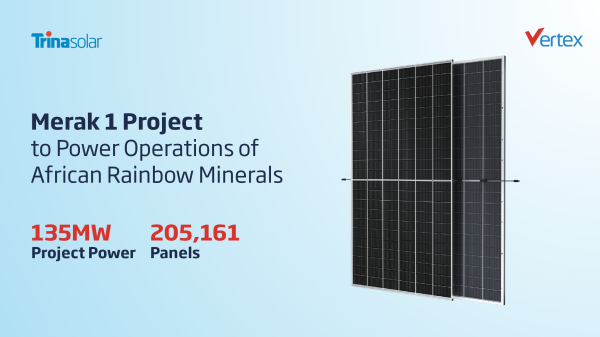
Trina Solar, SOLA, and Wilson Bayly Holmes Ovcon (WBHO) to Power a South African Mining Operation with 135MW Merak 1 Project

Location: News
Trina Solar

In a groundbreaking collaboration, Trina Solar (www.TrinaSolar.com), the world's leading provider of smart PV and energy storage solutions has partnered with SOLA, a South African leader in renewable energy with a focus on utility-scale projects and WBHO Construction to embark on a transformative solar project. The Merak 1 project signifies a major milestone in sustainable energy solutions for South Africa.

Sola and WBHO formed a joint venture to ensure the successful execution of the Merak 1 project, contributing to South Africa's renewable energy goals.

Trina Solar will supply the project with 205,161 panels of its advanced Vertex modules. It is set to provide the power needed for the operations of African Rainbow Minerals, one of South Africa's foremost mining companies, underlining the commitment to harnessing clean and efficient energy sources for large-scale industrial applications. The project is set to be operational by the end of 2024.

"We're proud to be part of this project to supply 135MW 210mm p-type bifacial Vertex modules. This collaboration showcases Trina Solar's commitment to advancing clean energy solutions tailored to the country's industrial needs and deliver high-power, high-efficiency and reliable solar solutions. This project marks our inaugural foray into utility-scale projects of South Africa," commented Zaheer Khan, Regional Director of Southern Africa at Trina Solar.

"We are excited to play a pivotal role in the Merak 1 project, leveraging WBHO Construction's EPC expertise to contribute to South Africa's sustainable energy future. This collaboration underscores our commitment to delivering innovative solutions for utility-scale projects," commented Derek Wallace, Director at WBHO Construction.

The Merak 1 project not only represents a leap forward in the adoption of renewable energy but also showcases the potential of strategic partnerships to drive positive change and address the evolving energy needs of South Africa. Trina Solar continues to contribute to the country's transition towards sustainable and efficient energy solutions, further solidifying its role as a key player in the South African solar industry.

Distributed by APO Group on behalf of Trina Solar.

About Trina Solar:
Founded in 1997, Trina Solar Co Ltd (stock symbol: Trina Solar; stock code: 688599) is engaged mainly in PV products, PV systems and smart energy. PV products include R&D, production and sales of PV modules. PV systems consist of power stations and system products. Smart energy comprises mainly PV power generation and operations and maintenance, smart solutions for energy storage, smart microgrid, and development and sales of multi-energy systems. We are committed to leading the way in smart PV and energy storage solutions and facilitating the transformation of new power systems for a net-zero future.

On June 10, 2020, Trina Solar was listed on the Science and Technology Innovation Board (STAR Market) of the Shanghai Stock Exchange(SSE). It was the first PV and energy storage company to go public on the STAR Market providing PV products and systems, as well as smart energy. For more information, please visit www.TrinaSolar.com.

Media files
Trina Solar
Download logo
Read moreTrina Solar, SOLA, and Wilson Bayly Holmes Ovcon (WBHO) to Power a South African Mining Operation with 135MW Merak 1 Project
  • Previous
  • Page 1
  • Interim pages omitted …
  • Page 14
  • Page 15
  • Page 16
  • Page 17
  • Page 18
  • Interim pages omitted …
  • Page 24
  • Next

Copyright © 2026 · MyZA · All Rights Reserved · Powered by Stratlec Online