• Skip to main content
  • Skip to header right navigation
  • Skip to after header navigation
  • Skip to site footer
MyZA

MyZA

News, Directory, Events and Other Stuff

  • Social Media
  • Sport
  • World News
  • Home
  • Submit News
  • Directory
  • Events
  • Stratlec
  • TFSA
  • News
    • APO
    • Today’s Sport News
    • Todays Social Media and Tech Headlines
    • Today’s World News
    • Today’s SA Financial News
  • Contact
You are here: Home / Archives for mining

mining

9 November 2023

Meet the stellar line up of judges for the 5th edition of the Twyg Sustainable Fashion Awards

Location: Entertainment, MyPR

For the fifth annual edition of the Twyg Sustainable Fashion Awards, a renowned panel of six local and international judges will bring a strong global perspective to the evaluation process. This will be the second year that this same panel will be judging the awards. “We are confident that this dynamic panel, with wide-ranging and …
Read moreMeet the stellar line up of judges for the 5th edition of the Twyg Sustainable Fashion Awards
8 November 2023

Harnessing Trust

Location: MyPR

In an era marked by a global “trust deficit disorder” as commented by the Secretary General of the United Nations, a collaboration between VUKA Group and The Global Trust Project stands out as a necessary and timely endeavour. Together, they will work with leaders, organisations, governments and societies to foster a shared understanding of, and …

Read moreHarnessing Trust
6 November 2023

Cabinet concerned about food poisoning of kids

Location: News

Cabinet concerned about food poisoning of children

Cabinet has raised concern on the spate of food poisoning of children from eating expired and contaminated foodstuff from spaza shops and street vendors.

This follows the recent death of children after allegedly consuming poisonous food items bought from spaza shops, which were reported in Gauteng and North West provinces.

“Cabinet is encouraged by the law enforcement efforts to enforce food safety compliance,” Minister in the Presidency, Khumbudzo Ntshavheni, said at a post Cabinet briefing on Monday.

Ntshavheni reported that during the recent International Migration Workshop, some of the key outcomes included the introduction of omnibus by-laws to address challenges relating to the enforcement of business by-laws by municipalities and traditional authorities. 

The workshop was hosted by the Home Affairs Department and joined by the Departments of Small Business Development, Cooperative Governance and Traditional Affairs, and Human Settlements, as well as traditional leaders and mayors from metropolitans and district municipalities. It focused on curbing the effects of illegal immigration, including the operations of spaza shops.

“There will be immediate joint inspections of businesses, in particular spaza shops, by the Departments of Labour, Health, Small Business Development and Home Affairs immigration inspectorate teams to enforce compliance with applicable laws,” Ntshavheni said.

The workshop also decided that an audit of spaza shops in villages and townships, and mechanisms to register them by both traditional leaders and municipalities, will be undertaken. 

The Minister said there are also efforts to support traditional authorities to keep a record of foreign nationals in their communities.

“Business licensing legislation is being amended to support all those who wish to trade in the informal sector.”

Police commended for dealing with international drug syndicates

Meanwhile, Cabinet has commended the South African Police Service (SAPS) for dealing a massive blow to international drug syndicates.

This follows the discovery of cocaine valued at R80 million, which was seized at a warehouse at Dube Trade Port, within the King Shaka International Airport, on 20 October 2023.

Two days prior to the seizure, another R70 million worth of cocaine was seized from a container at the Durban Harbour.

“Cabinet applauds the SAPS for their work in disrupting and dismantling transnational organised crime that poses a significant threat to our communities and the nation. Operation Safer Festive Season is already yielding results, with police arresting over 140 suspects, including an alleged illegal mining kingpin, and seizing unlicensed firearms,” Ntshavheni said. – SAnews.gov.za

GabiK
Mon, 11/06/2023 - 15:05

367 views
Read moreCabinet concerned about food poisoning of kids
3 November 2023

Cosatu backs SA’s continued AGOA membership

Location: News

Cosatu backs SA’s continued AGOA membership

Congress of South African Trade Unions (Cosatu) President Zingiswa Losi says the federation has thrown its weight behind the African Growth and Opportunity Act (AGOA) and for its renewal as the country continues to fight joblessness. 

“As a trade federation movement, our responsibility is towards ensuring we protect jobs and that is why we have always had support for our government. 

“But beyond that, we continue to advocate and request our sister federation in the US to be our voice on that side that the United States of America and the Biden administration will be able to renew AGOA for the next 10 years before they go for their elections next year,” she said on Friday. 

Losi was speaking during a media briefing on the sidelines of the AGOA Forum, which is currently underway at the Nasrec Expo Centre in Johannesburg.

Launched in 2000, AGOA grants exports from qualifying African countries duty-free access to the United States market.

She reflected on the impact of the piece of legislation, which has created 450 000 jobs linked to the United States-Africa trade in different sectors. Losi said the mining, manufacturing, auto manufacturing, clothing, agriculture and jewellery industries have benefited from the legislation through exports. 

The Cosatu President said the federation supports South Africa’s continued AGOA membership. 

“It is also important that that unaligned role is strengthened when we deal with the geopolitics and it’s critical for government and business to simultaneously expand the trade and investment with other large trading partners such as the European Union, China and Japan and as you know we’re also part of the BRICS Trade Union Forum.”  

Diversification, Losi believes, will ensure South Africa is able to trade with all countries to address the 42% unemployment rate, of which 60% of those are youngsters.

“Importantly, for us to do that we need to address issues of energy in the country, crime and corruption and also the issues of rail and infrastructure.” 

Meanwhile, during President Cyril Ramaphosa’s main address, he said he remains concerned about the negative effects that trade restrictions on products like steel, aluminium or citrus fruit have on AGOA utilisation rates.

President Ramaphosa said he hopes the forum will help lay the basis for these to be addressed in future and that more targeted efforts to promote greater levels of investment can help unlock AGOA’s opportunities. – SAnews.gov.za


Gabisile
Fri, 11/03/2023 - 15:36

143 views
Read moreCosatu backs SA’s continued AGOA membership
2 November 2023

SARS welcomes MTBPS revenue revision

Location: News

SARS welcomes MTBPS revenue revision

The South African Revenue Service (SARS) has welcomed the tabling of the Medium Term Budget Policy Statement (MTBPS), despite the statement’s downward revision of revenue collection by some R56.8 billion.

The MTBPS was tabled by Finance Minister Enoch Godongwana in Parliament on Wednesday.

“SARS has continued with its core functions of collecting all that is due to the fiscus. During the first half of the current fiscal year, we have collected gross revenue totalling R1 016.3 billion, growing by 4.5% and recording a surplus of R1.0 billion against the Budget 2023 estimate.

“This performance is on the back of strong gross collections from VAT, Fuel Levy and PIT [Personal Income Tax], partially offset by lower gross collections from CIT [Corporate Income Tax], as company profits remain under pressure. Without our assistance, the fiscal framework would have been under greater pressure.

“This is a good news story and offers hope in a currently challenging environment. Through focused commitment, SARS has paid back to the economy through refunds for the first six months of the current fiscal year an amount totalling R212.2 billion, higher by R24.6 billion over the prior year and higher than the Budget 2023 estimate by R30.1 billion,” the revenue service said in a statement.

The 2023 main budget had projected collections would reach some R1.78 trillion but that has now been revised down to R1.73 trillion.

“Income and profits in the broader economy have been adversely affected from what was anticipated at the 2023 February Budget. Provisional corporate income tax collections, from especially the mining sector, have reduced at the end of the June 2023 and led to a larger than expected deficit against the 2023 Budget estimate.

“Nevertheless, higher-than-estimated profitability in the finance sector (amongst others) supported provisional corporate income tax and dividends tax collections. Main sector performance that showed growth includes – Finance 7.8% from employment and vesting of shares, Community 6.8% from annual salary increases (mainly Government) and Wholesale 6.2%, mainly from retail and vehicles,” SARS said.

The revenue service highlighted that net tax revenue performance is “impacted adversely” by local and global challenges.

“A slowdown in mining production is down 55% due to lower demand of coal. This is compounded by disruptions to and underinvestment in freight and logistics networks, which erode the competitiveness of the South African economy. The intermittent and inadequate electricity supply remains the most immediate and significant constraint to production, investment, and employment.

“Rising inflation rates constrained household spending by raising the cost of living. Global growth slowed further in recent months. Central banks are countering the effects of high inflation by implementing restrictive monetary policies for longer than anticipated which negatively impact on all developing countries. Several global risks remain, including the increase in geo-political tensions, resulting in the need for stronger domestic demand to support economic growth,” SARS said.

The revenue service added that Gross Compliance Revenue yielded some R118.4 billion.

Key focus areas in this regard include:

  • R11.9 billion from revised assessments flowing from the verification of 1.12 million returns, up Y/Y up by R5 billion (70%).
  • Almost R40 billion that was secured from resolving more than 440k debt collection cases, up Y/Y R4 billion (±12%).
  • R2.3 billion secured from 121 illicit investigations and 181 state capture cases in progress, 27 cases handed to the NPA.

Fraudulent claims

SARS highlighted that fraudulent refund claims remain a concern for the tax collector.

“At R172.1 billion, VAT refund payments contribute 81% to the overall outflows, growing against last year by R21.5 billion. 84% of all VAT Refunds are paid within 21 days, up from 77% last year. However, like all other revenue agencies, impermissible and fraudulent refunds remain a concern in this year, SARS prevented R45 billion from being paid out.

“Equally important is that we have prevented R45 billion from being paid out following verification activities that were enabled by Artificial Intelligence. Impermissible and fraudulent refunds remain a concern, and we must deal with this phenomenon,” the tax collector said.

SARS Commissioner Edward Kieswetter encouraged South Africans to do the right thing and pay what is due to the tax authority.

“The historic win by the Springboks on Saturday communicates an important yet simple message – that every single point makes a massive difference between winning and losing. While the odds were stacked heavily against the Springboks, it took superhuman efforts individually and collectively to contribute to what at times look like an impossible victory.

“It is therefore incumbent upon all of us as South Africans to play by the rules like the Springboks and never give up until the final whistle blows,” Kieswetter said. – SAnews.gov.za

NeoB
Thu, 11/02/2023 - 09:07

654 views
Read moreSARS welcomes MTBPS revenue revision
2 November 2023

AGOA Trade and Economic Cooperation Forum

Location: News

AGOA Trade and Economic Cooperation Forum

By Michael Currin

Growing business, trade and investment ties between sub-Saharan African nations that are part of the Africa Growth and Opportunity Act and the United States (US) holds enormous benefits for the two regions.

Last year the combined two-way trade between AGOA beneficiaries and the United States exceeded $46 billion and there is strong potential for further growth as trade and investment is deepened.

These trade and investment opportunities will be explored at the 2023 AGOA Trade and Economic Cooperation Forum, which is being hosted by South Africa at the Johannesburg Expo Centre from 2-4 November 2023.

The forum, attended by a senior delegation from the United States and 35 Sub-Saharan Africa Trade Ministers, will seek to strengthen trade and investment. Moreover, with African Regional Economic Communities, civil society, organised and business representatives in attendance, it also encourages regional integration.

There is ample room for growth between the US and Africa, particularly in the critical mineral value chain which is at the centre of the global clean energy transition. The continent is a major producer of cobalt, copper, bauxite, chromium, high purity iron ore, platinum group metals and lithium which is needed for the global energy transition.

Those who partner with the continent will have access to these critical resources to spur on and benefit from the clean energy revolution. The International Energy Agency’s World Energy Outlook 2022 foresees demand for these critical minerals more than doubling by 2030 and quadrupling by 2050.

The forum also reaffirms Africa as a capable economic partner and a lucrative destination for growth and investment. Sub-Saharan African economies are on the rise following the impact of COVD-19 with the International Monetary Fund's Regional Economic Outlook forecasting their growth by 4.2 per cent in 2024 from 3,6 per cent in 2023.

Alongside the forum will be the Made in Africa exhibition that will display the products of more than 500 companies from across Sub-Saharan Africa. It will exhibit the region’s agricultural, automotive, chemicals, metals and minerals, mining and machinery, clothing and textiles, leather and footwear and the boatbuilding sector products.

Significantly, this forum is the last engagement hosted in Sub-Saharan African before the expiry of the current iteration of the African Growth and Opportunity Act in June 2025.  AGOA has been at the core of United States economic policy and commercial engagement with Africa.

It was signed into law on 18 May 2000 to provide duty-free exports of goods from 40 sub-Saharan African countries to the United States, giving them a competitive advantage in the lucrative US market.

There are over 5240 tariff items that qualify for the AGOA ranging from apparel and footwear, wine, certain motor vehicle components, a variety of agricultural products, chemicals as well as steel.

The 2023 AGOA Trade and Economic Cooperation Forum is an opportunity to lobby for the renewal of AGOA beyond 2025 as a mutually beneficial platform for global exchange and growth for the industries involved, and as a gateway to the vibrant African market. An extension of AGOA will promote inward investment in Africa and deepen the impact of industrialisation on the continent. 

Furthermore, it will also support our efforts to increase trade through the African Continental Free Trade Area (AfCFTA) that covers 54 countries and 1.4 billion people. It is anticipated that Africa’s trade will be greatly boosted by AfCFTA and the US stands to gain access to a single market, which is projected to grow to 1.7 billion people and $6.7 trillion in consumer and business spending by 2030.

The trade relationship between the US and South Africa has greatly benefitted from the AGOA agreement.

South Africa remains a key source of raw materials for the American economy and has become one of the region’s top 3 exporters to the US. The most success has been in our automobile sector which is the country’s biggest single beneficiary of the programme. Our local citrus industry has also benefited with the Western Cape exporting approximately R1.6 billion worth of citrus to the US under AGOA in 2022.

Other leading exports to the US included iron and steel, edible fruits, organic chemicals and precious stones. It helped create a total of 62 395 direct and indirect jobs, while overall AGOA generated an estimated 350 000 direct and 1.3-million indirect jobs in Sub-Saharan Africa.

South Africa looks forward to welcoming stakeholders from the US and across the continent to the forum. The stronger ties will ensure reciprocal trade and investment that will benefit both the US and Africa.

* Michael Currin is the Deputy Director-General Intergovernmental Coordination and Stakeholder Management at the Government Communication and Information System
 

Janine
Thu, 11/02/2023 - 08:54

287 views
Read moreAGOA Trade and Economic Cooperation Forum
2 November 2023

Government addressing deficiencies that led to grey listing

Location: News

Government addressing deficiencies that led to grey listing

Government is working hard to address deficiencies in the fight against organised crime and illegal financial flows, says Minister of Finance Enoch Godongwana.

“Since February, when South Africa was grey listed by the Financial Action Task Force (FATF), a large number of government departments and agencies – including the police and the Hawks, National Prosecuting Authority (NPA), Special Investigating Unit (SIU), State Security Agency (SSA), the Reserve Bank, Financial Sector Conduct Authority (FSCA) and South African Revenue Service (SARS) – have been working hard to address these deficiencies,” the Minister said.

Delivering the Medium Term Budget Policy Statement on Wednesday in Parliament, he said last week the FATF noted at its plenary meeting that such work is showing positive results.

South Africa has addressed 15 of the 20 technical deficiencies in its legal framework and has made good progress on 17 of the 22 effectiveness action items, including two that are now deemed to be largely addressed.

“However, there is also a significant amount of work that must still be done, particularly with regard to the investigation and prosecution of complex money laundering cases and terror financing, the identification of informal mechanisms for remitting money around the world, and the recovery of the proceeds from crime and corruption,” the Minister said.

Government expects to address all the deficiencies identified by the FATF by early 2025.

“We are also devising ways to make better and more targeted use of the Criminal Asset Recovery Account (CARA) to address crime. Among these efforts, and emanating from the Presidential project on illicit mining strategy, a recommendation has been made for Cabinet to consider using money from the fund to combat illegal mining.

“The South African Police Service, The Defence Force, the Financial Intelligence Centre, the Department of Home Affairs and the Border Management Authority have all received allocations from this fund,” the Minister said.

Improving efficiencies

He said over the Medium Term Expenditure Framework (MTEF) period, the focus is on improving efficiency and reprioritising funds towards key programmes.

The SAPS will contain costs and streamline operations as headcounts decline due to natural attrition.

“It will foster partnerships with communities and implement reforms to optimise resource allocation, training and technology. Government will continue to fill critical posts in the Border Management Agency and verify assets transferred from departments to the agency.

“To reduce employee compensation pressure, the Department of Defence will implement human resource reforms and review commuted overtime and allowance policies. Furthermore, funds will be reallocated in the Department of Defence to provide for day-to-day maintenance and emergency repairs,” the Minister said.

The Department of Justice and Constitutional Development will reallocate funds over the MTEF period to capacitate the Office of the Legal Services Ombud.

“Funding will also be shifted from the Department of Agriculture, Land Reform and Rural Development to Legal Aid South Africa to improve its capacity to provide legal representation in land rights matters.

“To strengthen its independence, the Judicial Inspectorate for Correctional Services will become a government component in 2024/25. Concomitant resources, currently in the baseline of the Department of Correctional Services, will be transferred with the inspectorate,” the Minister said.

Government will continue to fill critical posts in the Border Management Agency and verify assets transferred from departments to the agency. –SAnews.gov.za


nosihle
Wed, 11/01/2023 - 14:04

623 views
Read moreGovernment addressing deficiencies that led to grey listing
2 November 2023

Revenue collection projected to decline

Location: News

Revenue collection projected to decline

Revenue collection is expected to fall by some R56 billion below the 2023 Budget predictions, according to the National Treasury Medium Term Budget Policy Statement (MTBPS).

The MTBPS notes that slowing commodity exports, slower growth, downward revisions of the tax base growth, slowing corporate tax collections and lower net VAT collections have all impacted tax revenue.

The 2023 Budget had projected collections would reach some R1.78 trillion but that has now been revised down to R1.73 trillion.

“In recent years, revenue collection has benefited from a pattern of high prices for South Africa’s commodity exports. In the current year, commodity prices have fallen faster than expected and value‐added tax (VAT) refund claims have risen, resulting in revenue collections projected to be R56.8 billion below 2023 Budget estimates.

“The moderate revenue outlook is limited by the domestic economic outlook and negative shifts in the global economy,” the department said.

This as Minister of Finance Enoch Godongwana tabled the Medium Term Budget Policy Statement in Parliament on Wednesday.

Key factors which have affected revenue collection in the first half of 2023/24 include:

  • Significantly reduced mining sector profitability. Mining provisional corporate tax collections fell by R24.6 billion or 55.4 percent relative to the same period in 2022/23. Lower commodity prices, weaker global growth, increased incidence of power cuts and logistical constraints have weighed heavily on the sector.
  • VAT refund payments are R21.5 billion higher relative to the same period last year due to stronger-than-expected exports; increased investments in embedded generation; and higher costs of doing business, including the use of more expensive road rather than rail transport. Stronger import VAT collections partially offset robust VAT refund payments.
  • A sustained recovery in earnings and higher bonus payments have benefited personal income tax collections, with employees’ tax from the finance sector driving the strong year-to-date growth.

“The tax-to-GDP ratio is expected to decline to 24.7 percent in 2023/24 from 25.1 percent in 2022/23. A recovery in this ratio depends on more sustainable economic growth.

“Main budget revenue estimates for 2023/24 have been lowered by R44.4 billion compared with the 2023 Budget, mainly driven by lower estimates for tax revenue, while National Revenue Fund receipts have been revised up by R11.3 billion mainly due to higher expected revaluation profits from foreign-currency transactions,” Treasury said.

Future revenue

The department said due to the increased fiscal consolidation that is required, “the Minister of Finance will propose tax measures to raise additional revenue of R15 billion in 2024/25 in the 2024 Budget”.

“Tax revenues are expected to increase to R2.1 trillion, or 25.1 percent of GDP, by 2026/27. Revenue collection, however, is projected to fall short of 2023 Budget estimates by R121.4 billion between 2024/25 and 2025/26, with tax buoyancies generally lower over the medium term.

“Relative to the 2023 Budget, main budget revenue estimates for the next two years have been lowered by R152 billion, mainly driven by downward revisions to tax revenue projections. Non-tax revenue estimates for the next two years have also been reduced by R24.4 billion due to lower mineral and petroleum royalties and departmental receipts. Payments to the Southern African Customs Union (SACU) are revised up,” the department said.

Treasury insisted that improved economic growth and further gains in tax administration are critical for improving tax revenues.

“The sharp contraction in commodity prices now under way suggests that the windfall tax receipts that South Africa enjoyed in recent years have come to an end. Under-collections in corporate income tax receipts relative to 2023 Budget estimates flow through to the outer years. Stronger VAT refund payments over the medium term partly reflect higher renewable energy investments and responses to structural constraints in logistics and fuel refinery capacity.

“The outlook for most major tax bases has also been revised lower relative to the 2023 Budget. Personal income tax collections are marginally better than expected due to near-term gains; however, medium-term prospects for employment growth remain muted.

“Although South Africa’s tax-to-GDP ratio remains relatively resilient, stronger economic growth and further gains in tax administration are needed to improve tax revenues over the medium to long term,” the department said. – SAnews.gov.za


NeoB
Wed, 11/01/2023 - 14:05

624 views
Read moreRevenue collection projected to decline
1 November 2023

Government forges ahead with restructuring the State

Location: News

Government forges ahead with restructuring the State

Work is underway to reconfigure the structure and size of the State as part of government’s efforts to improve the efficiency and effectiveness of public spending.

“This Medium-Term Budget Policy Statement (MTBPS) supports measures to lift our growth prospects over the medium term and restructures the State to become more effective,” Minister of Finance Enoch Godongwana said on Wednesday while delivering the MTBPS in Parliament.

Government is preparing a joint plan to rationalise departments, entities and programmes over the next three years

The Presidency, National Treasury, Department of Public Service and Administration and the Department of Planning, Monitoring and Evaluation are formulating high-level recommendations on programme and entity closures.

“A dedicated technical team, consisting of the appropriate legal, financial and human resource expertise has been created to facilitate implementation. Over the last three years, the National Treasury has conducted a series of spending reviews.

“In many cases, these reviews have highlighted deficiencies in policy choices and programme design, scale and cost. They have also revealed shortcomings in planning and implementation, which result in overlapping mandates and functions, and duplication of effort. Government considers these inefficiencies to place a further drag on the economy,” the Minister said.

The following criteria will be used to determine whether a department or entity should be closed or merged:

  • The performance and size of the entity or department, especially if it is no longer fulfilling its mandate or does not have capacity to fulfil its mandate.
  • The ability of a larger department to absorb the function(s) of a small department.
  • The duplication and overlap of functions across departments and entities.
  • The clarity and execution of the legislative mandate.

“The Department of Public Service and Administration, the National Treasury, the Department of Planning, Monitoring and Evaluation and the Presidency will, over the medium term, review and reconfigure executive functions to address duplication of functions, close ineffective programmes and consolidate departments and institutions.

“Measures will be proposed based on spending reviews conducted in 2020/21 and 2021/22, which suggest a general need to ensure that programmes are designed to be affordable and avoid overlapping policy mandates,” Godongwana said.

The changes are expected to lead to reduced executive responsibilities, higher fiscal credibility and savings in non-interest expenditure

Public sector wage bill

The 2023 public service wage agreement included higher-than-budgeted remuneration increases.

As such government has made a strategic decision to allocate funds to sectors that are personnel heavy, such as health, education and police services.

“Additional funding of R24 billion this year and R74 billion over the medium term will be used to fund the 2023/24 wage increase and the associated carry-through costs in these sectors.

“Since the 2023 Budget, several fiscal risks have materialised. Corporate tax collections – primarily mining sector revenue – underperformed and the revenue outlook weakened. The 2023 public-service wage agreement increased the cost of compensation of employees,” the Minister said.

He indicated significant trade-offs and claw-back mechanisms are being implemented to mitigate the impact of these higher costs on the fiscal framework and to contain the budget for compensation of employees.

“Government has issued a directive to national and provincial departments to implement control measures for creating and filling vacant posts, including restrictions on recruitment for less-critical posts. Government is assessing further controls on personnel budgets, including by providing incentives for early retirement,” the Minister said.

Godogwana said the presidential employment initiative will be extended for another year through repurposing of a portion of funds from existing public employment programmes such as the Expanded Public Works Programme and the Community Works Programme.

“A comprehensive review of public employment programmes is underway,” the Minister said. – SAnews.gov.za

nosihle
Wed, 11/01/2023 - 14:10

374 views
Read moreGovernment forges ahead with restructuring the State
1 November 2023

Partnerships are key to decarbonizing the South African economy.

Location: MyPR

The “energy trilemma” of delivering lower carbon energy that is affordable and secure is an issue facing all businesses and policymakers in the energy space. We believe that the world’s leading energy companies meaningfully want to achieve all three priorities. In January 2023, the New York Times reported that 2022 was the fifth-hottest year on …

Read morePartnerships are key to decarbonizing the South African economy.
31 October 2023

Spotlight on gender transformation in the mining sector

Location: News

Spotlight on gender transformation in the mining sector

Gender equality transformation hearings in the mining sector, where companies will be accounting for the state of gender transformation in their businesses and workplaces, are expected to kick off this week.

The Commission for Gender Equality (CGE) will host the hearings on 31 October 2023 and 01 November 2023 at the commission’s office in Braamfontein, Johannesburg.

They are a follow-up to the research study undertaken by the commission in 2017, entitled Bold Claims and Small Gains: Reluctance to promote gender equality in the mining sector in South Africa.

CGE spokesperson Javu Baloyi said despite a plethora of legislative frameworks and the amended Mining Charter, compliance with gender transformation remains a concern for the commission. 

“The study, among other things, found that there is a disproportionate representation of gender on corporate boards of Directors, Executive Management and general workforce at most mining companies,” Baloyi said. 

Through the transformation hearings, the commission seeks to assess compliance with employment equity legislation and related policies; address institutional and systematic barriers to economic and gender diversity in the workplace on the progress of women and persons with disabilities as well as raise awareness on relevant international commitments to gender transformation and the importance of compliance. 

The hearings will start with Samancor Chrome Limited on 31 October, followed by Wesizwe Platinum and AngloGold Ashanti on 01 November 2023. – SAnews.gov.za

GabiK
Tue, 10/31/2023 - 12:23

155 views
Read moreSpotlight on gender transformation in the mining sector
31 October 2023

SA in numbers

Location: News

SA in numbers

78%  – the percentage of households in formal dwellings in 2011, which rose to 89% in 2022.

89% – the percentage of households in formal dwellings in 2022, which rose from 78% in 2011.

3 – years since government embarked on the Economic Reconstruction and Recovery Plan, by 30 October 2023.

More than 2 million – jobs lost due to the negative economic effects of the Coronavirus pandemic.

2 million – the increase in the number of people with jobs over the last two years, bringing the level of employment close to its pre-pandemic level.

R350 – the value of the Social Relief of Distress Grant introduced by government in 2020 to keep millions of people out of poverty, and continues to provide much-needed support for those who are unemployed.

Over 1.2 million – employment opportunities created by the Presidential Employment Stimulus since its establishment, representing the largest expansion of public employment in South Africa’s history.

Over 4 million – young people registered on the SAYouth online platform, by 30 October 2023.

More than 1 million – young people  registered on the SAYouth online platform, who have been able to access opportunities for learning and earning, by 30 October 2023.

26 – commuter rail corridors, out of 40, whose operations had been restored by the Passenger Rail Agency of South Africa, by 30 October 2023.

R50 billion – the amount to be spent over the next three years to modernise South Africa’s passenger rail network.

R17 billion – the value of the investment into the Mzimvubu Water Project in the Eastern Cape.

Over 12 000 – megawatts of confirmed projects in development as part of regulatory reforms government has initiated to enable a massive increase in private investment in electricity generation.

Over 4 500 – megawatts of installed rooftop solar that have more than doubled in the last year following the introduction of tax incentives and financing mechanisms.

20 – Economic Infrastructure Task Teams established by the South African Police Service throughout the country to protect critical infrastructure and tackle the “construction mafia”.

880 – members of the South African National Defence Force to be employed to support the police in combating criminal activity that targets critical economic infrastructure.

Over 3 000 – people arrested for illegal mining.

34 – State capture and corruption cases taken to court by the National Prosecuting Authority’s Investigating Directorate over the last four years, involving 205 accused persons.

205 – accused persons involved in 34 State capture and corruption cases taken to court by the National Prosecuting Authority’s Investigating Directorate over the last four years.

R14 billion – the value of freezing orders granted to the Asset Forfeiture Unit for State capture related cases.

Around R5.4 billion – the value of money recovered by the Asset Forfeiture Unit and returned to the State, by 30 October 2023.

18 cents – the amount for every rand that government collects in revenue that goes towards servicing South Africa’s national debt.

Over 6 months – the period during which government will accelerate the implementation of economic reforms.

4 – the number of times the Springboks became the world champions since the advent of democracy in South Africa in 1994.

15 December – the Friday in December 2023 that President Cyril Ramaphosa has declared a public holiday in celebration of the Springboks’ momentous achievement and the achievements of all other sportsmen and sportswomen – and as a tribute to the resolve of the united nation. It is a day of hope, celebration and unity.

Matona
Tue, 10/31/2023 - 09:02

179 views
Read moreSA in numbers
31 October 2023

Social protection key to SA’s ongoing recovery position

Location: News

Social protection key to SA’s ongoing recovery plan

The introduction of measures designed to cushion the effects of the economic downturn exacerbated by the COVID pandemic has played a substantial role in keeping millions out of poverty in South Africa.

Speaking to the nation on Monday evening, President Cyril Ramaphosa said one of the key pillars of the reconstruction and recovery plan, post COVID-19, was the expansion of social protection and public employment.

The President was frank about the mammoth task that lies ahead in moving the country forward, in terms of creating the requisite jobs and expanding the economy. However, he commended the role played by the country’s commitment to strengthening social protection through initiatives designed to propel the recovery trajectory.

“Over the last two years, the number of people with jobs has increased by two million, bringing the level of employment close to its pre-pandemic level.

“The special SRD [Social Relief of Distress] Grant, known as the R350 grant, which we introduced in 2020, has kept millions of people out of poverty, and continues to provide much-needed support for those who are unemployed.

“The Presidential Employment Stimulus has created over 1.2 million opportunities since its establishment, representing the largest expansion of public employment in South Africa’s history,” the President said.

To date, over four million young people have registered on the SAYouth online platform, and more than one million of them have been able to access opportunities for learning and earning.

“Every one of those jobs created is a reason for hope. Every person who no longer lives in poverty is a reason for hope,” President Ramaphosa said.

Acknowledging the sustained challenges imposed by domestic and global pressures on the South Africa economy, the President made it clear that constraints to growth, including load shedding and the underperformance of the ports and rail network, must be overcome if the country is to realise its own economic growth targets.

Government spending, the President noted, has exceeded revenue since the 2008 global financial crisis, without a commensurate increase in economic growth.

“As the Minister of Finance has noted, for every rand that government collects in revenue, 18 cents go towards servicing our national debt. This means that we are now paying more in interest on our national debt than we are budgeting for the police force.

“Ultimately, more rapid and inclusive growth is the only solution to unemployment, poverty and inequality. Growth is also necessary for the sustainability of public finances.”

The President reiterated the commitment to stabilising the levels of debt and adopting a responsible fiscal policy, saying that the Minister of Finance will set out government’s plans to achieve this trajectory in the Medium Term Budget Policy Statement (MTBPS) on Wednesday, 1 November.

Strengthening municipal performance

The President said urgent and necessary interventions are being undertaken at municipal level in order to improve service delivery in the areas of water and sanitation, electricity, roads and waste collection.

“These interventions are accelerating service delivery where basic services have collapsed.  

“While addressing the immediate problems, we are introducing necessary institutional reforms and professionalisation in the appointment of senior municipal officials.”

Spending on health, education, policing and other essential services will be protected as far as possible, the President said.

“As we move to target spending on programmes that are working for the poor, we need to acknowledge that our social grants, including the SRD Grant, as well as our public employment programmes, are vital in supporting those who are vulnerable.

“These programmes have not only reduced poverty, but have enabled recipients to search for jobs and to engage in other economic activity to support their livelihoods.”

The Minister of Finance is expected to provide more details on these and other spending priorities when he presents the MTBPS on Wednesday.

Tackling crime and corruption

The President said the South African Police Service has established 20 Economic Infrastructure Task Teams throughout the country to protect critical infrastructure and tackle the “construction mafia”.

“We are seeing results in arrests for illegal mining, cash-in-transit heists, cable theft, drug smuggling and similar crimes. Increasing the number of police men and women will further strengthen our capacity to curb acts of criminality.

“I have also extended the employment of 880 members of the SANDF [South African National Defence Force] to support the police in combating criminal activity that targets critical economic infrastructure. The police have arrested several people for extortion at construction sites and made over 3 000 arrests for illegal mining.

“Through the intensive efforts of our law enforcement agencies, dozens of illegal mines, unregulated coal yards and unregistered second hand dealers have been shut down.”

Additionally, the Economic Infrastructure Task Teams have confiscated significant quantities of copper cable, rail tracks, coal and other metals.

Turning to State capture, the President acknowledged that over the last four years, the National Prosecuting Authority (NPA) Investigating Directorate has taken 34 State capture and corruption cases to court, involving 205 accused persons.

Freezing orders of R14 billion have now been granted to the Asset Forfeiture Unit for State capture related cases. Around R5.4 billion has to date been recovered and returned to the State.

“As recommended by the State Capture Commission, we are putting in place laws, institutions and practices that reduce the potential for corruption of any sort and on any scale.

“We are continuing to build meaningful compacts with key stakeholders in a number of areas,” said President Ramaphosa. – SAnews.gov.za

Matona
Mon, 10/30/2023 - 22:13

296 views
Read moreSocial protection key to SA’s ongoing recovery position
26 October 2023

Sand mining company appeals against refusal of water licence in Philippi

Location: News

A campaign to preserve the horticultural area says the silica mine will impact food security and the Cape Flats Aquifer

Read moreSand mining company appeals against refusal of water licence in Philippi
23 October 2023

Over 100 suspects netted in Gauteng police operation

Location: News

Over 100 suspects netted in Gauteng police operation

Gauteng police started Operation Safer Festive Season on a high note when they recorded arrests of more than 140 suspects and recovered rifles, including an AK-47, from a man suspected to be a kingpin of illegal mining in the West Rand.

“Police received information about a suspect who is in possession of unlicensed firearms in Bekkersdal, West Rand District. The information was operationalised on the day of Operation Safer Festive Season, 21 October 2023. Upon searching the premises, police from Crime intelligence and Bekkersdal Visible Policing found two unlicensed firearms (R5 rifle and AK47 rifle) and dagga,” said the Gauteng South African Police Service (SAPS) in a statement on Sunday.

The incident saw a 36-year-old suspect being arrested for unlawful possession of firearms and dealing in dagga.

Furthermore, detectives went on to trace wanted suspects and arrested 56 of them for crimes ranging from rape to fraud.

Meanwhile, the Minister of Police General Bheki Cele, the National Commissioner of the South African Police Service General Fannie Masemola and Gauteng Provincial Commissioner Lieutenant General Elias Mawela joined the police at a roadblock and illegal mining disruptive operation in Roodepoort.

The operation resulted in more than 85 suspects being arrested for offences that include possession of suspected stolen goods and contravening the Immigration Act.

Generators and drilling machines used by the illegal miners were seized as the police dismantled and disrupted their operation. – SAnews.gov.za


Edwin
Mon, 10/23/2023 - 08:46

586 views
Read moreOver 100 suspects netted in Gauteng police operation
20 October 2023

Potchefstroom community raises concerns

Location: News

Potchefstroom community raises concerns

Members of the community in Potchefstroom in the North West have raised various service delivery challenges with President Cyril Ramaphosa and the leadership from the three spheres of government during the District Development Model (DDM) Presidential Imbizo held at the Ikageng Sport Complex. 

The President kicked off the second round of the District Development Model (DDM) Imbizo in the North West province after visiting all nine provinces to address service delivery challenges. 

This visit provides an opportunity for the President to assess progress made in implementing the interventions pronounced during his visit on 12 March 2022 in Mahikeng.

Major service delivery challenges raised by community members at the Presidential Imbizo include basic services such as water and electricity, housing, the neglect of NGOs for disabled people, disabled people not being considered for employment, poverty and unemployment, corruption, dilapidated infrastructure in schools and limited healthcare facilities.

One of the community members, Edith Ndindwa, from Ward 15 in Jacaranda pleaded with the President to assist with her RDP house, which has been in construction for over two years. 

“The project has now stopped Mr President. Please assist us with this project to be completed. We do not even have toilets. We do not have electricity and water. Disabled people help themselves outside their houses. Please assist us in this regard,” she said. 

Another resident, Maki Ntayi, asked the President to assist with funding for NGOs for disabled people in the North West.

“We can’t get funds for the NGOs we run to assist disabled people. I am pleading that you assist us with electricity connection. President please take disabled people into consideration. Our centre is not in a good condition,” she said. 

The President and various Ministers provided some solutions to the issues that were raised by the community and also gave an update on progress made since the last Imbizo visit in the province.

“I thank you for giving yourselves time to come and listen to government’s plan and to voice your concerns to us. Plans to improve your lives in the North West. When we hold Izimbizo we allow everybody to speak so that we can get a clear understanding of what their concerns are,” said the President.

“We have heard you clearly, even I have written down what you are saying and the officials present have listened and taken note of your concerns. Now we have a clear understanding of how life is in this district. You all share similar concerns including the sewerage system, water, roads, jobs and housing.”

Some of the other issues raised included red tape when starting farming businesses and mining rights.

The president said he would call different Ministers to respond to the issues that are relevant to their departments.

“Almost all of Cabinet is here to listen and respond to the various issues raised and explain what the State’s plans are.”

President Ramaphosa started his morning with an oversight visit at the Potchefstroom Water Reservoir Project in Ikageng, in the Dr Kenneth Kaunda District Municipality in the North West. 

The upgrading of the Potchefstroom Water Treatment Works project will see a 25 megalitre reservoir that will convey water to Ikageng Proper, Ikageng Ext. 1,4,5 9,12, Potchindustria, Mohadin and the Northern portion of Ikageng Ext. 7. 

The position of the new reservoir site is also suited to cater for any future developments once the urban edge is extended to the northwest of the reservoir site. 

President Ramaphosa was received by Acting Premier Nono Maloyi and Water and Sanitation Minister Senzo Mchunu. Also, attending were Cooperative Governance and Traditional Affairs Minister Thembi Nkadimeng and Deputy Minister Parks Tau. – SAnews.gov.za

DikelediM
Fri, 10/20/2023 - 15:00

354 views
Read morePotchefstroom community raises concerns
18 October 2023

Critical Minerals Africa Summit Defines the Future Minerals Economy

Location: News
Energy Capital & Power

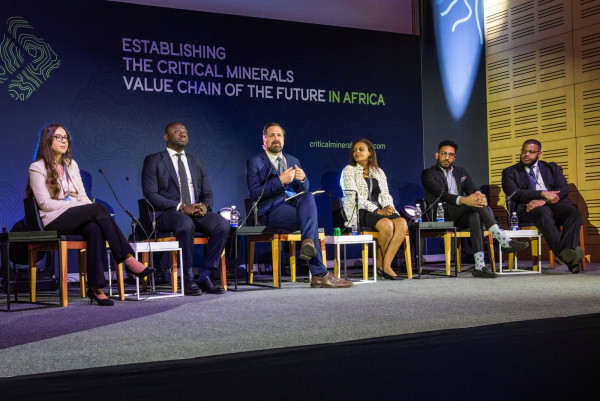
A high-level panel at Critical Minerals Africa 2023 – organized by Energy Capital & Power (https://www.EnergyCapitalPower.com) – discussed how sustainable practices, localized supply chains and integrated mining operations will help secure critical minerals supplies of the future.

Moderated by Olimpia Pilch, Founder and COO of Critical Minerals International Alliance, the panel featured Kwasi Ampofo, Head of Metals and Mining, BloombergNEF; Alex Benkenstein, Head of the Climate and Natural Resources Programme, South African Institute of International Affairs (SAIIA); Dr. Marit Y. Kitaw, Interim Director, African Minerals Development Center (AMDC); Deshan Naido, Managing Director, AQORA; and Duma Sisulu, Co-Founder & Chief Analyst, Parime Battery Minerals.

The panel sought to explore the future of Africa's minerals economy in light of growing demand for clean energy technologies and mounting pressure to decarbonize existing mining activities and maximize resource efficiency.

Speaking to the scope of demand growth for energy transition mineral and metals, Kwasi Ampofo noted: “We currently use 50 million metric tonnes of metals going into transition technologies and accompanying infrastructure. By 2050, if we reach the scenario based on current policies and economics, we will need about 140 million metric tonnes. If we reach the net-zero scenario, this goes up to 250 million metric tonnes.”

In evaluating the strength of Africa's currently local and regional supply chains, panelists evaluated strategies that can be implemented to ensure their resilience and build more localized value chains, which can help achieve market stability.

“There's a lot of discussion around demand, but we don't see the same enthusiasm around funding supply. There is a shortfall in supply, which then spikes demand. Every time the price drops – for example, in nickel – there will be producers who are unable to match the current supply at that price. We will then have a continuation of these supercycles, which is not sustainable,” commented Duma Sisulu.

“If the critical minerals supply chain doesn't change, then we have failed as Africans. We have the opportunity to do what the international oil giants did 50-60 years ago. We have the bargaining power for the deposits that sit on the continent,” said Deshan Naido.

According to the panel, the future of Africa's critical minerals will involve mining companies diversifying their operations across multiple sectors, while fostering synergy among mining and energy sectors, owing to Africa's acute energy deficit. Establishing value-added activities will also be essential to maximizing resource efficiency and ensuring the sustainability of the extractive sector.

“Africa does not have to accept its position within global supply chains… Mineral processing is energy intensive and requires a steady supply. This is not an absolute barrier – it can be rectified – which has been seen by the influx of investment by mining companies in South Africa to invest heavily in renewable energy technologies,” stated Alex Benkenstein. 

“The only way to transform lives is to add value – job creation, skills transfer, economies of scale, transformation and growth. This gives us the opportunity to set the agenda — we need processing, refining and value addition,” emphasized Dr. Marit Y. Kitaw.

The Critical Minerals Africa 2023 summit is currently taking place from October 17-19 and serves to position Africa as the primary investment destination for critical minerals. The event is held alongside the African Energy Week 2023 conference (https://AECWeek.com/) on October 16-20, offering delegates access to the full scope of energy, mining and finance leaders in Cape Town.

Distributed by APO Group on behalf of Energy Capital & Power.

Media files
Energy Capital & Power
Download logo
Read moreCritical Minerals Africa Summit Defines the Future Minerals Economy
18 October 2023

United Kingdom Pledges R20 Million to Africa’s Critical Minerals at Critical Minerals Africa (CMA) 2023 Summit

Location: News
Energy Capital & Power

The UK announced a pledge to help African countries expand their critical mineral supply chains – with a focus on promoting mineral exploration and processing, generating value-added activities and creating local jobs – during the Critical Minerals Africa 2023 summit on Wednesday.

“African countries rightly have a high level of ambition for unlocking the value of their natural resources and the UK will work with them in partnership to support delivery of their ambitions,” stated Ambassador Antony Phillipson, British High Commissioner to South Africa. “We are committed to increasing our investment in the continent and strengthening the transparency and resilience of the supply chain for critical minerals – creating green jobs in Africa, while taking action on climate change.”

To be launched next week, the pledge will take the form of an initial R20-million contribution and comes on the back of growing cooperation between the UK and Africa in the critical minerals arena. Last November, South African President Cyril Ramaphosa conducted a state visit to the UK seeking to leverage British capital and technology toward building South Africa's industrial capacity. The UK already represents the largest international investor in South Africa, which is home to 80% of global platinum group metal reserves, 70% of global manganese reserves, and substantial reserves of vanadium and magnesium.

The UK is also set to host the second edition of its African Investment Summit in London next April, which aims to promote bilateral trade and investment and strengthen UK-African partnerships.

The Critical Minerals Africa 2023 summit is currently taking place from October 17-19 and serves to position Africa as the primary investment destination for critical minerals. The event is held alongside the African Energy Week 2023 conference (https://AECWeek.com/) on October 16-20, offering delegates access to the full scope of energy, mining and finance leaders in Cape Town.

The Critical Minerals Africa Summit is organized by Energy Capital & Power. 

Distributed by APO Group on behalf of Energy Capital & Power.

Media files
Energy Capital & Power
Download logo
Read moreUnited Kingdom Pledges R20 Million to Africa’s Critical Minerals at Critical Minerals Africa (CMA) 2023 Summit
18 October 2023

Mining Indaba 2024 hosts the return of the Mining Innovation & Research Battlefield

Location: News
Investing in African Mining Indaba

Investing in African Mining Indaba (www.MiningIndaba.com) and the Development Partner Institute (www.DPIMining.org) launched the 2024 Mining Innovation & Research Battlefield to entrants today; The Battlefield is a high-profile platform for innovators and researchers to share their ideas on the challenges facing large-scale, small-scale and artisanal mining; BHP Xplor are sponsors of the US$25,000 Innovation Grant which will support early-stage innovation and research; Applications are open until 06 November. Shortlisted applicants will be notified on 30 November, with Battle Round pitches online on 14 December 2023 and at Mining Indaba in Cape Town on 6 February 2024.

After considerable success in 2022, the Mining Innovation and Research Battlefield (https://apo-opa.info/46Bw4QO), hosted at the Mining Indaba conference, is now open for applicants to submit their research proposals for this year's competition.

On February 6, 2024, the Innovation & Research Battlefield (https://apo-opa.info/46Bw4QO), a high-profile event convened by Investing in African Mining Indaba [Mining Indaba (www.MiningIndaba.com)] and the Development Partner Institute (DPI Mining) (www.DPIMining.org), will provide a platform for participants to showcase early-stage innovations. Competitors will present their ideas and research proposals to address this year's challenge: What are the innovative responsible collaborations between LSM & ASM, and how can these be applied to the just energy transition?

The Innovation and Research Battlefield fast-tracks new approaches to complex sustainability challenges in the resource sector by connecting future-focused academics, researchers, the private sector, NGOs, and young people to a network of vested organisations and the opportunity to win a research grant. 

BHP Xplor (https://apo-opa.info/3RXvCbg) are sponsoring the US$25,000 Innovation Grant, which will support the winners in furthering their research. The results of the winning project will be presented at the following Mining Indaba Conference in 2025.

DPI Mining Executive Director Florence Drummond said, “We want to connect great minds and passionate innovators from across academia, resarch and the mining sector, and young leaders to foster agile collaboration, connect viable ideas to financial support, and catalyse real change that could transform the mining and minerals industry.”

Laura Cornish, Head of Content, Mining Indaba, said, “This year's Battlefield challenge is a critical concern for the future of the mining industry, and Mining Indaba is excited to be a platform that allows innovators from across multiple sectors to bring creative solutions to an audience of global leaders.” 

The first stage for entries is now open, allowing individuals, groups and organisations to submit their innovative solutions and research proposals. Shortlisted participants will have the exclusive opportunity to pitch virtually in the first round of the Battlefield. Participants who are successful in round one will receive a delegate pass to Mining Indaba, South Africa, and will pitch their proposal live in the final Battlefield round.

Sheila Khama, former CEO of De Beers Botswana and natural resources policy advisor at the World Bank and African Development Bank, hosts the Innovation and Research Battlefield. This year's judging panel includes Mark Cutifani, co-founder of DPI Mining and former CEO of Anglo American, Sonia Scarselli of BHP Xplor, and leaders in the artisanal mining space.

Those interested in participating have until 6 November to apply, but early applications are encouraged. All applicants need to be affiliated with either an institution or an organisation that will assist in managing the awarded Innovation Grant.

For more information on the Innovation & Research Battlefield and to apply visit: https://apo-opa.info/3rVjM6K

Distributed by APO Group on behalf of Investing in African Mining Indaba.

About Development Partner Institute:
The Development Partner Institute  (www.DPIMining.org) was founded to tackle intractable, multi-stakeholder sustainability challenges in mining by connecting the global value-chain. Through facilitating conversations, convening events, and catalysing projects, we unlock transformative potential and accelerate mining's contribution to a better future.

Contact us on innovation@dpimining.org 

About Investing in African Mining Indaba:
Also known as Mining Indaba (www.MiningIndaba.com), the world's largest mining investment conference and exhibition is dedicated to the successful capitalisation and development of mining interests in Africa. For almost 30 years, Mining Indaba has held a unique and widening perspective of the African mining industry, bringing together international and African stakeholders, visionaries and innovators from across the spectrum. We are also dedicated to supporting education, career development, sustainable development and as a next-generation platform to help economies thrive in Africa.

The 4-day Mining Indaba event attracts junior, mid-tier and major mining companies, along with global and continental investors, heads of state, ministers and Africa's leading policymakers.

Contact Laura Cornish: laura.cornish@hyve.group

Media files
Investing in African Mining Indaba
Download logo
Read moreMining Indaba 2024 hosts the return of the Mining Innovation & Research Battlefield
18 October 2023

Harnessing the Power of Coal in Africa: Balancing Development and Environmental Concerns at African Energy Week (AEW) 2023

Location: News
African Energy Chamber

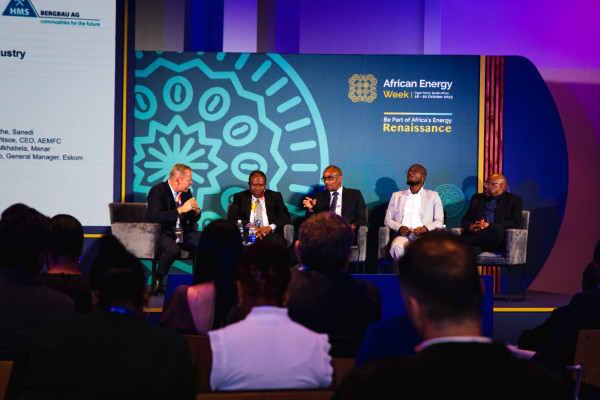
On the third day of the African Energy Week (AEW) 2023 conference & exhibition, a thought-provoking session entitles King Coal is Back - Africa's Future Clean Coal Industry shed light on the critical role of coal in Africa's energy landscape.

The session commenced with a keynote address by Dr. Zwanani Titus Mathe, CEO of the South African National Energy Development Institute (SANEDI). Dr. Mathe emphasized that coal would continue to be a part of South Africa's energy mix, driven by the unique regional energy requirements. He also suggested the potential for collaboration with China and India and highlighted several clean coal solutions, including gasification and green ammonia.

Furthermore, Dr. Mathe echoed the sentiments expressed by South African Minister of Mineral Resources and Energy Gwede Mantashe during his address at the opening session of AEW 2023 Strategic Program. Both emphasized that "energy security and climate change are interconnected aspects of the same challenge," reinforcing the notion that coal will continue to be a part of the energy equation.

Following Dr. Mathe's keynote, Dr. Lars Schernikau, an energy economist and strategic advisor at the independent commodities marketing company, HMS Bergbau AG, took the stage as the session's moderator. Panelists included; Dr. Zwanani Titus Mathe, CEO of SANEDI; Lemogang Pitsoe, CEO of African Exploration Mining and Finance Corporation; Mpumelelo Mkhabela, Chairman & Director of Menar; and Dan Mashigo, General Manager of Primary Energy at Eskom.

The panelists and moderators initiated an in-depth dialogue about the lasting importance of coal in the energy mix and the imperative of achieving a Just Energy Transition. Schernikau began the conversation by underscoring the pivotal role coal continues to play in Africa's energy context. "Despite the increasing worldwide emphasis on renewable energy, coal remains indispensable, particularly in regions experiencing rapid population growth," said the moderator. According to projections, the population of Africa will reach 8 billion by the end of the century, which would cause a concurrent rise in energy demand.

Mathe expanded on his opening presentation, reminding the importance of investing in clean coal technologies alongside the promotion of renewable energy sources. He emphasized that a holistic approach is necessary to balance the transition and ensure that all energy sources are leveraged effectively. “While renewable energy is a key component of the transition to cleaner energy, it's equally vital to consider and invest in clean coal technologies. These technologies can help maintain energy security while addressing environmental concerns,” said Mathe.

Mashigo echoed the significance of a diverse energy mix: “We need a comprehensive, integrated approach in South Africa, particularly when working towards a net-zero transition.” Mashigo pointed out that coal is a part of this mix and, when managed effectively alongside renewable sources, can play a crucial role in achieving a cleaner energy future.

Pitsoe discussed the importance of investing in research and development to create cleaner coal technologies. “Investing in research and development is essential to ensure the responsible use of coal while minimizing its environmental impact. “There is a growing need in Africa for advancements in clean coal technology and the exploration of innovative solutions for producing cleaner energy.”

Mkhabela pointed out that a lack of green technology and competition for national interests can pose significant challenges. “The key to successful and sustainable progress lies in reviewing agreements and understanding the terms and conditions of deals,” stressed Mkhabela. “By prioritizing energy security for the 6 million people still without access, African nations can make informed decisions and work toward a balanced transition that addresses both energy needs and environmental concerns,” he said.

Mkhabela concluded the session emphasizing the significance of investing in clean coal technology in South Africa: “We have some of the best research teams in the world here in South Africa and we are making progress towards carbon capture solutions.”

Organized in partnership with the African Energy Chamber, AEW 2023 is taking place from October 16-20 in Cape Town.

#AEW2023 takes place this week in Cape Town under a mandate to make energy poverty history by 2030. Keep following www.AECWeek.com for more exciting information and updates about Africa's premier energy event.

Distributed by APO Group on behalf of African Energy Chamber.

Media files
African Energy Chamber
Download logo
Read moreHarnessing the Power of Coal in Africa: Balancing Development and Environmental Concerns at African Energy Week (AEW) 2023
18 October 2023

Critical Minerals Africa 2023 Prepares for Official Opening with Full Day of Strategic Presentations

Location: News
Energy Capital & Power

The first day of the Critical Minerals Africa 2023 summit on Tuesday – organized by Energy Capital & Power (www.EnergyCapitalPower.com) – featured a series of presentations from leading industry experts, providing unparalleled insights into Africa's critical mineral reserves and geopolitical position in the global mining economy. The main conference program begins on Wednesday, October 18 and will feature a highly anticipated ministerial forum, investor briefings and panel discussions, taking place alongside African Energy Week in Cape Town.  

Kicking off the agenda was a presentation by South African Institute of International Affairs (SAIIA) exploring the future of critical minerals in the SADC – namely, copper in the DRC, South Africa and Zambia, lithium in South Africa and Zimbabwe, cobalt in the DRC and Zambia, graphite in Mozambique, manganese in South Africa, and nickel in Madagascar, South Africa and Tanzania. The ability to harness these reserves depends on several factors, including growing geoeconomic competition among China, the US and Europe, the ability of SADC states to manage regional value chains, and the urgency of global policy action toward renewable and low-carbon energies.

“In 20-30 years, not only will these minerals be in high demand, but how we put systems in place will be important,” stated Dr. Deon Cloete, Head of SAIIA's Futures Program. “We have focused on Rare Earth Elements (REEs) and the need to scale up exploration and extraction and develop the entire value chain. The transition to climate goals by 2050 is challenging and we need to be critical about how these fault lines are emerging. We propose a resource-based economy that challenges the paradigm of how we approach mining.”

The Critical Minerals International Alliance (CMIA) built upon the geopolitical nature of critical minerals development during its presentation, addressing China's race to solidify its leadership on the continent and its successful dual-pronged investment approach. Western nations have sought to counter this influence through various policy measures, including the US' Inflation Reduction Act, the EU's Critical Raw Materials Act and the Minerals Security Partnership, which seeks to secure a stable supply of raw materials for member economies. 

“When we talk about critical minerals, we are focused on geopolitics — how they frame supply chains and influence pricing and how monopolies are increasingly changing the industry,” said Olimpia Pilch, Founder and COO of CMIA. “In a supply chain crunch, who gets priority and which industries will miss out? Those who have put in the work to have their own supply chain will be in a much better position.”

On the need to diversify mining supply chains, Roberto Cecutti, Head of Trade and Economics, EU Delegation to South Africa, stated during his presentation: "In terms of annual consumption, we have an aspirational target of covering at least 10% of extraction in Europe, 40% of processing and refinement and 15% of recycling capacity. We want to avoid dependence on the supply of one or more specific countries…This is why we have set this target, in which 65% should not depend on a specific country of origin of supply.”

"Each region has its own definition of what is ‘critical,' and what's critical for Africa may not be what's critical for the EU and vice versa. Africa has different requirements when it comes to minerals,” noted Sodhie Naicker, Managing Director: DMT Kai Batla and Consortium Partner: AfricaMaVal.

Energy research firm Rystad Energy also explored Chinese dominance within the low-carbon supply chain, as the country produces almost 90% of solar panels and is currently ramping up production of wind turbines. While Europe has made gains towards establishing its own clean energy supply chain, Africa remains reliant on imports to meet growing energy demand, despite having vast renewable energy potential and untapped mineral reserves. 

“The resource potential for solar generation in Africa is more than enough to satisfy the needs of the planet – it's enormous,” said Per Magnus Nysveen, Senior Partner & Head of Analysis for Rystad Energy. “You can find sites for mining every mineral in sub-Saharan Africa.”

A presentation from Steenkampskraal – operator of the Steenkampskraal Mine in South Africa's Western Cape – underscored the continent's resource potential and its evolution into a critical and industrial minerals hotspot. The mine is home to one of the highest grades of REEs globally, is licensed to operate and possesses well-developed underground infrastructure with a low-capital, three-stage development plan.

“Not even 20% of the known resources have been mined,” emphasized Graham Soden, Director, CEO & Mine Manager of Steenkampskraal. “It puts the project at a unique level. It's fully legislative compliant, and we can get it up and running within one year.”

The agenda concluded with a presentation by Trade & Industrial Policy Strategies (TIPS), which explored opportunities to develop vanadium redox battery (VRB) manufacturing in South Africa and to position the country as a key player in the global battery value chain, with a view to exporting to other African and international markets. Demand for VRBs has skyrocketed in recent years – largely from China, Japan, Europe and the US – resulting in over 30 new VRB projects installed in 11 countries since 2014.  

“Cell battery manufacturing remains to be proven competitive in South Africa. We have the industrial capacity, but we don't have a commercialized production,” said Lesego Moshikaro, Senior Economist for TIPS. “When you look at the short- to medium-term, South Africa cannot be competitive along the whole value chain, so it's important for us to choose key areas where we can excel.”

With its main conference program kicking off on October 18, the Critical Minerals Africa 2023 summit serves to position Africa as the primary investment destination for critical minerals. The event is held alongside the African Energy Week 2023 conference (www.AECWeek.com) from October 16-20, offering delegates access to the full scope of energy, mining and finance leaders in Cape Town.

Distributed by APO Group on behalf of Energy Capital & Power.

Media files
Energy Capital & Power
Download logo
Read moreCritical Minerals Africa 2023 Prepares for Official Opening with Full Day of Strategic Presentations
17 October 2023

Illegal mining suspects to appear before Rustenburg Magistrates’ Court

Location: News

Illegal mining suspects to appear before Rustenburg Magistrates' Court

Eleven suspects, who were arrested on Sunday by the Hawks Serious Organised Crime Investigation Unit and members of the South African Police Service (SAPS) in Boitekong, are expected to make their first appearance before the Rustenburg Magistrates’ Court today.

The Flying Squad, Bafokeng Public Order Policing and the Rustenburg Local Criminal Record Centre also formed part of the team that made the arrests. The suspects' ages range between 19 and 39.

The team was following up on information regarding illegal mining activities, which were allegedly taking place at a house in Boitekong. 

"Upon arrival, the house was searched and bags containing platinum material were found. Illegal mining equipment including compressors, gas bottles, cutting torches, hammers, iron balls, cutting discs, a welding machine, a grinder and a generator were seized.

"The owner of the house was arrested and charged with illegal possession of platinum, while the other 10 suspects were arrested and charged for contravention of the Immigration Act," SAPS said in a statement. - SAnews.gov.za


Edwin
Tue, 10/17/2023 - 10:06

418 views
Read moreIllegal mining suspects to appear before Rustenburg Magistrates’ Court
16 October 2023

National Safer Festive Season campaign yields positive results

Location: News

National Safer Festive Season campaign yields positive results

National Safer Festive Season operations have started on a high note with police in the Western Cape seizing R75 million worth of counterfeit goods and R200 000 in cash from a shopping centre in Bellville, Cape Town.

The counterfeit goods raid, led by the South African Police Service (SAPS), took place on Saturday as SAPS rolled out its nationwide Safer Festive Season operations.

Through heightened visibility, police are intensifying operations to deal decisively with crime. Regular roadblocks, stop and searches, as well as the tracing of wanted suspects are being intensified as the SAPS ushers in the busy festive period.

In the Western Cape, the Minister of Police, General Bheki Cele, handed over 36 vehicles to assist police to bolster their crime combatting efforts and heighten visibility in gang-ridden areas, where murders are prevalent.

The SAPS Safer Festive Season operational plan was rolled out on Saturday in all the provinces. The plan will see heightened focus on seven areas, which include gender-based violence and femicide (GBVF), combatting of serious and violent crimes such as aggravated robberies, border security, strengthening by-laws, road safety, as well as illegal mining.

“We are not going to co-govern with criminals. We are going toe-to-toe with them. Our priority is the safety and security of all the inhabitants of this country and their property. Police officers are instructed to also sharpen their responses to the most vulnerable in society during the holiday period and beyond,” Cele said.

SAPS has also launched a service rating platform, where members of the public will now be able to rate the service they receive from all police stations across the country.

This online rating platform will allow everyone in South Africa to rate the service they receive at their local police station.

“We encourage all people to rate every single service they receive from us, so that we can have a clear picture of our performance in an effort to enhance our service offering.

“We want to win back the trust of our communities and we can only do so if we deliver and intervene if there are gaps,” said National Police Commissioner, General Fannie Masemola.

The Rate My Service online platform will give an opportunity to members of the public to respond to a predefined questionnaire to rate the SAPS service.

This can be done as and when they interact with SAPS services or at a later stage.

SAPS hopes this project will encourage members of the public to sponsor suggestions for improved service delivery through participating in the online survey.

SAPS management is also encouraging all SAPS members to put more effort in rendering a professional, effective and efficient service at all times that the public deserves. – SAnews.gov.za

Edwin
Mon, 10/16/2023 - 09:29

490 views
Read moreNational Safer Festive Season campaign yields positive results
16 October 2023

KZN Premier welcomes provincial 4IR commission

Location: News

KZN Premier welcomes provincial 4IR commission

KwaZulu-Natal Premier Nomusa Dube-Ncube says the Provincial Fourth Industrial Revolution (4IR) Commission is a game-changer in the march towards positioning KwaZulu-Natal as a smart province. 

Speaking at the 4IR Commission inaugural meeting at the Archie Gumede Conference Centre in Mayville, Durban, on Friday, Dube-Ncube said the establishment of the commission is a "good progression from the approval of the Provincial Digital Transformation Strategy by the Executive Council in May 2020", whose main objectives is to guide the province towards government automation, integration and digitisation of services.

All this, Dube-Ncube said, is aimed at making service delivery efficient, and seizing economic opportunities and innovation to drive the digital transformation strategy of the province.

The 4IR Commission was appointed by the Premier after endorsement by the Executive Council in May 2023.The main target is to develop an integrated provincial 4IR strategy to achieve competitiveness in the key economic sectors, including agriculture, the oceans economy, finance, mining, manufacturing, information and communications technology (ICT) and electronics, tourism and business with science, technology and innovation, as a cross-cutting enabler.

Dube-Ncube said the commission will also accelerate the implementation of the Provincial Digital Transformation Strategy, and gain insight from professionals within the ICT sector.

The Premier said the commission represents a significant step forward in the province's journey towards embracing the transformative power of technology and innovation in a rapidly changing world and bridging the digital divide.
 
In establishing the 4IR Commission, Dube-Ncube said the province is demonstrating its commitment to harnessing the vast potential of this new era. 

“We have assembled a distinguished group of experts, including innovators and thought-leaders, who will serve as the guiding force in navigating this uncharted territory. Their collective knowledge and wisdom will be instrumental in shaping our nation's approach to the Fourth Industrial Revolution,” Dube-Ncube said.

The 4IR Commission comprises the following members:
•    Dr Leon Rolls: Chairperson of the 4IR Commission.
•    Professor Chris Adendorff: Deputy Chairperson of the Commission.
•    Langelihle Zulu: Commissioner.
•    Dr Stella Bvuma: Commissioner.
•    Dr Sibongiseni Thosetjane: Commissioner.

Rolls underscored the need for the 4IR Commission to build hope for a better and smarter future for KZN.

“We must be a connected smart province with a thriving digital economy. The time for talking and unending learning from other countries is over. We are going to vigorously implement this strategy now,” Rolls said. – SAnews.gov.za
 

GabiK
Mon, 10/16/2023 - 11:19

325 views
Read moreKZN Premier welcomes provincial 4IR commission
  • Previous
  • Page 1
  • Interim pages omitted …
  • Page 19
  • Page 20
  • Page 21
  • Page 22
  • Page 23
  • Page 24
  • Next

Copyright © 2026 · MyZA · All Rights Reserved · Powered by Stratlec Online