• Skip to main content
  • Skip to header right navigation
  • Skip to after header navigation
  • Skip to site footer
MyZA

MyZA

News, Directory, Events and Other Stuff

  • Social Media
  • Sport
  • World News
  • Home
  • Submit News
  • Directory
  • Events
  • Stratlec
  • TFSA
  • News
    • APO
    • Today’s Sport News
    • Todays Social Media and Tech Headlines
    • Today’s World News
    • Today’s SA Financial News
  • Contact
You are here: Home / Archives for Morocco

Morocco

15 May 2025

Cross Switch Bolsters African Footprint with Strategic Partnership with Pesawise, Kenya

Location: Business
Cross Switch

Cross Switch (https://Cross-Switch.com/), a provider of class-leading payment solutions, has strengthened its African presence by officially launching services in Kenya and partnering with licensed local payment provider Pesawise.

This collaboration makes the most of Pesawise's solid regulatory standing and trusted reputation, allowing Cross Switch to establish it's footprint and, together with Pesawise, immediately deliver robust payment solutions to businesses, merchants, and charitable organizations throughout Kenya.

Cross Switch brings to the partnership a highly scalable global payments infrastructure, allowing merchants simple and frictionless acceptance across multiple payment channels, including Visa, Mastercard, AmEx, mobile money and bank platforms.

Through Cross Switch's unified platform, businesses can now take advantage of simplified payment processing, significantly reduced costs, and faster transaction settlements.

The Cross Switch solution is tailored to support businesses of every shape and size, driving financial inclusion while at the same time empowering social impact organisations.

Numerous merchants across multiple sectors, including hospitality, e-commerce and delivery services and crypto (in approved markets) are already using Cross Switch's innovative solutions on the African Continent and across Latin America. The confidence the Kenyan market has already shown in Cross Switch has already shown immediate effect in Kenya with the with Pesawise partnership.

Cross Switch has a powerful track record of success, and it relies on Pesawise, a nimble locally licensed payment provider with a young and dynamic management team, to contribute meaningfully to Cross Switch's growth ambitions and customer-focused philosophy.

Cross Switch's CEO, Tim Davis, remarked “During the establishment phase of this partnership it is refreshing to see a shared common set of values with Pesawise, to provide our customers with best-in-class service levels and straightforward solutions. And a common mission to democratize technology and drive social impact across Africa. With their exceptional team and proven ability to provide relevant value-added services, we believe Pesawise will excel in the fast-moving fintech space.”

Pesawise, a fully regulated and authorised Payment Service Provider, is in good standing with the Central Bank of Kenya, ensuring rigorous compliance and secure handling of merchant funds in trusted Tier-1 banks.

Jamal Khan, Pesawise's CEO said, “We're thrilled to take this next step in our journey with Cross Switch as our technology partner. Their deep knowledge and robust technology solutions will enable us to provide innovative solutions tailored to the needs of emerging markets. Together, we aim to strengthen the digital payments ecosystem in Kenya. We've already secured key wins together—including supporting merchants like Glovo Kenya—through a combination of Cross Switch's expertise and our dedicated local team.”

As it has done in all markets, Cross Switch is committed to delivering advanced payment solutions backed by exceptional fraud prevention, risk management, and efficient reconciliation capabilities, further strengthening its value proposition in an evolving financial landscape.

Businesses interested in simplifying their payment processes are invited to connect directly at https://apo-opa.co/43usg4F to discover how Cross Switch's tailored solutions can drive their growth and operational efficiency.

Distributed by APO Group on behalf of Cross Switch.

Contact:
South Africa: (+27) 21 205 5818
Luxembourg: (+352) 2088 1454
https://apo-opa.co/43usg4F

About Cross Switch:
Cross Switch is a payments technology company founded in 2022, operating across emerging markets, with active operations in South Africa, Morocco, Ivory Coast and across Latin America. It provides flexible, secure and scalable solutions that support both local and cross-border transactions, helping merchants, fintechs and non-profits expand their reach and streamline their operations. Cross Switch is committed to driving financial inclusion and growth through collaboration, robust infrastructure, high service levels and a strong focus on emerging market needs.

About Pesawise:
Pesawise is a licensed payment service provider headquartered in Kenya. Pesawise offers robust, API and Platform-driven solutions for local collections, payouts, and virtual accounts. Trusted by leading enterprises and SMEs (such as Kuehne + Nagel and SeamlessHR), Pesawise is dedicated to reducing transaction costs, easing reconciliation challenges, and enhancing transparency for merchants, individuals, and digital ecosystems. Through deep market expertise, reliable infrastructure, Pesawise is shaping the future of digital commerce across Kenya.
Media files
Cross Switch
Download logo
Read moreCross Switch Bolsters African Footprint with Strategic Partnership with Pesawise, Kenya
15 May 2025

Radisson Hotel Group Leads Hospitality Growth in Africa With the Most Hotel Openings

Location: Business
Radisson Hotel Group

Radisson Hotel Group (www.RadissonHotels.com) continues to solidify its leadership in Africa's hospitality landscape, with its top ranking in W Hospitality Group's (https://W-HospitalityGroup.com) 2024 “From Pipeline to Reality” report for achieving the most hotel openings across the continent within the year. Building on this momentum during the first quarter of 2025, Radisson Hotel Group announces its market entry into the Democratic Republic of Congo with two landmark signings, while further strengthening its presence in Central Africa with the signing of Radisson Blu Hotel & Apartments, Yaoundé in Cameroon.

With 11 hotel signings and 7 openings over the last 15 months totaling over 2,000 signed and 1,500 opened rooms, 1,000 through conversions, the Group has strengthened its position as the leading hotel company in Africa, with a diverse portfolio of 100 hotels across more than 30 countries. This growth reflects the Group's focused expansion strategy, strong local partnerships, and continued success in delivering high-impact conversions.

“In line with our global achievements, over the last 15 months, we have achieved remarkable growth across Africa. We expanded into new markets like Tanzania, Conakry, and the Democratic Republic of Congo, further cementing our position as the most diverse hotel company across the continent in terms of country presence,” said Ramsay Rankoussi, Vice President, Development, Africa and Turkiye, Radisson Hotel Group. “Our pipeline remained the most active in the industry, driving sustained momentum and once again highlighting the quality of our partners and a clear strategy. Once again, we are proud to see our group leading the rankings in Africa. We celebrate these successes and look forward to unlocking continued economic value across the continent.”

Expanding the Footprint: New Market Entries and Key Openings

Radisson Hotel Group proudly announces its entry into the Democratic Republic of Congo with the signing of two landmark properties: Radisson Blu Hotel, Kinshasa and Radisson Hotel Lubumbashi, further strengthening the Group's presence in Central Africa.

Radisson Blu Hotel, Kinshasa – Opening late 2026
Strategically located on Boulevard Colonel Tshatshi in the Gombe district, Kinshasa's prime residential and business area, this upper-upscale hotel will feature 110 elegantly designed rooms, including standard rooms, suites, and a Presidential Suite. Guests can enjoy a variety of dining options, including a Lobby Bar, All-Day Dining Restaurant, and Pool Bar. The hotel's wellness facilities will include a gym, massage rooms, and an outdoor swimming pool with a pool terrace. Its modern meeting and event spaces will feature an event hall and pre-function area, ideal for both corporate and social gatherings. The hotel is conveniently situated 32 km from N'djili International Airport, 10 km from N'Dolo Airport, and 6 km from the Gare Centrale train station.

Radisson Hotel Lubumbashi – Opening mid-2027
Located on Revolution Road Avenue in Lubumbashi, the second-largest city in the DRC, this upscale hotel will offer 97 stylish guest rooms, including standard rooms, junior suites, and a Presidential Suite. Culinary offerings will include a Lobby Bar, All-Day Dining Restaurant, and a Rooftop Bar & Grill with panoramic city views. The hotel's meetings and events facilities will comprise three flexible meeting rooms and a dedicated pre-function area. Guests will also have access to a well-equipped gym and a swimming pool. The hotel enjoys a prime location near Kipopo Lake, surrounded by luxury residences and notable landmarks such as Lubumbashi Golf Club and La Plage, and is just 12 km from Luano International Airport.

In Guinea, the Group marked a significant milestone with the opening of the Radisson Blu Hotel, Conakry (apo-opa.co/3S5KC5S), just three months after signing. This contemporary beachfront property, located in the city's vibrant Kipé neighborhood, features 282 stylish rooms, suites, and apartments with sweeping ocean views and convenient access to the city's key business and leisure hubs.

Further strengthening its Indian Ocean portfolio, Radisson Hotel Group signed and opened Crystals Beach Resort Belle Mare, a member of Radisson Individuals (apo-opa.co/4dlCM1x). Located on the east coast of Mauritius, the resort features 234 spacious accommodations, family-friendly amenities, and breathtaking lagoon views, making it a sought-after destination for travelers of all types.

“We've had a successful track record over the past 15 months with our focus on conversions, including Crystals Beach Resort Belle Mare, Radisson Blu Hotel, Conakry, and Radisson Blu Hotel & Convention Center, Tunis (apo-opa.co/4koQYJF)—all fantastic hotels that have further elevated our portfolio in Africa,” added Rankoussi.

Strengthening Strategic Markets and Future Pipeline

In Cameroon, Radisson Hotel Group continues to strengthen its presence with the signing of Radisson Blu Hotel & Apartments, Yaoundé. Scheduled to open by the end of 2026, this 150-room property will be ideally located in the heart of the capital's central business district, just a 30-minute drive from Yaoundé Nsimalen International Airport.

The hotel will feature a vibrant selection of dining venues, including a Lobby Bar, All-Day Dining Restaurant, and a Specialty Restaurant. With 1,350 m² of flexible meetings and events space, as well as premium wellness facilities, including a spa, gym, and a rooftop pool with an expansive pool deck, the hotel is set to become a landmark destination in the city. This signing also reinforces the Group's continued pursuit of growth opportunities across Cameroon, including in the key market of Douala.

Meanwhile, Radisson Hotel Group is also deepening its commitment to key markets across the continent:

  • Morocco: Targeting 30 hotels by 2030, building on an already robust development pipeline.
  • South Africa: Aiming for 25 hotels by 2030, doubling its current footprint.
  • Nigeria: Continuing its growth momentum with multiple developments, alongside strengthening the Group's West Africa presence with its entry into DRC.

“While geographical diversification remains a priority for us, we also see a clear opportunity to consolidate our presence across key markets such as Morocco, Nigeria, and South Africa, each with at least one opening scheduled in 2025. Our results reinforce our brand strength and ability to adapt and grow across diverse markets. We remain committed to expanding our footprint while delivering world-class hospitality experiences across Africa,” concluded Rankoussi.

Distributed by APO Group on behalf of Radisson Hotel Group.

Media Contacts: 
Saadiyah Hendricks
Area Director PR & Social Media, MEA & MED
saadiyah.hendricks@radissonhotels.com

Business Development Contacts:
Ramsay Rankoussi

Vice President, Development, Africa & Turkey
ramsay.rankoussi@radissonhotels.com

Connect with Radisson Hotels on: 
LinkedIn: apo-opa.co/4j9Oz4v
Instagram: apo-opa.co/44E3lwF
X: apo-opa.co/4jX8XHi
Facebook: apo-opa.co/43hBQ9M
YouTube: apo-opa.co/3Fbzql4
TikTok: apo-opa.co/3HbuMnG 

Radisson Hotel Group:
Radisson Hotel Group is a rapidly expanding international hotel group, operating in EMEA and APAC with over 1,520 hotels in operation and under development in +100 countries. The Group's overarching brand promise is Every Moment Matters with a signature Yes I Can! service ethos. 

The Radisson family of brands portfolio includes Radisson Collection, art'otel, Radisson Blu, Radisson, Radisson RED, Radisson Individuals, Park Plaza, Park Inn by Radisson, Country Inn & Suites by Radisson, and Prize by Radisson brought together under one commercial umbrella brand Radisson Hotels.  

Radisson Rewards (apo-opa.co/3ZemGkw) is Radisson Hotel Group's loyalty program, which delivers an elevated experience that makes Every Moment Matter, counting more than 20 million members. As the most streamlined program in the sector, members enjoy exceptional advantages and can access their benefits from day one across a wide range of hotels in Europe, Middle East, Africa, and Asia Pacific. 

Radisson Meetings (apo-opa.co/4j83NHh) provides tailored solutions for any event or meeting, including hybrid solutions placing guests and their needs at the heart of its offer. Radisson Meetings is built around three strong service commitments: Personal, Professional and Memorable, while delivering on the brilliant basics and being uniquely Carbon Compensated.  

At Radisson Hotel Group we care for people, communities and planet (apo-opa.co/4iZqzRn) and aim to be Net Zero by 2050 based on the approved Science Based Targets. With unique solutions such as carbon compensated Radisson Meetings, we make sustainable hotel stays easy. To facilitate sustainable travel choices, all our hotels are becoming verified on Hotel Sustainability Basics. 

The health and safety of guests and team members remain a top priority for Radisson Hotel Group. All properties across the Group's portfolio are subject to health and safety requirements, ensuring we always care for our guests and team members. 

For more information, visit our corporate website (apo-opa.co/3H8NyMt). 

Media files
Radisson Hotel Group
Download logo
Read moreRadisson Hotel Group Leads Hospitality Growth in Africa With the Most Hotel Openings
8 May 2025

Giants of Africa Festival 2025

Location: News
Giants of Africa

Giants of Africa (https://GiantsOfAfrica.org/), a non-profit organization dedicated to empowering African youth through basketball, alongside its founder Masai Ujiri, Vice-Chairman and President of the Toronto Raptors, has announced Giants of Africa Festival 2025. Returning to the vibrant city of Kigali, Rwanda from July 26-August 2, the event will bring together 320 young athletes from 20 African nations, and more than 20,000 spectators for a week of community, culture, basketball, education, and entertainment. The festival will unite communities, spark potential, and drive transformative change across the continent.

“Like these kids, I grew up on the continent,” says Ujiri. “As Africans, we know the landscape of what the kids go through. We know they dream just like we did and it really inspires me because, those kids have so much more talent and intelligence, they have ways to communicate now that we didn't. This festival is about showing them there is a path. We want them to never stop dreaming.”

Giants of Africa Festival 2025 will begin with an exhilarating Opening Show, as the athletes unite in an inspiring parade to kick off the weeklong celebration. South African international DJ sensation Uncle Waffles, MTV Video Music Award-winning choreographer Sherrie Silver, and Rwandan singer and songwriter, Kevin Kade will bring electrifying performances as Ujiri and special guests welcome all to the festivities. The awe-inspiring event will mark the beginning of life-changing journeys for Africa's leaders of tomorrow.

Taking place across Kigali Sports City's BK Arena, Amahoro National Stadium, Petit Stade, and Paralympic Gymnasium, the festival will showcase the full potential of Africa's sports and entertainment ecosystem, highlighting its social and economic value for the next generation and the continent at large. Giants of Africa Festival 2025 will also serve as the grand opening of Zaria Court. Founded by Ujiri, the new mixed-use sports, entertainment, and cultural district includes an 80-room hotel, sports bar, basketball court, event space, retail outlets, gym, five-a-side football pitch, and outdoor public areas.

The festival will conclude with a spectacular Closing Concert featuring performances from Nigerian Afrobeats artist Kizz Daniel and award-winning Nigerian singer/songwriter Timaya. Celebrity guests in attendance throughout the week will include Chris Tucker, Candace Parker, Robin Roberts, Chiney Ogwumike, Didier Drogba, Michael Blackson, Boris Kodjoe and more. Additional performers for both the Opening Show and Closing Concert will be announced in the coming weeks.

Since 2003, Giants of Africa has empowered youth through basketball, hosting camps and building courts across 20 African countries. The foundation not only teaches game fundamentals but connects young people with inspirational mentors who show how determination, leadership, and integrity can transform dreams into reality. Also central to their mission is basketball's unique power to transcend barriers and unite diverse communities. The Giants of Africa Festival is a culmination of this vision, featuring a weeklong youth basketball camp and tournament that brings together young men and women from 20 nations. Youth campers will represent Senegal, Nigeria, Cameroon, Mali, Ivory Coast, Ghana, Burkina Faso, Benin, Gabon, Rwanda, Kenya, Uganda, South Sudan, Tanzania, D.R. Congo, Somalia, Ethiopia, Morocco, Botswana, and South Africa. Giants of Africa and NBA/WNBA coaches and personnel will lead training sessions, with assistance from local coaches from the participating countries. A round-robin tournament will determine which countries and players will compete in the festival's championship and all-star games.

This year, Giants of Africa will also present its inaugural Threads of Africa Fashion Show, celebrating culture, fashion, and design from across Africa. The show will spotlight the work of three talented fashion designers, each from a different region of the continent. Cameroon's Hortense Mbea (Afropian: https://apo-opa.co/4d97Od4), Niger's Alia Baré (Alia: https://apo-opa.co/3GMuRyk), and Rwanda and South Africa's Nyambo (Masa Mara: https://apo-opa.co/4377tTx) will each present their new collections, and come together for a moderated discussion.

Additionally, festival highlights include the International Youth Day Forum, presented in partnership with the Imbuto Foundation, Ministry of Youth and Arts and ALX, bringing together over 2,000 Rwandan youth and festival campers to hear from esteemed leaders. The Women's Community Outreach Program will take place in Rwanda and across all 20 represented countries, offering leadership and education sessions in local communities to empower women and girls with knowledge, resources, and inspiration.

Giants of Africa Festival 2025 follows the inaugural Giants of Africa Festival (https://apo-opa.co/42RZZFe) which took place in Kigali in 2023 in celebration of the non-profit's 20th anniversary. The event united over 250 youth basketball players from 16 African nations, drew in over 14,000 spectators, and saw an estimated $1.5M invested into Kigali's local economy. The festival culminated in a closing concert featuring performances from Afrobeats icon Davido, Queen of Afrobeats Tiwa Savage, Rwanda's own Bruce Melodie, and South African superstar Tyla. It was a beacon of unity, inspiration, and transformation that ignited the continent. Building upon their bold ambitions, Masai Ujiri and Giants of Africa are poised to make an even more powerful statement in 2025.

Tickets for Giants of Africa Festival 2025's Opening Show and Closing Concert will go on sale beginning Thursday, May 8 at 3:00PM Central Africa Time. To learn more about the festival, its other initiatives and to purchase tickets or VIP and corporate packages, please visit www.GOAFestival.org or email info@giantsofafrica.org.

Distributed by APO Group on behalf of Giants of Africa.

For the festival launch video and still images: 
https://apo-opa.co/430fZUd

For more information, please contact:
Tamara Kamaka - Giants of Africa
tamara@giantsofafrica.org

Emmanuel Ainamani - SRC Agency
emmanuel@srcagency.com

Social Media:
Instagram: https://apo-opa.co/4d7L5Og
Facebook: https://apo-opa.co/44t3xik
X: https://apo-opa.co/4dbdpj9
YouTube: https://apo-opa.co/4k6P14f

About Masai Ujiri and Giants of Africa:
Masai Ujiri, an award-winning and barrier-breaking NBA executive, is the founder of Giants of Africa. Started in 2003, Giants of Africa draws upon Ujiri's unique basketball journey to achieve its goal of uplifting African youth with programs focused on empowerment and leadership. As the first African general manager in North American professional sports who was named NBA Executive of the Year in 2013, Ujiri's ascent to the top of the basketball world began in his native Nigeria and took him around the world as a player, scout and executive, culminating in 2019 when he served as the architect of a Toronto Raptors team that became the first franchise outside the United States to be crowned NBA champions. Ultimately, he believes his work with Giants of Africa will prove to be the most meaningful and rewarding of his life.

https://GiantsOfAfrica.org/

Partners:
Giants of Africa Festival 2025 would like to express its gratitude to all sponsors and partners who have contributed to making this event possible:

● The Lake Family's All One Fund

● RwandAir

● ALX Africa

● Kensington

● Sport Court International, LLC

● BK Arena

● DHL Express Canada

● Imbuto Foundation

● Ministry of Sports

● Visit Rwanda

● Volkswagen Move

● Zaria Court

● Bralirwa PLC

● Toronto Raptors

● Marriott

Media files
Giants of Africa
Download logo
Read moreGiants of Africa Festival 2025
5 May 2025

US Monastir, Petro de Luanda and Kriol Star Advance to the 2025 Basketball Africa League (BAL) Playoffs in South Africa

Location: Sport
Basketball Africa League (BAL)

Anderson Correia got 16 points and five rebounds, Ivan Almeida added 14 points, 13 rebounds and eight assists and Basketball Africa League (BAL) (www.BAL.NBA.com) debutant Kriol Star (Cape Verde) defeated the defending champion Petro de Luanda (Angola) 71-69 in overtime, booking their spot to the 2025 BAL Playoffs which will take place at SunBet Arena in Pretoria, South Africa from 6-14 June. NBA Academy Africa prospect Lewis Uvwo played 40 minutes and finished with 14 points, 12 rebounds and two blocks. The Star outrebounded Petro 52-43, but also finished with 28 turnovers.

Glofate Buiamba led Petro with 16 points, with Aboubacar Gakou adding 15 points and seven rebounds. With 3 wins and 3 losses, both teams qualified to the BAL Playoffs in Pretoria – Petro finished second and the Star finished third in the Sahara Conference.

In the second game this evening, Osiris Eldridge (22 points and four assists) and former NBA Academy Africa prospect Babacar Sane (13 points and 12 rebounds) led the 2022 BAL champion US Monastir (Tunisia) to a 77-68 win over ASC Ville de Dakar (Senegal). The win gave Monastir (4-2) the top place in the Sahara Conference and an automatic qualification to the playoffs. Monastir shot 43 percent from the floor and outrebounded Dakar 45-39. Will Perry led Dakar with 20 points and seven assists and Makhtar Gueye added 18 points as the host team concluded their 2025 BAL campaign.

More than 47,000 fans attended the Sahara Conference games at Dakar Arena in Senegal.

The 2025 BAL season will continue with the Nile Conference group phase which will be held from 17-25 May at BK Arena in Kigali, Rwanda. The Nile Conference will feature four teams: Made By Basketball (MBB, South Africa), Al Ahli Tripoli (Libya), Nairobi City Thunder (Kenya) and Armée Patriotique Rwandaise Basketball (APR, Rwanda). The top two teams from the Nile Conference and a team with a better record between FUS Rabat (Morocco, Kalahari Conference) and the team which will finish third in the Nile Conference will join Al Ittihad (Egypt), Rivers Hoopers (Nigeria), US Monastir, Petro de Luanda and Kriol Star in the 2025 BAL Playoffs in South Africa.

Postgame media availability:

  • Kriol Star v Petro de Luanda (https://apo-opa.co/43etLE1)
  • US Monastir v ASC Ville de Dakar (https://apo-opa.co/3GFyC8E)

Standings:

  • www.BAL.NBA.com

Distributed by APO Group on behalf of Basketball Africa League (BAL).

Media files
Basketball Africa League (BAL)
Download logo
Read moreUS Monastir, Petro de Luanda and Kriol Star Advance to the 2025 Basketball Africa League (BAL) Playoffs in South Africa
24 April 2025

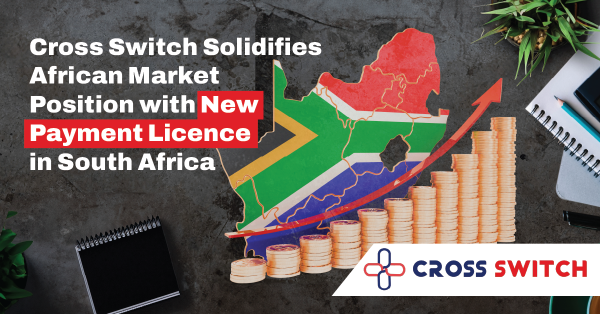
Cross Switch Solidifies Market Position With New Payment Licence in South Africa

Location: Business
Cross Switch

Cross Switch (www.Cross-Switch.com), a leading provider of innovative payment solutions, has reached a significant milestone by securing its own Third-Party Payment Processor (TPPP) licence.

The TPPP, issued by the Payments Association of South Africa (PASA) and sponsored by Absa, is a regulatory status that strengthens Cross Switch's position in the payments ecosystem. This achievement complements Cross Switch's recent certification as a Visa Payment Facilitator (PayFac).

Cross Switch brings a highly flexible payment platform (https://apo-opa.co/3GA0r1Q) to South Africa, enabling business scalability and growth. The company can now independently onboard merchants, fintechs and charities, substantially enhancing its service offering and announcing itself as an essential player in the South African payments landscape.

By obtaining an all-important TPPP licence, Cross Switch has reinforced its commitment to delivering quality, compliant and flexible payment solutions tailored specifically for South Africa's private and charitable sectors.

Cross Switch's entry as a licensed provider brings an adaptable API that allows South African merchants to transact seamlessly on the African continent, including in key markets such as South Africa, Kenya, Morocco and Ivory Coast. For merchants looking to expand into Latin America, Cross Switch also offers Argentina, Brazil, Mexico and Chile — with new countries, both in Africa and in other emerging markets, to be announced very soon!

“This is a vital step in expanding our network and strengthening our presence across the continent,” said Mark Chirnside, CEO of Africa, Cross Switch. “By enabling local merchants with multiple payment options, we're empowering African businesses with the tools to reach broader markets and unlock growth opportunities.”

Cross Switch now enables South African businesses to confidently target rapid expansion and deeper market penetration through frictionless access to local and international payment methods via its flexible API (CS+). The single API empowers merchants to accept payments across Africa and LATAM, and accept the local payment methods.

Cross Switch's immediate future in South Africa involves accelerating merchant onboarding. Contracts already signed represent a client base exceeding 1,000 merchants in South Africa. To complement over 1,000 merchants already using CS+ on the Continent.

Securing this licensing is a significant step forward in the Cross Switch journey. The company strives to realise its vision of delivering modern payment solutions that meet the varied needs of merchants and non-profits. The company's highly flexible payment platform drives financial inclusion and business scalability.

The company is also committed to expanding rapidly, enhancing its payment methods, and integrating advanced reconciliation engines — all underpinned by rigorous fraud prevention and risk management systems.

“Investing in South Africa is a strategic priority for Cross Switch,” said Tim Davis, Group CEO of Cross Switch. “We're resourcing up locally to ensure we're ready to meet growing demand, and this licence and certification enable us to deliver world-class payment services that are both agile and scalable.”

Cross Switch invites businesses interested in exploring robust and flexible payment solutions to connect directly at https://apo-opa.co/4jrGOrw to learn how its tailored offerings can support and amplify their operational ambitions.

Distributed by APO Group on behalf of Cross Switch.

Contact
South Africa: (+27) 21 205 5818
Luxembourg: (+352) 2088 1454
https://apo-opa.co/4jrGOrw

About Cross Switch:
Cross Switch is a payments technology company founded in 2022, operating across emerging markets, with active operations in South Africa, Kenya, Morocco, Ivory Coast and across Latin America. It provides flexible, secure and scalable solutions that support both local and cross-border transactions, helping merchants, fintechs and non-profits expand their reach and streamline their operations. Cross Switch is committed to driving financial inclusion and growth through collaboration, robust infrastructure, high service levels and a strong focus on emerging market needs.

Media files
Cross Switch
Download logo
Read moreCross Switch Solidifies Market Position With New Payment Licence in South Africa
23 April 2025

Atomic Alliances: China’s Strategic Push Into Africa’s Nuclear Energy Sector

Location: News
African Energy Chamber

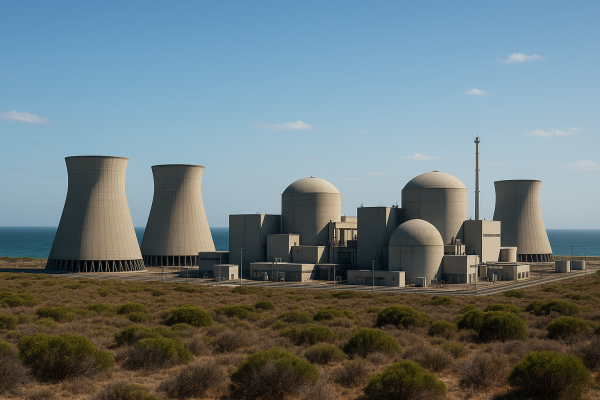
China is rapidly scaling up its energy diplomacy in Africa, with nuclear cooperation emerging as a cornerstone of its broader strategic agenda. On April 8, South Africa's Nuclear Energy Corporation signed a Memorandum of Understanding (MoU) with the China National Nuclear Corporation (CNNC) during an official visit to China led by South Africa's Electricity Minister, Dr. Kgosientsho Ramokgopa.

The agreement aims to revive South Africa's nuclear fuel cycle, accelerate the deployment of small modular reactors and promote collaboration on advanced fuels such as high-assay low-enriched uranium. With strong government support for nuclear power but limited domestic financing, South Africa is seeking international partners to inject capital and technology while maintaining state ownership of key infrastructure.

Minister Ramokgopa's working visit to China also aimed to find solutions to South Africa's energy insecurity and loadshedding. Central to this effort is the proposed life extension of the SAFARI-1 reactor at the Pelindaba nuclear research center, which is scheduled for retirement in 2030. Plans for a new multi-purpose reactor are already underway with R1.2 billion ($63.6 million) in seed funding allocated, but further investment is needed to move the project forward. This underscores the critical role of sustained nuclear investment in securing South Africa's long-term energy resilience and reducing dependence on aging infrastructure.

China's Expanding Footprint

China's ambitions in Africa's nuclear sector extend beyond South Africa. At the 2024 Forum on China-Africa Cooperation (FOCAC) in Beijing, China launched the China-Africa Forum on the Peaceful Use of Nuclear Technology, as part of its 2025-2027 Beijing Action Plan. The move reinforced China's long-term goal to become Africa's premier nuclear energy partner. With 53 of 54 African nations represented at FOCAC – including 51 Heads of State – the event provided a powerful platform for Beijing to promote its nuclear agenda and expand its diplomatic and technical reach, while highlighting how Africa is leveraging nuclear energy to meet its growing power demands.

For Africa, nuclear power presents a unique opportunity to address the continent's urgent energy access gap while advancing long-term sustainability. Nuclear offers baseload electricity with zero carbon emissions, making it well-suited to complement intermittent renewables like solar and wind. Small modular reactors, in particular, are seen as a viable solution for remote or off-grid regions due to their scalability, smaller footprint and enhanced safety features. With growing populations and rising industrial demand, several African nations view nuclear power as a low-carbon, scalable pathway to energy security and broader socioeconomic development.

Nuclear Expansion Across Africa

Currently, Africa's nuclear energy development is concentrated in six countries – Egypt, Ghana, Kenya, Morocco, Nigeria and South Africa. Of these, four have recently signed nuclear cooperation agreements with China. In September 2024, Nigeria entered high-level discussions with China on peaceful nuclear energy cooperation, covering the full project lifecycle – from research and training to construction and plant decommissioning. Earlier that year, Nigeria also signed an MoU with the CNNC aimed at operationalizing nuclear power plants by the 2030s. Ghana followed suit with a deal to deploy China's Hualong One reactor, while Kenya continues to pursue its longstanding 2015 agreement with China to develop a 1,000 MW plant by 2034.

The International Atomic Energy Agency projects a 58% increase in nuclear energy use in Africa by 2030, with a tenfold increase by 2050. With more than 600 million people on the continent lacking electricity access, China's nuclear partnerships are positioned to close critical power gaps while supporting shared decarbonization goals.

Against this backdrop, African Energy Week (AEW) 2025: Invest in African Energies serves as a pivotal platform for advancing nuclear energy collaboration between Africa, China and other global partners. Building on existing partnerships and recent MoUs, AEW will facilitate high-level discussions on technology transfer, investment frameworks and regulatory readiness to accelerate nuclear deployment in key African markets. These conversations will align national nuclear ambitions with China's global expertise, ensuring that energy security, sustainability and sovereignty are at the core of future collaborations.

AEW: Invest in African Energies is the platform of choice for project operators, financiers, technology providers and government, and has emerged as the official place to sign deals in African energy. Visit www.AECWeek.com for more information about this exciting event.

Distributed by APO Group on behalf of African Energy Chamber.

Media files
African Energy Chamber
Download logo
Read moreAtomic Alliances: China’s Strategic Push Into Africa’s Nuclear Energy Sector
16 April 2025

African Farmout Forum Returns to AEW 2025, Showcasing Emerging Block Opportunities

Location: Business
African Energy Chamber

The African Farmout Forum will return to African Energy Week (AEW): Invest in African Energies in 2025, offering a collaborative platform for international oil companies, national oil companies and upstream regulators to present their projects and block opportunities to a global audience. Led by global energy advisor Moyes & Co; independent A&D advisor Envoi Limited; and oil and gas asset platform FarmoutAngel, the forum serves as the premier platform to secure partnerships and deals across Africa's upstream sector.  

Over the years, the African Farmout Forum has played a vital role in facilitating farm-in agreements in both emerging and mature hydrocarbon markets. During the 2024 edition, promoted blocks spanned across Somalia, Morocco, Ghana, Nigeria, Sierra Leone, Equatorial Guinea, Namibia, Cameroon, São Tomé and Príncipe, Angola, the Democratic Republic of the Congo and Senegal, with two additional onshore blocks presented in Timor-Leste. An even wider range of opportunities is anticipated in 2025 as operators seek capital and technical expertise to advance new projects.   

AEW: Invest in African Energies is the platform of choice for project operators, financiers, technology providers and government, and has emerged as the official place to sign deals in African energy. Visit http://www.AECWeek.com for more information about this exciting event. 

Africa's upstream oil and gas sector is entering a new growth phase. According to the African Energy Chamber's (AEC) State of African Energy 2025 Outlook, upstream capital expenditure is projected to reach $43 billion in 2025, climbing to $54 billion by 2030. West and North Africa are set to lead this surge, accounting for half of the total spend.  

While offshore developments have led investment since 2023, the outlook suggests a balancing trend, with onshore and offshore spending expected to converge as interest grows in underexplored onshore acreage. Notable hotspots include North Africa, where Egypt and Algeria are witnessing heavy-capital flows; West Africa, with a surge in spending in Ivory Coast; and Southern Africa, led by markets such as Namibia – targeting first oil by 2029 – and Angola. An uptick in spending has also been registered in Zimbabwe (onshore) and South Africa (offshore).  

Amid this growth, Africa's M&A activity is gaining momentum. The first half of 2024 saw M&A deals surpass 2023 totals, with $12.7 billion in deals by July. With approximately $16 billion worth of assets holding over three billion barrels of oil equivalent resources currently on the market, African upstream M&A activity is expected to remain robust through 2025.  

The 2024/2025 period will also see more than 11 licensing rounds launched across the continent as governments aim to sustain or expand production. In North Africa, Libya launched a 22-block bid round in April 2025 as part of a strategy to boost oil output to two million barrels per day. Egypt recently closed submissions for its 12-block licensing round covering the Mediterranean and Nile Delta regions, while Algeria has extended the deadline for its latest round – offering six onshore blocks – to June 2025.  

In West Africa, Mauritania is expected to auction 15 offshore blocks in 2025 while Liberia has 29 offshore blocks on offer as part of a direct negotiation round. In southern Africa, Angola is preparing to launch its 2025 licensing round, while Namibia has introduced a new open-door licensing system to encourage exploration. Tanzania is promoting 24 oil and gas blocks, while South Africa is on track to open new offshore and onshore acreage in 2025.  

These rounds signal a wealth of new farm-in and partnership prospects, with the African Farmout Forum positioned to highlight the continent's most promising hydrocarbon basins. Featuring 7-minute deal pitches, a wall of farmouts and curated networking opportunities, the forum will catalyze upstream investment and deal-making in Africa. 

“The African Farmout Forum has become a strategic platform for companies to engage, foster partnerships and sign deals. By offering insight into strategic blocks, emerging basins and upcoming farm-in opportunities, the forum promotes collaboration at Africa's largest energy event,” states Tomás C. Gerbasio, VP Commercial and Strategic Engagement at the AEC.  

Distributed by APO Group on behalf of African Energy Chamber.

Media files
African Energy Chamber
Download logo
Read moreAfrican Farmout Forum Returns to AEW 2025, Showcasing Emerging Block Opportunities
16 April 2025

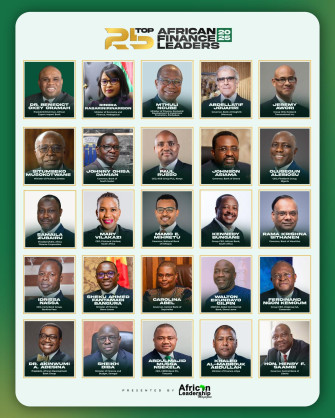
Africa’s Top 25 Finance Leaders for 2025

Location: Business
African Leadership Magazine

African Leadership Magazine (ALM) (www.AfricanLeadershipMagazine.co.uk) is pleased to unveil its highly anticipated Top 25 African Finance Leaders 2025 list — a prestigious editorial recognition that honours excellence, innovation, and transformative leadership within Africa's financial services and economic governance landscape. This year's cohort comprises distinguished finance ministers, central bank governors, CEOs of leading financial institutions, and other influential figures who are shaping the continent's economic architecture through visionary policy direction and exemplary stewardship.

The Top 25 list is a testament to the leaders who are championing fiscal responsibility, financial inclusion, and macroeconomic stability across the continent. These individuals have demonstrated a profound ability to navigate complex economic challenges, implement forward-thinking reforms, and inspire confidence in national and regional economies. Their collective leadership has contributed to enhanced investor confidence, accelerated digital finance adoption, and strengthened institutional frameworks that support inclusive and sustainable development. As Africa continues to assert itself as a dynamic player in the global economy, these leaders are setting the standard for excellence in financial governance, demonstrating the strategic foresight and resilience required to unlock the continent's vast economic potential.

“These finance leaders have not only surmounted formidable challenges but are actively shaping a new era of economic growth, transparency, and resilience,” said Dr. Ken Giami, Publisher & CEO of African Leadership Magazine. “Their bold and visionary leadership is redefining Africa's financial narrative and positioning the continent as a rising global financial powerhouse.”

The selection process follows a rigorous two-step procedure to ensure transparency and credibility. First, nominations are gathered from a global pool of experts in the finance and banking sectors, who identify individuals making significant contributions. Then, our editorial board conducts a thorough review, evaluating candidates based on their leadership, impact, and long-term influence on the African financial landscape. This comprehensive approach ensures that we honor only the most deserving leaders, whose work is truly transforming Africa's financial sector.”

The formal recognition and celebration of these leaders will take place at the African Finance Leadership Forum, scheduled for 22 April 2025 at the United States Capitol Building, Washington D.C., USA, on the margins of the 2025 Spring Meetings of the World Bank Group (WBG) and the International Monetary Fund (IMF).

The ALM Top 25 African Finance Leaders 2025:

  1. Dr. Benedict Okey Oramah – President/Chairman, African Export–Import Bank
  2. Mthuli Ncube – Minister of Finance, Economic Development & Investment Promotion, Zimbabwe
  3. Abdellatif Jouahri – Governor, Bank Al-Maghrib (Morocco)
  4. Jeremy Awori – Group CEO, Ecobank Transnational Inc.
  5. Situmbeko Musokotwane – Minister of Finance, Zambia
  6. Johnny Ohisa Damian – Governor, Bank of South Sudan
  7. Paul Russo – CEO, KCB Group PLC, Kenya
  8. Samaila Zubairu – President/CEO, Africa Finance Corporation
  9. Johnson Asiama – Governor, Bank of Ghana
  10. Olusegun Alebiosu – CEO, FirstBank Group, Nigeria
  11. Rindra Rabarinirinarison – Minister of Economy and Finance, Madagascar
  12. Mary Vilakazi – CEO, Firstrand Limited, South Africa
  13. Mamo E. Mihretu – Governor, National Bank of Ethiopia
  14. Kennedy Bungane – Group CEO, African Bank, South Africa
  15. Rama Krishna Sithanen – Governor, Bank of Mauritius
  16. Idrissa Nassa – CEO, Coris Bank Group, Burkina Faso
  17. Sheku Ahmed Fantamadi Bangura – Minister of Finance, Sierra Leone
  18. Carolina Abel – Governor, Central Bank of Seychelles
  19. Walton Ekundayo Gilpin – MD/CEO, Rokel Commercial Bank, Sierra Leone
  20. Ferdinand Ngon Kemoum – Group CEO, Oragroup SA, Cameroon
  21. Dr. Akinwumi A. Adesina, President, African Development Bank Group
  22. Sheikh Diba – Minister of Finance and Budget, Senegal
  23. Abdulmajid Mussa Nsekela – CEO, CRDB Bank Plc, Tanzania
  24. Khaled Al-Mabrouk Abdullah – Minister of Finance, Libya
  25. Hon. Henry F. Saamoi – Governor, Central Bank of Liberia

Distributed by APO Group on behalf of African Leadership Magazine.

For media inquiries, please contact:
Ehis Ayere
Group General Manager
info@africanleadership.co.uk
+44 23 9265 8276

About African Leadership Magazine:
The African Leadership Magazine, published by the African Leadership Organization (UK), focuses on presenting the best of Africa to a global audience, telling the African story from an African perspective while developing solutions to challenges facing the continent today. We have committed the last 16 years to promoting impactful leadership on the continent and promoting African opportunities globally through an ecosystem of quality Afro-positive content, Africa trade facilitation and market entry solutions, Afro-centric communities and business networking platforms, as well as through public sector training and consulting.

Media files
African Leadership Magazine
Download logo
Read moreAfrica’s Top 25 Finance Leaders for 2025
16 April 2025

Egypt Selected to Host Inaugural IFAF African Flag Football Championships

Location: News

National Football League (NFL)
Download logo

  • Teams From Across Africa Will Feature in First-Ever IFAF Continental Championships in Region from June 20-21 
  • NFL Africa (www.NFL.com) to Host Football Development Events in Egypt Alongside IFAF Championships 

The International Federation of American Football (IFAF) is delighted to announce Egypt as the host nation for the inaugural 2025 IFAF African Flag Football Championships – AFRICA FLAG 2025. 

AFRICA FLAG 2025 will take place from June 20-21 in Cairo, Egypt, welcoming elite men's and women's national teams from across Africa for the first time at an IFAF Continental Championships.  As participation in flag football continues to grow rapidly throughout the continent, this inaugural event offers a pathway to qualification for the 2026 IFAF Flag Football World Championships and represents a significant milestone on the journey towards flag football's historic Olympic debut at the Olympic Games Los Angeles 2028. 

"With the announcement of the first ever IFAF Continental Championships in Africa, we are taking another step in the global development of our sport,” said IFAF President Pierre Trochet. “Looking ahead to flag football's historic Olympic debut at LA28, our Continental Championships provide a fantastic platform to further accelerate the sport's regional growth at grassroots and elite levels. Egypt will be a great host, and we are certain AFRICA FLAG 2025 will play its part in inspiring new athletes and fans across a continent that has already produced a rich heritage of American football talent.” 

Hosted in partnership with the National Football League and Egyptian Federation of American Football (EFAF), various youth football development events will take place in Cairo in conjunction with the upcoming Championships — expanding the league's NFL Africa program to Egypt for the first time, creating more opportunities for young athletes from across the continent to play American football.  

In collaboration with IFAF and EFAF, U12 teams of boys and girls from Egypt, Ghana, Kenya and Nigeria will compete in a multi-day NFL Flag Continental Championship, facing off in the championship game on June 23. NFL Flag is the official flag football program of the NFL — working to bring the non-contact version of American football to young athletes worldwide.  

The NFL will also host a football talent identification event with prospects from across Africa. Athletes will showcase their skills and abilities with the potential to advance on through the NFL Academy Europe-Africa program in Loughborough, U.K. or the International Player Pathway (IPP) program — two core pillars of the NFL's global football development initiatives.  

A number of current NFL players will join these events in Egypt, including New York Giants' Bobby Okereke (Nigeria), Minnesota Vikings' Brian Asamoah II (Ghana) and NFL free agent Dieter Eiselen (South Africa). Okereke, Asamoah II and Eiselen are supporting football operations for national federations in the lead up to and during the Championships, as well as NFL Africa's youth football programming.  

“I'm excited and inspired to lead the NFL's efforts in Africa and to again expand our programming to a fifth country: Egypt — an innovative market for sport, with incredible talent,” said two-time Super Bowl Champion and NFL Africa Lead Osi Umenyiora. “Back-to-back days of NFL Africa events alongside the IFAF Continental Championships in Egypt helps showcase the aspirational pathways for talented young athletes across the continent, as we look ahead together to flag football in the LA Olympic Games in 2028. It will be a great weekend of football, and one that will create a powerful legacy as we introduce more and more young athletes to our game.”  

AFRICA FLAG 2025 will reinforce the acceleration of flag football's growth across the continent. At the record-breaking 2024 IFAF Flag Football World Championships, Cameroon made history as the first African nation to compete on the global stage. Since 2023 participation in flag football has surged with Egypt and Nigeria seeing increases of 149% and 85%, respectively. In Nigeria, the national federation's outreach program has already engaged more than 13,000 young people, highlighting the sport's expanding reach and appeal. 

IFAF and the NFL are working hand-in-hand to develop and grow flag football across the continent, collaborating to create meaningful educational pathways for coaches and officials delivering flag across Africa. This commitment was reaffirmed at the recent three-day flag football coach education and officiating clinic in Ghana (April 11-13). The clinic welcomed new and experienced coaches and officials from 10 African countries — Cameroon, Egypt, Ghana, Ivory Coast, Kenya, Morocco, Nigeria, South Africa, Tunisia and Uganda — enabling further long-term engagement and participation in the sport in the region. 

As part of the NFL Africa program, the league has also undertaken NFL Flag development, talent identification camps and fan events across Ghana, Kenya, South Africa and Nigeria since 2022.  

“We are extremely proud to be hosting the first ever AFRICA FLAG 2025 in Cairo and to be writing Egypt into flag football's history books,” said EFAF Founder Ali Rafeek. “Hosting this tournament allows us to put a spotlight on our talented athletes and to show the next generation what's possible in this sport — whether you're picking up a football for the first time or dreaming of the Olympics.” 

“AFRICA FLAG 2025 is a huge moment for the continued growth of flag football across our continent,” said Egyptian Women's National Team Quarterback Amira Nader. “It's an opportunity to showcase the incredible talent and passion rising throughout Africa and take a meaningful step towards making history at LA28. As the first-ever Continental Championships, this event will inspire the next generation to pick up a football and believe anything is possible.” 

IFAF continues to reinforce structured and competitive pathways for flag football, with the Continental Championships as an important stepping stone in the journey towards the 2026 IFAF Flag Football World Championships. The record-breaking 2024 edition of the IFAF Flag Football World Championships was the culmination of IFAF's biggest-ever international cycle of flag football competition and brought together elite athletes representing 31 nations from five continents at the most competitive and thrilling tournament to date. Flag football is played by 20 million athletes in more than 100 countries, and with an ever-expanding African presence, these events will serve as key milestones on the road to LA28. 

Details regarding AFRICA FLAG 2025's participating nations as well as the 2025 Continental Championships for other regions will be announced in the coming weeks, offering teams from around the world more opportunities to compete and prepare for the journey toward LA28. 

For more details on the Championships, visit the IFAF website (https://apo-opa.co/42LiURK) or follow us on social media. 

Distributed by APO Group on behalf of National Football League (NFL).

For more information on NFL Flag, the official flag football program of the NFL, visit here (https://apo-opa.co/3G70ylD). 

For the latest NFL Africa activity, follow @ NFLAfrica on:
Instagram: https://apo-opa.co/43VmZnx
X: https://apo-opa.co/43QGKN7

About IFAF:     
The International Federation of American Football (IFAF) (https://apo-opa.co/42LiURK) is the international governing body for the sport of American football and is responsible for all regulatory, competition, performance and development aspects of the game on a global level. Fully recognised by the International Olympic Committee and a signatory to the WADA Code, IFAF has 75 member nations across 5 continents.     

About the National Football League:  
The National Football League is America's most popular sports league, comprised of 32 franchises that compete each year to win the Super Bowl, the world's biggest annual sporting event. Founded in 1920, the NFL developed the model for the successful modern sports league, including national and international distribution, extensive revenue sharing, competitive excellence, and strong franchises across the country.  

Read moreEgypt Selected to Host Inaugural IFAF African Flag Football Championships
11 April 2025

14% Increase in Spyware Attacks on Businesses in Africa

Location: News
Kaspersky

As part of the company's participation at the GITEX Africa conference, taking place in Morocco on 14-16 April 2025, Kaspersky (www.Kaspersky.co.za) will address the dynamics for cyberthreats in the African region as per the latest anonymised data from the Kaspersky Security Network (KSN)[1]. From 2023 to 2024 businesses in Africa were targeted by web threats, on-device threats, and attacks aiming to steal data, including spyware and password stealers. Phishing and ransomware continue to be significant threats in the region, with 66 million phishing link clicks seen by Kaspersky in the African region in 2024, including over 14.8 million phishing link clicks by corporate users.

Web-based threats, or online threats, are a category of cybersecurity risks that may cause an undesirable event or action affecting users browsing the Internet. According to Kaspersky data, there were 131 580 587 web threats detected in 2024 in the African region, including almost 20 million attack attempts in Kenya, almost 17 million in South Africa, and 12.6 million in Morocco. Businesses were targeted by web threats more often in 2024 than in 2023, with threat detections increasing by 1.2%.

Local (on device) threats include malware that is spread via removable USB drives, CDs and DVDs, or that initially makes way onto the computer in non-open form (for example, programs in complex installers, encrypted files, etc.). According to Kaspersky telemetry, local (on device) threat detections in organisations in the African region in 2024 increased by 4% compared to 2023. Among the countries that saw growth in local threats detected in organisations were Nigeria (169% increase), Ethiopia (86%), South Africa (32%), Senegal (11%), and Morocco (9%).

There has been a spike of threats related to data theft. According to Kaspersky data, there was a 14% growth in spyware attack detections on businesses in the African region from 2023 to 2024. Spyware is secretly installed on a user's computer to monitor their actions and collect their data. Apart from that, there has been a 26% increase in password stealer detections. Password stealers are a type of malware designed to harvest login credentials and other sensitive data.

“Our statistics show an increase in attack detections for several types of cyberthreats, and the factors driving these increases are multifaceted. In the B2B sector, the continuing shift toward hybrid work models and the rush to digitise operations — often outpacing cybersecurity investments — may leave businesses in Africa exposed to advanced persistent threats. In the B2C space, the explosion of digital financial services, coupled with low digital literacy rates, makes individuals prime targets for opportunistic attacks,” comments Maher Yamout, Lead Cybersecurity Researcher with Kaspersky Global Research and Analysis Team. “Organisations in Africa should prioritise a unified approach by enhancing collaboration, investing in specialised cybersecurity training, and promoting digital literacy to effectively combat the rising tide of cybercrime. Initiatives like the African Cyber Surge operation and targeted educational programs can serve as blueprints for building a resilient digital ecosystem across the continent.”

To stay protected, Kaspersky suggests following the recommendations below.

Individual users:

  • Do not download and install applications from untrusted sources.
  • Do not click on any links from unknown sources or suspicious online advertisements.
  • Always use two-factor authentication when available. Create strong and unique passwords, using a mix of lower-case and upper-case letters, numbers, and punctuation. Use a reliable password manager to help to remember them.
  • Always install updates when they become available; they contain fixes for critical security issues.
  • Ignore messages asking to disable security systems for office or cybersecurity software.
  • Use a robust security solution appropriate to your system type and devices, such as Kaspersky Premium (apo-opa.co/3G2yjUZ).

Organisations:

  • Always keep software updated on all the devices you use to prevent attackers from infiltrating your network by exploiting vulnerabilities.
  • Do not expose remote desktop services (such as RDP) to public networks unless absolutely necessary and always use strong passwords for them.
  • Use solutions such as Kaspersky NEXT EDR Expert (apo-opa.co/4ifQ8NV) for comprehensive visibility across all endpoints on a company's corporate network to get superior defense, automate routine EDR tasks, enable analysts to speedily hunt out, prioritise, investigate, and neutralise complex threats and APT-like attacks.
  • Use the latest Threat Intelligence (apo-opa.co/3XVFTa3) information to stay aware of actual TTPs used by threat actors.
  • Back up corporate data regularly. Backups should be isolated from the network. Make sure you can quickly access the backups in an emergency if needed.

The Kaspersky stand at GITEX Africa (https://GITEXAfrica.com) in Morocco will be located in Hall 13, 13C-20, while a keynote titled “When AI/ML fails in cybersecurity, humans are the last line of defense” will take place at the Dark Stage on April 15 at 2:10 PM.


Reference:

[1] Data sent to Kaspersky is anonymized and protected, even in transit, in accordance with stringent industry standards including encryption, digital certificates, segregated storage and strict data access policies. Learn more about KSN here: www.Kaspersky.com/KSN

Distributed by APO Group on behalf of Kaspersky.

For further information please contact:
Nicole Allman
INK&Co. (https://INKandCo.co.za)
nicole@inkandco.co.za

Follow us:
Facebook: https://apo-opa.co/3RfDPWG
X: https://apo-opa.co/3XUJzJe
YouTube: https://apo-opa.co/4icxu9w
Instagram: https://apo-opa.co/3G7fAry
Blog: https://apo-opa.co/44smi5c

About Kaspersky:
Kaspersky is a global cybersecurity and digital privacy company founded in 1997. With over a billion devices protected to date from emerging cyberthreats and targeted attacks, Kaspersky's deep threat intelligence and security expertise is constantly transforming into innovative solutions and services to protect businesses, critical infrastructure, governments and consumers around the globe. The company's comprehensive security portfolio includes leading endpoint protection, specialized security products and services, as well as Cyber Immune solutions to fight sophisticated and evolving digital threats. We help over 200,000 corporate clients protect what matters most to them. Learn more at www.Kaspersky.co.za.

Media files
Kaspersky
Download logo
Read more14% Increase in Spyware Attacks on Businesses in Africa
9 April 2025

Africa Finance Corporation Tops Us$1 Billion Revenue for First Time as Landmark Projects Unlock Growth Across the Continent

Location: Business
Africa Finance Corporation (AFC)

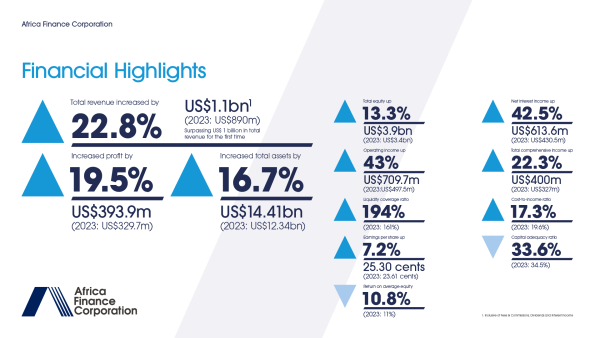
Africa Finance Corporation (AFC) (www.AfricaFC.org), the continent's leading infrastructure solutions provider, has announced its strongest financial performance to date, with total revenue for the year ended 31 December 2024 surpassing US$ 1 billion for the first time in the Corporation's history.

This record performance marks a significant milestone in AFC's mission to close Africa's infrastructure gap through scalable, de-risked investments that attract global capital and deliver tangible development outcomes. The Corporation posted a 22.8% increase in total revenue to US$1.1 billion and a 22.3% rise in total comprehensive income to US$400 million, up from US$327 million in 2023.

AFC's earnings growth was driven by improved asset yields, prudent cost-of-funds management and sustained traction in advisory mandates.  

Further significant financial highlights include:

  • Net interest income up 42.5% to US$ 613.6 million
  • Fee and commission income rose to US$109 million, the highest in over five years
  • Operating income climbed 42.7% to US$709.7 million
  • Total assets reached a record US$14.4 billion, a 16.7% year-on-year increase
  • Liquidity coverage ratio strengthened to 194%, providing over 34 months of cover
  • Cost-to-income ratio improved to 17.3% from 19.6% in 2023

Throughout 2024, AFC continued to scale its impact by mobilising capital for landmark projects across energy, transport, and natural resources. These included the Lobito Corridor – a cross-border railway development spanning Angola, the Democratic Republic of Congo (DRC), and Zambia. AFC led the initiative to secure a concession agreement within one year of the initial Memorandum of Understanding (MoU), an unprecedented achievement for a project of its scale. In the DRC, AFC also invested US$150 million in the Kamoa-Kakula Copper Complex, Africa's largest copper producer and one of the most sustainable globally, thanks to its high-grade ore and renewable-powered smelter.

Other milestones transactions included financing support for the commissioning of the Dangote Refinery, the largest in Africa, and continued progress on AFC-backed Infinity Power Holding's 10 GW clean energy ambition, with power purchase agreements secured in Egypt and South Africa. AFC also invested in the 15GW Xlinks Morocco-UK Power Project, providing US$14.1 million to support early-stage development of a transcontinental renewable energy pipeline between North Africa and Europe.

AFC strengthened its capital base and expanded its investor network through several landmark funding initiatives. These included a US$ 1.16 billion syndicated loan - the largest in its history, a US$500 million perpetual hybrid bond issue, and the successful execution of Nigeria's first-ever domestic dollar bond, which raised US$900 million at 180% oversubscription. AFC also returned to the Islamic finance market after eight years, closing a US$400 million Shariah-compliant facility.

The year also saw strong momentum in equity mobilisation, with US$181.8 million in new capital raised from ten institutional investors. These included Turk Eximbank - AFC's first non-African sovereign shareholder - the Arab Bank for Economic Development in Africa (BADEA), and several major pension funds spanning Cameroon, Seychelles, Mauritius, and South Africa. Ratings agencies affirmed AFC's robust credit profile, with AAA ratings from S&P Global (China) and China Chengxin International, and a stable A3 Outlook from Moody's.

“These results send a clear message that strategic investment in African infrastructure creates lasting value for both beneficiaries and investors,” said Samaila Zubairu, President & CEO of AFC. “In 2024, we exceeded the billion-dollar revenue mark, delivered game-changing projects, and reinforced our financial resilience—demonstrating the scalability of our unique model that blends purpose with performance to accelerate Africa's economic transformation.”

Read the full annual report here (https://apo-opa.co/424qlmR)

Distributed by APO Group on behalf of Africa Finance Corporation (AFC).

Media Enquiries:
Yewande Thorpe
Communications
Africa Finance Corporation
Mobile: +234 1 279 9654
Email: yewande.thorpe@africafc.org

About AFC:
AFC was established in 2007 to be the catalyst for pragmatic infrastructure and industrial investments across Africa. AFC's approach combines specialist industry expertise with a focus on financial and technical advisory, project structuring, project development, and risk capital to address Africa's infrastructure development needs and drive sustainable economic growth.

Seventeen years on, AFC has developed a track record as the partner of choice in Africa for investing and delivering on instrumental, high-quality infrastructure assets that provide essential services in the core infrastructure sectors of power, natural resources, heavy industry, transport, and telecommunications. AFC has 45 member countries and has invested over US$15 billion in 36 African countries since its inception. www.AfricaFC.org

Media files
Africa Finance Corporation (AFC)
Download logo
Read moreAfrica Finance Corporation Tops Us$1 Billion Revenue for First Time as Landmark Projects Unlock Growth Across the Continent
8 April 2025

Hotel Development Booms in Africa

Location: News
The Bench

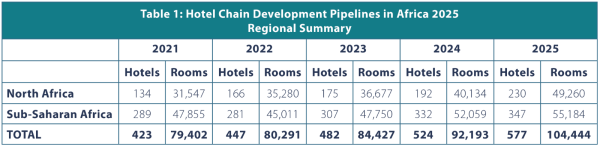
This year's Hotel Development Pipeline Report, the definitive study of international hospitality development projects in Africa, reveals record activity. There are 577 hotels and resorts, with 104,444 rooms, in the development pipeline, up by 13.3% on 2024, way ahead of the single digit pipeline growth reported globally by the leading international chains.

The report, compiled by Lagos-based W Hospitality Group, with data from 50 international and regional hotel chains, shows that development activity has been growing impressively in North Africa, which saw a 23% year-on-year increase, compared to a 6% increase in sub-Saharan Africa. Over the past five years, the hotel development pipeline has grown at an annualised rate of 4% in sub-Saharan Africa, 12% in North Africa and 7% overall.

Egypt continues to lead the way in terms of development, with 143 hotels and 33,926 rooms in the pipeline there. This is almost four times the number of rooms in second-placed Morocco, which has 8,579 rooms in 58 hotels. The following eight countries, ranked by number of rooms, comprise Nigeria, 7,320; Ethiopia, 5,648; Cape Verde, 5,565; Kenya, 4,344; Tunisia, 4,336; South Africa, 4,076; Tanzania, 3,432; and Ghana, 3,125. International hotel chains have deals signed in 42 of Africa's 54 countries.

Despite its clear leadership in the absolute pipeline numbers, Egypt has fewer than 50% of rooms under construction, a significantly lower proportion than second-placed Morocco, with over 72%. Of the top 10 countries, Ethiopia has the highest ratio of rooms “on site”, followed by Morocco and Ghana. Cape Verde, Nigeria and Tanzania have some of the lowest percentages. However, “under construction” does not necessarily mean that there is activity and progress towards completion and opening – many of the sites in Nigeria and Ghana, for example, have been closed for several years, with hardly a hard hat in sight.

A more granular analysis, looking at the location of planned properties, reveals an extraordinary boom in Cairo, with 17,757 new rooms projected in over 70 hotels. The contrast with the second-placed location, Sharm El Sheikh, is dramatic, where 4,231 rooms are planned in fewer than 10 properties. The cities and resorts with the next largest pipelines by number of rooms are Lagos, 3,709; Boa Vista, 3,650; Addis Ababa, 3,369; Casablanca, 2,939; Accra, 2,652; Abuja, 2,570; Zanzibar, 2,523; and Dakar, 2,334.

The growth is being driven strongly by the major international hotel chains, with Marriott International leading the way, 165 hotels with 29,639 rooms. It is followed by Hilton, 93 hotels with 17,040 rooms; Accor, 73 hotels with 15,013 rooms; IHG, 40 hotels with 7,951 rooms; Radisson Hotel Group, 32 hotels with 6,346 rooms; TUI Hotels & Resorts, 11 hotels with 2,954 rooms; Barceló Hotels & Resorts, 7 hotels with 2,193 rooms; The Ascott, 15 hotels with 1,897 rooms; Kerten Hospitality, 13 hotels with 1,881 rooms and Wyndham Hotels & Resorts, 7 hotels with 1,706 rooms.

In the race for dominance, Hilton added slightly more rooms to its African pipeline last year than Marriott International and achieved a higher percentage growth. Barceló Hotels & Resorts recorded the largest percentage growth, more than doubling its pipeline to 2,193 rooms, with three large resort signings in North Africa.

Below the headline numbers, there are three notable trends. First, the actualisation rate (actual openings vs. expected openings), which has nearly doubled from 21% in 2023 to 38% in 2024. While it's substantially less than the 75% actualisation rate achieved in 2019, it shows a continuing recovery from the economic devastation of COVID-19. Of the total 104,444 rooms in the pipeline, over 50,000 rooms (nearly 50%) in 304 hotels are expected to open in 2025 and 2026. 

Second, resort projects are increasing much faster than city or airport hotels, both in percentage terms and in absolute numbers, driven by the number of signings and by the larger average size of the developments, 210 keys vs. 170.  Also, almost half of the rooms that opened last year were in resorts.

Third, there is a definite movement by the chains towards the franchise model, with 108 projects representing almost 19% of the total, compared to less than 10% in 2020. A major factor is the emergence of quality, international, white-label operators such as Aleph Hospitality and Valor Hospitality, and some indigenous operators in Nigeria, Kenya and elsewhere, that are increasing confidence that brand standards will be met. 

The full report will be discussed at FHS Africa (formerly AHIF) 17-19 June in Cape Town. It is the leading hospitality investment conference in the region, which brings together senior decision-makers to shape the future of the industry. Matthew Weihs, Managing Director of the Bench, which organises FHS Africa, said: “The growth in hotel development across Africa is a testament to the continent's economic and tourism potential. Furthermore, the commitment from the international hotel chains makes it clear that global players see Africa as a strategic opportunity."

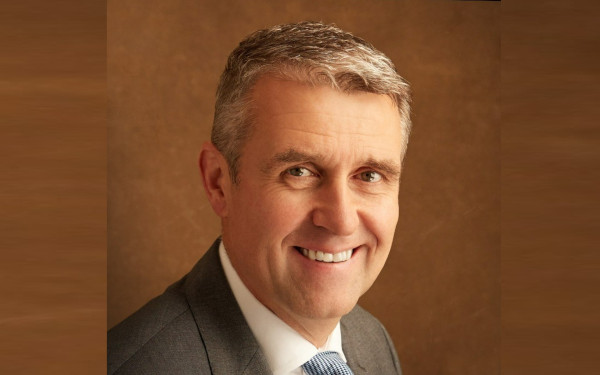
Trevor Ward, Managing Director of W Hospitality Group, concluded: “Despite the various trials that the continent faces, the fact that hotel chains signed 125 new deals last year, with 21,000 rooms, is evidence that opportunities for further development abound. According to the Global Cities Institute, by the year 2100, 10 of the world's 16 largest cities will be in Africa, with all but one of them (Cairo) in sub-Saharan Africa. So, one might say that development activity in Africa has barely scratched the surface.”

Distributed by APO Group on behalf of The Bench.

For further information and high-resolution images, please contact:
David Tarsh
+44 (0) 20 7602 5262
+44 (0) 7770 816 070
Email: David@Tarsh.com.

About W Hospitality Group:
The W Hospitality Group, a member of Hotel Partners Africa, specialises in the provision of advisory services to the hotel, tourism and leisure industries, providing a full range of services to clients who have investments in the sector, or who are looking to enter them through development, acquisition or other means. In sub-Saharan Africa W Hospitality Group is regarded as the market leader due to the market and financial expertise of its staff, its worldwide knowledge, and its commitment to its clients.  In Africa, W Hospitality Group has to date worked in 40 countries on the continent, from its Lagos and Addis Ababa offices.

www.W-HospitalityGroup.com

About FHS Africa (Formerly AHIF):
For over a decade, the Future Hospitality Summit Africa (FHS Africa) has been the launchpad for hospitality investment in Africa, driving growth, connecting visionaries, and transforming the continent's tourism and hospitality landscape. As a beacon of opportunity, FHS Africa brings together global investors, developers, operators, and industry leaders committed to turning potential into reality.

www.AHIF.com

Strategic Partners: Accor, BWH Hotels, Hilton, IHG Hotels & Resorts, Marriott International, Radisson Hotel Group
Headline Sponsors: CHIC, Hansgrohe, TUI Hotels & Resorts
Sponsors: Aleph Hospitality, CityBlue Hotels, Equate, JLL, Knight Frank, St Helena Island, STR, TIME Hotels, TV5 Monde, Valor Hospitality Partners
Official Carriers: Discover Airlines, Kenya Airways
Supporter: South Africa Tourism

About The Bench:
The Bench has a legacy of delivering world-leading investment forums and conferences in Europe, Africa, the Middle East, and Latin America. The key principle behind these events is "dealmaking'. Transforming the way businesses connect; the Bench has developed a reputation for creating innovative and high-impact industry meetings.

For over two decades, government leaders, tourism ministries, global travel & tourism associations, the world's most influential hospitality brands, hotel owners & investors, renowned restaurant groups, airlines & aviation authorities, destination developers, asset managers, financial groups, and consultants have been participating in the Bench's events. These include FHS Africa, FHS World, FHS Saudi Arabia and AviaDev, where industry players showcase their brands, position themselves as thought leaders and innovators, and connect with the right individuals, opportunities and knowledge.

Learn more at TheBench.com

Media files
The Bench
Download logo
Read moreHotel Development Booms in Africa
3 April 2025

156 Players from Record 28 Countries to Compete in 2025 Basketball Africa League Season

Location: News
Basketball Africa League (BAL)

  • - Fans Can Watch Every Game Live on the NBA App (https://apo-opa.co/4lg5uVc), www.NBA.com, https://BAL.NBA.com and the BAL's YouTube Channel (https://apo-opa.co/3Eie70G); Games Will Reach Fans in 214 Countries and Territories in 17 Languages - 
  • - BAL Will Honor NBA Legend Dikembe Mutombo Throughout the Season - 

The Basketball Africa League (BAL) today announced that 156 players from a record 28 countries across five continents will compete in the league's milestone fifth season, which will tip off on Saturday, April 5 at the Prince Moulay Abdellah Sports Complex in Rabat, Morocco.* 

In the season opener, 2023 third-place finisher Stade Malien (Mali) will face 2024 third-place finisher Rivers Hoopers (Nigeria) at 4:00 p.m. GMT. In the second game, home team Fath Union Sport (FUS; Morocco) will take on first-time BAL participant Al Ittihad (Egypt) at 7:00 p.m. GMT.  The complete season schedule is available at BAL.NBA.com/schedule. 

The 2025 BAL season will reach fans in 214 countries and territories in 17 languages through free-to-air and paid TV broadcast partnerships with the African Union of Broadcasting, American Forces Network (AFN), Canal+, ESPN, FIBA's digital platform Courtside 1891, NBA TV, Ninety Media Services, SNRT, Tencent Sports, TV5 Monde and livestreaming on the NBA App (https://apo-opa.co/4lg5uVc), www.NBA.com, https://BAL.NBA.com and the BAL's YouTube Channel (https://apo-opa.co/3Eie70G).

The BAL also today announced that the league will honor NBA Legend Dikembe Mutombo throughout the season, including by featuring a “DM55” patch on all player jerseys and select warm-up gear, as well as moments of silence ahead of each conference group phase.  The late four-time NBA Defensive Player of the Year and Naismith Basketball Hall of Famer served as the NBA's first global ambassador following his retirement in 2009. 

Single-game tickets for the games in Rabat are available online at Guichet.com and BAL.NBA.com.  Fans who purchase tickets will also have free access to the BAL Fan Zone at the arena.   

During the 2025 BAL season, each four-team conference will play a 12-game group phase during which each team will face the other three teams in its conference twice. During group phase play, every team will play on every gameday.  The Kalahari Conference group phase will take place from April 5 – Sunday, April 13 in Rabat. The Sahara Conference group phase will take place from Saturday, April 26 – Sunday, May 4 at the Dakar Arena in Senegal. The Nile Conference group phase will take place from Saturday, May 17 – Sunday, May 25 at BK Arena in Kigali, Rwanda. Eight teams from across the three conferences will travel to Pretoria, South Africa for four seeding games followed by an eight-game, single-elimination playoffs and finals from Friday, June 6 – Saturday, June 14.   

View 2025 Basketball Africa League Rosters : https://apo-opa.co/4iNOUKJ


*Rosters are subject to change and will be updated in real-time on the team roster pages at https://BAL.NBA.com. 

Distributed by APO Group on behalf of Basketball Africa League (BAL).

Contact:
Edwin Eselem
Basketball Africa League
+221 78 615 42 87
EEselem@theBAL.com

Fans can follow the BAL (@theBAL) on:
Facebook: https://apo-opa.co/4i4vxfk
Instagram:  https://apo-opa.co/4cADrfr
Threads: https://apo-opa.co/3FQO6Gl
X: https://apo-opa.co/42h01ES
YouTube: https://apo-opa.co/3Eie70G
Register their interest in receiving more information at https://BAL.NBA.com

About the BAL:
The Basketball Africa League (BAL), a partnership between the International Basketball Federation (FIBA) and NBA Africa, is a professional league featuring 12 club teams from across Africa that will tip off its fifth season in April 2025.  Headquartered in Dakar, Senegal, the BAL builds on the foundation of club competitions FIBA Africa has organized across the continent and marks the NBA's first collaboration to operate a league outside North America.

Media files
Basketball Africa League (BAL)
Download logo
Read more156 Players from Record 28 Countries to Compete in 2025 Basketball Africa League Season
24 March 2025

Cassava to Upgrade Its Data Centres

Location: Business
Cassava Technologies

Cassava Technologies (www.CassavaTechnologies.com) announced today that it plans to build Africa's first AI factory — a powerful and super-secure data centre facility powered with NVIDIA AI computing technology. This will give African businesses, governments and researchers access to cutting-edge AI computing capacity — helping them develop smarter AI products, streamline operations and stay competitive in a fast-changing world. It provides the supercomputers and software needed to train AI while keeping data within Africa's borders. 

Cassava plans to deploy NVIDIA accelerated computing and AI software using NVIDIA Cloud Partner (NCP) reference architectures, at its data centres in South Africa by June 2025, with expansion planned at its other data centre facilities in Egypt, Kenya, Morocco and Nigeria. Cassava's AI Factory will leverage the company's pan-African high-speed, ultra-low-latency, fibre-optic network with sustainable data centres to deliver AI as a Service (AIaaS). Cassava's world-class data centres are designed to be energy efficient, using less electricity to power AI computing workloads. 

NVIDIA GPU-based supercomputers will power the AI factory, enabling faster AI model training, fine-tuning and advanced inference capabilities. Cassava aims to be the first to introduce these accelerated computing platforms to Africa as an NCP, playing a crucial role in the continent's AI ecosystem. 

The Cassava AI Factory will ensure businesses and researchers have access to the AI computing power required to scale, boost productivity and power innovation. By using this secure, high-performance AI Factory, African businesses and governments can develop local solutions to local challenges, enabling Africans to build, train, scale and deploy AI in a secure environment compliant with global and local regulations. 

“Building digital infrastructure for the AI economy is a priority if Africa is to take full advantage of the fourth industrial revolution. Our AI Factory provides the infrastructure for this innovation to scale, empowering African businesses, startups and researchers with access to cutting-edge AI infrastructure to turn their bold ideas into real-world breakthroughs — and now, they don't have to look beyond Africa to get it,” said Strive Masiyiwa, Founder & Chairman of Cassava. “Collaborating with NVIDIA gives us the advanced computing capabilities needed to drive Africa's AI innovation while strengthening the continent's digital independence.” 

“AI is helping innovators solve our greatest challenges in agriculture, healthcare, energy, financial services and many other industries creating opportunity in Africa,” said Jaap Zuiderveld, VP EMEA at NVIDIA. “As an NVIDIA Cloud Partner, Cassava is providing essential infrastructure and software to help pioneering companies and organizations accelerate AI development to foster innovation across the continent.” 

Cassava's AI Factory marks the next step in the group's long-standing leadership in providing world class digital solutions, reinforcing its broader commitment to responsible AI adoption, innovation and productivity growth in Africa. 

Distributed by APO Group on behalf of Cassava Technologies.

About Cassava Technologies:
Cassava Technologies is a global technology leader of African heritage providing a vertically integrated ecosystem of digital services and infrastructure enabling digital transformation. Headquartered in the UK, Cassava has a presence across Africa, the Middle East, Latin America and the United States of America. Through its business units, namely, Cassava AI, Liquid Intelligent Technologies, Liquid C2, Africa Data Centres, and Sasai Fintech, the company provides its customers' products and services in 94 countries. These solutions drive the company's ambition of establishing itself as a leading global technology company of African heritage. https://www.CassavaTechnologies.com/  

Media files
Cassava Technologies
Download logo
Read moreCassava to Upgrade Its Data Centres
21 March 2025

UNIDO and Japan Highlight Longstanding Partnership for and With Africa at Special Event

Location: News

United Nations Industrial Development Organization (UNIDO)
Download logo

The Permanent Mission of Japan to the International Organizations in Vienna and the United Nations Industrial Development Organization (UNIDO) jointly hosted the “UNIDO-Japan partnership for Africa” event at the Vienna International Centre this week. Held in the framework of the Ninth Tokyo International Conference on African Development (TICAD 9), it showcased achievements through a week-long panel exhibition and a series of thematic discussions. 

An opening ceremony on 17 March 2025 in the Rotunda featured remarks by UNIDO Director General Gerd Müller (via video message) and the co-host, Ambassador Atsushi Kaifu of Japan. Ambassador Maimounata Ouattara of Burkina Faso, Chairperson of the African Group in Vienna and UNIDO Deputy to the Director General and Managing Director Yuko Yasunaga also provided opening remarks. A musical performance by the My Heart String Quartet Hiroshima accompanied the ceremony. 

In his video statement, Director General Müller underscored the strength of the partnership between UNIDO and Japan, noting, “UNIDO and Japan together address poverty and hunger, advance climate action and foster a circular economy. We create jobs and livelihoods around the world, offering perspectives for the future”. Ambassador Kaifu of Japan underscored the significance of the year 2025, as the TICAD 9 Summit will be held this August in Yokohama, Japan. He expressed the hope that “this week's event provides an opportunity to explore innovative solutions for Africa and serves as a significant milestone in advancing the TICAD process”.

Ambassador Kaifu of Japan underscored the significance of the year 2025, as the TICAD 9 Summit will be held this August in Yokohama, Japan. He expressed the hope that “this week's event provides an opportunity to explore innovative solutions for Africa and serves as a significant milestone in advancing the TICAD process”.

Ambassador Ouattara reaffirmed the importance of the UNIDO-Japan partnership with Africa stating that it “played a transformative role in promoting inclusive and sustainable industrialization across our continent”. She further highlighted that “this partnership has contributed to economic growth, job creation and the adoption of sustainable practices that empower Africa industries and communities”. Deputy to the Director General Yuko Yasunaga highlighted UNIDO's ongoing commitment to supporting Africa's industrial development and acknowledged Japan's significant financial contributions. 

The opening ceremony included the presentation of newly funded projects in Ethiopia, Nigeria, Sudan, the United Republic of Tanzania, and a regional project (Egypt, Kenya, Morocco, Nigeria, Senegal, South Africa, United Republic of Tanzania, Zambia). Following the opening ceremony, a reception provided attendees with networking opportunities, while discussions continued in informative sessions.  

The first session was a presentation on the activities of the UNIDO Investment and Technology Promotion Office (ITPO) Tokyo in Africa, by Fumio Adachi, Head of ITPO Tokyo. The session informed about seminars and events, the delegate programme and African business advisors programme of the ITPO in Tokyo, as well as its Sustainable Technology Promotion Platform (STePP) and Global South programme. 

Another session focused on plastic circular economy initiatives and challenges in Japan and Africa. Government representatives from seven African countries —Egypt, Kenya, Morocco, Nigeria, Senegal, South Africa and the United Republic of Tanzania— discussed efforts to address plastic pollution through circular economy approaches. The discussion underscored how Africa's increasing plastic consumption, driven by population growth and urbanization, can benefit from sustainable waste management solutions. 

A seminar on UNIDO's data-based lean manufacturing showcased the success story of the digital tool “U-SPARK” (UNIDO smart performance analytics for real-time Kaizen) which helps enhance enterprise performance management in Ghana's food processing sector. UNIDO is now working with the African Union Development Agency (AUDA-NEPAD) to expand the initiative across the continent. 

Throughout the week, the results of the UNIDO-Japan cooperation in Africa were on display in a panel exhibition, showcasing our work in Egypt, Ethiopia, Ghana, Kenya, Madagascar, Morocco, Nigeria, Sierra Leone, Somalia, South Sudan, South Africa, Uganda, the United Republic of Tanzania, and Zambia, as well as the activities of ITPO Tokyo. 

Through the week-long event, UNIDO and Japan reaffirmed their shared commitment to advancing industrial development in Africa. 

Distributed by APO Group on behalf of United Nations Industrial Development Organization (UNIDO).

Read moreUNIDO and Japan Highlight Longstanding Partnership for and With Africa at Special Event
19 March 2025

Support From the United Kingdom Enables Food and Agriculture Organization of the United Nations (FAO) to Scale up Pest Monitoring and Improve Food Security in Africa

Location: News

FAO Regional Office for Africa
Download logo

The Food and Agriculture Organization of the United Nations (FAO) has welcomed a contribution of nearly USD 1.2 million (£ 950 000) from the United Kingdom of Great Britain and Northern Ireland which will support the implementation of the Africa Phytosanitary Programme (APP).  

APP is an initiative of the International Plant Protection Convention (IPPC) and is designed to strengthen the technical capacity of personnel in national plant protection organizations - government agencies responsible for phytosanitary work. The programme equips them to use scientific approaches and advanced digital technologies to improve monitoring, detection, response and recovery from pest outbreaks. 

Annually, pests cause between 30 to 60 percent of crop losses in Africa, resulting in an economic cost of about USD 65.58 billion. These losses leave millions of people at risk of food insecurity, impact small-scale and commercial farmers' livelihoods and hinder regional and international trade of agricultural commodities.  

“This contribution to the APP will strengthen Africa's phytosanitary capacity, enhancing our collective efforts to combat plant pests. Robust plant health systems are essential for safeguarding food security, enhancing biosecurity, facilitating trade, and protecting livelihoods across the continent,” said Beth Bechdol, FAO Deputy Director-General and interim IPPC Secretary.  

The APP implementation targets all 54 African countries, with phase one underway in Cameroon, the Democratic Republic of the Congo, Egypt, Guinea-Bissau, Kenya, Mali, Morocco, Sierra Leone, Uganda, Zambia and Zimbabwe. Phase two will be launched in 2025 with eight countries: Algeria, Cabo Verde, Chad, the Republic of the Congo, Liberia, Malawi, South Africa and Tunisia.  

A partnership for sustainable and resilient agriculture  

Since becoming a Member of FAO in 1945, the United Kingdom has helped to promote sustainable agriculture and global food security by supporting the Organization's strategic work in areas such as agricultural statistics, nutrition and food security analysis, development cooperation, resilience and peacebuilding, and climate change. The most recent contribution from the UK's International Biological Security Programme will bolster a key area of FAO's work, helping to prevent, detect and manage plant pests that have the potential to move quickly and easily across borders and cause significant economic and environmental damage.  

“We applaud the support of the United Kingdom of Great Britain and Northern Ireland to strengthen phytosanitary systems across Africa,” said Alexander Jones, Director of FAO's Resource Mobilization Division. “As global travel and trade increase, improving the technical capacities of national plant protection organizations so that they are able to identify and respond to threats as they emerge is an investment whose impacts will be felt at a global level.” 

The United Kingdom has been a strong advocate for plant health throughout the years, lending support to various IPPC initiatives such as the International Year of Plant Health, the first International Plant Health Conference, the IPPC ePhyto Solution, and assessment and management of climate change impacts on plant health. The United Kingdom is also closely engaged in the development and implementation of the International Standards for Phytosanitary Measures (ISPMs), which provide the basis for countries to make national legislation, guidelines, and measures to protect their plant resources from pests.  

Distributed by APO Group on behalf of FAO Regional Office for Africa.

Read moreSupport From the United Kingdom Enables Food and Agriculture Organization of the United Nations (FAO) to Scale up Pest Monitoring and Improve Food Security in Africa
5 March 2025

Totalenergies’ Mike Sangster to Headline Invest in African Energy Forum in Paris

Location: News
Energy Capital & Power

Mike Sangster, Senior Vice President for Africa at TotalEnergies, will deliver a keynote address at the Invest in African Energy (IAE) Forum in Paris this May. Sangster will also participate in an exclusive fireside chat, offering critical insights into the company's vision for Africa's energy future, its ongoing projects and the evolving role of oil and gas in the continent's energy mix.

TotalEnergies continues to drive oil and gas development across Africa, with a strong focus on both emerging and mature markets. In Namibia, the company is advancing its Venus-1 discovery, targeting first oil by the decade's end, with an FID expected in early 2026 for a development producing 150,000 barrels per day. TotalEnergies is also exploring additional prospects in the Orange Basin, having recently drilled the Marula-1X and Tabmoti-1X wells. In the Republic of Congo, the company is investing $600 million to expand deepwater production at the Moho Nord field, while in Libya, it plans to complete an onshore exploration project and lead new drilling campaigns in the Waha and Sharara fields in 2025.

IAE 2025 (www.Invest-Africa-Energy.com) is an exclusive forum designed to facilitate investment between African energy markets and global investors. Taking place May 13-14, 2025 in Paris, the event offers delegates two days of intensive engagement with industry experts, project developers, investors and policymakers. For more information, please visit www.Invest-Africa-Energy.com. To sponsor or participate as a delegate, please contact sales@energycapitalpower.com.

Meanwhile, TotalEnergies is expanding its gas processing and midstream infrastructure across Africa, strengthening its role in the continent's evolving energy landscape. In Mozambique, the company is progressing with the Mozambique LNG project, a $20 billion development expected to secure renewed financial backing from export credit agencies. I Uganda, TotalEnergies is gearing up for first oil from its Tilenga field in 2025, with crude transported via the East African Crude Oil Pipeline (EACOP). Once operational, EACOP will be the longest heated crude oil pipeline globally, significantly enhancing East Africa's ability to monetize its hydrocarbon resources and attract further investment into the region's energy sector.

TotalEnergies is also expanding its renewable energy footprint in Africa through strategic investments in solar, wind, hydropower and green hydrogen. The company is advancing its 500 MW Sadada solar project in Libya and acquired Scatec's hydropower portfolio on the continent in July 2024, including the 250 MW Bujagali Hydropower Plant in Uganda and stakes in projects in Malawi, Rwanda and the DRC. In South Africa, TotalEnergies is constructing a 216 MW solar plant with battery storage, along with a 140 MW wind farm and a 120 MW solar facility, set to supply green electricity to Sasol's industrial operations. In Morocco, the company is developing the Chbika project, a 1 GW wind and solar farm designed to produce 200,000 metric tons of green ammonia annually for export to Europe. These initiatives align with TotalEnergies' strategy to integrate renewables into its portfolio while supporting Africa's energy transition.

Sangster's participation at IAE 2025 comes at a pivotal time for Africa's energy sector, as investors and policymakers navigate a shifting global energy landscape. His keynote address and fireside chat will provide valuable perspectives on the role of private investment in African energy, strategies for unlocking new upstream opportunities and how TotalEnergies is adapting to the continent's long-term energy needs.

Distributed by APO Group on behalf of Energy Capital & Power.

Media files
Energy Capital & Power
Download logo
Read moreTotalenergies’ Mike Sangster to Headline Invest in African Energy Forum in Paris
28 February 2025

2025 Basketball Africa League Season to Feature Record Six New Teams

Location: Sport
Basketball Africa League (BAL)

  • – 12 BAL Teams Include First-Ever Participants from Cape Verde and Kenya, Previous Champions from Angola and Tunisia – 
  • – BAL's Milestone Fifth Season Tips Off on April 5 in Rabat with First-Ever BAL Games in Morocco; Tickets on Sale Now via Guichet – 

The Basketball Africa League (BAL) (www.BAL.NBA.com) today announced the 12 teams and game schedule (https://apo-opa.co/43iFBgS) for the opening leg of the league's milestone fifth season, which will tip off with the Kalahari Conference group phase from Saturday, April 5 – Sunday April 13 at the Prince Moulay Abdellah Sports Complex in Rabat, Morocco.   

The 2025 BAL season, which will feature three regular-season group phases and culminate with the playoffs and finals at the SunBet Arena in Pretoria, South Africa in June, will feature a record six first-time BAL participants, including the first BAL teams from Cape Verde (Kriol Star Basketball) and Kenya (Nairobi City Thunder), as well as defending champion Petro de Luanda (Angola) and 2022 champion US Monastir (Tunisia).  Petro de Luanda and US Monastir are the only teams to have qualified for all five BAL seasons.  Below is the complete list of participating teams by conference. 

1. Kalahari Conference

  • Al Ittihad (Egypt)* 
  • Fath Union Sport (FUS; Morocco) 
  • Stade Malien (Mali) 
  • Rivers Hoopers (Nigeria) 

2. Sahara Conference

  • ASC Ville de Dakar (Senegal)* 
  • Kriol Star Basketball (Cape Verde)* 
  • Petro de Luanda (Angola) 
  • US Monastir (Tunisia) 

3. Nile Conference

  • Al Ahli Tripoli (Libya)* 
  • Armée Patriotique Rwandaise Basketball (APR; Rwanda) 
  • Made by Basketball (MBB; South Africa)* 
  • Nairobi City Thunder (Kenya)* 

Each conference will play a 12-game group phase during which each team will face the other three teams in its conference twice.  During group phase play, the home team in each country will play on every gameday.  

In the season opener, Stade Malien (Mali) will face Rivers Hoopers (Nigeria) at 4:00 p.m. GMT+1.  In the second game, home team Fath Union Sport (FUS; Morocco) will take on Al Ittihad (Egypt) at 7:00 p.m. GMT+1.  Single-game tickets for the games in Rabat are available online at Guichet.ma (https://apo-opa.co/4bkwuyc) and the following physical locations: Megarama Cinema in Casablanca (https://apo-opa.co/3DeI6Gv), Megarama Cinema in Fes (https://apo-opa.co/4h0Ix54) and the National Theatre in Rabat (https://apo-opa.co/3Xpawoa).  Fans who purchase tickets will also have free access to the BAL Fan Zone at the arena.   

Tickets for the games in Dakar, Senegal are also on sale now at www.BAL.NBA.com and BAL-TeewTickets.com. 

Eight teams from across the three conferences will travel to Pretoria for four seeding games followed by an eight-game, single-elimination playoffs and finals from Friday, June 6 – Saturday, June 14.   

Additional information about the 2025 BAL season will be announced in the coming weeks. 


*First-time BAL participant 

Distributed by APO Group on behalf of Basketball Africa League (BAL).

BAL Season 5 Hype Video: https://apo-opa.co/3XnHJjD

Contact: 
Edwin Eselem
Basketball Africa League
+221 78 615 42 87
EEselem@theBAL.com 

Fans can follow the BAL (@theBAL) on:
Facebook: https://apo-opa.co/4ijfSsO
Instagram: https://apo-opa.co/3DoEnGe
Threads: https://apo-opa.co/41i0eY6
X: https://apo-opa.co/4kgmZnR
YouTube: https://apo-opa.co/3QzPMGq
Register their interest in receiving more information at www.BAL.NBA.com. 

About the BAL:
The Basketball Africa League (BAL), a partnership between the International Basketball Federation (FIBA) and NBA Africa, is a professional league featuring 12 club teams from across Africa that will tip off its fifth season in April 2025.  Headquartered in Dakar, Senegal, the BAL builds on the foundation of club competitions FIBA Africa has organized across the continent and marks the NBA's first collaboration to operate a league outside North America.  

Media files
Basketball Africa League (BAL)
Download logo
Read more2025 Basketball Africa League Season to Feature Record Six New Teams
26 February 2025

The Future of Africa’s Energy Sector

Location: Business
African Energy Chamber

By NJ Ayuk, Executive Chairman, African Energy Chamber (www.EnergyChamber.org).

There's a promising future for African renewables as the continent strives to balance its current reliance on fossil fuels.

That's the prediction of the African Energy Chamber's 2025 Outlook Report on the State of African Energy.

As I have said before, Africa will eventually rely primarily on renewable energy, as much of the rest of the world strives to — but on its own timetable, not that of Western countries who have benefited for centuries from the exploitation of fossil fuels.

To achieve a carbon neutral future, African nations must have the underlying infrastructure and industry to make the dominance of renewables possible. As things currently stand, most African states lack said infrastructure and industry, and the most feasible and expedient way for them to achieve both is through leveraging the abundant oil and gas resources so many of them possess.

As our report finds:

  • Fossil fuels account for 72% of Africa's power generation. South Africa and Egypt are Africa's leading producers, and their dominance will continue into the next decade.
  • Renewables account for over 27% of Africa's power generation and are projected to increase to 43% by the end of this decade.
  • Africa accounts for 3.3% of the global power generation, with a total power generation of over 980 terawatt hours.
  • 13 GW of utility-scale solar PV and wind projects are under construction – South Africa, Egypt, Morocco, Ethiopia and Algeria account for over 75% of this capacity.

No Electricity at All

There are also significant challenges facing Africa's energy sectors, as we cover in detail in our report.

The most pressing of those challenges is the fact that many rural areas across Africa are underserved and lack the necessary power infrastructure to access any electricity at all. In fact, of the 685 million people worldwide living without access to electricity, 590 million (86%) live in Africa. Conversely, even in well-served areas electricity is not cheap and reliable, as population and urbanization growth have outpaced the growth of power infrastructure, placing additional strain on the existing power systems. Many African households still rely on alternative, less efficient energy sources such as biomass, kerosene, etc., for heating and cooking.

One practical solution to these challenges is Western investment.

Western investment — providing both funds and technology — will help expand our existing infrastructure into underserved areas and harness our natural resources, and that will go a long way toward improving economic conditions across the continent. This will in turn improve energy affordability for many Africans as it becomes both more widely available and cheaper to access.

But where and in what should the West invest? That is up to them, but there are many development opportunities across the continent right now. I will cover just a few of the most promising, according to our outlook report.

What we found is that most North African countries see 90% access rates for electricity and are looking to enhance their power sectors while reducing reliance on fossil fuels. The bulk of renewable power share increases by the end of the decade will almost certainly be seated in this region. In contrast, sub-Saharan countries will continue to fight low electricity access for some time. They have been able to increase access to 55% currently, up from 38.3% in 2010. These countries will be ripe for investment, expanding the grid and production infrastructure to improve electrical access.

We also found that hydropower continues to dominate in East Africa, which has some of the largest dams in the world generating 19% of Africa's overall power generation and providing up to 90% of the available power for countries such as Ethiopia and the Democratic Republic of Congo. Africa's largest hydroelectric project, the Grand Ethiopian Renaissance Dam (GERD) is nearing completion and is expected to generate 15,760 GWh annually once fully operational. The project is of such importance to the region that it has sparked diplomatic cooperation between the Nile-bound countries of Ethiopia, Egypt, and Sudan in an effort to ensure equitable sharing of the river's precious waters. Other currently ongoing projects such as Ethiopia's Gibe III Dam (1870 MW), Zambia and Zimbabwe's Kariba Dam (1830 MW) and Ghana's Akosombo Dam (1020 MW) also speak to promising future growth and development opportunities for those willing to get their feet wet in the central and eastern parts of the continent along the Congo and Nile rivers, where nearly 90% of the continent's hydroelectric potential remains untapped.

Geothermal power in Africa is currently dominated by Kenya, which to date is the seventh largest producer of geothermal power. Kenya's estimated geothermal power potential is roughly 10 GW, but current operation capacity only allows 1 GW to be harnessed.

International investment is what launched Kenya's geothermal power in the first place, with the United Nation's development program providing the requisite research and funds in 1972 to establish the country's first geothermal plant by the 1980s. Since then, Kenya has expanded independently, creating the state-owned Geothermal Development Company (GDC) in 2008 to both speed up geothermal advancements and lower the initial investment risk for foreign investment.

Solar Power: A Light in the Dark

Solar power offers a veritable gold mine of opportunity given Africa's high irradiance levels: nearly 80% of the continent receives more than 2 MWh per square meter. This amounts to a solar PV potential of 1 million terawatt hours per year and a solar thermal potential of over 500,000 terawatt hours (for reference, a single terawatt hour is enough to light over 1 million homes for a year). Yet to date, Africa only generates over 35 TWh and 3.3 TWh from solar PV and solar thermal, respectively. Over 13 GW of utility-scale solar PV and wind projects are currently under construction, with hundreds more GW of capacity in the concept phase..

I would like to reiterate: Africa will reach a point where we will rely primarily on low carbon and renewable energy. But we cannot get to that point without building the proper infrastructure, and we cannot fund the building of said infrastructure without leveraging our natural resources, oil and gas being chief among them. If the west wishes to speed along Africa's progress on this front, the best way is to work with African as partners and investors working towards common goals. 

Distributed by APO Group on behalf of African Energy Chamber.

Media files
African Energy Chamber
Download logo
Read moreThe Future of Africa’s Energy Sector
24 February 2025

u.s. Secretary of Energy Chris Wright to Deliver Keynote Address at 10th Powering Africa Summit

Location: News
EnergyNet Ltd.

Secretary Chris Wright, U.S. Department of Energy, has been confirmed as a speaker and guest of honour at the 10th Powering Africa Summit (PAS), taking place at JW Marriott Washington, D.C. across March 6-7. This is an important step to provide an answer to the question that all of African energy is now asking: how will the new Administration approach the strategic energy relationship between the U.S. and Africa

Under the Summit theme, The Future of the US & Africa Energy Partnership, U.S. Secretary of Energy Chris Wright will deliver a keynote address at the 10th annual Powering Africa Summit. Wright will be joined by representatives from the U.S. Department of State: Ambassador Troy Fitrell, Senior Bureau Official, Bureau of African Affairs; Kimberly Harrington, Acting Principal Deputy Assistant Secretary, Bureau of Energy Resources; and Stephen Banks, Acting Deputy Assistant Secretary for Energy Diplomacy, Bureau of Energy Resources. All will share their vision for this future relationship between African countries and the US-based investors that are so vital to realizing their energy ambitions.

“As Secretary of Energy, I am committed to unleashing all forms of affordable, reliable and secure energy here at home and advancing that mission of energy security around the world – and nowhere is that more critical than the continent of Africa. I look forward to joining the Summit to reaffirm the strategic energy partnership between the U.S. and Africa and share my vision for advancing innovation and removing barriers to energy access, both at home and around the world,” Secretary Wright said.

Ministers and governments from 19 African countries will arrive in Washington D.C., where the Africa Welcome Address will be given by H.E. Honourable Adebayo Adelabu, Minister of Power, Nigeria. Together with H.E. Honourable Jeremiah Kpan Koung, Vice President, Liberia; H.E. Honourable Dr. Dele Alake, Minister for Solid Minerals Development, Nigeria; H.E. Honourable Mahmoud Mustafa Esmat, Minister of Electricity & Renewable Energy, Egypt; H.E. Honourable Karim Badawi, Minister of Petroleum & Mineral Resources, Egypt; H.E. Honourable Bogolo Joy Kenewendo, Minister of Minerals & Energy, Botswana; H.E. Honourable Alex Wachira, Principal Secretary, Ministry of Energy & Petroleum, Kenya; and Amina Benkhadra, Director General, Office National des Hydrocarbures et des Mines (ONHYM), Morocco, he will meet distinguished Ministers and leaders from South Africa, Senegal, Ethiopia, Zimbabwe, Togo, Sierra Leone and more to drive energy development across the continent.

Flagship ministerial boardrooms and regional energy cooperation sessions will discuss and debate   derisking projects, South Africa's energy future, the need for West African regulatory reforms, and the role of hydrogen in North Africa. New areas of opportunity such as bitcoin mining and data centers will be discussed through an East African lens. The Mission 300 initiative, set to provide electricity access to 300 million people in sub-Saharan Africa by 2030, is also high on the agenda.

The 10th Anniversary Gala Drinks Reception sponsored by Genesis Energy, will celebrate International Women's Day, ahead of March 8.

Critical to the week's discussions will be a host of private players including Alliant Insurance Services, GE Vernova, ARM-Harith Infrastructure Investment, Globeleq, Africa50, Nextracker, Schneider Electric, Newmarket Capital and the summit's general sponsor, Sun Africa, who are looking to a new future for the U.S.-Africa relationship.   

Sun Africa CEO, Adam Cortese said: “We are seeing a sea change in how the U.S. participates in foreign infrastructure development and our unique model of development is an excellent illustration of how U.S. energy companies can thrive in emerging markets on a strictly commercial basis. Sun Africa remains committed to harnessing Africa's immense energy resources through innovative structures, state-of-the-art technology and strong alliances while maintaining our long-standing market-based approach to development.  At Sun Africa, we believe energy development on the continent truly represents an opportunity for win-win partnerships and look forward to sharing our experience.”

Simon Gosling, MD of EnergyNet added: “This summit has always been about bringing together African countries seeking investment with U.S.-based investors who see the vast potential on the continent.  It is more important than ever to establish the crucial energy projects that Africa needs. PAS25 will put the continent center stage and make sure that both sides have a future relationship to be excited about.”

Media Credentials Requited for Powering Africa Summit

The Secretary will open the Summit on 6 March, delivering a Keynote Speech at 09:45, followed by a Fireside Chat with Mission 300 Accelerator CEO, Andrew Herscowitz.

Distributed by APO Group on behalf of EnergyNet Ltd..

For more information, please get in touch with 
Poliana@EnergyNet.co.uk
Senior Marketing Manager

Media files
EnergyNet Ltd.
Download logo
Read moreu.s. Secretary of Energy Chris Wright to Deliver Keynote Address at 10th Powering Africa Summit
19 February 2025

Human Rights Council to Hold Its Fifty-Eighth Regular Session

Location: News

Office of the UN High Commissioner for Human Rights (OHCHR)
Download logo

The United Nations Human Rights Council will hold its fifty-eighth regular session from 24 February to 4 April 2025 at the Palais des Nations in Geneva, starting with its high-level segment from 24 to 26 February, when dignitaries representing more than 100 Member States will address the Council.

The session will open at 9 a.m. on Monday, 24 February under the Presidency of Ambassador Jürg Lauber of Switzerland. Delivering statements at the opening will be the Secretary-General of the United Nations, António Guterres; thePresident of the United Nations General Assembly, Philemon Yang; the United Nations High Commissioner for Human Rights, Volker Türk; as well as the Chief of the Federal Department of Foreign Affairs of Switzerland, Ignazio Cassis. The Council will be meeting in room XX of the Palais des Nations.

On Monday, 3 March, the Council is scheduled to hear a global update by the High Commissioner for Human Rights on the situation of human rights around the world. The general debate on his global update will start following his presentation of a number of country-specific reports and updates.

During the session, the Council will hold 30 interactive dialogues with the High Commissioner, his Office and designated experts, with Special Procedure mandate holders and investigative mechanisms, and with Special Representatives of the Secretary-General. The Council will also hold five enhanced interactive dialogues and one high-level dialogue, as well as nine general debates.

The Council will also hold theannual high-level panel discussion on human rights mainstreaming with a focus on the thirtieth anniversary of the Beijing Declaration and Platform for Action;the biennial high-level panel on the death penalty; panel discussions on early warning and genocide, HIV response and leaving no one behind, and onrights to work and to social security; the annual interactive debate on the rights of persons with disabilities; the annual discussion on the rights of the child; and a commemoration of the International Day for the Elimination of Racial Discrimination.

The Council will examine the situation of human rights in a number of countries under its various agenda items, including the situation in the occupied Palestinian territory, Eritrea, Sudan, South Sudan, Nicaragua, Afghanistan and Myanmar under agenda item two; in Iran, Syria, Venezuela, Ukraine, Belarus, the Democratic People's Republic of Korea, and Myanmar under agenda item four; and in Mali, Haiti, Ukraine, the Democratic Republic of the Congo, South Sudan and Central African Republic under agenda item 10.

The final outcomes of the Universal Periodic Review of14 States will also be considered, namely those of Norway, Albania, Democratic Republic of the Congo, Côte d'Ivoire, Portugal, Bhutan, Dominica, Democratic People's Republic of Korea, Brunei Darussalam, Costa Rica, Equatorial Guinea, Ethiopia, Qatar and Nicaragua.

Towards the end of the session, the Council will appoint three new members of the Expert Mechanism on the Rights of Indigenous Peoples.

A detailed agenda and further information on the fifty-eighth session can be found on the session'swebpage. Reports to be presented are available here.

First Week of the Session

The fifty-eighth regular session will open at 9 a.m. on Monday, 24 February with a short opening meeting, followed by the start of the high-level segment, which will continue until 26 February, and during which the Council will hear addresses by more than 100 dignitaries. Intervening during the high-level segment will be the annual high-level panel discussion on human rights mainstreaming in the afternoon of 24 February and the biennial high-level panel on the death penalty in the morning of Tuesday, 25 February. The general segment will follow the conclusion of the high-level segment in the afternoon of Wednesday, 26 February.

On Thursday, 27 February, the Council will hold an interactive dialogue on the High Commissioner's report on the occupied Palestinian territory, including East Jerusalem, and the obligation to ensure accountability and justice, followed byenhanced interactive dialogues on the situation of human rights in Eritrea and on the High Commissioner's report on Sudan, with the assistance of the designated Expert. Friday, 28 February, will see the conclusion of the discussion on Sudan, followed by an enhanced interactive dialogue on the report of the Commission on Human Rights in South Sudan. This will be followed by three interactive dialogues, the first on the report of the Group of Human Rights Experts on Nicaragua, the second with the Special Rapporteur on the situation of human rights in Afghanistan, and the third on the High Commissioner's oral update on Myanmar.

Second Week of the Session

At the beginning of the second week, on the morning of Monday, 3 March, the Council will hear the High Commissioner's global update, then conclude the interactive dialogue on the High Commissioner's oral update on Myanmar. This will be followed by the presentation of reports on the activities of the Office of the High Commissioner in Colombia, Guatemala and Honduras, and of another report on Cyprus, and oral updates on Sri Lanka and Nicaragua. The Council will then begin the general debate under agenda item two, namely the annual report of the High Commissioner for Human Rights and reports of the Office of the High Commissioner and the Secretary-General, which will conclude on Tuesday, 4 March. The Council will subsequently begin its considerations under agenda item three on the promotion and protection of all human rights, holding interactive dialogues with the Special Rapporteur on torture and other cruel, inhuman or degrading treatment or punishment and with the Special Rapporteur on freedom of religion or belief.

On the morning of Wednesday, 5 March, the Council will hold a panel on early warning and genocide prevention, then conclude its interactive dialogue with the Special Rapporteur on freedom of religion or belief. This will be followed by an enhanced interactive dialogue on the report of the Office of the High Commissioner on transitional justice. Another panel will be held on Thursday, 6 March on HIV response and leaving no one behind, in addition to two interactive dialogues with the Special Rapporteur on the situation of human rights defenders and the Special Rapporteur in the field of cultural rights. A third panel will be held in the morning of Friday, 7 March on rights to work and to social security, followed by two interactive dialogues with the Special Rapporteur on the right to adequate housing and the Independent Expert on the rights of persons with albinism.

Third Week of the Session

The Council will start its third week on Monday, 10 March with a focus on disability, beginning with an interactive dialogue with the Special Rapporteur on the rights of persons with disabilities, to be followed by the annual debate on the rights of persons with disabilities. The day will conclude with aninteractive dialogue with the Independent Expert on foreign debt, which will continue in the morning of Tuesday, 11 March. Two moreinteractive dialogues will also be held on Tuesday with the Special Rapporteur on the right to food and the Special Rapporteur on the promotion and protection of human rights and fundamental freedoms while countering terrorism.

Wednesday, 12 March will see a further three interactive dialogues with the Special Rapporteur on the right to privacy, and the Special Representatives of the Secretary-General on violence against children and on children and armed conflict, the latter of which will conclude on Thursday, 13 March. The focus on children will continue on Thursday, with the Council also holding its annual discussion on the rights of the child, the theme of which will be early childhood development, and starting an interactive dialogue with the Special Rapporteur on the sale of children, which will conclude on Friday, 14 March.

On Friday, an interactive dialogue with the Special Rapporteur on the human right to a healthy environment will precede the presentation of reports by the open-ended intergovernmental working group on transnational corporations and other business enterprises with respect to human rights, the Secretary-General, the High Commissioner and his Office, followed by the start of the general debate on agenda item three.

Fourth Week of the Session

The first day of the Council's fourth week, Monday 17 March, will be devoted to concluding the general debate on agenda item three. From Tuesday, 18 March, consideration of agenda item four, human rights situations that require the Council's attention, will begin. First on the schedule is a joint interactive dialogue with the Special Rapporteur and the independent international fact-finding mission on the situation of human rights in Iran, followed by interactive dialogues with the independent international commission of inquiry on Syria, the fact-finding mission on Venezuela and the independent internationalcommission of inquiry on Ukraine.

On Wednesday, 19 March, after the conclusion of the dialogue with the commission of inquiry on Ukraine, three more separate interactive dialogues will be held with the group of independent experts on the situation of human rights inBelarus and with the Special Rapporteurs on the situation of human rights in the Democratic People's Republic of Korea and in Myanmar.

Thursday, 20 March, will see the Council hear the presentation of the High Commissioner's report on the Democratic People's Republic of Korea and his oral update of the situation of human rights in Venezuela. This will be followed by the general debate on agenda item four, which will conclude on the morning of Friday, 21 March. On Friday, the Council will also hold an interactive dialogue with the Special Rapporteur on minority issues, before beginning considerations under agenda item five on human rights bodies and mechanisms. After hearing the presentation of reports by the Forum on Minority Issues, the Social Forum, and the Special Procedures of the Council, it will commence the general debate on agenda item five.

Fifth Week of the Session

The Council will start its fifth week on Monday, 24 March with its consideration under agenda item six of the final outcomes of theUniversal Periodic Reviews of 14 States: Norway, Albania, Democratic Republic of the Congo, Côte d'Ivoire, Portugal, Bhutan, Dominica, Democratic People's Republic of Korea, Brunei Darussalam, Costa Rica, Equatorial Guinea, Ethiopia, Qatar and Nicaragua. This consideration will continue through to the morning of Wednesday, 26 March, after which the Council will hold a general debate on agenda item six. This will be followed by the presentation of the reports of the High Commissioner and the Secretary-General under agenda item seven, namely the human rights situation in Palestine and other occupied Arab territories, and the general debate on this agenda item. The general debate under agenda item eight - follow-up and implementation of the Vienna Declaration and Programme of Action – is also scheduled to commence on Wednesday afternoon.

Ending racism will be the Council's theme for Thursday, 27 March. After concluding the debate under agenda item eight, it will hear the presentation of the report of the intergovernmental working group on the effective implementation of the Durban Declaration and Programme of Action, then hold its general debate on agenda item nine, namely racism, racial discrimination, xenophobia and related forms of intolerance, follow-up to and implementation of the Durban Declaration and Programme of Action. From 2:30 to 4:30 p.m., the Council will also hold a meeting in commemoration of the International Day for the Elimination of Racial Discrimination.

Friday, 28 March will begin with the conclusion of the debate under agenda item nine, followed by three interactive dialogues conducted under agenda item 10 on technical assistance and capacity-building. The first dialogue will be with the Independent Expert onthe situation of human rights in Mali; the second on the High Commissioner's report on the situation of human rights in Haiti, with the participation of the Independent Expert on the subject; and the third on the High Commissioner's oral update on the situation of human rights in Ukraine.

Sixth Week of the Session

Monday, 31 March is a United Nations holiday. On Tuesday, 1 April, the Council will hold an enhanced interactive dialogue on oral updates by the High Commissioner and by the team of international experts on the Democratic Republic of the Congo, followed by an interactive dialogue on the report of the Office of the High Commissioner on technical assistance and capacity building for South Sudan and a high-level dialogue on the Central African Republic. At the end of the day, the Council will hear the annual presentation of the High Commissioner on technical cooperation and his oral update on Georgia, and the presentation of the report of the Board of Trustees of the Voluntary Fund for Technical Cooperation, followed by the general debate on agenda item 10.

The general debate will conclude on Wednesday, 2 April, and the Council will then start to act on draft decisions and resolutions, appoint three new members of the Expert Mechanism on the Rights of Indigenous Peoples, and adopt the report of the fifty-eighth regular session, before closing the session on Friday, 4 April.

The Human Rights Council

The Human Rights Council is an inter-governmental body within the United Nations system, made up of 47 States, which is responsible for strengthening the promotion and protection of human rights around the globe. The Council was created by the United Nations General Assembly on 15 March 2006 with the main purpose of addressing situations of human rights violations and making recommendations on them.

The composition of the Human Rights Council at its fifty-eighth session is as follows: Albania (2026); Algeria (2025); Bangladesh (2025); Belgium (2025); Benin (2027); Bolivia (2027); Brazil (2026); Bulgaria (2026); Burundi (2026); Chile (2025); China (2026); Colombia (2027); Costa Rica (2025); Côte d'Ivoire (2026); Cuba (2026); Cyprus (2027); Czechia (2027); Democratic Republic of the Congo (2027); Dominican Republic (2026); Ethiopia (2027); France (2026); Gambia (2027); Georgia (2025); Germany (2025); Ghana (2026); Iceland (2027); Indonesia (2026); Japan (2026); Kenya (2027); Kuwait (2026); Kyrgyzstan (2025); Malawi (2026); Maldives (2025); Marshall Islands (2027); Mexico (2027); Morocco (2025); Netherlands (2026); North Macedonia (2027); Qatar (2027); Republic of Korea (2027); Romania (2025); South Africa (2025); Spain (2027); Sudan (2025); Switzerland (2027); Thailand (2027); and Viet Nam (2025).

The term of membership of each State expires in the year indicated in parentheses.

The President of the Human Rights Council in 2025 is Jürg Lauber (Switzerland). The four Vice-Presidents are Tareq Md Ariful Islam (Bangladesh), Razvan Rusu (Romania), Paul Empole Losoko Efambe (Democratic Republic of the Congo) and a fourth Vice-President to be elected later from the Group of Latin American and Caribbean States. Mr. Efambe will also serve as Rapporteur of the Geneva-based body.

The dates and venue of the fifty-eighth session are subject to change.

Information on the fifty-eighth session can be foundhere, including the annotated agenda and the reports to be presented.

Distributed by APO Group on behalf of Office of the UN High Commissioner for Human Rights (OHCHR).

Read moreHuman Rights Council to Hold Its Fifty-Eighth Regular Session
18 February 2025

Opportunities for Growth and Investment in Africa’s Energy Sector

Location: News
African Energy Chamber

Africa's energy sector presents significant opportunities for investment and growth through targeted infrastructure development. Despite the continent's abundant hydrocarbon resources, inadequate infrastructure has historically impeded efficient extraction, processing and distribution. Addressing these gaps can unlock substantial economic potential and meet the rising energy demands both within Africa and globally.

As Africa continues to prioritize energy infrastructure development, this year's Africa Energy Week (AEW): Invest in African Energies conference – taking place September 29 to October 3 in Cape Town - will serve as a critical platform for investors, policymakers and industry leaders to explore opportunities in oil and gas pipelines, storage facilities and gas-to-power projects. Discussions at AEW 2025 will highlight successful infrastructure projects, showcase emerging investment prospects and address challenges in financing and implementation.

Pipeline Infrastructure

One critical area for investment is the development of extensive pipeline networks. These pipelines are essential for transporting crude oil and natural gas from production sites to refineries and export terminals. The proposed Nigeria-Morocco Gas Pipeline aims to transport approximately 30 billion cubic meters of natural gas annually from Nigeria through to Morocco and onto Europe, traversing 13 African countries. The $25 billion, 5,600-km project is poised to enhance energy security and foster economic integration across the region, with the potential to create jobs, boost industrialization and provide a stable gas supply for domestic consumption and export, strengthening Africa's role in the global energy market.

Liquefied Natural Gas Facilities

Investing in Liquefied Natural Gas (LNG) facilities is another promising avenue. These facilities enable the processing and export of natural gas, catering to global markets with high energy demands. Countries like Mozambique, the Republic of Congo, Nigeria and Tanzania are advancing large-scale LNG projects to capitalize on their substantial gas reserves. For example, Tanzania's LNG Liquefaction Plant, estimated at $30 billion, is set to position the country as a key player in the global LNG market.

Refining Capacity Enhancement

Africa's limited refining capacity often necessitates the import of refined petroleum products, leading to economic inefficiencies. Investments in modernizing and expanding existing refineries, as well as constructing new ones, are crucial. Such developments would not only meet domestic demand, but also create export opportunities. Angola is in the process of developing three new oil refineries, which will collectively increase domestic refining capacity to 400,000 barrels per day and reduce dependence on imported fuels.

Storage and Distribution Networks

Robust storage facilities and distribution networks are vital for maintaining energy supply stability. Investing in these areas ensures that oil and gas products are efficiently stored and transported to end-users, minimizing losses and meeting market demands. Enhanced storage capacity also provides a buffer against market fluctuations, contributing to energy security. South Africa's Richards Bay III project – a $6 million initiative involving the construction of an oil storage facility – aims to enhance South Africa's energy storage capacity and improve supply stability. Additionally, South Africa is experiencing significant growth in its LPG industry, driven by new distribution hubs and rising electricity prices. Companies like Petredec have announced the establishment of the country's first rail-supplied LPG project, aiming to make LPG a more accessible and cost-effective energy alternative.

Power Generation and Electrification

Leveraging natural gas for power generation offers a dual benefit: monetizing gas resources and addressing electricity deficits. Investments in gas-fired power plants and associated transmission infrastructure can significantly improve electrification rates across the continent. Mozambique's Temane gas-to-power project is set to commence operations in 2025, leveraging gas from the Pande and Temane fields to produce 450 MW of affordable power for the state utility.

AEW: Invest in African Energies is the platform of choice for project operators, financiers, technology providers and government, and has emerged as the official place to sign deals in African energy. Visit www.AECWeek.com for more information about this exciting event.

Distributed by APO Group on behalf of African Energy Chamber.

Media files
African Energy Chamber
Download logo
Read moreOpportunities for Growth and Investment in Africa’s Energy Sector
17 February 2025

Over Half of Africans Fear Financial Losses From Cybercrime, Survey Finds

Location: News
KnowBe4

According to a recent survey conducted by KnowBe4 AFRICA (www.KnowBe4.com), 58% of respondents are very concerned about cybercrime, a figure which has almost doubled from 29% in 2023. Fear of online fraud and losing money remain their top concern, given the increasing sophistication of AI-assisted cyberthreats.

The cybersecurity landscape in Africa is rapidly evolving and presents both significant challenges and opportunities (http://apo-opa.co/3EK2IH1). Africa has seen a notable increase in cybercrime (http://apo-opa.co/434M677), with ransomware, digital extortion and online scams being particularly prevalent. South Africa, for instance, lost $3 billion to digital banking and mobile app crime in 2023, according to the SA Banking Risk Information Centre (http://apo-opa.co/4k4oUvu). Cybercriminals are using increasingly sophisticated methods, including AI-generated content (http://apo-opa.co/434M677) to impersonate officials and executives, while social engineering attacks become more advanced.

In response to these concerns, KnowBe4 conducted a survey to determine how prepared Africans are for cybersecurity threats. This survey, which has been done annually since 2019, polled 800 adults across seven African countries: Morocco, South Africa, Nigeria, Ghana, Egypt, Kenya and Botswana. “The goal of the survey was to assess respondents' cybersecurity awareness, digital habits and online security practices,” says Anna Collard, SVP Content Strategy and Evangelist at KnowBe4 AFRICA. “Many challenges remain the same, but some are new, such as the alarming rise of deepfake technology.”

Increased adoption of mobile banking

One of the survey's key findings is that the Africans are more concerned about cybercrime than they were two years ago (http://apo-opa.co/4k0SAK8). The percentage of respondents who said they were “very concerned” about cybercrime almost doubled to 58% in 2025, compared to 29% in 2023 [1]. Fear of online fraud and losing money remained their top concern.

Another important insight is that the use of smart phones in Africa is on the rise. Mobile data usage increased from 71% in 2023 to 75% in 2025. Added to this was the fact that the use of mobile financial services, both for payments and banking, increased significantly from 63% to 85%. “The rise in mobile banking and payments indicates greater financial inclusion through digital means, which is generally positive for economic development in Africa,” asserts Collard. “However, an increase in mobile banking and payments also increases the attack surface for cybercriminals, which underscores the importance of mobile-centric security education.”

WhatsApp for work

A further interesting trend is that although WhatsApp is traditionally used for sharing messages with friends and family, work-related usage of WhatsApp increased slightly from 89% in the previous poll to 93% in this year's survey. Other popular apps used by respondents for work were email, Facebook, Instagram, LinkedIn and Zoom.

“The increase in WhatsApp usage for work shows a further blurring of lines between users' personal and professional lives,” comments Collard. “This can lead to increased risks, as personal devices may not have the same level of security as corporate-managed devices.”

Privacy concerns are fading

A worrying trend that emerged is the level of ease with which African users give away their personal information. The percentage of respondents “very unlikely” to give away personal information almost halved from 29% in 2023 to 14% in 2025. The survey found that 14% of respondents are comfortable sharing personal information, with 8% saying they are likely to do so if they can get something in return, such as a discount, and 6% saying they share personal information all the time.

“This is a concerning trend and reveals the need for more training on personal security,” asserts Collard. “This is further emphasised by the lack of understanding among respondents about what constitutes a strong password and multi-factor authentication.” Understanding of strong passwords slightly decreased from 62% in 2023 to 58% in 2025, while comprehension of multi-factor authentication remained stable at around 58%.

“The latest survey aims to identify key vulnerabilities that should be a priority for individuals, organisations and policy makers,” states Collard. She believes the survey highlights areas that should be addressed in 2025 to achieve strong and strategic cybersecurity. “Despite increased concern about cybercrime among the survey's respondents, there are still gaps in knowledge and practice that need to be addressed to improve overall cybersecurity posture across the continent,” she concludes.

To read the full KnowBe4 African Cybersecurity & Awareness Report 2025, click here (http://apo-opa.co/3X4alhO).


[1] No survey was conducted in 2024.

Distributed by APO Group on behalf of KnowBe4.

Media files
KnowBe4
Download logo
Read moreOver Half of Africans Fear Financial Losses From Cybercrime, Survey Finds
13 February 2025

Severe Lived Poverty Is Surging in Many African Homes

Location: News
Afrobarometer

The share of Africans going without basic life necessities on a frequent basis continues to increase, the latest Afrobarometer (www.Afrobarometer.org) Pan-Africa Profile (https://apo-opa.co/40YwUp7) shows.

The proportion living under severe material deprivation has risen to its highest average level of the past 25 years. Most countries surveyed by Afrobarometer have lost the gains in poverty reduction they achieved in the first decade and a half of the 21st century.

The report, based on data from 39 African countries surveyed in 2021/2023, also suggests that increased corruption may play a role in resurgent lived poverty, though further research is required to identify factors driving this trend.   

Key findings

  • Majorities report going without a cash income (81%), medicine or medical care (66%), and sufficient food (59%), clean water (57%), and cooking fuel (51%) at least once during the previous year (Figure 1).
  • On average across 30 countries surveyed consistently since 2011/2013, about three-quarters or more of respondents have reported that they went without a cash income at least once during the previous year, with a 7-percentage-point increase since 2014/2015 (Figure 2).
    • Deprivation also shows increases, on average, for the other four basic necessities: Compared to 2014/2015, “going without” is up by 15 points for medical care, 13 points for food, 12 points for cooking fuel, and 9 points for clean water.
  • Rates of severe lived poverty, or the experience of “going without” basic necessities on a frequent basis, have also risen to a new high, affecting 24% of citizens (Figure 3).
  • Lived poverty varies widely across the continent in extent, intensity, and trajectory. For example, over the past decade, severe material deprivation has fallen in Liberia, Burkina Faso, Togo, Gabon, and Morocco (Figure 4) while increasing sharply in Nigeria, Namibia, Mali, Zimbabwe, and South Africa (Figure 5).

Afrobarometer surveys

Afrobarometer is a pan-African, non-partisan survey research network that provides reliable data on African experiences and evaluations of democracy, governance, and quality of life. Nine survey rounds in up to 42 countries have been completed since 1999. Round 9 surveys (2021/2023) cover 39 countries.

Afrobarometer's national partners conduct face-to-face interviews in the language of the respondent's choice that yield country-level results with margins of error of +/-2 to +/-3 percentage points at a 95% confidence level.

Distributed by APO Group on behalf of Afrobarometer.

For more information, please contact:
Josephine Appiah-Nyamekye Sanny
Director of communications
Email: jappiah@afrobarometer.org
Telephone: +233243240933

Social Media:
Facebook
X
LinkedIn
YouTube
Instagram 
WhatsApp
Visit us online at www.Afrobarometer.org.
Follow our releases on #VoicesAfrica.

Media files
Afrobarometer
Download logo
Read moreSevere Lived Poverty Is Surging in Many African Homes
  • Previous
  • Page 1
  • Page 2
  • Page 3
  • Page 4
  • Interim pages omitted …
  • Page 6
  • Next

Copyright © 2026 · MyZA · All Rights Reserved · Powered by Stratlec Online