Zimbabwe Clinch African Games Gold After Thrilling Super Over Win Over Team SA
ACCRA: Zimbabwe emerged as the inaugural champions of the Women’s T20 Cricket tournament at the 13th African Games, clinching the gold...

MyZA
News, Directory, Events and Other Stuff
ACCRA: Zimbabwe emerged as the inaugural champions of the Women’s T20 Cricket tournament at the 13th African Games, clinching the gold...
ACCRA: The Team South Africa Men’s squad has arrived in Ghana as they seek to emulate the women’s team in qualifying...
Ben Freeth will petition for the reinstatement of the SADC Tribunal
ACCRA: Team South Africa stands on the brink of glory after captain Nondumiso Shangase and all-rounder Kayla Reyneke shone in the...
The Namib Desert is approximately 160,000 km2 in extent as it runs down the western coast of middle and southern Africa. South African men of a certain age will remember time spent in Namibia (South West Africa than) when boys became men (and some boys remained boys forever after being flown home in a box!) …
ACCRA: Thanks to stellar performances from spinner Seshnie Naidu and top-order batter Faye Tunnicliffe, Team South Africa secured their spot in...
ACCRA: A match-winning five for 13 from captain Nondumiso Shangase helped Team South Africa register their maiden win at the 13th...
By NJ Ayuk, Executive Chairman, African Energy Chamber (www.EnergyChamber.org)
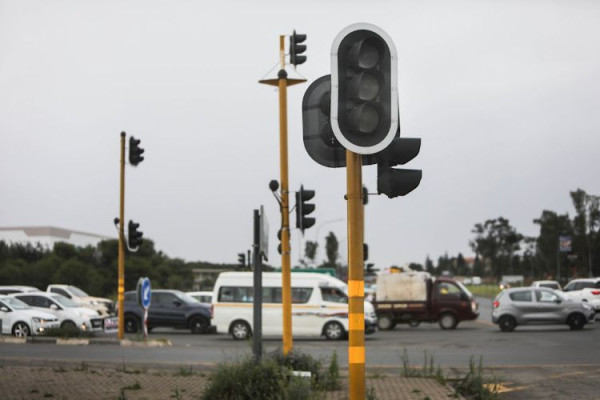
South Africans don't want to breathe clean air in the dark. Energy woes are synonymous with South Africa right now.
As the country's fleet of mostly coal-powered plants struggles to keep up with electricity demand, South Africans are enduring daily power outages that last six to 10 hours a day.
With businesses and institutions struggling to function, and tension mounting among South Africa's people, the need for solutions is beyond urgent.
I say “solutions” because providing the reliable power that South Africa needs now, and ensuring that the growing country will have what it needs well into the future, will require multiple strategies.
As I've written, because of the country's current reliance on coal to fire its power plants — and coal mines to fuel the economy — increased coal usage must be one of those solutions for the time being.
South Africa also will need to continue building its renewable energy sector, and it has committed to do so in alignment with global goals to achieve net-zero greenhouse gas (GHG) emissions.
But perhaps one of the most impactful solutions will be natural gas, which not only can power reliable electricity generation but also is a clean energy source – one that can be monetized and one that supports economic diversification as a feedstock for chemical and fertilizer factories.
It only makes sense for South Africa to harness its massive – and largely untapped – reserves of natural gas. As described in the new African Energy Chamber (AEC) report, “The State of South African Energy,” cumulative output for South Africa's large-scale Brulpadda and Luiperd natural gas discoveries, when developed, are estimated to be 50,000 barrels per day (bpd) of liquids and 125,000 barrels of oil equivalent per day (boepd). South Africa must do what it takes to reach that point as quickly as possible.
During the 2023 African Energy Week in Cape Town, Gwede Mantashe, South African Minister of Mineral Resources and Energy Stated, “In recognition of the continued role of the fossil fuels in supporting energy security and the fact that 82% of energy sources in the world are from these fossil fuels, Africa must intensify its efforts aimed at developing its oil and gas sector in order to benefit from the expected increase of natural gas market in global supply”. I agree, that's why South Africa should be encouraging ongoing oil and gas exploration through an enabling regulatory environment. Natural Gas financing and development again will be a key topic during African Energy 2024 scheduled for November 4th to 7th where I expect deals to be signed.
And we cannot forget the importance of natural gas projects in neighboring African countries, including Gigajoule's $550-million Matola Liquefied Natural Gas (LNG) Project in Mozambique, which will supply South Africa with gas; the 865-kilometer Rompco Gas Pipeline from Mozambique to South Africa; and Renergen's Virginia liquefied natural gas project in South Africa. These projects need to be fast-tracked.
Natural gas, if directed toward domestic markets and gas-fired electricity plants, can help South Africa find its way out of its current power crisis. Natural gas can also help ensure energy security and economic growth while the country transitions from fossil fuels to renewables for power generation. South Africa must move decisively to accelerate its gas agenda and start realizing these benefits.
Renewables Alone Will Not Save the Day
I've heard repeated arguments that South Africa's energy crisis is proof that now is the time for the country to move, at lightning speed, to renewable energy sources like wind and solar power.
As I've said more than once, South African can and should embrace solar and wind, but it also must consider the intermittency issues that come with them. They can't be counted on to provide electricity around the clock.
South Africa does not need more power fluctuations. It needs baseload power sources that can generate dependable power capable of consistently meeting demand. And the only way to get that is from coal and natural gas.
We also have to be realistic about the financial requirements for a complete transition to natural gas. Yes, South Africa's Just Energy Transition Investment Plan (JET IP) is an excellent program, but as of yet, the money generated is a drop in the bucket. South Africa has acknowledged that it will need about $99 billion to pay for a full transition to renewable energy. Currently, it has received commitments for about $8.5 billion.
So, as South Africa pursues renewable energy, the logical approach would be to embrace natural gas as well. It can serve as a reliable energy source for the country's current and future needs, and as it's monetized, it can help generate revenue for South Africa's energy transition.
I was pleased to hear South African President Cyril Ramaphosa express that logic. He has made it clear that, while the country does plan to replace coal with lower-carbon alternatives, those alternatives will include both renewables and natural gas.
South Africa has an Integrated Resource Plan in place that calls for gas technology generating 6,000 megawatts (MW) from combined-cycle gas turbines, including 3,000 MW from LNG-to-power, 726 MW from gas-to-power, and 1,500 MW from non-specified gas.
This is doable, and it aligns with the AEC report's forecast for South African power generation during the next decade and beyond. While coal currently accounts for about 80% of power generation, coal usage likely will decrease to 65% by the end of the decade, our report says. Gas and renewables, meanwhile, will see growth around the same time: Natural gas will account for 5% of power generation in 2031, while onshore wind and solar photovoltaic (PV)-generated power will make up 17% and 7%, respectively. In the long term, natural gas, onshore wind, and solar PV are expected to increase to 15%, 30%, and 20%, respectively, making up 65% of total power generation.
It's Time for a Regulatory Rehaul
South Africa's commitment to pursuing these avenues is praiseworthy, but when it comes to harnessing natural gas, more work is needed.
I'm talking about government policies.
South Africa needs a regulatory environment that encourages ongoing investment and exploration by oil and gas companies. Consider the Orange Basin, where Namibia is seeing record-breaking discoveries that will ensure its energy security. But only 20% of the Orange Basin is in Namibia, while 80% of it is in South Africa. Now is the time to capitalize on the opportunity it offers.
Unfortunately, South Africa seems to be stuck: E&P is being hindered by unnecessary government red tape. We need to change that right away. Oil and gas companies already face tremendous pressure not to produce in Africa; this is no time to pile on the challenges.
The African Energy Chamber strongly urges South Africa to ease regulatory burdens on oil and gas companies. And we call upon South Africa to fast-track permit approvals for more drilling, seismic surveys, pipeline developments, and LNG terminal construction.
South Africa also needs to eliminate red tape that could slow the Brulpadda and Luiperd projects.
These steps will be critical for South Africa to start putting natural gas to work for its people, its businesses, and its communities.
Natural Gas Is a Reasonable Solution
Not surprisingly, if you consider the constant pressure Africa has faced in recent years to leave our fossil fuels in the ground, the prospect of pursuing gas-to-power projects in South Africa is being met with sharp resistance. “Dirty gas” is not the answer, environmentalists and Western voices insist.
I strongly disagree. We must be pragmatic: South Africa must harness every solution at its disposal, natural gas in particular, to address the country's energy needs.
Fortunately, President Ramaphosa has been pushing back against the anti-gas narrative as well.
"Countries on the African continent need to be able to explore and extract oil and gas in an environmentally responsible and sustainable manner," Ramaphosa said earlier this year
during an address at the Investing in African Mining Indaba. "These resources are important for energy security, for social and economic development, and for reducing energy poverty on the continent. And we do not see this trajectory as being mutually exclusive to our focus on moving towards ensuring that we reduce our carbon footprint… In our onward march towards a low-carbon future it is critical that our efforts are both realistic and sustainable.”
Well said!
I would add that many of the environmental groups trying to keep people in the dark in South Africa – and across our continent – don't have the same struggles with energy security. In fact, in a move that balances environmental stewardship with energy security, the United States just approved an $8 billion drilling program in Alaska. If it's acceptable for wealthy countries to perform this balancing act, there's no reason why Africa's most industrialized nation cannot do the same.
Having clean air doesn't mean we have to be in the dark.
To read the State of South African Energy 2023, visit https://apo-opa.co/3T7wR6K.
Distributed by APO Group on behalf of African Energy Chamber.
ACCRA: Wilka Mwatile’s resilient batting display, Kayleen Green’s remarkable three-wicket haul along with wet conditions at Achimota Senior Secondary School played...
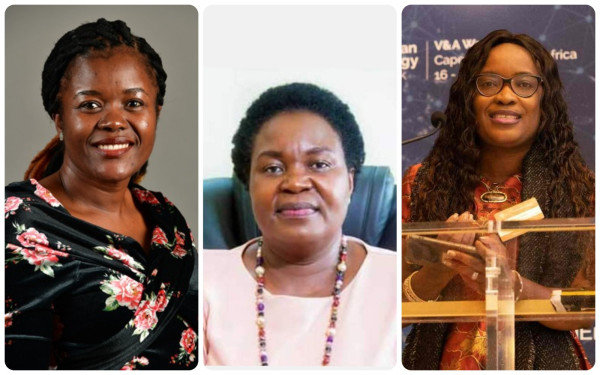
As part of its Women in Energy series taking place this month, Energy Capital & Power (ECP) www.EnergyCapitalPower.com celebrates women in leadership positions within Africa's energy and mining sectors. With Senegal, Uganda, Namibia and South Africa at the helm of female leaders within their respective ministries, these markets have attracted billions in foreign investment and are home to some of the most dynamic upstream developments on the continent.
Since her appointment in November 2020, Sophie Gladima, Minister of Petroleum and Energies of Senegal, has led the country through one of its most transformative periods, with first oil and gas expected this year from the highly-anticipated Sangomar Field Development and Grand Tortue Ahmeyim (GTA) LNG project, respectively. Minister Gladima successfully advanced these projects – which total nearly $10 billion in foreign direct investment – in the face of COVID-19 and demands for cross-border cooperation with Mauritania, whose maritime border with Senegal houses the GTA LNG project.
Ruth Nankabirwa Ssentamu, Minister of Energy and Mineral Development of Uganda, is another female minister leading frontier market developments since her appointment in June 2021. Targeting first oil output in 2025, Uganda has launched exploration drilling at its $10-billion Lake Albert Development, home to the TotalEnergies-operated Tilenga and CNOOC-operated Kingfisher fields. The country is also at the center of the planned East African Crude Oil Pipeline, which will transport Ugandan oil to the Port of Tanga in Tanzania and represents the single largest investment in either country to date.
Serving as Petroleum Commissioner of Namibia's Ministry of Mines and Energy since October 2015, Maggy Shino has played a pivotal role in securing upstream investment from leading IOCs, with TotalEnergies set to invest roughly $300 million in 2024 alone. With over 15 years in petroleum geological, geophysical and environmental management fields, Commissioner Shino has cemented Namibia's status as a world-class frontier oil and gas market with strong on- and offshore prospectivity. Following five offshore hydrocarbon discoveries, Namibia is currently conducting further appraisal work – as well as new seismic and exploration activity in the Owambo, Kavango and Orange Basins – and is on the path to first oil production by 2030.
In neighboring South Africa, Deputy Minister of Mineral Resources and Energy, Dr. Nobuhle Nkabane, has been active in driving an exploration agenda. Utilizing South Africa's Gas Master Plan, Dr. Nkabane has positioned natural gas as a means of improving energy security, reducing heavy-polluting fossil fuels and establishing domestic LNG production through recent discoveries like the 3.1-billion-cubic-feet Mpumalanga discovery. Under her leadership, South Africa's Department of Mineral Resources also implemented a school outreach program last month aimed at encouraging youth in STEM fields and developing a future workforce for the country's mining and energy sectors.
Energy Capital & Power's Women in Energy series celebrates the women shaping the future of the African energy sector. From projects to companies to programs and community development, the Women in Energy series underscores the integral role women play in developing the sector. Visit www.EnergyCapitalPower.com and keep up-to-date with our social media channels for daily content.
Distributed by APO Group on behalf of Energy Capital & Power.
ACCRA: As the excitement builds for the first-ever Women’s T20 Cricket competition at the 13th African Games in Accra, Ghana...
Local movies are the flavour of the month in March when Ster-Kinekor releases a number of homegrown films and a new title from our Namibian neighbour. These films, which celebrate our local cultures through creative and authentic storytelling, will be released in select Ster-Kinekor cinemas, with the Namibian title also being screened in the two …
The use of large amounts of recycled rubber crumb for the manufacture of road surfaces and related products is propelling South Africa towards a circular economy. Waste products are usefully used to address key infrastructure needs, says Dr Mehran Zarrebini, CEO of Hammarsdale-based radial truck tyre recycler, Mathe Group The company recycles approximately 1 000 …
President Ramaphosa pays last respects to Namibian President Hage Geingob
President Cyril Ramaphosa has hailed the late Namibian President Hage Geingob as a leader committed to his people.
Geingob passed away earlier this month while being treated for cancer.
Over the weekend, President Ramaphosa joined the Geingob family and other Heads of State at Geingob’s funeral service held in Namibia.
“I will forever remember, very fondly, his brotherly love. I remain inspired by the dedication he demonstrated towards his work, his undoubted commitment to the wellbeing of his people and his desire to see a peaceful, united and developing continent of Africa.
“His support and guidance to me and to fellow Heads of State and Government within SADC remains invaluable to this day and in the future,” President Ramaphosa said.
According to a statement by the Presidency, President Ramaphosa and Geingob “enjoyed a close relationship”.
“President Ramaphosa reiterates, on behalf of the government and people of South Africa, his deep condolences to the government and people of Namibia, especially First Lady Madame Monica Geingos.
“President Ramaphosa further extends his sympathies to President Nangolo Mbumba, the Cabinet of our neighbouring state and the leadership and members of the SWAPO Party at this time of mourning.
“President Ramaphosa and President Geingob enjoyed a close relationship which infused relations between our two countries. In 2023, President Ramaphosa hosted President Geingob on a State Visit to South Africa in April, while in October, President Ramaphosa undertook a Working Visit to Namibia to co-chair with President Geingob the Third Session of the South Africa-Namibia Bi-National Commission,” the Presidency said.
While in Namibia, President Ramaphosa held a meeting with his counterparts from the Democratic Republic of Congo, Burundi and Malawi.
“The meeting continues from an engagement between the Heads of State that took place in Addis Ababa on the margins of the recently held AU [African Union] Summit. The leaders, whose countries have contributed troops to the SADC Mission in the DRC, discussed efforts towards the restoration of peace and security in the eastern DRC,” the Presidency said. – SAnews.gov.za
NeoB
Mon, 02/26/2024 - 09:23
JOHANNESBURG: The stage is set for the inaugural International Masters Cricket Over-40s World Cup, scheduled to commence on Monday, 19...
JOHANNESBURG: Cricket South Africa (CSA) and the South African Sports Confederation and Olympic Committee (SASCOC) have today confirmed the men’s...
FIFA+ (www.FIFA.com) will stream all UAE 2024 Dubai games; Tournament takes place from 15-25 February; Find out how you can follow the action live.
The FIFA Beach Soccer World Cup UAE 2024 Dubai™ kicks off on Thursday 15 February – and the tournament is being streamed live on FIFA+!
Takuya Akaguma, Catarino, Chiky, Edson Hulk, Marco Giordani, the Martins twins, Raoul Mendy, Moslem Mesigar, Walid Mohammad, Ozu Moreira, Lucas Ponzetti, Rodrigo and Heimanu Taiaru are among the stars who are looking to light up the tournament, with this year's edition again set to showcase the very best that the discipline has to offer.
Click here to access FIFA+ (https://apo-opa.co/496Sef7)
All matches will be available on FIFA+ web, the FIFA+ app and connected TV devices. Full details of the territories where FIFA+ live streams and full match replays are accessible can be found below. Two-minute highlights on all matches will also be available.
Territories with FIFA+ live streaming access
Africa
Angola, Benin, Botswana, Burkina Faso, Burundi, Cameroon, Cape Verde, Central African Republic, Chad, Comoros, Congo-Brazzaville, Congo-Kinshasa, Equatorial Guinea, Eritrea, Eswatini, Ethiopia, Gabon, Gambia, Ghana, Guinea-Bissau, Guinea-Conakry, Ivory Coast, Kenya, Lesotho, Liberia, Madagascar, Malawi, Mali, Mauritius, Mozambique, Namibia, Niger, Nigeria, Rwanda, Sao Tome and Principe, Senegal, Seychelles, Sierra Leone, Somalia, South Africa, South Sudan, Sudan, Tanzania, Togo, Uganda, Zambia, Zimbabwe.
Americas and the Caribbean
Anguilla, Antigua and Barbuda, Aruba, Bahamas, Barbados, Belize, Bermuda, Bonaire Sint Eustatius and Saba, British Virgin Islands, Cayman Islands, Cuba, Curaçao, Dominica, Dominican Republic, Grenada, Guyana, Haiti, Jamaica, Montserrat, Saint Kitts and Nevis, Saint Lucia, Saint Vincent and the Grenadines, Suriname, Trinidad and Tobago, Turks and Caicos Islands, United States Virgin Islands.
Asia
Afghanistan, Bangladesh, Bhutan, Brunei, Cambodia, India, Indonesia, Kazakhstan, Kyrgyzstan, Laos, Malaysia, Maldives, Myanmar, Nepal, Pakistan, Philippines, Singapore, Sri Lanka, Tajikistan, Turkmenistan, Uzbekistan, China PR, Hong Kong, Korea DPR, Korea Republic, Macau, Mongolia, Taiwan, Thailand, Timor-Leste, Vietnam.
Central and South America
Brazil
Europe
Albania, Armenia, Austria, Azerbaijan, Belarus, Belgium, Bosnia and Herzegovina, Bulgaria, Croatia, Cyprus, Czech Republic, Denmark, Estonia, Finland, France, Georgia, Germany, Greece, Hungary, Iceland, Ireland, Israel, Italy, Kosovo, Latvia, Lithuania, Luxembourg, Malta, Moldova, Montenegro, Netherlands, North Macedonia, Norway, Poland, Portugal, Romania, Russia, Serbia, Slovakia, Slovenia, Sweden, Switzerland, Turkey, Ukraine, United Kingdom.
Oceania
American Samoa, Australia, Cook Islands, Federated States of Micronesia, Fiji, French Polynesia, Guam, Kiribat, Marshall Islands, Nauru, New Caledonia, New Zealand, Niue, Northern Mariana Islands, Palau, Papua New Guinea, Samoa, Solomon Islands, Tokelau, Tonga, Tuvalu, Vanuatu, Wallis and Futuna.
Click here (https://apo-opa.co/3Sy1CRK) to visit the FIFA match centre and find out where you can watch the FIFA Beach Soccer World Cup UAE 2024 Dubai™ in your location.
* Territories' live streaming access is subject to change
A full match schedule can be downloaded here (https://apo-opa.co/3UMG3jr).
Tournament tickets are available via https://apo-opa.co/3wk8D1n to purchase.
Visa, Worldwide Partner of FIFA, is the preferred payment method for fans buying tickets for the FIFA Beach Soccer World Cup UAE 2024 Dubai™.
Distributed by APO Group on behalf of FIFA.
Contact for African media:
AfricanMedia@fifa.org
No changes in the top ten; CAF and AFC nations are main movers and shakers; Angola and Qatar make biggest strides.
Although it is a case of as you were amongst the ten teams that lead the way in the latest edition of the FIFA/Coca-Cola Men's World Ranking, there is plenty of movement further down the standings following the matches contested in the CAF Africa Cup of Nations and the AFC Asian Cup.
Indeed, across the two continents, no fewer than six teams have scaled ten places or more.
Amongst the African sides, Côte d'Ivoire (39th, up 10) reap the rewards of their continental triumph on home soil, secured following an eventful tournament campaign. Beaten finalists Nigeria (28th, up 14) make significant strides but are no match for the Angola side they ousted in the last eight (93rd, up 24), who are the biggest climbers in the latest instalment of the global ranking.
In the points stakes, two-time Asian Cup winners Qatar (37th, up 21) chalk up the biggest tally (92.04 points) after capitalising on home comforts to successfully defend their continental crown. Elsewhere, Jordan (70th, up 17), who were edged out by the Maroons in the final, make good ground, as do Thailand (101st, up 12), whose journey came to an end at the last-16 stage.
Qatar's rise sees them enter uncharted territory, with two other teams also recording best-ever rankings. Senegal (17th, up 3), who suffered shoot-out heartbreak at the hands of the eventual winners Cote d'Ivoire in the Africa Cup of Nations round of 16, break new ground, while Tajikistan (99th, up 7) mark their maiden Asian Cup campaign by making a first-ever appearance in the top 100.
Other impressive performers are Equatorial Guinea (79th, up 9), South Africa (58th, up 8), Cabo Verde (65th, up 8), Namibia (107th, up 8) and Mali (47th, up 4).
Click HERE (https://apo-opa.co/3wadjGP) to view the complete ranking
The next edition of the FIFA/Coca-Cola Men's World Ranking will be published on 4 April.
Leader Argentina (unchanged)
Moves into top 10 None
Moves out of top 10 None
Matches played in total 125 (including 2 in 2023)
Most matches played Congo DR, Côte d'Ivoire, Nigeria (8 matches)
Biggest move by points Qatar (up 92.04 points)
Biggest move by places Angola (up 24 ranks)
Biggest drop by points Vietnam (down 41.00 points)
Biggest drop by places Guinea-Bissau, India (down 15 ranks)
Newly ranked teams None
Teams that are no longer ranked None
Inactive teams that are no longer ranked Eritrea
Distributed by APO Group on behalf of FIFA.
Contact for African media:
AfricanMedia@fifa.org
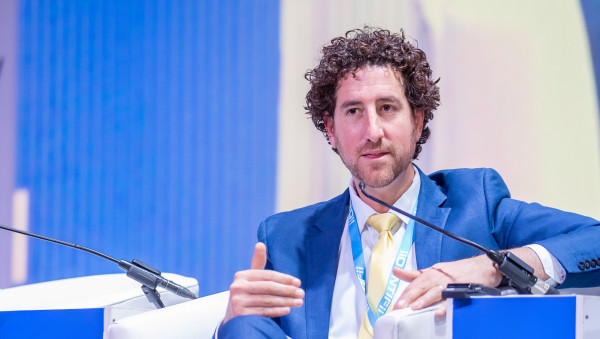
Mobile networks must not be complacent about SIM swap fraud and they need to prioritise the protection of customers. This is according to Gur Geva, Founder and CEO of iiDENTIFii (www.iiDENTIFii.com).
“Although SABRIC has noted a slight decline in reported SIM swap fraud in its latest report, mobile service providers still need to tighten up their data security to protect against fraudsters using false identities and SIM swap scams,” says Geva.
This is particularly relevant as telecommunications and banking industries become increasingly intertwined. Banks now offer mobile services, while mobile network operators provide financial services, and so there is a convergence between the regulatory requirements of FICA and RICA. This shift has led to heightened identity theft risks, requiring mobile operators to adopt stringent identity verification practices inspired by the financial sector's standards.
Operators need to define practical, robust security solutions that adhere to and surpass current telco legislation. Geva says, “In order to combat SIM swap and identity fraud, networks should focus on the provision of simple, scalable and safe digital identity. This has a far-reaching impact, not only on safer mobile use and the protection of consumers from fraud, but also on the ability of consumers to access mobile, financial and governmental services through their phones.”
The current state of SIM swap fraud
SABRIC's 2022 crime report (https://apo-opa.co/3HRlavN) notes that mobile banking fraud saw a 9% reduction in reported incidents in 2022, and that SIM swap incidents declined from 87% in 2021 to 76% (7 657) in 2022. While this reduction is positive, there are still thousands of SIM swap fraud incidents reported each year.
“Cyber-crime will continue to evolve, and networks need to be prepared for increasingly sophisticated SIM swap attacks. Their strongest line of defense is in securing the identity of a person's identity to each SIM,” says Geva.
The effectiveness of this approach has been demonstrated in nations such as Kenya, Namibia, Pakistan and Russia, which have all been enforcing varying levels of biometric SIM registration to deter fraudsters.
Increasing legislation to prevent attacks
The nature of these SIM-related crimes goes beyond financial crimes and SIM swap fraud.
“For the cost of a few unregistered SIM cards at R5 each from a roadside vendor, planning a murder becomes untraceable by police through RICA, and thus virtually risk-free,” says Natasha Mazzone, the DA's Shadow Minister of Communications and Digital Technologies in an article on RICA legislation (https://apo-opa.co/3HRtZp4).
In 2022, ICASA published draft regulations that would require mobile network operators to collect subscriber biometric data. ICASA said these regulations would reduce instances of mobile number hijacking via fraudulent SIM swaps and number porting. However, this was met by hesitance from consumers and organisations such as Communications Risk Information Centre (COMRiC). Consumers feared that the collection of biometric data would compromise their privacy, while COMRiC felt that biometrics as a single solution was too limited in its scope and challenging to implement at scale.
What networks can do
Mobile networks (as owners of the SIM and the technology behind it) should consider implementing clear strategies and leading technologies to mitigate SIM swap fraud and protect their customers. And while SIM swaps constitute one problem, identity fraud is far more problematic.
“When it comes to securing a person's identity, we believe that face biometrics offer the most secure solution,” adds Geva.
In South Africa, face biometrics would be able to verify whether the person registering a SIM is live and doing it in the present moment, as well as binding the SIM card to that applicant's identity and facial image. It can validate barcoded identification documents presented, RICA or FICA details and a facial image back to the Department of Home Affairs. This prevents identity fraud and proves that the individual applying for services online is a ‘live' person and not a deepfake. SIM swaps become a moot point, as all SIM cards are then data bound to a legitimate individual with accurate RICA requirements.
The question of surveillance
Biometrics are deeply personal, but opt-in biometrics do not open consumers up to surveillance.
“Because biometric technology only started making its way into the mainstream relatively recently, consumers are still unsure of what the technology entails and how it may be used. This, naturally, leads to some misconceptions and fears. The reality is that opt-in biometrics are the most secure way to identify someone – and keep their information and identity safe from misuse – and these differ a great deal from biometrics used for surveillance,” says Geva.
Remote biometric onboarding links a person's biometric data, whether their face or fingerprint, to their account so that they, and only they, can access the account safely and securely. This protects them from fraud.
The question of implementation
In terms of successfully rolling out biometric identity for mobile phones in Africa to protect consumers and companies from SIM-related crime, two key criteria need to be met: scalability and accessibility.
“I urge network providers in Africa to invest in enterprise-grade identity platforms that are robust, scalable and built to handle growing subscribers and fraud-prevention demands,” says Geva. “For example, most of South Africa's leading banks have relied on our own enterprise-grade platform at iiDENTIFI to roll out fast and effective mobile banking verification initiatives at scale. This has proven that, with a simple, fast and friction-free tool, consumers are willing to pass through an extra layer of digital protection.”
“SIM swaps are still a major problem, and networks still have a way to go in protecting consumers. By securing identity for all SIM at the moment of registration, it is possible to make great leaps in providing protection against SIM-related crimes.”
Distributed by APO Group on behalf of iiDENTIFii.
About iiDENTIFii:
iiDENTIFii is an award-winning face authentication and identity verification platform that distinguishes itself through its use of 3D and 4D Liveness® detection. Purpose-built for enterprises across Africa and the Middle East, iiDENTIFii enables frictionless, scalable customer onboarding in seconds from anywhere and on any device. Founded in 2018, iiDENTIFii has become a proven key partner in multiple tier 1 African banks. The technology plugs seamlessly into existing infrastructures, including mobile and web-based platforms. www.iiDENTIFii.com
Watching a movie on the big screen is not the full experience if you aren’t munching on a bag of freshly popped popcorn. Taking this a step outside the cinema, leading cinema exhibitor Ster-Kinekor has partnered with Biggi Brands to announce a popping new collaboration. Biggi, who has been supplying all Ster-Kinekor’s cinemas with top-quality …
The African Energy Chamber (https://EnergyChamber.org) vehemently rejects the notion and mindset that Africans are somehow unqualified to lead and host significant events like Investing in African Mining Indaba on their own land. It is unacceptable to have the future of Africa's energy defined and driven by entities that visit the continent sporadically and lack a genuine understanding of its complexities.
We cannot allow crucial decisions about Africa's energy future to be dictated by those who fail to prioritise the continent's silent majority—600 million people in sub-Saharan Africa living in the dark and 900 million lacking access to clean cooking fuels. The voices of these individuals must guide African energy decisions, and their needs should take precedence in shaping the continent's energy landscape.
“The idea that Africans are somehow incapable of managing their own affairs, is tiring. It's time we take full charge of our own destiny, while doing so in collaboration with likeminded partners.” Stated Tom Alweendo, Minister of Mines and Energy of Namibia.
The suggestion that Africans must rely on a small UK outfit, the Hyve Group, to organise events like Mining Indaba is insulting and patronising. This mindset epitomises the same attitude that African oil- and gas-producing states encounter in their energy transition – being excluded from the decision-making table and having their transition defined for them.
“This kind of decision-making, this suggestion that Africans are somehow unqualified to run Mining indaba or a mining investment event, and we have to beg a small UK outfit ( Hyve Group ) full of latte liberators with their fancy ideas about African energy to do it for, epitomizes the same kind of mindset that African oil- and gas-producing states have been encountering when it comes to their energy transition. They are defining the transition for you without you being on the table. They are defining and driving the agenda. You not on the table. You are on the menu”, Stated NJ Ayuk, Executive Chairman of the African Energy Chamber.
This insulting and patronising mindset extends to environmental groups and Western countries that pressure African leaders into energy transition decisions that may not be in Africa's best interests. The African Energy Chamber strongly opposes such external influences and emphasises the importance of a just, Africa-first energy transition. Let Africa make its own choices and define its own timeline.
"It's the same insulting, patronising mindset that has led environmental groups and Western countries to suggest they know what's best for Africa as they pressure our leaders into energy transition decisions that aren't in Africa's best interests. It's the same mindset that, in part, inspired me to do this work that I think is of critical importance for a just, Africa-first energy transition." Concluded Ayuk,
In addition to the lack of Black executives in the leadership of Hyve Group is troubling. In 2024 you can't having an organisation defining the narrative for the children in Senegal, Nigeria, Botswana, Zimbabwe, South Africa without any black executives in the leadership team. The absence of Broad-Based Black Economic Empowerment (BEE) and local content compliance further underscores a disregard for inclusive economic participation and empowerment must be a serious concern.
The energy industry's progress, characterised by true representation and inclusion, can serve as a catalyst for the next generation of leaders, the youth. It's about ensuring that every African child, from Namibia to Congo to Cameroon, can see themselves as leaders in the energy sector, breaking barriers and shaping a future that reflects their diversity and potential. The time has come for the youth to be the driving force behind a new narrative, where Africa's energy decisions are made with them, for them, and by them.
The African Energy Chamber is committed to emphasising the importance of sending a positive message to every African child. True progress in the energy sector should translate into tangible opportunities for the youth, guiding them towards a future where they actively contribute to and benefit from Africa's sustainable energy development.
In light of these sentiments, the African Energy Chamber underscores the urgency of empowering Africans to take charge of events like Investing in African Mining Indaba and other critical discussions about the continent's energy future. It is time for Africa to be at the forefront of its own narrative, ensuring that decisions are made in the best interests of its people and guided by the voices that matter the most.
Distributed by APO Group on behalf of African Energy Chamber.
Blessed by abundant natural resources, Africa’s mining sector has historically been a driving force behind the continent’s economic growth. However, the industry now faces a myriad of challenges. As we approach the 2024 Mining Indaba, the world’s largest African mining investment event, it is crucial to reflect on the trajectory of the industry and its …
The Presiding Officers of Parliament deeply mourn the passing of His Excellency Dr. Hage Geingob, the President of the Republic of Namibia. We extend our heartfelt condolences to the government and the people of the Republic of Namibia during this profoundly difficult period.
President Geingob was a prominent figure in the struggle for independence from apartheid-era South Africa who later became Namibia's first prime minister and subsequently served as its head of state. Our sympathies and prayers are with First Lady Madam Monica Geingos, the Geingob family, and the Namibian people as they navigate this period of profound sadness. This loss is not only deeply felt by Namibians but also reverberates throughout the entire SADC region and the African continent. We mourn the passing of an outstanding revolutionary and dedicated stateman who led with wisdom, integrity, diplomacy, and a deep passion for his people.
We are deeply grateful for the lasting legacy of President Geingob, who played a critical role in not only securing Namibia's liberation but also made significant contributions to the liberation of South Africa from apartheid oppression.
The Speaker of the National Assembly has formally conveyed the sympathies of the South African Parliament to the people of Namibia, their esteemed Parliament, and Government in a letter addressed to the Speaker of the National Assembly of Namibia, Peter Hitjitevi Katjavivi.
Distributed by APO Group on behalf of Republic of South Africa: The Parliament.
Condolences for President Geingob
President Cyril Ramaphosa has extended his deep condolences to the Government and people of Namibia especially First Lady, Madame Monica Geingos and the family following the passing of Dr Hage Gottfried Geingob, President of the Republic of Namibia.
On behalf of the Government and people of South Africa, President Ramaphosa further extended his sympathy to acting President of the Republic of Namibia Dr Nangolo Mbumba, the Cabinet of the neighbouring state and the leadership and members of the SWAPO Party at this time of mourning.
“Today, South Africa joins the people of our sister state Namibia in mourning the passing of a leader, patriot and friend of South Africa.
“Our thoughts and prayers are with the Geingob family and the people of Namibia who have lost an outstanding leader in a year in which Namibia, like South Africa, is due to hold elections,” President Ramaphosa said in a statement on Sunday.
This as President Geingob passed away earlier on Sunday at the Lady Pohamba Hospital at the age of 82.
Dr Mbumba announced to the Namibian nation today that President Geingob had passed away while being treated for cancer.
President Ramaphosa said he was deeply saddened at this time as he reflected on the privilege he had as recently as October 2023 to be hosted by President Geingob, Madame Geingos and the Cabinet on a Working Visit to Namibia.
“During the visit, we committed our two countries to even closer partnership, inspired in great measure by President Geingob’s passionate conviction about our shared future as nations and greater opportunities and prosperity for citizens on both sides of the Orange River.
“President Geingob was a towering veteran of Namibia’s liberation from colonialism and apartheid. He was also greatly influential in the solidarity that the people of Namibia extended to the people of South Africa so that we could be free today.
“We are therefore filled with appreciation and sadness at the passing of a comrade in struggle and a close partner in our democratic dispensation. May his soul rest in peace,” the President said. – SAnews.gov.za
DikelediM
Sun, 02/04/2024 - 11:14