• Skip to main content
  • Skip to header right navigation
  • Skip to after header navigation
  • Skip to site footer
MyZA

MyZA

News, Directory, Events and Other Stuff

  • Social Media
  • Sport
  • World News
  • Home
  • Submit News
  • Directory
  • Events
  • Stratlec
  • TFSA
  • News
    • APO
    • Today’s Sport News
    • Todays Social Media and Tech Headlines
    • Today’s World News
    • Today’s SA Financial News
  • Contact
You are here: Home / Archives for new

new

14 November 2024

SA condemns Israeli government’s annexation orders for the West Bank

Location: News

SA condemns Israeli government’s annexation orders for the West Bank

South Africa has expressed dismay at a statement attributed to Israel’s Finance Minister Bezalel Smotrich, who called for the annexation of the West Bank on Monday.

Reports indicate that Smotrich has initiated preparations for the annexation of the occupied West Bank, anticipating the inauguration of United States President-elect Donald Trump in January 2025.

The Department of International Relations and Cooperation said the development was compounded by a decision adopted by the Israeli Cabinet on 18 June 2024, which gave Smotrich approval to plan construction in the Occupied Palestinian Territory (OTP). 

“It should be recalled that soon after his appointment to his current position, Mr Smotrich moved quickly to approve thousands of new settlement homes and legalised previously unauthorised settlements, which practically made it more difficult for Palestinians to build homes and move around.” 

The department believes that the Israeli government has long sought to find ways to permanently seize or annex the occupied West Bank. 

“South Africa calls on the international community to unequivocally oppose the Israeli government’s continued violation of its obligations under international law and resolutions relating to its belligerent occupation.

“The Israeli government’s provocative policies and actions are extreme and warrant a decisive response by the international community. South Africa is opposed to the Israeli illegal annexation and settlement expansion on Palestinian lands.” 

South Africa, said the department, believes these developments go further than just a de facto annexation of the OPTs and entrenching illegal Israel’s presence in the OPT, particularly in the West Bank. 

“This latest move illustrates the lack of any meaningful effort directed at achieving peace or any hope for a two-state solution,” the statement read. 

On 23 December 2016, the United Nations Security Council (UNSC) adopted Resolution 2334, which condemned Israeli settlements in Palestinian territories and called for an end to settlement construction

In addition, South Africa further calls for concrete actions aimed at reviving a political process, leading to the establishment of a viable Palestinian State, in compliance with all relevant UN resolutions, International Law and international agreements. – SAnews.gov.za

Gabisile
Thu, 11/14/2024 - 11:04

96 views
Read moreSA condemns Israeli government’s annexation orders for the West Bank
14 November 2024

Former Apartheid police officer convicted for the murder of Caiphus Nyoka

Location: News

Former Apartheid police officer convicted for the murder of Caiphus Nyoka

The National Prosecuting Authority (NPA) has secured a conviction related to a matter of the Truth and Reconciliation Commission (TRC).

This after the Pretoria High Court found former Apartheid police officer Johan Marais guilty of the murder of student activist Caiphus Nyoka.

Marais had pleaded guilty to the murder.

“After the guilty plea was read into the record, Marais was released on R5000 bail, with conditions that he should not interfere with state witnesses and that he should not communicate with the other three co-accused. 

“He was also ordered not to leave the jurisdiction of Springs without informing the investigating officer, and he should hand in his passport to the investigating officer and not apply for a new one.

“The matter was postponed to 27 January 2025 for a psychological report. The trial against the three other accused in the matter will start at the Pretoria High Court sitting in Benoni on 18 November until 06 December 2024,” the NPA said in a statement.

Nyoka was killed for his activism against Apartheid policies in 1987.

At the time, the student activist was a member of the Congress of South African Students, the South African Youth Congress Organiser (SAYCO) of the Transvaal Student Congress in the East Rand, as well as the President of the Student Representative Council (SRC), at Mabuya High School. 

“In the evening of 23 August 1987, Marais and some of the members of the security branch and other units within the South African Police met to discuss a plan to kill Nyoka. A plan to raid his home was devised, under the then commanding officer Major Leon Louis van den Berg, who is also charged separately. 

“In the early hours of 24 August 1987, at about 02h30, Marais, together with Sergeant Pieter Stander, Sergeant Abram Hercules Engelbrecht and other members of the Reaction Unit who are also charged separately, arrived at Nyoka’s homestead and stormed Nyoka's room. 

“They found him with three of his friends sleeping. After identifying him, they removed the friends from the room and thereafter proceeded to shoot him nine times. He died on the scene as a result of multiple gunshot wounds,” the NPA explained.

The prosecutorial body described Marais’ conviction as impactful.

“The National Prosecuting Authority (NPA) welcomes this conviction, which reflects the commitment to ensuring accountability for atrocious crimes that were referred to the NPA by the TRC.

“TRC matters, in their nature and due to the very long lapse of time, disintegration of evidence and lack of availability of critical witnesses, are very difficult to investigate and prosecute. The joint TRC team, made up of dedicated investigators from the DPCI and prosecutors will continue to fight the deserving fight against the apartheid- related atrocities and bring justice to society.

“This conviction is therefore a significant and impactful outcome, not only for the state and society, but most importantly for the victim's families. It brings an important sense of justice and closure, which is priceless,” the NPA said. - SAnews.gov.za


NeoB
Thu, 11/14/2024 - 09:54

39 views
Read moreFormer Apartheid police officer convicted for the murder of Caiphus Nyoka
14 November 2024

Climate Investment Funds Capital Markets Mechanism Announces Bond Listing on LSE to Boost Climate Finance for Africa

Location: News
African Development Bank Group (AfDB)

The Climate Investment Funds Capital Markets Mechanism (CCMM) has announced its bond listing programme (https://apo-opa.co/3CsQ7qw) on the London Stock Exchange, a move that will help to raise new climate finance at-scale from the international capital markets, for Africa and the developing world.

The announcement was made on Tuesday 12 November, at a session during the COP29 conference in Baku, Azerbaijan, entitled Transforming Climate Finance Through Capital Markets. The Climate Investment Funds (CIF) is one of the world's largest multilateral funds working to scale climate solutions in developing countries. It comprises two funds: the Clean Technology Fund (CTF) and the Strategic Climate Fund (SCF).

CCMM, an innovative issuer, raises private sector capital in the international capital markets to mobilize finance for climate action and sustainable development, based on reflows from existing Clean Technology Fund projects implemented by the six participating MDBs over the past 16 years.

The announcement follows the approval by the African Development Bank's Board of Directors last week, for the signing of a Financial Procedures Agreement with the International Bank for Reconstruction and Development (IBRD) acting as the trustee and the CIF Secretariat, opening the door for the Bank to become an Implementing Entity of the CCMM.

Congratulating CIF on the bond issuance, Dr. Adesina said: “At a time of declining levels of concessional financing and grants, new models are needed to secure larger climate finance for developing countries, for public and private sector.” He added: “I am pleased that the African Development Bank helped to develop the concept note for the CCMM initiative, which was accepted by the CTF Trust Fund Committee as one with the highest transformational potential, which then requested all parties to further develop the proposal.”

Tariye Gbadegesin - Chief Executive Officer, Climate Investment Funds described the listing was a testament to ingenuity and collaboration in the face of shared crisis.

“CCMM will mobilize private capital at scale and direct it to high-impact clean energy and clean technology investments. While this is an ambitious step forward, it is rooted in a 16-year track record of being a first mover, working with national governments, the private sector, and frontline communities to pioneer cutting-edge clean technologies and solutions paving the way for greater ambition.”

The financial procedures agreement replaces an earlier one signed by the Bank in 2010 following which the Bank became an Implementing Entity of the Clean Technology Fund.

Since 2010, the Bank has approved around $946 million in concessional resources for a total of 33 investment projects and 20 technical assistance projects across the African Continent. The Clean Technology Fund is the fund that has contributed most to this total, with $646 million for 11 investment projects, including flagship projects such as the Noor Concentrated Solar Program in Morocco and the Xina Concentrated Solar Project in South Africa.

“The CCMM marks the first time that a multilateral climate fund will use the strength of its balance sheet to unlock urgently needed climate finance. Given the track record of the CIF in leveraging $10 for every dollar invested, this mechanism holds the potential to raise tens of billions of dollars in critically needed climate finance. By devoting 65:35% to public and private sector financing it will also help leverage more private sector climate financing,” Adesina said.

Under these Clean Technology Fund projects, the African Development Bank has extended a total of $2.3 billion in co-financing.

Distributed by APO Group on behalf of African Development Bank Group (AfDB).

Download more images: https://apo-opa.co/4fwvnwH

Contact:
Amba Mpoke-Bigg
Communication and External Relations Department
email: media@afdb.org

About the African Development Bank Group:
The African Development Bank Group is Africa's premier development finance institution. It comprises three distinct entities: the African Development Bank (AfDB), the African Development Fund (ADF) and the Nigeria Trust Fund (NTF). On the ground in 41 African countries with an external office in Japan, the Bank contributes to the economic development and the social progress of its 54 regional member states. For more information: www.AfDB.org

Media files
African Development Bank Group (AfDB)
Download logo
Read moreClimate Investment Funds Capital Markets Mechanism Announces Bond Listing on LSE to Boost Climate Finance for Africa
13 November 2024

Cabinet updated on SA’s water challenges

Location: News

Cabinet updated on SA’s water challenges

Government has urged the residents of Hammanskraal in Gauteng to exercise patience while work is underway to install a new water treatment plant at the Klipdrift Water Treatment Works.

The call was made by Minister in the Presidency, Khumbudzo Ntshavheni, during a post-Cabinet media briefing held in Cape Town on Wednesday.

“In 2023, the Ministry of Water and Sanitation directed Magalies Water to urgently intervene in terms of the Water Services Act, 1997 (Act 108 of 1997) and to design and install a new water-treatment plant at its Klipdrift Water Treatment Works near Hammanskraal. 

“This will help ease the water challenges and provide long-term solutions. This additional water treatment plant will supply water to certain reservoirs in the city’s water distribution system to increase the supply of clean drinking water to Hammanskraal. 

“Government urges the people of Hammanskraal and surrounding areas to be patient while this work is underway. The first phase is expected to be completed by 15 November 2024. This will allow the City of Tshwane to deliver potable water to some areas of Hammanskraal,” she said.

Ntshavheni acknowledged that the water challenges facing the community continue to negatively affect the lives of the people, including the provision of healthcare services at local facilities such as the Jubilee Hospital.

She moved to assure residents that Cabinet had received and considered a report from the Water and Sanitation Department on Hammanskraal.

“The City of Tshwane is currently implementing a R278 million project to repair the previously dysfunctional Rooiwal Wastewater Treatment Works (WWTW). 

“It is expected that increasing the capacity of the Rooiwal WWTW will cost about R2 billion. Cabinet was informed that the City of Tshwane will have to fund this project through revenue, borrowing or its Urban Settlements Development Grant allocations from the Department of Human Settlements,” she said.

Water restrictions

Meanwhile, the Minister said Cabinet was given an update on the level 1 water restrictions in Johannesburg which are due to begin on Thursday.

The restrictions were announced earlier this week and will see water supply throttled from 9am to 4pm daily.

READ | City of Johannesburg to implement water restrictions

“Cabinet was appraised of the level 1 water restrictions that are in place in Gauteng due to continued water demand as a result of high consumption caused by population growth, illegal connections, leaks and [the] misuse of water. 

“The average consumption in Gauteng is 279 litres per capita per day compared to the international average of 173 litres per capita per day. Whilst the metropolitan municipalities in Gauteng have level 1 water restrictions in place, very little enforcement is undertaken by the municipalities. 

“The Minister of Water and Sanitation and the Premier of Gauteng have requested the municipalities to impose level 2 water restrictions which will come with fines if consumers do not adhere to the restrictions,” Ntshavheni said.

She added that a National Water Crisis Committee is in the works to bolster water-related work nationally.

“Cabinet supported the decision by the President to augment the work that is currently spearheaded by the Deputy President [Paul Mashatile] by elevating the water matters as a crisis and establish a National Water Crisis committee that will develop a water action plan and bring in water experts in order to intervene to the nation-wide water challenges in the local government space,” she said.

Municipal water debt

Ntshavheni warned that the R23 billion collectively owed by municipalities to water boards was rising and unsustainable

She said Cabinet had been appraised on this debt.

“The debt threatens the financial viability of the water boards and the entire water sector. Water and Sanitation Minister, Pemmy Majodina, recently met with several of the affected municipalities and received commitments to pay from most non-paying municipalities. 

“Cabinet had previously approved the establishment of an Inter-Ministerial Committee (IMC) to address municipal turnaround. The IMC will also prioritise measures to address municipal debt payments to water boards, particularly those facing imminent bankruptcy,” she said. - SAnews.gov.za

NeoB
Wed, 11/13/2024 - 14:54

397 views
Read moreCabinet updated on SA’s water challenges
13 November 2024

Dismissed and Ignored: Keys to an African Lobby Group’s Success Being Overlooked by Climate Activists and Africa Oil Week

Location: News
African Energy Chamber

By Ajong Mbapndah L.

In 2021, the citizen-driven African Energy Chamber-AEC (www.EnergyChamber.org), and its unapologetic position in support of the right of African countries to produce oil and gas spread like wildfire. They adopted a narrative of Drill Baby Drill shocking most western political establishment, African elites and pundits.

Within a short time, well funded backers were leaping at the chance to harness this new display of African public power backing the oil and gas industry led by a charismatic and well-connected US trained lawyer NJ Ayuk. He talks like a southern Baptist preacher and trial lawyer and religiously wears only cowboy boots. Ayuk had been mentored at the University of Maryland by Dr. Ron Walters, who was Jesse Jackson's campaign Manager and at William Mitchell College of Law by John Radsan who was Assistant general counsel of the C.I.A under George W Bush. In 2013, he became part of Global Shapers, a non-profit foundation created by the World Economic Forum to unite a community of young leaders. In 2015, he was named among the 10 most influential men in Africa by Forbes magazine.

Eventually, hundreds of energy groups across Africa translated their collective strength into substantial results, putting a message engineered by the African Energy Chamber to influence African political establishment to back the oil and gas industry during COP and also provide incentives for oil drillers. Oil and natural gas is not a dirty word in Africa thanks in large part to the crusade of the African Energy Chamber.  

It's true that the AEC's anger at western wokeness and transition plans sometimes came across as extreme. While they showed that African voices can impact energy policy and international discourse, they may have also set the stage for increased divisiveness in a polarised energy discussion across the world. In some instances, observers believe the AEC pressured African leaders into backing a capitalist driven oil and gas industry at the expense of green energy. They gave home to Trump loyalist who wanted to deal with Africa. 

Given even sharper language in 2021 and 2022, it's perhaps more important than ever to understand that the AEC's success wasn't dependent solely on hostility. Behind the scenes, the story is a bit more complex. And love them or hate them, the AEC showed that African voices really can add up to something big.

So, how did the AEC turn regular, even highly cynical, Africans into an army of engaged people defending the interest of Africa and oil and gas investors in Namibia, Nigeria, Angola, South Africa, Equatorial Guinea, Libya, Senegal, Algeria, Mauritania, Ghana, Mozambique, Uganda and many more countries? Here are some strategies that set the AEC apart, gained it instant attention, and built—in short order—real power.

These strategies aren't really secret, of course, or even necessarily new, but the AEC offers lessons that any grassroots group would be wise to review even when it is a capitalist organisation. After attending African Energy Week in Cape Town and talking to observers you understand a few things.

The AEC Gave Good Content And Sweets To The Media

The AEC content and position or energy transition and oil and gas were irresistible political theater for news media. Some of the early success was about novelty. An unusual African protest movement, featuring not only Africans but older, whiter, more conservative Europeans and Americans who weren't used to taking their views in public (that kind of action was considered by many whites, the domain of hippies and Lefties).

But beyond that, members' intensity and authenticity were key factors: their heart and soul, their true colors were on display and the media couldn't get enough. The AEC got massive coverage. Their members loudly embraced slogans and symbols, and most were extremely passionate and vocal. They demonstrated their commitment in authentic, home-spun ways that made great TV footage—that is, by brandishing provocative Drill Baby Drill signs. The attention they earned was tremendously exciting for participants, and when events garnered headlines, they encouraged others to join in and start AEC groups of their own in Nigeria, Namibia, Ghana, Equatorial Guinea, Angola, Senegal and Algeria.

The AEC Gave Africans A Safe Haven To Oppose A Western Driven Anti Oil And Gas Agenda

Many Africans were anxious about longstanding cultural shifts they felt were occurring in the climate change culture and strong calls to abandon oil and gas. Africans still have to deal with energy poverty issues and also industralisation that is lagging behind in the continent.

According to the International Energy Agency (IEA), more than 600 million Africans lack access to energy, around 900 million are without clean cooking. To solve this the African Energy Chamber has aggressively lobbied and pushed African nations to embrace an “All of the Above” energy strategy—which supports greater domestic production of oil and natural gas, renewable and nuclear energy, and critical mineral mining—would help to provide energy access and encourage development  and job creation.

For many Africans, speaking their minds in public was daunting and unfamiliar. The AEC events prompted many people to speak out in public for the first time. People who had felt shut out, misunderstood, and alienated were encouraged to vent their frustrations and talk about themselves, their families, and what they wanted—and into a microphone, no less! Great early set up and as crazy as it sounds it worked.

Africans and oil industry for once felt safe. The western oil companies had found “their people.” Their voices finally mattered. Western oil companies felt for once that an African organisation spoke to their issues. The AEC spoke from the heart through their press releases.

Most importantly, speaking out made them feel like proper, boisterous Africans having their say. 

The AEC Kept It Simple And Never Strayed Away From Its Core Purpose

The AEC has been laser focused on its core message around free markets, Drill Baby Drill, individual liberty, fiscal responsibility, and limited government intervention in the energy markets. They have been virtually lock stepped in agreement that these issues—and only these—were their primary focus.

Motivated largely by opposition to a radical energy transition that does not consider Africa's energy poverty needs and development, they built a solid and well-structured case against what they saw as a radical overreach by western governments. These values resonated powerfully with conservative whites and corporations in America and Europe who rallied support for the AEC, help sharpened their message and represent an agenda that any group could buy into. By sticking to these values, they avoided getting bogged down in arguments over more contentious issues that could divide, delay, or sidetrack their core base.

You need to watch how NJ Ayuk the Executive Chairman Keeps a clear and narrow focus and invites more people in and avoids alienating others over inevitable differences. By experimenting with this stripped-down approach, they have been able to avoid quibbles about top priorities and fast-forward to high-impact activities across Africa.

The AEC Built Its Muscle By Picking Fights It Could Win

While the rhetoric of the AEC favored sweeping Pan African change on how oil and gas industry is viewed and a rejection of western climate action, their actual achievements were huge, and they basically got the IEA and western governments to start listening to Africans. They got African Presidents and Ministers to be bold in their defence for oil and gas sector. They became the premier lobbying house for the oil and gas sector in Africa. They figured out where they could have an immediate impact and put their energies into small wins. Case in point, in 2021, Hyve group made a brutal and arrogant move of taking Africa Oil Week (AOW) to Dubai. The AEC saw an opportunity and produced a textbook rebuke of this British group. It recruited Blackwater's Erik Prinz, Robert Stryk Ryan Zinke (Trump's interior secretary) various American congressmen and former US Ambassadors to speak at its rival African Energy Week in Cape Town. They quietly built a relationship with the American Petroleum Institute and other US oil and gas groups and support came strong from the oil and gas companies like ExxonMobil, Total Energies, Chevron and many others. Since then, the Africa Oil Week brand by Hyve group has seen a gradual death with most of its staff defecting to the AEC or other companies. In 2023, sensing change the Biden administration deployed Joshua Volz, Deputy Assistant Secretary for Africa to attend the African Energy Week and meet with the African energy sector. American official Joseph McMonigle, Secretary General, International Energy Forum also gave a keynote speech at the event.

Small wins like African Energy Week or getting governments to approve projects for oil companies in a speedy format, gave the AEC the taste of victory and built momentum. And all the little victories tallied around Africa added up to a greater voice for the AEC. The AEC also scored strong victories across Africa for incentives to oil companies, getting them permits, license extensions, reduction in taxes, and passion oil friendly reforms.

Most organizations have broad, high-level goals, but it's worth remembering that every small victory can help pave the way in the direction you're going. In fact, you may want to purposefully pick a small, winnable fight, especially as you're getting started.

Climate Group Reaction

Climate activist have been stunned because they dismissed and overlooked the AEC. Climate activist and their allies ignore the AEC as it built a 4 million membership base something of a dream for any group. They decided to pummel the AEC and its leadership with a volley of attacks on the media then demonstrations at the AEC office and also in Cape Town. And yet from the blowback that erupted once the attacks started Africans rallied around the AEC and supported the AEC.  Climate activists were surprised that an oil lobby group in Africa was being seen as innocent civilian under assault by a drone western activist. Green groups and their negativity were self-destructive and made it difficult for them to push a green energy message in Africa which a continent that has great potential for renewables.

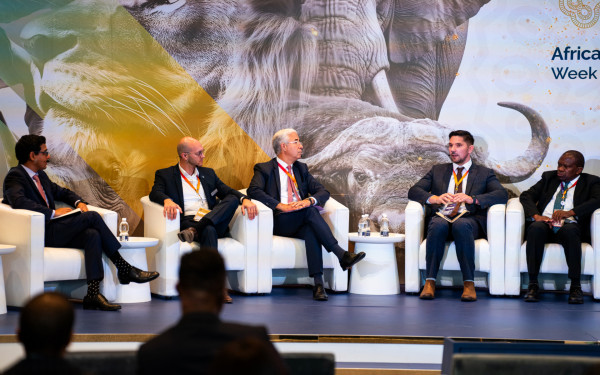
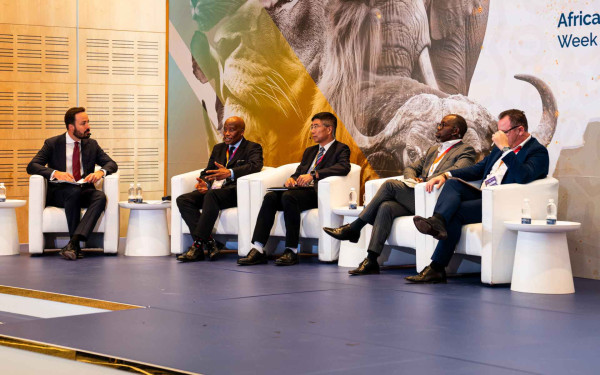
Only at the African Energy Week will you have a closing panel with Oil and Gas stalwarts like Bruno Jean-Richard Itoua, Minister of Hydrocarbons of the Republic of Congo, Heineken Lokpobiri, Minister of State for Petroleum Resources (Oil) of Nigeria, NJ Ayuk of the AEC, Florival Mucave, Executive Chairman of the Mozambique Oil & Gas Chamber, Eric Williams, Principal Consultant and President at Royal Triangle Energy Solutions inviting climate change zealots like David Le Page, Director-Coordinator at Fossil Free South Africa.

When I come to your events, I am booed and vilified, but here at the African Week, we welcome debates and diverse opinions and people even cheer for you when you make points, NJ Ayuk reminded David Le Page who looked flummoxed at the buoyant atmosphere and civility that greeted his presence.

“There is an amazing opportunity to transition as quickly as possible to renewable energy – if we can find the finance, and any new developments of oil and gas, no matter where they are developed in the world, risk the chance of pushing us past the point of stability, Le Page said.

Africa only accounts for 3% of global greenhouse gas emissions, NJ Ayuk schooled Le Page. “We need oil. We are not saying that we do not welcome solar, wind and renewable energy, but we understand the intermittent nature of these technologies. With oil and gas, you create a market where people do things for themselves rather than relying on others,” Ayuk said.

The Bottom Line: Restore Africans' Trust In Their Own Energy Sector.

So many people in the Africa and its energy sector feel isolated, frustrated, and powerless. Despite this, no matter how cynical or checked out they get, and no matter how divisive things seem, the vast majority of Africans still have faith in a foundational part of the oil and gas industry thanks to the AEC. Africa Oil Week has been sold to Paul Sinclair and he exited quietly to Ghana as the brand faces a natural death. Many observers wait to see what the AEC opinion on Hyve Group and Mining Indaba is. Will the AEC make a move?

Whatever you think of the AEC, one thing it did was restore trust in Africa's oil industry, showing that the grassroots—the public—can make a difference. Regular people who had long felt shut out of the process flexed their civic muscle in the AEC, and they saw quick and enormously satisfying results.

Distributed by APO Group on behalf of African Energy Chamber.

Media files
African Energy Chamber
Download logo
Read moreDismissed and Ignored: Keys to an African Lobby Group’s Success Being Overlooked by Climate Activists and Africa Oil Week
13 November 2024

Thousands of Khayelitsha Families Use Filthy Toilets or an Open Field

Location: News

Toilets have not been cleaned since early October

Read moreThousands of Khayelitsha Families Use Filthy Toilets or an Open Field
13 November 2024

Nelson Mandela Bay Mayor Targets Immigrant-Owned Spaza Shops

Location: News

“These are politically motivated actions against us. There are many more pressing issues facing this city.”

Read moreNelson Mandela Bay Mayor Targets Immigrant-Owned Spaza Shops
12 November 2024

SRD R370 Grant Beneficiaries Approved in October Still Waiting for Payment

Location: News

SASSA says delays are due to additional fraud checks

Read moreSRD R370 Grant Beneficiaries Approved in October Still Waiting for Payment
12 November 2024

Basic Education urges ECD operators to participate in the mass registration drive

Location: News

Basic Education urges ECD operators to participate in the mass registration drive

The Department of Basic Education (DBE) has urged Early Childhood Development (ECD) operators to participate in its mass registration drive - as it commences the registration process of ECD programmes that are operating outside the regulated system.

Nationally, the department said at least half of all ECD programmes are currently unregistered and are attended by tens of thousands of children. 

“This means that more than 20 000 ECD programmes operate outside the regulatory framework and are not part of any formal oversight process, which disproportionately affects ECDs in low-income areas - meaning the poorest children are most likely to miss out on oversight and funding,” the department said. 

The DBE’s Bana Pele ECD Mass Registration Drive puts “children first” and is an important initiative to register ECD programmes at scale to ensure every child is receiving quality early learning, development opportunities and a safe and nurturing environment.

The department emphasised that ECD is a critical period in a child’s life that lays the foundation for future learning, behaviour and health.

The goals of the drive are as follows:

• To enable government to have oversight of out-of-home settings where children are cared for.
• To support ECD programmes to comply with legal requirements.
• To ensure that more ECDs can apply for the subsidy for children from low-income households.
• To make registration administration processes quicker and less resource intensive for officials, ECD practitioners and social service professionals.

The threshold for system-entry is more realistic and attainable to reflect and accommodate the complex, varying and real-life contexts in which ECDs operate in South Africa. 

Practitioners receive live support from a contact center agent to complete their applications on the new and robust Early Childhood Administrative and Reporting System (eCares). 

The department said that the team has been working closely with the provinces to align on the new Registration Framework, processes and goals. 

“We are also partnering with other ecosystem stakeholders and NGOs who are supporting the registration drive. We are currently live in Gauteng and Free State, and will soon rollout into the rest of the provinces. 

“Through joint effort, active engagement and co-creation across the sector, we have, as a result of the drive, received over 3 000 applications and registered 800 new ECDs in the five months since applications opened in June of this year in Gauteng, and we currently have 1 479 applications in review,” the department said. 

This impacts 27 114 children and 3 116 staff members.

"To put this in context, since the ECD function shifted from the DSD [Department of Social Development] to the DBE, Gauteng has had a total of 2 380 registered centres, and through the campaign, we have added 30% more registered ECDs to this number," the DBE said.

Nationally, the department said it currently has approximately 18 000 centres registered, as the drive rolls out across the country, and its target is to have registered 10 000 more ECDs by the end of 2025. 

“We will continue to work hard and collaborate with all government, private and NGO stakeholders to ensure we do it right, so our children shine bright,” the department said. – SAnews.gov.za

DikelediM
Tue, 11/12/2024 - 13:35

69 views
Read moreBasic Education urges ECD operators to participate in the mass registration drive
12 November 2024

Multichoice Group Maintains Strategic Momentum Despite Macroeconomic Challenges

Location: Business

MultiChoice Group
Download logo

  • Unprecedented foreign exchange pressures and economic challenges in key African markets impacted earnings and dampens subscriber growth
  • On track to right-size cost base and grow new revenue streams to drive future growth as streaming gains traction at the expense of traditional pay-tv
  • Cost-cutting measures delivered R1.3bn in permanent savings, on track to reach increased full-year target of R2.5 billion
  • Showmax customer base grew 50% YoY as a leading streaming service in sub-Saharan Africa
  • Strong revenue growth in new products: DStv Steam +71%, DStv Internet +85%, DStv Insurance +31%, KingMakers +53%
  • Strong liquidity of R10 billion provides solid financial base to support growth
  • Negative equity position on track to be resolved in November 2024.

MultiChoice Group (MCG or The Group) (www.MultiChoice.com) continued to deliver exceptional video entertainment and execute on core strategic initiatives during the first six months ended 30 September 2024 (1H FY25). However, unprecedented foreign exchange volatility severely impacted the Group's interim financial results, while ongoing macroeconomic challenges weighed on customer growth and moderated overall performance.

Facing the most challenging operating conditions in almost 40 years and to generate desired returns, the Group has been proactive in its focus to ”right-size” the business for the current economic realities and industry changes. Although operating across Africa typically subjects the group to currency moves, abnormal currency weakness over the past 18 months have reduced the group's profits by close to R7 billion. Combined with the impact of a weak macro environment on consumers' disposable income and therefore on subscriber growth, it required the Group to fundamentally adjust its cost base - which is exactly what has been done. The normal cost savings program was accelerated, resulting in permanent savings of R1.3bn in over the past six months and an increased target of ZAR2.5bn for the full year.

“We are making good progress in addressing the technical insolvency that resulted from non-cash accounting entries at the end of the last financial year. We expect to return to a positive net equity position by the end of November this year, supported by a number of developments and initiatives. The Group's liquidity position remains strong, with over ZAR10bn in total available funds,” says Calvo Mawela, MultiChoice Group CEO.

The Group is also adjusting to global pay-TV challenges as streaming services, the rise of social media and changing consumer preference impact the traditional broadcast business. Showmax, which reported 50% growth YoY in its paying customer base, strategically positions the business to actively participate in the streaming revolution as it gains momentum across Africa. To create sufficient capacity and drive growth, the group stepped-up its investment in this business by an incremental ZAR1.6 billion during the interim period.

“We have successfully been implementing our strategy over the past few years, achieving key milestones such as our investment in KingMakers, returning the Rest of Africa business to profitability in FY23 and FY24, concluding the Showmax partnership with Comcast and investing in Moment. While we've made huge inroads to reduce our cost base, there's still more work to be done”.

“However, our focus extends beyond cost efficiency—we are equally committed to grow the business. We remain committed to driving new revenue streams and see significant medium to long-term opportunities in video entertainment, particularly in streaming, and in our adjacent new businesses,” says Mawela

The Group reported strong momentum in its new products and services, which all delivered robust   YoY revenue growth, i.e. DStv Stream +71%, DStv Internet +85% and DStv Insurance + 31%. KingMakers reported a healthy 27% increase in its online monthly active users in Nigeria and grew its revenue in Naira by 53%, while newly-launched SuperSportBet is showing good early traction in South Africa.

Financial Results Overview

Subscriber base: The pressure on the linear pay-TV subscriber base was lower than the previous six-months, reflecting a 5% decline (0.8m) compared to 6% reported (1.0m) in 2H FY24. This reflects an improving sequential trend. On a YoY basis, the linear subscriber base declined by 11% or 1.8m subscribers to 14.9m active subscribers, impacted by the challenging macroeconomic conditions that negatively impacted discretionary consumer spend.

Group revenues: Revenues increased by 4% YoY to ZAR25.4bn on an organic basis, due to disciplined inflationary pricing and revenue growth of new products. On a reported basis, revenues declined by 10%, impacted by foreign exchange pressures on the Rest of Africa business and a stronger Rand against the US Dollar.

Group trading profit: The Group's ongoing cost optimisation drive delivered ZAR1.3bn in savings, and together with other improvements in the business, it resulted in a 33% increase in trading profit before incorporating the Showmax costs. A ZAR1.6bn step-up in the investment behind Showmax to create capacity for growth, trimmed the organic trading profit to ZAR5.0, a decline of only 1% YoY. Foreign exchange losses in the Rest of Africa business amounting to ZAR2.3bn reduced reported trading profit to ZAR2.7bn.

Adjusted core headline earnings, the board's measure of the underlying performance of the business, amounted to ZAR7m, impacted by foreign exchange losses and the investment in Showmax.

Cash flow and liquidity: The Group free cash flow remained positive at ZAR0.6bn, with ZAR5.7bn retained in cash and cash equivalents. Despite the increase in net interest costs and a higher average debt balance, the Group remains well-positioned to navigate current challenges with access to ZAR4.4bn in undrawn facilities.

Operational update

General entertainment and sport

Delivering content that customers love remains the Group's core focus— whether it is the best of local or international general entertainment or the most exciting sport events.

In the past six months, the Group produced 2,763 hours of local content, bringing its local content library to 86,215 hours.

SuperSport reinforced its reputation as a global leader in sport broadcasting with extensive coverage of the Paris 2024 Olympic Games, EURO 2024, and the ICC T20 Men's World Cup. Over the past six months, SuperSport has broadcast 10,240 live events and provided a total of 21,540 hours of live coverage, a 22% increase YoY. 

SuperSport Schools doubled its user base and crossed a milestone of one million registered users on its app, delivering over 35,000 hours of content over the past six months.

Business segments

As a mature business, MultiChoice South Africa is focused on subscriber retention and reconnections, identifying remaining growth opportunities, as well as optimising processes and systems to improve customer experience and operational efficiency.

In the Rest of Africa business, the Group is implementing several initiatives to support improved financials, including price adjustments to counter the impact of inflation, renegotiating content deals where feasible, restructuring select packages to enhance ARPU, optimising the DTT network, and intensifying anti-piracy initiatives.

In FY25, Showmax is focussed on enhancing its content line-up, bedding down distribution partnerships, expanding payment channel integrations and refining its go-to-market strategy.

Irdeto delivered encouraging revenue growth, after securing a major customer in Asian and expanding managed services with a key customer in Australasia.

KingMakers continued to gain strong momentum in Nigeria, where BetKing Nigeria has secured the second position in the online betting market. SuperSportBet, the South African business launched late last year, is showing early signs of success and reported a remarkable tenfold increase in net gaming revenue over the past nine months.

Moment, now live in 40 African countries, has shown rapid growth since its launch last year, with total payment volumes (TPV) growing to USD242m. It is already processing almost 30% of the Group's payments.

Looking Ahead

The Group continues to invest in its long-term future, focusing on the following strategic priorities:

  • Improving profitability and cash generation in the South African business.
  • Streamlining the cost base in the Rest of Africa to return this business to profitability.
  • Investing in Showmax to establish it as the leading streaming platform on the continent.
  • Supporting KingMakers, Moment and DStv Insurance to drive scale.

By executing well on these objectives, the Group will be well positioned to deliver future growth and create value as Africa's leading video entertainment platform and most-loved storyteller.

Distributed by APO Group on behalf of MultiChoice Group.

Read moreMultichoice Group Maintains Strategic Momentum Despite Macroeconomic Challenges
12 November 2024

KZN commits to economic development, investment growth toward 2030

Location: News

KZN commits to economic development, investment growth toward 2030

KwaZulu-Natal Premier, Thamsanqa Ntuli, has underscored the commitment to economic development, trade, and investment growth toward 2030, aligned with the province's broader strategic priorities.

Ntuli reiterated the province’s commitment during the KwaZulu-Natal Trade and Investment Conference currently underway at the Inkosi Albert Luthuli International Convention Centre in Durban.

The two-day conference, which started on Monday, aims to promote, brand, and market KwaZulu-Natal as an investment destination, identify and develop investment opportunities, among others.

The conference brings together investors, government leaders, and industry captains to explore and amplify the province’s status as a top investment destination.

Delivering his keynote address on Monday, Ntuli highlighted that over the past decade, KwaZulu-Natal has attracted significant investments in key sectors, especially through developments at the Durban and Richards Bay Ports, two of Africa’s largest and busiest maritime hubs.

“Enhanced container capacity, automation, and infrastructure upgrades have strengthened KZN’s position as a regional logistics powerhouse. Similarly, the Dube Trade Port, adjacent to King Shaka International Airport, has drawn over R2 billion in investments, cementing its role in warehousing, logistics, and agriculture, including the Dube AgriZone, a major hub for export-focused agri-business,” Ntuli said.

Reflecting on the 2019 Provincial Trade and Investment Strategy’s achievements and areas for intensified effort, Ntuli said the strategy targeted R76 billion in new and expansionary investments by 2024. This is alongside the creation of approximately 68 000 jobs and an increase in the province’s national export value to R1.28 trillion.

While projections indicate that the targets may not be fully met by the year’s end, the Premier emphasised the need to redouble efforts in investment initiatives.

“The Richards Bay Industrial Development Zone (RBIDZ) has fuelled growth in heavy industry and energy, particularly in metals like aluminium and steel, generating jobs and boosting export potential.

“Renewable energy investments, particularly in biomass and solar, have diversified KZN’s energy landscape, with biofuel production from the sugarcane industry enhancing the province’s green economy credentials.”

Growth in the agricultural sector

The Premier also highlighted the province’s strong agricultural sector, which has attracted investments in agro-processing, and supporting industries including sugar refining, dairy processing, and timber.

The Premier said this growth is further supported by a thriving food and beverage industry, pharmaceutical, and packaging sectors, benefiting from proximity to key ports and an expanding consumer base.

Tourism

He said tourism also remains central to KZN’s economy, supported by new hospitality investments, including the reopening of the international Hilton Hotel and the Durban Beach promenade renewal.

READ | Mayor welcomes re-opening of the Hilton Hotel in Durban
 

Noting KZN’s absence from many long-haul tourist packages, Premier Ntuli stressed the importance of positioning the province as a key destination for international tourism.

Ntuli highlighted several strategic assets crucial to the province’s competitive advantage, and these include expanded port capacities, Special Economic Zones (SEZs) like Richards Bay and Dube TradePort, and streamlined regulatory and tax incentives to attract foreign and local investments.

The Premier urged stakeholders to seize the opportunities presented by the African Continental Free Trade Area (AfCFTA), which offers KZN unprecedented access to a $3.4 trillion market.

Partnerships 

The Premier also addressed issues in freight rail services and port bottlenecks, emphasising that public-private partnerships could unlock efficiencies.

He further called attention to KZN’s role in automotive manufacturing, underscoring opportunities in electric vehicle (EV) component production to tap into Africa’s growing EV market.

“Sustainable growth initiatives, including green hydrogen, biomass, and digital innovation, are essential for positioning KZN as a leader in the renewable and digital economies. Collaboration with local universities and technology firms is building a skilled workforce to support industries like IT, finance, and business outsourcing, further enhancing KZN’s role as a technology and logistics hub,” Ntuli said.

The Premier emphasised the importance of resilient infrastructure, including sustainable energy investments, and inclusive growth that extends to all municipalities, cities, and rural areas.

He issued a call to action for deeper engagement with rural and municipal stakeholders, ensuring these areas are active participants and beneficiaries in KZN’s economic growth. – SAnews.gov.za


GabiK
Tue, 11/12/2024 - 13:35

16 views
Read moreKZN commits to economic development, investment growth toward 2030
12 November 2024

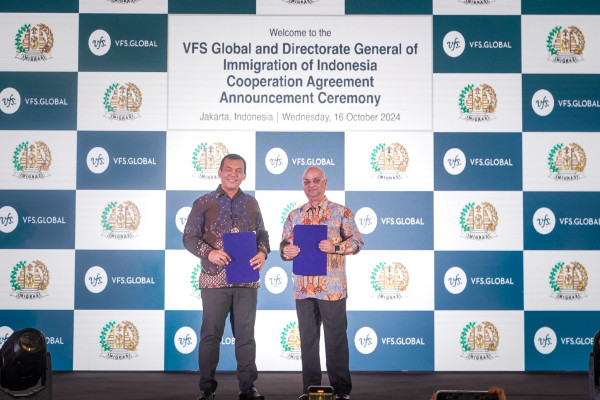
VFS Global appointed to offer new Indonesia e-Visa on Arrival service to South Africans, 96 other nationalities

Location: News
VFS Global

  • New Indonesia Electronic Visa on Arrival (e-VoA) service to commence in the first half of December 2024.
  • Group booking facility to be available for the benefit of travel trade and conventions.

Indonesia has set an ambitious target of welcoming 14 million visitors in 2024 and achieved 9.92 million arrivals from January to August 2024. The user-friendly eVoA solution aligns with Indonesia's ongoing efforts to enhance its tourism infrastructure and services. In the African region, South Africa accounts for the highest number of tourist visitors who travel to Indonesia.

Travellers will soon be able to enjoy a quicker and smoother visa application journey through VFS Global by completing the entire process online before departure and receiving a pre-approved e-VoA. The e-VoA can be easily obtained by visiting VFS Global website, submitting all the required documents, and paying the necessary fees online prior to travel. Once the application is submitted, travellers can receive their visas on their email before departure. With the payment having been made online, travellers can enjoy a smoother and faster entry experience through E-gates or immigration counters.

Mr. Silmy Karim, Director General of Immigration of Indonesia, said, “The Directorate General of Immigration offers the latest digital solutions that enhance the experience for foreign nationals who wish to visit Indonesia. In our collaboration with VFS Global, we aim to effectively contribute to increasing the arrival of foreigners, taking into account the network and digital platform owned by our partners.”

Mr. Zubin Karkaria, Founder and Chief Executive Officer, VFS Global Group said, “Indonesia is a very popular destination for travellers across the globe, and we are excited to unveil a service that will make their visa application process quicker, simpler and much more convenient. This user-friendly and highly secure digital e-Visa on Arrival (e-VoA) service will considerably enhance the visa application experience, thereby facilitate increase in tourism to the country. We are honoured to partner with the Directorate General of Immigration under the Ministry of Law and Human Rights and the Ministry of Tourism and Creative Economy of the Republic of Indonesia for this service."

Travellers applying for Indonesia e-VoA via VFS Global will get a dedicated email and live support in seven languages - English, Mandarin, Japanese, Korean, Arabic, German, and French – to help them with their queries. VFS Global will add more language support in due course of time for key markets.

VFS Global's new e-VoA platform will ensure all the documents applicants submit are complete and error-free. It also offers OCR technology which will enable applicant details to be auto populated, thereby saving time and effort for applicants. The new platform will also provide group booking facility which could be beneficials for travel trade and conventions. To further support this initiative, VFS Global has tied up with Emirates to make Indonesia e-Visa on Arrival (e-VoA) application service seamless for Emirates passengers. 

Distributed by APO Group on behalf of VFS Global.

Media Contact:
georgec@vfsglobal.com
Corporate Communications
communications@vfsglobal.com

About VFS Global:
As the world's leading outsourcing and technology service specialist, VFS Global embraces technological innovation including Generative AI to support governments and diplomatic missions worldwide. The company manages non-judgmental and administrative tasks related to applications for visa, passport, and consular services for its client governments, increasing productivity and enabling them to focus entirely on the critical task of assessment.

With a responsible approach to technology development, adoption and integration, the company prioritizes ethical practices and sustainability while serving as the trusted partner to 69 client governments.  Operating over 3,400 Application Centres in 153 countries, VFS Global has efficiently processed more than 297 million applications since 2001.

Headquartered in Zurich and majority owned through investment funds managed by Blackstone Inc, along with the Swiss-based Kuoni and Hugentobler Foundation and EQT, VFS Global is committed to creating value for all stakeholders and leading in responsible, innovative solutions making government services more effective and efficient.

Media files
VFS Global
Download logo
Read moreVFS Global appointed to offer new Indonesia e-Visa on Arrival service to South Africans, 96 other nationalities
12 November 2024

This Mobile Provider Is Failing to Implement RICA Law

Location: News

me&you mobile allows eSIMs to be activated within minutes using false information

Read moreThis Mobile Provider Is Failing to Implement RICA Law
12 November 2024

Simola Hillclimb Launches New Logo, Branding and Merchandise for 15th Edition in 2025

Location: Sport

New Simola Hillclimb logo pays homage to the event’s history in a contemporary way, emphasizing a love for speed, good competition and heritage Exciting range of merchandise being created with the new logo designs, including T-shirts and caps, which will be sold at the event 15th edition of SA’s premier motoring and motorsport lifestyle event […]

Read moreSimola Hillclimb Launches New Logo, Branding and Merchandise for 15th Edition in 2025
11 November 2024

Eldorado Park Residents Storm Out of City of Johannesburg Meeting

Location: News

Residents say they want housing urgently

Read moreEldorado Park Residents Storm Out of City of Johannesburg Meeting
11 November 2024

Food borne poisoning claims 23 lives

Location: News

Food borne poisoning claims 23 lives

Twenty-three people in Gauteng have died as a result of food borne-related poisoning after consuming food from spaza shops.

The majority of the deaths have been children between the ages of six and nine.

This is according to Premier Panyaza Lesufi who on Sunday updated residents on the implementation of by-laws to govern spaza shops.

“The first uniform approach across the province was to adopt a mechanism of reporting because we have so many deaths that are taking place that we want to isolate those that are food borne and those that need our immediate attention.

“The Department of Health has been given that task. They’ve given us their preliminary report, and in that report, they’ve indicated that the deaths that have been registered thus far. Today, we can confirm that we are at 23 [deaths] which is a sad thing,” he said.

He added that a large number of the incidents occurred within schools with the rest being within the community.

Furthermore, at least 441 cases of food poisoning have been reported throughout the province.

“Some of the people were either discharged or they just showed the symptoms of vomiting, stomach aches and related,” Lesufi said.

The Premier said from now on, the provincial government will “develop a template” that will be used by medical facilities, schools and community centres so that the province “can be in a position to track the areas that need immediate attention”.

“The Department of Health…will then develop a common template that will be utilised as a mechanism and then we’ll utilise the law enforcement agencies in terms of the cases that they have to ensure that we have the right figures.

“To us this is important because that becomes the base level of understanding the problem and it becomes the area in which we can record, trace and where intervention is needed, we can be in a position to make that intervention.”

Cracking down

Lesufi told the media that the provincial government has taken the decision to ban an agricultural pesticide that has been found to be at the root of some of the deaths.

“The MEC for Agriculture [Vuyiswa Ramokgopa] will formulate the approach on how to deal with that substance. We have agreed…that that substance is banned in our province and that it must not be found in any shops, it must not be found in any informal traders and that the law enforcement agencies will assist us to eliminate it where possible.

“But those that are authorised…the Department of Agriculture will be the institution that will give the licensing and the permission to utilise that,” he said.

The Premier added that because by-laws across municipalities are different in managing businesses – including spaza shops – a new uniform approach will be used.

“We have now formally adopted a draft gazette that was signed by the Minister of CoGTA [Cooperative Governance and Traditional Affairs, Velenkosini Hlabisa]. All municipalities in our province, without exception, will now adopt this gazette. These are new by-laws that have been developed nationally. 

“These by-laws explain how to register a business, how business should conduct themselves and all those related matters. [This] makes it easier for law enforcement agencies to monitor.

“The next resolution we have taken is the registration of businesses. All businesses – especially that are affecting the issue of our children – have to re-register. That’s the process that will also empower those that want to open or operate businesses, but they don’t have the financial muscle or the facilities,” he said.

Lesufi announced that stakeholder meetings are expected to be held to discuss the challenges.

Speaking at the District Development Model (DDM) Presidential Imbizo on Friday, President Cyril Ramaphosa assured the public that the issue is being addressed at the highest levels of government. 

READ | Food poisoning incidents managed at highest level, says President Ramaphosa

In his address, President Ramaphosa highlighted government's serious approach to the matter. 

The Department of Basic Education (DBE) said it was working with the Department of Health to develop safety guidelines for schools to effectively mitigate the risks of organophosphate pesticide exposure in school environments.

READ | Basic Education works to develop school safety guidelines

- SAnews.gov.za

NeoB
Mon, 11/11/2024 - 10:51

265 views
Read moreFood borne poisoning claims 23 lives
11 November 2024

Former Lottery Executive Fired After Disciplinary Hearing

Location: News

A number of dismissed lottery officials who have lodged appeals, as well as suspended officials, continue to draw salaries

Read moreFormer Lottery Executive Fired After Disciplinary Hearing
11 November 2024

Hlabisa gazettes standard draft by-law to empower township economies

Location: News

Hlabisa gazettes standard draft by-law to empower township economies

The Minister of Cooperative Governance and Traditional Affairs (CoGTA), Velenkosini Hlabisa, has introduced a new Standard Draft By-Law for Township Economies.

This by-law, issued in accordance with the Local Government: Municipal Systems Act of 2000, aims to create an enabling environment for small businesses in townships, supporting economic inclusion, job creation and community empowerment.

“The new by-law is a bold statement of CoGTA’s commitment to transforming townships into vibrant economic hubs that provide sustainable opportunities for residents. 

“This regulation is designed to harmonise township business ecosystems by providing standardised norms and facilitating easier entry and operation for formal and informal businesses,” the department explained. 

The department said the regulation also supports businesses with tailored resources, including permit registration processes and designated trading spaces, ensuring streamlined operations within municipal jurisdictions. 

The key features of the by-law include enhanced freedom for business activities, which means any individual with a business license may now conduct business within designated areas, subject to local quotas that ensure equitable opportunities for South African citizens and residents. 

“This regulation aligns with the constitutional right to freedom of trade, supporting entrepreneurial efforts that contribute to township vitality.” 

The by-law also touches on designated business zones where municipalities are empowered to establish business zones, creating spaces specifically tailored to retail, industrial, and mixed-use enterprises. 

It also speaks of business support and capacity building and simplified permitting and registration.

“The new standard draft by-law introduces an efficient permit and registration system that provides clear guidelines for businesses, including both physical and online access to application forms. 

“Municipal officials will assist applicants in the process, ensuring timely approvals and smooth operations for new and existing businesses.” 

According to the department, the new Standard Draft By-Law for Township Economies will also cover safety and compliance assurance and inclusive growth strategy. 

“The by-law mandates that all business activities align with public health and safety regulations. Regular inspections and public awareness campaigns will ensure that township businesses uphold the highest standards, protecting both entrepreneurs and the communities they serve.”

Hlabisa said the by-law was more than just a regulatory tool. 

“It reflects our vision for township economies as key contributors to South Africa’s growth. Through inclusive, streamlined, and supportive governance, this initiative lays a foundation for sustainable economic activity in historically underserved areas, empowering individuals to participate meaningfully in the economy,” the Minister added. 

CoGTA said it remained dedicated to engaging communities and stakeholders in the implementation of this by-law, ensuring that its benefits reach every corner of South Africa’s townships.

The full gazette can be accessed at https://www.cogta.gov.za/index.php/docs/local-government-municipal-systems-act-2000/. – SAnews.gov.za
 

Gabisile
Mon, 11/11/2024 - 11:52

2 views
Read moreHlabisa gazettes standard draft by-law to empower township economies
11 November 2024

Statement by the Chairperson of the Portfolio Committee on Communications and Digital Technologies on the Withdrawal of the SABC Bill by Minister Malatsi

Location: News

Republic of South Africa: The Parliament
Download logo

The Chairperson of the Portfolio Committee on Communications and Digital Technologies, Ms Khusela Sangoni Diko, has noted with grave concern the decision of the Minister of Communication and Digital Technologies, Mr Solly Malatsi, to withdraw the South African Broadcasting (SABC) Bill from Parliament, as reported in the Sunday Times today, 10 November 2024. The Portfolio Committee has not yet been formally notified of the withdrawal of the proposed legislation in line with the Rules of the National Assembly.

Nonetheless, the report states that the minister has decided to withdraw the Bill, believing it is “totally flawed”, does not address the funding model of the public broadcaster and assigns too much power to the minister in appointing board members. While appreciative of the fact that as the executive authority, the minister may rescind the Bill for whatever reason before its second reading in the House, the Chairperson holds that this decision by the minister would be highly ill-advised, and it is no exaggeration to say it would sound the death knell for the South African Broadcasting Corporation.

The challenges facing the SABC require a considered and urgent response, not trigger-happy action, which serves no purpose but to frustrate and disrupt processes already underway. To withdraw the Bill at this stage means to delay the implementation of crucial reforms necessary to save yet another crucial and strategic public institution. Initiated by the government in 2018 and only introduced to Parliament in October 2023, the SABC Bill seeks to, among others, provide for the continued existence of the SABC, provide for its governance and consequently amend the Independent Communications Authority of South Africa (ICASA) Act and the Electronic Communications Act (ECA). To date, the Bill has undergone a thorough public participation process, with the sixth Parliament having received about twenty written submissions from the SABC itself, academia, youth representatives, organised labour, and other interested parties. The 7th Parliament, understanding the urgent challenges facing the public broadcaster, prioritised this critical legislation and held oral hearings into the submissions in September 2024. The committee diligently studied and interrogated these submissions, and all concerns raised by stakeholders were attended to. The Department of Communications and Digital Technologies (DCDT), which the minister leads, was expected to have responded to the issues raised during the public participation process by the 17th of October 2024.

This process underway and agreed to by the committee and in the Minister's presence would have provided the committee with a clear way forward to amend the Bill as provided for in the Rules of Parliament and subvert any unnecessary delays in the processing of this sorely needed legislation. The Chairperson remains convinced that the issues raised by civil society, including the Democratic Alliance, relating to a lack of clarity on the funding model of the public mandate of the SABC, time limits on the President on the appointment of the SABC Board, the creation of a subsidiary Commercial Company and Board and the potential “lack of independence” in the appointment of the subsidiary Commercial Company, were not insurmountable and could have been remedied through an amendment by the committee. Rule 286 of the National Assembly Rules explicitly confers authority on parliamentary committees to amend or, where necessary, redraft bills before them. Thus, the Chairperson strongly believes that an attempt to withdraw this Bill from Parliament will delay and derail the transformative and developmental interventions the government has been pursuing in state institutions.

Ms Diko said that the committee has been at pains to put in place a fast-tracked process to finalise the SABC Bill, the absence of which has created a serious legislative vacuum that has dire consequences. “To this end, the government and even the committee itself had initiated various engagements with stakeholders on the possible funding model for the public mandate of the SABC – the most substantive and urgent of the concerns raised against the Bill.” Another of the major concerns coming from the public participation process was the need for the speedy finalisation of the Audio and Audio-Visual White Paper, and Ms Diko would like to urge the Minister to prioritise the finalisation of the White Paper before canning a process underway as this has a bearing on the amendment of the Bill.

She further said that the public broadcaster could not be allowed to fail because its demise would spell unmitigated disaster also for SENTECH, the country's signal distributor, with a ripple effect to over 130 community radio stations, several private broadcasters including commercial radio and TV stations and ICT service providers. Ultimately, the most affected stakeholders would be communities across the country, which rely on public broadcasters to provide them with news and public information that impacts their lives and is delivered in all official languages, including sign language. It is undisputed that SABC is the only broadcaster with the capacity, reach and ability to deliver on this important mandate.

Ms Diko commends the SABC leadership and staff for the immense strides recorded over the last two years, saying that they are a testament to the dedication and patriotism of the hardworking men and women of the public broadcaster, who, despite enormous pressure and financial constraints, were resolute that the show would go on. In the 2023/24 financial year, the SABC has turned the corner on its financial management, achieving an unqualified audit opinion once again after nine years.

“Should the reports of the minister's decision to withdraw the Bill be true and due to the gravity of the situation at the public broadcaster, we urge the DCDT to accelerate the process of reworking the Bill and reintroduce a new version to Parliament within the current financial year. In the meantime, the committee will invite the minister to indicate how, in the interim, the financial situation at the public broadcaster shall be improved to ensure sustainability until this much-needed legislation is amended and the issues attendant to it are resolved. Failure to reintroduce the Bill timeously will leave individual members of the committee or the committee itself with no option but to entertain introducing a committee or Private Members' Bill in the best interest of the SABC for consideration by Parliament,” said Ms Diko.

Distributed by APO Group on behalf of Republic of South Africa: The Parliament.

Read moreStatement by the Chairperson of the Portfolio Committee on Communications and Digital Technologies on the Withdrawal of the SABC Bill by Minister Malatsi
11 November 2024

COP29 expected finalise financing model for developing economies

Location: News

COP29 expected finalise financing model for developing economies

With the United Nations Framework Convention on Climate Change (COP29) taking place this week, South Africa expects the COP29 Presidency to enhance efforts to finalise the New Collective Quantified Goal on Finance (NCQG), which is a matter of great importance for developing economies.

“As I have said before, the current financing mechanisms have proven insufficient in scale and effectiveness, highlighting the urgency for a new financing model,” Minister of Forestry, Fisheries and the Environment Dr Dion George said on Sunday.

The Minister expressed confidence in the South African delegation who will be participating in the COP29 as they departed to attend the conference.

COP29 kicks off on Monday, 11 November and will conclude on Friday, 22 November in Baku, in Azerbaijan.

George will join the South African team in Baku as head of the delegation this week.

READ | SA prepares for UNFCCC COP29

COP29 is expected to focus on intensifying efforts to quantify resources for developing countries to meet ambitious climate targets under this year’s theme of “In Solidarity for a Green World.”

The climate change conference takes place at a critical moment of intensifying geopolitical tensions, heightened trade protectionist measures, and divisive approaches on issues such as carbon border adjustments.

COP29 is expected to build on strong leadership and outcomes from Dubai COP28.

The incoming COP29 Presidency has set ambitious priorities and the two-day summit at the start of the conference will get proceedings underway, by bringing together global leaders to raise awareness and accelerate climate action.

“Another key issue for South Africa and other developing economy countries is the adoption of Article 6.4 rules that will allow the immediate implementation of carbon market measures and unlocking new projects that contribute to economic growth, decarbonization of value chains and job creation.

“By establishing transparent and robust mechanisms under Article 6, we can enable countries to work together more effectively,” the Minister said.

George will be co-chairing discussions on mitigation together with his Norwegian counterpart and in their consultations, the Ministerial Pair will be engaging with parties and all negotiating groups to conduct informal consultations on concrete issues related to overcoming barriers and complexities in implementing countries’ Nationally Determined Contributions (NDC) as well as the necessary means of implementation to achieve the 1.5-degree goal and net-zero decarbonisation in 2050.

The NDC cover adaptation, mitigation as well as finance and investment requirements and is based on equity.

George, and his counterpart from Norway, Minister of Climate and Environment Tore Onshuus Sandvik, have been appointed to steer informal consultations on mitigation before and during the COP29.

The Ministerial Pair was appointed by COP29 President-designate and Minister of Ecology and Natural Resources in the Republic of Azerbaijan, Mukhtar Babayev.

READ | SA, Norway Ministers to drive talks on climate change mitigation

“I have full confidence in our negotiating team, and I encourage all South Africans to follow proceedings on all online platforms. I look forward to joining the team shortly,” George said.
Once again, South Africa will be hosting a South African exhibition pavilion at the climate change talks in partnership with the National Business Initiative (NBI).

During the conference a number of dialogues and side events are to be hosted at the Pavilion to showcase the work being done by various South African organisations to raise awareness, adapt to, and mitigate, climate change. -SAnews.gov.za
 

nosihle
Mon, 11/11/2024 - 09:23

75 views
Read moreCOP29 expected finalise financing model for developing economies
10 November 2024

SANPC Launches Global Investor Roadshow

Location: News
African Energy Chamber

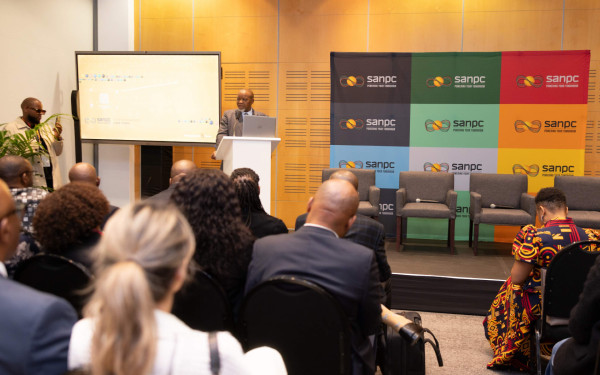
The newly-sanctioned South African National Petroleum Company (SANPC) kicked off its global investor roadshow at African Energy Week: Invest in African Energies on Thursday, inviting investors and governments to engage with South Africa's oil and gas prospects, while showcasing strategic plans for the new entity.

Speaking on the rationale behind the creation of the SANPC, South Africa's Minister of Mineral and Petroleum Resources, Gwede Mantashe, emphasized the need to rationalize and consolidate the country's many state-owned enterprises. The aim is to maximize efficiencies, streamline the sector, reduce costs and prioritize petroleum development as a catalyst for economic growth.

“The focus is to drive economic growth and development. We want it to grow – we want to get into fossil fuels. We must do it. [We want to] improve operational efficiencies, scale of market and market share,” said Minister Mantashe.

The SANPC operates under a broad mandate to acquire, generate, manufacture, market and distribute all forms of energy, including crude oil, natural gas, coal, renewable energy and biofuels. South Africa's extensive coal bed methane and shale gas resources were highlighted, including the gas-rich Karoo Basin and the Saldanha Bay gas-to-power project. The country also benefits from deep-sea ports, robust infrastructure and a favorable regulatory framework, with the potential to create synergies with nearby oil and gas producers such as Mozambique and Angola.

“We need to start thinking as a region instead of as countries,” said Godfrey Moagi, CEO of SANPC.

South Africa's refining capabilities were also emphasized as a critical priority, with enhancing the country's liquid fuels security identified as a matter of national security and strategic interest. The SANPC stated that in 2024, South Africa is expected to import 70% of its manufactured liquid fuel needs.

“This has put the country at risk, and we are dealing with issues of security of supply. We need to prioritize commercial sustainability for the entire CEF Group to drive economic recovery,” said Moagi. “In South Africa, we import $2.5 billion of crude oil and products. The SANPC is going to change this, so that South Africa looks differently.”

“[Reviving] refining capacity reduces the risk on petroleum supply. We must cushion it with our own refining capacity,” said Minister Mantashe.

Following its formation in 2024, the SANPC will enter its second phase of operationalization in 2025, which includes forming strategic partnerships and alliances, operationalizing its assets, and optimizing its business and service model. Starting in 2026, the company plans to enter its growth phase, deploying an integrated “New Energy” growth strategy, developing and optimizing assets, expanding its portfolio, diversifying revenue streams and advancing its technology and innovation strategy.

The SANPC will host a series of upcoming roadshows spanning Africa, Europe and the Middle East, organized by Energy Capital & Power.

Distributed by APO Group on behalf of African Energy Chamber.

Media files
African Energy Chamber
Download logo
Read moreSANPC Launches Global Investor Roadshow
10 November 2024

Shale Gas Is Back on the South Africa Menu, Says Mantashe

Location: News
African Energy Chamber

South Africa's Minister of Mineral and Petroleum Resources Gwede Mantashe on Thursday reiterated that the country was committed to developing its oil and gas sector, despite external pressures to transition to a greener economy.

Speaking at African Energy Week: Invest in African Energies 2024, in Cape Town, Mantashe noted that with President Cyril Ramaphosa assenting to the Upstream Petroleum Resources Development Bill, which seeks to accelerate petroleum exploration and development and includes provisions to address unconventional gases like shale gas, South Africa was well on its way to become a competitor in the international oil and gas space.

“While we are getting pinned down not to take these steps, we needed to [explore oil and gas], lift the moratorium on shale gas, as we are still a developing economy. Whether we lifted the moratorium or not, critics would always be there. Gas is described as a transitional technology . . . and is part of the green transition,” he stated.

Earlier this year, Mantashe invited written comments on his intention to investigate the Karoo Basin through large-scale land seismic and airborne surveys to explore for oil and gas that may lie below the ground. The surveys aim to assess geological risks and examine whether there are enough resources to justify extraction.

“[These projects] will improve our gross domestic product by 8%,” he said, noting that across the border in Namibia and Mozambique there have already been significant economic turnarounds with the discovery and development of oil and gas.

Meanwhile, Mantashe emphasized the need to balance economic development with climate change initiatives. “Development and environmental stewardship must coexist . . . and we must responsibly manage natural resources. Mine responsibly, drill responsibly, protect the climate, indigenous plants and land, but don't stop developing. If you stop that, you will have consequences further down the line,” he noted.

Mantashe further noted that he did not expect to see South Africa move away from coal-fired power stations by 2030. “Not in my lifetime,” he said, adding that the country can transition into new technologies, but it should “never dismantle old technologies. I am a great believer of mixed technologies [and with coal we have] a very strong base load technology.”

Distributed by APO Group on behalf of African Energy Chamber.

Media files
African Energy Chamber
Download logo
Read moreShale Gas Is Back on the South Africa Menu, Says Mantashe
10 November 2024

Local Manufacturing Key to Advancing Green Technologies

Location: News
African Energy Chamber

The African continent is developing promising green technologies to address energy access disparities and to foster economic growth. Its countries should take an active role in local sustainable energy solutions, rather than merely being consumers of these technologies.

At a dedicated panel session at African Energy Week: Invest in African Energies 2024, panelists emphasized the need for countries already producing oil and gas to utilize local energy resources for the purposes of enhancing value and meeting domestic needs, particularly for secluded and rural areas that do not have access to energy on the grid. They agreed that green technology and innovation could not be advanced without significant investments in local capacity, particularly in manufacturing and grid infrastructure.

Moderated by S&P Global Head of Energy Transition, Ashutosh Singh, panelists of the Advancing Green Technology and Innovation in Africa session further agreed that while renewable energy may not create immediate large-scale jobs, strategic planning by policymakers could lead to millions of new opportunities as the sector evolves.

James White, CEO of Comet Energy, highlighted that legislative barriers also exist in many African nations. In South Africa, for instance, larger solar installations connected to the grid need a generation license from National Energy Regulator of South Africa (NERSA). This, White believes, adds an additional layer of complexity and can deter potential investors or developers from pursuing solar projects.

Although recent amendments to policies have raised the threshold for embedded generation projects without a license to 100 MW, navigating these regulations still poses significant challenges, he noted. “We also need to look at developing local supply chains, which are needed to further drive down costs and improve accessibility to technologies,” he said.

Dennis Bauer, Senior Executive Energy Transition Advisor, Neuman & Esser discussed the potential of hydrogen as key to Africa's energy transition.

By 2035, more than 50 million tons per year of cost-competitive green hydrogen can be produced on the continent by blocks in Morocco, Egypt and South Africa. However, Bauer emphasized that localized supply chains are necessary to support these developments. “Developing local manufacturing capabilities for battery components and other technologies can significantly reduce costs and enhance sustainability,” he said.

The panel discussion also touched on advancements in solar technology, noting improvements in efficiency and flexibility that can facilitate deployment in remote areas.

CEO of South African National Energy Development Institute (SANEDI), Dr Zwanani Titus Mathe, stressed the importance of learning from successful models surrounding new green technologies, like China's investment in research and development (R&D).

“We need to establish centers of competence across Africa focused on R&D, manufacturing and skills development to position the continent as a leader in green technology. As African nations commit to investing in green innovation, collaboration among governments, businesses, and communities is also essential,” he said.

Director of International Relations at IFP Energies nouvelle (IFPEN), Dr Said Nachet, concluded that Africa has the potential to lead in green technology. “By harnessing local resources and fostering innovation, the continent can emerge as a hub for green technology and sustainable energy solutions,” he said.

Distributed by APO Group on behalf of African Energy Chamber.

Media files
African Energy Chamber
Download logo
Read moreLocal Manufacturing Key to Advancing Green Technologies
10 November 2024

Africa’s Energy Infrastructure Can Only Succeed with Enhanced Transmission

Location: News
African Energy Chamber

As the demand for electricity continues to rise across the African continent, it is imperative for countries to act swiftly to enhance transmission capabilities and develop robust infrastructure to secure new energy integration sources over the next 25 years.

A recent report by consulting firm McKinsey & Company estimates that $400 billion will be required to enhance electricity transmission and distribution capacity across Africa by 2050. This investment is critical for modernizing energy infrastructure and ensuring energy security for the continent.

During a panel discussion titled ‘Optimizing Africa's Grid Capacity' at the African Energy Week: Invest in African Energies 2024 conference, Eskom's Transmission Group Executive, Segomoco Scheppers, highlighted the potential of the Electricity Regulation Amendment Act 38 of 2024 for South Africa and its neighboring countries.

This legislation will facilitate the establishment of a market operator in South Africa, creating opportunities for diverse players in the energy sector. “This shift signifies a transformative period in our industry as we adapt to new market dynamics,” he stated.

Despite having interconnections of 400 kV with neighboring countries, Scheppers acknowledged existing challenges. “Strengthening these connections is essential for enhancing regional cooperation and ensuring a reliable energy supply across borders. The reliance on thermal generation in the south, particularly to support countries like Zambia, underscores the need for stronger interconnections,” he explained.

Eskom is further embarking on an extensive domestic expansion program aimed at rapid development – an endeavor that also presents significant challenges. “Learning from global leaders in infrastructure development, particularly from experiences in China, could provide valuable insights into scaling our efforts efficiently,” Scheppers added.

Wang Wenan, Chief Representative, African Representative Office at the State Grid of China, discussed the successful completion of major projects, including the largest long-distance transmission project on the continent — a 500 kV DC line from Ethiopia to Kenya.

However, he noted that fostering private participation in energy projects remains a primary obstacle. “Engaging in dialogues about investment barriers and sharing best practices is crucial for unlocking potential growth in Africa's energy sector,” he emphasized.

Also speaking on the panel, Willy Ireri, Executive Director of Osprey Renewables, highlighted that while East Africa has abundant renewable resources such as wind, solar, and geothermal energy, access to reliable transmission infrastructure in this region also remained a critical challenge. “We are therefore committed to collaborate with state utilities and private investors to ensure that generated electricity reaches emerging green industries in the region,” he said.

With favorable legislation for private investment in transmission expected to be operational by 2025, Osprey Renewables aims to play a vital role in facilitating access to renewable energy for consumers.

“Our mandate at Osprey extends beyond generation; we actively engage across the entire value chain and we are seeing growing interest in green manufacturing and hybrid data centers,” Ireri added, noting that the Kenyan government has initiated proposals inviting independent transmission projects, signaling a positive shift toward increased private sector participation.

Power and Grid Segment President at Schneider Electric, Gary Lawrence, highlighted that a modernization of power grids was also needed. “The traditional grid was designed over a century ago for one-directional flow; today's needs require a bidirectional grid that allows seamless interaction between producers and consumer.”

The industry is balancing supply and demand effectively through initiatives such as collaborating with Egypt's Ministry of Electricity and Renewable Energy to develop distribution control centers that enhance grid intelligence and implementing distributed energy management systems in South Africa.

Distributed by APO Group on behalf of African Energy Chamber.

Media files
African Energy Chamber
Download logo
Read moreAfrica’s Energy Infrastructure Can Only Succeed with Enhanced Transmission
  • Previous
  • Page 1
  • Interim pages omitted …
  • Page 78
  • Page 79
  • Page 80
  • Page 81
  • Page 82
  • Interim pages omitted …
  • Page 212
  • Next

Copyright © 2026 · MyZA · All Rights Reserved · Powered by Stratlec Online