• Skip to main content
  • Skip to header right navigation
  • Skip to after header navigation
  • Skip to site footer
MyZA

MyZA

News, Directory, Events and Other Stuff

  • Social Media
  • Sport
  • World News
  • Home
  • Submit News
  • Directory
  • Events
  • Stratlec
  • TFSA
  • News
    • APO
    • Today’s Sport News
    • Todays Social Media and Tech Headlines
    • Today’s World News
    • Today’s SA Financial News
  • Contact
You are here: Home / Archives for Renewable

Renewable

19 September 2024

KZN Premier attends Climate Week in the US 

Location: News

KZN Premier attends Climate Week in the US 

KwaZulu-Natal Premier, Thamsanqa Ntuli,  has embarked on a strategic working visit to the United States of America (USA) where he will be attending the highly anticipated Climate Week forum.

The Climate Week NYC, held in conjunction with the United Nations General Assembly, is one of the world’s largest annual events dedicated to climate action and sustainability.

The forum will take place in New York City from 22 to 29 September 2024. It brings together leaders from the world of business, including government, political change makers, academia, and civil society from all over the world, who will gather to drive the transition forward, speed up progress, and champion change that is already happening.

Ntuli, who left the country this week will be engaging in high-level discussions and forming strategic partnerships during Climate Week.

The KwaZulu-Natal Provincial government said Ntuli’s visit to New York underscores the province’s commitment to addressing climate change, promoting sustainable development, and strengthening ties with the USA—South Africa's third-largest trade partner.

“Premier Ntuli’s objectives include reaffirming the strategic and mutually beneficial relationship between KwaZulu-Natal and the United States, advocating for enhanced international cooperation in tackling climate change, securing investments in green technologies, and implementing sustainable land-use practices,” the provincial government said.

The provincial government added that the Premier’s visit aims to achieve several key outcomes, including securing international cooperation; obtaining support and investment for renewable energy projects and climate adaptation initiatives; forging global partnerships; and collaborating with international organisations, climate-focused non-profits, and private sector stakeholders to advance climate action.

The visit also aims to showcase provincial progress, highlight KwaZulu-Natal’s achievements in climate resilience, including improvements in disaster risk management and biodiversity conservation.

“Ntuli’s participation in Climate Week and related events signifies KwaZulu-Natal’s proactive approach to global climate challenges and positions the province as a leader in climate adaptation and sustainability. The insights and partnerships gained from this visit are expected to enhance KwaZulu-Natal’s long-term climate resilience and contribute to sustainable development efforts,” the provincial government highlighted.

The Premier will on Friday hold a meeting with the South African Consul General to New York, Simon Cardy, which will cover a range of global issues, including trade, investment, climate change, food security and energy.

The discussion is part of a broader effort to align KwaZulu-Natal’s strategies with global climate goals and secure international support for the province’s sustainability initiatives.

Climate resilience

KwaZulu-Natal has recently faced severe climate-related challenges, including heavy rainfall, strong winds, hailstorms, and a tornado that have caused significant infrastructure damage, particularly in the eThekwini Metro, Ilembe and Howick areas.

The April 2022 floods, among the worst in the province’s history, resulted in over 400 fatalities and severe disruption to infrastructure, including port operations in Durban.

“These recent events underscore the urgent need for enhanced climate resilience. The Premier’s visit aims to address these challenges by securing international collaboration and investment to bolster KwaZulu-Natal’s capacity to manage and adapt to climate risks,” the provincial government said.

MEC for Agriculture and Rural Development, Thembeni kaMadlopha-Mthethwa, has been appointed as Acting Premier of the province during Ntuli’s absence. KaMadlopha-Mthethwa will oversee the provincial responsibilities until the Premier returns. – SAnews.gov.za

GabiK
Thu, 09/19/2024 - 10:58

110 views
Read moreKZN Premier attends Climate Week in the US 
17 September 2024

Red Ribbon Communications Elevates Brand Recognition in the Renewable Energy Sector

Location: MyPR

Red Ribbon Communications, a leading PR agency specialising in tech PR and sustainability, has achieved a significant milestone through its successful collaboration with Rubicon, a leading South African sustainable technology provider. The strategic partnership has not only solidified Red Ribbon’s position as an expert in providing PR services to renewable energy solutions but has also …

Read moreRed Ribbon Communications Elevates Brand Recognition in the Renewable Energy Sector
10 September 2024

Sungrow Showcases the Future of Renewable Energy in Cape Town Solar and Storage Event

Location: MyPR

Sungrow, a global leader in renewable energy solutions, is pleased to announce the resounding success of its participation in Solar & Storage Live, Cape Town’s premier renewable energy exhibition held last week. The event marked a significant milestone in Sungrow’s commitment to driving the energy transition in South Africa, showcasing the company’s advanced solar and …

Read moreSungrow Showcases the Future of Renewable Energy in Cape Town Solar and Storage Event
9 September 2024

‘New era of opportunity’ for China, South Africa cooperation

Location: News

'New era of opportunity' for China, South Africa cooperation

President Cyril Ramaphosa says the relations between South Africa and China have entered a new “era of opportunity”. 

The President was addressing the nation through his weekly newsletter following an official State Visit to the People’s Republic of China last week.

“During the state visit, China and South Africa agreed to upgrade our relationship to an All-Round Strategic Cooperative Partnership in a New Era. This signifies the strengthening of the political, economic and social ties between the two countries.

“The strengthening of ties with major trading partners like China continues to yield benefits for the South African economy and people. It is clear that relations between South Africa and China have entered a new era of opportunity. 

“Our visit has strengthened trade and investment ties and cemented our shared commitment to grow our economy, create jobs and advance prosperity for the people of our two countries,” he said.

Trading partners

The President revealed that during the visit, Chinese President Xi Jinping expressed that he would like to see more finished goods from South Africa entering Chinese ports.

The Asian country is South Africa’s largest trading partner but, President Ramaphosa pointed out, there is an “imbalance in the structure of our trade”. 

“South Africa exports mainly minerals and agricultural products to China and imports largely manufactured products from China. 

“During our discussion, Chinese President Xi Jinping expressed his support for the development of South Africa’s manufacturing capacity and to receive greater volumes of finished goods from South Africa.

“President Xi has committed China to open its markets to more South African products and would seek to further broaden the frontiers for Chinese investment in the South African economy,” President Ramaphosa said. 

The President added that government is buoyed by potentially increased cooperation between the two countries in “pursuit of low-carbon, climate resilient economic growth” and infrastructure.

“For example, South Africa has investment opportunities in the electric vehicle sector, renewable energy, green hydrogen and energy storage – and China has a proven track record in developing innovative solutions in these areas. 

“There is also great potential, and much interest, for Chinese private commercial firms, state-owned enterprises and banks to invest in our country’s infrastructure build programme. This aligns with our plans to modernise our infrastructure by investing in the expansion of ports, rail and road networks,” he said.

Beyond our shores

President Ramaphosa emphasised that enhanced relations between China and South Africa can bring opportunities beyond the two countries.

While on the State Visit, the President attended the Forum on China-Africa Cooperation (FOCAC) where the African Continental Free Trade Area (AfCFTA) and its potential were discussed.

“The [AfCFTA], which will provide access to a market of over 1.3 billion people, provides an even greater incentive for investment by China and other countries in Africa’s manufacturing capacity.

“This was underlined during the FOCAC summit attended by more than 50 African countries, where President Xi announced ten partnership actions that China would take together with African countries to support the modernisation of their economies. These actions cover areas like trade, industrial development, agriculture, health and infrastructure. 

“At a time when African economies are growing closer together, China’s technological capabilities can support Africa’s industrialisation and enable the continent to export more than just raw commodities,” the President said. – SAnews.gov.za

NeoB
Mon, 09/09/2024 - 10:07

191 views
Read more‘New era of opportunity’ for China, South Africa cooperation
4 September 2024

How to Enter the Aviation Industry in South Africa

Location: MyPR

The aviation industry presents a world of opportunities for aspiring professionals, offering careers that span from piloting aircraft to managing airport operations and ensuring safety in the skies. As global and local demand for air travel continues to grow, South Africa’s aviation sector is poised for expansion, making now the perfect time for individuals to …

Read moreHow to Enter the Aviation Industry in South Africa
4 September 2024

Navigating Legal Complexities: How Specialized Lawyers Can Assist You

Location: MyPR

When dealing with legal matters, the importance of seeking professional help cannot be overstated. Whether it’s related to family disputes, labor issues, or property matters, having the right legal guidance can help you through difficult times.   Labour Law: Protecting Your Rights in the Workplace In employment-related cases, specialized labour lawyers are essential. These professionals …

Read moreNavigating Legal Complexities: How Specialized Lawyers Can Assist You
4 September 2024

SA to transform economy into manufacturing hub

Location: News

SA to transform economy into manufacturing hub

By Nosihle Shelembe

Beijing, China - President Cyril Ramaphosa says South Africa is working towards transforming the economy by turning the country into a “manufacturing hub”.

“We plan to move from being a large importer of manufactured products to being a major exporter,” the President said on Wednesday.

Addressing the South Africa-China Business Forum on the occasion of the State Visit to China, President Cyril Ramaphosa said Chinese companies will find there are innumerable business opportunities to manufacture products in South Africa using the country’s excellent industrial experience.

“We have seen this happen in our automotive industry. We have ambitious plans to modernise our infrastructure by investing in the expansion of ports, rail and road networks. 

“We are on a path to revolutionise our energy sector in pursuit of low-carbon, climate resilient development,” the President said.

He said South Africa is actively seeking investment in the energy sector, with a particular focus on renewables and green hydrogen.

“China has a proven track record in developing innovative renewable energy solutions. 

“Together, we can create sustainable and environmentally friendly energy solutions that benefit both our countries.

“By working together, we can create value chains that are mutually beneficial, leading to job creation and economic growth.

There is also vast untapped potential in technology,” President Ramaphosa said.

He said South Africa and China can collaborate to promote innovation, technology transfer and skills development. 

“By leveraging our respective strengths and exploring new avenues of collaboration, we can create mutually beneficial partnerships.

“Our focus must now be on building stronger business relationships, promoting cultural exchanges and tourism, and creating a favourable business environment.

“The growth of the South African economy will support the success of the African Continental Free Trade Area, which opens access to a market of over 1.3 billion people,” the President said.

He said African economic integration is fast becoming a reality that creates enormous opportunities to expand production on the continent and to stimulate much greater economic activity.

“We are a country with enormous potential for growth and development. We are advantageously placed for companies looking to expand into the rest of the African continent.

“South Africa and China have vibrant, diverse and growing economies, with a wealth of opportunities for businesses wishing to expand into new markets,” the President said.

China is currently South Africa’s largest trading partner.

Bilateral trade between China and South Africa has increased by a third since 2019. 

South Africa exports mainly minerals and agricultural products to China, and imports largely manufactured products from China. 

“We are seeking to shift the structure of our trade profile and deepen our investment relationship.

“South Africa has one of the most advanced and diversified economies on the African continent. It has a vibrant business environment and a strong regulatory framework. It has a diverse, competitive and well-regulated financial sector,” the President said.

Since the start of South Africa’s major investment drive in 2018, Chinese companies have made investment pledges to the value of over R18 billion in the manufacturing, resources, finance and agro-processing sectors. This is the equivalent of US $1 billion.

“In the last six weeks, a number of Chinese companies have increased investments to support the expansion of their operations. 

“These investment commitments are testament to the resilience of the South African economy and the many opportunities for foreign and domestic investors. 

“It is up to us to seize these opportunities and take the economic relationship between our two countries to the next level,” the President said.

He said South Africa has investment opportunities in the electric vehicle sector, renewable energy, green hydrogen and energy storage.

It has further opportunities in infrastructure, manufacturing, mining, beneficiation of critical minerals, and the digital economy.

“Let us work together to seize this opportunity and continue to build a more prosperous future for our respective countries,” the President said. – SAnews.gov.za

Matona
Wed, 09/04/2024 - 13:10

8 views
Read moreSA to transform economy into manufacturing hub
3 September 2024

President calls for investments in SA

Location: News

President calls for investments in SA

By Nosihle Shelembe

Beijing, China - President Cyril Ramaphosa has appealed to the business sector in China to invest in South Africa and make use of the great opportunities that exist for growth and development.

“South Africa presents a great opportunity for companies in Shenzhen to deepen their global value chains,” the President said on Tuesday.

The President made the remarks during the Shenzhen Business Roundtable at the occasion of the State Visit to China.

“With the capabilities that your companies have, we encourage you to play a more active role in our economy for mutual benefit,” he said.

Impressed by how Shenzhen has over four decades transformed into a leading digital supply chain hub, the President said South Africa can learn important lessons from Shenzhen.

Shenzhen is home to the most innovation-based technology start-up companies in China.

“Shenzhen is now a leader in the knowledge economy. We are keen to learn more about the city’s journey towards becoming a global centre of technology, innovation and growth. As we work to develop our economy, we value advice, support and technical assistance in planning, infrastructure and skills development.

“As we undertake this just and inclusive energy transition, we see many opportunities for growth and job creation in the green economy,” the President said.

South Africa has made a firm commitment to reduce its carbon emissions in line with global commitments.

“We are doing so at a pace and in a manner that is appropriate to our country’s development path.

“We have introduced policies to promote the development of the electric vehicle industry in South Africa.

“We are certain that companies such as BYD and CATL will find South Africa a unique and advantageous location that can serve as a hub to reach other markets,” the President said.

He said as a global leader in green energy and infrastructure, Shenzhen could be an important partner for South Africa as the energy sector undergoes a major transformation.

“Over the last few years, regulatory changes have stimulated substantial new investment in electricity generation capacity, mainly from renewable sources.

“We now have pipeline of over 130 confirmed private sector energy projects that will produce approximately 22 500 MW of electricity,” Ramaphosa said.

READ: China to assist SA in alleviating poverty 

South Africa is also making significant investments in the electricity transmission infrastructure.

“In addition to securing our country’s energy supply, these investments will lay the basis for the further growth of our advanced manufacturing sector.

“This is further supported by the implementation of the African Continental Free Trade Area, which will drive a new era of industrialisation in South Africa and across the continent.

“With its abundant renewable energy resources and significant deposits of the minerals that are needed to drive green growth, South Africa is well-positioned to be a leader in the green energy and related industries,” the President said. – SAnews.gov.za

nosihle
Tue, 09/03/2024 - 12:38

165 views
Read morePresident calls for investments in SA
2 September 2024

China to assist SA in alleviating poverty 

Location: News

China to assist SA in alleviating poverty 

By Nosihle Shelembe

Beijing, China -  As part of ongoing efforts to improve the lives of South Africans, China has committed to assist the country in tackling poverty. 

This commitment was revealed in a joint statement by President Cyril Ramaphosa and Chinese President Xi Jinping on the occasion of President Ramaphosa’s State Visit to the People’s Republic of China.

“China is committed to sharing with South Africa its experience in poverty alleviation and rural revitalisation; in building poverty alleviation model villages and offering support for South Africa's coordinated urban and rural development,” the statement said on Monday. 

During the State Visit, the two countries recommitted to working together towards building a high-quality China-South Africa community, with a shared future. 

“To carry forward the friendship, consolidate mutual trust, expand cooperation and enhance coordination, the two Heads of State agreed to elevate the bilateral relationship to an All-round Strategic Cooperative Partnership in a New Era, underpinned by strong political ties and focused on a prosperous future with balanced trade, and accelerated transformative economic growth,” the statement said. 

Improving lives

China expressed its firm support of national unity and the path of economic and social development that South Africa has chosen. It also said it respects efforts by the South African government to safeguard its national interests to improve the lives of all South Africans. 

“The two sides agreed to work on strengthening cooperation and synergy between the Belt and Road Initiative and the Economic Reconstruction and Recovery Plan and to continue implementing the 10 Years Strategic Programme of Cooperation between the People’s Republic of China and the Republic of South Africa (2020-2029), as a blueprint towards more substantive outcomes on priority political and socio-economic issues between the two sides. 

“The two sides agreed to fully leverage the role of mechanisms such as the China-South Africa Joint Working Group (JWG) and the Joint Economic and Trade Committee (JETC) to further expand economic and trade ties by improving the current trade structure, increasing market access and the export of value-added goods from South Africa,” the statement said. 

Trade and investment

China is South Africa's largest trading partner globally, while South Africa is China’s number one trading partner in Africa. Total bilateral trade grew from R614 billion in 2022 to R692 billion in 2023. 

“The two sides encouraged the respective business communities to enhance new two-way investments and increase their manufacturing bases within the proximity of the relevant source of raw materials to enable the transfer of skills technology and job creation. 

“The two sides committed to providing a stable, fair and enabling business environment for companies from both sides and to ensure the safety and legitimate rights and interests of the relevant personnel, projects and institutions. 

“The two sides encouraged mutual visits by economic and trade delegations, including co-hosting the New Energy Investment Conferences with South Africa and holding the Jobs Fair of Chinese-invested Enterprises in South Africa to boost local employment and improve people’s lives,” the statement said.

READ | President calls for narrowing of SA, China trade deficit

Deepening cooperation 

The two sides agreed that promoting modernisation is the joint goal in building a high-level South Africa-China community, with a shared future. 

“The two sides will deepen cooperation in traditional fields such as agriculture, health, medical sciences and infrastructure development. However, they will further seize opportunities presented by the new scientific and technological revolution and industrial transformation, focusing on key areas such as the digital economy, new energies and artificial intelligence, boost cooperation on quality productive forces, and further expand mutually beneficial cooperation in renewable energy, energy storage and power transmission and distribution,” the statement said. 

The two sides further agreed to continue to strengthen exchanges and cooperation in the areas of culture, women, health, youth, education, sport, media, tourism and other people-to-people cooperation fields. 

As part of the State Visit, the two Presidents jointly witnessed the signing of several bilateral cooperation instruments in the following areas: 

   • Cooperation of the Application of BeiDou Navigation Satellite System;
   • Sustainable Housing and Human Settlements Development; 
   • Deepening Bilateral Trade Cooperation; 
   • Cultural Heritage; 
   • Cooperation in Prevention and Control of Foot-and-Mouth Disease; 
   • Inspection, Quarantine and Sanitary Requirements for Dairy Products Exported from the Republic of South Africa to the People’s Republic of China; and the Protocol on Greasy Wool. -SAnews.gov.za
 

nosihle
Mon, 09/02/2024 - 14:41

188 views
Read moreChina to assist SA in alleviating poverty 
1 September 2024

Deputy President commends BRICS New Development Bank for pledges

Location: News

Deputy President commends BRICS New Development Bank for pledges

Deputy President Paul Mashatile has expressed his gratitude to the BRICS New Development Bank for its backing of South African infrastructure investment.

“I want to express my gratitude once again for the bank's pledge, and specifically for the promises made regarding the bank's assistance for South African infrastructure investment. In this regard, we take note of the US$5.6 billion in loans extended to our country over the last eight years,” the Deputy President said.

He was addressing the Energy Seminar convened by the BRICS New Development Bank at the Cape Town International Convention Centre on Saturday.

The NDB has approved $2.3 billion for 10 renewable energy projects, including solar PV, wind, hydropower, biomass, and hybrid systems with storage. These projects aim to install a 2.8GW generation capacity, reducing over 4 million tonnes of CO2 emissions annually.

“We also appreciate the bank's plans to assist Transnet in resolving the deficiencies in freight rail infrastructure. The Transnet project in particular is of utmost importance in guaranteeing a goods system that is internationally competitive, allowing for the continuous expansion and diversification of the country's economy,” Mashatile said.

He highlighted that during their discussions they had agreed that a challenge was the sluggish payment of authorised projects in South Africa. He discussed the matter with the Minister of Finance Enoch Godongwana and his team at National Treasury, who have promised to attend to it.

“We are also impressed that the bank has appointed former National Treasury official Mr Monale Ratsoma as its Chief Financial Officer and Vice-President. We will work with you to ensure that the pledge that the bank made of US$3 billion at the BRICS Summit comes to reality because it is focused on supporting our energy strategy,” he said.

Deputy President Mahsatile told the NDP President that the government is especially eager to learn from China's experience in rapidly scaling up renewable energy capacity and modernising its grid infrastructure; India's successes in promoting rural electrification and integrating large-scale renewable energy projects; Brazil's expertise in hydroelectric power and bioenergy and Russia's strategies for managing a vast transmission network and its progress in nuclear energy.

“We hope to gain insights into effective models for private sector participation in transmission infrastructure development; strategies for balancing grid stability with the integration of variable renewable energy sources; innovative financing mechanisms for large-scale energy projects and best practices in managing the socio-economic aspects of energy transitions.

“Specifically, one of the lessons we are learning from one of the BRICS Member Nations is that they have invested in the creation of new cities as a method to eradicate poverty. We are of the same opinion that it is imperative to allocate resources towards the construction of new cities in Africa in order to alter the spatial perspective of our cities,” he said.

“As we collaborate with the NDB, we will invest in new cities in response to today's realities, which are growing urbanisation, migration, climate change, poverty, unemployment, and pandemic management. The future is in the cities.”

The Deputy President told delegates that if South Africa accelerates the construction of these cities, it will address the large influx of people from rural areas moving to urban areas, which has put tremendous strain on cities, causing traffic congestion, housing infrastructure backlogs, and, to some extent, an increase in crime rates.

“However, as we develop these cities, we must remember that sustainable cities require dependable, inexpensive, and renewable energy to operate. High-energy consumption patterns, rising energy costs, and environmental deterioration caused by the use of fossil fuels render cities vulnerable and inefficient,” he said.

The Deputy President presented some of the key initiatives and reforms government has undertaken. 
He spoke about the process of unbundling Eskom into three separate entities: generation, transmission, and distribution. This separation will enhance efficiency, improve accountability, and open up the sector to much-needed competition and investment.

“We have also implemented a debt relief programme for Eskom, allocating R254 billion over the next three years. This financial support is crucial for Eskom's operational stability and will enable the utility to invest in critical maintenance and upgrades of existing infrastructure,” he said.

The country is expanding generation capacity where several steps have been taken already. 

“To this end, we are implementing an ambitious transmission expansion plan, including piloting Independent Power Transmission (IPT) projects and streamlining regulations to accelerate the development of transmission infrastructure.

“This initiative aims to unlock renewable energy potential in the Northern, Eastern, and Western Cape provinces. The aim is to connect new generation capacity to the grid.

“As we pursue these reforms, we remain steadfast in our commitment to a just energy transition. We have, however, decided not to transition into the dark. We are a coal-endowed country,” he said.

The Deputy President said the reforms and initiatives were just the beginning as the country is open to learning, adapting, and collaborating. – SAnews.gov.za
 

DikelediM
Sun, 09/01/2024 - 11:40

81 views
Read moreDeputy President commends BRICS New Development Bank for pledges
1 September 2024

Treasury welcomes NDB funding commitments for freight logistics, water projects

Location: News

Treasury welcomes NDB funding commitments for freight logistics, water projects

The National Treasury has welcomed the funding commitments by the New Development Bank (NDB) to critical freight logistics and water projects. 

The bank, during the 9th Annual Meeting of the Board of Directors of the NDB in Cape Town this week, announced that its Board had approved a US$1billion loan to South Africa for financing water and sanitation infrastructure development under the Municipal Infrastructure Grant (MIG).

Additionally, it was announced that a R5 billion loan agreement with Transnet was also extended.

“We welcome the NDB's funding commitments. They will go a long way in assisting us with the funding challenges faced by some of our programmes and parastatals. Every cent is welcome. 

"Of course, many of our broader plans for infrastructure pipeline development and funding will be unpacked during the Medium-Term Budget Policy Statement in October,” said Minister of Finance and NDB Governor, Enoch Godongwana.

The annual meeting included engaging sessions and seminars focused on energy; unlocking financing for sustainable development in emerging markets and developing countries; and the role of development finance institutions in infrastructure investment.

Godongwana said government looked to the NDB to provide solutions aimed at de-risking infrastructure projects through its financial instruments to attract private capital. 

This, he said, would support infrastructure projects and provide technical assistance in designing innovative funding models and institutional arrangements that could accelerate infrastructure investments at a country-level.

“However, if the bank is to continue advancing the interests of the developing world and addressing challenges such as renewable energy, infrastructure development, digital access, and job creation then the NDB must make a concerted effort to speed-up disbursements of approved projects,” said the Minister. – SAnews.gov.za

Janine
Sun, 09/01/2024 - 09:30

173 views
Read moreTreasury welcomes NDB funding commitments for freight logistics, water projects
30 August 2024

Sungrow Unveils Latest Powerstack 200CS: A Game-Changer Now Available in South Africa’s Energy Sector

Location: MyPR

Sungrow Unveils Latest PowerStack 200CS: A Game-Changer now available in South Africa’s Energy Sector South Africa, Johannesburg 22 August 2024: Sungrow, a global leader in PV inverters and energy storage solutions, has unveiled its latest Commercial and Industrial (C&I) Energy Storage System (ESS), the PowerStack 200CS, at Intersolar Europe. This innovation comes at a crucial …

Read moreSungrow Unveils Latest Powerstack 200CS: A Game-Changer Now Available in South Africa’s Energy Sector
30 August 2024

New Development Bank key to progress in developing countries

Location: News

New Development Bank key to progress in developing countries

Minister of Finance Enoch Godongwana has called for visible thought leadership on how the New Development Bank (NDB) can play a more catalytic role in the achievement of Sustainable Development Goals (SDGs) in developing and emerging markets.

The SDGs are a universal call to action to end poverty, protect the planet, and ensure that by 2030 all people enjoy peace and prosperity.

“The Bank must be unwavering in its commitment to the SDGs as it remains the most relevant benchmark for the development priorities of developing countries. Therefore, as we grow and strengthen the NDB as an institution, we must not lose sight of its developmental mandate. 

“There is a need to address global challenges such as geopolitical challenges, which impacts multilateralism, escalating climate stresses, widening economic and social divides, and challenges we face at a national level. 

“This includes poverty, inequality, and unemployment that continue to plague our societies,” Godongwana said on Friday. The Minister was addressing the NDB Annual meeting in Cape Town.

The Minister noted the significant progress that has been made by the Bank since being operational.

“[However], we must recognise that there is still much work to be done. As the 2030 Agenda draws near, increased momentum towards achieving the SDGs is imperative. This is a critical time for global development partners to come together and convey a strong message on the broad development agenda,” he said.

The Minister said progress on the SDGs will require targeted investment. 

“Access to concessional development finance for developing countries is imperative to ensure accelerated progress in addressing development challenges and achieving inclusive growth that creates economic opportunities for all.

“In addition, there is a need for sizeable increases and greater stability in the flow of private capital investments. The NDB can play an essential role in mobilising private investment and ensuring it flows where it is needed most.

“The Bank must implement innovative financing instruments to crowd-in private sector participation. This should be accompanied by technology transfer and capacity building support as multidimensional enablers to accelerate the implementation of the SDGs, especially in key areas such as renewable energy, infrastructure development, digital access and job creation,” Godongwana said.

He said investment in infrastructure is central to the achievement of the development goals. 

“Infrastructure is an enormous economic multiplier, providing dividends for an economy long after the infrastructure has been built. We believe that the NDB’s activities in developing and emerging markets will assist in addressing the large infrastructure financing gap that has been impeding economic growth and development, particularly in Africa. 

“In this slow growth environment, where fiscal and monetary policy is limited, public and private role players need to collaborate to support growth.

“To this end, we look to the NDB to provide solutions aimed at de-risking infrastructure projects through its financial instruments to attract private capital,” the Minister said.

This will support infrastructure projects and provide technical assistance in designing innovative funding models and institutional arrangements that could accelerate infrastructure investments at a country-level.

“However, if the Bank is to continue advancing the interests of the developing world and address challenges such as renewable energy, infrastructure development, digital access and job creation then NDB must make a concerted effort to speed-up disbursements of approved projects.

“As more African countries become members of the NDB we believe that the Bank can play a very instrumental role in the provision of infrastructure and addressing its infrastructure deficit,” he said. -SAnews.gov.za

nosihle
Fri, 08/30/2024 - 11:44

411 views
Read moreNew Development Bank key to progress in developing countries
30 August 2024

Lamola welcomes Norway’s support to help resolve SA’s triple challenges

Location: News

Lamola welcomes Norway’s support to help resolve SA’s triple challenges

South Africa’s triple challenges of unemployment, inequality, and poverty persist, and Norway’s ongoing support and cooperation to enable the country to resolve these pressing development issues is greatly appreciated. 

This is according to the Department of International Relations and Cooperation (DIRCO) Minister, Ronald Lamola who spoke during the opening remarks on the Working Visit of Norway Foreign Minister Espen Barth Eide.  

Norway is one of the biggest investors in renewable energy in South Africa and is working towards delivering President Cyril Ramaphosa’s request for private-public partnerships to ensure economic growth and job creation through renewable energy.

“Our struggle for a better South Africa is intertwined with our pursuit of a better Africa in a better world. We welcome Norway’s commitment to collaborate with us as we forge ahead with efforts to promote peace and security on the continent and advance regional and continental integration,” the Minister said on Friday. 

According to Lamola, South Africa also seeks partners to promote peace and reconstruction on the continent through various cooperation mechanisms, not in the form of aid but in a way that substantively enables Africa to leverage its rich endowment. 

“In a manner which helps Africa live up to the aspiration, we sing about the African Union anthem, the clarion call to make Africa the tree of life.”

This morning’s discussions focused on bilateral trade including Norwegian investments in South Africa’s renewable energy sector, multilateral affairs, South Africa’s upcoming Presidency of the G20, and geopolitical developments, including peace and reconciliation efforts in South Sudan, Palestine and Ukraine.

“Our engagement today allows us to review the current state of our bilateral political and economic relations and unlock challenges and opportunities where they may exist.”

He said their talks also afford them valuable opportunities for reflection and an honest exchange of views to deepen common understanding of regional, multilateral, and global issues of mutual concern and interest. 

“I do not doubt that today’s meeting’s outcome will revitalise bilateral relations between our two countries and build on the foundation laid in previous engagements.”

The Minister is of the view that Norway stands as a “beacon of unwavering friendship” to South Africans. 

“It is among one of the few nations that extended a hand to host missions from the African National Congress during our most trying times under apartheid rule.”

He expressed his appreciation to the Scandinavian country for supporting South Africa’s liberation struggle from apartheid and said both countries were united by shared values of democracy, respect for human rights, and social justice.

“South Africa continues to make significant strides in reversing the historic injustices of apartheid. 

“However, this remains a work in progress, as it has only been 30 years since we attained our democracy. We deeply value Norway’s contribution in this regard.”

He labelled multilateralism as being at the heart of the biggest issues facing the world currently.  

These include promoting peace and security, trade, and human rights, ending hunger, preventing health epidemics, tackling climate change, and protecting the environment. 

“We value our cooperation with Norway in multilateral fora and look forward to continued engagement between our countries. 

“Strengthening our engagement on these issues goes beyond individual countries and cultures.”

He told Norway’s Foreign Minister that he hoped their continued collaboration through discussions would enhance and foster the constructive and fruitful relationship that both countries derive from our bilateral relationship. – SAnews.gov.za

Gabisile
Fri, 08/30/2024 - 12:15

478 views
Read moreLamola welcomes Norway’s support to help resolve SA’s triple challenges
29 August 2024

AEW 2024 to Place Leadership at the Forefront of Africa’s Just Energy Future

Location: News
African Energy Chamber

As the global energy landscape shifts towards sustainability, Africa faces the unique challenge of balancing energy access, economic development and environmental stewardship. At African Energy Week (AEW): Invest in African Energy 2024, the Just Energy Leader Dialogue – sponsored by bp South Africa – will gather industry figures to explore how Africa's leaders can balance competing priorities and harness technology, policies and best practices to overcome energy access challenges.

The dialogue brings together key voices, including CEO of bp South Africa Taelo Mojapelo; Chief Investment Officer at the African Development Bank (AfDB) Wole Lawuyi; and Vice President and Country Manager, Senegal at Kosmos Energy, Khady Ndiaye. Moderated by Vice President at S&P Global, Michael Wynne, the session will explore how African leaders are navigating the complex intersection of social justice, economic growth and environmental sustainability in energy policymaking.

AEW: Invest in African Energy is the platform of choice for project operators, financiers, technology providers and government, and has emerged as the official place to sign deals in African energy. Visit www.AECWeek.com for more information about this exciting event.

African countries are leading the charge toward a just energy transition through a mix of enabling policy and investment promotion activities. Under its Department of Mineral Resources and Energy (DMRE), South Africa has rolled out its Integrated Resource Plan (IRP) outlining the country's strategy for energy diversification. The IRP provides for the accelerated adoption of renewable energy, while recognizing the continued role of coal and gas in national energy security. The DMRE has consistently advocated for a balanced energy approach, ensuring that the transition does not come at the expense of jobs and economic stability.

In Nigeria, the Federal Government has announced $585 billion in energy sector investment opportunities, aligning with the Nigerian Energy Transition plan, which focuses on increasing renewable energy, reducing methane emissions and achieving net-zero goals. Investments include $272 billion toward renewable power and infrastructure, $96 billion toward optimizing oil and gas processes, energy efficiency and carbon capture, $80 billion toward zero-emissions technologies and $2.8 billion toward clean cooking solutions. Nigeria will also host the $5-billion African Energy Bank, established by the African Petroleum Producers Organization (APPO) and African Export-Import Bank and set to accelerate access to capital for oil and gas projects across the continent. The initiative affirms Nigeria's leadership and commitment to ensuring energy security in Africa, as well as improving energy project financing.

Last month, APPO held discussions to help identify transition strategies, focusing on reducing gas flaring, enhancing local content and promoting research and development. Thought leaders like NJ Ayuk, Executive Chairman of the African Energy Chamber and Chief Academic Officer of Maarifa Education Olubayi Olubayi, united to explore pathways to more sustainable energy practices across the continent.

In West Africa, Senegal is also prioritizing the simultaneous development of fossil fuel and renewable resources, striking a balance among other, single resource-centric economies.  The country is set to begin gas production from the Greater Tortue Ahmeyim LNG project later this year, creating opportunities in gas processing, gas-to-power and infrastructure and establishing itself as a key regional energy hub. In 2024, Senegal expanded its focus on renewable energy by launching new initiatives aimed at integrating renewables into its energy mix and aligning with its Just Energy Transition Partnership with France, Germany, the EU, the UK and Canada. High-level international cooperation supports Senegal's goal of universal energy access through a low-carbon energy mix and has established the country as a regional pioneer.

Distributed by APO Group on behalf of African Energy Chamber.

Media files
African Energy Chamber
Download logo
Read moreAEW 2024 to Place Leadership at the Forefront of Africa’s Just Energy Future
28 August 2024

Deepening government, business partnership critical for SA

Location: News

Deepening government, business partnership critical for SA

President Cyril Ramaphosa says although the partnership between business and government has yielded results in sectors such as energy and logistics, much more can be done collaboratively to address two of South Africa’s most pressing challenges – unemployment and economic growth.

The President was delivering the keynote address during the Annual General Meeting (AGM) of Business Unity South Africa (BUSA).

“With our far-reaching reforms gaining momentum, the second phase of our partnership with business requires a firm focus on employment creation. This is where we need to strengthen the partnership.

“Business continues to support programmes like the Youth Employment Service and the SA Youth National Pathway Management Network. These initiatives connect young unemployed South Africans with opportunities for work experience, jobs and skills. But there is much more we need to do,” he said.

President Ramaphosa highlighted that government and business are in agreement about various areas where work can be done to stimulate economic growth and employment.

“We must accelerate the work to overhaul the visa regime to attract critical skills, investment and tourism. We need to make use of the opportunities we have identified in tourism, business process outsourcing and the digital economy.

“We agree on the urgency of equipping the workforce with digital skills to take advantage of the new world of work. We agree on the need to use private sector capital to fund the growth of small businesses, particularly in under-serviced areas like townships and rural areas.

“As the Government of National Unity, we seek to deepen this partnership [with business] so that we can together build a conducive environment for investment, growth and job creation,” he said.

A government at work

President Ramaphosa told the BUSA AGM that for its part, the seventh administration is already at work to make good on its commitment to growing the economy.

“As we outlined in the Opening of Parliament Address, the apex priority of this administration is to drive inclusive growth. This is essential if we are to create employment.

“We are therefore focused on sectors with high potential for growth and employment, such as technology, manufacturing, agriculture and renewable energy. 

"We are committed to ensuring that economic growth benefits all South Africans, especially the marginalised and underserved communities. This means supporting SMMEs [small, medium and micro enterprises] and ensuring equitable access to opportunities.

“Growing our exports is a priority. We are committed to working with business and other social partners to improve the global competitiveness of local industries. We are working to streamline export processes to address tariff and non-tariff barriers, and to provide financial and technical assistance to exporters,” the President said.

Furthermore, government will continue on its reform path and with providing opportunities for education and skills development.

“We will continue on the path of structural and regulatory reform to improve the business operating environment. We are committed to a stable policy environment that stimulates investment.

“A skilled workforce is the backbone of a thriving economy. As government, we will continue to invest in education and vocational training to equip young people with the skills needed in a rapidly changing economy,” the President said.

Partnerships

President Ramaphosa maintained that government remains committed to its partnership with BUSA to “drive economic growth that improves the quality of life of all South Africans”.

He added, however, that it is pivotal to maintain active and continuous engagement to sustain the partnership.

“We must accept that there will, from time to time, be areas on which we may disagree. We should not let this deter us from the work we need to do. 

“Rather we should remain engaged in dialogue with a view to finding solutions that serve the interests of the country. Clear communication is crucial for building trust and ensuring that policies are informed by the realities on the ground.

“We must continue to work together. We must leverage our collective resources, expertise and passion for our country’s future. Let us seize this moment to build a more inclusive, prosperous South Africa. Let us build a South Africa where every citizen has the opportunity to contribute to and benefit from our economic progress,” President Ramaphosa said. – SAnews.gov.za

NeoB
Wed, 08/28/2024 - 13:58

132 views
Read moreDeepening government, business partnership critical for SA
28 August 2024

Trinasolar Reinforces Its Commitment to South Africa’s Renewable Energy Future with Landmark Event in Cape Town

Location: News
Trina Solar

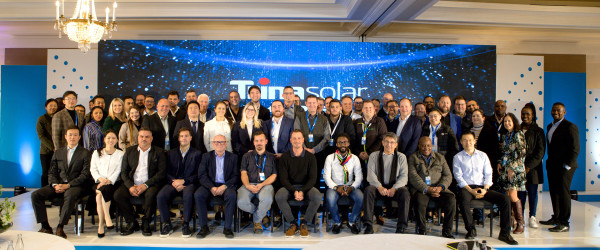
Trinasolar (www.Trinasolar.com), a global leader in smart PV and energy storage solutions, further solidified its commitment to South Africa's renewable energy future with an insightful customer event in Cape Town on August 26th. This event not only emphasized Trinasolar's ongoing expansion in the region but also highlighted its transformative impact on the country's energy landscape. 

The event featured a keynote address by Kadri Nassiep, the City of Cape Town's Energy Executive Director, who provided an insightful overview of the city's energy strategies. Mr. Nassiep's address tackled the critical challenges of power outages and outlined innovative solutions that align with Trinasolar's mission to deliver reliable, sustainable energy to communities across South Africa. 

Zaheer Khan, Regional Director for South Africa at Trinasolar, spoke to the company's significant milestones in the region, reflecting on Trinasolar's growing leadership in the renewable energy sector. "Our journey in South Africa is one of partnership and progress. Trinasolar's advanced technologies and strategic collaborations are not only addressing the immediate energy needs but also laying the foundation for a sustainable energy ecosystem in the country," Khan stated. He further emphasized Trinasolar's role as a catalyst for positive change, driving both economic growth and environmental stewardship in South Africa. 

Peter Pan, Trinasolar's Storage Sales Manager, presented the company's cutting-edge energy storage solutions, which have been instrumental in ensuring energy resilience across different regions. His presentation highlighted Trinasolar's ability to offer full-process solutions that adapt to the diverse and dynamic needs of South African customers, further reinforcing the company's pivotal role in the country's energy transition. 

In a surprise highlight, legendary South African cricketer Dale Steyn shared his journey of overcoming challenges, drawing parallels between his career and the resilience required in the energy sector. Trinasolar also announced the establishment of the Trinasolar SA Padel Club, an initiative designed to strengthen business relationships with key partners in South Africa's renewable energy industry. The club will serve as a platform for collaboration and networking among industry leaders, fostering a community dedicated to the shared goal of sustainable energy advancement. 

The evening concluded with a gala dinner and a captivating performance, leaving guests with a renewed sense of purpose and a commitment to driving forward South Africa's renewable energy agenda, with Trinasolar at the helm. 

Since its founding in 1997, Trinasolar has emerged as a world-leading photovoltaics technology provider. With a robust presence in South Africa, the company continues to innovate and expand, playing a crucial role in the country's transition to a sustainable energy future. 

Distributed by APO Group on behalf of Trina Solar.

About Trinasolar (688599. SH) 
Founded in 1997, Trinasolar Co Ltd (stock symbol: Trinasolar; stock code: 688599) is engaged mainly in PV products, PV systems and smart energy. PV products include R&D, production and sales of PV modules. PV systems consist of power stations and system products. Smart energy comprises mainly PV power generation and operatzions and maintenance, smart solutions for energy storage, smart microgrid, and development and sales of multi-energy systems. We are committed to leading the way in smart PV and energy storage solutions and facilitating the transformation of new power systems for a net-zero future.  

On June 10, 2020, Trinasolar was listed on the Science and Technology Innovation Board (STAR Market) of the Shanghai Stock Exchange(SSE). It was the first PV and energy storage company to go public on the STAR Market providing PV products and systems, as well as smart energy. For more information, please visit www.Trinasolar.com. 

Media files
Trina Solar
Download logo
Read moreTrinasolar Reinforces Its Commitment to South Africa’s Renewable Energy Future with Landmark Event in Cape Town
26 August 2024

Benefits of just energy transition must be shared equally

Location: News

Benefits of just energy transition must be shared equally

As South Africa transitions towards a low carbon economy, Deputy Minister of Forestry, Fisheries and the Environment, Narend Singh, says the benefits of energy renewable projects should be shared equitably with communities.

Addressing the National Consultative Workshop on Early Warnings for All (EW4All) in Pretoria, the Deputy Minister emphasised the importance of addressing potential job losses in the coal sector. 

South Africa’s plans for the just energy transition will focus on the transition of the energy sector, as it navigates the shift away from coal towards cleaner sources of energy.

“It is essential that we approach this transition with humanity, providing support, training, and creating new opportunities within the renewable energy sector. A holistic approach is required, one that embraces clear and comprehensive national renewable energy policies sets defined targets and provides a roadmap for the transition.

“Community participation and ownership in renewable energy projects must be a cornerstone of this policy, ensuring that the benefits of this transition are shared equitably,” Singh said on Monday.

While necessary, he said the just energy transition does come with its set of challenges. 

“Acknowledging our current economic growth's stagnation, the reliance on coal for energy, and the coal industry's role as a significant employment sector, we understand the complexities involved.

“Moreover, the challenge of making renewable energy technologies affordable and accessible cannot be overlooked. We need innovative financing mechanisms to ensure that clean energy solutions are within reach for all South Africans, especially those in low-income communities.

“As we chart our course forward, it is clear that no single solution can address the multifaceted challenges we face,” the Deputy Minister said.

He said for South Africa to truly succeed, it needs more than just policies and roadmaps.

“…We need action and commitment from every sector of our society. From all spheres of government to the private sector, from civil society to every citizen, we must unite in our efforts towards a sustainable future. Now is the time for us to harness the incredible potential of renewable energy, to innovate, to build, and to grow together.

“Therefore, our call to action as a responsible, interdependent, and interrelated government is not just to listen but to participate actively in this transition. Let us collaborate, innovate, and implement the solutions that will power our nation forward. 

“Let us build a future that aligns with our environmental, economic, and social imperatives. A future where sustainable energy drives our progress, where no one is left behind, and where we stand as a beacon of hope and resilience in the face of global challenges,” Singh said.

He stressed that local government is at the coal face of the country’s efforts, as this is where policy legislation and regulation turn into action. 

“We must be focusing on a back-to-basics approach, getting the basics right with respect to our daily deliverables. More than half of the battle will be won if every local sphere of government gets the basics right. Innovation and consistently good service delivery are what will carry the day,” the Deputy Minister said.

He said electricity is the backbone of progress, an enabler that unlocks industrial growth, drives the economy, and promotes inclusivity. 

“Yet, the sustainability of our progress hinges on our ability to shift towards clean energy. The spectres of poverty, inequality and unemployment cannot be exorcised without robust GDP [gross domestic product] growth, which in turn demands a stable and sufficient energy supply. 

“However, our journey is compounded by the environmental cost of our past reliance on coal. This has left us with a legacy of environmental degradation and health issues, making our commitment to transitioning to renewable energy sources crucial for our environment and the well-being of our communities,” Singh said. - SAnews.gov.za
 

nosihle
Mon, 08/26/2024 - 14:30

27 views
Read moreBenefits of just energy transition must be shared equally
26 August 2024

Municipalities must be at “driving seat” of clean energy

Location: News

Municipalities must be at "driving seat" of clean energy

Municipalities are at the centre of government’s efforts to move towards clean energy and fulfil the country’s commitment to global climate change.

This is according to President Cyril Ramaphosa, who was addressing the opening ceremony of the Municipal Just Energy Transition (JET) Conference held in Johannesburg on Monday.

The President highlighted that South Africa’s 257 metropolitan, district and local municipalities “own and operate approximately half of South Africa’s electricity distribution grid and facilitate universal access to electricity”.

“One hundred and sixty five municipalities are electricity service providers. Through the Integrated National Electrification Programme grant, municipalities are responsible for addressing the electrification backlog. 

“Municipalities therefore need to be in the driving seat when it comes to providing clean, affordable energy to communities, businesses and industry,” the President highlighted.

WATCH | 


In this regard, South Africa’s Cabinet approved the JET Investment Plan, which has a dedicated municipal portfolio roadmap with three areas of focus.

These are:

  • Providing access to affordable clean electricity;
  • Sustainable financing for electricity infrastructure, and
  • Strengthening the capacity of municipalities to manage the transition.

On the first area of focus, the President said the recent promulgation of the Electricity Regulation Amendment “paves the way for a new, competitive electricity market.

“The reforms contained in the law must help to speed up decarbonisation. But more than that, they must result in a better deal for households and businesses. 

“The national climate change effort must not come at a higher cost for electricity users. South African households, like many around the world, are battling with the rising cost of living, including the cost of energy. 

“We must therefore ensure that the energy transition does not contribute to energy poverty. It must not deepen inequality,” President Ramaphosa insisted.

In terms of sustainable financing for electricity infrastructure, he said municipal grid system needs to be upgraded, modernised and extended.

“The energy generation of the future requires systems that are fundamentally different in terms of design, capability and operation.

“Smart metering will have to accommodate the increased penetration of renewable energy at different scales. It will need to facilitate wheeling and feed-in by small-scale embedded generation. 

“Massive investment is needed to ensure optimal grid control, safety and energy storage. This investment will need to draw on both public and private sources of capital,” he said.

Turning to how the capacity of municipalities can be strengthened, President Ramaphosa said extensive training and upskilling of officials will be the order of the day.

“New systems will be required to identify human resource, technical capacity and other needs within municipalities, and plan and budget accordingly. 

“Municipalities will need to adopt best practice when it comes to the design and implementation of programmes and projects,” he said.

The President told conference delegates that the country’s drive towards a lower carbon intensive economy does not only reside with government.

“A just energy transition is about promoting economic diversification, transformation and industrialisation in the renewable energy sector that empowers workers, marginalised communities and black businesses.

“The achievement of defined just energy transition outcomes at a municipal level requires supportive policies and leadership, good governance and a coordinated effort among all relevant institutions.

“As government, business, labour and civil society, let us deepen our collaboration to achieve an energy future that is secure and sustainable for all,” President Ramaphosa said. 

READ | SA committed to meeting climate change undertakings

– SAnews.gov.za

NeoB
Mon, 08/26/2024 - 11:13

220 views
Read moreMunicipalities must be at “driving seat” of clean energy
20 August 2024

Affordable winter warmth: Why residential air conditioners outshine gas heaters

Location: MyPR

Modern air conditioners offer a compelling alternative to traditional gas heaters. As temperatures drop and energy bills rise, households explore affordable ways to stay cosy indoors. While traditional gas heaters have long been a staple, a new heating alternative is gaining momentum – residential air conditioning units. Modern air conditioners can provide efficient and cost-effective …

Read moreAffordable winter warmth: Why residential air conditioners outshine gas heaters
19 August 2024

Choosing the Right Sustainable Options for Your Coffee on the Go

Location: MyPR

When it comes to enjoying your favourite hot beverage on the go, the choice of container plays a significant role. Whether you’re a regular at your local café or prefer to brew your own coffee at home, the type of cup and straw you use matters—not just for your convenience but for the environment as …

Read moreChoosing the Right Sustainable Options for Your Coffee on the Go
17 August 2024

President Ramaphosa signs Electricity Regulation Amendment Act into law

Location: News

President Ramaphosa signs Electricity Regulation Amendment Act into law

President Cyril Ramaphosa has signed into law the Electricity Regulation Amendment Act which sets out far-reaching reforms of the country’s electricity sector, including the establishment of a competitive electricity market.

In a statement on Friday, the Presidency said the bill assented to by the President amends the Electricity Regulation Act of 2006. This is so as to respond to current realities in the electricity sector. 

It also opens up pathways to greater competition and reduced energy costs; increases investment in new generation capacity to achieve energy security; establishes an independent transmission company as the custodian of the national grid; and imposes severe penalties for damage to and sabotage of infrastructure.

The Electricity Regulation Amendment Act provides for the establishment, duties, powers and functions of the Transmission System Operator SOC Ltd (TSO) – which must be established as an independent entity within five years – and for the National Transmission Company of South Africa to act as the TSO in the interim. 

It also provides for an open market platform that allows for competitive, wholesale or retail buying and selling of electricity.

The Act provides for market operation as a new activity that may be licensed by the National Energy Regulator of South Africa (NERSA). 

In addition, it requires the development of a Market Code that will establish rules to govern the future competitive market and outlines the process through which the code will be approved.

The Act further clarifies the principles that apply to the setting or approval of prices, charges and tariffs, providing, among others, that NERSA must enable an efficient licensee to recover the full cost of the licensed activity, must allow for a reasonable return proportionate to the risk of the licensed activity, and may provide for incentives for continued improvement of technical and economic efficiency.

As it does so, the regulator may consider factors such as security of supply, the diversity of supply and the promotion of renewable energy.

In addition, the Act distinguishes between tariffs that must be set or approved by the regulator, such as network charges, and those which are subject to a direct supply agreement or arise as an outcome of a competitive market.

“To ensure a level playing field for competition between multiple electricity generators, the Act provides that the system operator shall not discriminate between different generators or customers in relation to dispatching or balancing the system, except for objectively justifiable and identifiable reasons approved by the regulator. 

“Access to the transmission and distribution power system must be objective, transparent and non-discriminatory,” said the Presidency.

These changes are in line with the broader reforms guided by the Energy Action Plan and the Eskom Roadmap, which aim to modernise and transform South Africa’s electricity system to end load shedding and ensure long-term energy security.

It is anticipated that diversity of supply and the promotion of renewables will stimulate a demand for new skills, innovation and technology in the electricity sector, which will generate new industrial activity and in turn mitigate unemployment.

Reinforcing the protection of public infrastructure as part of the fight against crime, the law provides for fines of up to R1 million or five years in prison – or both – for persons who, among other offences, damage, remove or destroy any transmission, distribution or reticulation cable, equipment or infrastructure.

Penalties for persons who unlawfully receive such cables, equipment or infrastructure face fines of up to R5 million or 10 years in prison, or both.

Going forward, the Act will lead to long term energy security, a more competitive energy system, more rapid uptake of renewable energy sources, and ultimately lower energy prices for all South Africans.

The Electricity Regulation Amendment (ERA) Bill was passed through a majority in the National Assembly in March. 

READ | National Assembly passes Electricity Regulation Amendment Bill 

-SAnews.gov.za 
 

Neo
Sat, 08/17/2024 - 08:32

85 views
Read morePresident Ramaphosa signs Electricity Regulation Amendment Act into law
15 August 2024

Innovative Financing and Policy Support: Accelerating Renewable Energy Development in Africa (By Ana Hajduka)

Location: News
AOW: Investing in African Energy

By Ana Hajduka, founder and CEO of Africa GreenCo (www.AfricaGreenCo.com).

As Africa's energy sector deregulates, exciting opportunities open up for financial innovation to benefit consumers. Private-sector buyers and traders can mitigate default risk and provide certified green energy at lower cost, writes Ana Hajduka, founder and CEO of Africa GreenCo.

Africa's renewable energy potential is undeniable, but it remains largely untapped. The problem is that the financing landscape for renewable energy and other projects in Africa was previously reliant on state utilities as buyers.

The scale of projects that could be financed in a country were then limited by the fiscal capabilities of that country and the sovereign guarantees it could provide.

This traditional model of relying on countries to provide such guarantees has faced recent challenges, because of increasing debt burdens, and shifting economic priorities.

Opportunities have therefore emerged for innovative financial approaches that will ensure more guarantees can be acquired from other sources and that risk can be diversified across a portfolio of suppliers and customers.  This would see more projects achieving financial close, to ultimately provide more African people with clean energy.

There is also room to not only grow new renewable energy supply, but to create new renewable energy markets on the continent, where that supply can be sold.

As a consequence, the market is opening up to allow alternative buyers of new renewable energy, which can utilize existing regional competitive energy markets to diversify its risks – buyers such as GreenCo.

This is extremely relevant at the moment. Legislation like South Africa's Electricity Regulation Amendment Bill, is set to open up the electricity sector to new supply and trading models. This foreshadows the opening of a competitive spot market for electricity trade in South Africa – linking in the future the South African spot market with that of the Southern African Power Pool.

Namibia did something similar a couple of years ago, as did Zambia.

These regulatory market developments are important as they facilitate innovation and new private sector business models through which there can be a scale up of bankable offtake agreements for new supply. The problem in the region is not lack of projects. It's not lack of funding. It's earning enough lender trust to lend on the back of a  20-25 year power purchase agreement backed by a private sector buyer without state fiscal support.  

Transmission capacity

Transmission constraints are another factor in this emerging scenario. The development of the electricity sector across the region effectively has a ceiling, determined by the available transmission network for new generation.

Previously, development finance institutions would only fund state utilities, and then only when it was proved that sufficient generation would be coming on board to utilize any new transmission infrastructure.

Now, thanks to the growing liberalisation focus in the region, allowing new private sector participants to buy and trade power, these transmission funding inflows can be facilitated. This new supply will be critical to making new transmission investments bankable.

If the private sector can sufficiently guarantee that any proposed new capacity coming on board will utilise the necessary transmission infrastructure, that new capacity effectively backs the viability of the new transmission investing – bringing a direct value add to the state utilities in South Africa and the rest of the SADC region.

Regulatory readiness

But for all of this to fall into place, we need a convergence of the relevant regulatory readiness – and we are already seeing this across the region. In many SADC countries, new legislation is providing the regulatory clarity that the private sector requires to venture into supply, transmission and trade.

The entire ecosystem must work for new entrants, and lenders. Until now, lenders have seldom considered state utilities to be creditworthy, and they have required significant fiscal guarantees to cover the power-purchase obligations of those utilities.

That model is a double whammy. Not only does it encumber utilities with debt for new generation, but it hits the national fiscus as well.

In South Africa, for example, the widely respected REIPPP process has brought online a significant amount of new generation. However, once the South African government started reporting on the process in accordance with IMF fiscal transparency regulations, this added an additional 36% to the contingent liabilities of the national treasury – almost $15 billion - overnight. That is money that can no longer be channeled into education, health and other key infrastructure development (water, transmission etc).

The REIPPP model has been extremely successful in the electricity sector, but it has perhaps outlived its usefulness. There are other priorities, and the private sector should be sufficiently capable to deliver on its own, with the lending community partnering accordingly.

The REIPPP model can be replicated in cases such as storage tenders, and in the transmission space. While transmission is usually considered a government function, it would certainly be possible to incentivize the private sector – and lenders – to enter the space.

New licensees

Across the region, markets are liberalising rapidly. South Africa has shown it can happen almost overnight, as in the case of the country's generation regulations. This has allowed third-party wheeled projects, from generators directly to customers, and facilitated new license applicants in the market such – such as GreenCo.

This shows how market thinking about the development of the electricity sector has fundamentally changed. There is collaboration like never before.

For GreenCo, events like the forthcoming AOW event offer opportunities to align with mining, commercial and industrial offtakers, as well as suppliers and IPPs. For an entity like ours, it's also a chance to show potential customers and suppliers the bankability of our own offtake; that lenders have confidence in our power purchase agreements.

Financial innovation must happen in a way that makes lenders comfortable. What that looks like in our case is that all our payment obligations are backed by an internationally AA- credit rated guarantee provider GuarantCo.

We are entering the South African market operationally ready to supply customers within South Africa and outside; and with financial readiness in the form of innovative guarantee structures to be considered bankable in the market.

The ultimate beneficiaries of this financial innovation must be the consumers. Many are looking to decarbonise their operations – for climate change reasons, and to make their products competitive on international markets.

Affordability is another key consideration. In our case, by being able to provide sufficient operational and financial risk mitigation to the lenders of the generators that supply to us, we can supply electricity far more affordably.

Around 70% of the costs of a generation or renewable energy project is from the cost of debt. Therefore, the more bankable an offtaker is, the lower the debt costs, and the cheaper the electricity – a clear demonstration of the benefits of financial innovation for the end consumer.

  • AOW: Investing in African Energy unites industry leaders to develop policy, share discoveries, secure investment, and shape Africa's energy future. The event runs from October 7 – 11 at the CTICC.

Distributed by APO Group on behalf of AOW: Investing in African Energy.

About GreenCo: 
GreenCo is a renewable energy buyer and trader operating in Southern Africa (Zambia, South Africa, Zimbabwe and Namibia); purchasing power from renewable energy generators and selling that electricity to utilities, private sector offtakers (i.e. commercial and industrial users), national power trading markets and to the competitive markets of the Southern African Power Pool (SAPP). GreenCo is an active trader on SAPP and holds a number of applicable licenses covering its operations within the Southern African region. Through its activities, GreenCo will increase the supply of, and demand for, finance for energy projects, and mobilise private sector capital more quickly towards critical and transformative capacity addition. For more information please see: www.AfricaGreenCo.com

Media files
AOW: Investing in African Energy
Download logo
Read moreInnovative Financing and Policy Support: Accelerating Renewable Energy Development in Africa (By Ana Hajduka)
13 August 2024

Absa’s Webber to Highlight Environmental Social Governance (ESG) and Investment Trends in African Critical Minerals at Critical Minerals Africa (CMA) 2024

Location: News
Energy Capital & Power

Mining company African Rainbow Minerals (https://apo-opa.co/46M4tND) reached an agreement last September with financial services company Absa – along with finance institutions Standard Bank, the Development Bank of South Africa and Nedbank – to provide finance for the construction of a 132 MW solar project. The move is set to provide renewable energy to platinum mining projects in South Africa through power purchase agreements (PPAs). 

To support the growth of South Africa and Africa's critical mineral industry, Absa is participating in this year's Critical Minerals Africa (CMA) 2024 summit. Shirley Webber, Coverage Head of Resources & Energy at Absa Corporate and Investment Banking – an Absa subsidiary –, will discuss the firm's contributions and investment strategy in the African critical mineral sector. 

The Critical Minerals Africa 2024 summit on November 6-7 serves to position Africa as the primary investment destination for critical minerals. The event is held alongside the African Energy Week: Invest in African Energy 2024 conference on November 4-8, offering delegates access to the full scope of energy, mining and finance leaders in Cape Town. Sponsors, exhibitors and delegates can learn more by contacting sales@energycapitalpower.com. 

Absa is a major player in Africa's critical mineral industry, providing direct financing to project developers, while supporting critical mineral mining projects through long-term PPAs. The institution is arranging a $120 million debt facility to support platinum group metal (PGM) mining firm Pensana's (https://apo-opa.co/4fTeBZo) strategy to achieve first PGM production in South Africa by 2025. Absa also partnered with French financial services firm Société Générale in March 2023 to raise $130 million in funding to support PGM and chrome-producer Tharisa (https://apo-opa.co/46HEd76) with its mining operations in South Africa. 

Absa has positioned itself as a key driver of environmental social governance (ESG) and skills and capacity building within Africa's critical mineral sector as the global mining industry prioritizes environmental sustainability and local content development. In May 2023, Absa closed a $562.4 million sustainability-linked green bond for mining firm Harmony Gold, enabling the company to expand production and reduce its carbon footprint at its gold and copper projects across Africa. As such, Webber is expected to use the CMA 2024 platform to highlight how Absa is driving ESG projects across Africa's critical mineral sector. 

“Companies like Absa have positioned themselves as key enablers of Africa's critical mineral industry growth by simplifying access to capital for project developers. As demand for Africa's energy transition metals grows and global markets prioritize environmental sustainability, the capital and ESG expertise provided by Absa will be crucial,” stated Rachelle Kasongo, Project Director at CMA 2024 organizer Energy Capital & Power. 

Distributed by APO Group on behalf of Energy Capital & Power.

Media files
Energy Capital & Power
Download logo
Read moreAbsa’s Webber to Highlight Environmental Social Governance (ESG) and Investment Trends in African Critical Minerals at Critical Minerals Africa (CMA) 2024
  • Previous
  • Page 1
  • Interim pages omitted …
  • Page 6
  • Page 7
  • Page 8
  • Page 9
  • Page 10
  • Interim pages omitted …
  • Page 18
  • Next

Copyright © 2026 · MyZA · All Rights Reserved · Powered by Stratlec Online