• Skip to main content
  • Skip to header right navigation
  • Skip to after header navigation
  • Skip to site footer
MyZA

MyZA

News, Directory, Events and Other Stuff

  • Social Media
  • Sport
  • World News
  • Home
  • Submit News
  • Directory
  • Events
  • Stratlec
  • TFSA
  • News
    • APO
    • Today’s Sport News
    • Todays Social Media and Tech Headlines
    • Today’s World News
    • Today’s SA Financial News
  • Contact
You are here: Home / Archives for Russia

Russia

26 March 2025

Motsoaledi urges global action to address health funding gaps

Location: News

Motsoaledi urges global action to address health funding gaps

Health Minister Dr Aaron Motsoaledi has reiterated the importance of nations reallocating resources towards health, strengthening global health partnerships, and exploring innovative financing mechanisms to address funding gaps.

The Minister was delivering the keynote address at the second meeting of the G20 Health Working Group today in Ballito, KwaZulu-Natal.

The Minister used the platform to highlight South Africa’s commitment to universal health coverage (UHC) through the National Health Insurance (NHI) system, which aims to provide financial protection and efficient resource utilisation.

“In South Africa, we are actively pursuing transformation to achieve universal health coverage through our NHI system.

“The NHI is designed to provide financial protection for all, ensuring that access to quality healthcare is not dependent on one’s ability to pay [for] it, and it will also assist in the efficient utilisation of our resources by pulling funds and strategically purchasing services.”

Motsoaledi cited data from the World Health Organisation (WHO), which indicate that the number of people shielded from catastrophic health spending had been steadily increasing before the COVID-19 pandemic. However, since then, about 100 million people have fallen back into financial hardship due to health-related expenses.

Motsoaledi believes that the NHI is a concrete demonstration of government’s commitment to leaving no one behind, and fostering and strengthening the resilience of the health system.

The Minister quoted the late Harvard Department of Anthropology’s Professor Paul Farmer on the value of all lives and urged G20 members to increase public financing of health systems as a fundamental investment.

“I want to quote the idea that 'some lives matter less' is the root of all that is wrong with the world.

“We implore all G20 members to champion increased public financing of health systems.

“This is not merely a budgetary issue; it’s a fundamental investment in our collective future.”

Motsoaledi urged attendees to prioritise public health over competing interests, ensuring that adequate resources are allocated to meet the health needs of the nation’s populations.

“Furthermore, we must all align our efforts beyond financing. We must address the persistent health inequities that plague our world.”

Non-communicable diseases

Motsoaledi highlighted the importance of addressing health inequities, particularly in low and middle-income countries, and the need for multilateral approaches to prevent and control non-communicable diseases (NCDs).

He said the upcoming United Nations High-Level Meeting on NCDs is seen as a crucial opportunity to galvanise global action against chronic conditions like heart disease, cancer, diabetes and chronic respiratory diseases.

“We must alleviate the financial burden, restrict unhealthy food marketing, finance emergency health services, and accelerate cervical cancer elimination, the only cancer which is preventable.”

The theme of the three-day meeting is: “Accelerating Health Equity, Solidarity, and Universal Coverage”.

Along with this meeting, a co-sponsored event focused on eliminating cervical cancer, is also taking place.

“We must move beyond dialogue and commit to concrete steps. South Africa is committed to collaborating with all the G20 members to achieve our shared goals. 

“Let us work together to ensure that health remains a priority, not a commodity, especially during these unstable economic times,” Motsoaledi added.

South Africa, which assumed the G20 Presidency in December, is currently hosting various working groups and ministerial meetings throughout the country. 

These meetings are focused on key topics such as health, employment, trade, tourism, and the digital economy -- all in preparation for the G20 Leaders’ Summit scheduled for November this year.

The G20 comprises 19 countries including Argentina, Australia, Brazil, Canada, China, France, Germany, India, Indonesia, Italy, Japan, Korea, Mexico, Russia, Saudi Arabia, South Africa, Türkiye, United Kingdom, and the United States. It also includes two regional bodies – the European Union (EU) and the African Union (AU). – SAnews.gov.za

Gabisile
Wed, 03/26/2025 - 11:43
166 views

Read moreMotsoaledi urges global action to address health funding gaps
25 March 2025

Motsoaledi to open second G20 Health Working Group meeting in KZN

Location: News

Motsoaledi to open second G20 Health Working Group meeting in KZN

Health Minister Dr Aaron Motsoaledi will deliver the keynote address at the opening of the second meeting of the Group of Twenty (G20) Health Working Group on Wednesday.

The meeting will take place at the Capital Zimbali Resort in Ballito, KwaZulu-Natal, and will last for three days. 

The theme of the meeting will be “Accelerating Health Equity, Solidarity, and Universal Coverage".

Motsoaledi will be joined by Deputy Health Minister Dr Joe Phaahla, KwaZulu-Natal Premier Thami Ntuli, and KwaZulu-Natal Health MEC Nomagugu Simelane.

The event will also include several side events that provide a platform for delegates to engage in bilateral and multilateral discussions on various critical issues, including strengthening health systems and promoting equitable access to health services. 

Key issues for discussion during the meeting and side events include financial protection for universal health coverage (UHC) and maintaining health financing amid a challenging global economy. 

The meeting will also zoom into strengthening investments and advancing UHC, bridging the equity gap to accelerate action to address the burden of non-communicable diseases, and responding to the global health financing emergency. 

The Department of Health has announced that a co-sponsored event focused on the elimination of cervical cancer will take place alongside this meeting. 

Delegates from G20 countries, invited nations, representatives, and international organisations will be in attendance. 

South Africa holds the G20 Presidency from 1 December 2024 to 30 November 2025, only five years before the deadline of the United Nations (UN) 2030 Agenda. South Africa has embraced the theme “Solidarity, Equality, Sustainability” for its G20 Presidency. 

The G20 comprises 19 countries including Argentina, Australia, Brazil, Canada, China, France, Germany, India, Indonesia, Italy, Japan, Korea, Mexico, Russia, Saudi Arabia, South Africa, Türkiye, United Kingdom, and the United States and two regional bodies, namely the European Union (EU) and the African Union (AU). 

The first virtual G20 Health Working Group meeting was held in January as part of the country’s G20 Presidency activities planned for this year. – SAnews.gov.za

Gabisile
Tue, 03/25/2025 - 10:32
14 views

Read moreMotsoaledi to open second G20 Health Working Group meeting in KZN
24 March 2025

Minister leads G20 environment working group

Location: News

Minister leads G20 environment working group

Minister of Forestry, Fisheries and the Environment, Dr Dion George, will this week lead the Group of Twenty (G20) Environment and Climate Sustainability Working Group (ECSWG) as part of South Africa’s Presidency of the G20. 

“It is expected that the outcome of this first virtual G20 ECSWG meeting will provide strategic direction and a common understanding amongst G20 Member States on the key environmental and climate change priorities and deliverables,” the Minister said on Sunday.

Taking place under the theme: “Solidarity, Equality, and Sustainability,” the Minister is expected to open the meeting on Tuesday, by setting the scene for South Africa’s Presidency of the G20 ECSWG, provide an opportunity to discuss the five priorities and deliverables, and also present the proposed work plan for the G20 ECSWG for 2025.

The priority focus areas for South Africa’s Presidency of the G20 ECSWG include:

  • Biodiversity and Conservation – Implementation of the Global Biodiversity Framework and the Biodiversity Economy;
  • Land Degradation, Desertification and Drought – Land Degradation Neutrality targets;
  • Chemicals and Waste Management – Sustainable Chemicals Management; Circular Economy; Waste Management; Waste to Energy; Extended Producer Responsibility (EPR) implementation;
  • Climate Change and Air Quality – Just Transition; Loss and Damage; Adaptation, including Climate Resilient Development (CRD); Climate Finance and Air Quality; and
  • Oceans and Coastal Management – Marine Spatial Planning – ocean governance; combatting marine plastic pollution.

The G20 ECSWG aims to enhance cooperation amongst all G20 members and invitees to address environmental and climate change priorities. 

The G20 comprises 19 countries: Argentina, Australia, Brazil, Canada, China, France, Germany, India, Indonesia, Italy, Japan, Republic of Korea, Mexico, Russia, Saudi Arabia, South Africa, Türkiye, United Kingdom and United States, as well as two regional bodies, namely the European Union and the African Union.

The G20 members represent about two-thirds of the world population, approximately 85% of the global GDP and over 75% of the global trade. 

This platform is considered as the leading forum for international economic cooperation and plays an important role in shaping and strengthening global architecture and governance on all major international economic issues.

South Africa’s Presidency of the G20 commenced on 01 December 2024 and will continue until 30 November 2025. 

The Presidency will build upon on the achievements of India (2023 Presidency) and Brazil (2024 Presidency), to ensure continuity in advancing the developmental agenda within the G20. 

“South Africa’s G20 Presidency provides a unique opportunity for the country to champion the aspirations of emerging market economies and lead the developmental agenda of the African Continent within the framework of the G20."

A total of three G20 ECSWG meetings and one ECSWG Ministerial meeting will be held in South Africa, with the first virtual meeting scheduled to take place from 25 – 28 March 2025; followed by the second meeting from 14-18 July 2025 at Kruger National Park, and the final meeting in October 2025 at Cape Town.

The Ministerial meeting will be held back-to-back with the third ECSWG meeting in October 2025.

The department will also roll out outreach and awareness activities in the buildup to the three G20 ECSWG meetings throughout the country to amplify the messaging on the focus areas for the G20 ECSWG.

“The department will leverage South Africa’s Presidency of the G20 to market and showcase the Kruger-Kirstenbosch-iSimangaliso Icon Status Strategy (KISS). Some of the meetings and activities will take place at these iconic world-class sites to showcase them on the global stage,” the Minister said. - SAnews.gov.za


nosihle
Mon, 03/24/2025 - 10:00
179 views

Read moreMinister leads G20 environment working group
18 March 2025

Deputy President stresses importance of coordinated approach to challenges

Location: News

Deputy President stresses importance of coordinated approach to challenges

Deputy President Paul Mashatile has stressed the need for a coordinated approach to peacebuilding and economic resilience.

This as he highlighted that the conflicts between Russia and Ukraine and conflicts in the eastern Democratic Republic of Congo, Sudan, in the Sahel, and in Gaza, continue to exert a heavy human toll while heightening global insecurity. 

The Deputy President was speaking at the United Nations University (UNU) in Tokyo, Japan on Tuesday. 

The UNU, in partnership with the Embassy of South Africa in Japan, is co-hosting a symposium exploring South Africa's G20 Presidency and steps to ensure solidarity, equality and sustainability for all. 

Touching on the deepening conflict and instability across Africa and the world, the Deputy President said this requires coordinated preventive action including dedicated intervention on peace building that is programmatic in nature.

“We are encouraged by the partnership between the United Nations University and the University of South Africa (UNISA) in cooperation with other relevant partner organisations to co-design and co-deliver required capacity building programmes for African leaders and mediators for resolving conflicts and blazing a path towards achieving peace, security and prosperity, “the Deputy President explained.

He further emphasised the urgent need for comprehensive, African-centred peace-building research and training programmes that span throughout Africa to address the urgent demand for capacity for conflict management and resolution, as well as society reconstruction.

G20 Presidency

“In our G20 Presidency, South Africa will continue to advocate for diplomatic solutions. Inclusive dialogue is the foremost guarantor of sustainable peace.
“South Africa has shown a firm resolve in its foreign policy by promoting principles of justice, solidarity, equality, peace, and respect, underpinned by its commitment to human dignity and leaving no one behind,” he said. 

This was the reason South Africa has placed solidarity, equality, sustainability at the centre of its G20 Presidency.

As part of South Africa’s G20 intention to place Africa’s development at the top of the agenda, Mashatile outlined four key priorities which are strengthening disaster resilience, ensuring debt sustainability for developing economies, mobilising finance for a just energy transition, and harnessing critical minerals for sustainable growth. 

“Our hosting of the G20 Finance Ministers and Central Bank Governors Meeting, and the Business 20 provided an opportunity for us to promote South Africa and Africa as a business and investment destination and for the country to take the lead on providing solutions to global economic challenges,” he said. 

He emphasised the country’s commitment to driving economic reforms, increasing investor confidence, and enhancing structural efficiencies in energy, water, and transport sectors.

“We believe that addressing structural concerns is essential to maintaining investor confidence and ensuring long-term economic stability. It is only by accelerating structural reforms and harnessing the power of the private sector that the country can sustain economic momentum and attract further foreign investment.

“As the South African government, we are implementing extensive structural, policy, and regulatory reforms to enhance the economy's performance,” he said. 

AI role in shaping Africa’s economic future

The Deputy President also emphasised the role of artificial intelligence (AI) and digital transformation in shaping Africa’s economic future, calling for greater collaboration between African institutions and international organisations. 

Quoting Professor Tshilidzi Marwala, he noted the need for South Africa to embrace AI while also ensuring ethical considerations remain central to its deployment. 

He urged institutions like UNU to partner with African universities to foster digital skills development and AI-driven innovation.

As the G20 Presidency has shifted to South Africa, the Deputy President said that AI has emerged as a key area of focus.

Through the G20 Presidency, he said the country aims to harness AI to advance the Sustainable Development Goals agenda and address global challenges.

“We encourage the United Nations University to work alongside Africa in the development of AI, which has the potential to considerably boost the continent's economies. You must cooperate with additional universities in South Africa and throughout Africa to help overcome digital barriers, promote equality, and support inclusive sustainable development,” he said. 

Mashatile added that African governments are also recognising the importance of the digital economy, which is heavily influenced by artificial intelligence. He noted that the digital economy and AI are becoming more important drivers of economic and social value creation throughout the world. 

“We are investing in digital infrastructure, skills development, and entrepreneurship to assist Africa's digital economy to expand,” he said. – SAnews.gov.za


DikelediM
Tue, 03/18/2025 - 14:36
98 views

Read moreDeputy President stresses importance of coordinated approach to challenges
17 March 2025

SA hosts second G20 Health Working Group meeting in KZN

Location: News

SA hosts second G20 Health Working Group meeting in KZN

South Africa will next week host the second meeting of the Group of 20 Health Working Group (G20 HWG).

The meeting is set to kick off on Wednesday, 26 March 2025, at the Capital Zimbali Resort in Ballito, KwaZulu-Natal.

The three-day meeting will focus on the theme “Accelerating Health Equity, Solidarity, and Universal Coverage.” 

The event will include several side events that provide a platform for delegates to engage in bilateral and multilateral discussions on various critical issues, including strengthening health systems and promoting equitable access to health services.

Key issues for discussion during the meeting and side events include financial protection for universal health coverage (UHC) and maintaining health financing amid a challenging global economy.

The meeting will also zoom into strengthening investments and advancing UHC, bridging the equity gap to accelerate action to address the burden of non-communicable diseases, and responding to the global health financing emergency. 

The Department of Health has announced that a co-sponsored event focused on the elimination of cervical cancer will take place alongside this meeting. 

Delegates from G20 countries, invited nations, representatives, and international organisations will be in attendance.

The G20 comprises 19 countries including Argentina, Australia, Brazil, Canada, China, France, Germany, India, Indonesia, Italy, Japan, Korea, Mexico, Russia, Saudi Arabia, South Africa, Türkiye, United Kingdom, and the United States and two regional bodies, namely the European Union and the African Union. 

Minister of Health Dr Aaron Motsoaledi will deliver a keynote address during the opening session on 26 March 2025. 

He will be accompanied by Deputy Health Minister Dr Joe Phaahla, Premier of KwaZulu-Natal Thami Ntuli and KwaZulu-Natal Health MEC Nomagugu Simelane. – SAnews.gov.za


Gabisile
Mon, 03/17/2025 - 15:20
35 views

Read moreSA hosts second G20 Health Working Group meeting in KZN
15 March 2025

Ambassador Ebrahim Rasool’s Speech That Made Him ‘No Longer Welcome’ in the US

Location: News

The South African ambassador to the United States, Ebrahim Rasool, is no longer welcome in the US, several news publications reported on Saturday. The Guardian states: “South Africa’s ambassador to the United States is no longer welcome in our great country,” [US Secretary of State Marco] Rubio posted on X on Friday. Rubio accused ambassador …

Read moreAmbassador Ebrahim Rasool’s Speech That Made Him ‘No Longer Welcome’ in the US
13 March 2025

SA focuses on improving diplomatic relations with United States

Location: News

SA focuses on improving diplomatic relations with United States

Deputy President Paul Mashatile says South Africa is working on stabilising relations with the United States of America (USA), given the long-standing ties between the two nations.

Addressing the 7th BizNews Conference (BNC#7) at the Hermanus Municipal Auditorium in the Western Cape, on Thursday, the Deputy President said this partnership is also significant to South Africa's economic development goals.

The BizNews Conference is an annual event focused on investment, business and political issues.

The Deputy President emphasised the need for collaborative efforts, in light of recent cuts to key health funding programmes, such as the President’s Emergency Plan for AIDS Relief (PEPFAR).

PEPFAR was established by former President George W Bush in 2003 and continued under various administrations.

“The withdrawal of PEPFAR funding highlights the urgent need for South Africa to further strengthen its own interventions to reach the most vulnerable and access health services and support," Mashatile said.

He said the opportunity showed the importance of bolstering the country's own healthcare interventions and ensuring the delivery of health services without heavy reliance on external assistance.

"In this regard, we have been investing heavily in healthcare reform and responding to the dual epidemics of HIV/AIDS and TB. The Department of Health has put measures in place to ensure that patients receiving TB and HIV treatment are not affected and do not default," said the Deputy President.

Mashatile encouraged stakeholders to unite and support government in promoting South Africa's interests in the United States, including through mechanisms such as the African Growth and Opportunity Act (AGOA).

"The loss of AGOA benefits would have the most devastating effect on South African farmers and agriculture workers. AGOA is presently providing support to South Africa's agriculture and manufacturing sectors, which is expected to generate around $21 billion in trade with the United States.

“Therefore, our position is that South Africa should maintain strong bilateral relations with the United States. Most importantly, as a country, we are committed to improving mutually beneficial trade, political, and diplomatic relations with the United States,” he said. 

Diversifying export markets and growing the economy

The country’s second-in-command stated that South Africa should push for diversified export markets, citing ongoing engagement with global powers such as China, Russia, India, and various European countries. 

President Cyril Ramaphosa is currently co-chairing the EU-South Africa Summit, which aims to deepen relations with the European Union (EU) across several domains, including trade, security, and sustainable development.

In addition, Mashatile highlighted the importance of intra-African trade and financial cooperation through the African Continental Free Trade Area (AfCFTA). 

According to the Deputy President, the AfCFTA is a crucial step toward reducing dependency on volatile global markets.

Mashatile believes that South Africa’s wealth of natural resources, including significant agricultural potential, is positioned as an attraction for investment. 

He said government is committed to removing blockages to economic growth, lifting economic expansion to above 3% in the medium-term, and creating a cycle of investment, growth and jobs.

He outlined government’s plans to focus on improving productivity and innovating skills development through the National Digital and Future Skills Strategy as part of a broader vision for a knowledge-based economy.

Furthermore, he said the newly approved Reconceptualised Human Resource Development Strategy outlines priority goals aimed at enhancing early education outcomes, increasing youth employability, and ensuring that higher education aligns with market demands. 

FATF grey list

The Deputy President said South Africa is making steady progress in efforts to be removed from the Financial Action Task Force (FATF) grey list.

"Through new legislation, we have strengthened our ability to prevent money laundering and fraud, and secure South Africa’s removal from the grey list of the Financial Action Task Force."

He said the country has addressed 20 of the 22 action items relating to combating money laundering and terrorist financing. 

“These improvements are essential not only to remove ourselves from the grey list but also to strengthen the battle against crime and corruption, which is crucial for the betterment of all South Africans. 

“We will continue to resolve both remaining action items by June, towards our removal from the grey list by October 2025,” he said.

Moreover, the Deputy President committed that South Africa will use its Group of 20 (G20) Presidency to place Africa’s development at the top of the agenda. – SAnews.gov.za

Gabisile
Thu, 03/13/2025 - 13:52
339 views

Read moreSA focuses on improving diplomatic relations with United States
11 March 2025

Five Years of Advancing Investment, Collaboration in Africa’s Energy Sector

Location: Business
African Energy Chamber

African Energy Week (AEW): Invest in African Energies, the premier platform for Africa's energy sector, marks its fifth anniversary in 2025, celebrating a legacy of driving investment, fostering partnerships and advancing the continent's energy future. Since its inception, AEW has established itself as the continent's leading energy event, bringing together industry leaders, policymakers, investors and global stakeholders to catalyze development across Africa's oil, gas and renewable sectors.

Over the past five years, AEW has facilitated multi-billion-dollar deals, shaped policy discussions and strengthened regional cooperation. Its inaugural edition in 2021 set a strong foundation, attracting 1,700 delegates, including ministers, global energy executives and financial institutions. The event reinforced Africa's appeal to investors while establishing AEW's strategic goal of eradicating energy poverty by 2030. The event introduced key features such as the African Energy Awards, panel discussions and forums covering the entire energy sector across four venues. Country spotlight sessions provided market insights, while the African Energy Chamber, alongside African energy ministers and a representative from the German government, launched the African Green Energy Dialogue Initiative to accelerate investment in Africa's green energy space.

The 2022 edition of AEW kicked off with opening remarks from esteemed African leaders including the presidents of Uganda and Mozambique, Minister of Hydrocarbons from the Republic of Congo, as well as prominent industry figures from APPO, the European Commission, the International Energy Forum and the private sector. AEW 2022 provided a platform for high-level discussions on investment opportunities, energy policy and strategies for driving Africa's energy transition. In addition to insightful discussions and networking opportunities, AEW 2022 introduced the Just Energy Transition Concert, blending music and culture with energy dialogue to promote investment, development and wider participation across the energy industry.

AEW 2023 saw an unprecedented level of participation, with opening remarks from the presidents of Namibia, Senegal and Uganda, alongside energy ministers from South Africa, South Sudan, Uganda, Equatorial Guinea, the Republic of Congo, Ghana and Mozambique. Representatives from OPEC, APPO, GECF, and key global partners from Russia, the U.S., Europe, and Saudi Arabia further reinforced the event's strategic importance. Afreximbank played a central role, hosting a dedicated deal room and supporting Africa's growing M&A activity. Key agreements signed included Afreximbank's $75 million financing deal with Torxen Energy Resources for Nigeria's PPL 241, a hydrogen exploration agreement between The Gambia and H2 Gambia Limited, and a $60 million term loan for Alphaden Energy & Oilfield Limited to develop a gas facility in Nigeria. Additionally, the African Energy Chamber partnered with the Black Impact Foundation to promote global opportunities for the Black community. The African Farmout Forum connected investors with available blocks, accelerating exploration and partnerships across Africa's oil and gas sector.

In 2024, AEW underscored its role as a catalyst for deal-making and sectoral development. Afreximbank committed over $120 million in financial facilities to support Africa's oil and gas sector, while the Republic of Congo's Société nationale des pétroles du Congo partnered with the State Oil Company of Azerbaijan to modernize the CORAF refinery and the African Farmout Forum returned to highlight available block opportunities for partnership and investment. The event featured a distinguished lineup of speakers and delegations, including energy ministers from South Africa, Namibia, the Republic of Congo, Gabon, Nigeria, Equatorial Guinea and Angola; OPEC and APPO secretary generals; and top executives from Eni, bp, Chevron, TotalEnergies and other leading energy companies.

The fifth edition of AEW promises an even greater focus on investment opportunities and project developments, including 2025/2026 licensing rounds, multi-phase LNG facilities, new refining capacity, drilling and appraisal programs and cross-border pipeline infrastructure. All flagship features will return, including the Big Five Stages of Premium Industry Content, the African Farmout Forum, the Deal Room, the OPEC-Africa Roundtable and more. With capital-intensive projects requiring global financing, AEW 2025 will serve as the premier platform to connect investors with Africa's most promising energy opportunities.

By bringing together key stakeholders, AEW has enhanced Africa's global competitiveness, enabled cross-border partnerships and fostered policy dialogue that advances sustainable energy development. As the conference celebrates five years of impact, its role in shaping the future of Africa's energy sector remains stronger than ever, ensuring that the continent's vast energy resources continue to drive sustainable development and economic transformation.

“The five-year milestone is a testament to AEW's commitment to shaping the future of Africa's energy sector. As the continent continues to navigate the complexities of energy development, AEW remains a vital platform for stakeholders to engage and drive progress across the continent,” says NJ Ayuk, Executive Chairman of the African Energy Chamber, adding “As AEW celebrates five years of impact, its influence on the continent's energy landscape remains unparalleled. The conference has consistently demonstrated its ability to drive sustainable energy development, ensuring that Africa's vast energy resources are harnessed to drive economic transformation and sustainable development.”

AEW: Invest in African Energies is the platform of choice for project operators, financiers, technology providers and government, and has emerged as the official place to sign deals in African energy. Visit www.AECweek.com for more information about this exciting event.

Distributed by APO Group on behalf of African Energy Chamber.

Media files
African Energy Chamber
Download logo
Read moreFive Years of Advancing Investment, Collaboration in Africa’s Energy Sector
4 March 2025

Relief for consumers as fuel price set to drop

Location: News

Relief for consumers as fuel price set to drop

The Department of Mineral Resources and Energy has announced the adjustment of fuel prices with effect from 5 March 2025.

Based on current local and international factors, the fuel prices for March 2025 will be adjusted as follows:

  • Petrol 93 (ULP & LRP): 7 cents per litre (7.00 cents per litre (c/l)) decrease.
  • Petrol 95 (ULP &LRP): 7 cents per litre (7.00 c/l) decrease.
  • Diesel (0.05% sulphur): 17.5 cents per litre (17.50 c/l) decrease.
  • Diesel ((0.005% sulphur): 23.5 cents per litre (23.50 c/l) decrease.
  • Illuminating Paraffin (wholesale): 6 cents per litre (6.00 c/l) decrease.
  • SMNRP for IP: 8 cents per litre (8.00 c/l) decrease.
  • Maximum LP Gas Retail Price: 2 cents per kilogram (2.00c/kg) decrease.

“South Africa’s fuel prices are adjusted monthly, informed by international and local factors. International factors include the fact that South Africa imports both crude oil and finished products at a price set at the international level, including importation costs, e.g, shipping costs,” the department said in a statement.

One of the main reasons for the fuel price adjustments are due to the average Brent Crude oil price decreased from US$77.41 to US$74.89 during the period under review. The main contributing factors are the continued lower global demand and over supply from non-OPEC countries. 

Furthermore, the Russia/Ukraine ceasefire negotiations which could result in a possible increase in global supply of crude oil, said the department.

The average international petroleum product prices of petrol increased due to refinery shutdowns and maintenance in the US in preparation for the switching to summer fuel grade. 

The prices of diesel followed the decreasing trend of crude oil. 

“These factors led to higher contributions to the Basic Fuel Prices of petrol and illuminating paraffin by 6.92 c/l and 8.09 c/l respectively, and lower contributions to the Basic Fuel Prices of diesel by 7.66 c/l,” it said.

The Rand appreciated on average, against the US Dollar - from 18.73 to 18.50 Rand per US Dollar - during the period under review when compared to the previous one. This led to lower contributions to the Basic Fuel Prices of petrol, diesel and Illuminating Paraffin by 13.54 c/l, 14.45 c/l and 14.15 c/l respectively.

The department said the cumulative slate amounted to a positive balance of R2.29 billion for petrol and diesel of at the end of January 2025. 

“In line with the provisions of the Self-Adjusting Slate Levy Mechanism, a slate levy remains unchanged at zero cents per litre in the price structures of petrol and diesel with effect from the 5th of March 2025.”

The Minister of Mineral and Petroleum Resources Gwede Mantashe with the concurrence of the Minister of Finance Enoch Godongwana approved an increase from 0.1 c/l to 1.0 c/l in the IP Tracer Dye Levy applicable to Diesel with effect from 06 March 2024 to 05 March 2025. 

The increase was temporary until 05 March 2025 and therefore IP Tracer Dye levy has been decreased to 0.5 c/l with effect from 05 March 2025. - SAnews.gov.za

Edwin
Tue, 03/04/2025 - 13:21
699 views

Read moreRelief for consumers as fuel price set to drop
25 February 2025

President Ramaphosa to open G20 finance track meeting 

Location: News

President Ramaphosa to open G20 finance track meeting 

President Cyril Ramaphosa will open the first meeting of the Group of 20 (G20) Finance Ministers and Central Bank Governors’ under South Africa’s Presidency.

“The first G20 Finance Meeting and Central Bank Governors Meeting in South Africa will focus on the thematic areas of [the] global economy, debt, infrastructure, joint finance and health task force, international taxation, finance sector issues, and sustainable finance,” the Presidency said on Tuesday.

This engagement will take place at the Cape Town International Convention Centre on Wednesday, 26 February 2025. 

The G20 Finance Ministers and Central Bank Governors’ Meeting is hosted by the Minister of Finance Enoch Godongwana and Governor of the South African Reserve Bank, Lesetja Kganyago under South Africa’s G20 Presidency theme of “Solidarity, Equality and Sustainability.”

The Finance Ministers meeting is preceded by the second meeting of the Finance and Central Bank Deputies which took place on 24 and 25 February 2025. 

“South Africa’s G20 Presidency commenced in December 2024, and the Finance Ministers and Central Bank Governors’ meeting is part of a series of 23 ministerial and approximately 130 working groups meetings that will take place during the course of 2025. The year-long deliberations will culminate in a G20 Leaders’ Summit in November 2025,” the Presidency said.

The G20 was originally established as a meeting of Finance Ministers in response to the Asian financial crisis of 1997-99, with the aim of coordinating policies to promote international financial stability’.

This initiative was elevated to a Heads of State and Government Leaders Meeting in 2008 after the global financial crisis of 2007.

Together, G20 members account for around 85% of global Gross Domestic Product (GDP) and 75% of international trade. 
It comprises 19 countries including: Argentina, Australia, Brazil, Canada, China, France, Germany, India, Indonesia, Italy, Japan, Republic of Korea, Mexico, Russia, Saudi Arabia, South Africa, Türkiye, United Kingdom, and United States and two regional bodies, namely the European Union and the African Union.

The grouping therefore plays a critical role in influencing global policy making and fostering global economic stability. -SAnews.gov.za


nosihle
Tue, 02/25/2025 - 12:00
505 views

Read morePresident Ramaphosa to open G20 finance track meeting 
25 February 2025

SA participates in UNGA meeting marking Russia, Ukraine conflict anniversary

Location: News

SA participates in UNGA meeting marking Russia, Ukraine conflict anniversary

South Africa has voted in favour of a General Assembly resolution, presented by the United States of America with amendments by the European Union, which reiterates that the principal purpose of the United Nations is to maintain international peace and security and to peacefully settle disputes.

It further reaffirms the commitment to the sovereignty, independence, unity and territorial integrity of Ukraine within its internationally recognised borders, extending to its territorial waters; and implores a swift end to the conflict and further urges a just, lasting and comprehensive peace between Ukraine and Russia, in line with the United Nations (UN) Charter and the principles of sovereign equality and territorial integrity of States.

This comes as the United Nations General Assembly met in New York on Monday - on the third anniversary of the conflict between Russia and Ukraine.

“South Africa continues to call for the urgent cessation of the Russia-Ukraine conflict in order to prevent the further loss of life and the destruction of Ukraine’s infrastructure. Every effort must be made to de-escalate the conflict.

“South Africa remains firmly committed to the need for a peaceful and negotiated resolution of the conflict within a rules-based system centred on international law, including the respect for human rights, and the principles of the UN Charter,” said the Department of International Relations and Cooperation in a statement.

It said the sovereignty and territorial integrity of all states remain inviolable.

Consequently, South Africa supports all efforts to bring the conflict to an end and welcomes all efforts to bring about negotiations. 

“We remain steadfast in our commitment to peaceful resolution of the conflict through a negotiated settlement with all parties to the conflict having a seat at the table.

“Consistent with the African Peace initiative we have always maintained that a commitment to inclusivity is key to deliver the buy-in of all Parties to the conflict, and to provide acceptable solutions to both parties,” said the department.

It added that countries are at a point of inflection in this conflict with the urgency to seize the momentum towards a negotiated settlement.

Head of UN Peacekeeping and Political Affairs, Rosemary DiCarlo, emphasised that the Russian invasion has “undermined the very foundations of the international order”. 

She also reminded delegates that since 24 February 2022, the conflict has resulted in the tragic loss of at least 12 654 Ukrainian civilians, including 673 children.

In light of the recently adopted Security Council resolution, UN News reported that DiCarlo stressed the need for peace in Ukraine to be “just, sustainable, and comprehensive”. 

She said such peace must align with the Charter of the UN, international law, and the resolutions passed by the General Assembly, including those enacted during Monday’s emergency special session. – SAnews.gov.za


Gabisile
Tue, 02/25/2025 - 09:51
136 views

Read moreSA participates in UNGA meeting marking Russia, Ukraine conflict anniversary
24 February 2025

South Africa to focus on development and growth during G20 Presidency

Location: News

South Africa to focus on development and growth during G20 Presidency

South Africa will use its G20 Presidency to review the group’s processes, address financing for development, and tackle barriers to growth in developing countries, including those in Africa.

Addressing the opening of the G20 Finance Ministers' and Central Bank Governors' meeting, National Treasury Director-General, Dr Duncan Pieterse, outlined a range of issues that will be discussed at this week’s finance track meetings, taking place in Cape Town.

This as the Finance and Central Bank Deputies' meeting is taking place at the Cape Town International Convention Centre, on 24 and 25 February 2025. The meeting will be followed by the first meeting of the G20 Finance Ministers and Central Bank Governors on 26 to 27 February 2025. 

“South Africa has signalled a strong and keen intent to review the operational process of the G20. Last month, the G20 began its 26th year of operation, however the operational processes of the G20 have rarely been reviewed.

“In the coming months and following the discussions this week, the South African Presidency working with the G20 membership will for the first time conduct a review of these processes and consider how to improve and strengthen them. We will also discuss various other opportunities for G20 engagement this year,” Pieterse said on Monday.

South Africa’s G20 Presidency commenced on 1 December 2024, and all engagements are being held under the theme: “Solidarity, Equality, Sustainability.” The theme underscores the nation’s focus on inclusive global economic growth, with particular attention to the needs of the world’s most vulnerable nations.

He said one of the issues of importance to the world’s poorest and most vulnerable countries is the issue of financing for development.

“Today we will discuss the Financing for Development Conference that is happening in July this year and how the G20 Finance Track might consider engaging with this process.

“We will also hold a very important meeting on the challenges and the constraints to growth in developing countries, including African countries,” the Director-General said.

Other issues of relevance to the membership to G20 will be discussed as well. 

“We have worked on a very detailed programme and the work continues this week. Over the last few weeks and months, the G20 working groups of the Finance Track have met and have made progress in shaping our agenda for this year, which is going to be taken forward and discussed in detail this week,” he said.

This week, there will be several critical side meetings, including  the meeting of the G20 Troika members, the meeting of the G20 emerging markets and developing economies, which took place this morning, as well as several bilateral meetings with various G20 members and other international organisations.

“This morning, we had an emerging market and developing economies breakfast where we discussed a wide range of challenges affecting emerging markets and economies.

“The participants in our meeting reflected on various issues, including the current state of the global economy, issues relating to debt and how it affects Africa in particular, various perspectives on the reform of the financial architectural were shared and the challenges facing members in affording financing for development and the importance of the Financing for Development Conference that is happening later this year in Spain, which is one of the areas we will discuss,” Pieterse said. 

Some of the side events for this week include domestic resource mobilisation, bridging the tax gap, cross border payments, global financial architecture in transition and a cost of capital roundtable. 

The G20 was established to tackle pressing global economic and financial issues. Together, G20 members account for around 85% of global GDP and 75% of international trade. 

It comprises 19 countries including: Argentina, Australia, Brazil, Canada, China, France, Germany, India, Indonesia, Italy, Japan, Republic of Korea, Mexico, Russia, Saudi Arabia, South Africa, Türkiye, United Kingdom, and United States and two regional bodies, namely the European Union and the African Union.

The grouping therefore plays a critical role in influencing global policy making and fostering global economic stability. -SAnews.gov.za

nosihle
Mon, 02/24/2025 - 11:29
288 views

Read moreSouth Africa to focus on development and growth during G20 Presidency
24 February 2025

G20 finance track meeting to tackle global economic issues

Location: News

G20 finance track meeting to tackle global economic issues

Global leaders will this week come together in Cape Town to tackle economic and financial challenges in an effort to promote stability, growth and international cooperation at the Group of Twenty (G20) Finance Track meetings.

South Africa’s Presidency of the G20 continues full steam ahead - with the country's efforts to foster greater collaboration among the G20 members to address pressing global issues and find sustainable solutions that prioritise the well-being of all people.

South Africa’s G20 Presidency commenced on 1 December 2024 and all engagements are being held under the theme: “Solidarity, Equality, Sustainability” as the country endeavours to ensure “no one is left behind.”

The Finance Track deals with strategic macroeconomic and financial stability issues and is led by member countries’ Finance Ministers and central bank heads.

South Africa will host the first meeting of the G20 Finance Ministers and Central Bank Governors on 26 to 27 February 2025 at the Cape Town International Convention Centre. 

This meeting will be preceded by the Finance and Central Bank Deputies meeting on 24 and 25 February 2025. 

The Finance Track has four working groups, which includes the Framework working group, Sustainable Finance working group, International Financial Architecture, and Infrastructure working group.

In addition, there are three technical groups, not classified as working groups, which deal with financial inclusion, financial sector issues and international taxation.

The G20 was established to tackle pressing global economic and financial issues. Together, G20 members account for around 85% of global GDP and 75% of international trade. 

It comprises 19 countries including: Argentina, Australia, Brazil, Canada, China, France, Germany, India, Indonesia, Italy, Japan, Republic of Korea, Mexico, Russia, Saudi Arabia, South Africa, Türkiye, United Kingdom, and United States and two regional bodies, namely the European Union and the African Union.

The grouping therefore plays a critical role in influencing global policy making and fostering global economic stability. -SAnews.gov.za


nosihle
Mon, 02/24/2025 - 06:01
296 views

Read moreG20 finance track meeting to tackle global economic issues
21 February 2025

Ukrainians in Cape Town Honour Victims of Russian Invasion

Location: News

More protests are planned in Durban and Pretoria

Read moreUkrainians in Cape Town Honour Victims of Russian Invasion
11 February 2025

Masango remembered for inspiring future scientists

Location: News

Masango remembered for inspiring future scientists

The Department of Electricity and Energy has joined the growing number of condolences from South Africans, and across the scientific community, pouring in for the family of pioneering and distinguished nuclear scientist, Senamile Masango.

Masango, the first Black female nuclear scientist in South Africa, passed away over the weekend, reportedly following a short illness.

“Masango’s legacy as a role model and her tireless efforts to promote science and technology will continue to inspire future generations. The Ministry acknowledges her remarkable journey and the positive impact she made throughout her life. 

“We mourn her loss alongside those who knew and loved her. May her memory serve as a guiding light for all who aspire to follow in her footsteps,” the Ministry said in a statement on Tuesday.

At the time of her death, Masango was a board member of the Nuclear Energy Corporation of South Africa (NECSA) and fostered youth empowerment through her foundation.

“Masango’s contributions to the scientific community and her unwavering commitment to empowering young women in science hase left an indelible mark on our nation and beyond. 

“As the first African woman to participate in experiments at the European Organisation for Nuclear Research (CERN), she inspired many with her groundbreaking achievements and passion for scientific inquiry.

“Her dedication to fostering academic excellence, through the Senamile Masango Foundation, demonstrated her belief in the potential of the next generation. Through her leadership, she advocated for inclusivity and represented South Africa on the international stage, particularly within the BRICS (Brazil, Russia, India, China, South Africa) Youth Energy Agency,” the Ministry said. – SAnews.gov.za

NeoB
Tue, 02/11/2025 - 12:39

218 views
Read moreMasango remembered for inspiring future scientists
4 February 2025

Petrol, diesel and other fuels to increase from tomorrow

Location: News

Petrol, diesel and other fuels to increase from tomorrow

Consumers will need to dig deeper into their pockets this month as all grades of petrol, diesel, paraffin, and LP gas are expected to increase, starting tomorrow.

This is according to an announcement by the Department of Mineral and Petroleum Resources (DMPR) on Tuesday.

The price adjustments for fuel, paraffin and gas for February are as follows:

  • Petrol 93 (ULP & LRP): 82c increase.
  • Petrol 95 (ULP &LRP): 82c increase.
  • Diesel (0.05% sulphur): R1.05 increase.
  • Diesel (0.005% sulphur): R1.01 increase.
  • Illuminating Paraffin (wholesale): 97c increase.
  • Single Maximum National Retail Price for illuminating paraffin: R1.29 increase.
  • Maximum LPGas Retail Price: 42c increase.

The increase means a litre of petrol 95 ULP, which currently costs R21.59 a litre in Gauteng, will now cost R22.41 as of Wednesday.

The department explained that the increases result from several local and international factors.

“The average Brent Crude oil price increased from 72.78 US Dollars (USD) to 77.41 USD during the period under review. On the other hand, supply was affected by OPEC+ decision to delay production increase until April 2025 as well as new sanctions against Russia and Iran which could further constrain supply and result in higher freight rates.

“The average international petroleum product prices followed the increasing trend of crude oil while the prices of LPG increased because of higher freight cost amid the cold winter season in the Northern Hemisphere. These factors led to higher contributions to the Basic Fuel Prices of petrol, diesel and illuminating paraffin by 46.06 c/l, 66.26 c/l and 58.64 cents per litre (c/l) respectively.

“The Rand depreciated on average, against the US Dollar (from 18.11 to 18.73 Rand per USD) during the period under review when compared to the previous one. This led to higher contributions to the Basic Fuel Prices of petrol, diesel and Illuminating Paraffin by 36.85 c/l, 39.58 c/l and 38.61 cents per litre (c/l) respectively,” the department said. – SAnews.gov.za

NeoB
Tue, 02/04/2025 - 12:24

414 views
Read morePetrol, diesel and other fuels to increase from tomorrow
30 January 2025

President convenes Cabinet Lekgotla

Location: News

President convenes Cabinet Lekgotla

President Cyril Ramaphosa has convened a Cabinet Lekgotla with leaders from all spheres of government - to review government’s progress on priorities, assess challenges and set the agenda for the seventh administration.

Addressing members of the media on the agenda of the two-day meeting, Minister in the Presidency, Khumbudzo Ntshavheni, said government was finalising the Medium-Term Development Plan (MTDP) 2024/2029.

The plan proposes three strategic priorities, which include inclusive growth and job creation; reducing poverty and tackling the high cost of living, as well as building a capable, ethical and developmental State.

“We are focusing on the practical actions that we need to take to make good on the promises that we have made and set practical timeframes so that we can realise the priorities of the MTDP.

“We also received a scene-setting report from National Treasury on the economic outlook and the global outlook -- trends that will inform government planning.

“We are looking at what we want to achieve in terms of reforms on global institutions, in particular the security system of the United Nations and global funding institutions,” the Minister said on Wednesday, on the sidelines of the Cabinet Lekgotla.

Other areas of focus include funding Small, Medium, and Micro Enterprises (SMMEs) and the “missing middle”, in reference to students whose household income is too high to qualify for National Student Financial Aid Scheme (NSFAS) funding, yet too low to afford tertiary education without financial assistance.

The Cabinet Lekgotla is taking place on 29 and 30 January 2025 at the Sefako Makgatho Presidential Guest House, in Pretoria. 

The outcomes of the meeting will shape government’s policies and programmes that will be announced by the President during his State of the Nation Address (SONA) in Parliament on Thursday, 6 February 2025, at 19:00. 

With the seventh administration being under the Government of National Unity (GNU), which comprises 10 political parties from across the spectrum, Ntshavheni emphasised that the meeting will prioritise the interests of the country.

“We are meeting as the GNU and we are not bringing party political interests. We are going to negotiate and discuss as members of Cabinet and representatives of provinces, which are represented by Premiers.

“We work for the best benefit of our country and not the best benefit of our parties. The engagements are on the level of us being members of the national executive,” Ntshavheni said.

South Africa’s term for the Group of Twenty (G20) presidency also features on the meeting’s agenda.

“As we are preparing to host the G20, we will receive a report on the logistics and the content on government goals for the summit,” the Minister said.

South Africa holds the G20 Presidency from 1 December 2024 to 30 November 2025, under the theme: “Solidarity, Equality, Sustainability” .

South Africa's G20 Presidency is the fourth consecutive emerging market Presidency, and it is also the first African Presidency, followed by the admission of the African Union (AU) as the second permanent African member. 

The G20 was established to tackle pressing global economic and financial issues. Together, G20 members account for around 85% of global GDP and 75% of international trade. 

The G20 comprises 19 countries, including Argentina, Australia, Brazil, Canada, China, France, Germany, India, Indonesia, Italy, Japan, Republic of Korea, Mexico, Russia, Saudi Arabia, South Africa, Türkiye, the United Kingdom and the United States, and two regional bodies, namely the European Union and the African Union.

The grouping plays a critical role in influencing global policy making and fostering global economic stability. - SAnews.gov.za


nosihle
Wed, 01/29/2025 - 18:23

128 views
Read morePresident convenes Cabinet Lekgotla
12 December 2024

BRICS Antitrust Authorities Turned against Covantis

Location: News
BRICS Competition Law and Policy Centre

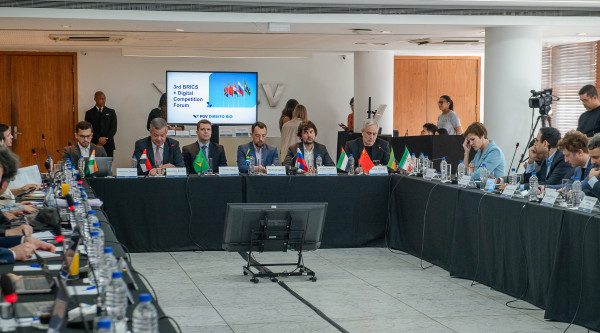
At the 3rd BRICS + (Brazil, Russia, India, China, South Africa, Egypt, Iran, Arab Emirates, Ethiopia + partners) Digital Competition Forum, the BRICS Competition Law and Policy Centre (www.BRICSCompetition.org) presented a new methodological approach to analyzing and regulating food markets that takes into account their accelerating digitalization. Specific tools that are being developed within the BRICS framework were also announced. One of the targeted tools will be the food market and restrictions on the activities of monopolists like Covantis.

Alexey Ivanov, Director of the BRICS Competition Law and Policy Centre, highlighted that digitalization strengthens the global power of large corporations, which, as a result, poses a threat of market monopolization. He urged BRICS antitrust regulators to pay close attention to a similar example of increasing market power through digitalization — the blockchain platform Covantis. The platform aims to digitize the entire agribusiness trade process, from contract management to final shipping. Founded by the largest agro-traders of the ABCCD group (ADM, Bunge, Cargill and Louis Dreyfus and COFCO) and Viterra, Covantis avoids antitrust scrutiny due to its structure. At the same time, the platform collects valuable commercial information about production from farmers and agricultural traders. The platform has already become a dominant player in grain trade. For example, in Brazil, 76% of grain exports go through the platform. In 2023, 53% of grain exports from the US, 34% from Canada and 51% from Argentina went through the Covantis platform. At the same time, the owners of the platform do not allow most of the local big players to enter. In essence, it is an exclusive platform, a quasi-cartel.

“Global food prices have reached the highest level in the last year and a half. Virtually all BRICS countries are currently undergoing antitrust investigations into the egg and chicken meat markets. Competitive agencies must take a new approach to regulating the food industry, not just by jointly analysing global food chains, but by analysing them taking into account all the implications of digitalization. This is the only way we will be able to tackle food security, which is particularly acute for the BRICS and partner countries. For example, the Covantis platform can be used by traders to share confidential information and vertical pressure on farmers. And of course the exclusionary behaviour of Covantis towards local players is of utmost importance. This should be the focus of attention of our countries' competition authorities” – Ivanov explained.

Based on the developed fair organized (exchange) trade in commodities and commodity derivatives within the BRICS framework, it is proposed to solve the problems related to market concentration and, as a consequence, insufficient consideration of the interests of small, medium and large enterprises, which will help to resolve issues related to the violation of the balance of interests of financial market players and producers and consumers of the real sector.

It is proposed to create within the BRICS framework representative indicators of exchange quotations and price indices for OTC transactions based on representative samples of actual transactions, reflecting the competitive composition of sellers and buyers and ensuring the use of universal means of delivery of traded goods. New approaches will contribute to the elimination of unproductive intermediation and increase stability in global commodity markets.

The development of a derivatives market based on reliable exchange and OTC cash commodity prices will create opportunities for BRICS economies to manage risks and pool resources, lead to positive consequences for business and society, strengthen cooperation and stimulate economic growth. Targeted subsidies and exchange mechanism will improve fiscal policy and infrastructure development.

Earlier this year, BRICS Competition Law and Policy Centre (BRICS Center) with the leadership of the Competition Policy and Assessment Center of the State Administration of Market signed a memorandum on long-term cooperation announced the launch and development of the Russian-Chinese exchange and trade platform in consumer goods and commodities which will become a basis for the further development of the universal exchange platform for all BRICS member-countries.

“If entrepreneurs of Russia and China work directly, through modern exchange mechanisms, which will not only allow to establish direct long-term ties, but also reduce prices for goods for end consumers, as it will eliminate the use of intermediary schemes. The task of experts and researchers in this regard is to develop a system of organizational, legal and economic measures and analyze the necessary conditions for the creation of exchange platforms and the development of exchange trade, including in the BRICS format” – Fu Hongwei, Director, Competition Policy and Assessment Center, SAMR; explained.

Distributed by APO Group on behalf of BRICS Competition Law and Policy Centre.

About the 3rd BRICS + Digital Competition Forum:
The BRICS + (Brazil, Russia, India, China, South Africa, Egypt, Iran, Arab Emirates, Ethiopia + partners) Digital Competition Forum, which is being held this year on the margins of the G20 Summit, brings together heads and representatives of competition authorities from all BRICS countries and partners, as well as researchers and visionaries in the field of digital regulation from around the world. The Forum includes the BRICS Working Group on the Study of Competition Issues in Digital Markets. This year's main topics include regulation of digital ecosystems, the challenges and opportunities that artificial intelligence brings to antitrust law, and the digitalization of global food chains.

The Forum is organized by the HSE University BRICS Competition Law and Policy Centre together with the FGV University School of Law (Getulio Vargas Foundation) with the support of the Brazilian Competition Authority (CADE).

Media files
BRICS Competition Law and Policy Centre
Download logo
Read moreBRICS Antitrust Authorities Turned against Covantis
12 December 2024

Financial injustice a hindrance to Africa’s development

Location: News

Financial injustice a hindrance to Africa’s development

The transformation of global financial institutions remains critical in addressing Africa’s mounting debt challenges, as they perpetuate financial injustice, says United Nations (UN) Secretary-General António Guterres.

“The G20 must lead in delivering financial justice. Financing is fundamental -- from inclusive economic growth, to supporting industrialisation and food security or addressing inequalities,” Guterres said during the closing session for the Joint Sherpa-Finance and Central Banks Deputies' Meeting, held in Johannesburg, on Wednesday.

Guterres explained that global financial systems "load" countries with debt service costs, while denying them access to sufficient low-cost financing to fight poverty, inequality and hunger and advance the Sustainable Development Goals (SDGs).

According to the UN, in 2022, public debt in Africa reached USD 1.8 trillion.

“Developing countries must be represented fairly in their governance. These institutions must also protect economies, particularly from global shocks. It is time to mend the global safety nets that were discovered during the COVID-19 pandemic that they were no longer fit for purpose.

“This continent’s potential is without question. Africa is home to a young and growing population, rich cultural and natural diversity, and a tremendous entrepreneurial spirit. But this enormous potential continues to be held back by injustices that are deeply rooted in the history of colonialism.

“Injustice in worsening climate chaos - which Africans did virtually nothing to cause - that fuels floods, storms, hunger and deadly droughts. I stand side-by-side with President Ramaphosa and the people of Africa in this fight for justice on all fronts. Africa needs financial justice,” Guterres said.

In September, world leaders adopted the Pact for the Future, which includes commitments for ambitious reforms to make the international financial architecture representative of today’s global economy and put the needs of developing countries front and centre.  

The pact covers a broad range of issues including peace and security, sustainable development, climate change, digital cooperation, human rights, gender, youth and future generations, and the transformation of global governance.

“It calls for action to move forward with an SDG Stimulus… to substantially increase the lending capacity of Multilateral Development Banks to make them bigger, bolder and better to support developing countries.

“... And to mobilise more international and domestic resources, public and private, for vital investments. Last week I appointed a group of leading experts to galvanize international support for action on debt, and I’m delighted that Trevor Manuel will be part of this important work,” he said.

As part of the work for South Africa’s G20 Presidency, Guterres participated in the first series of the more than 130 meetings that will precede the G20 Summit in 2025.

On 1 December 2024, South Africa assumed the Presidency of the G20, which comprises many of the world's largest developing and developed economies.

The G20 was established to tackle pressing global economic and financial issues. Together, G20 members account for around 85% of global gross domestic product (GDP) and 75% of international trade. 

The G20 comprises 19 countries including Argentina, Australia, Brazil, Canada, China, France, Germany, India, Indonesia, Italy, Japan, Republic of Korea, Mexico, Russia, Saudi Arabia, South Africa, Türkiye, United Kingdom, and United States and two regional bodies, namely the European Union and the African Union.

The grouping therefore plays a critical role in influencing global policy making and fostering global economic stability.

South Africa's G20 Presidency is the fourth consecutive emerging market Presidency, and it is also the first African Presidency, followed by the admission of the African Union (AU) as the second permanent African member. - SAnews.gov.za

nosihle
Thu, 12/12/2024 - 08:51

211 views
Read moreFinancial injustice a hindrance to Africa’s development
12 December 2024

G20 urged to deliver on climate justice

Location: News

G20 urged to deliver on climate justice

With developing nations being considered the most vulnerable to climate change, United Nations Secretary-General António Guterres says the Group of Twenty (G20) countries must lead in delivering climate justice.

Addressing the closing session for the Joint Sherpa-Finance and Central Banks Deputies' Meeting, Guterres stressed that many vulnerable countries are being forced to respond to a crisis they did not create.

“Meanwhile, they lack the necessary support to seize the benefits of clean energy to spur prosperity and eliminate poverty. We need developed countries supporting developing countries with adequate, affordable and accessible finance and technology, and through meaningful contribution to the loss and damage fund by doubling adaptation finance next year as promised.

“[Climate justice can be delivered] by forging new partnerships like the Just Energy Transition Partnership that South Africa has pioneered to pave the way to a renewable future,” the Secretary-General said on Wednesday in Johannesburg.

On 1 December 2024, South Africa assumed the Presidency of the G20, which comprises many of the world's largest developing and developed economies.

As part of the work for the G20 Presidency, South Africa has commenced with the first series of the more than 130 meetings that will precede the G20 Summit in 2025.

“G20 countries must lead the way in line with the principles of common but differentiated responsibilities but recognise that every G20 country has to do more in the reduction of emissions. Next year, every government must deliver new economic plans in line with limiting the global temperature rise to 1.5 degrees.

“These new plans must cover all emissions in the whole economy, accelerate a just fossil fuel phase out and contribute to the energy transition goals agreed to at COP28. We must also ensure that Africa’s critical minerals that can power the renewable future worldwide benefit Africans first and most. We cannot repeat the mistakes of the past,” he said.

Guterres further called on the G20 to lead on technological justice.

“From digital technology to artificial intelligence, the developing world must access and benefit from the technological revolution.

“We need the G20 to support developing countries as they invest in the digital driven systems and solutions that their people need to boost prosperity to create jobs and drive sustainable development,” he said.

South Africa's G20 Presidency is the fourth consecutive emerging market Presidency, and it is also the first African Presidency, followed by the admission of the African Union (AU) as the second permanent African member. 

The G20 was established to tackle pressing global economic and financial issues. Together, G20 members account for around 85% of global GDP and 75% of international trade. 

The G20 comprises 19 countries including Argentina, Australia, Brazil, Canada, China, France, Germany, India, Indonesia, Italy, Japan, Republic of Korea, Mexico, Russia, Saudi Arabia, South Africa, Türkiye, United Kingdom, and United States and two regional bodies, namely the European Union and the African Union.

The grouping therefore plays a critical role in influencing global policy making and fostering global economic stability. - SAnews.gov.za

nosihle
Wed, 12/11/2024 - 15:14

90 views
Read moreG20 urged to deliver on climate justice
11 December 2024

Big investment needed to drive sustainable development

Location: News

Big investment needed to drive sustainable development

National Treasury Director-General (DG), Dr Duncan Pieterse, has called for large scale and sustainable investments to ensure the global community meets its commitments to end poverty, protect the planet and build prosperous societies.

“Financing gaps for sustainable development are large and growing. The estimates by our international organisations indicate that around $4 trillion in additional investments is needed annually for developing countries,” Pieterse said on Wednesday in Johannesburg.

He was speaking during the two-day Group of Twenty (G20) Joint Sherpa and Finance Track meeting.

According to the United Nations (UN), the world may miss many of the Sustainable Development Goals (SDGs) targets by 2030 due to the delay in development progress, which may even be reversed under the combined weight of climate disasters, conflict, economic downturn and the lingering aftermath of the COVID-19 pandemic.

The Sustainable Development Goals are a universal call to action to end poverty, protect the planet and improve the lives and prospects of everyone, everywhere. 

“To achieve the SDGs by the 2030 deadline, an urgent large scale and sustainable investments push is needed,” Pieterse said.

The DG said South Africa’s G20 Presidency will strongly focus on the challenges facing emerging markets and developing countries, especially those on the African continent.

“We will also focus our attention on policies and mechanisms that support sustainable development. Many developing countries, including those in Africa experience growth that is insufficient to reduce poverty, as well as tough financing conditions and high levels of public debt that crowd out resources or development spending

“During our Presidency, there will be a very strong focus on enhancing debt sustainability through a comprehensive approach, which will include... finding ways to improve debt structuring, supporting countries with liquidity challenges and encouraging the development of local currency markets to attract domestic savings and improve debt transparency,” Pieterse said.

South Africa will also continue to obtain borrower country perspectives on debt, including through an African outreach event, with broad participation of the borrower countries.

On 1 December 2024, South Africa assumed the Presidency of the G20 group of countries, which comprises many of the world's largest developing and developed economies.

“The global economy has been put to the test over the last four years, marked by an unprecedented pandemic, escalation in geopolitical conflict and extreme weather events that have disrupted supply chains. 

“The latest assessment by the International Monetary Fund that global growth is expected to remain stable, yet underwhelming, remains a concern. Higher growth is essential to improve prosperity and living standards to reduce debt, and create policy space to tackle our spending pressures,” Pieterse said.

In 2025, South Africa’s G20 Presidency will focus on strengthening macroeconomic fundamentals, accelerating climate transition and boosting productivity growth.

This week's discussion under the South Africa G20 Presidency takes place ahead of two very important events -- the 5th Finance in Common Summit (FiCS), taking place in Cape Town in February 2025, and the Fourth International Conference on Financing for Development (FfD), which will take place in Spain in June 2025.

“We see these events as very important opportunities to strengthen the development finance ecosystem, scale up and redirect financing to meet our global sustainable challenges, and bring impactful changes in relation to climate and biodiversity needs.

“As we prepare to submit our Nationally Determined Contribution (NDC) in 2025, it is clear that our very ambitious climate action goals cannot be achieved without unlocking a similarly ambitious set of climate instruments.

“The G20 must continue to play a leading role to address the critical issues of our age, so that we can achieve both global sustainable development and development that is inclusive, equitable and leaves no one behind,” Pieterse said.

South Africa's G20 Presidency is the fourth consecutive emerging market Presidency, and it is also the first African Presidency, followed by the admission of the African Union (AU) as the second permanent African member. 

The G20 was established to tackle pressing global economic and financial issues. Together, G20 members account for around 85% of global GDP and 75% of international trade. 

The G20 comprises 19 countries including Argentina, Australia, Brazil, Canada, China, France, Germany, India, Indonesia, Italy, Japan, Republic of Korea, Mexico, Russia, Saudi Arabia, South Africa, Türkiye, United Kingdom, and United States and two regional bodies, namely the European Union and the African Union.

The grouping therefore plays a critical role in influencing global policy making and fostering global economic stability. - SAnews.gov.za

nosihle
Wed, 12/11/2024 - 11:19

231 views
Read moreBig investment needed to drive sustainable development
9 December 2024

Lamola advocates for the evolution of multilateral institutions

Location: News

Lamola advocates for the evolution of multilateral institutions

With the world facing complex issues such as climate change, economic inequality, global health crises, and geopolitical tensions, International Relations and Cooperation Minister Ronald Lamola says multilateral institutions must evolve to meet the global challenges of today.

“While international cooperation and multilateralism are currently confronted with divisive geopolitics and unprecedented challenges such as climate change, slow economic growth and deepening poverty, the G20 must make strides in forging practical, mutually beneficial cooperation that champions an international order that is fairer, just, inclusive and representative,” the Minister said on Monday in Johannesburg.

He was addressing the first G20 Sherpas Meeting, as South Africa commenced with the first engagement of the more than 130 meetings that will precede the G20 Summit in 2025.

WATCH | 


The Sherpa Track is led by the personal representatives of G20 leaders, and oversees negotiations and discusses the points that form the summit’s agenda, and coordinates most of the work.

On 1 December 2024, South Africa assumed the Presidency of the G20 group of countries, which comprises many of the world's largest developing and developed economies. 

READ | G20 South Africa news articles

It was established to tackle pressing global economic and financial issues. Together, G20 members account for around 85% of global GDP and 75% of international trade. 

The G20 comprises 19 countries including: Argentina, Australia, Brazil, Canada, China, France, Germany, India, Indonesia, Italy, Japan, Republic of Korea, Mexico, Russia, Saudi Arabia, South Africa, Türkiye, United Kingdom, and United States and two regional bodies, namely the European Union and the African Union.

The grouping therefore plays a critical role in influencing global policy making and fostering global economic stability.

“The multilateral institutions with economic and developmental mandates must be strengthened, as the need for their intervention is even much bigger now. We all know that many countries, especially the developing world, are still recovering from the economic shock of COVID-19. 

“Poverty and weak economic growth remain a challenge for many countries, especially in Africa and the developing world; thus, the themes of our temporary Task Forces focus on these matters,” Lamola said.

According to studies from the International Monetary Fund, trade has been a major contributor to global growth over the past decades, helping to promote economic development, increase economic opportunity and lift millions out of poverty.

“It is for this reason that South Africa supports international cooperation and multilateralism. We also know of the benefit this would bring us, as we seek to grow our economy and support the development of the African continent.

“As the premier forum for international economic cooperation, South Africa seeks to amplify the continued value of the G20 as a forum of the world’s largest developing and developed economies; a forum that provides leadership and momentum towards greater global economic growth and sustainable development; a forum whose work serves to complement and foster the broader processes of the various multilateral spheres,” Lamola said.

He said the global community must remain committed to multilateralism and upholding international law and ensure that the United Nations (UN) remains the centrepiece of this multilateralism. 

“Its central role in the international system ensures that sovereign States cooperate to maintain international peace and security, advance sustainable development, and ensure the promotion and protection of democracy, human rights, and fundamental freedoms for all.

“Whereas G20 leaders set the agenda for our partnership, we rely on the immense efforts of our Sherpas to translate these commitments into practical cooperation,” the Minister said.

South Africa’s G20 Presidency is being held under the theme: "Solidarity, Equality, Sustainability" - a theme that seeks to harness global will and capabilities to confront the enormous challenges the world is facing.

“In the spirit of Ubuntu, our shared humanity, we will address these challenges through our high-level deliverables and priorities, which lie at the core of the original G20 mandate of promoting strong, sustainable, balanced and inclusive growth, and by building partnerships across all sectors of society to find collective solutions.

“As we build on the past and set the tone for the future, we must accentuate the need to adhere to universal values, shared norms, and strong multilateral institutions. Now more than ever, multilateral institutions must be strengthened and reformed to deliver broad global consensus and serve as platforms to resolve disputes,” the Minister said. - SAnews.gov.za

nosihle
Mon, 12/09/2024 - 11:37

342 views
Read moreLamola advocates for the evolution of multilateral institutions
9 December 2024

Companies Plan to IT Security Budgets up to 9% in the Next Two Years

Location: Business
Kaspersky

Companies are planning to increase their investments in information security against the background of growing financial losses from cyber incidents. This trend was revealed in the recent Kaspersky's (www.Kaspersky.co.za) IT Security Economics report.

Kaspersky IT Security Economics is an annual report that unpicks the changes in budgets, breaches and business challenges affecting IT Security decision makers. It is based on interviews with IT and IT security professionals working in organisations of various sizes and industries. The survey was conducted across 27 countries in Europe, the Asia-Pacific region, the Middle East, Turkiye and Africa (META) region, Latin and North America.

According to the research, companies plan to increase their IT security budgets by up to 9%. The median cybersecurity budgets for large enterprises were $5.7M with $41.8M allocated for IT generally, while SMBs invested $0.2M in IT security from a median IT budget of $1.6M.

Possible reasons for the increased investment can be found in the analysis of financial losses from cyber incidents. Large enterprises experienced an average of 12 incidents this year, spending $6.2M to recover from them — 1.1 times higher than the budget allocated for IT security overall. Despite the greater resources and advanced security infrastructures, the sheer scale and complexity of large enterprise organisations make them more susceptible to costly breaches. While these enterprises are often better equipped to detect incidents quickly, the time required to fully respond and mitigate these threats can span for hours, underscoring the challenge of managing widespread, complex IT environments.

As for SMBs, these organisations experienced an average of 16 incidents this year, while spending $0.3M for remediation, which is 1.5 times higher than their overall IT Security budget. SMBs are the most disproportionately affected group in terms of budgetary impact. They often lack robust cybersecurity policies and procedures, which leaves them vulnerable to incidents involving employees, public cloud misconfigurations, and high-level permissions.

In the META region, organisations of all sizes reported to have experienced on average 13 incidents within a year. In South Africa, organisations of all sizes reported to have experienced on average 19 incidents within a year.

“This data illustrates the continuation of the current trend of increasing cybersecurity spending across all market segments. This growth is driven by at least three key factors. Firstly, and obviously, the constant growth in the complexity of cybersecurity threats forces companies to adopt more advanced solutions to enhance the detection of attack traces and automate responses. Secondly, increasing concerns from governments regarding digital sovereignty leads to the emergence of new regulations and regulatory requirements and, as a result, increased expenses. The third factor influencing the growth of cybersecurity budgets and costs is the constant increase in salary expectations for professionals in various cybersecurity fields,” comments Veniamin Levtsov, Vice President, Center of Corporate Business Expertise at Kaspersky.

To protect companies against a wide range of cyber threats, Kaspersky recommends:

  • Use all-encompassing solutions, such as those from the Kaspersky Next (https://apo-opa.co/3VwBRnf) product line, that provide real-time protection, threat visibility, advanced investigation and response capabilities for companies of any size and industry.
  • Adopt a managed security service such as Kaspersky Managed Detection and Response (https://apo-opa.co/49pxUXj) if companies lack qualified InfoSec professionals. It will provide the necessary expertise and give them the best possible advanced automated security services. Thanks to its analysis of corporate data gathered every day, in real time, 24/7, it can shield businesses against sophisticated cyberattacks.
  • Educate your employees. Dedicated training courses can help, such as those provided in the Kaspersky Automated Security Awareness (https://apo-opa.co/3VtJyuu) Platform.

To gain more insights about IT security costs and budgets in businesses visit the interactive IT Security Calculator (https://Calculator.Kaspersky.com).

To read the full report “IT Security Economics”, that is based on a survey conducted in Brazil, Chile, China, Egypt, France, Germany, India, Indonesia, Italy, Japan, Kazakhstan, Saudi Arabia, Malaysia, Mexico, Pakistan, Philippines, Russia, South Africa, South Korea, Singapore, Spain, Thailand, Turkey, Vietnam, UAE, UK and US, visit the website (https://apo-opa.co/3Zp3ik9).

Distributed by APO Group on behalf of Kaspersky.

For further information please contact:
Nicole Allman
INK&Co. (https://INKandCo.co.za)
nicole@inkandco.co.za

Social Media:
Facebook: https://apo-opa.co/3OLZioQ
X: https://apo-opa.co/3ZtBQl5
YouTube: https://apo-opa.co/4gmirtl
Instagram: https://apo-opa.co/3BkYK6f
Blog: https://apo-opa.co/3OKs219

About Kaspersky:
Kaspersky is a global cybersecurity and digital privacy company founded in 1997. With over a billion devices protected to date from emerging cyberthreats and targeted attacks, Kaspersky's deep threat intelligence and security expertise is constantly transforming into innovative solutions and services to protect businesses, critical infrastructure, governments and consumers around the globe. The company's comprehensive security portfolio includes leading endpoint protection, specialized security products and services, as well as Cyber Immune solutions to fight sophisticated and evolving digital threats. We help over 200,000 corporate clients protect what matters most to them. Learn more at www.Kaspersky.co.za.

Media files
Kaspersky
Download logo
Read moreCompanies Plan to IT Security Budgets up to 9% in the Next Two Years
9 December 2024

SA kicks off first G20 engagement

Location: News

SA kicks off first G20 engagement

South Africa has set the agenda for its Group of Twenty (G20) Presidency with the commencement of the fist engagement of the more than 130 meetings that will precede the G20 Summit in 2025.

The Minister of International Relations and Cooperation, Ronald Lamola, officially opened the first G20 Sherpas Meeting in Johannesburg, on Monday.

The Sherpa Track is led by the personal representatives of G20 leaders. The Sherpa Track oversees negotiations and discusses the points that form the summit’s agenda, and coordinates most of the work.

“The first Sherpa Meeting of the G20 is important traditionally, as it sets the stage for the upcoming Presidency and the critical conversations on some of the most vital issues of our time.

“In the spirit of Ubuntu, our shared humanity, we will address these challenges through our high-level deliverables and priorities, which lie at the core of the original G20 mandate of promoting strong, sustainable, balanced and inclusive growth and by building partnerships across all sectors of society to find collective solutions,” Lamola said on Monday.

WATCH | 


South Africa’s G20 Presidency is being held under the theme: "Solidarity, Equality, Sustainability", a theme that seeks to harness global will and capabilities to confront the enormous challenges the world is facing.

South Africa will use its G20 Presidency to secure urgent progress on shared goals through several priority actions, which include strengthening disaster resilience and response; ensuring debt sustainability for low-income countries; mobilising finance for a just energy transition and harnessing critical minerals for inclusive growth and development.

As part of its efforts to bring the Sherpa and the Finance tracks closer together, three temporary Task Forces, an Initiative and a Commission will be established during South Africa’s G20 Presidency.

South Africa’s priorities include Inclusive Economic Growth, Industrialisation, Employment and Reduced Inequality; Food Security and Artificial Intelligence, Data Governance and Innovation for Sustainable Development.

“A review of the work of the G20 -- The G20 at 20 years: A Reflection on Key Achievements and the Way Forward -- will also feature as one of South Africa’s deliverables through a Sherpa Track Initiative. South Africa also proposes the establishment of a Cost of Capital Commission during its G20 Presidency,” Lamola said.

The three Task Forces, the Initiative and Commission will be established to deliver tangible results during South Africa's G20 Presidency. All of the priorities, as well as the overall theme, will influence Working Groups’ priorities and work plans.

South Africa assumed its G20 Presidency on 1 December 2024, following the astute and successful leadership of Brazil.

“The South African government also recognises the significant strides made by the Brazilian G20 Presidency in enhancing the G20 as a site of democratic global engagement. The South African Presidency will continue this trajectory. 

“A comprehensive dialogue with civil society and other State and non-State institutions will be conducted through the existing Engagement Groups.

“Following the approach of the Brazilian Presidency, a G20 Social Forum will be convened, which will precede the Leaders’ Summit in November 2025, to bring together representatives of the existing engagement groups and other segments of civil society that may offer meaningful contributions to the G20,” Lamola said.

The G20 group comprises many of the world's largest developing and developed economies. It was established to tackle pressing global economic and financial issues. Together, G20 members account for around 85 percent of global GDP and 75 percent of international trade. 

The G20 comprises 19 countries including Argentina, Australia, Brazil, Canada, China, France, Germany, India, Indonesia, Italy, Japan, Republic of Korea, Mexico, Russia, Saudi Arabia, South Africa, Türkiye, United Kingdom, and United States and two regional bodies, namely the European Union and the African Union.

The grouping therefore plays a critical role in influencing global policy making and fostering global economic stability.

“I trust that this meeting will set the trend for our subsequent meetings and that, as much as we celebrate the landmark achievements of the G20, we will also, during the course of the year ahead, begin to look ahead toward the strategic imperatives for the next cycle of G20 cooperation,” Lamola said. -SAnews.gov.za

nosihle
Mon, 12/09/2024 - 12:08

163 views
Read moreSA kicks off first G20 engagement
  • Previous
  • Page 1
  • Page 2
  • Page 3
  • Page 4
  • Interim pages omitted …
  • Page 9
  • Next

Copyright © 2026 · MyZA · All Rights Reserved · Powered by Reach Trust