• Skip to main content
  • Skip to header right navigation
  • Skip to after header navigation
  • Skip to site footer
MyZA

MyZA

News, Directory, Events and Other Stuff

  • Social Media
  • Sport
  • World News
  • Home
  • Submit News
  • Directory
  • Events
  • Stratlec
  • TFSA
  • News
    • APO
    • Today’s Sport News
    • Todays Social Media and Tech Headlines
    • Today’s World News
    • Today’s SA Financial News
  • Contact
You are here: Home / Archives for solutions

solutions

5 May 2025

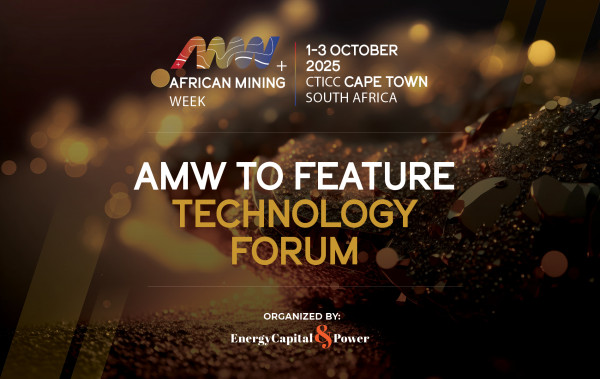
African Mining Week to Spotlight Cutting-Edge Mining Tech
Location: Business
Energy Capital & Power

The upcoming African Mining Week (AMW) – Africa's premier gathering for mining stakeholders, scheduled for October 1-3, 2025 in Cape Town – will feature a dedicated Technology Forum. The forum will connect African mining projects with global technology providers and investors, showcasing how digital solutions are transforming resource extraction and redefining the mining value chain.

As African countries scale up mineral production to drive GDP growth, developers are increasingly adopting data analytics and digital tools to boost operational efficiency. U.S.-based startup KoBold Metals, which applies artificial intelligence (AI) to mineral exploration, entered the Democratic Republic of Congo (DRC) in April 2025 to tap into the country's estimated $24 trillion in untapped mineral resources. The DRC – already the world's largest cobalt producer and a key copper supplier – could see its global mining profile rise significantly with KoBold's involvement. In Zambia, the company is advancing the $2 billion Mingomba project, one of the world's most promising untapped copper assets.

https://apo-opa.co/3Z0EMWY

https://apo-opa.co/3EBP2yg

Similarly, in Zimbabwe, Caledonia Mining is investing $1.1 million in IT infrastructure upgrades at the Blanket Mine as part of its $41.8 million capital budget. The upgrades include new mine planning software and a digital clocking system to improve labor efficiency, with a goal to increase gold output from 76,656 ounces in 2024 to up to 77,500 ounces in 2025.

https://apo-opa.co/4k8pMPg

In Botswana, Botswana Diamonds is employing AI-driven exploration to expand beyond diamond mining, recently identifying new prospects for copper, silver, cobalt, gold, nickel, zinc and platinum group metals. “During the initial analysis of the big database, it became clear that the AI technology could be used to identify other unknown minerals opportunities – and so it turned out,” said John Teeling, Chairman of Botswana Diamonds.

https://apo-opa.co/4k6ZDQM

Meanwhile, South African firms such as Kilken Platinum and Rio Tinto are deploying digital tools to unlock greater operational value. A joint report by Accenture and the World Economic Forum projects that digitalization could unlock up to R213 billion in additional value for South Africa's mining sector by 2026. Technologies such as predictive maintenance, autonomous operations and real-time data monitoring are helping firms streamline processes, reduce downtime and improve safety outcomes.

https://apo-opa.co/3EBP2yg

https://apo-opa.co/4jXhBVG

The Technology Forum at AMW 2025 will feature high-level panels examining how digitalization can optimize infrastructure, enhance safety, predict system failures and support sustainable resource management in a data-driven mining environment. The forum will also provide a platform for mining companies to showcase real-world case studies, exchange knowledge with tech innovators, and explore partnerships that drive long-term value creation.

Distributed by APO Group on behalf of Energy Capital & Power.

About African Mining Week:
African Mining Week serves as a premier platform for exploring the full spectrum of mining opportunities across Africa. The event is held alongside the African Energy Week: Invest in African Energies 2025 conference from October 1-3 in Cape Town. Sponsors, exhibitors and delegates can learn more by contacting sales@energycapitalpower.com.
Media files
Energy Capital & Power
Download logo
Read moreAfrican Mining Week to Spotlight Cutting-Edge Mining Tech
30 April 2025

Telcables Nigeria to Host Connect Xperience Event to Discuss the Future Adopation of Local Cloud Services

Location: Business

Angola Cables
Download logo

TelCables Nigeria, a subsidiary of Angola Cables (www.AngolaCables.co.ao), is proud to announce that it will be hosting the Connect Xperience event. This initiative will bring companies and strategic partners together to evaluate how local cloud infrastructure and services can assist in accelerating digital transformation and bring far reaching benefits to multiple sectors across the Nigerian economy. 

At present, Nigeria's cloud computing market is valued at around $1.03 billion and is expected to grow to $3.28 billion by 2030. With the exponential growth in the digitalization of the financial, technological and commercial sectors, dependence on cloud services is becoming increasingly critical. 

The event will highlight the advantages of adopting a local cloud solution, that offers lower latency, greater data sovereignty, enhanced security and improved compliance with local regulations. 

The IT sector currently contributes approximately 20% to Nigeria's real GDP, underscoring the pivotal role that the sector plays in the nation's economy.  

Fernando Fernandes, CEO of TelCables Nigeria said, “we believe that the future of the cloud in Africa lies in innovative and adaptable solutions that have been developed in Africa, for Africa - and the unique requirements and demands of businesses and users across the continent.  With strategic data centers and world-class connectivity, we are ready to support sustainable digital growth in Nigeria.”  

During the Connect Xperience, TelCables experts will present cloud models tailored to the needs of Nigeria companies, from startups to large corporations, as well as opportunities for local resellers and integrators looking to expand their services based on a robust, affordable and available infrastructure in Lagos. 

“Connect Xperience promises to be a meeting point for IT decision-makers, business leaders and industry professionals interested in exploring reliable, scalable and local cloud solutions that can improve business processes and boost the local Nigerian economy,” concluded Fernandes.  

Distributed by APO Group on behalf of Angola Cables.

About Angola Cables:
Angola Cables is an internationally established ICT and digital solutions and network services provider. The company specializes in connectivity solutions for the wholesale market and offers tailored digital services and solutions across multiple industries, including Cloud resources for the corporate enterprise sector. 

Known for its innovation, Angola Cables operates a robust global backbone network, providing access to major IXPs, Tier I operators, and global content providers. With more than 30 PoPs and connections to plus 930 interconnected Data Centres and 6000 peering agreements, traffic over its international network is more than 18 500 Tbps. 

The company has its own submarine cable network spanning over 33,000 kilometres (WACS, SACS, and MONET) and extends its services to over 50,000 kilometres through partner cables, connecting the Americas, Africa, Europe, and Asia. 

Additionally, the company operates two world-class Data Centres, AngoNAP Fortaleza in Brazil and AngoNAP Luanda in Angola. Angola Cables also manages PIX in Brazil and AngonIX in Angola - one of the leading internet traffic exchange points in Africa that directly connects to over 21 IXPs worldwide. 

With a significant international presence, Angola Cables is expanding its operations into strategic markets such as Brazil, South Africa, the United States and Nigeria. The company promotes intercontinental interconnection, driving digital and economic development, and ranks among the top 25 internet service providers in the world today. 

*The Center for Applied Internet Data Analysis (CAIDA) 2023 

For more information, visit the website: www.AngolaCables.co.ao 

About TelCables West Africa:
TelCables West Africa is powered by the Angola Cables network, a multinational telecommunications company operating in the wholesale market. The company operates connectivity, IT solutions and services as well as international data circuit capacity and IP Transit via submarine cables. 

As the most connected network operator in Africa, we provide secure, low-latency direct routes from West Africa to the USA and South America and from West Africa to London. With our presence across a number of Nigerian IP hubs from Lekki, WACS CLS, Medallion DC, Rack Centre and others, and connections across Africa via the Djoliba network, we can connect your business to the world. 

For more information, visit the website: https://TelCables.ng/  

Read moreTelcables Nigeria to Host Connect Xperience Event to Discuss the Future Adopation of Local Cloud Services
30 April 2025

Experts Convene in Washington to Advance Dialogue on an African-Led Credit Rating Ecosystem

Location: News
AfriCatalyst

With more than 30 African countries subject to sovereign credit ratings, the decisions of global rating agencies significantly impact debt sustainability and access to international financial markets. At a high-level dialogue held on the sidelines of the 2025 IMF–World Bank Spring Meetings, African institutions and global credit rating agencies reaffirmed their commitment to developing a fair, transparent, and inclusive credit rating ecosystem for Africa.

Organized by the African Union's African Peer Review Mechanism (APRM), the United Nations Development Programme (UNDP), the United Nations Economic Commission for Africa (UNECA), AfriCatalyst, and the African Center for Economic Transformation (ACET), and hosted at the Open Society Foundations, the dialogue brought together senior representatives from Moody's, S&P, and Bank of America for a candid discussion on financing solutions for African countries.

Against a backdrop of rising market volatility, sovereign defaults and constrained fiscal space, the dialogue aimed to address urgent reforms in Africa's credit rating framework. Speakers identified structural issues such as data gaps, methodological opacity, and under-engagement between African governments and the ‘big three' credit rating agencies (Moody's, S&P, and Fitch), as barriers to accurate ratings.

Amb. Claver Gatete, Executive Secretary of UNECA, acknowledged Africa's financing paradox—a combined GDP of over $3 trillion, yet only two countries rated investment grade—and underscored the urgent need for reform. “Ultimately, a healthy credit rating ecosystem goes beyond evaluating risk – it becomes a platform for mobilizing capital, improving creditworthiness, and supporting Africa's broader development goals,” he added.

“We must rethink how creditworthiness is defined and measured,” said Dr. Raymond Gilpin, Chief Economist, UNDP Africa speaking on behalf of Ms. Ahunna Eziakonwa, UNDP Regional Director for Africa. “At UNDP, we believe a development-centric approach is essential to supporting governments in strengthening institutions, improving data systems, and engaging effectively with credit rating agencies to reshape the narrative around Africa's creditworthiness.”

African economies face mounting credit rating challenges, including perceptions of bias, lack of transparency and inconsistencies in rating methodologies. Dr. Misheck Mutize, Lead Credit Rating Expert at APRM, and Dr. Zuzana Schwidrowski, Director of Macroeconomics, Governance and Finance at UNECA, proposed solutions to addressing the capacity of African governments to respond to inaccurate or unfair credit ratings and steps toward creating an African Credit Rating Agency that complements and expands existing credit ratings coverage globally.

Mr. Roberto Sifon-Arevelo, Managing Director at S&P Global Ratings, Mr. Jorge Valez, Senior Vice President at Moody's Ratings, and Dr. Tatonga Rusike, Chief Economist for Africa at Bank of America, outlined opportunities to remedy longstanding risk perception issues and working together with banks and investors to build capacity  and a better understanding of rating methodologies to address transparency. They further emphasized that while sovereign credit ratings are not the sole determinant of investor decisions, they exert significant influence over borrowing costs, market confidence, and access to capital.

"Given the ongoing stress in African governments related to both cost of capital and access to capital it is critical to ensure that credit ratings reflect the many different African contexts. This initiative is an important step in that regard - particularly engaging the credit rating agencies," shared Ms. Mavis Owusu-Gyamfi, President and CEO of ACET.

“The Africa Credit Rating Agency (AfCRA) is not being established to issue favourable ratings for African entities, but rather to contribute to a diversity of rating opinions that support more accurate assessments of African sovereigns, corporates, and sub-sovereigns,” expressed Dr. Mutize. “Our priority is to build a credible, independent, and sustainable institution that plays a vital role in developing domestic debt markets and rebalancing Africa's position within the evolving global financial architecture.”

In his closing remarks AfriCatalyst's CEO Dr. Daouda Sembene stressed the urgent need for collaboration among African institutions. “AfriCatalyst is proud to be at the heart of this critical dialogue, building on the foundation of our Credit Ratings Initiative with UNDP. We are optimistic that through stronger collaboration between African institutions and global rating agencies, we can foster a more accurate, robust, and representative credit rating ecosystem—one that empowers African nations and promotes sustainable growth.” said Daouda.

Key messages included the need for: transparent and regular engagement between rating agencies, investors, and African governments; stronger institutional narratives that reflect the continent's resilience and reform efforts; and local capacity-building and collaboration, particularly through the proposed African Credit Rating Agency, which aims to provide credible, contextual alternatives to global ratings.

As South Africa chairs the G20 and the African Union assumes permanent membership in 2025, the call for an African-led credit rating solution takes on added urgency. The outcomes of this dialogue will contribute to ongoing efforts to reform the global financial architecture and ensure Africa's capital works better for Africa's development.

Distributed by APO Group on behalf of AfriCatalyst.

Media Contacts:
Bineta Pouye
bpouye@africatalyst.com

Michelle Mendi Muita
michellemendi.muita@undp.org

Ejigayhu Tefera
ejigayhu.tefera@aprm-au.org

Jean-Marc Kilolo
jean-marc.kilolo@un.org

Belinda Ayamgha
bayamgha@acetforafrica.org

Media files
AfriCatalyst
Download logo
Read moreExperts Convene in Washington to Advance Dialogue on an African-Led Credit Rating Ecosystem
28 April 2025

Africa Finance Corporation Appoints Ireti Samuel-Ogbu as Chair of Board of Directors

Location: Business
Africa Finance Corporation (AFC)

Africa Finance Corporation (AFC) (www.AfricaFC.org), the continent's leading instrumental infrastructure solutions provider, today announced the appointment of Mrs Ireti Samuel-Ogbu as Chair of its Board of Directors. She succeeds Mr. Emeka Emuwa who has completed 12 years of meritorious service to the Corporation.

Mrs. Samuel-Ogbu brings a wealth of experience spread over three decades leading and transforming the banking sector in Europe, Middle East, and Africa. Until recently, she led Citi's institutional businesses in Nigeria and Ghana, with oversight across Banking, Markets and Services. During this period, she steered the franchise through significant macroeconomic and regulatory headwinds, strengthening its strategic momentum and resilience.

Her international career within Citibank included senior leadership roles across over 50 countries in the Europe, Middle East, and Africa region, during which time she worked in the United Kingdom, Nigeria, and South Africa.

Mrs. Samuel-Ogbu has extensive boardroom experience including Citibank Nigeria where she was a Non-Executive Director for 6 years and Chair of the Risk Committee prior to becoming the Managing Director. She also served on the board of CHAPS Clearing UK, the high value payment system now operated by the Bank of England and a UK-based charity, Opportunity International. Her extensive experience and unwavering dedication to the advancement of Africa make her a valuable asset to AFC at a time when the Corporation is more committed than ever to accelerating Africa's transformation through bold investments, innovative financing models and catalytic partnerships.

AFC recently delivered a record-breaking FY2024 financial performance, with total revenue increasing by 22.8% to US$1.1 billion, surpassing the US$1 billion milestone for the first time. This strong performance was driven by several transformational projects including acting as the Lead Project Developer for the Lobito Corridor, a transformative multi-country transport network connecting Angola, Zambia and the Democratic Republic of Congo (DRC), financing of the expansion of the Kamoa-Kakula Copper Complex in the DRC — one of the world's highest-grade, low-carbon underground copper mines and financing support for the commissioning of the Dangote Refinery, the largest in Africa.

Speaking on the appointment, Samaila Zubairu, President & CEO of AFC, said: " We are delighted to welcome Mrs Ireti Samuel-Ogbu as Chair of the Board. Her wealth of experience, visionary leadership and deep understanding of Africa's financial landscape will be invaluable as we navigate our next phase of growth- expanding our impact, mobilising urgently needed capital and delivering transformative projects that enable inclusive and sustainable prosperity across the continent.”

Mrs Ireti Samuel-Ogbu commented: “I am honoured to take on the role of Chair at AFC, an institution that serves as a trusted bridge between international capital and Africa's dynamic growth opportunities. I look forward to working closely with the board, management, and all stakeholders to advance the Corporation's mission and strengthen its role as the leading provider of strategic, investment-driven solutions that unlock Africa's full economic potential.”

Distributed by APO Group on behalf of Africa Finance Corporation (AFC).

Media Enquiries:
Yewande Thorpe
Communications
Africa Finance Corporation
Mobile +234 1 279 9654
Email: yewande.thorpe@africafc.org

About AFC:
AFC was established in 2007 to be the catalyst for pragmatic infrastructure and industrial investments across Africa. AFC's approach combines specialist industry expertise with a focus on financial and technical advisory, project structuring, project development, and risk capital to address Africa's infrastructure development needs and drive sustainable economic growth.

Seventeen years on, AFC has developed a track record as the partner of choice in Africa for investing and delivering on instrumental, high-quality infrastructure assets that provide essential services in the core infrastructure sectors of power, natural resources, heavy industry, transport, and telecommunications. AFC has 45 member countries and has invested over US$15 billion in 36 African countries since its inception.

www.AfricaFC.org

Media files
Africa Finance Corporation (AFC)
Download logo
Read moreAfrica Finance Corporation Appoints Ireti Samuel-Ogbu as Chair of Board of Directors
25 April 2025

COGTA Committee Concerned About ‘Invisible Hand’ of Politics Contributing to Poor Municipal Performance

Location: News

Republic of South Africa: The Parliament
Download logo

The Portfolio Committee on Cooperative Governance and Traditional Affairs (COGTA) voiced concerns on Thursday about the disconnect between local government's strategic plans and the reality of service delivery in communities.

The committee received a briefing on the South African Local Government Association's (SALGA) strategic plan (2022-2027) and the 2024/25 second and third-quarter financial and non-financial performance reports. Departments present these plans and reports to parliamentary committees to ensure accountability, transparency and effective resource management. This enables committees to scrutinise departmental performance and spending and hold them accountable to the public.

Members heard that SALGA is 71% on track with its strategic plan. One strategic outcome, for example, is for SALGA to focus on social cohesion through spatial integration, economic justice, and the development of viable communities, providing citizens with reliable and sustainable services to enable inclusive socio-economic growth. The target is an average of 10% improvement in identified municipalities; thus far, SALGA has completed pre-assessments in twenty-three municipalities. Members, however, emphasised that progress with performance indicators on paper rings hollow when communities cannot access basic services.

Moreover, considering the poor consequence management for senior management in underperforming municipalities, the committee sought clarity on the impact of SALGA's interventions and capacity-building efforts. Members asked for examples of success stories, which SALGA will provide in written responses.

The committee also expressed concern over SALGA's financial sustainability. Members highlighted that over 90% of SALGA's funding comes from municipality membership levies, which may compromise the entity's ability to intervene and support municipalities. The committee was assured that SALGA is open to exploring alternative revenue sources, but legal considerations must be ironed out.

The committee heard that part of SALGA's mandate is to build the capacity of municipalities, as well as the leadership and technical capacity of both councillors and municipal officials, and to support and advise its members to help them execute their mandate. Noting SALGA's role, the members interrogated its impact amid continued political instability and interference, the politicisation of municipal administration and skills shortages that paralyse municipal performance and fuel systemic inefficiencies. The committee called for a clearer distinction between political oversight and administrative execution. It urged SALGA to lead in the development of stronger training and performance management systems for councillors and officials.

Acting Chairperson of the committee, Ms Dikeledi Direko, said, “It is cause for serious concern the ‘invisible hand' (politicisation) that is part of local government, and we need to strongly condemn such practices. As political parties, we need to ensure that in elections we put forward councillors that can add value to local government.” She said councillors are often unable to hold officials to account. “We need councillors who can assist in turning around the system.”

The committee also noted poor coordination with and inclusion of traditional leaders in municipal planning and governance issues. “Traditional leaders, as part of our stakeholders, should not be left behind and treated as ‘by the way' stakeholders in local government. They should be included and they should be heard,” the acting chairperson said.

Welcoming SALGA's presentation, she said the committee wants to ensure sustainable solutions to the weaknesses in service delivery and municipal finances, thereby enabling municipalities to provide quality services to the people of South Africa. “We agree that despite many interventions in our municipalities, there is still a lot to be done. All relevant stakeholders should be on board, and proper coordination and support from all three spheres of government also play a critical role in improving our municipalities,” she said.

Distributed by APO Group on behalf of Republic of South Africa: The Parliament.

Read moreCOGTA Committee Concerned About ‘Invisible Hand’ of Politics Contributing to Poor Municipal Performance
24 April 2025

HPV Vaccination in Africa: Urgent Steps Needed to Address Low Uptake Amid Rising Hesitancy

Location: News
MSD

HPV is fuelling high cervical cancer rates in sub-Saharan Africa despite the availability of effective vaccines. Yet uptake remains low, driven largely by vaccine hesitancy. In South Africa alone, most participants (71%) were hesitant to receive at least one of the vacines in the country, according to the Vaccine Confidence Report by MSD (www.MSD.co.za) and Prof. Hannelie Meyer, Head of the South African Vaccination and Immunisation Centre. [1] The report was launched at the European Society of Clinical Microbiology and Infectious Diseases and during the SSA HPV Media Roundtable held during World and Africa Immunisation Week (24–30 April 2025).

Cervical cancer, caused by persistent infection of HPV, is one of the leading causes of cancer-related deaths among women in sub-Saharan Africa. The World Health Organization (WHO) estimates that 94% of global cervical cancer deaths occur in low- and middle-income countries, with sub-Saharan Africa heavily affected. [2]

Studies indicate that, globally, about 12% of women with normal cervical cytology are found to have an HPV infection. This prevalence doubles to around 24% in sub-Saharan Africa. Young women under 25 are particularly vulnerable, with an HPV prevalence rate of 43.9% in Africa compared to the global rate of 19.2%. [3]

A 2023 report indicated that cervical cancer ranks as the 13th most frequent cancer among women in Egypt and the 9th most frequent among women aged 15 to 44 years. [4] In Kigali, Rwanda, before the national HPV vaccination programme, 54% of women aged 19 years and younger were found to have received an HPV-positive result. [5] The high mortality rate in Ghana further demonstrates the burden, with approximately 3,000 women diagnosed with cervical cancer annually, resulting in around 2,000 deaths each year. [6]

Vaccine hesitancy, defined as a delay in acceptance or refusal of vaccines despite their availability, remains a challenge in the fight against preventable diseases such as cervical cancer. Misinformation, cultural beliefs, and accessibility issues further compound the low uptake of HPV vaccines. As global health organisations and local health authorities strive to eliminate preventable diseases, understanding and addressing vaccine hesitancy has never been more urgent. [1]

Understanding vaccine hesitancy

The Vaccine Confidence Report highlights several drivers of HPV vaccine hesitancy, including safety concerns, mistrust in healthcare systems, and misinformation on social media. According to Prof. Meyer, despite clear scientific evidence, many still believe vaccines are harmful. [1] “This reluctance is troubling,” she said, “given the direct link between HPV and cervical cancer. Addressing these fears with credible information is vital to reducing the burden in sub-Saharan Africa.”

An external study titled 'Vaccine Hesitancy and Trust in sub-Saharan Africa' published in Scientific Reports in May 2023 examined vaccination behaviours and attitudes across six sub-Saharan African countries: Ghana, Kenya, Nigeria, South Africa, Tanzania, and Uganda. The study found that only about 10% of respondents reported receiving at least one HPV vaccination. Vaccine hesitancy rates varied across countries, with South Africa exhibiting the highest rate at 17.15% and Kenya the lowest at 8.3%. [7]

Impact of misinformation, funding gaps and immunisation disruption Misinformation remains a major driver of vaccine hesitancy in Africa, especially through online platforms. It has shaped public attitudes and eroded trust in immunisation programmes. At the same time, shifting global priorities and economic pressures have led to reduced funding for vaccination efforts, limiting access in low-income communities. [8] “Routine immunisation has saved millions of lives,” said Dr Alima Essoh, Regional Director of the Preventive Medicine Agency for Africa (AMP Africa). “When misinformation and resource constraints disrupt these efforts, we risk undoing decades of progress.” Expanding HPV vaccination is critical to reducing cervical cancer, but it requires tackling misinformation head-on and improving access across the continent.

Broader implications for public health

While HPV vaccination remains a key focus, vaccine hesitancy extends to other preventable diseases. The World Health Organization (WHO) has set a target to eliminate cervical cancer as a public health concern by 2030, which includes ensuring that 90% of girls are fully vaccinated against HPV by age 15. [9] According to Prof Meyer, vaccine hesitancy threatens to derail this goal and broader efforts to achieve high immunisation rates for other preventable illnesses such as measles, polio, and influenza.

Rethinking the fight against HPV-related cervical cancer: Community action and vaccine confidence

Efforts to eliminate HPV and reduce HPV-related cervical cancer in Africa necessitate innovative, community-driven solutions. Dr Sabrina Kitaka, Senior Lecturer at Makerere University, states that engaging and accessible tools, such as comic books and school-based vaccination, have significantly enhanced vaccine uptake among young people. She adds that reminder systems, such as SMS and automated phone calls, help ensure adolescents complete the HPV vaccine schedule. If implemented on a large scale, these strategies could strengthen vaccine coverage across the region. She further states that, tackling vaccine hesitancy will require a coordinated approach involving governments, healthcare workers, civil society, and the private sector. This means improving health communication, building trust through local partnerships, and tailoring outreach to meet communities where they are.

“There is no time to waste,” says Prof. Meyer. “We must work together to share accurate information, address concerns, and make vaccines truly accessible. Only then can we protect future generations from preventable diseases.”

Disclaimer: The views and opinions expressed by the speakers in this document are their own and do not necessarily reflect the views or positions of MSD.

References

  1. MSD South Africa., Meyer, JC. 2025. Vaccination Hesitancy Study. Accessed 07 April 2025
  2. ‘Human papillomavirus and cancer', World Health Organization, 5 March 2024: http://apo-opa.co/3Glx3fK.
  3. High Burden of Human Papillomavirus (HPV) Infection Among Young Women in KwaZulu-Natal, South Africa' PLOS One, 19 January 2016: https://apo-opa.co/4cTdfNc. Accessed 07 April 2025.
  4. ‘Egypt HPV and Related Cancers, Fact sheet 2023, https://apo-opa.co/3YMStZv? Accessed 2 April 2025.
  5. ‘Human papillomavirus infection in Rwanda at the moment of implementation of a national HPV vaccination programme', National Library of Medicine, National Centre for Biotechnology Information, 24 May 2016: https://apo-opa.co/4jORArD. Accessed 07 April 2025.
  6. ‘Human Papillomavirus and Related Diseases Report', HPV Information Centre, 10 March 2023: https://apo-opa.co/3RzzoGn. Accessed 07 April 2025.
  7. ‘Vaccine hesitancy and trust in sub-Saharan Africa', Scientific Reports (https://apo-opa.co/4jGlMVQ), 13 May 2024: https://apo-opa.co/4cQyUp9. Accessed 10 April 2025.
  8. UNICEF, Global immunization coverage stalled in 2021, leaving millions of children unprotected – WHO and UNICEF, 2022: http://apo-opa.co/3RTv3OB.
  9. WHO. HPV & Cancer. Available at:  Human papillomavirus and cancer (http://apo-opa.co/4cSGTSM). Accessed: 07 April 2025

Distributed by APO Group on behalf of MSD.

REPORT ANY SUSPECTED ADVERSE EVENTS OR PRODUCT QUALITY COMPLAINTS TO DPOC SOUTH AFRICA:
dpoc.zaf@msd.com
Tel: +27 (0)11 655 3000.
www.MSD.co.za

Media files
MSD
Download logo
Read moreHPV Vaccination in Africa: Urgent Steps Needed to Address Low Uptake Amid Rising Hesitancy
24 April 2025

Parliamentary Vice-Minister ERI’s attendance at the National Day Reception of the Republic of South Africa

Location: News

Ministry of Foreign Affairs of Japan
Download logo

On April 24, Ms. ERI Arfiya, Parliamentary Vice-Minister for Foreign Affairs, attended the South African National Day Reception, which was held in Tokyo, and delivered her remarks on behalf of the Government of Japan. The overview is as follow:

  • In her speech, Parliamentary Vice-Minister ERI referred to the longstanding friendship between Japan and South Africa that has been fostered for 115 years, and expressed her hope that, through increasingly active high-level exchanges over the past year and wide-ranging discussions at such high-levels, bilateral cooperation will be further deepened. She also noted that the bonds forged through multilayered exchanges in diverse areas such as the economy, culture, and sports have served as the foundation for strengthening bilateral ties between the two countries.
  • Parliamentary Vice-Minister ERI also stated that Japan would like to work with African countries to co-create solutions to various challenges at the 9th Tokyo International Conference on African Development (TICAD 9) to be held in Yokohama this August, and expressed her hope that the achievements of TICAD 9 will lead to the success of the G20 Johannesburg Summit. She emphasized that Japan and South Africa, based on the shared the fundamental values of freedom, peace, and democracy, will further strengthen bilateral cooperation.
  • Parliamentary Vice-Minister ERI concluded her remarks by expressing her deep respect for the legacy of President Nelson MANDELA and other great leaders who have shaped South Africa's path to freedom and democracy.

Distributed by APO Group on behalf of Ministry of Foreign Affairs of Japan.

Read moreParliamentary Vice-Minister ERI’s attendance at the National Day Reception of the Republic of South Africa
24 April 2025

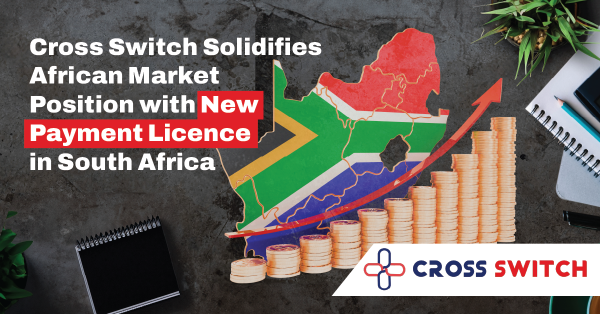
Cross Switch Solidifies Market Position With New Payment Licence in South Africa

Location: Business
Cross Switch

Cross Switch (www.Cross-Switch.com), a leading provider of innovative payment solutions, has reached a significant milestone by securing its own Third-Party Payment Processor (TPPP) licence.

The TPPP, issued by the Payments Association of South Africa (PASA) and sponsored by Absa, is a regulatory status that strengthens Cross Switch's position in the payments ecosystem. This achievement complements Cross Switch's recent certification as a Visa Payment Facilitator (PayFac).

Cross Switch brings a highly flexible payment platform (https://apo-opa.co/3GA0r1Q) to South Africa, enabling business scalability and growth. The company can now independently onboard merchants, fintechs and charities, substantially enhancing its service offering and announcing itself as an essential player in the South African payments landscape.

By obtaining an all-important TPPP licence, Cross Switch has reinforced its commitment to delivering quality, compliant and flexible payment solutions tailored specifically for South Africa's private and charitable sectors.

Cross Switch's entry as a licensed provider brings an adaptable API that allows South African merchants to transact seamlessly on the African continent, including in key markets such as South Africa, Kenya, Morocco and Ivory Coast. For merchants looking to expand into Latin America, Cross Switch also offers Argentina, Brazil, Mexico and Chile — with new countries, both in Africa and in other emerging markets, to be announced very soon!

“This is a vital step in expanding our network and strengthening our presence across the continent,” said Mark Chirnside, CEO of Africa, Cross Switch. “By enabling local merchants with multiple payment options, we're empowering African businesses with the tools to reach broader markets and unlock growth opportunities.”

Cross Switch now enables South African businesses to confidently target rapid expansion and deeper market penetration through frictionless access to local and international payment methods via its flexible API (CS+). The single API empowers merchants to accept payments across Africa and LATAM, and accept the local payment methods.

Cross Switch's immediate future in South Africa involves accelerating merchant onboarding. Contracts already signed represent a client base exceeding 1,000 merchants in South Africa. To complement over 1,000 merchants already using CS+ on the Continent.

Securing this licensing is a significant step forward in the Cross Switch journey. The company strives to realise its vision of delivering modern payment solutions that meet the varied needs of merchants and non-profits. The company's highly flexible payment platform drives financial inclusion and business scalability.

The company is also committed to expanding rapidly, enhancing its payment methods, and integrating advanced reconciliation engines — all underpinned by rigorous fraud prevention and risk management systems.

“Investing in South Africa is a strategic priority for Cross Switch,” said Tim Davis, Group CEO of Cross Switch. “We're resourcing up locally to ensure we're ready to meet growing demand, and this licence and certification enable us to deliver world-class payment services that are both agile and scalable.”

Cross Switch invites businesses interested in exploring robust and flexible payment solutions to connect directly at https://apo-opa.co/4jrGOrw to learn how its tailored offerings can support and amplify their operational ambitions.

Distributed by APO Group on behalf of Cross Switch.

Contact
South Africa: (+27) 21 205 5818
Luxembourg: (+352) 2088 1454
https://apo-opa.co/4jrGOrw

About Cross Switch:
Cross Switch is a payments technology company founded in 2022, operating across emerging markets, with active operations in South Africa, Kenya, Morocco, Ivory Coast and across Latin America. It provides flexible, secure and scalable solutions that support both local and cross-border transactions, helping merchants, fintechs and non-profits expand their reach and streamline their operations. Cross Switch is committed to driving financial inclusion and growth through collaboration, robust infrastructure, high service levels and a strong focus on emerging market needs.

Media files
Cross Switch
Download logo
Read moreCross Switch Solidifies Market Position With New Payment Licence in South Africa
23 April 2025

Merck Foundation CEO Meets the 125 Winners From 36 Countries- “More Than a Mother” and “Diabetes and Hypertension” Media Awards 2024, Announced in Partnership With the First Ladies of Africa

Location: News
Merck Foundation

  • Merck Foundation CEO announced call for application of 2025 Merck Foundation Media Recognition Awards in partnership with African First Ladies - apply now at submit@merck-foundation.com 

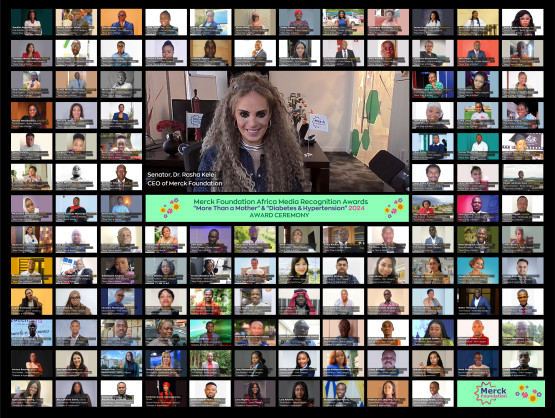
Merck Foundation (www.Merck-Foundation.com), the philanthropic arm of Merck KGaA Germany, in partnership with the First Ladies of Africa, proudly announced the Winners of their Merck Foundation Africa Media Recognition Awards 2024 under the categories “More Than a Mother” and “Diabetes and Hypertension”. 

The Awards Ceremony was conducted virtually to honor and celebrate the outstanding contributions of all the winning media professionals. The winners were warmly acknowledged by Senator Dr. Rasha Kelej, CEO of Merck Foundation and President of the “More Than a Mother” campaign. 

Senator, Dr. Rasha Kelej expressed, “I am truly happy to announce the winners of our Media Awards, together with my dear sisters, The First Ladies of Africa, who are also the Ambassadors of the Merck Foundation ‘More Than a Mother' Campaign. This year, we are delighted to celebrate 125 outstanding winners from 36 countries. It brings me joy to see such impressive participation not only from across Africa but also from several Asian and Latin American countries. Congratulations to all our incredible winners! 

It is a true pleasure to welcome you all as Merck Foundation Alumni. Let's continue to work together to raise awareness about critical social and health challenges, be the voice of the voiceless, and create culture shift in our communities.” 

Merck Foundation Media Awards launched in 2017, are announced annually, with over 640 Winners from 52 countries celebrated to date. 

The theme of the “More Than a Mother” Media Awards is to raise awareness about important social issues like: Breaking Infertility Stigma, Supporting Girl Education, Women Empowerment, Ending Child Marriage, Ending Female Genital Mutilation and/or Stopping Gender-Based Violence. The theme of the “Diabetes and Hypertension” Media Awards is to Promote a Healthy Lifestyle and raise awareness about prevention and early detection of Diabetes and Hypertension.  

The Merck Foundation CEO also launched the Call for Applications for the 2025 Media Awards. “I am pleased to invite entries for the Merck Foundation Media Recognition Awards 2025 – “More Than a Mother” & “Diabetes and Hypertension”, in partnership with the African First Ladies. I look forward to receiving another outstanding round of impactful entries this year as well.” Said Senator Dr. Rasha Kelej.  

Winners of Merck Foundation "More Than a Mother" Media Recognition Awards 2024  

Here are the winners from West African Countries in partnership with The First Lady of the Republic of The Gambia, H.E. Mrs. FATOUMATTA BAH-BARROW; and The First Lady of the Republic of Sierra Leone, H.E. Dr. FATIMA MAADA BIO:  

PRINT CATEGORY WINNER 

  • Jennifer Ambolley, The Chronicle, Ghana (First Position) 
  • Mackie Muctarr Jalloh, News Times Daily, Sierra Leone (Second position) 
  • Alao Abiodun, The Nation, Nigeria (Second position) 

ONLINE CATEGORY WINNERS 

  • Dzifa Tetteh Tay, The Spectator, Ghana (First Position) 
  • Laudia Sawer, Ghana News Agency, Ghana (First Position) 
  • Nyima Sillah, The Voice, The Gambia (Second Position) 
  • Isatou Ceesay, The Gambia Point, The Gambia (Third Position) 
  • Abigail Arthur, Citi Newsroom, Ghana (Third Position) 
  • Odimegwu Onwumere, The Nigerian Voice, Nigeria (Third Position) 

RADIO CATEGORY WINNER 

  • Mavis Offei Acheampong, GBC Radio, Ghana (First Position) 
  • Joyce Kantam Kolamong, GBC Radio, Ghana(Second Position) 
  • Zainab Sunkary Koroma, Star Radio, Sierra Leone (Third Position) 

MULTIMEDIA CATEGORY WINNERS 

  • Tolulope Adeleru-Balogun, News Central TV, Nigeria (First Position) 
  • Alieu Ceesay, QTV, The Gambia (Second Position) 
  • Mona Lisa Frimpong, Joy News, Ghana (Third Position) 

Here are the Winners from Southern African Countries in partnership with The First Lady of the Republic of Malawi, H.E. Mrs. MONICA CHAKWERA; The First Lady of the Republic of Zimbabwe, H.E. Amai Dr. AUXILLIA MNANGAGWA: 

PRINT CATEGORY WINNERS 

  • Precious Kumbani, The Nation, Malawi (First Position) 
  • Gresham Ngwira, Freelancer, Malawi (Second Position) 
  • Simon Muntemba, Daily Nation, Zambia (Second Position) 
  • Charlotte Nambadja, The Namibian, Namibia (Third Position) 
  • Silence Mugadzaweta, The Standard, Zimbabwe (Third Position) 

ONLINE CATEGORY WINNERS 

  • Alain Kabinda, Daily News Agency, Zambia (First Position) 
  • Catherine Murombedzi, Freelancer, Zimbabwe (First Position) 
  • Alick Ponje, The Times, Malawi (second Position) 
  • Wallace Mawire, Pan African Visions, Zimbabwe (Second Position) 
  • Hamu Madzedze, 365 Health Diaries, Zimbabwe (Third Position) 
  • Kundai Michael Magoronga, Chronicle, Zimbabwe (Third Position) 
  • Mlondi Mkhize, Briefly News, South Africa (Third Position) 

RADIO CATEGORY WINNERS 

  • Glendah Fadzai Takachicha, Capitalk FM, Zimbabwe (First Position) 
  • Tina Nyirenda, Smooth FM, Zambia (Second Position) 
  • Sylviah Chisi, Trans World Radio, Malawi (Second Position) 
  • Nyasha Mandimutsira, Capitalk FM, Zimbabwe (Third Position) 
  • Perina N. Wahara, PL FM, Malawi (Third Position) 

MULTIMEDIA CATEGORY WINNERS 

  • Keneilwe Pono, YTV, Botswana (First Position) 
  • Taati Niilenge, The Namibian, Namibia (Second Position) 
  • Lame Lucas, YTV, Botswana (Third Position) 

Here are the winners from East African Countries: 

PRINT CATEGORY WINNERS 

  • Elizabeth Angira, People Daily, Kenya (First Position) 
  • Marco Maduhu, Nipashe, Tanzania (Second Position) 
  • Margaret Maina, Nation Media, Kenya (Second Position) 
  • Beatrice Philemon Mukocho, The Guardian, Tanzania (Third Position) 
  • Vitus Audax, The Guardian, Tanzania (Third Position) 

ONLINE CATEGORY WINNERS 

  • Kamau Maichuhie, Nation Online, Kenya (First Position) 
  • Isabella Maua Chemosit, Freelancer, Kenya (Second Position) 
  • Anne Robi, Daily News, Tanzania (Second Position) 
  • Nteza Michael, UG Standard, Uganda (Third Position) 
  • Benjamin Takpiny, Anadolu Agency, South Sudan (Third Position) 
  • Ayele Addis Ambelu, Ethiopian Mass Media Action News, Ethiopia (Third Position) 

RADIO CATEGORY WINNERS 

  • Caren Waraba Sisya, Radio Citizen, Kenya (First Position) 
  • Mamer Abraham Kuot, Voice of America, South Sudan, (Second Position) 
  • Mwanaisha Makumbuli, Highlands FM, Tanzania (Second Position) 
  • Fatuma Mustapha Mtemangani, Pambazuko FM, Tanzania (Third Position) 
  • Daniel Byiringiro, Flash FM, Rwanda (Third Position) 

MULTIMEDIA CATEGORY WINNER 

  • Rose Wangui, NTV Kenya, Kenya (First Position) 
  • Andrew Juma, TV47, Kenya (Second Position) 
  • Leonard Kigozi  and Isabel Nakirya, CGTN Africa, Uganda (Third Position) 
  • Mackriner Siyovelwa, Crown Media, Tanzania (Third Position) 

Here are the winners from French Speaking African Countries in partnership with The First Lady of the Republic of Burundi, H.E. Madam ANGELINE NDAYISHIMIYE; The First Lady of Democratic Republic of the Congo, H.E. Madam DENISE NYAKERU TSHISEKEDI: 

PRINT CATEGORY WINNER 

  • Issa Moussa, Niger Times, Niger (First Position) 
  • Koami Agbetiafa, Niger Inter Press Group, Niger (Second Position) 

ONLINE CATEGORY WINNERS 

  • AZODODASSI Mêmèdé Ambroisine, Savoir News, Togo (First Position) 
  • Julio Gada, Global News, Benin (Second Position) 
  • Boris Esono Nwenfor, Pan African Visions, Cameroon (Third Position) 
  • Bakari Guèye, Initiatives News, Mauritania (Third Position) 
  • Frimo Koukou Djipro, Lelus, Côte d'Ivoire (Third Position) 

RADIO CATEGORY WINNERS 

  • Remy RUKUNDO, Radio TV Buntu, Burundi (First Position) 
  • Magnus MFURANZIMA, ISÔKO FM, Burundi (First Position) 
  • Mame Mbagnick DIOUF, Radio Oxyjeunes, Senegal (Second Position) 
  • Tanko Worou, Radio SU TII DERA, Benin (Second Position) 
  • Moussa KONE, Radio Channel 2, Mali (Third Position) 

MULTIMEDIA CATEGORY WINNERS 

  • Matthias KABUYA TSHILUMBA, RTDK, DRC (First Position) 

Here are the winners from Portuguese Speaking African Countries in partnership with The First Lady of the Republic of Cabo Verde, H.E. Dr. DÉBORA KATISA CARVALHO: 

ONLINE CATEGORY WINNERS 

  • Edisângela Tavares, Expresso das Ilhas, Cabo Verde (First Position) 
  • Sheilla Ribeiro, Sociedade, Cabo Verde (Second Position) 

RADIO CATEGORY WINNERS 

  • Teresa Monteiro Pinto, Rádio Televisão de Cabo Verde, Cabo Verde (First Position) 

MULTIMEDIA CATEGORY WINNERS 

  • Ângelo Semedo, Deutsche Welle, Cabo Verde (First Position) 

Merck Foundation "Diabetes & Hypertension" Media Recognition Awards 2024 

Here are the winners from West African Countries in partnership with The First Lady of the Republic of The Gambia, H.E. Mrs. FATOUMATTA BAH-BARROW; and The First Lady of the Republic of Sierra Leone, H.E. Dr. FATIMA MAADA BIO:  

PRINT CATEGORY WINNER 

  • Agnes Opoku Saprong, Ghanaian Times, Ghana (First Position) 
  • Patience Ivie Ihejirika, Leadership Newspaper, Nigeria (Second Position) 

ONLINE CATEGORY WINNERS 

  • Muhammed Lamin Touray, Freelancer, The Gambia (First Position) 
  • Prince Owusu Asiedu, Adom Online, Ghana (Second Position) 
  • Lara Adejoro, The Punch, Nigeria (Third Position) 

RADIO CATEGORY WINNERS 

  • Godwin Awuni Anafo, Odadee Radio, Ghana (First Position) 

MULTIMEDIA CATEGORY WINNER 

  • Emmanuel Dzivenu Seyram Abla De-Souza, Joy TV, Ghana (First Position) 
  • Ezedimbu Karen Ogomegbunem, Africa Independent Television, Nigeria, (Second Position) 
  • Lois Abba Sambo, Abuja Broadcasting Corporation, Nigeria (Third Position) 
  • Akua Oforiwa Darko, TV3, Ghana (Third Position) 

Here are the Winners from Southern African Countries in partnership with The First Lady of the Republic of Malawi, H.E. Mrs. MONICA CHAKWERA; The First Lady of the Republic of Zambia, H.E. Mrs. MUTINTA HICHILEMA; The First Lady of the Republic of Zimbabwe, H.E. Amai Dr. AUXILLIA MNANGAGWA: 

PRINT CATEGORY WINNER 

  • Nancy Kefilwe Ramokhua, The Patriot, Botswana (First Position) 
  • Matilda Chimwaza Majawa, Times Group, Malawi (Second Position) 

ONLINE CATEGORY WINNERS 

  • June Shimuoshili, Unwrap Online, Namibia (First Position) 
  • Tendai Chisiri, Sport Way News Net, Zimbabwe (Second Position) 
  • Shireen van Wyk, Shay Blogger, Namibia (Third Position) 
  • Prince Kurupati, Pan African Visions, Zimbabwe (Third Position) 

RADIO CATEGORY WINNERS 

  • Elvis Howahowa, Times Radio, Malawi (First Position) 
  • Stella Mlotha, Trans World Radio, Malawi (Second Position) 

Here are the winners from East African Countries: 

PRINT CATEGORY WINNER 

  • Lucy Johnbosco, Mwananchi, Tanzania (First Position) 
  • Christina Mwakangale, Nipashe, Tanzania (Second Position) 

ONLINE CATEGORY WINNERS 

  • Joan Mbabazi, The New Times, Rwanda (First Position) 
  • Leon Lidigu, Nation Online, Kenya (Second Position) 
  • Namwalo Daniel Absalom, Kenya News Agency, Kenya (Third Position) 
  • Angela Kezengwa, Citizen Digital, Kenya (Third Position) 
  • Veronica Mrema, M24 Tanzania, Tanzania (Third Position) 

RADIO CATEGORY WINNERS 

  • Kintu Khalid, Radio Simba, Uganda (First Position) 
  • Asha Bekidusa, Bahari FM, Kenya (Second Position) 

MULTIMEDIA CATEGORY WINNER 

  • Walter Mwesigye, NTV, Uganda (First Position) 
  • Edvesta Tarimo, Tumaini Media, Tanzania (Second Position) 

Here are the winners from French Speaking African Countries in partnership with The First Lady of the Republic of Burundi, H.E. Madam ANGELINE NDAYISHIMIYE; and The First Lady of Democratic Republic of the Congo, H.E. Madam DENISE NYAKERU TSHISEKEDI: 

PRINT CATEGORY WINNERS 

  • Konan N'Guessan Attoumgbre Joseph, La Retraite Active, Côte d'Ivoire (First Position) 
  • Nkurunziza Moise, Le Renouveau, Burundi (Second Position) 

ONLINE CATEGORY WINNERS 

  • Bahwa Ferdinand, Le Journal Africa, Burundi (First Position) 
  • Abdoulaye Ouédraogo, Queen Mafa, Burkina Faso (Second Position) 
  • Richard Manirakiza, l'Agence Burundaise de Presse, Burundi (Second Position) 
  • Mapote Gaye, Infomedia27, Senegal (Second Position) 
  • Atha Menssan Woffa Assan, Focus Infos, Togo (Third Position) 
  • Catherine Aimée Biloa, Échos Santé, Cameroon (Third Position) 
  • Nadège Omoladé SANNY, SRTB Online, Benin (Third Position) 

RADIO CATEGORY WINNERS 

  • MVUYEKURE Jean Claude, Radio TV Buntu, Burundi (First Position) 
  • Abdoul Razak Sani Oumarou, Radio Saraounia Maradi, Niger (Second Position) 
  • Kabamba Ngalamulume Fabrice, Radio Télévision de l'éducation (RTEDUC), DRC (Third Position)  

MULTIMEDIA CATEGORY WINNER 

  • Chris IRAMBONA, Radio Television Buntu, Burundi (First Position) 

Here are the winners from ASIAN Countries: 

PRINT CATEGORY WINNER 

  • Parikshit Nirbhay, Amar Ujala, India (First Position) 
  • Revathi Murugappan, Star Health, Malaysia (Second Position) 
  • Pooja Biraia, The Week, India (Third Position) 

ONLINE CATEGORY WINNERS 

  • Rashe Zoe Sophia B Piquero, Cebu Daily News, Philippines (First Position) 
  • Roshan Bhandari, Medicoliterature, Nepal (Second Position) 
  • Crystal Chow, Undark Magazine, China (Third Position) 

Here are the winners from LATIN AMERICA Countries: 

ONLINE CATEGORY WINNERS 

  • Adriana Becerra, Agencia Brunch, Mexico (First Position) 
  • Rafaela Polo, UOL, Brazil (Second Position) 

MULTIMEDIA CATEGORY WINNER 

  • Roxana Fabiola Lopresti, Channel 9 Televida, Argentina (First Position) 
  • Ana Paula Pedrosa, R7, Brazil (Second Position) 

Details of Merck Foundation Media Awards 2025: 

1. Merck Foundation Africa Media Recognition “More Than a Mother” Awards 2025 

Theme for the awards: Breaking Infertility Stigma, Supporting Girl Education, Women Empowerment, Ending Child Marriage, Ending FGM, and/or Stopping GBV at all levels.  

Who can apply: Journalists from Print, Radio, Online, and Multimedia platforms from the following groups:  

  • Southern African Countries  
  • West African Countries  
  • East African Countries 
  • French Speaking African Countries 
  • Portuguese Speaking African Countries 

Submission deadline: 30th September 2025. 

2. Merck Foundation Media Recognition “Diabetes & Hypertension” Awards 2025 

Theme for the awards: Promoting a healthy lifestyle and raising awareness about prevention and early detection of Diabetes and Hypertension.  

Who can apply: Journalists from Print, Radio, Online, and Multimedia platforms from the following groups:  

  • Southern African Countries  
  • West African Countries  
  • East African Countries 
  • French Speaking African Countries 
  • Portuguese Speaking African Countries 
  • Latin American Countries 
  • Asian Countries 

Submission deadline: 30th October 2025. 

All entries are to be submitted to submit@merck-foundation.com.

Distributed by APO Group on behalf of Merck Foundation.

Contact details:
Mehak Handa
Community Awareness Program Manager
+91 9310087613 / +91 9319606669
mehak.handa@external.merckgroup.com

Join the conversation on our social media platforms below and let your voice be heard! 
Facebook:
 https://apo-opa.co/4cLhp9K
X: https://apo-opa.co/3EtS73f
YouTube: https://apo-opa.co/4cUG7o7
Instagram: https://apo-opa.co/3GnWcqj
Threads: https://apo-opa.co/3EvXLlq
Flickr: https://apo-opa.co/42ZoEr6
Website: www.Merck-Foundation.com

About Merck Foundation:  
The Merck Foundation, established in 2017, is the philanthropic arm of Merck KGaA Germany, aims to improve the health and wellbeing of people and advance their lives through science and technology. Our efforts are primarily focused on improving access to quality & equitable healthcare solutions in underserved communities, building healthcare & scientific research capacity, empowering girls in education and empowering people in STEM (Science, Technology, Engineering, and Mathematics) with a special focus on women and youth. All Merck Foundation press releases are distributed by e-mail at the same time they become available on the Merck Foundation Website.  Please visit www.Merck-Foundation.com to read more. Follow the social media of Merck Foundation: Facebook (https://apo-opa.co/4cLhp9K), X (https://apo-opa.co/3EtS73f), Instagram (https://apo-opa.co/3GnWcqj), YouTube (https://apo-opa.co/4cUG7o7), Threads (https://apo-opa.co/3EvXLlq) and Flickr (https://apo-opa.co/42ZoEr6). 

The Merck Foundation is dedicated to improving social and health outcomes for communities in need. While it collaborates with various partners, including governments to achieve its humanitarian goals, the foundation remains strictly neutral in political matters. It does not engage in or support any political activities, elections, or regimes, focusing solely on its mission to elevate humanity and enhance well-being while maintaining a strict non-political stance in all of its endeavors. 

Media files
Merck Foundation
Download logo
Read moreMerck Foundation CEO Meets the 125 Winners From 36 Countries- “More Than a Mother” and “Diabetes and Hypertension” Media Awards 2024, Announced in Partnership With the First Ladies of Africa
23 April 2025

Atomic Alliances: China’s Strategic Push Into Africa’s Nuclear Energy Sector

Location: News
African Energy Chamber

China is rapidly scaling up its energy diplomacy in Africa, with nuclear cooperation emerging as a cornerstone of its broader strategic agenda. On April 8, South Africa's Nuclear Energy Corporation signed a Memorandum of Understanding (MoU) with the China National Nuclear Corporation (CNNC) during an official visit to China led by South Africa's Electricity Minister, Dr. Kgosientsho Ramokgopa.

The agreement aims to revive South Africa's nuclear fuel cycle, accelerate the deployment of small modular reactors and promote collaboration on advanced fuels such as high-assay low-enriched uranium. With strong government support for nuclear power but limited domestic financing, South Africa is seeking international partners to inject capital and technology while maintaining state ownership of key infrastructure.

Minister Ramokgopa's working visit to China also aimed to find solutions to South Africa's energy insecurity and loadshedding. Central to this effort is the proposed life extension of the SAFARI-1 reactor at the Pelindaba nuclear research center, which is scheduled for retirement in 2030. Plans for a new multi-purpose reactor are already underway with R1.2 billion ($63.6 million) in seed funding allocated, but further investment is needed to move the project forward. This underscores the critical role of sustained nuclear investment in securing South Africa's long-term energy resilience and reducing dependence on aging infrastructure.

China's Expanding Footprint

China's ambitions in Africa's nuclear sector extend beyond South Africa. At the 2024 Forum on China-Africa Cooperation (FOCAC) in Beijing, China launched the China-Africa Forum on the Peaceful Use of Nuclear Technology, as part of its 2025-2027 Beijing Action Plan. The move reinforced China's long-term goal to become Africa's premier nuclear energy partner. With 53 of 54 African nations represented at FOCAC – including 51 Heads of State – the event provided a powerful platform for Beijing to promote its nuclear agenda and expand its diplomatic and technical reach, while highlighting how Africa is leveraging nuclear energy to meet its growing power demands.

For Africa, nuclear power presents a unique opportunity to address the continent's urgent energy access gap while advancing long-term sustainability. Nuclear offers baseload electricity with zero carbon emissions, making it well-suited to complement intermittent renewables like solar and wind. Small modular reactors, in particular, are seen as a viable solution for remote or off-grid regions due to their scalability, smaller footprint and enhanced safety features. With growing populations and rising industrial demand, several African nations view nuclear power as a low-carbon, scalable pathway to energy security and broader socioeconomic development.

Nuclear Expansion Across Africa

Currently, Africa's nuclear energy development is concentrated in six countries – Egypt, Ghana, Kenya, Morocco, Nigeria and South Africa. Of these, four have recently signed nuclear cooperation agreements with China. In September 2024, Nigeria entered high-level discussions with China on peaceful nuclear energy cooperation, covering the full project lifecycle – from research and training to construction and plant decommissioning. Earlier that year, Nigeria also signed an MoU with the CNNC aimed at operationalizing nuclear power plants by the 2030s. Ghana followed suit with a deal to deploy China's Hualong One reactor, while Kenya continues to pursue its longstanding 2015 agreement with China to develop a 1,000 MW plant by 2034.

The International Atomic Energy Agency projects a 58% increase in nuclear energy use in Africa by 2030, with a tenfold increase by 2050. With more than 600 million people on the continent lacking electricity access, China's nuclear partnerships are positioned to close critical power gaps while supporting shared decarbonization goals.

Against this backdrop, African Energy Week (AEW) 2025: Invest in African Energies serves as a pivotal platform for advancing nuclear energy collaboration between Africa, China and other global partners. Building on existing partnerships and recent MoUs, AEW will facilitate high-level discussions on technology transfer, investment frameworks and regulatory readiness to accelerate nuclear deployment in key African markets. These conversations will align national nuclear ambitions with China's global expertise, ensuring that energy security, sustainability and sovereignty are at the core of future collaborations.

AEW: Invest in African Energies is the platform of choice for project operators, financiers, technology providers and government, and has emerged as the official place to sign deals in African energy. Visit www.AECWeek.com for more information about this exciting event.

Distributed by APO Group on behalf of African Energy Chamber.

Media files
African Energy Chamber
Download logo
Read moreAtomic Alliances: China’s Strategic Push Into Africa’s Nuclear Energy Sector
22 April 2025

MEST Africa and Mastercard Foundation Announce Selection of 12 Companies for Second Cohort of EdTech Fellowship in Ghana

Location: Business
The Meltwater Entrepreneurial School of Technology (MEST Africa)

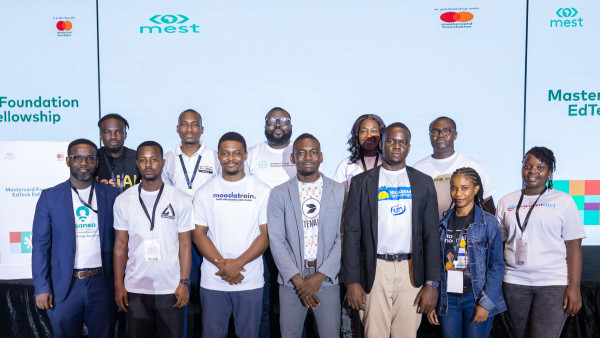
MEST Africa (www.Meltwater.org), in partnership with the Mastercard Foundation, has announced its second cohort of 12 innovative companies for the Mastercard Foundation EdTech Fellowship in Ghana. This six-month entrepreneurship acceleration program is dedicated to supporting Africa's most promising EdTech ventures by equipping them with mentorship, funding, and expertise in the science of learning. These newly selected companies are set to scale their groundbreaking solutions and address pressing educational challenges across Ghana.

The Second cohort builds on the success of the first cohort of 12 EdTech Companies, whose solutions impacted over 136,798 learners during the period of acceleration, underscoring the Fellowship's ability to drive transformative change.

“We are thrilled to welcome the second cohort of the Mastercard Foundation EdTech Fellowship,” said Angela Duho, Program Manager at MEST Africa. “In Ghana, EdTech is not just about innovation—it's about creating equal opportunities for every student, no matter where they live. It empowers teachers with the tools they need to inspire, and it prepares our youth for a future where digital skills are essential. The first cohort has already shown us what's possible, and we're confident that these new Fellows will continue to transform education and unlock potential across the country.”

The 12 EdTech companies selected for the 2025 cohort demonstrated strengths in [please add here] that point to Ghana's educational needs. Over the next six months, they will benefit from comprehensive support, including expert mentorship, access to funding, and specialized training, enabling them to scale their solutions effectively and sustainably.

The EdTech companies selected by MEST Africa for the 2025 Mastercard Foundation EdTech Fellowship are:

  1. TECHAiDE (https://TECHAiDE.Global/) is a social enterprise committed to enhancing education, youth development, and healthcare throughout Africa. Since 2011, they have collaborated with global partners to deliver practical, affordable, and lasting solutions that uplift individuals, strengthen communities, and support institutions in creating brighter futures
  1. MooslaTrain (https://apo-opa.co/3S08HuA) is redefining math education in Ghana by sparking curiosity and confidence in students. This is done through community-driven math clubs and digital learning tools that make math approachable and fun, equipping young learners with the skills to thrive in STEM and beyond.
  1. Scribble Works Publishing House (https://ScribbleWorks.carrd.co/) is passionate about enriching education in Africa by providing educators and students with affordable, curriculum-aligned materials and interactive digital tools, fostering engaging learning experiences backed by actionable insights.
  1. InovTech STEM Center is an innovation hub devoted to bringing STEM education to underserved communities. Through hands-on robotics and coding programs—like STEM4Her, Powered Girl, and Powered Boy—they inspire students and teachers to develop skills that open doors to new opportunities.
  1. STEMAIDE (www.STEMAIDE.com) is focused on reshaping education in Africa by nurturing problem-solving, creativity, and entrepreneurial spirit in young people. STEMAIDE strives to prepare the next generation with the tools and mindset to succeed in an ever-changing world.
  1. Nikasemo Technologies (www.Nikasemo.com) is dedicated to enhancing the classroom experience in basic schools with their software and hardware solutions that streamline school operations and create dynamic, engaging learning environments that help students reach their full potential.
  1. Jesi AI (https://AI.UseJesi.com/) is a generative AI assistant supporting teachers in Ghana's junior and senior high schools. By simplifying the creation of high-quality, curriculum-aligned lesson plans and materials, Jesi AI saves educators time while also acting as a virtual tutor to guide students and track their growth.
  1. Metaschool AI (https://MetaschoolApp.com/) is an educational app designed with BECE and WASSCE students in Ghana in mind. Offering interactive video lessons from top instructors, Metaschool provides a flexible, student-paced learning platform that makes academic success more achievable.
  1. Maxim Nyansa Foundation (https://MaximNyansa.com/) empowers high school students and teachers across Africa with vital IT infrastructure and educational software. By tapping into open-source solutions, Maxim Nyansa improves access to quality education and works to close the digital gap.
  1. The Ghana Olympiad Academy (https://GhanaOlympiadAcademy.com/), through its Academic Talent Development Programme, brings hands-on STEM learning to learners in Ghana. They nurture talent in literacy, numeracy, and STEM, preparing young minds for leadership and innovation on a global stage.
  1. Asah Maker-Space is passionate about automation, robotics, 3D printing, coding, and construction. Asah Makerspace's team of skilled educators and tech enthusiasts empowers the next generation of creators through immersive, practical learning experiences.
  1. Craft Education Technologies (www.CraftEducation.io) bridges the gap between therapists, parents, and teachers to create a seamless support system for children with behavior and learning challenges, including autism. This collaborative model ensures that every child receives the individualized attention they need to succeed.

“The Mastercard Foundation looks to support the acceleration of EdTech solutions that reach all, including those out-of-school young people who are constantly left out of the education ecosystem. For it is when we design with the end user in mind that the business case for the solutions is more scalable, sustainable and impactful. Our collaboration with MEST Africa is to transform education in Ghana through technology-enabled learning”, added Rodwell Mangisi, the Acting Director of the Mastercard Foundation Centre for Innovative Teaching and Learning.

Through the Mastercard Foundation EdTech Fellowship, this cohort will embark on a transformative journey, gaining mentorship from experts in education innovation, sustainability, and scale, access to courses on the science of learning, and equity-free grants. This robust support aims to scale their solutions and elevate educational outcomes for millions across Ghana and Africa.

For more information about the Mastercard Foundation EdTech Fellowship and MEST Africa initiatives, visit www.Meltwater.org. 

Distributed by APO Group on behalf of The Meltwater Entrepreneurial School of Technology (MEST Africa).

For media inquiries, contact: 
Francis Akondor 
Marketing and Recruitment Manager, MEST Africa 
francis@meltwater.org  

About MEST Africa:
Established in 2008, the Meltwater Foundation is the non-profit arm of the global media intelligence company, Meltwater. Its mission is to create job opportunities and drive economic growth in Africa through software entrepreneurship, primarily via the Meltwater Entrepreneurial School of Technology (MEST Africa). Based in Accra, Ghana, MEST offers a one-year, specialised tech entrepreneurial training program for top talent from over 22 countries, including Nigeria, Kenya, South Africa, and Senegal. Additionally, MEST invests in early to growth-stage startups.

In 2020, MEST Programs was launched to forge partnerships with other foundations and organisations that share our goal of creating wealth and jobs in Africa through digital skills training and startup acceleration. MEST Africa has trained over 2,000 entrepreneurs and invested in more than 90 startups across various industries throughout Africa.

Visit www.Meltwater.org to learn more.

About the Mastercard Foundation:
The Mastercard Foundation is a registered Canadian charity and one of the largest foundations in the world. It works with visionary organisations to advance education and financial inclusion to enable young people in Africa and Indigenous youth in Canada to access dignified and fulfilling work. Established in 2006 through the generosity of Mastercard when it became a public company, the Foundation is an independent organisation separate from the company, with offices in Toronto, Kigali, Accra, Nairobi, Kampala, Lagos, Dakar, and Addis Ababa. Its policies, operations, and program decisions are determined by the Foundation's Board of Directors and leadership.

For more information on the Foundation, please visit www.MastercardFDN.org

About the Mastercard Foundation EdTech Fellowship:
The Mastercard Foundation EdTech Fellowship is an entrepreneurship acceleration program designed to support promising, African EdTech ventures. Implemented in partnership with innovation hubs and EdTech accelerators across Africa, the Fellowship provides select EdTech companies with critical business and financial support, as well as insight into the science of learning, preparing them for scale, sustainability, and impact. The Mastercard Foundation EdTech Fellowship was launched in 2019 by the Mastercard Foundation through its Centre for Innovative Teaching and Learning with the goal to partner with 12 Tech Hubs to support over 250 EdTech companies and reach at least 1.8 million young people by 2025.

For more information about the Centre for Innovative Teaching and Learning, visit: https://apo-opa.co/42DjLmm or contact: edtechfellowship@mastercardfdn.org   

Media files
The Meltwater Entrepreneurial School of Technology (MEST Africa)
Download logo
Read moreMEST Africa and Mastercard Foundation Announce Selection of 12 Companies for Second Cohort of EdTech Fellowship in Ghana
22 April 2025

Neuman & Esser to Participate at Invest in African Energy Forum in Paris

Location: News
Energy Capital & Power

German technology leader Neuman & Esser will join the upcoming Invest in African Energy (IAE) 2025 forum in Paris, with Nmesoma Francess Okereke, Sales Manager - Flare Gas Recovery Specialist, and Dr. Jiří Rus, Sales Director for Africa, participating in a technical presentation and panel discussion focused on advancing gas monetization and energy efficiency across the continent.

Neuman & Esser brings over a century of expertise in gas compression, flare gas recovery and energy transition technologies. Specializing in high-performance compressor systems and green hydrogen solutions, the company plays a pivotal role in helping nations optimize energy production, reduce emissions and accelerate the shift to sustainable energy systems. By transforming flare gas into usable energy, Neuman & Esser supports operators in meeting environmental and regulatory goals, offering scalable, end-to-end solutions that combine German engineering with on-the-ground expertise to maximize resource value while aligning with global sustainability standards. The company will present on “Flare Gas Utilization – The Importance of Mid-Scale Integrated Gas Commercialization Solutions” at the upcoming forum.

IAE 2025 (www.Invest-Africa-Energy.com) is an exclusive forum designed to facilitate investment between African energy markets and global investors.Taking place May 13-14, 2025 in Paris, the event offers delegates two days of intensive engagement with industry experts, project developers, investors and policymakers. For more information, please visit www.Invest-Africa-Energy.com. To sponsor or participate as a delegate, please contact sales@energycapitalpower.com.
Germany has been significantly expanding its investments in Africa in recent months, particularly in green energy and sustainable projects. The country has pledged €4 billion for green energy initiatives on the continent by 2030 and is advancing hydrogen and gas partnerships through the European Union's Global Gateway initiative. In December 2024, Germany further demonstrated its commitment by investing R5.2 billion in South Africa to support the country's energy transition and strengthen bilateral cooperation.

In Namibia, German investors have partnered on the $10 billion Hyphen Green Hydrogen Project, aiming to utilize the country's abundant solar and wind resources to produce green ammonia for global export. In December 2024, German President Frank-Walter Steinmeier visited Nigeria to discuss the future prospects for German-Nigerian energy collaboration, further solidifying the growing energy ties between Germany and the continent.

The IAE 2025 Forum serves as a crucial platform for connecting global capital and expertise with Africa's burgeoning energy sector. As European and global investors continue to deepen their investments and partnerships across the continent, the forum provides a unique opportunity to further explore collaborative efforts and advance Africa's energy transition. By bringing together key players from the global energy community, IAE 2025 will play a pivotal role in driving sustainable growth and innovation in Africa's energy future.

Distributed by APO Group on behalf of Energy Capital & Power.

Media files
Energy Capital & Power
Download logo
Read moreNeuman & Esser to Participate at Invest in African Energy Forum in Paris
22 April 2025

Verdant Capital Ranked 2nd in Dealmakers Africa League Table for East Africa

Location: News
Verdant Capital

Verdant Capital (www.Verdant-Cap.com) has been ranked second in the Financial Advisers (Transaction Flow) category for East Africa at the 2024 DealMakers AFRICA Awards, under the General Corporate Finance sector. This ranking is the 5th year in the row that Verdant has ranked in the top 3 in the DealMakers Africa East Africa league able, demonstrating the firm's consistent excellence in this market. This accolade highlights the firm's growing influence and consistent performance in East Africa's corporate finance space.

The DealMakers rankings are the authoritative rankings for finance professionals in the African continent, across financial advisory, sponsor services, legal and transaction services / financial due diligence. Awards are among the most prestigious in the inve industry, celebrating firms that demonstrate excellence in advisory services, transaction execution, and overall impact in mergers and acquisitions, capital raising, and other corporate finance activities. Rankings are based on the volume and value of completed deals, with Verdant Capital's second-place ranking reflecting a year of strong strategic advisory and client-focused execution.

In 2024 Verdant Capital, which is also trading under the Verdant IMAP brand, advised on transactions in sectors including financial services, fintech, agriculture, automotive, digital infrastructure and others, in East Africa, West Africa, Southern Africa and South Africa, transacting with corporates and financial investors from across Africa and from around the World.. The firm's deep market knowledge and expertise in mid-market transactions position it as a trusted adviser to companies, investors, and development finance institutions in East Africa and further afield. The firm continues to expand its regional presence, supporting clients with tailored financial solutions that drive meaningful impact across the continent.

Distributed by APO Group on behalf of Verdant Capital.

Media Enquiries:
Verdant Capital:
Orient Mahonisi
T: +27 10 140 3700
E: orient.mahonisi@verdant-cap.com

About Verdant:
Verdant IMAP is a leading investment bank operating on a Pan-African basis and specialising in private capital markets. Verdant IMAP is the IMAP firm for its region; IMAP established in 1973, with 40 partner firms in 50 countries, with over 600 investment bankers and completing over 250 M&A transactions per year is the largest global M&A partnership.  Verdant IMAP is a division of Verdant Capital.  Verdant Capital is the manager of the Verdant Capital Hybrid Fund is investing mezzanine capital into inclusive financial institutions on a pan-African basis. www.Verdant-Cap.com

Media files
Verdant Capital
Download logo
Read moreVerdant Capital Ranked 2nd in Dealmakers Africa League Table for East Africa
16 April 2025

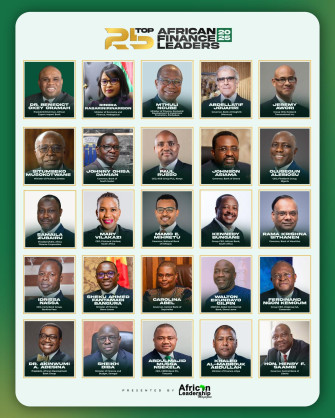
Africa’s Top 25 Finance Leaders for 2025

Location: Business
African Leadership Magazine

African Leadership Magazine (ALM) (www.AfricanLeadershipMagazine.co.uk) is pleased to unveil its highly anticipated Top 25 African Finance Leaders 2025 list — a prestigious editorial recognition that honours excellence, innovation, and transformative leadership within Africa's financial services and economic governance landscape. This year's cohort comprises distinguished finance ministers, central bank governors, CEOs of leading financial institutions, and other influential figures who are shaping the continent's economic architecture through visionary policy direction and exemplary stewardship.

The Top 25 list is a testament to the leaders who are championing fiscal responsibility, financial inclusion, and macroeconomic stability across the continent. These individuals have demonstrated a profound ability to navigate complex economic challenges, implement forward-thinking reforms, and inspire confidence in national and regional economies. Their collective leadership has contributed to enhanced investor confidence, accelerated digital finance adoption, and strengthened institutional frameworks that support inclusive and sustainable development. As Africa continues to assert itself as a dynamic player in the global economy, these leaders are setting the standard for excellence in financial governance, demonstrating the strategic foresight and resilience required to unlock the continent's vast economic potential.

“These finance leaders have not only surmounted formidable challenges but are actively shaping a new era of economic growth, transparency, and resilience,” said Dr. Ken Giami, Publisher & CEO of African Leadership Magazine. “Their bold and visionary leadership is redefining Africa's financial narrative and positioning the continent as a rising global financial powerhouse.”

The selection process follows a rigorous two-step procedure to ensure transparency and credibility. First, nominations are gathered from a global pool of experts in the finance and banking sectors, who identify individuals making significant contributions. Then, our editorial board conducts a thorough review, evaluating candidates based on their leadership, impact, and long-term influence on the African financial landscape. This comprehensive approach ensures that we honor only the most deserving leaders, whose work is truly transforming Africa's financial sector.”

The formal recognition and celebration of these leaders will take place at the African Finance Leadership Forum, scheduled for 22 April 2025 at the United States Capitol Building, Washington D.C., USA, on the margins of the 2025 Spring Meetings of the World Bank Group (WBG) and the International Monetary Fund (IMF).

The ALM Top 25 African Finance Leaders 2025:

  1. Dr. Benedict Okey Oramah – President/Chairman, African Export–Import Bank
  2. Mthuli Ncube – Minister of Finance, Economic Development & Investment Promotion, Zimbabwe
  3. Abdellatif Jouahri – Governor, Bank Al-Maghrib (Morocco)
  4. Jeremy Awori – Group CEO, Ecobank Transnational Inc.
  5. Situmbeko Musokotwane – Minister of Finance, Zambia
  6. Johnny Ohisa Damian – Governor, Bank of South Sudan
  7. Paul Russo – CEO, KCB Group PLC, Kenya
  8. Samaila Zubairu – President/CEO, Africa Finance Corporation
  9. Johnson Asiama – Governor, Bank of Ghana
  10. Olusegun Alebiosu – CEO, FirstBank Group, Nigeria
  11. Rindra Rabarinirinarison – Minister of Economy and Finance, Madagascar
  12. Mary Vilakazi – CEO, Firstrand Limited, South Africa
  13. Mamo E. Mihretu – Governor, National Bank of Ethiopia
  14. Kennedy Bungane – Group CEO, African Bank, South Africa
  15. Rama Krishna Sithanen – Governor, Bank of Mauritius
  16. Idrissa Nassa – CEO, Coris Bank Group, Burkina Faso
  17. Sheku Ahmed Fantamadi Bangura – Minister of Finance, Sierra Leone
  18. Carolina Abel – Governor, Central Bank of Seychelles
  19. Walton Ekundayo Gilpin – MD/CEO, Rokel Commercial Bank, Sierra Leone
  20. Ferdinand Ngon Kemoum – Group CEO, Oragroup SA, Cameroon
  21. Dr. Akinwumi A. Adesina, President, African Development Bank Group
  22. Sheikh Diba – Minister of Finance and Budget, Senegal
  23. Abdulmajid Mussa Nsekela – CEO, CRDB Bank Plc, Tanzania
  24. Khaled Al-Mabrouk Abdullah – Minister of Finance, Libya
  25. Hon. Henry F. Saamoi – Governor, Central Bank of Liberia

Distributed by APO Group on behalf of African Leadership Magazine.

For media inquiries, please contact:
Ehis Ayere
Group General Manager
info@africanleadership.co.uk
+44 23 9265 8276

About African Leadership Magazine:
The African Leadership Magazine, published by the African Leadership Organization (UK), focuses on presenting the best of Africa to a global audience, telling the African story from an African perspective while developing solutions to challenges facing the continent today. We have committed the last 16 years to promoting impactful leadership on the continent and promoting African opportunities globally through an ecosystem of quality Afro-positive content, Africa trade facilitation and market entry solutions, Afro-centric communities and business networking platforms, as well as through public sector training and consulting.

Media files
African Leadership Magazine
Download logo
Read moreAfrica’s Top 25 Finance Leaders for 2025
15 April 2025

Eskom issues tender to accelerate renewable energy deployment

Location: News

Eskom issues tender to accelerate renewable energy deployment

Eskom has issued a call for proposals from experienced companies to establish renewable energy businesses to expedite the deployment of renewable energy solutions.

According to the statement released on Tuesday, Eskom will evaluate applicants based on several criteria, including a demonstrated history of successfully establishing a renewable energy company and the number of public-private partnerships (PPPs) and special purpose vehicles (SPVs) that have created tangible projects. 

The evaluation will also look at expertise in the independent power producer (IPP) business model and financial structuring, technical capabilities, and knowledge of the sector. 

This evaluation process aims to select firms that can effectively contribute to Eskom’s renewable energy initiatives.

The State utility announced that the new subsidiary aims to operate independently from the main Eskom entity, enabling better governance, improved market competitiveness, and enhanced PPPs.

“Agility and efficiency are at the heart of preparing for a competitive marketplace and ensuring we serve our current and future customers with the electricity supply solutions they require,“ said Eskom’s Group Chief Executive, Dan Marokane. 

Marokane stated that Eskom is now one year into its turnaround strategy. 

This strategy aims to not only end load shedding but also transform the utility into a sustainable and competitive company while ensuring a secure supply of electricity.

“To make a meaningful impact in the renewables space, we recognised that the most cost-effective way to do this is to bring in at the start some new skills, thinking and expertise to set our Eskom teams up for success in the business, so through knowledge transfer we can execute strategic initiatives in a competitive market faster and more efficiently. The creation of our renewable energy business also forms part of Eskom’s focus both in this country and internationally to identify the latest developments and strategies to reduce carbon emissions and other air pollutants,” he explained. 

Eskom said it was committed to maintaining a balanced and diversified energy mix. 

This includes utilising existing coal and nuclear power, introducing gas for baseload power, and incorporating renewable energy sources. 

In addition, Eskom aims to implement energy storage systems, such as battery energy storage systems (BESS) and pumped hydro, to ensure overall security of supply and sustainably meet the growing electricity demand in South Africa.

The utility said it has an executable initial pipeline of at least 2GW of clean energy projects by 2026 and has developed a pipeline of more than 20GW of clean energy projects to diversify its energy mix.

Eskom will update the marketplace on the progress of the development of its renewable energy business throughout 2025.

The opportunity to respond to the tender closes on 7 May 2025 at 10 am, and application forms can be found on the Eskom website. The support will be required over 12 months. – SAnews.gov.za

Gabisile
Tue, 04/15/2025 - 10:03

195 views

Read moreEskom issues tender to accelerate renewable energy deployment
15 April 2025

G20 Finance Ministers set to meet in US

Location: News

G20 Finance Ministers set to meet in US

The Group of Twenty (G20) Finance Ministers and Central Bank Governors are set to convene a two-day meeting on the sidelines of the International Monetary Fund (IMF) and World Bank Spring Meetings, taking place in the United States, later this month.

The G20 is an international forum of both developing and developed countries, which seeks to find solutions to global economic and financial issues. 

This meeting is part of the Finance Track under South Africa’s G20 Presidency, which will gather Finance Ministers and Central Bank Governors of G20 member countries, invited countries, and international organisations to discuss global economic challenges, financial stability, and policies aimed at fostering economic growth. 

South Africa’s G20 Presidency commenced on 1 December 2024 and will run until 30 November 2025. It is taking place under the theme: “Solidarity, Equality, and Sustainability.”

The Finance Track is co-chaired by Finance Minister, Enoch Godongwana, and South African Reserve Bank Governor, Lesetja Kganyago. 

G20 members include the world’s major economies, representing 85% of global GDP, 75% of international trade, and two-thirds of the world’s population.

The G20 comprises 19 countries (including Argentina, Australia, Brazil, Canada, China, France, Germany, India, Indonesia, Italy, Japan, Republic of Korea, Mexico, Russia, Saudi Arabia, South Africa, Türkiye, the United Kingdom, and the United States), the European Union, and since 2023, the African Union.

The two-day meeting will take place from 23-24 April 2025, in Washington, D.C.

  • The session will also be livestreamed on the following YouTube channels: https://www.youtube.com/c/NationalTreasuryoftheRepublicofSouthAfrica
  • https://www.youtube.com/user/SAReserveBank - SAnews.gov.za


nosihle
Tue, 04/15/2025 - 11:14

157 views

Read moreG20 Finance Ministers set to meet in US
15 April 2025

Eskom, Exxaro sign agreement to reduce carbon emissions

Location: News

Eskom, Exxaro sign agreement to reduce carbon emissions

Exxaro Resources and Eskom have signed a Memorandum of Understanding (MoU) to collaborate on strategic initiatives, research, and projects aimed at reducing carbon emissions, improving air quality and facilitating the Just Transition.

According to a joint statement, this move is consistent with South Africa’s commitment to achieving the goals of the Paris Agreement, international environmental standards, and national regulatory frameworks.

“The agreement focuses on jointly measuring, managing, and reducing Scope 1, 2, and 3 emissions and potentially investing in innovative technologies to drive decarbonisation. 

“It also emphasises inclusive and focused transition initiatives such as skills development, job creation in green sectors, and stakeholder engagement to ensure climate resilience,” the statement read. 

In addition, the MoU, which was signed on Monday, includes provisions for data sharing and transparent reporting to track progress and ensure accountability.

Exxaro Resources CEO, Ben Magara, believes that this collaboration marks a significant step forward in the company’s commitment to enabling a Just Transition and building a climate-resilient and low-carbon future. 

“By leveraging our deep experience in the diversified mining and energy solutions sectors, we aim to drive innovation that not only decarbonises and reduces air pollution in our operations but also delivers meaningful socio-economic benefits for the communities we serve.

“The collaboration with Eskom is important as we work to accelerate practical and scalable solutions that support South Africa’s energy security and environmental ambitions as part of our purpose of Powering Better lives in Africa and beyond,” Magara said. 

Exxaro is a South Africa-based diversified resources company with a coal business and acquisitive growth prospects in minerals and energy. 

The company stated that the initial focus of the collaboration will be to identify the necessary investments and stakeholders required to develop technology-based solutions for the challenges associated with the transition to a low-carbon economy. 
This effort will align with the country’s Integrated Resource Plan (IRP).

Eskom Group Chief Executive Dan Marokane said both organisations are committed to driving the transition to a more sustainable energy future while ensuring the country’s electricity supply remains secure. 

“This initiative forms part of Eskom’s focus both in this country and internationally to identify the latest developments and strategies to reduce carbon emissions and other air pollutants,” Marokane added. 

Meanwhile, Exxaro stated that it remains steadfast in advancing its Sustainable Growth and Impact strategy by embedding key Environmental, Social, and Governance (ESG) priorities into its operations. 

The company is of the view that through partnerships such as this one, it is well-positioned to become carbon-neutral by 2050.
Meanwhile, Eskom’s Research, Testing & Development (RT&D) business unit will lead this partnership. 

The RT&D is dedicated to finding technology solutions that can be applied primarily within the company to embrace innovation, enhance efficiency and improve operations, improvements related to emissions management, and greenhouse gas (GHG) abatement.

“Eskom remains focused on a balanced and diversified energy mix based on existing coal and nuclear and introducing gas for baseload power, as well as renewables, energy storage systems including battery energy storage systems and pumped hydro, to achieve overall security of supply and to meet South Africa’s growing electricity demand sustainably,” said the power utility. – SAnews.gov.za


Gabisile
Tue, 04/15/2025 - 11:18

111 views

Read moreEskom, Exxaro sign agreement to reduce carbon emissions
14 April 2025

Vuyani Jarana appointed as G20 start-up engagement group

Location: News

Vuyani Jarana appointed as G20 start-up engagement group

The Minister of Small Business Development, Stella Tembisa Ndabeni, has announced the appointment of Vuyani Jarana as Chairperson for the Startup20 Engagement Group for South Africa’s Group of Twenty (G20) Presidency.

In a statement on Monday, the Department of Small Business Development (DSBD) said it has been entrusted with leading South Africa’s Startup20 Engagement Group, one of the officially recognised G20 Engagement Groups.

As Chairperson, Jarana will lead Startup20’s strategic direction, appoint task force chairs, coordinate high-level meetings and events, and guide the development of the Startup20 Policy Communiqué, which will contribute to the official G20 Leaders’ Declaration.

The Minister also appointed 22 On Sloane as the Secretariat of the Startup20 Engagement Group for South Africa’s G20 Presidency. 

Startup20 advocates for startups and micro, small, and medium enterprises (MSMEs) at the G20 level, developing policy recommendations to advance the global startup ecosystem and foster inclusive innovation.

“To support this effort, 22 On Sloane has been appointed as the Country Secretariat for Startup20 during South Africa’s G20 Presidency. Twenty-two (22) On Sloane is Africa’s largest startup campus, playing a pivotal role in advancing the startup and MSME ecosystem across the continent. 

“Twenty-two (22) On Sloane serves as headquarters for the Global Entrepreneurship Network (GEN) Africa, which is represented in 43 African countries, and as the country headquarters of GEN Global which has a presence in 180 countries globally aimed at supporting entrepreneurs to start and scale,” the department said.

As Secretariat, 22 On Sloane will support Jarana to coordinate and manage all Startup20 activities in South Africa, including stakeholder engagements, task force operations, international collaboration efforts, policy drafting, and logistical delivery of the Startup20 agenda. 

The organisation will also facilitate multi-stakeholder dialogues and policy consultations to ensure that Africa’s entrepreneurial voice is firmly embedded in the ensuing global conversations.

According to the department, Jarana brings a wealth of experience to this crucial role, with more than 25 years of leadership in the Information and Communications Technology (ICT) sector. 

A seasoned business transformation leader, Jarana previously served as Group Chief Operating Officer and Chief Executive Officer of Vodacom Business within the Vodacom Group. 

He also held the role of Chief Executive Officer of South African Airways, where he spearheaded critical restructuring efforts.

Currently he is the Founder and CEO of Ilitha Telecommunications, a company dedicated to delivering superfast, affordable broadband to underserved peri-urban and rural communities. 

He also serves as Chairperson of the Council for Scientific and Industrial Research (CSIR), a key institution driving South Africa’s scientific, industrial, and technological innovation agenda.

“His extensive experience and expertise will be invaluable in driving our efforts to promote entrepreneurship and innovation in Africa. He is a respected and seasoned business leader whom I am confident will lead the Startup20 Engagement Group with dedication and focus, ensuring that this serves as a legacy for our country and the ecosystem,” the Minister said.

The G20 is an international forum of both developing and developed countries, which seeks to find solutions to global economic and financial issues. 

South Africa’s G20 Presidency commenced on 1 December 2024 and will run until 30 November 2025. It is taking place under the theme: “Solidarity, Equality, and Sustainability.” - SAnews.gov.za

nosihle
Mon, 04/14/2025 - 15:03
57 views

Read moreVuyani Jarana appointed as G20 start-up engagement group
14 April 2025

G20 Development Working Group meeting to get underway

Location: News

G20 Development Working Group meeting to get underway

The South African Presidency of the Group of Twenty (G20) is this week convening the second Development Working Group (DWG) meeting in the Western Cape.

“The G20 DWG plays a pivotal role in shaping global development priorities, focusing on reducing inequalities, promoting sustainable growth, and strengthening international partnerships,” the Department of Planning, Monitoring and Evaluation said.

Starting on Monday, 14 April and ending on Wednesday, 16 April, the meeting will serve as a platform for in-depth discussions on key development challenges and cooperative solutions.

The G20 is an international forum of both developing and developed countries, which seeks to find solutions to global economic and financial issues. 

South Africa’s G20 Presidency commenced on 1 December 2024 and will run until 30 November 2025. 

The gathering will bring together representatives from G20 member states, invited countries, and international organisations to deliberate on policies that foster inclusive economic growth and sustainable development. 

In alignment with the theme of Solidarity, Equality, and Sustainability, the discussions will focus on three high-level priorities:
•    High-Level Principles on Global Public Goods and Global Public Investment.
•    Mobilising Finance for Development and Means of Implementation.
•    Building Resilience through Universal Social Protection Floors.

The G20 members represent around 85% of the global Gross Domestic Product, over 75% of the global trade, and about two-thirds of the world population.

It comprises 19 countries (Argentina, Australia, Brazil, Canada, China, France, Germany, India, Indonesia, Italy, Japan, Republic of Korea, Mexico, Russia, Saudi Arabia, South Africa, Türkiye, United Kingdom, and United States) and two regional bodies, namely the European Union (EU) and African Union (AU).

The three-day meeting is taking place at the Lord Charles Hotel in Somerset. -SAnews.gov.za


nosihle
Mon, 04/14/2025 - 10:08
6 views

Read moreG20 Development Working Group meeting to get underway
13 April 2025

Small business urged to apply for tourism opportunities

Location: News

Small business urged to apply for tourism opportunities

Small businesses have been encouraged to apply for opportunities provided by the Department of Tourism.

“The Department of Tourism is dedicated to creating an inclusive, sustainable, and resilient tourism economy. We have a variety of programmes with the specific aim of promoting tourism, alleviating poverty and creating jobs,” Tourism Deputy Minister Maggie Sotyu said.

Addressing a stakeholder engagement at the Fezile Dabi District Municipality in the Free State, the Deputy Minister said small businesses face challenges that threaten their survival and growth. 

These include limited access to funding and financial support, skills gap in business management and digital transformation, market access and a lack of exposure to international tourists.

“As the government, our role is to enable and empower small, medium, and micro enterprises (SMMEs) to overcome these barriers and it is our duty to maximise every opportunity to empower these enterprises.

“Embracing sustainable tourism by black-owned enterprises is not just about being part of a global trend, but is a necessity for resilience, competitiveness and profitability,” the Deputy Minister said on Friday.

The department’s Market Access Support Programme offers financial support to small tourism enterprises to exhibit at tourism platforms.

“I want to urge you to visit the Department of Tourism website at www.tourism.gov.za and look at this Market Access Support Incentive Programme. 

“This week we are assisting 49 tourism SMMEs [small, medium, and micro enterprises] to promote their services at the World Travel Market Africa in Cape Town. We also want to encourage you to apply for our Green Tourism Incentive Programme which offers a win-win solution to tourism establishments and our greening objectives,” the Deputy Minister said.

The Green Tourism Incentive Programme is a resource efficiency programme which aims to support tourism enterprises to reduce the cost of investing in energy and water efficient solutions. 

“This incentive can greatly assist a tourism establishment to reduce their electricity and water bills in the long term. The department also established a Tourism Transformation Fund and Tourism Equity Fund to support the transformation efforts in the sector. 

“The Transformation Fund offers a combination of debt finance and grant funding for new and expansion tourism development projects with majority black shareholding,” she said.

For tourist guides, the department has a number of programmes including language training. 

“We recently advertised for youth to apply for tourist guide training in Vredefort Dome and we are currently conducting tourist guide training in Golden Gate National Park. 

“For youth in tourism, the department offers annually a bursary programme and learnership programmes, focusing on professional cooking, wine appreciation and hospitality, targeting youth with a specific interest in tourism,” said the Deputy Minister. -SAnews.gov.za
 

nosihle
Sun, 04/13/2025 - 11:37

70 views

Read moreSmall business urged to apply for tourism opportunities
13 April 2025

Government reiterates commitment to water security

Location: News

Government reiterates commitment to water security

The Deputy Minister of Water and Sanitation, David Mahlobo, has reaffirmed government's commitment to ensuring water security for all South Africans through innovative partnerships and transformative solutions.

“Water is the lifeblood of our nation's development. By combining government's resources with the innovation and expertise of the private sector, particularly through organisations like the Black Business Council in the Built Environment (BBCBE) that champion transformation, we can overcome our water challenges and build a resilient future for all South Africans,” the Deputy Minister said on Friday.

He was addressing the BBCBE Built Environment Indaba at the Gallagher Convention Centre in Midrand, which was taking place under theme: "Built Environment Partnering with Our Government to Deliver Infrastructure Projects through Innovative Funding and Delivery Models.”

The Deputy Minister urged the built environment sector to leverage its expertise and global networks to drive innovation, mentorship, and investment. 

“Water challenges as experienced in most parts of the country require bold and collaborative solutions from all of us. Together, we can harness technology, finance, and partnerships to achieve Sustainable Development Goal (SDG) 6 on clean water and sanitation for all,” he said.

This as the Department of Water and Sanitation remains steadfast in its mission to secure South Africa’s water future. 

Mahlobo’s address underscored the need for unity across government, the private sector, academia, and civil society to transform challenges into opportunities for sustainable growth. -SAnews.gov.za


nosihle
Sun, 04/13/2025 - 10:03
66 views

Read moreGovernment reiterates commitment to water security
11 April 2025

Media industry called to transform ownership patterns

Location: News

Media industry called to transform ownership patterns

With the media industry fighting for its survival amidst the rise of digital media, Deputy Minister in The Presidency, Kenny Morolong, has called on the industry to make deliberate efforts to transform the sector’s ownership patterns.

“Government remains committed to working alongside industry stakeholders to ensure that South Africa's media landscape is inclusive, competitive, and representative of the country's diversity,” Morolong said.

The Deputy Minister was addressing the members of the Print and Digital Media Transformation and Revitalization Steering Committee in Rosebank, Johannesburg, on Friday.

The steering committee was established to drive collaborative efforts towards a transformed media that is inclusive in a digital and multiplatform environment, to sustain and grow the sector’s contribution to the country's Growth Domestic Product (GDP).

The Minister painted a sobering picture of the industry’s current state, noting a dramatic decline in print newspaper (both commercial and local) circulation  - from approximately 45 million copies annually to dwindled numbers that were never imagined before, which is "very worrisome for government."

“The current challenges of operating in the digital environment; excess print, distribution and transport cost; reduction in newspaper subscribers; dwindling circulation figures coupled with reduced advertising budgets, both from corporate and government, have forced publishers to close down, while others have become loss-making or liability enterprises. In the mist of all these things, we should not despair, we are a nation that works together to find common solutions,” Morolong said.

The Deputy Minister emphasised the critical role played by the media in society and reaffirmed government’s commitment to revitalise the industry.

“We have a responsibility to save an industry that is ailing and to do so, there needs to be government investment. You can’t put government in a position where it must support an industry that does not want to transform. 

“You are running a business, but you are also running an institution which has got a moral obligation to keep society informed. We want to support you because of your role in education and informing society. We have a responsibility to support you and empower you as business,” he said.

The Print and Digital Media Transformation and Revitalization Steering Committee comprises various media executives of print and digital media companies, industry bodies such as the Association of Independent Publishers, Media Development and Diversity Agency and the Press Council.

The committee has been tasked with the following responsibilities: 

  • Developing a roadmap towards the establishment of the Print Media Charter that will promote B-BBEE in the sector;
  • The availability of print and digital media in languages all South Africans speak;
  • Specifics of the industry, including setting deadlines and targets to meet transformation objectives, set as commitment by the industry into a diverse and transformed print media in the entire value chain (newsroom, publishing, news sources, printing, distribution and advertising);
  • Areas of ownership and control, language, race, gender, employment equity, conditions of employment, skills development, contributions to promoting media diversity (through MDDA), and accord on access to printing and distribution. -SAnews.gov.za


nosihle
Fri, 04/11/2025 - 12:10
173 views

Read moreMedia industry called to transform ownership patterns
11 April 2025

14% Increase in Spyware Attacks on Businesses in Africa

Location: News
Kaspersky

As part of the company's participation at the GITEX Africa conference, taking place in Morocco on 14-16 April 2025, Kaspersky (www.Kaspersky.co.za) will address the dynamics for cyberthreats in the African region as per the latest anonymised data from the Kaspersky Security Network (KSN)[1]. From 2023 to 2024 businesses in Africa were targeted by web threats, on-device threats, and attacks aiming to steal data, including spyware and password stealers. Phishing and ransomware continue to be significant threats in the region, with 66 million phishing link clicks seen by Kaspersky in the African region in 2024, including over 14.8 million phishing link clicks by corporate users.

Web-based threats, or online threats, are a category of cybersecurity risks that may cause an undesirable event or action affecting users browsing the Internet. According to Kaspersky data, there were 131 580 587 web threats detected in 2024 in the African region, including almost 20 million attack attempts in Kenya, almost 17 million in South Africa, and 12.6 million in Morocco. Businesses were targeted by web threats more often in 2024 than in 2023, with threat detections increasing by 1.2%.

Local (on device) threats include malware that is spread via removable USB drives, CDs and DVDs, or that initially makes way onto the computer in non-open form (for example, programs in complex installers, encrypted files, etc.). According to Kaspersky telemetry, local (on device) threat detections in organisations in the African region in 2024 increased by 4% compared to 2023. Among the countries that saw growth in local threats detected in organisations were Nigeria (169% increase), Ethiopia (86%), South Africa (32%), Senegal (11%), and Morocco (9%).

There has been a spike of threats related to data theft. According to Kaspersky data, there was a 14% growth in spyware attack detections on businesses in the African region from 2023 to 2024. Spyware is secretly installed on a user's computer to monitor their actions and collect their data. Apart from that, there has been a 26% increase in password stealer detections. Password stealers are a type of malware designed to harvest login credentials and other sensitive data.

“Our statistics show an increase in attack detections for several types of cyberthreats, and the factors driving these increases are multifaceted. In the B2B sector, the continuing shift toward hybrid work models and the rush to digitise operations — often outpacing cybersecurity investments — may leave businesses in Africa exposed to advanced persistent threats. In the B2C space, the explosion of digital financial services, coupled with low digital literacy rates, makes individuals prime targets for opportunistic attacks,” comments Maher Yamout, Lead Cybersecurity Researcher with Kaspersky Global Research and Analysis Team. “Organisations in Africa should prioritise a unified approach by enhancing collaboration, investing in specialised cybersecurity training, and promoting digital literacy to effectively combat the rising tide of cybercrime. Initiatives like the African Cyber Surge operation and targeted educational programs can serve as blueprints for building a resilient digital ecosystem across the continent.”

To stay protected, Kaspersky suggests following the recommendations below.

Individual users:

  • Do not download and install applications from untrusted sources.
  • Do not click on any links from unknown sources or suspicious online advertisements.
  • Always use two-factor authentication when available. Create strong and unique passwords, using a mix of lower-case and upper-case letters, numbers, and punctuation. Use a reliable password manager to help to remember them.
  • Always install updates when they become available; they contain fixes for critical security issues.
  • Ignore messages asking to disable security systems for office or cybersecurity software.
  • Use a robust security solution appropriate to your system type and devices, such as Kaspersky Premium (apo-opa.co/3G2yjUZ).

Organisations:

  • Always keep software updated on all the devices you use to prevent attackers from infiltrating your network by exploiting vulnerabilities.
  • Do not expose remote desktop services (such as RDP) to public networks unless absolutely necessary and always use strong passwords for them.
  • Use solutions such as Kaspersky NEXT EDR Expert (apo-opa.co/4ifQ8NV) for comprehensive visibility across all endpoints on a company's corporate network to get superior defense, automate routine EDR tasks, enable analysts to speedily hunt out, prioritise, investigate, and neutralise complex threats and APT-like attacks.
  • Use the latest Threat Intelligence (apo-opa.co/3XVFTa3) information to stay aware of actual TTPs used by threat actors.
  • Back up corporate data regularly. Backups should be isolated from the network. Make sure you can quickly access the backups in an emergency if needed.

The Kaspersky stand at GITEX Africa (https://GITEXAfrica.com) in Morocco will be located in Hall 13, 13C-20, while a keynote titled “When AI/ML fails in cybersecurity, humans are the last line of defense” will take place at the Dark Stage on April 15 at 2:10 PM.


Reference:

[1] Data sent to Kaspersky is anonymized and protected, even in transit, in accordance with stringent industry standards including encryption, digital certificates, segregated storage and strict data access policies. Learn more about KSN here: www.Kaspersky.com/KSN

Distributed by APO Group on behalf of Kaspersky.

For further information please contact:
Nicole Allman
INK&Co. (https://INKandCo.co.za)
nicole@inkandco.co.za

Follow us:
Facebook: https://apo-opa.co/3RfDPWG
X: https://apo-opa.co/3XUJzJe
YouTube: https://apo-opa.co/4icxu9w
Instagram: https://apo-opa.co/3G7fAry
Blog: https://apo-opa.co/44smi5c

About Kaspersky:
Kaspersky is a global cybersecurity and digital privacy company founded in 1997. With over a billion devices protected to date from emerging cyberthreats and targeted attacks, Kaspersky's deep threat intelligence and security expertise is constantly transforming into innovative solutions and services to protect businesses, critical infrastructure, governments and consumers around the globe. The company's comprehensive security portfolio includes leading endpoint protection, specialized security products and services, as well as Cyber Immune solutions to fight sophisticated and evolving digital threats. We help over 200,000 corporate clients protect what matters most to them. Learn more at www.Kaspersky.co.za.

Media files
Kaspersky
Download logo
Read more14% Increase in Spyware Attacks on Businesses in Africa
10 April 2025

Nzimande, UN Secretary-General’s Envoy on Technology meet on Global Digital Compact

Location: News

Nzimande, UN Secretary-General’s Envoy on Technology meet on Global Digital Compact

The Minister of Science, Technology and Innovation, Professor Blade Nzimande, met with Mandeep Gill, the Undersecretary and Special Envoy of the United Nations Secretary-General for Digital and Emerging Technologies, on Wednesday.

The meeting primarily focused on South Africa’s role in implementing the UN’s Global Digital Compact (GDC) and the opportunities this presents for developing the country’s digital economy.

The GDC forms part of the UN’s Pact for the Future, which was adopted during the Summit of the Future in 2024. 

The Department of Science, Technology and Innovation (DSTI) said this compact was a comprehensive framework for global digital cooperation and governance, particularly regarding artificial intelligence. 

Its primary objective is to harness the potential of digital technology for the benefit of humanity while also addressing the challenges and risks associated with it. 

During the meeting with Gill, Nzimande stressed the importance of digital and emerging technologies.

“As one of the African countries with the largest public science systems, South Africa recognises the importance of developing our capabilities in digital and emerging technologies such as artificial intelligence and their potential to help in the development of solutions for some of the challenges of our time such as inequality, climate change and environmental degradation, pandemics and transnational conflict,” the Minister said. 

He believes the current geopolitical moment required a stronger and consistent commitment to international collaboration, the free exchange of scientific knowledge, and multilateralism.

“These, we believe present us with a better chance at a sustainable future for humanity. It is for this reason that meaningful partnerships and the development of our capabilities in the digital economy are some of the strategic pillars of our country’s Decadal Plan for Science, Technology, and Innovation,” he stated. 

Outlining the potential benefits for South Africa’s participation in the GDC, the Minister said South Africa’s participation in the GDC presents the country with several unique opportunities to address national priorities and position it as a leader in regional digital transformation. 

“We believe our participation in the GDC can further enhance our capabilities in such areas as infrastructure development, digital skills enhancement, digital entrepreneurship and innovation support, digital inclusion, data governance and privacy and human rights protection,” Nzimande stressed. 

Nzimande used the meeting to update Gill on the department’s artificial intelligence (AI) initiatives, which include the Foundation Digital Capabilities Research (FDCR).

One of the initiatives within the FDCR platform that is AI-focused is the Centre for Artificial Intelligence Research (CAIR).

There is also the South African Research Chairs Initiative (SARChi), which currently includes Research Chairs in information and communication technology (ICT) development, with two specifically focused on AI.

All the DSTI’s AI and digital economy initiatives are designed to support the objectives of South Africa’s Digital Economy Masterplan, which is the responsibility of the Department of Communication and Digital Technologies. – SAnews.gov.za

Gabisile
Thu, 04/10/2025 - 14:38
84 views

Read moreNzimande, UN Secretary-General’s Envoy on Technology meet on Global Digital Compact
  • Previous
  • Page 1
  • Interim pages omitted …
  • Page 10
  • Page 11
  • Page 12
  • Page 13
  • Page 14
  • Interim pages omitted …
  • Page 75
  • Next

Copyright © 2026 · MyZA · All Rights Reserved · Powered by Stratlec Online