• Skip to main content
  • Skip to header right navigation
  • Skip to after header navigation
  • Skip to site footer
MyZA

MyZA

News, Directory, Events and Other Stuff

  • Social Media
  • Sport
  • World News
  • Home
  • Submit News
  • Directory
  • Events
  • Stratlec
  • TFSA
  • News
    • APO
    • Today’s Sport News
    • Todays Social Media and Tech Headlines
    • Today’s World News
    • Today’s SA Financial News
  • Contact
You are here: Home / Archives for solutions

solutions

6 March 2025

Eden Sleep Innovation takes home first place at furniture awards 

Location: News

Eden Sleep Innovation takes home first place at furniture awards 

Eden Sleep Innovation, a bed-making company, is celebrating after winning first place in the manufacturing category at the Department of Trade, Industry and Competition’s annual Furniture Design Competition.

The award was presented to the company for their innovative hybrid flatpack bed base design.

The creative design, known as Unibase, is engineered and manufactured locally and combines sustainable wood and recycled plastic. 

It is a compact ‘carry and go’ bed base that can easily fit into a car or taxi, as well as through doorways and staircases. It also saves up to 85 % in space throughout the supply chain, including warehousing and transportation.

The Managing Director of Eden Sleep Innovation, Aldrin John, said they are honoured to have won the award as a testament to the vision of the company.

“Our vision as a company is to revolutionise sleep and furniture solutions with innovative, high-quality, and affordable products. This annual initiative, led by the dtic, now in its 10th year, plays a crucial role in showcasing the capabilities of local young talent and seasoned professionals in the furniture industry. 

“We encourage more industry stakeholders to get involved in future initiatives, as they are essential for fostering innovation and growth within the South African furniture sector,” John said.

Chief Director of Agro-processing and Forestry Based Industries at the dtic, Ncumisa Mcata-Mhlauli, said the competition was established by the department to promote innovation in the development of new, competitive furniture products, and to contribute towards skills development initiatives.

READ | May the best furniture win

“The Furniture Industry Masterplan adopted in 2021 identifies the shortage of high-level skills in the furniture industry, such as design and skilled artisans in furniture manufacturing, as a major concern,” Mhlauli said in a statement on Wednesday.

She said the competition is an instrument the department is using to promote and encourage interest in the furniture industry and to entice upcoming designers into the industry. 

“We want to raise and nurture design capabilities in the country, raise the image ofthe  furniture manufacturing industry in South Africa, improve the industry’s competitiveness and reposition the industry for high value-added products,” she said. - SAnews.gov.za

Edwin
Thu, 03/06/2025 - 10:47
206 views
Read moreEden Sleep Innovation takes home first place at furniture awards 
6 March 2025

President Ramaphosa kicks off Gauteng oversight visit

Location: News

President Ramaphosa kicks off Gauteng oversight visit

President Cyril Ramaphosa says the economic success of Gauteng Province is crucial to the overall success of the country.

The President was addressing the Gauteng Provincial Government and the National Executive during an oversight visit to the province, on Thursday.

Gauteng is home to the financial capital of Africa in the form of Johannesburg, while Tshwane is South Africa’s administrative capital, and Ekurhuleni is an industrial and manufacturing hub critical to the country’s supply chains.

“Gauteng’s unique position in the national landscape is both an opportunity and a challenge. While it may be the smallest province in terms of land size, it is a giant in many other respects.

“Gauteng contributes the largest share of any province to the country’s Gross Domestic Product. It is the single most critical economic hub in the country, serving as a powerhouse of finance, governance, industry and innovation.

“The economic success of Gauteng is integral to the economic success of South Africa. It is here in Gauteng where our policies, plans and commitments must translate into action,” President Ramaphosa said.

Resolving challenges

During the State of the Province Address (SOPA) last week, Gauteng Premier Panyaza Lesufi pinpointed 13 challenges the provincial government must address. These include:

  • Water
  • Cable theft and vandalism
  • Non-functional traffic lights
  • Potholes
  • Crime and lawlessness
  • Mushrooming of informal settlements
  • Electricity in particular load shedding and load reduction in our communities
  • Increase in Gender Based Violence and Femicide
  • Drug abuse
  • Service at our hospitals and clinics
  • Lack of schools
  • Failing infrastructure and CBDs
  • Unemployment

During his remarks today, the President expressed consensus with the Premier.

“Premier, we also agree with you that if we do not move with speed to address the critical challenges identified in the State of the Province Address, we risk undermining the progress we have made.

“There are recurring problems across Gauteng. Some of these include governance failures, financial mismanagement, crumbling infrastructure, crime and lawlessness, as well as unreliable service delivery. These are the challenges that are also articulated in your G13 list which…if we do not address, we will not have served our people well.

“Our greatest challenges – in Gauteng and across the country – are in the end, unemployment and poverty. These are the challenges we all must face head on,” President Ramaphosa said.

Changing lives

The President also emphasised that the outcomes from the oversight visit must improve the lives of Gauteng citizens.

“What emerges from this meeting must not remain as just plans on paper. The outcomes of this meeting must be transformed into practical, measurable interventions that directly benefit the people of Gauteng.

“Through a collaborative and solutions-oriented approach, we will drive sustainable development, improve service delivery and enhance the quality of life for all who call this province home.

“Let us seize this moment with urgency and determination, ensuring that every commitment made here today is followed by decisive action,” he said.

The engagement with the provincial government is the fourth oversight visit, following engagements with the provincial governments of Limpopo, KwaZulu-Natal and Mpumalanga.

“These engagements are crucial in strengthening intergovernmental cooperation, collaboration and consultation. They are important for ensuring better alignment of provincial priorities with the priorities of the Government of National Unity (GNU).

“Cooperative governance is a constitutional principle. It requires that, as different spheres of government, we must cooperate with one another in mutual trust and good faith. We must assist and support each other and coordinate our actions,” he said.

Human Rights Month

President Ramaphosa noted that as the national executive conducts its oversight visit to Gauteng, the country is commemorating Human Rights Month.

He highlighted that Human Rights Month is “particularly relevant in the context of our discussions today”.

“The right to water, sanitation, healthcare, housing and education are fundamental to the well-being of our communities. It is our duty to ensure that these rights are not just enshrined in our Constitution but are actively realised through tangible and impactful service delivery.

“People should not only be aware of their right to these services but should actively experience them in their daily lives. We therefore have to continue to harness the power of collaboration to overcome obstacles and implement sustainable solutions that will uplift our communities.

“Through unity and action, we must create a future where the rights of all South Africans are upheld, and where every citizen can access the quality services they rightfully deserve,” President Ramaphosa said. 

The month of March is a heightened period in South Africa to mark Human Rights Month, commemorated under the 2025 theme, “Deepening a culture of social justice and human rights”. – SAnews.gov.za

NeoB
Thu, 03/06/2025 - 10:51
194 views

Read morePresident Ramaphosa kicks off Gauteng oversight visit
5 March 2025

Govt workshops evolving needs of children in conflict with the law

Location: News

Govt workshops evolving needs of children in conflict with the law

The Department of Social Development is reinforcing its commitment to protecting children in conflict with the law.

This as it holds a two-day workshop on the regulations of norms and standards for secure care centres. Secure care centres are facilities where children in conflict with the law are placed for holistic intervention and as required by legislation.

The workshop, currently taking place in Pretoria, brings together a diverse panel of experts and practitioners dedicated to enhancing policies and ensuring these facilities evolve to meet the changing needs of children.

This workshop builds on the initial consultations held in August 2024, where provincial and national role players gathered, particularly social workers, secure care centre managers, and coordinators who provided vital insights based on their on-the-ground experiences.

The objective was to assess the Department of Social Development’s blueprint, norms, and standards for secure care centres to improve service delivery and ensure facilities operate at optimal levels.

The recommendations from those engagements are now being carefully examined by experts, including legal specialists, child protection officers, and policymakers. This process ensures that the revised norms and standards are comprehensive, evidence-based, and responsive to the real challenges faced in secure care centres nationwide.

Identifying gaps and strengthening policy

The current norms, formulated in 2010, were designed to address challenges identified at the time, alongside amendments to the Children’s Act (2007). However, as social dynamics change, so do the needs of children in secure care.

Linda Makhathini from the Department of Social Development emphasised the urgent need to update these policies. 

“The landscape has changed, and we need to identify gaps in the current norms and craft solutions that address today’s children’s needs.

“The policies of 2010 have served their purpose, and we must now develop new plans that reflect current realities,” Makhathini said. 

The workshop is focused on finalising the recommendations and addressing critical gaps in secure care centres, with key areas including:

  • Children with disabilities: ensuring facilities and services are adequately equipped.
  • Expanding multidisciplinary teams: some facilities are run primarily by social workers, child and youth care workers, and social auxiliary workers. However, additional professionals such as nurses, psychologists, and occupational therapists, among others, are needed.
  • Legislative review: considering amendments to the Child Justice Act and the Children’s Act based on identified gaps. The Children’s Act, the Child Justice Act and international instruments are important pieces of legislation that complement and protect children in conflict with the law. International Instruments include the United Convention on the Rights of the Child and the optional protocol to the Convention against Torture, Cruel, Inhuman, Degrading Treatment, or Punishment.
  • Infrastructure and operational improvements: addressing the tools of the trade, facility infrastructure, and service delivery enhancements.
  • Provision for children with special needs: ensuring inclusivity and adequate resources for all children.
  • Infrastructure compliance: ensuring facilities meet legal and operational standards.
  • Safety protocols and crisis preparedness: ensuring facilities are ready to handle pandemics and other emergencies.

At the heart of the discussions is the principle that children’s rights include the right to basic care and safety.

The consultations have produced insights from experts across various fields, shaping recommendations for policy revisions.

One such policy revision focuses on managing challenging behaviour. The current norms allow for a child to be placed in isolation for up to two hours. However, in secure care settings, a child may only be separated from others if they pose a danger to themselves or others and for no longer than 24 hours.

During this time, the child must be under the direct supervision of a child and youth care worker, consulted by a social worker to provide support and help them regain control and dignity and lastly be provided with their basic needs, as overseen by the centre manager.

To ensure compliance with human rights standards, a new policy will replace the term “isolation”, which is often associated with solitary confinement, with a different term such as “separation”.

Makhathini also highlighted a benchmarking exercise, led by the Organisational Development Directorate, that will assess best and worst-performing centres to gather insights for future improvements.

A collaborative approach for effective change

Recognising the need for a holistic, multi-sectoral approach, the Social Crime Prevention Directorate has brought together 11 directorates to contribute to these discussions.

Participants include representatives from service standards, child protection, legal services, anti-substance abuse, security, organisational development, and persons with disabilities.

“We cannot take a unilateral approach or work in silos. It is crucial that all these directorates collaborate to ensure every aspect of secure care is addressed,” Makhathini said.

She emphasised the role social workers play in shaping policies, citing that their first experiences within these facilities are informing legislative drafting and shaping the next phase of reforms.

Towards a stronger, more inclusive secure care system

By updating the norms and standards, the Department of Social Development is reaffirming its commitment to protecting and rehabilitating children in conflict with the law.

This process ensures that secure care centres evolve to meet modern challenges, provide essential services, and uphold the rights of every child in need.

With meaningful engagement and collaboration, these reforms will strengthen South Africa’s child protection framework and create a more effective, compassionate system for children in secure care.

The workshop continues today, with recommendations set to be finalised and gazetted for public consultation. – SAnews.gov.za


DikelediM
Wed, 03/05/2025 - 11:52
249 views

Read moreGovt workshops evolving needs of children in conflict with the law
5 March 2025

JETA Holding Expands its Vision for FinTech in Africa Following the Inclusive FinTech Forum 2025

Location: Business

JETA Africa Holding
Download logo

During the Inclusive FinTech Forum 2025, JETA Holding (www.JETAHolding.com) reinforced its commitment to FinTech and trade expansion in Africa, leveraging its expertise in other industries, including healthcare and technology-driven solutions to position itself as a key player in the region's digital transformation.

At the event, JETA engaged with leading industry stakeholders, established connections with potential partners, and explored investment opportunities to accelerate FinTech adoption and financial inclusion across Africa.

Haim Taib, Founder & President of Mitrelli Group and JETA Holding, emphasized on stage:
"FinTech is not just about technology—it's about unlocking opportunity, fostering inclusion, and driving economic transformation. Across Africa, a new generation of creative entrepreneurs is emerging, bringing bold ideas and innovations that have the potential to redefine industries. However, true progress requires more than innovation; it demands the collective commitment of governments, private capital, and human talent working together to turn potential into impact. This is why JETA is making strategic investments in FinTech—not just to connect people, businesses, and communities with financial tools, but to lay the foundation for long-term, sustainable growth."

With a strong foundation in healthcare, cybersecurity, and ICT, JETA is expanding into FinTech and trade, leveraging its experience in complex regulatory environments and established relationships with governments, banks, and regulators.

JETA operates through three core subsidiaries:

  • Luanda Medical Center (LMC) – A leading hospital and clinic in Luanda, Angola, delivering high-quality healthcare services.
  • Yapama – A medical equipment and consumables distribution company with operations in Angola, Senegal, and Côte d'Ivoire.
  • New Cognito – A cybersecurity and ICT services company, well established in Angola. 

As JETA enters FinTech and trade, the company is looking to bridge financial technology with real-sector applications, including digital payments, lending, trade finance, and financial inclusion solutions.

JETA is actively seeking partnerships with investors, FinTech startups, and financial institutions to drive innovation and scale financial solutions across key African markets.

Doron Ben Sira, CEO of JETA Holding, added:
"FinTech is one of the most dynamic and transformative sectors in Africa, with enormous potential to accelerate financial inclusion and unlock new trade opportunities. At JETA, we don't just invest in technology—we invest in building strong ecosystems. We connect capital, expertise, and markets to ensure that financial innovation doesn't just grow but establishes itself as a sustainable engine for development. We are actively seeking the best companies and partnerships to build a more integrated and accessible digital future in Africa."

Expanding Across Africa

JETA is more than an investor—it is a business accelerator and growth enabler. Through its subsidiaries and strategic investments, JETA is building an ecosystem that connects technology, capital, and local expertise.

As part of its FinTech and trade expansion, JETA is focusing on high-growth markets, including Nigeria, South Africa, Kenya, Ghana, Côte d'Ivoire, Ethiopia, Rwanda, Tanzania, Senegal, Mauritius, and Uganda.

With a proven track record in market expansion, JETA is committed to leveraging its regional presence and deep industry networks to build scalable and impactful financial solutions across the continent.

Distributed by APO Group on behalf of JETA Africa Holding.

For more information or to schedule interviews with JETA Holding's spokespersons, please contact:
Doron Ben Sira
+357 9974 3916
info@jetaholding.com

Read moreJETA Holding Expands its Vision for FinTech in Africa Following the Inclusive FinTech Forum 2025
4 March 2025

Lottery Secretary Resigns After Pocketing About R6-Million While on Suspension

Location: News

Nompumelelo Nene, suspended two years ago, faced 145 disciplinary charges

Read moreLottery Secretary Resigns After Pocketing About R6-Million While on Suspension
3 March 2025

Finance in Common Summit Urges Global Development Finance Institutions to Harness Collective Power to Address Global Poverty

Location: News
African Development Bank Group (AfDB)

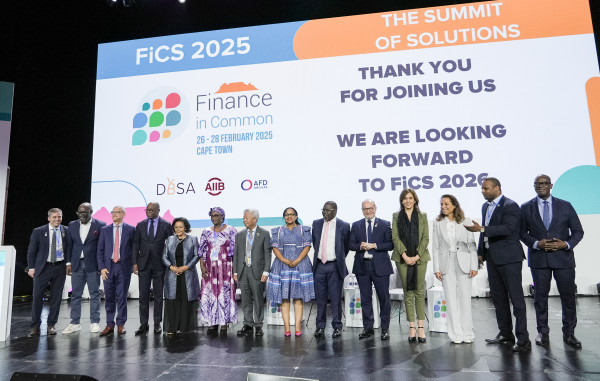
The fifth edition of the Finance in Common Summit (FiCS) concluded on Friday in Cape Town, South Africa, with strong calls for global development finance institutions to work together to address poverty and development challenges. South African Finance Minister Enoch Godongwana led the call.

The summit, which was co-sponsored by the African Development Bank and took place alongside the G20 Finance Ministers' Meeting, was themed "Fostering Infrastructure and Finance for Fair and Sustainable Growth."

Godongwana described the meeting as an unprecedented gathering of key financial players, saying: "Your determination and commitment will change the world. Your determination and will have an impact on global poverty.”

The minister linked the summit's goals to South Africa's development trajectory, highlighting the structural reforms the country had undertaken in the electricity, roads, and port sectors, which have opened new investment opportunities to development partners.

African Development Bank Vice President for Finance and Chief Financial Officer, Hassatou Diop N'Sele—one of several senior officials of the Bank Group at FiCS—represented Bank Group President, Dr. Akinwumi Adesina at a meeting on Wednesday organized by the Council of Europe Development Bank. At the meeting, multilateral development banks reaffirmed a shared commitment to maximize their collective impact.

During the G20 meetings of Finance Ministers and central bank governors, Hassatou Diop N'Sele said, “We call on G20 nations to enhance financial commitments, especially for the 17th replenishment of the African Development Fund, to simplify processes for accessing climate finance, and to create enabling policies that facilitate sustainable capital flows to Africa.”

In her various interventions during FiCS, she discussed the innovative financing tools and initiatives launched by the African Development Bank to leverage resources and mobilize the private sector at scale, including the landmark hybrid capital transactions successfully replicated by other development finance institutions and the Africa Investment Forum.

N'Sele emphasized the urgency for philanthropies and foundations to further strengthen their partnerships with multilateral development banks and to fully embrace innovation to amplify their impact. She also recognized the challenges for expanding climate finance in Africa and reflected on such solutions and platforms as the Alliance for Green Infrastructure in Africa, designed to catalyze bankable, greener infrastructure projects at scale and speed.

The African Development Bank delegation highlighted the progress of Mission 300 (https://apo-opa.co/4bolqQE), an initiative to accelerate access to electricity for 300 million Africans by 2030. The Bank, working with the World Bank and other development finance institutions and private sector partners, has committed $18.2 billion to this effort.

Senior leaders of the Bank stressed the need for urgent action. Nnenna Nwabufo, Bank Group Vice President for Regional Development, Integration and Business Delivery, said: "Africa is not looking for aid, we are looking for partnerships.".

She added: "The time for pilot projects that deliver incremental progress is over. We need investments that enable our nations to take ownership of their development, fostering resilience, self-sufficiency, and sustainable growth that benefits both Africa and the global economy."

Solomon Quaynor, the African Development Bank's Vice President for Private Sector, Infrastructure and Industrialization, called for faster implementation of infrastructure projects. "Africa can no longer sustain infrastructure projects that take seven to 10 years to complete - we must accelerate development to deliver within three years, prioritizing green infrastructure," he said.

The African continent needs $2.7 trillion through 2030 to meet its climate action goals, but receives only 3.6% of all global climate finance, despite its minimal contribution to global emissions.

The African Development Bank's Director General for Southern Africa, Leila Mokaddem, emphasized that Africa's green transition must be inclusive. She said: "With 600 million Africans still without electricity, our transition cannot be about climate goals alone. It must be about jobs, industrialization and economic opportunity. The African Development Bank is supporting this vision through its Jobs for Youth in Africa strategy to create 25 million jobs and equip 50 million young Africans with green economy skills by the end of this year.”

The summit achieved several significant breakthroughs in expanding the scope and impact of development financing. Key outcomes included: the endorsement by G20 finance ministers of public development banks' crucial role in international financial architecture; steps toward setting up frameworks to support cultural industries as valid asset classes; and the formation of a coalition between public development banks and civil society to ensure that development finance serves communities.

CEO of Agence Française de Développement and Chair of the Finance in Common Summit Rémy Rioux noted: "We have made tremendous progress in building public development banks as an asset class through innovation, commitment, and shared values. In times of uncertainty and conflict, we are offering a calm, collective alternative."

"This has truly been an African FiCS," said Boitumelo Mosako, CEO of the Development Bank of Southern Africa. He added:  "With 34% of delegates coming from the continent, we have shown that Africa is unstoppable as the second fastest growing region in the world."

Following the Finance in Common Summit, the Fourth Finance for Development Conference will take place in Spain between June and July this year. Being organized by the United Nations and the Spanish government, that summit will feature continuing discussions on reshaping the international financial architecture to better serve development needs.

Distributed by APO Group on behalf of African Development Bank Group (AfDB).

Media contact:
Emeka Anuforo
Principal Regional Communication Officer
Email: media@afdb.org

About the African Development Bank Group:
The African Development Bank Group is Africa's premier development finance institution. It comprises three distinct entities: the African Development Bank (AfDB), the African Development Fund (ADF) and the Nigeria Trust Fund (NTF). On the ground in 41 African countries with an external office in Japan, the Bank contributes to the economic development and the social progress of its 54 regional member states. For more information: www.AfDB.org

Media files
African Development Bank Group (AfDB)
Download logo
Read moreFinance in Common Summit Urges Global Development Finance Institutions to Harness Collective Power to Address Global Poverty
3 March 2025

U20 South Africa: Africa’s ‘moment to lead’

Location: News

U20 South Africa: Africa's 'moment to lead'

City of Tshwane Mayor, Dr Nasiphi Moya, has described the 8th cycle of the Urban 20 (U20) – which is co-chaired by the City of Tshwane and Johannesburg - as a moment for Africa to lead.

The Mayor was delivering remarks at the launch of the 8th cycle of the U20 on Monday.

The U20 is an engagement group of the Group of 20 (G20). South Africa has taken over the Presidency of the G20 for 2025.

“This is our moment to lead. Not just as the City of Tshwane or the City of Johannesburg, but as Africa’s voice in the global urban conversation.

“Through U20 2025, we have the opportunity to shape a future that is just, sustainable, and inclusive. A future where African cities are not just participants but leaders in the global urban agenda.

“As co-hosts of U20 2025, our mission is clear: to ensure that the voice of African cities is heard on the world stage and that the priorities of the Global South are brought into the G20 agenda,” Moya said.

The U20 is a city diplomacy initiative which includes cities from the G20 countries and this year’s theme will be “Cities Leading the Way in Reimagining Global Change”.

Key priorities for this year include:
•    Economic opportunities and financing
•    Climate action and urban resilience
•    Social inclusion and equity
•    Digital transformation and innovation

Engaging citizens

Moya highlighted that although this year’s U20 will build on the foundation laid by last year’s co-chairs São Paulo and Rio de Janeiro, “our goal is to ensure that this presidency reflects the realities of African cities and the needs of our communities”.

“U20 is a global initiative, but its success will not be measured in communiqués and declarations alone. Its impact must be felt at a local level. 

“This is not just about diplomatic meetings and international cooperation. It is about real economic opportunities, real investment, and real solutions for our people. It is about ensuring that the people of Tshwane and Johannesburg see themselves in this process and feel its benefits.

“We must use this platform not just to advocate for our cities on the global stage, but to showcase their resilience, innovation, and leadership to our own communities,” she said.

Pressing further, Moya emphasised that the impact of the U20 “must extend beyond government officials and politicians” who will gather for the U20 Sherpa Summit and African Mayor’s Assembly in June and the Mayoral Summit in September.

“We are committed to ensuring that the U20 process engages the people it is meant to serve. That means creating spaces for public dialogue and community participation, ensuring that our residents have a voice in shaping urban policies. 

“It means fostering connections between local entrepreneurs and global investors, creating pathways for businesses to grow. It means recognising that Tshwane, as a knowledge hub, has world-class institutions that must be part of this conversation.

“Cities are on the frontlines of the climate crisis, economic inequality, and social exclusion. It is time for our voices to be heard at the highest levels of global decision-making,” Moya said. – SAnews.gov.za
 

NeoB
Mon, 03/03/2025 - 12:05
328 views

Read moreU20 South Africa: Africa’s ‘moment to lead’
3 March 2025

Meet Deel Local Payroll, Powered by Payspace: The Next Evolution in Payroll Innovation

Location: Business
PaySpace

PaySpace by Deel is now Deel Local Payroll, powered by PaySpace (www.PaySpace.com)! One year after being acquired by Deel, PaySpace by Deel has officially transitioned into Deel Local Payroll, powered by PaySpace. This milestone isn't just about a name change—it's about why Deel acquired PaySpace in the first place.

PaySpace customers can expect the same powerful payroll platform, now under Deel's global brand. Deel customers can utilise real-time payroll, which means real-time G2N (Gross-to-Net) calculations, shorter cut-off times, and less overall pressure and stress when running payroll across multiple countries.

Deel Local Payroll, powered by PaySpace, formerly known as PaySpace by Deel, is a market leader in payroll technology, with more than 20 years of payroll and HR experience. Its flexible solutions cater to a wide range of clients, including small businesses, enterprises, and payroll service providers. The company has built the most technologically advanced native payroll engine, serving clients in 44 countries across Africa and the Middle East. It has over 15,000 customers, including big brands like Heineken, Coca-Cola, and Puma Sports.

Deel is a trailblazer in global employee and payroll management, enabling its customers to operate in different territories and simplify the complexities of managing employees according to regional financial and legal requirements. With global operations in over 150 countries, Deel simplifies the complexities of international payroll and HR, enabling companies to manage their global workforce efficiently and compliantly. Founded in 2018, Deel is the fastest-growing unicorn in history (a unicorn is a privately owned startup valued at over US$1 billion—Deel is currently valued at over $12 billion), helping businesses hire anyone, anywhere.

PaySpace is now Deel Local Payroll: New Brand, Same Team and Innovation

The acquisition, concluded in 2024, aligns the award-winning Deel Local Payroll team and cloud-native PaySpace platform with Deel's global operations. Deel Local Payroll is an independent subsidiary and a payroll product sold as a self-service option alongside Deel's global payroll product. Deel customers benefit through enhanced, innovative, and more flexible payroll tools for their teams.

The PaySpace calculation engine is now Deel's calculation engine, onto which Deel has localised its Employer Of Record (EOR) and Global Payroll (GP) products across numerous countries, including the UK, South Africa, Canada, and the UAE. Deel will keep localising countries onto this single engine—a unique competitive offering in the payroll market.

Under the Deel brand, Deel Local Payroll will continue to provide the same excellent payroll software and dedicated team that its customers have come to rely on, with the same management team, employees, support, channels, and logistics—only the name has changed. This seamless transition ensures no disruption to existing customer contracts, systems, or processes.

Deel Local Payroll's core cloud-native platform is now the PaySpace platform, an intrinsic part of how Deel delivers payroll services at grassroots levels to customers across the globe.

The PaySpace platform includes groundbreaking features:

  • Automatic legislative updates that are pushed directly to customers.
  • Robust integration with dozens of business applications and data sources.
  • Extensive automation features to remove pressure on payroll teams.
  • Powerful scale and flexibility that supports changing business requirements.
  • Secure anywhere, anytime access for multiple users and devices.
  • Pacey, a WhatsApp employee self-service bot for payroll slips and other information.

"When we founded PaySpace, we set out to create world-class payroll management that served all markets. Taking inspiration and lessons from our customers in Africa and leveraging cutting-edge cloud technologies, we built a true 21st-century payroll service that evolves with the needs of modern companies and their workforces. The rebranding from PaySpace to Deel Local Payroll allows for deeper integration with Deel, positioning us for continued success and growth. It's a positive move, building on the strong foundation we've already established," says Bruce van Wyk, CEO at Deel Local Payroll, powered by PaySpace.

Deel's acquisition of Payspace, now Deel Local Payroll, and the PaySpace platform is a significant win for customers. It also serves as a testament to the resilience and flexibility of African tech. Deel, Deel Local Payroll, and the PaySpace platform are building bright futures for their customers as they continue to innovate and provide world-class payroll solutions built to simplify and enhance payroll at every level.

Distributed by APO Group on behalf of PaySpace.

Media contact:
Victoria Lindsay
victoria@innocomm.co.za

About Deel Local Payroll:
Deel Local Payroll, powered by PaySpace, revolutionises payroll management. It offers online, multi-country payroll and HR management for businesses from start-ups through to enterprise in over 40 African countries, the United Kingdom, the Middle East, and Brazil.

Cloud-native, Deel Local Payroll, is scalable, configurable, highly secure, and easy-to-use—delivering anytime, anywhere access. It features payroll automation, self-service features, automatic legislation and feature updates, customised reporting, and more.

Since 2024, Deel Local Payroll has been part of Deel, operating as an independent subsidiary, serving its customers through the PaySpace platform. 

Media files
PaySpace
Download logo
Read moreMeet Deel Local Payroll, Powered by Payspace: The Next Evolution in Payroll Innovation
3 March 2025

G20 meeting highlights the role of science in tackling climate change

Location: News

G20 meeting highlights the role of science in tackling climate change

Rising global temperatures, extended droughts, and the growing spread of disease are some of the severe impacts of climate change, according to the President of the Academy of Science of South Africa (ASSAf) Council, Professor Thokozani Majozi. 

Speaking at a recent Science20 (S20) meeting in Pretoria, Majozi noted that no region is immune to these effects, which range from wildfires in the Americas and Australia to catastrophic flooding in Europe and Asia.

“Climate change does not recognise national boundaries, making international scientific cooperation not just beneficial but essential,” he said. 

The meeting highlighted the urgent challenge of climate change.

“This issue transcends borders, economies, and political systems. The evidence is unequivocal: our climate is changing at an unprecedented rate due to human activities,” the Professor warned. 

S20 is the official engagement group for science academies within the Group of Twenty (G20) to foster science-based dialogue and provide policy advice. 

Established in 2017, its mission is to promote scientific cooperation and ensure that scientific perspectives influence G20 decisions on global challenges. 

The G20 is an international forum of both developing and developed countries that seeks to find solutions to global economic and financial issues.

Under South Africa’s G20 Presidency, three foundational themes shape political and scientific discussions: solidarity, equality, and sustainable development.

He outlined the key responsibilities of the scientific community, which include advancing our understanding of climate systems and their effects on human health and wellbeing. 

The Professor also urged his colleagues to communicate complex scientific findings in ways that can inform both policymakers and the public. In addition, he emphasised the importance of fostering collaboration across natural sciences, social sciences, and the humanities. 

Majozi believes in nurturing the next generation of scientists who are equipped to address these complex challenges, and he advocated for the integration of indigenous and local knowledge systems with traditional scientific approaches.
“We are not merely repositories of knowledge but active participants in shaping how that knowledge is applied to real-world challenges,” he added. 

Led by the ASSAf, this year’s S20 gathering is particularly significant, as it marks the first time the G20 is hosted on the African continent. 

The Minister of Science, Technology, and Innovation, Professor Blade Nzimande, addressed the meeting virtually and called for global scientific cooperation and evidence-based policymaking. 

Nzimande emphasised the connection between the S20 theme, “Climate change and well-being,” and South Africa’s overarching G20 theme of “Solidarity, equality, and sustainability.”

“These themes do not merely serve as reminders of the urgent need for science-driven policy responses to challenges such as climate change, biodiversity loss, and global inequality,” he said. 

“They also highlight that today’s fundamental challenges are interconnected, demanding multidisciplinary approaches, collaboration, and decisive science-based action.”

Priorities and skills development

Nzimande outlined key science, technology, and innovation priorities that will define South Africa’s G20 leadership. 

These include, among other initiatives, enhancing our capacity for pandemic preparedness; promoting research and development in emerging technologies, especially artificial intelligence; and integrating these technologies into essential economic sectors such as energy, agriculture, mining, health, and the digital economy.

It also it involves developing critical and advanced skills, including through the Presidential PhD Programme.

The Minister stressed the crucial role of the S20 meeting in shaping the broader G20 Research and Innovation Working Group discussions, which will culminate in a ministerial meeting in September 2025. 

President of the Brazilian Academy of Sciences, Professor Helena Nader, applauded South Africa for highlighting the topic of climate change and wellbeing, especially considering recent global floods and storms. 

Meanwhile, the Executive Director of the United States National Academies Policy and Global Affairs Division, Dr Vaughan Turekian, praised G20 members’ long history of collaboration and expressed his desire for it to expand through the S20. – SAnews.gov.za


Gabisile
Mon, 03/03/2025 - 12:45
43 views

Read moreG20 meeting highlights the role of science in tackling climate change
3 March 2025

Government activities for the week 03 – 07 March 2025

Location: News

Government activities for the week 03 – 07 March 2025

On Monday, 03 March, the Department of Agriculture and Rural Development in strategic partnership with the North West University’s Mahikeng Campus, is set to officially launch the Agri-Hub.

On Tuesday, 04 March, the Commission for Gender Equality in KwaZulu-Natal will hold a men’s engagement conference in collaboration with the men’s sector and other stakeholders to address gender-based violence and promote collaborative solutions across communities.

Also on Tuesday, the Department of Social Development will host a multi-stakeholder engagement on implementation of Recommendation 8 of the Financial Action Task Force (3-5 March).

On Wednesday, 05 March, Minister Inkosi Mzamo Buthelezi and Deputy Minister Pinky Kekana lead the 1 st Technical Meeting of the Anti-Corruption Working Group (3-5 March).

On Thursday, 06 March, President Cyril Ramaphosa and the National Cabinet will visit the Gauteng Executive Council and the City of Johannesburg (6-7 March).

Friday, 07 March, no confirmed events.
 

Neo
Mon, 03/03/2025 - 11:29
62 views

Read moreGovernment activities for the week 03 – 07 March 2025
3 March 2025

Next generation of scholars gathering to shape Africa’s future

Location: News

Next generation of scholars gathering to shape Africa’s future

Research-based insights and collaboration on finding solutions to Africa’s most urgent challenges will be at the heart of the Human Sciences Research Council (HSRC)’s 19th Africa Young Graduates and Scholars (AYGS) Conference. 

The conference which gets underway tomorrow, is being held in collaboration with the University of Mpumalanga (UMP).

Under the theme “Enabling Africa’s Inclusive and Sustainable Development: Challenges and Opportunities,” the conference will gather over 100 young and emerging scholars, policymakers, and practitioners from various regions of Africa to share research-based insights and collaborate on solutions to the continent’s most urgent challenges. 

The gathering will take place at UMP’s Mbombela campus from 4 to 6 March 2025. 

“We are excited to provide a platform for Africa’s next generation of leaders to engage, share knowledge, and shape the continent’s future,” said the Executive Head at the HSRC’s Africa Institute of South Africa (AISA), Dr Sabelo Gumedze. 

He believes that the AYGS Conference has the potential to contribute significantly to Africa’s developmental trajectory, and said they were looking forward to fostering innovative solutions, enhancing capacity, and informing policy decisions with research-based insights.

Meanwhile, the UMP Deputy Vice-Chancellor for Research and Innovation, Professor Aldo Stroebel, said the university was privileged to partner with the HSRC and other prominent stakeholders to engage and strengthen an opportunity framework for emerging scholars through critical thinking and policy impact. 

“UMP benefits from this convening to further advance our focus on sustainability and innovation, building a strong base of intellectual engagement, international networks, and learning,” Stroebel added. 

The conference will feature sessions covering various topics such as advancing agricultural sustainability and food security. 

The panellists will also zoom into governance, peace, and security in enabling Africa’s inclusive and sustainable development; climate change action and the Just Transition; and leveraging artificial intelligence (AI) to drive Africa’s development priorities.

Meanwhile, more than 30 papers will be presented by scholars from over 15 countries, including Cameroon, Ghana, Kenya, Lesotho, Madagascar, Nigeria, Rwanda, Sierra Leone, South Africa, Tanzania, Togo, Uganda, Zambia, and Zimbabwe. 

The annual AYGS conference is a research capacity-building project that was conceived in 2005 to build a body of knowledge and to project the African “voice” into various global discussions. 

It is further intended to bridge the existing expertise gap in knowledge production on African affairs by developing a society of knowledge producers among the youth. 

The conference, which features a comprehensive programme including a pre-conference training workshop on policy-engaged research and open science, is hosted by the HSRC’s Africa Institute of South Africa (AISA) in collaboration with the UMP, the National Research Foundation’s (NRF) Future Earth Africa Hub Leadership Centre, the Partnership for African Social and Governance Research (PASGR), and other key partners. – SAnews.gov.za


Gabisile
Mon, 03/03/2025 - 08:50
134 views

Read moreNext generation of scholars gathering to shape Africa’s future
2 March 2025

Minister announces fund to support spaza shops

Location: News

Minister announces fund to support spaza shops

Small Business Development Minister Stella Ndabeni has announced the creation of a R500 million Spaza Shop Support Fund that aims to enhance market competitiveness to help spaza shops and food handling outlets compete with larger retailers.

Addressing media in Pretoria on Sunday, the Minister said the fund will be launched soon and will support township convenience shops, including spaza stores. 

“The fund will be launched in the next two weeks and a date will be communicated,” she said adding that the fund will comprise of funds from the Department of Small Business Development (R150 million) and the Department of Trade, Industry and Competition (R350 million).

The Minister made the announcement at the briefing that followed the close of the registration period for spaza shops and food-handling businesses to register their businesses with their local municipalities on 28 February.

READ | Spaza shops who met registration deadline to receive support

She said other businesses will still benefit from existing departmental funds and programmes including financial assistance by the Small Enterprise Development and Finance Agency (SEDFA) and other development finance institutions (DFIs). 

The fund aims to achieve economies of scale by linking spaza shops and food handling outlets to buying groups for bulk purchasing; build business capacity through training and support to improve shop operations; enhance market competitiveness to help spaza shops and food- handling outlets compete with larger retailers.

“We are planning a to roll out a multi-disciplinary outreach programme. The purpose of the outreach program is to bring government services closer to the people through disseminating information on community convenience shops and support offerings.

“We will continue to do these things with provincial and local government and will facilitate awareness campaigns in all 52 districts and metros across the country. The awareness campaigns are scheduled to take place from 03 March 2025 to 30 March 2025.”

The awareness campaigns will continue beyond the month of March and the awareness workshops will be facilitated by district champions, SEDFA and business regulation officers.

She said that the Department of Small Business Development has recruited 61 business regulation officers on six -month contracts, each assigned to a District or Metro across the country. 

“These officers will be responsible for conducting awareness campaigns, research, and geo-mapping of spaza shops and food-handling facilities among other functions.”

Regulation 

The Minister further added that the country’s regulatory environment needs to be streamlined, and the department has embarked on a Red Tape Reduction Program to include practical solutions. 

“As a key strategic intervention to support the red tape reduction efforts, the department will ensure that municipalities are assisted with E-registration systems. We remain committed as government to streamline business licensing in South Africa, reduce regulatory burdens, and foster an environment conducive to entrepreneurship, innovation, and job creation.

“Our amended National Business Licensing Bill, once approved and implemented, will provide clarity, consistency, and transparency in business licensing, enabling businesses to thrive and contribute to the country's economic growth and development,” she explained. -SAnews.gov.za

Edwin
Sun, 03/02/2025 - 16:14
272 views

Read moreMinister announces fund to support spaza shops
28 February 2025

GBV to come to the fore at CGE conference

Location: News

GBV to come to the fore at CGE conference

A men’s engagement conference seeking to address gender-based violence and promote a shift towards healthy masculinity is set to be held next week.

The Commission for Gender Equality (CGE) will hold the conference in KwaZulu-Natal on Tuesday.

The session will be held in collaboration with the men’s sector and other stakeholders to address gender-based violence (GBV) and promote collaborative solutions across communities. 

“The conference, amongst others, seeks to facilitate an open and constructive dialogue on GBV and its root causes, promote a shift towards healthy masculinity, dismantle harmful cultural norms, promote men’s well-being, and protect human rights,” said the CGE in a statement.

The commission seeks to strengthen partnerships among stakeholders in the province to implement context-specific GBVF prevention strategies and generate actionable recommendations to inform future interventions and policy development. 

Tuesday’s session at the Hilton Garden Inn in Umhlanga will get underway at 9 am. -SAnews.gov.za 


Edwin
Fri, 02/28/2025 - 12:57
20 views

Read moreGBV to come to the fore at CGE conference
26 February 2025

Government welcomes provisional outcomes of the media market inquiry

Location: News

Government welcomes provisional outcomes of the media market inquiry

Government says it acknowledges and welcomes the provisional outcomes of the Media and Digital Platforms Market Inquiry (MDPMI), led by the Competition Commission of South Africa. 

This week, the preliminary report from the commission regarding the MDPMI) garnered attention for its strong recommendation that Google should pay as much as R500 million yearly to compensate South Africa’s news industry. 

The commission believes that South Africa should impose a digital tariff of 5% to 10% on major tech companies such as Google, Meta and Microsoft if they fail to fairly compensate media organisations for the content they distribute on their platforms.

The MDPMI began on 17 October 2023 and aims to investigate the characteristics of digital platforms that distribute news media content. 

The focus is on identifying features that may hinder, distort, or restrict competition, or that undermine the objectives of the Competition Act. 

The Government Communication and Information System (GCIS) has since described the inquiry as a crucial step in ensuring a fair and competitive digital media environment that supports the sustainability of local journalism and promotes media diversity.

“The South African media landscape is evolving rapidly, with digital platforms playing an increasingly dominant role in content distribution and advertising revenue,” a statement from the GCIS on Wednesday read. 

Adjunct Faculty Member and Head of the GIBS Media Leadership Think Tank, Michael Markovitz, stated that the report aims to address the root causes of anti-competitive behaviour among big tech companies, and seeks to fundamentally reshape the digital market to foster fairer competitive dynamics.

The inquiry assessed the impact of global digital giants on local media businesses, ensuring that South African publishers, broadcasters and digital content creators can compete on a level playing field.

Government - through the GCIS, in partnership with members of the Print and Digital Media Transformation Steering Committee - said it remains committed to supporting an independent, pluralistic and sustainable media sector, recognising its fundamental role in strengthening democracy and ensuring access to diverse sources of information.

Deputy Minister in the Presidency, Kenny Morolong, said the GCIS will work with all stakeholders, including media houses, digital platforms, advertisers, and the public on the implementation of the final outcomes of the MDPMI. 

“We will also contribute to the solutions proposed for addressing the challenges facing the media sector while unlocking opportunities for innovation and growth,” Morolong said.

The GCIS said the inquiry’s provisional outcome supports efforts for media transformation and sustainability, promoting economic participation and safeguarding public interest journalism, which is vital for a fair and diverse media landscape in South Africa.

White paper

Meanwhile, the Chairperson of the Portfolio Committee on Communication and Digital Technologies, Khusela Diko, has welcomed the recommendations of the provisional report. 

Diko believes that the recommendations strengthen the committee’s call for an urgent publication of a White Paper on Audio and Audiovisual Media Services and Online Content Safety by the Department of Communication and Digital Technologies (DCDT).

“For a very long time, over-the-top (OTT) digital platforms exploited the regulatory gap in the sector to the detriment of the public broadcaster, the South African Broadcasting Corporation, which operates under stringent regulations. We further welcome the recommendation that media houses be remunerated for the content they produce that gets to be exploited by OTT and digital platforms,” Diko explained.

She further said that the recommendations on Google and YouTube, amongst others, will hopefully serve as a deterrent to everyone that the lack of direct regulation in the sector is not "licencee for unscrupulous business practices". – SAnews.gov.za
 

Gabisile
Wed, 02/26/2025 - 15:45
81 views

Read moreGovernment welcomes provisional outcomes of the media market inquiry
26 February 2025

inDrive’s Unstoppable Growth Across Africa

Location: Business
inDrive

inDrive (www.inDrive.com), the ride-hailing app known for its transparent and fair pricing model, has secured its position as the second most downloaded app in its category globally, and it continues to make waves in Africa, where it ranks as the third-largest ride-hailing service in South Africa, second in Nigeria, and number one in Zimbabwe and Botswana and North African countries.

inDrive's success story in Africa reflects its remarkable growth trajectory, driven by its unique approach to mobility. With an innovative, peer-to-peer pricing model and a mission to challenge the traditional fare structures in the ride-hailing industry, inDrive is setting new standards in customer-centric mobility.

The inDrive Advantage: Why It's the Most Downloaded Ride-Hailing App

What sets inDrive apart is its unwavering commitment to creating an ecosystem that benefits both riders and drivers. Unlike other ride-hailing platforms, inDrive empowers users by allowing them to negotiate the fare before confirming the ride, giving both drivers and passengers the freedom to agree on a price that works for them. This model fosters trust, increases satisfaction, and has contributed to record-breaking app downloads in 2025.

InDrive's approach goes beyond just competitive pricing; it has built an environment where driver welfare is prioritized. The company operates with the lowest commission structure in the market, enabling drivers to keep more of what they earn, which in turn has fostered strong loyalty from local drivers across Africa.

Record Growth in Africa: inDrive's Expanding Footprint

  • South Africa: Ranked as the third-largest ride-hailing app in the country, inDrive's innovative model has gained a dedicated user base. Its growth has been accelerated by its focus on affordability, transparency, and safety, catering to the needs of both urban commuters and those in smaller towns. As competition intensifies, inDrive is proving that a user-focused approach is the key to long-term success.
  • Nigeria: Holding the second spot in the market, inDrive's rapid expansion has been fueled by its distinctive no-commission fare model in most cities, creating better earning opportunities for drivers while providing affordable rides for passengers. Nigeria's diverse population and urban landscape have proven to be a strong foundation for inDrive's sustained success.
  • Zimbabwe & Botswana: inDrive's number-one ranking in both countries is a testament to its ability to create localized solutions tailored to meet the unique challenges of each market. By providing access to its services where traditional public transport falls short, inDrive bridges crucial mobility gaps, ensuring more people can commute conveniently. With a strong focus on job creation, affordable transportation, and social impact, inDrive has quickly become the go-to ride-hailing app for millions.

Why Africa Chooses inDrive

inDrive's approach is rooted in equity and inclusivity. The app's growth in Africa is not just a result of its innovative pricing structure, but also its deep understanding of the diverse needs of African consumers and drivers. As the most downloaded ride-hailing app globally, inDrive's popularity is fueled by its customer-centric model, empowered drivers, and fair pricing system.

By offering a solution that works for everyone, inDrive is reshaping the future of mobility across the African continent. Whether it's ensuring driver safety, fair compensation, or increased access to affordable transportation, inDrive is positioning itself as the most reliable, convenient, and transparent ride-hailing option in Africa.

Distributed by APO Group on behalf of inDrive.

Press Contact:
Public Relations Manager - inDrive Africa
Lineo Thakhisi
Phone: +2781 3636 872
Email: lineo.thakhisi@indriver.com

About inDrive:
inDrive is a global mobility and urban services platform. The inDrive app has been downloaded over 240 million times, and was the second most downloaded mobility app in 2022 and 2023. In addition to ride-hailing, inDrive provides an expanding list of urban services, including intercity transportation and delivery. In 2023, inDrive launched New Ventures, a venture and M&A arm.

inDrive operates in 888 cities in 48 countries. Driven by its mission of challenging social injustice, the company is committed to having a positive impact on the lives of one billion people by 2030. It pursues this goal both through its core business, which supports local communities via a fair pricing model; and through the work of inVision, its non-profit arm. inVision's community empowerment programs help to advance education, sports, arts and sciences, gender equality and other vital initiatives.

For more information visit www.inDrive.com

Media files
inDrive
Download logo
Read moreinDrive’s Unstoppable Growth Across Africa
26 February 2025

SA positioned to navigate challenging geopolitical situation – WEF President

Location: News

SA positioned to navigate challenging geopolitical situation – WEF President

Amidst a fragmented geopolitical landscape, the President and CEO of the World Economic Forum, Børge Brende, has expressed support for South Africa’s Group 20 (G20) Presidency.

“In such a polarised, fragmented world as [the] backdrop of this G20 leadership, I think South Africa is especially well positioned to handle this very complicated geopolitical situation,” Brende said on Tuesday.

Brende was addressing the Business 20 (B20) -- the official dialogue forum for domestic and international business communities.

In his address, he stated that South Africa has extensive experience in managing competition and its history.

“It’s not an easy G20 to take on but that’s a reality with the geopolitical backdrop that [it] is happening against,” Brende said.

He said the current geopolitical situation is a priority for everyone, making the global business voice more crucial than ever.

“The last weeks have shown us we have to fasten our seat belts and even getting people that don’t agree [with us] in the same room is not almost an achievement. I saw that in Davos this year when people don’t agree [with you] they don’t want to even discuss [matters]. But to break impasses at least, you must start with the dialogue and sit in the same room and say, ‘this is important to me’.

“Sherpas can then try to find some solutions, because the solutions are so incredibly important…,” he said.

With South Africa set to host the G20 Leaders' Summit later this year, Cape Town hosted the two-day B20, which began on Monday.

Western Cape Premier Alan Winde previously said  that the province and Cape Town look forward to welcoming the world once again.

READ | Cape Town to host B20 meeting 

The gathering focused on the theme “Inclusive Growth and Prosperity through Global Participation.”

Brende said the private sector has a key role to play in mobilising investment, driving innovation, and finding solutions to shared challenges.

“That means that if you want to get anything done, you also must work with the business sector. That’s the only way to also get investments and fresh money,” he explained. 

He described Africa, with its fast-growing economies and young workforce, as poised to shape the future. 

The African Continental Free Trade Area (AfCFTA) alone has the potential to unlock $450 billion in economic gains over the next decade.

The World Economic Forum, he said, has a long-fostered collaboration between business and government, and is committed to supporting this effort through initiatives such as the First Movers Coalition that pushes for green technologies.

“Now is the time for the B20 and G20 to work together to accelerate sustainable growth, strengthen global trade, and ensure that economic progress benefits all. 

“South Africa’s long-standing commitment to cooperation serves as a powerful example of what is possible when we find common ground.”

Brende also touched on the key challenges including climate change, cybercrime, and the need for global consensus on issues like carbon dioxide (CO2) emissions and cybersecurity. 

Despite the geopolitical tensions, Brende stated that the global economy is expected to grow by over 3% this year.  

“Trade is expected to grow by 3%, however, the growth we are seeing in trade is not coming from traditional manufacturing goods. Digital trade and services are projecting significant growth. The biggest game changers over the next few years will be new technologies.”

He said the technological advancements, particularly in artificial intelligence (AI) and machine learning, could boost productivity by 10% in a decade. 
– SAnews.gov.za

Gabisile
Wed, 02/26/2025 - 13:58
16 views

Read moreSA positioned to navigate challenging geopolitical situation – WEF President
26 February 2025

Global minimum tax crucial to strengthen tax base in developing countries

Location: News

Global minimum tax crucial to strengthen tax base in developing countries

Finance Minister Enoch Godongwana says a global minimum tax is crucial to strengthening the tax base of developing countries and developing a fairer global tax system.

The Minister was addressing a panel discussion on tax on the sidelines of the ongoing G20 Finance Ministers’ and Central Bank Governors’ meeting held in Cape Town on Wednesday.

“Over the past decade or so, much has [been] done to try and achieve a more transparent fair and efficient global tax system. We note the work done by the G20 OECD [Organisation for Economic Co-operation and Development] on base erosion and profit shifting. 

“[This] work needs to be commended as it…has compelled us to think about how to work together towards a fairer and more sustainable tax system that will benefit all countries.

“The introduction of the global minimum tax is an important step towards achieving this goal. We believe it offers all countries, developed and developing economies, the opportunity to strengthen their tax base in cases where multinationals operating in those countries are not taxed sufficiently in other jurisdictions. This will enable better domestic resources mobilisation for all countries,” he explained.

Godongwana noted that although progress has been made, “much still needs to be done in ensuring that international tax reforms are implemented by all countries”.

“Concerns remain about the level of complexity in the global tax system. This is especially true for developing countries where capacity constraints…limit their ability to effectively administer transfer pricing to cite but one example.

“Capacity constraints also limit developing countries from participating in the information sharing which is crucial to unlocking transparency in respect of capital flows, asset allocation and beneficial ownership.”

Furthermore, he added that improvement in international cooperation and access to information are “key to limiting the effect of complex and aggressive tax structuring”.

Godongwana told the gathering that the United Nations also has a role to play in giving developing countries a “voice to express their challenges and concerns”.

“The UN [United Nations] process should never be seen as an alternative or opposing process to that of the G20 nor should it lead to division. Both processes can be beneficial to all countries…as more cooperation and more inputs will ultimately lead to a more sustainable outcome.

“We can all recognise that working together as a diverse group to find common solutions is very challenging. However, we have learnt as a country that embracing diversity results in better solutions,” he said. – SAnews.gov.za

NeoB
Wed, 02/26/2025 - 12:11
20 views

Read moreGlobal minimum tax crucial to strengthen tax base in developing countries
26 February 2025

Ghana’s Mining in Motion Summit Gains Support From Key Leaders

Location: News
Energy Capital & Power

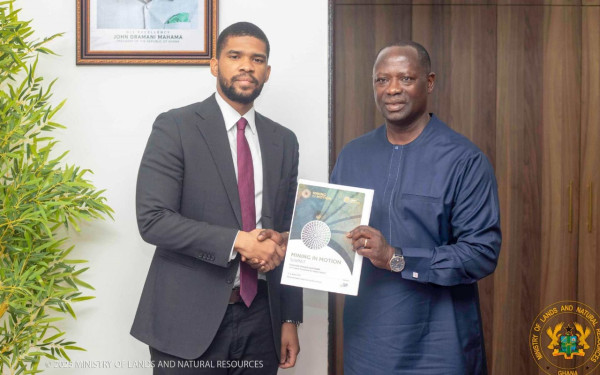
Otumfuo Osei Tutu II, King of the Ashanti Kingdom; Hon. Emmanuel Armah Kofi Buah, Minister of Lands and Natural Resources of Ghana; and Oheneba Kwaku Duah, the son of Otumfuo Osei Tutu II and Managing Director of the Ashanti Green Initiative recently met to discuss the upcoming Mining in Motion Summit in Ghana.

They explored the summit's potential to improve the artisanal and small-scale gold mining (ASGM) sector in Ghana and the role of government, international partners and major mining firms in accelerating the sector's growth. Hon. Kofi Buah endorsed the event, emphasizing its significance in connecting small-scale miners with technology providers, financiers, regulatory bodies and global industry stakeholders to improve their operations and impact.

Organized by the Ashanti Green Initiative along with the World Bank, the World Gold Council and other international partners, Mining in Motion will take place from June 2 - 4 in Accra.

The summit is held under the theme Sustainable Mining & Local Growth – Leveraging Resources for Global Impact, uniting key decision-makers, including H.E. John Dramani Mahama, President of the Republic of Ghana, as well as representatives from public and private sector mining institutions from South Africa, the Republic of Guinea, the African Union, ECOWAS and the United Nations.

The three-day event will highlight the role of traditional authorities in shaping artisanal and small-scale mining practices, emphasizing the sector's contribution to employment and economic growth. In 2024 alone, Ghana's artisanal miners generated $5 billion in foreign exchange earnings through gold exports. Providing direct employment for over one million Ghanaians and accounting for 35% of domestic gold output, the sector has the potential to significantly shape socioeconomic development in the west African country.

As Ghana's mining sector increasingly supports sustainable development, the Mining in Motion Summit will highlight best practices for integrating ASGM into the global financial system. Representatives from prominent international financing organizations will share their insights.

In a significant move to boost earnings for small-scale miners, Ghana has announced plans to establish a Gold Board. This new entity will simplify the process of purchasing gold from small-scale miners, providing them with easier access to global markets. With Samuel Adu Gyamfi, who was appointed Acting Managing Director of Precious Minerals Marketing Company last month and tasked with setting up the Ghana Gold Board, playing a pivotal role in shaping the summit, Mining in Motion is set to have a sizable impact on the growth of Ghana's gold sector.

Through a series of high-level panel discussions, deal signings, project showcases and exclusive networking, Mining in Motion serves as the ideal platform to connect Ghanaian miners with regional counterparts and global investors for forge industry-changing partnerships.

Stay informed about the latest advancements, network with industry leaders and engage in critical discussions on key issues impacting ASGM and medium- to large-scale mining in Ghana. Secure your spot at the Mining in Motion 2025 Summit by visiting https://MiningInMotionSummit.com. For sponsorship opportunities or delegate participation, contact sales@energycapitalpower.com.

Distributed by APO Group on behalf of Energy Capital & Power.

About Ashanti Green Initiative:
The Ashanti Green Initiative is a foundation dedicated to promoting environmental restoration, advocating for climate-related issues, and fostering community development in Ghana and beyond. Guided by a commitment to sustainability, the foundation undertakes projects aimed at rehabilitating degraded lands, restoring water bodies, and promoting responsible natural resource management. The initiative also champions regenerative practices in mining, agriculture, and energy, aligning with global efforts to combat climate change while uplifting local communities through education, capacity-building, and economic empowerment programs. The Ashanti Green Initiative is led by Nana Kwaku Duah, son of His Majesty Otumfuo Osei Tutu II, King of the Ashanti Kingdom. Under his leadership, the foundation applies forward-thinking approaches and innovative solutions, creating impactful partnerships with local and international stakeholders to drive meaningful change.

About Energy Capital & Power:
Energy Capital & Power is an Africa-focused global leading investment platform for the energy and mining sectors. Through a series of events, online content and investment reports, we unite the entire energy and mining value chains – from oil and gas exploration to renewable power – and facilitate global and intra-African investment and collaboration.

Media files
Energy Capital & Power
Download logo
Read moreGhana’s Mining in Motion Summit Gains Support From Key Leaders
25 February 2025

Premier to mitigate impact of aid withdrawal on jobs

Location: News

Premier to mitigate impact of aid withdrawal on jobs

Free State Premier Maqueen Letsoha-Mathae has assured that her government, in collaboration with the national Department of Health, will explore innovative solutions to prevent job losses in the province’s health sector. 

This follows the withdrawal of a United States (US) foreign aid grant to South Africa which has supported critical health programs. 

Delivering her State of the Province Address (SOPA) on Friday, Letsoha-Mathae emphasised that efforts are underway to mitigate the impact and ensure continued healthcare service delivery despite the funding shortfall.

“Many of our strategic partners have indicated that funding from USAID [United States Agency for International Development] has been stopped. This poses an immediate threat of job losses to about 725 healthcare workers, social workers, data capturers, cleaners and many others. 

“We will find innovative ways working with national Department of Health to mitigate the impact of this decision,” she said.

The Premier emphasised that no inclusive growth would be realised without quality healthcare and her administration was doing its best to improve healthcare quality in government facilities. 

She added that less professionals mean less provision of services of which the province cannot afford.

“That is the reason why, last year, we employed 1 232 healthcare professionals that include doctors and nurses. More will be employed in the next financial year. 

“The 1 112 contract workers employed to ease the COVID-19 health pressures, whose contracts expired in October 2024, were re-employed in January this year. Their return is a crucial step in increasing the provision of health services,” she said.

The Premier highlighted that the province had procured more Renal Dialysis Machines and installed Renal Water Purification Systems in some of its hospitals. 

At the Mofumahadi Manapo Mopeli Regional Hospital in Qwaqwa, six dialysis machines were commissioned in this financial year. A Reverse Osmosis Water Purification Unit was delivered and will be installed and commissioned upon the completion of construction and prefiltration.

“At Boitumelo Regional Hospital, ten dialysis machines, two mobile Reverse Osmosis, and a Reverse Osmosis Plant are in clinical use. Importantly, availability of medicines in our health facilities is above 90%,” she said. 

Due to increasing population, urbanisation and changing lifestyles, the Premier noted that the health burden is increasing, putting pressure on the available facilities. 

She announced that healthcare facilities that are under construction will be completed in the 2025/26 financial year. These include the Thandanani Clinic in Welkom, Rheederpark Clinic in Welkom, Borwa Clinic in Tweespruit, Clocolan Clinic in Clocolan, Dinaane Clinic in Thaba-Nchu, and Valrok Clinic in Brandfort. 

“We are also upgrading hospitals, laboratories, neonatal facilities, renal units, maternity wards, pharmacies, mortuaries, theatres and heli-stops. We have taken note of particular challenges at the Bloemfontein Government Mortuary and plans are afoot to remedy the situation,” she said.

The Premier further announced that the following health facilities now render a 24-hour service: MUCPP in Mangaung (Maternity and Emergency Services); Heidedal Clinic in Mangaung (Emergency Services); PAX Clinic in Viljoenskroon (Emergency Services); Bolata Clinic in Qwaqwa (Maternity Services) and the Lesedi Clinic in Kroonstad will be operational from April 2025 (Maternity and Emergency Services). - SAnews.gov.za


DikelediM
Tue, 02/25/2025 - 14:29
250 views

Read morePremier to mitigate impact of aid withdrawal on jobs
25 February 2025

Energise Mzansi campaign to empower South Africans on energy transition

Location: News

Energise Mzansi campaign to empower South Africans on energy transition

The Energy Council of South Africa has launched a nationwide campaign to empower South Africans to gain a better understanding of and engage in the energy transition.

South Africa has committed to lowering carbon emissions to net-zero by 2050 and usher in a green economy.

In that regard, government has also committed to an energy transition which is just, inclusive and which responds to South Africa’s developmental needs – leaving no one behind.

“Energy literacy is more than just understanding the basics, it’s the foundation for informed decision-making, constructive collaboration, and ultimately driving investment and economic growth through gained public positive sentiment.

“Through this campaign, we aim to connect South Africans with the factual information they need to make sense of the challenges and take advantage of the opportunities presented by the energy transition,” Energy Council CEO James Mackay said.

According to the council, the campaign focuses on six technical energy topics.

 These are:

  • Energy is an integrated system: Shifting from a polarised “supply mix” ideology to a practical, integrated system planning and delivery approach. This aims to balance supply side actions with demand response and changing trends, the increasing importance of infrastructure and digital integration and the critical issue of a competitive marketplace.
  • Vital emissions obligations: South Africa has an intensive carbon footprint and is now exposed to carbon tax and carbon border adjustments from 2026 with its biggest trade partner, Europe.
  • Ongoing coal dependency: Examining coal’s critical role in South Africa’s energy mix, which is still planned to be in operation well beyond 2026. The need for cleaner, reliable and more efficient use, and the pathway to a strategic, balanced transition not compromising energy security and economic stability.
  • Bridging the transition with gas: Exploring how gas could provide crucial support to South Africa’s energy system by meeting fluctuating demand, system variability and bridging the gap as renewable energy grows and large coal stations are decommissioned.
  • Scaling renewables and storage: Evaluating the growing adoption of solar and wind energy as well as battery storage, focusing on the advantages of renewable energy, the barriers to widespread deployment, and the role of technology in making renewables a central part of South Africa's energy future.
  • Reforming the Energy Market: Understanding the critical need and benefits of a competitive wholesale electricity market to unlock investment, drive efficiency and lower prices, as well as anchor South Africa's future power sector eco-system

“The Energy Council estimates that R2 trillion will be required by 2035 for new technology financing and system upgrades. Government policy and commitment is clear. The two key drivers of our energy reform agenda are now anchored in law: The Electricity Regulation Amendment Act, 2004 and the Climate Change Act, 2024. 

“It is critical that informed responses lead the transition, ensuring collaboration across all stakeholders to create sustainable, long-term solutions for South Africa’s energy future,” the Energy Council said. – SAnews.gov.za


NeoB
Tue, 02/25/2025 - 12:19
8 views

Read moreEnergise Mzansi campaign to empower South Africans on energy transition
25 February 2025

SA participates in UNGA meeting marking Russia, Ukraine conflict anniversary

Location: News

SA participates in UNGA meeting marking Russia, Ukraine conflict anniversary

South Africa has voted in favour of a General Assembly resolution, presented by the United States of America with amendments by the European Union, which reiterates that the principal purpose of the United Nations is to maintain international peace and security and to peacefully settle disputes.

It further reaffirms the commitment to the sovereignty, independence, unity and territorial integrity of Ukraine within its internationally recognised borders, extending to its territorial waters; and implores a swift end to the conflict and further urges a just, lasting and comprehensive peace between Ukraine and Russia, in line with the United Nations (UN) Charter and the principles of sovereign equality and territorial integrity of States.

This comes as the United Nations General Assembly met in New York on Monday - on the third anniversary of the conflict between Russia and Ukraine.

“South Africa continues to call for the urgent cessation of the Russia-Ukraine conflict in order to prevent the further loss of life and the destruction of Ukraine’s infrastructure. Every effort must be made to de-escalate the conflict.

“South Africa remains firmly committed to the need for a peaceful and negotiated resolution of the conflict within a rules-based system centred on international law, including the respect for human rights, and the principles of the UN Charter,” said the Department of International Relations and Cooperation in a statement.

It said the sovereignty and territorial integrity of all states remain inviolable.

Consequently, South Africa supports all efforts to bring the conflict to an end and welcomes all efforts to bring about negotiations. 

“We remain steadfast in our commitment to peaceful resolution of the conflict through a negotiated settlement with all parties to the conflict having a seat at the table.

“Consistent with the African Peace initiative we have always maintained that a commitment to inclusivity is key to deliver the buy-in of all Parties to the conflict, and to provide acceptable solutions to both parties,” said the department.

It added that countries are at a point of inflection in this conflict with the urgency to seize the momentum towards a negotiated settlement.

Head of UN Peacekeeping and Political Affairs, Rosemary DiCarlo, emphasised that the Russian invasion has “undermined the very foundations of the international order”. 

She also reminded delegates that since 24 February 2022, the conflict has resulted in the tragic loss of at least 12 654 Ukrainian civilians, including 673 children.

In light of the recently adopted Security Council resolution, UN News reported that DiCarlo stressed the need for peace in Ukraine to be “just, sustainable, and comprehensive”. 

She said such peace must align with the Charter of the UN, international law, and the resolutions passed by the General Assembly, including those enacted during Monday’s emergency special session. – SAnews.gov.za


Gabisile
Tue, 02/25/2025 - 09:51
136 views

Read moreSA participates in UNGA meeting marking Russia, Ukraine conflict anniversary
25 February 2025

Network International appointed as Payment Processing Partner by MTN Group Fintech

Location: News
Network International

Network International (Network) (www.Network.ae), a leading enabler of digital commerce across the Middle East and Africa (MEA), has been appointed as a Payment Processor – Issuing partner for MTN Group Fintech, Africa's leading mobile financial services provider. This partnership marks a significant extension of Network's portfolio of issuer processing collaborations throughout the African continent. 

With a footprint spanning over 50 countries and serving over 250 financial institutions, Network International brings its expertise to this partnership which will enhance MTN Fintech's cutting-edge mobile services and provide even greater value to stakeholders and customers across Africa. 

The partnership will focus on rolling out card issuance products across key MTN Fintech markets, starting with Rwanda which is already operational. Soon   Uganda, Ivory Coast, and Nigeria will also be covered under this collaboration.  Network International will provide a comprehensive range of services, including transaction processing, card management and online fraud prevention. MTN Fintech users will benefit from a seamless experience accessing both traditional mobile services and innovative digital payment solutions. 

Dr. Reda Helal, Group Managing Director – Processing, Africa and Co-Head Group Processing at Network International commented: “Our collaboration with MTN Group Fintech marks a major milestone for our outsourced payments services in Africa. It demonstrates our ability to successfully serve Mobile Network Operators (MNOs) via our fully-fledged processing solutions and our continued dedication and commitment to the African region. We are excited to support MTN Group Fintech's growth strategy, and its business development plans across the continent.”  

Cedric N'guessan, Executive for Payment and E-commerce at MTN Group Fintech added, "This collaboration with Network International is pivotal in enhancing financial inclusion across Africa and beyond. It enables our customers to actively engage in the global economy, aligning perfectly with our strategic goals alongside Mastercard to broaden access to digital financial services across the continent." Read More (https://apo-opa.co/43aKuII) 

MTN Group provides voice, data, fintech, enterprise wholesale and API services to more than 288 million customers in 14 African markets.   

Distributed by APO Group on behalf of Network International.

For more information, please contact:  
MTN Group Press Office
MTNGroup.PressOffice@mtn.com 

MTN Group Fintech (Proprietary) Limited: 
Head Office: 216-14th Avenue Fairland 2195, Private Bag 9955 Cresta 2118 South Africa 
Tel +2711 912 3000 
Fax +2711 912 4093 
Website www.MTN.com

Corporate Communications: 
Network International 
Dubai, UAE 
Tel: +971 4 303 2431 
lambert.espedido@network.global   

Follow us:
X: https://apo-opa.co/3QwQZht
Linkedin: https://apo-opa.co/4khrvCr

About MTN Group Fintech:
MTN Fintech, the platform business of MTN Group, is dedicated to revolutionising global financial services through innovative digital technology solutions. Leveraging MTN's extensive reach and expertise in telecommunications, MTN Fintech is committed to advancing financial inclusion for all and empowering communities in Africa. With a primary focus on pioneering mobile financial services, digital payments, e-commerce, short-term insurance, and remittance capabilities, MTN Fintech strives to establish seamless, accessible, and secure financial ecosystems that shape the future of digital finance. 

About Network International:
Network International is the Middle East and Africa's largest and leading digital payments company. Our purpose is to help businesses and economies grow by simplifying payments and commerce. We operate in 50+ countries serving governments, banks, fintechs, merchants and public sector companies. We have 2,000+ employees based in our markets serving over 250 financial institutions and 130,000+ merchants.  

Media files
Network International
Download logo
Read moreNetwork International appointed as Payment Processing Partner by MTN Group Fintech
25 February 2025

Kholo Capital Mezzanine Debt Fund I Reaches Final Close at R1,4 Billion

Location: Business

Kholo Capital
Download logo

Kholo Capital Mezzanine Debt Fund I (“Kholo Capital” or “the Fund”) (www.KholoCapital.com/), has reached final close at R1,4 billion in commitments, in order to make long-term mezzanine debt investments in small and medium sized businesses in Southern Africa (i.e., South Africa, Botswana, Namibia, Lesotho and Swaziland). The funding provided to these businesses will positively impact communities and support economic growth, job creation, alleviation of poverty and advancement of transformation in the Southern African region. The Fund provides growth capital, BEE Financing and acquisition funding into sectors of the Southern African economy with high social impact including social housing, healthcare, education, renewable energy, food and food security, ICT, financial technology and infrastructure. The Fund follows the United Nation's 17 Sustainable Development Goals as guiding principles with key focus on those linked to Job Creation (i.e., Decent work and Economic growth, Reduced Inequalities and Gender Equality) and those linked to Sustainable Growth (i.e.; Affordable and Green Energy, Sustainable Cities and Communities and Climate Action). The R1,4 billion in commitments was secured from leading South African institutional investors.

Kholo Capital believes that mezzanine debt funding, being a subordinated loan position that sits between senior debt and equity in the capital structure of a business, is attractive because it plugs any equity funding gaps and provides businesses with a tailored and flexible loan solutions in support of their growth requirements. Kholo Capital's investment criteria include investing in small and medium sized businesses generating minimum R25m EBITDA across various growth sectors of the Southern African economy, thereby providing much needed access to capital within a preferred range of R70m to 200m per investment. The benefit of mezzanine debt loan funding lies not only in the ability to tailor funding terms like debt servicing requirements (e.g., providing capital repayment moratoriums), and also because it is a loan funding instrument it avoids the significant equity dilution which is sometimes the sad reality when businesses try to fund their growth ambitions by raising pure equity funding.

Mokgome Mogoba, Founder and Managing Partner at Kholo Capital, said: “We are very bullish about South Africa, the South African economy and the future prospects of this beautiful country and the surrounding region. We are heartened and motivated by the optimism and the resilience of its people. We aim to create in excess of 500 new jobs at a rate of more than 40 nett jobs created per investment and we have committed to investing more than 50% of the Fund in black empowered companies. We are excited at the opportunity to bring creative funding solutions to the Southern African market and to form long term sustainable partnerships with businesses over a 4 to 7-year investment horizon, realising not only strong commercial returns for our investors, but also providing transformational funding that has a positive ESG impact on businesses and surrounding communities as we also look to boost our rural and township economies.”

Zaheer Cassim, Founder and Managing Partner at Kholo Capital, added: “Mezzanine debt funding is non-dilutive by nature and therefore is an attractive funding option for family-owned businesses, BEE companies or any business that needs to raise capital and hold onto the equity in the business. And with the banks becoming more risk averse due to regulatory requirements, lending to small and medium sized businesses has reduced, creating a great opportunity for flexible mezzanine debt structures.  We are grateful that our investors recognise the opportunity and have shown us tremendous support.”

With a strong pipeline of opportunities, Kholo Mezzanine Debt Fund I is well positioned to advance its investment objectives, and make a sustainable impact in support of the real economy. 

Distributed by APO Group on behalf of Kholo Capital.

For more information contact:
Mokgome Mogoba
Managing Partner
Kholo Capital Mezzanine Debt Fund I
mokgome@kholocapital.com
Tel: +27-79-631-5860                                     

Zaheer Cassim
Managing Partner
Kholo Capital Mezzanine Debt Fund I
zaheer@kholocapital.com
Tel: +27-83-786-0845

About Kholo Capital Mezzanine Debt Fund I:
Kholo Capital is a specialist alternative investment fund management company with deep experience and track record in private markets. It was founded in 2020 by Mokgome Mogoba and Zaheer Cassim. The Kholo Capital investment team has more than 100 years of collective credit and investment experience and is highly skilled in senior debt, mezzanine debt and private equity. The investment team has a strong track record in the credit and investment space and has invested in excess of R50bn of mezzanine debt, private equity and senior debt investment transactions in over 90 transactions in more than 10 African countries. Kholo Capital Mezzanine Debt Fund I is managed by a cohesive, dynamic and nimble team and the management team has worked together over the last 21 years.

Website: www.KholoCapital.com

Read moreKholo Capital Mezzanine Debt Fund I Reaches Final Close at R1,4 Billion
24 February 2025

G20 finance track meeting to tackle global economic issues

Location: News

G20 finance track meeting to tackle global economic issues

Global leaders will this week come together in Cape Town to tackle economic and financial challenges in an effort to promote stability, growth and international cooperation at the Group of Twenty (G20) Finance Track meetings.

South Africa’s Presidency of the G20 continues full steam ahead - with the country's efforts to foster greater collaboration among the G20 members to address pressing global issues and find sustainable solutions that prioritise the well-being of all people.

South Africa’s G20 Presidency commenced on 1 December 2024 and all engagements are being held under the theme: “Solidarity, Equality, Sustainability” as the country endeavours to ensure “no one is left behind.”

The Finance Track deals with strategic macroeconomic and financial stability issues and is led by member countries’ Finance Ministers and central bank heads.

South Africa will host the first meeting of the G20 Finance Ministers and Central Bank Governors on 26 to 27 February 2025 at the Cape Town International Convention Centre. 

This meeting will be preceded by the Finance and Central Bank Deputies meeting on 24 and 25 February 2025. 

The Finance Track has four working groups, which includes the Framework working group, Sustainable Finance working group, International Financial Architecture, and Infrastructure working group.

In addition, there are three technical groups, not classified as working groups, which deal with financial inclusion, financial sector issues and international taxation.

The G20 was established to tackle pressing global economic and financial issues. Together, G20 members account for around 85% of global GDP and 75% of international trade. 

It comprises 19 countries including: Argentina, Australia, Brazil, Canada, China, France, Germany, India, Indonesia, Italy, Japan, Republic of Korea, Mexico, Russia, Saudi Arabia, South Africa, Türkiye, United Kingdom, and United States and two regional bodies, namely the European Union and the African Union.

The grouping therefore plays a critical role in influencing global policy making and fostering global economic stability. -SAnews.gov.za


nosihle
Mon, 02/24/2025 - 06:01
296 views

Read moreG20 finance track meeting to tackle global economic issues
  • Previous
  • Page 1
  • Interim pages omitted …
  • Page 14
  • Page 15
  • Page 16
  • Page 17
  • Page 18
  • Interim pages omitted …
  • Page 75
  • Next

Copyright © 2026 · MyZA · All Rights Reserved · Powered by Stratlec Online