• Skip to main content
  • Skip to header right navigation
  • Skip to after header navigation
  • Skip to site footer
MyZA

MyZA

News, Directory, Events and Other Stuff

  • Social Media
  • Sport
  • World News
  • Home
  • Submit News
  • Directory
  • Events
  • Stratlec
  • TFSA
  • News
    • APO
    • Today’s Sport News
    • Todays Social Media and Tech Headlines
    • Today’s World News
    • Today’s SA Financial News
  • Contact
You are here: Home / News / G20 meeting highlights the role of science in tackling climate change

G20 meeting highlights the role of science in tackling climate change

3 March 2025 by Guest

G20 meeting highlights the role of science in tackling climate change

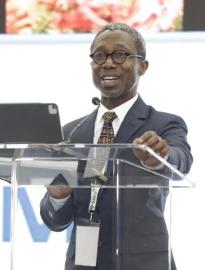
Rising global temperatures, extended droughts, and the growing spread of disease are some of the severe impacts of climate change, according to the President of the Academy of Science of South Africa (ASSAf) Council, Professor Thokozani Majozi. 

Speaking at a recent Science20 (S20) meeting in Pretoria, Majozi noted that no region is immune to these effects, which range from wildfires in the Americas and Australia to catastrophic flooding in Europe and Asia.

“Climate change does not recognise national boundaries, making international scientific cooperation not just beneficial but essential,” he said. 

The meeting highlighted the urgent challenge of climate change.

“This issue transcends borders, economies, and political systems. The evidence is unequivocal: our climate is changing at an unprecedented rate due to human activities,” the Professor warned. 

S20 is the official engagement group for science academies within the Group of Twenty (G20) to foster science-based dialogue and provide policy advice. 

Established in 2017, its mission is to promote scientific cooperation and ensure that scientific perspectives influence G20 decisions on global challenges. 

The G20 is an international forum of both developing and developed countries that seeks to find solutions to global economic and financial issues.

Under South Africa’s G20 Presidency, three foundational themes shape political and scientific discussions: solidarity, equality, and sustainable development.

He outlined the key responsibilities of the scientific community, which include advancing our understanding of climate systems and their effects on human health and wellbeing. 

The Professor also urged his colleagues to communicate complex scientific findings in ways that can inform both policymakers and the public. In addition, he emphasised the importance of fostering collaboration across natural sciences, social sciences, and the humanities. 

Majozi believes in nurturing the next generation of scientists who are equipped to address these complex challenges, and he advocated for the integration of indigenous and local knowledge systems with traditional scientific approaches.
“We are not merely repositories of knowledge but active participants in shaping how that knowledge is applied to real-world challenges,” he added. 

Led by the ASSAf, this year’s S20 gathering is particularly significant, as it marks the first time the G20 is hosted on the African continent. 

The Minister of Science, Technology, and Innovation, Professor Blade Nzimande, addressed the meeting virtually and called for global scientific cooperation and evidence-based policymaking. 

Nzimande emphasised the connection between the S20 theme, “Climate change and well-being,” and South Africa’s overarching G20 theme of “Solidarity, equality, and sustainability.”

“These themes do not merely serve as reminders of the urgent need for science-driven policy responses to challenges such as climate change, biodiversity loss, and global inequality,” he said. 

“They also highlight that today’s fundamental challenges are interconnected, demanding multidisciplinary approaches, collaboration, and decisive science-based action.”

Priorities and skills development

Nzimande outlined key science, technology, and innovation priorities that will define South Africa’s G20 leadership. 

These include, among other initiatives, enhancing our capacity for pandemic preparedness; promoting research and development in emerging technologies, especially artificial intelligence; and integrating these technologies into essential economic sectors such as energy, agriculture, mining, health, and the digital economy.

It also it involves developing critical and advanced skills, including through the Presidential PhD Programme.

The Minister stressed the crucial role of the S20 meeting in shaping the broader G20 Research and Innovation Working Group discussions, which will culminate in a ministerial meeting in September 2025. 

President of the Brazilian Academy of Sciences, Professor Helena Nader, applauded South Africa for highlighting the topic of climate change and wellbeing, especially considering recent global floods and storms. 

Meanwhile, the Executive Director of the United States National Academies Policy and Global Affairs Division, Dr Vaughan Turekian, praised G20 members’ long history of collaboration and expressed his desire for it to expand through the S20. – SAnews.gov.za


Gabisile
Mon, 03/03/2025 – 12:45
43 views

Rising global temperatures, extended droughts, and the growing spread of disease are some of the severe impacts of climate change, according to the President of the Academy of Science of South Africa (ASSAf) Council, Professor Thokozani Majozi. 

Speaking at a recent Science20 (S20) meeting in Pretoria, Majozi noted that no region is immune to these effects, which range from wildfires in the Americas and Australia to catastrophic flooding in Europe and Asia.

“Climate change does not recognise national boundaries, making international scientific cooperation not just beneficial but essential,” he said. 

The meeting highlighted the urgent challenge of climate change.

“This issue transcends borders, economies, and political systems. The evidence is unequivocal: our climate is changing at an unprecedented rate due to human activities,” the Professor warned. 

S20 is the official engagement group for science academies within the Group of Twenty (G20) to foster science-based dialogue and provide policy advice. 

Established in 2017, its mission is to promote scientific cooperation and ensure that scientific perspectives influence G20 decisions on global challenges. 

The G20 is an international forum of both developing and developed countries that seeks to find solutions to global economic and financial issues.

Under South Africa’s G20 Presidency, three foundational themes shape political and scientific discussions: solidarity, equality, and sustainable development.

He outlined the key responsibilities of the scientific community, which include advancing our understanding of climate systems and their effects on human health and wellbeing. 

The Professor also urged his colleagues to communicate complex scientific findings in ways that can inform both policymakers and the public. In addition, he emphasised the importance of fostering collaboration across natural sciences, social sciences, and the humanities. 

Majozi believes in nurturing the next generation of scientists who are equipped to address these complex challenges, and he advocated for the integration of indigenous and local knowledge systems with traditional scientific approaches.
“We are not merely repositories of knowledge but active participants in shaping how that knowledge is applied to real-world challenges,” he added. 

Led by the ASSAf, this year’s S20 gathering is particularly significant, as it marks the first time the G20 is hosted on the African continent. 

The Minister of Science, Technology, and Innovation, Professor Blade Nzimande, addressed the meeting virtually and called for global scientific cooperation and evidence-based policymaking. 

Nzimande emphasised the connection between the S20 theme, “Climate change and well-being,” and South Africa’s overarching G20 theme of “Solidarity, equality, and sustainability.”

“These themes do not merely serve as reminders of the urgent need for science-driven policy responses to challenges such as climate change, biodiversity loss, and global inequality,” he said. 

“They also highlight that today’s fundamental challenges are interconnected, demanding multidisciplinary approaches, collaboration, and decisive science-based action.”

Priorities and skills development

Nzimande outlined key science, technology, and innovation priorities that will define South Africa’s G20 leadership. 

These include, among other initiatives, enhancing our capacity for pandemic preparedness; promoting research and development in emerging technologies, especially artificial intelligence; and integrating these technologies into essential economic sectors such as energy, agriculture, mining, health, and the digital economy.

It also it involves developing critical and advanced skills, including through the Presidential PhD Programme.

The Minister stressed the crucial role of the S20 meeting in shaping the broader G20 Research and Innovation Working Group discussions, which will culminate in a ministerial meeting in September 2025. 

President of the Brazilian Academy of Sciences, Professor Helena Nader, applauded South Africa for highlighting the topic of climate change and wellbeing, especially considering recent global floods and storms. 

Meanwhile, the Executive Director of the United States National Academies Policy and Global Affairs Division, Dr Vaughan Turekian, praised G20 members’ long history of collaboration and expressed his desire for it to expand through the S20. – SAnews.gov.za


Watch a G20 meeting highlights the role of science in tackling climate change related video:

Stunning South Africa:

Have you visited MyPR?

MyPR.co.za offers free to publish press releases for your news site, blog or offline publication. Use the handy REPUBLISH facility or the Full Text RSS Feeds or just copy and paste.

Straton Electrical | Straton Solar | Straton Prepaid | Straton Plumbing | Straton IoT | Straton eBikes | BA Systems | Mbane Contracting | Reach Trust

Share this:

  • Share on X (Opens in new window) X
  • Share on Facebook (Opens in new window) Facebook
  • Print (Opens in new window) Print
  • Email a link to a friend (Opens in new window) Email
  • Share on LinkedIn (Opens in new window) LinkedIn
  • Share on Tumblr (Opens in new window) Tumblr
  • Share on WhatsApp (Opens in new window) WhatsApp
  • Share on Mastodon (Opens in new window) Mastodon
Category: NewsTag: Africa, African, agriculture, artificial intelligence, challenge, Connection, critical, digital, Energy, global, health, Innovation, mining, Pretoria, SA News, solutions, South Africa, Sustainability, Technology, United States, Video

If you feel strongly about this article then feel free to send MyZA a ‘Letter to the Editor’ using the submission form below:


Letter to the Editor

This field is for validation purposes and should be left unchanged.
If this is in response to an article please include that article title here or as the lead in for the first paragraph of your Letter below.

Separate tags with commas

Localise your letter by naming the city your words are about. Add relevant words describing your subject. Single comma separated words of no more than 5
Your Name(Required)
Your Name will be linked to the website below.
Your personal, business or social media web site
Choose NO to not set up a user account on MyZA. User Accounts will allow you to submit letters under your own Author Name

3 Latest Letters to the Editor:

  • Older Persons Grants Land Today — No Need to Queue at Dawn

    Dear Editor, Older Persons grants are paid today, 30 October, under SASSA’s revised November payment schedule — with disability grants on Monday 2 November, children’s grants on Tuesday 3 November, and grants under review on Thursday 5 November. Two things every beneficiary should know. First, grant money does not expire on payment day. It stays…

    30 October 2026
  • November Grants Pay Early – No Need to Queue at Dawn

    Dear Editor, I run SAGrant (sagrant.co.za), a free resource helping South Africans navigate SASSA grants. November grants pay earlier than usual. Older Persons grants are paid on Friday 30 October, Disability grants on 2 November, and Child Support and other grants on 3 November. Grants still under review are paid on 5 November. The money…

    27 October 2026
  • NSFAS 2027 applications close on 31 October — SASSA households, apply now

    Dear Editor, I run SAGrant (sagrant.co.za), a free resource helping South Africans navigate SASSA grants. NSFAS applications for the 2027 academic year close on Friday 31 October 2026, and no extension is expected. If your household receives a SASSA grant, your child already passes the NSFAS financial eligibility test — but they still have to…

    25 October 2026

About Guest

Previous Post:Absa RUN YOUR CITY GQEBERHA 10K offers exclusive Group Entry Deals for Corporates & Running Clubs
Next Post:A Drive to Grow Jobs in the Northwest Province

Reader Interactions

Comments

  1. Neophyte Believer

    27 September 2026 at 6:30 am

    Fun South African Fact: Lions, elephants and giraffes may not roam the city streets, but nature and animals are never too far away in South Africa. From vervet monkeys swinging through tree-lined streets in the suburbs and baboons frolicking around Cape Point to seals visiting the Hout Bay harbour in search of a fishy snack and an array of bird species taking to the sky at any given moment. Wildlife is all around!

  2. Bleachers

    7 September 2026 at 5:02 pm

    At the end of the school year and a mother asked his son if the exam questions were difficult. And he answers her saying “They weren’t bad at all,” it was the answers that gave me all the trouble.

Copyright © 2026 · MyZA · All Rights Reserved · Powered by Stratlec Online