• Skip to main content
  • Skip to header right navigation
  • Skip to after header navigation
  • Skip to site footer
MyZA

MyZA

News, Directory, Events and Other Stuff

  • Social Media
  • Sport
  • World News
  • Home
  • Submit News
  • Directory
  • Events
  • Stratlec
  • TFSA
  • News
    • APO
    • Today’s Sport News
    • Todays Social Media and Tech Headlines
    • Today’s World News
    • Today’s SA Financial News
  • Contact
You are here: Home / Archives for South Africa

South Africa

11 December 2023

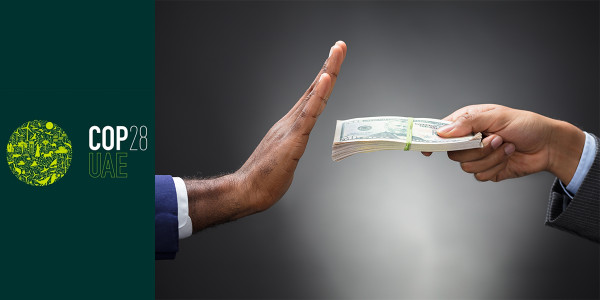
As Conference of the Parties (COP28) Wraps Up, We Must Remember, Aid to Africa Is (Still!) Not the Retort
Location: News
African Energy Chamber

By NJ Ayuk, Executive Chairman, African Energy Chamber (www.EnergyChamber.org).

There was an era when Africa and Western pop music were closely linked.

Western entertainers spearheaded a number of internationally renowned events to raise awareness about the plight of starving Africans and generate funds for famine relief.

In December 1984, the supergroup Band Aid sang about feeding the world, asking “Do They Know it's Christmas?” Within a year, the group had raised over USD9 million. Three months later, USA for Africa released “We Are the World” and banked USD44.5 million after one year for its African humanitarian fund. Then on a hot July day in 1985, the worldwide concert event Live Aid raised more than USD150 million for famine relief in Africa.

These are just a handful of grand and noble gestures intended to lift Africa out of poverty. And these famous events arguably raised both awareness and funds. Unfortunately, the efforts — and others like them — fall far short of making any real socioeconomic change. In fact, some argue that injecting monetary aid into Africa, time and time again, has actually done more harm than good.

I acknowledge that stance may sound ungrateful. At first blush, many might counter that starving people have no agenda. Destitute parents still need to feed their children. Turning a blind eye to their plight is inhumane.

Let me explain why the African Energy Chamber (AEC) continues to push for free-market solutions rather than good-will handouts.

History of ‘Help'

Even aid genuinely given to help Africa tends to do more harm than good.

Since 1960, more than USD2.6 trillion has been pumped into Africa in the form of aid. From 1970 and 1998, when aid was at its peak, poverty actually rose alarmingly — from 11% to 66% — due in large part to this massive influx of foreign aid that counteracted its intended good.

Aid decreased long-term economic growth by fueling systemic corruption, in which powerful aid recipients funneled foreign funds into a personal stash instead of public investment. Many leaders realized that they no longer needed to invest in social programs for their constituents because of the revenues from foreign donors.

Large inflows of aid also caused higher inflation, hindering African nations' international competitiveness in exporting. That resulted in diminishing the manufacturing sector – which is critical in helping developing economies grow — across the continent. And well-intentioned Westerners who saw the economic shrink just kept pouring more and more money at “the problem” — leading to a vicious cycle that furthered corruption and economic decline.

But here's the kicker: The World Bank has admitted that 75% of the agricultural projects it implemented to help Africa failed. So why do they and other aid providers continue to fund these failing efforts?

Examples of Failure

Across the continent, we see example after example of failed aid projects, with agricultural projects routinely providing little or no benefit to African farmers.

In Mali, the U.S. Agency for International Development (AID) injected USD10 million into “Operation Mils Mopti” to increase grain production. The government imposed “official” prices on the grain, which forced farmers to sell their crops at these below-market rates and resulted in grain production falling by 80%. 

AID also spent USD4 million to help livestock producers grow the number of cattle in the Bakel region from 11,200 to 25,000 — but ultimately only succeeded in increasing it by 882 head. Another USD7 million was injected into the Sodespt region, but that investment managed to sell only 263 cattle and failed to sell any goats or sheep.

Then we see example after example of Westerners wastefully “helping” without any understanding of the local situation. Norwegian aid agencies built a fish-freezing plant to improve employment in northern Kenya — a region where the local people traditionally do not fish because of their semi-nomadic pastoralist lifestyle. Couple the lack of fishing experience with the unfortunate reality that the plant required more power than was available in the entire region, and the result was that the brand-new processing plant sat idle.

The World Bank financed a USD10+ million expansion of Tanzania's cashew-processing capabilities, which resulted in 11 factories with the capacity to process three times as many cashews as the country was growing on a yearly basis. The plants were too efficient for the available workforce and cost so much to run that it was cheaper to process the raw nuts in India. Half the plants were inoperable, and the other half only ran at about 20% capacity.

I'm not saying that we Africans are ungrateful for the outpouring of heartfelt care. The compassion of the West is certainly real. However, the outcome of said compassion is the concern: The more foreign aid African governments receive, the worse they perform. As long as the aid keeps flowing, government leaders and their employees who administer development programs may prosper while the rest of the citizenry continues to suffer the effects of a mismanaged economy.

Questionable Benefits

We also must acknowledge that, in far too many cases, aid has also been given to African nations and communities in attempts to manipulate and control.

“While hungry faces are used on posters and in media reports to sell the virtues of foreign aid, it is the hungry who rarely see any of the funds,” James Peron, executive director of the Institute for Liberal Values in Johannesburg, South Africa, lamented in a piece for the Foundation for Economic Education. “Poverty may be used to justify the programs, but the aid is almost always given in the form of government-to-government transfers. And once the aid is in the hands of the state it is used for purposes conducive to the ruling regime's own purposes.”

And now we witness the international community talking about aid for African countries as a substitute for our oil and gas activities. Western environmentalists argue that Africa should keep all of its petroleum resources in the ground to prevent further climate change. In exchange for that sacrifice, African nations would be compensated and inject that money into other opportunities like developing their sustainable energy technologies.

I've said it before, and I'll say it again: What a horrible idea!

I‘m offended by foreign stakeholders feeling that providing humanitarian assistance gives them the right to influence our domestic decisions. With Africa poised to participate in the worldwide energy transition, my fear is that international donors will feel justified to dictate Africa's policy regarding the lengths to which, and speed with which, our energy transition occurs. This would be a huge step backward in our energy, economic, and even individual independence.

Aid packages to incentivize giving up our oil and gas operations will be detrimental to Africans. Because let's be honest: History has shown that this assistance could never replace the oil and gas industry's ability to create jobs and business opportunities, grow local capacity, open the door to technology sharing, facilitate economic growth, and alleviate energy poverty.

Instead of continuing a pattern that clearly does more harm than good, why aren't African nations encouraged to leverage the wealth of resources at our feet?

During the final few days of COP28 — and beyond — the AEC is determined to make a case for African nations harnessing their oil and gas solutions to help themselves. We will not be bullied, or manipulated with aid, into a path that is not in our best interests.

Use What We Have!

One reason why the AEC is an outspoken advocate for Africa's oil and gas industry is because it represents more than big revenue for African governments. It is a free-market solution that creates pathways for Africans to help themselves. And, ultimately, empowering Africans is our number one goal.

We endorse an energy mix approach that allows Africa to use and sell our own hydrocarbon reserves to alleviate energy poverty, while at the same time moving toward a future in which renewable energy sources power the continent. The energy mix method can help more people more quickly because it takes a practical, people-first approach to helping those who have traditionally been left behind by the energy sector, while moving us toward greener energy sources.

Natural gas, in particular, can transform African lives and communities. Its potential benefits range from eradicating energy poverty to allowing Africans to develop skills for good jobs to creating hope for our youth.

Ramping up gas production to help alleviate the lack of access to electricity will create thousands of new employment opportunities in Africa. In addition, the new sources of energy can be exported to Western countries to replace Russian energy. Then, as Europe transitions to sustainable energy, a larger portion of Africa's natural gas can power domestic needs. By the time other countries complete their transitions to carbon-neutral sources, Africa will have a much more expansive and reliable grid system, which will allow for an easier transition.

And before we argue about the evils of hydrocarbons, let me point out that, although it might seem counterintuitive, it is possible for Africa to make use of its abundant fossil fuels while moving toward a future sustained by renewable energy sources. In fact, I believe that African nations must do everything they can to ensure that these two things work in tandem. Considering that 600 million people on the continent have no access to electricity and 900 million people lack access to clean cooking technologies, it's impossible — if not altogether inhumane — to discuss climate change without looking at energy poverty.

As I recently wrote in an article published by Medium, we cannot transition from the dark to the dark. We must deliver energy to the people of Africa and then worry about transitioning to environmentally friendly alternatives, just like we have everywhere else in the world.

This has been our platform at COP28, and we will continue to stand by it in 2024 and beyond.

Distributed by APO Group on behalf of African Energy Chamber.

Media files
African Energy Chamber
Download logo
Read moreAs Conference of the Parties (COP28) Wraps Up, We Must Remember, Aid to Africa Is (Still!) Not the Retort
10 December 2023

Ramokgopa urges public to engage with IRP 2023

Location: News

Ramokgopa urges public to engage with IRP 2023

Minister in the Presidency responsible for Electricity, Kgosientsho Ramokgopa, has urged the public to engage with the Integrated Resource Plan (IRP) 2023, which has been approved by Cabinet.

IRP 2023 is now set to be published by the Minister of Mineral Resources and Energy.

The Minister urged communities, stakeholders and interest groups to engage with the IRP 2023 and send their submissions, as part of determining the country’s “energy future”.

“This will underpin our responses in relation to how we are going to address the energy situation in the country.

“What is significant about this is that… the IRP 2023 computes two horizons [including up to 2030]. In the context of the energy crisis, the interventions [in this IRP] will help us in the short-term to ensure that we ameliorate the degree of the energy deficit that we are experiencing now.

“The IRP also computes horizon number two, which is from 2030 to 2050, and in the most bold fashion, it states what are these new sources of energy and essentially, it [deals with] our ability to be able to exploit our renewable energy endowment, and their linkages to the availability of transmission,” Ramokgopa said at the Energy Action Plan briefing on Sunday.

The Minister reiterated the commitment to resolve load shedding, and have a secure energy supply to protect the South African economy and ensure growth and development.

The IRP is a plan aimed at estimating South Africa's electricity demand. It takes into account how the demand for electricity will be met and the expense of such a demand. The plan refers to electricity generation and expansion programmes.

In formulating the National Development Plan, the Department of Energy gazetted the Integrated Resource Plan 2010-2030 (IRP 2010) in March 2011. This forecasted the energy demand for the 20-year period.

In October 2019, IRP 2019 was gazetted. This updates the energy forecast from 2019 to the year 2030.

The IRP is a “living document” that gets revised and updated.

Performance of power plants

The Minister announced that 980 megawatts (MW) at Koeberg Unit 2 will be taken out on Monday. Unit 1 one came back last month after significant delays. Koeberg is the only nuclear power station on the continent, with each of the two units producing 980 megawatts, according to the Minister. 

"It's very significant to the energy mix, and as part of our intention to extend its life by 20 years, we took out Unit 1 to comply with the requirements of the regulator (NERSA)... Now we are taking out Unit 2 for the same purpose," he said, noting that Unit 1 is almost at full load.

With regards to the performance of the grid over the past week, Ramokgopa said the unplanned capacity loss factor (UCLF) and partial load losses (the rate at which units are failing and not performing at optimal capacity) combined has been averaging just above 14 000MW.

“To put it into context, we have reached highs of 17 000MW of these losses. If we were to use May as our baseline, we were losing about 17 369MW. Essentially, we are better off by about 3 000MW, and that’s what we’ve been averaging.

“In fact, it looks even healthier if you were to take Saturday and today, where we’re at about 12 000MW. We have been able to introduce an improvement of about 5 000MW - 6 000MW… if you were to use the baseline of May,” the Minister said.

On why Stage 3 and 4 load shedding continues despite the improvement outlined by the Minister, he said the aim was to use the summer period to ramp up planned maintenance.

“We are averaging just close to 7 000MW. To put it into context, during the winter period, we were averaging about 2 500MW of planned maintenance. If you look at the period around May, it was 3 100MW. The team has taken out, of their own volition, an additional 3 000MW, compared to what was the situation in May.

“We reached a high of about 8 000MW on 8 December. That means there was an additional 4 000MW that has been taken out… It is important that we are able to do maintenance. The more you postpone maintenance, it will catch up with you and you will experience rapid failures of units.”

The Minister said the status quo shows the “true health” of the system, without “necessarily the assistance of the open cycle gas turbines”. While these are engaged at certain peaks, Ramokgopa said they are not being used at the rates at which they have previously been.

The Minister said all stakeholders are working hard to stabilise power supply, especially throughout the festive season.

New Eskom CEO

On the appointment of Dan Marokane as the new Eskom Group CEO, Ramokgopa said leadership stability is key to the resolution of the energy crisis that is confronting the country.

“We are looking forward to the contribution of Mr Marokane, together with the totality of the executive committee of Eskom… to give additional impetus to the work that we are doing,” Ramokgopa said, highlighting that there will now be “certainty in the apex office” of the power utility.

The Minister thanked the Interim Group CEO, Calib Cassim, for his contribution. – SAnews.gov.za

GabiK
Sun, 12/10/2023 - 12:47

130 views
Read moreRamokgopa urges public to engage with IRP 2023
10 December 2023

Deputy President on working visit to Southeast Asia

Location: News

Deputy President on working visit to Southeast Asia

Deputy President Paul Mashatile has arrived in the Republic of Singapore to begin the first leg of his first working visit to Southeast Asia.

The Deputy President began his visit on Sunday with a tour of the Marina Barrage development, Singapore’s innovate water resource management project. 

As a resource-poor and water-scarce country, Singapore has invested significantly in research and development of water management and sustainability. Most impressively, the country has made big strides in the area of seawater desalination.

“The Deputy President’s visit to the country is aimed at building and strengthening bilateral relations, particularly increasing trade, economic, knowledge and cultural exchange between the two States,” the Presidency said in a statement. 

Singapore is a global financial hub and is considered one of the premier asset management centres in Asia. The World Bank has ranked Singapore as the number one country in the world for ease of doing business since 2006, and the country is an important global aviation and maritime hub. 

Singapore is also considered an important gateway for the export of goods and services to Southeast Asia and a hub for joint venture partnerships throughout Asia. It is an important centre for South African businesses looking for opportunities to expand operations on the continent.

As part of his programme, the Presidency said, Mashatile will visit the Lee Kuan Yew School of Public Policy and deliver a public lecture on the 30 years of diplomatic relations between South Africa and Singapore titled “Celebrating a journey of mutual respect, strategic partnership and cooperation.”

The Deputy President is accompanied in Singapore by Deputy Ministers for International Relations and Cooperation, Candith Mashego-Dlamini; Trade, Industry and Competition, Nomalungelo Gina; Higher Education, Science and Innovation, Buti Manamela; Communication and Digital Technologies, Philly Mapulane; Forestry, Fisheries and the Environment, Magdalene Sotyu, and senior government officials.

Trade and diplomatic links

One of the key areas of collaboration between South Africa and Singapore is trade. Singapore is one of South Africa's largest trading partners in Southeast Asia, with trade between the two countries totalling approximately R28 billion in 2022.

Singapore is a significant investor in South Africa, with investments totalling over R5 billion in sectors such as manufacturing, financial services and real estate.

South Africa's economic relations with Singapore are focused on trade, investment, tourism promotion and skills transfer.

South Africa exports a range of products to Singapore, including gold, diamonds and wine, while Singapore exports electronics, chemicals and machinery to South Africa.

In May this year, President Cyril Ramaphosa hosted Prime Minister Lee Hsien Loong of the Republic of Singapore for an Official Visit in Cape Town.

Singapore’s visit to South Africa continued the high-level engagement the two governments have fostered since diplomatic relations begun in 1993, ahead of South Africa’s democratic transition.  

Since then, the two countries have shared excellent bilateral relations, which have formed the basis of regular high-level visits.

2023 marks the 30th anniversary of the establishment of diplomatic relations between the Republic of South Africa and the Republic of Singapore as partners who work together closely in multinational fora. 

Singapore, like South Africa, is a member of the Indian Ocean Rim Association (IORA), the Commonwealth, as well as the Non-Aligned Movement (NAM).

The two countries have signed numerous agreements to enhance cooperation in areas such as trade, investment, education, and defence.

The May visit was preceded by an official visit undertaken by the Minister of International Relations and Cooperation, Dr Naledi Pandor, to Singapore in July 2022 to strengthen bilateral relations.

In May, President Ramaphosa and Prime Minister Hsien Loong held official talks on cooperation in the areas of communications and digital technology, science and innovation, water and sanitation and skills development.

The leaders discussed the potential for closer collaboration in these areas when they met on the sidelines of the G20 Leaders Summit held in Bali last year. 

The visit brought captains of industry from the respective countries to collaborate in sectors ranging from ports, logistics and supply chain, healthcare and biomedical, food manufacturing and engineering. – SAnews.gov.za

GabiK
Sun, 12/10/2023 - 12:58

222 views
Read moreDeputy President on working visit to Southeast Asia
10 December 2023

South Africa: African Development Bank approves $1 billion guarantee from the United Kingdom to support SA’s Just Energy Transition

Location: News

African Development Bank Group (AfDB)
Download logo

The Board of Directors of the African Development Bank Group (www.AfDB.org) has approved a $1 billion guarantee program in collaboration with the UK Foreign Commonwealth and Development Office (FCDO), which will allow the Bank to increase its lending capacity in support of South Africa's Just Energy Transition (JET).

Developed in close collaboration with the government of the Republic of South Africa, the program will support projects aligned with South Africa's JET investment plan, such as transmission and grid-balancing storage, renewable energy generation, energy efficiency, rehabilitation of municipal electricity delivery, green hydrogen, new electric vehicles. It also includes projects addressing the “just” dimension, notably in the Province of Mpumalanga, in the north-eastern part of the country, bordering Swaziland and Mozambique.

The approval, coming during COP28, where ramping-up climate finance is an issue, is timely and topical. African Development Bank Vice President for Power, Energy, Climate and Green Growth, Dr. Kevin Kariuki observed: “this is another innovative operation that reaffirms AfDB's leadership in crafting financial solutions to increase access to climate finance for Africa's low carbon development and net zero ambitions.”

Melinda Bohannon, Foreign Commonwealth and Development Office Director General of Humanitarian and Development stated,” FCDO remains committed to the Just Energy Transition Partnership with South Africa, which supports green growth and jobs, improves energy security, and helps South Africa achieve its carbon reduction ambitions as set out in its National Determined Contribution.  This guarantee will unlock funds for projects within the remit of South Africa's recently released Just Energy Transition implementation plan. This comes alongside the recently significantly increased grant offer from the International Partners Group, and we are using some of those grants to help develop an investment project pipeline”.

Mmakgoshi Lekhethe, Deputy-Director General for Asset and Liability Management in South Africa's National Treasury commented, “We are pleased with the approval by the AfDB Board of the guarantee framework that will increase South Africa's access to funding from the Bank by $1 billion. This marks an important partnership between our government, the UK and AfDB to enhance our ability to implement South Africa's just energy transition in a way that is just and socially responsible. We look forward to working closely with the AfDB on the preparation and financing of a pipeline of programs and projects under our just transition priority areas, including those identified in the JET Implementation Plan. As a development bank with vast experience in just transition in the continent, the AfDB is an ideal partner for us on this important initiative”.

Max Ndiaye, Director of Syndications, Co-financing and Client Solutions, noted previous collaboration between the Bank and FCDO, and applauded this transaction as further demonstration of the Bank's continued efforts to heed the G20 recommendations on capital adequacy that call for increased collaboration and additional shareholder support for the balance sheet optimization of MDBs.

“By enabling the Bank to increase its lending capacity, this landmark guarantee agreement will greatly support South Africa's Just Energy Transition,” noted African Development Bank Director General for Southern Africa, Leila Mokaddem. “The African Development Bank remains committed to accompanying South Africa on this important journey," she added.

Distributed by APO Group on behalf of African Development Bank Group (AfDB).

Link to Images: https://apo-opa.co/4afJ94I

Contact:
Amba Mpoke-Bigg
Communication and External Relations Department
email: media@afdb.org

Technical contact:
Max Ndiaye
Director of Syndications
Co-financing and Client Solutions

About the African Development Bank Group:
The African Development Bank Group is Africa's premier development finance institution. It comprises three distinct entities: the African Development Bank (AfDB), the African Development Fund (ADF) and the Nigeria Trust Fund (NTF). On the ground in 41 African countries with an external office in Japan, the Bank contributes to the economic development and the social progress of its 54 regional member states. For more information: www.AfDB.org

Read moreSouth Africa: African Development Bank approves $1 billion guarantee from the United Kingdom to support SA’s Just Energy Transition
10 December 2023

King of the Whip 2023 produces yet another FMX spectacle at Montecasino.

Location: MyPR

8 December 2023:     Presenting the official Highlights Video from King of the Whip 2023 – An action-packed five-hour show condensed into a four-minute banger edit featuring the Ultimate Whip Showdown and FMX Best Tricks.  26 Motocross and Freestyle Motocross riders went head-to-head in the Best Whip and Best Trick contests in front of the biggest …

Read moreKing of the Whip 2023 produces yet another FMX spectacle at Montecasino.
9 December 2023

SA ‘A’ Squads For India A Tour Named

Location: Sport

JOHANNESBURG: Cricket South Africa (CSA) has today announced the South Africa A (SA ‘A’) squads for the India A tour of...

Read moreSA ‘A’ Squads For India A Tour Named
9 December 2023

Cricket South Africa Celebrates ‘SA’s Remarkable Summer Of Cricket’ With Youth Tournaments

Location: Sport

JOHANNESBURG: As the nation looks forward to the upcoming India tour, Cricket South Africa (CSA) is proudly hosting a range of...

Read moreCricket South Africa Celebrates ‘SA’s Remarkable Summer Of Cricket’ With Youth Tournaments
9 December 2023

Proteas Women Squad Ready To TakeOn Bangladesh In Crucial Odi Series

Location: Sport

JOHANNESBURG: Cricket South Africa (CSA) has today announced the 15-player squad that will face Bangladesh in the three-match One-Day International (ODI)...

Read moreProteas Women Squad Ready To TakeOn Bangladesh In Crucial Odi Series
9 December 2023

Hlubi, Wolvaardt Inspire Proteas Women To Series-Levelling Victory In Third T20I

Location: Sport

KIMBERLEY: Debutant and Player of the Match, Ayanda Hlubi as well as captain Laura Wolvaardt played leading roles with bat and...

Read moreHlubi, Wolvaardt Inspire Proteas Women To Series-Levelling Victory In Third T20I
9 December 2023

Sa ‘A’ Clinch West Indies A Tour 2-1

Location: Sport

ONTEIN: Dane Paterson picked up three wickets late in the day to secure South Africa A (SA ‘A’) a 76-run win...

Read moreSa ‘A’ Clinch West Indies A Tour 2-1
9 December 2023

Ngidi Ruled Out Of KFC T20I Series

Location: Sport

DURBAN: Proteas fast bowler Lungi Ngidi has been ruled out of the three-match KFC T20I series against India due to a...

Read moreNgidi Ruled Out Of KFC T20I Series
8 December 2023

PRASA committed to addressing long distance train challenges

Location: News

PRASA committed to addressing long distance train challenges

With the reintroduction of the long-distance passenger train service, the Passenger Rail Agency of South Africa (PRASA)  has noted some challenges that may affect the service and has outlined its commitment to address them.

“The country is currently facing a shortage of locomotives, and some of those available are unreliable. This may result in delays and, in some cases, even cancellations. Contingency plans are in place for trips on all four corridors where the MLPS [Mainline Passenger Services ] service operates,” PRASA said on Thursday.

The agency said the condition and quality of the infrastructure have been a concern and may impact the travel experience.

“Despite these challenges, PRASA remains steadfast in its commitment to reviving the long-distance service. PRASA plans to ensure access to locomotives and improve the infrastructure quality and availability in conjunction with our sister agency, Transnet.

“PRASA believes acknowledging and addressing challenges openly is essential to rebuilding and maintaining trust in our service. We know that long-distance travel via rail is the most affordable. During this phase of reintroducing the MLPS service, PRASA will provide regular updates on our progress and actively seek feedback from our passengers and other stakeholders,” the agency said.

Amid these challenges, passenger safety remains its top priority.

“PRASA has implemented enhanced safety and security protocols to improve passenger safety on our trains. Our MLPS trains will have visible security on board the trains and at platforms to ensure all passengers feel safe.

“Passenger feedback will be critical as we accelerate the roll-out of the MLPS service and shape its future. We call on our passengers to share their experiences, concerns, and suggestions.

“PRASA is committed to delivering a service that meets the expectations of its stakeholders, especially passengers. The resumption of the MLPS service is a critical step in PRASA’s recovery of all aspects of passenger rail. The agency is determined to deliver a reliable, safe, comfortable long-distance train experience,” it said.

Earlier this month, the agency announced that the long-distance MLPS under its rail division had resumed the Johannesburg to Durban and Cape Town services on the Shosholoza Meyl.

The services were both suspended in 2021 due to operational and network infrastructure challenges.

As an entity of the Department of Transport (DoT), PRASA is the sole state-owned entity responsible for providing long-distance and urban passenger rail services and intercity bus services at the behest of the DoT.  –SAnews.gov.za

nosihle
Fri, 12/08/2023 - 09:03

2246 views
Read morePRASA committed to addressing long distance train challenges
8 December 2023

BMA intercepts harmful skin lightning products at OR Tambo

Location: News

BMA intercepts harmful skin lightning products at OR Tambo

The Border Management Authority’s (BMA) port health team, working in the cargo section of the OR Tambo International Airport, on Thursday intercepted 865kg of skin lightning products, as well as unregistered medicine. 

The BMA highlighted that skin lightening products are prohibited in South Africa as they cause harm to the skin.

“The products were coming in on a flight from Nigeria and will be destroyed. In accordance with the Medicines and Related Substances Act 101 of 1965 and the Foodstuffs Cosmetic and Disinfection Act 54, when these products are found, the importer has to pay for the destruction of the products before the rest of the shipment is released. 

“Only an approved destruction facility licensed to deal with hazardous waste is used for destroying the products,” the BMA said in a statement.

The BMA’s port health team also found unregistered medicines which were detained for destruction. 

Port Health and environmental health practitioners work closely with officials from the South African Health Products Regulatory Authority (SAHPRA) who play an important role in advising officials on product identification and what steps to take.

Port Health is a special function of the Border Management Authority which monitors and evaluates all foodstuffs, cosmetics, disinfectants, hazardous substances and medicines entering South Africa through the ports.

Commissioner of the BMA, Dr Mike Masiapato, has outlined detailed port health regulations that will be undertaken at ports.

“All arriving travellers must expect to be screened and searched on their arrival at the ports of entry. We have employed all our resources and intensified our work during this festive season to ensure our borders are secured. We aim to record significant success with interceptions around the ports of entry and border law enforcement areas,” Dr Masiapato said.

The BMA is responsible and accountable for the entire border environment ensuring legitimate movement of goods and people. - SAnews.gov.za


DikelediM
Fri, 12/08/2023 - 12:03

402 views
Read moreBMA intercepts harmful skin lightning products at OR Tambo
8 December 2023

A Guide to Selling Krugerrand Coins in Today’s Market

Location: MyPR

Introduction to Krugerrand Coins Krugerrand coins hold a significant place in the world of precious metals. Originating from South Africa in 1967, these gold coins were intended to promote South African gold. They are named after Paul Kruger, a prominent figure in South Africa’s history, and the Rand, the South African currency. Krugerrands are renowned …

Read moreA Guide to Selling Krugerrand Coins in Today’s Market
8 December 2023

Gold Buyers in South Africa: Cashing in on Precious Metals

Location: MyPR

Introduction: A Lucrative Market for Gold In South Africa, a unique market thrives around the buying and selling of gold for cash. This market caters to individuals looking to sell their gold for immediate financial gain, reflecting both the enduring value of gold and the economic needs of the population.   Who are the Gold …

Read moreGold Buyers in South Africa: Cashing in on Precious Metals
8 December 2023

Weather service warns of heavy rain from Sunday

Location: News

Weather service warns of heavy rain from Sunday

The South African Weather Service (SAWS) has warned of widespread heavy rain in the days ahead, which could result in flooding or river flooding that might cause significant disruption in some provinces.

Initially the weather this weekend will be relatively settled, with just a small chance of thunderstorms over some of the eastern provinces on Friday and Saturday.

“Incidentally, neither the Western Cape nor the Eastern Cape will be directly affected by this weather system. On Sunday, 10 December, weather conditions will begin to deteriorate significantly, as the cut-off low manifests itself over the northern parts of the Northern Cape, introducing marked instability into the atmosphere, to drive widespread showers and thundershowers.

“As tropical air begins to stream southward over Botswana and South Africa, conditions will become progressively cloudy to overcast. During the course of the day, rain will set in over numerous provinces, including North West, the Free State, Gauteng, Mpumalanga, Limpopo and to a lesser extent, KwaZulu-Natal (KZN),” SAWS said.

Heavy rainfall is likely to occur in many parts of the above-mentioned provinces, elevating the risk of flooding as well as river flooding.

The public has been urged to monitor, and to take heed of, regular weather updates and warnings issued by the weather service.

“Moreover, as the rain produced by this system is expected to continue unabated into Monday, 11 December, the ground is likely to become saturated, leading to widespread overland runoff into streams and rivers.

“Whilst this phenomenon will ultimately lead to increased dam levels, the risk of river flooding (and associated road closures and general traffic disruption) will remain particularly high. Disaster management practitioners are also advised to maintain a high level of vigilance during this period, should river flooding continue to pose a safety and health risk to the public at large,” SAWS said.

Motorists and pedestrians are urged not to try to cross rivers or streams, which are already flooded, under any circumstances.

“The cause of the widespread rainy weather will be the combination of three distinct circulation features in the atmosphere over southern Africa. Firstly, a cut-off low is expected to develop, in the upper air of the atmosphere, over the central interior during the latter half of the weekend.

“Secondly, a surface trough is expected to begin intensifying, in sympathy with the deepening upper-air cut-off low. The combination of these two features is well known to have the potential to drive episodes of widespread, often heavy, rain over southern Africa.

“Importantly, in this particular case, there is a third significant factor which is expected to elevate the risk of heavy rainfall from this system. This factor is the expected introduction of a stream of tropically sourced moisture, drawn southwards over the central and eastern interior of South Africa, under the influence of the circulation associated with the surface trough and upper-air system respectively,” SAWS said.

Tropically sourced air is well known to be associated with rainfall of a potentially heavy, widespread nature.

“Currently, numeric weather prediction models suggest that the rainfall in association with this system will start clearing from the west, during the course of Tuesday, 12 December, although areas of heavier rainfall may still linger over KZN, eSwatini and the lowveld regions of Mpumalanga and Limpopo.

“A surface high pressure system is likely to sustain light rainfall over aforementioned provinces on Wednesday, 13 December, as cooler, moist maritime air is introduced to the eastern coastal regions. However, the upper air cut-off low will have moved off the country completely by this time,” SAWS said.

The South African Weather Service will continue to monitor this weather system and issue subsequent updates and impact-based warnings over the next few days.

The public has been advised to regularly follow weather forecasts on television and radio, as well as all social media platforms.

Updated information will regularly be available at www.weathersa.co.za as well as on X at @SAWeatherServic and Facebook @SouthAfricanWeatherservice. – SAnews.gov.za


nosihle
Fri, 12/08/2023 - 12:18

412 views
Read moreWeather service warns of heavy rain from Sunday
8 December 2023

Gert-Johan Coetzee Unveils Annual Fashion Design Bursary for 2023, valued at R204,900

Location: Entertainment, MyPR

Johannesburg – World-renowned designer to the stars, Gert-Johan Coetzee, is proud to announce the launch of the 2023 Fashion Design Bursary, an annual initiative that has been shaping the future of South African fashion since its inception in 2009. The lucky winner will embark on a transformative three-year journey of fashion education at Gert-Johan Coetzee’s …

Read moreGert-Johan Coetzee Unveils Annual Fashion Design Bursary for 2023, valued at R204,900
8 December 2023

Conference To Tackle Challenges Facing Corporate Governance

Location: MyPR

Insufficient corporate governance lies at the core of several societal welfare and democratic challenges, spanning from dysfunctional municipalities struggling to meet service delivery needs due to corruption and inefficiency, to disparities in the private sector such as wage gaps and collusive practices that do not serve the public interest. Addressing the critical issues surrounding ethical …

Read moreConference To Tackle Challenges Facing Corporate Governance
8 December 2023

CSA Statement On SABC India Tour Broadcast

Location: Sport

JOHANNESBURG: Cricket South Africa regrets to announce that it is unable to strike a deal with the SABC to broadcast the...

Read moreCSA Statement On SABC India Tour Broadcast
8 December 2023

Call to deal with corruption

Location: News

Call to deal with corruption

Corruption has become so pervasive that the same vigour used to fight apartheid should be used to combat the scourge.

This is according to the Public Service Commission (PSC) Commissioner, Prof Somadoda Fikeni, who was speaking on Friday at this year’s International Anti-Corruption Day at the ZK Matthews Great Hall at Unisa in Pretoria.

International Anti-Corruption Day is commemorated annually on 9 December in recognition of the United Nations Convention against Corruption, which was signed in Mexico in 2003.

South Africa is one of the signatories to the Convention having ratified it in 2004.

Reflecting on the 10th anniversary of the passing of the global statesman Nelson Mandela, Prof Fikeni said Madiba led with cohorts of successful leaders of their time.

“The struggle and the mission of their time was apartheid. That was the biggest challenge of their time. But today, after all the revelations to the Zondo Commission, we realise that the biggest challenge we face is corruption.  

“Apartheid was the rule of law that took from the majority and gave to the minority. And corruption is the minority rule that takes from the majority and  gives to the minority,” he said.

He believes that it should not matter whether corruption happens is in the public or private sector, religious institutions or non-government organisations. 

Fikeni called South Africans to wage war against the scourge.  

“During apartheid, we had iconic figures who died like Hector Pieterson and today, the whistle-blowers like Babita [Deokaran] are the Hector Pietersons of the struggle of today and many other whistle-blowers who died to save the country have become the Sharpeville Massacre victims of today.”

He said collaborative effort is needed to fight corruption.

“Government alone, accountability institutions alone, civil society alone, academic institutions alone and private sector alone can no longer combat this scourge. We need a coordinated effort,” he said. 

South Africa, according to Fikeni, is rich in producing policies and frameworks but tends to be challenged with implementation. 

It is for this reason that the 2023 International Anti-Corruption Day’s focus is on uniting against corruption and how to better collaborate and improve implementation and impact. 

“When we leave this place and years pass, no one will remember what we said, what we were wearing, what venue we were in but what concrete steps do we take to combat corruption,” he said to the packed hall.

He said it was not right that whistle-blowers have to go into “exile” because they do not feel safe. 

According to the Prof, the PSC is also working on the lifestyle audits of officials and collaborating with Chapter 9 institutions to ensure the oversight eco-system is strengthened. 

“This is a generational mission of our time to say that corruption is a new apartheid that we should all combine forces. It shouldn’t be a football for any election but an all-time struggle and something we talk about and pursue beyond elections.”

Good governance

Deputy President Paul Mashatile told the attendees that both the public and private sectors needed to unite against unscrupulousness to maintain good governance. 

The country’s second-in-command said Madiba played an integral role in advocating for a Constitution based on the principles of social justice, inclusion, accountability and decisive leadership.

“It was through his leadership and those who led with him that we learnt the values of selflessness and putting people first. Corruption on the other hand is based on selfishness and a lack of concern for the majority that one leads.” 

It is on this basis that the Deputy President said government should be vigilant in how it deals with corruption, especially in the public sector. 

“It is a persistent problem that inhibits development, fairness and inequality in our society.”

He also called for a united front dedicated to getting rid of corruption and dealing harshly with those partake in it.

In the past 29 years of democracy, he said the State has developed framework law, strategy, and institutions mandated to combat corruption. 

These, the Deputy President said, include the Prevention and Combatting of Corrupt Activities Act, the National Anti-Corruption Strategy 2020-2030 and the Anti-Corruption Advisory Council. 

The strategy, he said, also aims to ensure that officials and those in positions of power act with integrity, respect the rule of law and promote zero tolerance for corruption. 

The Prevention and Combating of Corrupt Activities Act 12 of 2004 intends to provide for the strengthening of measures to prevent and combat corruption and corrupt activities and to provide for the offence of corruption and offences relating to corrupt activities, among others.

The Deputy President is of the view that accountability, transparency and the rule of law are important tools to rid the country of crime and corruption.  

“As public servants and office bearers, we must safeguard the preamble of our Constitution and constantly remind ourselves that our purpose is to serve our people and not to satisfy our stomachs.

“Our priority should be those we have sworn to serve and protect.” 

He also announced that government was also in the process of implementing recommendations contained in the State Capture report.

“We need to ensure that such activities should never happen ever again,” he said, adding that the State is looking at tax avoidance and illicit financial flows. – SAnews.gov.za


Gabisile
Fri, 12/08/2023 - 13:22

229 views
Read moreCall to deal with corruption
8 December 2023

eXp Luxury Launches in Australia, Recent Zealand, South Africa and the United Kingdom

Location: MyPR

eXp Realty, “the most agent-centric real estate brokerage on the planet™” and a core subsidiary of eXp World Holdings, Inc. (Nasdaq: EXPI), proudly announces the continued expansion of its luxury real estate program, eXp Luxury, into the dynamic international markets of Australia, New Zealand, South Africa and the United Kingdom. Andrew Thompson, Director and Country …

Read moreeXp Luxury Launches in Australia, Recent Zealand, South Africa and the United Kingdom
8 December 2023

Commission recommends a CPI plus 3% adjustment in National Minimum Wage

Location: News

Commission recommends a CPI plus 3% adjustment in National Minimum Wage

The National Minimum Wage (NMW) Commission has issued another invitation to interested parties to submit written representations concerning possible adjustments to South Africa’s national minimum wage in 2024.

The Department of Employment and Labour said the commission had three proposals on its table after it issued an invitation to interested parties to submit written representations concerning next year’s wage increase.

“The NMW Commission has published a report in the government gazette with the intention to present the commission’s report and recommendations on the annual review of the national minimum wage and also invite written representations from the public,” the department said.

A minimum wage is the lowest remuneration employers can legally pay their employees for each ordinary hour worked. It is illegal for an employer to pay employees less than this minimum floor.

The three proposals tabled in the report are as follows: 

• The recommendation by the majority is Consumer Price Index (CPI) plus 3%. Eight of the 12 commissioners propose that the national minimum wage increases by CPI plus 3%. 
• The recommendation by the Business Constituency is CPI. 
• The recommendation by an independent expert is CPI plus 0.75%.

“The CPI is a measure of the change in prices as paid by consumers for goods and services over time. In South Africa, the latest consumer price inflation as published by Statistics South Africa was 5.9% in October 2023, up from 5.4% in September 2023,” the department said. 

The commission’s latest invitation for inputs follows similar calls in August and September in accordance with section 6(2) of the National Minimum Wage Act, No. 9 of 2018.  

The commission comprises representatives from organised labour, business, community and experts in the field of labour market and conditions of employment. 

In 2021, the commission recommended increasing the national minimum wage from R20.76 to R21.69 per hour. The 2022 national minimum wage was revised from R21.69 to R23.19 per hour. In 2023 the minimum wage was revised to R25.42 per hour. 

Factors considered by the commission in the annual adjustment include inflation, the cost of living, and the need to retain the value of the minimum wage; wage levels and collective bargaining outcomes; gross domestic product; the ability of employers to carry on their businesses successfully; the operation of small, medium or micro-enterprises and new enterprises; and impact on employment or the creation of employment.

Employment and Labour Minister Thulas Nxesi will announce in February 2024 the new rate of adjustment, which will come into operation from 1 March 2024. 

The public has until 8 January 2024 to make their written representations.

Requests for inputs should be sent to the directorate: Employment Standards, Department of Employment and Labour, Private Bag X117, Pretoria, 0001 or be sent to nmwreview@labour.gov.za. - SAnews.gov.za


DikelediM
Fri, 12/08/2023 - 13:31

156 views
Read moreCommission recommends a CPI plus 3% adjustment in National Minimum Wage
8 December 2023

Gender-based violence statistics highlight failures of plans to address the scourge

Location: MyPR

As South Africa engages in the last week of the global 16 Days of Activism against Gender-Based Violence campaign, a R1.6 billion budget allocation has done little to stem the tide of violent crimes against women and children. Commitments at presidential summits on gender-based violence and femicide (GBVF) in 2018 and 2022, including the budget …

Read moreGender-based violence statistics highlight failures of plans to address the scourge
8 December 2023

Metrorail shack dwellers moved, but to a space without toilets or water

Location: News

First families moved off Central Line railway tracks

Read moreMetrorail shack dwellers moved, but to a space without toilets or water
  • Previous
  • Page 1
  • Interim pages omitted …
  • Page 308
  • Page 309
  • Page 310
  • Page 311
  • Page 312
  • Interim pages omitted …
  • Page 386
  • Next

Copyright © 2026 · MyZA · All Rights Reserved · Powered by Stratlec Online