• Skip to main content
  • Skip to header right navigation
  • Skip to after header navigation
  • Skip to site footer
MyZA

MyZA

News, Directory, Events and Other Stuff

  • Social Media
  • Sport
  • World News
  • Home
  • Submit News
  • Directory
  • Events
  • Stratlec
  • TFSA
  • News
    • APO
    • Today’s Sport News
    • Todays Social Media and Tech Headlines
    • Today’s World News
    • Today’s SA Financial News
  • Contact
You are here: Home / Archives for South Africa

South Africa

7 December 2023

We need to mirror the pace of technological change by sharpening our tech skills

Location: MyPR

We need to mirror the pace of technological change by sharpening our tech skills With only a few weeks left in 2023, South Africans have endured another challenging year. It is anticipated that 2024 will be equally challenging; however, technological advances provide some hope for new opportunities. “In South Africa, one of the biggest challenges …

Read moreWe need to mirror the pace of technological change by sharpening our tech skills
7 December 2023

Australian company to start seismic survey off West Coast in January

Location: News

Environmental report acknowledges that seismic blasts, which are much louder than gunshots, can kill fish particularly those with swim bladders

Read moreAustralian company to start seismic survey off West Coast in January
7 December 2023

Paterson Four-For Puts SA ‘A’ On Top

Location: Sport

BLOEMFONTEIN: Dane Paterson’s excellent four-wicket haul ensured South Africa A (SA ‘A’) assumed control on day two of the third four-day...

Read morePaterson Four-For Puts SA ‘A’ On Top
6 December 2023

South African primary school team takes top spot in coding tournament

Location: News

The #Coding4Mandela championship was held virtually on Tuesday

Read moreSouth African primary school team takes top spot in coding tournament
6 December 2023

Parliament passes key Bills

Location: News

Parliament passes key Bills

The National Assembly on Tuesday passed several Bills, including the National Prosecuting Authority Amendment Bill, the Prevention and Combating of Hate Crimes and Hate Speech Bill, and the Independent Police Investigative Directorate Amendment Bill.

The Bills were passed during the House's plenary sitting.

National Prosecuting Authority (NPA) Amendment Bill

The NPA  Amendment Bill amends the National Prosecuting Authority Act, 1998, by providing, among others, for the establishment of an Investigating Directorate against Corruption (IDAC) as a permanent entity within the NPA.

It also provides for the appointment of IDAC investigators to ensure greater investigative capacity and capability.

Parliament said this will enhance the NPA's independence and ability to prosecute high-level crimes.

“The Investigating Directorate was established by a presidential proclamation in 2019, meaning that it can also be disbanded at any time in a similar way. 

“The National Prosecuting Authority Amendment Bill seeks not only to ensure its permanence but makes provision for the appointment of permanent investigators. It also establishes an appeals mechanism through the appointment of a retired judge,” Parliament said. 

The appointment of permanent investigators will ensure the probing and prosecuting of high level and often complex crimes of corruption in the country. 

Independent Police Investigative Directorate (IPID) Amendment Bill

This Bill amends the Independent Police Investigative Directorate Act, 2011 by, among others, providing that the Directorate must be independent, impartial and must exercise its powers and functions without fear, favour, prejudice, or undue influence.  

The Bill also proposes the IPID executive director be appointed by the Minister of Police with the concurrence of Cabinet, for a non-renewable period of at least seven years and not longer than 10.
 
The Minister would thereafter, in terms of the Bill, report the appointment of the executive director to Parliament within 14 days.

Parliament said both Bills will now be sent to the National Council of Provinces (NCOP) for concurrence.

Prevention and Combating of Hate Crimes and Hate Speech Bill

The National Council of Provinces (NCOP) last month passed the Prevention and Combating of Hate Crimes and Hate Speech Bill with proposed amendments. The Bill was sent back to the National Assembly to consider the Council’s proposed amendments.
 
“The Bill marks a significant step towards the protection of all people in South Africa against hate crimes and hate speech, particularly those based on race, ethnicity, gender, sexual orientation, or any other form of discrimination,” Parliament said. 

Section 3 of the Bill defines a hate crime as an offence committed where the offender is motivated by prejudice or intolerance towards the victim of the crime because of specified characteristics or perceived characteristics of the victim or another person associated with the victim.

The Bill lists these characteristics as grounds that could constitute a hate crime. They include age; albinism; birth; colour; culture; disability; ethnic or social origin; gender or gender identity; HIV status; language; nationality, migrant or refugee status; occupation or trade; political affiliation or conviction; race; religion; sex, which includes intersex or sexual orientation.

In Section 4 of the Bill, hate speech is defined as the intentional publishing or communicating of anything that can incite harm or promote hate based on grounds, including age, sexual orientation, and race, among others.

“The Bill also provides for penalties such as fines, imprisonment, or both for those who are convicted of the offences. The Bill will now be sent to the President for assent,” Parliament said. 

Other Bills the NA approved include the National Youth Development Agency Amendment Bill and the Preservation and Development of Agricultural Land Amendment (PDAL) Bill.

National Youth Development Agency Amendment Bill

The NYDA Bill seeks to amend the National Youth Development Agency (NYDA) Act of 2008 as it relates to the objects of the NYDA and amends its functions, among others.

The Bill provides for inclusion of additional NYDA Board members and provides that the term of a Board member may not be for more than two consecutive terms. The Bill also requires the submission of financial disclosures by the Board members and seeks to amend matters pertaining to the meetings of the Board and the funding of the Agency. It also authorises the Minister to make regulations.

“Given the inputs received from members of the public, insights from further deliberations as well as advice from the Parliamentary Legal Adviser, the Committee realised that there was a need to amend a provision of the principal Act which was not included in the Bill when it was introduced.

“This proposed amendment sought to align the NYDA Act of 2008 to the Public Finance Management Act of 1999, to reflect that NYDA is listed in Part A of Schedule 3 of the latter Act,” Parliament said.
 
The committee amended the principal Act guided by the National Assembly Rule 286(4)(c), which provides for the legislative process of bills in the committee as follows:

“The committee – if the Bill amends provision of legislation, must, if it intends to propose amendments to other provisions of that legislation, seek the permission of the Assembly to do so.”

The committee sought permission and was subsequently granted permission by the National Assembly to amend Section 2 of the NYDA Act by inserting a new clause in the Bill which read as follows:

“(2) The Agency is a national public entity as [defined in section 1] listed in Part A of Schedule 3 of the Public Finance Management Act.”

Preservation and Development of Agricultural Land Amendment (PDAL) Bill

The PDAL Bill, in turn, seeks to address the shortcomings of the Subdivision of Agricultural Land Act (SALA) of 1970 by facilitating cooperative governance in the administration of the Act.
 
It also aims to address other identified weaknesses such as the fact that SALA is only applicable to privately owned land, which inadvertently prevents the protection of high-value agricultural land owned by the state, statutory bodies, communal land, and land administered by traditional authorities.

The Bill also intends to harmonise the need for use of agricultural land for agricultural purposes and non-agricultural uses in line with local authorities’ spatial planning.

“Both the PDAL Bill and the NYDA Amendment Bill will be sent to the NCOP for concurrence,” Parliament said. – SAnews.gov.za 

DikelediM
Wed, 12/06/2023 - 09:50

461 views
Read moreParliament passes key Bills
6 December 2023

3 Years of revolutionising the way brands attract and retain talent in South Africa

Location: MyPR

The Social Craft is changing the talent narrative in South Africa, for the 3rd year in a row. Turning three in 2023, The Social Craft is celebrating its birthday with remarkable statistics and a growing client list. With a 241% increase in 2023 alone, the company has also seen an impressive 3x employee growth in …

Read more3 Years of revolutionising the way brands attract and retain talent in South Africa
6 December 2023

List of Upcoming Nationwide Protest Actions Against Oil and Gas Drilling Off South African Coastline

Location: MyPR

South Africa: On Saturday, 9 December, people across the country will unite in local actions against oil and gas drilling off the South African coastlines. Multinational corporations, including Shell, Qatar, Total Energies and contractors such as CGG and Searcher, are amongst the focal points of the latest round of public outrage. Recent authorisations which have …

Read moreList of Upcoming Nationwide Protest Actions Against Oil and Gas Drilling Off South African Coastline
6 December 2023

Fusion Centre’s efforts pay off

Location: News

Fusion Centre's efforts pay off

National Head of the Directorate for Priority Crime Investigation (DPCI), Lieutenant General Godfrey Lebeya, has outlined the progress and successes achieved by the Fusion Centre in its bid to prevent and combat corruption. 

“Since May 2020 to date, the Fusion Centre has achieved a significant number of successes in arrests, prosecution, freezing orders and recoveries. These significant achievements serve to amplify that government’s sharp focus on capacitating the agencies focused on fighting crime and corruption is yielding results,” Lebeya said, while addressing a media briefing in Pretoria, on Wednesday.

The centre was established in May 2020 by the Anti-Corruption Task Team (ACTT) and the National Priority Committee on Organised Crime (NPCOC) as a multi-disciplinary and collaborative effort by all corruption-fighting agencies that are actively involved in the prevention and combating of corruption.

It follows an intelligence-driven approach in investigating corruption and uses comprehensive data and information analysis. It also fast tracks and expedites the processing of cases, thus reducing delays in the pursuit of justice.

"The Fusion Centre broadens the scope of investigations by combining the expertise of multiple agencies, working within their legislative mandates and enhancing the quality and depth of each inquiry. This results in improving the quality of investigations, and increasing prosecution successes," he said.

Progress made

The Fusion Centre has achieved successes relating to the following cases:

  • 556 cases and incidents of fraud, maladministration, tax evasion and corruption involving 168 accused persons were investigated;
  • 51 natural persons and 43 entities were convicted for various crimes, including corruption, fraud, tax evasion, money laundering and others; and
  • 48 cases are still in court.

Lebeya explained that some of the cases handled by the Fusion Centre are complex commercial crimes, involving networks of organised criminal syndicates.

“The investigators from the Fusion Centre had to trace the networks and the syndicates in order to arrive at conclusive evidence of wrongdoing. The first case involved an accountant who defrauded the COVID-19 Temporary Employer-Employee Relief Scheme (TERS) [of] over R11 million by claiming relief funds on behalf of a number of companies without their knowledge.

“The investigators uncovered a network of 17 persons, 26 entities, 53 banking accounts and 983 transactions involved in the flow of the financial proceeds from the accountant. The funds were used to purchase immoveable and moveable assets such as houses and a car,” he said.

Preservation orders against two accountants to the value of R3 065 114.08 were obtained as well as four immoveable properties valued at R2 662 986.60. One vehicle was bought with an amount of R665 000.

The accused accountant, Lindelani Bert Gumede, was arrested and convicted for fraud, theft, and money laundering. He was sentenced in 2022 to 135 years imprisonment.

“The second case also involved an accountant who, using the names of six companies, defrauded the TERS scheme to the amount of R884 308.06. Crime analysis revealed that the accountant was behind the companies that claimed the funds.

“This accountant was charged and an amount of R482 258.71 was recovered in an FNB account registered under the name of the accountant. Through the recovery process by the Fusion Centre, he agreed to refund the funds derived from defrauding the scheme. The accountant, Mark Voster, was sentenced to six years imprisonment,” Lt-Gen Lebeya said.

The third case involved an Eastern Cape Taxi Association, which fraudulently claimed R220 million from the TERS scheme using 66 accounts.

The Fusion Centre issued Section 34 directives on the 26 bank accounts securing a preservation order of R26.9 million against the taxi association.

The personal protective equipment (PPE) contract of the taxi association was declared irregular and unlawful. The criminal trial is still proceeding.

In terms of the freezing orders and recoveries, the following successes were achieved:

  • The Financial Intelligence Centre (FIC) obtained 25 orders worth R274 million;
  • The Asset Forfeiture Unit (AFU) obtained 42 orders worth over R331 million;
  • The Special Investigating Unit (SIU) obtained 29 orders amounting to R465 million and
  • South African Revenue Service (SARS) obtained 22 freezing orders worth over R740 million.

Lt-Gen Lebeya said public officials were involved in some of the cases of maladministration or did not follow the legislative frameworks in the appointment of service providers, and payments made to service providers and third parties.

“There were 97 referrals for disciplinary and executive actions against officials in government departments and state-owned entities. So far, 11 public officials have been dismissed for various cases of maladministration, fraud and corruption. Three have resigned, eight were suspended, 71 pending and one has received a written warning,” he said.

Other referrals include 58 cases to the Competition Commission, 57 to the South African Health Product Regulatory Authority (SAHPRA) and 29 companies referred to National Treasury to blacklist them on the Central Supplier Database (CSD).

In addition, 47 referrals from the SIU to the National Prosecuting Authority and the Directorate for Priority Crime Investigation (DPCI) were made.

Fusion Centre's Mandate

The operationalisation of the Fusion Centre coincided with the need to identify and stem misappropriation of funds set aside by government for social and economic relief during the COVID-19 pandemic.

Initially it focused on money laundering, corruption and other financial crimes related to procurement of personal protective equipment and other COVID19 related procurement.

However, since the success of the collaborative approach, the mandate of the Fusion Centre has been expanded to include organised crime, money laundering, fraud, maladministration, terrorist financing and other serious financial crimes both in public and private institutions

“We are calling upon the business sector, specifically, to partner and collaborate with the Fusion Centre and support the enhancement of forensic investigation skills and other critical skills which will lead to a higher rate of prosecution for commercial corruption crimes.

“The Fusion Centre contributes towards the implementation of the Financial Action Task Force (FATF) action plan in respect of South Africa in addressing deficiencies in the anti-money laundering system,” he said. –SAnews.gov.za


nosihle
Wed, 12/06/2023 - 11:59

211 views
Read moreFusion Centre’s efforts pay off
6 December 2023

From local theatre to Netflix film: young Philippi actor hopes to inspire township youth

Location: News

Bonani Ngamlane auditioned in his tiny shack for Netflix’s latest South African film The Queenstown Kings

Read moreFrom local theatre to Netflix film: young Philippi actor hopes to inspire township youth
6 December 2023

Padel Rackets in South Africa: A Comprehensive Guide

Location: MyPR

Introduction to Padel Rackets Padel, a rapidly growing sport in South Africa, combines elements of tennis and squash, offering an engaging and social experience. Central to this game is the padel racket, a unique equipment tailored specifically for padel courts. Unlike traditional tennis rackets, a padel racket is smaller and has no strings, making it …

Read morePadel Rackets in South Africa: A Comprehensive Guide
6 December 2023

The Artificial Intelligence (AI) hit list: Six menacing threats you need to know

Location: News
KnowBe4

By the end of this year already, the market for artificial intelligence (AI) in South Africa is projected to reach (https://apo-opa.co/481NZ3n) a size of $2.4 billion, showing an annual growth rate of 21% between now and 2030. Locally, the technology has the potential to mitigate security risks, enhance decision-making, address legacy challenges, and have a significantly positive societal impact. Despite the impressive applications and implications, Anna Collard, SVP Content Strategy & Evangelist at KnowBe4 AFRICA (https://www.KnowBe4.com), warns of the associated risks that need to be considered.

“Generative AI models are trained on data from various sources,” she explains, highlighting that these sources are not all verified, lack sufficient context, and are not regulated. “AI is incredibly helpful in handling the mundane administrative tasks associated with spreadsheets and statistics. However, it becomes concerning when we rely on it to make decisions that have the potential to influence people's lives.”

AI is an algorithmic construct built on the bones of human creative endeavours and data that is often flawed and biased. “As Kate Crawford, a professor at the University of Southern California and Microsoft researcher, pointed out (https://apo-opa.co/3GwCPYK), AI is not truly artificial or intelligent. This poses risks that can have long-term consequences if users are unaware of them,” explains Collard.

Here are six of the most concerning risks:

01: AI hallucinations: Earlier this year, a New York attorney used a conversational chatbot for legal research. The AI deceitfully incorporated six fabricated precedents into his filing, falsely attributing them to prominent legal databases. This is a perfect example (https://apo-opa.co/3uJjW2e) of an AI hallucination, where the output is either fake or nonsense. These incidents happen when prompts are outside of the AI's training data and so the model hallucinates or contradicts itself in order to respond.

02: Deepfakes: The implications of fake images extend to various areas. With the rise of fake identities, revenge porn, and fabricated employees, the range of potential misuse for AI-generated photographs is expanding. One particular technology called Generative Adversarial Network (GAN) (https://apo-opa.co/481j1Zi) is a type of deep neural network capable of producing new data and generating highly realistic images by using random input. This technology opens up the realm of deepfakes, where sophisticated generative techniques manipulate facial features and can be applied to images, audio, and video. This form of digital puppetry carries significant consequences in political persuasion, misinformation or polarization campaigns.

03: Automated and more effective attacks: This taps directly into the potential of GAN mentioned before, as cybercriminals make use of deepfakes in more sophisticated attacks. They use it in impersonation attacks, where fake voice or even video versions of someone can be used to manipulate victims into paying or following other fraudulent instructions. Cybercriminals also benefit from jailbroken generative AI models to help them automate or simplify their attach methods, such as for example automating the creation of phishing emails.

04: Media equation theory: This refers to the fact that human beings have a tendency to attribute human characteristics to machines and develop feelings of empathy towards them. This tendency becomes even stronger when the interactions with machines seem intelligent. Although this can positively impact user engagement and support in the service sector, it also carries a risk. People become more vulnerable to manipulation, persuasion, and social engineering because of this over-trust effect. They tend to believe and follow machines more than they should. Research has shown (https://apo-opa.co/3RvGVqg) that people are likely to alter their responses to queries in order to comply with suggestions made by robots.

05: The manipulation problem: AI, through the use of natural language processing, machine learning, and algorithmic analyses, can both respond to and simulate emotions. By gathering information from various sources, agenda driven AI chatbots for example can promptly react to sensory input in real time and utilise it to accomplish specific objectives, such as persuasion or manipulation. These capabilities create opportunities for the dissemination of predatory content, misinformation, disinformation, and scams.

06: Ethical issues: The presence of bias in the data and the current absence of regulations regarding AI development, data usage, and AI application all raise ethical concerns. Global efforts are underway to tackle the challenge of ethics in AI and reduce the risks of AI poisoning, which entails manipulating data to introduce vulnerabilities or biases. “However, South Africa currently lacks momentum in addressing these issues. This must change, as managing and detecting the risk of polluted AI data before it causes long-term harm is essential.” Says Collard.

“It is important to be mindful of the information we share with AI chatbots and virtual personal assistants. We should always question how our data is being used and by whom,” concludes Collard. “There is a risk of sharing sensitive personal and business information with data training models. While AI is a valuable tool, it is crucial to use it with critical thinking and mindfulness, and only rely on it in situations where it provides the most value and has been fact checked.”

Distributed by APO Group on behalf of KnowBe4.

Media files
KnowBe4
Download logo
Read moreThe Artificial Intelligence (AI) hit list: Six menacing threats you need to know
6 December 2023

South Africa needs to spend an extra R535-billion a year to meet climate goals

Location: News

Climate investments need to jump from R131-million a year, Presidential Climate Commission says

Read moreSouth Africa needs to spend an extra R535-billion a year to meet climate goals
6 December 2023

Mashatile calls on leaders to rededicate themselves to Madiba’s vision

Location: News

Mashatile calls on leaders to rededicate themselves to Madiba's vision

Deputy President Paul Mashatile has taken time in Parliament to honour former President Nelson Mandela and called on leaders to recommit themselves to the former statesman's vision of providing a better life for all South Africans.  

“Today we stand on the shoulders of a great giant, former President Nelson Rolihlahla Mandela, who left us exactly on this day 10 years ago in 2013. 

“On an occasion such this, we recall his wisdom and tenacity in fighting the apartheid system and dedication to building a united, non-racial, non-sexist, democratic and prosperous society,” Mashatile said on Tuesday. 

The country’s second-in-command was delivering the annual address to the National Council of Provinces (NCOP) in Parliament, Cape Town, which was  sitting for its last session of 2023.  

“We do not only recall but rededicate ourselves to the vision of our founding President - that of building a better life for all. 

“It is, therefore, a great honour to deliver the last annual address to the National Council of Provinces, for the sixth administration, despite it being my first annual address.” 

Mashatile told Parliamentarians that the end of the sixth administration provides an opportunity to reflect and contemplate the future of governance in South Africa. 

The Deputy President's speech focused on accelerating the provision of social services, safety, and the advancement of economic reforms for economic recovery in the people's interest. 

“As the theme suggests, the current situation requires immediate prioritisation and acceleration of providing essential social services, ensuring individual safety, and implementing comprehensive economic reforms for a swift recovery.” 

Mashatile believes the measures are crucial for a sustainable and prosperous future through social policy transformation. 

“We cannot talk about the progress we have made in shaping the future of our people if we do not reflect on where we come from as a nation.

“We can unequivocally state that South Africa is in a much better place now than it was 29 years ago.”

Citing the 2022 Census Report, the Deputy President said government has made significant inroads in undoing the legacy of decades of apartheid spatial planning and its consequences on the lives and livelihoods of South Africans. 

“We have accelerated the provision of social services over the past few years by investing in education, healthcare, housing, water and sanitation, among other things.

“Although this is expected as standard practice, the progress achieved in recent years indicates that efforts to ensure adequate access to social services have been accelerated,” he added. 

He also emphasised the role of Parliament, especially the role of delegates in the NCOP, which is constitutionally mandated to ensure that the interests of communities. 

“Using these mechanisms, the Executive can intervene and quickly respond to identified service delivery hotspots through targeted Service Delivery Improvement Plans. 

“The National Council of Provinces further uniquely promotes the principles of Cooperative Government and Intergovernmental Relations.” 

Mashatile is of the view that Parliament has done very well in processing priority legislative proposals, considering interruptions caused by the July 2021 unrests, the burning of the National Assembly, and the effects of the COVID-19 pandemic. 

On 29 March 2023, the Deputy President said the Cabinet approved 42 Bills in the 2023 Legislative Programme, while 22 Bills have already been introduced to Parliament as of 25 November 2023. 

 As of 30 November 2023, there were 17 Bills before NCOP Committees. 

“We remain optimistic that all of these critical Bills will have been passed by the end of this administration.” 

He also called on all stakeholders, including business, civil society, inside and outside NEDLAC, and more importantly, political parties, to take advantage of Parliamentary processes. 

These include public hearings, petitions, written proposals, and other consultative forums to deposit their views, complaints, and progressive proposals that will contribute to the seamless processing of legislative proposals. 

“Delays in passing of critical Bills affect the provision of basic services.” 

The Deputy President said the sixth administration is also committed to transforming the economy along a developmental growth path to create decent jobs. – SAnews.gov.za
 

Gabisile
Wed, 12/06/2023 - 08:00

267 views
Read moreMashatile calls on leaders to rededicate themselves to Madiba’s vision
6 December 2023

Half-Centuries for Zondo and Brand in Bloem

Location: Sport

BLOEMFONTEIN: Khaya Zondo and Neil Brand both struck half-centuries for South Africa A (SA ‘A’) against West Indies A on day...

Read moreHalf-Centuries for Zondo and Brand in Bloem
5 December 2023

Township economy remains critical engine of cities’ growth

Location: News

Township economy remains critical engine of cities' growth

As South Africa continues to experience rapid urbanisation, the township economy has emerged as a critical engine of growth for many cities in the country, says Higher Education, Science and Innovation Minister, Dr Blade Nzimande.

The Minister on Tuesday officially opened the South-West Gauteng TVET College Welding Trade Test Centre at Molapo Campus in Soweto.

The state-of-the-art centre is the 35th trade test centre to be opened in South Africa. It is also a historic centre, as it is the first to be opened in Soweto. 

The opening of the trade test centre is part of the department's response to upgrade Post-School Education and Training (PSET) infrastructure in order to respond to the skills needs of communities.

The centre will test for knowledge, skills and competence in welding work, which involves theoretical and practical demonstration of knowledge and skill.

This will lead to a Trade Test Certificate award, which employers usually require before they employ or advance trainees and allow them to do work at a certain level. 

Nzimande said the centre is rightly situated in a township in order to provide access to education and training, and to help break the cycle of poverty and inequality that has affected many segments of society.

Nzimande underscored a pressing need to invest in skills development and training in order for the township economy to realise its full potential.

"A number of people in the communities lack the necessary education, training and mentorship to capitalise on economic opportunities and create sustainable enterprises.

“As a result, unemployment and poverty remain significant challenges in many townships across our country. This is the reason this centre will be one of the building blocks towards revolutionarising skills development here in Molapo and in Soweto as a whole.

“This centre, together with many initiatives launched by government, will ensure that people are capacitated to be self-sustainable and be able to generate the necessary income to support their families,” Nzimande said.

Partnerships yield positive results

Nzimande also noted that partnerships between Technical Vocational Education and Training (TVET) colleges and Sector Education and Training Authorities (SETA) are yielding positive results, with more public colleges entering into strategic relationships with SETAs.

“Our vision is to remain focused on providing an integrated, coordinated and highly articulated Post-School Education and Training System for improved economic participation, skills development and social development of our youth and the entire community in the country.

“The vision and objective for our public TVET colleges sector is to expand and strengthen the TVET sub-system to provide quality technical and vocational education and training to prepare students for the world of work,” Nzimande said. 

About 20 000 qualified artisans produced per year

In order to address the shortage of mid-level skills, government has committed to re-establish the artisan training system, targeting to produce 30 000 artisans a year by 2030.

South Africa is currently producing an average of 20 000 qualified artisans per year.

"We therefore need to ensure that the number increases significantly leading up to 2030 for the country to realise the National Development Plan (NDP) target. – SAnews.gov.za 

GabiK
Tue, 12/05/2023 - 15:02

346 views
Read moreTownship economy remains critical engine of cities’ growth
5 December 2023

Health places medical interns, community service practitioners for 2024

Location: News

Health places medical interns, community service practitioners for 2024

The Department of Health has concluded the process of placing medical interns and community service applicants on the Internship and Community Service Programme (ICSP) due to commence in January 2024. 

The department said all successful applicants have been notified accordingly. 

The department said it received 10 386 applications through an online application system, of which 10 228 were South African citizens, including permanent residents and 158were foreign nationals. 

The department said 9 395 applicants have since been placed, including medical doctors, nurses, pharmacists and other health professionals at health facilities throughout the country. 

“The majority of posts were allocated to rural and underserved areas, in line with the philosophy of promoting access to Universal Health Care. Therefore, applicants are encouraged to take up those positions where they are allocated to serve the people of South Africa.

“The department tried hard to accommodate the applicants’ choices of placement. However, everyone can't be placed according to their choice areas and provinces of preference.”

The allocation process, the department said, was conducted in line with the relevant employment laws and guidelines, which prescribe that priority should be given to qualifying South African citizens.

This is followed by permanent residents and lastly, foreign nationals who wish to pursue their career in South Africa.

In addition, the department urged all students who wish to further their health science studies outside the country to ensure the institutions they wish to enrol in offer academic programmes that are aligned to the curriculum eligible for registration with the relevant South African statutory bodies. 

This, according to the department, is aimed at preventing avoidable registration challenges once they complete training. – SAnews.gov.za

Gabisile
Tue, 12/05/2023 - 15:09

257 views
Read moreHealth places medical interns, community service practitioners for 2024
5 December 2023

CSA and Lootmogul Launch Tech Revolution in Cricket Experience

Location: Sport

JOHANNESBURG: Cricket South Africa (CSA) is thrilled to announce a transformative partnership with LootMogul, a pioneering sports technology platform, marking...

Read moreCSA and Lootmogul Launch Tech Revolution in Cricket Experience
5 December 2023

“Xenophobic” Makhubela should not be part of Joburg flame inquiry, say activists

Location: News

Picket outside Commission of Inquiry into Albert Street fire

Read more“Xenophobic” Makhubela should not be part of Joburg flame inquiry, say activists
5 December 2023

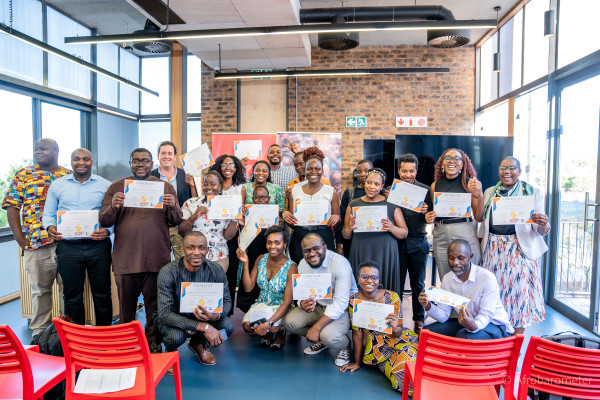
Afrobarometer surveys director urges young researchers to empower Africa’s narrative and showcase the continent’s analytical excellence

Location: News
Afrobarometer

“Writing never stops. This is the starting point. Take the lessons that you have learnt here and demonstrate to the world that not only can we produce our own data, but that we are capable of analysing it,” Afrobarometer surveys director Boniface Dulani told up-and-coming researchers at the closing ceremony of the Afrobarometer (https://www.Afrobarometer.org/) Pretoria summer school on Friday.

The three-week training programme equips African scholars with solid skills in research design, survey methodology, and the use of social statistics.  Afrobarometer manages the programme in collaboration with the University of Pretoria's Future Africa, a pan-African research institute pioneering approaches to research and innovation on the continent and beyond.

“One thing that excites me is not only do we have access to the [Afrobarometer] data, but as Africans, we also understand the context from which the data comes,” Dulani added. 

In his remarks to the group, Neeraj Mistry, deputy director of Future Africa, said, “In a world of mis- and disinformation, we need solid data and good analysis of it. So we are relying on you to give us the evidence base, to give us real-time analysis from the ground from real people's contributions. That's the kind of evidence that we need in order to make change happen.”

The 19 summer school participants – 50% women – represented 13 countries: Benin, Botswana, Ghana, Kenya, Lesotho, Madagascar, Malawi, Mozambique, Namibia, Nigeria, South Africa, Tanzania, and Uganda. 

Reflecting on the summer school experience, David Asante-Darko from the Ghana Center for Democratic Development commented, "The highlight of my Afrobarometer summer school was my exposure to the diverse ways in which Afrobarometer data can be analysed to speak convincingly to African realities. 

“As a member of an African community dedicated to the fight against the decline of democracy, it is assuring to have discovered that I have unfettered access to a wealth of credible and unbiased data,” Asante-Darko further noted.

Another participant, Caroline Nakayiza from Uganda, remarked, “As a data collector, I have picked a lot from the summer school. It has been a great journey – I have explored a new country and made new friends and connections.”

After weeks of intense learning, the participants are producing research papers that will feed into Afrobarometer's publications series, advancing the organisation's goal to “let the people have a say!”

Distributed by APO Group on behalf of Afrobarometer.

For more information, please contact:
Asafika Mpako
Afrobarometer communications coordinator for Southern Africa
Email: ampako@afrobarometer.org
Telephone: +27 83979 8299
Visit us online at www.Afrobarometer.org

Follow us on:
Twitter: https://apo-opa.info/3jYM2la
Facebook: https://apo-opa.info/3K0t6gq
YouTube: https://apo-opa.info/3Ysf4IU
Visit us online at www.Afrobarometer.org
Follow our releases on #VoicesAfrica.

About Afrobarometer:
Afrobarometer (AB) is a trusted source of high-quality data and analysis on what Africans are thinking. With an unmatched track record of more than 370,000+ interviews in 42 countries, representing the views of 75% of the African population, AB is leading the charge to bridge the continent's data gap. AB data inform many global indices, such as the Ibrahim Index of African Governance, Transparency International's Global Corruption Barometer, and the World Bank's Worldwide Governance Indicators. The data are also used for country risk analyses and by credit rating and forecasting agencies such as the Economist Intelligence Unit. All AB data sets are publicly available on the website (https://www.Afrobarometer.org) and may be analysed free of charge using AB's online data analysis tool (https://apo-opa.info/3lVrwlT).

About Future Africa at the University of Pretoria:
The University of Pretoria established the Future Africa initiative as a platform to develop leadership in transdisciplinary research in Africa. Future Africa is a hub for African and global research networks to address the challenges that hamper transformation toward a prosperous, equitable, and sustainable future in Africa.

Media files
Afrobarometer
Download logo
Read moreAfrobarometer surveys director urges young researchers to empower Africa’s narrative and showcase the continent’s analytical excellence
5 December 2023

IEC welcomes Constitutional Court judgement

Location: News

IEC welcomes Constitutional Court judgement

The Electoral Commission has welcomed Monday’s judgement by the Constitutional Court in relation to the challenges to the Electoral Amendment Act.

According to the Commission, the judgement provides the necessary certainty in relation to the preparations of the 2024 National and Provincial Elections.

This as the court handed down judgement on whether the current split of seats in parliament should remain as is or be changed to make it possible for independent candidates a better chance of getting elected.

“The Electoral Commission will immediately put in place the regulations necessary to give practical effect to revisions of the electoral system in the light of the judgement handed down today by the apex court,” the Electoral Commission said in a statement on Monday.

The Electoral Commission has always been of the view that the distribution of seats of the National Assembly between the compensatory tier and the regional tier was rational and satisfied the constitutional requirement for general proportionality.

“The important confirmation of the Constitutional Court is that the contestants in the regional tier of the elections are subject to the same number of votes per seat. Furthermore, that no votes of independents are to be transferred to political parties.

“Pertinently, the Electoral Commission will now finalise adjustments to the signature requirements portal, so that prospective independent candidates and unrepresented parties can start collecting and capturing. The signature portal, as well as the final regulations, will be launched soon.

“The Electoral Commission notes the three-way judgement on the One South Africa Movement twin challenges. This is indicative of the constitutional complexity related to the design of an electoral system,” the Commission said.

The elements of the findings in relation to the recalculation of formulae is a matter on which the soon to be established Electoral Reform Consultation Panel will have to be seized with going forward. – SAnews.gov.za


Edwin
Tue, 12/05/2023 - 08:28

395 views
Read moreIEC welcomes Constitutional Court judgement
5 December 2023

Africa remains one of the regions most targeted by cybercrime in 2023

Location: News
Kaspersky

As organisations continue to become more digitised, throughout 2023 Africa remains one of the world regions most targeted by cybercrime. At a recent press conference in Johannesburg, Kaspersky (www.Kaspersky.co.za) shared some insights and statistics related to the regional threat landscape in the third quarter of 2023 and made forecasts on how the situation is going to develop in 2024.

Web threats
Web threats are Internet-based threats that expose people and computer systems to harm online. There was a 24% increase in the number of corporate users affected by web threats from Q2 to Q3 2023 in South Africa. However, comparing Q3 2022 to Q3 2023, there was an 8% decline in the number of corporate users affected by web threats.  

Phishing
Phishing is a type of Internet fraud that seeks to acquire a user's credentials by deception. It includes theft of passwords, credit card numbers, bank account details and other confidential information.

Phishing attacks detected in Kenya in Q3 2023 increased by 32% compared to Q2 2023 and by 12% compared to Q3 2022. In Nigeria, there was a 12% increase in phishing attack detections in Q3 2023 compared to Q2; however, compared to Q3 2022, the number of phishing detects decreased by 8%.

Attacks on Industrial Control Systems
Africa is among the regions with the highest number of detected attacks on industrial control systems (ICS computers). ICS computers are used in energy and mining sectors, automotive manufacturing, building automation infrastructures and other spheres to perform a range of operational technology functions – from the workstations of engineers and operators to supervisory control and data acquisition servers.

In Q3 2023, according to Kaspersky ICS CERT¹, attacks were detected on 32% of ICS computers in Africa. In South Africa, attacks were detected on 22% of machines, in Kenya – on 28%, in Nigeria – on 25%. Globally, malicious objects were detected on 25% of ICS machines in Q3 2023.

Attacks on the Internet of Things
The number of attacks on Internet of Things (IoT) devices has been increasing exponentially over the last years globally. This is related both to the activity of criminal actors and to the increasing number of IoT devices that are in use by individual users, businesses, and production facilities. IoT devices include not only wearables and smart home appliances, but also smart city systems, self-driving cars, automated retail checkouts, and other smart devices for home and business use. These devices can collect and transfer data over a wireless network without human input. Cybercriminals use networks of infected smart devices to conduct DDoS attacks or as a proxy for other types of malicious actions.

In Q3 2023, South Africa accounts for 28% of attacks on IoT devices that were detected by Kaspersky in the African region. Kenya accounts for 12% of attacks on IoT devices, and Nigeria – for 6%. All these attacks were spotted on Kaspersky IoT honeypots – decoy devices used to attract the attention of cybercriminals and analyse their activities.

“In forecasting the development of the cyberthreat landscape for 2024, we anticipate a dynamic evolution of cyberthreats marked by an upsurge in state-sponsored cyber-attacks, and 'hacktivism' will become one of the norms of cyber-warfare,” comments Bethwel Opil, Enterprise Client Lead at Kaspersky in Africa. “The prevalence of accessible generative AI is set to fuel an expansion of spear-phishing tactics, while the creative exploitation of vulnerabilities in mobile and IoT devices will be on the rise. Businesses today should be proactive and counter these cyberthreats with advanced technologies such as threat feeds, security information and event management systems, endpoint detection and response solutions, and tools with digital forensics and incident response features.”

To protect organisations from cyberthreats, Kaspersky experts recommend:

  • Organisations should conduct regular cyber skill checkups among employees and offer competent training. Kaspersky Security Awareness (https://apo-opa.co/3Ni4NeD) portfolio offers flexible ways to train staff, is easily customisable and scalable to meet the needs of any company size.
  • Corporate users should be educated on potential privacy risks when working in virtual environments. Organisations should implement best practices in safeguarding personal and corporate data.
  • Install updates for the firmware used on digital devices (including virtual headsets) as soon as they become available.
  • Use Cyber Immune (https://apo-opa.co/4a9jx9I) solutions for IoT protection on corporate networks. Use a dedicated IoT gateway that ensures inbuilt security and reliability of data transferring.
  • Use Kaspersky Threat Intelligence (https://apo-opa.co/4a9sf7B) to block network connections originating from malicious network addresses detected by security researchers.
  • Establishing continuous vulnerability assessment and triage as a basement for effective vulnerability management process. Dedicated solutions like Kaspersky Industrial CyberSecurity (https://apo-opa.co/46ZA6lH) may become an efficient assistant and a source of unique actionable information, not fully available in public.

Reference:
¹Kaspersky Industrial Control Systems Cyber Emergency Response Team

Distributed by APO Group on behalf of Kaspersky.

About Kaspersky:
Kaspersky is a global cybersecurity and digital privacy company founded in 1997. Kaspersky's deep threat intelligence and security expertise is constantly transforming into innovative solutions and services to protect businesses, critical infrastructure, governments and consumers around the globe. The company's comprehensive security portfolio includes leading endpoint protection, specialized security products and services, as well as Cyber Immune solutions to fight sophisticated and evolving digital threats. Over 400 million users are protected by Kaspersky technologies and we help over 220,000 corporate clients protect what matters most to them. Learn more at www.Kaspersky.co.za.

Media files
Kaspersky
Download logo
Read moreAfrica remains one of the regions most targeted by cybercrime in 2023
5 December 2023

Season’s Cleanings: Procure Your Home Ready For The Holidays

Location: MyPR

In homes across the country, many South Africans are preparing for the traditional spruce-up ahead of the festive season. Our teens may roll their eyes as we cajole them to take down the curtains, but we just like to start the new year with a clean slate. It’s as much in preparation of welcoming family …

Read moreSeason’s Cleanings: Procure Your Home Ready For The Holidays
5 December 2023

Home Affairs Minister welcomes BMA’s sting operation at Beitbridge

Location: News

Home Affairs Minister welcomes BMA’s sting operation at Beitbridge

Home Affairs Minister, Dr Aaron Motsoaledi, has welcomed the commendable management of South Africa’s borders by the Border Management Authority (BMA).

This follows a successful sting operation at the Beitbridge port of entry on Saturday.

The BMA border guards, the Counter Corruption and Security Services Branch of the Department of Home Affairs (DHA) and members of the South African Police Service (SAPS) conducted a sting operation at the port of entry wherein 42 buses from Zimbabwe were stopped and searched.

During the search, 443 unaccompanied minors under the age of eight were found in the buses being brought into South Africa with no consent of parents or guardians.

“The hard work of the Border Management Authority is commendable, showing we’re pulling out all stops to prevent acts of crime and illegal entry into the country. Clearly the BMA is hard at work and is making inroads in effective border law enforcement,” Minister Motsoaledi said in a statement.

All persons in the 42 buses were refused entry into South Africa, and after engaging with the Zimbabwean Authorities, they were all taken back to Zimbabwe, including the children.

All the children who were found, were handed over to the Zimbabwean authorities for processing.

“We condemn in the strongest possible terms these acts of criminality especially where the interest of the child is at stake. It’s unacceptable that these minors were not with their parents or guardians throughout this ordeal.

“Protecting children, especially in this period of the 16 Days of Activism for No Violence against Women and Children Campaign, is paramount,” Minister Motsoaledi said.

In the same night, 150 adult Zimbabwean nationals were also apprehended and prevented from entering the country.

“The BMA, Home Affairs officials and members of the SAPS are on the ground establishing all relevant details of the incident,” BMA Commissioner, Dr Mike Masiapato said.

“Further work is being done and will continue to be done to ensure detection of all perpetrators in order to bring all of them to book,” he said.

“The entire episode at Beitbridge shows great achievements of the BMA and in a very short space of time. It’s a good sign in tackling sharply the outcry on porous borders.

“We’ll continue relentlessly to act swiftly in enforcing immigration and other laws in the interest of national security and safety of all persons in the country, especially during this peak period, the festive season, and beyond,” Minister Motsoaledi said. – SAnews.gov.za


Edwin
Tue, 12/05/2023 - 08:46

552 views
Read moreHome Affairs Minister welcomes BMA’s sting operation at Beitbridge
5 December 2023

First buyers seize ownership at KZN South Coast’s exciting recent eco-estate development

Location: MyPR

Real estate on the KZN South Coast holds major potential for keen investors looking for a quality coastal property at unbeatable value for money. This is fast being realised as local and international buyers are investing in a number of catalytic property developments in the region. One such example is the R800m Serenity Hills eco-estate, …

Read moreFirst buyers seize ownership at KZN South Coast’s exciting recent eco-estate development
  • Previous
  • Page 1
  • Interim pages omitted …
  • Page 310
  • Page 311
  • Page 312
  • Page 313
  • Page 314
  • Interim pages omitted …
  • Page 386
  • Next

Copyright © 2026 · MyZA · All Rights Reserved · Powered by Stratlec Online