• Skip to main content
  • Skip to header right navigation
  • Skip to after header navigation
  • Skip to site footer
MyZA

MyZA

News, Directory, Events and Other Stuff

  • Social Media
  • Sport
  • World News
  • Home
  • Submit News
  • Directory
  • Events
  • Stratlec
  • TFSA
  • News
    • APO
    • Today’s Sport News
    • Todays Social Media and Tech Headlines
    • Today’s World News
    • Today’s SA Financial News
  • Contact
You are here: Home / Archives for study

study

3 April 2025

SA Has World Class Medical Researchers – They Can and Should Be Bailed Out

Location: News

Medical scientists at the University of Cape Town have been hit especially hard by funding cuts made by the US government. South Africa has many of the world’s best HIV and TB researchers. Until recently, this research excellence was widely recognised by the fact that local research groups kept winning grants to conduct critically important …
Read moreSA Has World Class Medical Researchers – They Can and Should Be Bailed Out
2 April 2025

Internet connectivity can aid SA’s development 

Location: News

Internet connectivity can aid SA’s development 

Internet connectivity has the potential to boost employment while also broadening access to education, healthcare and the speeding up of service delivery, says Deputy Minister of Science, Technology and Innovation Nomalungelo Gina.

Internet connectivity also has the potential to broaden modern agricultural practices, mobility, and banking services.

“Internet connectivity’s potential to boost productivity and employment is well documented,” the Deputy Minister said during a parliamentary session on Tuesday.

Gina cited a study encompassing 14 countries that found a 10 percentage-point increase in 3G coverage raised the employment rate by 2.1 percentage points, as faster internet connections create better job opportunities.

The Deputy Minister was addressing a joint session of Parliament’s Portfolio Committees on Communications and Digital Technologies and Science, Technology and Innovation with the Deputy Minister of Communications and Digital Technologies, Mondli Gungubele. 

The Departments of Communications and Digital Technologies (DCDT) and Science, Technology and Innovation (DSTI) are collaborating in the development of a satellite communication strategy for South Africa.

The strategy is aimed at the establishment of a domestically owned satellite system that provides affordable, reliable, and secure communication infrastructure.

Over the past three years, the departments and their entities, Sentech and the South African National Space Agency (SANSA), have worked to develop the strategy, which is expected to significantly enhance digital inclusion, support economic growth, and bolster essential services such as e-government, telemedicine, and rural telephony.

“Following extensive consultations and feasibility studies, the strategy has received sign-off from the Presidency on the Social Economic Impact Assessment System process. The next phase involves further government cluster consultations and public engagement before final Cabinet approval.” 

While commending the progress, committee members stressed the urgency of implementation, the need for gender representativity, and the establishment of required capabilities to complete the project.

The Chairperson of the Portfolio Committee on Science, Technology and Innovation, Tsakani Shiviti, said that both committees were hopeful that quarterly reports on the strategy would encourage the two departments to expedite the process for final Cabinet approval.

Acting Deputy Director-General at the DCDT, Dr Tinyiko Ngobeni, said the strategy would be submitted to Cabinet to obtain approval to publish it for comment from the public. Additionally, a national workshop will also be convened to explore substantive issues.

According to the DSTI, South Africa currently spends approximately R100 billion a year on foreign communication service providers. 

“In contrast, a locally owned satellite system with a lifespan of up to 20 years would require a one-time capital investment of approximately R6 billion. This comparison shows the immense cost-saving potential of a domestic satellite system.” 

Meanwhile, the department believes that a domestic system would also strengthen South Africa’s sovereign capabilities, as required by the national defence and security clusters. 

The acquisition and operation of the satellite will be managed by a national satellite organisation through a strategic partnership with an international satellite fleet operator, ensuring sovereignty over critical communication infrastructure.

“The satellite industry presents vast opportunities for skills development, job creation, industrial growth, and self-reliance in national security matters. 

“The satellite communication strategy initiative will foster new technical expertise throughout the satellite’s lifecycle – from design and construction to launch, operation, and maintenance – creating sustainable, high-skilled jobs and stimulating the local space industry,” said the Department of Science, Technology and Innovation.

SANSA, with its extensive expertise in satellite operations, will play a key role in driving the initiative forward.

The project underscores the government’s commitment to a digitally inclusive society, where all citizens have access to reliable and affordable communication services. – SAnews.gov.za


Gabisile
Wed, 04/02/2025 - 10:37
432 views

Read moreInternet connectivity can aid SA’s development 
1 April 2025

Titans’ Mashishi Opens up on Her Evolution and a Season of Two Halves in Hollywoodbets Pro Series

Location: Sport

JOHANNESBURG: Despite a slow start in the Hollywoodbets Pro Series, notching up just one win in both formats in the first...

Read moreTitans’ Mashishi Opens up on Her Evolution and a Season of Two Halves in Hollywoodbets Pro Series
1 April 2025

JSC Must Urgently Fill Vacant Posts and Hold Judges to Account

Location: News

This week the Judicial Services Commission will hold interviews for judges and decide on two important disciplinary matters

Read moreJSC Must Urgently Fill Vacant Posts and Hold Judges to Account
31 March 2025

Call for localised gender-responsive value chains

Location: News

Call for localised gender-responsive value chains

Minister in the Presidency responsible for Women, Youth and Persons with Disabilities, Sindisiwe Chikunga, has underscored the need to localise gender-responsive value chains and ensure the full and equal participation of women in the economy.

“Localising gender-responsive value chains require a clearly articulated infant industry development strategy. When one examines how parts of Asia became the manufacturing hub of the world, the literature is clear: their governments have been a patient investor of first resort, with a much higher risk appetite than their private sector,” Chikunga said.

The Minister was speaking at the 3rd Annual Women Economic Assembly (WECONA), held in Modderfontein, Johannesburg, on Friday.

WECONA is at the forefront of driving a gender-equal economy, bringing together influential business leaders from a variety of sectors.

It serves as a powerful platform dedicated to advancing women's economic empowerment, fostering collaboration, and sparking deliberate, meaningful action.

Leaders from industries, including finance, technology, and manufacturing, unite to share insights, tackle key challenges, and advocate for policies that drive change.

Delivering her keynote address, the Minister emphasised the need for bold, measurable, and accountable actions aimed at transforming South Africa’s supply chains.

She said WECONA needs to urgently study the anatomy of government expenditure, as well as supply chain patterns of every product and every service that has and continues to be procured.

She stressed the need to break free from the monopolies that entrench barriers to market entry and reimagine a women-led industrial and productive revolution adding that “no sector should be beyond our reach.”

The Minister also emphasised the need to contend with ways to introduce supplier diversity policies in procurement guidelines that formally mandate the engagement of women-owned suppliers.

“Thirty years into our democracy, we now know that the mere presence of laws does not translate into their implementation, let alone our lived realities. More work needs to be done. We need enforcement powers that come with the ability to monitor, evaluate and ensure accountability in the implementation of the act.”

Capacity building 

The Minister further highlighted the need to modernise and build the capacity of women owned businesses, through access to the latest manufacturing technologies and production equipment, to ensure that they produce, supply, and distribute the best quality of goods and services.

“In highly regulated sectors, we need to find ways to simplify the certification process and provide assistance with obtaining certifications needed to bid for public contracts. Without dedicated and tailor-made financial support, we will be setting up women for failure.

“We need to work with both established and emerging financial institutions to provide women-owned businesses with access to credit, grants, and low-interest loans. Some governments have set up funds specifically to finance women-owned businesses participating in public procurement, without this instrument failure is almost guaranteed,” the Minister explained.
She said delayed payments remain one of the most potent killers of women owned businesses.

Women’s Empowerment Working Group

Meanwhile, with South Africa's G20 Presidency well underway, Chikunga said she is looking forward to seeing the participation of different streams of WECONA at the Women’s Empowerment Working Group.

The working group has put forward three priorities for consideration by G20 nations and beyond. These include policy perspectives on the care economy, promoting financial inclusion of and for women, and addressing gender-based violence and femicide (GBVF).

“In each of these priority areas, we intend to establish G20 Legacy Projects that will not only outlive our G20 presidency but also reach ordinary women who are normally not part of G20 proceedings,” she said. – SAnews.gov.za
 

GabiK
Mon, 03/31/2025 - 12:00
312 views

Read moreCall for localised gender-responsive value chains
27 March 2025

Gautrain looks to adapt to evolving ridership environment

Location: News

Gautrain looks to adapt to evolving ridership environment

In response to the changing ridership patterns post-COVID-19, the Gautrain is identifying underserved customer groups and their specific needs and will be adapting its products and services to make travel more accessible for a diverse range of passengers.

The pandemic drastically and permanently altered the transit industry. Former frequent commuters continue to work from home in hybrid or remote positions. 

“The days of a predictable 9-to-5, Monday through Friday commute are over. Passengers are demanding that we run a frequent service throughout the day and offer dynamic pricing to suit their hybrid work schedules. And with the rising cost of living, cost is increasingly becoming the sole determinant when choosing a mode of transport,” Gautrain Management Agency CEO, Tshepo Kgobe, said on Thursday.

Across the world, rail operators continue to adjust to changing ridership patterns by adapting their service offerings accordingly.

The Gautrain recently commissioned a brand study, which found that the rapid rail link has maintained its brand positioning as a safe, efficient, clean, and convenient service. 

However, there is an indication that the brand is perceived as inaccessible to some market segments. 

“This presents an opportunity to respond innovatively to changing customer needs, preferences and patterns,” Kgobe said.

In November 2023, the Gautrain kick-started the process to appoint a new delivery partner who will operate, maintain, modernise, innovate, and upgrade the Gautrain system when the current Gautrain concession agreement comes to an end in March 2026. 

“A new Public-Private Partnership agreement presents an opportunity to rethink the Gautrain business model, ensuring financial sustainability and operational excellence. Under the new agreement, we will be able to consider a range of fare policies and pricing incentives, introduce products and services that address the needs of a diverse range of passengers, and advance equity in transportation.

“Public transport systems such as the Gautrain should indeed be inclusive, ensuring accessibility and ease of movement for diverse market segments. We are resilient and adaptable, this is an opportune time to rethink, redesign, renew, and build on a highly functional, world-class system,” the CEO said.

Gauteng, South Africa's most populous province, faces significant road congestion due to high traffic volumes and a rapidly growing population, impacting economic activity and daily commutes. 

Kgobe said the rapid rail extensions from current Gautrain stations, mostly in the suburbs, to other economic nodes and townships like Soweto and Mamelodi, will significantly increase the customer base, boost ridership, and enable inclusive transport connectivity.

“As part of the diversification strategy, we have already introduced vehicle licensing services at Gautrain stations, and we will be transforming Gautrain stations into hubs for business, retail, and social activities. 

“Gauteng, with its diverse attractions, is also an entertainment playground, so we are striving to position the Gautrain as the mobility of choice for large-scale social, sport and lifestyle events, and places of fun and entertainment,” he said. - SAnews.gov.za

nosihle
Thu, 03/27/2025 - 13:28
32 views

Read moreGautrain looks to adapt to evolving ridership environment
27 March 2025

MOU signed to develop public servants and trainers

Location: News

MOU signed to develop public servants and trainers

Public Service and Administration Minister Inkosi Mzamo Buthelezi has welcomed the signing of an agreement between the National School of Government (NSG) and the E’cole Nationale d’Administration (ENA) - the national school of administration in Burundi.

The two institutions signed a Memorandum of Understanding in Pretoria on Wednesday to facilitate cooperation on educating, training, and developing public servants and trainers. 

The MoU was signed by Professor Busani Ngcaweni, NSG Principal, Professor Jean de Dieu Ndikumana, the Director General of ENA, witnessed by the Ambassador of Burundi to South Africa, Alexis Bukuru.

Minister Buthelezi said the agreement was an important development in cementing relations between the two institutions and the two countries. 

He added that it contributed to the implementation of the African Union's objectives, to build state capacity and to build stronger states and a functional, capable and efficient public sector on the African continent. 

“The NSG will play its role in contributing towards building capacity in Burundi, while South Africa has a lot to learn from Burundi as well, as the country has the invaluable experience of having to rebuild state capacity after a protracted war. We wish both the NSG and ENA the best in the implementation of this agreement,” Minister Buthelezi said.

The MoU enables the parties to collaborate in the following areas:

  • Capacity building for teacher trainers, trainer professionalisation programme and the digital or virtual art of facilitation
  • The joint development and implementation of continuous training actions for senior executives of ENA
  • The exchange of trainees between the NSG and ENA
  • Collaboration in research and sharing of experiences on the development of a new journal
  • Allowing the NSG and ENA researchers of the same academic areas to write, publish and conduct academic and innovation conferences together and
  • Setting up study visits and exchange of officials.

Ngcaweni and Ndikumana said they looked forward to implementing the partnership to empower public servants in their respective countries. – SAnews.gov.za


Edwin
Thu, 03/27/2025 - 12:23
84 views

Read moreMOU signed to develop public servants and trainers
25 March 2025

R25-Million and Six Years Later, Soweto Centre Still Needs Millions to Be Completed

Location: News

SIU investigates unfinished arts centre backed by music legends Caiphus Semenya and Letta Mbulu

Read moreR25-Million and Six Years Later, Soweto Centre Still Needs Millions to Be Completed
21 March 2025

Kariega residents share their reflections on Human Rights Day

Location: News

Kariega residents share their reflections on Human Rights Day

The residents of Kariega in the Nelson Mandela Bay Municipality have shared their thoughts on the significance of Human Rights Day, emphasising the importance of freedom, self-expression, and government accountability. 

Speaking to SAnews, 17-year-old Luphumelo Hini from KwaNobuhle said Human Rights Day represented her ability to express herself freely and pursue her dreams without restrictions.

“Human Rights to me means that we are able to express ourselves in different ways, we are able to live our lives freely, we are able to follow and fulfil our dreams and do a whole lot of things that many people who do not have human rights and are not given freedom are not able to do,” Hini said. 

She added that the presence of Deputy President Paul Mashatile at the event made her feel recognised. 

“It means a lot for me for the Deputy President to come and address us because it means he acknowledges us, and he realises the importance of Human Rights Day. It just shows that he has the spirit of Ubuntu,” she said.

Similarly, 29-year-old Sinethemba Krweda expressed his appreciation for the Deputy President’s attendance, noting that young people are eager to learn about the government’s role in protecting their rights.

“We do have rights as people. The first right is that we are free and can move freely, unlike during the apartheid era. We are also able to study and further our education. We appreciate that the Deputy President is here so he can hear our concerns, particularly regarding the high unemployment rate among the youth,” Krweda said.

Speaking ahead of the main event, Eastern Cape Premier Oscar Mabuyane reiterated the provincial government’s commitment to improving the living conditions of communities as South Africa marks Human Rights Day.

Mabuyane emphasised that the day is not just about remembrance but also the tangible efforts made to transform people’s lives.

“To us, this is not just about celebrating or commemorating Human Rights Day - it’s about what we are doing to change people’s lives here. If you look around, you can see the … challenges that our people still facing. But we are doing our level best to turn the tide,” Mabuyane said.

The area has been among the hardest hit by natural disasters, further exacerbating socio-economic struggles. However, the Premier assured residents that government has a concrete plan to support affected communities. 

“We have a plan to ensure that we rescue our people out of these kinds of challenges,” he said.

Mabuyane welcomed the visit by the Deputy President to the province, saying his presence reinforces government’s commitment to ensuring that historically marginalised communities are not left behind.

“The people of this area must know that they are part of the history of our country, and they must feel the presence of the government,” he said.

Deputy President Mashatile is set to deliver the keynote address at the 2025 Human Rights Day commemoration event. 

The programme began with a visit to James Ndulula Primary School, followed by a wreath laying ceremony at Langa Memorial in Kariega. 

Meanwhile at the main event the festivities began with lively performances that had the crowd dancing and cheering in anticipation of the Deputy President’s speech.

This year’s Human Rights Day commemorative events are being held under the theme, “Deepening a Culture of Social Justice and Human Rights”.

The theme calls for renewed commitment from all levels of society to accelerate practical solutions for inclusive growth, job creation, poverty reduction, and addressing the high cost of living while building a capable, ethical, and developmental state.

South Africa commemorates Human Rights Day annually on 21 March in remembrance of the Sharpeville Massacre of 1960, where 69 anti-apartheid protesters were killed by apartheid police. 

The day also honours the 35 people killed on 21 March 1985 in Uitenhage and KwaLanga when apartheid police targeted community members after a funeral. – SAnews.gov.za 


DikelediM
Fri, 03/21/2025 - 13:05
104 views

Read moreKariega residents share their reflections on Human Rights Day
20 March 2025

Former Lottery Official Fails in Court Bid to Unfreeze His Pension Fund

Location: News

Judge says former NLC chief risk officer Marubini Ramatsekisa didn’t explain how he could live at an expensive golf estate while claiming to be unemployed

Read moreFormer Lottery Official Fails in Court Bid to Unfreeze His Pension Fund
20 March 2025

UAE Investments Drive African Mining Growth

Location: News

Energy Capital & Power
Download logo

Ambrosia Enters Malian Market 

In February 2025, investment fund Ambrosia Investment Holding acquired a 50% stake in Canadian firm Allied Gold's mining projects in Ethiopia and Mali. As part of the deal, Ambrosia will inject $375 million in working capital to accelerate project development, boosting Ethiopia and Mali's gold output by 290,000 ounces per annum by mid-2026 and 400,000 ounces per annum by 2028, respectively. Additionally, Ambrosia plans to deploy solar photovoltaic and battery energy storage systems to ensure energy security at the Sadiola mine in Mali by July 2026 as part of the acquisition agreement. 

AD Ports Kickstarts Luanda Operations 

Logistics firm AD Ports Group started operations at the Luanda Port in January 2025 as part of a $250 million investment plan. With the Luanda Port handling 76% of Angola's cargo volumes and serving as a crucial trade corridor between international markets and Angola, Zambia and the Democratic Republic of Congo, AD Ports' investment will bolster the region's mining sector. AD Ports will operate the terminal over the next 20 years. The company could increase investments at the facility to $380 million to meet the growing demand for logistics as Angola's container volumes are anticipated to increase by 3.3% annually over the next decade. 

IHC Bolsters Production at Mopani Mine 

International Holding Company boosted ore production at the Mopani Mine in Zambia from 2.2 million tons to 2.8 million tons in January 2025 through its $1.1 billion investment made in March 2024. The mine has also improved copper grade from 1.68% to 2.21% and expanded employment from 10,765 to 12,684 workers. 

Emiral Expedites Ghana, Mauritania Projects 

Emiral Mining is fast-tracking its iron ore project in Mauritania, with a pre-feasibility study report set for release in Q1, 2025. The company has invested $40 million in exploration since February 2020. Additionally, Emiral Mining is strengthening Ghana's gold industry through its majority stake in Asante Gold Corporation, the operator of Ghana's major gold mines such as Bibiani and Chirano. Asante Gold Corporation is undertaking a $522 million expansion program for the Bibiani and Chirano Mines. 

Looking Ahead 

A number of UAE public and private sector entities are seeking partnership and investment opportunities across various African markets. International Resources Holding signed an agreement with South Africa's Public Investment Corporation in late 2024 to invest in mining, green energy and logistics projects. Similarly, DP World announced a five-year $3 billion investment plan in mid-2024 to enhance Africa's logistics infrastructure and facilitate mineral exports to international markets. In Kenya, the UAE Ministry of Investment and Abu Dhabi's sovereign wealth fund ADQ signed agreements in 2024 to invest in the country's mining sector as part of broader efforts to enhance bilateral trade and economic cooperation. 

The upcoming African Mining Week – taking place October 1-3 in Cape Town - presents an ideal platform for UAE and African stakeholders to strengthen industry cooperation. As the premier event for the African mining industry, African Mining Week fosters collaboration and dealmaking, striving to advance projects and consolidate the continent's position as a global mineral producer. The event takes place under the theme From Extraction to Beneficiation: Unlocking Africa's Mineral Wealth. 

African Mining Week serves as a premier platform for exploring the full spectrum of mining opportunities across Africa. The event is held alongside the African Energy Week: Invest in African Energies 2025 conference from October 1-3 in Cape Town. Sponsors, exhibitors and delegates can learn more by contacting sales@energycapitalpower.com.

Distributed by APO Group on behalf of Energy Capital & Power.

Read moreUAE Investments Drive African Mining Growth
20 March 2025

Big Oil Find in Limpopo? Or Just False Hope?

Location: News

Troubling questions for Booi Brothers about their exploration in Vhurivhuri

Read moreBig Oil Find in Limpopo? Or Just False Hope?
19 March 2025

Fears Grow That US May Pull Funding for South African Medical Research

Location: News

Large clinical trials several years in and with millions of rands already spent are at risk

Read moreFears Grow That US May Pull Funding for South African Medical Research
17 March 2025

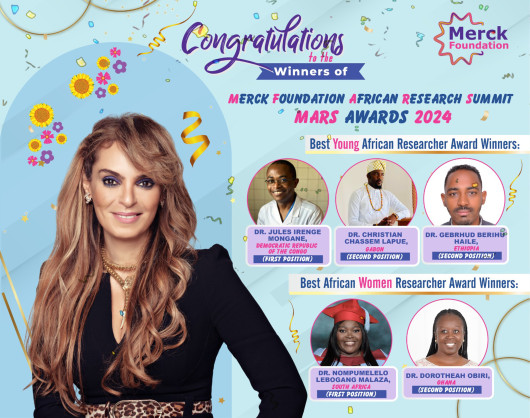
Winners of MARS 2024 for Best African Women and Young Researchers announced

Location: News
Merck Foundation

  • Merck Foundation announced the winners of Merck Foundation Africa Research Summit – MARS Awards winners 2024, 5 Researchers from 5 different African Countries recognized under two categories - Best African Women Researchers and Best Young African Researchers.
  • Merck Foundation also announced the Call for Applications for new edition of Merck Foundation Africa Research Summit – MARS Awards 2025 to empower Women and Youth in STEM in Africa with special focus on ‘The Role of Scientific Research in Women Health and Reproductive Care'.

Merck Foundation (www.Merck-Foundation.com), the philanthropic arm of Merck KGaA Germany, announced the Winners of Merck Foundation Africa Research Summit (MARS) Awards 2024, in partnership with International Federation of Fertility Societies -IFFS, Africa Reproductive Care Society - ARCS, Manipal University and African Union Scientific Technical Research Commission to recognize African Researchers for their valuable research work and contribution to empowering women and youth in STEM in Africa with special focus on ‘The Role of Scientific Research in Women Health and Reproductive Care'.

Senator Dr. Rasha Kelej, CEO of Merck Foundation and Chairperson of Merck Foundation Africa Research Summit - MARS expressed, “Since 2016, I have taken immense pride in recognizing the achievements of our MARS Awards winners. This year, we honor Six Winners in two categories: ‘Best African Women Researchers Awards' and ‘Best African Young Researchers Awards.'

These awards celebrate their significant contributions to research, particularly highlighting the efforts of African women researchers, who remain underrepresented in this field. Through the MARS Awards, our mission is to empower young researchers in Africa and to specifically encourage and support women researchers by enhancing their research capabilities and promoting their vital roles in STEM (Science, Technology, Engineering, and Mathematics).”

The winners of ‘Best African women Researchers Awards' and ‘Best Young African Researcher Awards' will be enrolled into research training at a premier research institute in India.

“And I am also very happy to share with you all that as promised, we provided an opportunity to our first-place winner of each category to attend the 11th Edition of Merck Foundation Africa Asia Luminary which was recently conducted in Tanzania, however, only Mr. Jules Irenge Mongane was able to attend it”, shared Senator Rasha Kelej.

Merck Foundation is committed to improving the lives of people and has been transforming the Patient care landscape and making history together with its partners in Africa, Asia, and beyond, by providing 2080 Scholarships for doctors from 52 Countries in 44 critical and underserved medical specialties.

The MARS 2024 Award Winners are:

Winners of “MARS Best Women African Researchers Awards” 2024

  • Nompumelelo   Lebogang     Malaza, SOUTH AFRICA (First Position)

TOPIC: Association Between Biochemical And Epigenetic Markers With Glycaemic Control And Neonatal Outcomes In Diabetic Pregnancies

  • Dorotheah Obiri, GHANA (Second Position)

TOPIC: Immune dysregulation in placental malaria and hypertensive disorders of pregnancy

Winners of “MARS Best Young African Researchers Awards” 2024

  • Jules Irenge Mongane, DEMOCRATIC REPUBLIC OF THE CONGO (First Position)

TOPIC: Association Between Bacterial Vaginosis, Chlamydia Trachomatis Infection And Tubal Factor Infertility In Bukavu, Democratic Republic Of Congo

  • Christian Chassem Lapue, GABON (Second Position)

TOPIC: Epidemiology of helminthiases in women of reproductive age living in Lambaréné and its surroundings, Gabon

  • Gebrhud Berihu Haile, ETHIOPIA (Second Position)

TOPIC: Incidence of neonatal mortality and factors influencing neonate survival in  neonatal intensive care unit in Northern Ethiopia: a prospective cohort study

“I am also excited to announce the Call for Applications for the new edition of the Merck Foundation Africa Research Summit (MARS) Awards 2024. This year, special focus will be again on “The Role of Scientific Research in Women Health and Reproductive Care,” added Senator, Dr. Rasha Kelej.

Merck Foundation Africa Research Summit - MARS 2025 will have scientific support from African Union Scientific-Technical and Research Commission (AU-STRC); African Reproductive Care Society (ARCS), and Manipal Academy of Higher Education (MAHE).

Details for MARS AWARDS 2025

Abstracts are invited from final year African PhD students and young investigators involved in research related to either of the following topics:

1) Women Health

2) Infertility and Reproductive Health

All applicants should be primarily based at African Research Institutes and Universities, although collaboration within Africa as well as outside is also welcome.

Last Date of Submission:

Applications can be submitted till 30th June 2025

How to apply:

Apply by clicking: https://apo-opa.co/4isHnAO

Alternatively, the Applications and abstracts can be submitted via email to mars@merck-foundation.com, along with CV (including Name, Gender, Country, University/Hospital Name, Email address, Mobile Number) and the abstract document as an attachment.

Other Details:

  • All Abstracts will be peer reviewed.
  • Research Awards will be dedicated for two categories of Best African Women Researchers and Best Young Africa Researchers.
  • Winners will be eligible for Research Training in prestigious Research Institute in India.
  • Top Winners will be invited to attend the 12th Edition of Merck Foundation Africa Asia Luminary 2025.

Distributed by APO Group on behalf of Merck Foundation.

Contact details:

Mehak Handa

Community Awareness Program Manager

+91 9310087613 / +91 9319606669
mehak.handa@external.merckgroup.com

Join the conversation on our social media platforms below and let your voice be heard!
Facebook: https://apo-opa.co/4bwfTrr
X: https://apo-opa.co/41BacUz
Youtube: https://apo-opa.co/428prpk
Instagram: https://apo-opa.co/41woQwo
Threads: https://apo-opa.co/429gjAK
Flickr: https://apo-opa.co/4hbYfdK
Website: www.Merck-Foundation.com

About Merck Foundation:
The Merck Foundation, established in 2017, is the philanthropic arm of Merck KGaA Germany, aims to improve the health and wellbeing of people and advance their lives through science and technology. Our efforts are primarily focused on improving access to quality & equitable healthcare solutions in underserved communities, building healthcare & scientific research capacity, empowering girls in education and empowering people in STEM (Science, Technology, Engineering, and Mathematics) with a special focus on women and youth. All Merck Foundation press releases are distributed by e-mail at the same time they become available on the Merck Foundation Website.  Please visit www.Merck-Foundation.com to read more. Follow the social media of Merck Foundation: Facebook (https://apo-opa.co/41xveDB), X (https://apo-opa.co/41BacUz), Instagram (https://apo-opa.co/41woQwo), YouTube (https://apo-opa.co/428prpk), Threads (https://apo-opa.co/428prpk) and Flickr (https://apo-opa.co/4hbYfdK).

The Merck Foundation is dedicated to improving social and health outcomes for communities in need. While it collaborates with various partners, including governments to achieve its humanitarian goals, the foundation remains strictly neutral in political matters. It does not engage in or support any political activities, elections, or regimes, focusing solely on its mission to elevate humanity and enhance well-being while maintaining a strict non-political stance in all of its endeavors.

Media files
Merck Foundation
Download logo
Read moreWinners of MARS 2024 for Best African Women and Young Researchers announced
17 March 2025

South Africa’s Penguins Are Worth Billions, Experts Say

Location: News

Island closures are painted as an economic cost to the fishing industry, but losing African Penguins will cost us dearly

Read moreSouth Africa’s Penguins Are Worth Billions, Experts Say
17 March 2025

Coming Soon: Fund to Help People Pay Bail

Location: News

Bail Fund will address the “injustice of being detained simply because of poverty”

Read moreComing Soon: Fund to Help People Pay Bail
16 March 2025

South Africa, Dutch collaborates to improve water management

Location: News

South Africa, Dutch collaborates to improve water management

The Department of Water and Sanitation (DWS), together with the Dutch Water Authorities, have held a Blue Deal Steering Committee meeting, focusing on the Blue Deal South Africa Programme, which aims to improve water management and access to clean water in South Africa. 

According to the department, the meeting, held in Pretoria, on Friday, aimed at enabling environment for future Blue Deal partnerships, discuss lessons learned from the various projects, and provide strategic direction to address key bottlenecks.

“This Blue Deal Programme is a collaboration between the Republic of South Africa and the Government of the Netherlands to support water management by exchanging knowledge and experiences, assisting national, regional, and local organisations, and cooperating with key stakeholders. The Blue Deal South Africa Programme will specifically contribute to clean and sufficient water,” the department said in a statement.

During the meeting, the two parties discussed the Crocodile River Revitalisation Action Plan and its adoption and the Theewaterskloof Project Non-Sewer Sanitation pilot project.

“The Crocodile River faces threats of pollution from agriculture, industry, and municipalities. The performance of the wastewater treatment plants in the area is inadequate. The challenge is to improve the operation of the municipal wastewater management systems to ensure better water quality in the river.

“The objective of the Theewaterskloof project is to reduce pollution by improving sanitation and solid waste management through innovative solutions, such as non-sewered sanitation and harnessing the circular economy.

“General discussions covered the status of ongoing projects, a recap of 2024 Blue Deal activities, the outlook for the 2025 projects, and developments regarding international collaborations,” the department said.

DWS Director of International Relations, Albert Mmbidi said: “Today was an important day in the history of the Blue Deal programme. As a team, we managed to review the progress that the project has already made, the challenges, and we proposed solutions to the issues raised. 

“We are confident that out of the solutions we have proposed, the programme will be able to run efficiently and strengthen the relationship between the two countries,” Mmbidi said. – SAnews.gov.za

NeoB
Sun, 03/16/2025 - 12:23
543 views

Read moreSouth Africa, Dutch collaborates to improve water management
13 March 2025

How Much Does Our HIV Response Depend on US Funding?

Location: News

Critical services in some high-burden districts have collapsed

Read moreHow Much Does Our HIV Response Depend on US Funding?
12 March 2025

Beijing+30: SA reaffirms commitment to women empowerment

Location: News

Beijing+30: SA reaffirms commitment to women empowerment

South Africa has reaffirmed its longstanding commitment to the full implementation of the Beijing Declaration and Platform for Action (Beijing+30), which commits to ensuring gender equality and women’s empowerment worldwide.

Minister in the Presidency responsible for Women, Youth and Persons with Disabilities, Sindisiwe Chikunga, delivered the Country Statement at the 69th Commission on the Status of Women (CSW69), currently underway at the United Nations Headquarters in New York.

In her address on Tuesday, Chikunga emphasised the critical issues outlined in South Africa’s National Review of progress made in implementing the Beijing Declaration and Platform for Action.

The country’s statement lays bare South Africa’s commitment to expedite the full realisation of the Beijing+30 agenda.

“From the onset, South Africa reaffirmed its longstanding commitment to the full, effective and accelerated implementation of the Beijing Declaration and Platform for Action. We pledge our support and congratulate the commission on the unanimous adoption of the political declaration yesterday.

“We recognise these as transformative blueprints for a future that will be just, equitable, sustainable and collectively prosperous. Moreover, we align ourselves with the statements delivered on behalf of the African Group, the Group of 77 plus China, as well as the Southern African Development Community (SADC),” Chikunga said.

Gender equality and women empowerment, the Minister said, are fundamental constitutional imperatives enshrined in Section 9 of South Africa’s Constitution, with the Bill of Rights embracing a restorative approach to gender equality.

Key achievements

The Minister highlighted some of the country’s achievements in areas such as women representation, judiciary, higher education and social protection.

Women’s representation: South African women now make up 43.5% of the Parliament, a significant increase from 28% in 1994. Women also hold 43% of the Executive positions, compared to only three women in 1994.

Judiciary: As of February 2023, 45% of South Africa's 253 judges are women, up from only two women judges in 1994. Notably, South Africa appointed its first-ever female Chief Justice and Head of the Constitutional Court, the country's highest judicial authority, in 2024.

Higher education: South Africa has surpassed gender parity in higher education, with over 60% of graduates from colleges and universities being women. The country is now prioritising increasing women representation in STEM (science, technology, engineering, and mathematics), as well as in Artificial Intelligence and emerging technologies.

Social protection: Over the past three decades, South Africa has built one of the most comprehensive social protection systems in the developing world, providing critical support through social grants that lift millions of women and girls out of poverty.

The Minister further highlighted South Africa’s commitment to combat gender-based violence and femicide (GBVF), noting the National Council Act on Gender-Based Violence and Femicide, which was recently signed into law by President Cyril Ramaphosa. It underscores South Africa’s whole-of-society effort to prevent, eliminate and respond to violence against all women and girls in public and private spaces, including online and offline.

South Africa has also completed a national GBVF prevalence study to ensure that the current and future interventions are evidence-based on sound scientific evidence.

Through its leadership role in the G20 Ministerial Working Group on the Empowerment of Women, the Minister said South Africa is shining the spotlight on the care economy, promoting financial inclusion through preferential public procurement for women-owned enterprises, and ensuring that women have access to land, productive assets and economic opportunities.

Despite the significant progress made, the Minister acknowledged that much more needs to be done.

“No democratic world or State can claim freedom unless women have been emancipated from all forms of oppression. Women and girls will be free and this is our commitment,” Chikunga said.

The 69th Session of the United Nations Commission on the Status of Women (CSW69) takes place from 10 to 21 March 2025. – SAnews.gov.za 
 

GabiK
Wed, 03/12/2025 - 11:16
13 views

Read moreBeijing+30: SA reaffirms commitment to women empowerment
12 March 2025

Construction of Homes for Bishopscourt Land Claimants Set to Begin

Location: News

Displaced community received 12-hectares of prime property in affluent Cape Town suburb

Read moreConstruction of Homes for Bishopscourt Land Claimants Set to Begin
10 March 2025

IEC CEO calls for responsible, inclusive approach to e-voting in South Africa

Location: News

IEC CEO calls for responsible, inclusive approach to e-voting in South Africa

The Electoral Commission of South Africa (IEC) Chief Executive Officer, Sy Mamabolo, has underscored the need for a responsible and inclusive approach to adopting new voting technologies.

The CEO was delivering remarks at the e-Voting Conference in Cape Town on Monday. The IEC is hosting a groundbreaking national dialogue on the future of voting in South Africa from 10 - 12 March 2025, at the Cape Town International Convention Centre.

This three-day conference will launch South Africa's first Green Paper on e-Voting, bringing together voices from across society to shape how South Africans might vote in future elections.

“While digitalisation is becoming more prevalent in our daily lives, we must acknowledge that some portions of our country continue to have limited access to broadband connectivity, particularly in rural areas. In our discussion here, let us not be oblivious that a significant number of South Africans still have limited access to technology. 

“Having said so, it is evident that the adoption of new technologies is apposite and necessary. We cannot be oblivious to the ever-present force that drives innovation and exposes us to new possibilities,” Mamabolo said. 

The conference, which seeks to shape public policy on e-voting, comes at a time when South Africa is undergoing a digital transformation across various sectors. The Vision 2030 roadmap of South Africa emphasises incorporating technology into business, education and governance. 

The country's burgeoning digital ecosystem is distinguished by developments in technology infrastructure driven by public and private sector partnerships. 

Mamabolo said the rapid growth of data analytics, artificial intelligence and digital infrastructure has transformed how most industries do business today and how ordinary folk converse. 

Global and African E-Voting Experiences

The CEO highlighted that countries such as Estonia, Switzerland, Brazil and India have implemented or tested e-voting systems, while others have paused or abandoned such initiatives due to concerns related to security, costs and reliability. 

In Africa, Namibia and the Democratic Republic of Congo have explored e-voting, but challenges have hindered widespread implementation.

Mamabolo noted that some of the common delays or factors halting the implementation of e-voting in many countries are largely related to security concerns and affordability. 

As a result, many countries have focused on digitalising aspects of the voting process (such as registration or information access) rather than implementing full-scale electronic voting systems and related technologies for their elections. 

“As much as the prospects for experimenting with e-voting systems and technologies can be exciting, we must also approach it with open minds and a sense of responsibility. 

“At the forefront of these challenges are questions of security and trust. We remain committed to our mandate to deliver uncompromised elections with utmost integrity, impartiality and accountability,” he said. 

Addressing security concerns and digital divide

Mamabolo further stressed that in an era where cyber threats are increasingly prevalent, ensuring the safety and security of an electronic voting system is paramount. 

“We must build systems that are resilient, secure, and able to withstand the threats of today and the future,” he said. 

Moreover, he urged that the digital divide must be urgently addressed. 

“As we indicate, South Africa is a country with varying levels of technological access. While urban areas may have reliable internet and a high rate of technological literacy, rural communities, and impoverished areas still face significant barriers to digital inclusion,” the CEO said. 

IEC's Preparedness and Public Engagement

The IEC has already integrated technology into its processes through initiatives such as an online voter registration system, which allows citizens to register or update their details remotely. 

“The Electoral Commission is already ahead of the curve when it comes to embracing the advent of technology. The Commission has implemented an online voter registration system that enables new voters to register and existing voters to update or alter their registration from the comfort of their own homes or anywhere. This online registration portal is not constrained by time and space,” the CEO said. 

The commission believes that engaging with the public and key stakeholders is essential to ensuring that any transition to e-voting is both transparent and widely accepted.

“As the Commission, we encourage conversations, discussions, and lively debates among South Africans from all walks of life on this matter, as we have seen happening in some social media platforms recently. Such national conversation is essential because elections are a public enterprise that belong to all citizens of our country,” he said. 

Prior work conducted on e-voting

As part of its commitment to facilitating informed decision-making, Mamabolo said the Commission always had e-voting in its line of sight, with electronic voting discussions having commenced back in 2013. 

The Electoral Commission has carried out several investigations into this subject, aiming to learn from the global experiences of countries that have either successfully or unsuccessfully tried to implement e-voting. 

It has explored issues such as available technologies, costs, security/reliability, public trust, existing tech infrastructure in SA and policy options, among others. 

It has identified the need for thorough public dialogue/discussions on the feasibility/potential benefits and risks. 

The IEC has compiled a Discussion Document based on findings from its 2023 research study on electronic voting, which explored prospects and potential challenges for e-voting in SA.

“The way forward for e-voting to be a viable solution [is that] it must be accessible to all South Africans regardless of their location or socio-economic status. That is why our discussions here must be comprehensive, aiming to address all blind spots and ultimately provide fit-for-purpose solutions for all South Africans,” Mamabolo said. 

Looking ahead

The IEC has not yet determined whether e-voting will be proposed to Parliament but aims to lead a comprehensive discussion on its feasibility. 

To this end, the commission will launch a series of nationwide workshops and public consultations, gathering insights from citizens and stakeholders. Mamabolo said the feedback will be used to refine the Discussion Document, which could eventually inform a National Green Paper on e-voting.

South Africans are encouraged to participate in the conversation through various platforms, including email submissions, social media engagements, and public discussions. 

The public can review the discussion document and provide informed commentary to info@elections.org.za. You can also share your views and experiences through the IEC’s social media @IECSouthAfrica using the #SAeVoting2025. - SAnews.gov.za

DikelediM
Mon, 03/10/2025 - 13:31
232 views

Read moreIEC CEO calls for responsible, inclusive approach to e-voting in South Africa
10 March 2025

South Africa and India Schools of Government Sign MOU

Location: News

Republic of South Africa: National School of Government
Download logo

The National School of Government (NSG) and the Administrative Staff College of India (ASCI) have signed a Memorandum of Understanding (MOU) to foster collaboration in capacity building, research, consultancy, and knowledge sharing to enhance governance and public sector performance.

The partnership will enable both institutions to utilize their expertise in training, research, advisory services, and professional development to equip public servants with the necessary skills and competencies to drive national development.

Key areas of cooperation under this MOU include:

  • Capacity building and training programs for public sector professionals.
  • Joint research initiatives to inform policy and governance best practices.
  • Advisory and consultancy services.
  • Knowledge sharing and networking platforms.
  • Exchange programs.

The collaboration between the two institutions will take various forms, such as facilitated field study tours, seminars, workshops, and information sharing, to foster mutual learning and professional growth.

The NSG principal, Prof Busani Ngcaweni, said, “Partnerships are a key focus for the NSG as they enable us to expand the depth of training delivery and diversity and allow access to expertise that we do not have. This collaboration with ASCI aligns with NSG's mission to build a highly skilled and ethical public sector. We aim to strengthen governance and service delivery through joint research, training, and advisory programs."

Prof Ngcaweni added that the signing of the partnership marked the beginning of a strategic partnership that will enhance public sector capacity and capabilities, promote good governance, and facilitate international best practices in administration and management. The signing of this MoU is a milestone in the growing bilateral relations between South Africa and India. These relations were forged during the struggle against apartheid, with India becoming one of the first countries in the world to impose sanctions against the apartheid regime and bringing the issue of apartheid to the attention of the United Nations and other relevant international platforms.

Distributed by APO Group on behalf of Republic of South Africa: National School of Government.

Read moreSouth Africa and India Schools of Government Sign MOU
7 March 2025

Immigrant Spaza Shop Owners Battle to Meet Registration Deadline in NMB

Location: News

Problems with documents from Home Affairs affect shop owners’ ability to comply with President Ramaphosa’s announcement about food outlets

Read moreImmigrant Spaza Shop Owners Battle to Meet Registration Deadline in NMB
6 March 2025

Incidence of occupational lung diseases remains high among SA miners

Location: News

Incidence of occupational lung diseases remains high among SA miners

The incidence of active pulmonary tuberculosis (PTB) and silicosis among gold miners remains high, but recent years have seen a slow decline in the rates of both diseases, according to a recent study. 

The findings from the study titled “Surveillance of Occupational Lung Diseases at Autopsy in South African Miners, 2021” suggest that this drop may be attributed to improved silica dust control measures, better living conditions, and the rollout of antiretroviral therapy (ARTs).

The study is based on the annual Pathology Computerised Pathology Automation System (PATHAUT) surveillance report. 

The Pathology Division of the National Institute for Occupational Health (NIOH), a division of the National Health Laboratory Service (NHLS), examines the cardiorespiratory organs of deceased miners and ex-miners. 

According to the lead author Thembi Mashele the research aimed to assess the prevalence of occupational respiratory diseases in miners at autopsy in 2021 and highlight key trends for South Africa. 

In 2021, 546 cardiorespiratory organs from deceased miners and former miners in South Africa were examined.

The autopsies were conducted on 303 (55.5%) Black miners, 241 (44.1%) White miners, and two (0.4%) mixed-race miners. 

The miners had an average age of 51.6 years, while White miners were slightly older than the Black miners. 

Most of the cases came from Gauteng, followed by the North West province. 

The deceased miners worked in various mining sectors, with the majority having experience in the gold mining industry.

Emphysema, active PTB, and silicosis were the most frequently occurring occupational diseases diagnosed at autopsy. 

The research revealed that the current active PTB rate was 137 cases per 1 000 autopsies, higher than the 1995 rate of 93 per 1 000. 

Rates of silicosis in Black and White miners remained above 200 per 1 000 as compared to 182 per 1 000 in 1995. 

Research revealed that the number of autopsies conducted at the NIOH has declined over the years, peaking in 1995 with 4 003 cases compared to 546 in 2021.

The study also found that there has been a drop in the number of miners coming to autopsy, which may reduce access to compensation for families. 

“This decrease also hinders the documentation of detailed findings for the surveillance and research of respiratory diseases associated with mining and environmental exposures.”

Mashele stated that asbestos mining ended in South Africa in 2002. However, due to the long latency of asbestos-related diseases, we can expect respiratory issues among miners exposed to asbestos for some time to come.

Meanwhile, environmental asbestos exposure-related cases will also be expected as asbestos remains in the environment and buildings.

The lead author stated that the government provides compensation to the families of deceased miners who have been diagnosed with certified compensable diseases. 

These include silicosis, coal worker’s pneumoconiosis, mixed dust fibrosis, chronic obstructive pulmonary disease, lung cancer, PTB, asbestos-related diseases, and progressive systemic sclerosis excluding skin-related conditions.

“Due to a decline in numbers seen over the years, we hope to raise awareness amongst healthcare professionals and the public about the surveillance of occupational respiratory diseases and the key trends observed since 1975.” 

Since 1975, demographic information, clinical causes of death, occupational histories, and pathological findings related to the cardiorespiratory organs of all examined miners and former miners have been documented in a computerised PATHAUT database. 

By the end of 2021, this database contained a total of 115 339 records.

The study has recommended a continued policy implementation to control dust in the mining industry – leading to reductions in the incidence of occupational respiratory diseases. 

Meanwhile, the researchers said the International Labour Organisation and the World Health Organisation’s Global Programme for the Elimination of Silicosis efforts to eradicate silicosis by 2030 should be complied with by the mining sector. 

In addition, to adhere to requirements, they suggest that employers should continuously perform air monitoring and submit regular reports to the Department of Mineral Resources.

“The ongoing systematic monitoring of trends will support the evaluation of interventions and the attribution of research in respiratory diseases confounded by smoking for compensation.” – SAnews.gov.za


Gabisile
Thu, 03/06/2025 - 13:47
128 views

Read moreIncidence of occupational lung diseases remains high among SA miners
  • Previous
  • Page 1
  • Interim pages omitted …
  • Page 12
  • Page 13
  • Page 14
  • Page 15
  • Page 16
  • Interim pages omitted …
  • Page 30
  • Next

Copyright © 2026 · MyZA · All Rights Reserved · Powered by Stratlec Online