• Skip to main content
  • Skip to header right navigation
  • Skip to after header navigation
  • Skip to site footer
MyZA

MyZA

News, Directory, Events and Other Stuff

  • Social Media
  • Sport
  • World News
  • Home
  • Submit News
  • Directory
  • Events
  • Stratlec
  • TFSA
  • News
    • APO
    • Today’s Sport News
    • Todays Social Media and Tech Headlines
    • Today’s World News
    • Today’s SA Financial News
  • Contact
You are here: Home / Archives for Summit

Summit

22 January 2025

President Ramaphosa outlines SA’s G20 Presidency priorities at WEF

Location: News

President Ramaphosa outlines SA's G20 Presidency priorities at WEF

President Cyril Ramaphosa has highlighted the significance of South Africa's G20 Presidency and the economic priorities of the South African Government of National Unity during a special address to the 55th World Economic Forum in Davos-Klosters, Switzerland.  

The President told world leaders that South Africa will focus its G20 Presidency on three themes - namely solidarity, equality and sustainable development. 

He emphasised the country’s commitment to advancing a just energy transition, fostering inclusive growth and addressing global inequalities.  

“As a leading forum for international economic cooperation, the G20 plays an important role in shaping and strengthening global architecture and governance on major international economic issues,” the President said. 

He pointed out that the G20 is being hosted on the African continent for the first time in history. 

“This is a moment of great significance for South Africa, the African continent and the world in that it was in Africa where humans developed the capacity and the impulse for cooperation. 

“Cooperation has been one of the key markers of human development touching on many aspects of life, from survival and social organisation to technological and cultural progress, which is what the G20 was established for - to foster cooperation to deal with the challenges the world faces. Cooperation is the bedrock of human civilisation,” President Ramaphosa said. 

He referred to former President Nelson Mandela’s speech at the WEF annual meeting 33 years ago, when Tata Madiba said: “Our interdependence, bringing us together into a common global home, across the oceans and the continents, demands that we all combine to launch a global offensive for development, prosperity and human survival.”

President Ramaphosa said South Africa's G20 Presidency is aimed at pursuing the objective of fostering solidarity, equality and sustainable development. 

“It is South Africa’s firm view that these themes can best be taken forward through the collective actions of institutions like the G20 and various multilateral institutions of the world, especially the United Nations, the WTO [World Trade Organisation] and global financial institutions, which should be reformed and be more representative and responsive to the needs of the citizens of the world.  

“We will seek to get the G20 to focus more on how we can enhance solidarity through collective efforts to ensure that in the pursuit of progress for all, no person and no country is left behind,” the President said. 

He emphasised that the rights and freedoms of one people cannot be separated from the rights and freedoms of all peoples. The President said that this is the foundation on which solidarity is built. 

He said one of the greatest impediments to growth, development and stability is the persistence of inequality within and between countries.

The pursuit of the UN Sustainable Development Goal on reducing inequality is as much of an economic imperative as it is a social imperative, President Ramaphosa said.

“As the G20, we need deliberate and coordinated efforts to focus on inclusive growth based on responsive trade and investment to grow the incomes of poor nations and the poorest in society and to ensure equal access to opportunities especially for women and young people.

“For nations to flourish, equality and prosperity must be available to everyone – regardless of gender, race, religious beliefs or economic status,” he said. 

Mobilising Finance for a Just Energy Transition

Another of South Africa’s priorities for its G20 Presidency is to mobilise finance for a just energy transition. 

President Ramaphosa underscored the need for enhanced climate financing, urging global financial institutions to redirect unused Special Drawing Rights to support developing economies, particularly in Africa and the Global South.

“It is simply not fair that over 60% of Special Drawing Rights are concentrated in a handful of wealthy countries. These resources should empower countries in Africa to invest in infrastructure, education, health care, and industrial development,” the President said. 

He called for innovative financing mechanisms and private capital to scale sustainable development, urging global institutions to derisk and support financing for emerging markets.

Highlighting South Africa’s Just Energy Transition Partnership, the President said: “We must accelerate the transition to low-carbon economies in a manner that is just and inclusive, while recognising the damage that climate change has already caused.”

Strengthening disaster resilience

With the increasing frequency of climate-induced natural disasters, President Ramaphosa said South Africa has therefore made the strengthening of disaster resilience as one of the priorities of its G20 Presidency.

He called for special financing and insurance mechanisms to support post-disaster reconstruction, particularly in vulnerable regions.

Harnessing critical minerals for inclusive growth

President Ramaphosa said another priority is to harness critical minerals for inclusive growth and development. 

“We need a G20 framework on green industrialisation and investments to ensure progress towards a grand bargain that promotes value addition to critical minerals close to the source of extraction.

“We also need the development of low-carbon manufacturing value chains which can support decarbonisation and industrial development. As mineral extraction accelerates to match the needs of the energy transition, the countries and local communities endowed with these resources must be the ones to benefit the most,” the President said. 

Showcasing Africa’s promise

President Ramaphosa highlighted Africa as the next frontier of global growth, with its abundant natural resources, young population and expanding markets.

He called for G20 support for the African Continental Free Trade Area (AfCFTA) Adjustment Fund, investments in infrastructure, youth skills development, and women’s economic empowerment.

“The digitisation of the continent to enhance trade and development is a key enabler. Through its G20 Presidency, South Africa is well-positioned to advance global cooperation and build partnerships for growth and development,” he said. 

Advancing global cooperation

President Ramaphosa praised South Africa’s inclusive governance under the Government of National Unity, which he credited with fostering stability and investor confidence.

“This cooperative culture and approach was taken to a higher level with the establishment of the Government of National Unity following the elections we held in May last year.

“The Government of National Unity, made up of 10 political parties, has been vital to stability and inclusive governance, and has contributed to greater interest among investors in South Africa’s economic prospects,” he said. 

The President said over the last few years, the South African government has been working closely with social partners in business and in labour to address key national challenges and drive inclusive growth.

Concluding his address, President Ramaphosa extended an invitation to world leaders to attend the G20 Summit in Johannesburg later this year.

He said the seeds of human progress were sown in Africa, where the earliest forms of cooperation were forged and developed.

“As the leaders of the G20 return to Africa, we make a call that we all harness these essential capabilities that will make us take action to build a better and fairer world. We intend that the G20 in Johannesburg this year should be a forum where cooperation and collaboration amongst the leading economies in the world will be taken to a higher level.

“Acting together, we should build an inclusive, just and equal world in which all may prosper, leaving no one and no country behind. I look forward to welcoming you to the G20 in Johannesburg later this year. 

“Even if you do not participate in any of the 130 G20-related meetings, I invite you to come and see South Africa for yourself, the most beautiful country in the world,” he said. – SAnews.gov.za

DikelediM
Wed, 01/22/2025 - 12:30
10 views
Read morePresident Ramaphosa outlines SA’s G20 Presidency priorities at WEF
21 January 2025

Call to enter SADC Media Awards competition

Location: News

Call to enter SADC Media Awards competition

South African journalists are invited to submit their entries for the 2025 Southern African Development Community (SADC) Media Awards competition before the deadline next month.

The competition is open to journalists from the SADC Member States. 

“The SADC Media Awards were established in 1996 to recognise best media work in disseminating information on SADC to support the process of regional co-operation and integration in the region. 

“To promote regional integration and cooperation (cross-border issues), the awards aim to recognise excellence in journalism in the area of print, photo, television, radio as well as to encourage media practitioners in member states to cover issues pertaining to the region,” the Government Communications (GCIS) said on Tuesday.

The first prize winners will receive their prizes and certificates on the margins of the SADC Summit of Heads of State and Government that will take place in August 2025.

The first prize winner in each category receives US$2,500 and the runner-up receives US$1000.

Journalists who wish to enter the competition can access more information about the competition from the www.gcis.gov.za website.

Entry forms can be accessed at https://www.gcis.gov.za/sites/default/files/docs/SADCEntryform2025.doc. 

Rules of the 2025 competition can be accessed at https://www.gcis.gov.za/sites/default/files/docs/SADC2025RulesCompetition.pdf.

Entries need to be posted or delivered to MDDA or any GCIS offices nationwide marked:

MDDA Offices                                               GCIS Offices

SADC Media Awards Entry                 or       SADC Media Awards Entry

GSM Building                                                Government Communications (GCIS)

SABC Auckland Park Campus                       1035 Francis Baard Street

Johannesburg                                                Hatfield, Pretoria

2006                                                               0028     

 All entries must be submitted no later than 28 February 2025. - SAnews.gov.za


nosihle
Tue, 01/21/2025 - 10:23

201 views
Read moreCall to enter SADC Media Awards competition
21 January 2025

Mashatile calls on Nedlac stakeholders to execute plans to grow the economy

Location: News

Mashatile calls on Nedlac stakeholders to execute plans to grow the economy

Deputy President Paul Mashatile has acknowledged that the country’s efforts to promote economic growth through investments and infrastructure development have yet to yield satisfactory results due to slow economic growth.

Delivering the keynote address at the annual Nedlac Organised Labour School held at Kievits Kroon in Pretoria on Tuesday, Mashatile cited ArcelorMittal South Africa's recently proposed closures and reduction in production in the steel industry, which is expected to impact thousands of direct and indirect jobs.

The Deputy President noted that some companies in the mining sector have implemented significant employment cuts.

“Through our collective efforts, we have developed collectively-agreed sector plans. However, all stakeholders of Nedlac [National Economic Development and Labour Council] must bear the responsibility of facilitating the speedy execution of these plans so they can live up to our expected outcomes. There is evidence that we can do this,” the Deputy President said. 

He believes that a 1.5% economic growth is insufficient to tackle some challenges facing the country.

“We want to see much bigger growth going forward to address the challenges. In a way, the austerity measures are a result of an economy that is not growing as fast as we had envisioned.“

The Nedlac Organised Labour School takes place every year to evaluate the current state of the labour market and the challenges that workers face in the country.

Delegations from various labour federations, guests from the International Labour Organisation, and representatives from government departments filled the conference room. 

The Deputy President reviewed policy programmes designed to ensure decent employment for the majority of South Africans in the past three decades. 

He emphasised substantial improvements in labour conditions, unemployment rates and social benefits.

“We have also introduced the minimum wage, the two-pot retirement system, as well as other policies that cushioned workers and the poor.” 

However, despite progressive interventions, the Deputy President stated that challenges such as high unemployment, poverty, inequality, crime and gender-based violence persist. 

He believes that the COVID-19 pandemic tested the resilience of the labor sector and exposed vulnerabilities within the economic framework.

“It is through the collective efforts of government, unions, and the private sector that we were able to protect millions of workers’ livelihoods, even in the middle of adversity.”

In addition, the State was also instrumental in the introduction of improved retirement packages and social benefits for dependents of labour union members, providing greater financial security for workers and their families. 

There is a silver lining amid the challenges, the Deputy President said, as South Africa’s official unemployment rate decreased from 33.5% in the second quarter to 32.1% in the third quarter. This marks the first decline in a year and indicates a positive shift in the labour market.

G20

The country’s second-in-command turned his attention to South Africa hosting the Group of Twenty (G20) Leaders’ Summit this year -- a first for an African country. 

Mashatile believes that hosting the G20 will help advance Africa’s development agenda, as well as that of the Global South.

“We, therefore, expect that labour in South Africa, will, through the Civil Society 20 (C20), contribute to discussions that will reshape the global agenda, as we seek to resolve the challenges of poverty, unemployment and inequality, but also reframe and reposition global financial institutions towards social justice.” 

The G20 aims to ensure that world leaders pay attention to the recommendations and demands of organized civil society. 

As the nation forges ahead, Mashatile said it is imperative to harness the collective power of all stakeholders – unions, government and the private sector – to ensure that South Africa’s labour market is inclusive, fair and globally competitive. 

“We must address income inequality and improve the quality of life for our workforce. We are not merely fostering economic growth but building a South Africa where every worker feels valued and empowered.” 

He called on everyone in the room to recommit themselves to the values of solidarity, equity and justice. 

“The labour movement, as the backbone of our nation, holds the power to drive South Africa’s economic transformation. Together, through collaboration and collective action, we can overcome the challenges of the 21st century and create a future of dignity, equality and prosperity for all workers.” 

Mashatile noted that the Nedlac Organised Labour School session coincides with the World Economic Forum, where President Cyril Ramaphosa and other government leaders are representing the nation. 

The team, led by the President in Davos, Switzerland, will advance South Africa's position on important global issues, particularly those related to economic development, as a key player in the global economy and within the continent. – SAnews.gov.za

Gabisile
Tue, 01/21/2025 - 12:39

187 views
Read moreMashatile calls on Nedlac stakeholders to execute plans to grow the economy
17 January 2025

Government-Business Partnership reaffirms commitment to economic growth

Location: News

Government-Business Partnership reaffirms commitment to economic growth

The Government-Business Partnership has set an ambitious agenda for 2025, reaffirming its commitment to driving reforms, economic growth, and job creation. 

On Thursday, President Cyril Ramaphosa met with ministers and senior business leaders to solidify the partnership’s pledge to significantly grow South Africa's economy.

For 2025, the focus is on accelerating crucial reforms, operational improvements, and key interventions in energy, transport and logistics, crime and corruption, and youth employment. 

Building on the achievements of Phase 1 of the partnership, including the significant reduction in load shedding, the partners highlighted other milestones such as the promulgation of the Electricity Regulation Amendment Act (ERA) and the release of the Transnet Network Statement in December, as critical steps in driving economic transformation.

The successful full implementation of these interventions, alongside ongoing reforms through Operation Vulindlela, has the potential to lift Gross Domestic Product (GDP) growth above 3%, which is vital to addressing unemployment. 

South Africa needs to attract the substantial investment needed to help drive more robust and inclusive economic growth. However, the partners acknowledged the need for accelerated efforts to deliver on their ambitious plans.

The partnership is underpinned by principles of exceptional governance, clear role delineation between government and business, and a results-driven approach. 

As the host of the G20 summit, and the B20, South Africa aims to showcase this partnership as a model for successful public-private collaboration. It serves as a case study for leveraging business expertise and resources to advance government policy in areas requiring transformative reforms to boost economic growth.

Looking ahead, the partnership aims to craft a more optimistic narrative for "SA Inc," attract substantial investments, and drive inclusive economic growth and job creation. 

The partners emphasised the importance of seizing this moment to achieve meaningful progress and deliver tangible outcomes for the nation.

“As we begin what promises to be a momentous year, there is much progress to build on. We know that to achieve a goal of 3% economic growth will require an extraordinary effort, not just from this partnership but from all stakeholders and all South Africans. 

“This means we have to remain focused and purpose-driven and accelerate implementation. Together we are moving ever closer to the promise of a thriving and inclusive economy that meets the needs of all our people,” President Ramaphosa said. – SAnews.gov.za

DikelediM
Fri, 01/17/2025 - 09:35

51 views
Read moreGovernment-Business Partnership reaffirms commitment to economic growth
14 January 2025

SA hosts G20 Framework Working Group meeting

Location: News

SA hosts G20 Framework Working Group meeting

Technical meetings under the Group of 20 (G20) Finance Track have begun this week with a meeting of the Framework Working Group (FWG).

This after South Africa kicked off its G20 Presidency with the hosting of the G20 Sherpa and Finance Track Meetings in December 2024.

“The National Treasury and the South African Reserve Bank are jointly responsible for overseeing the work of the G20 Finance Track. 

“The mandate of the FWG is to promote strong, sustainable, balanced, and inclusive growth, and does so by identifying, monitoring and assessing global macroeconomic risks, vulnerabilities and uncertainties and recommending suitable policy responses to global shocks and cross-cutting global challenges,” National Treasury said in a statement.

The G20 is a grouping of developed and developing countries which together form a powerful bloc representing at least 85% of the world’s Gross Domestic Product and some 75% of international trade – making the FWG critical.

“The first day of the meeting [on Monday focused] on the main headwinds to global growth, ongoing supply and demand risks to inflation, and the main fiscal risks to growth and inflation. It will also discuss the economic outlook for Africa. 

“The second day [Tuesday] of the meeting will discuss the draft FWG work plan for 2025, which includes priority areas identified by the South African Presidency,” the statement continued.

South Africa’s outlined priorities include:
•    enhancing global economic resilience in light of growth risks like fragmentation and macroeconomic imbalances;
•    strengthening macroeconomic foundations and growth reforms in light of climate change and 
•    assessing labour productivity, technological development and demographic change

This week’s FWG meeting is the first of four to be held.

“The remaining three meetings for this Working Group are scheduled for April, June and September, in person, in venues across the country. 

“The outcomes of these meetings will inform discussions at the meetings of the Finance and Central Bank Deputies and Finance Ministers and Central Bank Governors,” the statement concluded. 

The G20 Leaders’ Summit is expected to be held in the latter half of 2025. – SAnews.gov.za


NeoB
Tue, 01/14/2025 - 10:05

292 views
Read moreSA hosts G20 Framework Working Group meeting
13 January 2025

SA’s natural resources can drive inclusive growth: President Ramaphosa

Location: News

SA’s natural resources can drive inclusive growth: President Ramaphosa

President Cyril Ramaphosa says South Africa’s tourism sector, largely underpinned by its natural endowments, has great potential to drive inclusive growth.

“As the festive season makes way for the start of the new year, many South Africans have been returning home from different parts of the country. Some people have been visiting family, while others have been exploring new places.

“This is a time of year when we get to appreciate why our country is such an attractive destination for visitors. We are blessed with natural splendour that is an integral part of our national heritage. It is an asset to our economy that every year draws millions of tourists from around the world to our shores,” the President said in his newsletter to the nation on Monday.

Over the past week, the President was in the Western Cape and visited Robben Island, which is one of the country’s major tourism attractions. A leading industry publication recently ranked Robben Island, alongside Table Mountain and the Kruger National Park, as among the top tourist attractions on the continent.

Beyond the substantial natural resource endowments of the beaches, national parks and biodiversity conservation areas, cultural and heritage tourism is also thriving in South Africa.

“We are home to 12 UNESCO World Heritage Sites. These include Robben Island and the Cradle of Humankind in Gauteng, which has among the largest known concentrations of Hominid fossils in the world.

“Last year, the World Economic Forum ranked South Africa as Africa’s premier tourism destination. It said this was due to factors such as our business operating environment, information technology and tourism infrastructure and services,” President Ramaphosa said.

Following a slump in tourism numbers as a result of the COVID-19 pandemic, inbound tourism is on the rise. In 2023, South Africa recorded around 8.5 million international tourist arrivals. These visitors spent over R95 billion.

Domestic tourism is the mainstay of the tourism economy. Between January and July last year, South Africans took over 21 million trips to explore their country.

President Ramaphosa said the tourism sector has the potential to be even larger than it currently is.

“We are scaling up a range of tourism promotion strategies to restore inbound tourism figures to pre-pandemic levels. These strategies include an improved tourism visa regime, streamlining the tour operator license process, increased investment in tourism infrastructure and services, and improving safety and security at tourism sites.”

The tourism sector in South Africa employs about 1.5 million people both directly and indirectly. Through the Presidential Employment Stimulus, South Africa continues to support job creation by providing work opportunities for young people as tourism monitors in different provinces and supporting tourism-related SMMEs.

Tourism is a growth area for small business development. In line with the global shift towards sustainability, figures from South African Tourism show that increasing numbers of new tourism ventures are centred around sustainable tourism and eco-friendly business practices.

This year, South Africa will host the first ever summit of the G20 on African soil. 

“We will use this opportunity to profile and actively promote South Africa as a tourism destination of choice,” President Ramaphosa said.

According to UN Tourism, the G20 economies represent over 70% of all international tourist arrivals worldwide and 82% of tourism’s global GDP. Just as Brazil did last year during its hosting of the G20 Summit, South Africa will promote the role of tourism in creating jobs and advancing sustainable development in the countries of the Global South.

The Government of National Unity has identified the growth of tourism as a vital part of creating employment. In October last year, the Minister of Tourism released a new White Paper on the Development and Promotion of Tourism in South Africa. This will guide our approach to building a sustainable, competitive and inclusive tourism industry.

“By working together as government, business and communities, we can ensure that the natural splendour of our country becomes a driver of economic growth, job creation and shared prosperity,” the President said. – SAnews.gov.za

Matona
Mon, 01/13/2025 - 10:11

74 views
Read moreSA’s natural resources can drive inclusive growth: President Ramaphosa
8 January 2025

Merck Foundation CEO Announced the Best African Women Researchers and African Young Researchers

Location: News
Merck Foundation

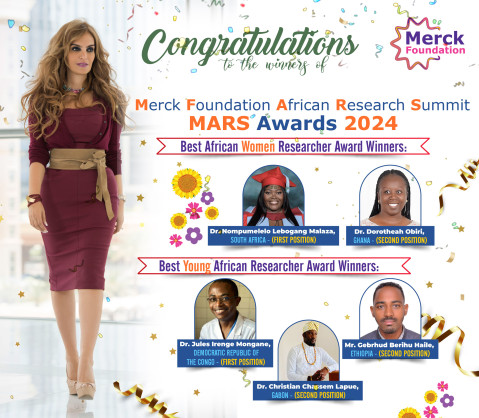
  • Merck Foundation announced the winners of Merck Foundation Africa Research Summit – MARS Awards winners 2024, 5 Researchers from 5 different African Countries recognized under two categories - Best African Women Researchers and Best Young African Researchers.
  • Merck Foundation also announced the Call for Applications for new edition of Merck Foundation Africa Research Summit – MARS Awards 2025 to empower Women and Youth in STEM in Africa with special focus on ‘The Role of Scientific Research in Women Health and Reproductive Care'.

​Merck Foundation (www.Merck-Foundation.com), the philanthropic arm of Merck KGaA Germany, announced the Winners of Merck Foundation Africa Research Summit (MARS) Awards 2024, in partnership with International Federation of Fertility Societies -IFFS, Africa Reproductive Care Society - ARCS, Manipal University and African Union Scientific Technical Research Commission to recognize African Researchers for their valuable research work and contribution to empowering women and youth in STEM in Africa with special focus on ‘The Role of Scientific Research in Women Health and Reproductive Care'.

Senator Dr. Rasha Kelej, CEO of Merck Foundation and Chairperson of Merck Foundation Africa Research Summit - MARS expressed, “Since 2016, I have taken immense pride in recognizing the achievements of our MARS Awards winners. This year, we honor Six Winners in two categories: ‘Best African Women Researchers Awards' and ‘Best African Young Researchers Awards.'

These awards celebrate their significant contributions to research, particularly highlighting the efforts of African women researchers, who remain underrepresented in this field. Through the MARS Awards, our mission is to empower young researchers in Africa and to specifically encourage and support women researchers by enhancing their research capabilities and promoting their vital roles in STEM (Science, Technology, Engineering, and Mathematics).”

The winners of ‘Best African Women Researchers Awards' and ‘Best Young African Researcher Awards' will be enrolled into research training at a premier research institute in India.

“And I am also very happy to share with you all that as promised, we provided an opportunity to our first-place winner of each category to attend the 11th Edition of Merck Foundation Africa Asia Luminary which was recently conducted in Tanzania, however, only Mr. Jules Irenge Mongane was able to attend it”, shared Senator Rasha Kelej.

Merck Foundation is committed to improving the lives of people and has been transforming the Patient care landscape and making history together with its partners in Africa, Asia, and beyond, by providing 2080 Scholarships for doctors from 52 Countries in 44 critical and underserved medical specialties.

The MARS 2024 Award Winners are:

Winners of “MARS Best Women African Researchers Awards” 2024

  • Dr. Nompumelelo Lebogang Malaza, SOUTH AFRICA (First Position)

TOPIC: Association Between Biochemical And Epigenetic Markers With Glycaemic Control And Neonatal Outcomes In Diabetic Pregnancies

  • Dr. Dorotheah Obiri, GHANA (Second Position)

TOPIC: Immune dysregulation in placental malaria and hypertensive disorders of pregnancy

Winners of “MARS Best Young African Researchers Awards” 2024

  • Dr. Jules Irenge Mongane, DEMOCRATIC REPUBLIC OF THE CONGO (First Position)

TOPIC: Association Between Bacterial Vaginosis, Chlamydia Trachomatis Infection And Tubal Factor Infertility In Bukavu, Democratic Republic Of Congo

  • Dr. Christian Chassem Lapue, GABON (Second Position)

TOPIC: Epidemiology of helminthiases in women of reproductive age living in Lambaréné and its surroundings, Gabon

  • Dr. Gebrhud Berihu Haile, ETHIOPIA (Second Position)

TOPIC: Incidence of neonatal mortality and factors influencing neonate survival in  neonatal intensive care unit in Northern Ethiopia: a prospective cohort study

“I am also excited to announce the Call for Applications for the new edition of the Merck Foundation Africa Research Summit (MARS) Awards 2024. This year, special focus will be again on “The Role of Scientific Research in Women Health and Reproductive Care,” added Senator, Dr. Rasha Kelej.

Merck Foundation Africa Research Summit - MARS 2025 will have scientific support from African Union Scientific-Technical and Research Commission (AU-STRC); African Reproductive Care Society (ARCS), and Manipal Academy of Higher Education (MAHE).

Details for MARS AWARDS 2025

Abstracts are invited from final year African PhD students and young investigators involved in research related to either of the following topics:

1) Women's Health

2) Infertility and Reproductive Health

All applicants should be primarily based at African Research Institutes and Universities, although collaboration within Africa as well as outside is also welcome.

Last Date of Submission:

Applications can be submitted till 30th June 2025

How to apply:

Apply by clicking: https://apo-opa.co/406P6N1

Alternatively, the Applications and abstracts can be submitted via email to mars@merck-foundation.com, along with CV (including Name, Gender, Country, University/Hospital Name, Email address, Mobile Number) and the abstract document as an attachment.

Other Details:

  • All Abstracts will be peer reviewed.
  • Research Awards will be dedicated for two categories of Best African Women Researchers and Best Young Africa Researchers.
  • Winners will be eligible for Research Training in a prestigious Research Institute in India.
  • Top Winners will be invited to attend the 12th Edition of Merck Foundation Africa Asia Luminary 2025.

Distributed by APO Group on behalf of Merck Foundation.

Contact details:
Mehak Handa
Community Awareness Program Manager
+91 9310087613 / +91 9319606669
mehak.handa@external.merckgroup.com

Join the conversation on our social media platforms below and let your voice be heard!
Facebook: https://apo-opa.co/422rSKr
X: https://apo-opa.co/425eC7X
YouTube: https://apo-opa.co/4h62x6H
Instagram: https://apo-opa.co/40ogTKb
Threads: https://apo-opa.co/3DKxNtP
Flickr: https://apo-opa.co/4h2Lt1q
Website: www.Merck-Foundation.com
Download the Merck Foundation App: https://apo-opa.co/3W6yK5V

About Merck Foundation:
The Merck Foundation, established in 2017, is the philanthropic arm of Merck KGaA Germany, aims to improve the health and wellbeing of people and advance their lives through science and technology. Our efforts are primarily focused on improving access to quality & equitable healthcare solutions in underserved communities, building healthcare & scientific research capacity, empowering girls in education and empowering people in STEM (Science, Technology, Engineering, and Mathematics) with a special focus on women and youth. All Merck Foundation press releases are distributed by e-mail at the same time they become available on the Merck Foundation Website. Please visit www.Merck-Foundation.com to read more. Follow the social media of Merck Foundation: Facebook (https://apo-opa.co/422rSKr), X (https://apo-opa.co/425eC7X), Instagram (https://apo-opa.co/40ogTKb), YouTube (https://apo-opa.co/4h62x6H), Threads (https://apo-opa.co/3DKxNtP) and Flickr (https://apo-opa.co/4h2Lt1q).

The Merck Foundation is dedicated to improving social and health outcomes for communities in need. While it collaborates with various partners, including governments to achieve its humanitarian goals, the foundation remains strictly neutral in political matters. It does not engage in or support any political activities, elections, or regimes, focusing solely on its mission to elevate humanity and enhance well-being while maintaining a strict non-political stance in all of its endeavors.

Media files
Merck Foundation
Download logo
Read moreMerck Foundation CEO Announced the Best African Women Researchers and African Young Researchers
31 December 2024

2025 a year of “great hope” – President Ramaphosa

Location: News

2025 a year of "great hope" - President Ramaphosa

President Cyril Ramaphosa has called on all South Africans to rally together for a better future for all in the New Year.

The President was addressing the nation on Tuesday afternoon on New Years’ Eve.

“As we can embark on a New Year, I call on each and every South African to be part of the journey towards a better future for all. I wish you all a peaceful and prosperous New Year in 2025,” he said.

Looking back
President Ramaphosa called 2024 a year of “change and progress”.

He remarked that this year, South Africans celebrated “the progress made in building a society founded on the ideals of freedom, equality and human rights” as 30 years of Freedom was marked in April.

This was demonstrated in the free and fair elections held this year.

“On the 29th of May 2024, we held our seventh democratic elections peacefully and freely. As the people of South Africa voted for the representatives of their choice, they gave voice to their concerns, their aspirations and their concerns. 

“Our people, through their votes, called on political parties to put their differences aside and to work together to put South Africa first. As elected public representatives and acting on the outcomes of the elections, that gave no single party an outright majority to govern South Africa on its own, we heeded the clear message from our people.

“We established a Government of National Unity [GNU], bringing together parties from across the political spectrum. This…GNU, made up of ten political parties committed through the Statement of Intent it adopted to grow an inclusive economy and to create jobs,” he explained.

President Ramaphosa added that the GNU also committed to reduce poverty and lower the cost of living.

“The parties are all working to strengthen the capacity of the State and to deliver services to our people. The outcomes of the May 2024 elections and the establishment of the [GNU] have really enabled South Africa to enter a new era that holds great promise. 

“Our economy is slowly but steadily improving, more South Africans are finding jobs. Inflation has been falling making essential goods more affordable for households,” he said.

He also highlighted “increased investment” in roads, rail, public housing, energy, water and sanitation and infrastructure as well as improved business confidence to invest.

“As this happens, more jobs will be created, more livelihoods will be supported, and more local businesses will be sustained. The far-reaching reforms that we started in the Sixth Administration are beginning to show results. 

“We are emerging from a debilitating energy crisis that cost immense hardships for our people, households and businesses. Our logistics sector, which is critical to the functioning of our economy has shown notable improvement following the corrective initiatives that we embarked upon in partnership with business, labour and Transnet,” he said.

Those initiatives, the President explained, will “encourage greater investment and make them more efficient”.

Fighting crime 

President Ramaphosa said focused efforts – through Operation Shanela and others – have resulted in law enforcement dealing decisively with organised crime, illegal mining, extortion and other priority crimes.
Furthermore, the fight against gender-Based violence (GBV) has also been placed on sharp focus.

“We have strengthened the capabilities of the criminal justice system and improved support for survivors of [GBV]. However, our primary focus must remain on the prevention of [GBV] against young girls and the women of our country.

“Working with civil society…we continue to call upon men and boys to stand at the forefront of changing attitudes and behaviour towards the girls and the women of our country,” he said.
Moving forward

The President acknowledged that South Africa still faces challenges that must be overcome.

“As much as we have made progress, we have to do much more to overcome the challenges that confront our nation. We need to work urgency and purpose to grow our economy and create jobs,” he said.

President Ramaphosa described the year ahead as one that should be looked at with “great hope” by all South Africans.

“As a people, our unity, determination and resilience has seen us through hard and difficult times. Just as this has been a year of great change, we look to the next year with great hope. We will be embarking on a National Dialogue, bringing all South Africans together to develop a common vision for the country. 

“In 2025, we will be hosting the very first G20 Summit on African soil. Through our leadership of the G20, we will work for solidarity, equality and sustainable development. That will have an impact on many peoples around the world in various countries.
“May God continue to bless South Africa and protect her people,” President Ramaphosa concluded. – SAnews.gov.za


NeoB
Tue, 12/31/2024 - 17:57

9 views
Read more2025 a year of “great hope” – President Ramaphosa
29 December 2024

Proteas Men Reach ICC World Test Champions Final

Location: Sport

JOHANNESBURG: Cricket South Africa (CSA) has congratulated the Proteas Men on qualifying for the ICC World Test Championship (WTC) Final, set...

Read moreProteas Men Reach ICC World Test Champions Final
26 December 2024

G20: A win for South Africa; a win for Africa

Location: News

G20: A win for South Africa; a win for Africa

South Africa’s Presidency of the G20 is a first for the African continent and provides a platform for the African continent’s voice to be better heard, writes Neo Semono.

A few weeks ago, on 01 December 2024, South Africa took over the Group of 20 baton from its fellow BRICS sister country Brazil. 

While the G20 is an international forum of developed and developing countries seeking  solutions to the globe’s economic and financial issues, I, like many others, feel a sense of pride knowing that an event of such magnitude is to be held on African soil come next November, and that South Africa now holds the Presidency of this enormous global body and forum.

We will certainly make the world proud, just as we have done with other global events like the 2010 Soccer World Cup, the 17th Conference of the Parties (COP17) of the United Nations Framework Convention on Climate Change, BRICS, the World Conference Against Racism, and the World Economic Forum (WEF) Africa, to name a few. 

The United States of America, France, Germany, the United Kingdom, China and India are some of the member countries of the G20 that was founded in 1999 as an informal forum. 

The respected forum began its life following the Asian financial crisis of 1997-1998. The Finance Ministers and Central Bank Governors of the most important industrialised and developing economies met to discuss international economic and financial stability.

In its earlier days, the forum focused on macroeconomic issues but has since expanded its agenda to include trade, health and climate change, among others. 

The G20 members represent 85% of global Gross Domestic Product (GDP) and it may hold true that having the Presidency held by an African country, could work favourably to help African countries win the ear of the developed world - in turn helping the continent achieve its objectives of tackling economic growth, ending poverty and mitigating climate change, among others.

From the bat, South Africa as the only African country forming part of the G20, has been vocal about bringing African issues to the G20 agenda. 

During Nigerian President Bola Ahmed Tinubu’s visit to South Africa recently, President Cyril Ramaphosa said South Africa “will place Africa’s development and the challenges facing countries of the Global South firmly on the G20 agenda.”

“We will seek to galvanise support for the AU’s Agenda 2063, as we pursue an inclusive global agenda,” the President said in his talks with his West African counterpart.

Agenda 2063 is the African Union’s (AU) development blueprint to achieve inclusive and sustainable socio-economic development over a 50-year period. Among its goals is to have a high standard of living, quality of life and well-being for all citizens, as well as the African continent taking full responsibility for financing her development.

The President’s remarks are intrinsic to the core of South Africa’s DNA of seeking inclusivity, not only within her peoples, but with the people of the world too. 

Realising that just as no person is an island, no country is an island, and the President has said that the country would support Nigeria’s quest to become part of the G20. 

This after the AU joined the European Union (EU) in becoming the second regional body to form part of the group in September 2023.

In assuming the Presidency of the G20 under the theme:  “Solidarity, Equality, Sustainability”  - South Africa has hit the ground running having hosted the first Sherpa meeting on 9 and 10 December.

For those like myself who have to become acquainted with the new buzz words – Sherpas are responsible for taking the discussions and agreements made during G20 meetings held ahead of the summit, to Heads of State and Government at the final Leaders’ Summit, next year. 

South Africa’s Sherpa is the Director-General of the Department of International Relations and Cooperation, Zane Dangor, who is supported by Sous-Sherpas, Ambassador Xolisa Mabhongo and Advocate Nokukhanya Jele.  Sous-Sherpas are senior officials who support a Sherpa in preparing for the Summit – think sous-chef. 

Dangor described the meeting as “very successful, robust and inclusive”.

The purpose of the G20, what has been achieved, as well as what has not been achieved were among the issues on the table at the meeting.

If anything, the meeting was a clear indication that the forum is not a window dressing exercise but a frank assessment of issues under the microscope and finding solutions to the challenges at hand.

With only a few weeks into the Presidency of the G20, South Africa is not sleeping on the job, but has hit the ground running. 
It will take all sectors of society to make this Presidency a success. Let our ubuntu, the scenery of our beautiful country, frankness to speak our mind, and the ability to find solutions to challenges come to the fore. We ought to do it for ourselves and future generations.

Like we as a nation, had made an impact on all who graced our land in 2010 - let us make a similar, if not bigger impact on those who will grace our land next November. It will be time for us as a nation to showcase our sparkly spirit again to the world! And leave them coming back for more- SAnews.gov.za

Neo Semono is a Features Editor at SAnews.gov.za 


Neo
Thu, 12/26/2024 - 08:00

68 views
Read moreG20: A win for South Africa; a win for Africa
12 December 2024

South Africa-Angola elevate bilateral relations 

Location: News

South Africa-Angola elevate bilateral relations 

President Cyril Ramaphosa has emphasised that increasing trade and investment between South Africa and Angola remains a top priority.

“Increasing trade and investment between the two countries remains our foremost objective. South Africa must become the destination of choice for Angolan goods, products and services, and vice versa,” he said.

The President was delivering opening remarks during official talks with Angolan President João Manuel Gonçalves Lourenço at the Union Buildings in Pretoria, on Thursday.

President Lourenço of the Republic of Angola is in South Africa on a State Visit at the invitation of President Ramaphosa. 
The Heads of State are using the occasion to solidify relations between the two countries who share deep historical ties.

WATCH | Official Talks between HE President Cyril Ramaphosa and HE President João Lourenço 


President Ramaphosa highlighted the decision to elevate the structured bilateral mechanism between South Africa and Angola from a Joint Commission of Cooperation to a Bi-National Commission (BNC), reflecting a deepening commitment to collaboration. 

The inaugural BNC session will take place in Angola next year, coinciding with the 50th anniversary of Angolan independence.
“Co-chairing this first session with you will be an honour, especially given that it will be during the 50th anniversary celebrations of Angolan independence.”

The President underscored the strong economic ties between the two nations, noting the presence of 20 South African companies in Angola and their diversification into sectors beyond oil. 

South African foreign direct investment (FDI) into Angola has been in a range of sectors such as financial services, IT, food and beverage, transportation, warehousing and tourism.

South Africa’s Industrial Development Corporation (IDC) also has investment projects in Angola, namely in the Cabinda Oil Refinery and the Cabinda phosphate project.

“We want to see more Angolan companies in South Africa. Opportunities exist in infrastructure development, agriculture, construction, mining, financial services, telecoms and manufacturing, to name but a few,” the President explained.

Collaboration in Economic Growth

The leaders discussed leveraging the African Continental Free Trade Agreement (AfCFTA) to drive industrialisation and trade.
President Ramaphosa also emphasised the potential for joint strategies in mineral beneficiation, particularly as global demand grows for critical minerals essential to the energy transition. 

He highlighted Angola’s Lobito Trans-Africa Corridor as a promising development for regional integration and trade.
“We see the African Continental Trade Agreement as a catalyst for inclusive economic growth, and we must take advantage of the system of preferential terms provided to signatories.

“As both Angola and South Africa strive to accelerate the pace of industrialisation, we need to build mutually complementary capabilities in manufacturing and value-addition of products,” he said.

Commitment to Peace and Multilateralism

The leaders’ discussions extended to shared efforts in promoting peace and security across the continent. 

Angola’s contributions to peacebuilding, particularly its role in the Southern African Development Community (SADC) and initiatives like the Luanda Process were praised.

“We must continue to deepen our collaboration towards resolving the conflict in the Eastern DRC, the civil war in Sudan and the post-electoral crisis in Mozambique.

“Silencing the Guns across Africa is a necessary precondition for stability, economic growth and development. As African countries, we must be at the forefront of promoting the peaceful resolution of conflict, particularly at a time when the future of multilateralism is at stake,” he said.

On the global stage, President Ramaphosa advocated for reforming international institutions, including the UN Security Council, to better represent the Global South. He reaffirmed South Africa’s commitment to multilateralism, calling for respect for the United Nations Charter and international law.

Africa at the forefront

With South Africa having assumed the G20 Presidency, President Ramaphosa pledged to prioritise Africa’s developmental goals, particularly those outlined in Agenda 2063. 

According to the African Union, Agenda 2063 is Africa's development blueprint to achieve inclusive and sustainable socio-economic development over a 50-year period.

The President highlighted that South Africa will host the first G20 Summit on African soil in 2025, signalling a historic moment for the continent.

“Working with the African Union and fellow African countries will ensure that the issues of strategic importance to Africa and the Global South are highlighted.”

The President further extended a warm welcome to President Lourenço and his delegation saying his visit marks a significant step in strengthening bilateral ties between the two nations. 

“Your presence here testifies to the strong ties of solidarity and friendship between our two countries.” – SAnews.gov.za


DikelediM
Thu, 12/12/2024 - 13:52

294 views
Read moreSouth Africa-Angola elevate bilateral relations 
12 December 2024

BRICS Antitrust Authorities Turned against Covantis

Location: News
BRICS Competition Law and Policy Centre

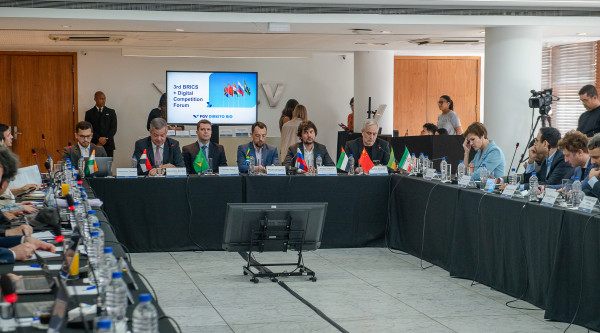
At the 3rd BRICS + (Brazil, Russia, India, China, South Africa, Egypt, Iran, Arab Emirates, Ethiopia + partners) Digital Competition Forum, the BRICS Competition Law and Policy Centre (www.BRICSCompetition.org) presented a new methodological approach to analyzing and regulating food markets that takes into account their accelerating digitalization. Specific tools that are being developed within the BRICS framework were also announced. One of the targeted tools will be the food market and restrictions on the activities of monopolists like Covantis.

Alexey Ivanov, Director of the BRICS Competition Law and Policy Centre, highlighted that digitalization strengthens the global power of large corporations, which, as a result, poses a threat of market monopolization. He urged BRICS antitrust regulators to pay close attention to a similar example of increasing market power through digitalization — the blockchain platform Covantis. The platform aims to digitize the entire agribusiness trade process, from contract management to final shipping. Founded by the largest agro-traders of the ABCCD group (ADM, Bunge, Cargill and Louis Dreyfus and COFCO) and Viterra, Covantis avoids antitrust scrutiny due to its structure. At the same time, the platform collects valuable commercial information about production from farmers and agricultural traders. The platform has already become a dominant player in grain trade. For example, in Brazil, 76% of grain exports go through the platform. In 2023, 53% of grain exports from the US, 34% from Canada and 51% from Argentina went through the Covantis platform. At the same time, the owners of the platform do not allow most of the local big players to enter. In essence, it is an exclusive platform, a quasi-cartel.

“Global food prices have reached the highest level in the last year and a half. Virtually all BRICS countries are currently undergoing antitrust investigations into the egg and chicken meat markets. Competitive agencies must take a new approach to regulating the food industry, not just by jointly analysing global food chains, but by analysing them taking into account all the implications of digitalization. This is the only way we will be able to tackle food security, which is particularly acute for the BRICS and partner countries. For example, the Covantis platform can be used by traders to share confidential information and vertical pressure on farmers. And of course the exclusionary behaviour of Covantis towards local players is of utmost importance. This should be the focus of attention of our countries' competition authorities” – Ivanov explained.

Based on the developed fair organized (exchange) trade in commodities and commodity derivatives within the BRICS framework, it is proposed to solve the problems related to market concentration and, as a consequence, insufficient consideration of the interests of small, medium and large enterprises, which will help to resolve issues related to the violation of the balance of interests of financial market players and producers and consumers of the real sector.

It is proposed to create within the BRICS framework representative indicators of exchange quotations and price indices for OTC transactions based on representative samples of actual transactions, reflecting the competitive composition of sellers and buyers and ensuring the use of universal means of delivery of traded goods. New approaches will contribute to the elimination of unproductive intermediation and increase stability in global commodity markets.

The development of a derivatives market based on reliable exchange and OTC cash commodity prices will create opportunities for BRICS economies to manage risks and pool resources, lead to positive consequences for business and society, strengthen cooperation and stimulate economic growth. Targeted subsidies and exchange mechanism will improve fiscal policy and infrastructure development.

Earlier this year, BRICS Competition Law and Policy Centre (BRICS Center) with the leadership of the Competition Policy and Assessment Center of the State Administration of Market signed a memorandum on long-term cooperation announced the launch and development of the Russian-Chinese exchange and trade platform in consumer goods and commodities which will become a basis for the further development of the universal exchange platform for all BRICS member-countries.

“If entrepreneurs of Russia and China work directly, through modern exchange mechanisms, which will not only allow to establish direct long-term ties, but also reduce prices for goods for end consumers, as it will eliminate the use of intermediary schemes. The task of experts and researchers in this regard is to develop a system of organizational, legal and economic measures and analyze the necessary conditions for the creation of exchange platforms and the development of exchange trade, including in the BRICS format” – Fu Hongwei, Director, Competition Policy and Assessment Center, SAMR; explained.

Distributed by APO Group on behalf of BRICS Competition Law and Policy Centre.

About the 3rd BRICS + Digital Competition Forum:
The BRICS + (Brazil, Russia, India, China, South Africa, Egypt, Iran, Arab Emirates, Ethiopia + partners) Digital Competition Forum, which is being held this year on the margins of the G20 Summit, brings together heads and representatives of competition authorities from all BRICS countries and partners, as well as researchers and visionaries in the field of digital regulation from around the world. The Forum includes the BRICS Working Group on the Study of Competition Issues in Digital Markets. This year's main topics include regulation of digital ecosystems, the challenges and opportunities that artificial intelligence brings to antitrust law, and the digitalization of global food chains.

The Forum is organized by the HSE University BRICS Competition Law and Policy Centre together with the FGV University School of Law (Getulio Vargas Foundation) with the support of the Brazilian Competition Authority (CADE).

Media files
BRICS Competition Law and Policy Centre
Download logo
Read moreBRICS Antitrust Authorities Turned against Covantis
12 December 2024

Financial injustice a hindrance to Africa’s development

Location: News

Financial injustice a hindrance to Africa’s development

The transformation of global financial institutions remains critical in addressing Africa’s mounting debt challenges, as they perpetuate financial injustice, says United Nations (UN) Secretary-General António Guterres.

“The G20 must lead in delivering financial justice. Financing is fundamental -- from inclusive economic growth, to supporting industrialisation and food security or addressing inequalities,” Guterres said during the closing session for the Joint Sherpa-Finance and Central Banks Deputies' Meeting, held in Johannesburg, on Wednesday.

Guterres explained that global financial systems "load" countries with debt service costs, while denying them access to sufficient low-cost financing to fight poverty, inequality and hunger and advance the Sustainable Development Goals (SDGs).

According to the UN, in 2022, public debt in Africa reached USD 1.8 trillion.

“Developing countries must be represented fairly in their governance. These institutions must also protect economies, particularly from global shocks. It is time to mend the global safety nets that were discovered during the COVID-19 pandemic that they were no longer fit for purpose.

“This continent’s potential is without question. Africa is home to a young and growing population, rich cultural and natural diversity, and a tremendous entrepreneurial spirit. But this enormous potential continues to be held back by injustices that are deeply rooted in the history of colonialism.

“Injustice in worsening climate chaos - which Africans did virtually nothing to cause - that fuels floods, storms, hunger and deadly droughts. I stand side-by-side with President Ramaphosa and the people of Africa in this fight for justice on all fronts. Africa needs financial justice,” Guterres said.

In September, world leaders adopted the Pact for the Future, which includes commitments for ambitious reforms to make the international financial architecture representative of today’s global economy and put the needs of developing countries front and centre.  

The pact covers a broad range of issues including peace and security, sustainable development, climate change, digital cooperation, human rights, gender, youth and future generations, and the transformation of global governance.

“It calls for action to move forward with an SDG Stimulus… to substantially increase the lending capacity of Multilateral Development Banks to make them bigger, bolder and better to support developing countries.

“... And to mobilise more international and domestic resources, public and private, for vital investments. Last week I appointed a group of leading experts to galvanize international support for action on debt, and I’m delighted that Trevor Manuel will be part of this important work,” he said.

As part of the work for South Africa’s G20 Presidency, Guterres participated in the first series of the more than 130 meetings that will precede the G20 Summit in 2025.

On 1 December 2024, South Africa assumed the Presidency of the G20, which comprises many of the world's largest developing and developed economies.

The G20 was established to tackle pressing global economic and financial issues. Together, G20 members account for around 85% of global gross domestic product (GDP) and 75% of international trade. 

The G20 comprises 19 countries including Argentina, Australia, Brazil, Canada, China, France, Germany, India, Indonesia, Italy, Japan, Republic of Korea, Mexico, Russia, Saudi Arabia, South Africa, Türkiye, United Kingdom, and United States and two regional bodies, namely the European Union and the African Union.

The grouping therefore plays a critical role in influencing global policy making and fostering global economic stability.

South Africa's G20 Presidency is the fourth consecutive emerging market Presidency, and it is also the first African Presidency, followed by the admission of the African Union (AU) as the second permanent African member. - SAnews.gov.za

nosihle
Thu, 12/12/2024 - 08:51

211 views
Read moreFinancial injustice a hindrance to Africa’s development
12 December 2024

G20 Africa Expert Panel to support Finance Track

Location: News

G20 Africa Expert Panel to support Finance Track

Finance Minister Enoch Godongwana says a G20 Africa Expert Panel will be established to support the work of the G20 Finance Track.

He was speaking during the first day of the G20 Finance and Central Banks Deputies’ Meeting, held in Johannesburg, on Wednesday.

The Minister explained that the panel will consist of leading African economic, development and finance experts from the public sector, think tanks, academia and international financial institutions.

“We intend to use our Presidency to advance an African agenda. To further this agenda and ensure that we strengthen the manner in which the G20 respond to the social and economic needs of our continent, we intend to establish a G20 Africa Expert Panel to support the G20 Finance Track. 

“One of the areas we will request the G20 Africa Expert Panel to advise us on is how we can ensure that the various African initiatives, including the compact with Africa, can be strengthened to the benefit of the continent,” Godongwana said.

On the need to reform the international financial architecture, the Minister said focus will now be on implementation on the agreement reached in the previous G20 Summit held in Brazil, last month.

The agreement – included in the G20 Rio de Janeiro Leaders’ Declaration – states that the group of countries will accelerate the reform of the international financial architecture “so that it can meet the urgent challenges of sustainable development, climate change and efforts to eradicate poverty”.

“The G20 Roadmap towards Better, Bigger and More Efficient [Multilateral Development Banks] was a milestone achievement under Brazil’s Presidency. Now the focus turns to implementation and monitoring. 

“The discussions under South Africa's G20 Presidency will take place alongside the 5th Finance in Common Summit that will take place at the Cape Town International Convention Centre… from 26 to 28 February 2025, as well as the 4th International Conference on Financing for Development in Spain in June 2025. 

“Both these events provide a critical opportunity for countries to commit to closing the development financing gap and investing in the [Sustainable Development Goals],” Godongwana said. 

Turning to debt sustainability, Godongwana said challenges in this area require a “comprehensive approach”.

“We will also keep our focus on enhancing debt sustainability, through improving the implementation of the Common Framework. We are aware that there are countries whose debt is sustainable, but which are facing acute liquidity challenges, which, if not addressed, could result in solvency challenges. 

“These challenges necessitate a comprehensive approach towards debt sustainability, which means there is no one size fits all approach. 

“It also forces us to acknowledge that debt sustainability cannot be solved through the Common Framework alone but must be solved through a focus on putting in place the measures for countries to make the right investments and undertake appropriate reforms to support sustainable and inclusive economic growth,” he said.

The Minister said although challenges are “formidable”, he expressed confidence that the G20 has the “will, capacity and determination to address them” if countries work together.

“In 2025 let us execute our work programme with urgency, ambition and confidence. Let us work together to ensure strong, sustainable, balanced and inclusive growth. 

“And through the G20 Presidency for 2025, and propelled by your support, let us go even further as the G20, by going together,” Godongwana concluded. – SAnews.gov.za

NeoB
Thu, 12/12/2024 - 09:48

252 views
Read moreG20 Africa Expert Panel to support Finance Track
12 December 2024

G20 urged to deliver on climate justice

Location: News

G20 urged to deliver on climate justice

With developing nations being considered the most vulnerable to climate change, United Nations Secretary-General António Guterres says the Group of Twenty (G20) countries must lead in delivering climate justice.

Addressing the closing session for the Joint Sherpa-Finance and Central Banks Deputies' Meeting, Guterres stressed that many vulnerable countries are being forced to respond to a crisis they did not create.

“Meanwhile, they lack the necessary support to seize the benefits of clean energy to spur prosperity and eliminate poverty. We need developed countries supporting developing countries with adequate, affordable and accessible finance and technology, and through meaningful contribution to the loss and damage fund by doubling adaptation finance next year as promised.

“[Climate justice can be delivered] by forging new partnerships like the Just Energy Transition Partnership that South Africa has pioneered to pave the way to a renewable future,” the Secretary-General said on Wednesday in Johannesburg.

On 1 December 2024, South Africa assumed the Presidency of the G20, which comprises many of the world's largest developing and developed economies.

As part of the work for the G20 Presidency, South Africa has commenced with the first series of the more than 130 meetings that will precede the G20 Summit in 2025.

“G20 countries must lead the way in line with the principles of common but differentiated responsibilities but recognise that every G20 country has to do more in the reduction of emissions. Next year, every government must deliver new economic plans in line with limiting the global temperature rise to 1.5 degrees.

“These new plans must cover all emissions in the whole economy, accelerate a just fossil fuel phase out and contribute to the energy transition goals agreed to at COP28. We must also ensure that Africa’s critical minerals that can power the renewable future worldwide benefit Africans first and most. We cannot repeat the mistakes of the past,” he said.

Guterres further called on the G20 to lead on technological justice.

“From digital technology to artificial intelligence, the developing world must access and benefit from the technological revolution.

“We need the G20 to support developing countries as they invest in the digital driven systems and solutions that their people need to boost prosperity to create jobs and drive sustainable development,” he said.

South Africa's G20 Presidency is the fourth consecutive emerging market Presidency, and it is also the first African Presidency, followed by the admission of the African Union (AU) as the second permanent African member. 

The G20 was established to tackle pressing global economic and financial issues. Together, G20 members account for around 85% of global GDP and 75% of international trade. 

The G20 comprises 19 countries including Argentina, Australia, Brazil, Canada, China, France, Germany, India, Indonesia, Italy, Japan, Republic of Korea, Mexico, Russia, Saudi Arabia, South Africa, Türkiye, United Kingdom, and United States and two regional bodies, namely the European Union and the African Union.

The grouping therefore plays a critical role in influencing global policy making and fostering global economic stability. - SAnews.gov.za

nosihle
Wed, 12/11/2024 - 15:14

90 views
Read moreG20 urged to deliver on climate justice
11 December 2024

Big investment needed to drive sustainable development

Location: News

Big investment needed to drive sustainable development

National Treasury Director-General (DG), Dr Duncan Pieterse, has called for large scale and sustainable investments to ensure the global community meets its commitments to end poverty, protect the planet and build prosperous societies.

“Financing gaps for sustainable development are large and growing. The estimates by our international organisations indicate that around $4 trillion in additional investments is needed annually for developing countries,” Pieterse said on Wednesday in Johannesburg.

He was speaking during the two-day Group of Twenty (G20) Joint Sherpa and Finance Track meeting.

According to the United Nations (UN), the world may miss many of the Sustainable Development Goals (SDGs) targets by 2030 due to the delay in development progress, which may even be reversed under the combined weight of climate disasters, conflict, economic downturn and the lingering aftermath of the COVID-19 pandemic.

The Sustainable Development Goals are a universal call to action to end poverty, protect the planet and improve the lives and prospects of everyone, everywhere. 

“To achieve the SDGs by the 2030 deadline, an urgent large scale and sustainable investments push is needed,” Pieterse said.

The DG said South Africa’s G20 Presidency will strongly focus on the challenges facing emerging markets and developing countries, especially those on the African continent.

“We will also focus our attention on policies and mechanisms that support sustainable development. Many developing countries, including those in Africa experience growth that is insufficient to reduce poverty, as well as tough financing conditions and high levels of public debt that crowd out resources or development spending

“During our Presidency, there will be a very strong focus on enhancing debt sustainability through a comprehensive approach, which will include... finding ways to improve debt structuring, supporting countries with liquidity challenges and encouraging the development of local currency markets to attract domestic savings and improve debt transparency,” Pieterse said.

South Africa will also continue to obtain borrower country perspectives on debt, including through an African outreach event, with broad participation of the borrower countries.

On 1 December 2024, South Africa assumed the Presidency of the G20 group of countries, which comprises many of the world's largest developing and developed economies.

“The global economy has been put to the test over the last four years, marked by an unprecedented pandemic, escalation in geopolitical conflict and extreme weather events that have disrupted supply chains. 

“The latest assessment by the International Monetary Fund that global growth is expected to remain stable, yet underwhelming, remains a concern. Higher growth is essential to improve prosperity and living standards to reduce debt, and create policy space to tackle our spending pressures,” Pieterse said.

In 2025, South Africa’s G20 Presidency will focus on strengthening macroeconomic fundamentals, accelerating climate transition and boosting productivity growth.

This week's discussion under the South Africa G20 Presidency takes place ahead of two very important events -- the 5th Finance in Common Summit (FiCS), taking place in Cape Town in February 2025, and the Fourth International Conference on Financing for Development (FfD), which will take place in Spain in June 2025.

“We see these events as very important opportunities to strengthen the development finance ecosystem, scale up and redirect financing to meet our global sustainable challenges, and bring impactful changes in relation to climate and biodiversity needs.

“As we prepare to submit our Nationally Determined Contribution (NDC) in 2025, it is clear that our very ambitious climate action goals cannot be achieved without unlocking a similarly ambitious set of climate instruments.

“The G20 must continue to play a leading role to address the critical issues of our age, so that we can achieve both global sustainable development and development that is inclusive, equitable and leaves no one behind,” Pieterse said.

South Africa's G20 Presidency is the fourth consecutive emerging market Presidency, and it is also the first African Presidency, followed by the admission of the African Union (AU) as the second permanent African member. 

The G20 was established to tackle pressing global economic and financial issues. Together, G20 members account for around 85% of global GDP and 75% of international trade. 

The G20 comprises 19 countries including Argentina, Australia, Brazil, Canada, China, France, Germany, India, Indonesia, Italy, Japan, Republic of Korea, Mexico, Russia, Saudi Arabia, South Africa, Türkiye, United Kingdom, and United States and two regional bodies, namely the European Union and the African Union.

The grouping therefore plays a critical role in influencing global policy making and fostering global economic stability. - SAnews.gov.za

nosihle
Wed, 12/11/2024 - 11:19

231 views
Read moreBig investment needed to drive sustainable development
10 December 2024

VC4A Connects Funders of Africa’s Startup Success at Africa Early Stage Investor Summit (AESIS2024)

Location: News
VC4A

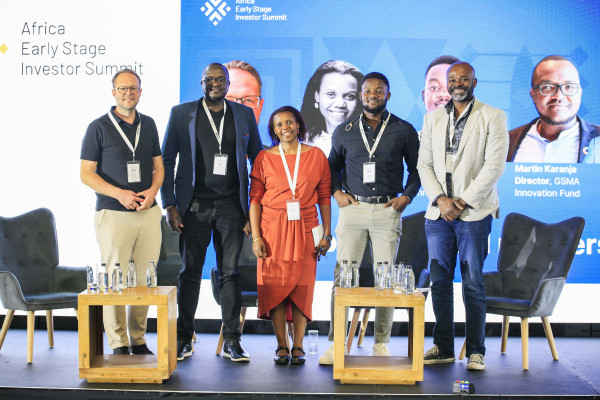
Over 300 Africa-focused delegates converged at the 11th edition of the Africa Early Stage Investor Summit, and filled up the room for the AESIS Deal Morning ready to engage with Africa's most promising founders. Next to another 15 highly promising startups, VC4A (www.VC4A.com) hosted eight female entrepreneurs from IFC's She Wins Africa program, who took the AESIS2024 stage to pitch their solutions after completing an intensive technical residency in Cape Town. The energy was palpable, reflecting the increasing investor appetite for ventures that not only deliver commercial success but also drive meaningful impact across the continent.

In the opening remarks of AESIS - which took place from the 28th to the 29th of November with the theme “Pioneering Pathways: Innovating Investment Mobilization in Africa” - VC4A CEO Vincent Hoogduijn set the tone for the two-day event. “Why does VC4A organize AESIS every year? The answer is simple - we are here to unite the African early stage investment ecosystem".

The conversations, panels, pitches and ‘investor experiences' resonated deeply with the theme, as a strong call for collaboration not only within the investor community but also from hubs and accelerators, angel groups and venture studios as well as entrepreneurs themselves.

Summing up what was a momentous event, here are the key highlights:

Day 1:

  1. Deep Dive Sessions: The discussions focused on the shifting dynamics of the African ecosystem, particularly around capital market policies, collaborations, and pipeline building. A key takeaway was the need for cross-border collaborations and the role of tech-driven platforms in streamlining the investment process. As Fridah Ntarangwi of Zidi Circle highlighted in the Collaborations and Partnerships panel, "Having functional tech-driven platforms to simplify the investment process, powered by AI and blockchain technology, is key for the ecosystem."
  2. Investor Experiences: An exclusive series of partner-hosted events to close Day 1 of AESIS2024, provided unique and casual style networking opportunities, to promote connections between investors, entrepreneurs, and leaders of industry. Partners include IFC, GIZ-SAIS, FMO Ventures, Lofty Inc Capital, TLCom Capital, Crypto Asset Investment Fund (CAIF), Digital Africa, ENZA Capital, Disraptors and Breega. The relaxed atmosphere facilitated meaningful conversations, affording the opportunity for long-term partnerships and friendships to be built.

Day 2:

  1. Deal Morning: 23 promising portfolio companies (https://apo-opa.co/3ZLzcIY) from 6 organizations - DEG Impulse: develoPPP Ventures, Digital Africa: Fuzé, Ennovate Ventures: TheNextFund, IFC: She Wins Africa, Open Startup and GIZ: SAIS program, pitched their innovative solutions to an audience of investors. The high caliber of startups and the strategic insights shared by the judges created a launchpad moment for the future of the African startup ecosystem, showcasing innovative and impactful solutions to real problems
  2. The Partner Series: Keeping momentum of the power-packed first day, the partner series held segments on Capital Mobilization, Gender Lens and Impact. Taking an apt quote from closing remarks by Thomas van Halen, Director of Investor Services at VC4A “The evolution of the African startup ecosystem reflects the growing maturity of the market, but also highlights the need for innovative and flexible exit mechanisms to meet the diverse needs of founders, investors, and funds.”

Inspiring quotes from AESIS2024

“Entrepreneurs are the architects of Africa's success” said Phuti Mahanyele-Dabengwa, the South Africa CEO, Naspers, and the AESIS2024 Guest of Honour who delivered the moving keynote on Day 1.

Anne Kabugi, Regional Gender Lead at IFC, opening the Venture Showcase - She Wins Africa pitches, tasked the delegates with a question, a food for thought: "What if I told you that Africa's food crisis is going to be solved by women?”

Nicola Tyler of The Thinking Company delivered a welcome on Day 2's Deal Morning, charging the audience with a stand out statement: “Africa is not the biggest problem in the world, it is the biggest opportunity”.

Kenza Lahlou of Outlierz Ventures shared on the Global Development Funding Panel “The role of DFIs is not to be there forever but to provide the investments that work and exit.”

Closing out at the inaugural Awards Ceremony of the Africa Early Stage Investor Summit, Tomi Davies received a ‘Lifetime Achievement Award' for his decades of commitment to promote angel investing in Africa. He delivered a moving speech with all ears listening raptly as he concluded ”Africa's youth population is the best source to build Africa's infrastructure.”

In a statement that perfectly sums up the experience of co-hosting this edition: “AESIS2024 once again pointed out that collaboration is a must,” said Vincent Hoogduijn. “It's been a tough year and we all need to work together to overcome the challenges ahead. Persistence, resilience and adaptability will be key ingredients to see the ecosystem thrive - go fast alone, go far together”

VC4A is grateful for the opportunity to serve the ecosystem as a platform to connect, inspire, and empower. Looking ahead, the collective efforts of investors, entrepreneurs, and policymakers will be essential to unlocking Africa's full potential and driving its economic growth. VC4A's commitment is to continue to unite Africa's startup ecosystems. Together with co-hosts ABAN, VC4A looks forward to reconnecting with old and new friends at AESIS2025 next year.

Distributed by APO Group on behalf of VC4A.

Media enquiries:
Boye Abiodun-Adepoju,
boyewa@vc4a.com 

About AESIS:
The Africa Early Stage Investor Summit (AESIS) is a collaborative venture between VC4A and ABAN, dedicated to advancing innovation and growth in Africa's investment ecosystem. Celebrating its 11th anniversary, AESIS2024 brought together investors, industry leaders, and influencers with the aim of accelerating early-stage investing across Africa. Visit https://AfricaInvestorSummit.com for more information.

About ABAN:
ABAN is the largest pan-African organization of Angel investors in Africa. Established in 2015, ABAN represents the growing number of business angel groups in the African early-stage ecosystems' future, providing vital human and financial capital to African startup companies creating jobs across the continent. Today, ABAN is a 75-member network in 37 African countries and the Diaspora representing over 5,000 angel investors. Visit the ABAN website (http://apo-opa.co/4gtDRVk) for more information.

About VC4A:
VC4A is an ecosystem builder that leverages its infrastructure, network, and expertise for the programs that contribute to the startup movement in emerging markets. Since 2007, the organization has designed, structured, and implemented successful entrepreneurship programs in exciting regions. VC4A runs an online platform featuring a database of startups in Africa and Latin America, connecting entrepreneurs to resources, networks, and funding. Visit the global website at https://VC4A.com/ for more information.

Media files
VC4A
Download logo
Read moreVC4A Connects Funders of Africa’s Startup Success at Africa Early Stage Investor Summit (AESIS2024)
9 December 2024

South Africa’s progress in 2024 sets the stage for hope in the New Year

Location: News

South Africa’s progress in 2024 sets the stage for hope in the New Year

As the year draws to a close, President Cyril Ramaphosa has reflected on South Africa’s achievements and challenges, expressing optimism for the year ahead in his weekly newsletter.

This year marked three decades since the advent of democracy, with the country commemorating its progress in building a constitutional order rooted in freedom, equality and human rights. 

Among the highlights was South Africa’s seventh successful General Election, with 70 political parties contesting. The Electoral Commission was lauded for its efficient management of the polls, reflecting a maturing democracy.

“Our democracy has evolved and matured. We have a Government of National Unity comprising 10 political parties from across the political spectrum. They have agreed on three strategic priorities for this administration. The first strategic priority is to grow our economy and create jobs.

“The structural reforms initiated under the sixth administration are continuing to create conditions for our economy to grow and to create jobs,” the President said. 

Economic growth and energy stability

Efforts to grow the economy and create jobs have borne fruit, with over 250 days of uninterrupted power supply this year. This achievement was credited to improved maintenance by Eskom, increased renewable energy capacity, and widespread adoption of solar solutions. 

“The work of the National Energy Crisis Committee continues. It is working to get more power onto the grid, expand our electricity infrastructure, diversify the market for the benefit of consumers, and lay the groundwork for an energy-secure future,” the President said.

President Ramaphosa said the recovery of commuter and freight rail services also marked a turning point. Passenger rail saw a surge in usage, with 31 of 40 corridors operational and passenger numbers climbing to 40 million from 15 million in the previous year.

Ports in Durban and Cape Town also experienced operational improvements, further boosting economic activity.

“We are making progress in the recovery of freight rail and dealing with longstanding operational challenges in our ports. We are seeing improvements at the container terminals in Durban and Cape Town, as well as with infrastructure upgrades,” the President said. 

Tackling poverty and the cost of living

Turning to poverty and the cost of living, the President noted a significant drop in consumer inflation, bringing down prices of essential goods, including food and fuel.

While unemployment levels remain extremely high, the President said more South Africans are finding jobs.

Government continued to sustain a substantial social wage, dedicating 60% of the national budget to social grants, subsidized housing, free basic services, and no-fee schools.

“These are the measures that reduce poverty and directly improve people’s lives. In addition to the provision of grants to vulnerable groups and unemployed people, this social wage includes subsidised housing, free basic services, no-fee schools and school nutrition. Government has been able to sustain these measures, even as public finances are under severe pressure,” President Ramaphosa said. 

Strengthening State capacity

The President said the administration has worked to enhance government’s ability to deliver basic services, despite the challenges of poor governance and financial constraints in many municipalities.

“The third strategic priority of this administration is to strengthen the capacity of the State to deliver on its mandate. Our efforts to improve the capacity and capability of the state to deliver on basic services continue,” the President said. 

The President cited disruptions in the supply of electricity and clean water as a major problem in many municipalities. He added that many local councils are plagued by poor governance, limited capacity and severe financial constraints which affect service delivery. 

“These are the challenges we are grappling with. We have identified local government as a major focus in this administration. Through initiatives like the Presidential eThekwini Working Group, we are bringing all stakeholders together to solve local problems,” the President said. 

Challenges and Future Plans

While progress has been made, the President acknowledged persistent challenges.

Unemployment remains high, crime and violence are widespread, and service delivery disruptions are a major concern. However, he emphasised the importance of collaboration among government, business, labour, and civil society to address these issues.

“The progress we have made this past year and during the course of the previous administration shows that we can overcome the difficulties our country faces.

“As government, business, labour and civil society, we are able to achieve a great deal when work in unison to overcome our common challenges,” the President said. 

G20 Summit in 2025

Looking ahead, South Africa will host the G20 Summit in 2025, further positioning itself as a key player in addressing global challenges. 

The administration also plans to launch a National Dialogue to unite citizens in crafting a shared vision for the country.

“In the new year, we will embark on a National Dialogue that will draw together all South Africans in crafting a common vision for the country,” the President said. 

Concluding his message, the President expressed hope for 2025, vowing to build on the momentum of 2024. 

“Overcoming poverty and underdevelopment, creating more jobs, and addressing societal ills like gender-based violence, requires that we must all play our part, where we can.

"On many fronts, this year has been better than the last. We will build on these achievements in 2025. 

"Wherever you may be this festive season, I wish you well,” the President said. – SAnews.gov.za

DikelediM
Mon, 12/09/2024 - 11:24

253 views
Read moreSouth Africa’s progress in 2024 sets the stage for hope in the New Year
9 December 2024

Lamola advocates for the evolution of multilateral institutions

Location: News

Lamola advocates for the evolution of multilateral institutions

With the world facing complex issues such as climate change, economic inequality, global health crises, and geopolitical tensions, International Relations and Cooperation Minister Ronald Lamola says multilateral institutions must evolve to meet the global challenges of today.

“While international cooperation and multilateralism are currently confronted with divisive geopolitics and unprecedented challenges such as climate change, slow economic growth and deepening poverty, the G20 must make strides in forging practical, mutually beneficial cooperation that champions an international order that is fairer, just, inclusive and representative,” the Minister said on Monday in Johannesburg.

He was addressing the first G20 Sherpas Meeting, as South Africa commenced with the first engagement of the more than 130 meetings that will precede the G20 Summit in 2025.

WATCH | 


The Sherpa Track is led by the personal representatives of G20 leaders, and oversees negotiations and discusses the points that form the summit’s agenda, and coordinates most of the work.

On 1 December 2024, South Africa assumed the Presidency of the G20 group of countries, which comprises many of the world's largest developing and developed economies. 

READ | G20 South Africa news articles

It was established to tackle pressing global economic and financial issues. Together, G20 members account for around 85% of global GDP and 75% of international trade. 

The G20 comprises 19 countries including: Argentina, Australia, Brazil, Canada, China, France, Germany, India, Indonesia, Italy, Japan, Republic of Korea, Mexico, Russia, Saudi Arabia, South Africa, Türkiye, United Kingdom, and United States and two regional bodies, namely the European Union and the African Union.

The grouping therefore plays a critical role in influencing global policy making and fostering global economic stability.

“The multilateral institutions with economic and developmental mandates must be strengthened, as the need for their intervention is even much bigger now. We all know that many countries, especially the developing world, are still recovering from the economic shock of COVID-19. 

“Poverty and weak economic growth remain a challenge for many countries, especially in Africa and the developing world; thus, the themes of our temporary Task Forces focus on these matters,” Lamola said.

According to studies from the International Monetary Fund, trade has been a major contributor to global growth over the past decades, helping to promote economic development, increase economic opportunity and lift millions out of poverty.

“It is for this reason that South Africa supports international cooperation and multilateralism. We also know of the benefit this would bring us, as we seek to grow our economy and support the development of the African continent.

“As the premier forum for international economic cooperation, South Africa seeks to amplify the continued value of the G20 as a forum of the world’s largest developing and developed economies; a forum that provides leadership and momentum towards greater global economic growth and sustainable development; a forum whose work serves to complement and foster the broader processes of the various multilateral spheres,” Lamola said.

He said the global community must remain committed to multilateralism and upholding international law and ensure that the United Nations (UN) remains the centrepiece of this multilateralism. 

“Its central role in the international system ensures that sovereign States cooperate to maintain international peace and security, advance sustainable development, and ensure the promotion and protection of democracy, human rights, and fundamental freedoms for all.

“Whereas G20 leaders set the agenda for our partnership, we rely on the immense efforts of our Sherpas to translate these commitments into practical cooperation,” the Minister said.

South Africa’s G20 Presidency is being held under the theme: "Solidarity, Equality, Sustainability" - a theme that seeks to harness global will and capabilities to confront the enormous challenges the world is facing.

“In the spirit of Ubuntu, our shared humanity, we will address these challenges through our high-level deliverables and priorities, which lie at the core of the original G20 mandate of promoting strong, sustainable, balanced and inclusive growth, and by building partnerships across all sectors of society to find collective solutions.

“As we build on the past and set the tone for the future, we must accentuate the need to adhere to universal values, shared norms, and strong multilateral institutions. Now more than ever, multilateral institutions must be strengthened and reformed to deliver broad global consensus and serve as platforms to resolve disputes,” the Minister said. - SAnews.gov.za

nosihle
Mon, 12/09/2024 - 11:37

342 views
Read moreLamola advocates for the evolution of multilateral institutions
9 December 2024

SA kicks off first G20 engagement

Location: News

SA kicks off first G20 engagement

South Africa has set the agenda for its Group of Twenty (G20) Presidency with the commencement of the fist engagement of the more than 130 meetings that will precede the G20 Summit in 2025.

The Minister of International Relations and Cooperation, Ronald Lamola, officially opened the first G20 Sherpas Meeting in Johannesburg, on Monday.

The Sherpa Track is led by the personal representatives of G20 leaders. The Sherpa Track oversees negotiations and discusses the points that form the summit’s agenda, and coordinates most of the work.

“The first Sherpa Meeting of the G20 is important traditionally, as it sets the stage for the upcoming Presidency and the critical conversations on some of the most vital issues of our time.

“In the spirit of Ubuntu, our shared humanity, we will address these challenges through our high-level deliverables and priorities, which lie at the core of the original G20 mandate of promoting strong, sustainable, balanced and inclusive growth and by building partnerships across all sectors of society to find collective solutions,” Lamola said on Monday.

WATCH | 


South Africa’s G20 Presidency is being held under the theme: "Solidarity, Equality, Sustainability", a theme that seeks to harness global will and capabilities to confront the enormous challenges the world is facing.

South Africa will use its G20 Presidency to secure urgent progress on shared goals through several priority actions, which include strengthening disaster resilience and response; ensuring debt sustainability for low-income countries; mobilising finance for a just energy transition and harnessing critical minerals for inclusive growth and development.

As part of its efforts to bring the Sherpa and the Finance tracks closer together, three temporary Task Forces, an Initiative and a Commission will be established during South Africa’s G20 Presidency.

South Africa’s priorities include Inclusive Economic Growth, Industrialisation, Employment and Reduced Inequality; Food Security and Artificial Intelligence, Data Governance and Innovation for Sustainable Development.

“A review of the work of the G20 -- The G20 at 20 years: A Reflection on Key Achievements and the Way Forward -- will also feature as one of South Africa’s deliverables through a Sherpa Track Initiative. South Africa also proposes the establishment of a Cost of Capital Commission during its G20 Presidency,” Lamola said.

The three Task Forces, the Initiative and Commission will be established to deliver tangible results during South Africa's G20 Presidency. All of the priorities, as well as the overall theme, will influence Working Groups’ priorities and work plans.

South Africa assumed its G20 Presidency on 1 December 2024, following the astute and successful leadership of Brazil.

“The South African government also recognises the significant strides made by the Brazilian G20 Presidency in enhancing the G20 as a site of democratic global engagement. The South African Presidency will continue this trajectory. 

“A comprehensive dialogue with civil society and other State and non-State institutions will be conducted through the existing Engagement Groups.

“Following the approach of the Brazilian Presidency, a G20 Social Forum will be convened, which will precede the Leaders’ Summit in November 2025, to bring together representatives of the existing engagement groups and other segments of civil society that may offer meaningful contributions to the G20,” Lamola said.

The G20 group comprises many of the world's largest developing and developed economies. It was established to tackle pressing global economic and financial issues. Together, G20 members account for around 85 percent of global GDP and 75 percent of international trade. 

The G20 comprises 19 countries including Argentina, Australia, Brazil, Canada, China, France, Germany, India, Indonesia, Italy, Japan, Republic of Korea, Mexico, Russia, Saudi Arabia, South Africa, Türkiye, United Kingdom, and United States and two regional bodies, namely the European Union and the African Union.

The grouping therefore plays a critical role in influencing global policy making and fostering global economic stability.

“I trust that this meeting will set the trend for our subsequent meetings and that, as much as we celebrate the landmark achievements of the G20, we will also, during the course of the year ahead, begin to look ahead toward the strategic imperatives for the next cycle of G20 cooperation,” Lamola said. -SAnews.gov.za

nosihle
Mon, 12/09/2024 - 12:08

163 views
Read moreSA kicks off first G20 engagement
5 December 2024

Cabinet hopeful G20 hosting will boost local tourism

Location: News

Cabinet hopeful G20 hosting will boost local tourism

South Africa is looking forward to a boost in its hospitality sector, as support staff and families of the Group of 20 (G20) member countries are expected to attend over 130 meetings in the Leaders’ Summit next year.

This is according to Minister in the Presidency, Khumbudzo Ntshavheni, who briefed the media on the outcomes of the Cabinet meeting on Wednesday, 4 December 2024.

On 1 December 2024, South Africa officially assumed the G20 Presidency from Brazil, becoming the first African country to lead the premier forum with the theme of ‘Solidarity, Equality, Sustainability’.

“Hosting the G20 offers our nation an unprecedented opportunity to position South Africa as a global force for driving inclusive economic growth, employment, and reduced inequality in a sustainable manner,” Ntshavheni said.

The members of the G20 are Argentina, Australia, Brazil, Canada, China, France, Germany, India, Indonesia, Italy, Japan, the Republic of Korea, Mexico, Russia, Saudi Arabia, South Africa, Türkiye, the United Kingdom, the United States, the African Union and the European Union.

Ntshavheni said all provinces will benefit from hosting either the Ministerial or Working Group Meetings.

Following Brazil's example, Ntshavheni said South Africa will host the G20 Social Summit to encourage broader involvement of civil society and will introduce a new engagement group called, Township20 (TS20).

The Minister stated that the TS20 will showcase South Africa's township economies' creative, cultural, financial, and innovative strengths.

The initial meetings for South Africa's Presidency will include the first Sherpa and Finance Track meetings, scheduled from 9 to 12 December 2024 in Sandton.

The official website for South Africa's G20 Presidency was launched on Tuesday, featuring the King Protea as its logo. This national flower symbolises the country's identity, landscape, and cultural significance.

VIEW | G20 South Africa 2025

The Department of International Relations and Cooperation (DIRCO said the King Protea embodies resilience, cultural pride, hope, and natural beauty.

“The King Protea’s ability to regenerate after fires mirrors the country’s spirit of renewal and hope.

“The flower serves as a reminder that even in the darkest times, there is always a chance for new beginnings. Just like the people of South Africa, who have faced historical struggles and triumphs, King Protea stands tall even in adversity,” the department said.

Cabinet has invited potential sponsors to partner with government in supporting the G20 in South Africa.

Interested parties are encouraged to submit their expressions of interest to g20sponsorship@dirco.gov.za. The deadline is 31 March 2025. – SAnews.gov.za


Gabisile
Thu, 12/05/2024 - 13:20

347 views
Read moreCabinet hopeful G20 hosting will boost local tourism
5 December 2024

Cabinet welcomes measures to tackle construction mafia 

Location: News

Cabinet welcomes measures to tackle construction mafia 

Cabinet has welcomed the recently held inaugural National Construction Summit, which sought to create crime-free construction sites. 

Held by the Department of Public Works and Infrastructure, on 19 November, the summit brought together stakeholders from government in Public Works and Infrastructure, Police, Treasury as well as those in the built environment to reflect on and agree to a common approach to ending violence and extortion at construction sites.

READ | Government to host Construction Summit

This as disruptions at construction sites severely delay government’s large scale infrastructure projects.

Addressing the post-Cabinet media briefing held in Cape Town on Thursday, Minister in the Presidency Khumbudzo Ntshavheni said Cabinet noted the signing of the Durban Declaration as an effort to build confidence in the government’s ability to deliver projects on time and within budget in its quest to turn South Africa into a construction site. 

READ | Government, stakeholders sign declaration to work together against "construction mafia"

“The declaration proposes a series of interventions to end the disruptions at construction sites to be implemented over the course of next year,” Ntshavheni said.

This includes strengthening legislation governing the construction industry, implementing appropriate policies for the development of the construction industry, improving data and reporting systems and the arrest and prosecution of those responsible for extortion on construction sites. 

“Work will also begin on supporting emerging enterprises and ensuring greater skills development. 

“There will also be an intensified focus on collaboration on solutions to problems faced by the construction industry, which will be enhanced through establishing collaborative platforms for industry stakeholders to share best practices,” the Minister explained.

Since 2019, construction site disruptions by criminal syndicates have disrupted over 180 projects worth R63 billion, using tactics such as extortion, intimidation, violence and sabotage.

To address these challenges, the government is pursuing a three-pronged strategy, which includes Reforming Public Procurement, Expanding Public-Private Partnerships (PPPs) and Increasing Infrastructure Investment.

South Africa’s construction industry is a vital cog in the economy as it contributes around 3% to gross domestic product (GDP), employs over 1.3 million South Africans, with 176 000 jobs added just in the third quarter of 2024. 

This sector is a lifeline for low-skilled workers, who often struggle to find opportunities elsewhere, however these disruptions undermine the sector’s potential.

Over the next three years, government plans to invest over R900 billion in the construction sector. – SAnews.gov.za

Edwin
Thu, 12/05/2024 - 13:47

223 views
Read moreCabinet welcomes measures to tackle construction mafia 
5 December 2024

Health equity and women’s health emerge as key themes of the inaugural International Health Ministerial Summit

Location: News
Informa Markets: Healthcare

The inaugural International Health Ministerial Summit, organised by Informa Markets (www.InformaMarkets.com), began with a series of dynamic panel discussions featuring influential delegates showcasing collaborative solutions to global healthcare challenges.

Hosting governmental figures and policymakers, corporate CEOs and investors, medical directors, and experts, the exclusive by-invitation only Summit, themed Strengthening Health Systems for a Better Tomorrow, takes place from 4 to 5 December 2024 at the Marriott in Kigali. It brings together renowned health experts from across the continent and the world and highlights topics like digital health, technological adoption, R&D in vaccinations, women's health, healthcare investment opportunities, and health equity.

During his official opening address, Dr. Sabin Nsanzimana, the Minister of Health of host country Rwanda, said: “There is no better investment than in our health. It is not a negotiable luxury but a fundamental human right. Strengthening health systems means focusing on the four S's: staff, space, supplies, and systems. In Rwanda, we understand that investing in health is investing in our future. That's why the Government of Rwanda has approved the 4x4 Reform—a bold strategy to quadruple the number of healthcare workers in the next four years to meet the WHO recommendation of at least 4 healthcare professionals per 1,000 population. This initiative underscores our commitment to building a resilient health system where no one is left behind. By investing in these pillars and embracing technology/innovations like AI, we can build resilient systems that ensure uninterrupted care for all.”

Addressing health equity's challenges and opportunities 

Following the welcome address by Dr. Deborah M. Barasa, Health Cabinet Secretary of Kenya, who spoke about actions to shift primary healthcare, the first session of the day featured several panel discussions dealing with the challenges and opportunities for health equity.

In a panel discussion hosted by Dr. Tim Keuri, CEO of the Kenya Health Federation, industry leaders discussed transforming Africa into a global hub for pharmaceutical innovation and manufacturing. Representatives from the Unified Procurement Association, PharmaAccess, Global One Health Institute, Pfizer, and Bayer provided insights on investment enhancement, regulatory framework improvements, and strategic collaborations to strengthen Africa's position in the global pharmaceutical value chain.

Another panel, moderated by Bloomberg news reporter Ondiro Oganga, addressed the urgent need for Africa to advance self-sufficiency in pharmaceutical R&D, local vaccine production, and diagnostic access. Experts from Senegal's Ministry of Health, The Global Trust Project, UN Foundation, African Society for Laboratory Medicine, Africa CDC, and leading corporations like Genf, Hologic, and Roche Diagnostics emphasised the importance of establishing regional pharma hubs and enhancing local capabilities. According to Ahmed Ogwell, Vice President of Global Health Strategy at the UN Foundation in Kenya, “The gap is not in identifying problems or proposing solutions—it's in executing those solutions. For example, while there's been significant discussion around manufacturing COVID-19 vaccines, we lack local production of diagnostics and essential tools like rapid tests on the continent. To move forward, we need to prioritise what to produce, coordinate efforts regionally, and ensure that the products we manufacture are consumed within our systems." 

Women's health and equitable access to healthcare

The second key theme of the day was health equity and women's health, starting with an insightful discussion on what is needed to close the health equity gap. Moderated by Dominic Wilhem, Executive Director of The Global Trust Project, global health leaders debated how to unite healthcare stakeholders to address the health equity gap. Panellists focused on collaborative strategies to ensure universal access to essential medicines and vaccines. The session underscored the importance of international cooperation to progress healthcare for all, regardless of geographic or socio-economic boundaries. Pfizer Kenya Director of Policy and Public Affairs Pauline Irungu commented on the outcomes, saying, “When we think about partnerships, we have a tendency to think about government- private partnerships, but we also need to talk more about private private partnerships which then support agendas of governments in Africa and beyond. At Pfizer one of the gaps we experience is the challenge of diagnostics. How do we advance access to medicine?  Currently , we have two strong partnerships  with diagnostic companies on the continent. Now we also make a call that we also want others to join the partnerships because the more we partner as private sector, the more  we're able to address the multifaceted challenges within the health care system.”

A second panel on the topic brought together top health experts to tackle the urgent issue of women's health in Africa, particularly the high maternal mortality rates in sub-Saharan Africa. Hosted by Dr. Magome Masike, Registrar, Health Professions Council of South Africa, this panel of leaders from various health organisations and government bodies debated the need for innovative approaches to enhance women's health across the continent. The session highlighted the importance of rethinking strategies to improve healthcare outcomes for women in Africa.

Day two of the Summit will focus on advancements in digital health, how artificial intelligence is transforming healthcare, health investment and financing, and an exciting Rwandan initiative using drones to deliver essential medicines to health facilities.

For more details on the International Health Ministerial Summit, visit the event website: https://apo-opa.co/3ZBts4y

Distributed by APO Group on behalf of Informa Markets: Healthcare.

Media files
Informa Markets: Healthcare
Download logo
Read moreHealth equity and women’s health emerge as key themes of the inaugural International Health Ministerial Summit
4 December 2024

Media urged to submit entries to SADC Media Awards competition

Location: News

Media urged to submit entries to SADC Media Awards competition

South African media practitioners have been called to submit their entries to the 2025 Southern African Development Community (SADC) Media Awards competition.

“To promote regional integration and cooperation (cross-border issues), the awards aim to recognise excellence in journalism in the area of print, photo, television, radio as well as to encourage media practitioners in member states to cover issues pertaining to the region,” the Government Communication and Information System (GCIS) said on Wednesday.

The SADC Media Awards competition is open to journalists/media from the SADC Member States.  

They were established in 1996 to recognise best media work in disseminating information on SADC to support the process of regional cooperation and integration in the region. 

The first prize winners will receive their prizes and certificates on the margins of the SADC Summit of Heads of State and Government, which will take place in August 2025. 

The first prize winner in each category receives US$2 500 and the runner-up receives US$1 000.

The awards were established following a decision by the SADC Council of Ministers to establish a sector that deals with matters relating to, amongst others, information, culture and sport.

They present a unique opportunity for the SADC region’s journalists to be celebrated and recognised by their peers.

These awards are one of the mechanisms to ensure a link, coordination and synchronisation between formal structures of SADC governments, civil society, academia, labour and the media.

Journalists who wish to enter the competition can access more information about the competition from https://www.gcis.gov.za/sites/default/files/docs/SADCEntryform2025.doc.

Rules of the 2025 competition are available on: https://www.gcis.gov.za/sites/default/files/docs/SADC2025RulesCompetition.pdf.

Entries need to be posted or delivered to MDDA or any GCIS offices nationwide marked:

MDDA Offices                                              GCIS Offices

SADC Media Awards Entry                 or      SADC Media Awards Entry

GSM Building                                               Government Communications (GCIS)

SABC Auckland Park Campus                      1035 Francis Baard Street

Johannesburg                                              Hatfield, Pretoria

2006                                                             0028

NB: All entries must be submitted no later than 28 February 2025. - SAnews.gov.za

nosihle
Wed, 12/04/2024 - 10:21

265 views
Read moreMedia urged to submit entries to SADC Media Awards competition
  • Previous
  • Page 1
  • Interim pages omitted …
  • Page 5
  • Page 6
  • Page 7
  • Page 8
  • Page 9
  • Interim pages omitted …
  • Page 24
  • Next

Copyright © 2026 · MyZA · All Rights Reserved · Powered by Stratlec Online