All-Round Dolphins Cruise Past Champions
CAPE TOWN: Half centuries by Jon-Jon Smuts, Tshepang Dithole the impressive Hanu Viljoen helped pave the way for Hollywoodbets Dolphins to continue their 1 Day...

MyZA
News, Directory, Events and Other Stuff
CAPE TOWN: Half centuries by Jon-Jon Smuts, Tshepang Dithole the impressive Hanu Viljoen helped pave the way for Hollywoodbets Dolphins to continue their 1 Day...
SA and Chile sign trade cooperation agreement
South Africa and Chile have signed an agreement that will see the two countries cooperate in areas of trade and industry promotion, decarbonisation and critical minerals among others, the Department of Trade, Industry and Competition (dtic) said.
The agreement was signed at the 8th meeting of the Joint Trade and Investment Commission (JTIC) between South Africa and Chile in Pretoria on Friday.
The agreement also extends to strengthening bilateral trade and investment relations in micro, small and medium enterprises (MSMEs) and women-led enterprises as well as value chains.
The JTIC was jointly led by the Deputy Minister of the dtic, Zuko Godlimpi and Chilean Vice Minister of Trade, Claudia Sanhueza Riveros.
Godlimpi said both countries have identified concrete steps to increase and further diversify trade and investment. These include exchange of products of export interest.
“In addition, we have also agreed on decarbonisation and adding value to our critical minerals, as President Cyril Ramaphosa has said that an era has passed whereas developing countries we find ourselves at the lower levels of global value chains.
“We agreed to explore cooperation to encourage beneficiation of these critical minerals. Beneficiation opportunities will include cooperation of fuels cell and battery manufacturing,” said Godlimpi.
The Deputy Minister pointed out that while both countries used the opportunity to discuss trade and investment opportunities that exist between them, it would also be important to understand opportunities that the private sector identify, as well as challenges.
“For Chilean companies operating in South Africa, they will have access to markets in [the] Europe Union, the European Free Trade Association, Mercosur and also on the continent of Africa through the Africa Continental Free Trade Area. There is a great potential for South Africa to serve as [a] gateway for Chilean companies into Africa.”
He further said that South Africa and Chile consider cooperation in small and medium enterprises and women-led enterprises as critical to promoting inclusive trade.
“There will be cooperation in exchange of knowledge and expertise, integration into global value chains, start-up programmes, export opportunities for incubators and finance for small businesses. Relevant ministries and agencies tasked with small and medium enterprises and women-led enterprises will make contact with each other before end of April 2025,” he said. -SAnews.gov.za
Edwin
Sun, 03/02/2025 - 12:07
93 views
The house and other properties he owns were paid for with lottery money
KZN aims to attract investment while also creating jobs
The KwaZulu-Natal province aims to secure an additional R4 billion in investments in the 2025/26 financial year and create 5 000 potential jobs, Premier Thamsanqa Ntuli said on Friday.
This is after the KZN Investment Conference held in November 2024 resulted in R75.8 billion in investment pledges, including major projects like the Westown mixed-use development in Shongweni and SAPPI Southern Africa upgrades.
Delivering the State of the Province Address (SOPA), the Premier outlined a bold future for the province.
Ntuli began by honouring the memory of citizens lost to recent floods and heavy rains, as well as soldiers who died in the Democratic Republic of Congo (DRC).
READ | KZN flood victims moved to temporary accommodation
He stressed the province’s resilience and commitment to overcoming challenges, including high unemployment, poverty, and the impacts of global crises.
Ntuli also highlighted significant achievements over the past eight months and outlined strategic priorities for the coming year.
The Premier also detailed the ongoing and upcoming infrastructure projects, including upgrades to the N3 and N2 highways, the construction of new dams, and the expansion of the Dube Trade Port and Richards Bay Industrial Development Zone.
According to Ntuli, these projects are expected to create thousands of jobs and boost the local economy.
Meanwhile, the King Dinuzulu Innovation Valley at Dube TradePort, set to open in June 2025, will serve as a hub for technological advancement and entrepreneurship.
The province is also rolling out broadband connectivity projects to ensure high-speed internet access for all citizens.
He also emphasised the province’s commitment to reducing poverty and the rising cost of living which remains as a persistent challenge for many families across the province.
Initiatives include social grants, support for child-headed households, and efforts to combat gender-based violence, while also focusing on youth and women empowerment through various programmes and funds.
“Poverty and the rising cost of living remains a persistent challenge for many families across KwaZulu-Natal. While social assistance remains a necessary lifeline for many of our people, this trajectory is not sustainable.”
Instead, he believes government should build a nation where economic opportunities replace dependency, where employment and entrepreneurship empower people, and where prosperity is driven by innovation and productivity.
The Premier also noted the province’s record-breaking 2024 matric pass rate of 89.5% and improvements in healthcare services, including the purchase of new ambulances and the expansion of the school nutrition programme.
Meanwhile, he stated that efforts to improve school infrastructure and reduce dropout rates are also underway.
Ntuli reaffirmed the administration’s commitment to building a capable, ethical, and developmental State. This includes strengthening public institutions, enhancing service delivery, and rooting out corruption.
Spaza shops
Meanwhile, he said from 14 October to 14 November 2024, the provincial government conducted unannounced inspections of spaza shops and wholesale businesses.
“What we uncovered was deeply concerning. It became abundantly clear that economic activity in many of these areas has shifted away from our local entrepreneurs, with some businesses operating in direct violation of our laws – engaging in illicit trade and other criminal activities that threaten the well-being of our communities.”
A joint operation was conducted, resulting in the inspection of 7 729 premises and as a result, 337 premises were closed, and 142 arrests were made.
In addition, 2 429 compliance notices and 480 fines were issued, alongside the confiscation of 10 210 kg of illicit goods.
“It is our firm belief that the township and rural economy in KwaZulu-Natal plays a vital role in both economic growth and job creation for local communities, with substantial value and employment opportunities across informal sectors like spaza shops, street vendors, and small-scale manufacturing.”
READ | Deadline won't be extended for spaza shops to register
Today marks the deadline for spaza shop and other food handling to register their businesses with their local municipalities.
He called on all citizens and stakeholders to work together towards a prosperous and inclusive future for KwaZulu-Natal.
“The future calls, and we must answer with action, integrity, and unwavering dedication to the service of our nation, “ he said. – SAnews.gov.za
Gabisile
Fri, 02/28/2025 - 14:58
233 views
Collective effort needed to rear children as equals
Deputy Minister in the department of Women, Youth and People with Disabilities, Mmapaseka Steve Letsike has called for a collective effort in raising children equally so as to dismantle historical injustices while also eradicating inequality.
The Deputy Minister was speaking during a panel discussion hosted by the Government Communication and Information System (GCIS) on the importance of focusing on the boy child as part of the Gender-Based Violence and Femicide (GBVF) prevention strategy.
She underscored the significance of all stakeholders in shaping a just society.
"The young people of our country will grow up in a better place when we all put our hands together.
“President Cyril Ramaphosa, in his State of the Nation Address, made a clarion call for a nation that works for all. All stakeholders matter in bringing up a better strong child justice system. We are a resilient people, and this country will be built by everyone, including the children before us. Let us nurture them, guide them to do the right thing, and let them thrive," Letsike said.
She emphasised that children should be raised equally, regardless of gender, and lamented the historical social constructs that have led to divisions between boys and girls.
"Sometimes, as adults, we diagnose and redefine how we bring up children, even to the point of polarising them. Children are meant to be brought up equally, they are born equal…We have divided children, we have divided men and women. We know the contributing factors which stem from issues of patriarchy, dominance and privilege.”
Speaking to those attending the session at the GCIS head office in Pretoria, the Deputy Minister highlighted the social implications of unequal child-rearing which can lead to bullying, violence, substance abuse, and mental health struggles.
She emphasised that past initiatives aimed at empowering the girl child were never meant to diminish the boy child but to address historical inequalities.
"When we paid attention to the girl child, it was never to minimise the boy child. It was about addressing inequality and dismantling social constructs that left both men and women behind.
“We must liberate ourselves by affirming that the girl child matters, the boy child matters, and the LGBTQ+ [lesbian, gay, bisexual, transgender, queer or questioning, intersex, asexual, and more] community matters. We must return to our African principles of unity and raising children as a community," she said.
CEO of Soul City Institute, Phinah Kodisang, reinforced the need for equal treatment of all children, stressing that achieving equality requires challenging societal norms.
"We need to challenge the things that make equality difficult to achieve. The boy child must understand the privilege they live in and advocate against factors that perpetuate inequality. Before I am a woman, I am a human being, and even our Constitution speaks to human rights.
“We need to dismantle divisions that were created in the past and shift from mere words to action. Let’s instil values in our children through behaviour, even in something as simple as the toys we buy for them," Kodisang said.
The Soul City Institute for Social Justice is an intersectional feminist organisation committed to social justice for all.
Meanwhile, Chief Operating Officer of Primestars, Nkosinathi Moshoana, spoke on the importance of allowing young boys to open up about their struggles and vulnerabilities.
"Men are often perceived as perfect when put on a stage, and this makes it difficult for young boys to share their challenges. The key to helping young men express themselves is for society and fathers to be vulnerable and share their own struggles. That way, boys will see that we also faced challenges and overcame them," Moshoana said.
Primestars is a provider of youth development programmes.
Pledge
During the event, young boys in attendance signed a pledge to end gender-based violence and femicide committing to fostering a culture of respect and equality.
Deputy Minister Letsike commended the boys for their bravery.
“You are brave and strong. You must continue to be strong," she concluded.
The panel discussion emphasised the need for an inclusive approach to child-rearing, one that fosters equality, respect, and unity to build a safer and more just society for future generations. – SAnews.gov.za
DikelediM
Fri, 02/28/2025 - 15:21
211 views
PIETERMARITZBURG: After four rounds of the Division 2 One Day Cup, it’s the ACDC Express Tuskers who have set the early...
Over R20 million allocated to boost North West economy
The North West Provincial Government has allocated R24 million to establish a Development Fund to accelerate development initiatives across the province.
The fund will be established with a special focus on stimulating economic growth and creating sustainable job opportunities.
This is according to the North West Premier Lazarus Kagiso Mokgosi who delivered his State of the Province Address (SOPA) at the provincial legislature on Thursday.
He informed the Members of the Provincial Legislature (MPL) that the efforts of the Economic and Investment Advisory Council are starting to produce positive results.
The Council is responsible for assisting the province to drive its industrialisation programme, lure investments, and see to the full implementation of the Provincial Growth and Development Strategy.
“We envisage establishing a Regional Research, Innovation and Development Office, which will be in, and coordinated by, the Office of the Premier with a specific focus on Science, Technology and Engineering,” he said on Thursday.
The SOPA outlined the province’s strategic priorities for the next five years, focusing on inclusive growth, job creation, poverty reduction, and building a capable and ethical State.
Mokgosi highlighted the province’s challenges, including high unemployment and poverty rates, and emphasised the need for aggressive measures to address these issues.
He announced several initiatives, such as the expansion of the National School Nutrition Programme to provide two meals per day to learners in more schools and the launch of the “Ntime o Mphele Ngwana Poverty Alleviation Programme” to combat hunger among children and youth.
In addition, infrastructure development was a key focus, with significant investments in road projects, water and sanitation improvements, and the construction of new schools and clinics.
The Premier also announced plans to revitalise the Taung irrigation scheme and other agricultural projects to boost food production and support emerging farmers.
“The collaborative work between the Vaalharts Water Users Association, the Department of Water and Sanitation, and the Dr Ruth Segomotsi Mompati District Municipality will result in an increase of water supply to households in areas such as Taung, Pudimoe, and Huhudi.”
Jobs and attracting investment
Mokgosi reaffirmed the government’s commitment to creating job opportunities through public employment programs, such as expanded public works, community health workers, community works, and labour activation programmes.
These initiatives aim to create over 150 000 job opportunities in the next five years, targeting women, youth, and persons with disabilities.
The provincial government is fostering relations with the private sector to address infrastructure backlogs and attract investment.
The Premier cited the Mekgareng Smart City project, which is expected to create 20 000 jobs for the people of Madibeng Local Municipality and attract investments of between R10 and R25 billion.
The smart city project is a collaborative development initiative between the North West and Gauteng, coordinated by the national Department of Human Settlements.
Meanwhile, the provincial government has partnered with the South African National Defence Force (SANDF) and Phila Jordan Academy to provide training opportunities to 3 000 beneficiaries in artisanal and tooling programs.
In addition, more than 1 200 young people are participating in a National Youth Service programme, and over 7 000 youth have been provided with skills and job placements.
The Premier hopes that these comprehensive measures will help reduce unemployment and stimulate economic growth in the North West.
In addition, he covered efforts to promote clean governance, combat corruption, and improve audit outcomes.
He concluded with a call for unity and collaboration among all stakeholders to tackle the province’s socioeconomic challenges and build a better future for all residents.
“Ours is a skewed past centered on exploitation, exclusion, and oppression but we remain hopeful about the socio-economic prospects of our province, and we are unflinching on our commitment to creating a better life of all, irrespective of race, class, and gender or creed,” he said. – SAnews.gov.za
Gabisile
Thu, 02/27/2025 - 15:36
32 views
All eyes will be on the Tuks cricket fields in Pretoria as the inaugural Schools SA20 National Champions are crowned...
Cabinet approves submission of AfCFTA Protocol to Parliament
Cabinet has approved the submission of the African Continental Free Trade Area (AfCFTA) Protocol on Women and Youth in Trade to Parliament for ratification.
The protocol aims to enhance the participation of women and youth in trade under the AfCFTA, and it outlines specific objectives such as helping women and youth traders to effectively participate in the market.
It also strives to foster value addition and innovation for increased imports and exports by women and youth as well as their inclusion in regional and continental value chains.
“The protocol also advocates for measures to eliminate discrimination, promote equality and inclusivity to ensure that women and youth benefit from trade opportunities,” Minister in the Presidency, Khumbudzo Ntshavheni told reporters on Thursday.
At the media briefing held following Cabinet’s meeting on Wednesday, the Minister said that other significant provisions of the protocol include eliminating non-tariff barriers affecting women and youth in trade, promoting their participation in policy formulation, and improving their access to finance.
“The protocol is expected to support women and youth in trade to take advantage of the opportunities presented by the AfCFTA and enhance their inclusive participation in intra-Africa trade.
Additionally, Cabinet has also approved the submission of the Protocol on Competition Policy under the AfCFTA to Parliament for ratification.
The protocol is an agreement by African Union (AU) member states to ensure that competition on the continent contributes to trade, inclusive growth, industrialisation and sustainable economic development.
The protocol focuses on preventing anti-competitive practices by providing a framework for addressing market concentration, abuse of power and other competition-related issues.
“The AU acknowledges that the absence of continental competition policies results in anti-competitive practices such as cartels and monopolies that abuse their market position,” said the Minister.
Cabinet said the protocol will apply to all economic activity within the AfCFTA market and will target anti-competitive practices including international and cross-border cartels that are not effectively regulated, as well as competitive practices initiated by larger enterprises operating outside the continent. -SAnews.gov.za
Edwin
Thu, 02/27/2025 - 12:33
39 views
PAARL: Goldrush Boland captain, Clyde Reeves-Fortuin, believes ‘everyone pulling in the same direction’ has been a key reason for their early...
CAPE TOWN: Lhuan-dre Pretorius and Matthew Boast both starred to help the Momentum Multiply Titans secure their first win of the...
The world class research conducted in SA is vital for everyone
Global challenges require G2O countries to work together
President Cyril Ramaphosa has emphasised the importance of the Group of 20 (G20) members working together to overcome unprecedented challenges, including slow and uneven growth, rising debt burdens, persistent poverty and inequality, and the existential threat of climate change.
“We are not moving quickly enough or boldly enough to address these global challenges. We must collectively target a step-change in our efforts to improve the lives of all of our people and protect future generation,” the President said on Wednesday.
Addressing the opening of the first meeting of the Group of 20 (G20) Finance Ministers and Central Bank Governors in Cape Town, the President said at this time of global uncertainty and escalating tension, it is now more important than ever that the members of the G20 work together.
“The erosion of multilateralism presents a threat to global growth and stability. We know from the experience of past decades that a fair, transparent and inclusive rules-based international order is an essential requirement for economic stability and for sustained growth.
“At this time of heightened geopolitical contestation, a rules-based order is particularly important as a mechanism for managing disputes and resolving conflict. It is vital to ensuring that the rights and interests of the vulnerable are not trampled beneath the ambitions of the powerful,” he explained.
The first citizen said one of the greatest impediments to growth, development and stability is the persistence of inequality within and between countries.
“The pursuit of the United Nations Sustainable Development Goal on reducing inequality is as much of an economic imperative as a social imperative. As the G20 we need deliberate and coordinated efforts to focus on inclusive growth based on responsive trade and investment to grow the incomes of poor nations and the poorest in society.
“We need to ensure equal access to opportunities, especially for women and young people. For nations to flourish, equality and prosperity must be available to everyone – regardless of gender, race, religious beliefs or economic status.
“The pursuit of equality is an imperative for wealthy and poor countries alike. That is why South Africa has placed solidarity, equality and sustainability at the centre of its G20 Presidency,” the President said.
Priorities
In line with the original mandate of the G20 to promote strong, sustainable, balanced and inclusive growth, South Africa has identified four priorities for its G20 Presidency.
The first priority is to take action to strengthen disaster resilience and response.
“The increasing rate of climate-induced natural disasters is disproportionately affecting countries that can least afford the costs of recovery and rebuilding.
“When repeated disasters lead to widespread damage of infrastructure, economic activity is disrupted and livelihoods are destroyed,” the President said.
He said innovative financing and insurance mechanisms must be put in place by the global community – including international financial institutions, development banks and the private sector – to scale up funding for disaster prevention and post-disaster reconstruction.
“Our second priority is to ensure debt sustainability for developing economies. In recent years, low- and middle-income countries have seen their levels of sovereign debt and the cost of servicing that debt rise substantially.
“The combined external debt stock of low-income countries more than doubled in the decade to 2022. Debt service costs are increasingly crowding out spending on education, healthcare and other social services, as well as infrastructure needed for economic development,” the President said.
He stressed that the work of the International Financial Architecture Working Group and other working groups will be particularly important in improving the Common Framework for Debt Treatment, accelerating the reform of multilateral development banks, and strengthening capital flows to emerging markets.
“Our G20 Presidency will be addressing the high cost of capital faced by developing economies as one of the main barriers to sustainable growth. The G20 must show leadership in addressing the imbalances that persist in the global economy and filling the significant gap in funding required to achieve the Sustainable Development Goals.
“The third priority of South Africa’s G20 Presidency is to mobilise finance for a just energy transition. Significantly more funding is required to limit global temperature rise in line with the goals of the Paris Agreement, and to do so in a manner that is equitable and just.”
South Africa has pioneered the use of country platforms to coordinate funding through the Just Energy Transition Partnership.
“We continue to advocate for greater concessional and grant funding to support the energy transition in developing economies. G20 member countries should lead the way in demonstrating ambition on climate action in the lead-up to COP30 in Brazil later this year.
“The need to rapidly scale up adaptation funding is particularly important, as those countries which have contributed the least to climate change are now most vulnerable to its effects. We must also scale up the use of innovative financing instruments, improve coordination among funders, and unlock the potential of carbon markets to create new and diverse sources of funding,” the President said.
South Africa’s fourth priority for the G20 Presidency is to harness critical minerals for inclusive growth and sustainable development.
“We need a G20 framework on green industrialisation and investment that promotes value addition to critical minerals close to the source of extraction. We need to promote the development of low-carbon manufacturing value chains which can support decarbonisation while promoting growth.
“As minerals extraction accelerates to match the needs of the energy transition, the countries and local communities endowed with these resources must be the ones to benefit the most,” said President Ramaphosa. - SAnews.gov.za
nosihle
Wed, 02/26/2025 - 09:39
175 views
JOHANNESBURG: Cricket South Africa (CSA) today announce a multi-year partnership with Marriott Bonvoy, Marriott International’s award-winning travel programme, and Protea...
Motsoaledi urges men to take the lead in fight against HIV, AIDS
Health Minister, Dr Aaron Motsoaledi, has urged men to actively participate in the fight against HIV and AIDS.
This as he kicked off a campaign aimed at enrolling 1.1 million individuals in HIV treatment by December 2025.
Statistics show that 65% of those tested in a 2010 campaign were women, underscoring the need for increased male participation.
“When you go to the clinic, you don't find men. Now, when we ask them, after realising that less than 30% of them are testing, they say, my wife has tested… please help women fight this battle,” the Minister urged attendees on Tuesday at the Chris Hani Baragwanath Academic Hospital in Soweto, Johannesburg.
He officially launched the campaign in collaboration with the South African National AIDS Council (SANAC) and other stakeholders in the health sector.
The drive is part of the country’s ongoing interventions to enhance the uptake of life-saving HIV treatment to ensure 95% of people diagnosed with HIV receive and adhere to antiretroviral therapy (ART) to achieve viral suppression.
South Africa has 7.8 million people living with HIV and AIDS, and 7.5 million of them know their status, while at least 5.9 million are on ARV treatment.
The country is making progress towards achieving the ambitious targets, but despite these remarkable achievements, significant challenges persist regarding prevention, treatment initiation, adherence to ART, and retention in care.
The gathering focused on the launch of a campaign to eliminate HIV and AIDS as a public health threat by 2030.
The campaign also aims to build on past successes in eradicating diseases like smallpox and polio, emphasising the need for collective will and action.
The Minister urged action against tuberculosis (TB), citing the history of neglecting other diseases.
“We have known the existence of TB since 1882. But other diseases [we] were able to get rid of them. For instance, the world got rid of smallpox after it achieved 300 million people because there were campaigns to get rid of it. There was a vaccine, but that vaccine did not just get into the bodies of people. Men and women stood up and ran through the whole length and breadth of the world, the whole corner of the world and vaccinated people.”
He used the platform to urge everyone, particularly men, to take an active role in contributing to this important battle.
Motsoaledi also announced that the campaign aims to address cervical cancer. – SAnews.gov.za
Gabisile
Tue, 02/25/2025 - 15:25
125 views
Company not allowed to base workers’ pay on targets, says CCMA
Traditional leaders urged to help build a better SA
President Cyril Ramaphosa has called on traditional leaders to work alongside the Government of National Unity (GNU) in shaping a prosperous and inclusive future for South Africa.
Addressing the annual opening of the National House of Traditional and Khoi-San Leaders (NHTKL) at the Good Hope Centre in Cape Town, the President reaffirmed the vital role of traditional leadership in the country’s development.
“As the Government of National Unity, I once again call on Amakhosi to join hands with us as we embark on a new, glorious future for South Africa and its people,” said President Ramaphosa said on Tuesday.
The National House of Traditional and Khoi-San Leaders comprises traditional leaders who are delegates from the Provincial Houses of Traditional Leaders of South Africa and represent the Provincial Houses at national level.
He highlighted the historical significance of traditional leadership, noting that traditional leaders support governance in many rural and peri-urban communities, often facing the harshest conditions of poverty, inequality, and climate change.
The President expressed concern over the recent devastating floods in KwaZulu-Natal, which led to loss of life and destruction of property and infrastructure. He urged Amakhosi to work with disaster management teams to protect rural communities from extreme weather events.
“The recent floods in parts of KwaZulu-Natal have led to loss of life, damage to farming land, and the destruction of property and infrastructure. Our thoughts and prayers are with all the affected communities.
“I want to use this opportunity to call on you as Amakhosi to work with the disaster management response teams in our provinces and support the work that is being done to protect our rural communities against extreme weather,” he said.
READ | Level 2 heavy rain warning issued for KwaZulu-Natal
Killings
President Ramaphosa strongly condemned the increasing assassinations of traditional leaders, calling the attacks an “affront to our nation".
He referenced the recent killing of Contralesa NEC member and Ndzundza-Fene Traditional Council Chairperson, Kosi Thugwana, in Mpumalanga, stressing that such violence must be rooted out.
“Even one killing is one too many. Be assured that our law enforcement agencies are working around the clock to ensure that the perpetrators of these heinous crime are brought to book.”
Shared prosperity
The President reiterated the government’s commitment to working with traditional and Khoi-San leaders to foster unity and development. He also emphasised the importance of their participation in the upcoming National Dialogue, a platform aimed at fostering inclusivity and shaping the country’s future.
He said that government will rely on the traditional leaders’ guidance to rally people towards a future of shared prosperity and inclusivity.
“It will be important that traditional leaders and the communities they lead [to] participate in the National Dialogue so that the process produces a plan that reflects the interests and aspirations of everyone.
“The Medium Term Development Plan that we have adopted as the Government of National Unity intends to advance three strategic priorities: to drive inclusive growth and job creation, to reduce poverty and tackle the high cost of living and to build a capable, ethical and developmental state,” the President explained.
He also highlighted ongoing consultations to review the White Paper on Local Government and emphasised the role of Amakhosi in shaping policies that affect rural communities.
The Deputy President has been mandated to facilitate dialogues with traditional leaders, further strengthening collaboration between government and traditional institutions.
Legislative developments
Following the Constitutional Court’s ruling that declared the Traditional and Khoi-San Leadership Act unconstitutional, the President confirmed that steps were being taken to reintroduce a revised bill in Parliament.
He urged traditional leaders to actively participate in consultations to ensure their interests are reflected in the legislation.
In addition, President Ramaphosa addressed the longstanding issue of customary initiation practices, particularly in the Eastern Cape, where fatalities and injuries continue to be a concern.
The government has gazetted regulations for public comment and is working towards drafting guidelines to regulate initiation school fees and prevent exploitation.
READ | Hlabisa and traditional leaders discuss safer customary initiation plan
Turning to the issue of land reform and economic development, the President reaffirmed the government’s commitment to land reform, noting the passage of the Expropriation Act as part of efforts to ensure that land is equitably shared.
The Department of Land Reform and Rural Development has completed its work on the Communal Land Tenure Bill and is set to conduct public consultations.
Tackling gender-based violence and Forum of Majesties
The President urged Amakhosi to take a stand against gender-based violence and femicide, emphasising that such crimes have no place in African culture. He commended the House for its existing initiatives and called for greater involvement in protecting women and children.
“We know that such violence is not part of any culture. Violence against women and children is not part of the nation we want to build.”
Turning to traditional leadership, President Ramaphosa welcomed the launch of the Forum of South Africa’s Majesties, chaired by His Majesty King Makhosonke II, and acknowledged efforts to establish a similar platform for Queens.
He also encouraged traditional leaders to continue engaging with government ministries, particularly in sectors such as mineral resources, to ensure communities benefit from the country’s natural wealth.
G20 and National Budget
With South Africa set to host the G20 Summit for the first time later this year, the President urged traditional leaders to use the opportunity to showcase the nation’s diverse cultural heritage.
He also addressed the postponement of the Budget Speech, explaining that further discussions were necessary to align the priorities of the multi-party GNU.
READ | Government continues working for the people, despite Budget postponement
“In the interests of consensus-building, we are undertaking further discussions so that we can arrive at a budget that everyone can have confidence in a budget that promotes inclusive growth, supports job creation and that tackles poverty and inequality,” he said.
The President further emphasised that despite many challenges, it is through cooperation and partnership that a better South Africa can be built in which everyone enjoys equal opportunity and can lead lives of dignity. – SAnews.gov.za
DikelediM
Tue, 02/25/2025 - 13:17
7 views
JOHANNESBURG: The Fidelity Titans secured a resounding 168-run victory over the Six Gun Grill Garden Route Badgers in Saturday’s Hollywoodbets Pro50...
JOHANNESBURG: Recon Tactical Free State all-rounder Miane Smit is steadily carving out a name for herself in South African women’s...
JOHANNESBURG: Wihan Lubbe’s destructive 64-ball 80 played a key role in the NWU Dragons overcoming the DP World Lions by 65...
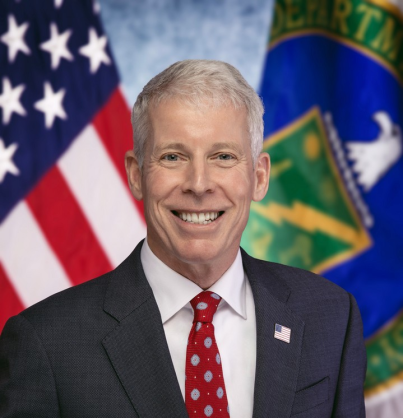
Secretary Chris Wright, U.S. Department of Energy, has been confirmed as a speaker and guest of honour at the 10th Powering Africa Summit (PAS), taking place at JW Marriott Washington, D.C. across March 6-7. This is an important step to provide an answer to the question that all of African energy is now asking: how will the new Administration approach the strategic energy relationship between the U.S. and Africa
Under the Summit theme, The Future of the US & Africa Energy Partnership, U.S. Secretary of Energy Chris Wright will deliver a keynote address at the 10th annual Powering Africa Summit. Wright will be joined by representatives from the U.S. Department of State: Ambassador Troy Fitrell, Senior Bureau Official, Bureau of African Affairs; Kimberly Harrington, Acting Principal Deputy Assistant Secretary, Bureau of Energy Resources; and Stephen Banks, Acting Deputy Assistant Secretary for Energy Diplomacy, Bureau of Energy Resources. All will share their vision for this future relationship between African countries and the US-based investors that are so vital to realizing their energy ambitions.
“As Secretary of Energy, I am committed to unleashing all forms of affordable, reliable and secure energy here at home and advancing that mission of energy security around the world – and nowhere is that more critical than the continent of Africa. I look forward to joining the Summit to reaffirm the strategic energy partnership between the U.S. and Africa and share my vision for advancing innovation and removing barriers to energy access, both at home and around the world,” Secretary Wright said.
Ministers and governments from 19 African countries will arrive in Washington D.C., where the Africa Welcome Address will be given by H.E. Honourable Adebayo Adelabu, Minister of Power, Nigeria. Together with H.E. Honourable Jeremiah Kpan Koung, Vice President, Liberia; H.E. Honourable Dr. Dele Alake, Minister for Solid Minerals Development, Nigeria; H.E. Honourable Mahmoud Mustafa Esmat, Minister of Electricity & Renewable Energy, Egypt; H.E. Honourable Karim Badawi, Minister of Petroleum & Mineral Resources, Egypt; H.E. Honourable Bogolo Joy Kenewendo, Minister of Minerals & Energy, Botswana; H.E. Honourable Alex Wachira, Principal Secretary, Ministry of Energy & Petroleum, Kenya; and Amina Benkhadra, Director General, Office National des Hydrocarbures et des Mines (ONHYM), Morocco, he will meet distinguished Ministers and leaders from South Africa, Senegal, Ethiopia, Zimbabwe, Togo, Sierra Leone and more to drive energy development across the continent.
Flagship ministerial boardrooms and regional energy cooperation sessions will discuss and debate derisking projects, South Africa's energy future, the need for West African regulatory reforms, and the role of hydrogen in North Africa. New areas of opportunity such as bitcoin mining and data centers will be discussed through an East African lens. The Mission 300 initiative, set to provide electricity access to 300 million people in sub-Saharan Africa by 2030, is also high on the agenda.
The 10th Anniversary Gala Drinks Reception sponsored by Genesis Energy, will celebrate International Women's Day, ahead of March 8.
Critical to the week's discussions will be a host of private players including Alliant Insurance Services, GE Vernova, ARM-Harith Infrastructure Investment, Globeleq, Africa50, Nextracker, Schneider Electric, Newmarket Capital and the summit's general sponsor, Sun Africa, who are looking to a new future for the U.S.-Africa relationship.
Sun Africa CEO, Adam Cortese said: “We are seeing a sea change in how the U.S. participates in foreign infrastructure development and our unique model of development is an excellent illustration of how U.S. energy companies can thrive in emerging markets on a strictly commercial basis. Sun Africa remains committed to harnessing Africa's immense energy resources through innovative structures, state-of-the-art technology and strong alliances while maintaining our long-standing market-based approach to development. At Sun Africa, we believe energy development on the continent truly represents an opportunity for win-win partnerships and look forward to sharing our experience.”
Simon Gosling, MD of EnergyNet added: “This summit has always been about bringing together African countries seeking investment with U.S.-based investors who see the vast potential on the continent. It is more important than ever to establish the crucial energy projects that Africa needs. PAS25 will put the continent center stage and make sure that both sides have a future relationship to be excited about.”
Media Credentials Requited for Powering Africa Summit
The Secretary will open the Summit on 6 March, delivering a Keynote Speech at 09:45, followed by a Fireside Chat with Mission 300 Accelerator CEO, Andrew Herscowitz.
Distributed by APO Group on behalf of EnergyNet Ltd..
For more information, please get in touch with
Poliana@EnergyNet.co.uk
Senior Marketing Manager
BLOEMFONTEIN: A second successive unbeaten century from Dian Forrester guided the Knights to their first win of the 1 Day Cup...
NEWLANDS: Dané van Niekerk, former Proteas captain and world-class all-rounder, has been a key figure in South African women’s cricket....
Palestine Solidarity Campaign renews call for SA government to cut ties with Israel, among other demands