Duminy Steps Down as White-Ball Batting Coach
JOHANNESBURG: Cricket South Africa (CSA) announces that JP Duminy has stepped down from his role as the white-ball batting coach...

MyZA
News, Directory, Events and Other Stuff
JOHANNESBURG: Cricket South Africa (CSA) announces that JP Duminy has stepped down from his role as the white-ball batting coach...
SAPS highlights work of its men and women in blue
As the country observes this year's 16 Days of Activism for No Violence against Women and Children, the South African Police Service (SAPS) is highlighting the work of its men and women in blue, who go beyond the call of duty to protect women and children in South Africa.
Today, SAPS introduces the nation to Warrant Officer Sonwabile Dlomo, an investigator attached to the Serial and Electronic Crime Investigations (SECI) Unit in Zwelitsha, Eastern Cape.
Dlomo says his childhood dream of becoming a police officer came true when he got enlisted to the Service 19 years ago.
His inquisitive mind eventually led him to become a detective and he has been within the Family Violence, Child Protection and Sexual Offences (FCS) environment since 2010.
To date, Dlomo secured 23 life terms and 594 years for 16 rapists, who are now behind bars.
In June 2024, the Makanda High Court sentenced Glass Lechesa to six life terms and an additional 125 years imprisonment on multiple counts of rape, robbery with aggravated circumstances and robbery common.
Lechesa targeted young girls in and around the areas of Joubertina and Addo, the youngest victim being 14 years old at the time. He stalked and attacked these victims in farm areas, robbed and repeatedly raped them before he fled the scene.
The case landed on Dlomo’s desk for further investigation. The suspect was still unknown at that stage, but that did not deter Dlomo from cracking the case. He meticulously pieced all available leads together and through the application of various investigative techniques, he managed to link the suspect to 10 rape cases.
Hot on the suspect’s heels, Dlomo proceeded to Addo police station to ascertain if there were more rape dockets similar to these 10 cases.
Dlomo says his instinct led him to trace the suspect’s activities during his ‘cooling off’ period. He then found three more cases with a similar modus operandi. These cases were eventually added to the serial following positive confirmation from the SAPS’ Forensic Science Laboratory (FSL).
Lechesa’s reign of terror came to an end on 16 April 2023, when he was arrested by Dlomo and his team. They operationalised information they obtained on the location of the suspect. Dlomo successfully opposed bail and Lechesa remained in custody until sentencing.
As a SECI investigator, Dlomo's duties include the investigation of serial rape cases, as well as sexual crimes committed on electronic mediums, such as the possession, distribution and manufacturing of child pornography.
"In most of my cases, the suspects are unknown at first. My goal is always to go beyond the call of duty to trace and arrest these suspects to ensure justice prevails for the victims," said Dlomo. – SAnews.gov.za
Edwin
Fri, 12/06/2024 - 08:07
JOHANNESBURG: Cricket South Africa (CSA) has today announced a 13-player SA Invitational XI squad set to face England Lions in a...
Cabinet approves policy for women in sport
Cabinet has approved the National Policy on Women in Sport Policy Framework for implementation.
The policy addresses multiple areas of gender disparity, including participation, leadership, governance and visibility.
Briefing the media on the outcomes of Cabinet meeting held on 4 December 2024, Minister in The Presidency, Khumbudzo Ntshavheni said the policy aims to promote increased active participation of women in sport and in leadership roles.
“The policy recognises that increased participation of women in sport and in leadership positions will drastically reduce and ultimately contribute to eradicating gender inequality and various forms of discrimination against women.
“It also promotes equity by ensuring that women receive respect and recognition on the professional front, including equal remuneration as their male counterparts,” Ntshavheni said on Thursday.
The policy outlines a set of measures that will promote and support women in sport and ensure that programmes are in place to address gender disparities in sporting codes and structures.
It also addresses barriers to entry by women in sport, including lack of funding, sponsorship, and inadequate remuneration.
READ | Deputy Minister prioritises transformation in sport
Strategy for Reducing Food Losses and Waste
Cabinet also approved the Strategy for Reducing Food Losses and Waste for implementation.
Ntshavheni noted that the strategy aims to minimise food loss and waste along the food supply chain, reducing undesirable food wastage through applying tools and technologies, improving food security and mitigating negative environmental impacts.
This is aligned to the government interventions to reduce high cost of living.
“The strategy provides regulatory measures and interventions, norms and standards, appropriate financial support and incentives to promote reduction in food loss and waste, amongst others.
“This strategy will enable the keep on edible and food with value to be kept as long as possible in the value chain and will enable implementation of funding incentives on reducing food waste and food losses for all South Africans,” Ntshavheni said.
READ | SA working to promote inclusive growth, deal with high cost of living
Tourism Route Development Plan
Cabinet has further approved the Tourism Route Development Plan - which intends to use tourism as a vehicle to drive inclusive growth, job creation and poverty reduction - for implementation.
This follows the approval of the Tourism Sector Master Plan in October 2023 to create opportunities for inclusive participation of all sectors of society, including women, youth and people with disabilities.
Ntshavheni explained that the Tourism Route Development Plan is anchored on collaborative public-private sector partnerships and aims to support route development and sustenance.
“The plan will also strengthen the position of South Africa’s domestic airline services. Priority route market retention will focus on Asia (China, India and Japan), the African continent and domestic connectivity.
“Furthermore, the plan will be implemented to maximise the impact of South Africa as a domestic and international tourist destination. It seeks to drive the achievement of the national tourism minimum arrival target of 15 million arrivals by 2030 with support of routes from 25 prioritised markets,” the Minister explained. – SAnews.gov.za
GabiK
Thu, 12/05/2024 - 14:36
Government to lead National Men's Day against GBVF
In support of the country’s 16 Days of Activism for No Violence against Women and Children campaign, government will on Friday lead the National Men's Day Against Gender-Based Violence and Femicide (GBVF) march in Durban, KwaZulu-Natal.
The march is an annual event that aims to increase awareness about the impact of GBVF on society as well as to educate citizens about gender equity.
The march is in line with this year's 16 Days of Activism for No Violence Against Women and Children campaign objectives that call for raising awareness about GBVF and its harmful impacts.
This year marks the 26th anniversary of the 16 Days of Activism for No Violence against Women and Children campaign.
The campaign takes place under the theme: “30 Years of Advancing Collective Action to End Violence Against Women and Children”, which emphasises the importance of a whole-of-society approach to combating GBVF and the importance of a multi-sectoral accountability.
The campaign started on 25 November and will end on 10 December 2024.
READ | Root causes of gender-based violence must be looked at
Tomorrow’s march will get underway from King Dinuzulu Park, Dr Pixley KaSeme Street to The Station in Stamford Hill.
The event will be officiated by Deputy President Paul Mashatile and His Majesty, King Misuzulu kaZwelithini. – SAnews.gov.za
GabiK
Thu, 12/05/2024 - 13:51

The inaugural International Health Ministerial Summit, organised by Informa Markets (www.InformaMarkets.com), began with a series of dynamic panel discussions featuring influential delegates showcasing collaborative solutions to global healthcare challenges.
Hosting governmental figures and policymakers, corporate CEOs and investors, medical directors, and experts, the exclusive by-invitation only Summit, themed Strengthening Health Systems for a Better Tomorrow, takes place from 4 to 5 December 2024 at the Marriott in Kigali. It brings together renowned health experts from across the continent and the world and highlights topics like digital health, technological adoption, R&D in vaccinations, women's health, healthcare investment opportunities, and health equity.
During his official opening address, Dr. Sabin Nsanzimana, the Minister of Health of host country Rwanda, said: “There is no better investment than in our health. It is not a negotiable luxury but a fundamental human right. Strengthening health systems means focusing on the four S's: staff, space, supplies, and systems. In Rwanda, we understand that investing in health is investing in our future. That's why the Government of Rwanda has approved the 4x4 Reform—a bold strategy to quadruple the number of healthcare workers in the next four years to meet the WHO recommendation of at least 4 healthcare professionals per 1,000 population. This initiative underscores our commitment to building a resilient health system where no one is left behind. By investing in these pillars and embracing technology/innovations like AI, we can build resilient systems that ensure uninterrupted care for all.”
Addressing health equity's challenges and opportunities
Following the welcome address by Dr. Deborah M. Barasa, Health Cabinet Secretary of Kenya, who spoke about actions to shift primary healthcare, the first session of the day featured several panel discussions dealing with the challenges and opportunities for health equity.
In a panel discussion hosted by Dr. Tim Keuri, CEO of the Kenya Health Federation, industry leaders discussed transforming Africa into a global hub for pharmaceutical innovation and manufacturing. Representatives from the Unified Procurement Association, PharmaAccess, Global One Health Institute, Pfizer, and Bayer provided insights on investment enhancement, regulatory framework improvements, and strategic collaborations to strengthen Africa's position in the global pharmaceutical value chain.
Another panel, moderated by Bloomberg news reporter Ondiro Oganga, addressed the urgent need for Africa to advance self-sufficiency in pharmaceutical R&D, local vaccine production, and diagnostic access. Experts from Senegal's Ministry of Health, The Global Trust Project, UN Foundation, African Society for Laboratory Medicine, Africa CDC, and leading corporations like Genf, Hologic, and Roche Diagnostics emphasised the importance of establishing regional pharma hubs and enhancing local capabilities. According to Ahmed Ogwell, Vice President of Global Health Strategy at the UN Foundation in Kenya, “The gap is not in identifying problems or proposing solutions—it's in executing those solutions. For example, while there's been significant discussion around manufacturing COVID-19 vaccines, we lack local production of diagnostics and essential tools like rapid tests on the continent. To move forward, we need to prioritise what to produce, coordinate efforts regionally, and ensure that the products we manufacture are consumed within our systems."
Women's health and equitable access to healthcare
The second key theme of the day was health equity and women's health, starting with an insightful discussion on what is needed to close the health equity gap. Moderated by Dominic Wilhem, Executive Director of The Global Trust Project, global health leaders debated how to unite healthcare stakeholders to address the health equity gap. Panellists focused on collaborative strategies to ensure universal access to essential medicines and vaccines. The session underscored the importance of international cooperation to progress healthcare for all, regardless of geographic or socio-economic boundaries. Pfizer Kenya Director of Policy and Public Affairs Pauline Irungu commented on the outcomes, saying, “When we think about partnerships, we have a tendency to think about government- private partnerships, but we also need to talk more about private private partnerships which then support agendas of governments in Africa and beyond. At Pfizer one of the gaps we experience is the challenge of diagnostics. How do we advance access to medicine? Currently , we have two strong partnerships with diagnostic companies on the continent. Now we also make a call that we also want others to join the partnerships because the more we partner as private sector, the more we're able to address the multifaceted challenges within the health care system.”
A second panel on the topic brought together top health experts to tackle the urgent issue of women's health in Africa, particularly the high maternal mortality rates in sub-Saharan Africa. Hosted by Dr. Magome Masike, Registrar, Health Professions Council of South Africa, this panel of leaders from various health organisations and government bodies debated the need for innovative approaches to enhance women's health across the continent. The session highlighted the importance of rethinking strategies to improve healthcare outcomes for women in Africa.
Day two of the Summit will focus on advancements in digital health, how artificial intelligence is transforming healthcare, health investment and financing, and an exciting Rwandan initiative using drones to deliver essential medicines to health facilities.
For more details on the International Health Ministerial Summit, visit the event website: https://apo-opa.co/3ZBts4y
Distributed by APO Group on behalf of Informa Markets: Healthcare.
South Africa champions of global disability inclusion movement
Despite the challenges facing people with disabilities, strides made by government in policy and legislature over the past 30 years have earned the country’s recognition as a respected champion of the global disability inclusion movement.
During the parliamentary debate on Tuesday to close off the 2024 Disability Rights Awareness Month (DRAM) campaign, Women, Youth and Persons with Disabilities, Sindisiwe Chikunga, said prior to 1994, government’s programmes for people with disabilities were rooted in a value system that viewed disability as a personal misfortune, necessitating a health and welfare approach to "rectify the individual and their circumstances".
The Minister said this narrative has changed significantly over the past 30 years.
“For the democratic government, disability rights are not merely a matter of advocacy -- they are a constitutional imperative enshrined in our Bill of Rights. Section 9 of the Constitution explicitly enshrines the rights of persons with disabilities, prohibiting discrimination based on disability and guaranteeing equality and human dignity.
“More recently, the White Paper on the Rights of Persons with Disabilities reflects our government’s shared vision for what must be done, now and in the future, to advance the rights and development of this community,” Chikunga said.
Over the past 30 years, disability inclusion into various laws that comprise the country's legislative framework has been prioritised.
These include the recently gazetted Framework on Self Representation, which has implications for the composition of boards of State-Owned Enterprises (SOEs); the National Strategic Framework on Reasonable Accommodation, and the Universal Access and Design Framework, with norms and standards for universal accessibility in the built environment.
Task team on inclusive education
To address education challenges, including accessibility standards in buildings, among others, the Minister said the department, in collaboration with the Department of Basic Education, has established a task team on inclusive education.
The initiative focuses on equipping schools with infrastructure, teaching resources and trained educators to support learners with disabilities holistically, laying a strong foundation for the future.
Achievements in education to date include the number of special schools, which has increased from 295 in 2002 to 489 in 2022, leading to the number of learners in special schools increasing from 64 000 in 2002 to 139 000 in 2022.
The number of full-service schools has also increased from 30 in 2002 to 832 by 2022, as well as an increase in the number of learners with disabilities in ordinary schools from 77 000 in 2002 to 121 000 by the year 2022.
“For tertiary education, the Department of Higher Education and Training has established the Strategic Policy Framework on Disability for the Post School Education and Training (PSET) System, which mainstreams disability considerations across institutions to foster an enabling environment, and the Framework and Guidelines for Technical Vocational Education and Training (TVET) colleges, equipping them to accommodate students with disabilities and provide essential support,” Chikunga highlighted.
She commended Higher Education and Training Minister, Dr Nobuhle Nkabane, on the recent launch of Phase One of the National Skills Fund Disabilities Programme.
The transformative initiative, with a budget of R1 billion, aims to empower people with disabilities across South Africa through tailored skills training programmes.
“In social security, persons with disabilities receive monthly Disability Grants that provide much needed financial support. South African Sign Language is now recognised as the 12th official language in South Africa.
“To this end, we will advocate across all government departments and entities for more of such deliberate and targeted interventions with clearly defined exit opportunities for persons with disabilities,” Chikunga said. – SAnews.gov.za
GabiK
Wed, 12/04/2024 - 10:58
Relief and hope as Social Development brings critical services to East London
The Department of Social Development (DSD) has brought vital services to citizens in the Buffalo City Metropolitan Municipality by setting up a temporary service point during the Berlin November horse racing festival, which was recently held in the Eastern Cape.
Mother of four, Pamoria Mayengane, 48, is one of the residents who could not contain her joy after receiving the help she urgently needed from the DSD. Mayengane had been struggling for months with the suspension of her Social Relief of Distress (SRD) grant due to fraud activity, which impacted her.
The weight of uncertainty had taken a toll on Mayengane, but that changed when she heard on the radio that the DSD would be bringing its services to Berlin, a small, yet vibrant town in East London, in the Buffalo City Metropolitan Municipality.
The annual Berlin November event draws thousands of visitors from across South Africa, providing a unique platform for government departments and corporate organisations to showcase their services and promote social cohesion.
Mayengane, who lives within walking distance of the Berlin racecourse, seized the opportunity to reach out to the DSD.
“I was so happy when I heard the announcement [on the radio]. I did not even have to pay for transport. I walked from my house to the venue. It was such a relief to finally be assisted,” she said.
The SRD grant, coupled with child support grants for her two younger children, is the lifeline for her family. The fraudulent attempt to access her SRD grant had left her unable to receive payments, plunging her into financial stress.
With the South African Social Security Agency's new face verification system in place, the fraudulent individual was blocked, and the payment was stopped.
At the Berlin temporary service point, officials helped Mayengane to resolve the issue, ensuring that her grant would be reinstated for the next payment cycle.
“This grant means everything to me. It helps me buy groceries and cover my children’s basic needs. Now I can look forward to buying them Christmas groceries, just like other families,” she said.
Berlin, nestled between East London and King William’s Town, is a historical town that has maintained its charm, while growing into a hub of cultural activity. The Berlin November horse racing function, in particular, has become a major drawcard, blending tradition with entertainment.
This year, the DSD used the function as a platform to bring its services closer to the people, addressing pressing social challenges and fostering community engagement during the 16 Days of Activism for No Violence against Women and Children campaign.
In addition to assisting residents like Mayengane, the DSD and other participating stakeholders provided information and support on various issues, including social grants, child protection, substance abuse, non-profit organisations and community development.
This initiative exemplified the department’s commitment to addressing social issues in a holistic and accessible way. – SAnews.gov.za
DikelediM
Wed, 12/04/2024 - 11:14
JOHANNESBURG: Cricket South Africa (CSA) is proud to announce that it has, through international media rights partner IMG, secured a...
Dr Bongi Owusu calls for unity and action in dealing with GBVF
As the country observes the 16 Days of Activism for No Violence against Women and Children campaign, the Director of the Department of Social Development, Dr Bongi Owusu, has called for unity and action in dealing with this scourge.
South Africa faces a dire gender-based violence and femicide (GBVF) crisis, with alarming statistics highlighting the urgent need for collective action to address this “second pandemic.”
Owusu, the Director of Gender and Women Empowerment at the department, said when President Cyril Ramaphosa described GBV as South Africa’s “second pandemic" at the time of the COVID-19 outbreak, he emphasised the severity of this national crisis.
“He called on everyone to unite in eradicating the scourge of GBV, a plague that transcends gender, sexual orientation and social status, demanding a concerted response from all sectors of society,” Owusu said.
She highlighted the importance of reflecting on what solidarity truly means in this struggle.
“True solidarity involves everyone -- men, women, children and marginalised communities, standing together against GBV,” she asserted.
Owusu further stressed the need to dismantle harmful gender stereotypes that perpetuate violence and marginalisation. In many communities, she said, women are still treated as minors, with their voices dismissed solely because of their gender.
While women remain the primary victims of GBV, Owusu advocated for an inclusive approach to tackling GBVF. In the same breath, she underscored the importance of recognising that violence is not confined to one gender.
“We must acknowledge that there are women who perpetrate violence and men who are survivors. Comprehensive interventions must reflect this reality, recognising the diverse forms and experiences of GBV,” she said.
A critical step in combating GBV lies in dismantling toxic masculinity. Owusu noted that society often reinforces harmful ideals by discouraging men from expressing vulnerability.
“When boys are told, ‘men don’t cry’, it fosters emotional repression and disconnection, which can manifest in harmful behaviours. Women - whether as mothers, sisters or partners - can help by affirming that it is okay for men to express their emotions. This simple shift can break cycles of violence and foster healthier, more empathetic relationships,” she emphasised.
South Africa’s GBV statistics remain deeply troubling. According to the South African Police Service (SAPS), over 120 women were raped daily between April and June 2023, and a woman is murdered every three hours in the country. These figures are grim reminders that the majority of GBV victims are still women and children.
Owusu highlighted the importance of engaging men as allies in the fight against GBV.
“It is crucial to involve men as positive partners in this battle. This approach not only challenges the narrative that all men are perpetrators but also encourages men to take a stand and say, ‘Not in my name’. Engaging men as active participants can inspire a new generation of boys to value respect, empathy and non-violence,” she said.
Owusu emphasised the role of the community and its leaders, including religious and traditional figures, as gatekeepers of societal norms. However, she lamented that some perpetuate harmful ideologies.
“Faith-based organisations must challenge practices that victimise women and condone abuse. Traditional leaders and their spouses... have a unique role in shaping young minds. For example, boys can learn respectful masculinity, while girls are guided towards self-empowerment,” Owusu explained.
The fight against GBV demands courage, collaboration and a commitment to challenging harmful norms. It calls for a society that rejects stereotypes, promotes inclusivity, and holds perpetrators accountable.
Owusu’s plea is straightforward: a collective commitment to eradicating GBV must begin in homes, workplaces and communities.
“Ending GBV is not the responsibility of a few but the duty of all. By fostering partnerships across gender, faith, and cultural lines, South Africa can become a beacon of hope -- a society where no one suffers in silence, and everyone is empowered to thrive,” Owusu said as the 16 Days of Activism campaign continues. – SAnews.gov.za
DikelediM
Wed, 12/04/2024 - 11:05
Celebrating Colonel Celeste van der Klashorst
The South African Police Service (SAPS) is observing the 16 Days of Activism for No Violence Against Women and Children campaign by highlighting the work of its men and women in blue who go beyond the call of duty to protect women and children in South Africa.
Colonel Celeste van der Klashorst is among those who go beyond the call of duty.
Van der Klashorst is the Section Commander of the National Serial and Electronic Crime Investigations (SECI) Unit. The unit is a specialised investigation team that deals with the investigation of serial rape cases and sexual crimes committed through electronic mediums, such as child pornography.
Her duties as the Section Commander include monitoring and evaluating SECI units within the nine provinces, leading and guiding major child pornography takedown operations and investigating high profile cases.
Van der Klashorst’s illustrious career commenced in 1991 when she joined the SAPS as a student constable.
In 1993, the SAPS established Child Protection Units which are now known as the Family Violence, Child Protection and Sexual Offences (FCS) Unit.
Van der Klashorst played an instrumental role when the foundations were laid and again when SECI units were established in 2017 on national level and within all nine provinces.
A recent career highlight includes the execution of a major takedown operation named BAD VIBES.
International operations led to 27 South Africans being identified who are involved in the possession, distribution, manufacturing, accessing and downloading of child pornography.
National and provincial SECI Units formed part of this particular takedown which led to 12 sexual predators being arrested in different parts of the country since January 2023.
Four child victims were also positively identified while millions of images and videos classified as child pornography were seized during these operations.
Under van der Klashorst’s leadership, the SECI teams on national and provincial level continue with investigations under OPERATION BAD VIBES to trace and arrest more suspects linked to this international child pornography ring.
As a subject matter expert, van der Klashorst also presents key topics at SECI workshops and FCS courses. She says sharing her knowledge and expertise with members in the field allows her to plough back into the organisation.
“This ultimately leads to quality investigations and water-tight cases being presented in court,” van der Klashorst said.
Just last week, the National SECI team was awarded FCS Team of the Year during the Division for Forensic and Detective Service’s annual Excellence Awards.
“Being at the forefront of fighting crimes against women and children is my passion. I always tell my team that it needs all hands on deck to prevent, combat and investigate sexual offences, gender-based violence and online child exploitation," said van der Klashorst.
Colonel Celeste van der Klashorst remains relentless in her pursuit to trace and arrest more online sexual predators.
The 16 Days campaign forms part of government’s comprehensive 365 Days of Activism for No Violence against Women and Children.
This year’s campaign is being held under the theme: “30 Years of Advancing Collective Action to End Violence against Women and Children".
The campaign is held from 25 November to 10 December every year. -SAnews.gov.za
Edwin
Wed, 12/04/2024 - 10:12
JOHANNESBURG: White-ball head coach Rob Walter has today announced a 15-player squad for the three-match KFC T20 International (T20I) series against...
JOHANNESBURG: Cricket South Africa (CSA) is proud to announce that Chief Executive Officer Pholetsi Moseki received the esteemed Leadership in Sport...
G20 Presidency to establish three dedicated task forces
President Cyril Ramaphosa has announced that South Africa’s G20 Presidency will pursue progress on cross-cutting issues through the establishment of three dedicated task forces.
Speaking during the launch of the G20 Presidency on Tuesday, President Ramaphosa said the first task force is on Inclusive Economic Growth, Industrialisation, Employment and Reduced Inequality.
The second task force is on Food Security, while the third task force is on Artificial Intelligence, Data Governance and Innovation for Sustainable Development.
WATCH |
“It is critical for South Africa that the G20 remains focused on its core responsibilities to address global economic and financial challenges. It should not replace existing international institutions and platforms, such as the United Nations and associated bodies.
“At the same time, G20 initiatives should support, not diminish, the responsibilities that countries have to deliver on the Sustainable Development Goals, climate action and other commitments,” the President said.
To ensure that the G20 remains focused, the President said that South Africa will not create any new working groups or permanent structures.
“We will build on previous presidencies and provide momentum to existing structures and processes. We will reflect on the impact of the G20 over the last 20 years and positioning it to enhance its impact over the next 20-year cycle,” he said.
The President emphasised that it is important for South Africa that its G20 Presidency is inclusive.
“Dialogue with civil society and other non-government institutions will be conducted through various engagement groups. These engagement groups are organised according to sectors, such as business, labour, civil society, parliamentary bodies and the judiciary.
“These engagement groups also include science bodies, think tanks, and audit institutions, as well as institutions of higher learning, specific groups for women and youth including vulnerable groups,” he said.
President Ramaphosa said the nation also intends to support the creation of a new engagement group, Township20 (TS20), to spotlight the potential of South Africa’s township economies.
“This will highlight the creative, cultural, financial and innovative capacities that our own country has to give when it comes to small and medium enterprises as well as cooperatives and how these operate in rural areas as well as townships where our people live,” he said.
Following Brazil’s example, South Africa will host a G20 Social Forum, amplifying the voices of civil society, women, youth and vulnerable groups.
“South Africa firmly believes that civil society serves as a bridge between the G20 leaders and the people who have the greatest interest in their deliberations,” the President affirmed.
Looking ahead to the Leaders’ Summit
The G20 Presidency will culminate in the Leaders’ Summit in Johannesburg in November 2025, where world leaders will adopt a declaration outlining collective actions to address critical global challenges.
With over 130 meetings planned across all provinces, and thousands of delegates expected, the G20 Presidency presents an opportunity to showcase South Africa’s potential and hospitality.
“The G20 Presidency is an opportunity to present to the world the great opportunities and experiences that South Africa has to offer. We look forward to welcoming our friends and partners to our beautiful country,” the President said.
South Africa assumed the Presidency of the G20 on 1 December 2024, marking a historic milestone as the first African country to lead this influential group of the world’s largest economies.
This Presidency is not only a significant moment for South Africa but also for the African continent and the Global South, amplifying their voices on the global stage, while advancing shared goals of economic growth, sustainability and equality. – SAnews.gov.za
DikelediM
Tue, 12/03/2024 - 13:02
Promoting respect for people with disabilities
As South Africa joins the world in commemorating the International Day of Persons with Disabilities (IDPD), government has called on citizens to continue treating people with disabilities with respect and give them equal recognition, even beyond today.
“The South African Constitution states that every person is equal before the law. Let us, therefore, remove social barriers and perceptions to improve the quality of life for people with disabilities,” said Women, Youth and Persons with Disabilities Minister, Sindisiwe Chikunga.
International Day of Persons with Disabilities is observed annually on 3 December, with the aim to promote the rights and well-being of people with disabilities in all spheres of society and development, and to increase awareness of the situation of people with disabilities in every aspect of political, social, economic and cultural life.
This year’s IDPD is observed under the theme: “Amplifying the leadership of persons with disabilities for an inclusive and sustainable future”.
The day takes place against the backdrop of pivotal global developments from the Summit of the Future, to the upcoming Second World Summit for Social Development.
The key global summits will complement one another in providing a continuous roadmap toward disability-inclusive, and sustainable peace and development.
From 3 November to 3 Decembers, South Africa celebrates Disability Rights Awareness Month (DRAM) annually. The 2024 DRAM campaign reaffirmed the universality, interdependence and fundamental human rights of people with disabilities that guarantee full enjoyment without discrimination.
To mark the importance of disability inclusion in ending the 2024 Disability Rights Awareness Month Campaign, Chikunga and the Western Cape Social Development Department hosted a stakeholder engagement session in Cape Town on Tuesday.
The ministerial stakeholder engagement session, held in collaboration with the Parliamentary Public Education Office, provided an opportunity for strategic engagement among people with disabilities to engage on meaningful issues affecting disabled communities, and also to showcase government’s commitment towards disability rights and inclusion.
The Minister also led a Parliamentary debate to end Disability Rights Awareness Month.
READ | Chikunga launches Disability Rights Awareness Month
– SAnews.gov.za
GabiK
Tue, 12/03/2024 - 15:03
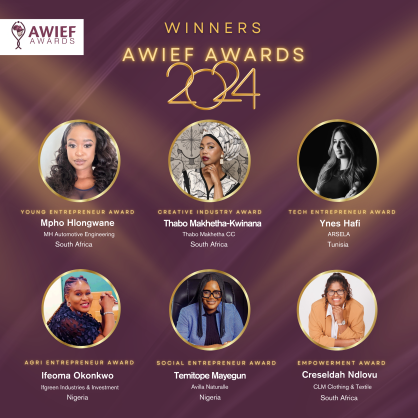
The 2024 AWIEF (www.AWIEForum.org) Awards celebrated the exceptional achievements of African women entrepreneurs on Friday night at the Cape Town International Convention Centre (CTICC). The glamorous awards ceremony honored six outstanding winners, selected from a distinguished group of 18 finalists, while also honouring Dr. Naledi Pandor, Former Minister of International Relations and Cooperation of South Africa, with the Lifetime Leadership Award.
Celebrating Excellence in African Entrepreneurship
This year's finalists and winners showcased the remarkable talent and ingenuity of African women entrepreneurs who are creating opportunities, driving economic growth, and transforming communities across the continent. Representing South Africa, Tunisia, and Nigeria, the finalists span diverse industries, highlighting the breadth of innovation and leadership among women across Africa.
The AWIEF Awards 2024 ceremony was the culmination of the AWIEF2024 Conference, a two-day event that brought together over 500 delegates from more than 50 countries. This dynamic conference served as a powerful platform for collaboration, knowledge-sharing, and celebrating the transformative achievements of women entrepreneurs shaping Africa's future.
Honoring a Legacy of Leadership
The evening's highlight was the presentation of the Lifetime Leadership Award to Dr. Naledi Pandor for her Legacy of Leadership and Impact. Dr. Pandor's illustrious career spans decades, during which she played a pivotal role in shaping South Africa's domestic and international policies. As Minister of International Relations and Cooperation (2019–2024), she championed South Africa's global influence, advancing diplomacy, peace-building, and international cooperation. Her visionary leadership continues to inspire generations across Africa and beyond.
The Winners of AWIEF Awards 2024
The following women were celebrated for their outstanding contributions and achievements in their respective categories:
YOUNG ENTREPRENEUR AWARD
Mpho Hlongwane – MH Automotive Engineering (South Africa)
AGRI ENTREPRENEUR AWARD
Ifeoma Okonkwo – Ifgreen Industries & Investment (Nigeria)
CREATIVE INDUSTRY AWARD
Thabo Makhetha-Kwinana – Thabo Makhetha CC (South Africa)
EMPOWERMENT AWARD
Creseldah Cassandra Ndlovu – CLM Clothing & Textile (South Africa)
TECH ENTREPRENEUR AWARD
Ynes Hafi – ARSELA (Tunisia)
SOCIAL ENTREPRENEUR AWARD
Temitope Mayegun – Avilla Naturelle (Nigeria)
A Platform for Women's Empowerment
The AWIEF Awards continue to shine a spotlight on the achievements of African women entrepreneurs, celebrating their innovative spirit and their significant contributions to sustainable development and economic growth across the continent.
For more information on the AWIEF Awards and Conference, as well as details about the finalists and winners, visit www.AWIEForum.org.
Distributed by APO Group on behalf of Africa Women Innovation and Entrepreneurship Forum (AWIEF).
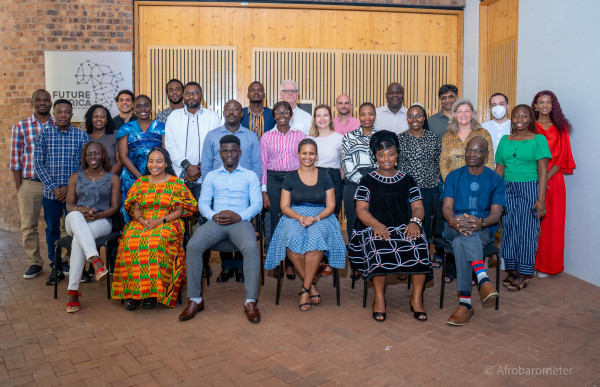
Afrobarometer (www.Afrobarometer.org) held its inaugural Emerging Scholars Workshop in November, bringing together early-career researchers and established scholars to enhance analytical skills and support the next generation of African researchers. This initiative aligns with Afrobarometer's objective of strengthening the continent's research ecosystem.
The workshop, held at the University of Pretoria's Future Africa campus, brought together 12 emerging scholars – half of them women – representing nine countries: Botswana, Benin, Cameroon, Ghana, Kenya, Malawi, Nigeria, South Africa, and Uganda.
Participants presented research papers covering diverse topics, received feedback from their mentors and peers, and engaged in professional development sessions designed to propel their academic and professional growth.
According to Jason Owen, Afrobarometer capacity building manager (advanced track), the workshop is in line with Afrobarometer's commitment to providing professional development opportunities for young African researchers.
“The emerging scholars that attended the workshop received detailed comments on their research from a panel of experienced academic mentors and peers,” he said. “The aim was to sharpen their analytical skills and to enable them to publish high-quality research using Afrobarometer data. We hope this type of workshop will foster a growing research and mentoring network that helps to build analytical capacity across Africa.”
The workshop also facilitated networking and collaboration. Nicole Beardsworth, a lecturer at the University of the Witwatersrand, highlighted the value of such gatherings. “PhD journeys can be isolating and lonely, but opportunities like the Afrobarometer Emerging Scholars Workshop provide a window for young scholars from around the continent to meet each other, find commonalities, forge collaborations, and create community,” she said.
A section of participants also noted that the workshop provided them with a transformative platform to engage with established academics, gain constructive feedback, enhance research skills, and build professional networks critical for advancing their academic and career aspirations.
“I was attracted to this workshop because it provides a unique opportunity to engage with seasoned scholars, participate in sophisticated research discussions, and develop essential skills for my professional growth,” said Mbiydzenyuy Courage Sevidzem from the University of Bamenda in Cameroon.
Over the past two and half decades, Afrobarometer has trained hundreds of young researchers, civil society activists, journalists, and parliamentarians through several capacity- building initiatives, including French- and English-language summer schools, thematic workshops, mentorships, university outreach initiatives, and staff development fellowships.
Distributed by APO Group on behalf of Afrobarometer.
For more information, please contact:
Daniel Iberi
Communications coordinator for East Africa
Email: diberi@afrobarometer.org
Telephone: +254 725 6744 57
Visit us online at www.Afrobarometer.org.
Follow us:
Facebook: Afrobarometer
Twitter: @ Afrobarometer
YouTube: @ Afrobarometer
Follow our releases on #VoicesAfrica.
About Afrobarometer:
Afrobarometer (AB) is a trusted source of high-quality data and analysis on what Africans are thinking. With an unmatched track record of 388,000+ interviews in 42 countries, representing the views of 80% of the African population, AB is leading the charge to bridge the continent's data gap. AB data inform many global indices, such as the Ibrahim Index of African Governance, Transparency International's Global Corruption Barometer, and the World Bank's Worldwide Governance Indicators. The data are also used for country risk analyses and by credit rating and forecasting agencies such as the Economist Intelligence Unit. All AB data sets are publicly available on the website (www.Afrobarometer.org) and may be analysed free of charge using AB's online data analysis tool (https://apo-opa.co/3Vf0pB6).
DURBAN: Proteas Men’s fast bowler Gerald Coetzee has been ruled out of the second Test against Sri Lanka and the upcoming...
JOHANNESBURG: Cricket South Africa (CSA) has appointed Mandla Mashimbyi as the new Head Coach of the Proteas Women’s Team. With...
South Africans called to unite against HIV and Aids
The fight against HIV and Aids requires all South Africans to act together, says Deputy President Paul Mashatile.
Addressing the World Aids Day commemoration at the Sisa Dukashe stadium in Mdantsane, in the Easten Cape on Sunday, the Deputy President said while significant strides have been made in ensuring that 95% of people living with HIV know their status, the same cannot be said with respect to ensuring that 95% of people who know their status are on treatment and that 95% of people on treatment are virally suppressed.
“As of June 2024, only 79% of people who knew their status were on treatment, and only 93% of people on treatment were virally suppressed.
“As a country, we need to further increase HIV screening, diagnosis, and treatment initiation while maintaining treatment adherence to keep viral suppression rates high. We urge all government departments to incorporate HIV/AIDS and Tuberculosis [TB] in their workplace health and wellness programs.
“In the same breath, we call upon political parties, trade unions, student organisations, and other formations to encourage their members and supporters to know their HIV status and those who know their status to seek treatment and to remain on treatment.
“Our traditional leaders need to continue to use platforms at their disposal, such as community meetings, izimbizo, traditional initiation schools, funerals and such events, to encourage their subjects to test for HIV and TB,” the Deputy President said.
He said government would continuously rely on various stakeholders, such as religious leaders to mobilise all men and women who worship, especially those who are HIV-positive and have stopped treatment, to return to care.
The Deputy President welcomed the initiative by the Department of Health, working together with SANAC and development partners, to trace the 1.1 million people living with HIV and linking them to treatment from today to December 2025.
Mashatile said linking these 1.1 million people to treatment will enable the country to reach the UNAIDS targets of 95-95-95. This is 95% of people living with HIV know their HIV status; 95% of people who know their HIV status are receiving HIV treatment and 95% of people on HIV treatment are virally suppressed.
“Let us all play our part and contribute to making this initiative a success,” he said.
South Africa must prioritise community-led responses and interventions to “guarantee that no one falls behind”.
“I would like to urge all the Premiers to make use of the Provincial Councils on AIDS to mobilise these sectors and others that are active in the provinces to help us find the 1.1 million people.
“All employers and employment organisations must come to the party. This is a genuine battle, and if we fail to combat HIV and AIDS, it will ultimately lead to our downfall,” the Deputy President said.
There have been many scientific advances in treatment and antiretroviral therapy, which have allowed people to live long and productive lives. Scientists are optimistic that improved treatment options can enhance prevention, and they are actively working on a cure and vaccine, he said.
“However, our country remains the epicentre of HIV and is among those with the highest TB burden. There are nearly 8 million people living with HIV, and TB remains the leading cause of death, claiming around 56 000 lives a year.
“We must always be cognisant of the fact that HIV is not only a public health crisis but also a developmental challenge and a human rights matter. Our approaches must be comprehensive, targeted, inclusive, and geo-specific.”
The Deputy President said HIV was prevalent among young people, especially adolescent girls and young women between the ages of 15 and 24, with a weekly record of 1 300 new cases. The infection rate among boys of the same age, however, is almost three times less, meaning girls are more vulnerable to HIV infection.
“A variety of factors, including the biological makeup of their bodies and their involvement in age-disparate relationships, contribute to this phenomenon. Nevertheless, we need more interventions designed for adolescent girls and young women.
“I am encouraged by campaigns such as #ForeverWena, a movement that aims to empower youth to take charge of their sexual health. It encourages open, factual, and informative discussions about healthy sexual behaviour and choices through its WhatsApp chatbot, a digital campaign available 24/7 that offers a confidential space for people to access vital information and support.”
Eastern Cape Premier Oscar Mabuyane said it was important for everyone to acquire knowledge about HIV and Aids.
“Our people deserve equal rights, equal care despite their status. This is an important day for us, let’s have hope,” Mabuyane said.
He said the province would focus on young people. “We have a problem of high teenage pregnancy. Lets teach our children to be responsible,” he said.
Health Minister Dr Aaron Motsoaledi told the delegates South Africa needed to put 1. 2 million people on ARV treatment. “We need to work very hard to reach the 95 percent,” Motsoaledi said, referring to the UNAIDS targets.
Motsoaledi encouraged men especially to get tested for HIV and know their status.
South Africa joined the global community in anchoring the World Aids Day 2024 commemorations on the protection of everyone’s right to receive universal access to quality health care for all its citizens.
World Aids Day is commemorated annually across the globe in solidarity with the millions of people living with HIV as well as to raise awareness about the status of the epidemic, with a view to encourage HIV prevention, treatment, and care.
The 2024 theme: “Equal Rights, Equal Care” is a call for equal, equitable and dignified access to healthcare for all South Africans regardless of their economic status, gender, race or sexuality. – SAnews.gov.za
Edwin
Sun, 12/01/2024 - 14:57
South Africa condemns in the strongest possible terms the heinous massacres committed by the Israeli Defence Force across Gaza yesterday, which killed approximately 100 Palestinians, mostly women and children. In one of the massacres, 75 Palestinians from two families were killed in air strikes on two homes in the northern Gaza town of Beit Lahia. Israel prevented ambulances and rescue teams from reaching the site of the massacre and denied journalists entry for hours.
The head of the intensive care unit in the Kamal Adwan hospital, Dr Ahmad Kahlut, was killed in the Israeli attacks in northern Gaza. According to the authorities in Gaza, hunger and suffering among Palestinians have reached “catastrophic” levels.
South Africa calls on Israel to end its genocidal aggression, forced displacement and starvation of the Palestinian people as a method of warfare in the Gaza Strip.
South Africa calls on the UN Security Council to ensure the immediate and urgent entry of humanitarian aid to all parts of the Gaza Strip pursuant to the UNSC Resolution 2735, which calls for an immediate, full and complete ceasefire, and enable the State of Palestine to assume its full responsibilities.
Distributed by APO Group on behalf of Republic of South Africa: Department of International Relations and Cooperation.
SAPS recognises work of men and women in blue
The South African Police Service (SAPS) is observing this year’s 16 Days of Activism for No Violence against Women and Children by highlighting the work of its men and women in blue, who work tirelessly to put behind bars those who abuse women, children and vulnerable groups.
Today, the SAPS introduces Sergeant Pule Morake (47), who is attached to the Wolmaransstad Family Violence, Child Protection and Sexual Offences Investigations (FCS) unit.
Morake, having joined the FCS unit in 2010, has secured 12 life terms and an additional 500 years in prison for rapists.
His recent career highlights include the sentencing of Johannes Ontsheketse Tshabile to 11 life terms and an additional 363 years in prison.
Tshabile targeted young girls and women in the small town of Wolmaraanstad in the North West.
He would cover his face with a balaclava and drag these young women into a nearby veld, rape and then rob them at knife point.
“As a detective assigned to his cases, I used investigative tactics to gather all evidence in order to present a watertight case to the High Court,” he said.
Tshabile was linked to these offences through DNA specimens.
Morake ensured that Tshabile was put behind bars for life after the High Court of South Africa, sitting at the Klerksdorp Regional Court on 21 February 2024, found him guilty on all 65 charges, ranging from rape and sexual assault, to assault and robbery with aggravating circumstances.
He was sentenced to 11 life terms and an additional 363 years imprisonment.
Morake is appealing to all victims of gender-based violence and community members to report crime to their nearest police station for investigations to commence immediately.
“I urge all victims of gender-based violence to speak up and not to be shy to report any incidents of gender based violence to the authorities.
“Let’s work together to create a safer society for all. I have a passion to ensure that victims of sexual crimes find closure and justice in the court of law,” said Morake.
The 16 Days of Activism for No Violence Against Women and Children Campaign commenced on 25 November and will conclude on 10 December under the theme: “30 Years of Advancing Collective Action to End Violence Against Women and Children.” This year, the campaign emphasises prevention, economic empowerment, gender equity, positive masculinity, and accountability to address the root causes of gender-based violence and foster resilience within communities. – SAnews.gov.za
Edwin
Fri, 11/29/2024 - 13:09
DURBAN: Proteas Men’s all-rounder Wiaan Mulder has been ruled out of the remainder of the two-match Test series against Sri Lanka...
SARS closes a loophole in import duties