CSA Makes Changes To Its Executive Committee
JOHANNESBURG: Cricket South Africa (CSA) has made changes to its Executive Committee with the appointment of Executive: Domestic Cricket and...

MyZA
News, Directory, Events and Other Stuff
JOHANNESBURG: Cricket South Africa (CSA) has made changes to its Executive Committee with the appointment of Executive: Domestic Cricket and...
Power relations contribute to violation of women
Women, Youth and Persons with Disabilities, Deputy Minister, Steve Letsike, says power relations between men and women contribute to violation of women.
Letsike said men have been conditioned to feel entitled to women’s time, labour, bodies and more.
“There is no competition between men and women, but men have to understand that they do not have the right over women’s bodies, that must be understood. You can be partners, you can share equality, you can share finances, but there is nothing that justifies having to violate another person, especially women… it is criminal in our country,” Letsike said.
The Deputy Minister was reacting to tthe first South African National Gender-Based Violence Prevalence Study: A Baseline Survey on Victimisation and Perpetration report conducted by the Human Sciences Research Council (HSRC).
The study released on Monday, revealed that about 7 310 389 million women, aged 18 years and older, have experienced physical violence in their lifetime.
READ | Over seven million women have experienced physical violence, study reveals
Letsike encouraged all South Africans to do better by reporting violence against women.
“We have a big task. We cannot fail women of this country, not 30 years later… we can do better. We have to enhance and strengthen our monitoring and accountability mechanism. We are also going to integrate our gender-based violence (GBV) intervention into broader social policies, not forgetting some of the correlation of HIV, and [also] look at some of the economic equality including the gaps in education that is also linked to the drivers of violation,” Letsike said.
Letsike also underscored the importance of science in addressing societal challenges.
“We need to make sure that science is for the people, [and] we need to make sure science does not leave people behind, because, if communities own this, we will translate this data to make sense to our communities.”
She said the study is not just data, but a lifeline for South Africa.
“We must not only raise awareness but also foster prevention, support survivors, and hold perpetrators accountable. Let us commit to turning data into action, to developing responsive and survivor-cantered interventions, and to dedicating resources that match the scale of the problem.”– SAnews.gov.za
GabiK
Tue, 11/19/2024 - 12:50
JOHANNESBURG: Red-ball head coach Shukri Conrad has today announced a 14-player squad for the upcoming two-match Test series against Sri...
World leaders pledge to help developing countries fight poverty
By Gabisile Ngcobo
Rio de Janeiro - Chinese President Xi Jinping has announced initiatives to support global development and strengthen the Global South as a significant player within the Group of 20 (G20).
Speaking at the G20 Leaders’ Summit on Monday in Rio de Janeiro, Brazil, President Xi emphasised that China was committed to fostering a fair world centred on mutual development.
The President commended Brazil’s G20 Presidency for placing fighting hunger and poverty at the top of the agenda and the decision to establish a Global Alliance Against Hunger and Poverty.
“From Hangzhou to Rio, we have been working for the same goal, that is, to build a just world of common development,” he said.
However, he said to build such a world, leaders needed to channel more resources to such fields as trade, investment and development cooperation, as well as strengthen development institutions.
“There should be more bridges of cooperation, and less ‘small yard, high fences’, so that more and more developing countries will be better off and achieve modernisation.”
He called on the opening, inclusive and non-discriminatory environment for international economic cooperation and integration in digital, smart and green development to bridge the North-South gap.
President Xi said China was committed to ensuring that the Global South research centre currently under construction is effective.
He emphasised that the US$20 billion allocated for development funds would be utilised effectively to support developing countries and enhance practical cooperation in key areas, including poverty reduction, food security, and the digital economy.
“China has decided to join the Global Alliance Against Hunger and Poverty. We support the G20 in continuing to convene the Development Ministerial Meeting and will stay a committed host of the International Conference on Food Loss and Waste.”
Meanwhile, he announced that China, alongside Brazil, South Africa and the African Union, was proposing an Initiative on International Cooperation in Open Science to help the Global South gain better access to global advances in science, technology and innovation.
“China is pursuing high standard opening up and unilaterally opening our doors wider to the least developed countries (LDCs),” he explained, adding all LDCs having diplomatic relations with China zero-tariff treatment for 100% tariff lines.
“From now to 2030, China’s imports from other developing countries are likely to top US$8 trillion.”
He called on leaders to promote a universally beneficial and inclusive economic globalisation to bridge the North-South gap.
United States President Joe Biden highlighted his administration’s efforts to combat global hunger and poverty.
On Sunday, as part of his historic trip to the Amazon, President Biden announced that the United States had fulfilled the historic pledge to increase the country’s international climate finance to over $11 billion a year by 2024 – making the United States the largest bilateral provider of climate finance in the world.
Indian Prime Minister Narendra Modi discussed poverty, saying it was an important issue and that achievements in this area would significantly contribute to sustainable progress.
During his remarks, he spoke about India’s efforts, notably how the country collectively worked to remove 250 million people from the clutches of poverty.
The Prime Minister highlighted how India was providing free rations to 800 million people, thus strengthening the fight against hunger.
He touched on the initiatives being undertaken to ensure top quality and affordable healthcare for the poor and elderly, steps to boost financial self-reliance among women and ensure food as well as nutritional security.
“India believes in the approaches of ‘Back to Basics’ and ‘March to Future’. That is why we are emphasising organic farming, popularising millets and encouraging climate-resilient crop varieties.”
The G20 leaders will discuss global solutions to eradicate hunger, reduce social inequality, and promote sustainable development and food security to ensure a fairer and more equal future.
Read I Two-day G20 Summit kicks off in Brazil
French President Emmanuel Macron said they were counting on Brazil's leadership to ensure that the G20 moves forward to address global crises and challenges.
“No country should choose between fighting poverty and protecting the planet,” he said, adding that France will do everything in their power to address these issues. – SAnews.gov.za
Gabisile
Mon, 11/18/2024 - 21:51
Spotlight on prevalence of GBV on women with disabilities
The Department of Women, Youth and Persons with Disabilities (DWYPD) will use the ongoing Disability Rights Awareness Month (DRAM 2024) to shine a spotlight on the often-overlooked prevalence of gender-based violence (GBV) on women living with disabilities.
This is according to the Minister of Youth and Persons with Disabilities, Sindisiwe Chikunga, who on Monday received the first South African National Gender-Based Violence Prevalence Study: A Baseline Survey on Victimisation and Perpetration, conducted by the Human Sciences Research Council (HSRC).
The study revealed that overall, 7.7% of women aged 18 years and older had a disability.
The study noted that a higher proportion of ever-partnered women with a disability compared to those with no disability had experienced lifetime physical violence (29.3%) for women with disabilities compare to 21.7% for women with no disability.
About 31.2% of women with a disability have experienced physical and/or sexual violence (31.2%), emotional abuse (31.9%), economic abuse (16.3%) and controlling behaviours (60.0%) by a partner in their lifetime.
The study also noted that the prevalence of sexual violence from a partner was twice as high with (14.6%) for ever-partnered women living with a disability compared to 7.2% of women who did not report a disability.
With regards to the prevalence of recent forms of intimate partner violence (IPV), the report found no significant differences observed between ever-partnered women with a disability and women without a disability for recent physical violence which was 4.3%, including 3.6% of sexual violence, physical and/or sexual violence was at 6.9%, emotional abuse 9.6% and economic abuse which was at 4.4%.
“The high rates of violence experienced by women, with even higher rates experienced by women with a disability, underscores the need for government, professionals and service providers to play a crucial role in identifying women affected by GBV and to ensure that women with disabilities are included in prevention plans,” the report recommended.
Reacting to the figures on women with disability, Chikunga said heinous crimes are being committed against women who can neither hear, see, nor talk, noting that “for these women, justice is almost always denied”.
The report comes as the country continues to observe Disability Rights Awareness Month.
Chikunga said the final week of DRAM 2024 will focus on the security of persons with disabilities, addressing both natural and human-made disasters, including the pervasive threat of GBVF.
“With the 7th administration in full swing, our message is clear: the master's tools will not destroy the master's house. We need new tools, and we need them urgently. We will not tinker on the edges,” Chikunga remarked.
DRAM runs from 3 November to 3 December.
READ | Chikunga launches Disability Rights Awareness Month
Immediate action
Chikunga said the findings of the study, which revealed that that about 7 310 389 million of all women aged 18 years and older have experienced physical violence in their lifetime, should serve as a source of shame but also a call to immediate action.
She said the findings and recommendations will contribute to government’s ongoing focus on prevention, enhanced protection for victims, and ensuring that perpetrators are held accountable.
Additionally, the department is currently preparing for its five-year strategic planning session and will not only invite the team behind the study to present at the session, but also incorporate their recommendations into the five-year strategic plan.
“We need community intelligence on this complex subject—researchers, scholars, advocates, and activists who will go beyond reproducing mainstream narratives and get a granular picture from communities that face violence at a community or even street level, to ensure that justice is served.
“One of the first actions required is to challenge and deliberately repurpose all values and practices across educational, religious, cultural, sporting, and creative environments to support the fight against patriarchal chauvinism in all spheres of life.
“We must influence the content and delivery of school curricula to nurture youth who reject the patriarchal script and the violence it perpetuates in every aspect of life,” Chikunga said.
In addition, the department will be responsible for integrating the study’s findings into the National Strategic Plan on GBVF. This includes recalibrating existing policies and programs to align with the evidence presented in the study.
The National Strategic Plan was adopted in 2020 as a society-wide programme to end gender-based violence and femicide.
The department will also benchmark from how others have fought GBVF in their contexts.
“For example, in their 2023 study, Marco Colagrossi and colleagues drew from high-frequency data from the Italian anti-violence helpline, police reports of domestic abuse, and a unique geospatial dataset on killings of women to show that news coverage of a femicide triggers an increase in help-seeking behaviour. They also found that help-seeking increases more when the general interest and news coverage are higher.
“We need more work in this area of research. We will also continue to mobilise funding from both public and private sector sources to ensure that our interventions against GBVF are adequately resourced. Support for civil society will be crucial in this regard,” the Minister said. – SAnews.gov.za
GabiK
Mon, 11/18/2024 - 16:03
Over seven million women have experienced physical violence, study reveals
A study on gender-based violence (GBV) has revealed that about 7 310 389 million women, aged 18 years and older, have experienced physical violence in their lifetime.
This as the first South African National Gender-Based Violence Prevalence Study: A Baseline Survey on Victimisation and Perpetration, conducted by the Human Sciences Research Council (HSRC), was released at a media briefing held in Pretoria on Monday.
The study presents findings of the first national study on the prevalence of gender-based violence in all nine provinces of South Africa. It outlines the prevalence of physical, sexual, emotional and economic violence, as well as psychological abuse such as controlling behaviours among youth and adults 18 years and older.
The study also examined the perpetration of violence by men against their female partners and the underlying role of gender norms in driving GBV.
The study was presented by HSRC Research Director, Dr Nompumelelo Zungu, and it revealed that lifetime physical violence was significantly higher among Black African women with 35.5%, compared to women of other race groups.
“Lifetime physical violence was also significantly higher among women who were cohabiting but not married [43.4%] compared to women who were currently married and women who were not currently in a relationship,” Zungu said.
On the prevalence of lifetime sexual violence – regardless of partnered status - the study found that an estimated 2 150 342 million women nationally had experienced sexual violence in their lifetime, and this was significantly higher among women who were cohabiting but not married [14.9%], compared to women who were currently married [8.5%].
The study also showed that 35.5% of women reported experiencing lifetime physical and/or sexual violence during their lifetime.
“This translates to an estimated 7 847 438 million women who experienced lifetime physical and or sexual in South Africa.
Lifetime physical and/or sexual violence was significantly higher among women aged 35 – 49 years than those aged 50 years and older.
“Black African women were the most affected compared to other race groups. A higher proportion of women who were cohabiting but not married reported experiencing lifetime physical and/or sexual violence, compared to women who were currently married and those who were not currently in a relationship,” Zungu said.
Physical, sexual violence in the past 12 months
In addition to measuring lifetime experiences of violence, the survey measured recent experiences of GBV which are defined as experiences of some form of GBV victimisation in the past 12 months.
About 1 536 729 million women reported that they had experienced either physical and/or sexual violence in the past 12 months, while about 1 338 336 million reported that they had experienced physical violence in the past 12 months, and 432 525 reported that they had experienced sexual violence in the past 12 months.
On physical intimate partner violence (IPV) – victimisation among women - the study found that an estimated 3 221 649 million of ever-partnered women reported experiencing physical violence by a partner in their lifetime.
Zungu noted that lifetime physical IPV was significantly higher among those who were cohabiting with a partner (22.4%) but not married compared to women who were currently married (18.5%).
Overall, an estimated 2 495 451 million of ever-partnered men reported perpetrating physical IPV towards a partner during their lifetime.
“The result shows that perpetration of lifetime physical IPV started early and was significantly higher among men aged 25-34-year-old [20.5%] and 35-49-year-old men [17.6%] compared to 18-24-year-old men [9.2%]. An analysis by marital status and living arrangements showed similarities to the IPV data of women.
“Lifetime physical IPV perpetration was higher among men who were cohabiting with a partner but were not married [24.5%], compared to men who had a partner and were not cohabiting [13.9%], and men who were currently married [15.4%],” Zungu said.
Recommendations
The study recommended that The Presidency, working with the Department of Women Youth and Persons with Disabilities, and civil society, be tasked with the role of convening key stakeholders to consensus building workshops or smaller focused sessions for the purpose of starting a broader dialogue aimed at developing a set of agreed-upon, actionable, evidence-based recommendations that are informed by the study results for the country.
“We recommend that interventions be implemented at individual, interpersonal, community, and societal levels. This approach can assist to address the complex nature of GBV and improve prevention efforts across society.
“A collaborative approach involving various stakeholders, including government departments and other organisations, is crucial for effective implementation,” Zungu said. – SAnews.gov.za
GabiK
Mon, 11/18/2024 - 14:38
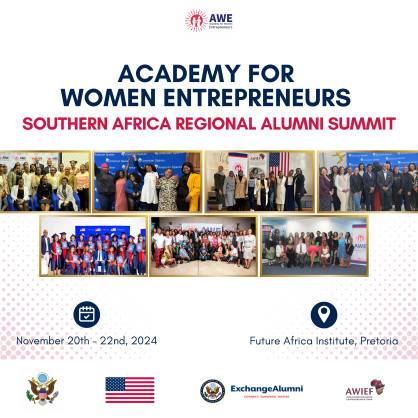
The U.S. Mission to South Africa, in partnership with the Africa Women Innovation and Entrepreneurship Forum (AWIEF) (www.AWIEForum.org), is proud to announce the 2024 Academy for Women Entrepreneurs (AWE) Southern Africa Regional Alumnae Summit. This highly anticipated 3-day event will take place at the University of Pretoria (UP) Future Africa Campus (FAC), Pretoria, South Africa, from November 20th to 22nd, 2024, during Global Entrepreneurship Week.
The AWE Regional Alumnae Summit brings together women entrepreneurs from the Southern Africa Customs Union (SACU) countries Botswana, Eswatini, Lesotho, Namibia, and South Africa, who have participated in the prestigious AWE program between 2019 and 2023.
The Summit aims to foster regional collaboration and create new opportunities for business expansion and trade. Key objectives include:
Participants will have the opportunity to engage with government officials, civil society organizations, and investors, all of whom share a commitment to advancing women's economic empowerment and entrepreneurship across the region.
The AWE Southern Africa Regional Alumnae Summit underscores the importance of women-led businesses in driving economic development and gender equity. By connecting entrepreneurs with stakeholders focused on trade, investment, and innovation, the Summit aims to catalyze sustainable business practices and inclusive economic growth across Southern Africa.
The Summit will host alumnae entrepreneurs, government representatives, and investors, creating a unique platform for dialogue, learning, and collaboration. Selected participants will have their travel and accommodation expenses covered, ensuring inclusivity and accessibility.
The 2024 AWE Southern Africa Regional Alumnae Summit promises to be a landmark event for women entrepreneurs, offering invaluable opportunities to connect, learn, and grow. Together, we will continue to foster a culture of innovation, trade, and economic empowerment across the Southern African region.
For more information about the AWE program and the upcoming Summit, visit https://apo-opa.co/3OaefRs
Distributed by APO Group on behalf of Africa Women Innovation and Entrepreneurship Forum (AWIEF).
SA makes progress with HPV vaccination to prevent cervical cancer
As the country joins the global community in marking four years of the global movement known as the Cervical Cancer Elimination Day of Action, the Department of Health has expressed confidence in the nation’s progress in combating cervical cancer.
Through expanded screening and testing initiatives, the country is making strides toward preventing cervical cancer as a public health challenge.
According to the department, the country has one of the highest rates of cervical cancer among women and faces a significant burden, with an estimated 13 800 new cases annually.
According to the World Health Organisation, cervical cancer is the fourth most common cancer in women globally with around 660 000 new cases and around 350 000 deaths in 2022.
“In South Africa, cervical cancer is the second most common cause of cancer in women. Though, cervical cancer can be cured if diagnosed at an early stage and treated promptly,” the department said.
Cervical Cancer Elimination Day of Action, observed annually on 17 November each year, marks a historic commitment made in 2020 by 194 countries, including South Africa, to eliminate cervical cancer. The campaign aligns with the launch of the World Health Organization's Global Strategy to achieve this groundbreaking goal.
“The government has introduced a number of interventions to prevent cervical cancer amongst women, and these include the launch of Human Papillomavirus (HPV) vaccination campaign in 2014 to reduce the incidence of cancer of the cervix mainly targeting all girls in grade 5, aged 9 years and older in all public and special schools.
“So far, between 85% and 89% of targeted girls received one or more doses. Studies have shown that vaccination in late childhood/early adolescents is effective as strong immunity develops (before onset of sexual activity),” the department said.
The department highlighted that over this period more than 7.1 million doses have been administered, and more than 4 million girl learners protected.
“It is estimated that approximately 85% of girls 9 – 15 years in public schools and approximately 75% of all girls 9 – 15 years in South Africa have been vaccinated and are protected from developing cervical cancer. The programme has since been extended to private schools effective from this year in order to ensure no girls child is left behind, with or without medical aid,” the department said.
The success of the HPV vaccination programme in South Africa has been attributed to high level political commitment by the Ministries of Health and Basic Education including civil society, parents and school governing bodies, dedicated funding from the National Treasury.
This year’s commemoration focuses on healthcare workers for their commitment in the fight against cervical cancer which is encapsulated in the theme: “Elevating Frontline Health Workers: Transforming Global Commitments into Lifesaving Actions”.
It underscores the critical role that healthcare professionals play in enhancing awareness, screening, and treatment of cervical cancer.
“Healthcare workers (HCWs) are pivotal in implementing cervical cancer screening programs and educating communities about prevention. Their knowledge and attitudes significantly influence screening uptake among women. Studies have shown that inadequate knowledge and misconceptions among HCWs can lead to suboptimal care for cervical cancer patients, highlighting the necessity for continuous education and training,” the department said.
It is for this reason that the Department of Health, in collaboration with World Health Organisation, is rolling out capacity training for clinicians in provinces to improve their confidence in performing cervical cancer screening, diagnosis and treatment procedures.
“A total number of 405 299 girl learners (88.6% of the target population) received HPV vaccination during February/March 2024 round of HPV vaccination against cervical cancer. To date, 17 of the country's 52 health districts have begun using HPV testing with more districts expected to start during the current financial year,” the department said.
While the country is making progress with HPV vaccination, the department noted that cervical screening and treatment are lagging behind.
Thus, the department has reminded parents and care givers to ensure that all eligible girls who missed HPV dose, should get catch-up doses offered in primary health facilities free of charge. – SAnews.gov.za
DikelediM
Sun, 11/17/2024 - 16:30
The invite was a “sop to inclusivity and disrespectful” to stakeholders and homeless people, says Raymond Perrier of the Denis Hurley Centre
Do your part to fight gender-based violence
The National Director of Public Prosecutions (NDPP), Advocate Shamila Batohi, has called on communities to work with law enforcement agencies to fight gender-based violence (GBV).
The NDPP was speaking during the re-launch of the Kabokweni Themba Thuthuzela Care Centre (TCC) at the Themba Hospital in Mpumalanga.
TCCs are a one stop-facility for survivors of GBV, where they are able to receive psycho-social support, medical treatment and legal services.
“You have to be part of the crime solution. We will never be able to prosecute ourselves out of crime.
“We do what we have to do and we will do it with absolute determination and passion but we come after the fact when the crime is already committed. You in the community, working with the police, have to be part of [the solution],” Batohi said.
The TCC was initially launched in 2008 but has now found a permanent home within the hospital’s structure. It services communities including Kabokweni and White River.
Addressing men in society in particular, Batohi urged them to stand up to those in their circles who perpetrate GBV.
“Men must be out there publicly… to raise awareness and say as men, 'no women must be [abused]. As men, we will not tolerate [that] and... we will ostracise them from our groups because there is no place for abusers in our midst.
“That’s the only way we can move, otherwise we will be sitting in these places, building Thuthuzela Care Centres and we will never solve the problem,” Batohi said.
The NDPP told the gathering that the TTCs are aimed at making sure that there is justice for victims and survivors of GBV.
“We want to make sure that we get better conviction rates. We want to make sure that we get less secondary trauma, and this must move to the courts as well. And we’re hoping that with our partners… that maybe the TCCs can be used [for] children and victims [to] actually testify from here to the courts. Our Department of Justice will be a key partner in that.
“We have to have targeted interventions that make sure that our women and children are not violated in this way and our girls are not subjected to abuse. This is an incredible [opportunity] to show from the reactive side, that this is what we’re trying to do, to make this journey of victim to survivor something that is more comfortable,” Batohi explained. – SAnews.gov.za
NeoB
Fri, 11/15/2024 - 11:51
JOHANNESBURG: Cricket South Africa (CSA) has today announced Ola South Africa as its official ice cream partner for the current...
After 24 November old meters will no longer load electricity tokens
JOHANNESBURG: Proteas Men’s fast bowler Lungi Ngidi has been ruled out of the upcoming Test series against Sri Lanka, as...
Cabinet welcomes historic issuing of Muslim marriage certificates
Cabinet has welcomed the historic issuing of the first batch of 33 Muslim marriage certificates by the Department of Home Affairs.
The marriage certificates were issued after the signing of the Divorce Amendment Bill into law in May this year by President Cyril Ramaphosa.
The Bill amended the Divorce Act, 1979 (Act 70 of 1979) to recognise Muslim marriages and safeguard the interests of Muslim women and children if those marriages are dissolved.
“These long-overdue changes signal our country’s commitment to ensure that Muslim women and children’s rights to equality, dignity, access to justice as well as the best interests of the minor child, as enshrined in the Constitution of the Republic of South Africa of 1996, are upheld.
“They also give effect to fostering greater social cohesion, nation-building and a shared national identity, as well as honouring various cultural and religious traditions,” Minister in The Presidency, Khumbudzo Ntshavheni ,said on Wednesday in Cape Town.
Ntshavheni was briefing members of the media on the outcomes of the Cabinet meeting held on 6 November 2024.
READ | Home Affairs issues first-ever certificates recognising Muslim marriages
-SAnews.gov.za
nosihle
Wed, 11/13/2024 - 14:09
SA to mark 16 Days of Activism Against Gender-Based Violence
Cabinet has approved the conceptual approach to this year’s 16 Days of Activism Against Gender-Based Violence (GBV) campaign.
The campaign will take place under the theme: “30 Years of Advancing Collective Action to End Violence Against Women and Children”, which emphasises the importance of a whole-of-society approach to combating gender-based violence and femicide (GBVF) and the importance of a multi-sectoral accountability.
“This year’s campaign continues to address the root causes of GBVF while promoting positive masculinity and gender equity, along with creating economic opportunities for women and children.
“While more than 1 000 GBVF perpetrators were convicted between 1 April and 31 September 2024, we still have more to do as a nation to eradicate this scourge from society,” Minister in The Presidency Khumbudzo Ntshavheni said on Wednesday in Cape Town.
This year marks the 26th anniversary of South Africa’s participation in the 16 Days of Activism for No Violence against Women and Children campaign, which will be launched on 25 November 2024 in Rustenburg, in the North West.
This supports the global campaign which runs from 25 November (International Day for the Elimination of Violence against Women) to 10 December (International Human Rights Day). -SAnews.gov.za
nosihle
Wed, 11/13/2024 - 14:36
Chikunga launches Disability Rights Awareness Month
Minister in the Presidency for Women, Youth, and Persons with Disabilities, Sindisiwe Chikunga, has called on all South Africans to remain actively engaged in fostering the inclusion of people with disabilities.
She emphasised the importance of collective support across every sector of society to make disability inclusion a lasting priority.
The Minister was speaking at the launch of the 2024 Disability Rights Awareness Month (DRAM) in Lenasia, on Monday.
“As we move through this month and beyond, let us all stay engaged, support these efforts, and encourage every sector of our society to make disability inclusion a permanent priority. Together, we are paving the way for a truly inclusive and accessible South Africa, where every person with a disability can thrive,” the Minister said.
This year’s DRAM which runs from 3 November to 3 December, is held under the theme “Celebrating 30 Years of Democracy: Creating a Disability-Inclusive Society for a Better Quality of Life and Protection of the Rights of Persons with Disabilities”.
Chikunga extended her gratitude to the host, the Johannesburg Council for the Disabled, for the incredible work they have been dedicated to since 1995.
She said their commitment to providing a holistic, essential, and value-added approach to transform and uplift the social, economic, and professional lives of persons with disabilities has been exemplary.
“I was truly inspired when I was briefed on the range of services you provide, from social work and skills development to learnerships and enterprise development.
“We draw direct inspiration from the incredible amount of concrete measures that your institution has undertaken to champion the social, economic, spatial, and technological advancement of persons with disabilities,” Chikunga said.
Over the past 30 years, numerous policies, legislative instruments, and government programs have earned country recognition as a respected champion of the global disability inclusion movement.
The Minister said this was evident during the recent G7 Forum on Disability and Inclusion held in Italy.
“Disability inclusion is not merely a matter of advocacy; it is a constitutional imperative enshrined in our Bill of Rights. Over the past 30 years, we have embedded disability inclusion into various laws that comprise the country's legislative framework,” she said.
These include the recently gazetted Framework on Self-Representation, which has implications for the composition of Boards of State-Owned Enterprises; the National Strategic Framework on Reasonable Accommodation; and the Universal Access and Design Framework, with norms and standards for universal accessibility in the built environment.
All persons with disabilities have access to free basic education and any young person coming from a home with an income bracket of R600 000 receives free higher education through the National Student Financial Aid Scheme.
Further, persons with disabilities receive a monthly direct cash transfer to support their basic needs.
South African Sign Language is now recognised as the 12th official language in South Africa.
More recently, the President signed the Public Procurement Act, which mandates that a portion of government procurement be sourced from businesses owned and controlled by persons with disabilities.
During the Medium-Term Budget Policy Statement, the Minister of Finance Enoch Godongwana revealed that “Public procurement accounts for about 19% of consolidated government spending, totalling R1.5 trillion over the next three years”.
“As a department that represents the interests and well-being of this community, we will ensure that as the Treasury develops the regulations, priority is given to the work of institutions like the Johannesburg Council for the Disabled and others who are engaged in facilitating income-earning and productive opportunities for the community of persons with disabilities,” the Minister said.
As government launches Disability Rights Awareness Month, the Minister called on individuals to reflect on the status of persons with disabilities globally, across the continent, and within our own borders.
“This reflection is essential to evaluate where we have been, where we are, where we still need to go, and how we should measure progress in advancing the rights of persons with disabilities. The answers to these questions are crucial for the inclusive formulation of policies and legislative instruments, as well as for the co-design of our priorities and interventions,” she said. – SAnews.gov.za
DikelediM
Tue, 11/12/2024 - 12:58
The Chairperson of the Portfolio Committee on Communications and Digital Technologies, Ms Khusela Sangoni Diko, has noted with grave concern the decision of the Minister of Communication and Digital Technologies, Mr Solly Malatsi, to withdraw the South African Broadcasting (SABC) Bill from Parliament, as reported in the Sunday Times today, 10 November 2024. The Portfolio Committee has not yet been formally notified of the withdrawal of the proposed legislation in line with the Rules of the National Assembly.
Nonetheless, the report states that the minister has decided to withdraw the Bill, believing it is “totally flawed”, does not address the funding model of the public broadcaster and assigns too much power to the minister in appointing board members. While appreciative of the fact that as the executive authority, the minister may rescind the Bill for whatever reason before its second reading in the House, the Chairperson holds that this decision by the minister would be highly ill-advised, and it is no exaggeration to say it would sound the death knell for the South African Broadcasting Corporation.
The challenges facing the SABC require a considered and urgent response, not trigger-happy action, which serves no purpose but to frustrate and disrupt processes already underway. To withdraw the Bill at this stage means to delay the implementation of crucial reforms necessary to save yet another crucial and strategic public institution. Initiated by the government in 2018 and only introduced to Parliament in October 2023, the SABC Bill seeks to, among others, provide for the continued existence of the SABC, provide for its governance and consequently amend the Independent Communications Authority of South Africa (ICASA) Act and the Electronic Communications Act (ECA). To date, the Bill has undergone a thorough public participation process, with the sixth Parliament having received about twenty written submissions from the SABC itself, academia, youth representatives, organised labour, and other interested parties. The 7th Parliament, understanding the urgent challenges facing the public broadcaster, prioritised this critical legislation and held oral hearings into the submissions in September 2024. The committee diligently studied and interrogated these submissions, and all concerns raised by stakeholders were attended to. The Department of Communications and Digital Technologies (DCDT), which the minister leads, was expected to have responded to the issues raised during the public participation process by the 17th of October 2024.
This process underway and agreed to by the committee and in the Minister's presence would have provided the committee with a clear way forward to amend the Bill as provided for in the Rules of Parliament and subvert any unnecessary delays in the processing of this sorely needed legislation. The Chairperson remains convinced that the issues raised by civil society, including the Democratic Alliance, relating to a lack of clarity on the funding model of the public mandate of the SABC, time limits on the President on the appointment of the SABC Board, the creation of a subsidiary Commercial Company and Board and the potential “lack of independence” in the appointment of the subsidiary Commercial Company, were not insurmountable and could have been remedied through an amendment by the committee. Rule 286 of the National Assembly Rules explicitly confers authority on parliamentary committees to amend or, where necessary, redraft bills before them. Thus, the Chairperson strongly believes that an attempt to withdraw this Bill from Parliament will delay and derail the transformative and developmental interventions the government has been pursuing in state institutions.
Ms Diko said that the committee has been at pains to put in place a fast-tracked process to finalise the SABC Bill, the absence of which has created a serious legislative vacuum that has dire consequences. “To this end, the government and even the committee itself had initiated various engagements with stakeholders on the possible funding model for the public mandate of the SABC – the most substantive and urgent of the concerns raised against the Bill.” Another of the major concerns coming from the public participation process was the need for the speedy finalisation of the Audio and Audio-Visual White Paper, and Ms Diko would like to urge the Minister to prioritise the finalisation of the White Paper before canning a process underway as this has a bearing on the amendment of the Bill.
She further said that the public broadcaster could not be allowed to fail because its demise would spell unmitigated disaster also for SENTECH, the country's signal distributor, with a ripple effect to over 130 community radio stations, several private broadcasters including commercial radio and TV stations and ICT service providers. Ultimately, the most affected stakeholders would be communities across the country, which rely on public broadcasters to provide them with news and public information that impacts their lives and is delivered in all official languages, including sign language. It is undisputed that SABC is the only broadcaster with the capacity, reach and ability to deliver on this important mandate.
Ms Diko commends the SABC leadership and staff for the immense strides recorded over the last two years, saying that they are a testament to the dedication and patriotism of the hardworking men and women of the public broadcaster, who, despite enormous pressure and financial constraints, were resolute that the show would go on. In the 2023/24 financial year, the SABC has turned the corner on its financial management, achieving an unqualified audit opinion once again after nine years.
“Should the reports of the minister's decision to withdraw the Bill be true and due to the gravity of the situation at the public broadcaster, we urge the DCDT to accelerate the process of reworking the Bill and reintroduce a new version to Parliament within the current financial year. In the meantime, the committee will invite the minister to indicate how, in the interim, the financial situation at the public broadcaster shall be improved to ensure sustainability until this much-needed legislation is amended and the issues attendant to it are resolved. Failure to reintroduce the Bill timeously will leave individual members of the committee or the committee itself with no option but to entertain introducing a committee or Private Members' Bill in the best interest of the SABC for consideration by Parliament,” said Ms Diko.
Distributed by APO Group on behalf of Republic of South Africa: The Parliament.
JOHANNESBURG: Cricket South Africa (CSA) is delighted to announce the Proteas Women’s squads for the forthcoming T20 International (T20I) and...
Chikunga to officially launch Disability Rights Awareness Month
Minister in the Presidency for Women, Youth, and Persons with Disabilities (DWYPD), Sindiswa Chikunga, is expected to launch the Disability Rights Awareness Month (DRAM) 2024 in Lenasia on Monday.
DRAM is observed from 3 November to 10 December every year, with the final day recognised as International Day of Persons with Disabilities, as well as the National Disability Rights Awareness Day.
According to the DWYPD, this year’s theme for the month is: “Celebrating 30 Years of Democracy: Creating a Disability-Inclusive Society for a Better Quality of Life and Protection of the Rights of Persons with Disabilities”.
“[The theme] highlights South Africa’s collective commitment to advancing rights and inclusivity for persons with disabilities. The weekly themes for DRAM 2024 focus on inclusive growth and job creation, advocating for the inclusion of children with disabilities, building a capable and ethical State, and fostering safer communities.
“Minister Chikunga will deliver a keynote address underscoring government’s dedication to fostering an inclusive society that values and supports the voices and contributions of persons with disabilities.
“DRAM 2024 will emphasise key national priorities, including inclusive growth, poverty reduction, and the creation of a capable, ethical and developmental State,” the department said. – SAnews.gov.za
NeoB
Sun, 11/10/2024 - 10:03
Day 2 on the Klip River: Riverlea to Soweto
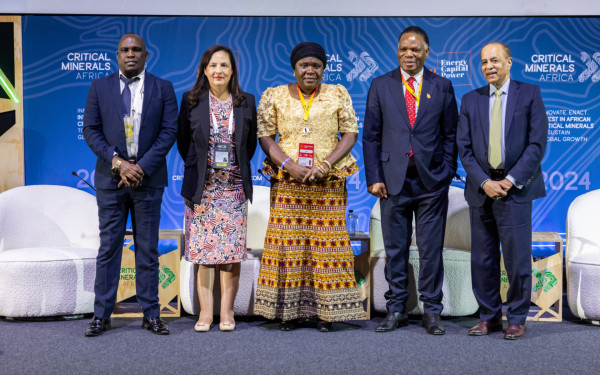
Africa's holds significant reserves of minerals critical for the global energy transition. The continent boasts roughly 30% of the world's mineral reserves, including immense deposits of cobalt, manganese, natural graphite, copper, nickel, lithium and iron ore.
As such, this year's Critical Minerals Africa (CMA) 2024 Summit – held from November 6-7 in Cape Town – convened industry leaders, policymakers, service providers and investors to address the urgent demands of Africa's critical mineral value chain. The Summit featured a robust agenda that sought to shine a spotlight on opportunities for Africa to accelerate its mining sector while utilizing its natural resources to promote value addition and drive socioeconomic development.
CMA 2024 featured a Ministerial Forum that included the participation of mining ministries from Eswatini, Malawi and Argentina, as well as representatives from Tanzania. High-level speakers during the forum showcased a number of projects aimed at maximizing mineral production while discussing how to leverage mineral resources to promote economic growth and sustainability.
The Republic of Malawi's Minister of Mining Monica Chang'anamuno highlighted several ongoing projects in the country, such as the Kasongo Initiative, which aims to increase the production of rare earth metals, graphite and lithium resources.
Meanwhile, Eswatini's Minister of Natural Resources and Energy Prince Lonkhokhela announced ambitious targets to raise to the contribution of the country's mining sector to its GDP. With aims to increase the share from 1% to 50% in the short- to medium-term, the strategy is supported by new surveys revealing commercial deposits of lithium, copper, cobalt and other base metals.
To bolster investment in mid- and downstream infrastructure, the Summit also featured the participation the President of the Chamber of Mines of Zimbabwe Thomas Gono, who stated, “Historically, we exported raw materials, missing out on the potential benefits. With Africa's young workforce, we now have an opportunity to drive revenue and create jobs through skills development and local beneficiation.”
With the participation of Tanzania's Chamber of Mines, it was announced that the country aims to expand exploration in critical mineral-rich basins from 16% to 50% as part of a strategic push into rare earths, lithium and tanzanite production. Meanwhile, Zambia's Chamber of Mines discussed ongoing strategies aimed at helping the country address logistics and energy deficit challenges in the mining sector.
The Summit featured a panel discussion with high-level representatives from mining companies and development institutions including Pensana, the Africa Policy Research Institute and the U.S. Development Finance Corporation. The panel also featured the participation of Clifford Chance, Frost & Sullivan and Chatham House and explored how regional initiatives – such as the Lobito Corridor – have the potential to fast-track Africa's critical minerals market expansion.
An Investment Forum held during the Summit showcased innovative financing measures to advance the flow of capital across the African market. The session featured representatives from finance institutions the World Bank, ABSA, Moshe Capital, the African Finance Corporation and ASAFO & Co.
Additionally, midstream and downstream opportunities were showcased during a panel session that featured the participation of organizations such as Orion Minerals, AZ Arnaturen, Women in Green Hydrogen, Isondo Previous Metals and the Southern African – German Chamber of Commerce and Industry. The panel also featured representatives from Konrad Adenauer Stiftung, the SA-DRC Chamber of Commerce, the Curtin Institute for Energy Transition, the Electric Mobility Association of Kenya and the Congolese Battery Council.
At CMA 2024, research firms including Rystad Energy, Moore Global and Project Blue presented insights on market trends in the global mining industry, while Tronic Metals, Tanzania's State Mining Corporation and South Sudan's state-owned Nilepet provided updates on their activities across the mining value chain.
A Leaders Forum during the Summit featured the participation of international mining companies Glencore DRC and KoBold Metals as well as representatives from the University of Cape Town and the Minerals Council of South Africa. The forum showcased how governments across Africa can promote innovation in the continent's mining space to attract new investment and increase critical minerals production to drive socioeconomic and GDP growth.
Distributed by APO Group on behalf of Energy Capital & Power.
Spirit of Endeavour Fisherfolk Women was formed to share skills and help protect the environment from damage
Investing in tech key to improving life for people with disabilities
Women, Youth and Persons with Disabilities Deputy Minister, Mmapaseka Steve Letsike, has emphasised the need to invest in the promotion of new technologies and the advancement of assistive technologies to improve the quality life for people with disabilities.
“We must invest in research and development of affordable and accessible technologies that aid communication, mobility and access to information,” Letsike said.
Letsike made the call at the Information and Communication Technologies (ICT) symposium in Umgababa, south of Durban, as part of the build-up to the District Development Model (DDM) Presidential Imbizo that will take place on Friday.
Collaboration between government, private enterprises, academic institutions and organisation of and for people with disabilities, can foster innovation in the ICT field, ensuring that people with disabilities can benefit from the rapid pace of technological progress, the Deputy Minister said.
“This includes promoting digital accessibility and ensuring that emerging technologies, such as artificial intelligence and automation, are designed with inclusivity in mind. Our emphasis is on a fundamental shift in how we view persons with disabilities, away from the individual medical perspective, to a human rights and developmental perspective.
“It is with this understanding in mind that we affirm supporting autonomy and independent living by promoting policies that enable access to community-based services, personal assistance, and affordable, adaptable housing,” Letsike said.
The Deputy Minister noted ICT's significant contribution to the advancement of disability rights, offering tools that enhance accessibility, inclusion and independence for individuals with disabilities.
Letsike maintained that ICT is not just "a set of tools", but a bridge to a more inclusive, accessible and fair world for people with disabilities.
“By supporting accessible technology, promoting inclusive policies, and advocating for the rights of all, we can continue to break down barriers and build a society that truly values each individual’s unique abilities,” she said.
Reformed social protection scheme
Letsike highlighted the need for a reformed social protection scheme to provide financial support, which will allow individuals with disabilities to live independently, make personal decisions about their care and avoid institutionalisation, where possible.
“This also entails removing barriers to education and employment, enabling persons with disabilities to contribute to society in ways that promote self-sufficiency and empowerment.
"We must remember that human rights are universal principles that protect every individual’s dignity, freedom and equality. They are not privileges or special considerations but inherent to every person simply because they are human,” Letsike said.
Disability Rights Awareness Month
The symposium coincided with Disability Rights Awareness Month (DRAM), observed from 3 November to 3 December.
Held under the theme, “Celebrating 30 Years of Democracy: Creating a Disability-Inclusive Society for a Better Quality of Life and Protection of the Rights of Persons with Disabilities”, this year’s DRAM reflects on government’s commitment to creating a barrier-free society, where people with disabilities are full and active participants in the country’s economy and society at large.
Each week of DRAM is linked to national strategic priorities and the White Paper on the Rights of Persons with Disabilities.
During week one of DRAM, focus will be on growing an economy aligned with the empowerment of persons with disabilities. Week two advocates for the inclusion of every child with a disability. Week three builds a working government with a progressive disability rights agenda, and week four focuses on creating safer communities for persons with disabilities.
“We hope that each one of us, in our respective corners where we operate, will do our bit toward raising awareness on the rights of persons with disabilities during this period,” Letsike said. - SAnews.gov.za
GabiK
Thu, 11/07/2024 - 15:12
Durban Academy gears up to host UCI Pump Track World Championships
The City of Durban is gearing up to host the prestigious 2024 Velosolutions Union Cycliste Internationale (UCI) Pump Track World Championships Finals, which will take place at the GO!Durban Academy, KwaMashu site, on 9 November 2024.
The event marks the tail end of the 2024 season and is set to bring together the world’s top riders from approximately 20 countries to compete for the World Championship Title.
The first ever to be hosted in a township, the KwaMashu GO!Durban Academy Park was chosen over Cape Town.
Established in 2016, the GO!Durban Cycle Academy features a world-class Velosolutions asphalt pump track right in the heart of KwaMashu.
Velosolutions pump tracks are both playgrounds and training facilities for bikers, skateboarders and scooter riders of all skill levels. Asphalted tracks are hotspots for all kinds of riders, who seek a fun and action-filled sports experience.
EThekwini Transport Authority Acting Head, Nelisiwe Zama, said being chosen to host an event of such magnitude is demonstration of the high standard infrastructure that the GO!Durban Academy has to offer.
“An event of this nature does not only place us on the world map in relation to the cycling sport but has great impact on local tourism, with 60 international riders, accompanied by their teams, and fans staying in Durban. This influx of international visitors will help put Durban on the global tourism map as a 'must visit' destination in South Africa,” Zama said.
The event is also set to benefit youth from townships, as various community-based cycling races will be hosted in the week leading up to the finale.
The top four of the community bike series, including the men and women elite category, will officially qualify for the UCI Pump Track World Championships on Saturday.
“The two winners will receive free hotel accommodation, like all other international winners. The second, third and fourth placed riders will be invited to join the afterparty, rider's briefing, welcome presentation, and will be transported daily from their township to the locations,” Zama said.
Tickets for the UCI Pump Track World Championships finals will be sold at the gate at R50 per person. – SAnews.gov.za
GabiK
Thu, 11/07/2024 - 10:36