• Skip to main content
  • Skip to header right navigation
  • Skip to after header navigation
  • Skip to site footer
MyZA

MyZA

News, Directory, Events and Other Stuff

  • Social Media
  • Sport
  • World News
  • Home
  • Submit News
  • Directory
  • Events
  • Stratlec
  • TFSA
  • News
    • APO
    • Today’s Sport News
    • Todays Social Media and Tech Headlines
    • Today’s World News
    • Today’s SA Financial News
  • Contact
You are here: Home / News / Deepfakes a worrying trend in the run-up to elections

Deepfakes a worrying trend in the run-up to elections

18 March 2024 by Guest
KnowBe4

More than four billion people (https://apo-opa.co/4aerFVs) worldwide will take part in elections this year, including in the US, UK, India, and South Africa. However, the increasing prevalence of disinformation, fuelled by the growing use of deepfakes and generative AI, means that politicians and voters alike will need to be on high alert.

In the 2024 Global Risks Report (https://apo-opa.co/3wRJRWs), the World Economic Forum identified AI-generated misinformation and disinformation as the second most significant global risk after extreme weather. This concern is well-founded, especially with the rapid rise of tools like generative AI empowered deepfakes, posing a threat to the integrity of democratic processes. Deepfakes, which are highly realistic fabricated videos or images, can deceive voters, manipulate public opinion, and tarnish the reputation of political parties and politicians.

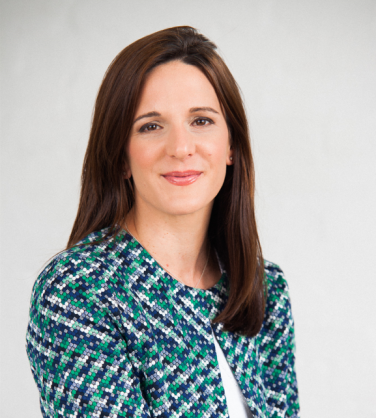
Anna Collard, SVP Content Strategy and Evangelist at KnowBe4 AFRICA, a cybersecurity training organisation, says there has been a vast improvement in the quality of deepfakes over the past year, making them more convincing and difficult to identify. In a notable incident from October last year, cybercriminals used deepfake videos (https://apo-opa.co/4aewZYY) to impersonate African Union Chairperson Moussa Faki Mahamat during online conversations with European diplomats. Similarly, in December, Facebook removed over 100 deepfake paid advertisements (https://apo-opa.co/3TBfnkt) featuring British Prime Minister Rishi Sunak after nearly half a million people viewed them.

“Deepfakes pose major risks in the run-up to elections, both in the UK and South Africa,” says Collard. “Voters need to be aware of this risk and be proactive about mitigating their impact.”

Be aware of deepfakes

According to Collard, the initial step in combating the impact of misinformation and disinformation through deepfakes is raising awareness. “It's crucial for the public to be aware of the existence of this phenomenon,” she emphasises, adding, “The production of deepfake videos and images is cheap and easy.”

CounterCloud, a research project to showcase how easy it is to create fully automated (https://apo-opa.co/3wSNhZ0) disinformation campaigns, operated with a modest budget of only $400. Its goal was to counter negative depictions of the US propagated by Russian media. “If you’re a politician, expect deepfakes impersonating you to appear in order to sway public opinion,” she asserts. “Similarly, voters should not believe everything they see or hear on social media to be true.”

Verify information

Apart from raising awareness, another crucial principle is to verify information. “If a politician purportedly said something that’s deeply polarising, it’s important to verify whether they genuinely said it.” To counter the risk of deepfakes, the Independent Electoral Commission (IEC), in collaboration with Media Monitoring Africa, has launched an initiative called Padre (https://apo-opa.co/3THIwux). This initiative allows voters to fact-check information regarding South African political parties and their recent statements.

Google’s reverse-image search (https://images.Google.com/) is another helpful tool that enables you to check if an online image has been used elsewhere. Additionally, FotoForensics (https://FotoForensics.com/) provides a more in-depth analysis of images. However, despite these tools, verifying information remains challenging. “Deepfakes are becoming more convincing, making verifying information even harder,” states Collard.

Don’t over-react

Lastly, when faced with inflammatory content, Collard stresses the importance of voters not overreacting. “Scammers want to whip up your emotions and get you in a state where you’re unable to think rationally,” she says. “Stay calm and don’t share content that is overly emotive. Whenever your emotions are triggered, slow down and verify, -it could be a hoax.”

Collard believes that it is every voter’s responsibility to educate themselves about the dangers of deepfakes. “AI-generated fake content has huge implications for society, especially during election periods,” she says. “To combat this form of disinformation and safeguard the democratic process, social media platforms, political parties and independent watchdogs as well as us the public will all need to work together.”

Distributed by APO Group on behalf of KnowBe4.

Media files
KnowBe4
Download logo

More than four billion people worldwide will take part in elections this year, including in the US, UK, India, and South Africa. However, the increasing prevalence of disinformation, fuelled by the growing use of deepfakes and generative AI, means that politicians and voters alike will need to be on high alert.

In the 2024 Global Risks Report (https://apo-opa.co/3wRJRWs), the World Economic Forum identified AI-generated misinformation and disinformation as the second most significant global risk after extreme weather. This concern is well-founded, especially with the rapid rise of tools like generative AI empowered deepfakes, posing a threat to the integrity of democratic processes. Deepfakes, which are highly realistic fabricated videos or images, can deceive voters, manipulate public opinion, and tarnish the reputation of political parties and politicians.

Anna Collard, SVP Content Strategy and Evangelist at KnowBe4 AFRICA, a cybersecurity training organisation, says there has been a vast improvement in the quality of deepfakes over the past year, making them more convincing and difficult to identify. In a notable incident from October last year, cybercriminals used deepfake videos (https://apo-opa.co/4aewZYY) to impersonate African Union Chairperson Moussa Faki Mahamat during online conversations with European diplomats. Similarly, in December, Facebook removed over 100 deepfake paid advertisements (https://apo-opa.co/3TBfnkt) featuring British Prime Minister Rishi Sunak after nearly half a million people viewed them.

“Deepfakes pose major risks in the run-up to elections, both in the UK and South Africa,” says Collard. “Voters need to be aware of this risk and be proactive about mitigating their impact.”

Be aware of deepfakes

According to Collard, the initial step in combating the impact of misinformation and disinformation through deepfakes is raising awareness. “It’s crucial for the public to be aware of the existence of this phenomenon,” she emphasises, adding, “The production of deepfake videos and images is cheap and easy.”

CounterCloud, a research project to showcase how easy it is to create fully automated (https://apo-opa.co/3wSNhZ0) disinformation campaigns, operated with a modest budget of only $400. Its goal was to counter negative depictions of the US propagated by Russian media. “If you’re a politician, expect deepfakes impersonating you to appear in order to sway public opinion,” she asserts. “Similarly, voters should not believe everything they see or hear on social media to be true.”

Verify information

Apart from raising awareness, another crucial principle is to verify information. “If a politician purportedly said something that’s deeply polarising, it’s important to verify whether they genuinely said it.” To counter the risk of deepfakes, the Independent Electoral Commission (IEC), in collaboration with Media Monitoring Africa, has launched an initiative called Padre (https://apo-opa.co/3THIwux). This initiative allows voters to fact-check information regarding South African political parties and their recent statements.

Google’s reverse-image search (https://images.Google.com/) is another helpful tool that enables you to check if an online image has been used elsewhere. Additionally, FotoForensics (https://FotoForensics.com/) provides a more in-depth analysis of images. However, despite these tools, verifying information remains challenging. “Deepfakes are becoming more convincing, making verifying information even harder,” states Collard.

Don’t over-react

Lastly, when faced with inflammatory content, Collard stresses the importance of voters not overreacting. “Scammers want to whip up your emotions and get you in a state where you’re unable to think rationally,” she says. “Stay calm and don’t share content that is overly emotive. Whenever your emotions are triggered, slow down and verify, -it could be a hoax.”

Collard believes that it is every voter’s responsibility to educate themselves about the dangers of deepfakes. “AI-generated fake content has huge implications for society, especially during election periods,” she says. “To combat this form of disinformation and safeguard the democratic process, social media platforms, political parties and independent watchdogs as well as us the public will all need to work together.”

Read More at the Source

Share this:

  • Share on X (Opens in new window) X
  • Share on Facebook (Opens in new window) Facebook
  • Print (Opens in new window) Print
  • Email a link to a friend (Opens in new window) Email
  • Share on LinkedIn (Opens in new window) LinkedIn
  • Share on Tumblr (Opens in new window) Tumblr
  • Share on WhatsApp (Opens in new window) WhatsApp
  • Share on Mastodon (Opens in new window) Mastodon
Category: NewsTag: 2024, Africa, African, AI, APO, Budget, Cybersecurity, Elections, global, IEC, India, Political Parties, production, Social Media, South Africa

If you feel strongly about this article then feel free to send MyZA a ‘Letter to the Editor’ using the submission form below:


Letter to the Editor

This field is for validation purposes and should be left unchanged.
If this is in response to an article please include that article title here or as the lead in for the first paragraph of your Letter below.

Separate tags with commas

Localise your letter by naming the city your words are about. Add relevant words describing your subject. Single comma separated words of no more than 5
Your Name(Required)
Your Name will be linked to the website below.
Your personal, business or social media web site
Choose NO to not set up a user account on MyZA. User Accounts will allow you to submit letters under your own Author Name

3 Latest Letters to the Editor:

  • Fun South African fact

    Dear Editor Fun South African fact: towns like Franschhoek and Stellenbosch are home to world-class wine farms set in stunning, scenic surroundings. Regards Aressa Smith In Response to/From: Luxury Properties Seized in New Lottery Crackdown

    27 January 2026
  • Condolences on the Passing of Lusanda Dumke

    Statement by Leander Kruger MPL – DA Buffalo City Constituency Leader: The Democratic Alliance in Buffalo City Metropolitan Municipality mourns the passing of Springbok Women’s rugby player and Mdantsane trailblazer, Lusanda Dumke, who lost her battle with cancer at the age of 28. South Africa has lost an exceptional athlete, a leader, and a source…

    17 December 2025
  • Rape Kits Delivered, But…

    Statement by Nicholas Gotsell MP – DA NCOP Member on Security & Justice: The DA can confirm that 2 840 rape kits arrived in Cape Town on Monday, following sustained DA oversight and pressure after multiple police stations across the Western Cape were found to be without this critical forensic evidence tool. While this delivery…

    17 December 2025

About Guest

Previous Post:How Much Freelance Writers In South Africa Charge
Next Post:Ministers commit to support transboundary cooperation in shared water basin

Reader Interactions

Comments

  1. Marine Dre

    18 March 2024 at 7:36 pm

    Bitter koud — very cold. An Afrikaans phrase meaning ‘bitter cold’, often used to describe the cold weather during winter.Example: “Oh, my gosh! It’s bitter koud outside!”

  2. Slow Trot

    18 March 2024 at 7:36 pm

    If God is watching you, at least be entertaining

Copyright © 2026 · MyZA · All Rights Reserved · Powered by Reach Trust