• Skip to main content
  • Skip to header right navigation
  • Skip to after header navigation
  • Skip to site footer
MyZA

MyZA

News, Directory, Events and Other Stuff

  • Social Media
  • Sport
  • World News
  • Home
  • Submit News
  • Directory
  • Events
  • Stratlec
  • TFSA
  • News
    • APO
    • Today’s Sport News
    • Todays Social Media and Tech Headlines
    • Today’s World News
    • Today’s SA Financial News
  • Contact
You are here: Home / Archives for APO

APO

10 August 2026

Government Urges Extreme Caution as Severe Winter Weather Disrupts Travel Across Parts of South Africa

Location: News

Republic of South Africa: Government Communication and Information System (GCIS)
Download logo

Government urges members of the public to remain vigilant and exercise extreme caution as severe winter weather, including heavy snowfall, freezing conditions, rain and strong winds, affect several parts of the country. The weather has already resulted in a number of road closures and disruptions across several provinces.

The South African Weather Service (SAWS) has issued weather warnings for parts of the country, with conditions expected to bring hazardous travel, particularly over mountainous areas and along affected road networks.

The South African Weather Service has issued an Orange Level 6 warning for disruptive snow, with parts of the Eastern Cape and Free State among the hardest hit, with snowfall affecting a number of major routes and mountain passes. Motorists are advised that Penhoek Pass along the N6 between Komani (Queenstown) and James Calata (Jamestown) has been reopened to traffic. The roadway is currently drivable, following the removal of most of the snow from the road surface by a grader. The R58 between Lady Grey and Ekhephini (Barkly East) has also reopened to traffic.

In KwaZulu-Natal and the Free State, authorities are closely monitoring conditions along the N3 and other routes, including the Van Reenen and Oliviershoek Pass areas, where snow, sleet, rain, ice and hazardous road conditions are affecting travel. The N3 between Harrismith and Van Reenen Pass should be approached with extreme caution. Emergency teams are spraying brine across all lanes to prevent black ice from forming.

Other areas, including parts of Mpumalanga and the Western Cape, are also experiencing adverse winter weather, with some routes affected by snowfall, icy conditions and strong winds.

A Yellow Level 2 warning for disruptive winds has also been issued for parts of the Northern Cape and Western Cape. Strong winds may result in localised impacts, including hazardous travelling conditions, reduced visibility and disruption to transport.

Government, through the National Disaster Management Centre, provincial and local disaster management structures, traffic authorities, emergency services and other relevant stakeholders, continues to monitor the situation and coordinate response measures in affected areas.

Authorities are assessing road conditions, managing closures where necessary and working to keep affected routes safe and accessible where conditions permit. Government further appeals to motorists to exercise patience and cooperate with traffic and emergency officials. Road closures are implemented to protect lives, and motorists should not attempt to bypass barriers or access roads that have been declared unsafe

Members of the public are reminded that weather and road conditions can change rapidly. Roads that are currently open may subsequently be closed if conditions deteriorate, while previously closed routes may be reopened once they have been assessed and cleared by the relevant authorities.

The public is urged to rely on official updates from the South African Weather Service, provincial traffic authorities, road agencies, disaster management structures and emergency services for the latest information.

Government will continue to closely monitor the weather system and its impacts across the country and will coordinate with relevant authorities to ensure that appropriate measures are taken to protect communities and road users.

Government urges the public to take the following precautions:

•    Avoid unnecessary travel to areas affected by heavy snowfall, ice, strong winds, flooding or other hazardous weather conditions.
•    Do not attempt to drive on roads that have been closed by traffic or emergency authorities.
•    Motorists travelling on roads that remain open should reduce their speed, maintain a safe following distance and exercise extreme caution, particularly on mountain passes.
•    Follow the instructions and guidance of traffic officials, emergency services and disaster management authorities.
•    Check the latest weather and road conditions from verified sources before undertaking long-distance journeys.
•    Where possible, postpone travel until conditions have improved and affected routes have been assessed and declared safe.
•    Avoid sharing unverified information about road closures and weather conditions, as this may cause confusion and place motorists and communities at greater risk.
•    Take precautions to protect children, older people and other vulnerable people from extreme cold.
•    Farmers and livestock owners are encouraged to ensure that livestock and other animals are kept in safe, warm and adequately sheltered areas during periods of severe cold and snowfall.

Government urges all members of the public to remain vigilant, exercise caution and prioritise their safety as winter weather conditions continue to evolve.

Distributed by APO Group on behalf of Republic of South Africa: Government Communication and Information System (GCIS).

Read moreGovernment Urges Extreme Caution as Severe Winter Weather Disrupts Travel Across Parts of South Africa
10 August 2026

How Responsible Mining Will Support SADC Industrialisation

Location: News

United Nations Economic Commission for Africa (ECA)
Download logo

As global demand for critical energy transition minerals (CETMs) continues to increase, local processing and value addition is the Southern African Development Community (SADC)'s fastest route to industrialisation and economic diversification.

The recent 9th SADC Industrialisation Week (SIW) and Exhibition, held in Durban South Africa, highlighted a key initiative promoting responsible mineral extraction.

Supported financially by the International Climate Initiative (IKI), the five-year regional project on responsible and inclusive energy transition mineral value chains is led by the Economic Commission for Africa (ECA). It is promoting responsible mining and sustainable industrialisation across the six SADC countries. 

From copper in Zambia, cobalt in the Democratic Republic of Congo (DRC), manganese in South Africa and lithium in Zimbabwe, the SADC region is key to a clean energy future and to green industrialisation around the world.

Held under the theme, Resilient, Sustainable and Inclusive Industrialisation through Infrastructure Development, Agricultural and Critical Minerals Transformation in Pursuit of a Just World, the SIW underscored the critical importance of responsible mineral extraction.

“Our work, through the project on promoting ESG principles and responsible mining directly contributes to sustainable industrialisation because environmental governance is critical in shaping industrial policy across the SADC region,” said ECA Economic Affairs Officer, Oliver Maponga, noting that the responsible exploitation and value addition of critical energy transition minerals in the region was a key contributor to value chains development, industrialisation, transformation and economic diversification.

The project is being implemented in the Democratic Republic of Congo, Mozambique, Namibia, South Africa, Zambia, and Zimbabwe which hold vast reserves of cobalt, copper lithium, manganese, platinum group metals, and rare earth elements. The implementing partners in the project include the African Union Commission's African Minerals Development Centre; the University of the Witwatersrand (Wits Enterprise); WWF Germany, the German Federal Institute for Geosciences and Natural Resources (BGR) and Projekt Consult GmbH. The project will result in the development of ESG compliant mining policies, improved environmental and climate monitoring practices while ensuring participation and benefit sharing of local mining communities in mining-related governance and the strengthened capacity of communities in mining areas.

A panel convened by the United Nations Industrial Development Organization (UNIDO) and ECA during the Industrialisation Week, on "Towards Competitive and Resilient Industrialisation in SADC” focused on enhancing industrial competitiveness by aligning regional policies with the needs of enterprises, traders, and mining communities and on artisanal small-scale miners as key actors along the CETMs value chain.

The discussion focused on how artisanal small-scale mining (ASM) contributes to the critical energy transition mineral value chains and how they should not be left behind in the sharing of benefits.

“Artisanal and small-scale miners occupy important nodes in the supply of critical energy transition minerals as reliable sources of the minerals despite their technological, financial and skills limitations,” said Maponga. “We need to ensure that the benefits that result from responsible mining and processing of critical energy transition minerals trickle down to the entire mining value chain.”

The empowerment of artisanal and small-scale miners in responsible mining value chains is a key recommendation in the United Nations Secretary-General's Panel on Critical Energy Transition Minerals.

Speaking at the SIW, the SADC Executive Secretary, Elias Magosi, noted that the regional body was endowed with the mineral resources, markets and partnerships needed to industrialise. What is needed is to prioritise industrialization through investing in infrastructure and skills, transforming agricultural value chains, and beneficiating critical energy transition minerals at source.

Distributed by APO Group on behalf of United Nations Economic Commission for Africa (ECA).

Read moreHow Responsible Mining Will Support SADC Industrialisation
10 August 2026

Winners of Merck Foundation Fashion, Film and Song Awards 2025

Location: News
Merck Foundation

Merck Foundation (www.Merck-Foundation.com), the philanthropic arm of Merck KGaA Germany, in partnership with the Africa's First Ladies, also the Ambassadors of “Merck Foundation more Than a Mother” announced the winners of their Fashion, Song, and Film Awards 2025, under two themes: “More Than a Mother” and “Diabetes & Hypertension”. The theme of “More Than a Mother” Awards was to raise awareness on social issues such as: Breaking Infertility Stigma, Supporting Girl Education, Women Empowerment, Ending Child Marriage, Ending FGM, and/or Stopping GBV at all levels. The theme of “Diabetes and Hypertension” Awards was to promote a healthy lifestyle and raise awareness about prevention and early detection of Diabetes and Hypertension in African countries.

Senator, Dr. Rasha Kelej (Ret.) expressed, “I am incredibly proud to announce the winners of the 2023 Merck Foundation Fashion, Song and Film Awards together with my dear sisters, African First Ladies, who are also the Ambassadors of “Merck Foundation More Than a Mother”.

I congratulate our 51 winners from 15 African countries. I am truly impressed by the quality and quantity of the entries we received this year. Our winners have creatively and effectively conveyed important social and health awareness messages through their work. I have always believed that fashion and art play a crucial role in raising awareness about health and sensitive social issues.”

Merck Foundation also announced the Call for Applications for the 2026 Edition of Merck Foundation Fashion, Song & Film Awards ‘More Than a Mother' and ‘Diabetes & Hypertension', in partnership with First Ladies of Africa and Asia.

“We invite the young talents to submit their creative work, carrying powerful messages that break the silence,” she added.

Here is the list of Merck Foundation FASHION Awards “More Than a Mother” 2025 Winners:

  • Ropafadzo Mapira, ZIMBABWE, First Position

  • Adebayo Balikis Ireti, NIGERIA, First Position

  • Christianah Adebimpe Dare, NIGERIA, First Position

  • Mame Bara Gaye, SENEGAL, Second Position

  • Serigne Modou Diouf, SENEGAL, Second Position

  • Johannes Medard Tairo, TANZANIA, Second Position

  • Niyigena Angella, UGANDA, Second Position

  • Giovanni Peter Gazigile, TANZANIA, Third Position

  • Kutesa Tyson Vicent, UGANDA, Third Position

  • Linda Ngwira, ZAMBIA, Third Position

  • Gibstar Makangila, ZAMBIA, Third Position

  • Mercy Duke, ZIMBABWE, Third Position

  • Oluwatosin Oloruntobi Adeyanju, NIGERIA, Third Position

  • Ngatendwe Hope Gowera, NAMIBIA, Third Position

Here are the Winners of Merck Foundation FASHION Awards “Diabetes & Hypertension” 2025:

  • Christianah Adebimpe Dare, NIGERIA, First position

  • Lynn Chipendo, ZIMBABWE, First position

  • Beatricia Lucas, NAMIBIA, Second Position

  • Tinotenda Nissi Mafusire, ZAMBIA, Second Position

  • Oloyede Eniola Sunday, NIGERIA, Second Position

  • Isabel Mawusinu Kulafe, GHANA, Third Position

  • Mercy Njeri Daniel, KENYA, Third Position

  • Hezra Carolina Gove, MOZAMBIQUE, Third Position

Here is the list of winners of Merck Foundation ‘More Than a Mother' Song Awards 2025:

English Language

  • Vincent Owino, KENYA, First Position

  • Alice Eze, NIGERIA, First Position

  • Maureen Kabasiita, UGANDA, Second Position

  • Warren Frank Kawiche, TANZANIA, Third Position

  • OBED Murphy Agai, NIGERIA, Third Position

  • Christianah Adebimpe Dare, NIGERIA, Third Position

  • Cardi Shembazè, NIGERIA, Third Position

  • Neema Nasirumbi, KENYA, Third Position

French Language

  • Kumbuka Bashonga Jeremie, DRC, First Position

  • Ndiouga FALL, SENEGAL, First Position

  • Brake Mackaya, GABON, Second Position

  • Natty Stelle KOKOLO, SENEGAL, Third Position

Local Language

  • Coumba Coly, SENEGAL, First Position

  • Bigirimana Linah Blanche, BURUNDI, First Position

Here is the list of winners of Merck Foundation ‘Diabetes & Hypertension' Song Awards 2025:

English Language

  • Jasmin Dally Koech, KENYA, First Position

  • Omotola Ijaola, NIGERIA, Second Position

  • Dr Ndumiso Tshuma, SOUTH AFRICA, Third Position

French Language

  • Étienne Kasereka, DRC, First Position

  • Nantenaina Andriamorasata, MADAGASCAR, Second Position

Here is the list of winners of Merck Foundation ‘More Than a Mother' Film Awards 2025:

English Language

  • Calvin Oyula, KENYA, First Position

  • Temitope Adebisi Adeyanju, NIGERIA, Second Position

  • Bartholomew Sey, GHANA, Third Position

French Language

  • Baderhwa Benoit, GABON, First Position

  • David LeGrand F, GABON, First Position

  • Thierno Seydou Nouro SY, SENEGAL, Second Position

  • Meye Fabien, GABON, Second Position

Here is the list of winners of Merck Foundation ‘Diabetes & Hypertension' Film Awards 2025:

  • Mukendi Wabiuma Josué Yann, GABON, First Position

  • Stephano Bloquet, MAURITIUS, Second Position

  • Denis Manuel, NAMIBIA, Second Position

As part of their Community Awareness Program, Merck Foundation has released more than 30 songs in English, French, Portuguese, and local languages, with the aim to address important issues like Breaking Infertility Stigma, Supporting Girl Education, Women Empowerment, and Diabetes Awareness.

Click here to listen to Merck Foundation Songs:

https://apo-opa.co/3TIrf6V

Moreover, Merck Foundation has also released a series of Animation Films in English, French, Portuguese, Swahilli and Spanish to address a wide range of social and health issues.

Watch Merck Foundation's More Than a Mother Animation Film: https://apo-opa.co/3SkVBvP

Merck Foundation CEO has also conceptualized, produced, directed, and co-hosted ‘Our Africa by Merck Foundation,' a pan-African TV program designed to feature African Fashion Designers, Singers, and prominent experts from various fields with the aim of raising awareness and creating a culture shift across Africa. Watch the Promo: https://apo-opa.co/4xv7P3O

The TV program has been broadcasted on prime TV stations in several countries, capturing the attention and hearts of millions of viewers across the continent. “Our Africa” TV Program is also available on social media handles of Dr. Rasha Kelej (Facebook (https://apo-opa.co/4xqOr88), Instagram (https://apo-opa.co/3TIrfDX), Twitter (https://apo-opa.co/4hXSRyK) and YouTube (https://apo-opa.co/4q70rsZ)) and Merck Foundation (Facebook (https://apo-opa.co/45CcLs1), Instagram (https://apo-opa.co/45iqGTS), Twitter (https://apo-opa.co/4hqeFmu) and YouTube (https://apo-opa.co/45kf1Ux)).

Details of Merck Foundation Awards 2026:

1. Merck Foundation Africa Media Recognition Awards “More Than a Mother” 2026: Media representatives and media students from African Countries are invited to showcase their work to raise awareness about one or more of the following social issues such as: Breaking Infertility Stigma, Supporting Girl Education, Women Empowerment, Ending Child Marriage, Ending FGM, and/ or Stopping GBV at all levels.

Submitting multiple applications will increase the chances of winning the award.

Submission deadline: 30th September 2026.

2. Merck Foundation Film Awards “More Than a Mother” 2026:  All African Filmmakers, Students of Film Making Training Institutions, or Young Talents of Africa are invited to create and share a long or short FILMS, either drama, documentary, or docudrama to deliver strong and influential messages to address one or more of the following social issues such as: Breaking Infertility Stigma, Supporting Girl Education, Women Empowerment, Ending Child Marriage, Ending FGM, and/ or Stopping GBV at all levels.

Submission deadline: 30th September 2026.

3. Merck Foundation Fashion Awards “More Than a Mother” 2026: All African Fashion Students and Designers are invited to create and share designs to deliver strong and influential messages to raise awareness about one or more of the following social issues such as: Breaking Infertility Stigma, Supporting Girl Education, Women Empowerment, Ending Child Marriage, Ending FGM, and/ or Stopping GBV at all levels.

Submission deadline: 30th September 2026.

4. Merck Foundation Song Awards “More Than a Mother” 2026: All African Singers and Musical Artists are invited to create and share a SONG with the aim to address one or more of the following social issues such as: Breaking Infertility Stigma, Supporting Girl Education, Women Empowerment, Ending Child Marriage, Ending FGM, and/ or Stopping GBV at all levels.

Submission deadline: 30th September 2026.

5. Merck Foundation Media Recognition Awards “Diabetes & Hypertension” 2026:

Media representatives from African, Asian and Latin American Countries are invited to showcase their work through strong and influential messages to promote a healthy lifestyle, raise awareness about the prevention and early detection of Diabetes and Hypertension.

Submitting multiple applications will increase the chances of winning the award.

Submission deadline: 30th October 2026.

6. Merck Foundation Film Awards “Diabetes & Hypertension” 2026: All African Filmmakers, Students of Film Making Training Institutions or Young Talents of Africa are invited to create and share a long or short FILMS, either drama, documentary or docudrama to deliver strong and influential messages to promote a healthy lifestyle, raise awareness about prevention and early detection of Diabetes and Hypertension.

Submission deadline: 30th October 2026.

7. Merck Foundation Fashion Awards “Diabetes & Hypertension” 2026: All African Fashion Students and Designers are invited to create and share designs to deliver strong and influential messages to promote a healthy lifestyle, raise awareness about prevention and early detection of Diabetes and Hypertension.

Submission deadline: 30th October 2026.

8. Merck Foundation Song Awards “Diabetes & Hypertension” 2026: All African Singers and Musical Artists are invited to create and share a SONG with the aim to promote a healthy lifestyle, raise awareness about prevention and early detection of Diabetes and Hypertension.

Submission deadline: 30th October 2026.

Apply: https://apo-opa.co/4hlMSUl

Entries can also be submitted via email to:

submit@merck-foundation.com

Distributed by APO Group on behalf of Merck Foundation.

Contact:
Mehak Handa
Community Awareness Program Manager 
Phone: +91 9310087613/ +91 9319606669
Email: mehak.handa@external.merckgroup.com

Join the conversation on our social media platforms below and let your voice be heard!
Facebook: https://apo-opa.co/45CcLs1
X: https://apo-opa.co/4hqeFmu
YouTube: https://apo-opa.co/45kf1Ux
Instagram: https://apo-opa.co/45iqGTS
Threads: https://apo-opa.co/4hr1WQv
Flickr: https://apo-opa.co/4hppchV
Website: https://apo-opa.co/4z09lwq
Download Merck Foundation App: https://apo-opa.co/4wetwUN

About Merck Foundation:
The Merck Foundation, established in 2017, is the philanthropic arm of Merck KGaA Germany, aims to improve the health and wellbeing of people and advance their lives through science and technology. Our efforts are primarily focused on improving access to quality & equitable healthcare solutions in underserved communities, building healthcare & scientific research capacity, empowering girls in education and empowering people in STEM (Science, Technology, Engineering, and Mathematics) with a special focus on women and youth. All Merck Foundation press releases are distributed by e-mail at the same time they become available on the Merck Foundation Website.  Please visit www.Merck-Foundation.com to read more. Follow the social media of Merck Foundation: Facebook (https://apo-opa.co/45CcLs1), X (https://apo-opa.co/4hqeFmu),Instagram (https://apo-opa.co/45iqGTS), YouTube (https://apo-opa.co/45kf1Ux), Threads (https://apo-opa.co/4hr1WQv) and Flickr (https://apo-opa.co/4hppchV).

The Merck Foundation is dedicated to improving social and health outcomes for communities in need. While it collaborates with various partners, including governments to achieve its humanitarian goals, the foundation remains strictly neutral in political matters. It does not engage in or support any political activities, elections, or regimes, focusing solely on its mission to elevate humanity and enhance well-being while maintaining a strict non-political stance in all of its endeavours.

Media files
Merck Foundation
Download logo
Read moreWinners of Merck Foundation Fashion, Film and Song Awards 2025
10 August 2026

Pan African Visions August Edition Spotlights Sierra Leone’s New Dawn, Leadership and Development Transformation

Location: News
Pan African Visions

Sierra Leone takes centre stage in the August 2026 edition of Pan African Visions (PAV) (https://PanAfricanVisions.com) Magazine, with an expansive package examining the country's changing development landscape, President Julius Maada Bio's leadership, the growing profile of First Lady Fatima Maada Bio, and the sectors and institutions shaping its future.

Published under the cover theme “Julius Maada Bio and Sierra Leone's New Dawn,” the 90th edition of PAV Magazine goes beyond the headlines to assess a country working to strengthen its regional standing while confronting the demanding task of converting reforms, stability and international partnerships into sustainable economic opportunities.

The Sierra Leone package comes at a significant moment. President Bio's regional leadership and Sierra Leone's recent hosting of major regional engagements have helped raise the country's diplomatic profile and reinforce its emergence as an increasingly consequential voice in West Africa.

PAV examines what these developments mean beyond diplomacy. Through interviews, profiles and analysis, the edition explores Sierra Leone's infrastructure, energy ambitions, roads, ports, tourism, mining, investment prospects and institutional reforms, highlighting both progress and the considerable work that remains.

Infrastructure features prominently. From improvements in roads and transport connectivity to developments at the country's ports and new facilities supporting international engagement, the magazine examines investments designed to improve Sierra Leone's competitiveness and position it for greater trade, tourism and investment.

Energy is another important part of the conversation. With Sierra Leone seeking new investment and partnerships across the energy value chain, PAV explores a sector whose evolution could prove decisive to the country's industrialisation ambitions and broader economic transformation.

The August edition also looks at Sierra Leone beyond economics. A major feature examines the work and growing international profile of First Lady Fatima Maada Bio, whose advocacy for the protection and empowerment of women and girls has become one of the country's most visible social initiatives. Her engagement on education, gender equality, agriculture and development, alongside partnerships with continental and international actors, reflects the expanding role of African First Ladies in advancing social causes.

Tourism, diaspora engagement, philanthropy and institutional leadership also feature prominently, offering readers a broader picture of the personalities, institutions and opportunities contributing to Sierra Leone's changing narrative.

Beyond Sierra Leone, the August edition maintains PAV's continental lens with a compelling mix of politics, economics, investment and sport.

In Senegal, PAV examines President Bassirou Diomaye Faye's evolving political strategy and changing political dynamics under the headline “Diomaye Faye's New Power Play.”

Botswana's diamond economy faces a different test. Long celebrated as one of Africa's strongest development success stories, the country is confronting vulnerabilities created by its dependence on diamonds and the growing urgency for meaningful economic diversification.

In South Africa, the magazine turns to the complexities of coalition governance and the continuing test of whether competing political forces can translate an unprecedented governing arrangement into effective leadership and delivery.

The edition also asks one of Central Africa's most consequential political questions: what comes after Paul Biya After more than four decades of his rule, Cameroon's political future and the uncertainties surrounding succession are explored in “The Unanswered Post-Biya Question.”

Africa's expanding investment relationships beyond its traditional partners receive attention through an exclusive interview with Dr. M'zée Fula Ngenge, Chairperson of the Africa Pavilion and Co-Founder of the Africa GCC Council, who discusses efforts to build a stronger Africa-GCC investment bridge and connect African projects, entrepreneurs and governments with capital and opportunities across the Gulf.

Meanwhile, Brian Wesaala, Founder and President of the Football Foundation for Africa, shares his vision for transforming Africa's immense football passion and talent into a stronger commercial ecosystem capable of generating investment, businesses and jobs.

Together, the stories capture the diversity of a continent where political transitions, economic pressures, reform efforts, development ambitions and new investment partnerships are unfolding simultaneously.

Read the August Edition

The August 2026 edition of Pan African Visions Magazine – Edition 90, Vol. VIII is available online, giving readers, policymakers, investors, development partners and other stakeholders access to the full collection of interviews, features and analysis.

Read or view the full magazine here:
https://apo-opa.co/4za1Kvq

Distributed by APO Group on behalf of Pan African Visions.

Media & Partnerships:
Pan African Visions
Email: pav@panafricanvisions.com
Tel: +1 240 429 2177

About Pan African Visions:
Pan African Visions is an Africa-focused media platform providing news, interviews, analysis and insights on politics, business, investment, energy, development, diplomacy and other issues shaping the continent.

Through PanAfricanVisions.com and its monthly magazine, PAV connects policymakers, investors, corporate leaders, diplomats, development institutions, entrepreneurs and diaspora communities with African perspectives, opportunities and decision-makers.

A distinctive feature of Pan African Visions Magazine is its tradition of thematic and special editions, providing deeper coverage of countries, strategic sectors, major continental events and issues of importance to Africa. Previous editions have placed special emphasis on energy, fintech, investment, mining, governance, leadership and economic transformation, combining high-level interviews with analysis and perspectives from policymakers, corporate executives and industry leaders.

That thematic approach continues in the months ahead. The September 2026 edition will place the Central African Think Tank Forum in focus, providing a platform for conversations around policy research, evidence-based decision-making and the role of think tanks in addressing Central Africa's development challenges.

This will be followed in October by PAV's annual African Energy Week Special Edition, one of the magazine's flagship sector-focused publications. The special will bring together interviews, corporate profiles, investment perspectives, thought leadership and analysis around Africa's rapidly changing energy landscape and the companies, governments and personalities driving it.

These thematic editions are part of PAV's commitment to move beyond episodic coverage and provide sustained platforms through which African priorities, investment opportunities, policy debates and success stories can reach influential audiences across Africa and internationally.

Committed to “Marketing African Success Stories,” Pan African Visions seeks to strengthen Africa's voice in the global information landscape while providing balanced coverage of the continent's opportunities, achievements and challenges.

Marketing and Partnership Opportunities:
Pan African Visions welcomes partnerships with corporations, governments, investment promotion agencies, development institutions, diplomatic missions, foundations, conferences and organisations seeking greater visibility and meaningful engagement with audiences across Africa and internationally.

PAV's thematic and special editions offer particularly strong opportunities for organisations seeking to align their brands, expertise and leadership with major African conversations. The September Central African Think Tank Forum focus and October African Energy Week Special Edition are open to strategic partnerships, advertising, executive interviews, corporate profiles, thought leadership and customised visibility opportunities.

Across its magazine, digital and social platforms, PAV offers advertising, executive interviews, corporate and country profiles, sponsored features, thought leadership, press release distribution, event partnerships and coverage, special reports, social media promotion and customised communication campaigns.

For advertising, media partnerships, special reports, event collaborations and other strategic opportunities, organisations are invited to engage the Pan African Visions team.

Media files
Pan African Visions
Download logo
Read morePan African Visions August Edition Spotlights Sierra Leone’s New Dawn, Leadership and Development Transformation
8 August 2026

National Dialogue: In Kinshasa, Women Develop a Common Agenda

Location: News

Mission de l'Organisation des Nations unies en République démocratique du Congo (MONUSCO)
Download logo

Around 50 women from civil society organizations and political parties (both from the ruling majority and the opposition) gathered in Kinshasa on Wednesday, 5 August, to discuss their participation in the national dialogue announced by the Congolese authorities. Supported by MONUSCO's Gender Section, the meeting sought to move beyond political divisions and identify shared priorities.

Organized in partnership with the Forum of Women Citizens Committed to Governance, Democracy and Development (FOFECEGDD), the reflection session aimed to help participants define the foundations of a common agenda and prepare for meaningful participation capable of influencing decisions.

Moving beyond political affiliations

According to Martina Berinyuy Ndi of MONUSCO's Gender Section, the objective was to bring together women from different backgrounds so they could exchange views beyond their respective political affiliations.

“The realities faced by Congolese women remain the same, whether they belong to the opposition, the majority or civil society,” she explained.

This view was shared by Esther Bikale, a member of the Rassemblement des démocrates tshisekedistes.

“We are not coming here with our differences. If we focus on the opposition versus the majority, we will not move forward,” she said.

The participants called for women's involvement to go beyond numerical representation and translate into genuine participation and consideration of their proposals.

Martina Berinyuy Ndi stressed that any dialogue initiative should be guided by the principles of inclusivity, representativeness and the effective participation of all segments of society, including women and youths, in accordance with United Nations Security Council Resolutions 1325 (2000) and 2250 (2015) on the Women, Peace and Security and Youth, Peace and Security agendas.

For Marie Lukusa, President of FOFECEGDD, the priority is to ensure that women enter the consultations with clearly defined positions.

“We want women's agenda to be taken into account,” she said.

Participants also emphasized that women, who are among those most affected by armed conflict alongside children, must be able to present their own concerns and proposals during the dialogue.

Turning participation into influence

The meeting also highlighted the need to move beyond women's mere presence in consultation spaces.

For lawyer Pacifique Nkunzi, an advocate for greater representation of women in public debate, the upcoming dialogue should make it possible to “transform women's participation into a power of influence.”

He noted that women are increasingly present at meetings where issues of national interest are discussed, but that their participation still does not sufficiently shape the decisions taken.

Evelyne Mbata, a senior civil society representative who took part in the Inter-Congolese Dialogue in South Africa on behalf of women's organizations, also stressed the importance of preparation. She said women should enter the next consultations with clear position papers developed in advance and supported collectively.

This is precisely one of the objectives pursued by FOFECEGDD.

“Congolese women should no longer be relegated to the margins of the country's major decision-making moments,” Marie Lukusa said.

According to her, the meeting was intended to build a shared understanding of the issues, formulate consensual recommendations, propose a consultation mechanism for women from different political backgrounds and produce a joint declaration.

Continued support

MONUSCO's Gender Section reaffirmed its readiness to support initiatives promoting more inclusive participation by women in peace processes and decision-making.

“Within the framework of its mandate, MONUSCO remains ready to support initiatives aimed at promoting the full, equal and meaningful participation of women,” Martina Berinyuy Ndi said.

Marie Lukusa announced that further meetings would be held in the coming weeks to deepen discussions, bring positions closer together and consolidate a common agenda ahead of the national dialogue.

Distributed by APO Group on behalf of Mission de l'Organisation des Nations unies en République démocratique du Congo (MONUSCO).

Read moreNational Dialogue: In Kinshasa, Women Develop a Common Agenda
8 August 2026

Powerhouse Coalition Formed for International African Energy, Oil and Gas Summit 2026 (IAEOGS): Namibia University of Science and Technology (NUST) Co-Hosts, Crude Oil Refinery-owners Association of Nigeria (CORAN) Partners, and Green Energy International & Oriental Oil and Gas Services Sign as Gold Sponsors

Location: News
African Peace Magazine

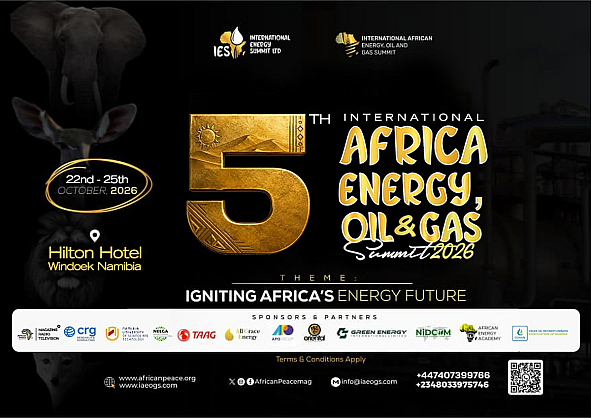
The organizing committee of the International African Energy, Oil and Gas Summit (IAEOGS 2026) is proud to announce a monumental lineup of hosts, strategic partners, and premium sponsors for the upcoming 2026 summit.

IAEOGS 2026 is the definitive platform where the global energy industry meets Africa's opportunity. Scheduled for October 20–24, 2026, at the Hilton Hotel in Windhoek, Namibia, this edition serves as the ultimate hub for deal-making, high-level networking, and cross-continental partnerships.

A Unified Coalition of Organizers and Co-Hosts

The summit is organized by International Energy Summits Ltd, alongside African Energy World, African Energy Vault Ltd, African Peace Magazine UK, and the African Energy Academy Ltd serving as principal strategic partners.

To anchor this edition in regional excellence, a powerful academic and advisory consortium has stepped in as official co-hosts. This landmark convention is executed in direct partnership with:

  • Namibia University of Science and Technology (NUST; ILLH), as co Host.
  • Network of Excellence on Land Governance in Africa (NELGA)
  • CRG Research & Consulting Ltd (CRG), based in Namibia and South Africa.

This academic-industry alliance ensures that the summit's dialogues on infrastructure development, energy transitions, and land governance are backed by world-class local research and sustainable policy frameworks.

CORAN Steps in as Strategic Partner

Expanding the summit's downstream and midstream capabilities, the Crude Oil Refinery-owners Association of Nigeria (CORAN) has officially joined IAEOGS 2026 as an Official Strategic Partner. As Africa shifts its focus toward domestic refining capacity, energy independence, and intra-continental trade under the AfCFTA, CORAN's presence brings major private-sector refinery owners and modular operators to the table. This partnership directly connects West African processing expertise with Southern Africa's massive upstream exploration boom.

Heavyweight Financial Backing: Gold Sponsors Announced

Solidifying the economic momentum of the event, two major industry giants have officially stepped forward as Gold Sponsors:

  • Green Energy International Ltd
  • Oriental Oil and Gas Services Ltd

Their corporate backing guarantees a high-yield environment for B2B deal-making, project financing discussions, and technological showcase exhibitions.

"If you are serious about securing deals, driving policy, and capturing real momentum in Africa's multi-billion-dollar energy sector, IAEOGS 2026 is where it happens," said Prudence Ramotso. "By combining the corporate strength of CORAN, Green Energy International, and Oriental Oil with the institutional prestige of NUST, NELGA, and CRG, we are bridging the gap between raw resources, academic intellect, and global capital."

Event Details & Opportunities

Over five days, international delegates, energy ministers, and engineering pioneers will tackle critical issues, including deepwater exploration assets, modular refining infrastructure, local content frameworks, and green hydrogen integration.

Registration, corporate sponsorship tiers, and exhibition booth spaces are filling up rapidly. To align your brand with these continental leaders or to secure delegate passes, visit the official summit portal at www.IAEOGS.com/ 

Issued by:
The IAEOGS 2026 Organizing Committee
August 8, 2026

Distributed by APO Group on behalf of African Peace Magazine.

Media Contacts: 
Prudence Ramotso
Group Head Events & International Affairs
+2348033975746 | +447407399766, |+27651766722 | +2648123522
info@iaegos.com | info@iaegos.com

Websites:
https://AfricanPeace.org/ 
https://AfricanOilandGasSummit.com/  
www.IAEOGS.com/ 

Media files
African Peace Magazine
Download logo
Read morePowerhouse Coalition Formed for International African Energy, Oil and Gas Summit 2026 (IAEOGS): Namibia University of Science and Technology (NUST) Co-Hosts, Crude Oil Refinery-owners Association of Nigeria (CORAN) Partners, and Green Energy International & Oriental Oil and Gas Services Sign as Gold Sponsors
7 August 2026

Calls for Urgent Action on Farmworker Equity Schemes

Location: News

Republic of South Africa: The Parliament
Download logo

The Portfolio Committee on Land Reform and Rural Development held a successful stakeholder dialogue this week at Parliament on the State of Farmworkers Equity Schemes in South Africa: Policy Implications and Possible Interventions to address complaints raised in the Farmworker Equity Schemes Petitions.

The committee received extensive submissions from beneficiaries, civil society organisations, researchers and agricultural stakeholders regarding the status of farmworker equity schemes in South Africa and their impact on beneficiaries.

The stakeholder dialogue formed part of the committee's ongoing processes to consider a petition received from a consortium of civil society organisations (including the Legal Resources Centre, Surplus People's Project, Corruption Watch and Support Centre for Land Change) acting on behalf of Farmworker Equity Schemes beneficiaries and members across South Africa.

Stakeholders presented evidence highlighting concerns relating to beneficiary rights, governance failures, access to information, financial accountability, tenure security and the management of public investments made through farm worker equity schemes.

The Chairperson of the committee, Mr Albert Mncwango, said: “One worrying factor was the absence of organised agriculture and commercial farmer partners to equity schemes. Although invited, they did not attend with some submitting apologies related to harvest season and other commitments.”

Presenters argued that many beneficiaries have received little or no meaningful financial benefit despite substantial public funding invested in schemes established on their behalf. Concerns were raised about dividend payments, access to financial records, uncertainty regarding beneficiary rights after retirement or death, and the exclusion of beneficiaries from important decision-making processes.

Civil society organisations called for the development of a National Corrective Action Plan that would include:

  • An independent review of all farm worker equity schemes;
  • Beneficiary-centred redress processes;
  • Independent audits and forensic investigations where necessary;
  • Stronger accountability measures; and
  • Ongoing parliamentary oversight until corrective actions have been implemented.

Some of the agricultural stakeholders, experts and academics present at the dialogue highlighted the practical challenges facing beneficiary-owned farming enterprises, including high production costs, limited access to finance, working capital constraints, and restricted market access. They stressed that land reform beneficiaries require ongoing technical, financial, and institutional support to succeed in a highly competitive agricultural environment.

Another critical consideration for lawmakers is whether the existing legislative instruments for land reform and agricultural development were adequate to meet the challenges. A strong case was made for legislative review, including protections for equity and strategic partnerships.

The committee acknowledged the significant concerns raised during the meeting and noted the importance of hearing directly from beneficiaries and stakeholders affected by these schemes. Members emphasised the need to ensure that land reform interventions achieve their intended objectives of meaningful ownership, economic participation and improved livelihoods for farm workers and their families.

The committee will, in the coming week, continue to consider the submissions and responses from the Minister of Land Reform and Rural Development, the provincial departments of agriculture and the Land Bank. Following this process, it will develop its recommendations to strengthen accountability, improve implementation and ensure that beneficiaries derive lasting benefits from farm worker equity schemes.

Distributed by APO Group on behalf of Republic of South Africa: The Parliament.

Read moreCalls for Urgent Action on Farmworker Equity Schemes
7 August 2026

High Student Accommodation Costs Making Higher Education Unaffordable

Location: News

Republic of South Africa: The Parliament
Download logo

The Chairperson of the Portfolio Committee on Higher Education, Mr Tebogo Letsie, has warned that the high cost of student accommodation is making education extremely expensive and could exclude poor students from accessing higher education in South Africa.

Speaking during an oversight visit to the University of Mpumalanga yesterday, the Chairperson raised a concern that student accommodation has been turned into a huge profit-making scheme by private accommodation providers across the country.

“Education is a social good, but we have people who decide they are going to make huge profits. The exorbitant cost of student accommodation is making education unaffordable, this is tactical exclusion for the poor,” he said.

Some accommodation providers charge students more than the National Student Financial Aid capped rates forcing students to pay the difference, or leaving them with huge debts to the university, in cases when the institutions cover that amount on their behalf.

To try find solutions to the challenges, the committee has organised a colloquium on student accommodation to be held on 28 August 2026, and invited the Competition Commission, the Estate Agency Affairs Board, NSFAS and other relevant stakeholders to attend.

Distributed by APO Group on behalf of Republic of South Africa: The Parliament.

Read moreHigh Student Accommodation Costs Making Higher Education Unaffordable
7 August 2026

The European Union Scales up Humanitarian Support in Zimbabwe

Location: News

European Union External Action: The Diplomatic Service of the European Union
Download logo

​The European Union is reinforcing its support with USD 345,000 in humanitarian aid to contribute to the support to the increased number of Zimbabweans returnees fleeing violence in South Africa and to strengthen Zimbabwe's response to a surging cholera outbreak. The funding will help provide life-saving assistance to thousands in urgent need.

The EU is supporting Zimbabwe Red Cross Society in assisting over 5,000 vulnerable returnees from South Africa following violence targeting foreign nationals. Between April and 28 July. almost 110 thousand people have crossed back into Zimbabwe, placing significant pressure on reception facilities at Beitbridge Border Post. Many returnees are spending nights at the reception centre while waiting for transport home, facing cold winter temperatures and limited shelter. This support intends to join forces with the ongoing Government-led efforts and other partners to assist returnees at Beitbridge and with transport services.

The EU funding will reinforce the efforts of the Zimbabwe Red Cross Society in delivering much-needed relief including emergency shelter, food, blankets, clean water, healthcare, hygiene support, and essential relief supplies. The operation will also provide psychosocial support, protection services, and Restoring Family Links (RFL), helping families reconnect with loved ones. The humanitarian response prioritizes support for women and children, older persons, people with disabilities, and others with specific needs. Women and girls, who constitute an estimated 65 per cent of the returning population, will receive targeted support to address their specific health, protection, and dignity needs.

The cholera outbreak, first detected in Rushinga District in January 2026, has since spread to several districts in Manicaland and Midlands provinces. Since then, transmission has been reported in Nyanga, Mutasa, Mutare City, Chipinge, Chimanimani and Zvishavane, with mining communities and border areas emerging as major hotspots. Limited access to clean water, sanitation, and hygiene services in these areas continues to increase the risk of further transmission. 

In response to the cholera outbreak, the EU funding will provide 88,200 people with anticipatory measures and response, such as training and deploying volunteers to strengthen community surveillance, early case detection and referral, hygiene promotion, household water treatment, a rapid response strategy to mitigate cholera outbreaks, and community engagement in the affected districts.

The two operations will run for six months and will be conducted in coordination with the Government of Zimbabwe, the IFRC, United Nations agencies, NGOs and other stakeholders.

Distributed by APO Group on behalf of European Union External Action: The Diplomatic Service of the European Union.

Read moreThe European Union Scales up Humanitarian Support in Zimbabwe
6 August 2026

Seychelles: Cabinet Business, Thursday 6 August, 2026

Location: News

State House Seychelles
Download logo

President Dr Patrick Herminie chaired a scheduled meeting of the Cabinet on Wednesday 5th August, during which a number of legal and policy memoranda were approved.

Cabinet approved Seychelles, jointly with Mauritius, entering into and signing a Multi-Client Seismic Survey Agreement with Viridien for the acquisition of geological and geophysical data within the Joint Management Area of the Extended Continental Shelf in the Mascarene Plateau Region. The survey will improve understanding of the area's seabed and subsoil resources and support evidence-based decisions on their potential, while ensuring that any activities are undertaken in accordance with applicable environmental, legal and regulatory requirements.

Cabinet approved the proposal to remunerate the Accounts Receivable Irrecoverable Debts Write-Off Committee and the Irrecoverable Government Loans & Debts Write-Off Committee in accordance with the Government's existing remuneration framework. The measure is intended to strengthen oversight, due diligence, transparency and accountability in the assessment and write-off of irrecoverable government debts and loans, with the associated expenditure to be accommodated within the Ministry's approved budget and available budgetary provisions.

Cabinet approved the policy options presented by the Ministry of Finance, Economic Planning, Trade and Investment to address the conflict between the Immovable Property Tax Act and the non-discrimination provisions of certain Double Taxation Avoidance Agreements (DTAAs), particularly the Seychelles–South Africa DTAA. This includes the temporary exemption of South African nationals and nationals of countries with similar provisions, pending the renegotiation of the affected DTAAs, and the implementation of the necessary legal, policy and administrative measures.

Cabinet approved in principle Seychelles' hosting of the Southern African Broadcasting Association (SABA) Annual General Meeting and Broadcasters Convention – Southern Africa, scheduled for 22–26 October 2026, with the Seychelles Broadcasting Corporation (SBC) serving as the Host Institution. The necessary preparatory and inter-agency arrangements were also endorsed to facilitate the successful hosting of the regional event, which is expected to bring together senior broadcasting and media stakeholders from across the SADC region and enhance Seychelles' regional profile and engagement in broadcasting.

Cabinet approved the Approved the designation of the Ministry of Foreign Affairs and the Diaspora as the custodian Ministry for the African Peer Review Mechanism (APRM) in Seychelles. The Ministry was also mandated to establish and operationalise the APRM National Structures, with all Ministries, Departments and Agencies directed to support the process to strengthen good governance, transparency, accountability and Seychelles' engagement within the African Union governance framework.

Cabinet approved the proposed organisational structures for the Secretariat for Science, Technology and Innovation (SSTI) and the National Institute for Science, Technology and Innovation (NISTI), effective August 2026. The approved framework establishes clear governance and reporting arrangements, separating national policy leadership from programme implementation to strengthen accountability and coordination. The decision will enhance the delivery of science, technology and innovation initiatives, support research and entrepreneurship, and reinforce Seychelles' transition towards a knowledge-based, innovation-driven economy, in line with the National Institute for Science, Technology and Innovation Act, 2025.

Cabinet approved the establishment of a National Science, Technology and Innovation (STI) Integrated Governance System to strengthen coordination, collaboration and implementation of science, technology and innovation initiatives across Government, the private sector, academia and other stakeholders. The new governance system, established under the National Institute of Science, Technology and Innovation (NISTI) Act, 2025, will provide a structured framework for improved policy coordination, enhanced institutional linkages, and more effective delivery of the national STI agenda in support of Seychelles' socio-economic development.

Cabinet discussed the findings and recommendations of the 2026 La Digue Transport Assessment, including proposed policy, regulatory and enforcement measures to strengthen the management of the island's transport system. It was agreed that the proclamation of roads should proceed, with the public informed accordingly; the arrival of approved buggies and pick-up vehicles destined for La Digue should be allowed onto the island, while no new applications for additional buggies or electric vehicles would be approved until further notice. A scientific carrying capacity study will also be undertaken to determine the island's sustainable limits for vehicles, tourism and future development, and to guide future policy decisions.

Distributed by APO Group on behalf of State House Seychelles.

Read moreSeychelles: Cabinet Business, Thursday 6 August, 2026
6 August 2026

Calls for Urgent Action to Strengthen SA’s Response to FMD

Location: News

Republic of South Africa: The Parliament
Download logo

The Portfolio Committee on Agriculture has concluded its engagements with the Minister of Agriculture, provincial MECs for agriculture and senior officials from the national and provincial departments of agriculture on provincial interventions to combat Foot-and-Mouth Disease (FMD).

The committee called for urgent measures to address structural weaknesses that continue to undermine South Africa's ability to contain and ultimately eradicate the disease. It welcomed the progress made in scaling up the national vaccination programme, including government's procurement of 17 million vaccine doses, with a further four million doses expected, as well as the decision to broaden vaccine distribution through the private sector and expand the pool of authorised vaccinators. It said these developments represent an important step towards a more coordinated national response.

The committee further commended several provinces for the progress achieved despite severe resource constraints. It noted that the North West has vaccinated close to 85 per cent of its cattle population, while both the Free State and KwaZulu-Natal have surpassed the 50 per cent vaccination mark, with KwaZulu-Natal having vaccinated more than 1.3 million cattle. The committee acknowledged that provinces with large livestock populations, including KwaZulu-Natal, Free State and the Eastern Cape, require sustained resources to complete vaccination programmes.

The committee expressed concern, however, that the Eastern Cape which has the country's largest cattle herd of approximately 3.6 million cattle, has vaccinated fewer than 40 per cent of its livestock and requires urgent national support to accelerate its vaccination campaign.

While recognising the progress made across provinces, including Gauteng, Limpopo, Mpumalanga, the Northern Cape and the Western Cape, the committee emphasised that South Africa's response to FMD remains constrained by longstanding structural challenges.

Among the committee's major concerns is the severe shortage of veterinarians, Animal Health Technicians, data capturers and other technical personnel. Members of the committee heard that high vacancy rates continue to delay vaccination campaigns, disease surveillance, reporting and data management placing additional pressure on already limited veterinary capacity.

The committee also noted that inadequate funding remains one of the greatest obstacles to effective disease control. Provinces consistently reported that current budget allocations are insufficient to sustain vaccination campaigns, surveillance activities, quarantine operations, livestock movement control and disease monitoring. The committee stressed that sustainable funding must become a national priority if South Africa is to restore its animal health status, safeguard food security and protect export markets.

The committee further observed uneven implementation of the Livestock Identification and Traceability System (LITS), with some provinces reporting shortages of electronic identification tags, computer equipment, technical support and personnel. The committee reiterated that an effective traceability system is fundamental to disease control, market access and international confidence in South African livestock products.

Members also raised concerns about weaknesses in enforcement, including illegal livestock movements, porous provincial and international borders, inadequate quarantine infrastructure, the shortage of municipal animal pounds and inconsistent compliance with disease reporting requirements. The Committee said these challenges require stronger coordination between national, provincial and local government, together with law enforcement agencies.

The committee welcomed the department's commitment to modernising South Africa's animal health system through the implementation of regulations under the Animal Health Act and the strengthening of livestock identification systems.

The Acting Chairperson of the Committee, Dr Nobuhle Nkabane, said the engagements demonstrated that vaccine availability alone would not eradicate FMD. “Success will require adequate funding, skilled personnel, modern traceability systems, strengthened border management, effective enforcement, improved infrastructure and sustained cooperation between all spheres of government and industry stakeholders,” she said.

The committee has requested regular progress reports from the department on vaccine procurement and distribution, provincial vaccination performance, recruitment of veterinary personnel and Animal Health Technicians, implementation of the Livestock Identification and Traceability System, strengthening of quarantine infrastructure and municipal animal pounds, progress in finalising regulations under the Animal Health Act, and implementation of the long-term national roadmap towards FMD control and eventual eradication.

The committee further noted that although FMD has been classified as a disaster, this is distinct from the declaration of a state of disaster. The committee supports the declaration of FMD as a disaster to enable the release of emergency funding and additional resources to assist affected provinces and vulnerable farmers who continue to suffer significant livestock losses.

The committee reaffirmed its commitment to robust oversight while supporting all efforts aimed at protecting South Africa's livestock industry, safeguarding food security, preserving export markets and sustaining rural livelihoods.

Distributed by APO Group on behalf of Republic of South Africa: The Parliament.

Read moreCalls for Urgent Action to Strengthen SA’s Response to FMD
6 August 2026

Committee on Science Visits National Integrated Cyber Infrastructure System

Location: News

Republic of South Africa: The Parliament
Download logo

The Portfolio Committee on Science, Technology and Innovation conducted an oversight visit to the National Integrated Cyber Infrastructure System (NICIS) at the Council for Scientific and Industrial Research (CSIR) in Rosebank to assess NICIS's infrastructure, capabilities and its contribution to South Africa's digital transformation agenda.

The NICIS promotes scientific and industrial development through the provision of high-performance computing capability, high-speed network connectivity, and a national research data infrastructure. These capabilities are integrated into globally connected systems and local research infrastructure, providing seamless access to computing, networking, and data services for South Africa's research and education communities.

The NICIS is a national initiative of the Department of Science, Technology and Innovation and is implemented by the CSIR. The Centre for High Performance Computing is one of the three pillars of the NICIS and provides high-performance computing resources and services to researchers in academia, government, and industry.

The other two pillars are the South African National Research Network which provides high-speed connectivity and advanced networking services to the research and education sector, and the Data Intensive Research Initiative of South Africa which provides national research data infrastructure and services that support sound data management practices and enable data-driven scientific and engineering discoveries.

Key findings:

  • The Centre for High Performance Computing (CHPC) houses Lengau, South Africa's flagship supercomputer and one of the fastest supercomputers on the African continent. The system can process massive volumes of data within seconds, enabling advanced scientific research, innovation, and complex computational analysis.
  • The NICIS supports the Electronic Vaccination Data System, enabling secure vaccination registration, certification, and real-time health data management.
  • Digital Government and Data Sovereignty: NICIS provides secure digital infrastructure that protects critical government data, strengthens cybersecurity, and supports South Africa's digital sovereignty.
  • Public Sector Digital Transformation: NICIS enables digital public services through high-performance computing and secure data infrastructure, improving service delivery across government and healthcare.
  • Industry, Research and Economic Development: NICIS supports key sectors, including engineering, ICT, biotechnology, mining, and aerospace, through advanced computing, artificial intelligence, and big data capabilities.
  • Artificial Intelligence and Advanced Computing: The CHPC's Lengau supercomputer delivers world-class computing power, positioning South Africa as a leader in AI, scientific computing, and data-intensive research in Africa.
  • National Research and Education Infrastructure: Through SANReN and DIRISA, NICIS provides high-speed connectivity and secure data services to universities, TVET colleges, science councils, and research institutions.
  • Secure National Data Storage: DIRISA operates a secure national data centre with the capacity to store critical research and government data, supporting improved data governance and national digital resilience.

The committee noted that the CHPC is positioning South Africa as a leader on the African continent in the implementation of Artificial Intelligence (AI) technologies to support e-government, higher education and research institutions, industry, and communities.

The committee observed that the CHPC requires expansion, as the current facility has reached its maximum capacity and the available infrastructure is insufficient to accommodate future growth.

The committee noted the continuous need for investment in the CHPC, the South African National Research Network, and the Data Intensive Research Initiative of South Africa to upgrade and modernise their infrastructure.

Sustained investment is essential to ensure that these national cyber infrastructure platforms keep pace with rapidly evolving digital technologies, growing demand for computing and data services, and global state-of-the-art standards. Such investment will strengthen South Africa's technological sovereignty by reducing reliance on foreign cloud services and international data storage, while expanding secure, locally hosted cloud and data storage capabilities for government, research institutions, and industry.

The committee's oversight visit reaffirmed NICIS' critical role in advancing South Africa's digital infrastructure and innovation ecosystem. The committee recognised that continued investment in high-performance computing infrastructure and secure national data storage is essential to strengthening scientific research, supporting digital public services, driving artificial intelligence capabilities, and enhancing the country's global competitiveness in science, technology, and innovation.

Distributed by APO Group on behalf of Republic of South Africa: The Parliament.

Read moreCommittee on Science Visits National Integrated Cyber Infrastructure System
5 August 2026

New Monthly HIV Prevention Pill

Location: News

United Nations Programme on HIV/AIDS (UNAIDS)
Download logo

An oral monthly pill to prevent HIV, alimatravir (also known as MK-8527), produced by Merck Sharp & Dohme (MSD), is currently undergoing promising phase three trials. If the trials are successful, this development could provide another tool in the HIV prevention toolbox and a positive step towards ending AIDS. 

UNAIDS commends MSD for its early access plan to help partners prepare for manufacturing and delivery. MSD has announced voluntary licensing agreements with generic pharmaceutical manufacturers, including three in Africa, to produce the once-monthly oral HIV prevention candidate. Early planning for financing, demand forecasting, accessibility and regulatory readiness will be as important as scientific innovation to ensure that new HIV prevention technologies reach people rapidly and equitably. 

"Scientific innovation has the power to change the trajectory of the AIDS pandemic, but only if it reaches everyone who needs it," said Angeli Achrekar, Deputy Executive Director of UNAIDS. "If alimatravir proves to be safe and effective and receives regulatory approval, manufacturing must be rapidly scaled up and the product made affordable and accessible in low- and middle-income countries from day one. No one should have to wait years for life-saving HIV prevention." 

UNAIDS commends MSD for the proposed partnerships with Aspen Pharmacare in South Africa, Quality Chemicals Industries Limited in Uganda and Universal Corporation Limited in Kenya. If the trials are successful, the agreement will present an important opportunity to strengthen Africa's local pharmaceutical manufacturing capacity. It will also bring innovative HIV prevention options closer to the people who need them most, supported by sustainable market development and technology transfer. 

The announcement aligns with UNAIDS' Global AIDS Strategy's call to ensure equitable access to innovation and the strengthening of health sovereignty through local production, regional manufacturing and pooled procurement commitments. This was reaffirmed by countries in June this year in the 2026 Political Declaration on HIV and AIDS. 

Despite remarkable progress in scientific innovations in recent years, including antiretroviral-based HIV prevention options, millions of people—particularly adolescent girls and young women, marginalized populations and other people at heightened risk of HIV—still lack access to effective HIV prevention options.  

In 2025, 1.2 million people acquired HIV, and more than half a million people (570 000) died of AIDS-related illnesses. Around 3100 adolescent girls and young women acquire HIV every week in sub-Saharan Africa. Expanding choice through new prevention technologies, alongside sustained investment in community-led services and strong health systems, will be essential to ending AIDS as a public health threat by 2030. 

“UNAIDS welcomes partnerships that link clinical research, regional manufacturing and equitable access to HIV services,” said Ms Achrekar. “UNAIDS calls on governments, pharmaceutical companies, global health partners and communities to work together to accelerate production, ensure affordable pricing and remove barriers that delay access to new HIV prevention tools across all regions of the world.” 

UNAIDS will continue working with countries and partners to monitor equitable access, support affordable pricing, strengthen costing and resource planning, and advance sustainable financing pathways for the introduction and scale-up of all new HIV prevention technologies.

Distributed by APO Group on behalf of United Nations Programme on HIV/AIDS (UNAIDS).

Read moreNew Monthly HIV Prevention Pill
5 August 2026

South Sudan Oil & Power Returns as South Sudan’s Premier Investment Platform

Location: News
Energy Capital & Power

South Sudan Oil & Power (SSOP) will return to Juba on November 24-25, 2026, reaffirming its position as the country's official energy investment event and premier meeting place for stakeholders shaping South Sudan's energy future. Fully endorsed by the Ministry of Petroleum, the seventh edition will convene senior government representatives, investors, international and national oil companies, financiers, service providers and development partners to advance investment across South Sudan's energy sector.

Held under the theme "Resource Renaissance – Energy-Fueled Growth for a New Generation," SSOP 2026 marks the return of the country's flagship energy investment event at a pivotal moment for the industry. As South Sudan works to maximize the value of its natural resources, strengthen energy and export infrastructure and expand economic opportunities beyond the upstream sector, the conference will serve as a platform for securing the partnerships and investment needed to support long-term industrial growth, energy security and national development.

South Sudan's oil sector is entering a new phase of recovery and investment, with production gains, renewed operational activity and infrastructure restoration driving momentum across the market. Operators are advancing field optimization and rehabilitation programs, with Greater Pioneer Operating Company recently recording its highest production in two decades at more than 60,000 barrels per day, while Sudd Petroleum Operating Company is pursuing production growth at Block 5A. Dar Petroleum Operating Company continues to expand activity across its producing assets. In March 2026, the company announced a discovery at the Al-Nahla field, improving production flows from Blocks 3 and 7.

Exploration represents another growth frontier for the country. While South Sudan holds up to 3.5 billion barrels of estimated reserves, approximately 90% of these resources remain undeveloped. The government seeks to raise these numbers by attracting investment across the entire oil value chain and facilitating greater exports.

With oil remaining the backbone of South Sudan's economy, the government is prioritizing investment that sustains production growth, strengthens export resilience, develops local content and unlocks greater value across the energy value chain. SSOP 2026 will provide investors with direct access to South Sudan's key energy stakeholders, including the Ministry of Petroleum, national oil company Nilepet and the country's leading operators, while fostering engagement with African energy institutions and national oil companies, including South Africa's South African National Petroleum Company, alongside the broader international investment community.

Building on the success of previous editions, SSOP has established itself as South Sudan's leading platform for commercial engagement and strategic dialogue. The 2023 edition welcomed more than 600 delegates from 24 countries, including six government ministers, and resulted in five strategic agreements spanning upstream exploration, drilling capacity expansion, mining cooperation and regional energy collaboration. Bringing together stakeholders from across East Africa alongside partners from the U.S., China, Saudi Arabia, Canada, Egypt, Turkey and Norway, the conference reinforced South Sudan's role as a regional investment destination and demonstrated its ability to translate dialogue into tangible commercial outcomes.

As South Sudan advances its long-term development agenda, SSOP 2026 will serve as a catalyst for new investment, strategic partnerships and regional cooperation. By bringing together government leaders, operators, investors and technology providers, the conference will help unlock the capital and expertise needed to transform South Sudan's resource potential into lasting economic value.

Distributed by APO Group on behalf of Energy Capital & Power.

Media files
Energy Capital & Power
Download logo
Read moreSouth Sudan Oil & Power Returns as South Sudan’s Premier Investment Platform
5 August 2026

Emirates and South African Airways Expand Codeshare Partnership

Location: News
The Emirates Group

Emirates (www.Emirates.com) and South African Airways (SAA) today announced an expansion of their codeshare partnership, enabling access to nine cities and establishing the start of a reciprocal codeshare agreement between both carriers. The expanded partnership opens more destinations across central and southern Africa, simplifying connectivity for customers.

Since launching their codeshare agreement, Emirates and SAA have operated on a unilateral basis, with SAA placing its code on Emirates-operated flights between Dubai and Johannesburg, Cape Town, and Durban, as well as interline access to 68 Emirates destinations worldwide via Dubai. With regulatory approvals secured, the new agreement will see Emirates place its code on SAA-operated flights, extending its network deeper into South Africa and neighbouring countries.

The expansion covers nine new routes including three domestic South African links connecting Johannesburg with Cape Town, Durban and Port Elizabeth, in addition to six regional routes linking Johannesburg with Kinshasa (Democratic Republic of Congo), Gaborone (Botswana), Windhoek (Namibia), Lusaka (Zambia), Harare (Zimbabwe) and Victoria Falls (Zimbabwe).

Emirates and South African Airways have been partners for almost 30 years, marking one of the longest partnerships in Emirates' portfolio. Since 1997, millions of passengers have benefitted from the partnership, with frictionless, single-ticket travel. This extension to the codeshare underscores the ongoing commitment to providing greater access, convenience and choices to travellers from South Africa and neighbouring countries.

The move builds on Emirates' longstanding commitment to providing reliable, consistent connectivity for passengers travelling to, from and within South Africa and the broader region. It also responds to strong demand for travel to South Africa from key international markets, particularly across Europe, while providing customers with greater access to destinations throughout southern and central Africa.

Adnan Kazim, Emirates Deputy President and Chief Commercial Officer, said, “This reciprocal codeshare partnership with South African Airways is a natural evolution of a relationship that has served our customers well for many years. By placing our code on SAA's domestic and regional network, we are opening up seamless access to destinations across South Africa and neighbouring countries, backed by the reliability and consistency our customers expect from Emirates. It reinforces our long-term commitment to South Africa and wider region, and our confidence in the continent's continued growth.”

Matshela Seshibe, Acting Group CEO of SAA, said, “The expansion of our partnership with Emirates marks an important milestone in SAA's strategy to strengthen connectivity across Africa while enhancing access to global markets. Through this reciprocal codeshare agreement, customers will benefit from a more seamless travel experience and greater choice across our combined networks. This partnership is about more than connecting destinations. It is about connecting people, businesses and opportunities across the continent and beyond. By combining SAA's growing African network with Emirates' extensive global reach, we are creating greater value for our customers and reinforcing Johannesburg's role as a key gateway for travel, trade and tourism in Africa.”

Emirates in South Africa

Emirates has been flying to South Africa since 1995, starting with its inaugural flight to Johannesburg. Since then, the airline has scaled operations, increased frequencies and gateways to Cape Town and Durban and served over 20 million passengers to and from the market. Currently, Emirates operates 56 weekly flights across the three gateways. South Africa is also the only market on Emirates' Africa network to receive all three widebody aircraft types: the Boeing 777, the Airbus A380 and the A350.

As part of its commitment to offering best-in-class products to travellers in South Africa, the airline's award-winning Premium Economy experience is available on flights between Dubai and both Cape Town and Johannesburg.

Customers travelling on the new codeshare routes will benefit from convenient single-ticket bookings, coordinated schedules and through-checked baggage to their final destination.

Tickets can now be booked on www.Emirates.com, via travel agents or at Emirates' retail stores.

Distributed by APO Group on behalf of The Emirates Group.

About South African Airways:
South African Airways (SAA) is the national carrier of South Africa, committed to delivering safe, reliable, and world-class air travel while contributing to the country's socio-economic development.

With 92 years in the skies, SAA links domestic, regional, and international destinations. SAA flies from Johannesburg to Abidjan, Accra, Dar es Salaam, Durban, Cape Town, Gqeberha, Harare, Kinshasa, Lusaka, Lubumbashi, Lagos, Mauritius (from Johannesburg and Cape Town), Windhoek, Victoria Falls, São Paulo (from Cape Town and Johannesburg), and Perth.

Since first taking to the skies in 1934, SAA has grown to include a passenger airline, a cargo transport service, and related services provided through its wholly owned subsidiaries, SAA Technical (SAAT) and Air Chefs. SAAT delivers high-quality maintenance services, major airframe checks, engine overhauls, mechanical components, avionics, and line maintenance to SAA and third parties. Air Chefs provides in-flight, airline lounges, and other catering services to the airline and third parties.

About Emirates:
Emirates began operations in 1985 and has grown into one of aviation's most awarded airlines. The world's largest international airline as measured in revenue passenger kilometres RPKMs), it connects travellers to Dubai, and through Dubai to more than 150 destinations across six continents on the world's largest fleets of Boeing 777s and Airbus A380s, alongside its newly introduced Airbus A350s. Emirates remains synonymous with service and product excellence at every touchpoint, from its award-winning cabin experiences and regionally inspired cuisine to its industry-leading inflight entertainment system, ice. Visit www.Emirates.com for more information

Media files
The Emirates Group
Download logo
Read moreEmirates and South African Airways Expand Codeshare Partnership
4 August 2026

Africa’s Leading Energy Companies and Projects Shortlisted for AEW 2026 Awards

Location: News

African Energy Chamber
Download logo

The nominees for the African Energy Week (AEW) 2026 recognize the companies, projects and individuals driving innovation, investment and growth across Africa's energy sector. Featuring 12 categories spanning the full energy value chain, the awards celebrate the achievements shaping the continent's energy future.

Winners will be announced during the AEW 2026 Gala Dinner & Awards Ceremony, taking place on Tuesday, October 13, in Cape Town. The ceremony will bring together ministers, industry leaders, investors and technology providers to recognize excellence in upstream, downstream, gas, power, local content, technology and corporate leadership.

African Service Provider of the Year

  • GeoEnergy Group – for advancing digital transformation through the Egypt Upstream Gateway while strengthening local technical expertise across Africa.
  • One Titanium – for delivering specialized services supporting Africa's energy industry.
  • KAESO – for expanding indigenous engineering and technical services across African markets.
  • SONILS – for strengthening logistics and supply chain services for integrated energy projects.
  • NIPEX – for enhancing procurement and local supplier participation in Nigeria's oil and gas sector.

International Service Provider of the Year

  • NOV – for supporting major energy developments with advanced engineering and equipment solutions.
  • Geoex MCG – for nearly two decades of supporting Equatorial Guinea's offshore exploration through seismic data acquisition and licensing support.
  • Africa Global Logistics – for expanding integrated logistics solutions supporting energy projects across Africa.
  • Technip Energies – for delivering engineering expertise across major African energy developments.
  • SBM Offshore – for advancing offshore production through industry-leading FPSO solutions.
  • SLB – for deploying advanced technologies and technical services across Africa's upstream sector.

Local Content Champion (African Companies)

  • Seplat Energy – for maintaining a 98% Nigerian workforce while investing in local talent development and procurement.
  • Copia Group of Companies – for strengthening indigenous participation across Angola's energy value chain.
  • Renaissance Africa Energy – for expanding Nigerian ownership and local participation in upstream operations.
  • Cabship – for growing Angolan maritime and offshore services through locally driven operations.

Local Content Champion (International Companies)

  • TotalEnergies Uganda – for developing the Tilenga Academy to train Uganda's future oil and gas workforce.
  • NOV – for supporting local skills development and supplier participation across African markets.
  • Woodside Energy – for advancing local workforce development through its African operations.
  • Africa Global Logistics – for building African logistics capacity through local employment, training and supplier development.

E&P Leader of the Year

  • Shell – for the Merlin-1X discovery in Namibia and the Velox-1X discovery offshore Egypt, reinforcing its exploration leadership.
  • Renaissance Africa Energy & NNPCL – for the JK-004 discovery in Nigeria's OML 74, confirming multiple hydrocarbon-bearing reservoirs.
  • Murphy Oil – for the Bubale-1X light oil discovery offshore Côte d'Ivoire in Block CI-709.
  • Eni – for major discoveries in Côte d'Ivoire and Angola that expanded Africa's offshore resource base.
  • OMV & Libya's National Oil Corporation – for the Eassar commercial oil discovery in Libya's Sirte Basin.

Downstream & Infrastructure Leader of the Year

  • Dangote Refinery – for transforming Nigeria's refining capacity and reducing dependence on imported fuels.
  • Cabinda Oil Refinery – for expanding Angola's domestic refining capacity as part of its downstream growth strategy.
  • East African Crude Oil Pipeline – for advancing one of Africa's largest cross-border energy infrastructure projects.
  • African Atlantic Gas Pipeline – for progressing a strategic regional gas corridor linking West Africa with Morocco and Europe.

Deal of the Year

  • Trafigura – for its $1 billion oil prepayment agreement with the Republic of Gabon.
  • Levene Energies – for acquiring a 30% stake in Axxela through the Bluecore consortium, strengthening indigenous ownership.
  • Heirs Energies – for acquiring a 20.07% stake in Seplat Energy in a landmark African-led transaction.
  • UTM FLNG – for advancing Nigeria's first floating LNG project through a major multi-party development agreement.

CSR Project of the Year

  • Mozambique LNG – for supporting flood recovery efforts benefiting approximately 190,000 people in southern Mozambique.
  • South African National Petroleum Company – for expanding STEM education through its Axium STEMI initiative in the Eastern Cape.
  • Kosmos Energy Ghana – for empowering entrepreneurs through the Kosmos Innovation Center.
  • Sonangol – for supporting youth entrepreneurship through its SonaJovem program.
  • Eni – for expanding clean cooking initiatives across Africa.
  • Oando Foundation – for improving education through its Adopt-A-School Initiative in Nigeria.

Gas Monetization Award

  • Levene Energies – for advancing gas commercialization and infrastructure-led industrial development.
  • NOV APL Norway – for supporting the Nguya FLNG project and expanding offshore LNG production in Congo.
  • Congo LNG – for advancing the Tango and Nguya FLNG projects to strengthen the Republic of Congo's LNG industry.
  • Amufert – for developing Angola's flagship ammonia and urea project utilizing domestic natural gas.

Technology Innovator

  • TotalEnergies – for developing the SUBLIIM digital platform to optimize subsea field layouts.
  • SOLA Group – for reaching financial close on South Africa's largest private hybrid solar and battery storage project.
  • Shearwater – for deploying its Pearl ocean-bottom node technology during its first commercial survey in Angola.
  • TGS & Starlink – for redefining seismic data transfer through satellite-enabled connectivity.

Power Africa Developer

  • TotalEnergies – for inaugurating Africa's largest hybrid renewable energy project.
  • Siemens Energy – for expanding gas turbine and grid infrastructure supporting Africa's growing power demand.
  • Globeleq – for growing its renewable energy portfolio across wind, solar, geothermal and battery storage.
  • Infinity Power – for expanding one of Africa's largest renewable energy development portfolios.E

Distributed by APO Group on behalf of African Energy Chamber.

Read moreAfrica’s Leading Energy Companies and Projects Shortlisted for AEW 2026 Awards
4 August 2026

AEW 2026 Future Economies Forum: How Africa Can Turn 850 TW of Energy Potential into the World’s Next Industrial Boom

Location: News

African Energy Chamber
Download logo

The Zayed Sustainability Prize will host a flagship session at the Future Economies Forum during African Energy Week (AEW) 2026, taking place from October 12–16 in Cape Town. The "From Power to Position: Energy, Industry and Sovereignty in Africa's Next Economy" discussion will examine how Africa converts proven innovation into bankable industrial investment.

For more than 20 years, the Zayed Sustainability Prize has funded technologies and supported innovators operating in some of the world's most resource-constrained environments. The model is simple: demonstrate measurable impact first, reduce investment risk second and unlock larger pools of private and public capital thereafter.

That approach directly addresses one of Africa's biggest investment challenges. The continent holds an estimated 850 TW of theoretical wind and solar potential, enough to reshape global energy markets. Yet only a fraction of that resource has attracted commercial financing, despite competitive renewable economics and abundant natural resources.

Investment momentum is building. Masdar and Africa50 are advancing a $10 billion initiative targeting 10 GW of renewable capacity by 2030, while projects including Egypt's 10 GW wind development and Morocco's planned $27.2 billion, 6 GW green hydrogen complex demonstrate growing industrial ambition.

The session will also examine the capital flowing into Africa's digital infrastructure. The continent currently represents only 0.6%–1% of global data center capacity, yet more than 500 MW is operational and another 890 MW is under development. South Africa's AI data centre market alone is projected to expand from $99.37 million in 2026 to $572.63 million by 2031, reflecting a 41.95% CAGR.

These investments illustrate a broader lesson. AI infrastructure has attracted substantial capital because demand is clear, projects are commercially validated and revenue models are understood. Africa's clean energy opportunity requires the same progression – from proven innovation to investor confidence – before financing can scale.

“This session gets to the heart of Africa's investment challenge. The Zayed Sustainability Prize has spent more than two decades proving that innovation must earn confidence before it attracts capital, and that's the mindset Africa needs to transform its immense clean energy potential into industrial growth, energy sovereignty and globally competitive economies,” says NJ Ayuk, Executive Chairman, African Energy Chamber.

The session reinforces AEW 2026's broader focus on turning Africa's energy resources into long-term economic value. Rather than asking whether capital exists, the discussion is set to examine how proven innovation, effective policy and strategic partnerships can ensure it flows into projects that advance the continent's industrial ambitions.

Distributed by APO Group on behalf of African Energy Chamber.

Read moreAEW 2026 Future Economies Forum: How Africa Can Turn 850 TW of Energy Potential into the World’s Next Industrial Boom
3 August 2026

Seychelles and Venezuela Reaffirm Commitment to Strengthening Bilateral Relations

Location: News
Ministry of Foreign Affairs and the Diaspora, Republic of Seychelles

H.E. Mr. Carlos Federico Feo Acevedo, Ambassador-designate of the Bolivarian Republic of Venezuela to the Republic of Seychelles, paid a courtesy call on the Minister for Foreign Affairs and the Diaspora, Mr. Barry Faure, on Monday, 3 August 2026, as part of his accreditation visit.

The meeting provided an opportunity for the two dignitaries to reaffirm the longstanding diplomatic relations and bonds of friendship between Seychelles and Venezuela. In this context, they acknowledged the solidarity demonstrated by the Government of Seychelles following the earthquakes that affected the Bolivarian Republic of Venezuela in June this year.

Discussions also focused on strengthening bilateral cooperation. The two sides reviewed progress towards the conclusion of a Visa Waiver Agreement and explored opportunities to enhance collaboration in areas of mutual interest, including the Blue Economy, fisheries, climate change, energy, tourism, and education. They underscored the value of fostering cooperation through capacity-building initiatives, technical exchanges, and the sharing of knowledge and best practices.

The meeting further highlighted the shared commitment of Seychelles and Venezuela to the implementation of the Sustainable Development Goals (SDGs). Both countries have integrated the SDGs into their national development strategies, with particular emphasis on ocean governance, sustainable tourism, renewable energy, and inclusive economic growth.

H.E. Mr. Feo Acevedo, who will become the third Ambassador of the Bolivarian Republic of Venezuela accredited to the Republic of Seychelles, will be resident in Pretoria, South Africa.

The Bolivarian Republic of Venezuela and the Republic of Seychelles established diplomatic relations on 15 April 1991.

Distributed by APO Group on behalf of Ministry of Foreign Affairs and the Diaspora, Republic of Seychelles.

Media files
Ministry of Foreign Affairs and the Diaspora, Republic of Seychelles
Download logo
Read moreSeychelles and Venezuela Reaffirm Commitment to Strengthening Bilateral Relations
3 August 2026

Africa Tech Festival Unveils First Speakers for 2026

Location: News
Africa Tech Festival

Africa is entering a new phase of digital investment. Significant capital is flowing into AI infrastructure, cloud platforms, subsea cables, fibre networks and data centres across the continent, governments are shaping AI policy, and enterprises are moving from strategy to implementation. Africa Tech Festival (www.AfricaTechFestival.com), the continent's longest running and most influential technology event, is where these conversations come together. Today, the event unveiled an expanded speaker line-up for its 29th edition, bringing together the leaders shaping Africa's digital future and the decisions driving investment across the continent.

Hon. Solly Malatsi, South Africa's Minister of Communications & Digital Technologies, whose department is a strategic partner of the event, will offer insight into building an inclusive, globally competitive digital economy. Global technology companies are represented by Alex Okosi, Managing Director, Africa, at Google, who will speak to the scale of investment flowing into the continent's cloud and AI infrastructure; Emmanuel Lubanzadio, Africa Lead at OpenAI, focusing on AI adoption and readiness across African markets; and Robert Koen, Managing Director, Sub-Saharan Africa, at Amazon.

They are joined by leaders from Africa's telecommunications sector, including Enzo Scarcella, Chief Consumer Officer at MTN Group; Norbert Prihoda, Chief Executive Officer of Tunisie Telecom; and Daddy Yogo Ngbabendo, Group Vice President, Solutions & Architecture at Airtel Africa.

Also joining the programme are Marcel Louw, Managing Director, Africa, at Digital Realty, bringing a data centre perspective, alongside enterprise leaders Thato Sopeng, Vice President, Information Technology, at Sasol, and Linda Oniwe, Senior Vice President, TMT, Corporate and Investment Banking, at Standard Bank Group.

This speaker line-up reflects the biggest areas of investment and change happening across Africa today: connectivity, data infrastructure, artificial intelligence, cybersecurity, startups and enterprise transformation, and the breadth of sectors, regions and perspectives shaping this year's programme.

David Monaghan, Vice President of Africa Tech Festival, said: "What stands out this year is the pace of collaboration across industries. Investment is flowing, partnerships are forming, and the leaders joining us in Cape Town are turning conversation into action on some of Africa's biggest digital challenges. That's the role Africa Tech Festival plays: bringing people together to get things done."

Many more senior leaders will be announced in the coming months, including ministers, enterprise CIOs, telecom operators, investors and global technology companies.

Africa Tech Festival 2026 marks the event's 29th edition, returning to the Cape Town International Convention Centre from 16 to 19 November, with content and expo sessions running from 17 to 19 November.

Registration for Africa Tech Festival 2026 is now open and can be completed through the official portal (https://apo-opa.co/4pTVq6T).

Distributed by APO Group on behalf of Africa Tech Festival.

About Africa Tech Festival:
Africa Tech Festival is the continent's leading platform for shaping the future of the digital economy. Taking place annually in Cape Town, the festival brings together the full technology ecosystem, from telecoms and infrastructure providers to enterprise leaders, startups, investors and policymakers.

Through six core pillars spanning connectivity, AI, cybersecurity, data centres, digital transformation and the startup ecosystem, Africa Tech Festival delivers a comprehensive view of the trends, challenges and opportunities defining Africa's digital landscape.

The festival combines high level content with large scale exhibition and networking, creating a space where strategy meets execution. Across three days, it convenes global technology leaders, decision makers and innovators to share insight, build partnerships and drive real business outcomes.

Africa Tech Festival is part of Informa Festivals, a division of Informa.

Media files
Africa Tech Festival
Download logo
Read moreAfrica Tech Festival Unveils First Speakers for 2026
3 August 2026

Gold Fields, Moore Global and Mali Chamber of Mines to Lead Gold Growth Dialogue at African Mining Week (AMW) 2026

Location: News
Energy Capital & Power

As African governments and mining companies accelerate efforts to expand gold production and capitalize on strong global demand, African Mining Week (AMW) 2026, taking place October 14–16 in Cape Town, will spotlight the policies, partnerships and investments driving the continent's next phase of growth in the gold sector.

The event will feature a dedicated panel, Expanding Africa's Gold Output, exploring strategies to increase gold production, formalize artisanal and small-scale mining and strengthen investment across the value chain.

The session will be moderated by Matt Banton, Head of Mining at Moore Global, and feature Fousseni Togola, President of the Mali Chamber of Mines, and Benford Mokoatle, Executive Vice President: South Africa at Gold Fields.

The discussion comes as the global gold market continues to strengthen. Gold prices have remained above $4,000 per ounce throughout 2026, supported by sustained central bank demand as countries increase gold reserves to diversify foreign exchange holdings and strengthen financial resilience. Across Africa, central banks in Tanzania, Kenya, Ghana, Uganda, Egypt and Namibia have expanded gold purchase programs, reinforcing demand while creating new opportunities for domestic producers.

African gold-producing nations are responding by introducing reforms aimed at increasing production and improving sector governance. In Mali, the government is strengthening the artisanal and small-scale gold mining sector as part of its strategy to maintain annual gold production above 60 metric tons. In July 2026, the country established the Malian Office of Precious Substances, a new state institution responsible for regulating and formalizing artisanal gold production across approximately 400 mining sites employing nearly two million people. At the same time, Mali continues to strengthen partnerships with major mining companies, including Barrick, B2Gold, Toubani Resources and Cora Gold, to sustain long-term production growth and attract additional investment.

At AMW 2026, Togola is expected to discuss how the Mali Chamber of Mines is supporting these reforms while highlighting the investment opportunities emerging across the country's gold sector. His participation will explore the role of chamber members in expanding production, strengthening local participation and positioning Mali among Africa's leading gold producers.

South Africa is also advancing initiatives to revitalize its gold industry through increased exploration and long-term mine investment. Earlier this year, the government expanded the Junior Mining Exploration Fund to R600 million, improving access to exploration capital for emerging mining companies and supporting efforts to unlock new gold discoveries.

Complementing these national initiatives, Gold Fields is investing R1.714 billion through 2027 to deepen its flagship South Deep Mine, positioning the operation as a long-life production hub well beyond 2030. Gold Fields' Mokoatle is expected to provide an update on the company's long-term investment strategy, highlighting how innovation and sustained capital investment are supporting South Africa's efforts to strengthen gold production.

As investment accelerates across Africa's gold sector, AMW 2026 provides a premier platform to connect governments, producers, investors and service providers, advancing the partnerships and capital needed to unlock the continent's next phase of gold production growth.

Distributed by APO Group on behalf of Energy Capital & Power.

Media files
Energy Capital & Power
Download logo
Read moreGold Fields, Moore Global and Mali Chamber of Mines to Lead Gold Growth Dialogue at African Mining Week (AMW) 2026
3 August 2026

African Power & Energy Elites Evolves Into African Infrastructure Elites: People and Projects

Location: News
VUKA Group

The African Power & Energy Elites, brought to you by ESI Africa, part of VUKA Group (https://WeAreVUKA.com), has officially rebranded as the African Infrastructure Elites: People and Projects.

The new identity reflects the initiative's evolving reach and its recognition of the interconnected people, projects and systems supporting Africa's socioeconomic growth. While power and energy remain central to the platform, the African Infrastructure Elites will provide a broader space to recognise leadership, innovation and delivery across essential infrastructure sectors, including energy, water and transport.

Now entering its 11th edition, the annual African Elites initiative has built a strong legacy of showcasing the professionals and projects making a measurable contribution to the continent. Previous volumes have profiled utility executives, engineers, developers, financiers, policymakers, emerging professionals and project teams working to improve infrastructure access, resilience and sustainability.

The rebrand builds on this legacy while creating greater opportunity to tell the stories behind Africa's infrastructure transformation.

The African Infrastructure Elites will continue to recognise both established leaders and rising stars, as well as projects across categories that include grid-tied and off-grid infrastructure, smart and digital solutions, clean transport (rail, road, air, shipping), energy at mines, water and sanitation, and finance and investment.

African Infrastructure Elites Advisory Board

Each nomination will be reviewed by the African Infrastructure Elites Advisory Board, a panel of experienced industry professionals responsible for assessing submissions on merit. The board's independent vetting process plays an essential role in maintaining the credibility of the annual publication and ensuring that the selected people and projects demonstrate meaningful achievement, innovation and impact.

The Advisory Board includes:

Chanda Nxumalo – Managing Director, Harmattan Renewables, South Africa

George Aluru — Chief Executive Officer, Electricity Sector Association of Kenya (ESAK)

Gordon Molefe — Founder and CEO, Business4U Consultants, Botswana

Ifey Ikoneu — Energy Policy, Markets & Regulation Consultant, Ghana

Suleiman Babamanu — Nigeria Program Director, RMI

Yolanda Mabuto — Managing Director, Divaine Growth Solutions, South Africa

Selected nominees will be featured in the African Infrastructure Elites: People and Projects 2026/2027 publication and promoted through ESI Africa's digital channels, multimedia platforms, webinars, social media campaigns and industry events.

The African Infrastructure Elites online library will also continue to provide access to previous editions, preserving a record of the individuals and projects that have shaped Africa's power, energy and infrastructure landscape over the years.

Organisations and individuals are invited to nominate colleagues, partners, industry leaders, rising professionals or projects demonstrating tangible results and the potential to inspire or be replicated elsewhere in Africa.

Nominations for the 2026/2027 edition close on 2 October 2026.

This year's theme, Access and Affordability empower security for All, speaks directly to one of Africa's most pressing development imperatives. Reliable and affordable access to energy and power, clean potable water and sanitation, and sustainable and clean transport remains fundamental to economic growth, social wellbeing and long-term resilience.

Explore past volumes and submit a nomination: https://apo-opa.co/4xhe7UL 

Distributed by APO Group on behalf of VUKA Group.

About ESI Africa:
ESI Africa is a leading multimedia publication delivering news, analysis, interviews and technical insight to professionals working across Africa's power, energy, water and infrastructure sectors. www.ESI-Africa.com

About VUKA Group:
VUKA Group connects people and organisations to information and opportunities that drive meaningful development across Africa. Through its media platforms, conferences, exhibitions and industry networks, VUKA Group supports collaboration, knowledge sharing and sustainable growth across key economic sectors. https://WeAreVUKA.com

Media files
VUKA Group
Download logo
Read moreAfrican Power & Energy Elites Evolves Into African Infrastructure Elites: People and Projects
30 July 2026

rAge and Mettlestate join forces to shape Africa’s next great gaming festival

Location: News
Mettlestate

After more than two decades as Africa's most iconic gaming event, rAge is preparing for its biggest evolution yet.

Taking place at Fourways Mall in Johannesburg, South Africa from 27 to 29 November 2026, rAge is evolving from a traditional expo into a full-scale festival of gaming, esports, technology, creators, cosplay, anime, entertainment and community. The expanded format is designed not only for South African audiences, but for the growing network of players, creators, competitors, fans and technology enthusiasts across the wider continent.

Gaming will always remain the beating heart of rAge, but this year's spectacle has been designed from the ground up for a much broader audience. Families, young creators, technology enthusiasts, casual players, anime and cosplay fans, serious competitors, and curious first-time visitors will all find something unforgettable.

“This isn't simply another edition of rAge; it is a bold reinvention of what a gaming event can be, says Barry Louzada, managing director of Mettlestate. “While gaming remains the beating heart of rAge, every part of the experience has been reimagined to reflect how gaming culture has evolved. Today's gamers don't just play games. They also watch esports, follow creators, build communities, embrace technology, celebrate cosplay, create content and experience gaming as a culture that extends far beyond the screen. rAge 2026 has been built around that culture.”

rAge also boasts a new visual identity that signals the event that has officially levelled up. Bold, immersive and unmistakably rooted in gaming culture, it builds on the brand's legendary legacy while introducing a sharper, more future-facing look. It is a visual upgrade that reflects its evolution from expo to full-scale festival.

The level up

The event will expand beyond the traditional expo format into a festival designed around participation. Visitors can expect immersive attractions, live entertainment, creator-led content, interactive experiences, community spaces and competitions. Hardcore players, casual gamers, families, anime and cosplay fans, creators, tech enthusiasts and curious first-timers will each find their own route through the event.

This year's event will also introduce elements of retrofuturism, combining the nostalgia and visual language of gaming's past with ideas, technology and experiences that look ahead to what the future of digital culture could become. From classic influences reimagined through new technology to immersive environments that blur the lines between then, now and next, retrofuturism will give rAge 2026 a distinctive creative identity. It is a creative direction that reflects rAge itself, honouring its legacy while looking firmly to the future.

The legacy loadout

Gaming remains the main quest. The iconic BYOC LAN, esports, cosplay, local game development, tabletop gaming, fandom, technology showcases, gear and show specials all remain firmly in play. The festival format builds out from that foundation rather than patching over the rAge experience its community has spent more than two decades shaping.

“We've spent 23 years building one of South Africa's most recognised gaming brands,” says Michael James, project director of rAge. “Now we are taking the biggest step in our history. Together with Mettlestate, we're creating something that extends far beyond an expo. We're building a festival that celebrates every part of gaming culture, and what comes next will take it to another level.”

Game on

This brand evolution reflects gaming's growing influence on culture. rAge embraces that shift with a more immersive festival experience, where visitors can move between gaming, competition, creativity and live entertainment, with Mettlestate bringing its competitive and community-driven experience expertise to the event.

"rAge has always held a special place in South African gaming, and we're incredibly proud to be part of its next chapter," adds Louzada. "Every corner of the event has been designed to create moments worth sharing. And this November, a new era begins.”

Visitors will experience more ways to play, compete, discover and participate than ever before. Creators will have bigger stages to grow their communities. Esports will reach new audiences. Families will discover experiences designed for every generation. Brands will move beyond traditional exhibition stands into immersive activations that become part of the festival itself.

“rAge is no longer simply an expo. With Mettlestate in co-op mode, it is becoming South Africa's premier gaming, esports, technology and digital culture festival that has the same legendary DNA with a bigger map and a premium new ally,” adds James.

Distributed by APO Group on behalf of Mettlestate.

Event details:
rAge 2026
27 to 29 November 2026
Fourways Mall, Level 8
Johannesburg, South Africa

Ticket information, programme announcements and partner updates will be released soon.

About rAge Expo:
Founded in 2002, rAge Expo is South Africa's leading festival of gaming, technology, esports and geek culture. Held annually in Johannesburg, rAge brings together gamers, creators, developers, brands and families for a multi-day celebration of interactive entertainment, featuring immersive experiences, competitive gaming, live entertainment, technology showcases, cosplay, creator experiences and the iconic BYOC LAN. As one of the country's most anticipated annual events, rAge continues to evolve while celebrating the communities and culture shaping the future of digital entertainment.

www.rAgeExpo.co.za 

About Mettlestate:
Mettlestate is the premium strategic partner for rAge, helping evolve the iconic gaming expo into a full-scale festival. Founded in 2016, Mettlestate is a gaming media and entertainment company focused on building and monetising gaming communities across Africa. It has delivered more than 150 campaigns and owns properties including Varsity Esports and Kasi Flare. Visit www.Mettlestate.com for more information.

Media files
Mettlestate
Download logo
Read morerAge and Mettlestate join forces to shape Africa’s next great gaming festival
30 July 2026

Kaspersky Uncovers the Cyber Threats Defining the First Half of 2026 in META

Location: News
Kaspersky

Kaspersky's (www.Kaspersky.co.za) Global Research & Analysis Team (GReAT) reveals key cyber threat trends for the first half of 2026 at the recent Cyber Security Weekend for the Middle East, Turkiye and Africa region (META).

As the cybersecurity landscape continues to evolve, cyberthreats are becoming increasingly diverse and sophisticated. The rapid adoption of artificial intelligence (AI), coupled with ongoing geopolitical and economic instability, is contributing to the rise of cybercrime and the growing complexity of cyberattacks.

According to Kaspersky's telemetry, online threats exploiting vulnerabilities in websites, emails and web services continued to affect millions of users across the META region during the first half of 2026. Specifically, Kaspersky detection systems stopped 5,7M attacks from various online resources in South Africa, 4,5M in Kenya and 1,6M in Nigeria.

Turkiye recorded the highest percentage of users affected by web-based threats at 22.8%, followed by Kenya (21.2%), Qatar (19.3%), Nigeria (18.4%) and South Africa (17.2%). In contrast, Saudi Arabia, Jordan and Pakistan registered the lowest share of users targeted by web-borne attacks in the region.

AI is transforming attacker operations

Kaspersky experts report that threat actors are increasingly integrating AI into different stages of their operations. Large language models are already being used to generate phishing emails, malicious code and supporting operational content.

AI is also beginning to play a larger role in malware development. Modern language models are capable of generating substantial portions of malicious software, from initial code scaffolding to functional modules. Researchers have already observed AI-assisted malware development in campaigns linked to the FunkSec group, which deployed Rust-based malware capable of data theft, encryption and process manipulation. Similarly, during the RevengeHotels campaign in 2025, threat actors used large language models to generate portions of the infector and downloader code.

"We expect AI to remain one of the key factors shaping the threat landscape in 2026, as we already see how it is reshaping attacker workflows and accelerating their operations," said Sergey Lozhkin, Head of Global Research and Analysis Team in APAC and META regions at Kaspersky. "By lowering the time and cost required to develop and adapt malicious tools, AI allows threat actors to iterate faster and scale their efforts. Defenders should be prepared for quicker shifts in tactics."

Emerging trends shaping the cyber threat landscape

In addition to the growing use of AI by cybercriminals, Kaspersky experts identified several trends that organisations should monitor closely:

  • AI-driven malware evolution: generative models can rewrite malware in different languages or architectures, making malicious code harder to detect, and faster to deploy at scale.
  • Cloud-based data exfiltration: attackers increasingly route stolen data through legitimate cloud and file-sharing services to blend in with normal traffic.
  • Ransomware targeting operations: some groups disrupt production and business processes, not just encrypt data, to increase pressure for payment.
  • AI agents as persistence mechanisms: some AI agent solutions are granted broad or even full system access. If compromised, attackers could modify the system prompt or the agent's configuration, for example, causing it to download a payload on every startup.
  • Malicious AI skills become a new attack vector: as AI agents gain broader access to enterprise systems, attackers start to exploit compromised skills to manipulate agent behaviour, steal sensitive data, execute unauthorised actions, and establish persistent access. This creates a new layer of risk where trusted AI tools can be turned into powerful mechanisms for cyberattacks.

As cyberthreats continue to evolve alongside emerging technologies, Kaspersky recommends that organisations strengthen their cybersecurity posture through continuous vulnerability management, timely patching, employee awareness training, threat intelligence, and advanced security solutions like Kaspersky Next (https://apo-opa.co/4xbceIX), capable of detecting sophisticated and AI-assisted attacks.

Distributed by APO Group on behalf of Kaspersky.

For further information please contact:
Nicole Allman
nicole@inkandco.co.za

Social Media: 
Facebook: https://apo-opa.co/3RLnLj8
X: https://apo-opa.co/4pKRkhD
YouTube: https://apo-opa.co/4x5zaJK
Instagram: https://apo-opa.co/44SGa0D
Kaspersky Blog: https://apo-opa.co/4fDxBNv

About Kaspersky:
Kaspersky is a global cybersecurity and digital privacy company founded in 1997. Innovating the industry with a Cyber Immunity approach, Kaspersky safeguards consumers, businesses, critical infrastructure, and governments from cyberthreats, with over a billion devices protected to date. Kaspersky ensures Cybersecurity True to Business, focusing on providing clear outcomes, protecting revenue, easing workloads and preventing downtime. Kaspersky's deep threat intelligence and security expertise is constantly transforming into innovative solutions and services for organizations of every size, from small businesses to large enterprises, combining proven AI-driven protection technologies with simple management and expert support. Recognized in independent tests and trusted by millions of individuals worldwide and nearly 200,000 organizations, Kaspersky helps detect threats earlier, respond faster and operate with greater confidence and freedom, protecting what matters most to our clients. Learn more at www.Kaspersky.co.za. 

Media files
Kaspersky
Download logo
Read moreKaspersky Uncovers the Cyber Threats Defining the First Half of 2026 in META
30 July 2026

Inside Africa’s Green Economy: Kevin Munjal on What’s Coming Next

Location: News
VUKA Group

Exclusive interview with Kevin Munjal, Director, Development Impact at FSD Africa, which recently published a report on “Unlocking Africa's Green Transition: Opportunities Towards a Green and Inclusive Workforce (https://apo-opa.co/4yMIbJt)” in partnership with Shell Foundation. It contains highly relevant insights for stakeholders working on Africa's green transition and related human capital challenges.  

Interview Summary:
Kevin Munjal, Director of Development Impact at FSD Africa, highlights the potential for up to 84.5 million green jobs in Africa by 2050 if capital flows to service-led value chains, regulations are enforced, and skills systems modernised. He stresses vocational training models with guaranteed income pathways, innovative financing that embeds workforce development into green infrastructure, and mobile-based social protection for informal workers.

Gender equity requires targeted interventions across both formal and informal economies. Clean cooking and waste recycling are identified as transformative sectors, while national strategies must reflect distinct labour market structures in Nigeria, South Africa and Kenya.

Let's start with some background on you and the work that you do for FSD Africa. Where in Africa are you active?
My name is Kevin Munjal, I'm the Director of Development Impact at FSD Africa. FSD Africa is a specialist development agency deploying financial and non-financial instruments to strengthen Africa's financial sector to enable the continent to mobilise sustainable capital at scale for financing of its development needs. We currently have a presence in over 30 countries.

As Director of Development Impact, I oversee the body of work that helps FSD Africa understand the effectiveness of its financial sector development strategies. Together with my team, we help craft and test hypotheses, generating data and insights that inform stronger programming.

I also oversee a growing portfolio of work on green skills and jobs, advocating for climate financing strategies that enable a just green transition in Africa.

The recently published FSD Africa report projects up to 84.5 million green jobs by 2050. What policy choices are most critical to ensure Africa reaches the high scenario outcome rather than falling short?
The gap between the low and high scenarios, 18 million jobs by 2050,  comes down to three things: where capital is directed, whether regulations are enforced, and whether skills systems keep pace with deployment.

On capital, the high scenario requires finance to flow toward service-led value chains like clean cooking, solar home systems, waste recycling, e-mobility, rather than concentrating in utility-scale infrastructure. These service chains generate more jobs per dollar and reach more people.

On regulation, the gap between policy intent and market reality is enormous. Thirteen African countries have published e-mobility strategies, but very few have operational enforcement frameworks. Clean cooking targets appear in only 45% of African NDCs. 

On skills, the training systems that exist are largely calibrated to legacy technologies. There are no national training programmes for IoT-enabled remote operations, battery management system governance, or carbon measurement and verification in any of the three countries we studied. 

How can African governments and industry rapidly scale vocational training and skills systems to meet demand?
Africa's renewable energy workforce is around 324,000 people—just 2% of the global total—despite the continent holding 60% of the world's best solar resources. That gap cannot be closed through the formal TVET system alone, which is too slow to reform and too geographically fixed to reach the workers who need it most.

The most effective approaches we've seen share a common design principle: train for a specific job with a guaranteed income pathway. The Rural Electrification Agency's NextGen model in Nigeria—bootcamp training paired with a nine-month paid internship—is a strong example. South Africa's Grootbos Green Futures programme places 90% of its trainees into roles in the local restoration economy.

Beyond individual programmes, three instruments can scale quickly without new legislation. Recognition of prior learning, embedding green skills modules into existing qualifications rather than creating standalone credentials, and making industrial apprenticeships paid, which has been shown to dramatically improve female retention.

Less than 1% of climate finance currently goes to skills development. What innovative financing mechanisms could redirect capital towards workforce training?
Less than 1% of climate finance currently goes to skills development. While "Jobs created" is the standard metric for investors, it tells you nothing about whether those jobs are decent, skilled, or sustainable.

The first shift needed is to embed workforce development criteria directly into green infrastructure financing. If a DFI is deploying capital into a solar project, a defined share of that deployment should be earmarked for training. Gender inclusion criteria should also be part of the deal terms.

To move beyond grants, need to identify how the underlying assets of a green investment can innovatively finance the skilling of workers. For instance, can a portion of the carbon revenue generated by a green investment be used to finance skilling, In principle, more private finance needs to be directed to the skilling agenda if it is to be sustainable, hence the need to find financing models that can enable this.

The report warns that 86% of green jobs in 2030 will be informal. How can stakeholders extend social protection and career pathways to informal workers, especially women and youth?
By 2030, 86% of green jobs will be informal. That is not a problem to solve for, it is the structure of Africa's green economy, and any serious strategy has to work within it rather than around it.

Three instruments matter most. Mobile-based social protection, linked to the digital payment platforms that African workers already use, can extend access to health insurance, accident cover, and pensions for self-employed green workers.

Portable digital credentials, verified through employer records and accessible on basic mobile devices, allow workers to build a recognised skills profile that travels with them across employers and markets. For young people in particular, this converts informal experience into a career asset.

Finally, giving micro-distributors access to working capital and trade finance allows nano and micro-enterprises to build the enterprise performance records that financial institutions need to extend credit. This is how you move someone from a survivalist activity to a sustainable livelihood.

Staying with women, they are concentrated in lower value, commission-based roles. What targeted interventions could ensure gender equity and progression opportunities in the green economy?
Women are projected to hold 31% of green jobs by 2030 and 44% by 2050. That sounds positive until you look at where those jobs are concentrated—the lowest-value, most informal, commission-based roles, with no contract, no social protection, and no progression pathway.

The barriers are structural and well-documented. Safety and mobility issues prevent women from taking on remote or overnight technical assignments. Women's care burdens conflict with the rigid schedules of higher-tier roles. Gaps in certification and field placement mean that women who complete technical training often cannot convert it into employment.

The most effective interventions address these simultaneously rather than one at a time.

In South Africa, where the green economy is highly formalised, the levers are procurement standards, worksite infrastructure and embedding these into financing conditionalities so they become institutional expectations rather than voluntary practice.

In Nigeria and Kenya, where growth is happening through informal channels, the priority is expanding women's access to distribution roles and providing working capital for women-led enterprises through catalytic finance instruments.

Gender covenants in DFI financing, specifying targets by value chain and tracking women in technical and management roles, are the accountability mechanism that makes all of this stick.

Africa's transition is mainly driven by service-led industries. In your view, which of these sectors are most transformative for inclusive job creation?
Clean cooking stands out. By 2030, it is projected to be the largest green value chain on the continent generating between 1.4 and 2.5 million jobs through micro-distributors, maintenance technicians, and community agents. By 2050, clean cooking employment is projected to grow more than tenfold. The majority of customers are women, which means effective distribution requires women as agents, and the sector is approaching gender parity in our high-scenario projections.

Waste recycling is the other sector I'd highlight. It has the highest accessibility rates for low-income workers, around 72%, and the regulatory frameworks to drive formalisation are already in place in South Africa, Kenya, and increasingly Nigeria. South Africa's Extended Producer Responsibility regime has already created over 24,000 formal jobs since 2022.

The common thread in both sectors is that employment is driven by service delivery at scale with millions of household connections and collections, not a handful of large construction projects. That is precisely what makes them transformative: the jobs are distributed, the barriers to entry are low, and the potential to reach workers who have been structurally excluded from the formal economy is real.

The report highlights differences across Nigeria, South Africa and Kenya. How should national strategies be tailored to reflect these distinct labour market structures and enabling conditions?
Our research is very clear that there is no single African green transition, and a continental template would miss the mark badly.

Nigeria's transition is 87% informal and dominated by nano-enterprises. Mandating formalisation will not work at the scale and speed the sector requires. The priority is improving job quality within informal systems—portable credentials, mobile social protection, quality standards within agent networks—while expanding the sectors where women are better represented, like climate-smart agriculture.

South Africa's transition is 70% formal, shaped by regulated procurement frameworks and the most capitalised just transition plan on the continent. The challenge here is not reaching informal workers; it is reforming conditions within formal systems, particularly the occupational segregation that keeps women's participation stagnant at around 25%, and ensuring that the shift from construction-phase to operations and maintenance roles translates into improved incomes.

Kenya occupies a middle ground—a renewable electricity system already operational, an emerging e-mobility sector anchored by the continent's most mature mobile money infrastructure, and a devolved governance structure that requires green skills to be integrated at the county level if employment benefits are to reach workers where deployment is actually occurring.

FSD Africa is launching the Green Jobs Innovation Hub. What role do you envision this initiative playing in bridging the gap between investment in infrastructure and investment in human capital?
The hub is a direct response to the coordination failure that sits at the heart of this problem. Training institutions cannot invest in green skills without demand signals from employers. Employers cannot plan workforces without deployment pipelines. DFIs cannot condition financing on workforce outcomes without data on what those outcomes should look like. And governments cannot sequence skills expenditure without occupation-level employment projections. Everyone is waiting for someone else to move first.

The Green Jobs Innovation Hub is designed to break that deadlock by bringing these actors together around shared data, shared standards, and shared investment. Concretely, The Hub works to unlock financing models that close the workforce investment gap—ensuring that capital flows alongside green infrastructure investment.

Any final thoughts from your side?
The most important thing I want to emphasise is that Africa's green transition is not primarily a story about solar panels and megawatts. It is a story about millions of micro-distributors, maintenance technicians, waste sorters, and community agents, people who are already doing this work, largely informally, largely without recognition, and largely without protection.

We also have the data now. We know which value chains will generate the most jobs, we know who those jobs will reach, and we know what is preventing more people from accessing better ones.

Therefore, we should stop separating the infrastructure conversation from the human capital conversation. They are the same investment. And until we finance them that way, we will keep building green infrastructure that imports its skills and perpetuates the same development challenges we've seen over the years.

Distributed by APO Group on behalf of VUKA Group.

Additional Link: https://apo-opa.co/44SPLEG

About Africa's Green Economy Summit (AGES): 
The Africa's Green Economy Summit (AGES), powered by VUKA Group, is a leading platform for advancing sustainable development across the continent. Now in its 5th edition, AGES 2027 brings together investors, policymakers, project developers, and industry leaders to accelerate Africa's transition to a green and inclusive economy. Through high-level dialogue, strategic networking, and deal-making opportunities, the summit connects global capital with African projects across sectors including climate finance, infrastructure, energy, and environmental sustainability.

About VUKA Group: 
VUKA Group is a purpose-driven business that connects people and organisations to drive meaningful impact across Africa's key industries. Through its portfolio of events, digital platforms, and insights, VUKA enables collaboration, knowledge-sharing, and business growth in sectors critical to the continent's future.

Media files
VUKA Group
Download logo
Read moreInside Africa’s Green Economy: Kevin Munjal on What’s Coming Next
  • Previous
  • Page 1
  • Page 2
  • Page 3
  • Page 4
  • Page 5
  • Interim pages omitted …
  • Page 116
  • Next

Copyright © 2026 · MyZA · All Rights Reserved · Powered by Stratlec Online