• Skip to main content
  • Skip to header right navigation
  • Skip to after header navigation
  • Skip to site footer
MyZA

MyZA

News, Directory, Events and Other Stuff

  • Social Media
  • Sport
  • World News
  • Home
  • Submit News
  • Directory
  • Events
  • Stratlec
  • TFSA
  • News
    • APO
    • Today’s Sport News
    • Todays Social Media and Tech Headlines
    • Today’s World News
    • Today’s SA Financial News
  • Contact
You are here: Home / Archives for APO

APO

30 July 2026

Africa’s Energy Ambitions Depend on Stronger Grids, Smarter Finance and Pragmatic Generation Choices

Location: News
VUKA Group

Africa's energy transition is entering a more demanding phase. Adding new generation capacity remains essential, but the continent must also confront the transmission constraints, financing gaps and policy trade-offs that determine whether electricity can reach the businesses, communities and industries that need it.

Across many African markets, renewable energy projects are progressing faster than the infrastructure required to connect them. Ageing networks, limited transmission capacity and slow grid expansion are restricting investment, delaying projects and increasing the risk that available generation cannot be fully used.

Closing this gap will require financing structures that can attract institutional and private capital while managing the risks associated with long development timelines, regulated revenues and financially constrained utilities. Public-private partnerships, blended finance, guarantees and independent transmission models could play a greater role, provided they are supported by credible regulation, bankable project pipelines and clear procurement frameworks.

Building an energy mix that can withstand pressure

Transmission investment forms only part of the challenge. African governments must also determine how to meet growing electricity demand while strengthening energy security, managing affordability and responding to climate commitments.

There is no single generation formula that can be applied across the continent. Each market must consider its natural resources, existing infrastructure, industrial requirements and ability to finance new capacity.

Renewables will continue to expand, supported by storage and stronger regional power trading. At the same time, policymakers must address the role of dispatchable and baseload technologies in maintaining system reliability. The real test will be whether countries can build diversified energy systems that remain resilient during periods of peak demand, climate disruption and fuel supply volatility.

These questions will be explored through two upcoming webinars:

Scaling Transmission Infrastructure: Innovative Financing Models for Emerging Markets

Explore the financing and delivery models that could accelerate transmission development in emerging markets.
Webinar date: 12 August 2026
Time: 2pm SAST

Register for the transmission infrastructure webinar: https://apo-opa.co/4w0my5N

Balancing the Scales: Climate Change, Energy Security and Africa's Optimal Energy Mix

Join the discussion on grid constraints, baseload requirements and the generation choices shaping Africa's energy future.
Webinar date: 26 August 2026
Time: 2pm SAST

Register for the energy mix webinar: https://apo-opa.co/4w0myCP

Continuing the conversation at Enlit Africa 2027

Transmission expansion, infrastructure finance, energy security and Africa's evolving generation mix will be examined in greater depth at Enlit Africa 2027, taking place from 11 to 13 May 2027 at the Cape Town International Convention Centre in South Africa.

Created by VUKA Group, the event will bring together utilities, governments, regulators, financiers, developers, technology providers and large energy users to address the policy, investment and implementation decisions shaping Africa's power, energy and water sectors.

For more information, pre-registration, and the 2026 post event report, visit the event website: https://apo-opa.co/4bgcgHk. 

Distributed by APO Group on behalf of VUKA Group.

About Enlit Africa:
Enlit Africa convenes stakeholders across the power sector value chain to address the commercial and operational realities of delivery, bringing together leaders across finance, utilities, government, industry and technology to accelerate bankable investment, system readiness and measurable outcomes. www.Enlit-Africa.com

About VUKA Group:
VUKA Group connects people and organisations across Africa's energy, mining, mobility, green economy, and retail sectors through events, content, and strategic networking. Venture partners to The Global Trust Project and leaders of NPO Go Green Africa. www.WeAreVuka.com

Media files
VUKA Group
Download logo
Read moreAfrica’s Energy Ambitions Depend on Stronger Grids, Smarter Finance and Pragmatic Generation Choices
29 July 2026

Regional Economic Outlook 2026: Southern Africa Must Mobilise Development Finance at Scale to Close Annual $55 Billion Financing Gap

Location: News
African Development Bank Group (AfDB)

Southern Africa must urgently mobilise development financing at scale to turn a gradual and uneven economic recovery into real gains in living standards, according to the African Development Bank's (https://www.AfDB.org) 2026 Regional Economic Outlook for Southern Africa: Mobilising Southern Africa's Development Financing at Scale in a Fragmented World, released on Tuesday.

The report reviews the region's macroeconomic prospects, quantifies its development financing gap, and sets out reforms needed to strengthen financial systems and regional agency in a changing global economy.

The report projects regional growth rising from 2.1% in 2026 to 2.7% in 2027, supported by stronger household consumption and services. However, limited diversification, weak agricultural productivity, infrastructure gaps, and low domestic resource mobilization continue to constrain long-term growth and resilience, trimming gains in GDP per capita and efforts to tackle entrenched economic disparities.

A Widening Financing Gap

At the heart of the report is a stark diagnosis: Southern Africa's development challenge is not simply a shortage of resources, but rather persistent constraints in mobilizing, intermediating, and deploying available capital effectively and at scale.

"The challenge is not simply a shortage of money. It is mobilising, intermediating, and deploying the capital that already exists, effectively and at scale, in an increasingly fragmented global economy," said Kennedy Mbekeani, African Development Bank's Director General for Southern Africa.

The Bank's Chief Economist and Vice-President for Economic Governance and Knowledge Management, Kevin Urama, urged regional leaders to swiftly implement the New African Financial Architecture for Development (NAFAD), a continental initiative championed by President Dr Sidi Ould Tah and endorsed by African leaders earlier this year.

”It is only through the effective implementation of the key building blocks of the new financial architecture that the continent can weather the financial storms and increased volatilities and uncertainties that come with the ongoing fragmentation in the global financial markets," Urama said.

Gross capital formation in the region fell to around 18.6% of GDP by 2025 — below the threshold needed for middle-income economies to achieve structural transformation. With tighter global financial conditions and declining concessional aid compounding the problem, Southern Africa is projected to face an annual financing shortfall of approximately $55 billion by 2030.

"The gap between domestic savings and investment reflects both a dependence on external funding and poor utilisation of local resources," the report states, citing weak financial intermediation, poor project preparation, and a lack of long-term funding sources as key barriers to converting available capital into productive investment.

 Inflation Eases, but Risks Remain Elevated

On the macroeconomic front, the report finds inflation moderating significantly across the region — falling from 26.1% in 2024 to 12.3% in 2025, with a further decline to 8.4% projected for 2026.

Despite a cautiously positive trajectory, the report cautions that fiscal deficits, rising public debt burdens, and external imbalances continue to constrain policy space. Poverty reduction has slowed owing to income losses, inflation, and climate shocks, while persistent inequality, unemployment, and weak service delivery continue to limit welfare gains. Stringent global financial conditions could trigger capital outflows and exchange rate depreciation, adding further pressure to an already fragile recovery.

Untapped Capital

The report identifies a signifcant underutilized financing sources across the region -- from diaspora remittances and institutional investors to capital markets and natural resource wealth -- though their potential varies widely by country. Remittances play an outsized role in Lesotho and Zimbabwe, while Namibia and South Africa benefit from deeper capital markets and substantial pension assets, pointing to untapped scope for greater institutional investor participation.

To close the financing gap, the report recommends an integrated policy agenda: strengthening fiscal capacity and public financial management; curbing resource leakages and illicit financial flows; de-risking investment through targeted instruments and expanded blended finance; and mobilizing institutional capital — including pension funds, insurance companies, and sovereign funds — through public-private partnerships. It also calls for leveraging digital technologies to formalize economic activity, broaden the tax base, and reinforce the fiscal social contract.

The report argues that Southern Africa must move beyond bank-centric financial models to build deeper, more integrated capital markets capable of channelling long-term assets from pension and insurance funds.

South Africa in Focus

Alongside the regional outlook, the Bank unveiled its South Africa Country Focus Report (CFR) 2026, which applies the development financing theme at country level and shows that even Africa's most developed capital market faces a significant financing challenge.

“Fragmentation in the global economy is not simply a threat to South Africa. It is also an opening,” said Hendrik Oosthuizen, in a speech on behalf of South Africa's National Treasury. “As traditional sources of concessional finance contract and become more contested, the countries that prosper will be those that get better at mobilizing their own capital and at making themselves an attractive, well-governed destination for others' capital."

South Africa's GDP growth rose to 1.1% in 2025 from 0.5% in 2024, supported by agriculture and stronger finance, real estate, and trade activity. Growth is projected at 1.2% in 2026 and 1.6% in 2027, aided by improved energy supply and Operation Vulindlela reforms (https://apo-opa.co/3U1q1U8). Electricity and water shortages, freight and port inefficiencies, and vulnerability to global risks continue to weigh on the outlook. Unemployment remains high at 31.4%, while public debt is expected to peak at 78.9% of GDP in 2025/26.

The report notes that South Africa's October 2025 exit from the Financial Action Task Force (FATF) grey list, after successfully completing 22 anti-money laundering and counter-terrorism financing reforms, helped strengthen investor confidence and supported Moody's Ratings' May 2026 outlook upgrade from stable to positive. These developments also underscore that stronger governance, and institutional credibility can lower capital costs.

Both reports were presented by Edward Sennoga, the Bank's Lead Economist for Southern Africa, ahead of a fireside chat, “Mobilizing development financing at scale: from Regional Trends to Country Perspectives.” moderated by Hervé Lohoues, the Bank's Acting Director of the Country Economics Department, the discussion drew participants from South Africa's National Treasury, the South African Reserve Bank, Nedbank, the Southern African Development Community (SADC), officials across the region, and members of the public.

Click here (https://apo-opa.co/3TLKGvr) to download the full report.

Distributed by APO Group on behalf of African Development Bank Group (AfDB).

Media contact:
Emeka Anuforo
Communication and External Relations Department
media@afdb.org

About the African Development Bank Group:
The African Development Bank Group (AfDB) is Africa's premier development finance institution. It comprises three distinct entities: the African Development Bank (AfDB), the African Development Fund (ADF) and the Nigeria Trust Fund (NTF). On the ground in 34 African countries with an external office in Japan, the AfDB contributes to the economic development and the social progress of its fifty-four regional member states. For more information: www.AfDB.org

Media files
African Development Bank Group (AfDB)
Download logo
Read moreRegional Economic Outlook 2026: Southern Africa Must Mobilise Development Finance at Scale to Close Annual $55 Billion Financing Gap
29 July 2026

Committees Welcome Equitable Share Release and Continued Municipal Compliance Measures

Location: News

Republic of South Africa: The Parliament
Download logo

The joint oversight committees of Parliament that recently considered National Treasury's withholding of equitable share transfers to selected municipalities on Tuesday welcomed the announcement that the remaining R7.1 billion in withheld July equitable share transfers will be released to 49 municipalities on 31 July 2026.

The Portfolio Committee on Cooperative Governance and Traditional Affairs (COGTA) and the Standing Committees on Public Accounts, Finance and Appropriations noted the announcement made at a joint media briefing of National Treasury and the Department of COGTA.

The committees were particularly encouraged by the Treasury's and the department's recognition that communities should not be subjected to undue hardship due to municipal officials' governance failures. During their recent joint meeting with the departments, the committees directed that delivery of basic services must be protected throughout this process. The Minister of Finance, Mr Enoch Godongwana, during Tuesday's media briefing, said the release was conditional and intended to protect basic service delivery while requiring affected municipalities to correct the serious weaknesses identified through the section 216(2) process.

The Chairperson of the Portfolio Committee on COGTA, Dr Zweli Mkhize, noted that this announcement responds to the joint committees' concern that service delivery, particularly to indigent households, must be protected at all costs. “Releasing the funds must, however, not suspend accountability or allow responsible officials and office-bearers to escape accountability for their role in governance failures,” he said.

Dr Mkhize added that the committees are therefore encouraged by the departments' assurance that a structured compliance programme will accompany the release. This programme includes strict reporting and implementation deadlines from 30 September until 30 November 2026 for municipalities to show progress towards compliance, conduct investigations, pursue disciplinary processes, recover losses and, where necessary, institute criminal proceedings.

The committees welcomed the fact that the compliance programme will also involve the South African Local Government Association, premiers, provincial governments, MECs responsible for finance and cooperative governance, provincial treasuries and municipalities.

The joint committees also welcomed the departments' commitment to establish stronger early-warning systems and provide targeted support to distressed municipalities. “We are particularly encouraged by the undertaking to end the practice of adopting unfunded municipal budgets,” said Chairperson of SCOPA, Mr Songezo Zibi.

“This undertaking, together with support from National Treasury, COGTA and provincial institutions to help municipalities remove unaffordable and non-essential expenditure, will go a long way towards arresting persistent municipal dysfunction,” he said.

Mr Zibi also welcomed Minister of COGTA Mr Velenkosini Hlabisa's indication that the number of municipalities with unfunded budgets had already declined from 113 to approximately 76. “We welcome this and support the intention to reduce this number to zero over two years,” said Mr Zibi.

The commitment to apply similar enforcement measures to national and provincial government departments that owe money to municipalities was also welcomed. The committees previously emphasised that accountability must apply across all spheres of government. “We note the ministers' remarks that the next step is to apply a similar approach to national and provincial government departments that owe money to municipalities,” said Dr Mkhize, adding that the committees would seek more details on this.

The committees also acknowledged receipt of a report requested at their previous meeting. National Treasury submitted the report on the implementation of Section 216(2) of the Constitution this week. Dr Mkhize said that National Treasury and COGTA will be expected to demonstrate that the new joint approach protects services, supports structurally distressed municipalities and holds defaulters and responsible individuals accountable.

“The new approach announced today reflects the committees' earlier directive that fiscal enforcement must be lawful, transparent and accompanied by support rather than treated as the sole municipal recovery mechanism,” he said.

Distributed by APO Group on behalf of Republic of South Africa: The Parliament.

Read moreCommittees Welcome Equitable Share Release and Continued Municipal Compliance Measures
28 July 2026

Conference to Examine How Africa Turns Clean Energy Potential into Reliable Power at AEW

Location: News

African Energy Chamber
Download logo

Africa's clean energy debate has reached a turning point. The technologies needed to generate low-cost renewable power are now proven and widely deployed, yet more than 600 million people across sub-Saharan Africa remain without reliable electricity. The continent added a record 11.3 GW of renewable capacity in 2025 – led by Ethiopia, South Africa and Egypt – and the pressing question is no longer how to produce clean power but how to deliver it at the scale and dependability industry requires.

These questions sit at the heart of African Energy Week's Power Africa Today conference, taking place during in Cape Town from October 12-16. The Capturing Africa's Clean Energy Opportunity to Close the Power Generation Gap session will  move past broad ambition toward the design trade-offs, system integration challenges and emerging technical solutions that decide whether new capacity becomes dependable supply.

A defining theme will be the shift from generation to integration. As the cost of solar and storage has fallen, the binding constraint has moved onto the grid. The Africa Clean Energy Corridor captures the imbalance, calling for up to $25 billion a year in generation investment through 2030 alongside a further $15 billion a year for the transmission infrastructure needed to carry that power to the point of consumption.

Energy storage is central to that effort. Across the continent, weak networks and unstable grids have reclassified battery systems as core national infrastructure. The technology is increasingly deployed to steady frequency, reduce curtailment and displace inefficient diesel generation. Harsh operating conditions, from high temperatures to remote geography, are pushing developers toward fully engineered systems with automated maintenance rather than standalone hardware.

Decentralized supply is supported by both governments and private industry, but it raises its own cost and design questions. Mini-grid capital costs in sub-Saharan Africa fell by around 20% between 2020 and 2024, to a four-year average of $6,824 per kWp, yet that figure still runs more than double the global benchmark of roughly $3,000 per kWp. With most of the region's estimated 3,000 mini-grids still reliant on grants and concessional finance, the session will weigh how commercial models can carry deployment to industrial scale.

"Reliable power touches every part of the value chain. It's what turns a mining license into a smelter and a connection into a job,” says NJ Ayuk, Executive Chairman of the African Energy Chamber. “Getting the grids and the financing right is how we get there.”

The discussion arrives amid accelerating progress. Mission 300, the World Bank and African Development Bank electrification drive, has now connected more than 50 million people across 40 countries, with roughly half of the connections still to come expected from off-grid solutions. By convening policymakers, utilities, investors and developers around the practical levers of delivery, from competitive procurement to cross-border transmission and storage suited to local conditions, Power Africa Today aims to turn that momentum into firm, affordable power capable of anchoring Africa's industrial growth.

Distributed by APO Group on behalf of African Energy Chamber.

Read moreConference to Examine How Africa Turns Clean Energy Potential into Reliable Power at AEW
28 July 2026

Ghana: Government Commences Second Phase of Evacuations From South Africa

Location: News

Ministry of Foreign Affairs, Republic of Ghana
Download logo

The Government of the Republic of Ghana on Sunday, 26th July, 2026 commenced the second phase of repatriation of Ghanaians fleeing xenophobic attacks in South Africa. So far, 180 Ghanaians have arrived in Accra. The remaining 36 evacuees are expected to arrive on Tuesday, 28th July, 2026 to complete the 216 out of the estimated 1000 who voluntarily registered to return home with government's assistance.

The Government had earlier evacuated 926 onboard chartered flights in May and June, 2026.

Welcoming the evacuees, the Minister for Foreign Affairs, Hon. Samuel Okudzeto Ablakwa (MP), conveyed warm felicitations from the President of the Republic, H.E. John Dramani Mahama, and assured them of Government's unwavering commitment to the welfare, dignity and safety of all Ghanaian nationals across the globe. He emphasised that no Ghanaian would be abandoned in times of distress and reaffirmed government's commitment to ensuring their successful reintegration into society.

Hon. Ablakwa led a minute's silence in remembrance of the two Ghanaians who lost their lives during the xenophobic attacks in South Africa and reiterated calls for justice. He assured the evacuees that government would continue to engage the South African authorities to ensure thorough investigations and hold those responsible for the attacks accountable.

He explained that the current exercise forms part of the second phase of government's evacuation programme following the successful evacuation of over 900 citizens during the initial phase. He expressed appreciation to The Church of Pentecost in Pretoria and Johannesburg for providing shelter to Ghanaians who had fled their homes while awaiting evacuation, describing the gesture as a remarkable demonstration of compassion and solidarity.

The Minister assured the evacuees that they would receive the same travel and reintegration support packages provided during the first phase of the evacuation exercise. He further disclosed that government was working with public institutions and the private sector to facilitate employment opportunities and other livelihood support initiatives to ensure their successful reintegration. He added that government would continue to engage the South African authorities and pursue the necessary legal processes to safeguard the interests of Ghanaians who lost properties and businesses during the attacks.

Hon. Ablakwa also commended the evacuees for their exemplary conduct while living in South Africa, noting that they had successfully undergone the necessary security screening by the South African authorities prior to their departure. He said their conduct reflected positively on Ghana and demonstrated that Ghanaian nationals continued to uphold the laws of their host country.

On his part, the Deputy Director-General of the National Disaster Management Organisation (NADMO) in charge of Livelihood and Community Empowerment, Mr. Albert Akuka Alalzuuga, welcomed the evacuees home and assured them of government's commitment to supporting their successful reintegration into their families and communities. He reaffirmed NADMO's readiness to work with all relevant stakeholders to ensure that the returnees receive the necessary support as they rebuild their lives in Ghana.

The evacuees expressed appreciation to the Government of Ghana for facilitating their safe return and pledged to contribute meaningfully to the country's development as they begin a new chapter at home.

Distributed by APO Group on behalf of Ministry of Foreign Affairs, Republic of Ghana.

Read moreGhana: Government Commences Second Phase of Evacuations From South Africa
28 July 2026

Afreximbank’s Largest Ever Bond Issuance

Location: News

Afreximbank
Download logo

African Export-Import Bank (Afreximbank) (https://www.Afreximbank.com/) has successfully priced a US$1.5 billion dual-tranche Reg S/144A senior unsecured benchmark Eurobond, marking its first US dollar public bond issuance since July 2021 and its largest bond issuance to date. The bond was issued in two tranches: US$750 million with a 5.5-year tenor, maturing in January 2032, and US$750 million with a 10-year tenor, maturing in July 2036.

The transaction attracted strong demand from international investors across the UK, Europe, Asia and the United States, with the order book peaking at US$3.8 billion. The issuance was approximately two times oversubscribed, with demand evenly split across both tranches. Supported by the robust demand, Afreximbank tightened pricing by 37.5 basis points on each tranche, resulting in final yields of 6.25% for the 5.5-year tranche and 7.125% for the 10-year tranche.

This successful return to the US dollar public bond market follows the Bank's issuances in alternative formats and currencies in recent years, including Samurai bond issuances in 2024 and 2025 and a Panda bond issuance in 2025.Commenting on the transaction, Chandi Mwenebungu, Afreximbank's Managing Director, Treasury and Markets, and Group Treasurer said, “This successful issuance shows the confidence that investors continue to place in Afreximbank and in Africa's growth story. For us, this is a clear sign that the market continues to believe in Afreximbank's work and in Africa's economic prospects. Our role remains to connect capital to the opportunities that will drive trade, industrialisation and growth across the continent.”

HSBC Bank plc acted as the Global Co-ordinator, while Standard Bank of South Africa Limited, Standard Chartered Bank, Commerzbank Aktiengesellschaft and MUFG Securities EMEA plc, acted as Joint Lead Managers and Joint Bookrunners. This transaction marks another milestone in Afreximbank's funding journey and underscores the bank's continued ability to access international capital markets on competitive terms while connecting global capital to Africa's long-term growth story.

Distributed by APO Group on behalf of Afreximbank.

Media Contact:
Vincent Musumba
Communications and Events Manager (Media Relations)
Email: press@afreximbank.com

Follow us on:
X: https://apo-opa.co/4fCMFcR
Facebook: https://apo-opa.co/4fLPKYi
LinkedIn: https://apo-opa.co/3TYzf3v
Instagram: https://apo-opa.co/4fz3wx1

About Afreximbank:
African Export-Import Bank (Afreximbank) is a Pan-African multilateral financial institution mandated to finance and promote intra- and extra-African trade. For over 30 years, the Bank has been deploying innovative structures to deliver financing solutions that support the transformation of the structure of Africa's trade, accelerating industrialisation and intra-regional trade, thereby boosting economic expansion in Africa. A strong supporter of the African Continental Free Trade Agreement (AfCFTA), Afreximbank has launched a Pan-African Payment and Settlement System (PAPSS) that was adopted by the African Union (AU) as the payment and settlement platform to underpin the implementation of the AfCFTA. Working with the AfCFTA Secretariat and the AU, the Bank has set up a US$10 billion Adjustment Fund to support countries effectively participating in the AfCFTA. At the end of December 2025, Afreximbank's total assets and contingencies stood at over US$48.5 billion, and its shareholder funds amounted to US$8.4 billion. Afreximbank has investment grade ratings assigned by China Chengxin International Credit Rating Co., Ltd (CCXI) (AAA), GCR (A), Japan Credit Rating Agency (JCR) (A-), and S&P Global Ratings (BBB+) and Moody's (Baa2). Afreximbank has evolved into a group entity comprising the Bank, its equity impact fund subsidiary called the Fund for Export Development Africa (FEDA), and its insurance management subsidiary, AfrexInsure (together, "the Group"). The Bank is headquartered in Cairo, Egypt.

For more information, visit: www.Afreximbank.com

Read moreAfreximbank’s Largest Ever Bond Issuance
28 July 2026

Nigeria Mining Week promises high-level engagement on critical minerals and industrialisation roadmap

Location: News
VUKA Group

Hot on the heels of Nigeria's unveiling of a strategic roadmap designed to convert the country's mineral wealth into investments in clean energy manufacturing and domestic value addition, the organisers of the Nigeria Mining Week conference and expo have revealed this year's packed and topical programme.

Convening at the Abuja Continental Hotel in the Nigerian capital from 13 to 14 October, this longstanding mining gathering of note supports Nigeria's ambition to become a regional refining and processing powerhouse. The theme of this year's event is “Unlocking Investment and Growth through Partnerships.”

DOWNLOAD THE BROCHURE (https://apo-opa.co/4yPtbdV)

Unveiling strategic roadmaps

Says Samukelo Madlabane, Event Director – Mining Portfolio, VUKA Group: “The Nigerian government has sought to boost beneficiation and industrialisation in its mining sector by mandating local processing, opening large scale mineral plants and unveiling strategic roadmaps that link critical minerals to clean energy manufacturing. Recent initiatives focus on lithium, copper and bauxite, aiming to move beyond raw exports and build integrated value chains.”

Earlier this month, the Council for Critical Minerals Development in the Global South presented a Critical Minerals Roadmap to the Minister of Solid Minerals Development, Dr Dele Alake, outlining strategies to harness Nigeria's lithium, copper and bauxite resources in order to strengthen local industries, advance mineral beneficiation and draw investment into green manufacturing.

Madlabane adds: “Nigeria Mining Week is perfectly timed for this defining moment in this nation's mining sector. Our new Critical Minerals Forum will focus on the minerals needed for the global energy transition, such as lithium, REEs, graphite, copper, and other battery or tech minerals, and how Nigeria must position itself to attract serious investment and unlock the country's rapidly expanding opportunities.”

The Nigeria Mining Week programme highlights include:

Critical Minerals Forum: 13 October

  • Strategic Leadership in the Critical Minerals Race

This session will focus on positioning Nigeria with US and EU MSP initiatives and Asian cathode makers, ensuring bankable offtake term sheets, scaling REE projects responsibly, building infrastructure and traceability rules, and securing independent assurance to strengthen buyer confidence.

  • Building Reliable Pathways from Nigeria to Global Battery, Magnet & EV Markets

International buyers demand clear technical specifications, impurity thresholds and QA/QC standards before agreements with Nigerian projects. Success depends on structuring long term supply contracts, strengthening traceability and ESG documentation, and building credibility with partners across Asia, Europe, the US and the Gulf to secure sustainable supply chain integration.

Exploration & Geological Data:

Unlocking Nigeria's Exploration Potential

This session explores how investment grade datasets, AI driven discovery and geoscience portals can unlock capital for Nigeria's mining sector. Experts highlight data standards, licensing simplification and environmental safeguards to accelerate investor confidence and global competitiveness within 12 months.

Financing & Investment:

Financing Exploration & Junior Mining Companies

This session examines Nigeria's data room requirements, capital structures and licensing reforms to attract investment. Experts highlight clean titles, ESG credibility, traceability and offtake signals as essential for DFIs, investors and global buyers to commit confidently within tight timelines.

Industrialisation:

From Ore to Industry - Beneficiation & Refining

This session focuses on commissioning strategies for Nigeria's lithium and gold projects, contracting for feed security, realistic OPEX benchmarks, and training partnerships. Experts outline pathways from first product to battery grade chemicals and value added metals supported by regulatory adjustments.

Gemstones:

Developing Nigeria's Gemstone Value Chains

Exploring the formalisation of Nigeria's artisanal gemstone mining through cooperatives, traceability and certification, experts will highlight international grading standards, models from Tanzania and Zambia, domestic gemstone clusters and incentives to attract global buyers, processors and jewellery manufacturers.

Policy, Regulation & Governance:

Building a Clear, Predictable and Competitive Policy Environment

Nigeria's mining sector needs regulatory reforms to strengthen licensing predictability, improve contract stability, enhance transparency through NEITI and MCO, align beneficiation and ASM formalisation with global standards, and draw lessons from Zambia, Namibia, Botswana and Ghana to boost investor confidence.

ESG & Sustainability:

ESG that Wins Investments

This session will focus on how Nigeria must define evidence grade traceability for US and EU buyers, adopt global water and tailings practices, apply CDA designs from Ghana Botswana and Peru, meet gender inclusion KPIs within 12 months, and secure independent assurance to strengthen financing and offtake terms.

Infrastructure & Power Integration:

Power to Mines & Logistics for Industrialisation

This session will examine IPP and cogen models from India Australia and Brazil, lessons from the Lobito Corridor for Nigerian rail port power integration, ballast and aggregate standards, digital logistics tools to reduce losses, and PPP structures enabling long tenor corridor financing.

Side events and forums

Other well-known side events and forums that make a welcome return to Nigeria Mining Week and always add to the engaging atmosphere include:

  • The Gold Forum
  • The Steel & Industrial Minerals Forum
  • The Women in Extractive Industries Forum
  • The CEO Roundtable
  • The Deal Room
  • – Project Showcase & Private Capital Engagement

Industry support

Over the last 11 years, Nigeria Mining Week has become thé gathering place for many mining pioneers and suppliers, and many have become longstanding partners of the Abuja gathering. Titan Minerals Ltd is returning as the diamond plus sponsor; KMDC, Kursi, Lovol, Sinogrand, and XCMG have already signed up as diamond sponsors; and SMT Nigeria is back as a platinum sponsor.

The event will gather 3,000+ attendees, 75+ world class speakers and 150+ exhibitors and solution providers. Countries that are expected to have a strong presence with international pavilions are UK, EU, US, China, UAE, Canada, South Africa and India.

The Nigeria Mining Week conference and expo is organised by the Miners Association of Nigeria, in partnership with PwC, VUKA Group and Mining Review Africa, with the Nigerian Ministry of Mines and Steel Development as official host. NEITI is the event's transparency partner.

DOWNLOAD THE BROCHURE (https://apo-opa.co/4yPtbdV)

Distributed by APO Group on behalf of VUKA Group.

Media contact:

Ruan Louw
Marketing Specialist
VUKA Group  
T: +27 (0) 21 700 3557
E: ruan.louw@wearevuka.com 

Social media: 
Facebook: https://apo-opa.co/3Rd9z2s
Instagram: https://apo-opa.co/4wlkkil
Twitter: https://apo-opa.co/4wlkiXL
LinkedIn: https://apo-opa.co/3Tmwyss

About VUKA Group: 
VUKA Group (formerly Clarion Events Africa) is a leading Cape Town-based and multi-award-winning organiser of exhibitions, conferences, and digital events across the continent in the infrastructure, sustainability, energy, mining, mobility, ecommerce and CX sectors.

Nigeria Mining Week event dates and location:

  • 12 October 2026: Pre-conference
  • 13–14 October 2026: Main conference and expo days
  • Location: Abuja Continental Hotel - Meetings & Conferences

Website: https://www.NigeriaMiningWeek.com

Media files
VUKA Group
Download logo
Read moreNigeria Mining Week promises high-level engagement on critical minerals and industrialisation roadmap
27 July 2026

Looming Bankruptcy for Global Water Utilities

Location: News
VUKA Group

A new United Nations report says the world has moved past a water crisis into water bankruptcy, and Africa's utility numbers already show what that looks like.

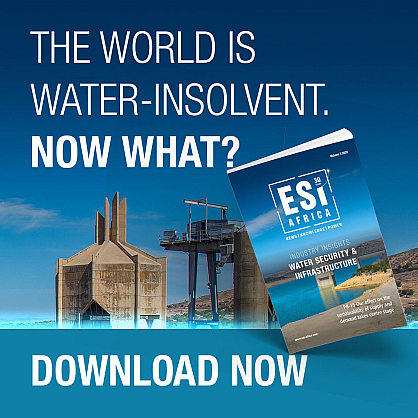
This is the focus of Water Security & Infrastructure Volume 2026 (https://apo-opa.co/3TrgwgU), launched by ESI Africa, part of VUKA Group, mapping the shift from water crisis to water bankruptcy and holding it against African utility data.

For years, "water crisis" has been the term used whenever a dam ran low or a city faced Day Zero. The Global Water Bankruptcy Report (2026), published by the United Nations University Institute for Water, Environment and Health (UNU-INWEH), argues that the word "crisis" no longer fits.

A crisis is a shock a system recovers from. Bankruptcy is what happens when it can't. The report defines it as a "persistent post-crisis condition... in which long-term water use has exceeded renewable inflows and safe depletion limits, causing irreversible or effectively irreversible degradation."

Nearly 75% of the world's population now lives in a country classified as water insecure. The world has lost 410 million hectares of wetlands since 1970, an area the size of the European Union, at an economic cost the report puts at $5.1 trillion. Glacier mass is down more than 30% over the same period, and 70% of major aquifers are in long-term decline.

Where Africa's utilities stand

ESI Africa's new Water Security & Infrastructure Volume 2026 examines that global diagnosis and holds it against African utility data. The pattern repeats at a smaller scale, and it's already visible in the numbers that regulators publish annually.

Non-revenue water, water that is produced but never billed, lost to leaks, theft or faulty metering, sits above 35% across South Africa, Tanzania and Mozambique. In Zimbabwe and among Kenya's largest utilities, it exceeds 50%.

"Where in South Africa are we addressing non-revenue water?" asks South African Water Chamber CEO Benoît Le Roy. His own answer is that it's nowhere close to enough. South Africa's non-revenue water rate sits at roughly 47.8%.

The World Bank reached a similar conclusion in 2017, studying around 120 utilities across 14 African countries. Close to half couldn't cover their own operating and maintenance costs from revenue. Government transfers filled the gap, but at a cost, because this support removed any pressure on utilities to fix their own finances.

Eight years on, the region's own regulators confirmed the trend hasn't reversed. ESAWAS's 2023/24 benchmarking of 10 major utilities found average cost coverage fell from 99% to 91% in a single year. Collection efficiency dropped from 107% to 87%. In Zambia, two utilities have had tariffs frozen by government decision for more than four years.

Why doesn't the money move?

Bothwell Manikai, DBSA Principal for Infrastructure Financing, put it directly: "I must admit that the fact that we are where we are in terms of those losses means we can all do more."

Zakhele Mayisa, AfDB Senior Consultant for Private Sector Engagement, traced the blockage further upstream, to land tenure disputes and thin baseline data that disqualify water projects before financing talks start.

Without ring-fenced revenue, Le Roy argued, no financier can underwrite the risk. Cost-reflective tariffs matter, but they can't fix a network that loses water before that cost is ever billed.

The next big consumer

The volume also names the sectors that will need to shrink, adapt or pay more: mining, thermal power, agriculture, and, increasingly, data centres. By 2030, AI-related water consumption could reach 9.3 trillion litres globally, enough to cover the annual domestic needs of roughly 1.3 billion people in Sub-Saharan Africa.

Africa's 360MW of existing data centre capacity already exposes the gap. "We don't bill the customer for it," said Nazeem Holmes, senior solutions architect at Open Access Data Centres, explaining why water efficiency lags energy efficiency on site. Power is metered and billed to the tenant. Water, shared across a facility, isn't.

What comes next

The focus isn't on building more dams and desalination plants; it's a warning that doing so can deepen the overshoot by encouraging further unsustainable growth. Instead, there is a call for nature-based capital investment, water-bankruptcy risk screening by lenders, and real-time global monitoring of what remains.

ESI Africa Editor-in-Chief Nicolette Pombo-van Zyl frames the shift in her opening letter to the volume: "I'd wager the utilities that thrive over the next decade won't be the ones that produce the most water. They'll be the ones that lose the least of it."

The full volume features 17 articles unpacking finance, metering and policy responses across the sector, published in partnership with Conlog and the STS Association.

Access the full volume: https://apo-opa.co/3TGzjVw

Distributed by APO Group on behalf of VUKA Group.

About ESI Africa:
ESI Africa — Africa's trusted power, energy, water and utility multimedia platform — is positioned as an impartial industry mouthpiece, delivering the latest technical developments and analysis in both print and digital formats since 1996.

The brand's various routes to market are expertly primed to build a bridge between readers and solution providers as ESI Africa sifts through the daily noise and delivers the tale of Africa's energy, power, utility and water transformation to the African and global market.https://apo-opa.co/4wkq63G

About VUKA Group:
VUKA Group connects people and organisations across Africa's energy, mining, mobility, green economy, and retail sectors through events, content, and strategic networking. Venture partners to The Global Trust Project and leaders of NPO Go Green Africa. www.WeAreVuka.com 
Media files
VUKA Group
Download logo
Read moreLooming Bankruptcy for Global Water Utilities
24 July 2026

$15 Million Agreement to Advance Africa’s First End-To-End Cholera Vaccine Production

Location: News

African Development Bank Group (AfDB)
Download logo

The African Development Bank Group (www.AfDB.org) has finalised a loan of up to $15 million to the Biologicals and Vaccines Institute of South Africa Ltd (Biovac) (https://apo-opa.co/3RQJKp2) to support a new multi-vaccine manufacturing facility in Cape Town that will significantly expand Africa's domestic capacity to produce vaccines.

The financing forms part of an expansion programme that will raise Biovac's total annual manufacturing capacity up to 500 million doses. Once complete, Biovac is expected to become Africa's first end-to-end producer of oral cholera vaccine and South Africa's first locally produced inactivated polio vaccine, and the first on the continent to produce inactivated polio vaccine through technology-transfer partnerships with Sanofi, the International Vaccine Institute, Biological E Limited, EuBiologics, and Bharat Biotech. For more than two decades, Biovac has been South Africa's primary vaccine supplier,

Africa currently imports more than 99 percent of the vaccines it uses, even though the continent carries a disproportionate share of the world's vaccine-preventable disease burden. In response, the African Union aims to produce 60 percent of the continent's vaccines locally by 2040. (https://apo-opa.co/4c0qcoV) Beyond vaccines, the project is projected to create around 340 full-time jobs, with an estimated 43 percent of these roles going to women and 30 percent going to youths. Biovac, which already employs more than 300 staff — half of them women — will also expand training in vaccine manufacturing, quality control, and regulatory science in partnership with local universities and other regional training institutions.

“This investment in Biovac is about much more than expanding vaccine production capacity. It is about building Africa's health sovereignty, strengthening regional value chains, and creating industrial capabilities that will enable the continent to respond more effectively to future health emergencies,” said Solomon Quaynor, the Bank Group's Vice President for Private Sector, Infrastructure and Industrialisation. "By supporting Africa's first end-to-end oral cholera vaccine manufacturing facility and the continent's first local production of inactivated polio vaccine, we are helping transform Africa from a consumer of imported vaccines into a producer of critical health solutions.”

“We welcome the African Development Bank as a partner in this landmark project and are proud that an institution so central to Africa's development sees in Biovac the same opportunity we see, a chance to fundamentally shift the continent's relationship with its own health security,” said Biovac Chief Executive Officer Morena Makhoana. “The project will shift the narrative from majority-imported vaccines to majority-exported vaccines. This is part of changing that reality permanently. This is what Africa's health sovereignty looks like in practice, and we are honoured to be building it.” 

The Bank Group's support for Biovac aligns with its broader commitment to developing Africa's pharmaceutical and vaccine manufacturing ecosystem, creating quality jobs, fostering innovation, and advancing African Union targets.

“This project allows one of Africa's most experienced manufacturers to scale up exactly where the need is greatest: vaccines that protect children from cholera, polio, pneumonia and meningitis," said Kennedy Mbekeani, the Bank Group's Director General for Southern Africa, and Country Manager for South Africa.

The expansion project is also designed to plug directly into the continent's emerging vaccine-financing architecture, including Gavi's African Vaccine Manufacturing Accelerator (AVMA), (https://apo-opa.co/4c1QFT4) a $1.2 billion mechanism that rewards African manufacturers with milestone payments once they reach WHO prequalification, plus a per-dose top-up on vaccines supplied through UNICEF tenders.

Biovac's new facility is expected to be completed by 2028 and will initially produce vaccines for cholera (oral) and subsequently for polio (IPV), pneumonia (PCV), and meningitis (MenX).

The Bank joins a syndicate of development finance institutions backing the project. The syndicate is led by the International Finance Corporation (IFC) and supported by a long-term quasi-equity facility from the Human Development Accelerator (HDX) programme, a European Union-backed initiative implemented by the European Investment Bank in partnership with the Gates Foundation. The package is complemented by grant funding and support from other global health partners for technology transfers that will bring new vaccines into Biovac's portfolio.

Biovac is a South African biopharmaceutical company established in 2003 in partnership with the South African government to develop local vaccine manufacturing capability. Based in Cape Town, it currently manufactures and supplies much-needed routine paediatric vaccines and has delivered more than 450 million vaccine doses to countries across Southern Africa, including COVID-19 vaccines.

Distributed by APO Group on behalf of African Development Bank Group (AfDB).

Media contacts: 
Emeka Anuforo
Communication and External Relations Department
media@afdb.org

Nicolette Pesev
Head: Corporate Brand
media@biovac.co.za

About the African Development Bank Group:
The African Development Bank Group is Africa's premier development finance institution. It comprises three distinct entities: the African Development Bank (AfDB), the African Development Fund (ADF) and the Nigeria Trust Fund (NTF). On the ground in 41 African countries with an external office in Japan, the Bank contributes to the economic development and the social progress of its 54 regional member states. For more information: www.AfDB.org 

Read more$15 Million Agreement to Advance Africa’s First End-To-End Cholera Vaccine Production
24 July 2026

President Ramaphosa Pays Tribute to Liberation Struggle Hero Shanthie Naidoo Tweedie

Location: News

The Presidency of the Republic of South Africa
Download logo

​President Cyril Ramaphosa has expressed his sadness at the passing of liberation struggle stalwart Shantavothie “Shanthie” Naidoo Tweedie at the age of 91.

President Ramaphosa offers his deep condolences to Mr Dominic Tweedie, the Naidoo family and friends and comrades of Shanthie Naidoo Tweedie who lived in exile in the United Kingdom from 1972 to 1991.

Born in Pretoria in 1935, Shanthie Naidoo became an activist while at school and became active in the then Transvaal Indian Youth Congress, the Federation of South African Women, the South African Congress of Trade Unions and the African National Congress, in whose service she and Dominic Tweedie worked at the Solomon Mahlangu Freedom College in Tanzania.

Shanthie Naidoo Tweedie faced various periods of detention, including solitary confinement, under the Terrorism Act as well as banning orders.

She was imprisoned for two months for refusing to give evidence against Winnie Mandela and 21 comrades who had been charged with furthering the aims of the African National Congress.

The apartheid state refused her exit permits to go into exile, until allowing her to leave the country following a campaign by supporters in South Africa and abroad, in which liberal Member of Parliament Helen Suzman had played a leading role.

President Ramaphosa said: “The passing of Shanthie Naidoo Tweedie causes us to revisit and pay tribute to the extraordinary contribution she made to our struggle for freedom.

“Shanthie Naidoo Tweedie was a hero who followed in the footsteps of her politically active family and sacrificially devoted her extended life to fighting for a free, non-racial South Africa.

“Her passing, on the eve of Women's Month, draws our attention to the struggles women faced under apartheid and which spurred courageous women to confront a system founded on race and gender discrimination.

“As we mourn Shanthie Naidoo Tweedie's passing, we also celebrate her legacy and that of the 20 000 women who marched to the Union Buildings 70 years ago as well as other women, who have made South Africa a better place for women and girls.

“We can only repay Shanthie Naidoo Tweedie by honouring her sacrifice and leadership, and continuing to make South Africa a nation that works for all, and especially women.

“May her soul rest in peace.”

Distributed by APO Group on behalf of The Presidency of the Republic of South Africa.

Read morePresident Ramaphosa Pays Tribute to Liberation Struggle Hero Shanthie Naidoo Tweedie
23 July 2026

AU Commission Chair Acknowledges Need to Discuss South Africa Xenophobic Attacks

Location: News
The Presidency, Republic of Ghana

The Chairperson of the African Union (AU) Commission, Mahmoud Ali Youssouf, has agreed on the need to address growing concerns over rising xenophobic attacks on foreign nationals in South Africa at the next AU summit.

His commitment came after bilateral talks with President John Dramani Mahama, who reiterated his request on the sidelines of the AU Extraordinary Summit on Universal Health Coverage and ending AIDS, held in Accra.

President Mahama disclosed that the South African President, on Tuesday, 21 July 2026, dispatched a special envoy led by his Foreign Minister to meet with him in Accra over the crisis.

He told the AU Commission Chair that he made Ghana's position clear to the envoy: that Ghana harbours no ill will toward South Africa but remains deeply concerned about the attacks and the resulting capital losses suffered by foreign nationals forced to abandon their investments and return home. He noted that this development undermines Africa's solidarity and ongoing efforts toward continental integration.

President Mahama emphasised that “sweeping the matter under the carpet” would not resolve its root causes, hence the need to place it on the agenda for discussion at the summit.

He added that tabling the issue would also give South Africa a formal, constructive platform to present its perspective and work toward a lasting solution.

“This will offer South Africa the opportunity to explain itself, and possibly we can all find a lasting solution to this crisis,” he emphasised.

The AU Commission Chairperson acknowledged that the attacks have affected nationals from several African countries. He revealed that during a recent visit to South Africa, he raised the matter directly with the South African President.

While commending the South African government's public condemnation of the violence, he expressed concern over the apparent impunity enjoyed by perpetrators.

The escalation of xenophobic violence recently compelled the Ghanaian government to airlift several citizens home on three separate chartered flights, with plans underway for further evacuations.

In response to the crisis, Ghana has officially written to the AU Commission requesting that the matter be formally placed on the agenda for the next summit.

Distributed by APO Group on behalf of The Presidency, Republic of Ghana.

Media files
The Presidency, Republic of Ghana
Download logo
Read moreAU Commission Chair Acknowledges Need to Discuss South Africa Xenophobic Attacks
23 July 2026

EIUG Conference returns alongside C&I Energy + Storage Summit Johannesburg for third consecutive year

Location: News
VUKA Group

South Africa's major industrial energy consumers and the broader C&I energy sector will once again share a platform this October, as the EIUG Conference co-locates with the C&I Energy + Storage Summit Johannesburg on 28–29 October 2026 at The Maslow Hotel, Sandton in Johannesburg.

The partnership between the Energy Intensive Users Group of Southern Africa (EIUG) and VUKA Group, now in its third year, brings the demand side and the solution side of South Africa's energy transition into one room. EIUG members — the mines, smelters, manufacturers and processors that account for a substantial share of the country's electricity consumption — will meet the developers, financiers, technology providers and policymakers shaping how industrial energy is generated, traded and managed.

The timing is deliberate. South Africa's industrial sector faces persistent tariff escalation, mounting decarbonisation pressure from mechanisms such as the EU's Carbon Border Adjustment Mechanism (CBAM), and a rapidly restructuring electricity market — from unbundling and the emergence of a wholesale market to expanding wheeling frameworks. The 2026 programme confronts these pressures directly, opening with a ministerial keynote address and a keynote panel examining the threats and opportunities that will define industrial competitiveness in the coming decade.

Across two days, the EIUG Conference will cover:

  • Industrialisation under threat? — a frank examination of whether South Africa's industrial base is adapting or contracting under energy constraints
  • Renewable energy integration for heavy industry — real-world case studies from mining, cement, manufacturing and metals
  • Practical masterclasses on  finance for transition — considerations for alternative power generation, grid security, and an end-to-end understanding of the South African Carbon Tax
  • Electricity market reform — the practical realities of market readiness as unbundling and wheeling frameworks expand
  • A green hydrogen workshop exploring how surplus renewable generation and anchor industrial demand could unlock integrated hydrogen corridors

Co-location gives attendees access to the full C&I Energy + Storage Summit Johannesburg programme under a single registration, connecting industrial energy users directly with the storage, generation, trading and financing solutions on the exhibition floor.

For more information visit https://apo-opa.co/44MBR6Z

Distributed by APO Group on behalf of VUKA Group.

About the EIUG: 
The Energy Intensive Users Group of Southern Africa represents South Africa's largest industrial electricity consumers, whose members collectively account for a significant portion of the electrical energy consumed in the country.
https://EIUG.org.za/

About C&I Energy + Storage Summit Johannesburg: 
In its third year, the C&I Summit is a platform to unlock investment and speed up localisation, helping South Africa's energy-intensive sectors build resilience through innovation and resource security.  (https://apo-opa.co/3TRlYd1)

About VUKA Group: 
VUKA Group connects people and organisations to information and each other across Africa's energy, mining, infrastructure, mobility, green economy and technology sectors via events, content and networking. It helps businesses navigate markets, build connections and achieve sustainable success. www.WeAreVUKA.com
 

Media files
VUKA Group
Download logo
Read moreEIUG Conference returns alongside C&I Energy + Storage Summit Johannesburg for third consecutive year
23 July 2026

Following the Money: South Africa Uses Gender Data to Budget Better for Women and Girls

Location: News
UN Women - Africa

What began with simple discussions with UN Women in 2024 on how to better cater to women and girls in the national budget, had snowballed into at least 16 ministries in South Africa working with the National Treasury to use gender data for gender-responsive budgets by the end of 2025. 

Gender-responsive budgeting (GRB) refers to the process of creating budgets that work for everyone, regardless of sex. It strives for a fairer distribution of resources, considering the specific needs and constraints faced by women and girls. 

Before partnering with Women Count, South Africa had put some GRB systems in place, but had stalled at implementation. 

“The main challenge was that departments lacked the capacity to effectively implement gender mainstreaming and align their budgets with gender-related priorities,” explains Viwe Sobudula, Director, Public Finance Division, National Treasury, South Africa. 

“When we partnered with UN Women, we realized that we needed to begin with a research. … UN Women helped to provide a gender needs assessment that not only established an evidence base for why we needed GRB but also what exactly we needed to do.” 

This gave rise to extensive capacity-building, co-designed and delivered with UN Women, targeting both finance and planning staff across ministries. They used a training manual customized with local content and practical exercises and case studies identifying gender-responsive programmes. They also engaged participants beyond gender focal points, improving understanding of GRB and setting the stage for its smooth implementation in 2025. 

“Including experts from both the National Treasury and Statistics South Africa in the sessions made sure that the trainings used real data and were practical,” says Thivhulawi Mukwevho, Director of Research and Knowledge Management, Department of Women, Youth and Persons with Disabilities. 

This iterative learning approach provided valuable real-time feedback, which helped refine understanding and improve compliance during actual implementation.

“Inclusive training and training-of-trainers, helped to ensure a comprehensive understanding and practical application of GRB principles within departments, and enabled participants to further disseminate GRB knowledge and practices when they returned to their respective departments,” adds Mukwevho. 

Official statistics from Statistics South Africa and collaborative surveys with UN Women played an essential role in setting priorities and tracking progress – and highlight slower-moving areas, such as women's employment rates and women's participation in government procurement. 

To prepare for the first implementation of GRB in 11 pilot ministries, stakeholders used these gender data to conduct a needs assessment and identify priority areas such as health, education and women's economic empowerment (WEE). This informed the selection of GRB programmes for implementation. 

“Beyond setting the foundation for GRB in South Africa, the needs assessment undertaken with UN Women at the start of the process also assists us to comply with international standards,” says Sobudula. 

“This type of report enables the Government and non-State actors to ‘follow the money' and assess if budgets are delivering on policy commitments. ... The gender budget statement gives us data and helps us to provide evidence and efficiencies in our budget.” 

Prepared in 2025, South Africa's first gender budget statement (GBS) assesses how the Government's overall budget policy is addressing gender disparities in the country. It sets out Government gender equality priorities, observed gender gaps and inequalities and their associated trends, and the Government's policies and proposed resource allocations to address these inequalities. 

With a high focus on WEE, including in public procurement and employment in public sector, the 2025 GBS is the first step to having a fully gender-responsive budget. It reviews five government departments, with a view to identifying and addressing gender disparities in their budgets. These departments have since identified WEE initiatives for impact using available resources.

“Insights from the training have already begun to shift departmental mindsets,” says Mveleli Gqwede, Chief Director for Gender at South Africa's Department of Public Works. “The Department has now fully integrated gender advisors in planning and budgeting. And for the second gender budget statement, we are using gender-disaggregated data from StatsSA and other sources to align procurement and planning with policy frameworks and provide capacity-building for women.”

While the 2025 process was not without challenges, it created a meaningful opportunity for Parliament and civil society to engage with the GBS and provide valuable inputs. According to Sobudula, the inclusion of ‘human endowment' as the second pillar for the 2026 GBS emerged directly from these engagements.

The Government will also continue refining the pilot, supporting participating departments to strengthen monitoring, evaluation and auditing to inform roll-out. 

And, according to Mukwevho, a promising shift in practice has already taken place: “Departments are now required to demonstrate gender responsiveness in their programmes and budgets, moving beyond rhetorical statements to concrete actions and investments.”

Distributed by APO Group on behalf of UN Women - Africa.

Media files
UN Women - Africa
Download logo
Read moreFollowing the Money: South Africa Uses Gender Data to Budget Better for Women and Girls
23 July 2026

Amicorp Secures FSCA License

Location: News
Amicorp

Global corporate services, fund administration and private client specialist Amicorp (https://Amicorp.com) has received authorization from South Africa's Financial Sector Conduct Authority (FSCA), marking an important milestone in the company's long-term investment in South Africa and its broader African growth strategy. 

Founded in 1992, Amicorp operates across more than 40 international markets, supporting businesses, funds, institutions and private clients with cross-border structuring, governance, compliance and investment-related solutions. The new Category I Financial Services Provider license enables Amicorp Trading (Pty) Ltd to provide regulated financial services in South Africa through a locally authorized platform. 

South Africa was selected because it has one of Africa's most mature and well-regulated financial markets, making it a natural base from which to serve clients operating across the continent where regulations permit. As demand grows for international investment access, cross-border wealth planning and institutional financial solutions, Amicorp sees significant long-term opportunities in both South Africa and selected African markets.

The announcement follows the completion of the regulatory authorization process rather than the establishment of the business itself. While Amicorp has been operating globally for more than three decades, obtaining local regulatory approval is a key milestone that allows the company to deepen its presence in South Africa and build on its African ambitions. 

Like many international financial services firms entering new markets, Amicorp has navigated evolving regulatory requirements, differing market dynamics and the need to build trusted local relationships. The FSCA authorization reflects the company's commitment to meeting South Africa's high regulatory standards. 

"Africa represents an exciting long-term growth opportunity for Amicorp," said Craig Lyall – Head – Fund Structuring and Solutions. In addition, clients increasingly want trusted partners that can help them access international opportunities while operating within strong local regulatory frameworks. Our South African license strengthens our ability to support that demand." 

Globally, Amicorp supports clients through an international network spanning more than 40 markets and continues to expand its capabilities as demand for cross-border investment, governance and corporate services grows. 

The company believes South Africa is well positioned to play an increasingly important role in attracting international investment into Africa while giving African businesses and investors greater access to global financial opportunities. ​

Distributed by APO Group on behalf of Amicorp.

For media related queries: 
Contact person: Kerry Botha 
In her capacity as: Amicorp Media Liaison ​
Email: kerry@kerrybotha.co.za  
Contact number: 083 263 0644 ​

About Amicorp: 
Founded in 1992, Amicorp Group is a global provider of corporate management, fund administration, capital markets and private wealth services. Operating in more than 40 countries, the Group helps businesses, institutions and private clients navigate cross-border opportunities through tailored corporate and investment solutions. For more information, visit www.Amicorp.com. ​

Disclaimer:  
This public relations content is provided for general informational and educational purposes only and does not constitute legal, tax, regulatory, investment or financial advice. Structures, products and solutions referenced herein may not be available or suitable in all jurisdictions and remain subject to applicable laws, regulations and regulatory approvals. Readers should seek independent professional advice based on their specific circumstances before making any structuring, investment or governance decisions. Amicorp Capital South Africa is an authorized financial services provider.

Media files
Amicorp
Download logo
Read moreAmicorp Secures FSCA License
23 July 2026

South African Stakeholders Review and Validate Recommendations Towards Accelerating Green Industrialization in Southern Africa

Location: News
United Nations Economic Commission for Africa (ECA)

The UN Economic Commission for Africa, Subregional Office for Southern Africa (ECA SRO-SA) in partnership with South Africa's Department of Forestry, Fisheries and the Environment and the United Nations Trade and Development, concluded a two-day National Workshop to validate the findings and recommendations of regional studies on Innovative Climate Action to Accelerate Green Industrialization in Southern Africa.

Hosted by the Government of South Africa, the workshop is part of the implementation of a United Nations Development Account 17th Tranche Project which is supporting Malawi, Mozambique, Namibia, South Africa, Zambia and Zimbabwe to integrate climate action into industrial development strategies to promote sustainable, inclusive and resilient economic transformation.

The workshop brought together representatives from the South African government, the private sector, micro, small and medium-sized enterprises (MSMEs), academia, research institutions, civil society, development partners and the United Nations in system in South Africa to review and validate four regional studies on green industrialization, technology transfer and innovation, the circular economy, and renewable energy transition. Participants identified national priorities to strengthen policy coherence and regional collaboration for green industrial development.

Opening the workshop, Dr. Jenitha Badul, Senior Policy Advisor in the Directorate of  Sustainability Programmes & Projects, Department of Forestry, Fisheries and the Environment, reaffirmed South Africa's commitment to advancing green industrialization through collaboration, emphasizing the importance of partnerships in building an inclusive, climate-resilient industrial future.

United Nations Resident Coordinator for South Africa, Nelson Muffah, underlined that green industrialization should be viewed not only as a climate agenda but as a broader development agenda capable of driving technology upgrading, economic diversification, employment creation, regional integration and inclusive growth while addressing poverty and inequality.

Representing the private sector, Ms. Ayabulela Manjezi, Project Manager, Climate, Energy and Water at the National Business Initiative, stressed that achieving a just transition requires strong partnerships among government, business, civil society and research institutions. She emphasized that inclusion must remain central to climate action and industrial transformation, ensuring that women, youth, persons with disabilities and vulnerable communities can participate meaningfully in the opportunities created by the transition.

Speaking on behalf of ECA Subregional Office for Southern Africa Director Ms. Eunice Kamwendo, Oliver Maponga, Economic Affairs Officer at ECA SRO-SA, emphasized that green industrialization presents Southern Africa with an opportunity to strengthen competitiveness, expand regional value chains and improve access to emerging global markets. He highlighted the importance of coordinated industrial, trade, innovation and climate policies that build productive capabilities, strengthen technology transfer and position the region to capture greater value from the global green transition.

During the review of the studies, participants highlighted strong synergies across the studies and agreed that green industrialization requires an integrated approach that connects industrialization, climate action, environmental sustainability, regional cooperation, inclusion, private sector development, research, training, finance and investment.

The workshop called for the strengthening of governance and institutional coordination across industrial policy, innovation, trade, climate action and investment promotion; investment in productive capabilities and industrial ecosystems; promotion of technology that builds domestic capabilities; acceleration of industrial upgrading in strategic green value chains; and adoption of strategic policy sequencing that places capability development at the centre of industrial transformation.

Participants called for the adoption of a private sector- and MSME-centred approach to support the commercialization and adoption of green technologies, strengthen awareness and skills development, improve access to finance and technology, promote coherent regulatory frameworks, and deepen regional trade and cross-border collaboration to expand value addition and competitiveness.

The workshop concluded that sustainable industrial transformation depends on strong institutions, productive capabilities, innovation, learning and coordinated policymaking and called on countries to strengthen these foundations in order to capture opportunities emerging from the green economy, rather than remaining suppliers of raw materials.

The recommendations from the studies will inform country-specific policy briefs and contribute to strengthening national and regional policy frameworks that support green, inclusive and resilient industrialization across Southern Africa.

Distributed by APO Group on behalf of United Nations Economic Commission for Africa (ECA).

Media files
United Nations Economic Commission for Africa (ECA)
Download logo
Read moreSouth African Stakeholders Review and Validate Recommendations Towards Accelerating Green Industrialization in Southern Africa
23 July 2026

Gold Fields, Moore Global and Mali Chamber of Mines to Lead Gold Growth Dialogue at AMW 2026

Location: News
Energy Capital & Power

As African governments and mining companies accelerate efforts to expand gold production and capitalize on strong global demand, African Mining Week (AMW) 2026, taking place October 14–16 in Cape Town, will spotlight the policies, partnerships and investments driving the continent's next phase of growth in the gold sector.

The event will feature a dedicated panel, Expanding Africa's Gold Output, exploring strategies to increase gold production, formalize artisanal and small-scale mining and strengthen investment across the value chain.

The session will be moderated by Matt Banton, Head of Mining at Moore Global, and feature Fousseni Togola, President of the Mali Chamber of Mines, and Benford Mokoatle, Executive Vice President: South Africa at Gold Fields.

The discussion comes as the global gold market continues to strengthen. Gold prices have remained above $4,000 per ounce throughout 2026, supported by sustained central bank demand as countries increase gold reserves to diversify foreign exchange holdings and strengthen financial resilience. Across Africa, central banks in Tanzania, Kenya, Ghana, Uganda, Egypt and Namibia have expanded gold purchase programs, reinforcing demand while creating new opportunities for domestic producers.

African gold-producing nations are responding by introducing reforms aimed at increasing production and improving sector governance. In Mali, the government is strengthening the artisanal and small-scale gold mining sector as part of its strategy to maintain annual gold production above 60 metric tons. In July 2026, the country established the Malian Office of Precious Substances, a new state institution responsible for regulating and formalizing artisanal gold production across approximately 400 mining sites employing nearly two million people. At the same time, Mali continues to strengthen partnerships with major mining companies, including Barrick, B2Gold, Toubani Resources and Cora Gold, to sustain long-term production growth and attract additional investment.

At AMW 2026, Togola is expected to discuss how the Mali Chamber of Mines is supporting these reforms while highlighting the investment opportunities emerging across the country's gold sector. His participation will explore the role of chamber members in expanding production, strengthening local participation and positioning Mali among Africa's leading gold producers.

South Africa is also advancing initiatives to revitalize its gold industry through increased exploration and long-term mine investment. Earlier this year, the government expanded the Junior Mining Exploration Fund to R600 million, improving access to exploration capital for emerging mining companies and supporting efforts to unlock new gold discoveries.

Complementing these national initiatives, Gold Fields is investing R1.714 billion through 2027 to deepen its flagship South Deep Mine, positioning the operation as a long-life production hub well beyond 2030. Gold Fields' Mokoatle is expected to provide an update on the company's long-term investment strategy, highlighting how innovation and sustained capital investment are supporting South Africa's efforts to strengthen gold production.

As investment accelerates across Africa's gold sector, AMW 2026 provides a premier platform to connect governments, producers, investors and service providers, advancing the partnerships and capital needed to unlock the continent's next phase of gold production growth.

Distributed by APO Group on behalf of Energy Capital & Power.

Media files
Energy Capital & Power
Download logo
Read moreGold Fields, Moore Global and Mali Chamber of Mines to Lead Gold Growth Dialogue at AMW 2026
22 July 2026

One of Crypto’s Fastest-Growing Regions

Location: News
Cregis Technology Limited

Cregis (www.Cregis.com), an enterprise digital asset infrastructure platform, today announced its expansion into Africa, marking the company's latest step in its global growth strategy. The move builds on Cregis' expansion across Asia-Pacific, the Middle East and Latin America, as demand for enterprise digital asset infrastructure continues to grow worldwide.

Africa is one of the fastest-growing digital asset markets globally. According to Chainalysis, Sub-Saharan Africa received more than $205 billion in on-chain value between July 2024 and June 2025, up 52% year over year. Growth has been fueled by stablecoin payments, cross-border transactions and broader adoption of digital financial services. At the same time, regulatory frameworks are becoming clearer across several major markets, creating a stronger foundation for enterprise adoption.

For Cregis, those trends signal that the market is entering a new stage.

"We've seen this pattern before," said Shawn Yan, Founder and CEO of Cregis. "Adoption comes first. As businesses grow, the focus shifts to operating digital assets securely, efficiently and in a way that can keep pace with evolving regulatory expectations. That's where enterprise infrastructure becomes essential, and it's the same transition we're beginning to see across Africa."

Cregis has already onboarded enterprise customers in the region and is expanding its local business development efforts across the continent, with particular attention to markets such as Nigeria, Kenya and South Africa, where digital asset ecosystems are among the most developed. The company is working with businesses including stablecoin payment providers, OTC desks, crypto exchanges and digital banks as demand for enterprise infrastructure continues to grow.

To support those businesses, Cregis provides an integrated platform that helps enterprises manage the full lifecycle of digital assets, from wallet operations and fund flows to custody, governance and compliance. Its product portfolio includes Wallet-as-a-Service (WaaS) (https://apo-opa.co/4bC3Z0i), Payment Engine, (https://apo-opa.co/4warJRs) TronGas, and Crypto Off-Ramp, allowing businesses to scale digital asset operations without piecing together multiple infrastructure providers.

The expansion builds on nearly a decade of experience supporting enterprise customers across high-growth markets. In Asia-Pacific, Cregis worked with thousands of businesses in markets where digital asset adoption often outpaced regulation. That experience shaped the company's approach to building infrastructure that balances operational flexibility with long-term compliance readiness.

The same strategy has since been validated in newer markets. In 2024, Cregis established Dubai as its Middle East hub, building a local team and expanding its compliance capabilities alongside regional growth. Today, the company supports more than 200 long-term enterprise deployments across the region and has built a strong presence in the brokerage, payments and fintech ecosystem. Earlier this year, Cregis expanded into Latin America and Europe, rapidly onboarding enterprise customers. In Europe, the company is also working with traditional financial institutions adopting digital asset infrastructure. Together, these experiences have given Cregis a proven framework for scaling across high-growth markets where enterprise demand and regulation are evolving together.

As more businesses adopt digital assets, infrastructure requirements are changing. Beyond secure wallet technology, enterprises increasingly need systems that bring together treasury operations, governance and compliance in one place. Cregis is designed to support businesses at different stages of growth, from fast-growing fintechs and crypto-native companies to institutions operating under stricter regulatory requirements, all on a unified platform. The company maintains a zero-security-incident record and holds internationally recognized certifications including SOC 2 Type I, SOC 2 Type II and ISO 27001.
 

Looking ahead, Cregis plans to deepen its presence across Africa through customer engagement, local partnerships and participation in leading industry events, including Blockchain Africa Conference and Blockfest Africa. The company sees Africa as an important long-term market as digital assets become more deeply integrated into financial services across the region.

"We've spent years helping businesses navigate periods of rapid market growth and regulatory change," Yan said. "Africa is entering a similar phase. Our goal isn't simply to bring technology into the region — it's to help local businesses build digital asset operations that can grow with confidence over the next decade."

Distributed by APO Group on behalf of Cregis Technology Limited.

About Cregis:
Cregis (www.Cregis.com) is a digital asset infrastructure platform, providing technology for digital asset collections, payouts and fund operations. Its offerings include wallet infrastructure, fund flow orchestration and regulated custody capabilities. These solutions help businesses manage digital assets with greater security, efficiency and control. Founded in 2017, Cregis serves financial institutions, payment service providers (PSPs), foreign exchange (Forex) brokers, fintechs and Web3 businesses. The company operates across Asia, the Middle East and Latin America. Today, Cregis supports more than 4,000 businesses across over 50 countries.

Disclaimer:
Cregis does not provide regulated financial services or investment advice. Digital asset services may be subject to regulatory requirements in different jurisdictions. Businesses should conduct their own due diligence and comply with applicable laws and regulations when using digital asset infrastructure solutions.

Media files
Cregis Technology Limited
Download logo
Read moreOne of Crypto’s Fastest-Growing Regions
22 July 2026

APO Group wins SABRE Gold and further international awards in the first half of 2026

Location: News
APO Group

APO Group (https://APO-opa.com), the communications consultancy built for performance across Africa, has been recognised with five international industry awards in the first half of 2026, headlined by a Gold award at the Africa SABRE Awards, one of the most rigorously judged standards in global public relations.

The Gold SABRE was awarded for APO Group's campaign for GITEX Africa Morocco 2025. The campaign generated more than 3,600 media placements across African and international outlets and strengthened Morocco's positioning as a leading emerging technology hub. The Africa SABRE Awards are judged by senior communications professionals from across the world and are widely regarded as the highest standard of peer recognition in the industry.

APO Group also received a Gold Stevie Award for Most Innovative Public Relations Agency of the Year. The Stevie judges cited campaigns delivering over USD 1.2 billion in PR value and more than 1,500 media features. Two Global Brand Awards recognised APO Group's integrated communications approach and its results for the Global Africa Business Initiative. The World Business Outlook Awards named APO Group South Africa's top public relations and media consultancy for the third consecutive year.

In addition, APO Group's campaigns for GITEX Africa Morocco 2025 and the Basketball Africa League were shortlisted for international industry awards during the first half of 2026, further recognising the consultancy's work across the continent.

Together, these distinctions reflect a consistent pattern: independent global judges have repeatedly confirmed that APO Group delivers measurable results in African markets, not presence alone.

"Awards matter to us only when they reflect client outcomes," said Bas Wijne, CEO of APO Group. "A SABRE Gold is judged on placements, reach, and business impact, not on the quality of the entry. That is the standard we hold ourselves to, and it is the standard any organisation appointing a communications partner in Africa should demand."

 APO Group's model combines senior advisory with on-the-ground execution and guaranteed visibility through Africa Newsroom, its owned newswire, which distributes to more than 250 Africa-focused platforms and connects organisations with 450,000+ journalists, analysts, investors, and policymakers worldwide. That structure gives clients one accountable partner and verified reach across all 54 markets in which APO Group operates.

Distributed by APO Group on behalf of APO Group.

About APO Group:
Founded in 2007 by Nicolas Pompigne-Mognard, APO Group is the communications consultancy built for performance – combining strategic advisory, on-the-ground execution, and guaranteed visibility across all 54 African markets. Its owned newswire, Africa Newsroom, secures placement on 250+ Africa-focused news sites, connecting organisations directly with 450,000+ journalists, analysts, investors, and policymakers worldwide.

Recognised internationally for communications excellence, including SABRE, Davos Communications, and World Business Outlook distinctions, APO Group partners with global and African organisations for whom the continent is a strategic priority. Clients include the African Development Bank Group, Africa CDC, Afreximbank, NFL, Nestlé, Emirates, Canon, Western Union, GITEX Global, and Cassava Technologies.

Media files
APO Group
Download logo
Read moreAPO Group wins SABRE Gold and further international awards in the first half of 2026
21 July 2026

Survey Highlights the Need for Smartphone Security

Location: News
Kaspersky

​Kaspersky's (www.Kaspersky.co.za) latest global survey shows a change in how people go online: 58% now claim their smartphone is the main device they use to access the Internet, pushing the PC into a secondary role. But as the amount and sensitivity of data stored on these phones keep growing, cybersecurity experts warn that users' security habits aren't keeping up.  

According to the survey* almost 60% of respondents consider a smartphone their primary device for accessing the Internet. The most active smartphone users are representatives of Gen Z, with 67% of respondents aged 18-28 choosing a mobile phone as their main device.

With mobiles as the full-fledged rivals of computers in accessing the Internet, the amount of important data stored on them has also increased significantly. Personal photos and videos are leading the pack. Nearly two‑thirds of users store visual memories on their devices. Close behind are contact details (55%), text messages and chats history (46%) and important personal documents such as IDs and passports (41%).

At the same time, a substantial portion of users keep work‑related data on their smartphones (39% emails, 26% calendars and 17% even store access to corporate systems), blurring the line between personal and professional realms. Financial credentials and login details appear on 36% of devices, while emerging categories like AI chat histories (25%) and gaming accounts (24%) signal new types of personal data stored on personal devices.

“Now our smartphones serve as full‑featured assistants that touch every aspect of our lives. The data we entrust to them goes far beyond photos, phone numbers or text messages. Consequently, the main question is no longer “what we store,” but “how we protect it,” requiring security to become as integral to the device as the data it carries,” comments Anton Kivva, cybersecurity expert at Kaspersky.

Three keys to mobile data security 

To help users navigate this new digital reality safely, Kaspersky experts have issued a three-step security plan: 

1. No data should live on your phone only 

A smartphone should never be the sole repository for any type of information. While having everything at your fingertips is convenient, accidental deletions, loss or hardware failure can make recovery impossible without reliable backups or cloud sync.

The most sensitive data like passwords, ID or financial details requires special attention and preferably be kept in a protected format. Use a dedicated security solution like Kaspersky Password Manager (https://apo-opa.co/45cKAzp), which apart from securely keeping credentials and bank cards, has a special secret vault functionality aimed at storing important documents, for example, scanned Passports/IDs and PDF files, addresses and notes. Thanks to the cross-device synchronisation it allows access to the data from any gadget.

2. Create a guard against digital threats

In Q1 2026 (https://apo-opa.co/4b4kLFe) only, more than 2.67 million attacks utilising malware, adware or unwanted mobile software were prevented and more than 306,000 malicious installation packages were discovered.

Mobile devices require the same cyber protection as PCs. Kaspersky experts recommend cybersecurity solutions such as Kaspersky Premium that provide comprehensive protection – starting with scanning apps for potential threats upon installation, and using AI‑driven features to block malicious and phishing links in real time and prevent data or money losses, among many other security layers.

3. The "what if" scenario planning

Phone loss always occurs unexpectedly, but a few proactive steps can dramatically reduce its impact:

  • Turn on location services. Both Android and iOS include built-in tools that can locate a lost phone and, if needed, wipe its data remotely. Kaspersky for Android (https://apo-opa.co/3TM9Wl7) app activates this capability through the Where Is My Device feature.
  • Enable automatic backups. Regular backups ensure that photos, videos, documents, contacts and other vital data can be restored even if the device is lost or stolen.
  • Configure instant auto‑lock. Setting the phone to lock immediately after the screen turns off keeps it inaccessible to thieves or cyber‑criminals when you're not using it.
  • Keep the device physically safe. In public spaces, never leave your phone unattended or within easy reach, avoid placing it on tables, in back pockets or any other vulnerable spot.

“We often underestimate how much valuable information we keep on our mobile devices and how vulnerable that data truly is. Ask yourself: When was the last time I backed up my photos or notes? What's my plan if my phone goes missing? Do I verify links before I click them? While most users automatically think of security software for their computers, phones lag behind. It's time to give your everyday digital companion the same robust cyber‑protection it deserves,” adds Anton Kivva, cybersecurity expert at Kaspersky.

You can download Kaspersky for Android via this link (https://apo-opa.co/3TM9Wl7) and Kaspersky for iOS via this link (https://apo-opa.co/4vGr2hK).

 *The study was conducted by Kaspersky's market research center in March 2026. 7200 respondents from 18 countries (Brazil, China, Colombia, Egypt, France, Germany, India, Indonesia, Italy, Malaysia, Mexico, Russia, Saudi Arabia, Spain, South Africa, Thailand, Turkey, Vietnam) took part in the survey.

Distributed by APO Group on behalf of Kaspersky.

For further information please contact:
Nicole Allman
nicole@inkandco.co.za

Follow us:
Facebook: https://apo-opa.co/4wOTA9K
X: https://apo-opa.co/3RoriUA
YouTube: https://apo-opa.co/4yv30sy
Instagram: https://apo-opa.co/4fwVoNJ
Blog: https://apo-opa.co/4ptKRqW

About Kaspersky: 
Kaspersky is a global cybersecurity and digital privacy company founded in 1997. Innovating the industry with a Cyber Immunity approach, Kaspersky safeguards consumers, businesses, critical infrastructure, and governments from cyberthreats, with over a billion devices protected to date. Kaspersky ensures Cybersecurity True to Business, focusing on providing clear outcomes, protecting revenue, easing workloads and preventing downtime. Kaspersky's deep threat intelligence and security expertise is constantly transforming into innovative solutions and services for organizations of every size, from small businesses to large enterprises, combining proven AI-driven protection technologies with simple management and expert support. Recognized in independent tests and trusted by millions of individuals worldwide and nearly 200,000 organizations, Kaspersky helps detect threats earlier, respond faster and operate with greater confidence and freedom, protecting what matters most to our clients. Learn more at www.Kaspersky.co.za.   

Media files
Kaspersky
Download logo
Read moreSurvey Highlights the Need for Smartphone Security
21 July 2026

Africa’s Mining Boom Has a New Financier: Domestic Capital

Location: News

Energy Capital & Power
Download logo

As demand for critical minerals accelerates and governments push to capture more value from their resources, African banks and investors are stepping into larger roles financing the projects that will define the continent's next mining era.

The latest example came in July, when Kropz subsidiary Kropz Elandsfontein secured a R200 million loan from Ubuntu-Botho Investments, the indirect controlling shareholder of African Rainbow Capital, to strengthen its phosphate mining operations in South Africa's Western Cape. The transaction reflects growing confidence among domestic investors in Africa's mining sector and signals a broader trend: regional capital is increasingly moving from the sidelines into the center of mining development.

In an exclusive interview with Energy Capital & Power, organizers of African Mining Week (AMW), Danie Dorfling, Head of Business Development at Moore Infinity – a partner of AMW – said the growing participation of domestic capital marks a fundamental shift in how Africa finances mining projects.

"Domestic capital is no longer an optional supplement to foreign investment. It is becoming a test of whether Africa can convert its mineral wealth into durable domestic financial capacity," he said.

Dorfling pointed to the $700 million financing package secured in April 2026 for Phase 2 of South Africa's Platreef Mine by Nedbank, Absa and France's Société Générale as an example of African financial institutions partnering with global lenders to finance complex, large-scale mining developments.

"The significance is that African banks were not asked to replace international capital; they participated alongside it in a major, complex mining financing. That hybrid model is likely to be more scalable than expecting large projects to be funded exclusively from either domestic or international balance sheets,” said Dorfling.

The trend extends beyond South Africa. As Africa seeks to mobilize its estimated $2 trillion in non-bank domestic capital to finance strategic infrastructure and industrial development, regional financial institutions are expanding their role across the mining value chain.

Tharisa recently secured a R750 million revolving asset finance facility from Nedbank to acquire specialized underground mining equipment for its Apollo Mine in South Africa's Bushveld Complex. Meanwhile, Absa is supporting major projects including Pensana's Longonjo Rare Earth Project in Angola and the Kamoa Copper Mine in the Democratic Republic of the Congo alongside Rawbank and Nigeria's FirstBank.

According to Dorfling, Rawbank's participation demonstrates how domestic African institutions are building the expertise and balance sheet capacity required to participate in increasingly complex regional mining transactions.

Collectively, these developments reflect a broader evolution in Africa's mining finance landscape. Rather than relying solely on international development finance institutions and foreign commercial lenders, projects are increasingly being supported through blended financing structures combining domestic banks, regional financial institutions and global investors. This approach diversifies funding sources, strengthens local capital markets and enables African institutions to capture greater value from the continent's expanding mining industry.

These trends will take center stage at AMW 2026, taking place from October 14–16 in Cape Town under the theme “Mining the Future: Unearthing Africa's Full Mineral Value Chain.” Bringing together regional financiers, international investors, mining companies and market intelligence firms, the event will explore how African capital can be integrated with global financing to accelerate project development and strengthen the continent's mining investment ecosystem.

Financial institutions including Absa, Standard Bank, the Industrial Development Corporation, Africa50, the Africa Finance Corporation, Trade and Development Bank, U.S. International Development Finance Corporation, World Mining Investment and Aperoin Investment Group will join industry experts such as Moore Global to examine financing models capable of unlocking Africa's next generation of mining projects.

Distributed by APO Group on behalf of Energy Capital & Power.

Read moreAfrica’s Mining Boom Has a New Financier: Domestic Capital
21 July 2026

Meren Energy to Spotlight Production Growth and Orange Basin Strategy as AEW 2026 Silver Partner

Location: News
African Energy Chamber

Independent E&P company Meren Energy will participate at African Energy Week (AEW) 2026 – taking place in Cape Town from October 12–16 – as a Silver Partner, showcasing its evolution into a major independent upstream producer with a balance portfolio spanning high-margin production in Nigeria and world-class exploration opportunities across the Orange Basin. The company arrives at the event following a transformational year marketed by a corporate rebrand, a major portfolio consolidation and a sharpened focus on delivering long-term production growth.

Formerly Africa Oil Corp., Meren Energy completed its corporate rebrand in May 2025, reflecting its transition from an exploration-led company into a full-cycle upstream producer. The transformation accelerated with the completion of its Prime Oil & Gas consolidation in July 2025, which doubled the company's working interest production and reserves while strengthening its cash flow through expanded interests in Nigeria's prolific deepwater assets.

Today, Nigeria represents the cornerstone of Meren's business. Through interests in Prime, the company holds stakes in some of the country's largest offshore producing fields, including Akpo, Egina and Agbami. These assets underpin virtually all of the company's current cash flow, benefitting from premium Brent-linked pricing, low lifting costs and long-life production. 

The strategy has translated into a strong financial position. During the first quarter of 2026, Meren reported entitlement production of approximately 31,000 barrels of oil equivalent per day (bpd) while maintaining guidance for an average of roughly 30,000 bpd for the year. The company also strengthened its balance sheet by refinancing its reserve-based lending facility, increasing commitments to $600 million with maturity extended to 2032, while continuing to return capital to shareholders through quarterly dividends. 

Alongside its producing portfolio, Meren is positioning itself for the next phase of growth through one of the world's most closely watched emerging petroleum provinces: the Orange Basin. 

In Namibia, the company retains an effective interest in the giant Venus discovery through its investment in Impact Oil & Gas. Following a corporate restructuring announced in May 2026, Impact has become a streamlined Namibia-focused company dedicated to advancing the Venus development toward final investment decision. The project, led by TotalEnergies, ranks among Africa's largest recent offshore discoveries and is expected to become one of the continent's most significant new sources of oil production later this decade. 

While Impact concentrates exclusively on Namibia, Meren continues to directly hold an 18% interest in South Africa's Block 3B/4B in the Orange Basin, where high-impact exploration drilling is anticipated. The company also maintains operated exploration acreage in Equatorial Guinea, providing additional long-term exploration upside alongside its producing assets. ​

“Meren Energy represents the evolution of Africa's independent upstream sector. By combining strong producing assets with strategic investments in frontier basins like the Orange Basin, the company is demonstrating how African-focused independents can deliver both shareholder value and long-term energy development,” says NJ Ayuk, Executive Chairman, African Energy Chamber. 

At AEW 2026, Meren Energy is expected to engage investors, operators and government stakeholders on opportunities across its diversified portfolio, with particular emphasis on the Venus development, exploration potential in South Africa's Orange Basin and continued investment in Nigeria's offshore sector. As a Silver Partner, the company reinforces its commitment to advancing Africa's next generation of upstream projects while supporting the continent's growing role in global energy supply.  ​

Distributed by APO Group on behalf of African Energy Chamber.

Media files
African Energy Chamber
Download logo
Read moreMeren Energy to Spotlight Production Growth and Orange Basin Strategy as AEW 2026 Silver Partner
21 July 2026

$2.1 Billion and Counting: African Real Estate Is Executing

Location: News
API Events

Verified data gathered from across Africa's real estate investment landscape reveals that the continent's leading property and hospitality roleplayers completed more than $2.1 billion worth of transactions over the past 18 months, representing one of the most concentrated periods of institutional real estate deal activity in the continent's history.

Download Document: https://apo-opa.co/3TraTiH

The 28 transactions (across nine countries and eight asset classes) were closed by API Summit stakeholders from across the institutional property ecosystem – spanning listed capital markets, commercial, residential, hospitality, logistics and alternatives.

The full African Deals Index report – compiled in collaboration with Broll, the data and insights partner for API Summit 2026 – will be unveiled on the opening day of the event, taking place at the Cape Town International Convention Centre on 17 and 18 September.

Talk turning to investment action

The deal-making activity is a signal of the much-spoken-about potential for Africa converting into tangible action, driven by enhanced investor confidence.

“This isn't a forecast - it's a balance sheet. $2.1 billion in completed transactions tells you African real estate has moved past the conversation about potential and into the discipline of execution,” said Malcolm Horne, Group CEO of Broll Property Group.

Horne highlighted several key shifts reflected in the data.

“What's notable is where the conviction is coming from: domestic pension capital acting as a structuring investor, not a passive landlord, and green-linked financing becoming a board-level decision, not a marketing line. At Broll, we see this in our own data every day - across the assets we manage, the cost of capital is increasingly tied to the quality of the asset, not just its location.

“That's the market maturing in real time, and it's exactly the momentum my team and I are looking forward to presenting and unpacking at API this year."

The 17th Annual API Summit takes place under the theme Bold Capital. Real Momentum. and is expected to attract over 600 delegates from more than 30 countries.

Niyi Adeyele, Head of Real Estate Finance, Africa Regions at Standard Bank Group, commented on the evolution of real estate sector funding across Africa.

“It remains interesting to track the resilience and the evolution of activities in the sector, from growing capital market activities, to the rapidly increasing participation of domestic capital sources within the African continent from domestic focused institutional capital sources such as pension funds and family offices to pan-African investor platforms that tend to operate across multiple countries.”

He said that accordingly, sectoral activity levels remain positive, with the “growing pace of green field projects in key markets” providing “early indications of a new growth cycle for the sector”.

Major moves from domestic capital and DFIs

Domestic pension capital has moved decisively beyond its traditional role as a passive landlord, emerging as an active, structuring investor in African real estate - a shift that will be central to discussions at the summit.

The charge was led by South Africa's Government Employees Pension Fund (through the Public Investment Corporation and retail property powerhouse Pareto), which concluded commercial, residential and industrial transactions valued at over $343.5 million since the start of 2025.

“Through the Standard Bank Group's franchise operations across multiple countries, there are observed increase deployment of institutional capital to across key markets driving increased primary and secondary market activities,” said Adeyele, pointing to examples such as Grene Capital's raising of $100 million from Nigerian pension for property investments in Nigeria and beyond.

Sustainability-linked deal leads the way

Sustainability remains a critical factor in real estate financing considerations – evidenced by the largest transaction completed over the past 18 months.

Standard Bank and its African Regions brand Stanbic (along with Rand Merchant Bank) acted as co-lender on a $300 million green financing facility to facilitate Lango's bid to become Africa's first Green Pure Play real estate company, with 90% of its portfolio certified according to international standards.

Amongst several other milestones, the Africa Logistics Property (ALP) Industrial REIT listing on the Nairobi Stock Exchange in March 2026 was notable as East Africa's first listing featuring entirely IFC EDGE-certified green buildings.

Listed capital makes major moves

REIT capital markets were the second largest asset class by value across the period, accounting for $568.5 million of activity, with the action extending well beyond South Africa's established counters.

East Africa welcomed ALP's Industrial REIT (marking the region's first industrial and first USD-denominated security); Centum's TRIFIC Dollar I-REIT (the first green, income-distributing USD-denominated) and Acorn Holdings' build-to-rent D-REIT.

On Zimbabwe's Victoria Falls Stock Exchange, the Pfuma Fund REIT and Eagle REIT both listed, deepening a hard-currency capital market that scarcely existed five years ago.

“Seeing multiple REITs listing on exchanges in one cycle tells you the asset class has crossed from novelty to norm. Investors now have listed, liquid exposure to African real estate, and issuers have a repeatable route to permanent capital,” said Raghav Gandhi, CEO of ALP. 

API Summit 2026 – ushering in the next wave of deals

The unprecedented commitment of capital into Africa's real estate sector takes centre stage when the 17th Annual API Summit convenes. Welcoming the investors, developers, financiers and policymakers behind the continent's most prominent deals, this year's event features a new Multifamily Forum alongside the popular Hospitality and Proptech Forums; an impactful main plenary, workshops, deals and meetings rooms and investment showcases, and the 10th edition of the prestigious API Awards.

For more information and to register, visit www.APISummit.co.za

Distributed by APO Group on behalf of API Events.

Enquiries:
Dale Hes
Programmes and Communications Lead
API Events
Tel: +27 (0) 81406 8840
Email: dale@apievents.com

Murray Anderson
Commercial Director
API Events
Tel: +27 (0) 71 890 7739 
Email: murray@apievents.com

About API Events:
Africa Property Investments (API) Events is Africa's leading B2B event and thought leadership platform for real estate investment and hotel development. Each year, its conferences, tours and experiences convene the most senior investors, developers, operators and capital providers in African real estate, create meaningful discussions and hundreds of millions of dollars' worth of opportunities for attendees and partners.

The group's high-impact events (across Africa and beyond) span retail, multi-family, mixed-use, commercial and industrial, hospitality and lodging, and emerging asset classes.

Media files
API Events
Download logo
Read more$2.1 Billion and Counting: African Real Estate Is Executing
20 July 2026

New Forum Links Capital With Pioneering Market Reforms in Zim

Location: News
API Events

Zimbabwe will host a first-of-its-kind capital markets forum in August, supported by local and regional domestic capital powerhouses and leading private sector investors. Organised by experienced events company API Events (www.APIEvents.com), the forum co- coincides with a period of historic significance for the country's capital markets landscape.

Co-located with the 6th Annual ZimReal Property Forum, the ZFCF is the first investor- and deal-focused forum that brings the entire ecosystem of institutional capital and bankable assets under one roof domestically, uniting capital seekers and allocators while generating actionable deal flow.

Together, ZimReal and ZFCF are expected to attract over 400 delegates from more than 100 companies, with a spread of local, regional and international attendees.

The event is strongly supported by domestic capital heavyweights such as the Zimbabwe Investment and Development Agency, the Zimbabwe Association of Pension Funds, the Mining Industry Pension Fund and South Africa's Eskom Provident Pension Fund. Top executives from the Investor Hosting Centre (IHC), the Zimbabwe Stock Exchange (ZSE), the Victoria Falls Stock Exchange (VFEX), the Johannesburg Stock Exchange (JSE), Arctic Blue Asset Management, MMC Capital Advisory and Terrace Africa, amongst others, also feature on the one-day programme.    

Aligning with watershed reforms

The ZCFC launches at an opportune moment for Zimbabwean capital, revolving around opportunities created by a revived landscape for investment. Driven by amendments undertaken over the past 24 months, including:

  • Eased listing requirements
  • Structural reweighting toward yield-oriented real assets
  • Institutionalization of Green, Social and Sustainability Bonds
  • Establishment of specialized investment frameworks (SPACs and ATPs) 
  • Formation of the Zimbabwe Entrepreneurship Exchange (ZEEX)
  • The 2026 promulgation of Statutory Instruments 62 and 63, firmly establishing the operational, membership, and trading architecture for the Victoria Falls Stock Exchange (VFEX).

“Zimbabwe's capital markets have just been through arguably their most significant reset in a generation. Over the past two years the ecosystem and the infrastructure have been built,” says Murray Anderson, Commercial Director at event organizers API Events.

“But reform only matters if it reaches the market, and that is the purpose behind the ZFCF. The capital exists and the products are finally here; this forum is where they meet.”

The shared ZimReal/ZCFC opening plenary will explore how the reforms have created a platform for innovation across the investment ecosystem, including the country's stock exchanges.  

The combined value of the ZSE and VFEX now exceeds US$7 billion. The US-dollar-denominated VFEX has scaled quickly to roughly US$3.8 billion across 19 counters – propelled by Econet InfraCo's US$1 billion listing in March, the largest in the country's history – while the 132-year-old ZSE continues to anchor the market at around US$3.4 billion. The two exchanges now offer issuers and investors complementary local-currency and hard-currency routes to capital.

“Zimbabwe has made meaningful progress in strengthening its capital markets through reforms that have enhanced the investment ecosystem. The next phase is about creating a consistent pipeline of well-prepared, bankable investment opportunities that meet institutional investors' requirements,” said Benerdict Chisale, General Manager of the Investor Hosting Centre (IHC) – a platform for global investment in Africa.

The institutional prize: capital looking for a home

Zimbabwe's pension sector held approximately US$2.63 billion in assets at mid-2025, according to the Insurance and Pensions Commission (IPEC).

Chisale said that the IHC's H1 2026 investment analysis illustrates that while liquidity exists within pension funds, asset managers and other institutions, the greatest challenge remains bridging the gap between available capital and investment-ready projects.

“Zimbabwe does not have a capital shortage; it has a bankability challenge. The winners in this new era will not simply be those with capital, but those who can structure investable opportunities that inspire investor confidence. That is the conversation the Zimbabwe Future Capital Forum should lead.”

Meanwhile, listed property, led by Tigere, Revitus, Eagle and Pfuma, has pushed past US$100 million in market capitalisation terms, cementing REITs as early movers and symbols of deepening local capital markets.

“The local REIT market continues to expand rapidly, thanks to growing institutional and retail demand for property-backed assets which provide a packaged combination of passive income, value preservation, yield uplift, and trading liquidity,” said Brett Abrahamse, Managing Director at Terrace Africa (REIT manager for the Tigere REIT).

Tinashe Kembo, Managing Director of Artic Blue Asset Management, REIT manager for the Pfuma Fund, said the fund's listing on the VFEX earlier this year had illustrated growing demand for USD-denominated assets.

"We've seen first-hand the appetite investors have for quality US dollar-denominated assets that offer both stability and genuine diversification in Zimbabwe's evolving economy. Pfuma Fund is proud to be part of the conversations shaping the real estate and capital markets in Zimbabwe, and ZimReal and ZFCF are one such platform.”

Capital and property – hand-in-hand

Following the joint opening, the ZFCF agenda will further probe how the reforms can be translated into concrete investment pipelines; the unlocking of pension capital and private equity; other non-bank alternatives; and various funding sources available to market players.

“Forums such as the ZCFC serve as great platforms to increase awareness and market knowledge of REITs, amongst other asset classes across our burgeoning capital markets,” Abrahamse said.

ZimReal's agenda will, as always, focus on the most pertinent topics shaping modern day real estate investment in Zimbabwe, from listed property and REIT performance, to residential, commercial, secondary city, green building and AI-enabled opportunities.

Anchoring both agendas is a convening of Zimbabwe's most consequential public and private sector players, from banks, pension funds, asset managers and private equity houses holding the capital, and the developers and listed funds turning it into yield and growth.

Event details:

  • What: Inaugural Zimbabwe Future Capital Forum & the 6th Annual ZimReal Property Investment Forum (co-located)
  • When: 26 August 2026
  • Where: Hyatt Regency Harare, The Meikles
  • Format: In-person
  • Scale: 400+ delegates · 100+ companies · 10+ countries

For more information and to register, visit the Zimbabwe Future Capital Forum website here (https://apo-opa.co/4by0qbq) and the ZimReal website here (https://ZimReal.com). 

Distributed by APO Group on behalf of API Events.

Enquiries: 
Dale Hes, Programmes and Communications Lead, API Events 
Tel: +27 (0) 81406 8840 
Email: dale@apievents.com  
 
Murray Anderson, Commercial Director, API Events 
Tel: +27 (0) 71 890 7739
Email: murray@apievents.com 

About API Events: 
Africa Property Investments (API) Events is Africa's leading B2B event and thought leadership platform for real estate investment and hotel development. Each year, its conferences, tours and experiences convene the most senior investors, developers, operators and capital providers in African real estate, create meaningful discussions and hundreds of millions of dollars' worth of opportunities for attendees and partners.

The group's high-impact events (across Africa and beyond) span retail, multi-family, mixed-use, commercial and industrial, hospitality and lodging, and emerging asset classes. 

Media files
API Events
Download logo
Read moreNew Forum Links Capital With Pioneering Market Reforms in Zim
20 July 2026

Cassava Technologies strengthens Africa’s cloud resilience with Microsoft Azure ExpressRoute Metro designation in Johannesburg

Location: News
Cassava Technologies

Cassava Technologies (www.CassavaTechnologies.com), a global technology company, through its businesses - Africa Data Centres and Liquid C2, has expanded Africa's cloud resilience capabilities after Africa Data Centres was designated a Microsoft Azure ExpressRoute Metro peering location in Johannesburg. This marks a significant milestone for Africa's digital infrastructure and cloud ecosystem, reinforcing Cassava's role as a key enabler of secure, resilient, and high-performance digital services across the continent.

By leveraging its status as the only provider with an on-net presence in both locations, Liquid C2, Cassava's cloud and cyber security business, will deliver Secure CloudConnect. This fully managed service combines resilient private cloud connectivity with integrated cyber security solutions, providing organisations with a secure path to Microsoft Azure.

“Being designated a Microsoft Azure ExpressRoute Metro peering location is a defining moment for Africa Data Centres as well as for Africa's digital infrastructure. It reflects growing confidence in the continent's ability to support the next generation of cloud and AI-driven services while demonstrating the strength of our One Cassava model. By combining the infrastructure capabilities of Africa Data Centres with the cloud and cyber security expertise of Liquid C2, we are providing organisations with the resilient, secure, and trusted digital foundation they need to accelerate innovation and growth,” said Ziaad Suleman, Senior Vice President of Cassava Technologies South Africa and Botswana.

As the first ExpressRoute Metro location in Africa, Johannesburg joins a select group of global technology hubs offering organisations access to a new level of cloud resilience and security. Africa Data Centres' JHB1 facility becomes the second peering location within the Johannesburg metro offering a local ExpressRoute Metro capability. ExpressRoute Metro routes a single connection through two peering locations in the same metro, adding built-in redundancy for mission-critical workloads.

This comes as regulators are placing greater emphasis on operational resilience, business continuity, risk management, and data protection.

Liquid C2's Secure CloudConnect addresses these requirements by helping organisations reduce the risk of disruption, strengthen their security posture, and simplify the management of complex cloud environments, while meeting regulatory and governance expectations. Customers benefit from a single trusted provider while gaining access to infrastructure designed to support business-critical operations.

“South Africa isn't waiting for the AI era - it's helping to shape it, and that ambition rests on digital infrastructure the country can trust. With Microsoft Azure ExpressRoute Metro now available in Johannesburg, organisations across South Africa gain a more resilient and secure path to the cloud for their most critical workloads,” said Vukani Mngxati, CEO of Microsoft South Africa. “When businesses can build on trusted, resilient foundations, they can move faster, compete on the global stage, and turn South Africa's digital ambition into real economic impact. We are proud to work with Cassava Technologies to help make that happen.”

This milestone marks a significant step forward for African enterprise digital transformation. By bridging hyper-scale infrastructure with managed cloud security, Cassava Technologies is actively future-proofing businesses across the continent, ensuring they have the speed, agility, and protection required to compete in the global digital economy.

Distributed by APO Group on behalf of Cassava Technologies.

About Cassava Technologies:
Cassava Technologies is a global technology leader providing a vertically integrated ecosystem of digital services and infrastructure enabling digital transformation. Headquartered in the UK, Cassava has a presence across Africa, the Middle East, Latin America and the United States of America. Through its business units, namely, Cassava AI, Liquid Intelligent Technologies, Liquid C2, Africa Data Centres, and Sasai Fintech, the company provides its customers with products and services in 94 countries. These solutions drive the company's ambition of establishing itself as a leading global technology company. www.CassavaTechnologies.com   

Media files
Cassava Technologies
Download logo
Read moreCassava Technologies strengthens Africa’s cloud resilience with Microsoft Azure ExpressRoute Metro designation in Johannesburg
  • Previous
  • Page 1
  • Page 2
  • Page 3
  • Page 4
  • Page 5
  • Page 6
  • Interim pages omitted …
  • Page 116
  • Next

Copyright © 2026 · MyZA · All Rights Reserved · Powered by Stratlec Online