• Skip to main content
  • Skip to header right navigation
  • Skip to after header navigation
  • Skip to site footer
MyZA

MyZA

News, Directory, Events and Other Stuff

  • Social Media
  • Sport
  • World News
  • Home
  • Submit News
  • Directory
  • Events
  • Stratlec
  • TFSA
  • News
    • APO
    • Today’s Sport News
    • Todays Social Media and Tech Headlines
    • Today’s World News
    • Today’s SA Financial News
  • Contact
You are here: Home / Archives for artificial intelligence

artificial intelligence

25 January 2024

Future-Proofing Your Career Is A Click Away For SA’s Techno-Fluent Youth

Location: MyPR

Just matriculated and uncertain about what comes next? A new year and you’re considering a new career? This is what’s next… Not too long-ago technological skills were as exciting as meeting the grim reaper, but today, tech-savvy individuals are the hottest commodity on the job market. Most roles today require some degree of digital and …

Read moreFuture-Proofing Your Career Is A Click Away For SA’s Techno-Fluent Youth
23 January 2024

Responsible, human-centred approach – key to using GenAI in education

Location: Business

By Shakeel Jhazbhay, General Manager, Digital Business Solutions at Datacentrix JOHANNESBURG – 23 January, 2024 – In the ever-evolving realm of educational technology, Generative AI (GenAI) is emerging as a transformative force poised to reshape the education sector. However, exploring the benefits and drawbacks of GenAI is crucial for a comprehensive grasp of its suitable …

Read moreResponsible, human-centred approach – key to using GenAI in education
17 January 2024

LG Ushers In ‘Zero Labor Home’ With Its Smart Home AI Agent At CES 2024

Location: MyPR

Company’s Game-changing Innovation Leverages the Latest AI, Autonomous Mobility Technology and Conversation Services for a Smarter Life at Home LG Electronics (LG) unveiled its innovative smart home Artificial Intelligence (AI) agent at CES 2024. LG’s smart home AI agent boasts robotic, AI and multi-modal technologies that enable it to move, learn, comprehend and engage in …

Read moreLG Ushers In ‘Zero Labor Home’ With Its Smart Home AI Agent At CES 2024
15 January 2024

How to Boost Your Retail Business in 2024: The Benefits of Attending the Digital Retail Africa Conference

Location: Business

IT News Africa
Download logo

The retail industry is undergoing a massive transformation, driven by the internet, customer expectations, and emerging technologies. Retailers need to adapt and innovate to survive and thrive in this new era of digital retail.

If you are a senior IT executive in a major retail company, or a technology service provider who has solutions for retailers, you don't want to miss Digital Retail Africa 2024 (https://apo-opa.co/48O9MMq), the ultimate event for retail and technology innovation in Africa.

Digital Retail Africa 2024, hosted by IT News Africa (https://www.ITNewsAfrica.com/), will take place on 31 January 2024 at the Gallagher Convention Centre in Johannesburg. The conference will bring together hundreds of local and international retail industry leaders, service providers, and experts to share insights, best practices, and case studies on how to leverage technology to improve retail performance and customer experience.

The conference will cover a wide range of topics, such as:

  • E-commerce and omnichannel retailing
  • Mobile payments and digital wallets
  • Data analytics and artificial intelligence
  • Customer journey and loyalty
  • Cybersecurity and fraud prevention
  • Future trends and opportunities in retail

You will also have the opportunity to network with peers, partners, and potential customers, and to discover the latest products and services from leading technology vendors and startups in the exhibition area.

Some of the speakers and topics that you can expect to hear from are:

  • Koen den Hollander, Co-founder of Wolfpack, on how to create a seamless omnichannel retail platform
  • Matthew Bernath, Head of Data Ecosystems at ShopriteX, on how to use data to drive retail innovation and personalization
  • Ansgar Pabst, HOD of GMD Omnichannel at Pick n Pay, on how to optimize inventory and supply chain management
  • Munyaradzi Nyikavaranda, Group Executive Head of Digital Analytics and Marketing Technology at MultiChoice Group, on how to leverage digital marketing and analytics to increase customer acquisition and retention
  • Nenzeni Duma, Innovation Executive at FNB South Africa, on how to integrate mobile payments and digital wallets into retail transactions
  • Fionna Ronnie, Head of Customer and Loyalty at TFG (The Foschini Group), on how to build customer loyalty and engagement through rewards and gamification

And many more (https://apo-opa.co/3O344OT)!

Don't miss this chance to learn from the best, network with the brightest, and discover the latest in retail and technology innovation in Africa.

Register now and secure your seat at Digital Retail Africa 2024. Book now (https://apo-opa.co/3Sk9CXC) before tickets run out.

If you are interested in sponsoring or exhibiting (https://apo-opa.co/3TVNtAn) at the conference, please contact us (events@itnewsafrica.com) for more information. We have various packages and options to suit your needs and budget.

We look forward to seeing you at the Digital Retail Africa Conference 2024, the must-attend event for retail and technology enthusiasts in Africa.

Distributed by APO Group on behalf of IT News Africa.

Read moreHow to Boost Your Retail Business in 2024: The Benefits of Attending the Digital Retail Africa Conference
11 January 2024

How the human element keeps the balance in hiring and DEI when leveraging AI

Location: Business

By Julie Kae, VP of Sustainability and DE&I, Executive Director of Qlik.org As much as the idea of ‘machines’ can evoke a sense of removing human involvement, artificial intelligence (AI) and machine learning (ML) algorithms are not created in a vacuum. These algorithms are created by people. Furthermore, people play a large role in the …

Read moreHow the human element keeps the balance in hiring and DEI when leveraging AI
11 January 2024

SA remains committed to creating a conducive environment for business

Location: News

SA remains committed to creating a conducive environment for business

South Africa remains open for business and dedicated to creating a conducive environment for it to strive, says Finance Minister Enoch Godongwana.

The Minister made the remarks on Thursday during an engagement with members of the media ahead of the World Economic Forum (WEF) Annual Meeting in Davos, Switzerland. 

“We remain steadfast in carrying out structural reforms to support and accelerate economic recovery. As government, we remain resolved to deal with the energy and logistics challenges that are adversely impacting our economy,” he told the media. 

This year’s meeting, which will take place from 15 to 19 January 2024, will focus on rebuilding trust. 

“It is quite apt, considering the complexity associated with the domestic and transnational headwinds we are facing.” 

He explained that the theme will link four interconnected thematic priorities. 

These include achieving security and cooperation in a fractured world; creating growth and jobs for a new era; artificial intelligence; and a long-term strategy for climate, nature and energy.

According to Godongwana, South Africa remains the gateway to Africa and has called on international investors to invest in Africa and South Africa. 

Meanwhile, he is of the view that the African Continental Free Trade Area (AfCFTA) provides further opportunities for South African businesses to expand and grow their business and for international businesses to partner with local companies to increase their presence in Africa. 

“Many of you have been attending the annual meeting for many years now, and I’m sure you will agree with me that these issues are ones that current and potential investors in our country and continent are interested in.” 

The Minister also took the opportunity to thank the private sector for being a willing partner of government, in addressing the challenges the country faces towards unlocking economic growth.

In addition, he said marketing the country during WEF Davos is another great opportunity for collaboration. 

Structural reforms

Meanwhile, Godongwana said fiscal consolidation is needed to tackle soaring debt levels, while monetary policy should stay the course to bring inflation to target. 

“Structural reforms remain crucial to revive medium-term growth prospects amid constrained policy space. The green transition, increasing resilience to climate shocks, and improving food security for millions of people require strengthened multilateral frameworks and adherence to rules-based platforms for international cooperation.”

He is also of the view that access to competitive international development finance, for developing countries, is imperative to ensure a successful green transition. 

In addition, he said government will also be tabling matching competitive financing for green transitions and the Sustainable Development Goals (SDG) in international financial institutions and key global economic platforms such as the Group of 20 (G20).

“Today provides a platform for a frank discussion to enable government and business to align their message for Davos.

“As government, we value this engagement. This is a testament to the presence of my colleagues. We are encouraged that business holds the same view given the level of representation. We might not agree on all the policy issues. However, it is important that we find common ground and that we speak as one voice in Davos.” 

He told the media that Treasury, various government departments and Brand SA, have prepared key messages that the State and business can use as a guide for the country's engagement at WEF.

“I would just like to highlight the following. The common message we are taking to the annual meeting is that South Africa remains open for business and is committed to creating a conducive environment.” – SAnews.gov.za


Gabisile
Thu, 01/11/2024 - 14:40

165 views
Read moreSA remains committed to creating a conducive environment for business
28 December 2023

Four resources for journalists from the world’s top investigative conference

Location: News

  Over 1,600 journalists attended #GIJC23 in September. There was much to be learnt about how to be more effective reporters. The Global Investigative Journalism Conference 2023, hosted in Gothenburg, Sweden in September, was probably the largest and most diverse gathering of investigative reporters in history, with over 1,660 delegates drawn from 144 countries. Reporters …

Read moreFour resources for journalists from the world’s top investigative conference
14 December 2023

Poverty and Progress: An Update on African Energy

Location: News
African Energy Chamber

By NJ Ayuk, Executive Chairman, African Energy Chamber (https://EnergyChamber.org).

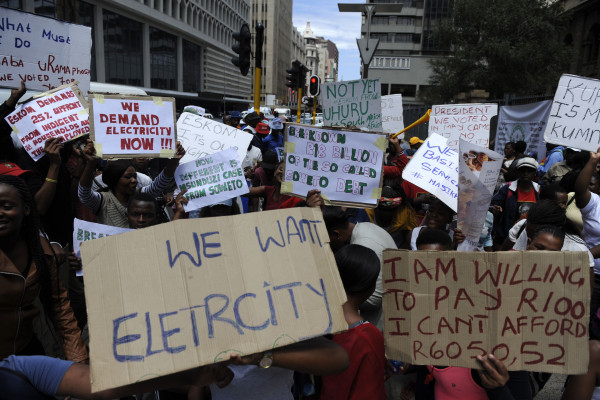
In an era when such futuristic technologies as artificial intelligence, robotics, and quantum computing are here or on the horizon, almost half of sub-Saharan Africans — more than 600 million people — lack the electricity to heat, cool, or light their homes.

This energy poverty impedes nearly every aspect of life for this population, from conducting business and educating their children to deterring crime and providing healthcare.

Even in some well-electrified African nations such as Ghana, Gabon, and South Africa, the supply is inadequate and often unavailable.

As the African Energy Chamber (AEC) put it in our newly released The State of African Energy Outlook Report 2024, “Access to electricity in Africa is still a dream to millions of Africans.”

Our report gives compelling evidence to back this statement, providing statistics that show, among other things, that energy poverty is markedly deeper in sub-Saharan Africa (SSA) than in the rest of the continent.

Our report is sobering, but not without hope. It also provides a positive look toward the future, including energy developments likely to improve electrification rates in SSA and move its countries' citizens closer to the universal access they dream of. The key to delivering energy to more Africans will be using both renewables and fossil fuels.

The Statistics and What's Behind Them

Our report's numbers tell the story of just how much SSA, in particular, is still affected by energy poverty.

In contrast with most of the world, where electrification rates improved during the COVID-19 pandemic, SSA's worsened, as its percentage of the world's population lacking electricity grew from 71% in 2018 to 77% in 2020. Statistics compiled in 2020 showed sub-20% levels of electricity access in up to eight countries across the region.

While the education and business sectors suffer greatly from energy poverty, it is perhaps most acutely felt in the health sector, where medical equipment and procedures require electrical power.

Complicating the health impacts still further, households without electricity are often forced to use unhealthy fuels like wood, coal, or kerosene to cook and heat, producing indoor air pollution that leads to respiratory problems and other ailments.

In contrast to the 90%-plus electrification rate found in some North African countries, which is allowing them to decrease reliance on fossil fuels, electricity access in SSA is only about 55%, and a closer look at that number reveals it is driven by urban rates of close to 80%, while rural areas lag far behind with only about 33%, leaving two-thirds of residents in the dark.

In a nutshell, SSA has a lot of catching up to do to achieve the levels of access to electricity enjoyed by most of the world. Although the region has doubled the average rate of access since 2000, its current rate of just over half of the region's population is miniscule compared to the 90% global rate and the 80% North African rate.

As I said, even in SSA countries where electrification rates are quite high, such as Ghana, Gabon, and South Africa, load shedding presents a daily practical problem for people who must anticipate power outages. In South Africa, for instance, this type of staged rationing has been used every day this year by the power utility, Eskom.

Already in 2023, there has been more load-shedding in South Africa than in all of 2022, and outages are lasting longer — up to 12 hours daily — with a predictable disabling effect on economic development.

Meanwhile, the country's chasm between supply and demand only continues to expand.

Changes in Progress: South Africa as a Case in Point

The South African government is taking a proactive approach to the regulatory side of improving energy supply, shortening timelines for obtaining environmental authorizations and grid approvals.

It is also working to obtain and use USD98.7 billion in investment capital over the next five years for its Just Energy Transition Investment Plan (JETIP), a framework adopted in 2022 that outlines the country's strategic priorities for investment during climate transition.

A major thrust of JETIP is replacing the use of coal, which currently supplies over 80% of South Africa's power, with renewable energy, expected to grow from a current 11% of the power supply to 20% by the end of this decade and to over half of the supply by 2050.

Contributing to those numbers, Eskom-built renewables projects are slated to go live this year in Lethabo and Sere, and the utility will soon start building solar and battery storage facilities at Komati Lethabo and Majuba for a total of 2.8 gigawatts (GW) of new renewables capacity.

Of the total projected electricity capacity, solar, and wind are expected to drive almost 50% with fossil fuels adding up to a 10th of total projected capacity.

Implications for the Continent

These power-related statistics for South Africa—a country better positioned than many Sub-Saharan nations regarding electricity—show that the country, and therefore the continent, needs gas-to-power and battery storage along with wind and solar.

South Africa's numbers highlight a major point made in my recent book, “A Just Transition: Making Energy Poverty History with an Energy Mix,” — that, while the rest of the globe deals with the threat of devastating climate change, Africa must deal with two major challenges at once: the threat of climate change and debilitating energy poverty.  

Even as Africa works to support global efforts to prevent a climate crisis, we must embrace every solution available to us, including using our continent's vast natural gas reserves: totaling more than 800 trillion cubic feet. Not only is gas plentiful, but it's also the cleanest fossil fuel; producing it contributes to job creation and economic growth; and it can be monetized to help pay for energy infrastructure.

The “bottom line” is that Africa still needs to use its natural gas, and more of it, to deliver a much-needed increased supply of energy to its people.

Download The State of African Energy 2024 Outlook report: https://apo-opa.co/3QLEoHd

Distributed by APO Group on behalf of African Energy Chamber.

Media files
African Energy Chamber
Download logo
Read morePoverty and Progress: An Update on African Energy
12 December 2023

President establishes Presidential PhD Initiative to boost innovation

Location: News

President establishes Presidential PhD Initiative to boost innovation

President Cyril Ramaphosa announced on Tuesday that government has established the Presidential PhD Initiative through an initial R1 billion investment from the National Skills Fund in efforts to boost science and technology.  

“The first phase aims to expose our country’s brightest young minds to cutting-edge thinking and research by negotiating opportunities at world-leading universities and research centres,” he explained.

President Ramaphosa announced the initiative during the inaugural Presidential Science, Technology and Innovation (STI) Plenary in Pretoria. 

The President told the attendees that the studies will be to large scale and established research programmes in public research facilities and industry.

The initiative will build critical skills in artificial intelligence research, advanced biotechnology, fuel cell development, battery storage, and next-generation mining. 

The country’s first citizen has since called to extend a call to the private sector and international partners to assist in growing the investment for the Presidential PhD Initiative fund to R5 billion by 2030. 

He said collaboration is needed to ensure synergy between programmes across the national innovation system. 

“We must harness education, science and innovation to protect our natural environment, drive inclusive economic growth and enrich all areas of human endeavour.” 

The country’s Commander-in-Chief described the first plenary as an important initiative that brings together government, academia, civil society and industry to collectively drive South Africa’s National System of Innovation (NSI). 

In November 2022, the Cabinet adopted the STI Decadal Plan to guide the first 10 years of implementing the 2019 White Paper on STI.

“Science, technology and innovation are essential for economies to thrive and for societies to prosper. 

“In the new world of work, in the era of the Fourth Industrial Revolution, science, technology and innovation determine which countries move forward and which are left behind. Our country has several strengths.”

Citing the 2022 Global Innovation Index published by the World Intellectual Property Organisation, he said South Africa ranked above the upper-middle-income group average in three areas. 

These include market sophistication, knowledge and technology outputs, and creative outputs.

According to the index, South Africa also improved the number of patents by origin, citable documents, intellectual property receipts, high-tech manufacturing and high-tech exports. 

“However, our performance is mixed for the factors that drive innovation, such as education expenditure, expenditure on research and development and access to information technology.”

The President also highlighted significant strides in higher education including the number of students graduating from public universities from about 60 000 in 1994 to around 230 000 by 2018. 

“The share of graduates in science, engineering and technology fields has been increasing compared to graduates in the humanities.”

He also acknowledged that the State needed to significantly increase investment in research and development. 

In 2021, gross expenditure on research and development (R&D) in South Africa was 0.6% of Gross Domestic Product (GDP), far below the targeted 1.5%.

“By comparison, in 2022, the United States spent 2.6% and South Korea spent 5% of their respective GDPs on research and development. 

“This is a situation that we are determined to turn around. Through greater cooperation between government and industry, we can reverse this trend.”

President Ramaphosa is of the view that the potential of science, technology and innovation to modernise and expand the productive sectors is vast. 

He cited the Mandela Mining Precinct and the South African Mining Extraction Research, Development and Innovation initiative, which are aimed at revitalising our mining industry. 

Shifting his focus on vaccines, he said Afrigen Biologics, a South African company part-owned by the Industrial Development Corporation, is working on a new tuberculosis vaccine using mRNA technology. 

Meanwhile, the Bill and Melinda Gates Foundation recently allocated US$5 million to Biovac to develop mRNA vaccines using a local platform. 

“This grant enables our researchers and scientists to strengthen the pharmaceutical research and vaccine production ecosystem so that we can address both current and future health challenges.” 

He said he views innovation as the driver of sustainable job creation and small business development and tackles the realities of climate change. 

“From these examples, it is clear that we are certainly progressing, but not at the pace we should be,” he admitted. 

“For science, technology and innovation to serve South Africa’s economy and society effectively, we need to aggressively and strategically invest in education and skills development because this is the lifeblood of a modern economy.

“We know that nations such as Japan, South Korea and Germany have science, technology and innovation in the service of their societies, with commendable results.”

However, Nzimande qualified that when they talk about STI, they refer to both the natural and social sciences and humanities. 

“For it is only possible to understand, let alone solve the major developmental and existential challenges of the 21st century through invoking the insights of trans-disciplinary knowledge.” – SAnews.gov.za


Gabisile
Tue, 12/12/2023 - 13:58

521 views
Read morePresident establishes Presidential PhD Initiative to boost innovation
12 December 2023

President establishes Presidential PhD Initiative to boost innovative

Location: News

President establishes Presidential PhD Initiative to boost innovative

President Cyril Ramaphosa announced on Tuesday that government has established the Presidential PhD Initiative through an initial R1 billion investment from the National Skills Fund in efforts to boost science and technology.  

“The first phase aims to expose our country’s brightest young minds to cutting-edge thinking and research by negotiating opportunities at world-leading universities and research centres,” he explained.

President Ramaphosa announced the initiative during the inaugural Presidential Science, Technology and Innovation (STI) Plenary in Pretoria. 

The President told the attendees that the studies will be to large scale and established research programmes in public research facilities and industry.

The initiative will build critical skills in artificial intelligence research, advanced biotechnology, fuel cell development, battery storage, and next-generation mining. 

The country’s first citizen has since called to extend a call to the private sector and international partners to assist in growing the investment for the Presidential PhD Initiative fund to R5 billion by 2030. 

He said collaboration is needed to ensure synergy between programmes across the national innovation system. 

“We must harness education, science and innovation to protect our natural environment, drive inclusive economic growth and enrich all areas of human endeavour.” 

The country’s Commander-in-Chief described the first plenary as an important initiative that brings together government, academia, civil society and industry to collectively drive South Africa’s National System of Innovation (NSI). 

In November 2022, the Cabinet adopted the STI Decadal Plan to guide the first 10 years of implementing the 2019 White Paper on STI.

“Science, technology and innovation are essential for economies to thrive and for societies to prosper. 

“In the new world of work, in the era of the Fourth Industrial Revolution, science, technology and innovation determine which countries move forward and which are left behind. Our country has several strengths.”

Citing the 2022 Global Innovation Index published by the World Intellectual Property Organisation, he said South Africa ranked above the upper-middle-income group average in three areas. 

These include market sophistication, knowledge and technology outputs, and creative outputs.

According to the index, South Africa also improved the number of patents by origin, citable documents, intellectual property receipts, high-tech manufacturing and high-tech exports. 

“However, our performance is mixed for the factors that drive innovation, such as education expenditure, expenditure on research and development and access to information technology.”

The President also highlighted significant strides in higher education including the number of students graduating from public universities from about 60 000 in 1994 to around 230 000 by 2018. 

“The share of graduates in science, engineering and technology fields has been increasing compared to graduates in the humanities.”

He also acknowledged that the State needed to significantly increase investment in research and development. 

In 2021, gross expenditure on research and development (R&D) in South Africa was 0.6% of Gross Domestic Product (GDP), far below the targeted 1.5%.

“By comparison, in 2022, the United States spent 2.6% and South Korea spent 5% of their respective GDPs on research and development. 

“This is a situation that we are determined to turn around. Through greater cooperation between government and industry, we can reverse this trend.”

President Ramaphosa is of the view that the potential of science, technology and innovation to modernise and expand the productive sectors is vast. 

He cited the Mandela Mining Precinct and the South African Mining Extraction Research, Development and Innovation initiative, which are aimed at revitalising our mining industry. 

Shifting his focus on vaccines, he said Afrigen Biologics, a South African company part-owned by the Industrial Development Corporation, is working on a new tuberculosis vaccine using mRNA technology. 

Meanwhile, the Bill and Melinda Gates Foundation recently allocated US$5 million to Biovac to develop mRNA vaccines using a local platform. 

“This grant enables our researchers and scientists to strengthen the pharmaceutical research and vaccine production ecosystem so that we can address both current and future health challenges.” 

He said he views innovation as the driver of sustainable job creation and small business development and tackles the realities of climate change. 

“From these examples, it is clear that we are certainly progressing, but not at the pace we should be,” he admitted. 

“For science, technology and innovation to serve South Africa’s economy and society effectively, we need to aggressively and strategically invest in education and skills development because this is the lifeblood of a modern economy.

“We know that nations such as Japan, South Korea and Germany have science, technology and innovation in the service of their societies, with commendable results.”

However, Nzimande qualified that when they talk about STI, they refer to both the natural and social sciences and humanities. 

“For it is only possible to understand, let alone solve the major developmental and existential challenges of the 21st century through invoking the insights of trans-disciplinary knowledge.” – SAnews.gov.za


Gabisile
Tue, 12/12/2023 - 13:58

14 views
Read morePresident establishes Presidential PhD Initiative to boost innovative
8 December 2023

Conference To Tackle Challenges Facing Corporate Governance

Location: MyPR

Insufficient corporate governance lies at the core of several societal welfare and democratic challenges, spanning from dysfunctional municipalities struggling to meet service delivery needs due to corruption and inefficiency, to disparities in the private sector such as wage gaps and collusive practices that do not serve the public interest. Addressing the critical issues surrounding ethical …

Read moreConference To Tackle Challenges Facing Corporate Governance
6 December 2023

The Artificial Intelligence (AI) hit list: Six menacing threats you need to know

Location: News
KnowBe4

By the end of this year already, the market for artificial intelligence (AI) in South Africa is projected to reach (https://apo-opa.co/481NZ3n) a size of $2.4 billion, showing an annual growth rate of 21% between now and 2030. Locally, the technology has the potential to mitigate security risks, enhance decision-making, address legacy challenges, and have a significantly positive societal impact. Despite the impressive applications and implications, Anna Collard, SVP Content Strategy & Evangelist at KnowBe4 AFRICA (https://www.KnowBe4.com), warns of the associated risks that need to be considered.

“Generative AI models are trained on data from various sources,” she explains, highlighting that these sources are not all verified, lack sufficient context, and are not regulated. “AI is incredibly helpful in handling the mundane administrative tasks associated with spreadsheets and statistics. However, it becomes concerning when we rely on it to make decisions that have the potential to influence people's lives.”

AI is an algorithmic construct built on the bones of human creative endeavours and data that is often flawed and biased. “As Kate Crawford, a professor at the University of Southern California and Microsoft researcher, pointed out (https://apo-opa.co/3GwCPYK), AI is not truly artificial or intelligent. This poses risks that can have long-term consequences if users are unaware of them,” explains Collard.

Here are six of the most concerning risks:

01: AI hallucinations: Earlier this year, a New York attorney used a conversational chatbot for legal research. The AI deceitfully incorporated six fabricated precedents into his filing, falsely attributing them to prominent legal databases. This is a perfect example (https://apo-opa.co/3uJjW2e) of an AI hallucination, where the output is either fake or nonsense. These incidents happen when prompts are outside of the AI's training data and so the model hallucinates or contradicts itself in order to respond.

02: Deepfakes: The implications of fake images extend to various areas. With the rise of fake identities, revenge porn, and fabricated employees, the range of potential misuse for AI-generated photographs is expanding. One particular technology called Generative Adversarial Network (GAN) (https://apo-opa.co/481j1Zi) is a type of deep neural network capable of producing new data and generating highly realistic images by using random input. This technology opens up the realm of deepfakes, where sophisticated generative techniques manipulate facial features and can be applied to images, audio, and video. This form of digital puppetry carries significant consequences in political persuasion, misinformation or polarization campaigns.

03: Automated and more effective attacks: This taps directly into the potential of GAN mentioned before, as cybercriminals make use of deepfakes in more sophisticated attacks. They use it in impersonation attacks, where fake voice or even video versions of someone can be used to manipulate victims into paying or following other fraudulent instructions. Cybercriminals also benefit from jailbroken generative AI models to help them automate or simplify their attach methods, such as for example automating the creation of phishing emails.

04: Media equation theory: This refers to the fact that human beings have a tendency to attribute human characteristics to machines and develop feelings of empathy towards them. This tendency becomes even stronger when the interactions with machines seem intelligent. Although this can positively impact user engagement and support in the service sector, it also carries a risk. People become more vulnerable to manipulation, persuasion, and social engineering because of this over-trust effect. They tend to believe and follow machines more than they should. Research has shown (https://apo-opa.co/3RvGVqg) that people are likely to alter their responses to queries in order to comply with suggestions made by robots.

05: The manipulation problem: AI, through the use of natural language processing, machine learning, and algorithmic analyses, can both respond to and simulate emotions. By gathering information from various sources, agenda driven AI chatbots for example can promptly react to sensory input in real time and utilise it to accomplish specific objectives, such as persuasion or manipulation. These capabilities create opportunities for the dissemination of predatory content, misinformation, disinformation, and scams.

06: Ethical issues: The presence of bias in the data and the current absence of regulations regarding AI development, data usage, and AI application all raise ethical concerns. Global efforts are underway to tackle the challenge of ethics in AI and reduce the risks of AI poisoning, which entails manipulating data to introduce vulnerabilities or biases. “However, South Africa currently lacks momentum in addressing these issues. This must change, as managing and detecting the risk of polluted AI data before it causes long-term harm is essential.” Says Collard.

“It is important to be mindful of the information we share with AI chatbots and virtual personal assistants. We should always question how our data is being used and by whom,” concludes Collard. “There is a risk of sharing sensitive personal and business information with data training models. While AI is a valuable tool, it is crucial to use it with critical thinking and mindfulness, and only rely on it in situations where it provides the most value and has been fact checked.”

Distributed by APO Group on behalf of KnowBe4.

Media files
KnowBe4
Download logo
Read moreThe Artificial Intelligence (AI) hit list: Six menacing threats you need to know
30 November 2023

11th Annual Mistra Lecture To Unpack Potential And Pitfalls Of AI

Location: MyPR

South Africa, 29 November 2023 – The Mapungubwe Institute for Strategic Reflection (MISTRA), in partnership with the University of Johannesburg, is set to host the 11th annual Mapungubwe Lecture on Wednesday, 06 December 2023. The annual lecture is the institute’s flagship event and has been happening annually since 2012. A highlight on the academic and …

Read more11th Annual Mistra Lecture To Unpack Potential And Pitfalls Of AI
29 November 2023

The Dynamic World of Software Development in South Africa

Location: MyPR

South Africa’s technology landscape is undergoing a significant transformation, with software development playing a pivotal role. The growth of software companies in this region not only marks a substantial shift in the economic and technological paradigms but also highlights South Africa’s burgeoning influence in the global tech arena.   The Landscape of Software Development Companies …

Read moreThe Dynamic World of Software Development in South Africa
28 November 2023

Crypto Investment: Licences You Need and Rules You Need To Know

Location: MyPR

What is a cryptocurrency investment licence, and why is it needed? The Fintech legal sector has seen an increase of activity in recent years spurred on by the disruptive nature of blockchain technology, distributed ledgers, smart contracts and the use of artificial intelligence and data analytics. Regulators recognise the potential of the Fintech innovations and …

Read moreCrypto Investment: Licences You Need and Rules You Need To Know
28 November 2023

Top 10 Fintech Regulatory Challenges faced in 2023

Location: MyPR

As digital transformation continues to accelerate, it is evident that the fintech sector is not just responding to current demands, it is also anticipating the future needs of businesses and consumers alike. With the emergence of decentralised platforms to the integration of financial services into everyday consumer experiences, each year brings significant milestones in the …

Read moreTop 10 Fintech Regulatory Challenges faced in 2023
14 November 2023

From soft skills to core competencies – the current essentials for future entrepreneurial success

Location: MyPR

To succeed in the future, entrepreneurs must embrace technology, social imperatives, and adaptability. With advancements in artificial intelligence, sustainability and decentralised finance, the business landscape is shifting rapidly. With this, entrepreneurs need to integrate cutting-edge technologies and adopt ethical and sustainable practices. Digital transformation and changing regulations have redefined traditional business operations, making geographical locations …

Read moreFrom soft skills to core competencies – the current essentials for future entrepreneurial success
14 November 2023

Finding the Best Leak Detection Services Near You

Location: MyPR

Water is a precious resource that we rely on for our daily lives. From drinking and cooking to bathing and cleaning, water plays an integral role in our well-being. However, water leaks can pose a significant threat not only to our water supply but also to our homes and businesses. This is why it’s crucial …

Read moreFinding the Best Leak Detection Services Near You
10 November 2023

KZN positions to become a technological hub

Location: News

KZN positions to become a technological hub

The KwaZulu-Natal Provincial Government is accelerating efforts to roll out broadband across the province in order to ensure universal connectivity, and position the province as a technological hub.
 
Speaking at the opening of the KwaZulu-Natal Information, Communication and Technology (ICT) Summit, currently underway at the Durban Exhibition Centre, Premier Nomusa Dube-Ncube said as part of KwaZulu-Natal Digital Transformation Strategy, the province aims to deliver a citizen-centric plan which guides the leap to a digitally transformed society. 

“Our strategy is awake to the reality that the province is currently only 27% connected and we have identified the need to accelerate the connectivity of the entire province. Among others, our Digital Transformation Strategy will aid government-to-government interaction across spheres, government-to-citizen interaction, and government-to-business interaction,” Dube-Ncube said.

Held from 09-10 November 2023, the summit brings together digital experts, including stakeholders and representatives from the public and private sectors to discuss and demonstrate the role of technology in improving operations, processes and service delivery for the benefit of the communities in KwaZulu-Natal.

The summit, which is hosted jointly with Vodacom Business and provincial government, is a unique platform for ICT experts, private sector and government leaders to engage and explore cutting-edge technology solutions designed to transform the business landscape.

Themed “Moving KZN Towards a Smart Province”, the summit focuses on turning KwaZulu-Natal into a smart and technology connected province, which leaves no one behind.

Dube-Ncube highlighted that the province is hard at work, and currently rolling out Wi-Fi hotspots and Digi-centres in townships and rural centres, including libraries, schools, health youth zones, and community service centres. 

Work done by the Office of the Premier includes the roll-out of a series of 4IR activations to install Wi-Fi hotspots that will enable schools and citizens to access internet as well as the training of 3 875 youth in four activated districts covering 16 areas. 

“Digital hubs were installed at the schools to enable the learners to have access to equipment [and] teachers were also trained in data science to include in their school’s curriculum, to ensure the learners will be trained on areas of Artificial Intelligence and Robotics.

“All 164 provincial libraries have Wi-Fi connectivity and all hospitals and clinics are connected,” Dube-Ncube said. 

The Premier emphasised the importance of building broadband infrastructure together with the private sector to improve the status of connectivity in the province.

“Partnerships between private and public sector are central and mutually beneficial. We welcome and appreciate the role that the private sector is playing in supporting our vision of positioning KwaZulu-Natal as a Smart Province,” Dube-Ncube said.

Vodacom Business has been working with the government on several connectivity solutions to help the province achieve its universal connectivity targets.

Meanwhile, the Department of Transport is in discussions with the Road Traffic Management Corporation (RTMC) to investigate the implementation of an online registration system, which will be piloted in the uMgungundlovu and eThekwini Districts.

The provincial Economic Development, Tourism and Environmental Affairs (EDTEA) has to date, spent almost R8.6 million in rolling out digital centres across the province. – SAnews.gov.za


GabiK
Fri, 11/10/2023 - 10:54

100 views
Read moreKZN positions to become a technological hub
9 November 2023

Phakamisa Sustainability and Innovation Summit advances healthcare resilience in South Africa

Location: News
AstraZeneca

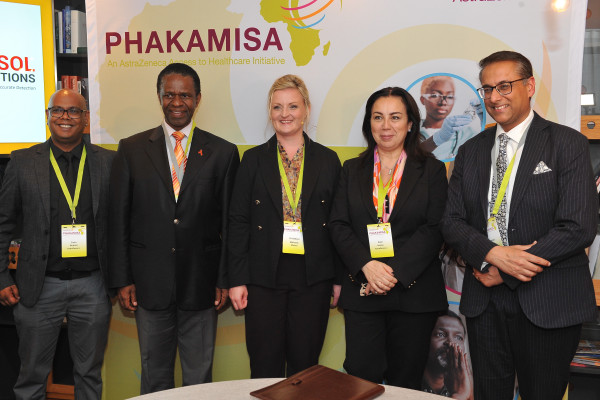
In a boost to South Africa's healthcare resilience, the first Phakamisa Sustainability and Innovation Summit has paved the way for more effective, efficient, and equitable delivery of high-quality healthcare across the country.  

Hosted at the Embassy of Sweden, the first-of-its-kind summit focussed on prevention and early detection, capacity building and health equity, and optimising the use of innovation to build sustainable healthcare systems. The Summit delved into issues of growing concern, including noncommunicable diseases such as cancer, diabetes, and heart disease, which have increased dramatically in South Africa in recent decades. [1] Pre-eminent speakers came from across the healthcare ecosystem, including Deputy Minister of Health, Dr Sibongiseni Dhlomo, as well as representatives from businesses, patient groups, non-governmental organisations, and the United Nations.

To kick off the event, global pharmaceutical company AstraZeneca signed a partnership agreement with Rare Diseases South Africa, supporting the creation of a national registry for rare diseases and providing training and help for young patients and caregivers aged 18-30 affected by rare diseases. 1 in 15 South Africans is estimated to be affected by rare diseases, the collective name for more than 7,000 different conditions. The partnership will increase understanding of the burden of rare diseases in South Africa and improve equitable health care for those affected.

In addition, AstraZeneca also announced an expansion of its existing collaboration with Medsol AI Solutions, which deploys state-of-the-art Wi-Fi ultrasound probes to detect lesions at high risk of breast cancer in seconds. The AI (Artificial Intelligence) rapid detection app has already been rolled out in rural Melusi and Daspoort Poli Clinics in Tshwane to help with early disease detection. It will now be expanded to breast cancer screening programs at Tintswalo Breast Health Clinic, Groote Schuur Hospital Breast Clinic and Quadcare Clinic in Alexandra.

Pelin Incesu, Area Vice President, Middle East and Africa, AstraZeneca, stated, "In partnership with the government and other stakeholders, AstraZeneca is working tirelessly to strengthen South Africa's healthcare system by focusing on providing equitable access to care and medicines and exploring innovative technology that can detect disease at an earlier stage, improving patient outcomes. The Phakamisa Sustainability and Innovation Summit provides a platform to collectively explore new ways to prevent emerging threats to health like non-communicable diseases, to diagnose patients earlier and quicker, and to ensure all healthcare practitioners have the skills to deliver top-quality care to patients, no matter who they are or where they live.”

Dr Sibongiseni Dhlomo, Deputy Minister of Health, Republic of South Africa, said, “We are committed to delivering quality healthcare services for all South Africans, and that means working with partners across the public, private and third sector to ensure our health system is sustainable and resilient, able to meet current and future challenges. With non-communicable diseases rising, prevention, early detection, and capacity building are at the forefront of these efforts.”

Kelly Du Plessis, Rare Disease South Africa added, “These agreements are the next step in our mission to create a better tomorrow for the millions of South Africans who have been or will be, diagnosed with a rare disease or congenital disorder in their lifetime. The Phakamisa Sustainability and Innovation Summit is a fitting occasion to announce these partnerships, as improving care for those with rare diseases will help to strengthen our entire health system.”


[1] Republic of South Africa, Department of Statistics: https://apo-opa.co/47kDNCI. (Accessed November 2023)

Distributed by APO Group on behalf of AstraZeneca.

For media enquiries, please contact mediamea@astrazeneca.com

About Phakamisa:
Phakamisa is AstraZeneca's access to healthcare initiative in South Africa. Now in its 11th year, Phakamisa, which means “upliftment”, brings together different organisations and is helping to reduce the burden of non-communicable disease including breast cancer, prostate cancer, and lung cancer. The programme has reached over 1.63 million people through outreach activities led by community healthcare workers with over 19 700 women identified with breast issues (https://www.MyPhakamisa.com/).

About AstraZeneca:
AstraZeneca (LSE/STO/Nasdaq: AZN) is a global, science-led biopharmaceutical company that focuses on the discovery, development, and commercialisation of prescription medicines in Oncology, Rare Diseases, and BioPharmaceuticals, including Cardiovascular, Renal & Metabolism, and Respiratory & Immunology. Based in Cambridge, UK, AstraZeneca operates in over 100 countries, and its innovative medicines are used by millions of patients worldwide. Please visit Astrazeneca.com and follow the Company on Twitter (https://apo-opa.co/3QOeunc).

Media files
AstraZeneca
Download logo
Read morePhakamisa Sustainability and Innovation Summit advances healthcare resilience in South Africa
8 November 2023

Patel unveils strategy charting the course for SA’s Global Business Services

Location: News

Patel unveils strategy charting the course for SA's Global Business Services

Trade, Industry and Competition Minister Ebrahim Patel on Tuesday unveiled a forward-looking strategy charting the course for South Africa's Global Business Services (GBS) sector.

Patel made the announcement during his opening address at the annual BPESA [Business Process Enabling South Africa] GBS | BPO Conference, which took place in Cape Town.

Patel highlighted the sector's pivotal role in job creation and economic expansion, emphasising the vital partnerships between government, private sector and employees.

He noted the GBS sector's achievements, citing its contributions to job growth, geographic expansion and its impact on the national economy.

Government has invested more than R3 billion since 2016 in the sector, which currently employs more than 31 000 employees in firms receiving national government support, earning significant sums of foreign exchange to the country. The industry has a Sector Masterplan that drives its growth and development.

Patel outlined the next phase of the GBS sector, focusing on expanding operations across provinces and towns, with a strong emphasis on high-value services in services in Information Technology, finance, health, legal and retail.

The sector will need to address the challenges of artificial intelligence in consumer servicing markets. Underlining the importance of language and technical skills, he stressed the need to tap into South Africa's diverse talent pool and the country's robust customer service culture.

He noted a number of strengths in the local economy that international investors pointed to as reasons for choosing SA as a destination for their GBS-centres.

South Africa now services markets in the United Kingdom, United States of America, Canada, Australia, China, Mauritius, Belgium, the Netherlands, Germany and France.

The sector was youth-focused, with 90% of employees being young people, and six out of ten employees being women.

“The face of the industry is female and young people, which fits in well with our national priorities,” Patel said.

Addressing the crucial issue of ethical sourcing, Patel acknowledged consumers' growing awareness of social and environmental conditions.

He emphasised the industry's commitment to ethical practices and called for improved social impact and strengthened labour relations and decent working conditions, in line with the principles enshrined in the South African constitution.

"Ethical sourcing presents both a market challenge and a tremendous opportunity. As consumers demand transparency in production conditions, we must showcase our strengths while enhancing their impact in local operations," Patel said.

With a government allocation of R569 million to the GBS sector this financial year, these initiatives mark a significant stride toward ensuring the sector's resilience, competitiveness and positive impact on both the national economy and the workforce. – SAnews.gov.za

Edwin
Wed, 11/08/2023 - 14:19

211 views
Read morePatel unveils strategy charting the course for SA’s Global Business Services
2 November 2023

SARS welcomes MTBPS revenue revision

Location: News

SARS welcomes MTBPS revenue revision

The South African Revenue Service (SARS) has welcomed the tabling of the Medium Term Budget Policy Statement (MTBPS), despite the statement’s downward revision of revenue collection by some R56.8 billion.

The MTBPS was tabled by Finance Minister Enoch Godongwana in Parliament on Wednesday.

“SARS has continued with its core functions of collecting all that is due to the fiscus. During the first half of the current fiscal year, we have collected gross revenue totalling R1 016.3 billion, growing by 4.5% and recording a surplus of R1.0 billion against the Budget 2023 estimate.

“This performance is on the back of strong gross collections from VAT, Fuel Levy and PIT [Personal Income Tax], partially offset by lower gross collections from CIT [Corporate Income Tax], as company profits remain under pressure. Without our assistance, the fiscal framework would have been under greater pressure.

“This is a good news story and offers hope in a currently challenging environment. Through focused commitment, SARS has paid back to the economy through refunds for the first six months of the current fiscal year an amount totalling R212.2 billion, higher by R24.6 billion over the prior year and higher than the Budget 2023 estimate by R30.1 billion,” the revenue service said in a statement.

The 2023 main budget had projected collections would reach some R1.78 trillion but that has now been revised down to R1.73 trillion.

“Income and profits in the broader economy have been adversely affected from what was anticipated at the 2023 February Budget. Provisional corporate income tax collections, from especially the mining sector, have reduced at the end of the June 2023 and led to a larger than expected deficit against the 2023 Budget estimate.

“Nevertheless, higher-than-estimated profitability in the finance sector (amongst others) supported provisional corporate income tax and dividends tax collections. Main sector performance that showed growth includes – Finance 7.8% from employment and vesting of shares, Community 6.8% from annual salary increases (mainly Government) and Wholesale 6.2%, mainly from retail and vehicles,” SARS said.

The revenue service highlighted that net tax revenue performance is “impacted adversely” by local and global challenges.

“A slowdown in mining production is down 55% due to lower demand of coal. This is compounded by disruptions to and underinvestment in freight and logistics networks, which erode the competitiveness of the South African economy. The intermittent and inadequate electricity supply remains the most immediate and significant constraint to production, investment, and employment.

“Rising inflation rates constrained household spending by raising the cost of living. Global growth slowed further in recent months. Central banks are countering the effects of high inflation by implementing restrictive monetary policies for longer than anticipated which negatively impact on all developing countries. Several global risks remain, including the increase in geo-political tensions, resulting in the need for stronger domestic demand to support economic growth,” SARS said.

The revenue service added that Gross Compliance Revenue yielded some R118.4 billion.

Key focus areas in this regard include:

  • R11.9 billion from revised assessments flowing from the verification of 1.12 million returns, up Y/Y up by R5 billion (70%).
  • Almost R40 billion that was secured from resolving more than 440k debt collection cases, up Y/Y R4 billion (±12%).
  • R2.3 billion secured from 121 illicit investigations and 181 state capture cases in progress, 27 cases handed to the NPA.

Fraudulent claims

SARS highlighted that fraudulent refund claims remain a concern for the tax collector.

“At R172.1 billion, VAT refund payments contribute 81% to the overall outflows, growing against last year by R21.5 billion. 84% of all VAT Refunds are paid within 21 days, up from 77% last year. However, like all other revenue agencies, impermissible and fraudulent refunds remain a concern in this year, SARS prevented R45 billion from being paid out.

“Equally important is that we have prevented R45 billion from being paid out following verification activities that were enabled by Artificial Intelligence. Impermissible and fraudulent refunds remain a concern, and we must deal with this phenomenon,” the tax collector said.

SARS Commissioner Edward Kieswetter encouraged South Africans to do the right thing and pay what is due to the tax authority.

“The historic win by the Springboks on Saturday communicates an important yet simple message – that every single point makes a massive difference between winning and losing. While the odds were stacked heavily against the Springboks, it took superhuman efforts individually and collectively to contribute to what at times look like an impossible victory.

“It is therefore incumbent upon all of us as South Africans to play by the rules like the Springboks and never give up until the final whistle blows,” Kieswetter said. – SAnews.gov.za

NeoB
Thu, 11/02/2023 - 09:07

654 views
Read moreSARS welcomes MTBPS revenue revision
1 November 2023

SSL Certificates And HTTPS In SEO

Location: MyPR

You’ve probably noticed that little padlock icon next to a website’s URL and wondered what it’s all about. It’s more than just an icon, it’s a sign of security – the result of something called SSL certificates and HTTPS. But what are they exactly? And why do they matter for SEO? Well, as you navigate …

Read moreSSL Certificates And HTTPS In SEO
31 October 2023

Boomtown Graphic Designer makes it a hat-trick for Brands & Branding

Location: MyPR

Member of the Boomtown Brand Design team, graphic designer Michelle Conway-Cleaves, has designed her third Brands & Branding South Africa in a row – the hat-trick began with Brands & Branding 2021, continued with Brands & Branding 2022 and now, with the publication of Brands & Branding 2023, comes full circle. Boomtown typically briefs two …

Read moreBoomtown Graphic Designer makes it a hat-trick for Brands & Branding
  • Previous
  • Page 1
  • Interim pages omitted …
  • Page 6
  • Page 7
  • Page 8
  • Page 9
  • Next

Copyright © 2026 · MyZA · All Rights Reserved · Powered by Reach Trust