• Skip to main content
  • Skip to header right navigation
  • Skip to after header navigation
  • Skip to site footer
MyZA

MyZA

News, Directory, Events and Other Stuff

  • Social Media
  • Sport
  • World News
  • Home
  • Submit News
  • Directory
  • Events
  • Stratlec
  • TFSA
  • News
    • APO
    • Today’s Sport News
    • Todays Social Media and Tech Headlines
    • Today’s World News
    • Today’s SA Financial News
  • Contact
You are here: Home / Archives for automotive

automotive

24 June 2026

South Africa’s Vehicle Market Proves Resilient as Affordability Reshapes Demand

Location: Business
  • Passenger vehicle sales reached 114,517 units in Q1 2026, with year-on-year growth moderating to 12.6%
  • Chinese brands account for more than 19% of new passenger and light commercial vehicle sales nationally
  • Hybrid vehicle interest rose to 39%, reinforcing hybrids as South Africa’s primary pathway in the shift toward electrified vehicles

South Africa’s passenger vehicle market remained resilient in the first quarter of 2026, but demand is evolving. Rising affordability pressures, higher fuel costs, the growth of Chinese brands and shifting powertrain preferences are reshaping the automotive landscape.

According to TransUnion’s Q1 2026 Mobility Insights Report, passenger vehicle sales reached 114,517 units in Q1 2026, slightly higher than the 114,246 units recorded in Q4 2025. Year-on-year (YoY) growth eased to 12.6%, down from the stronger performance seen during parts of 2025, but demand remained elevated despite a more uncertain macroeconomic environment.

A Stronger Start, But Growing External Pressures

The report, which provides a first quarter overview, indicates that South Africa entered 2026 on a stronger economic footing. This was supported by easing inflation, lower interest rates over the previous year, reduced load-shedding, and improved financial conditions.

However, rising geopolitical tensions in the Middle East and the associated oil price shock have heightened downside risks. In March 2026, inflation increased from 3.1% to 4.0% in April 2026, while the Monetary Policy Committee (MPC) recently raised the prime lending rate by 25-basis points in May 2026. Combined with higher fuel and transport costs, these factors are expected to place renewed pressure on affordability and consumer spending.

“Vehicle demand has not collapsed, but the market is moving into a more selective phase,” said Ayesha Hatea, director of research and consulting at TransUnion South Africa. “Consumers are still buying vehicles, but affordability is no longer only about the purchase price. Fuel costs, financing costs, insurance, servicing, and total cost of ownership are becoming central to the decision.”

Residual Value and the True Cost of Ownership

The report found that residual values are becoming an increasingly important component of vehicle affordability. As finance terms extend beyond six years for many buyers, depreciation and resale performance play a growing role in ownership economics, giving brands that retain value more effectively a competitive advantage.

The shift towards longer financing terms and the use of balloon structures reflects a growing focus on monthly affordability and cash-flow flexibility. However, this trend also increases exposure to residual value risk. Where vehicle values underperform expectations, consumers may face refinancing pressure or negative equity at trade-in, making used vehicle market performance an increasingly critical consideration.

Chinese Brands Reshape the Competitive Landscape

One of the most notable structural shifts is the continued rise of Chinese automotive brands. Chinese car sales grew by 75% YoY in Q1 2026, significantly outpacing traditional OEM growth of 2% and the broader passenger and light commercial vehicle (LCV) market growth of 12.7%. As a result, Chinese brands accounted for more than 19% of new passenger and LCV sales nationally, meaning nearly one in five new vehicles sold in South Africa was from a Chinese manufacturer in Q1 2026.

The shift is no longer driven solely by entry-level pricing. Chinese brands are increasingly competing on technology, features, fuel efficiency, range, warranty offerings, and perceived long-term value. On a combined portfolio basis, Chery Group, including Chery, Jetour, Omoda, and Jaecoo, recorded combined sales of 16,094 units in Q1 2026, positioning itself as a top three automotive player.

“Chinese brands have moved beyond the role of price disruptors. They are becoming structural industry players, influencing dealer networks, financing ecosystems, ownership perceptions, and the wider discussion around localisation and industrial competitiveness,” said Hatea.

Diverging Trends Across New and Used Markets

The new and used vehicle markets continued to show differing trends. NaTIS data indicates that new vehicle registrations increased by 11.6% YoY in Q1 2026, marking a sixth consecutive quarter of double-digit growth. In contrast, used vehicle registrations increased by 2.6%, suggesting a modest recovery in the secondary market, although it still trails the stronger momentum seen in new vehicle sales.

The used-to-new registration ratio declined to 2.3 in Q1 2026, the lowest level recorded over the reporting period. While used vehicles still make up the majority at 69% of total registrations, the share of new vehicles has risen to 31%, up from 23% in Q4 2025. This shift has been supported by favourable pricing dynamics, with new vehicle inflation falling to 0.8%, while used vehicle prices remained in deflation at -1.3%.

Confidence Rises, But Caution Remains

Dealer sentiment also reflects the stronger demand environment. New vehicle dealer confidence increased to 67 in Q1 2026, its highest level in 13 years. However, the report cautions that increasing fuel costs, inflation risk, and rising operating expenses could create more challenging conditions in the quarters ahead.

Forward-looking consumer data remains constructive. TransUnion’s Consumer Pulse Survey found that consumers likely to purchase a vehicle in the next few months increased from 19% in Q4 2025 to 22% in Q1 2026. Short-term purchase intent is strongest amongst younger consumers, with 26% of Gen Z and 24% of Millennials indicating plans to buy.

A Gradual Shift in Powertrain Preferences

Powertrain preferences are also evolving. Internal combustion engine vehicles remain the most popular choice, preferred by 49% of consumers in Q1 2026. However, interest in hybrid electric vehicles has grown significantly to 39%, up from 30% in Q4 2025, making hybrids the leading electrified option. Interest in both battery electric vehicles and plug-in hybrids also increased, with each reaching 26%.

“Hybrids are emerging as a practical transition pathway for South African consumers. They offer fuel savings and lower running costs without full dependence on charging infrastructure, which makes them relevant in a market where affordability and operating certainty remain critical,” said Hatea.

A Market Entering Its Next Phase

While domestic demand continues to support the industry, passenger vehicle exports remain under pressure amid trade uncertainty, geopolitical disruption, protectionism, and changing decarbonisation requirements.

“The South African automotive market is not reverting to its previous structure. The next phase will be defined by affordability, value, access to finance and how effectively industry players respond to evolving consumer behaviour,” said Hatea.

Read moreSouth Africa’s Vehicle Market Proves Resilient as Affordability Reshapes Demand
7 May 2026

Tshwane Operating Under a Fully Funded Budget

Location: News

Speech by Sarah Mabotsa, GOOD City of Tshwane Councillor and Member of the Mayoral Committee responsible for Economic Development and Spatial Planning. Note to Editor: This speech was delivered today at the City of Cape Town Council Meeting

The post GOOD WELCOMES PROGRESS OUTLINED IN TSHWANE STATE OF THE CAPITAL ADDRESS appeared first on For Good.

Read moreTshwane Operating Under a Fully Funded Budget
20 April 2026

Government’s Foot-Dragging and Incompetence Are Accelerating South Africa’s Industrial Decline

Location: News

The growing uncertainty regarding the future of South Africa’s automotive manufacturing sector is serious cause for concern and raises the question of whether government is deliberately dragging its feet with making critical policy decisions, or simply lacks the capacity to act timeously. The automotive manufacturing sector remains one of South Africa’s most important industries. It […]

The post Government’s foot-dragging and incompetence are accelerating South Africa’s industrial decline appeared first on Freedom Front Plus.

Read moreGovernment’s Foot-Dragging and Incompetence Are Accelerating South Africa’s Industrial Decline
16 March 2026

US’s Section 301 Investigation Confirms Freedom Front Plus’s Warnings About Dangers of ANC’s Reckless Foreign Policy

Location: News

The announcement by the United States (US) that it will conduct a Section 301 investigation into South Africa (and 59 other countries) to probe possible unacceptable labour practices in the manufacture of trade goods is a clear sign that Washington’s patience with the ANC is finally running out. Section 301 allows the US to impose […]

The post US’s Section 301 investigation confirms Freedom Front Plus’s warnings about dangers of ANC’s reckless foreign policy appeared first on Freedom Front Plus.

Read moreUS’s Section 301 Investigation Confirms Freedom Front Plus’s Warnings About Dangers of ANC’s Reckless Foreign Policy
12 March 2026

Affordability Drives South Africa’s Strongest New Car Sales in Over a Decade

Location: Business
  • Passenger car sales reached 114,246 in Q4 2025 (up 15.3% year over year), bringing the full-year total to 422,103 – the highest since 2014
  • Chinese brands now account for over 17% of total sales, signalling a structural shift in consumer buying behaviour
  • Younger buyers and affordability-led demand continue to drive momentum as high-income demand normalises

South Africa’s automotive market closed 2025 at its strongest level in more than a decade, supported by easing interest rates, improving vehicle pricing, and a decisive shift in how consumers evaluate vehicle affordability. While headline sales reflect a clear recovery, underlying patterns reveal a market increasingly shaped by value, sharper segmentation and intensifying competition.

According to the TransUnion South Africa Q4 2025 Mobility Insights Report, new passenger vehicle sales reached 422,103 units in 2025, representing 20.1% year-on-year growth. Momentum remained firm into the final quarter, with 114,246 vehicles sold in Q4, making it the strongest quarterly performance based on volume of the post-pandemic period.

“This recovery is real, but it is far from uniform,” says Ayesha Hatea, Senior Director of Research and Consulting at TransUnion Africa. “What we’re seeing is not a return to old buying patterns, but a more deliberate, affordability-driven market where consumers are weighing value, monthly repayments and long-term ownership costs far more carefully.”

Value Brands Cement a Structural Shift

One of the standout trends of 2025 has been the continued rise of Chinese manufacturers. These Chinese brands expanded at nearly nine times the pace of the overall market, lifting their share to more than 17% of total new passenger vehicle sales, up from less than 5% just four years ago.

Aggressive pricing of enhanced specifications, extended warranties and growing consumer trust have fuelled intensifying competitive pressure across all segments of the market.

“This is no longer a short-term disruption,” Hatea explains. “Value brands are now firmly embedded in South Africa’s automotive ecosystem, and their success highlights how decisively affordability and perceived value are influencing purchasing decisions.”

New Vehicles Regain Ground as Pricing Gaps Narrow

Improved affordability conditions shifted demand back toward new vehicles in Q4. New vehicle registrations rose 30.1% year-on-year, compared with just 0.7% growth in used vehicle registrations, narrowing the gap between the two segments. The used-to-new ratio declined to 2.9, down from approximately 3.8 in 2024.

This shift was supported by record-low new vehicle inflation of 1.2%, alongside 1.9% deflation in used vehicle prices, making monthly repayments on new vehicles increasingly competitive.

These trends align with a broader macroeconomic environment focused on easing pressure on household finances, as reinforced in South Africa’s 2026 National Budget delivered by Finance Minister Enoch Godongwana, which emphasised fiscal stability and moderating inflation. Against this backdrop, TransUnion’s data shows vehicle demand remains highly sensitive to interest rates, fuel costs and financing conditions.

“When repayment gaps narrow, buyer behaviour changes quickly,” says Hatea. “But affordability remains the single most powerful lever in sustaining demand.”

Younger Buyers Drive Momentum as Premium Demand Cools

Consumer sentiment showed modest improvement in Q4, with the share of consumers planning to buy a vehicle in the next three months rising from 17% in Q3 to 19% in Q4, according to the TransUnion Consumer Pulse Survey.

That improvement was driven primarily by younger consumers. Gen Z (ages 18-29) purchase intent increased to 25%, while Millennials (ages 30-45) rose to 21%, compared to 14% for Gen X (ages 46-61) and 7% for Baby Boomers (ages 62-80), underscoring a clear generational divide in demand.

At the same time, demand among high-income households has begun to normalise. While consumers in the highest income segment continued to show the strongest purchase intent at 20%, this marked a notable decline from 34% in Q3, indicating a cooling in premium-led purchasing.

“The centre of gravity is shifting,” Hatea notes. “Growth is increasingly coming from younger, more price-sensitive buyers rather than the top end of the market.”

Electrification Advances, on Practical Terms

Electrified mobility continued to gain traction in 2025, with new energy vehicle (NEV) sales reaching approximately 16,700 units, representing 4% of new passenger vehicle sales, up from just 0.3% in 2021.

Growth remains firmly hybrid-led, with traditional hybrids representing nearly three-quarters of NEV sales, reflecting consumer preference for lower upfront costs and limited reliance on charging infrastructure. Battery-electric vehicles remain concentrated among higher-income buyers.

“South Africa’s electrification journey is progressing, but it is pragmatic rather than aggressive,” says Hatea. “Hybrids are bridging the gap between affordability and sustainability.”

A Market Rebalanced, Not Recovered

As the industry looks ahead to 2026, TransUnion’s data suggests a market that has stabilised but remains finely balanced. “The next phase of growth will be incremental and affordability-driven,” Hatea concludes. “Manufacturers, dealers and financiers that align closely with how South Africans are actually buying, not how they bought a decade ago will be best positioned to compete.”

Read the full Q4 2025 TransUnion South Africa Mobility Insights Report here.

Read moreAffordability Drives South Africa’s Strongest New Car Sales in Over a Decade
18 February 2026

TransUnion Africa Appoints Michael Rogers as Chief Product Officer to Accelerate Client-Centric Innovation

Location: Business

TransUnion Africa, a global information and insights company, today announced the appointment of Michael (Mike) Rogers as Vice President (VP) and Chief Product Officer (CPO), effective 15 January 2026.

Rogers brings more than two decades of technology leadership, digital transformation, and product innovation experience across key African markets, including Botswana, Kenya, Rwanda, Namibia, Zambia, eSwatini, South Africa, and Malawi. His appointment underscores TransUnion’s commitment to developing market‑relevant, scalable solutions that enable organisations across Africa to grow responsibly, manage risk, and broaden access to financial services.

Most recently, Rogers served at Mastercard, where he led consulting engagement across the continent, developing new solutions for the payments ecosystem and driving performance for banking, fintech and digital commerce clients.

Prior to Mastercard, Rogers was Chief Executive Officer of Tarsus Technology Solutions, where he integrated multiple technology businesses spanning cybersecurity, infrastructure and networking and led group-wide digital transformation. He spent 18 years at Accenture, building and scaling technology consulting practices in South Africa, and was the first South African to attain Accenture’s Master Technology Architect certification.

In his new role, Rogers will lead TransUnion Africa’s end‑to‑end product strategy, with responsibility for advancing the product portfolio and strengthening sector‑specific solutions across banking, fintech, insurance, retail, automotive, telecommunications and digital commerce. His focus includes enhancing core credit and risk offerings, accelerating the responsible use of alternative data, and expanding fraud, identity and advanced analytics capabilities to meet evolving market needs.

Working closely with regional and global teams, Rogers will ensure TransUnion’s products are locally relevant, compliant and scalable across diverse African regulatory environments. A key priority will be simplifying product adoption and enhancing decisioning outcomes, enabling clients to more effectively acquire, serve and protect consumers in increasingly digital and data‑driven markets, while supporting inclusive growth across the continent.

Lee Naik, CEO and Regional President for TransUnion Africa, commented: “Mike brings an exceptional blend of technology, product and leadership experience, with a deep understanding of how data-driven products create commercial and social impact.  His appointment strengthens our ability to market-relevant solutions that help clients manage risk, grow responsibly and extend access to financial services across Africa.”

Rogers added: “TransUnion Africa sits at the intersection of trust, data and technology. My focus is to simplify adoption, improve decisioning quality and deliver products that create tangible value – helping our clients acquire, serve and protect customers in increasingly digital ecosystems. I am excited to partner with our teams and clients to bring the next generation of solutions to market.”

Read moreTransUnion Africa Appoints Michael Rogers as Chief Product Officer to Accelerate Client-Centric Innovation
6 February 2026

Government’s Failure Leaves Sa’s Automotive Industry in Crisis and Erodes Investor Confidence

Location: News

The future of Volkswagen South Africa (VWSA) – and with it more than 4 000 jobs and tens of thousands of positions throughout the automotive value chain – hangs in the balance due to government’s ongoing failure to take decisive action by making essential policy adjustments for the automotive industry. Volkswagen has unequivocally stated that […]

The post Government’s failure leaves SA’s automotive industry in crisis and erodes investor confidence appeared first on Freedom Front Plus.

Read moreGovernment’s Failure Leaves Sa’s Automotive Industry in Crisis and Erodes Investor Confidence
18 December 2025

South Africa’s Auto Market Shows Signs of Recovery as Used Vehicle Demand Rises

Location: Business
  • Used vehicle financing outpaces new car financing, with a ratio of 1.56 to 1 as affordability remains a key driver
  • New vehicle finance agreements grow by 12.7% YoY, despite economic uncertainty
  • South Africa reaches a milestone of 1,000+ battery electric vehicle (BEV) sales in 2024, with PHEV and HEV sales growing over 60% YoY

The latest TransUnion South Africa Vehicle Pricing Index (VPI) for Q4 2024 reveals a cautiously optimistic outlook for the country’s automotive sector, with improving economic conditions encouraging consumer confidence while affordability challenges continue to shape purchasing decisions.

Key insights from the report indicate a continued shift towards used vehicles, with financing for pre-owned vehicles outpacing new car financing at a ratio of 1.56 to 1, up from 1.23 in Q4 2023. Meanwhile, new vehicle prices increased by 1.7% due to supply chain constraints and production costs, while used vehicle prices declined by 2.8%, making them a more attractive option for cost-conscious buyers.

Despite these challenges, new vehicle finance agreements grew by 12.7% year-over-year (YoY), with Gen X and Millennials accounting for 67% of new agreements*.

“South Africa’s automotive sector is navigating a complex landscape, balancing economic improvements with persistent affordability challenges,” says Marcia Mayaba, Sales Vice President, Auto Information Services at TransUnion South Africa. “The demand for used vehicles continues to grow, while we’re also seeing an increasing shift towards alternative financing and ownership models, such as leasing and car subscriptions, particularly among younger consumers.”

Used Vehicles Dominate, While New Car Market Seeks Stability

The Q4 2024 VPI report highlights a strong preference for used vehicles, with financing activity significantly outpacing new vehicle sales. This shift is largely driven by affordability concerns, as inflationary pressures and high vehicle prices continue to impact consumer purchasing decisions.

The used-to-new financing ratio increased to 1.56 in Q4 2024, reflecting a clear trend toward more budget-friendly alternatives. At the same time, new vehicle registrations grew by 14.4% YoY, supported by improved economic conditions and rising consumer confidence.

The Future of South Africa’s Auto Market: EV Growth and Digital Financing

Looking ahead, the report highlights the rising potential of electric vehicles (EVs) in South Africa, signalling a significant shift in consumer interest and market dynamics. The country reached a milestone of over 1,000 battery electric vehicle (BEV) sales in 2024, a small but significant step in a market still dominated by petrol and diesel vehicles. While EVs represent a fraction of total sales, the 60% year-over-year growth in hybrid (HEV) and plug-in hybrid (PHEV) sales signals a gradual shift in consumer interest toward more sustainable options.

The introduction of more affordable EV models priced under R1 million, such as the BYD Dolphin and Seal, is expected to accelerate adoption in 2025, making EV ownership more accessible to a broader segment of the market. However, affordability remains a key barrier, with high upfront costs and concerns around charging infrastructure limiting mainstream adoption.

“EV adoption in South Africa is gaining momentum, but for this growth to be sustained, industry players must collaborate to make ownership more accessible," says Mayaba. "With the right financial products, infrastructure expansion, and increased consumer awareness, EVs have the potential to reshape South Africa’s automotive landscape in the years to come.”

Financing Trends and Alternative Ownership Models Gain Momentum

The report also reveals an evolving vehicle financing landscape, with leasing, subscriptions, and rent-to-buy agreements gaining traction as consumers seek more flexible and cost-effective solutions.

For the first time, the Q4 2024 VPI report explores the impact of e-Hailing, leasing, and car subscriptions on the South African auto market. While outright vehicle ownership remains dominant, alternative mobility solutions are becoming increasingly relevant. The report indicates that leasing and subscription-based models are particularly appealing to Millennials and Gen Z consumers, who prioritise affordability and flexibility over long-term ownership commitments.

Additionally, e-Hailing continues to serve as a supplementary transport solution rather than a direct competitor to vehicle ownership. According to recent data from inDrive, an international ride-hailing service, 21.1% of South Africans make us of e-hailing services, reflecting the growing popularity of these transportation alternatives. However, the majority of users still aspire to own a vehicle in the long term. To address affordability constraints and credit access challenges, leasing and rent-to-buy options are emerging as viable alternatives, offering consumers flexible solutions that align with their financial situations.

While lower-value finance agreements (under R250,000) declined, a growing share of financed vehicles now falls within the R250,000 to R750,000 range. This shift suggests that while affordability remains a concern, consumers are prioritising flexible financing solutions and adjusting their purchasing behaviour to align with available credit and economic conditions

“The traditional model of vehicle ownership is evolving,” adds Mayaba. “While outright ownership remains a key aspiration, younger generations are increasingly exploring flexible mobility solutions that align with their financial realities and lifestyle preferences.”

As South Africa’s automotive sector continues to evolve, the interplay between affordability, alternative financing models, and emerging technologies like EVs will shape its future. While used vehicles remain the preferred choice for many consumers, the growth in digital financing and the introduction of more accessible EV models signal an industry on the brink of transformation. Collaboration among industry players, financial institutions, and policymakers will be key to ensuring sustainable growth and greater accessibility for all consumers. With the right innovations and strategies, the sector is well-positioned to adapt to changing market dynamics and drive long-term success.

Read the latest TransUnion VPI Q4 2024 report here.

ENDS

Notes to Editors:

* Gen X (born 1965-1980), Millennials (born 1981-1996) and Gen Z (born 1997-2012)

The TransUnion South Africa Vehicle Pricing Index (VPI) tracks vehicle pricing trends across new and used markets, integrating data from SACRRA and industry-leading sources.

For more information, visit: www.transunion.co.za

Read moreSouth Africa’s Auto Market Shows Signs of Recovery as Used Vehicle Demand Rises
14 December 2025

South Africa’s Auto Sector Sees Strong Growth Amid Evolving Consumer and Insurance Trends

Location: Business
  • New passenger car sales hit multi-year highs, totalling 102,268 units in Q1 2025
  • Younger buyers and budget-conscious consumers reshape the financing and brand landscape
  • South Africa’s younger car buyers are turning to TikTok, Instagram, and YouTube, reshaping the automotive marketing playbook
  • New insights on insurance trends highlight growing risk of uninsured vehicles

The latest TransUnion South Africa Mobility Insights Report (formerly the Vehicle Pricing Index) for Q1 2025 highlights a strong rebound in the country’s automotive market. This recovery has been driven by improved consumer sentiment, declining interest rates, access to retirement savings through two-pot withdrawals, and rising real wages. According to naamsa data, new passenger vehicle sales continued their upward trajectory in the first quarter, with monthly volumes averaging over 34,000 units, the highest levels seen since Q3 2015.  

Affordability remains a key driver of vehicle purchasing and financing decisions. Creative financing options, longer ownership cycles, and the growing availability of value-oriented models are significantly reshaping consumer behaviour, particularly among younger and first-time buyers. The Q1 2025 TransUnion South Africa Mobility Insights report highlights that several emerging brands offering competitively priced vehicles have recorded strong year-over-year growth, contributing to the overall surge in new vehicle sales.

“South African consumers are returning to the vehicle market with a clear focus on value and flexibility,” says Lee Naik, CEO TransUnion Africa. “We’re seeing a continued shift away from traditional premium segments in favour of more accessible alternatives that meet evolving needs and budgets.”

Insurance Trends Reveal Shifting Landscape and Rising Risk

The Q1 2025 report introduces new data on insurance-linked vehicle asset finance (VAF). As of early 2025, only 39% of insured vehicle owners had financed vehicles, down from 44% in 2020. This signals a rise in alternative financing or lapses in insurance post-purchase, especially concerning as TransUnion’s  2024 Insurance Survey found that 25% of vehicle users had driven uninsured in the past six months.

This trend has implications for lenders, who face greater asset risk in the event of write-offs without insurance recovery, and for insurers, whose portfolios may now carry increased exposure. To mitigate these risks, strategies such as bundled insurance, usage-based coverage and low-cost flexible insurance models are growing in relevance.

Used Vehicle Momentum Slows as New Sales Lead Recovery
While used vehicles have dominated financing trends in recent years, Q1 2025 marked a notable shift back toward new vehicle purchases, driven by easing interest rates, improved entry-level model availability, and aggressive manufacturer incentives. Notably, the influx of competitively priced Chinese models has attracted budget-conscious buyers away from the used market, fuelling fresh growth in new vehicle registrations.

“Consumers are holding onto their cars for an average of six to eight years, compared to the previous five years, a trend that reflects affordability constraints and a more cautious approach to ownership,” says Naik.

Affordability and Flexibility Drive Change
The report reveals that shifting consumer preferences are reshaping the competitive landscape, with some established manufacturers experiencing year-over-year sales declines while more affordable and value-driven entrants continue to gain market share.

“The definition of value is changing,” says Naik. “It’s no longer just about the price tag, it’s about financing flexibility, long-term ownership costs, and trust in the product. That’s what’s driving consumer decisions today.”

Social Media's Growing Influence on South African Car Buyers

Generation Z’s1 rising influence, with a 27.9% year-on-year increase in vehicle finance volumes, highlights why social media has become essential for automotive brands aiming to attract younger buyers. As South Africans spend over 3.5 hours daily on platforms like TikTok, Instagram, and YouTube, 76% of users now turn to social media for product research, pushing automotive brands toward digital-first strategies with influencer campaigns, short-form videos, and interactive content, yet South Africa’s low social media ad spend signals a major untapped growth opportunity for marketers.

Social platforms are reshaping how South African consumers research, engage with, and purchase vehicles, particularly among Gen Z and Millennials1 who expect personalised, digital-first experiences. To stay competitive, brands are adopting influencer collaborations, platform-specific strategies, AI-enabled targeting, and immersive tools like augmented reality and virtual reality. Social commerce is gaining ground as buyers look for seamless, in-app journeys from browsing to booking.

Economic Outlook: Growth with Caution
The broader economic outlook for South Africa in 2025 remains cautiously optimistic, with GDP expected to grow by 1.4%, driven primarily by household consumption. While industrial output remains under pressure, consumer-driven sectors, particularly retail and vehicle sales, continue to show resilience. Vehicle export activity rose modestly by 0.4% year-over-year in Q1 2025, signalling a gradual recovery following the sharp decline in the previous quarter.

“The strong recovery in new vehicle sales is a positive sign,” says Naik. “But sustaining this growth will require policy certainty, infrastructure investment, and structural reforms. Without these, the economy remains vulnerable.”

“The South African automotive sector is adapting to new consumer behaviours and market forces. The insurance gap, affordability options, credit access and rising Gen Z1 participation will shape the road ahead. Collaboration across industry players is vital for long-term growth,” concludes Naik.

Read the full TransUnion South Africa Mobility Insights Report  here.

1 Generation X (Gen X): Born 1965–1980; Millennials (Gen Y): Born 1981–1996; Gen Z (Generation Z) Born 1997–2012

ENDS

Notes to Editors: To provide you with timely market insights, we are updating our reporting structure.

Starting this quarter, the Vehicle Pricing Index will be renamed the TransUnion South Africa Mobility Insights Report, reflecting our broader focus on mobility trends. Vehicle Finance data will now be included in the TransUnion South Africa Industry Insights Report (IIR).

Read moreSouth Africa’s Auto Sector Sees Strong Growth Amid Evolving Consumer and Insurance Trends
11 December 2025

South Africa’s Consumer Credit Market Sees Targeted Growth in Key Products, Despite New High in Personal Loans Delinquencies

Location: Business
  • Credit card originations rose by 30.7% as demand grew, with below prime originations up by one third year-over-year (YoY)
  • Vehicle finance originations grew significantly YoY, indicating growing momentum in the automotive industry
  • Non-bank personal loans saw highest delinquency rate since previous high point in Q2 2021

According to TransUnion’s (NYSE:TRU) Q1 2025 South Africa Industry Insights Report, the growth in originations of new credit cards, at 30.7% year-over-year (YoY), far outstripped growth for other consumer credit products during the first quarter of the year.

Strong growth in credit cards was driven, in part, by lenders extending cards to more below prime[1] borrowers than they did one year ago – up 33.1% YoY. Subprime and near prime borrowers accounted for 69.3% of credit card originations, up from 64.3% one year earlier. At the same time, lenders looked to actively manage the increased risk profile of borrowers by limiting the average credit limit on new credit cards – down 13.1% YoY.

Growth is likely to remain buoyant in the South African credit card market, with 33% of respondents to TransUnion’s recent Q1 2024 Consumer Pulse Survey saying that they planned to apply for a new credit card in the next 12 months.

Credit card average account balances increased by 7.1% YoY, although lenders’ default concerns may have been eased by the 20-basis point (bps) decrease in account-level delinquencies* over the same period, standing at 12.3% in Q1 2025.

“While inflation has dropped to the low end of the South African Reserve Bank’s target range during Q1 at close to 3%, South Africans are still experiencing financial pressures from prior price increases, turning to credit to help them make ends meet,” says Ayesha Hatea, director of research and consulting at TransUnion. “Despite these strains, consumers have increasingly prioritised keeping their credit cards in good standing, as they likely want to ensure access to the ongoing liquidity that this credit product provides.”

Vehicle loans grew at double-digit rate

The vehicle loans market continued to show encouraging signs of continued growth, as origination volumes increased by 11.6% YoY in Q1 2025. The average value of new loans also rose by 3.0% over the same period.

The highest growth rate continued to be among Gen Z[2] consumers, up 28.5% YoY. Within the Gen Z cohort, 62% of new vehicle loans were opened by consumers in the oldest subgroup in this generation, aged 26 to 29 years. This trend suggests that older Gen Z consumers are becoming increasingly active in the vehicle finance market, likely as they reach key life stages such as career stability and household formation. While this group is not necessarily New-to-Credit, their growing share of originations highlights a valuable opportunity for lenders to engage younger, upwardly mobile consumers.

In contrast, the share of vehicle loans declined across all other generations, with the exception of Gen X, where volumes remained relatively stable. This reinforces the importance of targeting older Gen Z consumers as a key growth segment in the vehicle finance space.

With a 0.25% repo rate cut announced by the South African Reserve Bank (SARB) in January followed by another in May, demand for vehicle loans is likely to remain buoyant, with more than one fifth (22%) of South Africans surveyed in the TransUnion Q1 Consumer Pulse Survey indicating that they intend to take out a new car loan or lease in the next 12 months.

“With vehicle ownership is a priority due to limited public transport offerings, buying a vehicle is often a first step into secured credit for young professionals,” said Hatea. “Vehicle finance often requires relatively small deposits, and flexible financing options can be negotiated to make monthly repayments more affordable. Borrowers don’t need as extensive a credit history to purchase a vehicle as they do to buy a home. Successfully managing a vehicle loan demonstrates financial responsibility, which can strengthen future home loan applications.”

Personal loans leveraged for meeting monthly expenses

During the first quarter of the year, consumers also increasingly turned to personal loans as strategic tools to achieve their financial objectives, with originations growing for both bank and non-bank personal loan lenders – up 2.7% and 11.5% YoY, respectively. Demand for personal loans will likely continue, with 35% of surveyed South Africans saying that they intend to apply for a personal loan in the next 12 months.

However, non-bank lenders may yet have to refocus their risk management strategies in the coming months as more than two in five (41.3%) of South Africans who hold one of these loans – 83.9% of whom are below prime borrowers – being three months or more in arrears during Q1 2025. This is a 520-basis point (bps) YoY increase and is the highest delinquency rate for this product since the previous high of 39.1% in Q2 2021.

The delinquency rate among non-bank personal loans was 15 percentage points higher than delinquencies on bank personal loans, where below prime borrowers comprise 71.8% of the bank personal loans book.

“South Africans are increasingly turning to low-value personal loans with shorter repayment terms to manage their monthly expenses. However, persistently high delinquency rates — particularly among non-bank personal loans — indicate that many consumers are under significant financial pressure and struggling to meet their loan commitments,” says Hatea. “As lenders respond to growing demand for this type of credit, it’s essential they align their growth strategies with prudent risk management to ensure long-term sustainability.”

Home loans remain under pressure

Home loans were the only sector to experience a decline in originations in Q1 2025, down 10.8% YoY. Although originations fell across all risk tiers, loans to prime and above consumers saw a particularly sharp decline, down 21.1% YoY. This continues the downward trend in home loan growth observed since Q1 2020, with exception of a moderate YoY increase between Q1 2022 and Q1 2023.

“The fact that even prime consumers are pulling back from the housing market is a clear signal that affordability remains a significant barrier,” said Hatea. “This trend has implications not only for the credit market, but also for broader economic activity tied to home ownership and property development.”

As the housing finance sector continues to soften, lenders may need to reassess their strategies. This includes rethinking product design and pricing, as well as how they connect with younger consumers and first-time buyers, in order to reignite demand in a segment that has traditionally served as a foundation of secured lending.

 Table 1: Key South African Credit Market Metrics (Q1 2025 vs Q1 2024)

Product

YoY origination growth

Serious account-level delinquency rate*

YoY basis points (bps) change in delinquency rate

Credit card

30.7%

12.3%

-20 bps

Bank personal loan

2.7%

26.3%

14 bps

Non-bank personal loan

11.5%

41.3%

520 bps

Clothing accounts

7.6%

25.9%

-294 bps

Retail instalment

16.0%

27.1%

-138 bps

Retail revolving

5.4%

14.9%

-350 bps

Home loans

-10.8%

7.4%

19 bps

Vehicle finance

11.7%

5.4%

-1 bps

 *Account-level serious delinquency rate, measured as a percentage of accounts three or more months in arrears


[1] Scores are based on TransUnion’s CreditVision® generic scoring methodology. Risk distribution key: subprime (0-625), near prime (626-655), prime (656-695), prime plus (696-720), super prime (721-999).

[2] TransUnion age distribution: Gen Z (Born 1995 – 2010); Millennials (Born 1980-1994); Gen X (Born 1965-1979); Baby Boomers (Born 1946-1964

Read moreSouth Africa’s Consumer Credit Market Sees Targeted Growth in Key Products, Despite New High in Personal Loans Delinquencies
3 December 2025

South Africa’s Automotive Market Accelerates to 11-Year High as Value Brands and Younger Buyers Drive Momentum

Location: Business
  • 111 697 new passenger vehicles sold in Q3 – up 23.4% year-on-year, the highest quarterly total since 2014
  • Chinese brands captured a record 15%+ market share, growing almost nine times faster than the market average
  • Passenger-vehicle exports rebounded 4.1% year-on-year, powered by a 63.7% September surge to a six-year high

South Africa’s automotive market shifted into top gear in the third quarter of 2025, posting its strongest sales performance in more than a decade as greater macro-economic stability, easing interest rates and a firmer rand supported renewed consumer demand. According to TransUnion’s Q3 2025 Mobility Insights Report, total new-passenger-vehicle sales reached 111 697 units, 23.4% higher year-on-year (YoY), while new vehicle inflation dropped to a record low of 1.5% (since tracking began in 2008), creating one of the most competitive pricing environments in recent memory.

“Affordability and choice are redefining South Africa’s automotive landscape,” says Lee Naik, CEO TransUnion Africa. “Consumers are seeking greater value and flexibility and manufacturers that meet this demand through innovation and pricing discipline are winning the race for growth.”

Affordability Drives Record Growth and Market Realignment

Although established OEMs returned to positive growth in Q2 and Q3 2025, the market’s transformation is being led by Chinese manufacturers expanding nearly nine times faster than the overall market, with YoY growth of 89% in Q2 and 88% in Q3.

Their combined share has quadrupled since 2021 to more than 15%, powered by competitively priced, feature-rich SUVs and sedans that appeal to cost-conscious yet tech-savvy buyers. Top-performing value brands YoY included JAC (67% volume increase), GWM (54%), Mahindra (42%) and Chery (35%), while BMW (27%) proved that premium marques can still thrive by combining desirability with strong product pipelines.

“This isn’t a short-term surge, it’s a structural reset,” adds Naik. “The success of value-driven models shows how affordability, technology and trust are now the true levers of brand growth in South Africa.”

Younger and High-Income Buyers Sustain Demand

Despite surging sales, TransUnion’s recent Consumer Pulse Survey shows a modest easing in purchase intent, with the share of respondents likely to buy a vehicle in the next three months declining from 19% in Q2 to 17% in Q3. The report suggests that current sales momentum is being driven primarily by pent-up demand, dealer incentives and fleet renewals, rather than broad-based consumer confidence.

Purchase behaviour also remains sharply segmented across both age and income groups. Younger consumers continue to lead intent, with 21% of Gen Z and 19% of Millennials planning to buy a vehicle in the next three months, compared to 13% of Gen X and 8% of Baby Boomers. From an income perspective, high-income households earning R200 000 or more per month show the strongest intent at 34%, while middle- and lower-income consumers remain significantly more cautious in their purchasing outlook.

Electrification: A Tale of Price and Generation

Internal-combustion vehicles (ICE) remain the single largest category in consumer purchase intent, accounting for 42% of consumer preference, while interest in hybrid (39%) and plug-in hybrid (24%) models is steadily increasing. The shift toward electrification is most pronounced among Gen Z consumers, with 55% favouring hybrids and 32% considering battery-electric vehicles (BEVs).

This generational shift toward greener technology is evident among high-income buyers, with 75% considering plug-in hybrids, driven primarily by their perceived affordability. In contrast, preference for ICE vehicles remains largely affordability-based among lower-income segments. Higher budgets within affluent households enable greater consideration of hybrid electric (HEV), plug-in hybrid (PHEV), and battery electric vehicles (BEV), reinforcing an emerging “electrification divide.” This dynamic presents a significant opportunity for OEMs and financiers to tailor product offerings and financing strategies to meet the distinct needs of different age and income segments.

Connected Cars: Data Becomes the New Engine

Q3’s Mobility Insights Report special feature, The Connected Road, explores how connected-car technology is transforming mobility. Connectivity is now standard in most post-2015 vehicles, enabling real-time navigation, predictive maintenance, remote access, and advanced safety systems. Yet global data warns of “connectivity fatigue”: Over three quarters (76%) of drivers internationally don’t subscribe to connected services, mainly due to cost.

Naik says: “South Africa has a chance to leapfrog global missteps by focusing on value-adding applications, safer driving, cheaper insurance and smarter maintenance rather than gimmicks.”

Exports Rebound and Dealer Confidence Climbs

Passenger-vehicle unit exports rose 4.1% YoY after a steep Q2 contraction, driven by a 63.7% September surge that lifted shipments to a six-year high. Meanwhile, the RMB/BER Motor Traders Confidence Index advanced to 54, marking its second net-positive reading of 2025 and notably placing it above the neutral 50-point mark, which signals growing dealer optimism amid sustained sales momentum and improving export conditions.

Balancing Value and Transformation

The convergence of affordability, segmentation, electrification, and connectivity signals a pivotal shift in the automotive industry. “The future belongs to brands and financiers that master both the value-driven present and the connected, electrified future,” concludes Naik. “Data-led insight will be the bridge that connects today’s strategies with tomorrow’s innovation

Read the full TransUnion South Africa Q3 2025 Mobility Insights Report here.

Read moreSouth Africa’s Automotive Market Accelerates to 11-Year High as Value Brands and Younger Buyers Drive Momentum
2 December 2025

South African Automotive Market: Recovery Gains Traction but Headwinds Persist

Location: Business
  • New passenger sales rose 22.5% year-on-year, the strongest volumes since 2014
  • Chinese automakers expanded their market share to nearly 15%, up from just 3.1% in 2022
  • Passenger-vehicle exports contracted sharply, down 24.6% amid weaker global demand and new US tariffs

TransUnion’s latest Mobility Insights Report shows South Africa’s automotive market building momentum in 2025, supported by a favourable interest rate environment, record-low new-vehicle inflation, and liquidity from the two-pot pension reform. While recovery is underway, the outlook remains fragile, with affordability constraints and export headwinds threatening longer-term growth.

Supportive Shifts, But Growth Remains Fragile

The South African Reserve Bank has cut interest rates five times since September 2024 and inflation has returned to the lower end of the 3-6% band1, providing households with some relief. Consumer confidence has improved among middle- and higher-income groups, although low-income consumers continue to face pressure from food and electricity costs2.

“These macro shifts provide short-term support to the vehicle market, but momentum is likely to taper in 2026 without further reforms,” said Lee Naik, CEO of TransUnion Africa.

Affordability And Value Drive a Surge

Passenger car sales broke through the 35,000-unit ceiling for the first time in years, with July and August 2025 marking the strongest volumes since 2014. According to Naamsa, new passenger car sales grew 22.5% year-over-year (YoY) in Q2, fuelled by lower borrowing costs, aggressive OEM incentives and the entry of new value-focused brands.

Chinese automakers continued their rapid growth, expanding market share from 3.1% in 2022 to nearly 15% in Q2 2025. Their affordable, tech-rich SUVs and expanding dealer networks are reshaping competition, forcing legacy OEMs to rethink pricing, features, and model cycles. Toyota retained overall leadership, with Suzuki securing second place for the second consecutive quarter.

“Improved affordability, aggressive incentives and growing demand for value brands, alongside modest support from two-pot withdrawals, helped sustain momentum through 2025. However, as interest rates remain elevated and credit conditions tighten, and the two-pot effect normalises, growth is expected to moderate in 2026, with export risks and rand volatility adding uncertainty,” said Naik.

Diverging Trends: New vs. Used Vehicle Demand

NaTIS data shows new registrations rising 20% YoY in Q2 2025, led by Northern Cape, Free State and Northwest. In contrast, used registrations declined by 1.4%, reflecting pressure in that segment.

Across all vehicle sales, the Used-to-New Vehicle Registration Ratio rose to 3.2 in Q2, up from 2.5 in Q1, indicating a quarter-on-quarter increase in the relative share of used vehicle registrations. However, this remains below the 3.8 ratio seen through much of 2024, suggesting that new vehicles have regained some ground YoY. While used vehicles continue to dominate overall registrations, the market has shifted slightly back toward new vehicles compared to last year. This nuanced divergence presents opportunities for OEMs and dealer networks, while independent used dealers continue to face headwinds.

Exports Slump Amid Global Shocks

While domestic momentum improves, passenger vehicle exports fell 24.6% in Q2 2025 due to softer global demand and new US tariffs of up to 30%. Premium models, heavily reliant on the US and European markets, are under pressure, raising concerns for production, jobs, and investment.

Two-pot Withdrawals: Targeted Liquidity with Visible Impact

The September 2024 two-pot retirement reform injected liquidity into households, with evidence from the Bureau of Market Research suggesting a direct impact on mobility demand3, particularly in the used car market. While withdrawals were generally insufficient to fund deposits for new vehicles, they provided meaningful support to affordability-driven used vehicle purchases.

The reform is offering short-term relief rather than long-term wealth extraction, with withdrawals largely used for deposits, consumption, or debt repayment. Generational differences are evident: Millennials (aged 29 to 44) and younger Gen X (aged 18 to 28) are the most active claimants, while Baby Boomers withdraw minimally. Repeat withdrawals are becoming more common, suggesting both ongoing financial strain and the emergence of a recurring source of liquidity for entry-level and mid-market segments4.

“Two-pot withdrawals were not the only factor lifting sales,” noted Naik. “But the timing, scale and claimant profile suggest they acted as a meaningful catalyst for incremental used-car purchases.”

What Industry Players Should Do Next

Looking ahead, TransUnion advises that OEMs, dealers and lenders recalibrate strategies to balance domestic opportunities with external risks. Industry participants should align campaigns with liquidity cycles, planning promotions and stock availability around expected two-pot withdrawal windows.

Affordability must remain the priority, with a sharpened focus on value brands, certified pre-owned vehicles, and models that deliver a strong total cost of ownership. Financing solutions should also evolve, offering deposit support, trade-in boosters, and more flexible terms, while carefully monitoring repayment behaviour to manage post-purchase risk.

At the same time, leveraging data-driven insights, integrating credit and registration analytics to identify liquidity-sensitive buyers, preapprove customers, and track repayment performance, will be critical for sustaining growth in an uncertain environment.

“South Africa’s auto market is regaining momentum, but it’s a fragile recovery,” said Naik. “Those who time offers to policy-driven liquidity, sharpen affordability, and manage risk proactively will be best placed to capture growth.”

Read the full TransUnion South Africa Mobility Insights Report here.

ENDS

Notes to Editors: The Q2 2025 release is the second edition of the TransUnion South Africa Mobility Insights Report, formerly known as the Vehicle Pricing Index. The rebranded report now captures broader consumer, financing, and insurance insights across the mobility ecosystem.

Sources:

1 South African Reserve Bank (SARB)

2 TransUnion-South-Africa-CCI-Report-H2-2025-V9.pdf

3 Two-pot-claims-and-credit-data-FINAL.pdf

4 FAnews: Majority of two-pot withdrawals in the new tax year are repeat withdrawals; Moneyweb: Two-pot withdrawal: repeat claims surge; and Moneyweb, Two-pot payouts surge to R57B, with 4m withdrawals to date.

Read moreSouth African Automotive Market: Recovery Gains Traction but Headwinds Persist
4 October 2025

Toxic Pollution Builds up in Snake Scales: What We Learnt From Black Mambas

Location: News

Black mambas were found to be indicators of toxic poisons from heavy metals.

Read moreToxic Pollution Builds up in Snake Scales: What We Learnt From Black Mambas
9 July 2025

US Geopolitics Drives Harsh Trade Tariffs

Location: News

The United States’ announced 30% trade tariffs, likely driven by underlying geopolitical motives, are, by implication, a direct attack on the economic benefits South Africa derives from the African Growth and Opportunity Act (AGOA). These tariffs are also a response to South Africa’s growing diplomatic and economic ties with countries such as those in BRICS, […]

The post US geopolitics drives harsh trade tariffs imposed on South Africa appeared first on Freedom Front Plus.

Read moreUS Geopolitics Drives Harsh Trade Tariffs
19 May 2025

Unlocking Africa’s $180 Billion Digital Trade Economy

Location: Business
dmg Nigeria events

The future of African trade is digital, and it's unfolding. From Dakar to Durban, a quiet but steady transformation is taking shape. According to the United Nations Conference on Trade and Development (UNCTAD), global trade hit a record $33 trillion in 2024, with developing economies, including Africa, playing a growing role in that expansion.

The African Free Continental Trade Area offers the largest free market, including 55 countries, a population of 1.3 billion and a combined GDP of $3.4 trillion. The opportunities are vast, yet the strategies required for industrial players to source, move and manage raw materials and finished goods remain a challenge.

“The continent's digital economy is projected to reach $180 billion by 2025, up from $115 billion in 2020, thus contributing significantly to Africa's GDP, creating new job opportunities, and expanding regional trade. Digital trade is transforming the continent's economic landscape, creating new opportunities for real economic growth, productive job creation, and poverty reduction.” H.E. Dr Jumoke Oduwole, Minister, Federal Ministry of Industry, Trade & Investment

“Building on this rapid expansion, our focus must shift from isolated digital initiatives to a fully integrated ecosystem that streamlines every step of trade—sourcing, supplying, logistics and payments. By integrating these functionalities on a single platform, Matta enables manufacturers to navigate sourcing headaches and suppliers to manage cross-border complexities with confidence and unlocks new markets in Africa in real time. This holistic approach is what will transform digital trade's potential into tangible, inclusive economic growth across Africa.” Mudiaga Mowoe, Founder and Chief Executive Officer, Matta.

Launched to enable sustainable African economies, Matta's integrated ecosystem—today powered by the Matta digital marketplace (www.Matta.Trade) and the Flux logistics management tool, with Oxide Finance (Matta's upcoming trade-financing and cross-border payments platform) arriving soon—empowers manufacturers and suppliers across food & beverage, home & personal care, paints & coatings, agro-processing, automotive assembly, textiles, construction, and beyond with truly end-to-end sourcing, movement, and settlement. Rather than supplanting traditional trade networks, this unified platform amplifies human partnerships through real-time visibility, traceability, and seamless transactions.

This evolution in digital trade and industrial growth is one of the key conversations that will take centre stage at the West Africa Industrialisation, Manufacturing & Trade (West Africa IMT) Summit and Exhibition, set to take place from October 21-23, 2025. West Africa IMT is a high-level platform for government leaders, investors, manufacturers, and technology innovators to align practical solutions and policy frameworks for accelerating Africa's industrial transformation.

Matta, Africa's integrated ecosystem for industrial trade, will join other industry stakeholders across the continent at West Africa IMT 2025 to discuss the potential opportunities for industrial growth in the West African sub-region. As manufacturers increasingly seek more innovative, more efficient ways to power production beyond physical infrastructure and policy support, there's an urgent need for systems that simplify sourcing, enhance transparency, and ensure supply chain reliability. Matta addresses these challenges by connecting African manufacturers directly to verified suppliers of raw materials and commodities, ensuring business continuity in an environment where procurement bottlenecks often slow production timelines.

Digital platforms address multiple challenges simultaneously: procurement complexities, logistics coordination, payment processing, and data-based planning. By integrating these capabilities into industrial operations, West African economies can accelerate development timelines and establish competitive manufacturing centres that participate effectively in global markets.

As African nations chart independent economic paths, digital trade platforms like Matta will significantly influence how quickly and effectively new industrial capabilities develop. The transformation in African trade is already underway, with effects that will continue to reshape economic relationships for years to come.

West Africa Industrialisation, Manufacturing & Trade Summit & Exhibition

21-23 October 2025 I Landmark Centre | Lagos | Nigeria

Distributed by APO Group on behalf of dmg Nigeria events.

Contact Details:
Roshan Jan-Mahomed
Head of Marketing – Africa
Email: info@westafricaimt.com
www.WestAfricaIMT.com

About the West Africa Industrialisation, Manufacturing & Trade Summit and Exhibition 2025:
The Pre-eminent Global Gathering Driving West Africa's Industrial Revolution

The West Africa Industrialisation, Manufacturing and Trade (West Africa IMT) Summit and Exhibition will unite the industrialisation ecosystem, including energy, finance, infrastructure, manufacturing, raw materials, logistics/supply chain, technology, trade and security, to accelerate a sustainable industrial revolution for West Africa. As governments across the region have declared industrialisation as a key priority, the Strategic Summit will feature the visions from Heads of government seeking public–private partnerships to drive industrial revolution across the region. Decisive action is at the core of the agenda, providing solutions for sustainable resource valorisation and opening up trade pathways for economic development and prosperity.

Participation is expected from across the global industrialisation value chain including the following industries: Aerospace, Agriculture, Automotive, Chemicals, Construction, Energy & Utilities, FCMG, Heavy Industries, ICT & Electronics, Infrastructure, Logistics & Transportation, Machine & Equipment, Maritime, Medical, Mining, Plastics & Rubber, Pharmaceuticals, Retail, Technology Solution Providers, Textiles, Water & Utilities.

●        15+ African ministers

●        25+ countries represented from around the globe

●        70+ expert industry speakers

●        250+ exhibiting companies

●        500+ conference delegates

●        2,500+ attendees

About dmg Nigeria events:
dmg Nigeria events is a subsidiary of dmg events. dmg events is a wholly owned subsidiary of the Daily Mail and General Trust plc (DMGT), an international portfolio of information, media and events businesses.

DMGT manages a diverse, multinational portfolio of companies, with total revenues of around £1 billion, that provide businesses and consumers with compelling information, analysis, insight, events, news and entertainment. Its venture capital business, dmg ventures, holds minority stakes in early-stage businesses and focuses particularly on disruptive consumer media propositions.

Headquartered in Dubai, UAE since 1989 with offices in Canada, Egypt, Nigeria, Saudi Arabia, Singapore, South Africa, Thailand and the UK. dmg events is an international exhibition, conference and intelligence company, attracting more than 1,000,000 attendees to a portfolio of over 80 events each year.

This global portfolio works closely with key stakeholders across the industry to facilitate pragmatic dialogue, serving as a platform for the latest discussions at the forefront of change.

For more information on dmg events, visit: www.dmgevents.com

Media files
dmg Nigeria events
Download logo
Read moreUnlocking Africa’s $180 Billion Digital Trade Economy
7 May 2025

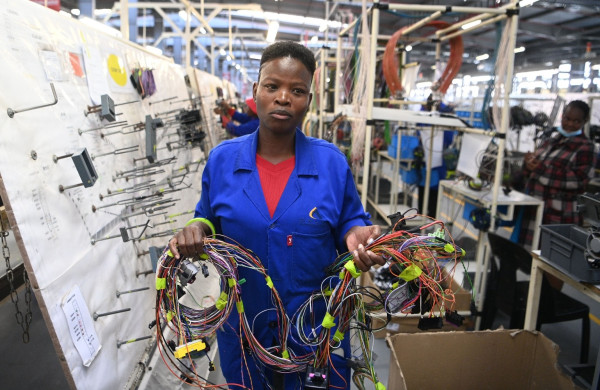
Wiring Africa’s Industrial Future

Location: Business
African Development Bank Group (AfDB)

The Botswanan town of Lobatse, some 70 km south of Gaborone, has been transformed into a vibrant manufacturing centre. Across sprawling factory floors, hundreds of skilled hands meticulously assemble intricate wiring harnesses - components that will eventually power Volkswagen and Nissan vehicles across Africa and beyond.

In the automotive industry, wire harnesses are an intricate arrangement of wires, connectors, and components. They serve as vehicles' central nervous systems, enabling the  transmission of electrical signals and power throughout the automobile.

This is Delta Automotive Technologies, where strategic financing from the African Development Bank has catalysed a manufacturing renaissance that extends far beyond the factory wallsThe company makes wiring harnesses primarily for Volkswagen and Nissan.. For decades, Botswana's economic history was written in diamonds. Today, a new chapter is unfolding as the African Development Bank's $80 million credit line to the Botswana Development Corporation (BDC) for businesses in the country fuels Delta Automotive's transformation into a manufacturing powerhouse.

"This funding hasn't just built infrastructure - it's built opportunity," says Darryn Hattingh, Delta's Director of Manufacturing. "We've built a world-class operation that competes globally while creating opportunity locally. The support enables us to industrialise not just today's production lines, but tomorrow's innovations. It will support us to industrialise future businesses obtained through Volkswagen.”

The firm, which is based in Botswana, makes wiring harnesses for  Volkswagen's Polo Vivo and Polo 270, and Nissan's H60 brands.

It currently makes 120 vehicle harness sets for Volkswagen South Africa per day. By 2027, it hopes to create 340 vehicle sets for Volkswagen and 111 for Nissan in South Africa.

Women powering an industrial revolution

As one walks through Delta's expansive manufacturing facility, one fact is immediately apparent: in a traditionally male-dominated industry, women's expertise is driving this operation forward. An impressive 75% of Delta's workforce is female, shattering glass ceilings with every wire harness assembled.

For Clara Kaekane, a product and process engineer at Delta, the significance goes beyond personal achievement: "Every component we make is a challenge to outdated assumptions about gender and engineering work. I'm not just building car parts - I'm building a new perception of what is possible for women in manufacturing across Africa.”

Kaekane feels empowered to work at the management level in the automotive industry, which is normally male-dominated.

“This is a great opportunity for our country and company,” she says.

Connecting communities to global value chains

The hum of activity at Delta's plant represents more than manufacturing - it is the sound of Botswana's integration into sophisticated global supply networks. Currently producing 120 vehicle wiring harnesses daily, with plans to nearly triple output by 2027, Delta is an example of how African manufacturers can excel in precision-demanding global industries.

"What is happening here is the physical manifestation of our High 5 development priorities, particularly  ‘Industrialize Africa' and ‘Integrate Africa'. It also provides skills to the people of Africa," said the African Development Bank's Deputy Director General for Southern Africa, Moono Mupotola. "Each wire harness connects not just vehicle components, but Botswana's workforce to global value chains, rural communities to industrial opportunities, and traditional economies to a diversified future."

 Scaling impact: From hundreds to thousands

The numbers tell a compelling story: There are 327 employees today, expected to grow to 1,000 within four years. Behind those numbers are families supported, skills developed, and communities transformed. With 95% of the workforce Botswana nationals, the company has become a major driver of local economic empowerment.

"We're seeing multiple development dividends from this single investment," says Benedicta Abosi of BDC. "Delta's growth is generating export earnings, creating quality jobs, developing technical skills and, perhaps most importantly, demonstrating what's possible when development finance meets entrepreneurial vision."

She explained that five years ago, the Botswana Development Corporation supported multiple businesses, including Delta Automotive Technologies, through a $80 million line of credit facility from the African Development Bank.

A blueprint for African industrial transformation, Delta's success offers a replicable model for industrial development across the continent. By strategically supporting companies integrated into global supply chains, development finance can simultaneously address unemployment, gender inequality, economic diversification, and regional integration.

As workers at Delta Automotive Technologies continue to assemble the components that will power vehicles across the region; they're also creating a template for how African development finance can catalyse inclusive industrial transformation.

“This has definitely been a good investment for the African Development Bank, and this is how we see development financing working in Africa, Mupotola added.

Distributed by APO Group on behalf of African Development Bank Group (AfDB).

More images: 
https://apo-opa.co/42JGePY
https://apo-opa.co/3GL0NTB

About the African Development Bank Group:
The African Development Bank Group is Africa's premier development finance institution. It comprises three distinct entities: the African Development Bank (AfDB), the African Development Fund (ADF) and the Nigeria Trust Fund (NTF). On the ground in 41 African countries with an external office in Japan, the Bank contributes to the economic development and the social progress of its 54 regional member states. For more information: www.AfDB.org

Media files
African Development Bank Group (AfDB)
Download logo
Read moreWiring Africa’s Industrial Future
22 April 2025

Verdant Capital Ranked 2nd in Dealmakers Africa League Table for East Africa

Location: News
Verdant Capital

Verdant Capital (www.Verdant-Cap.com) has been ranked second in the Financial Advisers (Transaction Flow) category for East Africa at the 2024 DealMakers AFRICA Awards, under the General Corporate Finance sector. This ranking is the 5th year in the row that Verdant has ranked in the top 3 in the DealMakers Africa East Africa league able, demonstrating the firm's consistent excellence in this market. This accolade highlights the firm's growing influence and consistent performance in East Africa's corporate finance space.

The DealMakers rankings are the authoritative rankings for finance professionals in the African continent, across financial advisory, sponsor services, legal and transaction services / financial due diligence. Awards are among the most prestigious in the inve industry, celebrating firms that demonstrate excellence in advisory services, transaction execution, and overall impact in mergers and acquisitions, capital raising, and other corporate finance activities. Rankings are based on the volume and value of completed deals, with Verdant Capital's second-place ranking reflecting a year of strong strategic advisory and client-focused execution.

In 2024 Verdant Capital, which is also trading under the Verdant IMAP brand, advised on transactions in sectors including financial services, fintech, agriculture, automotive, digital infrastructure and others, in East Africa, West Africa, Southern Africa and South Africa, transacting with corporates and financial investors from across Africa and from around the World.. The firm's deep market knowledge and expertise in mid-market transactions position it as a trusted adviser to companies, investors, and development finance institutions in East Africa and further afield. The firm continues to expand its regional presence, supporting clients with tailored financial solutions that drive meaningful impact across the continent.

Distributed by APO Group on behalf of Verdant Capital.

Media Enquiries:
Verdant Capital:
Orient Mahonisi
T: +27 10 140 3700
E: orient.mahonisi@verdant-cap.com

About Verdant:
Verdant IMAP is a leading investment bank operating on a Pan-African basis and specialising in private capital markets. Verdant IMAP is the IMAP firm for its region; IMAP established in 1973, with 40 partner firms in 50 countries, with over 600 investment bankers and completing over 250 M&A transactions per year is the largest global M&A partnership.  Verdant IMAP is a division of Verdant Capital.  Verdant Capital is the manager of the Verdant Capital Hybrid Fund is investing mezzanine capital into inclusive financial institutions on a pan-African basis. www.Verdant-Cap.com

Media files
Verdant Capital
Download logo
Read moreVerdant Capital Ranked 2nd in Dealmakers Africa League Table for East Africa
16 April 2025

CSA Welcomes Suzuki as Its Official Vehicle and Proteas ODI Partner

Location: Sport

JOHANNESBURG: Cricket South Africa (CSA) today announced a multi-year partnership with Suzuki as its Official Vehicle Partner to CSA and...

Read moreCSA Welcomes Suzuki as Its Official Vehicle and Proteas ODI Partner
7 April 2025

Budget 2025 vital for economic growth and poverty alleviation

Location: News

Budget 2025 vital for economic growth and poverty alleviation

In his weekly newsletter, President Cyril Ramaphosa has emphasised the crucial role of the 2025 Fiscal Framework and Revenue Proposals, which were recently passed by Parliament, in driving economic growth and relieving the effects of poverty.

The budget – tabled by Finance Minister Enoch Godongwana in Parliament last month – was passed by Parliament last week.

“The 2025 Budget is directed at growing the economy and supporting the livelihoods of our people.

“It is a critical instrument to drive development, eradicate poverty and narrow inequality. At a time of constrained economic growth and narrow fiscal space, the budget must direct sufficient resources to activities that encourage inclusive growth and lay the groundwork for sustained economic recovery.

“It reflects the strategic priorities of the Government of National Unity: inclusive growth and job creation, reducing poverty and tackling the high cost of living and building a capable, ethical and developmental state,” he said.

Uplifting the nation

The budget has a strong focus on the social wage with 61% of resources directed at, amongst others, healthcare, education, housing and social grants.

“Over the past 24 years we have implemented an indigent policy under which free water, electricity and sanitation services are provided to qualifying households.

“Social grants, like the childcare, old age and disability grants, are another tool for alleviating poverty. This year, the value of these grants will increase at above inflation. The Social Relief of Distress grant, which has played an important role in poverty alleviation, will also be extended for another year," President Ramaphosa said.

As part of improving access to healthcare, the President said there will be a higher allocation of funding to clinics and community health centres. 

He said government is investing in the recruitment and retention of health personnel, particularly doctors and nurses, and to employ newly qualified doctors after their community service ends. 

The budget also allocates substantial funding to “other frontline services such as teachers, police, emergency personnel and the Border Management Authority”.

“Improving educational outcomes is key to community upliftment, development and producing the skills needed by our economy. Budgetary allocations have been made to support teacher training, for expanded mother-tongue bilingual education and for early reading programmes. 

“This year sees a substantial investment in early childhood development, reflecting our commitment to establishing a solid foundation for the development of every child,” the President added.

Funding for public employment programmes and to support small businesses has also been allocated.

Driving growth

President Ramaphosa noted sustaining expenditure on the social wage requires “higher levels of economic growth”.

“The budget allocates considerable resources to encourage infrastructure development, which drives growth and job creation.

“Taken together, up to R1 trillion will be spent on infrastructure over the medium term. This includes the allocation in this budget of an additional R62 billion over the next three years for road maintenance, electricity transmission lines, water and sanitation projects, school infrastructure and to support the ongoing recovery of our rail networks.

“Support is also provided to other growth enhancing measures in the medium term, including incentive programmes in automotive, business process outsourcing, special economic zones, electric vehicle production, clothing and textiles, and other sectors,” he said.

South Africa’s municipalities will also receive adjusted budget allocations to help them address infrastructure needs and improve service delivery.

“In a challenging economic environment – both locally and globally – this year’s budget supports measures to drive growth and relieve the effects of poverty. At the same time, it aims to stabilise public finances and continue to reduce our national debt.

“The budget reflects the priorities of Government’s Medium Term Development Plan, a five-year programme of action that prioritises rapid, inclusive growth, creating a more just society and building state capacity.

“At a time when our singular focus must be the South African people, we need to use the limited resources we have to work together for the common good,” President Ramaphosa concluded. – SAnews.gov.za

NeoB
Mon, 04/07/2025 - 09:37
135 views

Read moreBudget 2025 vital for economic growth and poverty alleviation
5 April 2025

South Africa’s Response to the US Government’s Imposition of Tariffs

Location: News

Republic of South Africa: Department of International Relations and Cooperation
Download logo

South Africa's Strategic Adaptation to US Tariffs: Advancing National Interests through Policy and Strategy

The new tariff regime arising from the decision by the United States of America, which have been directed not only to South Africa, but the entire world necessitates strategic responses to maintain and grow our industrial base, as a crucial avenue to pursue inclusive growth.

In response to the US Government's imposition of tariffs, South Africa will continue to navigate the challenges and opportunities these measures present with resilience and innovation. Guided by its national interests and aligned with its broader trade and industrial policy, South Africa is committed to ensuring economic growth, industrial development, and the well-being of its citizens.

South Africa intends to:

1. Negotiate Favourable Agreements

South Africa will work to secure opportunities, in a context of a rapid withdrawal of favourable arrangements giving our exports preferential access to the United States of America. This might involve securing additional exemptions and favourable quota agreements, ensuring our industries maintain critical access to the US market, including through sectoral cooperation. This aligns with the national interest of promoting economic prosperity and safeguarding the livelihoods of South Africans.

2. Diversify and Expand Trade Relations

Efforts will intensify to diversify export destinations, targeting markets across Africa, as well as in Asia, Europe, Middle East, and Americas.

Moreover, such efforts will also, where deemed appropriate involve bilateral arrangements where these allow for the pursuance of our national interest. In our presidency of the G20, as the recent engagements at the G20 trade and investment working group (TIWG) indicate, the issue of supply chain geographical diversification is a challenge confronting all open market economies the world over.

This diversification supports South Africa's industrial strategy and reduces dependency on single destination markets for our exports or single sources for our intermediate input requirements. Fostering resilience in line with national economic priorities.

3. Enhance Regional Trade Collaboration

South Africa will leverage the African Continental Free Trade Area (AfCFTA) to bolster intra-African trade, fostering stronger regional economic integration and cooperation. This approach aligns with the national interest of contributing to a better Africa and world.

4. Focus on Value-Added Production

Industries will prioritise transforming raw materials into higher value finished goods, reducing tariff exposure and driving innovation to improve profitability. This supports South Africa's industrial policy objectives of boosting local manufacturing and creating jobs.

5. Stimulate Domestic Growth

The government will invest strategically in industries impacted by the tariffs, supporting economic growth through modernisation and targeted infrastructure development. This aligns with the national interest of ensuring the well-being of South African citizens.

6. Forge Global Alliances

South Africa will continue to build strategic partnerships with other nations enhancing collaboration and our influence in international trade negotiations. This reflects the national interest of strengthening global diplomatic and economic ties.

South Africa's tariff and industrial strategy are designed to support industrial development, employment growth, and economic resilience. By aligning these policies with the national interest, South Africa will ensure that its economy emerges stronger, more diversified, and resilient in the face of global trade complexities.

This approach will also apply to the 7 February Executive Order, which is currently being attended by an interdepartmental team which includes the departments affected by the executive order.

The 31% tariff implemented by the US Administration will be effective from 9 April 2025. South Africa's average tariff is 7.6% and therefore South Africa needs clarity on the basis for the 31% to be implemented by the US.

It is important to note that products such as copper, pharmaceuticals, semiconductors, lumber articles, certain critical minerals, and energy and energy products have been exempted from the reciprocal tariffs. Some of these materials are already key parts of the United States of America's sourcing requirements. According to the United States Geological Survey, 97% of their chrome ore requirements come from South Africa, 6% of fluorspar import requirements and 24% of the United States manganese requirements. These reciprocal tariffs will not apply to products already facing Section 232 tariffs of 25% such as steel, aluminium, automobiles and auto parts.

The reciprocal tariffs effectively nullify the preferences that Sub-Saharan Africa countries enjoy under the Africa Growth and Opportunity Act (AGOA). The sweeping tariff measures will affect several sectors of our economy, including automotive industry, agriculture, processed food and beverage, chemical, metals, and other segments of manufacturing, with implications for jobs and growth.

The US represented 7.45% of South Africa's total exports in 2024, while South Africa accounted for only 0.4% of US total imports. As such, South Africa does not constitute a threat to US and where there is a trade imbalance in favour of South Africa, it is mainly on agriculture products which are counter-cyclical and on minerals which are inputs in US industries.

South Africa will continue building domestic supply resilience, reducing cost of doing business and increasing competitiveness of our economy. Further, South Africa will continue with efforts to diversify export markets as part of its resilience building strategy.

The significant market access opportunities both through trade agreements and through strategic partnerships with countries across the globe present huge opportunities for our exports. The recently concluded Africa Continental Free Trade Area (AfCFTA) remains untapped, beyond the Southern Africa Development Community (SADC).

Furthermore, South Africa enjoys preferential market access through the Southern Africa Customs Union, SADC, SADC-EU Economic Partnership Agreement (EPA), SACU+Mozambique-UK EPA, the European Free Trade Association (EFTA), MERCUSUR (that includes Argentina, Brazil, Paraguay and Uruguay) and Japan Generalised System of Preferences. In addition, government is strengthening relations with countries in Asia and the Middle East to open new market access opportunities. Some of these efforts are bearing fruit with new market access opportunities for our agriculture products.

To re-iterate the Presidency, whilst South Africa remains committed to a mutually beneficial trade relationship with the United States, unilaterally imposed and punitive tariffs are a concern and serve as a barrier to trade and shared prosperity. The tariffs affirm the urgency to negotiate a new bilateral and mutually beneficial agreement with the US, that will establish more fair-trade relations with the US as an essential step to secure long-term trade certainty.

Distributed by APO Group on behalf of Republic of South Africa: Department of International Relations and Cooperation.

Read moreSouth Africa’s Response to the US Government’s Imposition of Tariffs
4 April 2025

SA unveils strategic economic diversification plan amid US tariffs

Location: News

SA unveils strategic economic diversification plan amid US tariffs

South Africa has unveiled a comprehensive strategy to mitigate the economic impact of new United States tariffs, focusing on export diversification, value-added production, and strengthening regional trade partnerships.

This is after United States President, Donald Trump, announced global reciprocal tariffs on most imported goods, with South Africa facing a 31% tariff increase.

“The new tariff regime arising from the decision by the United States of America, which have been directed not only to South Africa, but the entire world, necessitates strategic responses to maintain and grow our industrial base, as a crucial avenue to pursue inclusive growth,” the Minister of International Relations and Cooperation, Ronald Lamola, said on Friday. 

Lamola was speaking during a joint media briefing with the Minister of Trade, Industry and Competition, Parks Tau. 

He informed journalists that South Africa will continue to tackle the challenges and seize opportunities with resilience and innovation, as the country moves forward with ensuring economic growth, industrial development, and the well-being of its citizens.

Lamola outlined plans to navigate the challenges posed by the 31% tariffs set to take effect from 9 April 2025.

These include negotiating favourable trade agreements with the United States; leveraging the African Continental Free Trade Area (AfCFTA) to boost intra-African trade; and prioritising high-value manufacturing to reduce tariff exposure. 

In addition, he said government remains committed to building economic resilience, exploring alternative market access through existing trade agreements and strategic partnerships with countries across various regions.

“We will intensify efforts to diversify export destinations, targeting markets across Africa, Asia, Europe, the Middle East, and the Americas,” the Minister stated. 

According to Lamola, government aims to reduce dependence on single export markets and foster economic resilience.

Meanwhile, he announced that the State will invest strategically in industries impacted by the tariffs, supporting economic growth through modernisation and targeted infrastructure development.

The sweeping tariff measures will affect several sectors of South Africa’s economy, including automotive, industrial agriculture, processed food and beverage, chemical, metals, and other segments of manufacturing.

According to Lamola, South Africa’s tariff and industrial strategy are designed to support industrial development, employment growth, and economic resilience. 

“By aligning these policies with the national interest, South Africa will ensure that its economy emerges stronger, more diversified, and resilient in the face of global trade complexities,” he explained.

This approach will also apply to the 7 February Executive Order, which led to the withdrawal from the Just Energy Transition (JET) partnership with South Africa.

“South Africa’s average tariff is 7.6% and therefore South Africa needs clarity on the basis for the 31% to be implemented by the US.”

Lamola clarified that products such as copper, pharmaceuticals, semiconductors, lumber articles, certain critical minerals, and energy and energy products, have been exempted from the reciprocal tariffs.

These reciprocal tariffs will also not apply to products already facing Section 232 tariffs of 25%, such as steel, aluminium, automobiles, and auto parts.

Currently, the Minister said the United States represents 7.45% of South Africa’s total exports, while South Africa accounts for only 0.4% of the United States’ imports.

“As such, South Africa does not constitute a threat to the US, and there is a trade imbalance in favour of South Africa. It is mainly on agricultural products, which are counter-cyclical, and on minerals, which are inputs in US industries.”

Highlighting the potential impact, Lamola noted that the tariffs “effectively nullify the preference that Sub-Saharan African countries enjoy under the Africa Growth and Opportunity Act (AGOA).”

However, despite the challenges, Lamola said government remains optimistic. 

“The tariffs affirm the urgency to negotiate a new bilateral and mutually beneficial agreement with the US, that will establish more fair-trade relations with the US as an essential step to secure long-term trade certainty,” Lamola added. 

Transparency in tariff calculations

Meanwhile, Tau stressed the need for confirmation from the United States on how they arrived at the tariff number, referencing international norms and standards.

He also highlighted the importance of transparency in tariff calculations, using World Trade Organisation (WTO) standards and the most favoured nations mechanism.

“And that’s why we are advocating for a reform of the World Trade Organisation and ensuring that it’s able to adapt to current reality, but also ensuring that we’re able to reinforce a multilateral system of trade and transparency across the board. Otherwise, you’re going to have an environment where there are no global rules,” Tau added. – SAnews.gov.za
 

Gabisile
Fri, 04/04/2025 - 13:08
177 views

Read moreSA unveils strategic economic diversification plan amid US tariffs
23 March 2025

Creecy unveils private sector role in revitalising rail and port infrastructure

Location: News

Creecy unveils private sector role in revitalising rail and port infrastructure

Transport Minister Barbara Creecy has officially unveiled a groundbreaking Request for Information (RFI), aimed at transforming the country’s struggling rail and port infrastructure through strategic partnerships with the private sector.

“Today, I am launching an online request for information to develop an enabling environment for Private Sector Participation (PSP) and enhance investment in rail and port infrastructure and operations,” Creecy said during a media briefing on Sunday. 

The Minister described this decision as a significant step in government’s efforts to partner with the private sector, ensuring that the country’s rail network and ports reclaim their crucial role in enhancing trade and driving economic growth.

Creecy highlighted the urgent need for intervention, citing significant challenges, including infrastructure deterioration, vandalism, theft, underinvestment, and operational inefficiencies that have hindered economic growth. 

“The limited availability of State resources to fund infrastructure development and address backlogs has intensified these challenges, severely restricting the ability of State-Owned Entities (SOEs) to fulfill their critical mandates.,” she explained. 

The Minister told journalists that Transnet and government have received many “unsolicited“ proposals from the private sector offering investment skills and expertise to support the rehabilitation and reform of our struggling rail and port systems.

“This overwhelming interest has made it clear to the department and Transnet that we must engage in broad and inclusive market research before issuing requests for proposals in August this year.” 

However, according to the Minister, these processes are not formal procurement methods, but rather a mechanism to gather and analyse information from the market.

She stated that the government recognises the importance of understanding the freight logistics landscape from the perspective of interested and affected parties. 

The Minister believes that this will ensure that solutions are both effective and sustainable during this initial phase of PSP.

The RFI targets key mineral export routes, include the corridor from Northern Cape to Saldanha for iron ore and manganese exports, as well as the routes from Limpopo and Mpumalanga to Richards Bay for coal and chrome exports. 

In addition, there is an intermodal supply chain project that focuses on the container and automotive sectors.

This project encompasses the port, container, and automotive port terminals, as well as back-of-port arrangements and railway and inland terminals. 

It will also address the corridors connecting Gauteng and KwaZulu-Natal (Durban), Gauteng and Eastern Cape (East London, Port Elizabeth and Ngqura), and Gauteng and Western Cape (Cape Town). 

“The RFI represents a pivotal step forward in our shared commitment to building a 21st-century transport system that goes beyond mobility to strengthen industrial competitiveness, deepen regional integration, and drive inclusive economic growth.” 

Creecy believes this move will help the department express challenges in a structured and coherent manner, clearly defining their scope, context, and impact to guide the development of focused, strategic, and sustainable solutions.

Support for new and emerging players

Meanwhile, Creecy said the State has committed to principles of job retention, State asset ownership, localisation, and Broad-Based Black Economic Empowerment (BBBEE) and gender equality, by providing strong support to new and emerging players in the rail and port sectors. 

A dedicated PSP unit, to be hosted by the Development Bank of South Africa, will oversee the initiative.

The eight-week online consultation process, running from 24 March to 9 May 2025, aims to gather comprehensive market insights before issuing formal proposals in August. 

Stakeholders are encouraged to participate through the department’s website or dedicated online portal at www.psp-rfi.co.za, with all submitted information to be treated confidentially. 

“I encourage all Interested and affected parties to actively engage in this RFI process, contributing to the PSP unit’s efforts in shaping the potential PSP programme of projects and designing future bid packages for procurement,” she added. 

Government plans to release a second RFI focusing on passenger rail initiatives in May this year. – SAnews.gov.za

Gabisile
Sun, 03/23/2025 - 13:28
57 views

Read moreCreecy unveils private sector role in revitalising rail and port infrastructure
17 March 2025

SA is addressing port challenges, says Deputy President 

Location: News

SA is addressing port challenges, says Deputy President 

Deputy President Paul Mashatile has assured executives from Isuzu Motors Limited’s headquarters in Japan that South Africa is actively working to resolve its port and infrastructure issues.

This comes in the wake of significant congestion, infrastructure shortfalls, and equipment failures at the country’s major ports, which have affected both import and export operations.

“I am pleased to report that we have dealt with energy issues that affected our economy,” the Deputy President said on Monday. 

The Deputy President spoke at the Isuzu Fujisawa Plant where he is currently on a working visit with a delegation that includes Ministers, Deputy Ministers, and senior government officials. 

READ | Deputy President Mashatile arrives in Japan for a working visit

The purpose of the visit is to strengthen cooperation between the two nations in areas of mutual interest.

The multinational corporation that manufactures commercial vehicles, diesel engines, and automotive parts has a significant presence in South Africa. 

As a Japanese automobile manufacturer, Isuzu has been in South Africa for a long time and is well-known for its trucks and bakkies.

“As a country, we are honoured that the Isuzu Motors South Africa Struandale Plant in Gqeberha, in our Eastern Cape province, is the first fully-owned plant outside Japan whereas in other countries Isuzu produces vehicles through joint ventures and license agreements.

“This shows great confidence in our country and our people for the skills necessary to produce these trucks and bakkies.” 

According to the Deputy President, the Struandale Plant produces 28 500 vehicles per annum and has dealerships across 26 countries in Africa. 

With the Africa Continental Free Trade Area (AfCFTA), the Deputy President stated that the continent has created even more opportunities for Isuzu to export and operate in over 54 countries that have signed the agreement.

The AfCFTA creates the largest single free trade business area, with 1.3 billion people and a gross domestic product (GDP) of US$3.4 trillion. 

Isuzu also exports to the European Union (EU) under the Southern African Development Community (SADC) -EU Economic Partnership Agreement, in addition to being active in Africa. 

“Therefore, South Africa is the place to be, indeed a gateway into the continent and the rest of the world including Japan under the generalised system of preferences.” 

The country’s second-in-command described Isuzu as a model investor in South Africa, contributing to employment, skills development, and supplier and enterprise development.

“I also understand that Isuzu contracted 107 suppliers with over 700 parts being localised in South Africa and some integrated into Isuzu global supply chains,” he said, adding that Isuzu achieved Level 1 Broad-Based Black Economic Empowerment (BBBEE). 

He informed the delegation that the government, through the Automotive Production Development Programme, has provided essential support to Isuzu.

During the working visit, the Deputy President and his delegation will engage with the business community in Japan to enhance economic relations.

They will focus on key areas such as manufacturing and machinery, mining and mineral beneficiation, energy cooperation, the automotive industry, and improving market access for South Africa’s agricultural products.

He is also expected to meet with Dr Akihiko Tanaka, the President of the Japan International Cooperation Agency (JICA) today. 
JICA is a government agency that is actively involved in various development projects in South Africa. 

On Tuesday, he will pay a courtesy visit to Prime Minister Ishiba Shigeru of Japan and visit the Meiji Jingu Shinto Shrine. – SAnews.gov.za


Gabisile
Mon, 03/17/2025 - 11:45

24 views

Read moreSA is addressing port challenges, says Deputy President 
17 March 2025

Deputy President Mashatile arrives in Japan for a working visit

Location: News

Deputy President Mashatile arrives in Japan for a working visit

Deputy President Paul Mashatile arrived at Narita International Airport in Tokyo, Japan, on Sunday for a working visit aimed at strengthening the cooperation between South Africa and Japan in areas of mutual interest.

According to the Presidency, the two countries have strong diplomatic relations, particularly in trade, investment, education, and science and technology.

“Japan is one of South Africa’s major economic partners with a sizeable investment in the South African economy, and potential for increased investment exists,” the statement read. 

During the working visit, the Deputy President and his delegation will engage with the business community in Japan to enhance economic relations. 

They will focus on key areas such as manufacturing and machinery, mining and mineral beneficiation, energy cooperation, the automotive industry, and improving market access for South Africa’s agricultural products.

The Deputy President and his delegation will visit the Isuzu Fujisawa Plant in Japan on Monday, 17 March 2025. 

Isuzu is a multinational corporation that produces commercial vehicles, diesel engines, and automotive parts, and it has a significant presence in South Africa.

During this visit, the Deputy President will meet with Dr Akihiko Tanaka, the President of the Japan International Cooperation Agency (JICA). 

JICA is a government agency that is actively involved in various development projects in South Africa.

On Tuesday, 18 March 2025, the Deputy President and his delegation will have a breakfast meeting with the Japan-African Union Parliamentary Friendship League, which aims to promote economic cooperation and trade between Japan and African countries. 

In addition, he will pay a courtesy visit to Prime Minister Ishiba Shigeru of Japan and visit the Meiji Jingu Shinto Shrine.

The Deputy President is expected to deliver a keynote address at the United Nations University, focusing on the theme “South Africa’s G20 Presidency: Solidarity, Equality, Sustainability – a Conversation with Japan”.

On Wednesday, 19 March 2025, the Deputy President and his team will participate in roundtable discussions hosted by the Japan External Trade Organisation (JETRO) and the Japan Organisation for Metals and Energy Security (JOGMEC).

The Deputy President will also host South African Rugby players based in Japan at the South African official residence. 

The Deputy President is supported by several officials including the Deputy Minister of International Relations and Cooperation Thandi Moraka; the Minister of Sport, Arts and Culture Gayton McKenzie; the Minister of Higher Education Dr Nobuhle Nkabane; the Minister of Agriculture John Steenhuisen; the Minister of Trade, Industry and Competition Parks Tau and the Deputy Minister of Science, Technology and Innovation Nomalungelo Gina. – SAnews.gov.za


Gabisile
Mon, 03/17/2025 - 08:50
58 views

Read moreDeputy President Mashatile arrives in Japan for a working visit
  • Page 1
  • Page 2
  • Next

Copyright © 2026 · MyZA · All Rights Reserved · Powered by Reach Trust