Call for African Rainbow Minerals to Stop Selling Coal to Israel
Two ships carrying South African coal are due to arrive in Israel

MyZA
News, Directory, Events and Other Stuff
Two ships carrying South African coal are due to arrive in Israel
13-member Board will be advising the Home Affairs minister on matters relating to immigration policy, strategy, and implementation
KwaZulu-Natal police operations bear fruit
Police in KwaZulu-Natal have arrested 11 780 suspects for various crimes while also recovering 341 firearms and 3 562 rounds of ammunition.
“The highest number of arrests was for contact crimes where 3 872 suspects were nabbed, with 219 of them arrested for murder, 222 for attempted murder and 160 for robberies including robbery with aggravating circumstances, house and business robbery, carjacking and cash in transit robbery,” the South African Police Service (SAPS) said of the arrests made in March.
In its statement on Thursday, the SAPS said the Family Violence, Child Protection and Sexual Offences Unit (FCS) detectives arrested 248 suspects for rape while 49 suspects were also arrested for sexual assault.
Additionally, 1 817 suspects were arrested for cases of assault with intent to inflict grievous bodily harm, whilst 891 more suspects were nabbed for common assault. On property related crimes, 268 suspects were arrested for burglary at residential premises and 55 suspects were arrested for stock theft with 33 cattle and 80 goats recovered in the process.
Seventeen suspects were also arrested for theft of motor vehicles.
On drug related crimes, 1 599 suspects were arrested.
“Police visibility on the roads was maintained and 512 suspects were arrested for driving under the influence of alcohol or drugs, and 41 people were arrested for reckless and negligent driving.
“Stop and search operations resulted in the recovery of 791dangerous weapons, of which 716 were knives. These operations will be amplified during the month of April and high police visibility will be maintained, especially during the Easter weekend,” said the police. -SAnews.gov.za
Edwin
Fri, 04/04/2025 - 09:28
132 views
Government to launch R500m spaza shop support fund
Trade, Industry and Competition Minister Parks Tau and the Minister of Small Business Development, Stella Tembisa Ndabeni, will next Tuesday officially launch the R500 million Spaza Shop Support Fund, an initiative which was first announced by President Cyril Ramaphosa in November 2024.
The fund, which will be jointly administered by the National Empowerment Fund (NEF) and the Small Enterprise Development Finance Agency (SEFDA), provides critical financial and non-financial support to township businesses, including community convenience stores and spaza shops.
The aim of the fund is to support South African owned township community convenience shops, including spaza shops, in order to increase their participation in the townships and rural areas’ retail trade sector.
“The opening of the applications for the fund marks another milestones in government’s efforts to stimulate the growth of the rural and township economy in the country, particularly by providing the necessary support to the convenience stores and spaza shops that are based in the townships and rural areas.
“Government recognises the important role that small businesses, including those operating in the rural areas and townships, can play in creating jobs, growing our economy and alleviating poverty,” Ndabeni said.
The fund provides various types of support including the initial purchase of stock via delivery channel partners, upgrading of building infrastructure, systems, refrigeration, shelving and security, as well as training programmes which includes Point of Sale devices, business skills, digital literacy, credit health, food safety and business compliance.
Tau pointed out that the fund does not only support economic inclusion but also aligns with national priorities to formalise informal sectors, safeguard consumers and promote local production and said it is a holistic approach to revitalising township economies.
“Beyond individual support, the fund seeks to bolster the broader supply chain by fostering partnerships with local manufacturers, black industrialists and wholesalers.
“Through bulk purchasing arrangements and the promotion of locally produced goods, spaza shops will benefit from reduced costs and increased access to quality products,” Tau said. – SAnews.gov.za
Edwin
Thu, 04/03/2025 - 10:31
31 views

Legal, tax and business advisory conglomerate CLG (www.CLGGlobal.com) - formerly Centurion Law Group – has officially been approved as a Central African Economic and Monetary Community (CEMAC) tax advisor by the CEMAC Standing Committee on Fiscal and Accounting Harmonization. CLG Tax and Legal will provide its full suite of tax services across all CEMAC member countries, supporting business and transactions across various strategic fields, including oil, gas and mining.
The tax certification not only comes as part of a broader restructuring of CLG's tax and legal services offerings, aimed at positioning the firm to better serve clients throughout the region with integrated solutions, but as the CEMAC region pursues accelerated growth across its strategic economic sectors. Specifically, the region's oil and gas sector is on track for rapid growth, as nations implement ambitious production targets. The Republic of Congo aims to produce 500,000 barrels per day (bpd) by 2027; Gabon targets 220,000 bpd in the short-term; while Equatorial Guinea and Cameroon are scaling-up gas monetization. These targets require significant levels of investment and CLG stands ready to support transactions and broader economic growth.
Given the potential of the CEMAC region's natural and mineral resources, project developers and investors have already begun to expand their presence across the region. In the Republic of Congo, TotalEnergies is investing $600 million in the Moho Nord project; Trident Energy recently acquired stakes in the Nkossa, Nsoko II, Lianzi and Moho-Bilondo fields; while Perenco increased production at the Tchibouela II and Tchendo II fields following a $30 million investment. In Gabon, wildcat drilling is underway on Blocks BC-9 and BCD-10 while Perenco advances the $1 billion Cap Lopez LNG terminal toward a 2026 start. In Equatorial Guinea, the country is preparing to launch an oil and gas licensing round while Cameroon drives a gas-to-industry agenda. Further developments in Chad are underway, highlighting the region's potential as a major producing hub.
Stepping into this picture, CLG's accreditation will serve to further support current and future transactions. Over the past decade, CLG has significantly grown its tax practice, providing comprehensive tax advisory and compliance services to numerous multinational companies operating across Africa. This sustained growth reflects CLG's commitment to meeting the complex tax needs of investors and businesses on the continent, from corporate tax planning and regulatory compliance to cross-border taxation strategies.
“By bolstering our tax practice in the CEMAC region, CLG continues to establish itself as a one-stop-shop for investors in the region and across the continent. The CEMAC accreditation aligns with our strategy to support impactful transactions in Africa and we look forward to strengthening our presence across the continent,” stated Zion Adeoye, CEO and Managing Partner of CLG.
CLG already has a strong presence in Africa, with offices in South Africa, Nigeria, Mauritius, Ghana, the Republic of Congo, Cameroon, Equatorial Guinea, Namibia and South Sudan. The company caters to a diverse portfolio of multinational companies operating globally, delivering bespoke solutions tailored to address the unique challenges and complexities faced by clients in different industries. CLG's expertise covers energy, infrastructure, mining, agriculture and ESG, to name a few. For the CEMAC region, CLG's extensive network and growing expertise positions the firm as strategic partner for regional and global firms. As companies expand their presence across the region, CLG's agile, integrated approach - underpinned by its local roots and depth of experience - demonstrates the rising prominence of African advisory firms on the global stage. The CEMAC tax certification not only expands CLG's regional service coverage but also solidifies its reputation as a trusted partner for businesses navigating Central Africa's evolving tax landscape.
“CLG's deep understanding of its clients' businesses, collaborative approach with local authorities, multinational orientation and highly experienced local teams are some of the factors that set our tax practice apart in the region,” stated Daoudou Mohammed, CLG Tax and Legal Director.
Distributed by APO Group on behalf of CLG.
Western Cape, Gauteng and Free State are challenging national government’s decision to cut their funds and reallocate them
Gauteng targets R300 billion in investments to boost economy
Gauteng Economic Development MEC, Lebogang Maile, says the province is aiming to secure at least R300 billion in investment pledges at the Gauteng Investment Conference (GIC), to be held in Johannesburg.
The MEC was speaking during a media briefing on the state of readiness of the province to host the conference, to be held at the Johannesburg Stock Exchange, in Sandton, on 3 April 2025.
“Leaders across all tiers of government, including Minister of Trade, Industry and Competition, Parks Tau, Premier of Gauteng Premier Lesufi, and Johannesburg Mayor Dada Morero, will provide inputs at the conference. The keynote address will be delivered by the Deputy President, who also serves as the Leader of Government Business in South Africa, His Excellency, Paul Mashatile.
“Of equal significance is the large contingent of leaders across the business and government sectors on the African continent, the African diaspora and the globe. With over 50 companies represented, the conference will be a convergence point of the world’s most important companies in various sectors,” Maile said.
The Gauteng province is of importance for South Africa’s economy and contributes at least 33% to the national Gross Domestic Product, and nearly 7% of sub-Saharan Africa’s output.
“The [GIC] is a transformative event in affirming the place of the Gauteng province in the continental economy. We are asserting that the development of Gauteng is in the best interest of South Africa, the Southern African Development Community and the continent broadly.
“Thus, investment in the economy of Gauteng extends beyond the confines of its provincial borders into other lands across the entire continent,” the MEC said.
Furthermore, the conference will also serve as a platform for critical dialogue that will “enable direct engagement between policy makers, investors and industry experts”.
“This will ensure that we come out with tangible and applicable outcomes. The sessions will focus on, amongst other things, public-private infrastructure investments, as well as key Gauteng most dynamic and high growth sectors, including…advanced manufacturing, green and renewable energy, ICT [information and communication technology] and data infrastructure, transport and logistics, smart property development and urban regeneration, as well as tourism and the creative economy,” he said.
Maile emphasised that these sectors are critical to ensuring development on a provincial, national and continental level.
“Investment in these sectors offers the most reliable instrument for ensuring sustainability and development, offering a clear path to economic prosperity that is anchored on inclusive growth, environmental protection and human development,” Maile said. – SAnews.gov.za
NeoB
Wed, 04/02/2025 - 13:46
264 views
High Court rules against eviction of people occupying old Circus School premises in Cape Town
The Office of the Deputy President of the Republic South Africa, His Excellency, Mr Shipokosa Paulus Mashatile, is pleased to announce the appointment of former MEC for Finance in the Free State Province, Ms Gadija Brown as Special Economic Advisor to the Deputy President.
A seasoned professional with rich experience in the commercial banking sector, Ms Brown brings a wealth of knowledge and expertise to her role as an Advisor in the Presidency, having served the Free Sate Provincial Government in various capacities; as a Member of the Provincial Executive Council for Finance, Head of the Departments of Agriculture and Rural Development, Public Works and Infrastructure as well as the Economic, Small Business Development, Tourism and Environmental Affairs department.
Among her educational qualifications, Ms Brown holds a Bachelor's Degree in Management and Leadership, majoring in Finance and Economics, from the University of Free State as well as various other Certificates in banking, project and risk management, ethics, contributing to her academic aptitude.
“The appointment of Ms Brown will surely enhance the work of the advisory team in the Office of the Deputy President, and her great deal of expertise in various fields, will significantly strengthen the delivery of tasks delegated to us, by President Ramaphosa”, said Deputy President Mashatile.
Distributed by APO Group on behalf of The Presidency of the Republic of South Africa.
Deputy President appoints Gadija Brown as Special Economic Advisor
The Office of the Deputy President, Paul Mashatile, has announced the appointment of Gadija Brown, the former MEC for Finance in the Free State, as his Special Economic Advisor.
A seasoned professional with rich experience in the commercial banking sector, the Office of the Deputy President believes Brown brings a wealth of knowledge and expertise to her role as an advisor in the Presidency.
Brown served the Free Sate Provincial Government in various capacities as a Member of the Provincial Executive Council for Finance, Head of the Departments of Agriculture and Rural Development, Public Works and Infrastructure as well as the Economic, Small Business Development, Tourism and Environmental Affairs Department.
“The appointment of Ms Brown will surely enhance the work of the advisory team in the Office of the Deputy President, and her great deal of expertise in various fields, will significantly strengthen the delivery of tasks delegated to us, by President Ramaphosa,” the Deputy President said on Wednesday.
Brown holds a Bachelor’s Degree in Management and Leadership, majoring in Finance and Economics, from the University of Free State.
She also holds various certificates in banking, project and risk management, and ethics, contributing to her academic aptitude. – SAnews.gov.za
Gabisile
Wed, 04/02/2025 - 11:00
28 views
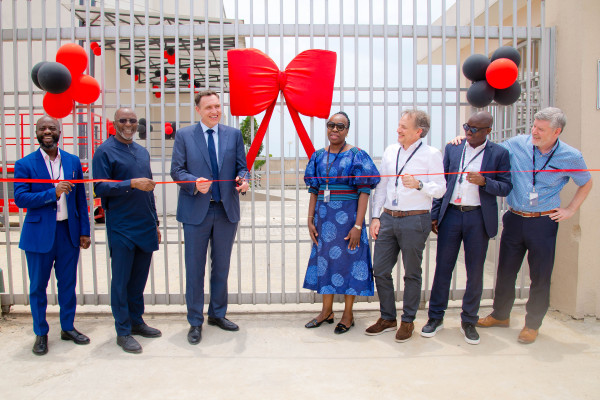
Equinix, Inc. (Nasdaq: EQIX) (www.Equinix.com), the world's digital infrastructure company™, has officially opened its latest data center expansion in Lagos. Called LG2.3, the facility will support Nigeria's growing digital transformation efforts, providing state-of-the-art colocation and secure interconnection solutions which will empower businesses across the region. It also signifies Equinix's unwavering dedication to advancing Nigeria's position in the global digital economy, reinforcing the company's commitment to the region.
As part of the inauguration, Bruce Owen, President of EMEA at Equinix, along with other Equinix executives, led the ribbon-cutting ceremony at the newly expanded site. In addition to an official visit to the Governor of Lagos State, Equinix hosted an exclusive customer engagement event, bringing together key customers and partners from Nigeria's business and technology sectors. Attendees discussed shared successes and Equinix's role in facilitating digital transformation, while also connecting directly with Bruce Owen for insights into how Equinix's solutions drive innovation and business agility in the region.
Equinix executives also took part in a tree-planting ceremony, symbolising Equinix's continued investment in sustainable initiatives across the globe and highlighting the company's broader goal of reducing its carbon footprint while supporting greener practices across its operations worldwide.
Speaking about the expansion, Bruce Owen, President of EMEA at Equinix said “Nigeria is a crucial market for Equinix. Today's opening is a clear demonstration of our continued commitments to invest and grow digital infrastructure that will benefit the many thousands of businesses in Nigeria and on the continent as a whole. I am deeply encouraged by the enthusiastic partnerships and innovations emerging from this dynamic region, which continue to inspire our commitment to Nigeria's digital and sustainable future.”
Adding to this, Wole Abu, Managing Director of Equinix West Africa, highlighted the critical role of data centers in driving economic growth stating “Data centers continue to play a pivotal role in driving economic development in Nigeria, serving as critical infrastructure that supports digital transformation and economic growth. As governments and enterprises increasingly acknowledge their significance, global demand for data center capacity is poised to rise. While Africa's demand for data solutions is still evolving compared to more mature markets, the continent is demonstrating strong potential for digital adoption and innovation. To meet this growing need, Equinix is actively advancing three major data center projects in Nigeria, with future expansion plans for Ghana, Côte d'Ivoire, and South Africa.”
Equinix remains steadfast in its mission to enable secure, scalable, and sustainable digital growth for economies across the world.
Distributed by APO Group on behalf of Equinix.
Equinix Media Relations:
press@equinix.com
Equinix Investor:
invest@equinix.com
About Equinix:
Equinix (Nasdaq: EQIX) (www.Equinix.com) is the world's digital infrastructure company™. Digital leaders harness Equinix's trusted platform to bring together and interconnect foundational infrastructure at software speed. Equinix enables organizations to access all the right places, partners and possibilities to scale with agility, speed the launch of digital services, deliver world-class experiences and multiply their value, while supporting their sustainability goals.
Forward-Looking Statements:
This press release contains forward-looking statements that involve risks and uncertainties. Actual results may differ materially from expectations discussed in such forward-looking statements. Factors that might cause such differences include, but are not limited to, risks to our business and operating results related to the current inflationary environment; foreign currency exchange rate fluctuations; stock price fluctuations; increased costs to procure power and the general volatility in the global energy market; the challenges of acquiring, operating and constructing IBX® and xScale® data centers and developing, deploying and delivering Equinix products and solutions; unanticipated costs or difficulties relating to the integration of companies we have acquired or will acquire into Equinix; a failure to receive significant revenues from customers in recently built out or acquired data centers; failure to complete any financing arrangements contemplated from time to time; competition from existing and new competitors; the ability to generate sufficient cash flow or otherwise obtain funds to repay new or outstanding indebtedness; the loss or decline in business from our key customers; risks related to our taxation as a REIT; risks related to regulatory inquiries or litigation and other risks described from time to time in Equinix filings with the Securities and Exchange Commission. In particular, see recent and upcoming Equinix quarterly and annual reports filed with the Securities and Exchange Commission, copies of which are available upon request from Equinix. Equinix does not assume any obligation to update the forward-looking information contained in this press release.
Minister Meth hands over R514m contract to 15 LAP partners
Employment and Labour Minister Nomakhosazana Meth, has officially handed over R514 million in contracts to 15 Labour Activation Programme (LAP) partner companies in Mpumalanga, aimed at stimulating job creation in the province.
The 15 LAP partner companies are expected to provide training to over 9 600 job seekers after signing a pledge committing to the absorption of these jobseekers in key sectors of the economy.
Speaking at the handover event held at Mbombela Stadium on Monday, Meth said the handover is not just about launching projects but also igniting opportunities that will reach thousands of individuals, uplift families, and strengthen communities.
“We are investing not just in businesses, but in people, skills, and making dreams that deserve to be realised a possibility. This is what real economic transformation looks like - not just numbers on a page, but real impact on the lives of those who call Mpumalanga home,” the Minister said.
The Minister said that the partners whom the contracts have been handed over to have been given a condition to guarantee jobs for beneficiaries.
“I have made it a requirement that all the LAP partners recruit at least 70% of the beneficiaries from the Employment Services of South Africa (ESA) platform, which is a government system placed to connect job seekers with available opportunities,” she said.
She moved to highlight that Mpumalanga is a province of movement, boasting infrastructure that connects the nation to greater possibilities. It is home to one of the most important economic corridors, the Maputo Corridor, a vital route that links us to the Port of Maputo and connects South Africa to the rest of the world.
“Through this corridor, we export our agricultural produce, our minerals, and our manufactured goods, which fuel the country’s economy. It is this very corridor that has the power to transform small businesses into major players, to take local industries and give them a global footprint,” she said.
The Minister also noted that approximately 1 million young South Africans become available to the labour market. However, only 400 000 find steady work, 300 000 find some work, while about 300 000 never find work.
She stressed that without decisive and intentional interventions from the government, in collaboration with relevant societal partners, the situation is unlikely to improve.
Young people continue to face challenges in entering the labour market due to a lack of work experience, and in some cases, possessing skills that do not align with market demands.
“It is for this reason I emphasise that our response must be decisive, and I dare say – aggressive.
“I am pleased and equally excited that today, at this municipality of Mbombela we gather to handover the Labour Activation Program contracts to 15 partners, who will create job opportunities for 9 616 beneficiaries to the value of over R514 million across 4 districts and spanning to over 11 local municipalities,” the Minister said.
The Minister said the Labour Activation Program is the department’s direct policy response to unemployment, affording job seekers opportunities to improve their employability and connect them to the world of work.
“Our focus should combine skills training, work experience, and job placement services to help participants transition into the labour market.
“With these projects, we are saying to the people of Mpumalanga: we see you, we believe in you, and we are committed to your success. We are saying to the youth that there is space for you in this economy, that your talents and skills are needed, as the future belongs to you. We are saying to businesses that you are not alone, the government is here to support you and to open doors to break down barriers that have held back growth for too long,” the Minister said.
The Minister added that government is strengthening private sector partnerships to collaborate in creating more job opportunities and ensure training programs are relevant to industry needs.
“We need every South African to believe in the power of collective action. This drive grew stronger after President Ramaphosa established an Inter-Ministerial Committee of government and business partnership on unemployment, skills development and SMME support, which is chaired by me as the Minister of the Department of Employment and Labour.
“Throughout this partnership, our targeted interventions for groups disproportionately affected by unemployment, such as youth, women and people with disabilities remain our priority.
“Let us continue working together to build a better country- collectively working together, we can change the trajectory of unemployment,” the Minister said. – SAnews.gov.za
DikelediM
Tue, 04/01/2025 - 09:04
223 views
North West traditional horse racing gives the economy a leg up
The inaugural Lobelo la Dipitsi Traditional Horse Racing event, held at Bloomtech Lodge in Vryburg at the weekend, celebrated the rich cultural heritage of the North West province while also stimulating local economic growth.
According to the North West Provincial Government (NWPG), Lobelo la Dipitsi represents a significant milestone in the province’s initiative to use traditional sports for economic development.
The race attracted an influx of visitors from across the province and neighbouring countries such as Botswana and Namibia, boosting tourism and fostering cross-border collaboration.
A key feature of the event was the small, medium, and micro enterprises (SMME) exhibition, which showcased 69 stalls supported by the Department of Economic Development, Conservation, Environment, and Tourism (DEDECT)and Dr Ruth Segomotsi Mompati District Municipality.
These enterprises, ranging from flea market vendors to informal traders, displayed a variety of artisanal products, including handcrafted African-themed clothing, footwear, organic herbs, spices, perfumes, and wooden vases.
The gathering was attended by Premier Lazarus Mokgosi and the DEDECT MEC, Bitsa Lenkopane with the MEC emphasising the race’s role in economic transformation, saying it is not just a celebration of cultural heritage but also a strategic initiative to drive local business growth.
This platform empowers Black entrepreneurs, facilitates job creation, and strengthens the local economy.
“Through the North West Gambling Board, we envisage empowering emerging race associations with compliance in terms of acquiring relevant licenses with gambling legislations.”
During a walkabout of the flea market, the MEC engaged directly with small business owners to assess their experiences and the impact of the event on their enterprises.
She alluded to the fact that the department will continue to offer support to small businesses and cooperatives to ensure that their products are well packaged, properly labelled, and adhere to the South African Bureau of Standards (SABS) requirements.
“The economic activity generated by the event reaffirmed the potential of public-private partnerships in promoting sustainable economic development.”
The event reached its highlight with an exciting prize-giving ceremony, officiated by the province’s leadership.
Lenkopane commended the participation of young riders and the involvement of regional partners from Botswana, Namibia, and Lesotho, highlighting the significance of this initiative in fostering strong economic and cultural ties.
“I am confident that Lobelo la Dipitsi has the potential to grow into a flagship event on North West’s tourism calendar,” she added.
She further extended her gratitude to the event sponsors, including GBets, Goldrush, Sunbets, CGM and other contributors, for their commitment to making the event a reality.
She also expressed gratitude to community members and horse riders for their enthusiastic participation and support.
Lobelo la Dipitsi will be rotated annually across the districts of the province, ensuring continued economic impact, cultural preservation, and regional integration.
This groundbreaking initiative has reinforced the NWPG’s commitment to empowering local communities through strategic events and sustainable economic initiatives. – SAnews.gov.za
Gabisile
Tue, 04/01/2025 - 10:03
1 view

By NJ Ayuk, Executive Chairman, African Energy Chamber (https://EnergyChamber.org)
Donald Trump's return to the White House in 2025 represents a pivotal moment for Africa's fossil fuel industry. His administration's swift reapproval of a USD4.7 billion loan from the U.S. Export-Import Bank (Exim) for TotalEnergies' liquefied natural gas (LNG) project in Mozambique — initially greenlit in 2020 during his first term but sent into deep-freeze for the full duration of the Biden years — sets the tone for what could be a transformative era for Africa's energy sector.
Despite Mozambique's stabilization of security issues and concerns that the transfer of power in America would delay receipt of the loan even further, the Biden Administration refused to release the funds ahead of Trump's inauguration, a decision reflective of the administration's reluctance to support new fossil fuel initiatives throughout Biden's time in office. In contrast, Trump's decisive action within weeks of taking office signals a renewed, positive working relationship between the United States and Africa — one that prioritizes energy development over ideological objections and the Green Agenda's influence.
The African Energy Chamber (AEC) contends that Africa should seize this potentially brief moment in history and embrace the Trump administration as a partner rather than an opponent. For too long, global pressures have insisted that African nations move toward green energy projects only and leave their fossil fuel resources behind.
While renewable energy has its place, and will be important to Africa's future, fossil fuels still clearly constitute the backbone of any realistic efforts for African industrialization and economic growth — goals we simply cannot afford to sideline.
Alignment with Trump's energy-first ethos would mean that Africa could unlock significant funding for wide-ranging fossil fuel projects, and not just the offshore oil and gas ventures that dominate the headlines. The continent should capitalize on all opportunities in onshore projects, wildcat wells (exploratory drilling in unproven areas), and the proliferation of numerous small operators. These avenues lead the way to diversity in Africa's energy portfolio, job creation, and massively strengthened energy security.
The reapproval of funding for Mozambique LNG is a case in point. The project's revival under Trump demonstrates how quickly thick bureaucratic congestion can dissolve when political will aligns with economic practicality. This USD4.7 billion infusion will boost Mozambique's economy while sending a message to other African nations: Under Trump, at long last, America is open for business.
In contrast to the previous administration, which openly regarded fossil fuel development with skepticism and disdain, Trump's “drill baby drill” mantra — while rooted in an “America First” agenda — pairs seamlessly with the ambitions of the African oil and gas industry. Africa should adopt a similar mindset and position itself as an attractive destination for American investment dollars.
Coal's Comeback
Another of Trump's domestic priorities, no doubt a response to China's unabashed expansion of coal production within its borders, is to revive clean coal production in the U.S. This initiative offers a compelling blueprint for Africa. While coal remains a contentious, harshly criticized resource globally, its advantages are undeniable: It's cheaper to produce, often doesn't require big bank financing, and is abundant across the continent. For African nations grappling with energy poverty, coal can serve as a means to an end, delivering affordable power to millions in the interim while the infrastructure for other energy sources matures. Simply put, Africa deserves to be the last global holdout on coal production and should leverage its coal reserves to meet domestic needs and export demands. Trump's willingness to disregard the international campaign against coal should embolden African leaders to reopen their abandoned coal mines and rest assured that this time around, they'll be able to operate freely, without fear of U.S. opposition.
Fossil Fuels Unleashed
Looking beyond coal, over the next four years, Africa has the rare chance to pursue an aggressive fossil fuel agenda. The continent should unite under an “Africa First” banner and adopt its own “drill baby drill” mentality in support of every promising oil exploration and production project, every possible natural gas project, and a multinational effort to slash through regulatory red tape.
In Nigeria, for instance, the wheels of progress moved agonizingly slowly when it came to passing the Petroleum Industry Act, first proposed in 2008 and not signed into law until 2021. Even after the law was passed, Nigeria has been slow to fully implement it. This kind of inertia deters investment and slows development. A Trump-inspired push to clean up such bureaucratic roadblocks could unleash a wave of prosperous development. Similarly, addressing security issues — like those that drove U.S. firms out of Libya — will be critical to restoring confidence and attracting capital from abroad.
While the offshore sector will undoubtedly remain a cornerstone of Africa's fossil fuel strategy, the continent's onshore potential is equally vast. Wildcat wells offer high-risk/ high-reward prospects that could uncover new reserves. Meanwhile, instead of relying solely on multinational oil and gas giants, empowerment of more independent companies and indigenous small operators could diversify the industry, build up local entrepreneurship, and ensure the economic benefits are more widespread. It is highly unlikely that the Trump administration, with its emphasis on deregulation and energy independence for its own shores, would obstruct such efforts on ours. Conversely, it may actively encourage them through financing and technical support, as seen with the Exim loan.
Balancing Development and Climate Realities
Though critics will argue that this push for fossil fuel proliferation contradicts global climate goals, at the AEC, we insist that the calculations for Africa are simply different.
Africa accounts for a fraction of global emissions but bears a disproportionate burden when it comes to energy poverty. Fossil fuels offer a realistic and relatively quick path to electrification and industrialization, the proven prerequisites for lifting millions out of poverty. Trump's indifference to international climate orthodoxy, while controversial, gives Africa the much-needed breathing room to prioritize development over decarbonization. This is in no way an outright rejection of renewables but a recognition that fossil fuels can and will facilitate a just transition to green technologies once their capabilities catch up to Africa's current needs.
Seizing the Moment
The next four years under Trump could redefine Africa's energy landscape. With U.S. interference a thing of the past, Africa can pursue a multi-pronged energy strategy. With a ramp-up in natural gas to meet global demand, a coal revival to power its own grids, and on and offshore opportunities tapped into, Africa could finally secure its full resource base.
However, this approach will require bold leadership. Governments will have to eliminate obstructive policies and address security challenges head-on to secure foreign investments. The payoff could be immense: energy abundance, economic growth, and a partnership with the U.S. that is stronger than ever before.
For example, Nigeria's oil and gas sector has been hampered by regulatory uncertainty and security threats in the Niger Delta. A Nigerian “drill baby drill” mindset could accelerate regulatory, social, and economic reforms needed to address the Niger Delta's deep-rooted instability. This kind of mindset could restart stalled projects and attract American firms eager to invest in a Trump-approved climate. Likewise, in Libya, a resolution to security concerns could lure back U.S. companies that fled during years of instability, reviving a once-thriving oil industry. Across the continent, small operators could flourish under a lighter regulatory touch, drilling wildcat wells and tapping into overlooked reserves.
South Africa, with its vast coal deposits, could take the lead on clean coal technologies to balance affordability and environmental concerns. Smaller nations with untapped coal reserves could follow Trump's lead in defying global pressures against production. The result would be a continent less dependent on foreign aid and more capable of powering its own future.
Trump's presidency offers Africa a chance to unapologetically double down on its fossil fuel potential. The USD4.7 billion Mozambique loan is just the beginning — a proof of concept for what collaboration with the U.S. can achieve. By embracing this partnership, Africa can shed the shackles of the Biden era and chart a course toward energy sovereignty.
The tools are all there: offshore rigs, onshore fields, wildcat wells, established mines, and a willing ally in Washington. The question that remains is whether Africa's leaders have the courage to stand up to the anti-carbon lobby.
Trump's second term could be remembered as the moment Africa's fossil fuel industry came into its own — as a partner to the U.S. in a shared vision of energy abundance. With four years of clear skies ahead, there is no question that Africa should build, mine, and yes, drill, baby, drill like never before.
If we don't act now, it might be a very long wait for an opportunity like this one to present itself again.
Distributed by APO Group on behalf of African Energy Chamber.
Call for localised gender-responsive value chains
Minister in the Presidency responsible for Women, Youth and Persons with Disabilities, Sindisiwe Chikunga, has underscored the need to localise gender-responsive value chains and ensure the full and equal participation of women in the economy.
“Localising gender-responsive value chains require a clearly articulated infant industry development strategy. When one examines how parts of Asia became the manufacturing hub of the world, the literature is clear: their governments have been a patient investor of first resort, with a much higher risk appetite than their private sector,” Chikunga said.
The Minister was speaking at the 3rd Annual Women Economic Assembly (WECONA), held in Modderfontein, Johannesburg, on Friday.
WECONA is at the forefront of driving a gender-equal economy, bringing together influential business leaders from a variety of sectors.
It serves as a powerful platform dedicated to advancing women's economic empowerment, fostering collaboration, and sparking deliberate, meaningful action.
Leaders from industries, including finance, technology, and manufacturing, unite to share insights, tackle key challenges, and advocate for policies that drive change.
Delivering her keynote address, the Minister emphasised the need for bold, measurable, and accountable actions aimed at transforming South Africa’s supply chains.
She said WECONA needs to urgently study the anatomy of government expenditure, as well as supply chain patterns of every product and every service that has and continues to be procured.
She stressed the need to break free from the monopolies that entrench barriers to market entry and reimagine a women-led industrial and productive revolution adding that “no sector should be beyond our reach.”
The Minister also emphasised the need to contend with ways to introduce supplier diversity policies in procurement guidelines that formally mandate the engagement of women-owned suppliers.
“Thirty years into our democracy, we now know that the mere presence of laws does not translate into their implementation, let alone our lived realities. More work needs to be done. We need enforcement powers that come with the ability to monitor, evaluate and ensure accountability in the implementation of the act.”
Capacity building
The Minister further highlighted the need to modernise and build the capacity of women owned businesses, through access to the latest manufacturing technologies and production equipment, to ensure that they produce, supply, and distribute the best quality of goods and services.
“In highly regulated sectors, we need to find ways to simplify the certification process and provide assistance with obtaining certifications needed to bid for public contracts. Without dedicated and tailor-made financial support, we will be setting up women for failure.
“We need to work with both established and emerging financial institutions to provide women-owned businesses with access to credit, grants, and low-interest loans. Some governments have set up funds specifically to finance women-owned businesses participating in public procurement, without this instrument failure is almost guaranteed,” the Minister explained.
She said delayed payments remain one of the most potent killers of women owned businesses.
Women’s Empowerment Working Group
Meanwhile, with South Africa's G20 Presidency well underway, Chikunga said she is looking forward to seeing the participation of different streams of WECONA at the Women’s Empowerment Working Group.
The working group has put forward three priorities for consideration by G20 nations and beyond. These include policy perspectives on the care economy, promoting financial inclusion of and for women, and addressing gender-based violence and femicide (GBVF).
“In each of these priority areas, we intend to establish G20 Legacy Projects that will not only outlive our G20 presidency but also reach ordinary women who are normally not part of G20 proceedings,” she said. – SAnews.gov.za
GabiK
Mon, 03/31/2025 - 12:00
312 views
Digital platform to support spaza shops goes live
The Department of Small Business Development has unveiled a digital platform to support spaza shops and other food-handling facilities as well as combat illegal businesses.
The new digital platforms went live on Friday, 28 March 2025, following the announcement by Small Business Development Minister, Stella Ndabeni.
DSBD Connect is a digital platform designed to geo-map and support spaza shops and other food-handling facilities, while addressing the proliferation of illegal businesses across South Africa
The department said DSBD Connect will function as a comprehensive digital platform, offering:
• A verified database of spaza shops and food-handling facilities in the country.
• Robust business and product authentication processes.
• Facilitation of partnerships with Original Equipment Manufacturers (OEMs).
• Access to funding and credit opportunities for small enterprises.
“This initiative is in line with President Cyril Ramaphosa’s commitment to combating illegal business operations that compromise consumer safety and undermine the local economy. Through DSBD Connect, the Department of Small Business Development is fostering sustainable business growth, regulatory compliance, and community empowerment,” the department said in a statement.
DSBD Connect is available on Link: https://dsbdconnect.co.za/. - SAnews.gov.za
GabiK
Mon, 03/31/2025 - 12:55
141 views

Pan-African technology company Cassava Technologies (www.CassavaTechnologies.com), in a strategic collaboration with Microsoft, has launched a community engagement initiative focused on South Africa. Through this initiative, the two organisations will establish training hubs for youth in the local communities that will help spur employment opportunities in the renewable energy industry.
By prioritising renewable energy skills development, energy efficiency, and community microgrids, the initiative will empower the next generation to lead in the transition to clean energy. Activities will be focused in Johannesburg and Cape Town, where Cassava and Microsoft operate.
The project's training hubs will play a vital role in equipping Africa's women and youth with the skills they need to thrive in the renewable energy industry and ensure that the benefits of the energy transition are realised by all.
Cassava Technologies, through its renewable energy company and co-location companies, will be a key player in this collaboration. Their local renewable energy expertise will ensure that the initiative delivers tangible benefits linked to clean energy jobs and projects to the communities that are involved. Through this initiative, Cassava and Microsoft are supporting community engagement and sustainable development in the region and across the continent, which lays the groundwork for expansion into other African markets.
Finhai Munzara, Chief Corporate Development Officer of Cassava Technologies, said, “We are honoured to collaborate with Microsoft on this project, which ensures that we bring all Africans along as we transition to a digitally connected future using sustainable energy. By leveraging our technological expertise, on-the-ground experience, and Microsoft's global reach, we are poised to make a lasting, positive impact on South African communities.”
"We are pleased to work with Cassava to support climate initiatives in South Africa that enhance local communities, ensuring that those all have the tools to thrive," said Markus Swart, Director of Data Centre Operations in South Africa at Microsoft.
Distributed by APO Group on behalf of Cassava Technologies.
About Cassava Technologies:
Cassava Technologies is a global technology leader of African heritage providing a vertically integrated ecosystem of digital services and infrastructure enabling digital transformation. Headquartered in the UK, Cassava has a presence across Africa, the Middle East, Latin America and the United States of America. Through its business units, namely, Cassava AI, Liquid Intelligent Technologies, Liquid C2, Africa Data Centres, and Sasai Fintech, the company provides its customers' products and services in 94 countries. These solutions drive the company's ambition of establishing itself as a leading global technology company of African heritage.
Kuruman high-density operation leads to R38 000 fines issued
A high-density operation in the greater Kuruman, Northern Cape, has resulted in fines amounting to R38 500 issued for various road traffic violations.
The South African Police Service (SAPS), under the leadership of Northern Cape Deputy Provincial Commissioner for Policing, Major General Johny Besnaar, together with the Provincial Head for Proactive Policing, Brigadier Irene Kopeled, and Acting John Taolo Gaetsewe (JTG) District Commissioner, Brigadier Kenneth Baloyi, led a successful high-density operation in the greater Kuruman area and Bothithong policing precint.
The high-density operation, which was carried out on 28 and 29 March 2025, was supported by the Community Police Forum (CPF) and Community in Blue Patrollers.
"The multi-disciplinary operations were executed by members from the affected stations, [including] SAPS K9 unit, flying squad, members from the Provincial Proactive policing, Provincial Corporate Communication and the Vehicle Safeguarding Section (VSS)," the SAPS said in a statement on Sunday.
The police actions targeted various offences, including aggravated and business robberies, burglary at residential premises, preventing stolen property in transit, combating of drugs and human trafficking, as well as stock theft
The disruptive actions commenced with stop and searches, foot patrols, blue light patrols, compliance inspections and drugs searches.
Police also conducted roadblocks on the N14 road during which 392 vehicles were stopped and searched, where fines amounting to R38 500, were issued for various road traffic violations.
During compliance inspections, tuckshops and taverns operating in Kuruman and Bothithong, were visited.
One tavern was closed down and a fine was issued for non-compliance.
A total of seven people were also arrested for contraventions, including drunk and driving, possession of drugs, riotous behaviour, shoplifting, and contravention of the Immigration laws.
Police further discovered an unregistered day care centre operating without the required documentation in a Kuruman residential area, and the local Department of Social Development personnel were contacted for further handling.
The Acting District Commissioner and Brigadier Baloyi commended all role-players and law enforcement agencies, who were involved the crime blitz, for the collaboration in combating and preventing crime during the operations.
“These actions reaffirmed that police will continue to stamp down the authority of the state in the district, especially as we are approaching the Easter holidays and beyond,” the SAPS said.
Members of the public are encouraged to report any criminal activities via the MySAPS App or the 08600 10111 Crime Stop number. – SAnews.gov.za
Edwin
Mon, 03/31/2025 - 10:01
113 views
Immigrants shunned by clinics resort to buying unregulated medicines from illegal vendors
GroundUp recently reported that extortionists are targeting schools and informal businesses in Phillipi, Nyanga and Khayelitsha. SAPS Western Cape spokesperson Colonel Andre Traut responds. Extortion is a serious crime that threatens businesses, schools, and individuals, often instilling fear and disrupting livelihoods. In response, the Western Cape police, in partnership with other law enforcement agencies, government …
Cabinet welcomes corruption busting efforts
Cabinet has welcomed this week’s launch of the Border Management and Immigration Anti-Corruption Forum (BMIACF).
“Cabinet welcomed the launched Border Management and Immigration Anti-Corruption Forum on 25 March 2025, as part of efforts to clamp down on corruption in border management and immigration,” Minister in the Presidency Khumbudzo Ntshavheni said on Thursday.
The Minister was briefing media on the Cabinet meeting held on Wednesday.
Speaking at the launch of the BMIACF, Home Affairs Minister Dr Leon Schreiber warned crooked officials that the department will leave no stone unturned to rid its ranks of corruption.
Schreiber said cooperation amongst the relevant authorities was making an impact on efforts to restore the image of the Department of Home Affairs and the Border Management Authority (BMA).
“We are also committed to the kind of systems reform that will close the space for discretion, which enables fraud and corruption in the first place,” Schreiber said on Tuesday.
READ | Home Affairs Minister issues stern warning to crooked officials
Meanwhile, Cabinet also welcomed the arrest of 12 892 suspects between 17 and 23 March 2025 by the South African Police Service (SAPS) as part of Operation Shanela.
These include 1 753 wanted suspects for serious and violent crimes such as murder, attempted murder, rape, business and house robberies.
READ | Operation Shanela makes progress
Additionally, 1 794 suspects were arrested for assault with Grievous Bodily Harm (GBH) and 203 drug dealers were arrested. -SAnews.gov.za
Edwin
Thu, 03/27/2025 - 11:43
530 views
Reporter prevented from exposing claims that a solar panel company misled a client
Call for national turnaround plan on water security
The need for an urgent and high-level national turnaround plan on water security that is aligned to the Government of National Unity’s Medium-Term Development Plan 2025 to 2029, has been underscored by President Cyril Ramaphosa.
The President made the call during the Water and Sanitation Indaba, currently underway at the Gallagher Convention Centre in Midrand, Gauteng.
“What is needed is an urgent and high-level national turnaround plan on water security that is firstly aligned to the Government of National Unity’s Medium-Term Development Plan 2025 to 2029, and secondly, that harnesses the momentum of the reforms in the sector," said the President.
Delivering his keynote address at the opening of the two-day Indaba on Thursday, President Ramaphosa noted that Operation Vulindela has prioritised reforms in the water sector to improve water quality, to catalyse investment in the construction and maintenance of water infrastructure and strengthen regulation in the sector.
“Under the sixth administration we reinstated the drop water quality monitoring system as an important incentive. These reports are particularly important in area where water resources are key to the tourism, agriculture, and other sectors,” President Ramaphosa said.
As part of the structural reform process in the water sector, the President said government has been able to significantly reduce the turnaround time for the issuing of water use licenses, with 75% of applications being currently processed within 90 days.
“An additional 110 technical and scientific staff have been hired to support further process improvements. Last year we published the Raw Water Pricing Strategy as part of promoting efficient water management, and following a process initiated in 2022 under Operation Vulindlela.
“This will be key to promoting transparency around how raw water is priced in the country and will contribute towards instilling business and investor confidence. Creating an enabling legal and regulatory framework for water stewardship is a priority,” he said.
Interventions
The President added that through the Water Services Amendment Bill the country will introduce a licensing system for water service providers and remove licenses where providers do not meet the standards for quality drinking water.
He added that by next year government hopes to finalise the establishment of the National Water Resource Infrastructure Agency, “one of the most significant reforms coming to the sector to date.”
“This new agency will bring strategic alignment, consistency and accountability to the various institutional arrangements for water stewardship that have to date proven to be less than ideal,” he said.
The President also highlighted a number of strategic interventions implemented to enhance the delivery of water services in municipalities and support them to address their water and sanitation challenges.
Among the interventions include sustained progress in the Presidential eThekwini Working Group in KwaZulu-Natal.
He said the ongoing oversight work of the Presidential Water Task Team will augment these efforts.
Collaboration
President Ramaphosa also emphasised that resolving the country’s water and sanitation challenges necessitates deepened collaboration between all stakeholders in the water resources management ecosystem.
He underscored a need for greater cooperation between national and provincial government, including the water resource management entities, and the private sector to support the turnaround in water stewardship.
“Much of this focus must be on supporting service delivery at local government level, where it matters most. Structural reforms in the water sector, as vital as they are, cannot be effectively implemented without local government being strengthened.
“Municipalities are not effectively leveraging the likes of the Urban Settlements Development Grant, Municipal Infrastructure Grant, and other ring-fenced financial resources to improve the provision of these services in their localities. For its part, local government leadership needs to prioritise turnaround strategies for their respective Water Services Authorities.
“This Indaba must not become an exercise of problem-diagnosing: the challenges are well-known. What is needed is course correction - and comprehensive plan that will expand access to water and sanitation services, improve the quality of water and sanitation infrastructure, and bring stability and good governance to all the entities involved in South Africa’s water stewardship,” the President said. – SAnews.gov.za
GabiK
Thu, 03/27/2025 - 13:46
117 views
Gautrain looks to adapt to evolving ridership environment
In response to the changing ridership patterns post-COVID-19, the Gautrain is identifying underserved customer groups and their specific needs and will be adapting its products and services to make travel more accessible for a diverse range of passengers.
The pandemic drastically and permanently altered the transit industry. Former frequent commuters continue to work from home in hybrid or remote positions.
“The days of a predictable 9-to-5, Monday through Friday commute are over. Passengers are demanding that we run a frequent service throughout the day and offer dynamic pricing to suit their hybrid work schedules. And with the rising cost of living, cost is increasingly becoming the sole determinant when choosing a mode of transport,” Gautrain Management Agency CEO, Tshepo Kgobe, said on Thursday.
Across the world, rail operators continue to adjust to changing ridership patterns by adapting their service offerings accordingly.
The Gautrain recently commissioned a brand study, which found that the rapid rail link has maintained its brand positioning as a safe, efficient, clean, and convenient service.
However, there is an indication that the brand is perceived as inaccessible to some market segments.
“This presents an opportunity to respond innovatively to changing customer needs, preferences and patterns,” Kgobe said.
In November 2023, the Gautrain kick-started the process to appoint a new delivery partner who will operate, maintain, modernise, innovate, and upgrade the Gautrain system when the current Gautrain concession agreement comes to an end in March 2026.
“A new Public-Private Partnership agreement presents an opportunity to rethink the Gautrain business model, ensuring financial sustainability and operational excellence. Under the new agreement, we will be able to consider a range of fare policies and pricing incentives, introduce products and services that address the needs of a diverse range of passengers, and advance equity in transportation.
“Public transport systems such as the Gautrain should indeed be inclusive, ensuring accessibility and ease of movement for diverse market segments. We are resilient and adaptable, this is an opportune time to rethink, redesign, renew, and build on a highly functional, world-class system,” the CEO said.
Gauteng, South Africa's most populous province, faces significant road congestion due to high traffic volumes and a rapidly growing population, impacting economic activity and daily commutes.
Kgobe said the rapid rail extensions from current Gautrain stations, mostly in the suburbs, to other economic nodes and townships like Soweto and Mamelodi, will significantly increase the customer base, boost ridership, and enable inclusive transport connectivity.
“As part of the diversification strategy, we have already introduced vehicle licensing services at Gautrain stations, and we will be transforming Gautrain stations into hubs for business, retail, and social activities.
“Gauteng, with its diverse attractions, is also an entertainment playground, so we are striving to position the Gautrain as the mobility of choice for large-scale social, sport and lifestyle events, and places of fun and entertainment,” he said. - SAnews.gov.za
nosihle
Thu, 03/27/2025 - 13:28
32 views