• Skip to main content
  • Skip to header right navigation
  • Skip to after header navigation
  • Skip to site footer
MyZA

MyZA

News, Directory, Events and Other Stuff

  • Social Media
  • Sport
  • World News
  • Home
  • Submit News
  • Directory
  • Events
  • Stratlec
  • TFSA
  • News
    • APO
    • Today’s Sport News
    • Todays Social Media and Tech Headlines
    • Today’s World News
    • Today’s SA Financial News
  • Contact
You are here: Home / Archives for business

business

8 April 2024

Discovering South Africa’s Food Manufacturing Sector

Location: MyPR

South Africa boasts a thriving food manufacturing industry that plays a crucial role in supplying the nation with a wide variety of food products. From juice powders to milk powder, soups to gravy, and an array of other items, this sector is diverse and essential to meet the dietary needs of the population. In this …

Read moreDiscovering South Africa’s Food Manufacturing Sector
8 April 2024

Exploring the Terrain of Tech Innovations and Services

Location: MyPR

In an era of rapid technological change, software development companies are not just participants but pioneers, shaping the digital landscape. They blend cutting-edge technology training and development with the implementation of sophisticated cloud-based solutions, playing a vital role in digital transformation across industries. These companies offer a wide range of services, from cloud computing and …

Read moreExploring the Terrain of Tech Innovations and Services
8 April 2024

Woman sentenced for R16m theft

Location: News

Woman sentenced for R16m theft

Lizette Marielle Steyn, 56, has been sentenced to at least 12 years imprisonment after being found guilty of 85 counts of theft.

The former Finance and Administration Manager of AgriCAD was sentenced in the Pretoria Specialised Commercial Crimes Court.

National Prosecuting Authority spokesperson Lumka Mahanjana explained that Steyn was arrested in July last year.

“Steyn was employed by AgriCAD [and her] responsibilities, amongst others, were to load the creditors for payment on the business bank account monthly and do the day-to-day bookkeeping and accounting. As such Steyn had full access to the AgriCAD ABSA bank accounts.

“During her employment, Steyn would change the details of one of the AgriCAD ABSA bank accounts and replace it with her six different personal Capitec accounts.

“From 27 October 2020 until 09 May 2023, 85 different payments of over R16 million for the company were paid into her personal bank accounts. With the funds, Steyn installed solar panels in her house and bought luxury items, a caravan, and a vehicle for her son-in-law. She also paid for her daughter’s wedding, and her family’s weekends away and holidays,” she said.

Mahanjana said Steyn pleaded guilty to charges against her and explained that she “stole the money to pay debts because her husband lost his job”.

The thief then asked the court to consider leniency upon sentencing due to her ill-health and the fact that she is a first time offender.

“However, the prosecutor, advocate Rachelle van der Walt, argued that as much as Steyn was a first-time offender, her offences were committed over three years. Furthermore, Steyn was in a position of trust, her employer trusted her, but she betrayed that trust and was not hesitant to hide her dishonest conduct.

“She opened Capitec accounts in her name which she used to receive the stolen money for luxurious items and extravagant lifestyles. Therefore, Adv van der Walt asked the court to consider long-term imprisonment when imposing the sentence.

While delivering the sentence, Magistrate Ignatius du Preez said Steyn was left with no option but to plead guilty.

“Her change of heart and acknowledgement of her criminal conduct originated from being caught and not from her true inner feelings of regret. Therefore, she had no choice but to concede defeat.

“Steyn committed the offence when she was at an age where it was expected of her to be able to distinguish between right from wrong, but she failed dismally. Furthermore, courts are increasingly faced with the situation where offenders with medical challenges commit serious offences, and such illness cannot be used as a license to commit crime,” du Preez said. – SAnews.gov.za

NeoB
Mon, 04/08/2024 - 10:25

628 views
Read moreWoman sentenced for R16m theft
8 April 2024

28-year-old arrested after devastating Fish Hoek fire

Location: News

Man found in vicinity of fire to be charged with arson, say police

Read more28-year-old arrested after devastating Fish Hoek fire
8 April 2024

Vantage Capital invests R346m into Procera Group

Location: Business
Vantage Capital Group

Vantage Capital (www.VantageCapital.co.za), Africa's largest mezzanine debt fund manager, announced that it has made a R346m investment into Procera Group (Pty) Limited (“Procera”), a leading South African business process outsourcing (BPO) services provider serving both South African and international clients.

Vantage's investment comprises of the acquisition of a significant minority equity stake from the Procera founders as well as the provision of a mezzanine facility to support future strategic acquisitions by Procera.

Founded in 1990 as a debt recovery solutions provider, over the last three decades Procera has evolved into an integrated BPO services group offering support solutions to its clients via several distinct brands along the customer life cycle. Procera currently services over 50 local and international blue-chip clients across key industries such as Retail, Financial Services, Energy and Telecommunications in geographies including South Africa, Namibia, United Kingdom, United States and Australia.

Procera's investment into its proprietary contact centre software, deployment of emerging technologies such as predictive analytics, generative AI and omnichannel communications continue to improve productivity and the customer experience. With over 2700 employees, Procera is a significant driver of impact through employment, training and skills development, especially for women and youth in the communities within which it operates.

South Africa is consistently ranked in the top two BPO locations globally driven by factors including customer experience supported by an empathetic English-speaking workforce and cultural affinity to various source markets, a favourable time zone, and its abundance of youth talent. The South African BPO market is expected to achieve a 13% CAGR over the next five years ahead of global growth forecasts for the sector of 8.5% CAGR. The sustained global growth is driven primarily by corporates seeking to effectively manage costs and streamline business functions.

Roshal Ramdenee, Associate Partner at Vantage Capital, said “Vantage sees a tremendous opportunity for both job creation as well as a positive economic impact as Procera continues its rapid international expansion and drives market leading technological solutions in the BPO space. Vantage is proud to partner with a very capable management team and committed long term investors.”

Warren van der Merwe, Managing Partner at Vantage Capital, added “It is rare in the current economic environment to find fast-growing South African businesses and ones that are truly competitive in developed markets.  Procera's founders, shareholders and management team have built an admirable business to date, and we are excited to invest into Procera's next stage of growth and development.”

Crispin Sonn, Chairman at Procera added “We are very pleased to have the long-term support of Vantage and its team of seasoned investors as we look to grow the Procera's business services footprint into international markets.”

PWC acted as financial advisor to the transaction, Werksmans acted as legal counsel for Vantage. Other advisors to the transaction included Step Advisory, Ernst and Young, Webber Wentzel, Eversheds, STBB, and IBIS Consulting.

Distributed by APO Group on behalf of Vantage Capital Group.

For more information contact:
Warren van der Merwe                                                 
Managing Partner – Vantage Capital                           
warren@vantagecapital.co.za
+ 27 (0) 11 530 9100

Roshal Ramdenee
Associate Partner – Vantage Capital
roshal@vantagemezzanine.com

Darshan Shah
Senior Associate – Vantage Capital
darshan@vantagecapital.co.za

About Vantage Capital:
Vantage Capital Group was established in 2001 and is the largest independent pan-African mezzanine debt fund manager on the African continent. It has raised funds of US$ 1.6 billion in seven distinct mezzanine and renewable energy debt funds as well as in a technology fund and has to date made 61 investments across the African continent.

Vantage has an office in Johannesburg, employees based in Cape Town, Nairobi, Lagos, Cairo, London, Dubai and Paris, and targets investment opportunities, with a focus on mezzanine debt, of US$ 10 - 50m across more than a dozen key African markets. Mezzanine debt is an intermediate form of risk capital, which is situated between senior debt, the lowest risk tranche of the capital structure, and equity, the highest risk. It combines elements of both debt and equity thereby providing companies with long-term funding on terms which are less dilutive to shareholders than pure equity.

Vantage recently launched an education investment platform which is targeting the education markets of Poland, Czechia, Romania, and Portugal.

Website: www.VantageCapital.co.za

Media files
Vantage Capital Group
Download logo
Read moreVantage Capital invests R346m into Procera Group
8 April 2024

30 Years: reflections on SARS

Location: News

30 Years: reflections on SARS

While having to engage with the taxman may conjure up feelings for some of going to the dentist to have a tooth pulled - the South African Revenue Service (SARS) has played a crucial role in where South Africa is today.

As the country turns 30 years old under a democratic dispensation, it reaches this milestone with the existence of institutions like the South African Revenue Service (SARS).

State capture may perhaps be the first thing to come to mind when thinking of the revenue service;  closely followed by how unfair it may feel to pay taxes.

“What became increasingly clear as the Nugent hearings continued and was further underlined during the Zondo Commission proceedings which got underway in August 2018, was that the capture of SARS was part of a wider plan to capture the state,” said the revenue service in its anniversary book  to commemorate 25 years of its existence.

While it did go through a grim period characterised by what it termed as “a significant loss of talent, marginalisation of staff, complete collapse of governance, as well as a lack of trust by citizens,” SARS still managed to make it through the rough years.

At a recent media briefing to release the preliminary revenue outcome for the 2023/24 financial year, SARS said state capture left the organisation in “distress and severely compromised.“We embarked on a journey to re-imagine the organisation. SARS is succeeding in its strategic intent of building a tax and customs system that is based on voluntary compliance and sharpening its capability aimed at deterrence of wilful non-compliance,” it said at the briefing held in Pretoria.

It added that the process of rebuilding entailed broadening the tax base, instilling, and improving a culture of voluntary compliance and fiscal citizenship as well as data and technology to optimally deliver “on our mandate and working with all stakeholders in the tax ecosystem and fostering trust and confidence on SARS.”

It was imperative for SARS - of which its higher purpose is to enable government to build a capable state, foster sustainable economic growth and social development that serves the wellbeing of all South Africans -  to overcome this hurdle.

More so, for an institution that has collected R21.6 trillion in net tax revenues since its inception.

“The R21.6 trillion tax collections represents a compound growth of 9.9% per year since the inception of SARS in 1997. This has funded the South African democracy and touched the lives of millions who would be destitute without government support and services. We, who have the privilege to work at SARS are justly proud of these achievements because these efforts contribute directly to nation-building and sustain our democracy,” SARS Commissioner Edward Kieswetter said.

This as tax revenue collections have increased from R114 billion in 1994/95, at a compounded annual growth rate of 9.9% and an average tax-to- gross domestic product ratio of 22.2%.

Speaking at the 25-year celebrations of the existence of SARS in October 2022, President Cyril Ramaphosa said the encouraging progress of rebuilding SARS was evidence that it is possible to rebuild “ourselves from the deep damage we suffered during state capture.”

Evolution

While some taxpayers intentionally do not look at the tax portion of their payslips, paying one’s share of tax is vital in closing the very real inequality gap that continues to exist in the country.

And thanks to innovation made at the revenue service, it has become far easier for taxpayers to pay their taxes.

The days of completing a paper-based tax return are all but gone.

That laborious exercise has been replaced by a sleek process where most citizens are now able to receive a pre-populated tax return that can be completed and submitted online in a matter of minutes, thanks to eFiling.

But just how did we get to where we are today?

SARS was formed out of the amalgamation of the segregated revenue services of the apartheid-based Bantustans, as well as the Departments of Inland Revenue and Customs.

Following the historic elections in which South Africans of all races could vote in April 1994, work to build a better country for not just a few but for all, went into full steam.

“The new democratic government inherited a moribund economy deeply in debt and an inefficient Revenue and Customs system that was incapable of providing the tax needed by the democratic government to meet the developmental needs of all its people. In particular, the democratic government faced the challenge of ratcheting up service delivery to address the socio-economic backlogs in education, housing, health care, water supply, electricity supply and sanitation, amongst others,” noted the revenue service in its anniversary book.

In 1995, the then democratic Cabinet approved a two-step approach to the administrative autonomy of what would become SARS.

That process entailed the moving of the directorates of Inland Revenue and Customs and Excise out of the Ministry of Finance to the South African Revenue Service. The birth of the revenue service came in October 1997.

SARS - which is not only mandated to collect all revenues due and ensure compliance with tax, customs and excise legislation -- was formally established as an organ of state within the public administration, as an institution outside the public service.

Following that, government had the job of instilling a culture of tax compliance which was lacking in the country.

Change was needed and over the years, several steps were taken to “broaden the tax base, amongst others, these included legislative changes, service improvements, compliance strategies and enforcement actions,” said SARS.

Examples of the steps taken include the closing of legislative loopholes for abuse, tax amnesties (1995 and 1996, foreign exchange amnesty of 2003) and the introduction of Capital Gains Tax in 2001.

Modernisation

What was also a challenge for the leaders at SARS at the time, was “the fact that all processes inherited from the past were still manual and paper based” with returns having to be mailed to individual taxpayers.

Previously, filing one’s tax return involved the filling in of a minimum 12 pages to be tax compliant.

To reduce the paper-based processes, a new income tax system (NITS) was implemented in 1999. Increasing online business transactions, enhancing productivity as well as creating a more stable income tax system by reducing human intervention and improving data integrity were the main objectives of the new system.

“It was not until the launch of the Modernisation Programme in 2007 that SARS would finally be able to overcome the paper challenge,” it said.

In 1998, South Africa began collecting VAT at Southern African Customs Union borders. According to SARS, prior to 1994, these ports of entry were mainly managed by the South African Police, the South African Defence Force and Home Affairs (mainly for political control) and no revenue was collected.

Although a number a changes had been introduced after 1997, the revenue service found itself to be still “bureaucratic” and issues such as inadequate service to taxpayers and no standardisation of processes were still bugbears.

This led to the establishment of the Siyakha programme – which is isiZulu for “we are building”. The programme was set up to improve the performance of the organisation and to standardise and centralise key processes.

Its main objective was to radically transform SARS into a modern revenue authority aimed at creating a service culture that focused on the needs of the taxpayer, based on the principle that good service would facilitate tax compliance.

“The significance of Siyakha was that it would lay the foundation for the automation of processes and the modernisation programmes which began in 2007,” said the revenue service.

Around 2004, the Filing Season initiative was born and over the years it became one of the biggest, regular annual engagements that an organ of government had with citizens, apart from the national, provincial and local government elections.

As the years went by, SARS saw a “massive growth” in its taxpayer base and an increase in compliance, resulting in the receipt of high volumes of paper returns and supporting documents which still needed to be processed manually.

“As the organisation approached its tenth anniversary in an era of rapid technological advancement, the pressure mounted for a move from manual and paper-based processes to digital transactions," said the revenue service in its book.

In the modernisation years between 2007-2014, some of the key milestones SARS reached include the introduction of eFiling in 2007 which was at first for the submission of personal income tax returns.

It was then rolled out in phases for Company Income Tax, VAT, Dividends Tax and Transfer Duty amongst others.  It was critical to reducing the volume of paper that hampered efficiency, service and compliance.

“Other enhancements introduced in 2007 relating to the submission of Personal Income Tax returns included redesigning the return to two pages, using third party data verification and introducing scanning of returns in branches.”

“In 2008, SARS ramped up the changes, including the pre-population of returns on eFiling, based on third-party data supplied by employers. Employers could submit information to SARS through the new e@syFile channel developed by SARS and provided to employers free of charge,” it said.

The following year, more than three million individual taxpayers used eFiling, experiencing a massive improvement in ease, convenience, and improved turnaround times, especially in the payment of refunds.

The number of taxpayers visiting SARS branches began to drop and the number of printed returns reduced, “which meant a huge saving for SARS and represented a major environmental benefit.

“Today, almost 100% of all returns are filed electronically. The changes introduced in 2007 not only delivered benefits to taxpayers, but improved SARS’s ability to become more effective in detecting and deterring non-compliance and fraud. It allowed SARS to change its approach to monitoring compliance, from gatekeeper to risk manager,” said the revenue service.

The revenue service noted that by the end of the 2010 financial year, there was a significant increase in the use of electronic channels by taxpayers. An 82.6% growth was achieved in the electronic submission of returns as a result of processing efficiencies and automation.

South Africans also benefit from the existence of the Office of the Tax Ombud (OTO) that was established in October 2013 to enhance the tax administration system.

Prior to the establishment of this office, there was no independent channel of independent redress for taxpayers who had exhausted the normal complaints mechanisms. The office is independent of but funded through SARS.

Last year, the OTO celebrated a decade existence.

Indeed, the revenue service forms an important part of our democracy. -SAnews.gov.za

Neo
Mon, 04/08/2024 - 14:20

159 views
Read more30 Years: reflections on SARS
8 April 2024

Innovative Trade Show Booth Display Strategies

Location: MyPR

Introduction In the heart of competitive marketplaces, trade show booth displays emerge as pivotal platforms for immersive brand storytelling and client engagement. These spaces are not merely physical structures but vibrant canvases where your brand’s vision comes to life, inviting interaction, and fostering business connections. As trade shows continue to be a cornerstone for direct …

Read moreInnovative Trade Show Booth Display Strategies
8 April 2024

Public lecture to celebrate the 30th anniversary of SA’s democracy

Location: News

Public lecture to celebrate the 30th anniversary of SA's democracy

Deputy President Paul Mashatile will deliver a special public lecture on the 30th anniversary of South Africa’s democracy on Tuesday, 9 April 2024.

According to the Presidency, he will deliver the public lecture at the invitation of the University of Johannesburg’s School of Public Management, Governance and Public Policy, in partnership with the College of Business and Economics. 

“Priding itself as an international university of choice, anchored in Africa and dynamically shaping the future, the University of Johannesburg will host the Deputy President at its Auckland Park campus,” the statement read. 

The public lecture will focus on inspiring the youth in South Africa to imagine a better, prosperous future.

His lecture is expected to highlight considerable progress made by the democratic government in fostering a more inclusive and equitable society since 1994. – SAnews.gov.za


Gabisile
Mon, 04/08/2024 - 11:51

87 views
Read morePublic lecture to celebrate the 30th anniversary of SA’s democracy
8 April 2024

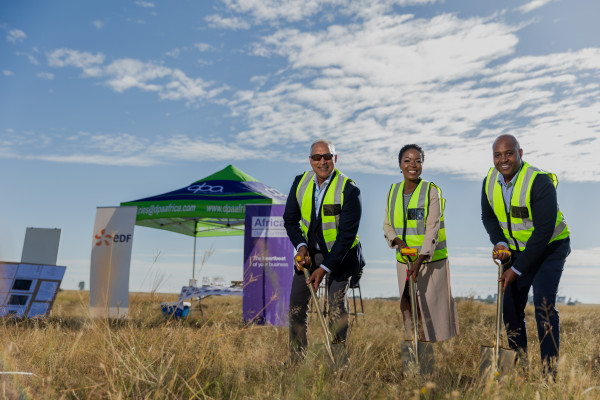
Africa Data Centres and DPA Southern Africa (SA) breaks ground on solar farm in Free State

Location: Business
Africa Data Centres

Africa Data Centres (www.AfricaDataCentres.com/) and DPA SA have broken ground on their solar farm in the Free State; The first phase will see power getting wheeled to its CPT1 facility; The second phase will see power being supplied to JHB1 and JHB2 once wheeling agreements with relevant municipalities conclude.

Africa Data Centres, a business of the Cassava Technologies group, is pleased to announce that it has broken ground on the construction of a solar farm in the Free State in collaboration with DPA Southern Africa.

This announcement forms a crucial component of the 20-year Power Purchase Agreement (PPA) inked in March 2023 with DPA Southern Africa a joint company of the French utility, EDF. The objective of the Free State farm is to furnish renewable energy to Africa Data Centres sites, commencing with its cutting-edge, carrier-neutral data centre in Cape Town, the CPT1 facility.

According to Cassava Technologies' President and Group CEO, Hardy Pemhiwa, “This initiative positions Africa Data Centres as a trailblaser in the data centre industry in responding to South Africa's energy crisis through sustainable technology solutions. This is in line with a broader industry shift towards innovative, eco-friendly practices. The strategic use of solar power showcases technology's role in pioneering solutions for energy challenges and environmental sustainability”.

Furthermore, Tesh Durvasula, CEO of Africa Data Centres, underscores the commitment to powering all data centres with clean, renewable energy sources. "Today's announcement represents a significant stride in our initiative to energise South African data centres sustainably, advancing our objective of achieving carbon neutrality. The first phase involves constructing the 12MW solar infrastructure to power our Cape Town data centre, with subsequent phases extending to our Johannesburg data centres.”

Nawfal El Fadil, the CEO of DPA SA, states, "Africa Data Centres, as a pioneer in the data centre industry, has consistently demonstrated a strong commitment to sustainability, aligning seamlessly with our company's values. We are thrilled and honoured to contribute to Africa Data Centres' mission of achieving carbon neutrality, beginning with the establishment of this solar power plant in the Free State to serve their data centre in Cape Town. At the heart of our collaboration lies a shared understanding that the path to carbon neutrality extends beyond infrastructure—it demands innovation, expertise, and collective determination to overcome challenges. DPA SA, backed by EDF's legacy, brings a wealth of experience and a proven track record in delivering high-quality, sustainable energy solutions to this partnership."

"We take immense pride in supporting Africa Data Centres on this journey, being among the pioneers in launching a wheeling solar plant, thereby paving the way for a greener, more sustainable future in South Africa," adds Nawfal El Fadil.

This project is a key element of Africa Data Centres' ambitious plans to emerge as the most sustainable colocation provider on the continent. "Beyond procuring renewable energy, our commitment to an efficiency strategy has earned us the internationally recognised ISO50001 certification for the effective operation of our data centres," Durvasula elaborates.

"Data centres worldwide face scrutiny for their reliance on grid power and renewables, and Africa is no exception. Africa Data Centres is actively addressing this issue by generating renewable energy, alleviating strain on the local grid. Additionally, our sustainability objectives encompass achieving net-zero status at all facilities, making this project another significant stride towards reaching that goal," concludes Durvasula.

Distributed by APO Group on behalf of Africa Data Centres.

Social Media Platforms:
Twitter: https://apo-opa.co/4cKzd4r
LinkedIn: https://apo-opa.co/446fpol
Facebook: https://apo-opa.co/3TSkVGa 
YouTube: https://apo-opa.co/3NcwWnp

About Africa Data Centres:
Africa Data Centres is your trusted partner for rapid and secure data centre services and interconnections across the African continent.

Africa Data Centres is Africa's largest network of interconnected, carrier and cloud-neutral data centre facilities. Bringing international experts to the pan-African market. We are your trusted partner for rapid and secure data centre services and interconnections across the African continent. Strategically located, our world-class facilities provide a home for all your business-critical data. Proudly African, we are dedicated to being the heart that beats your business.

Africa Data Centres' aim is to unveil various business opportunities and to develop a strategic network of partnerships. This will further strengthen Africa Data Centres' superiority in providing our customers with the highest standard of interconnected, carrier and cloud-neutral data centre facilities throughout Africa. www.AfricaDataCentres.com/

About Cassava Technologies:
Cassava Technologies is a technology leader providing a vertically integrated ecosystem of digital services and infrastructure enabling digital transformation. Launched in 2021, the company was born out of a need to create a digitally connected future that leaves no African behind.  Through its subsidiaries, namely, Liquid Intelligent Technologies, Liquid Dataport, Liquid C2, Africa Data Centres, Distributed Power Africa, Sasai Fintech and Telrad, Cassava is a multinational technology company that has operations across key growth markets like Africa, the Middle East, Latin America and the United States of America. Cassava provides its customers in 94 countries with offerings that will help them grow, transform, and expand their operations. https://apo-opa.co/3U7rdmB   

About DPA Southern Africa:
DPA Southern Africa, a joint company of the French utility EDF and Distributed Power Africa, is at the forefront of the Southern African renewable energy market for businesses, laying the foundation for a sustainable and environmentally conscious future in South Africa and beyond.

Our commitment is to assist companies in achieving carbon neutrality and cost savings simultaneously by providing tailor-made renewable energy solutions that meet the specific needs of businesses. Our comprehensive offerings include on-site, wheeling, and storage solutions, offering businesses a holistic approach to sustainable energy management.

Media files
Africa Data Centres
Download logo
Read moreAfrica Data Centres and DPA Southern Africa (SA) breaks ground on solar farm in Free State
8 April 2024

Simple Steps Blogging Summit: Pioneering Digital Influence in South Africa

Location: MyPR

[Gqeberha, South Africa] – The digital landscape of South Africa is about to be shaken up with the inaugural Simple Steps Blogging Summit, scheduled to take place from the 24th to the 26th of April, 2024. This pioneering event marks the first time that a gathering of this magnitude, focusing on blogging and social media …

Read moreSimple Steps Blogging Summit: Pioneering Digital Influence in South Africa
8 April 2024

Elevating Business Security: Essential Products to Safeguard Your Assets

Location: MyPR

In an era where security threats are increasingly sophisticated, businesses must employ robust measures to protect their assets, data, and personnel. Among these measures, physical security products play a crucial role in fortifying business premises against unauthorized access and potential breaches. In this blog, we’ll delve into seven essential business security products that every enterprise …

Read moreElevating Business Security: Essential Products to Safeguard Your Assets
7 April 2024

The Critical Role of Valuation Services in Todays Market

Location: MyPR

Valuation services are an essential facet of the financial world, providing critical insights and data that influence a wide range of business decisions. From determining the worth of a company for mergers and acquisitions to assessing property values for real estate transactions, valuation services play a pivotal role in ensuring that stakeholders have accurate and …

Read moreThe Critical Role of Valuation Services in Todays Market
7 April 2024

SIU obtains interdict to stop sale of farm linked to former NLC exec

Location: News

SIU obtains interdict to stop sale of farm linked to former NLC exec

The Special Investigating Unit (SIU) has obtained an interdict from the Special Tribunal to stop the sale of a farm in Limpopo that is linked to the former National Lotteries Commission (NLC) Chief Operations Officer, Phillemon Letwaba and his brother, Johannes Letwaba.

The farm was listed for R7 million last year and is currently under offer for R5 million.

In an order dated 28 March 2024, the Special Tribunal prohibited the Letwaba brothers and any other person with knowledge of the order from selling, disposing, leasing, transferring, donating, or dealing with the farm in any manner.

The 3 426 128-hectares farm is registered under the Mosokoti Business Trust, whose trustees are the Letwaba brothers.

The funds that were used to purchase the farm emanate from the NLC. The farm is now preserved pending the final determination of civil action to be brought by the SIU within 60 days.

The SIU received a tip-off from a whistleblower about the sale of the farm and its potential link to NLC funds.

Following the tip-off, the SIU found that the farm was purchased using NLC funds siphoned through two organisations, which include organisation one -- Lulamisa Community Development Organisation NPO.

The SIU’s investigation revealed that in July 2015, an application for grant funding for Lulamisa Community Development Organisation (Lulamisa) was submitted to the NLC.

On the application form, the NPO was requesting an amount of R85 million for “hosting the Commonwealth Games, which would benefit the people of South Africa and boost the economy of the city of Durban”.

The NLC granted Lulamisa R80 million in two tranches of R64 million and R16 million, respectively.

Between 1 and 31 March 2016, Lulamisa made various payments to Iron Bridge Travelling Agency totalling R2 712 269.77. Phillemon Letwaba’s wife, Rebotile Malomane, owns Iron Bridge Travelling Agency.

In April 2016, Iron Bridge Travelling and Events transferred R1 000 000.00 to conveyancing attorneys, which went towards purchasing the farm.

Organisation number two is Tshikovha Graduate Academy.

On 11 February 2016, Konani Pfunzo Learning Centre applied for grant funding to the NLC for R49 935 697.52. The request aimed to assist Tshikovha Graduate Academy, an NPC, in drilling 200 boreholes in Limpopo, Mpumalanga, North West, Free State and Eastern Cape provinces.

On 19 February 2016, NLC awarded Konani Pfunzo Learning Centre grant funding of R55 463 735.

On 22 February 2016, Konani Pfunzo and Tshikovha signed a memorandum that the grant will be transferred to Tshikovha within two working days upon receipt thereof. After Konani Pfunzo received grand funding from the NLC, an amount of R55 250 000 was transferred to the bank account of Tshikovha Graduate Academy.

Two days after receiving these funds, Tshikovha Graduate Academy transferred R4 800 000.00 to a private company named Redtaq (pty) LTD. Karabo Charles Sithole, Phillemon Ledwaba's cousin, is the sole director of Redtaq.

On 01 March 2016, Redtaq transferred R600 000.00 to Iron Bridge Travelling and Events. On 03 March 2016, Tshikovha further transferred R4 500 000.00 to Redtaq.

On 23 March 2016, Redtaq transferred R2 4000 000.00 to conveyancing attorneys. On the same day, Iron Bridge Travelling and Events transferred R66 009.83 and R300 000.00 to the same attorneys.

On 30 March 2016, Tshikovha transferred R8 000 000.00 to Mshandukani Holdings's bank account. Mshandukani Holdings is a private company with the company and Mr Mashudu Shandukani is the sole director.

On 05 April 2016, Mshandukani Holdings transferred an amount of R1 000 000.00 to Ndzhuku Holdings' bank account. On the same day, Ndzhuku Holdings transferred an amount of R1 000 000.00 to the same aforementioned attorneys.

The farm was purchased for a total of R4 766 003.83. The SIU’s evidence shows that Letwaba contravened the NLC's conflict of interest clause. He also used the funds received from NLC-funded NPOs for his gain.

The interdict is part of implementing the SIU’s investigation outcomes and consequence management to recover cash and assets lost by State institutions due to alleged corruption or negligence.

Acting on the tip-off is part of fighting corruption as a whole of society, as envisioned in the National Anti-Corruption Strategy.

The SIU was authorised by President Cyril Ramaphosa, in terms of Proclamation R32 of 2020, to investigate allegations of corruption and maladministration in the affairs of the NLC and the conduct of NLC officials, and to recover any financial losses suffered by the State.

The SIU is empowered by the Special Investigating Units and Special Tribunals Act 74 of 1996 to institute civil action in the Special Tribunal or the High Court to correct any wrongdoing it uncovers in its investigation.

The SIU has referred the evidence pointing to criminal conduct to the National Prosecuting Authority for further action. -  SAnews.gov.za

Edwin
Sun, 04/07/2024 - 12:53

688 views
Read moreSIU obtains interdict to stop sale of farm linked to former NLC exec
7 April 2024

Elevating Your Brand: Exploring Digital Marketing Agency Services

Location: MyPR

In the digital age, having a robust online presence is crucial for any business aiming to thrive and stand out in a crowded marketplace. Digital marketing agencies offer a spectrum of services designed to elevate your brand, increase visibility, and drive engagement and conversions. Let’s delve into the key services provided by a digital marketing …

Read moreElevating Your Brand: Exploring Digital Marketing Agency Services
7 April 2024

Navigating the World of Courier Services

Location: MyPR

In the fast-paced world we live in, the demand for efficient, reliable, and versatile courier services has never been higher. Whether it’s a local business needing to send documents across town, an online shopper waiting for a parcel, or a global enterprise distributing products worldwide, courier services are the backbone of logistics and supply chains. …

Read moreNavigating the World of Courier Services
7 April 2024

Labour activation programmes to create job opportunities in Gauteng

Location: News

Labour activation programmes to create job opportunities in Gauteng

The Department of Employment and Labour, through its entity, the Unemployment Insurance Fund (UIF), will enter into partnerships with private business, SETAs and NGOs to create thousands of employment opportunities for residents of Gauteng.

At the launch of labour activation programmes for Gauteng on Saturday, Employment and Labour Minister Thulas Nxesi said an amount of R8.4 billion has been set aside to implement 105 labour activation programmes over 22 sectors, including agriculture, services, IT, construction, engineering, wholesale and retail, safety and security, hospitality, social services, textile and transport in Gauteng.

The Gauteng launch is part of a R23.8 billion national job creation plan that will be rolled out over the next couple of weeks to create more than 700 000 employment opportunities throughout the country. The opportunities will run between 12 and 36 months.

Nxesi, delivering the keynote address, said that in the face of rising unemployment, all efforts to create employment in South Africa should be welcomed.

“It is very important that we respond to the challenge of unemployment, and plan together to implement strategies to mitigate it on an ongoing basis. We believe that government, working together with all stakeholders, has a major role to play in mitigating unemployment, and creating and preserving jobs,” said the Minister.

Nxesi said that only substantial economic growth and development will rescue the country from the huge unemployment challenge.

The launch was attended by labour activation programme beneficiaries, project owners, various MECs from the provincial government, as well as senior government officials.

Participants that will be hired and trained in the programme will be selected through the Department of Employment and Labour’s Employment Services of South Africa database (ESSA).

For registration as a work seeker, members of the public can register on the database using the link https://essa.labour.gov.za/EssaOnline/WebBeans/?wicket:bookmarkablePage=wicket[1]1:za.gov.labour.essa.web.individual.register.RegIndSearch.

Launches of labour activation programmes for other provinces are scheduled to take place as follows:

  • KwaZulu-Natal, 16 April 2024
  • Western Cape, 17 April 2024
  • Eastern Cape, 19 April 2024
  • Free State, 22 April 2024
  • North West, 23 April 2024
  • Mpumalanga, 24 April 2024
  • Limpopo, 30 April 2024
  • Northern Cape, 09 May 2024.

 – SAnews.gov.za

Matona
Sun, 04/07/2024 - 16:19

218 views
Read moreLabour activation programmes to create job opportunities in Gauteng
7 April 2024

Diversifying water resource mix essential for supply security, says Mahlobo

Location: News

Diversifying water resource mix essential for supply security, says Mahlobo

Water and Sanitation Deputy Minister David Mahlobo has emphasised the importance of diversifying South Africa's water resource mix for water security.

The Deputy Minister was addressing the Inaugural Built Environment Indaba hosted by the Black Business Council in the Built Environment recently, which was held recently in Gauteng.

The Indaba was aimed at promoting collaboration, procurement and skills development in the industry.

Mahlobo confirmed that in terms of water security, the supply of raw water is currently in balance with the existing demand at national level.

Additionally, government has recognised the localised deficit, acknowledging that 98% of the available water is already allocated. Mahlobo said to ensure water security in the future, it is crucial to broaden the water resource mix through sustainable use of groundwater, desalination of seawater (even though technology remains expensive), water reuse from treated wastewater systems, and water reclamation.

While supply-side measures are essential, Mahlobo emphasised the need for water conservation and demand management.

The Deputy Minister warned that water availability in South Africa could decline rapidly due to factors such as economic growth, population growth, urbanisation, inefficient water use, degradation of wetlands, and the impact of climate change.

He also highlighted the financial challenges faced by municipalities, noting that they owe R19 billion to water boards.

According to the Deputy Minister, one of the main issues plaguing the water sector is the poor performance and adherence to standard operating procedures for drinking water treatment and wastewater treatment.

Infrastructure is often left in poor condition due to a lack of maintenance, with municipalities failing to hire qualified personnel to oversee these essential processes.

Additionally, weak billing and revenue collection, as well as inadequate budget prioritisation for maintenance and operations by municipal councils, further exacerbate the challenges faced by the sector.

In terms of support to municipalities, the Department of Water and Sanitation (DWS) and water boards are supporting many municipalities to implement improved plans that are agreed to by the Ministry and municipal leadership.

DWS, the Department of Cooperative Governance and Traditional Affairs (COGTA), Municipal Infrastructure Support Agency (MISA), Department of Human Settlements, and National Treasury allocate water and sanitation infrastructure grants worth more than R20 billion to municipalities per annum, and provide technical and engineering support and assistance, capacity building and training and financial management advice and support.

Water projects

Mahlobo highlighted several key water sector projects that are currently in implementation.

These projects aim to address water shortages and improve access to water in various regions across the country.

The R40 billion phase 2 of the Lesotho Highlands Water Project (LHWP2) is one of the major projects that is currently in progress.

This project is aimed at delivering approximately 470 million m3 per annum in addition to the 780 million m3 per year which the IVRS currently receives from LHWP1 and will increase the availability of raw water for Gauteng and surrounding areas, which have been experiencing water shortages.

Another project is the R26 billion uMkhomazi Water Project in KwaZulu-Natal. This project was facing an affordability deadlock, but Mahlobo announced that it had been resolved, and the project is now moving forward.

The R4 billion phase 2A of the Mokolo Crocodile Water Augment Project (MCWAP) in the North West and Limpopo has also been completed, with funding being raised for phase 2.

In addition to these projects, Mahlobo also highlighted the R12 billion Olifants River Water Resource Development project in Limpopo, the R10 billion Vaal Gamagara project in the Northern Cape, the R8 Billion Mzimvubu Water Project in the Eastern Cape, the R1.2 billion Berg River Voelvlei Augmentation Scheme in the Western Cape and the R4 billion raising of the Clanwilliam Dam in the Western Cape.

All these projects are aimed at diversifying the water resource mix to ensure water security for South Africa.

Mahlobo assured that South Africa will not run dry by 2030, but there will be challenges if there is no change in the way of doing things. – SAnews.gov.za

Edwin
Sun, 04/07/2024 - 14:16

129 views
Read moreDiversifying water resource mix essential for supply security, says Mahlobo
7 April 2024

Operation Shanela nets over 500 000 suspects

Location: News

Operation Shanela nets over 500 000 suspects

Police Minister Bheki Cele says 551 506 suspects have been arrested for various crimes across the country since May 2023 when Operation Shanela was introduced.

“Over 500 000 suspected criminals have been removed from society  and brought before the courts to answer for their alleged crimes,” Cele said.

Addressing media in Pretoria on Sunday on the Police Take Down Successes of Police Counter Operations , Cele said police on the ground are each week pushing back on crime through high density operations in identified high crime areas across the country through Operation Shanela.

“Officers in all nine provinces, led by the respective Provincial Commissioners, have conducted almost 70 000 (69 468) high density crime prevention and combating operations in the last 11 months,” Cele said.

The countrywide high-density operations have resulted in the arrest of 8 563 suspected rapists and 6 045 murder suspects.

“[A total of] 4 410 suspects have been arrested for attempted murder. Police officers have arrested 63 573 assault GBH [grievous bodily harm] suspects and 37 333 suspects accused of common assault.

“[A total of] 41 191 suspects have been arrested for the Contravention of the Immigration Act and were found to be in the country illegally, [while] 16 073 drunk drivers were taken off our roads and arrested through various roadblocks and stop-and-searches during simultaneous countrywide operations.

 “[A total of] 2 819 illegal miners involved in illicit mining were also caught and taken through the court processes,” Cele said.

Under operation ‘Vala umgodi’, a multidisciplinary operation involving various government departments such as the South African National Defence Force (SANDF) and the Department of Mineral Resources and Energy, 3 298 illegal miners were arrested.

Cele said 1 028 hijacking suspects have been arrested over the past 11 months and 3 670 suspects were nabbed and face business burglary charges, while a further 10 743 suspects were arrested for breaking and entering into houses.  

“Working jointly with local, provincial and national traffic police and other sister departments, the focus of Operation Shanela remains the prevention of crime,” the Minister said.

Over 150 suspects shot and killed by police

Cele said over 150 suspects were shot and killed from April 2023 to date.

This figure, according to Cele, includes the September 2023 fatal shooting of 19 cash-in-transit (CIT) suspects in Makhado, Limpopo, who engaged in a gun battle with police instead of surrendering.

Cele said while it is the aim of the police to arrest suspects, some heavily armed suspected criminals choose to engage the police in a gun battle and police respond accordingly.

“Police have and will come out on top during these takedowns. In April 2023, 10 heavily armed CIT-related robbers were shot and killed during a confrontation with police in Sebokeng in Gauteng province,” Cele said.

He noted that the kidnapping of members of the public and influential individuals, as well as businesspersons, remains a concern.

“The responses by the police to this crime is, however, encouraging and sizable inroads are being made,” he said.

The Minister said the Directorate for Priority Crime Investigation (DPCI) has arrested 62 suspects involved in kidnappings for ransom from April to date.

“Police operations have also led to the arrest of 55 suspects for the kidnapping of Chinese nationals in the country. Five suspects have been arrested for their role in the kidnapping of Mozambican nationals.

“The DPCI has also undertaken significant takedown operations targeting various criminal syndicates in the past 11 months.

“These operations have resulted in the interception of 14 identified targets across a range of illicit activities including theft, fraud, drug trafficking, money laundering and contraventions of financial regulations.”

Assets, with an estimated value of R6.2 million, were seized from April 2023 to date. Sixteen drug labs, with drugs valued over R161 million, were also shut down during this time.

Additionally, 20 suspects were apprehended in connection with drug-related offences.

Cele said in separate operations targeting narcotics, led by the DPCI, drugs valued at over R506 million were taken out of circulation and 148 suspects were apprehended through policing operations.

“Added to the work of the DPCI, the Organised Crime Unit -- within the Detectives of the SAPS -- conducted numerous multi-disciplinary takedown operations focusing on drugs. Illicit substances such as mandrax, cocaine, heroin and magic mushrooms, with an estimated street value of R121 700 000, were seized,” he said. – SAnews.gov.za

Edwin
Sun, 04/07/2024 - 12:16

108 views
Read moreOperation Shanela nets over 500 000 suspects
6 April 2024

Tribunal blocks former Lottery boss from selling farm bought with Lottery money

Location: News

Order names about 20 people and companies linked to National Lotteries Commission dodgy deals

Read moreTribunal blocks former Lottery boss from selling farm bought with Lottery money
5 April 2024

Elections 2024: What the major political parties say about public transport

Location: News

We sent questions to the ANC, DA, EFF, IFP, FF Plus, ActionSA, PA, MK Party and RISE Mzansi

Read moreElections 2024: What the major political parties say about public transport
5 April 2024

Newly launched terminal a symbol of resilience

Location: News

Newly launched terminal a symbol of resilience

President Cyril Ramaphosa has hailed the newly opened Newlyn Park Bayhead Rail Terminal as a symbol of South Africa’s recovery following the challenging COVID-19 pandemic and the country’s resilience in the face of challenges.

The President launched the terminal in Durban on Thursday.

“The completion and launch of the Newlyn Park Bayhead Rail Terminal project at the Port of Durban is not only a much-needed boost to South Africa’s logistics infrastructure network. This terminal is also a symbol of recovery and resilience. For the city of Durban, for the eThekwini Metro, for KwaZulu-Natal, and for the country at large,” he said.

President Ramaphosa reflected on the “worst public health disaster in modern times in the form of COVID-19” which forced South Africa and the entire globe into lockdown to contain the spread of the virus.

“As we were just emerging from the pandemic’s shadow in 2021, parts of our country, notably KwaZulu-Natal, were the scenes of deadly unrest and an unleashing of violence, arson and mayhem that caused loss of life and cost our economy approximately R50 billion. Then, just a year later, in 2022, KwaZulu-Natal was one of the provinces that experienced devastating floods.

“We all recall seeing the images of the damage to the Port of Durban at the time…especially in and around Bayhead Road, we saw much damage. We know the extensive work and effort it took to restore operations and to get the port and its associated infrastructure up and running again.

“These were all significant setbacks…that could have knocked us down, that could have prevented us from moving forward and that could have made us to give up.

“We can all be immensely proud of what has been achieved here, and of the persevering, pioneering South African spirit that this new terminal embodies. It also illustrates what can be achieved when government and business work together,” the President said.

Fruition

The Newlyn Park Bayhead Rail Terminal is a fruition of a commitment made during the South African Investment Conference (SAIC) in 2019.

Reflecting on the investment commitment Newlyn has made into South Africa, President Ramaphosa recalled that at SAIC 2023, Newlyn further pledged R4 billion into the “development of a near-zero dust emission manganese back- of-port storage and handling facility project at Coega, as well as in a similar facility for iron ore at Saldanha Bay”.

The President emphasised that the terminal represents a “good model” of what can be developed when government and private sector work together.

Partnership

“The terminal has been built on land leased from Transnet and the partnership with Newlyn will assist in improving operational efficiency right across the board. This precinct will address some of the challenges we have been experiencing in the logistics, infrastructure and network industries that have had a negative impact on economic growth and the creation of jobs.

“In order for this rail terminal project to deliver full benefits to South Africa for the purpose that it was designed, it has to have trains and slots to be made available to clients. This will lead to a significant increase in revenue for Transnet and Natcor Corridor through the migration of cargo from road to rail,” he said.

The project has injected some R 3.4 billion in investment and created some 4 013 direct construction jobs.

“More than 1000 employees are currently employed full time in this facility and this number is expected to grow as the facility handles more cargo. Much of the material that has gone into [building the terminal] has been sourced locally and many of those who participated in setting this facility up were also local providers.

“Upgrading local port infrastructure is critical to the success of the Africa Continental Free Trade Area and this new terminal will facilitate the swift movement of goods from South Africa to the rest of the continent and, indeed, beyond,” President Ramaphosa said. – SAnews.gov.za


NeoB
Thu, 04/04/2024 - 14:54

605 views
Read moreNewly launched terminal a symbol of resilience
5 April 2024

The Power of Branded Jackets in Corporate Clothing

Location: MyPR

Introduction In the dynamic world of business, establishing a distinct and cohesive brand image transcends beyond logos and slogans to encompass every aspect of an organisation, including the attire its team wears. Branded corporate clothing is a testament to a company’s identity, ethos, and professionalism. It embeds itself as an integral part of the brand’s …

Read moreThe Power of Branded Jackets in Corporate Clothing
5 April 2024

Nxesi launches skills training programme to assist unemployed citizens

Location: News

Nxesi launches skills training programme to assist unemployed citizens

Employment and Labour Minister, Thulas Nxesi, has launched a skills training and entrepreneurship programme designed to benefit the youth and the unemployed in the country. 

The programme will afford Unemployment Insurance Fund (UIF) beneficiaries and unemployed youth with an opportunity to be integrated into the labour market or start their own businesses.

Nxesi announced the launch of the Unemployment Insurance Fund Labour Activation Programme (LAP) during a media briefing held in Pretoria on Thursday.

LAP was established within the UIF to enhance the department’s mandate through enhancing the employability of the unemployed through training; enable entrepreneurship through enterprise development; preserve jobs through the Commission for Conciliation, Mediation and Arbitration (CCMA) and Productivity SA, and collaborate across government departments and entities to massify jobs, skills training and enterprise creation.

Nxesi said an amount of R23.8 billion will be allocated to implement this plan. 

“Opportunities will run between 12 and 36 months. The money invested in the plan will be recouped by the UIF through contributions and revenue generated from investments, as has been the sustainability model of the fund.

“The spread of our implementation nationally will be across every province, with 333 recommended projects to provide seven training, small enterprise support and employment opportunities to 704 000 unemployed people,” Nxesi explained.

Nxesi said the department is collaborating across with other government departments and entities to massify jobs.

“As early as next week, we will be talking about a joint programme with the Department of Higher Education and Training, and Small Business, which is also a collaboration with the programme we are talking about today,” Nxesi said. 

The Minister assured that the projects have all been subjected to meticulous quality assurance processes to ensure that they are compliant with the policy and legislation. 

“There are necessary controls in place, there is capacity and necessary resources in place, and these programmes produce the real outcomes in terms of the jobs and at a perineural scheme or prospect. 

“Employability interventions are delivered through contracts with the condition that they guaranteed jobs for beneficiaries with a minimum period of employment of one year post intervention,” Nxesi said.

Nxesi said he hopes the companies and industries will contribute significantly to the sectors, including agriculture, Information and Communications Technology (ICT), construction, engineering, manufacturing, education, transport, and mining.

The first roll-out of LAP projects will be launched in Gauteng with the provincial government on 6 April 2024, followed by KwaZulu-Natal on 16 April, Western Cape 17 April, Eastern Cape 19 April, Free State 22 April, North West 23 April, and Mpumalanga on 24 April 2024.

The launch will also move to Limpopo on 30 April, with the last roll-out to take place in the Northern Cape on 9 May 2024.

The programme will be offered to people across all ages. – SAnews.gov.za

GabiK
Fri, 04/05/2024 - 09:54

238 views
Read moreNxesi launches skills training programme to assist unemployed citizens
4 April 2024

Gauteng SMMEs Offered Vital Growth Opportunity through Exporter Competitiveness Programme

Location: MyPR

Gauteng’s Small Medium and Micro Enterprises (SMMEs) are receiving vital support to boost their businesses through a transformative six-month Exporter Competitiveness Programme (ECP) initiative introduced by the government, aimed at propelling them forward. SMMEs that have been operational for a minimum of two years within the manufacturing, agriculture, and agro-processing sectors, are urged to seize …

Read moreGauteng SMMEs Offered Vital Growth Opportunity through Exporter Competitiveness Programme
  • Previous
  • Page 1
  • Interim pages omitted …
  • Page 70
  • Page 71
  • Page 72
  • Page 73
  • Page 74
  • Interim pages omitted …
  • Page 120
  • Next

Copyright © 2026 · MyZA · All Rights Reserved · Powered by Stratlec Online