Slow Systems Delay Switch to New Social Grant Card
Postbank acknowledges that completing the card transition before 20 March deadline is unlikely

MyZA
News, Directory, Events and Other Stuff
Postbank acknowledges that completing the card transition before 20 March deadline is unlikely
The Iziko South African Museum (ISAM) turns 200 years old this year. This is a major milestone in South African museums’ history, making ISAM the oldest conventional museum in Southern Africa. Founded in 1825, ISAM has amassed vast multi-disciplinary collections comprising more than 10 million objects while inspiring generations of South Africans and international visitors …
Today, the Western Cape Government received 71 title deeds from First National Bank (FNB), as part of the housing subsidy initiative for financially distressed customers. This initiative is a collaboration between the Western Cape Department of Infrastructure, FNB, DTB Incorporated; and is run under the careful supervision of Project Manager Deon Van Deventer. The project …
Dear Editor The Democratic Alliance (DA) welcomes the swift and proactive response from the Western Cape Government to the sudden and devastating halt of USAID funding to non-governmental organisations (NGOs) in the province, particularly those working on HIV/AIDS and tuberculosis (TB) prevention and care. We applaud the commitment to safeguarding healthcare services, especially for the …
With Africa’s industrial sector facing unprecedented challenges from ageing infrastructure and growing demand, the inaugural One Eighty Root Cause Analysis Africa Conference arrives at a critical moment. Set to take place from 11 to 14 March at The Vineyard Hotel in Cape Town, this landmark event brings together leading experts to address the significant economic …
Standard Bank, the biggest bank in Africa by assets, is gearing up to host its first African Markets Conference (AMC). The Conference, which will be held in Cape Town later this month, is a key element of Standard Bank’s drive to improve integration and ease of doing business across the continent. “This game-changing conference will …
“It is obvious PRASA was not prepared for this journey” says frustrated commuter after long-distance train breaks down several times
Dear Editor The DA has written to the South African Police Services’ (SAPS) Western Cape Provincial Commissioner in response to a continuing capacitation crisis at the Western Cape Anti-Gang Unit, amid notable lack of will from senior management. The DA sees this action as a matter of last resort, after continuous engagement – but if …
SA needs R440 billion for transmission development
South Africa requires upwards of R440 billion in the next 10 years to expand its transmission infrastructure, says Minister of Electricity and Energy, Dr Kgosientsho Ramokgopa.
Addressing the Africa Energy Indaba in Cape Town on Tuesday, the Minister said the country’s transmission development plans have identified the need to modernise and expand the grid for 14 000 kilometres in the next 10 years.
“This is going to require an enormous amount of investment. The fiscus won’t be able to carry that. The Eskom balance sheet is not sufficient, so it is important to find bespoke financing instruments to make this possible,” the Minister said.
He called on financial actors to actively take steps to significantly lower the cost of borrowing for the investment of the continent’s development, climate resilience and clean energy transition initiatives.
“We expect the increase in electricity trade volumes to grow by about 300% by 2040 and by that time, the projection is that Africa’s population will be at about two billion people from the current 1.5 billion. For us to be able to achieve this level of ambition, there are huge investments that are required.
“One of the studies done by some of the... organisations suggests that Africa will need upwards of R2.6 trillion in investments in the energy sector by 2040. The pool of financing is enormous. Even if you had to consolidate the balance sheet of the continent, I don’t think we are going to get anywhere near raising this money.
“That is why it is important that we are able to design a financing instrument for us to be able to achieve this level of ambition,” Ramokgopa said.
He expressed support for a single electricity market on the continent, as advocated for by the the African Union's Agenda 2063.
“We think that the ambitions of achieving a single electricity market on the continent is not far-fetched .For us to have universal access by 2063, as advocated for in Agenda 2063, which makes a point that we can achieve that through regional integration… there has to be significant investment on interconnectivity,” the Minister said.
With South Africa hosting the Group of Twenty (G20) Presidency, Ramokgopa outlined the G20 technical energy group priorities, which include energy security and forging reliable and affordable access; achieving just, affordable and inclusive energy transitions, as well as African connectivity and energy pools.
These priorities were canvassed through the platform of the African Union.
According to Ramokgopa, 43% of the total population in Africa does not have access to electricity.
“This is a big issue. Before you can talk about transitioning, people need to have access to whatever form of electricity, irrespective of the fuel sources.
“As a country and the continent, we bear the responsibility to ensure that we are able to provide this access in a manner that doesn’t degrade the environment and keep to our obligations to ensure that we reduce the greenhouse gas emissions, although we contribute less than 2.5% of the CO2 emissions. Going into the future, gas will still be part of the mix on the continent,” the Minister said.
Focus on just transition
South Africa’s G20 Presidency will elevate the issue of just, affordable and inclusive energy transitions.
“That is important because we are of the opinion that there is no single transition. Any transition should take into account the unique circumstances of individual countries, and the pace and scale that they can afford.
“We will be meeting with the National Economic Development and Labour Council (Nedlac) and are hoping that the Integrated Resource Plan (IRP) will be release to the public soon. The plan will explain how we see the transitions unfold in the country,” Ramokgopa said.
South Africa's G20 Presidency is the fourth consecutive emerging market Presidency, and it is also the first African Presidency.
It commenced on 1 December 2024 and all engagements are being held under the theme: “Solidarity, Equality, Sustainability”.
The year-long deliberations will culminate in a G20 Leaders’ Summit in November 2025.
The G20 was established to tackle pressing global economic and financial issues. Together, G20 members account for around 85% of global GDP and 75% of international trade.
It comprises 19 countries and two regional bodies, namely the European Union and the African Union.
The grouping plays a critical role in influencing global policy making and fostering global economic stability. - SAnews.gov.za
nosihle
Wed, 03/05/2025 - 12:03
108 views
Commission opens dialogue on viability of electronic voting in SA
The Electoral Commission is expected to start a public conversation about the prospect of electronic voting, or e-voting, during South African elections.
To launch the public debate and discussion on the subject, the commission will host a three-day e-voting conference in Cape Town from 10-12 March 2024.
This conference will serve as a pivotal platform for initiating a public conversation about the possibility of introducing electronic voting sometime in the future.
The conference is based on research commissioned by the Commission and undertaken by the Human Sciences Research Council (HSRC).
The research study produced a discussion document which navigates all crucial aspects related to electronic voting and implications for South Africa. The discussion document will be launched at the conference.
The key components of the discussion documents include the following:
• A country review of electronic voting including those countries currently using poll-site technologies as well as those who use internet voting. This includes countries that introduced electronic voting but subsequently abandoned it.
• Key insights from the legislative review indicate that in the event electronic voting is adopted then there would a necessity for legislative amendments.
• Lessons from two roundtables, which were conducted with academics and representatives of blind persons.
• Lessons from key informant interviews that were conducted with civil society organisations and election management bodies.
• Views which were solicited through a public opinion survey.
• An overall outline of the findings of the studies conducted.
IEC CEO Sy Mamabolo said the conference will serve as a significant opportunity for South Africans to shape the future of voting in the digital world.
“It is part of the statutory purview of the commission to conduct research with a view to improving the quality of elections. We must investigate new approaches to improve the electoral process, voter experience, accessibility and enable cost savings," Mamabolo said.
“Some of the research findings indicate that there is no common understanding of what e-voting entails. This conference aims not only to reflect on possibilities for implementing e-voting but also to drive common understanding and knowledge of the subject among South Africans.
“We encourage further conversations and lively debates among South Africans from all walks of life as we have seen happening in some social media platforms recently,” he said.
The conference will bring together political parties, members of the Portfolio Committee on Home Affairs, corporates in the ICT sphere, government officials, research and development institutions.
Representatives of some countries which have implemented electronic voting are also confirmed for participation in this conference. This includes Estonia, the Democratic Republic of the Congo and Namibia.
Telecommunications and network connectivity service providers will share current and future developments in the digital ecosystem space.
Furthermore, the conference will include an expo where technology companies will display and demonstrate some of the available e-voting technologies and provide participants with a sense of how these technologies can be intuitively operated.
After the launch of the discussion document at the conference, it will be posted on the Electoral Commission digital platforms including on the website. – SAnews.gov.za
Edwin
Wed, 03/05/2025 - 12:34
85 views
Call for financial actors to lower borrowing costs for Africa
Minister of Electricity and Energy, Dr Kgosientsho Ramokgopa, has called for financial actors to actively take steps to lower the cost of borrowing for investment in the continent’s development, climate resilience and clean energy transition initiatives.
“Africa is the most mineral rich of all continents yet is the most energy deprived, underdeveloped and the poorest of all the regions,” Ramokgopa said on Tuesday.
Addressing the Africa Energy Indaba in Cape Town, the Minister said the biggest challenge confronting the continent is the ability to finance the investments that are required to realise the potential of the continent.
“The issues of the financing gap should be issues that are front and centre of the conversation. We are calling for a number of steps to be taken, including but not limited to the need to reconfigure the cost of capital.
“Our view is that developing nations face exorbitant borrowing costs due to the perceived risks that do not reflect economic fundamentals but rather outdated and what I refer to as buyers credit rating,” he said.
The Minister emphasised that it is important that issues of risk allocation should be assigned to countries that have the best capabilities of resolving the risk, among others.
“We do accept that the debt burdens that are placed on the African countries are crippling and undermine the ability to invest in development, climate resilience and clean energy transition.
“This is what sovereign nations need to do to so that we can use the countries balance sheet to enable the investments that are required in this space,” Ramokgopa said.
He advocated for greater coordination between the financial actors as he noted some degree of asymmetry and fragmentation.
“The multilateral development banks are on the one side and the developing financing institutions on the other and issues around vertical climate funds.
“What this does because there is some degree of misalignment, it undermines the possibility of us achieving greater efficiencies and this is going to hinder impact of the pocket of fund that these players are bringing to the fore to help to anchor this kinds of transition and the issues of sustainable development, the ability of the continent to extract and beneficiate closer to the source and thereby broadening the industrial flow of their respective jurisdictions,” he said.
He called for the strengthening of the role of the national development bank.
“I think there is a need for recapitalisation, especially here in South Africa. The Development Bank of Southern Africa (DBSA) can play a much bigger role if it is recapitalised, it competes with some of the commercial banks and therefore they are unable to provide the kind of concessionality that is associated with development banks.
“It stunts or undermine the prospects of them anchoring the kind of industries that we want to see because they must compete with the commercial banks on the same rates,” the Minister said.
Ramokgopa said there is a need to work very hard to attract private sector investors.
“This requires that the political actors, the elected representatives on the continent should work very hard to ensure that there is a degree of stability at a political level but create the necessary conditions, introduce reforms that are necessary to spare on private sector investments. Those are some of the interventions that we are proposing for us to be able to realise the potential of the continent,” the Minister said. -SAnews.gov.za
nosihle
Wed, 03/05/2025 - 10:31
257 views
President Ramaphosa and Mozambican counterpart solidify bilateral ties
President Cyril Ramaphosa and his Mozambican counterpart, President Daniel Chapo, have reaffirmed their commitment to strengthening the diplomatic, political and economic relations between South Africa and Mozambique.
President Ramaphosa received President Chapo for a meeting at his official residence, Genadendal, in Cape Town on Tuesday.
The two leaders held discussions aimed at deepening cooperation and strengthening state institutions. President Chapo was recently inaugurated President of the Republic of Mozambique, which is a close partner and immediate neighbour of South Africa.
Speaking about the significance of the engagement, President Ramaphosa said he came together with his counterpart to continue strengthening the bonds that already exist between the two countries.
“We came together to continue strengthening the bonds between our two countries and in many ways how we can turn a new page of cooperation at a political, diplomatic and economic level and how we can entrench political stability in Mozambique following the elections. And also, how we can create a conducive environment for businesses to operate in both countries,” President Ramaphosa said.
The discussions also focused on Mozambique’s internal political stability, with President Chapo expressing optimism about the ongoing efforts to engage with opposition parties.
“We are here to explain that our situation in Mozambique is good and now we are working. Tomorrow, we will meet with the opposition to sign an agreement on talks we are going to have about the many issues impacting our country including discussions on our electoral laws. We are also here to talk about how we can grow our economy,” President Chapo said.
The relationship between South Africa and Mozambique is rooted in a shared historical struggle against apartheid and colonialism. This bond is further enriched by familial connections and cultural similarities that unite the two nations.
Currently, it is estimated that South African companies have invested between R155 billion and R175 billion, creating more than 42 000 job opportunities.
Several key South African companies recently established the South African Chamber of Commerce, promoting trade and investment between the two nations. Mozambique is also a vital energy security partner for South Africa.
The bilateral meeting gave effect to President Ramaphosa’s commitment in the 2025 State of the Nation Address that South Africa will leverage its international relations to advance the well-being of humanity; strengthen trade relations around the world and leverage strong and diverse global alliances to make South Africa’s economy more resilient. – SAnews.gov.za
DikelediM
Tue, 03/04/2025 - 16:09
64 views
Cape Town looking forward to hosting Cycle Tour
The Western Cape Government (WCG) will welcome over 30 000 cyclists for the Cape Town Cycle Tour set to take place on Sunday, 9 March 2025.
This iconic event is a highlight of Cape Town and the Western Cape’s sporting calendar, attracting participants from across the country and around the world.
According to the WCG, major sporting events such as the Cape Town Cycle Tour bring many benefits to the province as international and domestic cyclists are expected to boost the already thriving tourism sector, which is critical to creating jobs.
MEC of Cultural Affairs and Sport, Ricardo Mackenzie, who will also be taking part, said: “We welcome all cyclists to our province, and I am excited to see more and more people taking up cycling and living active and healthy lifestyles. Please be safe during the tour. All the best to the riders and the organisers. I look forward to seeing you out on the road.”
The Western Cape Department of Cultural Affairs and Sport supports major sporting events in the province as it encourages regular participation in sports, as well as playing an important role in the economy, from tourism, hospitality, and retail, to creating direct and indirect jobs.
Taking riders on a 109km route around the Cape Peninsula, the Cape Town Cycle Tour has been described as South Africa’s must-do cycling event.
Several Cape Town roads will be closed on Saturday and Sunday. – SAnews.gov.za
Gabisile
Tue, 03/04/2025 - 14:18
298 views
Cape Town to host Cape Town Cycle Tour
The Western Cape Government (WCG) will welcome over 30 000 cyclists for the Cape Town Cycle Tour set to take place on Sunday, 9 March 2025.
This iconic event is a highlight of Cape Town and the Western Cape’s sporting calendar, attracting participants from across the country and around the world.
According to the WCG, major sporting events such as the Cape Town Cycle Tour bring many benefits to the province as international and domestic cyclists are expected to boost the already thriving tourism sector, which is critical to creating jobs.
MEC of Cultural Affairs and Sport, Ricardo Mackenzie, who will also be taking part, said: “We welcome all cyclists to our province, and I am excited to see more and more people taking up cycling and living active and healthy lifestyles. Please be safe during the tour. All the best to the riders and the organisers. I look forward to seeing you out on the road.”
The Western Cape Department of Cultural Affairs and Sport supports major sporting events in the province as it encourages regular participation in sports, as well as playing an important role in the economy, from tourism, hospitality, and retail, to creating direct and indirect jobs.
Taking riders on a 109km route around the Cape Peninsula, the Cape Town Cycle Tour has been described as South Africa’s must-do cycling event.
Several Cape Town roads will be closed on Saturday and Sunday. – SAnews.gov.za
Gabisile
Tue, 03/04/2025 - 14:18
90 views
The Western Cape Government is saddened following multiple road fatalities yesterday morning, Monday, 3 March. The incidents include one fatal collision on the R61 at Rooidam, two road incidents in Beaufort West, resulting in one death and multiple injuries, and a devastating crash on the N2 near Heidelberg that claimed seven lives. Western Cape Minister …
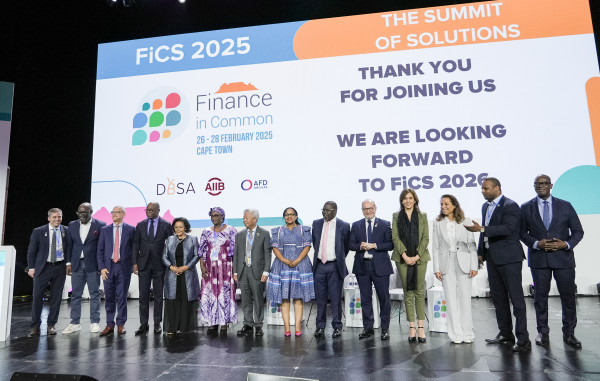
The fifth edition of the Finance in Common Summit (FiCS) concluded on Friday in Cape Town, South Africa, with strong calls for global development finance institutions to work together to address poverty and development challenges. South African Finance Minister Enoch Godongwana led the call.
The summit, which was co-sponsored by the African Development Bank and took place alongside the G20 Finance Ministers' Meeting, was themed "Fostering Infrastructure and Finance for Fair and Sustainable Growth."
Godongwana described the meeting as an unprecedented gathering of key financial players, saying: "Your determination and commitment will change the world. Your determination and will have an impact on global poverty.”
The minister linked the summit's goals to South Africa's development trajectory, highlighting the structural reforms the country had undertaken in the electricity, roads, and port sectors, which have opened new investment opportunities to development partners.
African Development Bank Vice President for Finance and Chief Financial Officer, Hassatou Diop N'Sele—one of several senior officials of the Bank Group at FiCS—represented Bank Group President, Dr. Akinwumi Adesina at a meeting on Wednesday organized by the Council of Europe Development Bank. At the meeting, multilateral development banks reaffirmed a shared commitment to maximize their collective impact.
During the G20 meetings of Finance Ministers and central bank governors, Hassatou Diop N'Sele said, “We call on G20 nations to enhance financial commitments, especially for the 17th replenishment of the African Development Fund, to simplify processes for accessing climate finance, and to create enabling policies that facilitate sustainable capital flows to Africa.”
In her various interventions during FiCS, she discussed the innovative financing tools and initiatives launched by the African Development Bank to leverage resources and mobilize the private sector at scale, including the landmark hybrid capital transactions successfully replicated by other development finance institutions and the Africa Investment Forum.
N'Sele emphasized the urgency for philanthropies and foundations to further strengthen their partnerships with multilateral development banks and to fully embrace innovation to amplify their impact. She also recognized the challenges for expanding climate finance in Africa and reflected on such solutions and platforms as the Alliance for Green Infrastructure in Africa, designed to catalyze bankable, greener infrastructure projects at scale and speed.
The African Development Bank delegation highlighted the progress of Mission 300 (https://apo-opa.co/4bolqQE), an initiative to accelerate access to electricity for 300 million Africans by 2030. The Bank, working with the World Bank and other development finance institutions and private sector partners, has committed $18.2 billion to this effort.
Senior leaders of the Bank stressed the need for urgent action. Nnenna Nwabufo, Bank Group Vice President for Regional Development, Integration and Business Delivery, said: "Africa is not looking for aid, we are looking for partnerships.".
She added: "The time for pilot projects that deliver incremental progress is over. We need investments that enable our nations to take ownership of their development, fostering resilience, self-sufficiency, and sustainable growth that benefits both Africa and the global economy."
Solomon Quaynor, the African Development Bank's Vice President for Private Sector, Infrastructure and Industrialization, called for faster implementation of infrastructure projects. "Africa can no longer sustain infrastructure projects that take seven to 10 years to complete - we must accelerate development to deliver within three years, prioritizing green infrastructure," he said.
The African continent needs $2.7 trillion through 2030 to meet its climate action goals, but receives only 3.6% of all global climate finance, despite its minimal contribution to global emissions.
The African Development Bank's Director General for Southern Africa, Leila Mokaddem, emphasized that Africa's green transition must be inclusive. She said: "With 600 million Africans still without electricity, our transition cannot be about climate goals alone. It must be about jobs, industrialization and economic opportunity. The African Development Bank is supporting this vision through its Jobs for Youth in Africa strategy to create 25 million jobs and equip 50 million young Africans with green economy skills by the end of this year.”
The summit achieved several significant breakthroughs in expanding the scope and impact of development financing. Key outcomes included: the endorsement by G20 finance ministers of public development banks' crucial role in international financial architecture; steps toward setting up frameworks to support cultural industries as valid asset classes; and the formation of a coalition between public development banks and civil society to ensure that development finance serves communities.
CEO of Agence Française de Développement and Chair of the Finance in Common Summit Rémy Rioux noted: "We have made tremendous progress in building public development banks as an asset class through innovation, commitment, and shared values. In times of uncertainty and conflict, we are offering a calm, collective alternative."
"This has truly been an African FiCS," said Boitumelo Mosako, CEO of the Development Bank of Southern Africa. He added: "With 34% of delegates coming from the continent, we have shown that Africa is unstoppable as the second fastest growing region in the world."
Following the Finance in Common Summit, the Fourth Finance for Development Conference will take place in Spain between June and July this year. Being organized by the United Nations and the Spanish government, that summit will feature continuing discussions on reshaping the international financial architecture to better serve development needs.
Distributed by APO Group on behalf of African Development Bank Group (AfDB).
Media contact:
Emeka Anuforo
Principal Regional Communication Officer
Email: media@afdb.org
About the African Development Bank Group:
The African Development Bank Group is Africa's premier development finance institution. It comprises three distinct entities: the African Development Bank (AfDB), the African Development Fund (ADF) and the Nigeria Trust Fund (NTF). On the ground in 41 African countries with an external office in Japan, the Bank contributes to the economic development and the social progress of its 54 regional member states. For more information: www.AfDB.org
On 24 February 2025, the Western Cape Department of Infrastructure has launched a two-month Expanded Public Works Programme (EPWP) Work-based initiative aimed at providing employment opportunities for 210 unemployed individuals from the Central Karoo region. This initiative forms part of the provincial government’s Growth For Jobs Strategy which offers temporary employment while also addressing critical …
DPSA hosts inaugural G20 Anti-Corruption meeting
Public Service and Administration Minister Mzamo Buthelezi will from today host the first G20 Anti-Corruption Working Group (ACWG) in Cape Town.
The ACWG ends on Wednesday.
The Department of Public Service and Administration, in collaboration with the Special Investigating Unit (SIU) and the Department of International Relations (DIRCO), is at the forefront of South Africa's efforts to combat corruption.
The ACWG’s work is guided by the St Petersburg Strategic Framework of 2013 and the G20 ACWG Action Plan for 2025-2027, aligning with the priorities of the African Union’s Agenda 2063.
As South Africa assumed the G20 Presidency in December 2024, a series of important events led by the ACWG are planned throughout the year.
Co-chaired by South Africa and Brazil, the ACWG will focus on four key priorities:
The agenda for the first ACWG Technical Meeting, to be held from 3 to 5 March 2025 - includes sessions dedicated to increasing the efficiency of asset recovery measures, enhancing whistleblower protection mechanisms and fostering inclusive participation among diverse stakeholders.
Sessions will also receive updates on upcoming anti-corruption events, including the financing for development agenda and the United Nations Convention against Corruption (UNCAC) Conference of State Parties (CoSP 11). – SAnews.gov.za
Edwin
Mon, 03/03/2025 - 08:32
202 views

South Africa's newly established South African National Petroleum Company (SANPC) will host an investor roadshow at the Invest in African Energy (IAE) Forum in Paris this May, highlighting its strategic vision and the more than R95 billion in untapped market and investment opportunities in South Africa's oil and gas sector. Under the theme "South Africa's Energy Future: A New Age State Entity," the presentation will be led by SANPC CEO Godfrey Moagi, following the company's official launch, scheduled for April 2025.
With a clear mandate to promote energy independence and diversification, SANPC is set to drive large-scale investments in the oil, gas and clean energy sectors. SANPC's strategy includes ring-fencing all non-functioning assets, identifying assets that can be moved to the NOC and ensuring these assets can be traded and utilized effectively. At the IAE 2025, delegates will gain an exclusive look into SANPC's far-reaching goals, including the creation of a state-backed energy company that will enhance the country's energy security, facilitate the transition to cleaner energy sources and create employment opportunities for the nation's youth.
IAE 2025 (https://apo-opa.co/4h81CCe) is an exclusive forum designed to facilitate investment between African energy markets and global investors. Taking place May 13-14, 2025 in Paris, the event offers delegates two days of intensive engagement with industry experts, project developers, investors and policymakers. For more information, please visit www.Invest-Africa-energy.com. To sponsor or participate as a delegate, please contact sales@energycapitalpower.com.
SANPC's strategic vision aligns with South Africa's National Development Plan, which outlines the country's goals to expand access to affordable, reliable energy while navigating the energy transition. The creation of SANPC marks a bold step toward achieving these objectives, acting as a catalyst for new ventures, partnerships and large-scale infrastructure projects. As South Africa's energy landscape undergoes reform, SANPC aims to drive the rapid deployment of new projects while adhering to the highest sustainability standards and fostering regional integration in oil and gas.
SANPC's participation at IAE 2025 is part of the company's series of investor roadshows, first launched at the African Energy Week: Invest in African Energies 2024 conference in Cape Town. These roadshows support the company's commitment to attracting foreign investment and offer stakeholders the opportunity to engage with SANPC leadership, while gaining insight into the company's vision for an energy future that fosters both economic and environmental sustainability.
Distributed by APO Group on behalf of Energy Capital & Power.
At the end of two days of intense, high-quality competition, Chile men and Kenya women took top honours at the opening round of the World Rugby HSBC Sevens Challenger 2025 in Cape Town. Like Kenya’s men’s side, who achieved promotion to HSBC SVNS 2025 via the Challenger, Kenya’s women got off to the perfect start …
The Springbok Women’s Sevens claimed third place in the first leg of the World Rugby HSBC Sevens Challenger 2025 at Athlone Stadium in Cape Town on Sunday, and although SA coach Renfred Dazel was satisfied with bronze, he lamented a three-minute lapse in concentration that cost them dearly against Kenya. The South Africans beat Colombia …
CAPE TOWN: Half centuries by Jon-Jon Smuts, Tshepang Dithole the impressive Hanu Viljoen helped pave the way for Hollywoodbets Dolphins to continue their 1 Day...
Some Cape Town residents want the golf course to remain as it is
SA participates in expedition along the African coastline
The South African Environmental Observation Network (NRF-SAEON), a long-term environmental observation and research facility of the National Research, is participating in the Around Africa Expedition, the National Research Foundation said.
Led by global ocean exploration non-profit organisations, OceanX and the newly established Ocean Quest, Around Africa Expedition is a pioneering collaborative expedition along the African coastline and is an endorsed action programme of the United Nations Ocean Decade framework (2021-2030) for its contributions to capacity building and scientific understanding of the ocean.
“Its journey began on 30 January 2025 in Moroni, Comoros aboard OceanX’s state-of-the-art research and media vessel, OceanXplorer. The first leg of this expedition, conducted in collaboration with NRF-SAEON, aimed to map and conduct biodiversity surveys of Indian Ocean seamounts on the Madagascan Ridge and Agulhas Plateau,” said the National Research Foundation (NRF).
The guest science team onboard included established and early career researchers from South Africa, Madagascar, Mozambique, Kenya, Tanzania, Comoros, Portugal, Brazil and Saudi Arabia.
In its statement, the NRF said the measurement of both the physical features and biodiversity at these seamounts will advance scientific knowledge and help to guide informed decisions on conservation and restoration efforts in these remote ocean areas.
“Although these seamounts are located in the high seas, far from any human populations, their contribution towards serving as larval transport corridors are critical and can influence population connectivity across vast ocean distances, supporting ecosystem resilience and replenishment of fisheries in both deep-sea and coastal environments.”
South African benthic ecologist, Dr Lara Atkinson from NRF-SAEON is part of the team leading the exploration of seamounts, including Walters Shoal and the Africana II seamount.
“A seamount is an underwater mountain that rises from the seafloor but does not reach the ocean’s surface. Seamounts are formed primarily by volcanic activity, often at tectonic plate boundaries or hotspots.
“Their height can range from hundreds to thousands of meters, depending on the intensity and duration of volcanic activity. They play an important role in influencing ocean currents, creating nutrient-rich upwelling that supports diverse marine life, including plankton, corals, sponges, fish, and marine mammals,” said Atkinson.
Meanwhile, a group of Cape Town high school learners from Luhlaza, Ocean View, Bulumko, Masiphumelele and Usasazo High Schools had the privilege to join a live-streamed session from OceanXplorer on its journey towards Cape Town, as researchers onboard conducted a Remotely Operated Vehicle (ROV) dive on Walters Shoal seamount.
The curious learners in attendance were fascinated by the live view of the seabed at a depth of nearly 500 m and this inspired them to ask many interesting questions to gain further insights about the science being conducted during the expedition.
Thabo Mbuyazi, a technician from the South African Institute for Aquatic Biodiversity (NRF-SAIAB), explained the importance of ensuring that all scientific equipment is maintained to the highest of standards to be able to collect data for researchers.
He introduced the learners and educators to the two submersibles onboard the vessel, Neptune and Nadir. These three-person submersibles hosted some of the research team during deployments to 500 m depths during the expedition. -SAnews.gov.za
Edwin
Sun, 03/02/2025 - 12:49
80 views