• Skip to main content
  • Skip to header right navigation
  • Skip to after header navigation
  • Skip to site footer
MyZA

MyZA

News, Directory, Events and Other Stuff

  • Social Media
  • Sport
  • World News
  • Home
  • Submit News
  • Directory
  • Events
  • Stratlec
  • TFSA
  • News
    • APO
    • Today’s Sport News
    • Todays Social Media and Tech Headlines
    • Today’s World News
    • Today’s SA Financial News
  • Contact
You are here: Home / Archives for data

data

30 May 2024

From Spy Trojans to Ransomware: Cyberthreats industrial organisations in Africa should be aware of
Location: News
Kaspersky

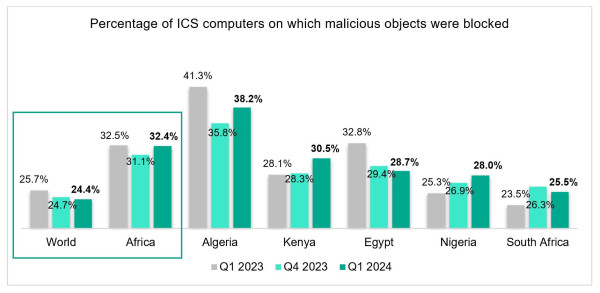
According to Kaspersky (www.Kaspersky.co.za) statistics, in the first quarter of 2024, the percentage of Industrial Control Systems (ICS) computers globally on which malicious objects were blocked decreased by 1.3 percentage points (pp) from the first quarter of the previous year - to 24.4%. In Africa the amount of malware remained almost unchanged, on a level much higher compared to other regions - 32.4% of ICS computers in Africa faced cyberthreats in the first quarter of 2024. In South Africa the figures are 23.5% in Q1 2023 and 25.5% in Q1 2024, Kenya – 28.1% and 30.5%, while in Nigeria – the figures grew from 25.3% to 28%.

In the first quarter of 2024, Kaspersky's protection solutions blocked malware from 10,865 different malware families of various categories on industrial automation systems. The African region is over-exposed to threats spreading via the Internet, which are the most common initial-access tools for cyber attackers. The region also leads in charts of malware spread via removable devices (5.6% of ICS computers faced it, compared to the global figure of 1.13%), which is the other way for cyber attackers to try to bypass the safeguards at the perimeter and to spread within the internal infrastructure.

Malicious objects that are used for initial infection of computers include dangerous Internet resources that are added to denylists (this threat was blocked on 8.78% of ICS computers in Africa), malicious scripts and phishing pages (6.9%), and malicious documents (1.83%). These malicious objects are normally used at the initial phases of the attack chain. As a result, they are blocked by security solutions more often than everything else. This is normally reflected in Kaspersky Security Network statistics.

Malicious objects used to initially infect computers deliver next-stage malware – spyware, ransomware, and miners – to victims' computers. Spyware (Trojan-Spy malware, backdoors and keyloggers), which is mostly used to steal money or confidential data, is also widespread both globally and in Africa (blocked on 6.65% of ICS computers in Africa).

Worms and viruses are types of self-propagating malware. To spread across ICS networks, viruses and worms rely on removable media, network folders, infected files including backups, and network attacks on outdated software. This type of malware is very active in African countries compared to other regions and global average. Extremely high rates of self-propagating malware in the region most probably mean there's a significant portion of OT infrastructure yet to be protected by security solutions (which is where the malware continuously spreads from) and there's room for improving the overall cybersecurity culture to follow strict cybersecurity policies.

ICS computers in Africa continue to face covert crypto-mining programs - miners in the form of executable files for Windows and web miners, though this type of malware is decreasing in the recent years. If successfully installed these provide cybercriminals steady earnings from using victim's computer processing power.

Since AutoCAD software is widely used in ICS organisations, cybercriminals also try to make use of this and similar programs creating special malware, detection of which increased in the first quarter of 2024 compared to previous quarters.

The Middle East and Africa lead among regions where ransomware is spread; though not high in numbers (0.28% and 0.27% of ICS computers faced these respectfully), this may pose serious risk to organisations, especially if data encryption scenario is selected by cybercriminals.

“Africa is actively integrating technologies, but it's important to keep cybersecurity in mind and apply it to both new technologies and currently used solutions. By a security mindset we mean implementing reliable solutions, setting up security policies and educating employees depending on their level of relation with OT. This applies to all infrastructures, but is especially important in operational technology, where risks of material consequences are very high and impact on safety is possible. We hope organisations in Africa will set the stage in the region for a future where technology and security go hand in hand,” says Evgeny Goncharov, Head of Kaspersky's ICS Cyber Emergency Response Team.

To keep ICS computers protected from various threats, Kaspersky experts recommend:

  • Using security solutions for operation technology endpoints and networks, such as Kaspersky Industrial CyberSecurity (http://apo-opa.co/4e0oN1a) to ensure comprehensive protection for all industry critical systems.
  • Regularly updating operating systems and application software that are part of the enterprise's industrial network. Apply security fixes and patches to ICS network equipment as soon as they are available.
  • Conducting regular security audits of operation technology networks to identify and eliminate security issues.
  • Undertaking dedicated ICS security training for IT security teams and OT engineers, which is crucial to improve responses to new and advanced malicious techniques.
  • Using ICS network traffic monitoring, analysis and detection solutions for better protection from attacks potentially threatening technological processes and main enterprise assets.
  • Protect IT infrastructure using solutions for timely detection of cyberthreats, investigation, and effective remediation of incidents, such as Kaspersky Next (http://apo-opa.co/3KoMxhU).
  • Providing the security team responsible for protecting industrial control systems with up-to-date threat intelligence. ICS Threat Intelligence (http://apo-opa.co/3wWHamS) Reporting service provides insights into current threats and attack vectors, as well as the most vulnerable elements in OT and industrial control systems and how to mitigate them.

A full report on ICS threats in the first quarter of 2024 is available at ICS CERT website (http://apo-opa.co/3KnQUtu).

Industrial cybersecurity is one of the main topics being discussed by Kaspersky experts at GITEX Africa in Morocco, on 29-31 May 2024.

Distributed by APO Group on behalf of Kaspersky.

About Kaspersky: 
Kaspersky is a global cybersecurity and digital privacy company founded in 1997. With over a billion devices protected to date from emerging cyberthreats and targeted attacks, Kaspersky's deep threat intelligence and security expertise is constantly transforming into innovative solutions and services to protect businesses, critical infrastructure, governments and consumers around the globe. The company's comprehensive security portfolio includes leading endpoint protection, specialized security products and services, as well as Cyber Immune solutions to fight sophisticated and evolving digital threats. We help over 220,000 corporate clients protect what matters most to them. Learn more at www.Kaspersky.co.za.

Media files
Kaspersky
Download logo
Read moreFrom Spy Trojans to Ransomware: Cyberthreats industrial organisations in Africa should be aware of
30 May 2024

Tailored Financial Infrastructure Solutions for Diverse Business Needs

Location: MyPR

As any startup founder knows, a rapidly growing business can suddenly find itself facing unexpected infrastructure challenges caused by the complexity of managing multiple financial systems. Entrepreneurs often struggle with these complexities – it’s not just about handling cash flow and keeping accurate records, it’s also about ensuring scalability and flexibility within your finance function …

Read moreTailored Financial Infrastructure Solutions for Diverse Business Needs
30 May 2024

The Role of Financial Strategy in Business Growth

Location: MyPR

In today’s fast-paced business environment, sustainable growth is a primary objective for companies of all sizes. At the heart of achieving this goal lies strategic financial planning and management. Etienne Raubenheimer, the head of CFO services at Outsourced CFO, sheds light on the critical role financial strategy plays in driving business growth, emphasising essential tools …

Read moreThe Role of Financial Strategy in Business Growth
30 May 2024

First results start trickling in at IEC’s results centre

Location: News

First results start trickling in at IEC's results centre

The atmosphere at the Electoral Commission’s national Results Operations Centre (ROC) in Midrand is lively this morning as the first results in the National and Provincial Elections start to trickle in.

Tens of thousands of South African citizens made their way to polling stations to exercise their right to vote in the 7th democratic elections on Wednesday.

As polling stations across the country officially closed last night, all eyes have turned towards the critical process of counting votes and the leaderboards at the ROC. 

As at 9:00 am on Thursday, 2 648 of 23 293 (or 11.37%) of the voting districts of the vote-counting nationally had been completed.

According to data at the same time, the African National Congress (ANC) was leading with a total of 414 292 (42.83%) votes, followed by the Democratic Alliance (DA) with 247 280 (25.56%), and Economic Freedom Fighters (EFF) with 80 129 (8.28%) votes had been casted national.

Results continue to come in and the leaderboards continue to be updated. - SAnews.gov.za


GabiK
Thu, 05/30/2024 - 09:04

3975 views
Read moreFirst results start trickling in at IEC’s results centre
30 May 2024

First results start trickle in at IEC’s results centre

Location: News

First results start trickle in at IEC's results centre

The atmosphere at the Electoral Commission’s national Results Operations Centre (ROC) in Midrand is lively this morning as the first results in the National and Provincial Elections start to trickle in.

Tens of thousands of South African citizens made their way to polling stations to exercise their right to vote in the 7th democratic elections on Wednesday.

As polling stations across the country officially closed last night, all eyes have turned towards the critical process of counting votes and the leaderboards at the ROC. 

As at 9:00 am on Thursday, 2 648 of 23 293 (or 11.37%) of the voting districts of the vote-counting nationally had been completed.

According to data at the same time, the African National Congress (ANC) was leading with a total of 414 292 (42.83%) votes, followed by the Democratic Alliance (DA) with 247 280 (25.56%), and Economic Freedom Fighters (EFF) with 80 129 (8.28%) votes had been casted national.

Results continue to come in and the leaderboards continue to be updated. - SAnews.gov.za


GabiK
Thu, 05/30/2024 - 09:04

349 views
Read moreFirst results start trickle in at IEC’s results centre
30 May 2024

Township based food delivery app service launches in Mpumalanga

Location: MyPR

Delivery Ka Speed, an app-based service that delivers food from local vendors, fast-food chains, and retailers to township communities in Gauteng, Limpopo and North West provinces, is set to service communities in Mpumalanga from June. The name means ‘speedy delivery’ in Sepitori. Founded in 2021, Delivery Ka Speed aims to provide convenience to township consumers …

Read moreTownship based food delivery app service launches in Mpumalanga
29 May 2024

Modernisation of German Withholding Tax Relief Legislation

Location: MyPR

In the complex world of international finance, withholding tax holds a significant place within Germany’s tax framework. This form of tax, deducted at source on income such as dividends, interest, and royalties, is a fundamental aspect of the German tax system, ensuring that taxes are collected efficiently from foreign and domestic entities alike. As the …

Read moreModernisation of German Withholding Tax Relief Legislation
28 May 2024

MTN Rwanda named Official Digital Partner of the 2024 Basketball Africa League Playoffs and Finals

Location: Sport

Basketball Africa League (BAL)
Download logo

The Basketball Africa League (BAL) (https://BAL.NBA.com/) and MTN Rwandacell Plc (MTN Rwanda), a market leader in mobile telecommunications in Rwanda, today announced a collaboration that makes MTN Rwanda the Official Digital Partner of the 2024 BAL Playoffs and Finals. 

The collaboration will see MTN Rwanda enhance the digital experience for BAL fans throughout the Playoffs and Finals taking place this week at BK Arena in Kigali through promotions, sweepstakes, and access to Ayoba, an all-in-one free app developed by MTN that offers free instant messaging; voice and video calling; sports, fashion, food, and entertainment news; games; and other content.  MTN Rwanda customers will also have access to BAL content on Ayoba, including highlight packages and episodes of “BAL Daily,” (https://apo-opa.co/4dZB2Lu) a magazine program produced by the league featuring highlights of the games and surrounding events, interviews with players and coaches, and analysis from BAL commentators and other personalities.

“Our collaboration with MTN will bring Rwanda's passionate Basketball Africa League fanbase even closer to the excitement of the BAL Playoffs and Finals,” said BAL President Amadou Gallo Fall.  “As a pan-African mobile telecommunications brand deeply rooted on the continent, MTN has been instrumental in providing enriched experiences for its customers in Africa.  We have a shared ambition to empowering communities, driving innovation, and building a sustainable ecosystem for long-term growth. We look forward to working together to extend this impact to BAL fans in Rwanda.”

“We are thrilled to work with the BAL as their official digital partner,” said MTN Rwanda CEO Officer Mapula Bodibe. “Our customers can look forward to an unforgettable showcase of talent. As a token of appreciation, we will be giving out free tickets to our valued customers, so keep an eye out on our social media platforms for the giveaway.  Additionally, BAL attendees will also receive a 35% discount when they pay for their tickets via MoMo. This collaboration reflects our commitment to supporting initiatives that unite communities and empower Rwandan youth, fostering national unity.”

MTN Rwanda joins the BAL's roster of partners that also includes Foundational Partners Rwanda Development Board, NIKE, Jordan Brand, and Wilson, as well as marketing partners Afreximbank, Bank of Kigali, Castle Lite, Hennessy, and RwandAir.

The 2024 BAL Playoffs and Finals will continue on Wednesday, May 29 with two semifinals games.  In the first game, Rivers Hoopers (Nigeria) will take on Al Ahly Ly (Libya) at 5 p.m. CAT.  In the second game, Petro de Luanda (Angola) will face Cape Town Tigers (South Africa) at 8:00 p.m. CAT.  The complete game schedule is available at BAL.NBA.com and will culminate with the 2024 BAL Finals on June 1 at 4:00 p.m. CAT.  Tickets for the Playoffs and Finals are on sale now at BAL.NBA.com and Ticqet.rw.

Distributed by APO Group on behalf of Basketball Africa League (BAL).

Contact: 
Edwin Eselem
Basketball Africa League
+221 78 615 42 87
EEselem@thebal.com

Christina Mukundwa
MTN Rwanda
+250 78812097
christina.mukundwa@mtn.com

About the BAL: 
The Basketball Africa League (BAL), a partnership between the International Basketball Federation (FIBA) and NBA Africa, is a professional league featuring 12 club teams from across Africa that tipped off its fourth season in March 2024.  Headquartered in Dakar, Senegal, the BAL builds on the foundation of club competitions FIBA Africa has organized across the continent and marks the NBA's first collaboration to operate a league outside North America.  Fans can follow the BAL (@theBAL) on Facebook (https://apo-opa.co/4bSkC5F), Instagram (https://apo-opa.co/4dWzHVI), Threads (https://apo-opa.co/4bxjFzS), X (https://apo-opa.co/3R4JMGi), and YouTube (https://apo-opa.co/4dVF73f) and register their interest in receiving more information at https://BAL.NBA.com/.

About MTN Rwandacell Plc: 
MTN Rwandacell Plc (MTN Rwanda) is the market leader in mobile telecommunications in Rwanda. Since 1998, we have continuously invested in expanding and modernising our network and leading digital solutions for Rwanda's progress. As the country's No 1 network, we offer various services to subscribers, including innovative propositions such as personalised voice and data offers for individuals and corporates with a clear vision to lead the delivery of a bold, new digital world to our customers because we believe everyone deserves the benefits of a modern connected life.

Read moreMTN Rwanda named Official Digital Partner of the 2024 Basketball Africa League Playoffs and Finals
28 May 2024

Total Ninja South Africa, Africa’s Largest Inflatable and Obstacle Park is now a Discovery Vitality Points-Linked Fitness Facility

Location: Entertainment, MyPR

Total Ninja South Africa, Africa’s largest Inflatable and Obstacle Park, is proud to announce that is now a Discovery Vitality points-linked fitness facility. This initiative marks a significant milestone for Total Ninja as the business continues to lead the way in family entertainment and wellness initiatives. Discovery Vitality is a dynamic and science-based behaviour-change programme, …

Read moreTotal Ninja South Africa, Africa’s Largest Inflatable and Obstacle Park is now a Discovery Vitality Points-Linked Fitness Facility
28 May 2024

Managed Services: Enhancing Business Efficiency in South Africa

Location: MyPR

Introduction Managed services have become a crucial component for businesses looking to enhance efficiency and focus on their core operations. In South Africa, managed service providers offer a range of services that help businesses streamline their IT operations and reduce costs. Understanding the benefits and types of managed services available can help businesses make informed …

Read moreManaged Services: Enhancing Business Efficiency in South Africa
28 May 2024

The future of digital identity in South Africa (By Gur Geva)

Location: News
iiDENTIFii

By iiDENTIFii (https://iiDENTIFii.com/) CEO and co-founder Gur Geva. 

When it comes to accessing essential services, such as national medical care, grants and the ability to vote in elections to shape national policy, a valid identity document is critical. 

In South Africa, undocumented citizens are restricted in their ability to collect social grants or go to a hospital. Even those with valid IDs spend hours in queues owing to inefficient and protracted identification processes.

Faster, digitised services would have a transformative impact on the level of financial inclusion of the country's citizens. iProov's report (https://apo-opa.co/3VfYD37), "Unlocking financial inclusion with digital identity and biometric verification," emphasises that digital identity programmes open essential pathways for the unbanked and disenfranchised to access financial and welfare services and, in the case of governments, offer a reduced administrative burden and increased economic growth.

In theory, the positive impact is evident, but how can South Africa with its infrastructural challenges and high levels of inequality put this verification system into practice?

The challenge

An estimated 500 million (https://apo-opa.co/4aFwdEf) people in Africa are living without any form of valid legal identification. In response to this crisis, the African Union Commission is working on an initiative (https://apo-opa.co/3KmsnVP) to develop an interoperability framework for digital identity. The need for this is clear.

In South Africa, for example, lengthy identification processes see citizens queueing for up to three hours to renew a driver's license. Many people (https://apo-opa.co/452hke4) leave their homes in the dark and queue from dawn for their social security grants only to be turned away when the queue is cut because of system failures.

In an address to Parliament (https://apo-opa.co/3wU9pCU), Dr Aaron Motsoaledi, Minister of Home Affairs of South Africa, states that the main reason for the long queues lies in the State Information Technology (SITA) system often being down. The DHA relies on SITA for connectivity, especially in rural villages. Branch Appointment System (BAPS) kiosks that facilitate the live capture of IDs and passports have been set up to bridge this gap. While these efforts are useful, digital identity could transform these processes, whittling down lengthy queues by authenticating identity in a matter of seconds.

In fact, South Africa is pursuing digital identity in some form, through the form of a Smart ID card that stores face and fingerprint biometrics. However, this pioneering initiative is being held back by a restrictive, lengthy onboarding process. Smart ID cards can only be issued from a selection of offices with a ‘live capture system' as well as through certain banks that use the system in-house. This is not enough to implement secure digital identity at scale.

Reframing the identity conversation

Many of South Africa's challenges stem from systemic inequality. This inequality in access across gender, location and education lines has real implications for identity management (https://apo-opa.co/3KmsnVP). For this reason, the conversation needs to shift from identity being an administrative tool to identity being an essential human right (https://apo-opa.co/3KmsnVP).

Whether a person is applying for legal employment, registering at an address, setting up a phone contract, or opening a bank account, a proven identity that can be authenticated is an essential part of the process. Widespread, effective digital identification benefits citizens and generates significant economic value for governments and financial institutions as well.

As a result, a growing number of governments are teaming up with organizations worldwide to develop digital identity programmes that are not only convenient, but open up essential pathways for previously disadvantaged or marginalized individuals to help them access financial and welfare services.

Ground-breaking identity verification in practice

iProov and iDENTIFii have seen the positive impact of Dynamic Liveness Technology in delivering fast, secure and effortless passive face biometric authentication. In addition to being a strong digital alternative to historic forms of identity verification, its anti-spoofing technology is also effective in detecting and protecting against future cyber threats. The U.S. Federal Government lists iProov as a Synthetic Identity Fraud Mitigation Provider and government clients include the U.S. Department of Homeland Security, the UK Home Office, the Australian Tax Office, and GovTech Singapore.

The UK Home Office EU Settlement Scheme, a digital application process for EEA nationals living in the UK post-Brexit, is a powerful example of the impact of digital identity on public services. The scheme was developed by iProov, WorldReach Software, and InnoValor, and provides a simple, secure, and usable solution for applicants to apply for settlement status online. The app includes key features such as remote identity documentation checking using NFC or OCR, and biometric identity authentication via iProov's Dynamic Liveness technology. The app has been extremely successful, with over 4.2 million applications completed, high levels of identity assurance, and an average satisfaction rating of 4.1 stars.

How open are citizens to digital identity?

The Digital Transformation Strategy (https://apo-opa.co/3KmsnVP) for Africa (2020-2030) highlights both the potential social and economic implications of digital IDs for Africans, noting that digital IDs not only support social development, but also enable meaningful participation in productive processes to generate economic growth, spur innovation, and support entrepreneurship. Besides being viewed as an enabler for realising all these policy objectives, digital IDs are seen as critical for the successful implementation of the African Continental Free Trade Area (AfCFTA).

Digital identity programmes can bridge the identity gap by being accessible through even basic smartphones, thus eliminating barriers such as cost and complex application processes that often require travel. A case in point is the European Union Digital Identity Wallet (EUDIW) a decentralised, interoperable digital tool that aims to provide all 447 million EU citizens with the ability to easily store and exchange identity documents and credentials securely, while having full control over their data. Using identity verification will see important public and private services, such as online government services, online banking, remote prescriptions, and SIM registration become significantly more accessible.

The importance of inclusive and safe digital identity

For South Africans to truly embrace and reap the rewards of digital identity, accessibility and security are two critical factors government and other essential service providers must consider.

Adopting accessible verification models maximises inclusivity of digital identity programmes. Traditional remote verification methods, such as video calls or passwords, lack user convenience and may exclude individuals with language barriers or disabilities. By contrast, biometric face verification uses a front-facing camera and does not rely on the end user's technical abilities.

Security is also key as these initiatives must provide the maximum number of people with digital identities and financial access, while consistently mitigating the risks of cybersecurity threats. As with any technology that enables access to a broad range of secured data and financial services, there is a risk of digital identities being compromised for fraud, money laundering, or other illicit activities.

With generative AI contributing towards the sophistication of tools such as deepfakes, this risk is higher and the crime is easier to perpetrate than ever before. Liveness confirms that the person verifying their identity exists and is a live human being with the right to access the online account or service. It also assures that it is a real person and not a photo or mask or other presentation attack. It does not protect against scalable digital attacks like deepfake where synthetic images can be injected into device sensors.

Successful digital identity schemes, such as Estonia's, yield economic benefits for the government and businesses, and demonstrate the positive impact of such initiatives. Similarly, as the European Union's (EU) initiative progresses, other nations can learn valuable lessons from them and adopt strategies that foster a society characterised by enhanced inclusivity and economic prosperity.

Looking forward

While the local government is still rolling out digital identity, the financial services industry in South Africa has been an early adopter. Not only has it proven the ability of digital identity to be more efficient and safer, but it has also shown that it is possible to use biometrics at scale.

Several of iiDENTIFii's South African banking clients have been able to address downtime issues by using subsequent authentication. iiDENTIFii has prioritised this based on the understanding that an authentication process that keeps customers secure and engaged, is a successful one. For this reason, its platform is able to process individuals by storing their reference templates and enabling subsequent authentication. If financial institutions and the government collaborate in digitising government systems, it could make true financial inclusion and accessible digital identity at scale a reality, in a way that reaches all South Africans.

Distributed by APO Group on behalf of iiDENTIFii.

About iiDENTIFii: 
iiDENTIFii (https://iiDENTIFii.com/) is an award-winning face authentication and identity verification platform that distinguishes itself through its use of 3D and 4D Liveness® detection. Purpose-built for enterprises across Africa and the Middle East, iiDENTIFii enables frictionless, scalable customer onboarding in seconds from anywhere and on any device. Founded in 2018, iiDENTIFii has become a proven key partner in multiple tier 1 African banks. The technology plugs seamlessly into existing infrastructures, including mobile and web-based platforms.

Media files
iiDENTIFii
Download logo
Read moreThe future of digital identity in South Africa (By Gur Geva)
28 May 2024

Navigating Mail Management: Enhancing Efficiency and Security in Modern Operations

Location: MyPR

By Pieter Nienaber (Compliance Africa at Crown Records Management South Africa) As the Compliance Officer of Crown Records Management, which has a global footprint, Pieter Nienaber takes a look at the transformative power of efficient and secure mail management. He delves into the critical importance of optimising mail handling processes, exploring innovative solutions such as …

Read moreNavigating Mail Management: Enhancing Efficiency and Security in Modern Operations
27 May 2024

SA records second case of mpox

Location: News

SA records second case of mpox

The Department of Health has urged people experiencing suspected symptoms of mpox disease to visit their nearest healthcare provider for screening and testing to ensure early diagnosis and effective treatment.

This is after the country recorded the second laboratory-confirmed case of mpox disease. 

The new patient is a 39-year-old male who was admitted at Addington Hospital in Durban, KwaZulu-Natal, without a travel history to countries and regions currently experiencing the disease outbreak. 

The first case was logged in Gauteng when a 35-year-old man tested positive on 9 May 2024.

The infectious disease is caused by the monkeypox virus and has the potential to cause painful or itchy rash-like pimples or blisters and fever. 

The department working closely with the province and the National Institute for Communicable Diseases (NICD) has activated contact tracing and case finding to identify and assess people in contact with the patient to prevent further transmission, especially at a household and community level.

“This will also assist to establish if the second case was in contact with the first case confirmed in Gauteng earlier this month.” 

According to the World Health Organisation (WHO) a total of 466 laboratory-confirmed cases of mpox and three deaths from 22 countries were reported globally in March 2024. 

According to the department, this illustrates that low-level transmission continues worldwide.

The most affected WHO regions include Africa, Europe, the Americas, the Western Pacific and South-East Asia.

“In the African region, the Democratic Republic of the Congo reports the highest number of confirmed positive cases, which represents just over a tenth of the suspected clinically compatible cases and deaths reported.” 

Meanwhile, the department said stigma and discrimination may prolong a disease outbreak by stopping people from coming forward for information or seeking testing or care, which undermines public health efforts.

“We urge the public and communities to support those who test positive for mpox to take treatment and those with suspected symptoms to go for screening and testing instead of discriminating against them.” 

Meanwhile, South Africa is currently experiencing the annual influenza (flu) season, which started in the week of 22 April 2024. 

According to the department, several flu strains are circulating causing severe health complications in some patients. 

“This has been confused with the COVID-19 variant which has been in circulation with a low level of transmissibility and severity.” 

The most commonly detected and circulating flu is “swine flu” because it causes disease in pigs, followed by influenza B/Victoria and influenza A (H3N2). 

The department said this was not unusual as swine flu has been circulating as one of the annual seasonal flu strains since 2010. 

“Influenza A virus is more severe in adults. About 8% to 10% of patients hospitalised for pneumonia and 25% of patients with flu-like illness such as fever and cough will test positive for influenza during the flu season in South Africa.” 

According to the NICD surveillance data, the numbers of flu cases and positivity rates are increasing rapidly, but the transmission and impact remain at a moderate level of activity for both outpatient and hospitalised cases. 

“This means that while there is a lot of influenza circulating, it is still within the expected range for a normal influenza season. Influenza may cause severe illness leading to hospitalisation or possibly death, especially among those who are at risk of severe influenza illness or complications.” 

High-risk groups include pregnant women, mothers six weeks after delivery, individuals living with HIV, those with chronic conditions such as diabetes, lung disease, tuberculosis, heart disease, renal disease, obesity, the elderly and children under two years old. 

“These groups of people are strongly encouraged to receive the influenza vaccine available freely at public health clinics or a cost from private healthcare providers and through pharmacies.”

Ideally, the vaccine should be administered before the start of the flu season because it takes about two weeks for antibodies to develop, but it is not too late for people to get it to protect themselves and their loved ones against these viruses.

Non-pharmaceutical interventions such as covering the mouth and nose when coughing and sneezing, ventilation, and regular hand washing with water and soap or sanitiser can help to minimise the spread of the disease. – SAnews.gov.za


Gabisile
Mon, 05/27/2024 - 11:21

1221 views
Read moreSA records second case of mpox
27 May 2024

SMBs shift towards more agile approaches to performance management

Location: MyPR

Small and medium businesses (SMBs) in South Africa increasingly recognise that traditional approaches to performance management no longer meet their needs in a world of digital transformation and hybrid working models. Traditional performance reviews are thus starting to give way to more agile, objective, data-driven methods that improve alignment between workforce performance and business strategy. …

Read moreSMBs shift towards more agile approaches to performance management
27 May 2024

Transforming Financial Markets: The Role of Cloud Computing and Machine Learning in Automated Trade Reporting

Location: MyPR

Introduction In the rapidly evolving landscape of financial markets, technology plays a pivotal role in shaping operational strategies and enhancing efficiency. Among the plethora of technological advancements, cloud computing and machine learning stand out as critical drivers of change. This article delves into how these technologies, along with data engineering and streaming, are revolutionising automated …

Read moreTransforming Financial Markets: The Role of Cloud Computing and Machine Learning in Automated Trade Reporting
27 May 2024

Harnessing the Power of Cloud Services for Digital Transformation

Location: MyPR

Introduction Digital transformation is revolutionising industries across the globe, and South Africa is no exception. At the heart of this transformation are cloud service providers in South Africa, which provide the flexibility, scalability, and efficiency businesses need to stay competitive. These providers are playing a pivotal role in enabling businesses to leverage advanced technologies and …

Read moreHarnessing the Power of Cloud Services for Digital Transformation
26 May 2024

Achievements and challenges: President reflects on sixth administration

Location: News

Achievements and challenges: President reflects on sixth administration

As the term of the sixth administration draws to a close, President Cyril Ramaphosa has reflected on the achievements and challenges faced by government during this five year period.

South Africans are expected head to the polls in the National and Provincial Elections this week to elect leaders for the seventh administration.

In an address to the nation on Sunday, the President said that at the start of his term in office in 2019, South Africa “stood at a turning point”.

“We had endured a decade of corruption and state capture, of weak economic growth and the erosion of our public institutions. Today, we have put that era behind us. We have placed South Africa on a new trajectory of recovery and laid a strong foundation for future growth.

“We have taken significant steps to reform our economy by implementing a number of reforms that affect various sectors of the economy. In tackling crime and corruption, we have introduced a number of initiatives and measures to reposition our criminal justice system.

“We have faced many challenges along the way, which have tested our resilience and our resolve. Yet, in each instance, we have confronted these challenges together. We have remained united. We have worked in partnership and in solidarity,” the President said.

State Capture and corruption

President Ramaphosa said that the nation brought state capture to an end.

“We dislodged the criminal networks that had stolen billions from our people, that had eroded our public institutions and that had undermined the rule of law. Together, we worked to rebuild our law enforcement agencies, our security services, our state-owned companies and a number of other public bodies.

“Through the work of institutions like the NPA’s [National Prosecuting Authority] Investigating Directorate, the Hawks and the SIU, several state capture and corruption cases have been brought to court and billions of Rands in stolen funds have been recovered,” he said.

To further strengthen the work of the NPA, President Ramaphosa has now signed into law the establishment of the NPA’s Investigating Directorate against Corruption as a permanent entity.

“There is still much that we need to do to end corruption. However, as a country, we have sent a clear message to the corrupt that they can no longer expect to get away with their crimes with impunity and without consequence,” President Ramaphosa said.

COVID-19 pandemic

The President remarked that the COVID-19 pandemic, which swept across the world and pushed economies to their limits, was one of the defining moments of the last five years.

More than 100 000 South Africans died during the pandemic with some two million jobs lost.

“We introduced a massive package of social and economic support to protect vulnerable businesses, workers and households from the destructive effects of the pandemic. More than 5.7 million workers received wage support through the special UIF scheme.

“Through the introduction of the special SRD [Social Relief of Distress] grant, we provided relief to more than 11 million unemployed people at the height of the pandemic.

“Working together, we succeeded in administering more than 39 million COVID-19 vaccine doses. Even during the worst moments of the pandemic, we endured and we overcame. This is how we are as South Africans. We confront even the greatest of challenges with determination and courage,” the President said.

Rebuilding the economy

President Ramaphosa said rebuilding the economy following the devastation of the COVID-19 pandemic has been characterised by South Africans coming together “in social partnerships to drive investment, to build infrastructure and to remove the obstacles to inclusive growth”.

He highlighted that as a result, the economy has now returned to levels seen before the pandemic and “we have recovered the jobs lost to the pandemic”.

“Together, we supported Eskom’s efforts to improve the performance of its power stations. We enabled investment in new electricity generation capacity on a scale that is unprecedented in our history.

“Working with financial institutions, development agencies, business and professional associations, we revitalised investment in infrastructure. The value of projects currently in construction is over R230 billion, including energy, water infrastructure and rural roads projects.

“Together, we mobilised more than R1.5 trillion in new investment commitments. This has led to the opening of new factories, mines, data centres and production lines.

“Working with private sector partners, we established the Youth Employment Service, which has created over 144 000 work experiences for young people. We have worked across government and with NGOs to implement the Presidential Employment Stimulus, which has created more than 1.9 million work and livelihood opportunities for unemployed South Africans,” he said.

Into the future

The President emphasised that the sixth administration and all of the work it has done is a springboard for building a better future.

“The last five years have been a time of rebuilding and recovery. It has been about working together not only to meet the challenges of the moment, but to put in place firm foundations for a better future.

“As this sixth administration draws to a close, and as we prepare for the seventh administration, let us build on the progress that we have made. At this moment in our path to renewal, we cannot afford to turn back. There is more work to be done,” President Ramaphosa said. – SAnews.gov.za

NeoB
Sun, 05/26/2024 - 19:50

209 views
Read moreAchievements and challenges: President reflects on sixth administration
24 May 2024

South Africans will be safe during and after the elections

Location: News

South Africans will be safe during and after the elections

Police Minister, General Bheki Cele, has launched the National Joint Operational and Intelligence Structure (NATJOINTS) Coordination Centre - days ahead of the country's National and Provincial General Elections. 

“The NATJOINTS Coordination Centre (NCC) is born from past experiences learnt, when government formulated a coordinated response to the COVID-19 pandemic… as government we soon realised the importance of reconfiguring the way we would deal with the challenges of the deadly virus, as a collective. The NCC underpins the ‘whole of government’ approach to the country’s security,” said the Minister, speaking at the official opening of the NCC, based at the country’s largest training college of the South African Police Service, situated west of Pretoria.

He said the opening of the NCC also came just days before the country prepares for the National and Provincial Elections, on 29 May 2024.

“So while the timing of the opening may be opportune, establishing a nerve centre of such magnitude, to house the National Joint Operational Intelligence Structures, has been a long time coming.”

The centre serves as a central point of contact for the coordination of information.

“It is here where the reporting of incidents and swift, prompt and coordinated response to any and every eventuality within the mandate of NATJOINTS will unfold.

“We are told that this building that houses the NCC has been renovated and repurposed to meet all needs and purposes. This process has taken four months,” Cele said.

Cele said meetings of the NATJOINTS and the Justice, Crime Prevention and Security (JCPS) Directors General as well as the Priority Committees and work streams established by the NATJOINTS will take place in the NCC.

“The building layout not only accommodates the National Joint Operational Centre (NATJOC) but also facilities to accommodate one or more Mission Area Joint Operational Centres, known as MAJOC,” he said.

He said the centre has been fitted with the necessary equipment and machinery as well as technology advancements to ensure all agencies work seamlessly “with agility and in unison against any and every threat that may face the country”.

“The facility is fitted with state-of-the-art data network and communication systems as well as audio visual and advanced technical capabilities. Basically, at all times this facility will ensure that optimal situational awareness is never compromised.

“Such is critical for strategic, operational and tactical decision making and command direction of intelligence structures,” the Minister said.

The NCC will serve as the epicentre for the planning of all major events across the country, including the upcoming elections as well as the Presidential inauguration.

“Once fully operational, including for the coming election operations, the NCC will accommodate representatives from 39 government departments, agencies, state-owned enterprises and private sector stakeholders within the NATJOC,” he said.

Post-elections, the NCC will continue to be utilised on a 24/7 and 365 basis as the main centre for NATJOINTS inter-departmental and inter-governmental activities and operations.

“This will benefit citizens of this country who can be assured that the NATJOINTS remains committed to service and protects law-abiding citizens and all those who live within our borders,” the minister said.

Attending the event, was Police Deputy Minister Cassel Mathale, National Police Commissioner Fannie Masemola, Home Affairs Minister, Dr Aaron Motsoaledi, Defence Minister Thandi Modise, Social Development Minister Lindiwe Zulu as well as senior government officials. – SAnews.gov.za


Edwin
Fri, 05/24/2024 - 12:03

404 views
Read moreSouth Africans will be safe during and after the elections
24 May 2024

Unemployment, unreliable electricity supply, and corruption are South Africans’ top concerns, Afrobarometer pre-election telephone survey shows

Location: News
Afrobarometer

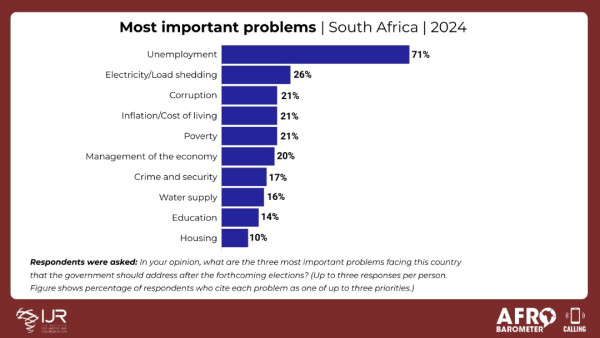
The most urgent problems that South Africans want their government to address are unemployment, unreliable electricity supply, and corruption, according to a new Afrobarometer (www.Afrobarometer.org) telephone survey ahead of general elections on 29 May.

Citizens also cite economic issues including inflation, poverty, and management of the economy.

As citizens prepare to go to the polls, a majority of them are dissatisfied with the way democracy is working in their country, and they overwhelmingly say their country is going in “the wrong direction.” Even among likely voters, one-third say they have not decided which party they will vote for.

These findings are from a telephone survey conducted 23 April-11 May with a sample of 1,800 South Africans aged 18 and older. The margin of sampling error is +/-2.3 percentage points.

Key findings

  • Unemployment far outranks other issues as the country's most important problem that citizens want their government to address, cited by 71% of respondents as one of their three priorities (Figure 1).
  • Electricity/load shedding (26%), corruption (21%), inflation/cost of living (21%), poverty (21%), and management of the economy (20%) round out citizens' top priorities for government action.
  • More than six in 10 South Africans (62%) say they are dissatisfied with the way democracy works in their country, while only 36% express satisfaction (Figure 2).
  • More than eight in 10 South Africans (85%) say the country is going in the wrong direction, up from 46% in 2011 (Figure 3).
  • Among respondents who say they are registered and are likely to vote, about one-third (32%) say they have not decided which party they will vote for.

Afrobarometer surveys

Afrobarometer is a pan-African, non-partisan survey research network that provides reliable data on African experiences and evaluations of democracy, governance, and quality of life. Nine rounds of face-to-face surveys in up to 42 countries have been completed since 1999. Afrobarometer's national partners conduct face-to-face interviews in the language of the respondent's choice.

While Afrobarometer is known for its face-to-face surveys, which are conducted on a roughly two-year cycle, the organisation is refining methods for more limited telephone surveys on emerging topics between standard survey rounds.

The Afrobarometer team, led by the Institute for Justice and Reconciliation (IJR), interviewed 1,800 adult South Africans selected from a database of more than 14 million cell phone numbers between 23 April and 11 May – the final weeks before the election. A sample of this size yields a margin of sampling error of +/-2.3 percentage points. This is the first publicly-released Afrobarometer telephone survey (http://apo-opa.co/3QUBfWn).

Note: Results from 2011-2022 are from standard face-to-face Afrobarometer surveys, whereas the 2024 survey was conducted by phone.

Distributed by APO Group on behalf of Afrobarometer.

Presentation: index.php (apo-opa.com) 

Frequently asked questions (FAQs) about Afrobarometer's pre-election telephone survey in South Africa​: http://apo-opa.co/3QUBfWn

For more information, please contact:
Asafika Mpako
Communications coordinator for Southern Africa
Telephone: +2783-979-8299
Email: ampako@afrobarometer.org
Visit us online at www.Afrobarometer.org.

Follow our releases on #VoicesAfrica.
Facebook: /Afrobarometer
Twitter: https://apo-opa.co/4bt5jR9
YouTube: /Afrobarometer

Media files
Afrobarometer
Download logo
Read moreUnemployment, unreliable electricity supply, and corruption are South Africans’ top concerns, Afrobarometer pre-election telephone survey shows
24 May 2024

Smart Solutions for a Connected Home

Location: MyPR

Transform your home into a smart haven with GeeWiz’s range of innovative products. From lighting solutions to home security, they have everything you need to enhance your living space.   Efficient LED Lights Brighten up your home with LED lights from GeeWiz. These energy-efficient lights provide excellent illumination while saving on your electricity bills.   …

Read moreSmart Solutions for a Connected Home
23 May 2024

“Nerve centre” ready for capturing, auditing, collating elections results

Location: News

"Nerve centre" ready for capturing, auditing, collating elections results

The National Result Operation Centre (ROC) for the 2024 national elections has been launched in Midrand.

The ROC, at Gallagher Estate in Midrand, will be the nerve centre for capturing, auditing, collating and announcing the election results next week after Election Day.

Speaking at the official launch of the results centre on Wednesday, the Electoral Commission (IEC) Chief Electoral Officer Sy Mamabolo said it will serve as the “beating heart of the democratic process”, bringing together commission members, operational areas, representatives of political parties and independent candidates, observer missions and media representatives from across the globe.

There will also be ROCs across all the nine provinces, Mamabolo said.

He said it was an honour to welcome a record-breaking 160 organisations, collectively deploying over 5 000 observers from around the world to witness and validate the integrity of the commission’s electoral process.

“This includes esteemed international bodies such as the African Union, The Carter Centre Democracy Program, and the International Institute for Democracy and Electoral Assistance, alongside a legion of domestic observers committed to upholding the principles of transparency and accountability.”

He reminded all voters of the principle that governs the elections - a person votes at the voting station where they are registered. 

“The only exception to this rule is for those who have duly notified the commission of their intention to vote outside their registered voting district,” he said.

With less than a week before Election Day, Mamabolo called on all South Africans, both at home and abroad, to participate in this defining moment for the nation.

Chairperson of the Electoral Commission Mosotho Moepya said the ROC was not merely a physical space but was a testament to the unwavering commitment to transparency and integrity in the electoral process. 

“The ROC stands as a beacon of transparency and accountability, illuminating the path toward a future characterised by free and fair elections. Here, within the walls of what we affectionately call ‘The ROC’, South Africa's commitment to free and fair elections finds its stronghold,” Moepya said.

Moepya said the results centre would witness the announcement and certification of results in national, provincial, and local elections and that it symbolised the nation's steadfast dedication to democratic principles.

“I extend a warm welcome to representatives from all political parties and independent candidates participating in these elections. 

“Your presence here underscores the collaborative effort required in the management of elections. Through the National Political Liaison Committee, we have engaged transparently at every stage of the electoral process, ensuring inclusivity and fairness,” he said.

Moepya said each voting station result undergoes rigorous audit authentication before being posted, ensuring accuracy and accountability. 

“The capture and verification of results at each voting station, independent audits, and real-time accessibility of data to stakeholders exemplify our commitment to integrity,” he said.

Special Votes

On 27 May and 28 May, the commission will accept special votes from the 1 668 076 South Africans who were approved for this category of votes.

The commission will visit 624 593 voters at their homes or places of confinement and 1 043 483 will be assisted at voting stations where they are registered.

The province with the most approved special votes for both home visits and voting station visits is Gauteng with 335 480.

The rest are as follows: KwaZulu-Natal with 320 010, the Eastern Cape with 286 059, Limpopo with 159 800, the Western Cape with 137 558, North West with 132 627, Mpumalanga with 126 112, Free State with 86 908 and the Northern Cape with 83 504. 

The ROC is supported by nine other provincial elections centres across the country. – SAnews.gov.za

Edwin
Wed, 05/22/2024 - 21:33

141 views
Read more“Nerve centre” ready for capturing, auditing, collating elections results
23 May 2024

From a nice-to-have to a need-to-have – South Africa’s 17-year business coaching evolution

Location: MyPR

Business coaching – a discipline that has changed, evolved, and transformed in leaps and bounds since the 1800s. This year marks a milestone for the craft, as ActionCOACH Southern Africa commemorates 17 years of operation. It is a chance to also reflect on the road that brought us here, and the journey ahead for business …

Read moreFrom a nice-to-have to a need-to-have – South Africa’s 17-year business coaching evolution
22 May 2024

“Significant progress” recorded in Operation Vulindela reform initiative

Location: News

“Significant progress” recorded in Operation Vulindela reform initiative

Director-General (DG) in the Presidency Phindile Baleni says Operation Vulindlela has made significant progress in reforming the economy since its announcement nearly four years ago.

She was speaking during a media briefing aimed at providing an update on progress in the implementation of economic reforms through Operation Vulindlela.

Operation Vulindlela is a government-driven initiative aimed at accelerating the implementation of structural reforms in key sectors to achieve inclusive growth in the economy.

“Significant progress has been made in reforming our economy since the President announced the establishment of Operation Vulindlela in October 2020.

“Our economic challenges are complex and deep rooted. However, the progress that we have made in implementing the economic reforms through Operation Vulindlela give us confidence that they will be overcome. While the impact of these reforms may not be immediate, they will be significant.

Electricity

In the electricity sector, government has moved to do away with some barriers to private electricity generation – resulting in massive investment in that space.

“In the energy sector, regulatory changes have resulted in a massive increase in private investment in electricity generation with a pipeline of more than 22 500MW of confirmed projects in development.

“The reform of the energy system has now far advanced with the passage of the Electricity Regulation Amendment Bill and the establishment of the National Transmission Company of South Africa, amongst other key milestones.

“We are already seeing the impact of these reforms in reduced load shedding and in the proliferation of new energy projects across the country,” Baleni said.

Logistics

Regarding logistics, Operation Vulindlela is aimed at growing exports in the country through the improvement of efficiency.

“Greater private participation in port terminal operations has been enabled and the freight rail network is being opened to competition. These reforms will allow more volumes to be transported via rail and support export growth while making our logistics systems more efficient and competitive.

“The Freight Logistics Roadmap, which was adopted by cabinet in December last year, continues to guide the implementation of these reforms,” the DG said.

Telecoms and water sector

Baleni asserted that strides made through Operation Vulindlela in the telecoms sector are already bearing fruit with decreased costs in data just but one example.

“One of the earliest milestones in the economic reform programme was the completion of the spectrum auction – ending a more than 10 year delay and contributing to reduced data costs and improved network quality and reach,” she said.

Turning to the water sector, Baleni said reforms have led to the clearing of the backlog in water use license applications which stood at more than 1000.

“[The] license application system has been improved to reduce processing times. Concrete steps have been taken to strengthen institutions in the water system, to improve regulation as well as to encourage investment in the infrastructure,” she said.

Visa reforms

Government has also embarked on reforms for South Africa’s visa regime in order to attract skills and to encourage growth in tourism to the country.

“The e-Visa system is now available in 34 countries while visas have been waived for visitors from 135 countries. The recommendations of the work visa review task team, which was completed last year, are now being implemented including the establishment of the Trusted Employer Scheme and a points based system for work visas,” Baleni said.

Working together

The DG emphasised that one of the key drivers to achieving the progress that Operation Vulindlela has produced is collaboration.

 “Perhaps the most important lesson of Operation Vulindlela is that we can achieve significant progress by enabling collaboration across government and putting in place clear, time bound plans and by establishing systems to support delivery and ensure accountability.

“More than 15 government departments and entities have contributed to the implementation of these reforms through new ways of working and a singular focus on implementation and results. Above all, this report demonstrates that government is fully committed to staying the course on the reform agenda and removing constraints on growth,” Baleni said. – SAnews.gov.za

NeoB
Wed, 05/22/2024 - 13:02

414 views
Read more“Significant progress” recorded in Operation Vulindela reform initiative
21 May 2024

Deadline for comment on City of Cape Town’s new homeless strategy

Location: News

Public comment closes Wednesday

Read moreDeadline for comment on City of Cape Town’s new homeless strategy
  • Previous
  • Page 1
  • Interim pages omitted …
  • Page 29
  • Page 30
  • Page 31
  • Page 32
  • Page 33
  • Interim pages omitted …
  • Page 51
  • Next

Copyright © 2026 · MyZA · All Rights Reserved · Powered by Stratlec Online