SA bank executives coined it during Covid
Banks paid out hefty bonuses, though performance targets were not met

MyZA
News, Directory, Events and Other Stuff
Banks paid out hefty bonuses, though performance targets were not met
Swellendam, South Africa May 2024: Southern Oil’s Canola Development Trust Empowers Future Generations Through Education Southern Oil, a leading producer in the agricultural sector, reaffirms its commitment to community well-being through its unwavering support of the Canola Development Trust that heads up two educational systems that are the first of its kind in South Africa. …
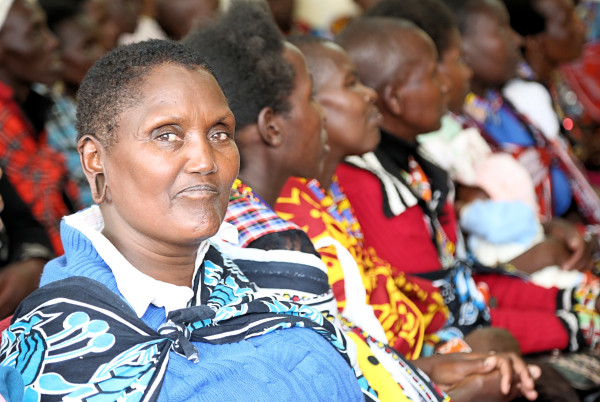
Discrimination against women and girls remains widespread in family laws across Africa, finds new research by Equality Now (www.EqualityNow.org). Analysis of twenty African countries reveals gender inequality in marriage, divorce, custody, and property rights is being perpetuated by sex discrimination institutionalized within legal systems and customary laws. While some significant legal reforms have been achieved, progress has been slow, inconsistent, and hampered by setbacks, lack of political will, and weak implementation.
The report, Gender Inequality in Family Laws in Africa: An Overview of Key Trends in Select Countries (http://apo-opa.co/3V0dD4R), identifies how overlap and contradictions in legal frameworks make the interpretation and application of family laws confusing, creating complex challenges for harmonizing legal systems.
The impacts of discriminatory family laws can be profound, putting women and girls at greater risk of sexual and gender-based violence and making them more dependent and vulnerable by curtailing their economic opportunities and reducing their decision-making power.
Full equality in family laws has not been achieved in any of the countries reviewed, namely Algeria, Angola, Botswana, Burundi, Cameroon, Côte d'Ivoire, the Democratic Republic of the Congo (DRC), Egypt, Ethiopia, Kenya, Malawi, Mozambique, Nigeria, Senegal, South Africa, South Sudan, Sudan, Tanzania, The Gambia, and Tunisia.
Pressing need for comprehensive legal reforms
Africa is home to diverse ethnic, linguistic, and religious groups with varied family law structures. Historically, communities developed intricate and deep-rooted systems of customary laws governing family relations. The introduction of European legal systems and religion resulted in a blend of customary, religious, and statutory laws that still shape legislation and practice through legal pluralism.
This complex patchwork is influenced by evolving social dynamics. Civil, customary, and religious law, such as Islamic or Christian canon law, sometimes encroach or conflict, and many provisions in religious and customary laws discriminate against women and girls.
Esther Waweru, report co-author and a Senior Legal Advisor at Equality Now, explains, “Culture and religion frequently act as major impediments in the struggle for family law equality, stalling reforms. Claw-back clauses and retrogressive practices water down the positive impact of progressive laws, and there is backlash from anti-rights movements seeking to reverse hard-won gains in areas such as eliminating child marriage and female genital mutilation.”
“Stagnation is also a problem, with governments pledging to reform discriminatory laws but failing to take meaningful action. In some instances, progressive family codes remain in limbo awaiting enactment.”
Progress on child marriage, but shortfalls remain
Child marriage is one area of notable progress. Absolute bans on marriage under 18 exist in Côte d'Ivoire, DRC, Egypt, The Gambia, Kenya, Malawi, and Mozambique. However, the persistence of child marriage in certain communities underscores the need for a multi-sectoral approach (http://apo-opa.co/3UFhEKR) incorporating awareness raising about the legal consequences and harms of child marriage.
Concerningly, laws in Cameroon, Nigeria, Senegal, South Sudan, Sudan, and Tanzania still allow child marriage, while in Algeria, Angola, Botswana, Burundi, Ethiopia, South Africa, and Tunisia, the legal age of marriage is 18, but exceptions are permitted.
Marital rape
Countries need greater protections against gender-based violence, especially intimate partner violence. Marital rape is not prohibited in Algeria, Kenya, Sudan, and The Gambia, while Northern Nigeria's Penal Code allows marital rape and “corrective” assault within marriage.
Marital rape is only criminalized upon separation in Tanzania, and in Burundi, the penalty is under 30 days imprisonment or a fine. Tunisia's law states a wife must fulfill her duties in line with ‘usages and customs,' putting women at risk of marital rape as a wife's traditional role includes pleasing her husband sexually.
Malawi's courts have stated that rape does not extend to marriage. Customary law presumes perpetual consent to sex within marriage, and Malawi's civil law appears to support this by providing only limited circumstances in which a wife can deny her husband sex, such as poor health or when legally separated.
Countries like Côte d'Ivoire, Mozambique, and South Africa can be commended for explicitly criminalizing marital rape. It's imperative that all nations introduce bans, accompanied by awareness-raising campaigns and accessible support services for survivors. Effective legal enforcement is also crucial, as is providing comprehensive training for officials in the criminal justice, healthcare, and social service sectors.
Discriminatory marriage practices
In most African countries, registration of civil marriages is a legal requirement governed by specific laws formalizing marriage. Women in customary and religious marriages are at greater risk of discrimination as they don't have the same legal protection as people in civil marriages. Same-sex partners also experience this, as marriages and civil unions are largely reserved for heterosexual couples.
Polygamy is legally permitted in Cameroon, Egypt, Kenya, Senegal, and South Sudan, with men allowed four wives in Sudan and Senegal. Côte d'Ivoire, Mozambique, and South Africa have statutory laws for monogamy, but customary and religious laws and practices continue to recognize polygamy without adequate protections for women in polygamous marriages. Other harmful traditional practices, such as widow inheritance and surrogate marriage, treat women as property.
Discrimination in divorce and child custody laws
Countries such as Sudan discriminate by granting husbands more powers to initiate divorce. In Algeria, women can only request a divorce in cases of abandonment, violation of the marriage contract, or if alimony is unpaid. In both Sudan and Egypt, in some no-fault divorces, a woman must pay financial compensation to her ex-husband.
Child custody laws have been reformed in Angola, Botswana, Burundi, Cameroon, Côte d'Ivoire, DRC, Mozambique, and Senegal, ensuring guardianship rights for both parents, irrespective of marital status.
Sex discrimination remains in countries like Senegal, where the father is the legal guardian regardless of the mother's caregiving role. In Tunisia and Algeria, fathers retain legal guardianship even if the mother has custody. Algeria and Sudan strip a mother's rights to custody upon remarriage, but this doesn't apply to men.
Matrimonial property and inheritance
Matrimonial property laws is another area that has undergone considerable reforms. Côte d'Ivoire, Kenya, Malawi, and South Africa have introduced legal provisions for equitable distribution of matrimonial property. In Ethiopia, Nigeria, South Africa, and The Gambia, laws recognize the right of married women to acquire, own, maintain, and dispose of their property.
However, some customary and religious laws undermine women's inheritance rights. In Algeria, Cameroon, Côte d'Ivoire, Egypt, Nigeria, South Sudan, Sudan, and Tunisia, women and girls receive less inheritance than men and boys.
Women are disadvantaged by cultural biases that influence judicial decisions, with unequal distribution particularly evident in divorce and widowhood. In some countries, wives can be excluded from inheriting their husbands' property. One example is Angola, where customary laws exclude wives from inheriting their deceased husband's property, and widows are sometimes forced from their matrimonial home.
Aligning family laws with international human rights standards
Family laws in Africa must align fully with international human rights standards. Many countries have ratified key treaties like the Convention on the Elimination of All Forms of Discrimination against Women (CEDAW) and the Protocol to the African Charter on Human and Peoples' Rights on the Rights of Women in Africa (Maputo Protocol). However, implementation and enforcement of these treaties remain inconsistent, with discriminatory family laws and policies remaining in statutes and practices.
Waweru concludes, “It's especially concerning that in most countries where national judiciaries and African Union judicial bodies have explicitly called for law reform in their decisions, governments haven't implemented these changes. And even where laws are equitable, enforcement is frequently inadequate and biased against women, and women may not know their legal rights.”
“To safeguard women and girls within family law, it is imperative for all African nations to promptly enact robust legislative and policy frameworks that align with international and regional human rights obligations.”
Distributed by APO Group on behalf of Equality Now.
Notes to editors
For media requests, please contact
Tara Carey
Global Head of Media
at Tcarey@equalitynow.org
T. +44 (0)7971556340 (WhatsApp)
About Equality Now:
Equality Now is an international non-governmental human rights organization that works to protect and promote the rights of all women and girls around the world by combining grassroots activism with international, regional, and national legal advocacy.
Our international network of lawyers, activists, and supporters achieve legal and systemic change by holding governments responsible for enacting and enforcing laws and policies that end legal inequality, sex trafficking, online sexual exploitation, sexual violence, and harmful practices such as female genital mutilation and child marriage.
For more information about Equality Now go to www.EqualityNow.org, and follow on X (Twitter) at http://apo-opa.co/3yiYRgN and Linkedin at http://apo-opa.co/3wrGPIT.
About Africa Family Law Network (AFLN):
Gender Inequality in Family Laws in Africa: An Overview of Key Trends in Select Countries is a critical data source informing legal, policy, and practice reforms to end sexism and discrimination in family laws in Africa. It will be used by Equality Now, the Africa Family Law Network (AFLN) (http://apo-opa.co/4bkc0ot), and partners to help facilitate work with the policy and judicial organs of the African Union, particularly the Special Rapporteur on the Rights of Women in Africa to influence change.
AFLN was launched in October 2022 and aims to formulate a regional alliance in Africa amongst national advocates and groups to raise collective action and accelerate organizing and mobilization efforts toward family law reform.
AFLN is led by founding partners Equality Now, The African Women's Development and Communication Network (FEMNET) (http://apo-opa.co/3WIinxt), Musawah (http://apo-opa.co/3UZrM2h), and the Strategic Initiative for Women in the Horn of Africa (SIHA Network) (http://apo-opa.co/4bkz5r2).
AFLN is part of the Global Campaign for Equality in Family Law (http://apo-opa.co/4bDdSbF), which calls on all states to ensure equality for women and men under the law in all matters relating to the family, regardless of religion, culture, and tradition.
Introduction In an era where digital threats are becoming more sophisticated, it’s imperative for businesses to fortify their defences with robust cybersecurity solutions. DataGr8 emerges as a beacon in the tumultuous seas of cyber threats, offering advanced software designed to shield businesses from malicious attacks and data breaches. This post delves into DataGr8’s suite of …
The annual Grade 11 Male learners event for boys from various high schools in Gqeberha took place in the Hellenic Hall, Gqeberha on Tuesday 14 May 2024. Title sponsor, Vodacom, ensured that the learners with Vodacom phones all received 1 Gig of data to make their participation in a fun online event easier on the …
Guidance Note aims to protect personal information of voters
The Information Regulator (South Africa) has launched a guidance note to guide how political parties and independent candidates use the personal information of voters for campaigning purposes in the run-up to the National and Provincial Elections.
The Guidance Note addresses aspects such as the responsibilities of political parties and independent candidates as responsible parties in terms of the Protection of Personal Information Act No. 4 of 2013 (POPIA).
“This is done by aligning each of the eight conditions for the lawful processing of personal information to the circumstances of political parties and independent candidates as they campaign for elections.
"The Guidance Note indicates what would be expected of political parties and independent candidates with regard to the protection of personal information of the voters, in accordance with each of the eight conditions for the lawful processing of personal information,” the Regulator said on Tuesday.
The Guidance Note states that if political parties and independent candidates want to use personal information of voters for campaign purposes, they must collect such personal information from the voters directly and not from data brokers or lead generators and use it for campaign purposes only.
It also prohibits the supply of personal information that has been collected for campaigning purposes to third parties without the consent of a voter.
“With the new Guidance Note, the Regulator seeks to ensure that both political parties, independent candidates and the public are fully informed and enabled to take the necessary action to protect the personal information of voters during elections.
"It will also minimise the risks to the free flow of accurate information that is crucial for informed participation in the electoral process,” the Regulator said.
The new guidance note is an update to the Guidance Note issued by the Regulator in the run-up to the local government elections in 2019.
The new Guidance Note is based on recent developments in the electoral process following changes in electoral law (allowing for independent candidates to stand and campaign for elections), the increasing instances of security compromise to personal information in various segments of the economy and society and increasing risks to the electoral process due to misinformation and disinformation.
Solicitation of donations
The Guidance Note also addresses the issue of solicitation of donations by political parties and independent candidates through direct marketing.
According to the Guidance Note, campaigning for votes does not constitute the promotion of any services and does not fall within the definition of direct marketing in POPIA.
“However, the act of requesting for donations by a political party or independent candidate is subject to the regulation of direct marketing in terms of POPIA and therefore, in this respect, political parties and independent candidates have to comply with the provisions of POPIA in relation to direct marketing,” the Regulator said.
Misinformation and disinformation
The Guidance Note regards misinformation and disinformation as a violation of the right of access to accurate and reliable information and also violates the right to privacy of a person whose image and/or voice of is used without their consent to spread fake messages through generative artificial intelligence.
“It therefore requires political parties and independent candidates to play their role in fighting misinformation and disinformation by developing and implementing policies and action plans to mitigate against misinformation and disinformation.
“The Guidance Note requires political parties and independent candidates to investigate instances of misinformation and disinformation by their campaigns and take disciplinary action against their staff that engage in these practices,” the Regulator said.
It also calls on the Independent Electoral Commission to issue a code of conduct to address misinformation and disinformation in digital in digital platforms to promote free, fair and orderly elections in terms of section 99(2) of the Electoral Act. – SAnews.gov.za
nosihle
Wed, 05/15/2024 - 09:27
None of the 19 sewage treatment plants managed by the Ugu District Municipality is properly treating sewage released into rivers and lagoons
Celebrating excellence in African real estate, including South Africa: enter now! Johannesburg, 13 May 2024 – The 8th annual African Property Investment Awards (API Awards) are now open for entries. This prestigious platform recognises excellence in the African real estate industry. This year, for the first time, the #APIawards will be open to entries from …
30 years of democracy: The electrification of South African households
Despite a myriad of challenges – both present and past – along the way, the South African government through Eskom and municipalities has made great strides towards achieving universal access to electricity in the country.
This came out during a roundtable on the electrification programme since 1994 hosted by the Government Communication and Information System (GCIS).
According to the Eskom website, in 1987, fewer than 13 million people had access to electricity with the vast majority of that access servicing white households – leaving other population groups reeling in the dark.
At the dawn of democracy in 1994, Parliament endorsed a plan to create universal access to electricity – defined at some 97% due to population growth and challenges related to the formalisation of informal settlements.
This charged government’s wholesale plan to electrify homes. Now, access to electricity in South Africa today is at least 94% according to Statistics South Africa.
Director Project Monitoring and Intergovernmental Relations at the Department of Mineral Resources and Energy, Lufuno Madzhie, said the electrification programme has thus far, been a success.
“[During 1994 to 1998] Eskom and municipalities only electrified 2.5 million households. In 2001, then government decided this [electrification] programme needs to reside within the Department of Mineral Resources and Energy [DMRE]. Through us as the department, working with different stakeholders, we have achieved a lot with regard to this electrification programme.
“Through this programme, the department has achieved a huge milestone. Currently, we have electrified over 8.3 million households,” he said.
Eskom’s Pozisa Njezula emphasised how access to electricity improves the welfare of households and explained how Eskom contributes to facilitating access for hard-to-reach rural areas.
“[It allows for the] improving on safety where we no longer have to use candles and paraffin stoves. It improves on convenience where we no longer have to collect wood to cook and also, in terms of improving on education where kids can study at night.
“With…us now pushing towards universal access, the challenge that we are now faced with is that we now have to reach the far-flung areas. The far corners in all the rural areas. With the support from the DMRE, as Eskom we have started and embarked on the rolling out of micro grids for those far-flung areas where you may not be able to get grid electricity because of losses as well as the amount of money that you would have to spend to get to those areas.
“The [micro grid] is just a container, it has solar panels, it has got batteries and then you’ve got the reticulation network. When you get to a certain area, you electrify it off grid and those people benefit,” she said.
Challenges and solutions
Njezula bemoaned that although the electrification programme is going full steam ahead, the power utility faces serious and dangerous challenges when going into communities.
“We are not immune as Eskom to the crime [and] extortion in our project sites. In South Africa, with almost all the projects that are being undertaken, there’s reports of these extortions and these demands for certain amounts of money, for protection fees and so forth.
“That delays the progress in our projects, and it really puts the lives of our employees as well as our contractors in danger. In some instances, we have to leave site, we need to be escorted, we need protection,” she said.
Head of energy and electricity distribution at the South African Local Government Association, Nhlanhla Ngidi, described South Africa’s electrification plan as a “moving target”.
“In terms of access itself, at 94%, I think it’s very important that people understand because this is a moving target. In a year’s time, you could find this being below 94% and it’s because of all these challenges…people moving towards where the economy is more active.
“Municipalities have done quite well but with the capacity challenges we have, we still need municipalities to be assisted and government needs to put in place agencies that can come in and be catalysts in terms of the implementation of the programme,” he said.
Energy expert, Chris Yelland, agreed that access to electricity has improved but warned that affordability remains a blockage to some households.
“[There] are some technology developments that require that we look at these distant rural customers. The first thing of course is renewable energy. The price of renewable energy…has come down dramatically over the last ten years. This is now opening the doors to renewable energy for remote households that never existed ten years ago.
“There’s a lot to celebrate in electrification [but] there’s a lot to do about affordability. We are not there yet. We need to understand where we come from, where we are and where we’re going and for that we need data…so that we know where we are and where we’re going” he said. – SAnews.gov.za
NeoB
Tue, 05/14/2024 - 14:06
The majority of people who rent residential accommodation do so for financial reasons with nearly half admitting they can’t afford to buy a property, according to credit bureau TPN’s latest Tenant Survey. The annual Tenant Survey Report provides the property sector, including property owners and managers, with insights into tenants’ needs, wants, aspirations, and challenges, …
Park Lines BMX Tournament rolls into Gold Reef City for the 2024 BMX Freestyle South African Champs. Johannesburg, South Africa, 9 May 2024 – A new style of ride, the Park Lines BMX Tournament – official 2024 South African BMX Freestyle Championships, is coming to the iconic Gold Reef City Theme Park on 2 June. It is …
Introduction When it comes to selecting a new laptop, the plethora of options available can be overwhelming. This article aims to simplify the process by guiding you through the essential factors to consider before making your purchase. Understanding Your Requirements Before diving into the specifications and features, it’s crucial to assess your needs. Are …
The United Nations Secretary-General's Special Envoy for Road Safety, Jean Todt, will visit South Africa from 13 to 15 May 2024 to support national and local authorities' road safety initiatives. In particular, the Special Envoy will launch the UN Global Campaign for Road Safety, in partnership with the No.1 outdoor advertising company worldwide, JCDecaux, under the hashtag #MakeASafetyStatement.
One of the main goals of this campaign is to raise awareness of life-saving actions among young generations, who as statistics show, are the major victims of road crashes especially for young people aged from 5 to 29 years old worldwide. Supporting the efforts of South Africa in addressing this issue is key in a country where more than 60% of the population is under 35 years old.
The launch events are to be held in Johannesburg and Pretoria with the participation of the Minister of Transport of South Africa and the Executive Mayors of Tshwane and Johannesburg.
Mr. Todt will meet members of the Government as well as representatives of the private and public sectors and NGOs to advocate for the effective implementation of the Global Plan for the Decade of Action for Road Safety 2021-2030, which aims to halve the number of road fatalities by 2030.
"Africa is the continent most affected by road crashes. Knowing that these affect the youngest first, it is beyond the human tragedy, an economic devastation sacrificing or invalidating for life the active force of a country. While the vaccine to avoid this carnage on the road exists, I urgently call on everyone to use it," said the Special Envoy.
#MakeASafetyStatement
Ten South African celebrities including Yvonne Chaka-Chaka, Bryoni Govender, Dr. Khumalo, Sello Maake Ka Ncube, Maduvha Madima, Leanne Manas, Dr. Moratwe Masima, Thokozani Ndaba, Gaisang Noge, and Caster Semenya, will join the campaign's worldwide ambassadors to encourage users to adopt simple but effective rules to keep their roads safe.
“Human Factors contribute 88% to South African road fatalities and therefore the involvement of celebrities as role models for the Youth in the #MakeASafetyStatement campaign will contribute towards the reduction of accidents on our roads,” stressed Ms. Sindisiwe Lydia Chikunga, Minister of Transport of the Republic of South Africa.
New alarming figures
The Special Envoy's visit coincides with the recent release of the Global Status Report on Road Safety 2023 from the World Health Organization (WHO) on road safety, highlighting that Africa remains the region the most affected by this tragedy.
According to the WHO report, the number of victims on African roads continues to grow with a mortality rate of 19/100,000 people, while in Europe, we observe a rate of 7 deaths/100,000 people. In South Africa, there are 25 deaths per 100,000 people.
According to the World Bank (2026), the cost of road crashes represented 8.6% of South Africa's GDP in 2016. The RTMC 2023 State of Road safety Report highlights for 2023 the rate of 2.74% of South Africa 's GDP.
Reliable data for swift revitalization
Recent bus accidents have highlighted the run-down state of Africa's vehicle fleet. Failure to comply with the Highway Code and to enforce penalties are also significant causes of accidents.
Solutions to be implemented include adhering to the African Road Safety Charter and the United Nations Conventions on Road Safety, strengthening the health services that treat the injured and stepping up public awareness campaigns. Systematically collecting reliable data on road accidents and monitoring casualties is also a key element in reducing the number of victims.
There is also a need to protect the most vulnerable road users, pedestrians, and cyclists, who are often the most disadvantaged and the youngest. Africa has the highest proportion of cyclist and pedestrian deaths, accounting for 44% of all road deaths.
In South Africa, the efforts of the authorities are to be commended, with new initiatives such as the implementation of the Administrative Adjudication of Road Traffic Offences, the adoption of new technologies to enhance access to traffic licensing services (National Traffic Information System Online Services), the professionalization of the Traffic and Road Safety Officers Training through the National Framework Level 6 Qualification), Standardization and Harmonization of Traffic Law Enforcement and the development of a National Traffic Law Enforcement Code.
Risk factors that are too often neglected
Drink-driving, speeding, drowsiness, carelessness, non-use of seatbelts and helmets, negligence and non-compliance with the Highway Code are responsible for most road accidents in Africa. However, according to the WHO, more progress must be made regarding legislation and safety standards.
Only six countries in the world have laws that comply with WHO best practices for all the risk factors - speeding, driving under the influence or distracted driving, use of UN-standard motorbike helmets, and use of seatbelts and child restraints.
In South Africa, speeding in urban areas is high (60KM/h), and child restraint systems are not always available. At a time when the use of motorbikes is on the increase, particularly among young people, the wearing of seatbelts and quality helmets remains a real challenge, even though it could prevent many deaths and reduce the risk of serious injury by 69%.
Recent data reveal that the majority of road crashes occur at night from Friday till Sunday with youth and pedestrians being the lead victims.
Distributed by APO Group on behalf of United Nations Economic Commission for Europe (UNECE).
W Cape Education urges parents to apply for Grades 1 and 8 before closing date
The Western Cape Department of Education has urged parents to apply for Grades 1 and 8 in 2025 before the online window for late applications closes on 12 May 2024.
Since the on-time admissions window for parents applying for a place for their child in Grade 1 or 8 in 2025 closed on 12 April, the provincial department said it received late applications for an additional 11 464 learners.
This brings to 114 144 the total number of learners whose parents have submitted applications for Grades 1 and 8 in 2025.
“We thank the parents who have already applied so far, as they are helping us to plan better for a place for their child in a school next year,” the department said.
According to data, 87% of applications have been captured on the online system by parents themselves.
The online admissions system is zero-rated and does not use any data.
However, if parents need in-person help capturing their application, they can visit their education district office for assistance.
Parents of Grade 1 and 8 learners, who did not apply before 12 May, will need to contact their district office for assistance as soon as possible thereafter.
“We urge parents not to wait until the last minute to apply,” the department said.
The window for Grade R applications and transfer requests for Grades 2 to 7 and 9 to 12 will run from 1 to 16 August.
Parents are reminded that they will only need to drop off their certified hard copies once they have received an offer from a school and accepted the offer.
The outcomes of the on-time applications online will start trickling in from 30 May and parents must accept or decline offers before 14 June.
The department is also encouraging them to confirm their choice of school speedily when they have received offers from multiple schools.
“These parents are essentially ‘double parking’ on the system, stopping schools from offering these places to other applicants until they make their choice.”
If a parent has not confirmed their choice by 14 June, the system will automatically confirm their top-ranked school that has made an offer and all other offers will then be removed, so that those places can be offered to other learners.
“Parents who do not receive an offer on 30 May should not be disheartened. Places always open up as parents confirm their final choices. We will leave no stone unturned in our efforts to place every learner whose parents applied on time as quickly as possible,” the department said. – SAnews.gov.za
Gabisile
Fri, 05/10/2024 - 10:35
There are risks in using a private company to pay the grants
Introduction In today’s digital age, managing documents efficiently is crucial for any business. Electronic filing and document management systems (DMS) offer a way to streamline processes, reduce clutter, and enhance accessibility. Benefits of Electronic Filing Electronic filing systems allow businesses to store, manage, and retrieve documents with ease. This not only saves physical space …
Pandor condemns killing and silencing of journalists in Palestine
The capacity of journalists to report on events in real-time is crucial, and intimidating or killing members of the media must not be permitted to persist without consequences.
This is according to International Relations and Cooperation Minister, Dr Naledi Pandor, who spoke at the second Shireen Abu Akleh Memorial Lecture at the University of Johannesburg (UJ) on Wednesday.
Abu Akleh was a prominent Palestinian-American journalist, who worked as a reporter for Al Jazeera. She was killed by an Israeli soldier while wearing a blue press vest and covering a raid on the Jenin refugee camp in the Israeli-occupied West Bank.
The lecture, organised by the Faculty of Humanities at UJ, centred on the role of academic institutions during periods of genocide.
WATCH |
Pandor said the lecture occurs against a “troubling” backdrop of an evident decline in media freedom.
She is of the view that academics and institutions must allocate more time to address the decline and the escalating threat to free expression.
“In the past, journalists knew they would enjoy robust and active protection from fearless colleagues, who would risk their lives to protect them. The decline we are witnessing cannot simply be explained away by citing wireless, social media or other technologies.”
This week marks two years since the assassination of Abu Akleh, who Pandor described as a beloved veteran journalist, who dedicated her life to the pursuit of justice and truth.
“To date, no one has been held accountable for her death despite the global outrage, and there has been no reported progress in the investigation at the International Criminal Court (ICC) and silence with regards to any other investigation,” the Minister said.
She cited the United Nations (UN) Independent International Commission of Inquiry on the Occupied Palestinian Territory, which “concluded on reasonable grounds that Israeli forces used lethal force without justification under international human rights law” when they shot and killed the journalist, violating her right to life.
Pandor bemoaned the situation for journalists in the Occupied Palestinian Territories, which she said has become increasingly grave over the past seven months.
She cited Committee to Protect Journalists data which revealed that as of 23 April this year, at least 97 journalists and media workers are among the 35 000 that have been killed in Gaza since 7 October 2023.
Pandor is of the view that the targeting of journalists in the Occupied Territories is part of a pattern of silencing the free press and is an outright contravention of international law.
“International human rights law obligates an occupying power to allow for freedom of expression and protests. The ability of journalists to cover events as they take place is essential, and efforts to intimidate and assassinate members of the media should not be allowed to continue with impunity.”
International human rights law, Pandor said, obligates an occupying power to allow for freedom of expression and protests.
“If Shireen were alive today, she would have been in the trenches in Gaza, reporting day and night on the atrocities taking place in the hopes that the world would take notice and show their solidarity with the Palestinian people.”
Pandor believes that Abu Akleh would have been devastated by the destruction of civilian life in Gaza and the global tolerance of the unending suffering of the Palestinian people, many of whom have died agonising deaths trapped under rubble.
“She would have been reporting on the immense suffering of survivors in Gaza, who are now battling unprecedented hunger and starvation, as well as continuous military assaults by the Occupying Forces.”
Despite the International Court of Justice ruling, the Minister said the Israeli state has continued its murderous assault on the people of Gaza with impunity, killing more civilians, injuring thousands, the continued bombing of homes and other buildings and infrastructure, affecting every possible avenue of life of the residents of Gaza.
“The lack of accountability by Israel is increasingly clear.”
Crimes against humanity
The Minister said the evidence of the mass killings of civilians points to the perpetration of war crimes, crimes against humanity.
International humanitarian law prohibits attacks on civilians and non-combatants, underlining the need to protect human life during times of war, Pandor said.
She stressed that South Africa continues to call on the ICC to prosecute these war crimes and to issue arrest warrants for those leaders in Israel who have ordered and presided over these crimes.
“The slowness to investigate and prosecute those responsible for these war crimes necessitates greater mobilisation among the youth and civil society around the globe to ensure that justice for the Palestinians is realised.
“It is time for collective action and for us to champion the call for the implementation of UN resolutions and rulings of the world’s highest court. We owe this to the people of Palestine and the memory of Shireen Abu Akleh,” Pandor said. – SAnews.gov.za
Gabisile
Thu, 05/09/2024 - 11:09
President assents to law Bill criminalising hate crimes, hate speech
President Cyril Ramaphosa has given his approval to the Preventing and Combating of Hate Crimes and Hate Speech Bill, which criminalises hate crimes and hate speech.
The law also outlines the prosecution process for individuals who perpetrate these offences.
“This legislative measure gives effect to South Africa’s obligations in terms of the Constitution and international human rights instruments concerning racism, racial discrimination, xenophobia and related intolerance, in accordance with international law obligations,” the Presidency explained in a statement on Thursday.
According to the statement, the Constitution sets out certain basic values, including human dignity, the achievement of equality and the advancement of human rights and freedoms and non-racialism and non-sexism.
The Bill of Rights, in Section 9 of the Constitution, prohibits direct or indirect unfair discrimination against anyone on the grounds of race, gender, sex, pregnancy, marital status, ethnic or social origin, colour, sexual orientation, age, disability, religion, conscience, belief, culture, language and birth.
“The Bill of Rights gives everyone the right to dignity and gives everyone the right to freedom and security of the person, which includes the right to be free from all forms of violence from either public or private sources.”
The President’s Office explained that the new Prevention and Combating of Hate Crimes and Hate Speech Act provides for the prevention of hate crimes and hate speech, effective enforcement measures, and the gathering and recording of data on hate crimes and hate speech.
“A hate crime is committed if a person commits any recognised offence under any law that is motivated by prejudice or intolerance based on one or more characteristics or perceived characteristics of the victim, as listed in the legislation or a family member of the victim.”
The definition of the crime, the Presidency said, extends to offences targeting the victim’s association with or support for a person with one or more of the listed characteristics or a group of persons who share these characteristics.
“The offence of hate speech applies to any person who intentionally publishes, propagates, advocates, shares or communicates anything to one or more persons in a manner that could reasonably be construed to demonstrate a clear intention to be harmful or to incite harm and to promote or propagate hatred based on defined grounds.
“The law also makes it an offence when speech material is intentionally distributed or made available in electronic communication, and the said person knows that such electronic communication constitutes hate speech.”
However, the law does not consider actions undertaken in good faith during engagement as part of hate speech.
These actions include artistic creativity, performance or other form of expression; academic or scientific inquiry; and fair and accurate reporting or commentary in the public interest.
It also excludes interpretation and articulating or espousing of any religious conviction, tenet, belief, teaching, doctrine or writing that does not advocate hatred or constitutes incitement to cause harm.
The law also contains directives on training and other measures to be undertaken by the South African Police Service (SAPS) and the National Prosecuting Authority (NPA) to ensure effective processing of the newly defined crimes. – SAnews.gov.za
Gabisile
Thu, 05/09/2024 - 11:39
In the ever-evolving digital landscape, where visibility is synonymous with success, mastering the intricacies of Search Engine Optimization (SEO) services is essential for businesses aiming to thrive online. SEO services encompass a comprehensive array of strategies and techniques, each playing a crucial role in enhancing your website’s visibility, attracting quality traffic, and ultimately driving conversions. …
AI is revolutionizing the way the accounting industry works. It is elevating human performance by taking on the burden of repetitive but required tasks, and by accelerating analysis. But accounting is based on trust. So, companies must be totally sure that AI works accurately before they can use it to its full potential. Even the …
Professor Brian Ganson is Head of the Centre on Conflict & Collaboration at Stellenbosch Business School, a hub for research and reflection on the private sector, conflict, and human security. We already know that whatever new governments emerge at local, provincial, and national levels due to voting on 29 May, they will face overwhelming challenges …
In today’s rapidly evolving healthcare landscape, efficient management of medical practices is crucial for providing quality patient care while ensuring smooth administrative operations. The advent of technology has revolutionised the healthcare industry, offering innovative solutions to streamline various processes. Among these technological advancements, medical billing software, practice management software, EMR (Electronic Medical Records) software, and …
Cushman & Wakefield | BROLL says operators seek sites to the north and east of Johannesburg, in well-located nodes with power supply, while in the smaller Cape Town market data centres are expanding, and there’s growing interest in Nigeria and Kenya. The surge in AI technology deployment and demand for more efficient cloud storage drives …