Instead of Going to School, These Children Have to Queue for Water
Six-year delay in water project leaves Komani residents dry

MyZA
News, Directory, Events and Other Stuff
Six-year delay in water project leaves Komani residents dry
Empowering public service through Open Distance eLearning
By Fran Greyling
The need for continuous professional development is more important than ever. With the increasing demand for flexible, cost-effective, and scalable learning opportunities, Open Distance eLearning (ODeL) has emerged as a transformative solution.
One institution leading the charge in this space is the National School of Government (NSG), offering a suite of 20 ODeL courses tailored for public servants. These courses are carefully curated to address the evolving learning and development needs of public sector employees and are expanded annually.
A flexible, cost-effective, and scalable solution
ODeL is a flexible delivery model that ensures learning can be accessed by individuals regardless of location or time constraints. This flexibility is particularly beneficial to officials who often manage busy schedules and numerous responsibilities. Through ODeL, they can engage with course materials at their own pace, on their own terms, without the need for travel or time away from their duties.
Moreover, the scalability of the ODeL model is a significant advantage. By offering online courses, the NSG can reach a large audience, expanding its reach to public officials across various levels of government.
In addition to its flexibility and scalability, ODeL is a cost-effective learning model. Traditional in-person training programmes can be expensive, not only in terms of course fees but also when accounting for travel, accommodation, and other associated costs. By offering most of its ODeL courses for free, the NSG is making a significant contribution to the development of public sector employees, ensuring that cost does not become a barrier to learning. This commitment to providing free courses aligns with the School’s mission to promote capable and professional public service.
Supporting national goals and professionalisation
The NSG’s ODeL initiative plays a role in implementing the National Framework for the Professionalisation of the Public Sector, which is a key aspect of South Africa’s strategy for enhancing the quality and effectiveness of its public service. The framework is structured around several pillars.
Pillar 2 focuses on, among others, reorienting the public service to meet the demands of citizens and government. An online Reorientation course reminds public servants of their obligations and equips them with the tools to navigate everyday challenges.
Pillar 4 is dedicated to ensuring continuous professional development for public sector employees. ODeL is an effective vehicle for achieving this goal. By offering a broad range of courses that focus on critical knowledge, skills, and values, the NSG is facilitating ongoing learning and development for public servants. Our free courses are designed to improve performance in the workplace. The courses include an introduction to core management competencies such as strategic planning, leading change, project management, financial management, and human resource management. Additional courses focus on promoting ethical behaviour and fostering anti-discrimination awareness. The Know and Live Our Constitution course addresses constitutional obligations, providing a foundation for other courses that focus on the responsible and accountable use of government resources. ODeL also supports performance improvement by offering courses that develop practical skills, such as professional writing.
A catalyst for online learning and development
The COVID-19 pandemic, though a challenge for many industries, proved to be a catalyst for the uptake of ODeL. As in-person learning became impractical due to health restrictions, institutions and organisations turned to online learning as a viable alternative. Public servants embraced the flexibility and accessibility offered by ODeL platforms, allowing them to continue their professional development during a time of uncertainty.
Since the onset of the pandemic, more than 250,000 ODeL opportunities have been created for public officials. These opportunities span all spheres of government and across all provinces in the country. This wide-reaching impact highlights the strong demand for accessible learning and development programmes and the success of ODeL in meeting this need. The high levels of participation and completion are strong indicators that ODeL is addressing genuine learning needs.
Easy access
The process for enrolling in these courses is straightforward. Public servants can easily access the NSG’s website, browse the available courses, register, and begin their learning journey. The platform is designed to be user-friendly, providing officials with just-in-time learning opportunities.
The ODeL courses currently on offer are the following:
Looking ahead
As the world of public service continues to evolve, the role of ODeL in supporting professional growth and development is becoming increasingly important. The future of learning and development is undoubtedly shifting towards online platforms, and initiatives like ODeL offer new opportunities for growth and learning. Public servants across the country now have greater access to flexible and relevant learning opportunities, helping to enhance their skills and contribute to a more effective public service.
More information is available on the NSG website on www.gov.za or email elearning@thensg.gov.za and for bookings contactcentre@thensg.gov.za.
*Dr Fran Greyling is the Chief Director responsible for eLearning at the National School of Government.
Janine
Wed, 01/15/2025 - 08:46
The family of the miner who brought the court action to get government to rescue them remain hopeful that he is still alive underground
By NJ Ayuk, Executive Chairman, African Energy Chamber (https://EnergyChamber.org).
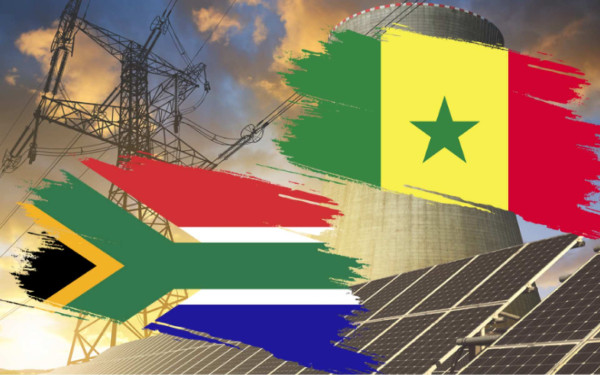
Just Energy Transition Partnerships (JETP) have been introduced in recent years to provide financial support to developing nations as they transition away from fossil fuels. In 2021, during the 26th UN Climate Change Conference of the Parties (COP26), South Africa became the first nation to sign such a deal. Senegal and the International Partners Group (IGP) signed a JETP in June 2023.
I have said before that the best way for Western countries, and the developed world at large, to help Africa transition from fossil fuels is through investment and collaboration, not patronization. This is precisely what the JETP programs seek to do, assist energy emerging economies that are dependent on coal to transition away from fossil fuels while leaving room to address the associated social consequences. That is investment, that is collaboration, and above all, it is respectful of the reality that Africa can move only on its own schedule in this matter. Arbitrarily forbidding us from using our natural resources will only do more harm than good.
So far, South Africa and Senegal are the only African countries to have agreed to a JETP, with South Africa securing a deal for USD8.5 billion, while Senegal secured one for USD2.7 billion. How South Africa and Senegal intend to leverage these deals differ drastically, however, as do their power generation circumstances.
South Africa: Pulled Between Priorities
Coal continues to dominate South Africa's energy portfolio, at over 80% of the country's power generation mix. Due to chronic load shedding and energy shortage issues, the country is now being pulled between two priorities, ensuring energy security and adhering to its decarbonization plans. General power outages have plagued the country since 2008 but intensified in recent years and effectively hamstrung South Africa's economy, which has not surpassed even 1% gross domestic product (GDP) annual growth in the last decade.
The country's aging coal fleet faces significant maintenance issues which led to several of the country's largest coal units being rendered inoperable in 2023. That year also saw the worst load shedding the country has faced yet, more than twice what it experienced in 2022, leading to energy shortages for 335 days out of the year. This load shedding led to a sharp increase in demand for solar panels and batteries, but Eskom (South Africa's power utility) has had to prioritize energy security instead, prolonging its reliance on coal-fired plants and slowing down their decommissioning. To their credit, Eskom has made significant improvements to their coal plants' maintenance and repair thanks to a recovery strategy launched in early 2023, and they have not suffered another load-shedding event since March 26, 2024.
Nevertheless, the decision to prolong their reliance on coal is at odds with South Africa's JETP. It has also directly led to the South African government seeking renegotiation of finance deals tied to its transition to cleaner energy sources, amounting to some USD2.6 billion of the originally agreed to USD8.5 billion.
Above all, right now South Africa requires a solution that will ensure its energy security while also keeping the country on track with its JETP commitments, especially given its peak demand by 2030 is expected to reach 38 gigawatts (GW), a full 6 GW more than its current peak. And even though 13.6 GW of new power plants are expected to come online by 2027, with solar PV accounting for over half and onshore wind accounting for 25% of the new capacity, coal is still expected to meet two-thirds of daily demand. Battery storage assets awarded by South Africa's Battery Energy Storage Independent Power Producers Procurement Programme (BESIPPP) will also contribute to this new capacity. Renewable-based generation in South Africa is also expected to grow from nearly 14.1% currently to nearly 29% by 2030.
I want to be very clear here: South Africa's renewable energy growth is commendable, and Eskom's decision to prioritize energy security via coal when an alternative solution wasn't immediately available was understandable and pragmatic. But the country's renewables are not advancing fast enough to cover for the aging of its coal fleet, and no amount of emergency maintenance campaigns can ensure that similar issues won't lead to a load-shedding crisis again. If unaddressed, it will introduce the risk of shortfalls when the coal fleet is inevitably shut down at its end of life. Gas-to-power is thus the most prudent option for South Africa to prioritize while it continues working to expand its renewable power sources. The flexibility provided by gas-to-power will help meet demand once the coal fleet can no longer provide South Africa's baseload power, leaving it with only its Koeberg nuclear power plant and currently limited solar and hydropower resources to fill in the gap. Not only is natural gas more cost-effective and efficient as a power source than coal, but it is also relatively cheap to retrofit a formerly coal-fired plant with gas turbines, allowing South Africa to both gradually phase out coal while saving money that would otherwise be spent building entirely new infrastructure. All of this will matter a great deal, as South Africa anticipates phasing out coal to require USD99 billion dollars between 2023 and 2027. So far, it has raised half between their JETP deal with the IGP, USD33 billion in private sector investments, and USD10 billion from the public sector. South Africa hopes to fill the gap through both domestic and international private entities in the form of grants, guarantees, and concessional loans.
Fewer Struggles in Senegal
Senegal, meanwhile, looks to be having fewer troubles, being reliant on liquid fuel sources rather than coal. The USD2.7 billion raised through its JETP is expected to attract and mobilize further investments from both the private and public sectors, much the same as South Africa. Senegal, however, will also be receiving technical assistance from its international partners to boost the integration of its renewable energy infrastructure and technology, with a heavy focus on grid stabilization and battery storage. This aligns well with its electrification plans, which aim to achieve 40% of its installed capacity mix provided by renewables by 2030, up considerably from the current 22%. Senegal has also committed to developing an investment plan within 12 months to identify its needs, opportunities, and allocations to meet its targets.
To that same end, Senegal plans to publish a revised nationally determined contribution (NDC) at COP30, set to take place in late 2025. The current NDC outlines an unconditional target of 235 MW of solar PV, 150 MW of onshore wind, and 314 MW of hydro by 2030. With international assistance, these targets are set to rise to 335 MW of solar PV, 250 MW of onshore wind, 50 MW of bioenergy and 50 MW of solar thermal.
Overall, both South Africa and Senegal stand to benefit significantly from their JETPs, and this is a trend I hope to see continue in the future for African states. There are, of course, growing pains. JETPs are still a nascent program, and the first few deals were signed as political promises first and foremost before the full technical and coordination details could be fully worked out by all sides. The implementation process for South Africa and Senegal has thus been delayed while consultations and negotiations smooth over the logistical details. In addition, JETPs alone will be nowhere near enough to fully cover the financial burden of transitioning African countries away from fossil fuels, and acquiring the private financial investments to bridge the gap may prove difficult for many countries.
This is why it is crucial for African states, and the world at large, to keep a close eye on how things develop in South Africa and Senegal, as their efforts to address these challenges will no doubt set the example for others.
Distributed by APO Group on behalf of African Energy Chamber.
SA hosts G20 Framework Working Group meeting
Technical meetings under the Group of 20 (G20) Finance Track have begun this week with a meeting of the Framework Working Group (FWG).
This after South Africa kicked off its G20 Presidency with the hosting of the G20 Sherpa and Finance Track Meetings in December 2024.
“The National Treasury and the South African Reserve Bank are jointly responsible for overseeing the work of the G20 Finance Track.
“The mandate of the FWG is to promote strong, sustainable, balanced, and inclusive growth, and does so by identifying, monitoring and assessing global macroeconomic risks, vulnerabilities and uncertainties and recommending suitable policy responses to global shocks and cross-cutting global challenges,” National Treasury said in a statement.
The G20 is a grouping of developed and developing countries which together form a powerful bloc representing at least 85% of the world’s Gross Domestic Product and some 75% of international trade – making the FWG critical.
“The first day of the meeting [on Monday focused] on the main headwinds to global growth, ongoing supply and demand risks to inflation, and the main fiscal risks to growth and inflation. It will also discuss the economic outlook for Africa.
“The second day [Tuesday] of the meeting will discuss the draft FWG work plan for 2025, which includes priority areas identified by the South African Presidency,” the statement continued.
South Africa’s outlined priorities include:
• enhancing global economic resilience in light of growth risks like fragmentation and macroeconomic imbalances;
• strengthening macroeconomic foundations and growth reforms in light of climate change and
• assessing labour productivity, technological development and demographic change
This week’s FWG meeting is the first of four to be held.
“The remaining three meetings for this Working Group are scheduled for April, June and September, in person, in venues across the country.
“The outcomes of these meetings will inform discussions at the meetings of the Finance and Central Bank Deputies and Finance Ministers and Central Bank Governors,” the statement concluded.
The G20 Leaders’ Summit is expected to be held in the latter half of 2025. – SAnews.gov.za
NeoB
Tue, 01/14/2025 - 10:05
DTIC notes ArcelorMittal South Africa’s decision
The steel industry is critical in the reconstruction and recovery plan for the South African economy, particularly the manufacturing, mining, construction, engineering, and transportation sectors, said the Department of Trade, Industry and Competition (dtic).
In a statement responding to ArcelorMittal South Africa’s (AMSA) announcement to wind down its longs steel business at its Newcastle plant, the department said the steel industry is important to the sectors that are at the centre of the industrialisation, localisation and beneficiation programmes of government.
“The department notes with serious concern the announcement by ArcelorMittal South Africa to wind down its longs steel business at its Newcastle plant. In fulfilment of its mandate to work with the private sector in growing the local economy the dtic remains committed to working with AMSA to find a workable and lasting situation,” it said in a statement on Wednesday.
During the course of 2024, AMSA had reached out to various government departments and state-owned entities with requests for different concessions for their business. Having taken heed of these requests, the Minister of the dtic took the decision to form a comprehensive and coordinated approach to resolving the issues raised by AMSA.
“In doing so, the Minister set up a technical working group made up of the relevant stakeholders including the dtic and AMSA, the departments of Electricity and Energy, Transport, as well as Eskom, Transnet and private sector stakeholders.”
The department said the working group held regular engagements up until and well into December 2024.
“This work has been noted in the statement released by AMSA. It has always been, and continues to be the intention of government to continue these engagements until a workable resolution to the problems faced by AMSA and the steel industry is reached,” said the department.
In a press statement on Monday, AMSA said it had taken the decision to wind down the longs business.
“This comes after sustained challenges, including weak economic growth, high logistics and energy costs, and an influx of low-cost steel imports, particularly from China. Persistent high logistics and energy costs, combined with insufficient policy interventions (especially those policy decisions made some time ago (namely, the Price Preference System [PPS] and export scrap tax) relating to the substantial subsidisation of scrap-based steelmaking operations to the detriment of the Newcastle Works - which beneficiates South African-sourced raw materials), have left the longs business unsustainable. Despite extensive consultations with government and stakeholders to find viable solutions to sustain the longs business, progress was insufficient to avert the wind down,” said AMSA.
In its statement on Wednesday, the dtic said that while the immediate task will be on addressing structural issues affecting AMSA’s longs steel business, the broader focus should also be on addressing productivity improvements and supply chain efficiencies, investments in low-carbon technologies, competitiveness and regaining the market share.
“It is also important that public and private sector’ entities and companies commit themselves to procure locally manufactured steel products in their projects. Undoubtedly, such a commitment will contribute positively to aggregate demand, job creation and economic growth in South Africa,” it said.
“AMSA will now transition the longs business into care and maintenance. Steel production is anticipated to cease by late January 2025, with the wind-down of the remaining production processes completed in Q1 2025,” said AMSA.
This wind down decision will directly affect operations constituting Newcastle (in KwaZulu-Natal) and Vereeniging Works (in Gauteng) and AMRAS (the rail and structural subsidiary).
Newcastle’s coke-making operations will continue, though scaled back to reflect reduced demand. - SAnews.gov.za
Neo
Thu, 01/09/2025 - 09:46
No. 1 Hair is number one in haircare
By: Bongani Lukhele
In 1993 Andrew Lebitsa, a Free State Black Industrialist, participated in an empowerment and capacity building project that he said was initiated by South Africa’s first Black President, Nelson Mandela, and New York’s first Black Mayor, David Dinkins.
The objective of the programme was to develop a pool of black corporate bank managers to equip them with skills, knowledge and information that would empower them to play a critical role in the transformation of the banking industry after the country had transitioned to democracy.
Lebitsa spent six months at the Chase Merchant Bank and Baruch College in New York honing his corporate management skills in the bank and acquiring knowledge through the college’s Executive Management Development Programme.
At the time, little did Lebitsa know that he was bound to follow in the footsteps of the two visionary leaders and blaze his own trail, as he attests that his No.1 Hair company is the only black-owned hair braids manufacturing company in the country.
This was made possible by the support he received from the Black Industrialists Programme of the Department of Trade, Industry and Competition (the dtic).
In line with the vision of Mandela and Dinkins, the objective of the scheme is to produce a pool of capable and successful Black Industrialists who will actively and meaningfully participate in the manufacturing industry and contribute to growing the economy, creating jobs and transform the sector in particular, and the country’s economy in general.
Today, No.1 Hair, which operates from the Maluti-a-Phofung Special Economic Zone (SEZ) in Harrismith, is providing employment to 60 people who are producing the synthetic hair braids, or hair extensions as they are commonly known, for both domestic and Southern African markets.
“After a long spell in the petroleum franchise and retail industries, I got into a hardware products import and distribution industry. Many of my retail clients requested me to import hair as well. This was initially never in my mind. But after conducting a research I realised that it was a R9-billion industry in South Africa that these people were indirectly encouraging me to participate it. I decided to get into it,” recalls Lebitsa.
After bouncing off the idea with the late prominent businessperson, Don Mkhwanazi, he advised Lebitsa to consider setting up a plant and manufacture hair in South Africa, instead of importing it.
He connected him with two South Korean businessmen who assisted him to set up the factory in the Maluti-a-Phofung SEZ. The location was an obvious choice for Lebitsa as he once worked in the zone while he was employed by the Free State Development Corporation as a property manager.
“That is how No.1 Hair was born,"he said.
R60 million state-of-the-art plant
The R60 million state-of-the-art plant was set up with assistance from the dtic and Industrial Development Corporation (IDC).
“After a delay caused by the COVID-19 [pandemic], we eventually started the production of our brand of hair braids in January 2021. We started with black hair braids and extended our range to numerous other colours over a period of time,” said Lebitsa.
He concedes that penetrating the hair market as a black manufacturer has been and remains a steep challenge.
“Firstly, consumers of this product are used to particular famous brands that are all imported. It is not easy for them to warm up to and embrace a new, unknown product. Secondly, but more importantly; it is the problem of perception and stereotypes that one has to deal with in the industry.
“As a black manufacturer, you are already disadvantaged when approaching buyers who source products for big companies and retail stores.
Summer season
“From not even giving you a chance to present your products to them, to doubting both your capability as a businessperson to deliver on orders, and the quality of your products. It is a big challenge. However, one order at a time we have managed to build quite [a] sizeable number of clients,” he adds.
Lebitsa’s spirit lifts when he starts speaking about the summer season that he says sparks a high demand in hair braids. To this end, he has received huge amounts of orders that will soon see all of his production lines running at full capacity.
“Despite all these market penetration challenges, we are making steady progress and continue to grow the company. Slowly but surely, we are increasing our own market share.
“We pride ourselves in being a proudly South African company whose products and raw material are produced in the country.
“We are hopeful that the Buy Local Campaign will instil patriotism in consumers of our products and enable them to choose locally-produced quality products instead of poor quality imports.”
He revealed that his plan is to expand his business by diversifying his product range and venturing into the manufacturing of hair care products. - SAnews.gov.za
*Bongani Lukhele is the Director: Media Relations for the dtic
DikelediM
Thu, 12/26/2024 - 07:00
Bulk water project signals new chapter for Eastern Cape communities
To help end the persistent water challenges faced by communities in the Alfred Nzo District Municipality, Water and Sanitation Minister Pemmy Majodina has handed over the newly upgraded Mount Ayliff Water Treatment Works (WTW) for communities in that area.
The commissioning certificate of the upgraded water treatment works was handed over to Alfred Nzo District Municipality Mayor, Vukile Mhlelembana, on Wednesday, signalling a new chapter for the communities of Mt Ayliff that struggled with intermittent water supply.
The Alfred Nzo District in the Eastern Cape, has experienced water shortages in Mount Ayliff and the surrounding areas for a long time due to population growth, and the increased demand of water supply services in the area.
The then Mount Ayliff WTW could not meet water demand due to malfunction and ageing infrastructure.
The currently upgraded WTW, based in uMzimvubu Local Municipality within the District, will improve water supply to about 38 184 households in Emaxesibeni and the surrounding five villages of Betshwana, Singeni, Mombeni, Lubhalasi and Santombe.
Majodina said the WTW is part of the R370 million Mount Ayliff Peri-Urban Bulk Water Supply Project, funded through the Department of Water and Sanitation’s Regional Bulk Infrastructure Grant (RBIG), with the Alfred Nzo District Municipality as the implementing agent.
“The scope of the project entailed upgrading the raw water abstraction point at Mzintlava River and installing pipelines that take raw water to a reservoir at the WTW to be treated before distribution to the communities. Other work included the construction of pump stations and upgrading of the existing gravity network pipes from the WTW,” she said.
Majodina urged Mhlembana to prioritise water reticulation projects that will ensure reliable and sustainable water supply to the communities.
Updates on uMzimvubu Dam, Vandalism
The Minister also highlighted progress made in the revived construction of uMzimvubu Dam, in uMzimvubu River, which will ensure sufficient water supply in Alfred Nzo and OR Tambo District Municipalities.
“The Mount Ayliff Peri-Urban Water Supply Project is an effort by the Department of Water and Sanitation to ensure that the Alfred Nzo District has sufficient water supply. As we have completed this project, we are calling on the community of Mount Ayliff not to vandalise or illegally connect to the infrastructure installed but they should patiently wait for the reticulation projects in their areas.
“Plans to build uMzimvubu Dam to benefit Alfred Nzo and OR Tambo District Municipalities are at an advanced stage. This dam will ensure that there is enough water within the two districts,” Majodina said.
The Minister also called on communities to look after water infrastructure in their areas and protect them from vandalism.
She further encouraged the community members to save water and report any water leaks to the municipalities. – SAnews.gov.za
GabiK
Fri, 12/20/2024 - 11:02
The town’s only water treatment plant is near collapse
Residents of Valdezia want a new clinic, open for longer hours
Rand Water completes maintenance work at Eikenhof
Rand Water has completed maintenance work at its Eikenhof system and pumping has resumed at the station.
In a statement issued on Monday, Johannesburg Water said the system will start to recover progressively.
The water utility said water supply will not be noticed immediately but will gradually increase as the system builds capacity.
Low lying areas will recover first, with high lying areas recovering later.
“This recovery is also impacted by demand, so we need to observe water consumption. Pumping to Johannesburg Water affected towers will only take place once the respective reservoirs have recovered to sufficient levels and where operational intervention will be required, especially the removal of airlocks that prevent interruption in flow,” it explained.
Meanwhile, alternative water supply will continue to be provided for the next few days, as and when required - informed by how the systems recover.
The systems affected by maintenance at Eikenhof include Soweto, Randburg/Roodepoort, Commando (Brixton, Crosby and Hursthill), Lenasia, parts of Johannesburg central, including Eagles Nest, Crown Gardens, Aeroton and Alan Manor reservoirs.
Last week, the utility announced that it would conduct weekend planned infrastructure maintenance to enhance water systems at the Eikenhof and Zwartkoppies pump stations in Gauteng for the long-term benefit of its customers.
The maintenance project is designed to enhance system availability, reliability and efficiency.– SAnews.gov.za
GabiK
Tue, 12/17/2024 - 09:41

By NJ Ayuk, Executive Chairman, African Energy Chamber (https://EnergyChamber.org/).
I've said for years that African energy is a vital investment. Backers clearly agree — to the tune of USD47 billion. That's how much capital expenditure (capex) 2024 saw in African oil and gas, showing a 23% increase from last year. Better yet, we expect growth to continue through the end of the decade.
This capex activity is a welcome sign that energy majors are deepening their long-term interests in Africa. And as our 2025 State of African Energy report details, their momentum has created unique opportunities for local communities, indigenous companies, and national oil companies (NOCs) from other continents.
Emerging Players
While the majority of 2024's capex was driven by established producers like Angola and Nigeria, emerging players are making noise in the industry. Take Senegal, which saw its first offshore oil production this year. Ghana, following a five-year slump, increased oil output during 2024 by 10% and gas output by 7%.
Exploration hotspot Namibia also deserves a special mention: The Southern African nation aims todrill over 12 offshore wells next year, begin production by 2029, and become one of the top-five African producers by the 2030s. Good work for a nation that only discovered its enormous reserves in 2022! I frequently cite Namibia because it proves that a complete newcomer can attract serious foreign investment with smart, swift policy changes — and poise itself to shake up the energy industry.
Increased Exploration
An exciting question remains: Just where will we find the next Namibia Thanks to a resurgence in exploration, another hotspot may be around the corner. There were 1,060 wells drilled in Africa this year — more than any time since 2015. Africa has also become a global leader in drilling high-impact wells, which have the potential to significantly increase overall reserves. That strategy is already paying off: Notable 2024 finds include Namibia's Mopane complex, which holds approximately 10 billion barrel of oil equivalent (boe) – “one of the world's largest offshore finds,” according to Offshore Magazine. Even while global exploration as a whole remains stagnant, Africa is stepping up to meet growing energy demands.
When exploration is successful, new fields follow. We also expect to see African greenfield spending exceed brownfield by 10% by 2030. These capex trends all demonstrate that investors won't limit themselves to mature fields: Eyes are on fresh locations, fresh facilities, and fresh opportunities in Africa.
A Gas Future
As we highlight in our 2025 report, one of those opportunities is natural gas. Africa holds nearly 18 trillion cubic meters of reserves, which will prove essential for a just energy transition as natural gas can provide significant near-term emissions reductions while fostering energy security and economic development. Global demand for this clean-burning resource is also growing, particularly in Asia. That's why I'm glad to see a greater emphasis on developing natural gas resources. In 2023, capex spending on natural gas was about 30%, but this is projected to grow 10% by 2030. It's another sign that more investors are thinking in the long term about Africa, and interested in being part of a just energy transition.
Take Senegal, where the Greater Tortue Ahmeyim gas field will begin production next year. A Final Investment Decision is also expected in 2024 on Yakaar-Teranga. The West African nation is another fantastic example of how operator-friendly policies, political stability, and vast reserves can attract significant foreign investment: I'm excited to see Senegal transform itself from an oil importer to a gas exporter.
M&A Opportunity
The past year saw a huge increase in divestment by O&G majors: Large IOCs are aggressively streamlining their African portfolios. As a rule, they're selling mature, high-emission, and high-cost assets. While large divestments often signal trouble, they're actually creating some promising changes for African O&G.
For one, Asian and Middle Eastern nations are purchasing more assets: Dubai, Qatar, the U.A.E., Malaysia, and Chinese NOCs acquired stakes in Egypt, Mozambique, Namibia, Kenya, and South Africa this year. As global demand for energy grows, particularly in Asia, I'm glad to see these nations looking to Africa for long-term solutions.
Foreign divestment also matters because it's creating opportunities for indigenous companies. Thanks to a recent Shell acquisition, Aradel Holdings became Nigeria's most valuable oil company (https://apo-opa.co/3ZVzGwh). In Angola, IOC Afentra has acquired Azule's (a joint BP and Eni venture) assets and plans to dramatically increase the nation's overall output.
“Having the big players sell to independents is the future,” oil trader Trafigura said in a statement.
It's a promising pattern: Majors sell off mature assets and use the capital to invest in fresh fields and facilities. Independent foreign or indigenous companies use their acquired assets to expand but are spared the expense of building facilities from the ground up. These smaller companies are also strongly motivated to further develop and reduce emissions from these existing fields — an environmental and financial win for everyone.
The Angolan government clearly agrees, encouraging regional players with tax incentives and reduced government profit shares. It will be truly fascinating to watch this industry shakeup in Nigeria and Angola, which have been dominated for decades by majors.
It's no secret that Africa needs O&G majors to stay: They drill over half of our exploration wells and hold a quarter of the continent's equity production. However, I'm thrilled to see indigenous companies growing and harnessing these assets to their fullest extent.
Conclusion
Just what prompted this surge in African capex? A great deal of credit goes to common sense policy changes in nations such as Namibia, Senegal, Mauritania, Egypt, and Angola. We can also point out that the COVID-19 pandemic artificially slowed capex for several years, so an uptick was inevitable once the world opened up again.
However, I believe a lot of it comes down to economic reality: Global energy needs are rising. Africa has vast, untapped resources. I urge all parties to continue building a thriving energy industry that takes Africa – and the world – into the next century.
For further insights, check out our 2025 State of African Energy report here (https://apo-opa.co/3ZHldTr).
Distributed by APO Group on behalf of African Energy Chamber.
Operations run smoothly at Lebombo port of entry
Operations at the Lebombo port of entry are running smoothly as holiday movements increase, the Border Management Authority (BMA) said on Monday.
“The processing of cargo on both arrival and departure continues as normal, with efficient facilitation ensuring seamless movement of goods. Similarly, traveller movements in both directions are flowing without disruptions, reflecting the Authority's preparedness for the busy holiday season,” the authority said in a statement on the port of entry to Mzoambique.
The BMA’s statement comes as South Africa today commemorates Reconciliation Day.
“This weekend from Friday, 13 December to Sunday, 15 December 2024, 52 252 travellers were processed at Lebombo Port of Entry – a clear indication of the increased activity as South Africa enters its peak travel period.”
BMA Commissioner, Dr Michael Masiapato said operations are proceeding smoothly, with no significant incidents or challenges recorded adding that the backlog of trucks that were on the N4 has been cleared.
Traffic on the corridor towards the port of entry has also been cleared.
READ | Operations at Lebombo port of entry resume
Masiapato affirmed that the BMA remains vigilant and fully equipped to maintain this level of efficiency while continuing to monitor operations closely.
“We are working with other law enforcement authorities and stakeholders such as the South African Revenue Services (SARS) to ensure that both trade and travel through Lebombo are handled with maximum efficiency and minimal delays during this high-demand period,” he said.
The authority added that it appreciates the cooperation of travellers and stakeholders and encourages continued adherence to border regulations to maintain smooth operations.
“Given the dynamic nature of operations on the ground, the BMA remains committed to providing timely updates as the situation evolves. The Authority urges the public to report any suspicious activities at the ports by contacting the BMA's toll-free hotline at 0801 229 019,” it said. -SAnews.gov.za
Neo
Mon, 12/16/2024 - 13:24
Rand Water conducts weekend infrastructure maintenance
Rand Water will this weekend conduct planned infrastructure maintenance to enhance water systems in Eikenhof and Zwartkoppies pump stations in Gauteng for the long-term benefit of its customers.
The maintenance project is designed to enhance system availability, reliability and efficiency.
In a statement on Friday, Rand Water said the maintenance, starting from Friday, is meant to correct the historical design of the engine rooms at Eikenhof and Zwartkoppies.
Rand Water noted that currently, Eikenhof has three engine rooms that were designed to be interrelated.
“When these were designed many years ago, the design was ideal because Eikenhof was supplying water to limited customers. However, with the increasing demand, there is a need to make the engine rooms independent and increase their flexibility.
“This means that if one engine room is out of service, then others can continue to function. Completion of this work will enable Rand Water to take out pump sets that must be overhauled. It talks to improving the availability and reliability of the Eikenhof system,” Rand Water said.
The entity said the timing for the maintenance is ideal, since a number of industries, businesses and schools will be closed.
This timing also allows for quicker system recovery once the maintenance is completed before Christmas.
During the maintenance period, pumping will be reduced to 70% for 36 hours in Zwartkopjes, while pumping in Eikenhof will be reduced to 20% for 86 hours. – SAnews.gov.za
GabiK
Fri, 12/13/2024 - 12:40
Study found more leaked municipal water in the Jukskei River than naturally occurring water
South Africa-Angola elevate bilateral relations
President Cyril Ramaphosa has emphasised that increasing trade and investment between South Africa and Angola remains a top priority.
“Increasing trade and investment between the two countries remains our foremost objective. South Africa must become the destination of choice for Angolan goods, products and services, and vice versa,” he said.
The President was delivering opening remarks during official talks with Angolan President João Manuel Gonçalves Lourenço at the Union Buildings in Pretoria, on Thursday.
President Lourenço of the Republic of Angola is in South Africa on a State Visit at the invitation of President Ramaphosa.
The Heads of State are using the occasion to solidify relations between the two countries who share deep historical ties.
WATCH | Official Talks between HE President Cyril Ramaphosa and HE President João Lourenço
President Ramaphosa highlighted the decision to elevate the structured bilateral mechanism between South Africa and Angola from a Joint Commission of Cooperation to a Bi-National Commission (BNC), reflecting a deepening commitment to collaboration.
The inaugural BNC session will take place in Angola next year, coinciding with the 50th anniversary of Angolan independence.
“Co-chairing this first session with you will be an honour, especially given that it will be during the 50th anniversary celebrations of Angolan independence.”
The President underscored the strong economic ties between the two nations, noting the presence of 20 South African companies in Angola and their diversification into sectors beyond oil.
South African foreign direct investment (FDI) into Angola has been in a range of sectors such as financial services, IT, food and beverage, transportation, warehousing and tourism.
South Africa’s Industrial Development Corporation (IDC) also has investment projects in Angola, namely in the Cabinda Oil Refinery and the Cabinda phosphate project.
“We want to see more Angolan companies in South Africa. Opportunities exist in infrastructure development, agriculture, construction, mining, financial services, telecoms and manufacturing, to name but a few,” the President explained.
Collaboration in Economic Growth
The leaders discussed leveraging the African Continental Free Trade Agreement (AfCFTA) to drive industrialisation and trade.
President Ramaphosa also emphasised the potential for joint strategies in mineral beneficiation, particularly as global demand grows for critical minerals essential to the energy transition.
He highlighted Angola’s Lobito Trans-Africa Corridor as a promising development for regional integration and trade.
“We see the African Continental Trade Agreement as a catalyst for inclusive economic growth, and we must take advantage of the system of preferential terms provided to signatories.
“As both Angola and South Africa strive to accelerate the pace of industrialisation, we need to build mutually complementary capabilities in manufacturing and value-addition of products,” he said.
Commitment to Peace and Multilateralism
The leaders’ discussions extended to shared efforts in promoting peace and security across the continent.
Angola’s contributions to peacebuilding, particularly its role in the Southern African Development Community (SADC) and initiatives like the Luanda Process were praised.
“We must continue to deepen our collaboration towards resolving the conflict in the Eastern DRC, the civil war in Sudan and the post-electoral crisis in Mozambique.
“Silencing the Guns across Africa is a necessary precondition for stability, economic growth and development. As African countries, we must be at the forefront of promoting the peaceful resolution of conflict, particularly at a time when the future of multilateralism is at stake,” he said.
On the global stage, President Ramaphosa advocated for reforming international institutions, including the UN Security Council, to better represent the Global South. He reaffirmed South Africa’s commitment to multilateralism, calling for respect for the United Nations Charter and international law.
Africa at the forefront
With South Africa having assumed the G20 Presidency, President Ramaphosa pledged to prioritise Africa’s developmental goals, particularly those outlined in Agenda 2063.
According to the African Union, Agenda 2063 is Africa's development blueprint to achieve inclusive and sustainable socio-economic development over a 50-year period.
The President highlighted that South Africa will host the first G20 Summit on African soil in 2025, signalling a historic moment for the continent.
“Working with the African Union and fellow African countries will ensure that the issues of strategic importance to Africa and the Global South are highlighted.”
The President further extended a warm welcome to President Lourenço and his delegation saying his visit marks a significant step in strengthening bilateral ties between the two nations.
“Your presence here testifies to the strong ties of solidarity and friendship between our two countries.” – SAnews.gov.za
DikelediM
Thu, 12/12/2024 - 13:52
Atlanta Mayor Andre Dickens concluded a landmark official visit to South Africa, accompanied by a delegation of 35 Atlantan political, business, and community leaders. The December 4-11 visit marked a significant milestone in Atlanta Phambili—a subnational diplomacy initiative centered on deepening U.S.-South Africa partnership through the City of Atlanta– and reaffirmed the shared commitment to advancing economic, cultural, and educational collaboration between the two nations.
“This trip was a celebration of the enduring bonds between Atlanta and South Africa, built on shared histories and common goals,” said Mayor Dickens. “Atlanta Phambili embodies our joint vision for progress and collaboration, creating opportunities for both our citizens and economies.”
The visit followed the launch of Atlanta Phambili in March 2024 with a trade and investment roadshow hosted in Atlanta, featuring senior South African business executives and government officials.
South Africa and Atlanta United in Progress
The South African government, in partnership with Standard Bank, BrandSA, Amazon, and the American Chamber of Commerce in South Africa, hosted a robust program focused on trade and investment, science and innovation, and the creative economy. This was led by the Department of International Relations and Cooperation (DIRCO), the Department of Trade, Industry, and Competition (DTIC), the Department of Sports, Arts and Culture (DSAC), the Department of Science and Innovation (DSI), the Gauteng and Western Cape provincial governments, and the cities of Johannesburg and Cape Town.
“The South African government's partnership on the Atlanta Phambili initiative is a testament to the strength of our bilateral ties and the shared potential of our cities to drive innovation, inclusion, and prosperity,” said U.S. Ambassador to South Africa Reuben Brigety, II.
Visit Milestones
Atlanta Phambili Pledge
The visit kicked off with the unveiling of the Atlanta Phambili Pledge on December 5 at the Standard Bank Trade and Investment Seminar in Johannesburg. This open call to action seeks to mobilize stakeholders across both nations to deepen collaboration in trade, investment, and entrepreneurship. The pledge reflects Atlanta's and South Africa's shared commitment to fostering inclusive economic growth and creating opportunities for small and medium-sized enterprises (SMEs).
Go Global Trade Expo: Strengthening Black-Owned Business Connections
On December 5, Ambassador Brigety announced a collaboration between the U.S. Agency for International Development (USAID) and the Atlanta Black Chambers to support the Chambers' Go Global Trade Expo. The program will bring a delegation of Black-owned South African businesses to Atlanta in 2025, connecting them with the Chamber's extensive network and U.S. buyers.
Through this agreement, export-ready businesses will build connections with Atlanta-based platforms to foster trade and investment between South Africa and the United States.
FAME Week Africa 2025: Atlanta Announced as the Feature Destination
On December 9 in Cape Town, Mayor Dickens announced Atlanta will be the Feature Destination for FAME Week Africa 2025, the continent's premier gathering for professionals in film, television, music, fashion, and animation. This recognition highlights Atlanta's emergence as a global creative hub and its strong historic and Diaspora ties to Africa.
“Atlanta being recognized as the Feature Destination for FAME Week 2025 is an excellent fit,” said Mayor Dickens. “Our city is uniquely poised to satisfy the growing demand in the United States for African content and support production innovations.”
This honor also grants Atlanta a dedicated pavilion and events at FAME Week 2025, scheduled to take place in Cape Town from September 1-6, 2025.
Business-to-Business Engagements in Johannesburg and Cape Town
Empowering Entrepreneurs and Celebrating Culture
Strengthening Historic Ties
Atlanta Phambili builds on a historic relationship between South Africa and Atlanta, from collaboration between U.S. civil rights activists and members of the South African anti-Apartheid movement to Nelson Mandela's historic 1990 speech at Georgia Tech. This trip further cements Atlanta as a gateway for South African businesses to access U.S. markets and strengthens South Africa's position as a premier investment destination for Atlanta's private sector.
“Our visit reflects a robust partnership that will continue to grow as we move forward together,” said Mayor Dickens. “The commitment of the South African government and its people has been vital in shaping this initiative. I look forward to building on these foundations for years to come.”
Ambassador Brigety added “From trade and investment to culture, sports, and education, Atlanta and South Africa are charting a future defined by innovation, inclusion, and opportunity. The future economic partnership between Atlanta and South Africa is built to last and poised for growth.”
A Shared Vision for the Future
The U.S. Embassy in South Africa and the City of Atlanta extend their gratitude to the South African government and all participating partners for making this visit a success. Together, Atlanta and South Africa are moving forward—Phambili—toward an even brighter, shared future.
Distributed by APO Group on behalf of U.S. Embassy & Consulates in South Africa.
Eastern Cape health department says Uitenhage Provincial Hospital has too few beds for increased demand
People from Westbury, Westdene, Claremont, and Hursthill want a permanent solution to their water woes
STEM Lab launched at the University of Limpopo
The Minister of Communications and Digital Technologies, Solly Malatsi, has officially opened a state-of-the-art STEM (science, technology, engineering, and mathematics) Lab at the University of Limpopo.
“This STEM Lab represents hope, progress, and opportunity. For the youth in Mamotintane, Ga-Motholo, Mankweng, and surrounding communities, it is a gateway to skills in artificial intelligence, robotics, and data analytics,” Malatsi said on Saturday.
The facility, made possible through strategic partnerships with the National Electronic Media Institute of South Africa (NEMISA), STEMpower, DHL and other key stakeholders, will empower students and the surrounding community with critical digital and STEM-related skills, equipping them for a future driven by technology and innovation.
“For educators, it is a chance to inspire the next generation of innovators. And for the unemployed, it is an opportunity to gain meaningful skills for employment or entrepreneurship.
“This lab is not just a resource for the university but for the entire community. It is proof of what we can achieve when government, academia, and industry work together to create sustainable, scalable solutions for digital inclusion,” the Minister said.
He said STEM forms the backbone of the modern economy, driving technological advancements, innovation, and economic growth.
“By equipping young people with STEM skills, we are preparing them to excel in high-demand fields like artificial intelligence, robotics and data analytics. Let us harness the power of STEM education to build a South Africa where technology serves as a bridge to inclusion and opportunity, ensuring that no one is left behind,” the Minister said.
The lab is part of a broader initiative by the Department of Communications and Digital Technologies to expand access to affordable internet and devices, foster skills development, promote the productive use of technology, and position South Africa as a leading Information and Communications Technology (ICT) investment destination.
The launch in Limpopo is one of several, with similar labs being established at Walter Sisulu University, King Hintsa TVET College, Ehlanzeni TVET College, and the Central University of Technology. -SAnews.gov.za
nosihle
Mon, 12/09/2024 - 12:25
But no date has been set by the Department of Health and the old hospital is crumbling
According to Kaspersky's (www.Kaspersky.co.za) latest report, artificial intelligence (AI) will become an integral part of daily life, while privacy concerns around biometric data and advanced technologies will take center stage in 2025. These forecasts are part of the annual Kaspersky Security Bulletin series, which provides an outlook on the cybersecurity trends and threats expected to impact consumers in the coming year.
AI becomes an everyday reality
AI is predicted to fully integrate into daily life in 2025, becoming a standard tool rather than a novel technology. With prominent operating systems like iOS and Android rolling out AI-enhanced features, people will increasingly rely on AI for communication, workflows, and creative tasks. However, this normalisation also brings challenges, particularly as personalised deepfakes become increasingly sophisticated in the absence of reliable detection tools.
Privacy regulations will expand user data ownership
The growing emphasis on privacy is expected to lead to new regulations that strengthen user control over personal data. By 2025, individuals may gain the right to monetise their data, transfer it easily across platforms, and benefit from simplified consent processes. Global frameworks, such as the EU's GDPR, California's CPRA and South Africa's POPIA, continue to inspire reforms worldwide, while decentralised storage technologies could further strengthen user autonomy over their information.
Fraudsters will continue to exploit premieres and releases
Cybercriminals are expected to target prominent gaming, console, and film launches in 2025. Titles like Mafia: The Old Country, Civilization VII, and Death Stranding 2, as well as the anticipated Nintendo Switch 2, are likely to attract scams involving fake pre-orders, counterfeit rootkits, and malicious downloads. Similarly, blockbuster films like Superman and Jurassic World Rebirth may trigger phishing campaigns and counterfeit merchandise fraud aimed at enthusiastic fanbases.
Political polarisation will fuel cyberbullying
Increasing political polarisation is expected to exacerbate cyberbullying in 2025. Social media algorithms that amplify divisive content, combined with the widespread availability of AI tools for creating deepfakes and doctored posts, are likely to intensify online harassment. Cross-border cyberbullying could also escalate as global platforms facilitate the targeting of individuals based on their political beliefs.
Rising number of subscription services will fuel fraud risks
As the global economy shifts further towards subscription-based models, a rise in fraud related to fake subscription promotions is expected. Cybercriminals are expected to create counterfeit services that mimic legitimate platforms, aiming to deceive users into providing personal and financial information, resulting in identity theft and financial losses. Additionally, the growth of unofficial resources that provide discounted or free access to subscription services is expected to become a significant threat vector, exposing users to phishing attacks, malware, and data breaches.
Prohibition of social media for children may lead to broader user restrictions
Australia's proposed legislation to ban social media access for children under 16 could set a global precedent. If implemented successfully, the restriction could pave the way for broader limitations on access for other demographics. Platforms like Instagram have already begun adopting AI-powered age-verification systems, signaling a shift toward stricter governance of online spaces.
“As we look to 2025, the most significant impact on consumers is expected to arise from the intersection of innovation and regulation. Advances in AI, privacy protection, and data ownership frameworks will reshape the way people interact with technology and manage their digital lives. These developments hold immense potential but also demand careful oversight to ensure they serve consumer interests,” said Anna Larkina, Kaspersky privacy expert.
To learn more, visit Securelist.com.
To stay safe, Kaspersky experts also recommend:
Distributed by APO Group on behalf of Kaspersky.
For further information please contact:
Nicole Allman
INK&Co. (https://INKandCo.co.za)
nicole@inkandco.co.za
Social Media:
Facebook: https://apo-opa.co/4inHIFt
X: https://apo-opa.co/4fXAiHl
YouTube: https://apo-opa.co/4fVaknS
Instagram: https://apo-opa.co/4fXt31Q
Blog: https://apo-opa.co/4fWEWW0
About Kaspersky:
Kaspersky is a global cybersecurity and digital privacy company founded in 1997. With over a billion devices protected to date from emerging cyberthreats and targeted attacks, Kaspersky's deep threat intelligence and security expertise is constantly transforming into innovative solutions and services to protect businesses, critical infrastructure, governments and consumers around the globe. The company's comprehensive security portfolio includes leading endpoint protection, specialized security products and services, as well as Cyber Immune solutions to fight sophisticated and evolving digital threats. We help over 200,000 corporate clients protect what matters most to them. Learn more at www.Kaspersky.co.za.
Petrol prices increase in December
With the public gearing up for the festive season, consumers will have to dig deeper into their pockets as the price of all grades of petrol has increased by 17 cents a litre.
The Department of Mineral and Petroleum Resources (DMPR) announced the price increase of 93 (ULP & LRP) and 95 (ULP & LRP) by 17 cents on Tuesday.
As of Wednesday, a litre of 95 petrol now costs R21.47 in Gauteng from the R21.30 seen in November.
In the coast, a litre of 95 petrol now cots R20.68 from R20.51 seen in November.
Diesel (0.05% sulphur) has increased by 54.88 cents per litre while the price of Diesel (0.005% sulphur) has increased by 55.88 cents per litre.
The price of Illuminating Paraffin (wholesale) has risen by 48.88 cents per litre and the Single Maximum National Retail Price for illuminating paraffin (SMNRP) has increased by 66 cents per litre. Meanwhile, the maximum LPGas retail price has increased by R1.72.
The department said the average Brent Crude oil price decreased from 73.28 US Dollars (USD) to 72.70 USD during the period under review.
“The main contributing factors are the OPEC+ decision not to increase production in December and increased production from non-OPEC countries amid stagnant economic growth globally,” said the department.
In a statement, the department added that the average international product prices of petrol were affected by lower demand, a switch to cheaper winter gasoline as well as higher inventories.
“On the other hand, diesel and illuminating paraffin increased because of higher seasonal demand given the upcoming winter season in the Northern Hemisphere. LPG prices increased due to the increase in the prices of propane and butane. These factors led to higher contributions to the Basic Fuel Prices of petrol, diesel and illuminating paraffin by 19.69 c/l, 23.83 c/l and 16.86 c/l, respectively.”
“The Rand depreciated on average, against the US Dollar (from 17.53 to 17.93 Rand per USD) during the period under review when compared to the previous one. This led to higher contributions to the Basic Fuel Prices of petrol, diesel and illuminating paraffin by 22.35 cents a litre, 23.74 cents a litre and 23.62 cents a litre, respectively.” -SAnews.gov.za
Neo
Wed, 12/04/2024 - 10:12
GDP decreases by 0.3% in the third quarter of 2024
South Africa’s Gross Domestic Product (GDP) decreased by 0.3% in the third quarter of 2024, following an increase of 0.3% in the second quarter of 2024.
“The agriculture industry was the main drag on growth on the production (supply) side of the economy, with transport, trade and government services also contributing to the slowdown. On the expenditure (demand) side, there was a decline in imports, exports and government consumption,” Statistics South Africa (Stats SA) said on Tuesday.
The agriculture, forestry and fishing industry decreased by 28,8%, contributing -0,7 of a percentage point to the negative GDP growth. This was primarily due to decreased economic activities reported for field crops.
The transport, storage and communication industry decreased by 1,6%, contributing -0,1 of a percentage point.
Decreased economic activities were reported for land transport and transport support services.
“The trade, catering and accommodation industry decreased by 0.4%. Decreased economic activities were reported for wholesale trade, motor trade and food and beverages. General government services decreased by 0.1%, mainly due to decreased employment in national and provincial government and extra-budgetary institutions.
“The finance, real estate and business services industry increased by 1.3%, contributing 0.3 of a percentage point. Increased economic activities were reported for financial intermediation, insurance and pension funding, auxiliary activities, real estate activities and other business services,” Stats SA said.
The personal services industry increased by 0.5%, contributing 0.1 of a percentage point.
Increased economic activities were reported for health and education.
“The manufacturing industry increased by 0.5%, contributing 0.1 of a percentage point. Three of the ten manufacturing divisions reported positive growth rates.
“The largest positive contribution was reported for the basic iron and steel, non-ferrous metal products, metal products and machinery division. The mining and quarrying industry increased by 1,2%, contributing 0,1 of a percentage point. Increased economic activities were reported for manganese and chromium ore.”
Expenditure on GDP
Expenditure on real GDP decreased by 0.2% in the third quarter of 2024, following an increase of 0.4% in the second quarter of 2024.
“Household final consumption expenditure (HFCE) increased by 0.5%, contributing 0.3 of a percentage point to the total negative growth. The highest growth rates were reported for non-durable and semidurable goods,” Stats SA said.
The main positive contributors to the increase in HFCE were expenditures on food and non-alcoholic beverages (0.9% and contributing 0.1 of a percentage point), housing, water, electricity, gas and other fuels (0.6% and contributing 0.1 of a percentage point), recreation and culture (1.2% and contributing 0.1 of a percentage point) and restaurants and hotels (1.1% and contributing 0.1 of a percentage point).
“Final consumption expenditure by general government decreased by 0.5%, contributing -0.1 of a percentage point. This was mainly driven by decreases in purchases of goods and services and compensation of employees.
“Gross fixed capital formation increased by 0.3%. The main positive contributors to the increase were other assets (4.4% and contributing 0.5 of a percentage point), construction works (1.4% and contributing 0.2 of a percentage point) and machinery and other equipment (0.5% and contributing 0.2 of a percentage point),” Stats SA said.
There was a R6,6 billion drawdown of inventories (seasonally adjusted and annualised value).
Large decreases in three industries, namely manufacturing; electricity, gas and water; and mining and quarrying, contributed to the inventory drawdown.
“Net exports contributed positively to expenditure on GDP. Exports of goods and services decreased by 3.7%, largely influenced by decreased trade in pearls, precious and semi-precious stones and precious metals; vehicles and transport equipment excluding large aircraft; chemical products; base metals and articles of base metals; and machinery and electrical equipment.
“Imports of goods and services decreased by 3.9%, largely influenced by decreased trade in vehicles and transport equipment excluding large aircraft; mineral products; vegetable products; and base metals and articles of base metals,” Stats SA said. -SAnews.gov.za
nosihle
Tue, 12/03/2024 - 13:09