• Skip to main content
  • Skip to header right navigation
  • Skip to after header navigation
  • Skip to site footer
MyZA

MyZA

News, Directory, Events and Other Stuff

  • Social Media
  • Sport
  • World News
  • Home
  • Submit News
  • Directory
  • Events
  • Stratlec
  • TFSA
  • News
    • APO
    • Today’s Sport News
    • Todays Social Media and Tech Headlines
    • Today’s World News
    • Today’s SA Financial News
  • Contact
You are here: Home / Archives for demand

demand

10 November 2024

Eskom spending less on diesel

Location: News

Eskom spending less on diesel

Eskom has spent at least 70% less year-on-year on diesel compared to the same period last year - equating to savings of more than R14 billion.

This as the power utility has maintained no load shedding for more than seven months.

“Load shedding has been suspended for over seven months (226 consecutive days) since 26 March 2024. Eskom continues to focus on maximising efficiencies from the investments made in the Generation Recovery Plan. 

“This has resulted in year-on-year diesel savings of R14.6 billion, approximately 70.3% less than the R20.8 billion spent during the same period last year. Further savings are expected in the coming weeks and months due to the improved performance of the coal fleet,” the power utility said.

Furthermore, Eskom has recorded a “significant decrease” in unplanned outages at power stations – allowing the power utility to do planned maintenance.

“Over the past seven days, the average total unplanned outages have been 10 127MW, a significant decrease from 16 892MW during the same period last year, representing a reduction of 6 765MW. 

“This ongoing improvement in reducing unplanned outages enables Eskom to carry out more planned maintenance activities and ensures that more generation capacity is available to meet the country’s electricity demand,” Eskom said.

The Energy Availability Factor (EAF) has also seen an increase to 63.1% for the year to date, with at least four power stations reaching an EAF of over 70%

“Eskom is well-capacitated to meet the electricity demand. 

“By Monday evening, an additional 4 050MW is expected to return online, with four units on cold reserve this weekend to manage the supply and demand balance,” the power utility said.

Eskom said although it continues to produce sustained improvements, there are overloading challenges in certain areas.

“Eskom continues to face network overloading issues in certain local areas due to illegal connections, vandalism, meter tampering, unauthorised network operations, theft of network equipment, and purchasing electricity from unlicensed vendors.

“To prevent public safety hazards and the risk of network overloading, which can lead to load reduction measures and extended unplanned power outages, Eskom strongly urges customers to avoid illegal connections, as this can negatively impact the entire local community. 

“It is also essential for customers to ensure they purchase electricity only from authorised vendors,” the power utility explained.

Consumers are urged to report any illegal activities to the Eskom Crime Line at 0800 112 722 or via WhatsApp at 081 333 3323. – SAnews.gov.za

NeoB
Sun, 11/10/2024 - 11:54
114 views
Read moreEskom spending less on diesel
10 November 2024

Africa’s Energy Infrastructure Can Only Succeed with Enhanced Transmission

Location: News
African Energy Chamber

As the demand for electricity continues to rise across the African continent, it is imperative for countries to act swiftly to enhance transmission capabilities and develop robust infrastructure to secure new energy integration sources over the next 25 years.

A recent report by consulting firm McKinsey & Company estimates that $400 billion will be required to enhance electricity transmission and distribution capacity across Africa by 2050. This investment is critical for modernizing energy infrastructure and ensuring energy security for the continent.

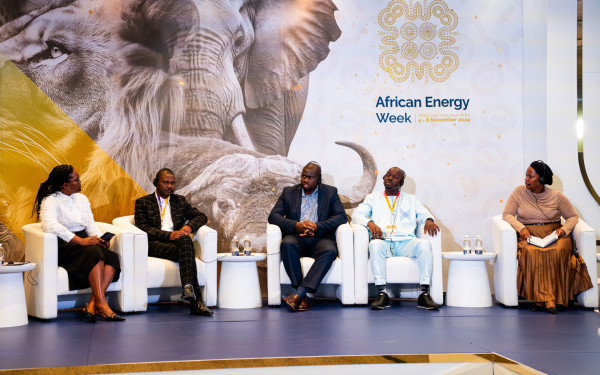
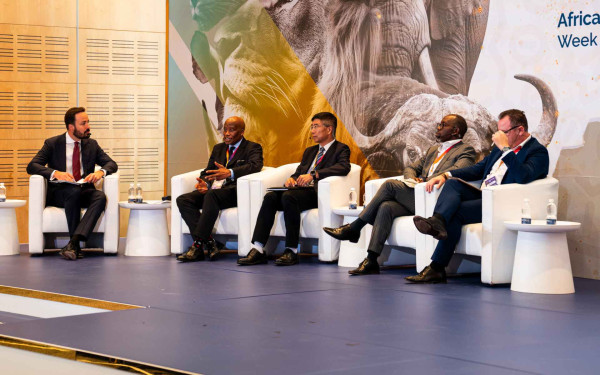
During a panel discussion titled ‘Optimizing Africa's Grid Capacity' at the African Energy Week: Invest in African Energies 2024 conference, Eskom's Transmission Group Executive, Segomoco Scheppers, highlighted the potential of the Electricity Regulation Amendment Act 38 of 2024 for South Africa and its neighboring countries.

This legislation will facilitate the establishment of a market operator in South Africa, creating opportunities for diverse players in the energy sector. “This shift signifies a transformative period in our industry as we adapt to new market dynamics,” he stated.

Despite having interconnections of 400 kV with neighboring countries, Scheppers acknowledged existing challenges. “Strengthening these connections is essential for enhancing regional cooperation and ensuring a reliable energy supply across borders. The reliance on thermal generation in the south, particularly to support countries like Zambia, underscores the need for stronger interconnections,” he explained.

Eskom is further embarking on an extensive domestic expansion program aimed at rapid development – an endeavor that also presents significant challenges. “Learning from global leaders in infrastructure development, particularly from experiences in China, could provide valuable insights into scaling our efforts efficiently,” Scheppers added.

Wang Wenan, Chief Representative, African Representative Office at the State Grid of China, discussed the successful completion of major projects, including the largest long-distance transmission project on the continent — a 500 kV DC line from Ethiopia to Kenya.

However, he noted that fostering private participation in energy projects remains a primary obstacle. “Engaging in dialogues about investment barriers and sharing best practices is crucial for unlocking potential growth in Africa's energy sector,” he emphasized.

Also speaking on the panel, Willy Ireri, Executive Director of Osprey Renewables, highlighted that while East Africa has abundant renewable resources such as wind, solar, and geothermal energy, access to reliable transmission infrastructure in this region also remained a critical challenge. “We are therefore committed to collaborate with state utilities and private investors to ensure that generated electricity reaches emerging green industries in the region,” he said.

With favorable legislation for private investment in transmission expected to be operational by 2025, Osprey Renewables aims to play a vital role in facilitating access to renewable energy for consumers.

“Our mandate at Osprey extends beyond generation; we actively engage across the entire value chain and we are seeing growing interest in green manufacturing and hybrid data centers,” Ireri added, noting that the Kenyan government has initiated proposals inviting independent transmission projects, signaling a positive shift toward increased private sector participation.

Power and Grid Segment President at Schneider Electric, Gary Lawrence, highlighted that a modernization of power grids was also needed. “The traditional grid was designed over a century ago for one-directional flow; today's needs require a bidirectional grid that allows seamless interaction between producers and consumer.”

The industry is balancing supply and demand effectively through initiatives such as collaborating with Egypt's Ministry of Electricity and Renewable Energy to develop distribution control centers that enhance grid intelligence and implementing distributed energy management systems in South Africa.

Distributed by APO Group on behalf of African Energy Chamber.

Media files
African Energy Chamber
Download logo
Read moreAfrica’s Energy Infrastructure Can Only Succeed with Enhanced Transmission
7 November 2024

Injured Mister Sweet Workers Yet to Be Compensated

Location: News

Casual worker claims he did not get any training before he got the job

Read moreInjured Mister Sweet Workers Yet to Be Compensated
7 November 2024

AEW 2024: Efficiency and Demand Management Key to Sustainable Development

Location: News
African Energy Chamber

As Africa continues to expand its energy infrastructure on a continent where energy poverty remains the reality for millions of its population, addressing the challenges of energy efficiency and demand side management become increasingly crucial. There is a pressing need to optimize energy consumption and promote sustainable development across the continent.

During a panel discussion sponsored by the South African National Energy Development Institute (SANEDI), South Africa's successful history of promoting energy efficiency in the country through the implementation of its National Energy Efficiency Strategy was highlighted.

Ngoanathari Maja, Programme Manager for Energy Efficiency in Public Buildings & Infrastructure Programmes at the SANEDI set the tone of the discussion as the panel moderator. Panelists included Professor Sampson Mamphweli, General Manager at the Department of Science and Innovation and Energy Secretariat at SANEDI; Stalin Ndlovu, Acting General Manager of Energy Efficiency and Demand Side Management at SANEDI; Nqobile Ngcobo, Energy Performance Certificates Program Lead at SANEDI and Salifou Camara, Deputy National Director of Energy at the Ministry of Energy, Hydraulics and Hydrocarbons in Guinea-Conakry.

Mamphweli discussed how energy efficiency and demand side management measures had a significant impact on South Africa's energy availability when the country experienced its first period of loadshedding in 2008. The measures implemented by Eskom, SANEDI and the private sector managed to contain loadshedding at the time.

“Through energy efficiency and demand side management measures you can save a lot of energy that can be distributed to those who do not have access to energy,” he said.

Mamphweli added that although South Africa has the National Energy Efficiency Strategy, the country's draft Integrated Resource Plan 2023, which provides a roadmap for meeting South Africa's forecasted electricity demand, does not make provision for this. It is important for energy efficiency and demand side management to feature in the country's long-term energy planning, he said.

To meet the country's future energy needs, Ndlovu reiterated the importance of resource efficiency on both the energy supply side and energy demand side, noting that countries must optimize their energy use.

Also drawing on the topic of resource efficiency, Ngcobo said that we can only start expanding electrification on the continent once we consume energy efficiently.

Maja raised the concern that despite the strides made towards improving energy efficiency in South Africa, there is not enough uptake of energy efficiency and demand side management measures in Africa.

In response to this, Mamphweli highlighted the various stumbling blocks in Africa, including funding, skills, and awareness of energy efficiency. “Selling the idea of energy efficiency takes time for people to buy into,” he said.

Camara provided insight on the barriers faced in adopting energy efficiency measures in Guinea-Conakry, noting that consumers simply buy appliances that are not energy efficient.

“We need [to] raise awareness among consumers to improve the country's energy efficiency as our population needs to better understand how to better save and use energy, to ensure sufficient energy for all,” he said.

In line with this, Mamphweli called for action against using Africa as a dumping ground for energy inefficient technologies, emphasizing the need for behavioral changes towards using existing and proven energy saving technologies in Africa at both a household and commercial level.

Ngcobo addressed the importance of viewing energy efficiency as the first step in managing demand. “There is no point in increasing energy supply when we are unable to effectively manage what we are using on the end user side,” she said.

The panel discussion formed part of African Energy Week (AEW): Invest in African Energies' ‘Powering Africa Summit'. The summit aims to advance investment, technology, and innovation to harness Africa's renewable and non-renewable energy mix and optimize the continent's power generation and distribution capabilities to improve energy access and meet the rising power needs of Africa's rapidly expanding populations.

Set to reach 2.5 billion people by 2050, Africa is home to the world's fastest-growing population. The continent's crude oil and gas resources, combined with its vast solar and hydropower resources represent the pathway to improving energy access and rising power demands.

SANEDI is a Bronze Sponsor of the AEW: Invest in African Energies 2024 conference, which is being held in Cape Town this week.

Distributed by APO Group on behalf of African Energy Chamber.

Media files
African Energy Chamber
Download logo
Read moreAEW 2024: Efficiency and Demand Management Key to Sustainable Development
7 November 2024

Betway SA20 Season 3 Tickets on Sale

Location: Sport

Fans can look forward to thrilling cricket and entertainment across 30 group matches and are encouraged to book early Thursday,...

Read moreBetway SA20 Season 3 Tickets on Sale
7 November 2024

Telviva Expands UK UCaaS Offering to Meet Rising Demand

Location: Business

Strong global demand for UCaaS sees Telviva expand its offering in the UK CAPE TOWN – Unified Communications as a Service (UCaaS) has enjoyed good growth globally and will continue to show upward momentum until at least 2030, according to leading research company Cavell Group. To meet this growing demand, leading unified communications and collaboration …

Read moreTelviva Expands UK UCaaS Offering to Meet Rising Demand
  • Previous
  • Page 1
  • Interim pages omitted …
  • Page 20
  • Page 21
  • Page 22

Copyright © 2026 · MyZA · All Rights Reserved · Powered by Stratlec Online