• Skip to main content
  • Skip to header right navigation
  • Skip to after header navigation
  • Skip to site footer
MyZA

MyZA

News, Directory, Events and Other Stuff

  • Social Media
  • Sport
  • World News
  • Home
  • Submit News
  • Directory
  • Events
  • Stratlec
  • TFSA
  • News
    • APO
    • Today’s Sport News
    • Todays Social Media and Tech Headlines
    • Today’s World News
    • Today’s SA Financial News
  • Contact
You are here: Home / Archives for global

global

3 March 2025

Renewed focus on ECD a critical investment in SA’s future

Location: News

Renewed focus on ECD a critical investment in SA’s future

An increased focus on Early Childhood Development (ECD) is critical for the future of South Africa.

This is according to President Cyril Ramaphosa who addressed the nation through his weekly newsletter.

“Better educational outcomes in basic education are linked to broader social and economic development. Education is a powerful tool to break the cycle of poverty, to uplift individuals and communities, and to bringing about a more equitable society.

“As was evident from the Basic Education Sector Lekgotla [held last week], all stakeholders in the education space are committed to prioritising foundational learning as the most effective means to enable young South Africans to succeed and thrive far into the future,” he said on Monday.

The President highlighted that government has spent the last 30 years “trying to correct” the devastating impact that Bantu Education under Apartheid had on foundational learning.

“This effort has now received greater impetus with the passage of the Basic Education Laws Amendment Act. This Act makes Grade R, the reception year before Grade 1, compulsory.

“Through an enhanced focus on ECD, the Act will help ensure that young children are better prepared for formal schooling. Early Childhood Development plays a critical role in developing early literacy, early numeracy and social-emotional skills during an important time in a child’s cognitive development,” he said.

READ | Call to intensify efforts to improve early childhood learning 

In the State of the Nation Address in February, President Ramaphosa committed to expanding access to ECD for all children through “registering and formalising existing ECD centres and ensuring that they have the facilities, training and material that they need to provide quality early learning”.

Now, the President reiterated the importance of making ECD more accessible. 

“Children who attend quality pre-primary programmes tend to have larger vocabularies, better number awareness, stronger perceptual skills, improved social skills and greater curiosity.

“Quality ECD provision promotes social equality. Children from poor families benefit most from access to ECD. As the learning journey progresses, quality ECD is also linked to better transitions into high school, lower repetition and dropout rates, and better academic performance overall.

“The Basic Education Sector Lekgotla discussed how best to realign the existing education curriculum to strengthen foundational learning, including through ongoing assessments, scaling up teacher training and development, and expanding the provision of ECD learning and teacher support material,” President Ramaphosa emphasised.

The President highlighted that further down the line, basic education must also produce learners who can find work in an evolving world. 

“A recent report by the World Economic Forum on the future of jobs shows that the need for science, technology, engineering and mathematics related jobs are fast outstripping ‘traditional’ occupations, which are on the decline in the face of technological advances.

“Our basic education system has to produce learners that are able to find work in an ever-changing knowledge and technology based global economy.

“The efforts of the Department of Basic Education to strengthen the provision of technical and vocational pathways to learners in high school are therefore to be welcomed. Even in more industrialised economies than ours, technical and vocational training is recognised as a solid pathway to employment and entrepreneurship,” President Ramaphosa explained. – SAnews.gov.za


NeoB
Mon, 03/03/2025 - 09:20
9 views
Read moreRenewed focus on ECD a critical investment in SA’s future
2 March 2025

Botes to co-chair political consultations with Slovak Republic counterpart

Location: News

Botes to co-chair political consultations with Slovak Republic counterpart

South Africa and the Slovak Republic will review the state of their bilateral political relations to consolidate and further enhance diplomatic and political cooperation.

Bilateral political relations as well as diplomatic and political cooperation will be up for discussion at the meeting between International Relations and Cooperation Deputy Minister, Alvin Botes and the Slovak Republic’s State Secretary for Foreign and European Affairs,Marek Eštok.

The Deputy Minister will co-chair the South Africa-Slovak Republic Political Consultations with the State Secretary on Monday in Pretoria.

“This round of political consultations provides an opportunity for the Deputy Minister and his counterpart to review the state of the bilateral political relations to consolidate and further enhance diplomatic and political cooperation between the two nations.

“The Deputy Minister and State Secretary will also share perspectives and deepen their understanding of regional, multilateral and global issues of mutual concern,” said the Department of International Relations and Cooperation (DIRCO).

Bilateral political consultations between South Africa and the Slovak Republic are based on the Memorandum of Cooperation between the Department of Foreign Affairs of the Republic of South Africa and the Ministry of Foreign Affairs of the Slovak Republic, signed in 2007 in Bratislava.

Economic and trade relations are conducted through a Joint Council for Economic Cooperation (JCEC).

“Relations between South Africa and the Slovak Republic are cordial and relatively modest, with trade and investment levels remaining at a very low base. Bilateral trade between the two countries in 2024 totalled €287.4 million, representing an increase of 3.1% in comparison to 2023,” said the department ahead of Monday’s meeting in Pretoria.

South African exports to the Slovak Republic in 2024 amounted to €92.1 million, a decrease of 4.8%. Slovak exports to South Africa amounted to €195.3 million, an increase of 7.3% compared to 2023. -SAnews.gov.za 
 

Neo
Sun, 03/02/2025 - 16:43
97 views

Read moreBotes to co-chair political consultations with Slovak Republic counterpart
2 March 2025

SA participates in expedition along the African coastline

Location: News

SA participates in expedition along the African coastline

The South African Environmental Observation Network (NRF-SAEON), a long-term environmental observation and research facility of the National Research, is participating in the Around Africa Expedition, the National Research Foundation said.

Led by global ocean exploration non-profit organisations, OceanX and the newly established Ocean Quest, Around Africa Expedition is a pioneering collaborative expedition along the African coastline and is an endorsed action programme of the United Nations Ocean Decade framework (2021-2030) for its contributions to capacity building and scientific understanding of the ocean.

“Its journey began on 30 January 2025 in Moroni, Comoros aboard OceanX’s state-of-the-art research and media vessel, OceanXplorer. The first leg of this expedition, conducted in collaboration with NRF-SAEON, aimed to map and conduct biodiversity surveys of Indian Ocean seamounts on the Madagascan Ridge and Agulhas Plateau,” said the National Research Foundation (NRF).

The guest science team onboard included established and early career researchers from South Africa, Madagascar, Mozambique, Kenya, Tanzania, Comoros, Portugal, Brazil and Saudi Arabia. 

In its statement, the NRF said the measurement of both the physical features and biodiversity at these seamounts will advance scientific knowledge and help to guide informed decisions on conservation and restoration efforts in these remote ocean areas.

“Although these seamounts are located in the high seas, far from any human populations, their contribution towards serving as larval transport corridors are critical and can influence population connectivity across vast ocean distances, supporting ecosystem resilience and replenishment of fisheries in both deep-sea and coastal environments.”

South African benthic ecologist, Dr Lara Atkinson from NRF-SAEON is part of the team leading the exploration of seamounts, including Walters Shoal and the Africana II seamount.

“A seamount is an underwater mountain that rises from the seafloor but does not reach the ocean’s surface. Seamounts are formed primarily by volcanic activity, often at tectonic plate boundaries or hotspots.

“Their height can range from hundreds to thousands of meters, depending on the intensity and duration of volcanic activity. They play an important role in influencing ocean currents, creating nutrient-rich upwelling that supports diverse marine life, including plankton, corals, sponges, fish, and marine mammals,” said Atkinson.

Meanwhile, a group of Cape Town high school learners from Luhlaza, Ocean View, Bulumko, Masiphumelele and Usasazo High Schools had the privilege to join a live-streamed session from OceanXplorer on its journey towards Cape Town, as researchers onboard conducted a Remotely Operated Vehicle (ROV) dive on Walters Shoal seamount.

The curious learners in attendance were fascinated by the live view of the seabed at a depth of nearly 500 m and this inspired them to ask many interesting questions to gain further insights about the science being conducted during the expedition. 

Thabo Mbuyazi, a technician from the South African Institute for Aquatic Biodiversity (NRF-SAIAB), explained the importance of ensuring that all scientific equipment is maintained to the highest of standards to be able to collect data for researchers.

He introduced the learners and educators to the two submersibles onboard the vessel, Neptune and Nadir. These three-person submersibles hosted some of the research team during deployments to 500 m depths during the expedition. -SAnews.gov.za  
 

Edwin
Sun, 03/02/2025 - 12:49
80 views

Read moreSA participates in expedition along the African coastline
2 March 2025

SA and Chile sign trade cooperation agreement

Location: News

SA and Chile sign trade cooperation agreement

South Africa and Chile have signed an agreement that will see the two countries cooperate in areas of trade and industry promotion, decarbonisation and critical minerals among others, the Department of Trade, Industry and Competition (dtic) said.

The agreement was signed at the 8th meeting of the Joint Trade and Investment Commission (JTIC) between South Africa and Chile in Pretoria on Friday.

The agreement also extends to strengthening bilateral trade and investment relations in micro, small and medium enterprises (MSMEs) and women-led enterprises as well as value chains.

The JTIC was jointly led by the Deputy Minister of the dtic, Zuko Godlimpi and Chilean Vice Minister of Trade, Claudia Sanhueza Riveros.  

Godlimpi said both countries have identified concrete steps to increase and further diversify trade and investment. These include exchange of products of export interest.

“In addition, we have also agreed on decarbonisation and adding value to our critical minerals, as President Cyril Ramaphosa has said that an era has passed whereas developing countries we find ourselves at the lower levels of global value chains.

“We agreed to explore cooperation to encourage beneficiation of these critical minerals. Beneficiation opportunities will include cooperation of fuels cell and battery manufacturing,” said Godlimpi.

The Deputy Minister pointed out that while both countries used the opportunity to discuss trade and investment opportunities that exist between them, it would also be important to understand opportunities that the private sector identify, as well as challenges.

“For Chilean companies operating in South Africa, they will have access to markets in [the] Europe Union, the European Free Trade Association, Mercosur and also on the continent of Africa through the Africa Continental Free Trade Area. There is a great potential for South Africa to serve as [a] gateway for Chilean companies into Africa.”

He further said that South Africa and Chile consider cooperation in small and medium enterprises and women-led enterprises as critical to promoting inclusive trade.

“There will be cooperation in exchange of knowledge and expertise, integration into global value chains, start-up programmes, export opportunities for incubators and finance for small businesses. Relevant ministries and agencies tasked with small and medium enterprises and women-led enterprises will make contact with each other before end of April 2025,” he said. -SAnews.gov.za


Edwin
Sun, 03/02/2025 - 12:07
93 views

Read moreSA and Chile sign trade cooperation agreement
1 March 2025

People Trying to Seek Asylum Should Not Be Deported, Court Hears

Location: News

Human rights organisation wants Refugees Act amendments declared unconstitutional

Read morePeople Trying to Seek Asylum Should Not Be Deported, Court Hears
28 February 2025

KZN aims to attract investment while also creating jobs

Location: News

KZN aims to attract investment while also creating jobs

The KwaZulu-Natal province aims to secure an additional R4 billion in investments in the 2025/26 financial year and create 5 000 potential jobs, Premier Thamsanqa Ntuli said on Friday.

This is after the KZN Investment Conference held in November 2024 resulted in R75.8 billion in investment pledges, including major projects like the Westown mixed-use development in Shongweni and SAPPI Southern Africa upgrades.  

Delivering the State of the Province Address (SOPA), the Premier outlined a bold future for the province.

Ntuli began by honouring the memory of citizens lost to recent floods and heavy rains, as well as soldiers who died in the Democratic Republic of Congo (DRC). 

READ | KZN flood victims moved to temporary accommodation

He stressed the province’s resilience and commitment to overcoming challenges, including high unemployment, poverty, and the impacts of global crises.

Ntuli also highlighted significant achievements over the past eight months and outlined strategic priorities for the coming year.

The Premier also detailed the ongoing and upcoming infrastructure projects, including upgrades to the N3 and N2 highways, the construction of new dams, and the expansion of the Dube Trade Port and Richards Bay Industrial Development Zone.  

According to Ntuli, these projects are expected to create thousands of jobs and boost the local economy. 

Meanwhile, the King Dinuzulu Innovation Valley at Dube TradePort, set to open in June 2025, will serve as a hub for technological advancement and entrepreneurship. 

The province is also rolling out broadband connectivity projects to ensure high-speed internet access for all citizens. 

He also emphasised the province’s commitment to reducing poverty and the rising cost of living which remains as a persistent challenge for many families across the province.

Initiatives include social grants, support for child-headed households, and efforts to combat gender-based violence, while also focusing on youth and women empowerment through various programmes and funds.

“Poverty and the rising cost of living remains a persistent challenge for many families across KwaZulu-Natal. While social assistance remains a necessary lifeline for many of our people, this trajectory is not sustainable.” 

Instead, he believes government should build a nation where economic opportunities replace dependency, where employment and entrepreneurship empower people, and where prosperity is driven by innovation and productivity. 

The Premier also noted the province’s record-breaking 2024 matric pass rate of 89.5% and improvements in healthcare services, including the purchase of new ambulances and the expansion of the school nutrition programme. 

Meanwhile, he stated that efforts to improve school infrastructure and reduce dropout rates are also underway. 

Ntuli reaffirmed the administration’s commitment to building a capable, ethical, and developmental State. This includes strengthening public institutions, enhancing service delivery, and rooting out corruption.

Spaza shops

Meanwhile, he said from 14 October to 14 November 2024, the provincial government conducted unannounced inspections of spaza shops and wholesale businesses. 

“What we uncovered was deeply concerning. It became abundantly clear that economic activity in many of these areas has shifted away from our local entrepreneurs, with some businesses operating in direct violation of our laws – engaging in illicit trade and other criminal activities that threaten the well-being of our communities.” 

A joint operation was conducted, resulting in the inspection of 7 729 premises and as a result, 337 premises were closed, and 142 arrests were made.

In addition, 2 429 compliance notices and 480 fines were issued, alongside the confiscation of 10 210 kg of illicit goods.

“It is our firm belief that the township and rural economy in KwaZulu-Natal plays a vital role in both economic growth and job creation for local communities, with substantial value and employment opportunities across informal sectors like spaza shops, street vendors, and small-scale manufacturing.” 

READ | Deadline won't be extended for spaza shops to register

Today marks the deadline for spaza shop and other food handling to register their businesses with their local municipalities. 

He called on all citizens and stakeholders to work together towards a prosperous and inclusive future for KwaZulu-Natal. 

“The future calls, and we must answer with action, integrity, and unwavering dedication to the service of our nation, “ he said. – SAnews.gov.za


Gabisile
Fri, 02/28/2025 - 14:58
233 views

Read moreKZN aims to attract investment while also creating jobs
28 February 2025

G20 reiterates support for the FATF

Location: News

G20 reiterates support for the FATF

The G20 Finance Ministers and Central Bank Governors have reiterated support for the work of the Financial Action Task Force (FATF) in combatting money laundering, terrorist financing, and the financing of proliferation of weapons of mass destruction.

This according to a Chair’s Summary of the meeting of the G20 Presidency held in Cape Town this week.

The meeting took place on 26 and 27 February.

“[Members] reiterated the importance of stepping up global efforts to effectively implement the FATF’s revised Standards on the transparency of beneficial ownership of legal persons and arrangements, as well as on asset recovery and international cooperation, to prevent criminals from hiding the proceeds of crime and to facilitate the return of these illicit financial flows and illicit proceeds. 

“[The members also] supported ongoing work to revise the FATF’s Standards on payment transparency as well as the implementation of its standards on virtual assets. [Members] welcomed the FATF’s commitment to ensure financial integrity without compromising financial inclusion, by promoting risk-based implementation of the FATF Standards. [They also] supported the FATF’s ongoing work to support low-capacity countries in the implementation of AML/CFT/CPF [Anti-Money Laundering/Combating the Financing of Terrorism/Countering Proliferation Financing] Standards,” Thursday’s summary said.

The FATF is the international standard-setting body that oversees global compliance with anti-money laundering rules.

On global financial inclusion, the meeting noted progress made but reiterated the need to “swiftly integrate the remaining 1.5 billion unbanked individuals into the formal financial sector”.

“Focusing on SDG [Sustainable Development Goals] target populations remains an important objective, despite the progress made in financial inclusion. 

“[Members] acknowledged the need to intensify efforts to expand the effective usage of financial services and products, particularly in developing countries. The Global Partnership for Financial Inclusion will discuss a comprehensive diagnostic study, including policy recommendations on “Moving from Access to Usage” of financial services and products. 

“[Members also] supported implementing the G20’s 2023 Financial Inclusion Action Plan and ongoing efforts to lower remittance costs,” the summary stated. – SAnews.gov.za


NeoB
Thu, 02/27/2025 - 18:39
184 views

Read moreG20 reiterates support for the FATF
28 February 2025

May the best furniture win

Location: News

May the best furniture win

Innovation in the development of new, competitive furniture products will come to the fore at the Department of Trade, Industry and Competition’s (dtic) Furniture Design Competition Awards ceremony this afternoon.

Friday’s award ceremony will take place at the Kyalami Grand Prix and International Expo Centre in Sandton, Gauteng.

“The competition has been established to create an opportunity to promote innovation in the development of new, competitive furniture products and to contribute towards skills development initiatives. Participants include students from local academic institutions who are studying towards related fields and other emerging furniture designers,” the department said ahead of the ceremony.

The Acting Deputy Director-General at the dtic, Dr Tebogo Makube, said the annual competition complements the development of design courses and design workshops.

“The Furniture Industry Masterplan adopted in 2021 identifies the shortage of high-level skills in the furniture industry such as design and skilled artisans in furniture manufacturing as a major concern. This limits South African furniture manufacturers’ capacity to supply world-class products in line with both domestic and global market demand, and thus negatively affects the industry’s competitiveness,” Makube said.

He added that design can also be used as a creative instrument that will link industry players’ creativity and innovative products.  

“It is thus possible to position the local industry as the producer of high-value niche furniture products that are globally competitive based on quality and/or differentiated designs. This requires a concerted effort on the part of the public and private sectors to develop programs that address the challenges that constrain the industry from achieving potential growth levels and significantly raise the levels of competitiveness,” he explained.

The competition is a partnership between the dtic, the South African Furniture Initiative (SAFI), Industrial Development Corporation, Proudly South African, Furntech, and other industry players such as Mecad Solidworks, PG Bison, Lewis Group, Zaptly,  and Rubio Monocoat, will also sponsor competition prizes. -SAnews.gov.za


Edwin
Fri, 02/28/2025 - 09:59
66 views

Read moreMay the best furniture win
28 February 2025

Call to implement G20 roadmap for multilateral development banks

Location: News

Call to implement G20 roadmap for multilateral development banks

The Group of Twenty (G20) has urged Multilateral Development Banks (MDBs) to enhance their collaboration and efficiency while working with relevant stakeholders to implement the G20 Roadmap for Bigger, Better and More Effective MDBs.

This initiative builds on the legacies of previous G20 Presidencies and aims to strengthen MDBs ability to support global development efforts. 

The roadmap is designed to assist countries to meet the United Nations (UN) Sustainable Development Goals (SDGs), as well as to address global and regional challenges with a renewed sense of urgency and determination.

This call comes as the global community is struggling to meet the goals of the Paris Agreement and advance SDGs, which are a universal call to action to end poverty, protect the planet and ensure that by 2030, all people enjoy peace and prosperity.

According to the G20 Chair’s Summary of the first Finance Ministers and Central Bank Governors' Meeting that took place in Cape Town from 26 February -27 February 2025, the meeting discussed the work plan of the International Financial Architecture Working Group (IFAWG) and its focus on four priority areas.

These include strengthening MDBs and ensuring financing for development; enhancing debt sustainability and addressing liquidity challenges; strengthening the Global Financial Safety Net (GFSN) and reforming global governance institutions; and enhancing financial resilience by strengthening capital flows to emerging market and developing economies (EMDEs).

The meeting recalled that the IFAWG was tasked to work with the MDBs to develop a monitoring and reporting framework, with clear indicators, for periodic updates on MDBs’ progress against the Roadmap’s recommendations.

“[The meeting] encouraged MDBs to work with developing countries in enhancing domestic resource mobilisation and increasing private capital investment by supporting enabling conditions, addressing potential obstacles to private investment, and scaling up both innovative risk-sharing instruments and country platforms.

“[The gathering] recognised that the Roadmap encourages MDBs to take steps towards the implementation of all appropriate outstanding Capital Adequacy Framework (CAF) recommendations, safeguarding their long-term financial sustainability, robust credit ratings and preferred creditor status. 

“[It also] recalled that the board of each MDB will be best placed to determine if and when a capital increase is needed in addition to CAF measures to support efforts in addressing global challenges and meeting development needs,” the statement said.

The G20 said that it looked forward to progress with the International Bank for Reconstruction and Development 2025 Shareholding Review in line with the Lima Shareholding principles and recognised the need for enhancing the representation and voice of developing countries in decision-making in MDBs and other international economic and financial institutions.

Transparency and sustainable capital flows

In addition, the meeting looked forward to improvements in the implementation of the Common Framework for Debt Treatments, in a predictable, timely, orderly, and coordinated manner, informed by the recommendations from the G20 Note on the Lessons Learned. 

It welcomed joint efforts by all stakeholders to continue working towards enhancing debt transparency.

“[The meeting] encouraged the International Monetary Fund (IMF) and World Bank to continue their work related to feasible options which are country-specific and on a voluntary basis to help vulnerable countries with near-term liquidity challenges whose debt is sustainable.

“[It also] reiterated the commitment to a strong, quota-based, and adequately resourced IMF at the centre of the GFSN. 

“[The meeting ] acknowledged the urgency and importance of realignment in quota shares to better reflect members’ relative positions in the world economy while protecting the quota shares of the poorest members; and the IMF Executive Board’s ongoing work to develop by June 2025 possible approaches as a guide for further quota realignment, including through a new quota formula, under the 17th General Review of Quota,” the statement said.

Furthermore, the G20 encouraged IMF members with strong external positions, especially those who have not already contributed, to make additional voluntary contributions to the Poverty Reduction and Growth Trust and the Resilience and Sustainability Trust.

It continued to invite countries that were willing to voluntarily explore channeling Special Drawing Rights, including through MDBs, where legally possible, whilst respecting their reserve asset status.

“[The meeting] reiterated efforts to promote sustainable capital flows to EMDEs and foster sound policy frameworks, notably through central bank independence. [They also] recognised the growing importance of non-bank financial institutions (NBFIs) and planned to deepen the understanding of their role in shaping EMDE investment flows,” the statement said. -SAnews.gov.za
 

nosihle
Thu, 02/27/2025 - 18:57
87 views

Read moreCall to implement G20 roadmap for multilateral development banks
28 February 2025

G20 focuses on financing health

Location: News

G20 focuses on financing health

The South African Group of Twenty (G20) Presidency will continue the focus on finance and health coordination through the Joint Finance and Health Task Force (JFHTF), as it recognises the high potential impact of health risks on the global economy.

This is according to the G20 Chair’s Summary of the first Finance Ministers and Central Bank Governors’ Meeting that took place in Cape Town from 26 February - 27 February.

The JFHTF seeks to enhance the collaboration and global cooperation on issues relating to pandemic prevention, preparedness and response, thus leaving the international community better prepared in the eventual case of future health threat outbreaks. 

The Task Force will also promote the exchange of experiences and best practices, developing coordination arrangements between Finance and Health Ministries, promoting collective action and encouraging effective stewardship of resources to address the existing financing gaps in pandemic preparedness and response.

The G20 welcomed discussion on addressing deep challenges in the capabilities of countries to prevent, prepare for, and respond to pandemics. 

“[The meeting] recognised the critical importance of sustainable health financing in addressing these challenges, and towards achieving health Sustainable Development Goals (SDGs) on universal health coverage. [The meeting] looked forward to the Task Force delivering important work this year by updating the Global Report based on the Framework for Economic Vulnerabilities and Risks.

“The South African G20 Presidency looked forward to updating the Operational Playbook for pandemic response with a focus on day zero and surge financing, as well as simulation exercises to assess the efficiency of domestic and international finance coordination in dealing with future health emergencies and identify any remaining gaps,” the summary statement said on Thursday. 

The G20 welcomed the important contribution of the Pandemic Fund, as a component of pandemic prevention, preparedness and response financing.

It recognised current contributions and encouraged increased support to the fund, in particular through the voluntary expansion of its donor base. 

“[The meeting] looked forward to the plan to take stock of the JFHTF since its establishment, to discuss and evaluate the options for its potential evolution. [It also] acknowledged the continued support of the World Bank and the World Health Organisation (WHO), and the WHO for hosting the JFHTF Secretariat,” the statement said.

Infrastructure development

Furthermore, the meeting recognised that increasing quality infrastructure investment is critical to support faster, inclusive and sustainable economic growth and development. 

During the meeting, the Infrastructure Working Group discussed the importance of continuing to focus on addressing impediments to long-term finance and creating an enabling environment for infrastructure as an asset class.

In this regard, the Presidency will prioritise:

•    the development of a robust, accessible and investable pipeline towards attracting private sector participation; 
•    exploration of blended finance de-risking measures to bolster sustainable infrastructure investment flows, particularly in Emerging Market and Developing Economies (EMDEs); and
•    development of a toolkit to assist countries in overcoming significant barriers to advancing cross-border infrastructure projects. 

-SAnews.gov.za


nosihle
Thu, 02/27/2025 - 18:50
8 views

Read moreG20 focuses on financing health
27 February 2025

SA welcomes EU support on geopolitics

Location: News

SA welcomes EU support on geopolitics

The Cabinet has welcomed the support of the European Union (EU) for South Africa’s positions on global geopolitics and the priorities of its Group of 20 (G20) Presidency. 

This follows the successful 16th Ministerial Political Dialogue between South Africa and the EU, which took place on 19 February 2025 in Cape Town.

“The dialogue presented an opportunity for the EU and South Africa to reiterate their common commitment to multilateralism, rules-based international order, and the centrality of the United Nations (UN) Charter,” said Minister in the Presidency, Khumbudzo Ntshavheni on Thursday. 

The Minister was addressing a post-Cabinet briefing in Cape Town after Wednesday's meeting.

According to Ntshavheni, the parties at  the ministerial dialogue also agreed on the need to reform the UN Security Council, recognising the urgent need to make it more representative, inclusive, transparent, efficient, democratic and accountable.

The EU and South Africa discussed their cooperation in multilateral and regional fora, highlighting their joint efforts to promote human rights, sustainable development and address climate change.

“They also reviewed opportunities to step up cooperation on sustainable value chains, including critical raw materials to further their respective competitiveness, economic security and decarbonisation efforts,” Ntshavheni said.

She explained that the meeting also acted as a preparatory platform for the upcoming EU-South Africa Summit, scheduled for 13 March 2025 in South Africa. 

The summit will focus on improving economic relations, ensuring a just energy transition, addressing security and defence issues, promoting sustainable value chains and enhancing multilateral cooperation.

The EU is South Africa’s top source of foreign direct investment and South Africa is the EU’s largest trading partner in Sub-Saharan Africa.

Moreover, Ntshavheni said the meeting also underscored the importance of holding the EU-African Union (AU) Ministerial Meeting and Summit in 2025. – SAnews.gov.za

Gabisile
Thu, 02/27/2025 - 13:09
254 views

Read moreSA welcomes EU support on geopolitics
27 February 2025

Call to intensify efforts to improve early childhood learning 

Location: News

Call to intensify efforts to improve early childhood learning 

President Cyril Ramaphosa has called on educators to intensify efforts to improve early childhood learning, emphasising the urgent need to strengthen foundational skills in reading and mathematics.

The President was addressing the 2025 Basic Education Sector Lekgotla, at OR Tambo Conference Centre, in Ekurhuleni on Thursday. 

He highlighted concerning literacy and numeracy statistics, warning that failure to address these gaps could have long-term consequences for learners.

Citing the 2021 Progress in International Reading Literacy Study (PIRLS), he noted that more than 80% of Grade 4 learners in South Africa cannot read for meaning in any language, including their home language. 

Additionally, the country ranked low in a recently published study on Trends in International Mathematics and Science Study (TIMSS), which surveys capabilities in Grades 4 and 8.  

“Not having mastered basic skills in reading and maths at foundation level sets the tone for how a learner will perform in high school and beyond. That is why Early Childhood Development [ECD] education has become the key foundation and bedrock.

“So, correcting these shortcomings is the most urgent of tasks. It must be front and centre of our efforts in basic education,” he explained.

In the same breath, the President lauded the achievements of the Class of 2024 saying it reinforces government’s commitment to developing the nation’s young people as the most valuable resource.

He said this achievement shows that the country is steadily undoing the apartheid legacy of intergenerational poverty, disadvantage and indignity. 

“Our learners, teachers, parents and caregivers deserve our appreciation, alongside school governing bodies and partners in business, trade unions and academia. However, these impressive outcomes stand in stark contrast to what we see in the early years of education.”

To address these challenges, the President welcomed the Department of Basic Education’s review and realignment of the curriculum, including teacher development programmes and a focus on the Mother-Tongue Based Bilingual Education approach. 

He also stressed the importance of inclusive education, calling for greater access to quality learning for children with disabilities.

“We are encouraged by the department’s efforts to review and realign our existing curriculum, including assessment, learning and teaching support material and teacher development programmes,” the President said. 

Embracing AI and technology

The first citizen warned that globalisation, automation, and artificial intelligence (AI) are reshaping the job market, making it critical for South Africa’s education system to evolve.

He said that the theme of this year’s lekgotla – ‘Strengthening Foundations for a Resilient, Future-Fit Education System’ – is therefore most appropriate and timely. 

He highlighted that the World Economic Forum’s 2025 Future of Jobs Report showed the world’s fastest growing and fastest declining jobs. 

The report showed that jobs that are growing fastest are big data specialists, user interface and user experience engineers, data warehousing specialists and renewable energy engineers. 

At the bottom of the pyramid, some of the jobs that are in decline include bank tellers, data entry clerks, cashiers, admin assistants, book-keeping and payroll clerks, and telemarketers, among others. 

The President noted that many of these occupations that are in decline are entry level positions for young people entering the job market after school. 

He noted that AI and advanced language models are significantly reshaping various industries.

One such tool, ChatGPT, now has approximately 300 million weekly active users worldwide. The number of students relying on ChatGPT for school assignments has doubled between 2023 and 2024. 

The President emphasised the need for the education system to embrace technology while maintaining a strong foundation in human-led learning. 

“We have to adapt to this new reality or risk the consequences of last century methods that cannot deliver new century outcomes. As impressive as technological advances have been, technology is but a complement to human endeavour. 

“There is no substitute for solid foundational education led by committed and capable educators that sets the stage for a more effective and equitable educational system,” the President said. 

The President further highlighted that the first generation to grow up with the internet, Gen Z, are already in their thirties. Generation Alpha, the first fully digital generation, are now in high school. 

The babies born this year are the start of Generation Beta and will begin school in 2030. 

“These Generation Beta children will be mastering the use of AI tools for schoolwork, problem solving and life advice before they even reach high school. 

“This is to say nothing of their future career paths. There are now tools that can build a website in 10 seconds and compile a fully referenced research paper in about a minute. 

“So, when we speak of equipping our young people with the skills for a changing world, we are not only talking about the structure of education needing to be transformed, but its methods of delivery as well. I am pleased that this is an issue that is prioritised at the Basic Education Lekgotla,” the President said. 

Vocational and Entrepreneurial Pathways

President Ramaphosa also called for greater emphasis on technical and vocational education as viable alternatives to traditional academic pathways. He pointed to Germany, where 47% of the workforce holds vocational qualifications, compared to just 17% with university degrees.

“As stakeholders in the sector we need to work together to address the prevalent bias towards general academic education, and even the stigma that exists around choosing vocational occupations. 

“Vocational training should not be seen as a fall-back option for learners who have been identified as unlikely to obtain the marks needed for university entry. It should be seen as an attractive proposition for all learners.”

The President also highlighted the importance of fostering entrepreneurship to support young people in an economy with limited job opportunities. 

Agenda for education 

The 2025 Basic Education Sector Lekgotla, tcomes at a pivotal time as South Africa enters the implementation phase of the Medium-Term Development Plan and nears the five-year countdown to achieving the Sustainable Development Goals.

As South Africa chairs the G20, President Ramaphosa noted the opportunity to drive a progressive global education agenda under the theme of “solidarity, equality, and sustainability.”

“As the host of the G20 Education Working Group, we have a unique opportunity to drive a progressive agenda for inclusive and equitable education within the framework of the G20,” he said. – SAnews.gov.za


DikelediM
Thu, 02/27/2025 - 15:35
92 views

Read moreCall to intensify efforts to improve early childhood learning 
27 February 2025

Final Showdown: Clash of Top Boys and Girls Talent in Schools SA20 National Finals

Location: Sport

All eyes will be on the Tuks cricket fields in Pretoria as the inaugural Schools SA20 National Champions are crowned...

Read moreFinal Showdown: Clash of Top Boys and Girls Talent in Schools SA20 National Finals
26 February 2025

The Future of Africa’s Energy Sector

Location: Business
African Energy Chamber

By NJ Ayuk, Executive Chairman, African Energy Chamber (www.EnergyChamber.org).

There's a promising future for African renewables as the continent strives to balance its current reliance on fossil fuels.

That's the prediction of the African Energy Chamber's 2025 Outlook Report on the State of African Energy.

As I have said before, Africa will eventually rely primarily on renewable energy, as much of the rest of the world strives to — but on its own timetable, not that of Western countries who have benefited for centuries from the exploitation of fossil fuels.

To achieve a carbon neutral future, African nations must have the underlying infrastructure and industry to make the dominance of renewables possible. As things currently stand, most African states lack said infrastructure and industry, and the most feasible and expedient way for them to achieve both is through leveraging the abundant oil and gas resources so many of them possess.

As our report finds:

  • Fossil fuels account for 72% of Africa's power generation. South Africa and Egypt are Africa's leading producers, and their dominance will continue into the next decade.
  • Renewables account for over 27% of Africa's power generation and are projected to increase to 43% by the end of this decade.
  • Africa accounts for 3.3% of the global power generation, with a total power generation of over 980 terawatt hours.
  • 13 GW of utility-scale solar PV and wind projects are under construction – South Africa, Egypt, Morocco, Ethiopia and Algeria account for over 75% of this capacity.

No Electricity at All

There are also significant challenges facing Africa's energy sectors, as we cover in detail in our report.

The most pressing of those challenges is the fact that many rural areas across Africa are underserved and lack the necessary power infrastructure to access any electricity at all. In fact, of the 685 million people worldwide living without access to electricity, 590 million (86%) live in Africa. Conversely, even in well-served areas electricity is not cheap and reliable, as population and urbanization growth have outpaced the growth of power infrastructure, placing additional strain on the existing power systems. Many African households still rely on alternative, less efficient energy sources such as biomass, kerosene, etc., for heating and cooking.

One practical solution to these challenges is Western investment.

Western investment — providing both funds and technology — will help expand our existing infrastructure into underserved areas and harness our natural resources, and that will go a long way toward improving economic conditions across the continent. This will in turn improve energy affordability for many Africans as it becomes both more widely available and cheaper to access.

But where and in what should the West invest? That is up to them, but there are many development opportunities across the continent right now. I will cover just a few of the most promising, according to our outlook report.

What we found is that most North African countries see 90% access rates for electricity and are looking to enhance their power sectors while reducing reliance on fossil fuels. The bulk of renewable power share increases by the end of the decade will almost certainly be seated in this region. In contrast, sub-Saharan countries will continue to fight low electricity access for some time. They have been able to increase access to 55% currently, up from 38.3% in 2010. These countries will be ripe for investment, expanding the grid and production infrastructure to improve electrical access.

We also found that hydropower continues to dominate in East Africa, which has some of the largest dams in the world generating 19% of Africa's overall power generation and providing up to 90% of the available power for countries such as Ethiopia and the Democratic Republic of Congo. Africa's largest hydroelectric project, the Grand Ethiopian Renaissance Dam (GERD) is nearing completion and is expected to generate 15,760 GWh annually once fully operational. The project is of such importance to the region that it has sparked diplomatic cooperation between the Nile-bound countries of Ethiopia, Egypt, and Sudan in an effort to ensure equitable sharing of the river's precious waters. Other currently ongoing projects such as Ethiopia's Gibe III Dam (1870 MW), Zambia and Zimbabwe's Kariba Dam (1830 MW) and Ghana's Akosombo Dam (1020 MW) also speak to promising future growth and development opportunities for those willing to get their feet wet in the central and eastern parts of the continent along the Congo and Nile rivers, where nearly 90% of the continent's hydroelectric potential remains untapped.

Geothermal power in Africa is currently dominated by Kenya, which to date is the seventh largest producer of geothermal power. Kenya's estimated geothermal power potential is roughly 10 GW, but current operation capacity only allows 1 GW to be harnessed.

International investment is what launched Kenya's geothermal power in the first place, with the United Nation's development program providing the requisite research and funds in 1972 to establish the country's first geothermal plant by the 1980s. Since then, Kenya has expanded independently, creating the state-owned Geothermal Development Company (GDC) in 2008 to both speed up geothermal advancements and lower the initial investment risk for foreign investment.

Solar Power: A Light in the Dark

Solar power offers a veritable gold mine of opportunity given Africa's high irradiance levels: nearly 80% of the continent receives more than 2 MWh per square meter. This amounts to a solar PV potential of 1 million terawatt hours per year and a solar thermal potential of over 500,000 terawatt hours (for reference, a single terawatt hour is enough to light over 1 million homes for a year). Yet to date, Africa only generates over 35 TWh and 3.3 TWh from solar PV and solar thermal, respectively. Over 13 GW of utility-scale solar PV and wind projects are currently under construction, with hundreds more GW of capacity in the concept phase..

I would like to reiterate: Africa will reach a point where we will rely primarily on low carbon and renewable energy. But we cannot get to that point without building the proper infrastructure, and we cannot fund the building of said infrastructure without leveraging our natural resources, oil and gas being chief among them. If the west wishes to speed along Africa's progress on this front, the best way is to work with African as partners and investors working towards common goals. 

Distributed by APO Group on behalf of African Energy Chamber.

Media files
African Energy Chamber
Download logo
Read moreThe Future of Africa’s Energy Sector
26 February 2025

Government welcomes provisional outcomes of the media market inquiry

Location: News

Government welcomes provisional outcomes of the media market inquiry

Government says it acknowledges and welcomes the provisional outcomes of the Media and Digital Platforms Market Inquiry (MDPMI), led by the Competition Commission of South Africa. 

This week, the preliminary report from the commission regarding the MDPMI) garnered attention for its strong recommendation that Google should pay as much as R500 million yearly to compensate South Africa’s news industry. 

The commission believes that South Africa should impose a digital tariff of 5% to 10% on major tech companies such as Google, Meta and Microsoft if they fail to fairly compensate media organisations for the content they distribute on their platforms.

The MDPMI began on 17 October 2023 and aims to investigate the characteristics of digital platforms that distribute news media content. 

The focus is on identifying features that may hinder, distort, or restrict competition, or that undermine the objectives of the Competition Act. 

The Government Communication and Information System (GCIS) has since described the inquiry as a crucial step in ensuring a fair and competitive digital media environment that supports the sustainability of local journalism and promotes media diversity.

“The South African media landscape is evolving rapidly, with digital platforms playing an increasingly dominant role in content distribution and advertising revenue,” a statement from the GCIS on Wednesday read. 

Adjunct Faculty Member and Head of the GIBS Media Leadership Think Tank, Michael Markovitz, stated that the report aims to address the root causes of anti-competitive behaviour among big tech companies, and seeks to fundamentally reshape the digital market to foster fairer competitive dynamics.

The inquiry assessed the impact of global digital giants on local media businesses, ensuring that South African publishers, broadcasters and digital content creators can compete on a level playing field.

Government - through the GCIS, in partnership with members of the Print and Digital Media Transformation Steering Committee - said it remains committed to supporting an independent, pluralistic and sustainable media sector, recognising its fundamental role in strengthening democracy and ensuring access to diverse sources of information.

Deputy Minister in the Presidency, Kenny Morolong, said the GCIS will work with all stakeholders, including media houses, digital platforms, advertisers, and the public on the implementation of the final outcomes of the MDPMI. 

“We will also contribute to the solutions proposed for addressing the challenges facing the media sector while unlocking opportunities for innovation and growth,” Morolong said.

The GCIS said the inquiry’s provisional outcome supports efforts for media transformation and sustainability, promoting economic participation and safeguarding public interest journalism, which is vital for a fair and diverse media landscape in South Africa.

White paper

Meanwhile, the Chairperson of the Portfolio Committee on Communication and Digital Technologies, Khusela Diko, has welcomed the recommendations of the provisional report. 

Diko believes that the recommendations strengthen the committee’s call for an urgent publication of a White Paper on Audio and Audiovisual Media Services and Online Content Safety by the Department of Communication and Digital Technologies (DCDT).

“For a very long time, over-the-top (OTT) digital platforms exploited the regulatory gap in the sector to the detriment of the public broadcaster, the South African Broadcasting Corporation, which operates under stringent regulations. We further welcome the recommendation that media houses be remunerated for the content they produce that gets to be exploited by OTT and digital platforms,” Diko explained.

She further said that the recommendations on Google and YouTube, amongst others, will hopefully serve as a deterrent to everyone that the lack of direct regulation in the sector is not "licencee for unscrupulous business practices". – SAnews.gov.za
 

Gabisile
Wed, 02/26/2025 - 15:45
81 views

Read moreGovernment welcomes provisional outcomes of the media market inquiry
26 February 2025

inDrive’s Unstoppable Growth Across Africa

Location: Business
inDrive

inDrive (www.inDrive.com), the ride-hailing app known for its transparent and fair pricing model, has secured its position as the second most downloaded app in its category globally, and it continues to make waves in Africa, where it ranks as the third-largest ride-hailing service in South Africa, second in Nigeria, and number one in Zimbabwe and Botswana and North African countries.

inDrive's success story in Africa reflects its remarkable growth trajectory, driven by its unique approach to mobility. With an innovative, peer-to-peer pricing model and a mission to challenge the traditional fare structures in the ride-hailing industry, inDrive is setting new standards in customer-centric mobility.

The inDrive Advantage: Why It's the Most Downloaded Ride-Hailing App

What sets inDrive apart is its unwavering commitment to creating an ecosystem that benefits both riders and drivers. Unlike other ride-hailing platforms, inDrive empowers users by allowing them to negotiate the fare before confirming the ride, giving both drivers and passengers the freedom to agree on a price that works for them. This model fosters trust, increases satisfaction, and has contributed to record-breaking app downloads in 2025.

InDrive's approach goes beyond just competitive pricing; it has built an environment where driver welfare is prioritized. The company operates with the lowest commission structure in the market, enabling drivers to keep more of what they earn, which in turn has fostered strong loyalty from local drivers across Africa.

Record Growth in Africa: inDrive's Expanding Footprint

  • South Africa: Ranked as the third-largest ride-hailing app in the country, inDrive's innovative model has gained a dedicated user base. Its growth has been accelerated by its focus on affordability, transparency, and safety, catering to the needs of both urban commuters and those in smaller towns. As competition intensifies, inDrive is proving that a user-focused approach is the key to long-term success.
  • Nigeria: Holding the second spot in the market, inDrive's rapid expansion has been fueled by its distinctive no-commission fare model in most cities, creating better earning opportunities for drivers while providing affordable rides for passengers. Nigeria's diverse population and urban landscape have proven to be a strong foundation for inDrive's sustained success.
  • Zimbabwe & Botswana: inDrive's number-one ranking in both countries is a testament to its ability to create localized solutions tailored to meet the unique challenges of each market. By providing access to its services where traditional public transport falls short, inDrive bridges crucial mobility gaps, ensuring more people can commute conveniently. With a strong focus on job creation, affordable transportation, and social impact, inDrive has quickly become the go-to ride-hailing app for millions.

Why Africa Chooses inDrive

inDrive's approach is rooted in equity and inclusivity. The app's growth in Africa is not just a result of its innovative pricing structure, but also its deep understanding of the diverse needs of African consumers and drivers. As the most downloaded ride-hailing app globally, inDrive's popularity is fueled by its customer-centric model, empowered drivers, and fair pricing system.

By offering a solution that works for everyone, inDrive is reshaping the future of mobility across the African continent. Whether it's ensuring driver safety, fair compensation, or increased access to affordable transportation, inDrive is positioning itself as the most reliable, convenient, and transparent ride-hailing option in Africa.

Distributed by APO Group on behalf of inDrive.

Press Contact:
Public Relations Manager - inDrive Africa
Lineo Thakhisi
Phone: +2781 3636 872
Email: lineo.thakhisi@indriver.com

About inDrive:
inDrive is a global mobility and urban services platform. The inDrive app has been downloaded over 240 million times, and was the second most downloaded mobility app in 2022 and 2023. In addition to ride-hailing, inDrive provides an expanding list of urban services, including intercity transportation and delivery. In 2023, inDrive launched New Ventures, a venture and M&A arm.

inDrive operates in 888 cities in 48 countries. Driven by its mission of challenging social injustice, the company is committed to having a positive impact on the lives of one billion people by 2030. It pursues this goal both through its core business, which supports local communities via a fair pricing model; and through the work of inVision, its non-profit arm. inVision's community empowerment programs help to advance education, sports, arts and sciences, gender equality and other vital initiatives.

For more information visit www.inDrive.com

Media files
inDrive
Download logo
Read moreinDrive’s Unstoppable Growth Across Africa
26 February 2025

SA positioned to navigate challenging geopolitical situation – WEF President

Location: News

SA positioned to navigate challenging geopolitical situation – WEF President

Amidst a fragmented geopolitical landscape, the President and CEO of the World Economic Forum, Børge Brende, has expressed support for South Africa’s Group 20 (G20) Presidency.

“In such a polarised, fragmented world as [the] backdrop of this G20 leadership, I think South Africa is especially well positioned to handle this very complicated geopolitical situation,” Brende said on Tuesday.

Brende was addressing the Business 20 (B20) -- the official dialogue forum for domestic and international business communities.

In his address, he stated that South Africa has extensive experience in managing competition and its history.

“It’s not an easy G20 to take on but that’s a reality with the geopolitical backdrop that [it] is happening against,” Brende said.

He said the current geopolitical situation is a priority for everyone, making the global business voice more crucial than ever.

“The last weeks have shown us we have to fasten our seat belts and even getting people that don’t agree [with us] in the same room is not almost an achievement. I saw that in Davos this year when people don’t agree [with you] they don’t want to even discuss [matters]. But to break impasses at least, you must start with the dialogue and sit in the same room and say, ‘this is important to me’.

“Sherpas can then try to find some solutions, because the solutions are so incredibly important…,” he said.

With South Africa set to host the G20 Leaders' Summit later this year, Cape Town hosted the two-day B20, which began on Monday.

Western Cape Premier Alan Winde previously said  that the province and Cape Town look forward to welcoming the world once again.

READ | Cape Town to host B20 meeting 

The gathering focused on the theme “Inclusive Growth and Prosperity through Global Participation.”

Brende said the private sector has a key role to play in mobilising investment, driving innovation, and finding solutions to shared challenges.

“That means that if you want to get anything done, you also must work with the business sector. That’s the only way to also get investments and fresh money,” he explained. 

He described Africa, with its fast-growing economies and young workforce, as poised to shape the future. 

The African Continental Free Trade Area (AfCFTA) alone has the potential to unlock $450 billion in economic gains over the next decade.

The World Economic Forum, he said, has a long-fostered collaboration between business and government, and is committed to supporting this effort through initiatives such as the First Movers Coalition that pushes for green technologies.

“Now is the time for the B20 and G20 to work together to accelerate sustainable growth, strengthen global trade, and ensure that economic progress benefits all. 

“South Africa’s long-standing commitment to cooperation serves as a powerful example of what is possible when we find common ground.”

Brende also touched on the key challenges including climate change, cybercrime, and the need for global consensus on issues like carbon dioxide (CO2) emissions and cybersecurity. 

Despite the geopolitical tensions, Brende stated that the global economy is expected to grow by over 3% this year.  

“Trade is expected to grow by 3%, however, the growth we are seeing in trade is not coming from traditional manufacturing goods. Digital trade and services are projecting significant growth. The biggest game changers over the next few years will be new technologies.”

He said the technological advancements, particularly in artificial intelligence (AI) and machine learning, could boost productivity by 10% in a decade. 
– SAnews.gov.za

Gabisile
Wed, 02/26/2025 - 13:58
16 views

Read moreSA positioned to navigate challenging geopolitical situation – WEF President
26 February 2025

South Africa leads G20 science and innovation drive

Location: News

South Africa leads G20 science and innovation drive

South Africa is taking the lead in global scientific collaboration as it assumes the G20 Presidency, with a strong focus on pandemic preparedness, emerging technologies and sustainable development. 

Science, Technology and Innovation Minister, Professor Blade Nzimande, opened the inaugural meeting of the G20 Research and Innovation Working Group (RIWG) at the University of the Free State in Mangaung, emphasising the need for ambitious and lasting contributions to the global scientific landscape.

Addressing approximately 150 delegates from G20 countries, Nzimande stressed the importance of collaboration in ensuring that all nations benefit from scientific advancements. 

Nzimande envisions the RIWG as a driving force for solidarity, providing science-based policy advice for sustainability. Discussions from this meeting will shape key resolutions for the G20 ministerial gathering scheduled for September 2025.

A major highlight of the meeting was the focus on the bioeconomy -- a transformative economic system that uses renewable, plant-based raw materials for energy and industry. 

Free State Premier, Maqueen Letsoha-Mathae, underscored the bioeconomy’s potential to drive economic growth, while mitigating environmental impacts. She introduced the G20 Initiative on Bioeconomy (GIB), which outlines 10 voluntary, high-level principles promoting sustainable development, inclusivity, climate change mitigation and responsible innovation.

South Africa has long been at the forefront of bioeconomy initiatives. The country’s Bioeconomy Strategy, launched in 2013 as an evolution of the 2001 Biotechnology Strategy, aims to establish and expand bio-based industries. 

This strategy seeks to enhance international competitiveness, create sustainable jobs, improve food security, and promote a greener, low-carbon economy.

As one of the world’s most biologically diverse nations, South Africa is a prime location for bioprospecting investments. It boasts 10% of known plant species, 15% of all recognised coastal marine species, and the globally unique Cape Floristic Region -- making it a key player in the future of sustainable innovation.

With its G20 leadership this year, South Africa is positioning itself as a hub for research and innovation, ensuring that scientific advancements translate into tangible, impactful outcomes for human development and environmental sustainability. – SAnews.gov.za

Gabisile
Wed, 02/26/2025 - 09:29
622 views

Read moreSouth Africa leads G20 science and innovation drive
26 February 2025

Global minimum tax crucial to strengthen tax base in developing countries

Location: News

Global minimum tax crucial to strengthen tax base in developing countries

Finance Minister Enoch Godongwana says a global minimum tax is crucial to strengthening the tax base of developing countries and developing a fairer global tax system.

The Minister was addressing a panel discussion on tax on the sidelines of the ongoing G20 Finance Ministers’ and Central Bank Governors’ meeting held in Cape Town on Wednesday.

“Over the past decade or so, much has [been] done to try and achieve a more transparent fair and efficient global tax system. We note the work done by the G20 OECD [Organisation for Economic Co-operation and Development] on base erosion and profit shifting. 

“[This] work needs to be commended as it…has compelled us to think about how to work together towards a fairer and more sustainable tax system that will benefit all countries.

“The introduction of the global minimum tax is an important step towards achieving this goal. We believe it offers all countries, developed and developing economies, the opportunity to strengthen their tax base in cases where multinationals operating in those countries are not taxed sufficiently in other jurisdictions. This will enable better domestic resources mobilisation for all countries,” he explained.

Godongwana noted that although progress has been made, “much still needs to be done in ensuring that international tax reforms are implemented by all countries”.

“Concerns remain about the level of complexity in the global tax system. This is especially true for developing countries where capacity constraints…limit their ability to effectively administer transfer pricing to cite but one example.

“Capacity constraints also limit developing countries from participating in the information sharing which is crucial to unlocking transparency in respect of capital flows, asset allocation and beneficial ownership.”

Furthermore, he added that improvement in international cooperation and access to information are “key to limiting the effect of complex and aggressive tax structuring”.

Godongwana told the gathering that the United Nations also has a role to play in giving developing countries a “voice to express their challenges and concerns”.

“The UN [United Nations] process should never be seen as an alternative or opposing process to that of the G20 nor should it lead to division. Both processes can be beneficial to all countries…as more cooperation and more inputs will ultimately lead to a more sustainable outcome.

“We can all recognise that working together as a diverse group to find common solutions is very challenging. However, we have learnt as a country that embracing diversity results in better solutions,” he said. – SAnews.gov.za

NeoB
Wed, 02/26/2025 - 12:11
20 views

Read moreGlobal minimum tax crucial to strengthen tax base in developing countries
26 February 2025

Global challenges require G2O countries to work together

Location: News

Global challenges require G2O countries to work together

President Cyril Ramaphosa has emphasised the importance of the Group of 20 (G20) members working together to overcome unprecedented challenges, including slow and uneven growth, rising debt burdens, persistent poverty and inequality, and the existential threat of climate change.

“We are not moving quickly enough or boldly enough to address these global challenges. We must collectively target a step-change in our efforts to improve the lives of all of our people and protect future generation,” the President said on Wednesday.

Addressing the opening of the first meeting of the Group of 20 (G20) Finance Ministers and Central Bank Governors in Cape Town, the President said at this time of global uncertainty and escalating tension, it is now more important than ever that the members of the G20 work together.

“The erosion of multilateralism presents a threat to global growth and stability. We know from the experience of past decades that a fair, transparent and inclusive rules-based international order is an essential requirement for economic stability and for sustained growth.

“At this time of heightened geopolitical contestation, a rules-based order is particularly important as a mechanism for managing disputes and resolving conflict. It is vital to ensuring that the rights and interests of the vulnerable are not trampled beneath the ambitions of the powerful,” he explained.

The first citizen said one of the greatest impediments to growth, development and stability is the persistence of inequality within and between countries.

“The pursuit of the United Nations Sustainable Development Goal on reducing inequality is as much of an economic imperative as a social imperative. As the G20 we need deliberate and coordinated efforts to focus on inclusive growth based on responsive trade and investment to grow the incomes of poor nations and the poorest in society.

“We need to ensure equal access to opportunities, especially for women and young people. For nations to flourish, equality and prosperity must be available to everyone – regardless of gender, race, religious beliefs or economic status.

“The pursuit of equality is an imperative for wealthy and poor countries alike. That is why South Africa has placed solidarity, equality and sustainability at the centre of its G20 Presidency,” the President said.

Priorities 

In line with the original mandate of the G20 to promote strong, sustainable, balanced and inclusive growth, South Africa has identified four priorities for its G20 Presidency.

The first priority is to take action to strengthen disaster resilience and response.

“The increasing rate of climate-induced natural disasters is disproportionately affecting countries that can least afford the costs of recovery and rebuilding.

“When repeated disasters lead to widespread damage of infrastructure, economic activity is disrupted and livelihoods are destroyed,” the President said.

He said innovative financing and insurance mechanisms must be put in place by the global community – including international financial institutions, development banks and the private sector – to scale up funding for disaster prevention and post-disaster reconstruction.

“Our second priority is to ensure debt sustainability for developing economies. In recent years, low- and middle-income countries have seen their levels of sovereign debt and the cost of servicing that debt rise substantially.

“The combined external debt stock of low-income countries more than doubled in the decade to 2022. Debt service costs are increasingly crowding out spending on education, healthcare and other social services, as well as infrastructure needed for economic development,” the President said.

He stressed that the work of the International Financial Architecture Working Group and other working groups will be particularly important in improving the Common Framework for Debt Treatment, accelerating the reform of multilateral development banks, and strengthening capital flows to emerging markets.

“Our G20 Presidency will be addressing the high cost of capital faced by developing economies as one of the main barriers to sustainable growth. The G20 must show leadership in addressing the imbalances that persist in the global economy and filling the significant gap in funding required to achieve the Sustainable Development Goals.

“The third priority of South Africa’s G20 Presidency is to mobilise finance for a just energy transition. Significantly more funding is required to limit global temperature rise in line with the goals of the Paris Agreement, and to do so in a manner that is equitable and just.”

South Africa has pioneered the use of country platforms to coordinate funding through the Just Energy Transition Partnership.

“We continue to advocate for greater concessional and grant funding to support the energy transition in developing economies. G20 member countries should lead the way in demonstrating ambition on climate action in the lead-up to COP30 in Brazil later this year.

“The need to rapidly scale up adaptation funding is particularly important, as those countries which have contributed the least to climate change are now most vulnerable to its effects. We must also scale up the use of innovative financing instruments, improve coordination among funders, and unlock the potential of carbon markets to create new and diverse sources of funding,” the President said.

South Africa’s fourth priority for the G20 Presidency is to harness critical minerals for inclusive growth and sustainable development.

“We need a G20 framework on green industrialisation and investment that promotes value addition to critical minerals close to the source of extraction. We need to promote the development of low-carbon manufacturing value chains which can support decarbonisation while promoting growth.

“As minerals extraction accelerates to match the needs of the energy transition, the countries and local communities endowed with these resources must be the ones to benefit the most,” said President Ramaphosa. - SAnews.gov.za
 

nosihle
Wed, 02/26/2025 - 09:39
175 views

Read moreGlobal challenges require G2O countries to work together
26 February 2025

Ghana’s Mining in Motion Summit Gains Support From Key Leaders

Location: News
Energy Capital & Power

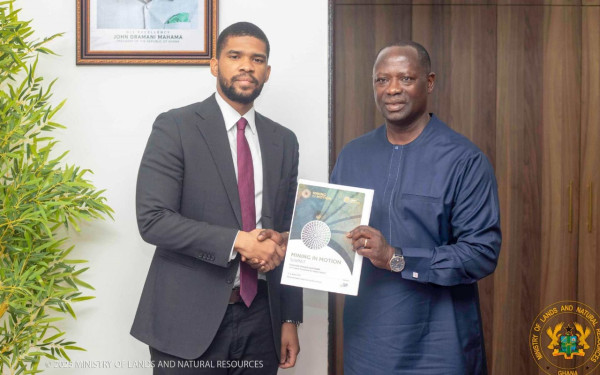
Otumfuo Osei Tutu II, King of the Ashanti Kingdom; Hon. Emmanuel Armah Kofi Buah, Minister of Lands and Natural Resources of Ghana; and Oheneba Kwaku Duah, the son of Otumfuo Osei Tutu II and Managing Director of the Ashanti Green Initiative recently met to discuss the upcoming Mining in Motion Summit in Ghana.

They explored the summit's potential to improve the artisanal and small-scale gold mining (ASGM) sector in Ghana and the role of government, international partners and major mining firms in accelerating the sector's growth. Hon. Kofi Buah endorsed the event, emphasizing its significance in connecting small-scale miners with technology providers, financiers, regulatory bodies and global industry stakeholders to improve their operations and impact.

Organized by the Ashanti Green Initiative along with the World Bank, the World Gold Council and other international partners, Mining in Motion will take place from June 2 - 4 in Accra.

The summit is held under the theme Sustainable Mining & Local Growth – Leveraging Resources for Global Impact, uniting key decision-makers, including H.E. John Dramani Mahama, President of the Republic of Ghana, as well as representatives from public and private sector mining institutions from South Africa, the Republic of Guinea, the African Union, ECOWAS and the United Nations.

The three-day event will highlight the role of traditional authorities in shaping artisanal and small-scale mining practices, emphasizing the sector's contribution to employment and economic growth. In 2024 alone, Ghana's artisanal miners generated $5 billion in foreign exchange earnings through gold exports. Providing direct employment for over one million Ghanaians and accounting for 35% of domestic gold output, the sector has the potential to significantly shape socioeconomic development in the west African country.

As Ghana's mining sector increasingly supports sustainable development, the Mining in Motion Summit will highlight best practices for integrating ASGM into the global financial system. Representatives from prominent international financing organizations will share their insights.

In a significant move to boost earnings for small-scale miners, Ghana has announced plans to establish a Gold Board. This new entity will simplify the process of purchasing gold from small-scale miners, providing them with easier access to global markets. With Samuel Adu Gyamfi, who was appointed Acting Managing Director of Precious Minerals Marketing Company last month and tasked with setting up the Ghana Gold Board, playing a pivotal role in shaping the summit, Mining in Motion is set to have a sizable impact on the growth of Ghana's gold sector.

Through a series of high-level panel discussions, deal signings, project showcases and exclusive networking, Mining in Motion serves as the ideal platform to connect Ghanaian miners with regional counterparts and global investors for forge industry-changing partnerships.

Stay informed about the latest advancements, network with industry leaders and engage in critical discussions on key issues impacting ASGM and medium- to large-scale mining in Ghana. Secure your spot at the Mining in Motion 2025 Summit by visiting https://MiningInMotionSummit.com. For sponsorship opportunities or delegate participation, contact sales@energycapitalpower.com.

Distributed by APO Group on behalf of Energy Capital & Power.

About Ashanti Green Initiative:
The Ashanti Green Initiative is a foundation dedicated to promoting environmental restoration, advocating for climate-related issues, and fostering community development in Ghana and beyond. Guided by a commitment to sustainability, the foundation undertakes projects aimed at rehabilitating degraded lands, restoring water bodies, and promoting responsible natural resource management. The initiative also champions regenerative practices in mining, agriculture, and energy, aligning with global efforts to combat climate change while uplifting local communities through education, capacity-building, and economic empowerment programs. The Ashanti Green Initiative is led by Nana Kwaku Duah, son of His Majesty Otumfuo Osei Tutu II, King of the Ashanti Kingdom. Under his leadership, the foundation applies forward-thinking approaches and innovative solutions, creating impactful partnerships with local and international stakeholders to drive meaningful change.

About Energy Capital & Power:
Energy Capital & Power is an Africa-focused global leading investment platform for the energy and mining sectors. Through a series of events, online content and investment reports, we unite the entire energy and mining value chains – from oil and gas exploration to renewable power – and facilitate global and intra-African investment and collaboration.

Media files
Energy Capital & Power
Download logo
Read moreGhana’s Mining in Motion Summit Gains Support From Key Leaders
26 February 2025

CSA Partners With Marriott Bonvoy And Protea Hotels By Marriott As Its Official Hotel Partner

Location: Sport

JOHANNESBURG: Cricket South Africa (CSA) today announce a multi-year partnership with Marriott Bonvoy, Marriott International’s award-winning travel programme, and Protea...

Read moreCSA Partners With Marriott Bonvoy And Protea Hotels By Marriott As Its Official Hotel Partner
25 February 2025

President Ramaphosa to open G20 finance track meeting 

Location: News

President Ramaphosa to open G20 finance track meeting 

President Cyril Ramaphosa will open the first meeting of the Group of 20 (G20) Finance Ministers and Central Bank Governors’ under South Africa’s Presidency.

“The first G20 Finance Meeting and Central Bank Governors Meeting in South Africa will focus on the thematic areas of [the] global economy, debt, infrastructure, joint finance and health task force, international taxation, finance sector issues, and sustainable finance,” the Presidency said on Tuesday.

This engagement will take place at the Cape Town International Convention Centre on Wednesday, 26 February 2025. 

The G20 Finance Ministers and Central Bank Governors’ Meeting is hosted by the Minister of Finance Enoch Godongwana and Governor of the South African Reserve Bank, Lesetja Kganyago under South Africa’s G20 Presidency theme of “Solidarity, Equality and Sustainability.”

The Finance Ministers meeting is preceded by the second meeting of the Finance and Central Bank Deputies which took place on 24 and 25 February 2025. 

“South Africa’s G20 Presidency commenced in December 2024, and the Finance Ministers and Central Bank Governors’ meeting is part of a series of 23 ministerial and approximately 130 working groups meetings that will take place during the course of 2025. The year-long deliberations will culminate in a G20 Leaders’ Summit in November 2025,” the Presidency said.

The G20 was originally established as a meeting of Finance Ministers in response to the Asian financial crisis of 1997-99, with the aim of coordinating policies to promote international financial stability’.

This initiative was elevated to a Heads of State and Government Leaders Meeting in 2008 after the global financial crisis of 2007.

Together, G20 members account for around 85% of global Gross Domestic Product (GDP) and 75% of international trade. 
It comprises 19 countries including: Argentina, Australia, Brazil, Canada, China, France, Germany, India, Indonesia, Italy, Japan, Republic of Korea, Mexico, Russia, Saudi Arabia, South Africa, Türkiye, United Kingdom, and United States and two regional bodies, namely the European Union and the African Union.

The grouping therefore plays a critical role in influencing global policy making and fostering global economic stability. -SAnews.gov.za


nosihle
Tue, 02/25/2025 - 12:00
505 views

Read morePresident Ramaphosa to open G20 finance track meeting 
25 February 2025

Eco Atlantic CEO to Speak at IAE 2025 Amid Orange Basin Expansion

Location: Business
Energy Capital & Power

Gil Holzman, President & CEO, Eco Atlantic Oil & Gas, will speak at the Invest in African Energy (IAE) Forum 2025 in Paris this May as the company expands its presence in the Orange Basin, offshore South Africa.

The Canada-headquartered Eco Atlantic has recently expanded its presence in Africa through strategic transactions and exploration initiatives. In June 2024, Eco Atlantic farmed into Block 1 in the Orange Basin, further strengthening its exploration portfolio in the region. The block has extensive 2D and 3D seismic data already completed, with no additional seismic acquisition or well drilling planned during the three-year carried period. During this time, Eco will focus on interpreting and analyzing the existing data to inform its planned Work Program, leveraging its in-house exploration team. The company also holds interests in Blocks 2B and 3B/4B in South Africa, along with four licenses in Namibia.

IAE 2025 (http://apo-opa.co/3ETVwbj) is an exclusive forum designed to facilitate investment between African energy markets and global investors. Taking place May 13-14, 2025 in Paris, the event offers delegates two days of intensive engagement with industry experts, project developers, investors and policymakers. For more information, please visit www.Invest-Africa-Energy.com. To sponsor or participate as a delegate, please contact sales@energycapitalpower.com.

Eco Atlantic's approach centers on exploring low-carbon intensity oil and gas in stable emerging markets close to infrastructure, aiming to deliver material value for its stakeholders while contributing to the energy transition. The company prioritizes efficient exploration strategies that minimize environmental impact while maximizing resource potential.

By focusing on proven basins with existing infrastructure, Eco Atlantic seeks to accelerate development timelines and enhance economic viability in its operating regions. The upcoming forum will highlight how oil and gas independents like Eco Atlantic are navigating Africa's evolving energy landscape, driving investment and sustainable resource development.

Distributed by APO Group on behalf of Energy Capital & Power.

Media files
Energy Capital & Power
Download logo
Read moreEco Atlantic CEO to Speak at IAE 2025 Amid Orange Basin Expansion
  • Previous
  • Page 1
  • Interim pages omitted …
  • Page 22
  • Page 23
  • Page 24
  • Page 25
  • Page 26
  • Interim pages omitted …
  • Page 103
  • Next

Copyright © 2026 · MyZA · All Rights Reserved · Powered by Stratlec Online