• Skip to main content
  • Skip to header right navigation
  • Skip to after header navigation
  • Skip to site footer
MyZA

MyZA

News, Directory, Events and Other Stuff

  • Social Media
  • Sport
  • World News
  • Home
  • Submit News
  • Directory
  • Events
  • Stratlec
  • TFSA
  • News
    • APO
    • Today’s Sport News
    • Todays Social Media and Tech Headlines
    • Today’s World News
    • Today’s SA Financial News
  • Contact
You are here: Home / Archives for global

global

6 March 2025

Lamola to host his Cuban counterpart for bilateral talks

Location: News

Lamola to host his Cuban counterpart for bilateral talks

International Relations and Cooperation Minister Ronald Lamola will host his Cuban counterpart, Bruno Rodríguez Parrilla, for bilateral talks in Pretoria on Monday, 10 March 2025. 

This working visit will provide an opportunity for both Ministers to strengthen the strategic bilateral relations and cooperation programmes between South Africa and Cuba.

“The Ministers will also exchange views on regional and global issues of mutual concern,” a statement issued by the Department of International Relations and Cooperation (DIRCO) said.

Cuba is one of South Africa’s strategic partners in Latin America and the Caribbean. 

“The relations date back well before the 1994 democratic elections, which in great part can be attributed to the remarkable contribution made by Cuba to the liberation of South Africa and the defeat of apartheid and colonialism,“ DIRCO said.

The department said South Africa and Cuba are bound by ties of culture, history, shared struggles, international solidarity, and a joint commitment to advance the development agenda of the Global South.

“The long-enduring bilateral collaboration between South Africa and Cuba is multifaceted and sustained by a substantial number of bilateral agreements covering a wide range of areas, including health, public works, education and water and sanitation cooperation.”

South Africa and Cuba’s foreign policies are centred on the peaceful resolution of conflict, multilateralism, the rule of international law, and the centrality of the United Nations in the maintenance of international peace and security. – SAnews.gov.za

Gabisile
Thu, 03/06/2025 - 14:38
27 views
Read moreLamola to host his Cuban counterpart for bilateral talks
6 March 2025

SA hosts first G20 Tourism Working Group meeting 

Location: News

SA hosts first G20 Tourism Working Group meeting 

Tourism Minister Patricia de Lille has urged the G20 to find ways to use tourism to change the lives of communities around the world.

“As you convene during the first Tourism Working Group, I implore on all delegates to focus on how we can use tourism to change people’s lives, communities and the world,” she said in a video-recorded message.

The Minister was addressing the first G20 Tourism Working Group meeting held virtually from the Head Office of the Department of International Relations and Co-operation (DIRCO) in Pretoria.

Wednesday’s meeting was the first of a series of engagements that will take place throughout the year, ahead of the G20 Tourism Ministers’ Meeting in September 2025.

“South Africa is excited to welcome all G20 delegates, member states and organisations to our beautiful country and proud to host the G20 for the first time,” she said.

The Director-General at the department, Nkhumeleni Victor Vele, chaired the meeting which was attended by senior officials and experts in the tourism sector of the G20 countries, invited guest countries and international organisations.

At the meeting, delegates deliberated on and agreed to work on four priorities for the year namely:

• People-Centered Artificial Intelligence (AI) and Innovation to enhance Travel and Tourism Start-Ups and SMMEs,
• Tourism Financing and Investment to Enhance Equality and Promote Sustainable Development,
• Air Connectivity for Seamless Travel, and
• Enhanced Resilience for Inclusive, Sustainable Tourism Development.

The Tourism Working Group will exchange knowledge and best practices among the member countries with a view of crafting actionable deliverables. The group is among the 16 working groups of the G20 during South Africa’s Presidency focusing on solidarity, equality and sustainability. 

In its statement, the Department of Tourism said that as the first African country to preside over the G20 Presidency, South Africa is utilising its term to drive a developmental agenda to benefit the African continent.

Going forward, the following G20 Tourism Meetings are planned in South Africa:

• 2nd G20 Tourism Working Group Meeting from 11 to 13 May 2025 in KwaZulu Natal province.
• 3rd G20 Tourism Working Group Meeting from 10 to 11 September 2025 in Mpumalanga.
• G20 Tourism Ministers’ Meeting on 12 September 2025 in Mpumalanga.

The G20 economies represent around 85% of the global gross domestic product (GDP), over 75% of the global trade and about two-thirds of the world population. 

In 2023, the G20 welcomed 69% of all international tourists and accounted for 71% of tourism exports worldwide. In 2023 Tourism Direct GDP reached 3.1% of the G20 economies.

The department added that tourism plays a critical role in the global economy and is one of the vital economic sectors contributing significantly to socio-economic development but remains vulnerable to natural and manmade hazards. 

For many countries, the tourism economy is growing faster than most other economic sectors. With its extensive value chain and labour absorption capacity, it is acknowledged as a tool for inclusive economic development, playing a significant role in responding to socioeconomic challenges.

“Tourism is an important economic sector in Africa. In 2023 the continent’s tourism direct gross domestic product reached 85 US billion [dollars] representing 3.5% of the region’s GDP. This value is still below the pre-pandemic 94 US billion [dollars] reached in 2019 (4.3% share).”

The challenges facing the African travel and tourism sector include air connectivity, limited investments, financing for tourism development, positioning and marketing, social and environmental sustainability, as well as safety and security, among others.

South Africa’s tourism priorities for the 2025 G20 Presidency are aligned with the continental priorities as expressed in Agenda 2063 as well as with the core objectives contained in the UN Tourism Agenda for Africa – Tourism for Inclusive Growth, the strategic roadmap guiding the promotion of sustainable tourism development across the African continent.

The meeting also appreciated South Africa’s intention to build on the efforts and successes of the last three G20 Presidencies of the Global South and to champion Africa’s developmental agenda. – SAnews.gov.za

Edwin
Thu, 03/06/2025 - 10:09
116 views

Read moreSA hosts first G20 Tourism Working Group meeting 
5 March 2025

Whistleblowers a cornerstone in fighting corruption

Location: News

Whistleblowers a cornerstone in fighting corruption

The South African government will introduce the Whistleblower Protection Bill in Parliament this year in a demonstration of support for those who speak out against the scourge of corruption.

This according to Department of Public Service and Administration Minister, Inkosi Mzamo Buthelezi.

Buthelezi was addressing the media on the outcomes of the inaugural meeting of the G20 Anti-Corruption Working Group (ACWG) Technical Meeting held this week.

“We must…recognise the indispensable role of whistleblowers in uncovering corruption. Their courage in exposing wrongdoing often comes at a significant personal risk. Therefore, enhancing whistleblower protection remains at the top of our priorities as government. 

“South Africa is set to introduce the Whistleblower Protection Bill in Parliament this year reinforcing our commitment to strengthen legal safeguards for those who report corruption.

“We do this knowing very well that whistleblowers are the cornerstone of our fight against corruption,” he said.

Buthelezi described the ACWG technical meeting – which was attended by representatives from the G20 countries – as a “cornerstone in our roadmap to combat corruption”.

“These discussions will culminate in the G20 Anti-Corruption ministerial meeting where members states will reaffirm their commitment to the primary objective of the [ACWG] which is to eradicate corruption through inter alia, strengthening the public sector by promoting transparency, accountability and ethical leadership and by fostering international cooperation,” the Minister said.

During the meeting of the ACWG, South Africa called for international cooperation in fighting corruption.

“We emphasised the importance of international cooperation and explored mechanisms to enhance the implementation of…legal instruments which G20 members have endorsed.

“A unified and coordinated global response is critical to closing the gaps that allow corruption to thrive. Deliberations focused on harmonising national laws with international standards to create a robust legislation that enhances legal recourse and restores public confidence in our justice system. 

“Establishing uniform standards across G20 countries is essential for effective cross border against corruption,” Buthelezi said.

He emphasised the importance of transparency in the public sector as another critical tool in combatting the scourge.

“The meeting also highlighted the need for greater transparency in the public sector including enhancing transparency, accountability and ethical leadership mechanisms.

“Transparency is…a powerful tool in combatting corruption as it reduces opportunity for misconduct and fostering a culture of integrity,” he said.

The Minister said the meeting this week has laid a “robust foundation for the next phases of our work”.

The next meetings of the ACWG will be held in Brazil and Mpumalanga.

“As we prepare for the upcoming meetings…our focus will remain on building consensus around actionable commitments that go beyond policy declarations and resulting in tangible action against corruption.

“Maintaining open and transparent communication about our progress is very important. The fight against corruption is not just a legal or institutional challenge, but also a battle for public trust.

“By keeping our citizens informed and engaged, we reinforce the message that corruption has no place in our societies and that integrity will be the cornerstone of governance worldwide,” Buthelezi said. – SAnews.gov.za


NeoB
Wed, 03/05/2025 - 11:58
479 views

Read moreWhistleblowers a cornerstone in fighting corruption
5 March 2025

Stakeholders emphasise importance of regulations to combat financial crimes

Location: News

Stakeholders emphasise importance of regulations to combat financial crimes

The importance of financial accountability and regulatory compliance in protecting non-profit organisations (NPOs) from being exploited for money laundering and terrorist financing came to the fore at the Department of Social Development’s (DSD) stakeholder engagement session.

One of the stakeholders at the session on the Financial Action Task Force’s (FATF) Recommendation 8, was the Chartered Institute for Business Accountants, who underscored this point.

The institute’s Technical Manager, Eszter Rapanos, outlined key interventions and innovations aimed at aligning regulatory frameworks with the FATF’s latest measures.

The FATF is the international standard-setting body that oversees global compliance with anti-money laundering rules.

Recommendation 8 of the Financial Action Task Force aims to protect NPOs from potential terrorist financing and money laundering abuse through effective implementation of risk-based measures.

She highlighted the institute’s role as a professional body in advancing these measures to protect NPOs from financial crime, emphasising its commitment to upholding financial integrity.

Rapanos addressed the unique challenges faced by South African NPOs, including limited access to technology, insufficient funding, and a lack of financial management skills, which make them particularly vulnerable to financial crimes.

“The risk-based approach must be applied throughout the process, ensuring that high-risk areas are targeted while avoiding unnecessary burdens on compliant NPOs,” she stated.

Among the significant regulatory changes, Rapanos pointed to the new requirement for compulsory registration of NPOs that operate across borders.

READ | Social Development issues notices of non-compliance to NPOs 

In addition, organisations must now maintain detailed records of their beneficial ownership and enhance governance structures to prevent individuals with a history of financial crimes from assuming leadership roles.

“The increased governance and transparency requirements will ensure that NPOs maintain credibility, but it also places additional administrative responsibilities on them,” she noted.

Rapanos stressed that the new framework presents opportunities for collaboration.

“By working closely with regulatory bodies such as the Department of Social Development, the Financial Intelligence Centre, the Companies and Intellectual Property Commission, and the South African Revenue Service, we can align compliance processes and reduce duplications,” she explained.

The Chartered Institute for Business Accountants’ recommendations include implementing a tiered risk-based approach to compliance, where low-risk NPOs face fewer administrative burdens, while higher-risk organisations undergo more stringent oversight.

Rapanos also called for increased training and capacity-building efforts to help NPOs navigate the evolving regulatory landscape.

“The goal is to strike a balance between preventing illicit financial activities and allowing NPOs to continue their essential work without being overburdened by red tape,” Rapanos concluded.

On Monday, the Deputy Minister of Social Development, Ganief Hendricks, called on NPOs and the civil society sector to work with government in seeing South Africa exit the FATF’s grey list by year-end.

In his address, Hendricks cautioned government against using legislation to stifle the operations of legitimate NPOs that play a vital role in communities across South Africa.

“Our National Development Plan calls for active citizenry especially from the grassroots level. We must therefore guard overburdening and frustrating grassroots initiatives through the use of legislation.

“The objective of the NPO Act is to create an enabling legislative environment for the NPO sector to thrive and contribute to our national development agenda”, the Deputy Minister said at the time.

READ | Call for NPOs to work with government to address FATF challenges

At Monday’s session in Kempton Park, National Treasury said the FATF was not satisfied with the mere existence of national legislation, but also enforcement of administrative penalties for high-risk NPOs that fail to comply with the provisions of the law.

One of the FATF’s requirements is that Social Development, as the regulator of the NPO sector in terms of the NPO Act (Act No. 71 of 1997, as amended through the General Laws Amendment Act 22 of 2022), has to conduct more outreach and educational programmes with NPOs to promote better understanding of the global anti-money laundering and counter-terrorist financing standards.

The FATF grey listed South Africa at its February 2023 plenary meeting held in Paris. It developed an Action Plan with 22 Action items linked to the eight strategic deficiencies identified in the country’s anti-money laundering and combating of financial terrorism regime. -SAnews.gov.za


DikelediM
Wed, 03/05/2025 - 12:42
343 views

Read moreStakeholders emphasise importance of regulations to combat financial crimes
5 March 2025

SA condemns Israel’s refusal to allow aid into Gaza

Location: News

SA condemns Israel’s refusal to allow aid into Gaza

South Africa says it strongly condemns the refusal of Israel to allow humanitarian aid into the Gaza Strip and its closure of border crossings at a time when the people of Gaza are experiencing immeasurable suffering and urgently need food, shelter, and medical supplies.

This is according to a statement issued by the Department of International Relations and Cooperation (DIRCO) on Wednesday. 

According to reports, Israel blocked the entry of all humanitarian aid into Gaza on Sunday as it demands Hamas agree to a United States plan for a ceasefire extension.

The department said preventing food from entering Gaza is a continuation of Israel’s use of starvation as a weapon of war as part of the ongoing campaign of what the International Court of Justice (ICJ) ruled to be plausible genocide against the Palestinian people. 

“South Africa concurs with Qatar, one of the guarantors of the ceasefire agreement, that halting the entry of humanitarian aid into the Gaza Strip is a clear violation of the ceasefire agreement, international humanitarian law, and the Fourth Geneva Convention.” 

South Africa has since called on the international community to hold Israel accountable and ensure the safe, continuous, and unhindered delivery of humanitarian aid to all areas of the Gaza Strip.

The United Nations (UN) Secretary-General Antonio Guterres has implored Israel to end its suspension of humanitarian aid to Gaza “immediately” and to allow aid to flow without impediment in an environment ensuring the safety and security of civilians, including humanitarian workers. 

Guterres has also “urged all parties to make every effort to prevent a return to hostilities in Gaza”, and to find a way forward on the next phase of the ceasefire agreement. 

“South Africa also condemns Israel’s ongoing military operations in the West Bank that represent a dangerous escalation, and which further threatens the Palestinian quest for self-determination and statehood.” 

According to the department, the forced displacement of 40 000 Palestinians from Jenin, Tulkarem, Nour Shams, and elsewhere threatens to erase Palestinian refugee camps, and the right of return.

“The concurrent ban on the UN Relief and Works Agency’s (UNRWA) activities in these areas constitutes a flagrant violation of international law and strips displaced Palestinians of essential support and international oversight,” the department added. 

The department stated that the expanded Israeli military presence, now at its highest levels in the West Bank since 2002, signals an intent to re-establish full-scale military occupation, and undermines the Palestinian Authority and its governance.   

“South Africa supports the guarantors’ continued efforts to address the reported violations of the ceasefire agreement.” 

The department said the delay in releasing the 620 Palestinian prisoners constitutes a fundamental breach of negotiated terms.   

“South Africa once again calls on the international community to act with urgency and decisive action to address the continued systematic violation of international law and international humanitarian and human rights law.” 

The department said South Africa welcomes the outcomes of the Arab League Emergency Summit held on Tuesday, 4 March 2025, that supports a settlement in Gaza that is led by, and inclusive of, Palestinians, and that expressly rejects the ethnic cleansing and forced displacement of Palestinians in Gaza. 

The country has also thrown its weight behind the Arab League’s call for a UN international peacekeeping force in the West Bank and Gaza to ensure security and stability.   

“South Africa also expresses its grave concern over Israel’s continuing violation of Syria’s sovereignty and territorial integrity by towns South of Damascus and the southern province of Daraa. 

“Israel’s depiction of Southern Syria as a ‘security zone’, and statements that any attempt by Syrian government forces to establish themselves in the zone violate Syria’s sovereignty.” – SAnews.gov.za 


Gabisile
Wed, 03/05/2025 - 15:10
46 views

Read moreSA condemns Israel’s refusal to allow aid into Gaza
5 March 2025

UK Looks to Deepen Energy Trade, Investment Ties with Africa

Location: News
African Energy Chamber

Trade relations between the UK and Africa are gaining momentum. Last month, UK Minister for Trade Policy and Economic Security Douglas Alexander visited South Africa and Botswana to strengthen trade ties and create opportunities for businesses on both sides. The UK aims to expand trade and investment across the continent, fostering mutually beneficial growth by addressing trade barriers, facilitating exports and supporting trade-focused development programs. With South Africa as the UK's largest trading partner in Africa and set to assume the G20 Presidency, this marks an important moment for deepening economic collaboration.

This builds on the UK's 2019 Economic Partnership Agreement (EPA) with the Southern African Customs Union member states – Botswana, Eswatini, Lesotho, Namibia and South Africa – and Mozambique. This agreement eliminates tariffs and quotas on all goods imported from these countries into the UK, facilitating smoother trade relations and economic cooperation. The EPA aims to bolster economic ties and create a conducive environment for investments, including in the energy sector.

The UK is expanding its engagement across Africa, including in West and North Africa. In February 2024, it signed the Enhanced Trade and Investment Partnership (ETIP) with Nigeria – the first such agreement with an African nation – marking a significant milestone. The partnership builds on a trade relationship valued at £7 billion in the year leading up to September 2023. The ETIP focuses on key sectors such as financial and legal services, fostering economic growth and attracting investment across industries, including energy.

Globeleq, a UK government-backed independent power producer, has been instrumental in advancing gas-powered energy projects across Africa. Alongside its 153 MW Red Sands project in South Africa – set to become the continent's largest standalone battery energy storage system – the company recently acquired a stake in a solar plant at Egypt's Benban Solar Complex and secured $99 million in debt financing for Mozambique's first wind project. Supported by shareholders such as British International Investment and Norfund, Globeleq continues to invest in upgrading existing assets and developing new utility-scale power projects, strengthening Africa's energy infrastructure.

In the oil and gas sector, bp achieved first gas from the Greater Tortue Ahmeyim LNG project offshore Senegal and Mauritania at the start of this year, marking a major step in boosting regional energy production and supply. Shell is advancing its $5 billion Bonga North deepwater project in Nigeria and, alongside bp, has agreed to cover operational costs for the buyer of South Africa's Sapref refinery – a move that could revitalize the country's largest refinery and secure oil supply. Meanwhile, Harbour Energy, one of the UK's largest independent oil and gas companies, is looking to expand into African markets following its acquisition of concessions in Egypt's Nile Delta and the Mediterranean Sea.

The UK is also a major investor in Africa's clean energy sector and a key partner in the Mission 300 initiative to expand electricity access to 300 million people by 2030. Last month, British International Investment (BII) committed £5.3 million to UK cleantech firm MOPO to scale battery rental operations in the Democratic Republic of the Congo, where over 80% of the population lacks electricity. In December 2024, BII and GuarantCo announced a $500 million renewable power deal with South Africa's Etana Energy, providing $100 million in guarantees to support the country's largest energy wheeling framework and unlock new projects. Beyond direct investments, the UK government continues to provide funding and technical assistance for energy infrastructure projects across Africa, aiming to improve energy reliability and efficiency, drive economic growth, and enhance the quality of life for local communities.

As a G20 member, the UK plays a pivotal role in shaping global energy investment strategies, with Africa positioned as a key partner in its trade and energy agenda. The UK's investments in oil and gas, renewables and energy infrastructure align with broader G20 goals of energy security, sustainability and economic growth.

“These initiatives not only strengthen the UK's economic ties with Africa, but also support the continent's transition to cleaner, more reliable energy. With African Energy Week: Invest in African Energies 2025 set to convene global stakeholders, the UK's role in advancing energy partnerships will be in focus, offering a platform to drive further investment, policy collaboration, and infrastructure development across Africa's energy landscape,” says Johnson Kayode Obembe, Director of Sales and Partnerships, African Energy Week.

AEW: Invest in African Energies is the platform of choice for project operators, financiers, technology providers and government, and has emerged as the official place to sign deals in African energy. Visit www.AECWeek.com for more information about this exciting event.

Distributed by APO Group on behalf of African Energy Chamber.

Media files
African Energy Chamber
Download logo
Read moreUK Looks to Deepen Energy Trade, Investment Ties with Africa
5 March 2025

SA needs R440 billion for transmission development

Location: News

SA needs R440 billion for transmission development

South Africa requires upwards of R440 billion in the next 10 years to expand its transmission infrastructure, says Minister of Electricity and Energy, Dr Kgosientsho Ramokgopa.

Addressing the Africa Energy Indaba in Cape Town on Tuesday, the Minister said the country’s transmission development plans have identified the need to modernise and expand the grid for 14 000 kilometres in the next 10 years.

“This is going to require an enormous amount of investment. The fiscus won’t be able to carry that. The Eskom balance sheet is not sufficient, so it is important to find bespoke financing instruments to make this possible,” the Minister said.

He called on financial actors to actively take steps to significantly lower the cost of borrowing for the investment of the continent’s development, climate resilience and clean energy transition initiatives.

“We expect the increase in electricity trade volumes to grow by about 300% by 2040 and by that time, the projection is that Africa’s population will be at about two billion people from the current 1.5 billion. For us to be able to achieve this level of ambition, there are huge investments that are required.

“One of the studies done by some of the... organisations suggests that Africa will need upwards of R2.6 trillion in investments in the energy sector by 2040. The pool of financing is enormous. Even if you had to consolidate the balance sheet of the continent, I don’t think we are going to get anywhere near raising this money.

“That is why it is important that we are able to design a financing instrument for us to be able to achieve this level of ambition,” Ramokgopa said.

He expressed support for a single electricity market on the continent, as advocated for by the the African Union's Agenda 2063.

“We think that the ambitions of achieving a single electricity market on the continent is not far-fetched .For us to have universal access by 2063, as advocated for in Agenda 2063, which makes a point that we can achieve that through regional integration… there has to be significant investment on interconnectivity,” the Minister said.

With South Africa hosting the Group of Twenty (G20) Presidency, Ramokgopa outlined the G20 technical energy group priorities, which include energy security and forging reliable and affordable access; achieving just, affordable and inclusive energy transitions, as well as African connectivity and energy pools.

These priorities were canvassed through the platform of the African Union.

According to Ramokgopa, 43% of the total population in Africa does not have access to electricity.

“This is a big issue. Before you can talk about transitioning, people need to have access to whatever form of electricity, irrespective of the fuel sources.

“As a country and the continent, we bear the responsibility to ensure that we are able to provide this access in a manner that doesn’t degrade the environment and keep to our obligations to ensure that we reduce the greenhouse gas emissions, although we contribute less than 2.5% of the CO2 emissions. Going into the future, gas will still be part of the mix on the continent,” the Minister said.

Focus on just transition

South Africa’s G20 Presidency will elevate the issue of just, affordable and inclusive energy transitions.

“That is important because we are of the opinion that there is no single transition. Any transition should take into account the unique circumstances of individual countries, and the pace and scale that they can afford.

“We will be meeting with the National Economic Development and Labour Council (Nedlac) and are hoping that the Integrated Resource Plan (IRP) will be release to the public soon. The plan will explain how we see the transitions unfold in the country,” Ramokgopa said.

South Africa's G20 Presidency is the fourth consecutive emerging market Presidency, and it is also the first African Presidency.

It commenced on 1 December 2024 and all engagements are being held under the theme: “Solidarity, Equality, Sustainability”.

The year-long deliberations will culminate in a G20 Leaders’ Summit in November 2025.

The G20 was established to tackle pressing global economic and financial issues. Together, G20 members account for around 85% of global GDP and 75% of international trade. 

It comprises 19 countries and two regional bodies, namely the European Union and the African Union.

The grouping plays a critical role in influencing global policy making and fostering global economic stability. - SAnews.gov.za

nosihle
Wed, 03/05/2025 - 12:03
108 views

Read moreSA needs R440 billion for transmission development
5 March 2025

Totalenergies’ Mike Sangster to Headline Invest in African Energy Forum in Paris

Location: News
Energy Capital & Power

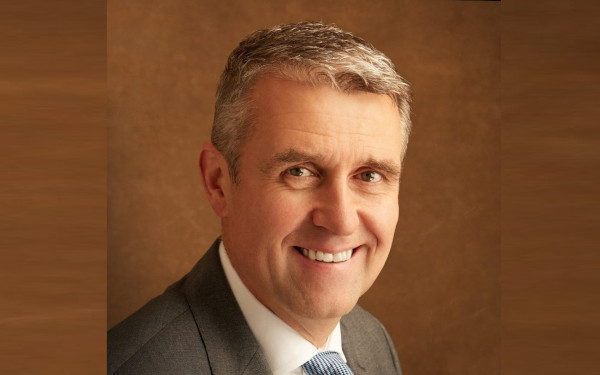
Mike Sangster, Senior Vice President for Africa at TotalEnergies, will deliver a keynote address at the Invest in African Energy (IAE) Forum in Paris this May. Sangster will also participate in an exclusive fireside chat, offering critical insights into the company's vision for Africa's energy future, its ongoing projects and the evolving role of oil and gas in the continent's energy mix.

TotalEnergies continues to drive oil and gas development across Africa, with a strong focus on both emerging and mature markets. In Namibia, the company is advancing its Venus-1 discovery, targeting first oil by the decade's end, with an FID expected in early 2026 for a development producing 150,000 barrels per day. TotalEnergies is also exploring additional prospects in the Orange Basin, having recently drilled the Marula-1X and Tabmoti-1X wells. In the Republic of Congo, the company is investing $600 million to expand deepwater production at the Moho Nord field, while in Libya, it plans to complete an onshore exploration project and lead new drilling campaigns in the Waha and Sharara fields in 2025.

IAE 2025 (www.Invest-Africa-Energy.com) is an exclusive forum designed to facilitate investment between African energy markets and global investors. Taking place May 13-14, 2025 in Paris, the event offers delegates two days of intensive engagement with industry experts, project developers, investors and policymakers. For more information, please visit www.Invest-Africa-Energy.com. To sponsor or participate as a delegate, please contact sales@energycapitalpower.com.

Meanwhile, TotalEnergies is expanding its gas processing and midstream infrastructure across Africa, strengthening its role in the continent's evolving energy landscape. In Mozambique, the company is progressing with the Mozambique LNG project, a $20 billion development expected to secure renewed financial backing from export credit agencies. I Uganda, TotalEnergies is gearing up for first oil from its Tilenga field in 2025, with crude transported via the East African Crude Oil Pipeline (EACOP). Once operational, EACOP will be the longest heated crude oil pipeline globally, significantly enhancing East Africa's ability to monetize its hydrocarbon resources and attract further investment into the region's energy sector.

TotalEnergies is also expanding its renewable energy footprint in Africa through strategic investments in solar, wind, hydropower and green hydrogen. The company is advancing its 500 MW Sadada solar project in Libya and acquired Scatec's hydropower portfolio on the continent in July 2024, including the 250 MW Bujagali Hydropower Plant in Uganda and stakes in projects in Malawi, Rwanda and the DRC. In South Africa, TotalEnergies is constructing a 216 MW solar plant with battery storage, along with a 140 MW wind farm and a 120 MW solar facility, set to supply green electricity to Sasol's industrial operations. In Morocco, the company is developing the Chbika project, a 1 GW wind and solar farm designed to produce 200,000 metric tons of green ammonia annually for export to Europe. These initiatives align with TotalEnergies' strategy to integrate renewables into its portfolio while supporting Africa's energy transition.

Sangster's participation at IAE 2025 comes at a pivotal time for Africa's energy sector, as investors and policymakers navigate a shifting global energy landscape. His keynote address and fireside chat will provide valuable perspectives on the role of private investment in African energy, strategies for unlocking new upstream opportunities and how TotalEnergies is adapting to the continent's long-term energy needs.

Distributed by APO Group on behalf of Energy Capital & Power.

Media files
Energy Capital & Power
Download logo
Read moreTotalenergies’ Mike Sangster to Headline Invest in African Energy Forum in Paris
5 March 2025

President Ramaphosa and Mozambican counterpart solidify bilateral ties

Location: News

President Ramaphosa and Mozambican counterpart solidify bilateral ties

President Cyril Ramaphosa and his Mozambican counterpart, President Daniel Chapo, have reaffirmed their commitment to strengthening the diplomatic, political and economic relations between South Africa and Mozambique.

President Ramaphosa received President Chapo for a meeting at his official residence, Genadendal, in Cape Town on Tuesday.

The two leaders held discussions aimed at deepening cooperation and strengthening state institutions. President Chapo was recently inaugurated President of the Republic of Mozambique, which is a close partner and immediate neighbour of South Africa.

Speaking about the significance of the engagement, President Ramaphosa said he came together with his counterpart to continue strengthening the bonds that already exist between the two countries.

“We came together to continue strengthening the bonds between our two countries and in many ways how we can turn a new page of cooperation at a political, diplomatic and economic level and how we can entrench political stability in Mozambique following the elections. And also, how we can create a conducive environment for businesses to operate in both countries,” President Ramaphosa said.

The discussions also focused on Mozambique’s internal political stability, with President Chapo expressing optimism about the ongoing efforts to engage with opposition parties.

“We are here to explain that our situation in Mozambique is good and now we are working. Tomorrow, we will meet with the opposition to sign an agreement on talks we are going to have about the many issues impacting our country including discussions on our electoral laws. We are also here to talk about how we can grow our economy,” President Chapo said.

The relationship between South Africa and Mozambique is rooted in a shared historical struggle against apartheid and colonialism. This bond is further enriched by familial connections and cultural similarities that unite the two nations.

Currently, it is estimated that South African companies have invested between R155 billion and R175 billion, creating more than 42 000 job opportunities.

Several key South African companies recently established the South African Chamber of Commerce, promoting trade and investment between the two nations. Mozambique is also a vital energy security partner for South Africa.

The bilateral meeting gave effect to President Ramaphosa’s commitment in the 2025 State of the Nation Address that South Africa will leverage its international relations to advance the well-being of humanity; strengthen trade relations around the world and leverage strong and diverse global alliances to make South Africa’s economy more resilient. – SAnews.gov.za

DikelediM
Tue, 03/04/2025 - 16:09
64 views

Read morePresident Ramaphosa and Mozambican counterpart solidify bilateral ties
4 March 2025

KZN Premier’s Netball Cup to empower young women

Location: News

KZN Premier’s Netball Cup to empower young women

The KwaZulu-Natal Provincial Government has officially unveiled the 2025 KZN Premier’s Netball Cup, marking a groundbreaking milestone in the province’s efforts to foster netball talent and empower young women through sport. 

Launched on Sunday, in partnership with the KwaZulu-Natal Netball Federation, the tournament will take place from 5 - 9 March 2025 at the Victoria Mxenge Indoor Complex in Umlazi, south of Durban. 

The competition is designed to provide a platform for young women aged 16 to 36, and serves as a crucial building block for the future of netball in the province.  

The tournament will feature 12 district-based teams, each representing a local district and named after its respective mayor. The teams will compete for supremacy in one of the province's most prestigious netball tournaments. 

A key feature of the competition is the requirement that each 15-member squad must include at least six players under the age of 20, ensuring the inclusion of emerging talent and helping to nurture the next generation of netball stars. 

Furthermore, each team must field a minimum of 12 players per match, with at least 50% match participation, promoting both fairness and opportunities for skill development. 

A launchpad for future netball stars 

Speaking at the launch, KwaZulu-Natal Premier, Thamsanqa Ntuli, said the tournament will not only showcase the grace and intensity of modern netball, but also offers valuable exposure for players aiming for provincial and national representation. 

“Players will have the chance to be scouted for teams such as the Kingdom Stars, KZN’s professional netball franchise, and potentially the Spar Proteas, South Africa’s national netball team. The KZN Premier’s Netball Cup is not just about competition, but it represents a comprehensive strategy to professionalise the sport,” Ntuli said.  

The Premier said the tournament aims to contribute to netball’s holistic growth, focusing not only on players but also on coaching, officiating, sports administration, marketing, and sponsorship.  

Through these investments, Ntuli said the province is creating pathways for job creation and boosting sport tourism in KwaZulu-Natal. 

The Premier also urged local businesses, municipalities, and fans to actively support the sport, both financially and through engagement, to ensure its continued growth and success. 

Positioning SA as a dominant force in international netball

The KZN Premier’s Netball Cup aligns with the larger vision of Netball South Africa (NSA), the sport’s governing body, which has been pivotal in positioning South Africa as a dominant force on the global netball stage.  

This includes the successful hosting of the 2023 Netball World Cup, which highlighted the country’s rising influence in international netball.

According to NSA, netball is the most popular female sport in South Africa and ranks as the second-most participated sport overall, with over two million active netball players participating on a weekly basis. 

The KwaZulu-Natal Provincial Government has extended its best wishes to all participating teams and encouraged the communities to rally behind their local districts. – SAnews.gov.za

GabiK
Tue, 03/04/2025 - 13:18
260 views

Read moreKZN Premier’s Netball Cup to empower young women
4 March 2025

Relief for consumers as fuel price set to drop

Location: News

Relief for consumers as fuel price set to drop

The Department of Mineral Resources and Energy has announced the adjustment of fuel prices with effect from 5 March 2025.

Based on current local and international factors, the fuel prices for March 2025 will be adjusted as follows:

  • Petrol 93 (ULP & LRP): 7 cents per litre (7.00 cents per litre (c/l)) decrease.
  • Petrol 95 (ULP &LRP): 7 cents per litre (7.00 c/l) decrease.
  • Diesel (0.05% sulphur): 17.5 cents per litre (17.50 c/l) decrease.
  • Diesel ((0.005% sulphur): 23.5 cents per litre (23.50 c/l) decrease.
  • Illuminating Paraffin (wholesale): 6 cents per litre (6.00 c/l) decrease.
  • SMNRP for IP: 8 cents per litre (8.00 c/l) decrease.
  • Maximum LP Gas Retail Price: 2 cents per kilogram (2.00c/kg) decrease.

“South Africa’s fuel prices are adjusted monthly, informed by international and local factors. International factors include the fact that South Africa imports both crude oil and finished products at a price set at the international level, including importation costs, e.g, shipping costs,” the department said in a statement.

One of the main reasons for the fuel price adjustments are due to the average Brent Crude oil price decreased from US$77.41 to US$74.89 during the period under review. The main contributing factors are the continued lower global demand and over supply from non-OPEC countries. 

Furthermore, the Russia/Ukraine ceasefire negotiations which could result in a possible increase in global supply of crude oil, said the department.

The average international petroleum product prices of petrol increased due to refinery shutdowns and maintenance in the US in preparation for the switching to summer fuel grade. 

The prices of diesel followed the decreasing trend of crude oil. 

“These factors led to higher contributions to the Basic Fuel Prices of petrol and illuminating paraffin by 6.92 c/l and 8.09 c/l respectively, and lower contributions to the Basic Fuel Prices of diesel by 7.66 c/l,” it said.

The Rand appreciated on average, against the US Dollar - from 18.73 to 18.50 Rand per US Dollar - during the period under review when compared to the previous one. This led to lower contributions to the Basic Fuel Prices of petrol, diesel and Illuminating Paraffin by 13.54 c/l, 14.45 c/l and 14.15 c/l respectively.

The department said the cumulative slate amounted to a positive balance of R2.29 billion for petrol and diesel of at the end of January 2025. 

“In line with the provisions of the Self-Adjusting Slate Levy Mechanism, a slate levy remains unchanged at zero cents per litre in the price structures of petrol and diesel with effect from the 5th of March 2025.”

The Minister of Mineral and Petroleum Resources Gwede Mantashe with the concurrence of the Minister of Finance Enoch Godongwana approved an increase from 0.1 c/l to 1.0 c/l in the IP Tracer Dye Levy applicable to Diesel with effect from 06 March 2024 to 05 March 2025. 

The increase was temporary until 05 March 2025 and therefore IP Tracer Dye levy has been decreased to 0.5 c/l with effect from 05 March 2025. - SAnews.gov.za

Edwin
Tue, 03/04/2025 - 13:21
699 views

Read moreRelief for consumers as fuel price set to drop
4 March 2025

Hlabisa to launch the G20 Disaster Risk Reduction Working Group in SA

Location: News

Hlabisa to launch the G20 Disaster Risk Reduction Working Group in SA

The Minister of Cooperative Governance and Traditional Affairs (CoGTA), Velenkosini Hlabisa, will officially launch the inaugural virtual meeting of the Group of Twenty Disaster Risk Reduction Working Group (G20 DRR WG) under the South African Presidency on Thursday.

South Africa will host the G20 under the theme “Solidarity, Equality, and Sustainability”, which will serve as the guiding principles for collective engagements. 

Through the G20 DRR WG, South Africa has a unique opportunity to reinforce the Sendai Framework for Disaster Risk Reduction implementation and support the acceleration of early warnings for all initiatives, a key global target set by the United Nations (UN). 

The Sendai Framework emphasises the importance of implementing measures that target the three dimensions of disaster risk – exposure to hazards, vulnerability and capacity, and the characteristics of hazards. 

Its goals are to prevent the creation of new risks, reduce existing risks, and enhance resilience.

Having acknowledged the work done by India and Brazil’s Presidencies in strengthening the G20 DRR WG the South African Presidency has decided to retain all six priorities agreed upon under those Presidencies. 

The launch of this working group’s first meeting by Hlabisa forms part of a series of ministerial and working group meetings that will take place throughout 2025. 

These discussions are expected to culminate in the G20 Leaders’ Summit in November 2025. – SAnews.gov.za


Gabisile
Tue, 03/04/2025 - 13:41
178 views

Read moreHlabisa to launch the G20 Disaster Risk Reduction Working Group in SA
4 March 2025

Call for NPOs to work with government to address FATF challenges

Location: News

Call for NPOs to work with government to address FATF challenges

As South Africa intensifies efforts to exit the Financial Action Task Force (FATF) grey list by year-end, Deputy Minister of Social Development, Ganief Hendricks, has called on non-profit organisations (NPOs) and the civil society sector to work with government in achieving this goal.

The Deputy Minister made this remark at the start of the three-day multi-stakeholder engagement convened by the Department of Social Development at Premier Hotel OR Tambo, in Kempton Park on Monday.

The engagement is focusing on Recommendation 8 of the Financial Action Task Force, which aims to protect NPOs from potential terrorist financing and money laundering abuse through effective implementation of risk-based measures.

READ | Social Development hosts engagement session on the FATF’s Recommendation 8

The FATF is the international standard-setting body that oversees global compliance with anti-money laundering rules.

In his address, Hendricks cautioned government against using legislation to stifle the operations of legitimate NPOs that play a vital role in communities across South Africa.

“Our National Development Plan (NDP, Vision 2030) calls for active citizenry especially from the grassroots level. We must therefore guard overburdening and frustrating grassroots initiatives through the use of legislation.

“The objective of the NPO Act is to create an enabling legislative environment for the NPO sector to thrive and contribute to our national development agenda”, the Deputy Minister said. 

The Deputy Minister’s sentiments were echoed by representatives from Kagiso Trust, Afrika Tikkun, Thuthuka Foundation, The Grail Centre Trust and Chartered Institute for Business Accountants (CIBA), all of which expressed concerns about “over-regulating the NPO sector”.

Speaking on behalf of the National Treasury, which is the lead government department in addressing all of the FATF’s recommendations, Ismail Momoniat mentioned that while South Africa has made great progress towards exiting the grey list, much more still need to be done with regard to full satisfying FATF’s global anti-money laundering and counter-terrorist financing standards.

“[The] FATF is not satisfied with the mere existence of national legislation, but also enforcement of administrative penalties for high-risk NPOs that fail to comply with the provisions of the law. We need to look beyond FATF’s standards and collectively work towards ensuring a national blueprint on transparency and accountability”, Momoniat said.

The latest report from FATF shows that South Africa has partly met the criteria for Recommendation 8. 

One of the FATF’s requirements is that Social Development, as the regulator of the NPO sector in terms of the NPO Act (Act No. 71 of 1997, as amended through the General Laws Amendment Act 22 of 2022), has to conduct more outreach and educational programmes with NPOs to promote better understanding of the global anti-money laundering and counter-terrorist financing standards.

Survey 

To assess the risks of terror financing in the sector, South Africa conducted a national survey with a sample of 301 registered associations, non-profit companies and public benefit organisations from databases of the Department of Social Development, Companies and Intellectual Property Commission (CIPC) and South African Revenue Service (SARS). 

The survey found that NPOs in South Africa were exposed to medium risks from the operations of known terror organisations such as the Islamic State and its affiliates in Africa, al-Shabab and its affiliates in East Africa Boko Haram, amongst others.

Of the 301 NPOs surveyed, 120 were identified as high-risk. The survey found that the nature of risks associated with NPOs in South Africa include but not limited to, NPOs facilitating foreign travel for terrorist causes, using multiple bank accounts, being used as conduit to channel foreign funds to terrorist groups in Africa, supporting terrorist causes through cash and using the internet and online media for fundraising recruitment and propaganda.

The Acting Director of the Financial Intelligence Centre, Advocate Peter Smit emphasised that since FATF Recommendation 8 does not apply to all NPOs, it is important for South Africa to show that the majority of NPOs are not high-risk and therefore should not be subjected to restrictive legislative and administrative requirements.

FATF is scheduled to conduct an onsite visit on Recommendation 8 in South Africa in September this year as part of the periodic reporting requirement to exit the grey list.

The FATF grey listed South Africa at its February 2023 plenary meeting held in Paris. It developed an Action Plan with 22 Action items linked to the eight strategic deficiencies identified in the country’s anti-money laundering and combating of financial terrorism regime.

The second day of the multi-stakeholder engagement will focus on national and international perspectives and the impact of Recommendation 8 on NPOs, as well as sharing of best practice from Uganda, which has successfully been removed from FATF grey list. – SAnews.gov.za 


DikelediM
Tue, 03/04/2025 - 13:56
76 views

Read moreCall for NPOs to work with government to address FATF challenges
4 March 2025

Ruberto Scholtz, Sindiso Nyoni, Rowan Sakarombe and Botswana Metalheads From Southern Africa Join KFC Streetwise to Celebrate the Power of Influence and Inspiration

Location: News
KFC Africa

Cultural Creators from three of South Africa's neighbouring countries feature in KFC Streetwise's (https://Global.KFC.com/) new Original Feeds Original campaign, which celebrates the inspiration that feeds creativity.

Windhoek fashion designer Ruberto Scholtz, Harare visual director Rowan Sakarombe and the Botswana Metalheads feature in the campaign's epic TV commercial (https://apo-opa.co/43najWe), which stars Khuli Chana, Blxckie and 25K. The commercial's soundtrack (https://apo-opa.co/4irtnad) is a new song, the Originals Anthem, written and recorded by the rappers.

“Just as KFC's Streetwise brand takes its inspiration from the iconic taste of KFC's Original Recipe – while adding bucketloads of value for a new generation – the film depicts Khuli, Blxckie and 25K inspiring each other and those who will follow them,” says KFC Africa Chief Marketing Officer Grant Macpherson. “The Cultural Creators are part of the same powerful narrative.”

Scholtz, who made the suits Blxckie and 25K wear in the photoshoot scene in the TV commercial, is inspired by collaborations. “If you see someone who can do something well, why not work with them?” he says.

Sakarombe appears in the film shooting the Originals Anthem music video in the street with Khuli Chana, Blxckie and 25K. He says he's inspired by the “raw experiences of life around me” and the vibrant energy, constant motion and diverse cultures of cities.

The Originals Anthem inspires the Botswana Metalheads – whose music often contains local influences and whose style reflects cowboy culture - to infuse their originality and give it a heavy metal angle.

The campaign, which launches on 04 March 2025 across SADC regions, also features a packaging collaboration between KFC Streetwise and Cultural Creator Sindiso Nyoni, a Bulawayo-born illustrator who has built a stellar career after being inspired by an “original” – his high school art teacher, a retired graphic designer.

Making a mark

Macpherson says it's a time when young people are hungry to share their unique signature with the world. “Who better to feed their hunger than the originals who came before them?” he says.

“We want the Originals Anthem and all the activity around it to inspire all the young Africans trying to make their mark through their creativity and individuality.”

Khuli Chana says that as one of the legends of South African hip-hop, he's passionate about inspiring new artists. “The reason I started Maftown Heights in 2009 was to help rappers from Mahikeng find their footing in Joburg with a sound and language that wasn't mainstream at the time,” he says. “It led to great things and it's still giving new artists a platform. I love inspiring musicians to find their original sound.”

Blxckie says his career and development has been built on collaborations, and every one of them keeps him original. “Musicians lift each other up,” he says. “They support each other and make each other better at what they do.”

25K was introduced to rap by artists such as DJ Mojava, Ghetto Squad, and old school hip-hop groups Dead Prez and Outcast, and became an original by rapping in S'Pitori, a mixed language spoken in Pretoria.

“I want to be remembered for that and I want to inspire kids,” he says. “When I'm no longer here, I want to feel like I left something that will make it easier for another kid to come out of Pretoria.”

Other Cultural Creators who appear in the Original Feeds Original TV commercial include Kind Kid toymaker Sanele Qwabe, “Nail Pimp” Nailed Ntswembu, the Island Gals skateboarders and custom car pimper Ofentse Mphatsoe.

Passing the torch

The commercial begins with Khuli starting to write the Originals Anthem and ends with him as the OG, welcoming Blxckie and 25K on stage and handing the mic to them.

“It's the story of my life and it's the story of KFC Streetwise,” says Khuli. “Passing the mic is like passing the torch, and that's how Original Feeds Original.”

Director Sam Coleman says the 90-second video portrays the endless cycle of inspiration, in which each creator is galvanised by the ones before and motivates those who follow. “It's an explosive mix of visual eye candy, entertainment, musical reward, style, and unique brand integration that instantly hijacks your attention and eyeballs,” he says. “Everything about it is engaging, surprising and fresh.”

And there's an extra twist to the campaign, says Macpherson. “Every time someone streams the Originals Anthem, the money it earns will go to KFC Add Hope. It will be used to feed malnourished children throughout South Africa.

“Among the kids who benefit from Add Hope are the next generation of Khulis, Blxckies and 25Ks and the Cultural Creators of the future. So, anyone who listens to the anthem will be helping them on their way.”

The Originals Anthem is available on all major streaming platforms, including Spotify (https://apo-opa.co/4irtnad), YouTube Music (https://apo-opa.co/4if2LsS) and Apple Music (https://apo-opa.co/43srwgO).

Distributed by APO Group on behalf of KFC Africa.

30” TVC available here (https://apo-opa.co/4h9AfYu)
90” TVC available here (https://apo-opa.co/43najWe)

KFC socials:
KFC Eswatini

Facebook: https://apo-opa.co/4ilOwlT
Instagram: @ kfc_eswatini - https://apo-opa.co/43mH322

About KFC Africa:
KFC has been in South Africa for over 53 years and has more than 1,300 stores across the country. The first KFC restaurant in South Africa opened in 1971 in Orange Grove, Johannesburg. KFC is the leading quick-service restaurant brand in South Africa with just under a third of market share, according to Brand Image Tracker. KFC serves more than 20 million customers a month and we work hard to ensure that no matter which of our restaurants they walk into, they will get that distinctive KFC flavour and have a great experience. KFC's Original Recipe® Chicken was first made by Colonel Harland Sanders in 1940 when he perfected his secret recipe of 11 herbs and spices at his restaurant in Kentucky. Today, KFC is the world's most popular chicken restaurant, still preparing our chicken with the Colonel's secret recipe to his exact standards. Every KFC restaurant follows the same global processes and procedures to ensure that our customers get great-tasting food, every time. KFC Streetwise is a registered trademark.

Media files
KFC Africa
Download logo
Read moreRuberto Scholtz, Sindiso Nyoni, Rowan Sakarombe and Botswana Metalheads From Southern Africa Join KFC Streetwise to Celebrate the Power of Influence and Inspiration
4 March 2025

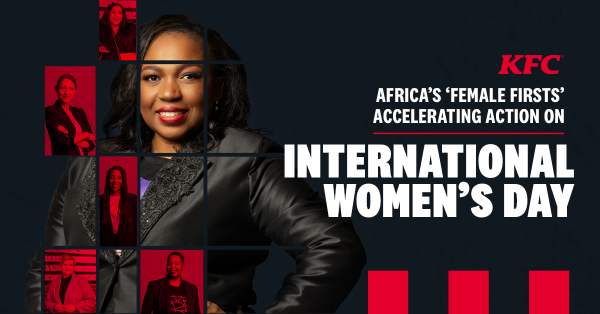
KFC Celebrates Inspirational African Women Accelerating Action Towards Equality

Location: Business
KFC Africa

Progress in closing the gender gap in South Africa and Sub-Saharan Africa has almost halted, leaving millions of women at a disadvantage to men. But female role models across the continent are refusing to admit defeat, dedicating themselves to accelerating progress towards gender equality.

To mark International Women's Day on 8 March and honour its theme of “Accelerate Action”, KFC Africa has collected the stories of dozens of women who are taking bold steps to advance equality on the continent by educating, empowering and supporting women to achieve more, together, faster. 

KFC Africa's list contains the names of 54 women – one for each year the company has been in Africa – and follows its successful International Women's Day campaign in 2024 which introduced an inaugural list (https://apo-opa.co/4h5xiID) of 53 “female firsts”. Each of those women had overcome educational, social and financial obstacles to achieve something no woman in their country had done before. 

The 2025 list (https://apo-opa.co/4h5xiID), drawn from each of the 22 Sub-Saharan Africa countries where KFC has restaurants, also has its share of female firsts – people such as Dior Fall Sow, Senegal's first female prosecutor; Nelly Mutti, the Zambian parliament's first female speaker; and Adelaide Retselisitsoe Matlanyane, the first woman to lead Lesotho's central bank.  

The list is dominated, however, by younger women who are breaking the mould – particularly in the technology sector – and showing they can do anything they set their mind to, regardless of age or gender. 

They include the likes of Christine Ogo, a Cote d'Ivoire physicist who has encouraged thousands of schoolgirls to pursue science, technology, engineering and mathematics; Rachel Sibande, who set up Malawi's first technology incubator for emerging entrepreneurs and has gone on to teach coding to 92,000 women and children; and Regina Honu, whose Tech Needs Girls movement in Ghana has trained more than 20,000 women and girls to code. 

Gender gap 

“It's a powerful list that gives us hope after  the World Economic Forum's Global Gender Gap Report (https://apo-opa.co/4i2QKXB) in 2024 showed that progress seems to have ground to a halt,” says Akhona Qengqe, General Manager of KFC Africa. 

The report showed that 68.4% of Sub-Saharan Africa's gender gap had been closed, only marginally higher than 68.2% in 2023 (https://apo-opa.co/3QEYGm5). South Africa, while being Africa's highest scorer and ranking 18th out of 146 nations, went backwards, from 78.7% in 2023 to 78.5% a year later. 

“The report says that at the current rate of progress, it will be 2158 until the world reaches full gender parity,” says Qengqe. “That's why we need to accelerate action, particularly in Africa, and why the efforts of the women on the KFC list are worthy of recognition and support.” 

In her seven years at KFC – she was as director of Africa franchise development, director of transformation and diversity and chief people officer before taking over as general manager in April 2023 – Qengqe has prioritised female empowerment. 

Her initiatives include spearheading KFC Add Hope, a women-led programme that serves free meals to tens of thousands of children at more than 3,000 feeding centres across South Africa. 

In 2021, she launched the Women on the Move leadership development programme, which prepares 22 women at KFC for future leadership positions every year, cultivating a pipeline of talent. Within two years, the number of female leaders in the business grew by 14%. 

Transforming franchising 

Last November she turned her attention to the wider quick service restaurant sector, launching Women in Franchising Africa (Wifa), the first network for current and aspiring female franchisees and franchisors across the continent. 

“To say I am passionate about the inclusion of women in growing our economies is an understatement. It is in fact one of my life's purposes,” she says. “My partners in Wifa intend to transform the participation of women in the franchising sector across African economies. 

“We want to educate women on how to run successful franchise businesses, provide networking opportunities for like-minded women, transform the sector by making funding accessible to women, and create mentorship opportunities for all the women in the network.” 

KFC Africa Chief People Officer Nolo Thobejane says “Accelerate Action” is a call to look at what has a positive impact on women's advancement and replicate it. 

“This is a journey we need to embark on together as we learn from each other. I cannot stress enough the importance of forming alliances and partnerships to amplify impact. By working together, organisations and individuals can share resources, knowledge, and support to create a more inclusive and equitable environment for women.” 

“At KFC, we have implemented some programmes which have yielded great results – such as the Women on the Move Leadership programme to ensure the pipeline of leaders, developing them with quality education and training through initiatives like our Streetwise Academy and then providing career support into positions of leadership.” 

“Other successful initiatives organisations can implement include designing and building infrastructure that meets the needs of women and girls, involving them in sustainable agriculture, and elevating their participation and achievement in sport, as we do with KFC Mini Cricket.” 

“There's a lot we can do as individuals, too – we can call out stereotypes, challenge discrimination, question bias and celebrate women's success. Everyone everywhere can Accelerate Action.” 

Qengqe says the new list of 54 names brings to 107 the number of inspirational African women KFC has honoured and recognised in the past two years. “We know this is the tip of a wonderful iceberg, and we welcome nominations of other women who are Accelerating Action in Africa.” 

Explore the list of 54 women Accelerating Action across Africa: https://apo-opa.co/4heEjqM  

To nominate a woman Accelerating Action: Email: za-kfcafricamedia@yum.com 

Distributed by APO Group on behalf of KFC Africa.

For media inquiries and to arrange interviews with Akhona Qengqe and Nolo Thobejane: 
Elmarie Swart 
Phone number:  
WhatsApp: +44 7464739649 
South Africa: +27 79 831 2429 
Email: elmarie@kamuses.co.za 

KFC Socials: 
Instagram – @kfcsouthafrica - https://apo-opa.co/3FdDUap 
Facebook – @KFCSA - https://apo-opa.co/4hYOsJl 
TikTok – @kfcsa - https://apo-opa.co/4h83tHx 
X – @KFCSA - https://apo-opa.co/4h9pMMX 
YouTube – @KFCSouthAfrica - youtube.com/@KFCSouthAfrica 

About KFC Africa:
KFC has been in South Africa for over 53 years and has more than 1,300 stores across the country. The first KFC restaurant in South Africa opened in 1971 in Orange Grove, Johannesburg. KFC is the leading quick-service restaurant brand in South Africa with just under a third of market share, according to Brand Image Tracker. KFC serves more than 20 million customers a month and we work hard to ensure that no matter which of our restaurants they walk into, they will get that distinctive KFC flavour and have a great experience. KFC's Original Recipe® Chicken was first made by Colonel Harland Sanders in 1940 when he perfected his secret recipe of 11 herbs and spices at his restaurant in Kentucky. Today, KFC is the world's most popular chicken restaurant, still preparing our chicken with the Colonel's secret recipe to his exact standards. Every KFC restaurant follows the same global processes and procedures to ensure that our customers get great-tasting food, every time.  

Media files
KFC Africa
Download logo
Read moreKFC Celebrates Inspirational African Women Accelerating Action Towards Equality
3 March 2025

SA joins the world in marking Hearing Day

Location: News

SA joins the world in marking Hearing Day

All South Africans have been called to join the global community in commemorating World Hearing Day on Monday.

World Hearing Day, which is celebrated annually on 3 March, aims to raise awareness about deafness and hearing and to promote access to ear and hearing care.

The day highlights a specific theme on which the World Health Organisation and its partners carry out activities based on the theme.

This year’s World Hearing Day theme, “Changing mindsets: Empower yourself”, builds on the 2024 focus on changing mindsets towards ear and hearing care.

Department of Women, Youth and Persons with Disabilities spokesperson, Cassius Selala, said that hearing was fundamental to communication, education, employment, and overall well-being.

“If it is left unaddressed, hearing loss can hinder speech development, academic progress, and economic opportunities. It can also lead to social isolation, stigma, and reduced quality of life.

“Hearing impairment (HI) is a silent planetary health crisis that requires attention worldwide. The prevalence of HI in South Africa is estimated at 5.5 in 100 live births, which is about five times higher than the prevalence in high-income countries,” Selala said.

According to the World Report on Hearing 2022, approximately four million people with a hearing disability live in South Africa. However, less than 600 000 South Africans use South African Sign Language, which accounts for just 0.02% of the country’s population, according to Census 2022.

Urgent interventions needed

Selala warned that without urgent interventions, hearing loss, particularly among vulnerable and disadvantaged populations, will continue to rise, exacerbating existing inequalities in healthcare access across the continent.

“It is estimated that by 2030, over 500 million people are expected to have disabling hearing loss, which will also require rehabilitation. Over the years, one billion young people will also face the risk of permanent hearing loss due to prolonged exposure to loud sounds during recreational pastimes, such as listening to music and video game play,” Selala said.

Addressing hearing impairment

To address the growing challenge of hearing impairment, the department is advocating for several key actions, and these include: 
• Improve access to ear and hearing care, especially in underserved communities.
• Combat stigma and misperceptions about hearing loss through education and awareness campaigns.
• Strengthen national policies to integrate hearing care into primary healthcare 
systems.
• Expand training programmes to increase the number of skilled hearing care 
professionals.
• Invest in infrastructure and assistive devices, ensuring that hearing aids, cochlear implants and other technologies are available and affordable for those who need them.

Selala urged individuals of all ages to empower themselves, to ensure healthy ears and hearing for themselves and others. – SAnews.gov.za

GabiK
Mon, 03/03/2025 - 09:56
329 views

Read moreSA joins the world in marking Hearing Day
3 March 2025

Finance in Common Summit Urges Global Development Finance Institutions to Harness Collective Power to Address Global Poverty

Location: News
African Development Bank Group (AfDB)

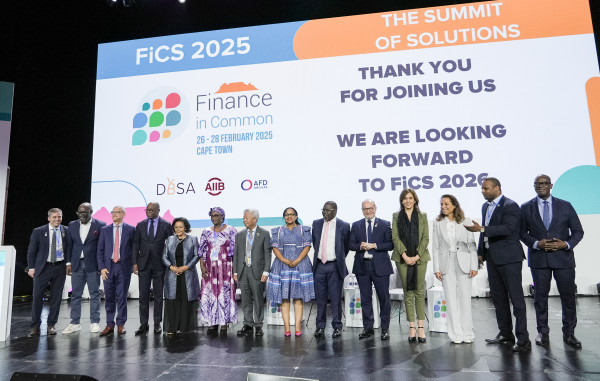
The fifth edition of the Finance in Common Summit (FiCS) concluded on Friday in Cape Town, South Africa, with strong calls for global development finance institutions to work together to address poverty and development challenges. South African Finance Minister Enoch Godongwana led the call.

The summit, which was co-sponsored by the African Development Bank and took place alongside the G20 Finance Ministers' Meeting, was themed "Fostering Infrastructure and Finance for Fair and Sustainable Growth."

Godongwana described the meeting as an unprecedented gathering of key financial players, saying: "Your determination and commitment will change the world. Your determination and will have an impact on global poverty.”

The minister linked the summit's goals to South Africa's development trajectory, highlighting the structural reforms the country had undertaken in the electricity, roads, and port sectors, which have opened new investment opportunities to development partners.

African Development Bank Vice President for Finance and Chief Financial Officer, Hassatou Diop N'Sele—one of several senior officials of the Bank Group at FiCS—represented Bank Group President, Dr. Akinwumi Adesina at a meeting on Wednesday organized by the Council of Europe Development Bank. At the meeting, multilateral development banks reaffirmed a shared commitment to maximize their collective impact.

During the G20 meetings of Finance Ministers and central bank governors, Hassatou Diop N'Sele said, “We call on G20 nations to enhance financial commitments, especially for the 17th replenishment of the African Development Fund, to simplify processes for accessing climate finance, and to create enabling policies that facilitate sustainable capital flows to Africa.”

In her various interventions during FiCS, she discussed the innovative financing tools and initiatives launched by the African Development Bank to leverage resources and mobilize the private sector at scale, including the landmark hybrid capital transactions successfully replicated by other development finance institutions and the Africa Investment Forum.

N'Sele emphasized the urgency for philanthropies and foundations to further strengthen their partnerships with multilateral development banks and to fully embrace innovation to amplify their impact. She also recognized the challenges for expanding climate finance in Africa and reflected on such solutions and platforms as the Alliance for Green Infrastructure in Africa, designed to catalyze bankable, greener infrastructure projects at scale and speed.

The African Development Bank delegation highlighted the progress of Mission 300 (https://apo-opa.co/4bolqQE), an initiative to accelerate access to electricity for 300 million Africans by 2030. The Bank, working with the World Bank and other development finance institutions and private sector partners, has committed $18.2 billion to this effort.

Senior leaders of the Bank stressed the need for urgent action. Nnenna Nwabufo, Bank Group Vice President for Regional Development, Integration and Business Delivery, said: "Africa is not looking for aid, we are looking for partnerships.".

She added: "The time for pilot projects that deliver incremental progress is over. We need investments that enable our nations to take ownership of their development, fostering resilience, self-sufficiency, and sustainable growth that benefits both Africa and the global economy."

Solomon Quaynor, the African Development Bank's Vice President for Private Sector, Infrastructure and Industrialization, called for faster implementation of infrastructure projects. "Africa can no longer sustain infrastructure projects that take seven to 10 years to complete - we must accelerate development to deliver within three years, prioritizing green infrastructure," he said.

The African continent needs $2.7 trillion through 2030 to meet its climate action goals, but receives only 3.6% of all global climate finance, despite its minimal contribution to global emissions.

The African Development Bank's Director General for Southern Africa, Leila Mokaddem, emphasized that Africa's green transition must be inclusive. She said: "With 600 million Africans still without electricity, our transition cannot be about climate goals alone. It must be about jobs, industrialization and economic opportunity. The African Development Bank is supporting this vision through its Jobs for Youth in Africa strategy to create 25 million jobs and equip 50 million young Africans with green economy skills by the end of this year.”

The summit achieved several significant breakthroughs in expanding the scope and impact of development financing. Key outcomes included: the endorsement by G20 finance ministers of public development banks' crucial role in international financial architecture; steps toward setting up frameworks to support cultural industries as valid asset classes; and the formation of a coalition between public development banks and civil society to ensure that development finance serves communities.

CEO of Agence Française de Développement and Chair of the Finance in Common Summit Rémy Rioux noted: "We have made tremendous progress in building public development banks as an asset class through innovation, commitment, and shared values. In times of uncertainty and conflict, we are offering a calm, collective alternative."

"This has truly been an African FiCS," said Boitumelo Mosako, CEO of the Development Bank of Southern Africa. He added:  "With 34% of delegates coming from the continent, we have shown that Africa is unstoppable as the second fastest growing region in the world."

Following the Finance in Common Summit, the Fourth Finance for Development Conference will take place in Spain between June and July this year. Being organized by the United Nations and the Spanish government, that summit will feature continuing discussions on reshaping the international financial architecture to better serve development needs.

Distributed by APO Group on behalf of African Development Bank Group (AfDB).

Media contact:
Emeka Anuforo
Principal Regional Communication Officer
Email: media@afdb.org

About the African Development Bank Group:
The African Development Bank Group is Africa's premier development finance institution. It comprises three distinct entities: the African Development Bank (AfDB), the African Development Fund (ADF) and the Nigeria Trust Fund (NTF). On the ground in 41 African countries with an external office in Japan, the Bank contributes to the economic development and the social progress of its 54 regional member states. For more information: www.AfDB.org

Media files
African Development Bank Group (AfDB)
Download logo
Read moreFinance in Common Summit Urges Global Development Finance Institutions to Harness Collective Power to Address Global Poverty
3 March 2025

U20 South Africa: Africa’s ‘moment to lead’

Location: News

U20 South Africa: Africa's 'moment to lead'

City of Tshwane Mayor, Dr Nasiphi Moya, has described the 8th cycle of the Urban 20 (U20) – which is co-chaired by the City of Tshwane and Johannesburg - as a moment for Africa to lead.

The Mayor was delivering remarks at the launch of the 8th cycle of the U20 on Monday.

The U20 is an engagement group of the Group of 20 (G20). South Africa has taken over the Presidency of the G20 for 2025.

“This is our moment to lead. Not just as the City of Tshwane or the City of Johannesburg, but as Africa’s voice in the global urban conversation.

“Through U20 2025, we have the opportunity to shape a future that is just, sustainable, and inclusive. A future where African cities are not just participants but leaders in the global urban agenda.

“As co-hosts of U20 2025, our mission is clear: to ensure that the voice of African cities is heard on the world stage and that the priorities of the Global South are brought into the G20 agenda,” Moya said.

The U20 is a city diplomacy initiative which includes cities from the G20 countries and this year’s theme will be “Cities Leading the Way in Reimagining Global Change”.

Key priorities for this year include:
•    Economic opportunities and financing
•    Climate action and urban resilience
•    Social inclusion and equity
•    Digital transformation and innovation

Engaging citizens

Moya highlighted that although this year’s U20 will build on the foundation laid by last year’s co-chairs São Paulo and Rio de Janeiro, “our goal is to ensure that this presidency reflects the realities of African cities and the needs of our communities”.

“U20 is a global initiative, but its success will not be measured in communiqués and declarations alone. Its impact must be felt at a local level. 

“This is not just about diplomatic meetings and international cooperation. It is about real economic opportunities, real investment, and real solutions for our people. It is about ensuring that the people of Tshwane and Johannesburg see themselves in this process and feel its benefits.

“We must use this platform not just to advocate for our cities on the global stage, but to showcase their resilience, innovation, and leadership to our own communities,” she said.

Pressing further, Moya emphasised that the impact of the U20 “must extend beyond government officials and politicians” who will gather for the U20 Sherpa Summit and African Mayor’s Assembly in June and the Mayoral Summit in September.

“We are committed to ensuring that the U20 process engages the people it is meant to serve. That means creating spaces for public dialogue and community participation, ensuring that our residents have a voice in shaping urban policies. 

“It means fostering connections between local entrepreneurs and global investors, creating pathways for businesses to grow. It means recognising that Tshwane, as a knowledge hub, has world-class institutions that must be part of this conversation.

“Cities are on the frontlines of the climate crisis, economic inequality, and social exclusion. It is time for our voices to be heard at the highest levels of global decision-making,” Moya said. – SAnews.gov.za
 

NeoB
Mon, 03/03/2025 - 12:05
328 views

Read moreU20 South Africa: Africa’s ‘moment to lead’
3 March 2025

Meet Deel Local Payroll, Powered by Payspace: The Next Evolution in Payroll Innovation

Location: Business
PaySpace

PaySpace by Deel is now Deel Local Payroll, powered by PaySpace (www.PaySpace.com)! One year after being acquired by Deel, PaySpace by Deel has officially transitioned into Deel Local Payroll, powered by PaySpace. This milestone isn't just about a name change—it's about why Deel acquired PaySpace in the first place.

PaySpace customers can expect the same powerful payroll platform, now under Deel's global brand. Deel customers can utilise real-time payroll, which means real-time G2N (Gross-to-Net) calculations, shorter cut-off times, and less overall pressure and stress when running payroll across multiple countries.

Deel Local Payroll, powered by PaySpace, formerly known as PaySpace by Deel, is a market leader in payroll technology, with more than 20 years of payroll and HR experience. Its flexible solutions cater to a wide range of clients, including small businesses, enterprises, and payroll service providers. The company has built the most technologically advanced native payroll engine, serving clients in 44 countries across Africa and the Middle East. It has over 15,000 customers, including big brands like Heineken, Coca-Cola, and Puma Sports.

Deel is a trailblazer in global employee and payroll management, enabling its customers to operate in different territories and simplify the complexities of managing employees according to regional financial and legal requirements. With global operations in over 150 countries, Deel simplifies the complexities of international payroll and HR, enabling companies to manage their global workforce efficiently and compliantly. Founded in 2018, Deel is the fastest-growing unicorn in history (a unicorn is a privately owned startup valued at over US$1 billion—Deel is currently valued at over $12 billion), helping businesses hire anyone, anywhere.

PaySpace is now Deel Local Payroll: New Brand, Same Team and Innovation

The acquisition, concluded in 2024, aligns the award-winning Deel Local Payroll team and cloud-native PaySpace platform with Deel's global operations. Deel Local Payroll is an independent subsidiary and a payroll product sold as a self-service option alongside Deel's global payroll product. Deel customers benefit through enhanced, innovative, and more flexible payroll tools for their teams.

The PaySpace calculation engine is now Deel's calculation engine, onto which Deel has localised its Employer Of Record (EOR) and Global Payroll (GP) products across numerous countries, including the UK, South Africa, Canada, and the UAE. Deel will keep localising countries onto this single engine—a unique competitive offering in the payroll market.

Under the Deel brand, Deel Local Payroll will continue to provide the same excellent payroll software and dedicated team that its customers have come to rely on, with the same management team, employees, support, channels, and logistics—only the name has changed. This seamless transition ensures no disruption to existing customer contracts, systems, or processes.

Deel Local Payroll's core cloud-native platform is now the PaySpace platform, an intrinsic part of how Deel delivers payroll services at grassroots levels to customers across the globe.

The PaySpace platform includes groundbreaking features:

  • Automatic legislative updates that are pushed directly to customers.
  • Robust integration with dozens of business applications and data sources.
  • Extensive automation features to remove pressure on payroll teams.
  • Powerful scale and flexibility that supports changing business requirements.
  • Secure anywhere, anytime access for multiple users and devices.
  • Pacey, a WhatsApp employee self-service bot for payroll slips and other information.

"When we founded PaySpace, we set out to create world-class payroll management that served all markets. Taking inspiration and lessons from our customers in Africa and leveraging cutting-edge cloud technologies, we built a true 21st-century payroll service that evolves with the needs of modern companies and their workforces. The rebranding from PaySpace to Deel Local Payroll allows for deeper integration with Deel, positioning us for continued success and growth. It's a positive move, building on the strong foundation we've already established," says Bruce van Wyk, CEO at Deel Local Payroll, powered by PaySpace.

Deel's acquisition of Payspace, now Deel Local Payroll, and the PaySpace platform is a significant win for customers. It also serves as a testament to the resilience and flexibility of African tech. Deel, Deel Local Payroll, and the PaySpace platform are building bright futures for their customers as they continue to innovate and provide world-class payroll solutions built to simplify and enhance payroll at every level.

Distributed by APO Group on behalf of PaySpace.

Media contact:
Victoria Lindsay
victoria@innocomm.co.za

About Deel Local Payroll:
Deel Local Payroll, powered by PaySpace, revolutionises payroll management. It offers online, multi-country payroll and HR management for businesses from start-ups through to enterprise in over 40 African countries, the United Kingdom, the Middle East, and Brazil.

Cloud-native, Deel Local Payroll, is scalable, configurable, highly secure, and easy-to-use—delivering anytime, anywhere access. It features payroll automation, self-service features, automatic legislation and feature updates, customised reporting, and more.

Since 2024, Deel Local Payroll has been part of Deel, operating as an independent subsidiary, serving its customers through the PaySpace platform. 

Media files
PaySpace
Download logo
Read moreMeet Deel Local Payroll, Powered by Payspace: The Next Evolution in Payroll Innovation
3 March 2025

G20 meeting highlights the role of science in tackling climate change

Location: News

G20 meeting highlights the role of science in tackling climate change

Rising global temperatures, extended droughts, and the growing spread of disease are some of the severe impacts of climate change, according to the President of the Academy of Science of South Africa (ASSAf) Council, Professor Thokozani Majozi. 

Speaking at a recent Science20 (S20) meeting in Pretoria, Majozi noted that no region is immune to these effects, which range from wildfires in the Americas and Australia to catastrophic flooding in Europe and Asia.

“Climate change does not recognise national boundaries, making international scientific cooperation not just beneficial but essential,” he said. 

The meeting highlighted the urgent challenge of climate change.

“This issue transcends borders, economies, and political systems. The evidence is unequivocal: our climate is changing at an unprecedented rate due to human activities,” the Professor warned. 

S20 is the official engagement group for science academies within the Group of Twenty (G20) to foster science-based dialogue and provide policy advice. 

Established in 2017, its mission is to promote scientific cooperation and ensure that scientific perspectives influence G20 decisions on global challenges. 

The G20 is an international forum of both developing and developed countries that seeks to find solutions to global economic and financial issues.

Under South Africa’s G20 Presidency, three foundational themes shape political and scientific discussions: solidarity, equality, and sustainable development.

He outlined the key responsibilities of the scientific community, which include advancing our understanding of climate systems and their effects on human health and wellbeing. 

The Professor also urged his colleagues to communicate complex scientific findings in ways that can inform both policymakers and the public. In addition, he emphasised the importance of fostering collaboration across natural sciences, social sciences, and the humanities. 

Majozi believes in nurturing the next generation of scientists who are equipped to address these complex challenges, and he advocated for the integration of indigenous and local knowledge systems with traditional scientific approaches.
“We are not merely repositories of knowledge but active participants in shaping how that knowledge is applied to real-world challenges,” he added. 

Led by the ASSAf, this year’s S20 gathering is particularly significant, as it marks the first time the G20 is hosted on the African continent. 

The Minister of Science, Technology, and Innovation, Professor Blade Nzimande, addressed the meeting virtually and called for global scientific cooperation and evidence-based policymaking. 

Nzimande emphasised the connection between the S20 theme, “Climate change and well-being,” and South Africa’s overarching G20 theme of “Solidarity, equality, and sustainability.”

“These themes do not merely serve as reminders of the urgent need for science-driven policy responses to challenges such as climate change, biodiversity loss, and global inequality,” he said. 

“They also highlight that today’s fundamental challenges are interconnected, demanding multidisciplinary approaches, collaboration, and decisive science-based action.”

Priorities and skills development

Nzimande outlined key science, technology, and innovation priorities that will define South Africa’s G20 leadership. 

These include, among other initiatives, enhancing our capacity for pandemic preparedness; promoting research and development in emerging technologies, especially artificial intelligence; and integrating these technologies into essential economic sectors such as energy, agriculture, mining, health, and the digital economy.

It also it involves developing critical and advanced skills, including through the Presidential PhD Programme.

The Minister stressed the crucial role of the S20 meeting in shaping the broader G20 Research and Innovation Working Group discussions, which will culminate in a ministerial meeting in September 2025. 

President of the Brazilian Academy of Sciences, Professor Helena Nader, applauded South Africa for highlighting the topic of climate change and wellbeing, especially considering recent global floods and storms. 

Meanwhile, the Executive Director of the United States National Academies Policy and Global Affairs Division, Dr Vaughan Turekian, praised G20 members’ long history of collaboration and expressed his desire for it to expand through the S20. – SAnews.gov.za


Gabisile
Mon, 03/03/2025 - 12:45
43 views

Read moreG20 meeting highlights the role of science in tackling climate change
3 March 2025

Social Development hosts engagement session on the FATF’s Recommendation 8

Location: News

Social Development hosts engagement session on the FATF’s Recommendation 8

As part of South Africa’s ongoing measures to fully implement the recommendations of the Financial Action Task Force (FATF), the Department of Social Development is hosting a multi-stakeholder engagement in Kempton Park. 

“The objective of the multi-stakeholder engagement is to enhance government, NPOs [non-profit organisations] and key partners’ understanding and requirements of the FATF standards to combat money laundering and terror financing and the implementation of effective national measures to mitigate the risks. 

“The fight against money laundering and terrorist financing requires a collective national effort and collaboration among key stakeholders. As the registrar and custodian of the NPO Act (Act No. 71 of 1997, as amended through the General Laws Amendment Act No. 22 of 2022), one of Social Development’s strategic goals is the promotion of strategic partnerships with NPOs to deliver services to communities,” the department said of the three-day engagement that begins today.

The FATF is the international standard-setting body that oversees global compliance with anti-money laundering rules.

With South Africa due to report back to FATF on the remaining deficiencies in its fifth-round mutual evaluation in June this year, the engagement will bring together government, NPOS, development agencies, donors, private sector, law enforcement agencies and financial institutions. 

Stakeholders will focus on Recommendation 8 of the FATF, which aims to protect NPOs from potential terrorist financing and money laundering abuse through effective implementation of risk-based measures. 

The formal programme at the three-day engagement will feature presentations, case studies and emerging best practices by experts from key financial institutions and regulators, including the Financial Intelligence Centre (FIC), South African Revenue Service (SARS), Chartered Institute for Business Accountants (CIBA, National Lotteries Commission and the Companies and Intellectual Property Commission (CIPC). 

These will highlight trends and overview of national measures to combat money laundering and terror financing, as well as the important role of NPOs in combating money laundering and terror financing in South Africa.

The multi-stakeholder engagement builds on measures already underway as South Africa works to finalise outstanding action items from FATF’s recommendations. 

South Africa is now deemed to have addressed or largely addressed 20 of the 22 action items in its Action Plan, leaving two items to be addressed in the next reporting period that runs from March 2025 to June 2025. This would enable South Africa to be considered for delisting from the FATF grey list in October 2025.

This as the FATF grey listed South Africa at its February 2023 plenary meeting held in Paris. It developed an Action Plan with 22 Action items linked to the eight strategic deficiencies identified in the country’s anti-money laundering and combating of financial terrorism regime.

Deregistration 

This week’s gathering comes at the department has embarked on deregistration of non-compliant NPOs, with 203 279 organisations at the risk of deregistration for failure to comply with the requirements to submit annual reports as per the provisions of section 18 (1) of the Non-Profit Organisations Act (Act No. 71 of 1997, as amended through the General Laws Amendment Act 22 of 2022).
READ | Social Development issues notices of non-compliance to NPOs

The engagement session which is being held at the Premier Hotel OR Tambo will culminate in the adoption of a declaration on combating money laundering and terror financing in South Africa. – SAnews.gov.za


DikelediM
Mon, 03/03/2025 - 11:28
239 views

Read moreSocial Development hosts engagement session on the FATF’s Recommendation 8
3 March 2025

DPSA hosts inaugural G20 Anti-Corruption meeting

Location: News

DPSA hosts inaugural G20 Anti-Corruption meeting

Public Service and Administration Minister Mzamo Buthelezi will from today host the first G20 Anti-Corruption Working Group (ACWG) in Cape Town.

The ACWG ends on Wednesday.

The Department of Public Service and Administration, in collaboration with the Special Investigating Unit (SIU) and the Department of International Relations (DIRCO), is at the forefront of South Africa's efforts to combat corruption.

The ACWG’s work is guided by the St Petersburg Strategic Framework of 2013 and the G20 ACWG Action Plan for 2025-2027, aligning with the priorities of the African Union’s Agenda 2063.

As South Africa assumed the G20 Presidency in December 2024, a series of important events led by the ACWG are planned throughout the year. 

Co-chaired by South Africa and Brazil, the ACWG will focus on four key priorities:

  • Strengthening the Public Sector: Promoting good practices for transparency and accountability, culminating in a Ministerial Declaration.
  • Increasing efficiency of asset recovery measures: Discussions will centre on high-level principles for managing seized assets, with technical assistance from global partners.
  • Enhancing inclusive participation: Mobilising the public sector, private sector, civil society, and academia to combat corruption collaboratively and share best practices through dedicated side events.
  • Enhancing whistle-blower protection: Reinforcing commitments to safeguarding whistle-blowers with accountability reports and specific side events focused on effective protection mechanisms.

The agenda for the first ACWG Technical Meeting, to be held from 3 to 5 March 2025 -  includes sessions dedicated to increasing the efficiency of asset recovery measures, enhancing whistleblower protection mechanisms and fostering inclusive participation among diverse stakeholders. 

Sessions will also receive updates on upcoming anti-corruption events, including the financing for development agenda and the United Nations Convention against Corruption (UNCAC) Conference of State Parties (CoSP 11). – SAnews.gov.za

Edwin
Mon, 03/03/2025 - 08:32
202 views

Read moreDPSA hosts inaugural G20 Anti-Corruption meeting
3 March 2025

SANPC to Showcase Strategic Vision at IAE 2025

Location: Business
Energy Capital & Power

South Africa's newly established South African National Petroleum Company (SANPC) will host an investor roadshow at the Invest in African Energy (IAE) Forum in Paris this May, highlighting its strategic vision and the more than R95 billion in untapped market and investment opportunities in South Africa's oil and gas sector. Under the theme "South Africa's Energy Future: A New Age State Entity," the presentation will be led by SANPC CEO Godfrey Moagi, following the company's official launch, scheduled for April 2025.

With a clear mandate to promote energy independence and diversification, SANPC is set to drive large-scale investments in the oil, gas and clean energy sectors. SANPC's strategy includes ring-fencing all non-functioning assets, identifying assets that can be moved to the NOC and ensuring these assets can be traded and utilized effectively. At the IAE 2025, delegates will gain an exclusive look into SANPC's far-reaching goals, including the creation of a state-backed energy company that will enhance the country's energy security, facilitate the transition to cleaner energy sources and create employment opportunities for the nation's youth.

IAE 2025 (https://apo-opa.co/4h81CCe) is an exclusive forum designed to facilitate investment between African energy markets and global investors. Taking place May 13-14, 2025 in Paris, the event offers delegates two days of intensive engagement with industry experts, project developers, investors and policymakers. For more information, please visit www.Invest-Africa-energy.com. To sponsor or participate as a delegate, please contact sales@energycapitalpower.com.

SANPC's strategic vision aligns with South Africa's National Development Plan, which outlines the country's goals to expand access to affordable, reliable energy while navigating the energy transition. The creation of SANPC marks a bold step toward achieving these objectives, acting as a catalyst for new ventures, partnerships and large-scale infrastructure projects. As South Africa's energy landscape undergoes reform, SANPC aims to drive the rapid deployment of new projects while adhering to the highest sustainability standards and fostering regional integration in oil and gas.

SANPC's participation at IAE 2025 is part of the company's series of investor roadshows, first launched at the African Energy Week: Invest in African Energies 2024 conference in Cape Town. These roadshows support the company's commitment to attracting foreign investment and offer stakeholders the opportunity to engage with SANPC leadership, while gaining insight into the company's vision for an energy future that fosters both economic and environmental sustainability.

Distributed by APO Group on behalf of Energy Capital & Power.

Media files
Energy Capital & Power
Download logo
Read moreSANPC to Showcase Strategic Vision at IAE 2025
3 March 2025

Next generation of scholars gathering to shape Africa’s future

Location: News

Next generation of scholars gathering to shape Africa’s future

Research-based insights and collaboration on finding solutions to Africa’s most urgent challenges will be at the heart of the Human Sciences Research Council (HSRC)’s 19th Africa Young Graduates and Scholars (AYGS) Conference. 

The conference which gets underway tomorrow, is being held in collaboration with the University of Mpumalanga (UMP).

Under the theme “Enabling Africa’s Inclusive and Sustainable Development: Challenges and Opportunities,” the conference will gather over 100 young and emerging scholars, policymakers, and practitioners from various regions of Africa to share research-based insights and collaborate on solutions to the continent’s most urgent challenges. 

The gathering will take place at UMP’s Mbombela campus from 4 to 6 March 2025. 

“We are excited to provide a platform for Africa’s next generation of leaders to engage, share knowledge, and shape the continent’s future,” said the Executive Head at the HSRC’s Africa Institute of South Africa (AISA), Dr Sabelo Gumedze. 

He believes that the AYGS Conference has the potential to contribute significantly to Africa’s developmental trajectory, and said they were looking forward to fostering innovative solutions, enhancing capacity, and informing policy decisions with research-based insights.

Meanwhile, the UMP Deputy Vice-Chancellor for Research and Innovation, Professor Aldo Stroebel, said the university was privileged to partner with the HSRC and other prominent stakeholders to engage and strengthen an opportunity framework for emerging scholars through critical thinking and policy impact. 

“UMP benefits from this convening to further advance our focus on sustainability and innovation, building a strong base of intellectual engagement, international networks, and learning,” Stroebel added. 

The conference will feature sessions covering various topics such as advancing agricultural sustainability and food security. 

The panellists will also zoom into governance, peace, and security in enabling Africa’s inclusive and sustainable development; climate change action and the Just Transition; and leveraging artificial intelligence (AI) to drive Africa’s development priorities.

Meanwhile, more than 30 papers will be presented by scholars from over 15 countries, including Cameroon, Ghana, Kenya, Lesotho, Madagascar, Nigeria, Rwanda, Sierra Leone, South Africa, Tanzania, Togo, Uganda, Zambia, and Zimbabwe. 

The annual AYGS conference is a research capacity-building project that was conceived in 2005 to build a body of knowledge and to project the African “voice” into various global discussions. 

It is further intended to bridge the existing expertise gap in knowledge production on African affairs by developing a society of knowledge producers among the youth. 

The conference, which features a comprehensive programme including a pre-conference training workshop on policy-engaged research and open science, is hosted by the HSRC’s Africa Institute of South Africa (AISA) in collaboration with the UMP, the National Research Foundation’s (NRF) Future Earth Africa Hub Leadership Centre, the Partnership for African Social and Governance Research (PASGR), and other key partners. – SAnews.gov.za


Gabisile
Mon, 03/03/2025 - 08:50
134 views

Read moreNext generation of scholars gathering to shape Africa’s future
  • Previous
  • Page 1
  • Interim pages omitted …
  • Page 21
  • Page 22
  • Page 23
  • Page 24
  • Page 25
  • Interim pages omitted …
  • Page 103
  • Next

Copyright © 2026 · MyZA · All Rights Reserved · Powered by Stratlec Online