• Skip to main content
  • Skip to header right navigation
  • Skip to after header navigation
  • Skip to site footer
MyZA

MyZA

News, Directory, Events and Other Stuff

  • Social Media
  • Sport
  • World News
  • Home
  • Submit News
  • Directory
  • Events
  • Stratlec
  • TFSA
  • News
    • APO
    • Today’s Sport News
    • Todays Social Media and Tech Headlines
    • Today’s World News
    • Today’s SA Financial News
  • Contact
You are here: Home / Archives for Government

Government

2 February 2025

Over 20 000 new police officers deployed to enhance crime fighting

Location: News

Over 20 000 new police officers deployed to enhance crime fighting

In a bid to strengthen its crime-fighting capabilities, the South African Police Service (SAPS) has successfully trained and deployed over 20 000 new constables in various units across the country in the past three years, aiming to boost policing efforts and enhance public safety.

Providing an update on the SAPS Nationwide Safer Festive Season Operations during a media briefing in Pretoria, on Sunday, National Commissioner for the South African Police Service, General Sehlahle Fannie Masemola, said in mid-December last year, 2 699 newly trained constables joined the ranks.

Masemola, said the police officers joined the service during a significantly busy period for the SAPS, and contributed to the crime combatting operations that were aimed at ensuring the safety and security of communities, holidaymakers, and tourists alike.

“We were able to heighten police visibility and boost our crime combatting efforts at areas identified as hotspots across the country, including malls, beaches and along our country’s key strategic routes,” Masemola said.

During the festive season, the police arrested 244 951 people for various crimes, including among others, murder, rape, assault, illegal possession of firearms, drug dealing, driving under the influence of drugs and alcohol, and entering the country illegally.

The SAPS safer festive season operations commenced on 11 October 2024 and ended on Friday, 31 January 2025.

“In keeping with our promise to increase personnel and ensure more boots on the ground to keep our communities safe, I’m pleased to announce that this week, we will be welcoming an additional 5 500 new police trainees into our academies.

“These recruits will undergo the Basic Police Learning Development Programme and those who are in possession of a matric certificate or a National Qualifications Framework (NQF) level 5 qualification will undergo the nine-month training programme and those that are in possession of a NQF 6 qualification or higher will undergo the six-month training programme,” the National Commissioner said.

Police killings

Masemola also noted that nine on-duty police officers and 12 off-duty police officers, were killed, as of October last year to date.

“The ongoing attacks and killing of our men and women in blue cannot continue. This is a crime that requires all of us to stand against and prevent it from happening. What is encouraging to note is that we have categorised the killing of police officers as a national priority offence which is investigated by the Directorate for Priority Crime Investigation (DPCI), also known as HAWKS.

“It is thus reassuring to note that during the festive period, thirty police killers were arrested with seven convicted to 22 life and additional 725 years imprisonment sentences,” Masemola said.

He said government continue to ensure members are always operationally ready by taking them through relevant training and acquiring the necessary resources needed for them to fight crime.

They are provided with the necessary protective gear to shield themselves from criminals. 

“We would ultimately like to see a situation where we don’t lose any member in the hands of criminals. We therefore request South Africans to work with us and not against us in this fight to rid of our country off callous criminals,” the National Commissioner said. -SAnews.gov.za


nosihle
Sun, 02/02/2025 - 12:31
79 views
Read moreOver 20 000 new police officers deployed to enhance crime fighting
31 January 2025

SADC Extraordinary Summit condemns escalating violence in DRC, calls for urgent action

Location: News

SADC Extraordinary Summit condemns escalating violence in DRC, calls for urgent action

By Dikeledi Molobela

Harare, Zimbabwe - The Southern African Development Community (SADC) leaders have strongly condemned the ongoing violence in the Democratic Republic of Congo (DRC), where recent clashes have left soldiers dead and displaced thousands of civilians.  

The Heads of State and Government also reaffirmed their commitment to restoring peace and stability in the region. 

The SADC leaders convened an Extraordinary Summit in Harare, Zimbabwe, on Friday which was chaired by the President of the Republic of Zimbabwe and Chairperson of SADC, Emmerson Dambudzo Mnangagwa. 

The summit brought together regional leaders, including President Cyril Ramaphosa and Tanzania’s President Samia Suluhu Hassan.  

The summit acknowledged that despite previous peacekeeping efforts, the security situation remains dire. SADC troops deployed under the SADC Mission in the DRC (SAMIDRC) have come under repeated attacks, undermining the 2024 Luanda ceasefire agreement.  

“The summit expressed concern that the recent attacks continued to worsen the security and humanitarian situation in the DRC and called for the immediate restoration of essential utilities such as water, electricity, means of communication and supply lines for food and other essential commodities.

“The summit condemned in the strongest terms the attacks on the SAMIDRC troops by the M23 operating in the Eastern DRC, as such actions violated the ceasefire that was brokered through the Luanda Process on 30 July 2024 and undermined peace and security of the DRC and the SADC region,” the leaders said in a joint communique issued at the conclusion of the summit. 

The latest wave of violence has led to casualties among SADC peacekeepers, including 13 from the South African National Defence Force. 

In a solemn moment, leaders paid tribute to the fallen soldiers from Malawi, South Africa and Tanzania, vowing to ensure their sacrifices would not be in vain.  

With growing frustration over continued external involvement in the DRC conflict, SADC leaders signalled a shift towards stronger diplomatic and security measures. The summit also emphasised the need for urgent diplomatic engagement.  

In a significant move, leaders called for an immediate joint summit between SADC and the East African Community (EAC) to develop a unified approach to ending the crisis.

The summit also mandated the SADC Organ Troika on Politics, Defence and Security to engage both State and non-State actors in renewed ceasefire negotiations.  

The meeting reinforced SADC’s unwavering support for the DRC’s sovereignty and territorial integrity. 

Leaders praised the resilience of SAMIDRC troops and welcomed Madagascar’s pledge to provide medical support to the wounded and displaced.  

“The summit expressed solidarity with the DRC and extended its appreciation to the men and women deployed in the SAMIDRC for their dedication, resilience and service to the preservation of peace and security in the region.”

The summit also welcomed Mozambique’s new President, Daniel Francisco Chapo, to the regional fold, while commending Tanzania’s President Samia Suluhu Hassan for her leadership in peace and security matters.  

While diplomatic efforts will continue through the Luanda and Nairobi processes, SADC made it clear that regional security forces remain on high alert. 

Ministers of defence and military chiefs from SADC countries will be dispatched to the DRC to assess the situation on the ground and ensure the safety of troops.  

“The summit called for the immediate dispatch of ministers of defence, chiefs of defence and troop contributing countries to the DRC to ensure that the SAMIDRC troops are safe, and facilitate the immediate repatriation of the deceased troops and those who are injured,” the communique said. – SAnews.gov.za

Janine
Fri, 01/31/2025 - 23:14

95 views
Read moreSADC Extraordinary Summit condemns escalating violence in DRC, calls for urgent action
31 January 2025

President Ramaphosa Attends the SADC Extraordinary Summit in Zimbabwe

Location: News

The Presidency of the Republic of South Africa
Download logo

President Cyril Ramaphosa has this afternoon, 31 January 2025, arrived in Harare, in the Republic of Zimbabwe to participate in the Southern African Development Committee (SADC) Extraordinary Summit of Heads of State and Government to discuss the security situation in the Democratic Republic of Congo. 

The Summit will be chaired by His Excellency Dr. Emmerson Dambudzo Mnangagwa, President of the Republic of Zimbabwe, and Chairperson of SADC.

The Summit follows the outcome of the Extraordinary Summit of the SADC Organ Troika plus the DRC and Troop Contributing Countries (TCCs) to the SADC Mission in the DRC (SAMIDRC), which was held on 28 January 2025 and was chaired by Her Excellency Dr. Samia Suluhu Hassan, the President of the United Republic of Tanzania and Chairperson of the SADC Organ on Politics Defence and Security Cooperation.

President Ramaphosa is accompanied by the Minister of International Relations and Cooperation, Mr Ronald Lamola; Minister of Defence and Military Veterans, Ms Angie Motshekga; and Minister in The Presidency, Ms Khumbudzo Ntshavheni. 

Distributed by APO Group on behalf of The Presidency of the Republic of South Africa.

Read morePresident Ramaphosa Attends the SADC Extraordinary Summit in Zimbabwe
31 January 2025

President attends SADC Extraordinary Summit on DRC

Location: News

President attends SADC Extraordinary Summit on DRC

By Dikeledi Molobela

Harare, Zimbabwe: President Cyril Ramaphosa has this afternoon (Friday) arrived in Harare, Zimbabwe, where he will be participating in the Southern African Development Community (SADC) Extraordinary Summit of Heads of State and Government to discuss the security situation in the Democratic Republic of Congo. 

The Summit comes after the recent intense fighting in the eastern Democratic Republic of Congo, where South Africa lost 13 brave soldiers who were dedicated to their mission and committed to peace. 

The fighting is the result of an escalation by the rebel group M23 and Rwanda Defence Force (RDF) militia engaging the FARDC and attacking peacekeepers from the SADC Mission in the Democratic Republic of Congo. 

Today’s summit will be chaired by the President of the Republic of Zimbabwe and Chairperson of SADC, Emmerson Dambudzo Mnangagwa. 

The summit follows the outcome of the Extraordinary Summit of the SADC Organ Troika plus the DRC and Troop Contributing Countries (TCCs) to the SADC Mission in the DRC (SAMIDRC), which was held on 28 January 2025 and was chaired by Dr Samia Suluhu Hassan, the President of the United Republic of Tanzania and Chairperson of the SADC Organ on Politics Defence and Security Cooperation.

President Ramaphosa is being accompanied by the Minister of International Relations and Cooperation, Ronald Lamola; Minister of Defence and Military Veterans, Angie Motshekga; and Minister in The Presidency, Khumbudzo Ntshavheni. – SAnews.gov.za


DikelediM
Fri, 01/31/2025 - 17:36

91 views
Read morePresident attends SADC Extraordinary Summit on DRC
31 January 2025

D-Day for Public Comment on Plans for Old Woodstock Hospital Site

Location: News

Reclaim the City activists picket outside Civic Centre

Read moreD-Day for Public Comment on Plans for Old Woodstock Hospital Site
31 January 2025

Mashatile calls for collaborative effort to address high school dropout rate

Location: News

Mashatile calls for collaborative effort to address high school dropout rate

Deputy President Paul Mashatile has urged communities to join forces with government to tackle the factors leading to the troubling rate of school dropouts.

“We must work together to identify solutions to tackle teenage pregnancy, alcohol and substance abuse and addiction, financial difficulties, peer pressure, and academic obstacles, which remain predominant factors contributing to children prematurely leaving school,” Deputy President Mashatile said. 

Speaking at the annual bursary awards ceremony in Alexandra, Johannesburg on Friday, the Deputy President cited a new report indicating that although South Africa’s matriculation pass rate reached a record high of 87.3% in 2024, the retention rate for learners fell to 64.5%. 

This decline, he said, raises serious concerns regarding the issue of school dropouts.

According to the Zero Dropout Campaign’s latest research, despite this improvement and South Africa’s large investment in the Department of Basic Education, about 40% of learners who enrol in Grade 1 will exit the schooling system before finishing matric.

The Deputy President stressed that educating a child is a multifaceted process and everyone should play a role, including families, communities, schools and other various support systems. 

The Deputy President was speaking at the Vincent Tshabalala Education Trust Annual Bursary Awards, where he honoured top-achieving learners, as well as their schools and teachers from the Matric Class of 2024.

Deouty President Mashatile is the Chairperson of the Vincent Tshabalala Education Trust and currently serves as its patron. 

This non-profit organisation (NPO) has awarded bursaries to numerous learners and university students, many of whom have made significant contributions to the development and growth of the Alexandra community and beyond. 

Today, the NPO awarded a total of 611 bursaries, of which 348 went to females and 263 to males, with 61 being awarded last year.

This year, over 52 students will be beneficiaries, thanks to the support of the organisation’s donors and partners. 

In addition to bursaries, the organisation has awarded prizes to 810 learners in Grades 10 and 11 for their academic achievements, encouraging them to continue their studies and strive for excellence. 

The NPO also hosts career guidance workshops and leadership development programmes. 

The programmes have been running for years in honour of the late Vincent Tshabalala, who lost his life in a confrontation with the apartheid police in Alexandra in 1985.

This year marks 40 years since he passed away, a few years before the year South Africa won victory over the apartheid.  

“To honour our brother and comrade, a college was built—deservedly, where he took his last breath. This college serves as a memory of Vincent’s journey and as a beacon of hope for the Vincents of this generation. 

“Comrade Vincent had a deep appreciation for education and a strong desire to see all young people acquire an education of the highest possible standard. He believed that education is the greatest equaliser.” 

He said he believed that the late comrade would have been pleased with the Class of 2024’s performance, which made history with a record-breaking pass rate of 87.3%. 

“The continuous improvement in student performance year after year, particularly within Black communities, highlights significant progress in our efforts to dismantle the structures and legacy of apartheid in education.”

The Deputy President committed to his late friend’s vision of providing financial aid to deserving students, ensuring they receive a high-quality education that enables them to realise their full potential. – SAnews.gov.za
 

Gabisile
Fri, 01/31/2025 - 15:00

190 views
Read moreMashatile calls for collaborative effort to address high school dropout rate
31 January 2025

Local designers to shine at SONA

Location: News

Local designers to shine at SONA

The spotlight will shine on South African fashion designers at this year’s State of the Nation Address (SONA).

While the all-important address is a platform for the President to outline the vision for South Africa for the year ahead, SONA also presents an opportunity to showcase local talent in the fashion industry. 

Invited guests and dignitaries dress to the nines to honour the auspicious occasion, with many choosing to dress in locally designed garments.

Proudly South African, the country’s official ‘buy local’ advocacy organisation, is leveraging this important moment on the national calendar by partnering with SONA to elevate and support South African industries, particularly the local fashion sector. 

Through the Local Fashion Police activation on the red carpet at SONA 2025, Proudly South African aims to highlight the role of local craftsmanship in economic growth and job creation. 

By showcasing the incredible talent of South African designers, this activation underscores the power of local procurement as a tool for fostering a sustainable and inclusive economy.

“SONA once again represents a pivotal opportunity to highlight the role of the local R-CTFL [Retail–Clothing, Textile, Footwear and Leather] sector in economic reformation.

“As the country works towards revitalising the economy, it is essential to showcase the innovation and creativity within our borders. Supporting local businesses, particularly in sectors like fashion, can drive job creation and foster sustainable growth,” said Eustace Mashimbye, the Chief Executive Officer for Proudly South African on Thursday.

The Local Fashion Police activation will see government officials and prominent figures walk the red carpet, proudly wearing locally made fashion to demonstrate their commitment to supporting South African designers and manufacturers. 

The "Local Fashion Police Officers” are Sello Medupe of Scalo; Palesa Mokubung of Mantsho; Otsile Sefolo of Otiz Seflo; writer Leonie Wagner and red-carpet MC Thami Dish. They will be on hand to celebrate those who choose to showcase local fashion, while also reminding influential figures who didn’t prioritise supporting local designers. 

This robust, interactive element aims to spark a nationwide conversation on the importance and impact of buying local.

“By focusing on local R-CTFL industries at SONA, Proudly South African reinforces the message that economic transformation begins the moment we wake up. 

“It’s not just about policy; it's about taking tangible steps to support and invest in South African businesses,” Proudly South African said in a statement.

Opportunity beyond policy

SONA, which will be held on Thursday, 6 February, remains one of the most critical moments in South Africa’s calendar, providing a stage for the President to communicate government strategies for addressing the country’s most pressing challenges -- poverty, inequality and unemployment. 

Beyond policy, SONA is a catalyst for action, offering a blueprint for unlocking the potential of South Africa’s industries and talents.

In this year’s address, President Cyril Ramaphosa will highlight last year's achievements and outline interventions for the coming financial year.

Buying locally, creates more job opportunities and strengthens the economy. It reflects the power of consumer purchasing decisions, contributing to the value chain and, in the bigger picture, the country’s economy. 

“It all starts with one single purchase from a local business, which then becomes a habit that then transforms into a lifestyle. 

“This “local is lekker” lifestyle sustains livelihoods, bolsters the economy, and decreases economic pressures on breadwinners and society as a whole,” said Proudly South African.

The red carpet activation will also be broadcast on Parliament TV and Proudly SA’s social media channels, providing a national platform for South Africans to engage with the movement toward economic reformation and local empowerment, one purchase at a time. – SAnews.gov.za

Edwin
Fri, 01/31/2025 - 07:52

232 views
Read moreLocal designers to shine at SONA
31 January 2025

Africans Struggle With Interethnic Trust but Embrace Coexistence, New Afrobarometer Pan-Africa Profile Shows

Location: News
Afrobarometer

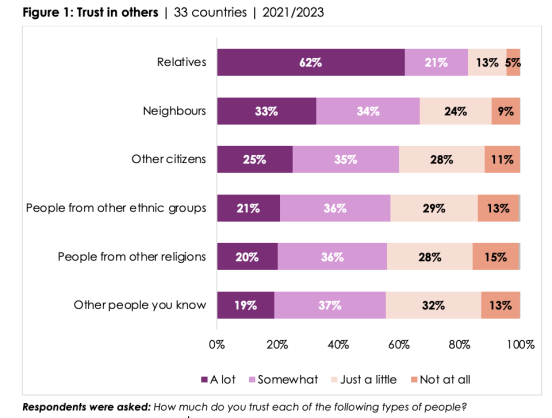
Most Africans embrace coexistence even if they struggle with interethnic trust, the latest Afrobarometer (www.Afrobarometer.org) Pan-Africa Profile (http://apo-opa.co/4gl1zTi) shows.

Based on data from 33 African countries surveyed in 2021/2023, the new report shows that most citizens have no objection to living next door to people from different ethnic backgrounds and are open to interethnic marriages within their own families. However, many express low levels of trust in people from other ethnic groups as well as in people from other religions and outsiders beyond family and community networks.

The report also shows that Africans are likely to prioritise their national identity over their ethnic one or to feel allegiance to both equally. Only a small minority put their ethnic identity first. But a growing number of citizens report that their government treats members of their ethnic group unfairly.

Key findings

  • On average across 33 countries surveyed in 2021/2023, two in 10 Africans (21%) say they trust people from other ethnic groups “a lot,” while 36% trust them “somewhat” (Figure 1).
  • But fully nine out of 10 citizens have no objection to living next door to people from different ethnic backgrounds (90%) (Figure 2) and are open to interethnic marriages within their own families (89%) (Figure 3).
  • Four in 10 Africans (41%) feel more connected to their national than their ethnic identity, compared to just 14% who prioritise their ethnic over their national identity; the remaining 45% are equally attached to both (Figure 4).
  • An overwhelming majority (92%) of Mauritanians feel primarily connected to their national identity, followed by 79% in Guinea and 69% in Congo-Brazzaville. A majority take this position in eight countries.
  • Majorities are equally attached to both identities in 11 countries, led by Liberians (71%), Ghanaians (67%), Ugandans (67%), and Batswana (65%).
  • Expressing primary allegiance to one's ethnic identity is a minority position in all countries, reaching a high of about one in four respondents in just three: Nigeria (27%), South Africa (26%), and Ethiopia (24%).
  • Across 25 countries surveyed consistently since Round 5 (2011/2013), there has been a 12-percentage-point decrease in those primarily attached to their national identity, alongside an 8-point increase in those who identify equally with both identities. There has also been a modest increase – by 4 points – in preference for ethnic identity, although it remains a minority position (Figure 5).
  • Four in 10 Africans (41%) report that members of their ethnic group are “sometimes,” “often,” or “always” treated unfairly by their government because of their ethnicity. Across 25 countries, perceptions of ethnic discrimination have increased by 8 percentage points since 2016/2018 (Figure 6).

Afrobarometer surveys

Afrobarometer is a pan-African, non-partisan survey research network that provides reliable data on African experiences and evaluations of democracy, governance, and quality of life. Nine survey rounds in up to 42 countries have been completed since 1999. Round 9 surveys (2021/2023) cover 39 countries.

Afrobarometer's national partners conduct face-to-face interviews in the language of the respondent's choice that yield country-level results with margins of error of +/-2 to +/-3 percentage points at a 95% confidence level.

Distributed by APO Group on behalf of Afrobarometer.

For more information, please contact:
Asafika Mpako
Afrobarometer communications coordinator for Southern Africa
Email: ampako@afrobarometer.org
Telephone: +27 83 979 8299

Social Media:
Facebook
X
LinkedIn
YouTube
Instagram 
WhatsApp
Visit us online at www.Afrobarometer.org.
Follow our releases on #VoicesAfrica.

Media files
Afrobarometer
Download logo
Read moreAfricans Struggle With Interethnic Trust but Embrace Coexistence, New Afrobarometer Pan-Africa Profile Shows
31 January 2025

Electricity and Energy Ministry notes NERSA electricity tariff decision

Location: News

Electricity and Energy Ministry notes NERSA electricity tariff decision

The Ministry of Electricity and Energy has expressed its confidence in the National Energy Regulator of South Africa (NERSA) – highlighting the regulator’s ability to maintain “independence and integrity” while balancing the diverse interests involved in electricity tariff decisions.

This following NERSA’s announcement of its decision on Eskom’s Sixth Multi-Year Price Determination (MYPD6) revenue application for the 2025/26, 2026/27 and 2027/28 financial years.

The regulator approved a 12.74% price hike for electricity starting at the beginning of the 2025/26 financial year in April 2025.

For 2026/27, NERSA greenlit increases of some 5.36% with a further increase of 6.19% from the start of the 2027/28 financial year.

Electricity and Energy Minister, Dr Kgosientsho Ramokgopa said: “We welcome the fact that these tariff adjustments take into account the need to mitigate inflationary pressures on communities and businesses, helping to stabilise the broader economic environment”.

Independent regulator

The Electricity and Energy department expressed confidence in the regulator’s ability to fulfil its mandate.

“We reaffirm our confidence in the independence and integrity of NERSA in fulfilling its mandate to ensure that electricity pricing balances the financial sustainability of Eskom with the economic realities faced by households, businesses, and industries.

“Whilst the approved tariff adjustments will place pressure on Eskom to stay the course with its investment strategy to strengthen and modernise its generation, transmission and distribution infrastructure, the Ministry remains committed to working closely with Eskom to drive greater efficiency gains. 

“This will ensure that operational improvements and cost reductions contribute to the utility’s long-term financial sustainability while safeguarding the affordability and reliability of electricity supply,” the department said.

Furthermore, in recognition of rising energy concerns, the department will “continue introducing measures to provide relief to vulnerable households and small businesses to cushion them from rising electricity costs”.

“As part of our broader energy strategy, the government remains committed to pursuing an energy mix that delivers affordable, secure, and sustainable electricity for all South Africans, in line with our decarbonisation commitments and long-term energy security goals. 

“We call on all stakeholders to engage constructively in shaping our energy future, ensuring a transition that is inclusive, just, and responsive to South Africa’s developmental needs. 

“The Ministry will continue working towards long-term energy affordability and reliability, ensuring that no South African is left behind in the country’s energy transition,” the department concluded. – SAnews.gov.za

NeoB
Fri, 01/31/2025 - 08:34

356 views
Read moreElectricity and Energy Ministry notes NERSA electricity tariff decision
31 January 2025

Government launches project for proper disposal of old electronic devices

Location: News

Government launches project for proper disposal of old electronic devices

In response to the challenge of waste management, government is providing households in Mpumalanga with easy access to recycling facilities, and offering guidance on how to properly separate and dispose of their old electronic devices.

“The increasing number of electronic devices being used without a proper system for disposal has led to the accumulation of waste that harms our environment and contaminates water and soil,” Deputy Minister of Forestry, Fisheries and the Environment, Bernice Swarts, said on Friday.

Addressing a service delivery imbizo in Bushbuckridge, Swarts said the project aims to change the way residents think about their waste.

“In Bushbuckridge Local Municipality (BLM), like many other parts of our country, improper disposal of e-waste has become a growing concern. As we all know, the municipality faces challenges with waste management, and electronic waste is one of the most problematic. The goal of this project is to test and implement a sustainable system for recycling e-waste in BLM,” the Deputy Minister said.

This initiative was launched in partnership with the Department of Forestry, Fisheries and the Environment (DFFE); Mpumalanga Department of Agriculture, Rural Development, Land and Environmental Affairs; Ehlanzeni District Municipality; BLM; industry and producer responsibility organisations (PROs).

“We aim to change the way residents think about their waste. The PROs will work with local enterprises and the municipality to set up collection points and provide infrastructure (such as collection bins) for separate collection of e-waste to ensure ongoing sustainability of the project.

“The local enterprises will be responsible for servicing the collection points. This process will prevent toxic substances from leaching into the soil and water, protecting both our environment and our health,” Swarts said.

The Deputy Minister said this project is about more than just waste management -- it is about creating jobs and stimulating local economic development. 

“Through this initiative, we are engaging more PROs to facilitate the increase of e-waste recycling. These organisations play a crucial role in managing the end-of-life phase of electronic products and are an important part of the national effort to promote a circular economy, where materials are reused and recycled rather than discarded. 

“Through collaboration with these organisations, we can ensure that this project is sustainable and scalable, with the potential to expand across other regions in the future.

“The importance of this project cannot be overstated. Not only will it help BLM manage its e-waste problem more effectively, but it will also contribute to our country’s broader environmental goals,” she said.

South African cities face a challenge with landfill space in the country, whereby some are expected to run out in six years if drastic steps are not taken to significantly reduce the amount of waste generated and accelerate recycling efforts. 

Census 2022 results indicate that only 20.6% of households in the Bushbuckridge Local Municipality (BLM) had their refuse removed at least once a week, with most households (72.1%) illegally dumping in open areas.

“As part of the National Waste Management Strategy 2020, South Africa has committed to reducing waste sent to landfills, increasing recycling rates, and promoting a circular economy.

“In the coming months, we will monitor the progress of this project to ensure that it meets its objectives. This includes tracking the volume of e-waste collected, the effectiveness of the community awareness campaigns, and the number of local jobs created through the project. 

“Our goal is to ensure that this project becomes a success story and a model that can be replicated across other municipalities in Mpumalanga and beyond,” she said. - SAnews.gov.za

nosihle
Fri, 01/31/2025 - 12:40

66 views
Read moreGovernment launches project for proper disposal of old electronic devices
31 January 2025

Conserving crop diversity key to food security

Location: News

Conserving crop diversity key to food security

Millions of farmers across Africa play a crucial role in preserving crop diversity by cultivating traditional crop varieties, saving seeds for the next planting season, and exchanging seeds with neighbours and other farmers.

This practice is essential for safeguarding crop production and ensuring food security, as the population continues to grow.

Agriculture Minister John Steenhuisen in a statement said farmers have long been the stewards of crop diversity, helping to secure food production and improve crop yields.

"Farmers have not always been formally recognised for their role in conserving plant genetic resources, but the adoption of the International Treaty on Plant Genetic Resources for Food and Agriculture has changed that," Steenhuisen said on Thursday.

The treaty acknowledges the vital contribution of farmers and indigenous communities in the conservation and sustainable use of plant genetic resources, which is key to food security and agricultural biodiversity.

In a significant step for the country’s agricultural and food security landscape, the Department of Agriculture has confirmed that South Africa has ratified the International Treaty on Plant Genetic Resources for Food and Agriculture, making it the 154th Contracting Party to the agreement.

READ | SA signs international treaty to boost food security, biodiversity

This treaty aims to ensure global collaboration in conserving and sustainably using plant genetic resources.

Steenhuisen emphasised that by joining the treaty, South Africa must align its national policies and programmes to recognise farmers’ contributions to the conservation of traditional crops, especially those that are often neglected or underutilised.

Crops such as millets, cowpeas, sorghum and bambara groundnuts play an important role in local food systems but often lack the attention they deserve.

“We must ensure that indigenous farmers are involved in decision-making processes related to plant conservation, the sustainable use of genetic resources, and in the sharing of benefits derived from these crops. Farmers must also be empowered to save, exchange and sell farm-saved seed,” Steenhuisen said.

Supporting community seed banks

To further enhance the conservation of crop diversity, the Minister said the Department of Agriculture is working in partnership with farmers, traditional leaders, civil society organisations, and provincial agriculture departments, to support and strengthen community seed banks.

These hubs for the conservation and revitalisation of local seed systems focus on crops suited to local conditions.

“Currently, community seed banks are operational in Limpopo, the Eastern Cape and the North West provinces. In the 2025/26 financial year, two new community seed banks will be established in KwaZulu-Natal and the Northern Cape provinces.

“These seed banks are central to preserving traditional crops, encouraging participatory plant breeding, and facilitating seed exchanges among farmers and communities through traditional food and seed fairs,” Steenhuisen said.

Crop diversity

Conserving crop diversity is integral to building sustainable food systems and advancing food and nutrition security.

According to the National Food and Nutrition Security Survey (NFNSS), approximately 20 million South Africans face food insecurity, a situation exacerbated by high poverty levels, unemployment, and income inequality.

The report also highlights the adverse impacts of climate change on crop yields, particularly in smallholder and subsistence farming communities.

The Minister said the NFNSS provides valuable insights to guide South Africa’s National Food and Nutrition Security Plan (2024-2029), “a key priority for government”.

Global collaboration and benefits

South Africa’s participation in the International Treaty on Plant Genetic Resources for Food and Agriculture's multilateral system facilitates access to a global pool of genetic resources, benefiting the country’s farmers and researchers.

“This system supports the training, breeding and research needed to strengthen food security and improve crop resilience. Additionally, the treaty’s Benefit-Sharing Fund offers financial support for crop diversity conservation and capacity-building initiatives worldwide,” Steenhuisen said.

The Minister said the successful implementation of the treaty in South Africa will require strong government support at all levels and collaboration across the public, private and civil sectors.

He called for continued cooperation to ensure that South Africa’s farmers and communities benefit from the country’s participation in the treaty. – SAnews.gov.za
 

GabiK
Fri, 01/31/2025 - 10:47

47 views
Read moreConserving crop diversity key to food security
31 January 2025

Mashatile extends heartfelt condolences to families of fallen SANDF soldiers in Congo

Location: News

Mashatile extends heartfelt condolences to families of fallen SANDF soldiers in Congo

Deputy President Paul Mashatile has joined President Cyril Ramaphosa in expressing his deepest condolences to the families of South African National Defence Force (SANDF) members who recently lost their lives in the Democratic Republic of Congo (DRC).

“These brave soldiers were dedicated to their mission and committed to contributing to peace and stability in the DRC. We also call upon His Holiness to pray for peace and stability in the DRC and Africa as a whole,” Mashatile said on Thursday. 

The Deputy President was speaking at the official opening of the first phase of the Bochasanwasi Akshar Purushottam Swaminarayan Sanstha (BAPS) Hindu Mandir and Cultural Complex in North Riding, Johannesburg. 

Several soldiers serving with peacekeeping forces in the DRC, have been killed by the M23 rebel group in recent days amid fierce fighting, including 13 members of the SANDF.

The recent deadly clashes have intensified in eastern DRC after Kinshasa withdrew its diplomats from Kigali in Rwanda. Rebels have advanced toward the strategic city of Goma, which is rich in minerals.

The SANDF soldiers are part of the Southern African Development Community Mission in the Democratic Republic of Congo (SAMIDRC), which aims to help restore peace, security, and stability in Africa’s second-largest country.

BAPS Hindu Mandir and Cultural Complex

The official opening of the BAPS Hindu Mandir and Cultural Complex was led by His Holiness Mahant Swami Maharaj, the current Guru and President of BAPS, who travelled from India for the occasion.

BAPS is a significant branch of the Swaminarayan Sampradaya, a Hindu denomination.

The BAPS Hindu Mandir and Cultural Complex will serve as a centre for spiritual, social, and charitable activities.

The country’s second-in-command, who also visited the centre during its initial development phase, said the event is more than just the inauguration of an architectural marvel. 

“It is a powerful symbol of our shared commitment to building a South Africa rooted in diversity, inclusivity, and mutual respect,” he told the attendees. 

The building will be a place of worship, offer language and music classes, and feature a sports complex.

He described this historic inauguration as a representation of the country’s constitutional values, including freedom of religion, human dignity, and unity in diversity. 

“As we gather here, we are reminded of the importance of embracing and celebrating our differences. In a world that is often divided by barriers and boundaries, this centre stands as a beacon of unity and understanding,” he said. 

The Deputy President stated that the temple will not only function as a place of worship but also as a sanctuary for peace, knowledge, and spiritual enrichment for individuals from all backgrounds. 

Mashatile also commended the thousands of volunteers who have worked diligently to make this vision a reality and noted that the government is inspired by their dedication.

“Let us draw inspiration from the Hindu values and principles, as we strive to build united and prosperous communities founded on mutual respect, understanding, love and cooperation.” 

The Deputy President invited the BAPS organisation to continue working with government in addressing pressing social challenges, including gender-based violence and femicide (GBVF), substance abuse, violence and crime facing local communities. 

“As a religious community, you have a crucial role to play in recognising and bolstering the best practices in your community for preventing and eliminating these ills. 

“This is a responsibility that falls squarely on both our shoulders. We must collaborate our efforts within our communities to reaffirm the importance of freedom, peace, security, and respect for all human rights,” Mashatile said. – SAnews.gov.za
 

Gabisile
Fri, 01/31/2025 - 08:47

180 views
Read moreMashatile extends heartfelt condolences to families of fallen SANDF soldiers in Congo
31 January 2025

SA’s economy on recovery trajectory

Location: News

SA’s economy on recovery trajectory

South Africa’s economic growth prospects are poised to recover in 2025 following a lacklustre economic performance for the past two years.

According to an economic and financial assessments by the International Monetary Fund (IMF), the real Gross Domestic Product (GDP) output growth is expected to accelerate from an estimated 0.8 percent in 2024 to 1.5 percent in 2025 driven by improved electricity generation, monetary policy easing, and a return of investor and consumer confidence post elections.

On Thursday, the IMF published the findings of its Article IV Consultation with South Africa, which was held from 11-25 November 2024. 

As part of the surveillance role, the IMF conducts periodic economic and financial assessments with each member country.

The IMF acknowledged progress in banking-resolution and safety-net reforms and praised macro-prudential measures to bolster capital buffers. However, it raised concerns on the rising public debt and the challenges South Africa’s faces to meet climate goals.

In addition, the IMF welcomed the ongoing electricity and logistics reforms aimed at alleviating critical supply constraints and called for the ambitious implementation of these reforms. 

The Fund indicated that meeting South Africa’s climate goals requires further efforts to increase effective carbon taxation and accelerate the rollout of renewable energy.

The IMF projects growth to reach 1.8 percent by the end of the decade, supported by ongoing electricity and logistics reforms. 

“Risks are tilted to the downside, related to a possible intensification of geoeconomic fragmentation and protectionist policies in the context of an uncertain global environment.

“With fiscal deficits moderating but still elevated over the medium term, the IMF projects public debt to continue to rise under its baseline scenario, recommending a more-ambitious-than-envisaged fiscal consolidation,” the IMF said.

The IMF expects inflation to stabilise around the midpoint of the central bank’s target range. 

The Fund recommended that the central bank continues to manage the normalization of the policy rate toward the neutral level in a flexible and data-driven manner.

The IMF argues that transitioning from a target band to a lower point target with a well-calibrated tolerance band at an appropriate time can help strengthen macroeconomic stability.

National Treasury’s response

National Treasury noted that the IMF’s concerns are aligned with government’s response to addressing immediate and long-term economic challenges.

“The National Treasury is committed to implementing reforms that will enhance inclusive economic growth, achieve a sustainable public debt level, further repair and strengthen network industries, and strengthen state capacity to support economic activity.”

In its 2024 Medium Term Budget Policy Statement (MTBPS), the National Treasury estimated economic growth to increase from 1.1 percent in 2024 to 1.7 percent in 2025.

It attributed the gains in the economy to household consumption gradually increasing, supported by rising purchasing power, employment recovery and wealth gains.

“South Africa is committed to fiscal consolidation and to setting debt on a sustainable path. The fiscal year 2023/24 was a significant success, with the first primary surplus in 15 years being recorded in 2023/24. 

“An overall main budget deficit of 4.7 per cent of GDP is expected for the current fiscal year. This is projected to decline to 4.3 per cent in 2025/26. Meanwhile, debt as a percentage of GDP is expected to stabilize in the 2025/26 financial year, with debt-service costs as a percentage of revenue also peaking at the same time,” National Treasury said.

The current focus of South Africa’s reform agenda includes the stabilisation of the electricity grid, enhancing the efficacy of freight and ports operations, implementing e-Visas, as well as prioritizing the advancement of targeted industries to enhance the business climate and promoting equitable growth. 

Nearly 94 percent of the reforms aimed for implementation by 2024 have been accomplished or are significantly progressing. 

“Following its successful first phase, Operation Vulindlela, will be going into its second phase with new initiatives aimed at reversing local government decline, tackling spatial inequality and advancing a digital government to improve service delivery,” National Treasury said.

These enhance the key focus areas of the first phase  - namely, reducing power cuts, improving the performance of the logistics system, lowering data costs, improving water supply and enabling the country to attract critical skills.

The SARB performed its first stress test of South Africa's key insurance firms during the 2023/24 cycle, of which climate-related risks were prominent. Ongoing efforts to exit the Financial Action Task Force (FATF) grey list during 2025 are well underway, with 16 out of 22 action items having been addressed,” National Treasury said. - SAnews.gov.za


nosihle
Fri, 01/31/2025 - 09:07

103 views
Read moreSA’s economy on recovery trajectory
31 January 2025

Winde hands over George building collapse report to the police

Location: News

Winde hands over George building collapse report to the police

Western Cape Premier Alan Winde has officially handed over to the South African Police Service (SAPS) a report detailing the structural engineering findings of the George building collapse.

Winde handed over the report on Thursday to the province’s Police Commissioner, Lieutenant-General Thembisile Patekile, and the lead investigator from SAPS, Captain Johan de Lange.

The Western Cape Government (WCG) commissioned an independent investigation into the building collapse in George on 6 May 2024. 

The incident, which occurred while the building was still under construction, resulted in the deaths of 34 people and serious injuries to many others. 

Twenty-eight people were rescued alive in a multi-stakeholder disaster operation.

“At the time, the Western Cape Government understood that the event would have repercussions for human lives and livelihoods, and that an investigation into its cause would be essential. 

“And so, while the multi-stakeholder operation was underway, the WCG secured the services of an independent structural engineering firm to conduct an investigation of the collapse site, simultaneous with the rescue operation,” the statement read. 

The WCG stated that the peer-reviewed final report of this firm was to ensure its integrity.

“This probe is one of several that were launched, with the SAPS being the lead body responsible for investigating an incident of this nature,” Winde said.

This means the report is now under the jurisdiction of the SAPS, which must take into account both the findings of this independent report and all other evidence available during the overall criminal investigation. 

The WCG believes the report’s technical findings will greatly aid the SAPS investigation in determining whether charges should be filed.

“Given the nature of the incident and the fact that 34 people tragically lost their lives, it is entirely possible that criminal proceedings may ensue.

“It is for this reason that the findings of the independent probe cannot be made public so that we do not in any way compromise the SAPS investigation and further possible proceedings,” the Premier explained.

The provincial government said the findings of the various agencies’ investigations must be consolidated to ensure an overall understanding of what transpired and to hold those responsible accountable. 

Winde has acknowledged the hard work of government staff, who, along with many other partners, worked tirelessly to rescue those trapped on the site. 

He thanked the independent team that came on board and concluded the investigation carefully and speedily. 

“There must be consequences for those responsible for this horrific tragedy. We have now handed over the report to the SAPS, who we have been assured are working tirelessly on this case, and we will continue to monitor this matter very closely.

“I will never forget being there when our teams recovered Gabriel Guambe alive from the site over 100 hours after its collapse. It is for him, for Delvin Safers, for their peers and friends who made it out alive, and for those who succumbed, and the families of the victims, that justice must be delivered,” Winde said. 

The provincial government said the Western Cape Department of Police Oversight and Community Safety Court Watching Brief Unit will closely monitor its progress. – SAnews.gov.za

Gabisile
Fri, 01/31/2025 - 07:38

30 views
Read moreWinde hands over George building collapse report to the police
31 January 2025

Western Cape Schools Feel the Squeeze After Cuts in Teacher Posts

Location: News

Teachers and principals tell GroundUp how their schools are coping

Read moreWestern Cape Schools Feel the Squeeze After Cuts in Teacher Posts
30 January 2025

Affordable Housing to Be Built on Contested Sea Point Site, Says Provincial Government

Location: News

Announcement by MEC Tertuis Simmers comes after a decade of battles

Read moreAffordable Housing to Be Built on Contested Sea Point Site, Says Provincial Government
30 January 2025

Dtic to host Mining Indaba Investment Forum

Location: News

Dtic to host Mining Indaba Investment Forum

The Department of Trade, Industry and Competition (the dtic) will host the Mining Indaba Investment Forum at the Cape Town International Convention Centre in Cape Town on Tuesday, 4 February.

It will take place as South Africa hosts the Mining Indaba from 3 - 6 February.

The forum will be hosted in partnership with the Department of Mineral and Petroleum Resources and the Department of Science, Technology and Innovation. 

The forum will be held under the theme: An Integrated Approach to the Development of South Africa’s Critical Minerals. 

The purpose of the forum is to showcase the capabilities and supporting infrastructure that South Africa has with regards to beneficiation of critical minerals, as well as efforts that government is putting in place to support investments in the mining sector.

A high-level panel of Ministers and representatives of the private sector will lead engagements on mineral beneficiation and processing.

The seminar will also offer a platform to discuss South Africa’s geological potential, policy interventions and beneficiation strategies to support sustainable, inclusive growth. 

It will also feature perspectives from industry leaders on investment potential, exploration opportunities and transformative initiatives within the mining sector. – SAnews.gov.za


Edwin
Thu, 01/30/2025 - 14:57

91 views
Read moreDtic to host Mining Indaba Investment Forum
30 January 2025

Groblersbridge Port of Entry resumes operations after flooding

Location: News

Groblersbridge Port of Entry resumes operations after flooding

Commissioner of the Border Management Authority (BMA), Dr Michael Masiapato, and the South African Revenue Services (SARS) on Thursday announced the resumption of operations at the Groblersbridge Port of Entry with Botswana.

This follows the temporary suspension of operations caused by severe flooding. 

However, the port is now fully operational and ready to facilitate the movement of goods and people.

The flooding, which resulted from inclement weather earlier this month, necessitated the temporary suspension of services to allow for comprehensive safety assessments of the infrastructure and restoration of flooded facilities.

“The safety of all port users remains our top priority. We appreciate the patience and cooperation of the public and transport operators during this challenging period,” said Commissioner Masiapato, commending the response by BMA, SARS, Groblerbridge Port Management officials, border stakeholders as well as the Botswana government.

Masiapato said the swift restoration of operations demonstrates commitment to ensure minimal disruption to trade and travel. – SAnews.gov.za


Edwin
Thu, 01/30/2025 - 15:14

38 views
Read moreGroblersbridge Port of Entry resumes operations after flooding
30 January 2025

Durban reinforces its status as a premier holiday destination

Location: News

Durban reinforces its status as a premier holiday destination

Durban has yet again stamped its status as a premier holiday destination, with the city's tourism profile proving to be of great economic benefit to the local community. 

This week, the eThekwini Municipality announced the findings of a socio-economic assessment on the festive season’s impact on the city. 

The in-depth report, conducted by BDO South Africa, an independent accounting and consulting firm, highlighted the significant economic benefits generated during the 2024/25 festive season, which spanned from 1 December 2024 to 12 January 2025. 

According to the assessment, the 2024/25 festive season resulted in a staggering direct spend of R1.95 billion within eThekwini Municipality, showcasing a strong demand from both domestic and international visitors.

“The total economic contribution to the local economy was an impressive R4.83 billion, illustrating the multiplier effect of the tourism sector. The festive influx also contributed about R360 million in revenue to the government, further highlighting the important role tourism plays in local and national economies,” the municipality said. 

The city said this wave of tourism created or sustained approximately 8 716 jobs, offering vital employment opportunities for residents in various sectors, including hospitality, retail, transportation and entertainment. 

“The job creation underscores tourism’s role as a crucial pillar of the local economy, providing livelihoods and supporting families,” the municipality said. 

Over 800 000 visitors

The festive season has also attracted a total of 875 289 visitors to Durban, including 447 832 domestic overnight visitors, 33 577 foreign overnight visitors, and 393 880-day visitors. 

A survey of visitors revealed that 79% perceive Durban as a prime tourist destination. 

Visitors participated in various activities, with the top attractions being the city’s breathtaking beaches (73%), local eateries (69%), and shopping experiences (64%). 

Notably, 54% of visitors were drawn to uShaka Marine World, highlighting the city’s diverse offerings that cater to all ages and interests.

The economic impact assessment further acknowledged the significant contributions of major events held throughout the city, including Beach Paradise, Fact DBN Rocks, Anywhere In Your City and the uMgababa New Year Picnic, played a substantial role in attracting thousands of attendees, and contributed in driving the local economy during the 2024/25 festive season. 

“The festive season saw an average overall occupancy rate of 69%, with hotels reaching 72%, a notable increase from the previous year’s 70%. Peak occupancy rates reached 91% during the Christmas long weekend, illustrating the high demand and the city’s appeal as a festive getaway,” the municipality said. 

Looking ahead

The municipality said Durban’s tourism sector continues to demonstrate resilience and growth, with significant opportunities for future development. 

The municipality said the insights from the report will guide the city’s strategic initiatives to enhance visitor experiences and maximise economic benefits for communities. 

EThekwini Municipality Mayor, Cyril Xaba said the city remains fully committed to working with stakeholders to ensure the continued growth of the tourism sector.

Durban Tourism will also be implementing a series of impactful initiatives designed to accelerate tourism growth.

For more information, visit www.visitdurban.travel or follow Durban Tourism on social media platforms @DBNTourism. – SAnews.gov.za

GabiK
Thu, 01/30/2025 - 12:47

39 views
Read moreDurban reinforces its status as a premier holiday destination
30 January 2025

Suspect linked to 2021 unrest appears in court

Location: News

Suspect linked to 2021 unrest appears in court

A 42-year-old suspect is expected to appear at the Durban Magistrate Court today on charges linked to the unrest of July 2021.

The suspect handed herself over at the Durban Central police station this morning, and was arrested and processed. 

She faces charges under the Protection of Constitutional Democracy against Terrorist and Related Activities Act (POCDATARA), and incitement to commit violence.

The arrest is as a result of a thorough investigation by the Durban Crimes against the State Unit of the Serious Organised Crime Investigation, following the unrest of July 2021, which affected KwaZulu-Natal and Gauteng.

To date, 69 arrests and one conviction have been secured.

READ | SAHRC releases July 2021 unrest report

During the unrest, around 350 people lost their lives. The violence and destruction also caused damage to infrastructure and businesses, costing South Africa’s economy some R50 billion, with a further two million jobs being lost or affected.

The South African Human Rights Commission (SAHRC) report into the unrest, which was released in January 2024, found that a myriad factors contributed to the outbreak of destruction and violence during the riots.

According to the SAHRC, evidence indicated that the acts of destruction during the unrest were well-orchestrated, including the blocking of the N3 highway, destruction of factories and warehouses, attack on government communication facilities, and bombing and theft of ATMs. 

READ | DPCI determined to deal with national priority offences

“It is clear by now that the DPCI [Directorate for Priority Crime Investigation] shall continue to secure in court the attendance of anyone against whom sufficient evidence of committing a national priority offence is obtained, without fear, favour or prejudice,” the National Head of the DPCI, Lieutenant General Adv. Godfrey Lebeya said on Thursday. – SAnews.gov.za

Edwin
Thu, 01/30/2025 - 11:47

97 views
Read moreSuspect linked to 2021 unrest appears in court
30 January 2025

Traffic disruptions ahead: Cape Town roads to close for SONA 2025

Location: News

Traffic disruptions ahead: Cape Town roads to close for SONA 2025

Cape Town motorists should prepare for road closures and traffic disruptions as the annual State of the Nation Address (SONA) takes place on Thursday, 6 February 2025, at City Hall. 

Some road restrictions will remain in place until 19 February.

“The annual SONA address is taking place on Thursday, 6 February 2025. The event will result in a number of road closures and restrictions. Some of these will be in place until 19 February,” the city said on Thursday.

President Cyril Ramaphosa has requested Speaker of the National Assembly, Thoko Didiza, and Chairperson of the National Council of Provinces, Refilwe Mtshweni-Tsipane, to convene a Joint Sitting of Parliament on 6 February 2025 at 19:00.

During this sitting, the President will deliver the first State of the Nation Address (SONA) of the seventh democratic Parliament.

He will highlight achievements, flags challenges and outline interventions for the coming financial year.

This address marks the official start of the parliamentary programme and sets out the government's key policy objectives and deliverables for the year ahead.

“Road closures before, during and after the event will affect the normal flow of traffic in and around the city bowl, as well as the available parking space.

“Signage will be installed in the affected areas; however, we urge motorists to please check the list of closures carefully and to plan their routes accordingly,” the city said.

A list of road closures can be accessed at https://bit.ly/3EcEVix.

In addition, residents have been advised to:

•    Factor in additional time for travel over this period.

•    Limit non-essential travel in the CBD area.

•    Consult the various online navigation tools to find the best route to your destination.

•    Please be patient, as traffic volumes will likely be elevated.

- SAnews.gov.za


nosihle
Thu, 01/30/2025 - 11:02

31 views
Read moreTraffic disruptions ahead: Cape Town roads to close for SONA 2025
30 January 2025

Health Minister encourages adherence to ARV treatment

Location: News

Health Minister encourages adherence to ARV treatment

Health Minister, Dr Aaron Motsoaledi, has appealed to people on antiretroviral (ARV) treatment to continue taking their medication amid reports that grant funding by the United States of America (USA) is under review.

The review of the grant funding is expected to affect the US President's Emergency Plan for AIDS Relief (PEPFAR) programme, which is aimed at supporting HIV prevention, care and treatment. The programme supports several countries, including South Africa, to achieve HIV epidemic control.

Addressing members of the media on the sidelines of a two-day Cabinet Lekgotla, Motsoaledi said the country’s ARVs proramme will not be affected, as it is funded by the South African government and the Global Fund.

“For now, all HIV/AIDS programmes continue. As the South African government, we want to ascertain that nobody must stop taking ARVs because that will be devastating,” Motsoaledi said on Wednesday.

South Africa has 52 districts and of those, 27 districts are funded by PEPFAR.

“PEPFAR chose 27 of the most affected districts and these districts are in eight provinces, as they choose districts based on the burden of HIV/AIDS. The only province that is not included is the Northern Cape because it does not have any districts that are highly affected by HIV/AIDS,” the Minister said.

Of the 27 districts, seven of them are in KwaZulu-Natal; five are in the Eastern Cape, four are in Gauteng; three are in Mpumalanga and the North West, respectively; two are in Limpopo and one is in the Western Cape.

“The total number of people on the ground who are dealing with HIV/AIDS in those 27 districts is 271 606. Of the 271 606 people, 256 452 are funded by South Africa from the fiscus. That leaves us with 15 145 people, who will be affected by the withdrawal.

“Our biggest problems will be the salaries and the operational costs. That is what we are looking at with National Treasury,” Motsoaledi said.

Seventy-six percent of the funding for HIV/AIDS programmes is from South Africa. This constitutes 74% of funding from the government and 2% from the private sector.

“That leaves us with a gap that is filled by the Global Fund, which gives 7% and PEPFAR, which accounts for 17%. When you add the funds from the Global Fund and South Africa’s funding, that makes 83% and PEPFAR remains with the 17%. We are buying ARVs, together with the Global Fund,” the Minister said.

With reports indicating changes in the grant funding by the US, Motsoaledi said the government of South Africa has not received any communication on these changes.

“So far, we have not received a letter from the American government. These funds for the HIV/AIDS programmes come through National Treasury and they have not received a letter; the Department of Health and Department of International Relations and Cooperation (DIRCO) have also not received a letter.

“We have tried to contact the US embassy and we couldn’t get them. The NGOs and the clinics that are funded by PEPFAR are the ones who have received letters,” the Minister said.

Out of the 63 million people in South Africa, 7.8 million people are HIV positive, with 5.5 million on ARVs.

In 2014, the Joint United Nations Programme on HIV/AIDS (UNAIDS) adopted the strategy of 95-95-95, which sets a target that 95% of people living with HIV (PLHIV) must know their HIV status; 95% of people diagnosed with HIV must receive antiretroviral therapy (ART) and 95% of people receiving ART must achieve viral load suppression (VLS).

“We are on 96%. That means 96% of people who have HIV in South Africa know their status but of those, 79% are on treatment and in that 79% who are on ARVs, 94% of them are virally suppressed. It means that they can no longer spread the virus, reducing the number of new infections.

“For us to reach the 95-95-95 targets by 2030 - because we want to eliminate HIV as a threat to human health - we need 1.1million people to be on treatment so we reach the target,” the Minister said. - SAnews.gov.za

nosihle
Thu, 01/30/2025 - 07:00

85 views
Read moreHealth Minister encourages adherence to ARV treatment
30 January 2025

Housing Protest Closes N2 in Eastern Cape

Location: News

Residents from Dutywa informal settlements dating back to the 1990s demand services and houses

Read moreHousing Protest Closes N2 in Eastern Cape
30 January 2025

President convenes Cabinet Lekgotla

Location: News

President convenes Cabinet Lekgotla

President Cyril Ramaphosa has convened a Cabinet Lekgotla with leaders from all spheres of government - to review government’s progress on priorities, assess challenges and set the agenda for the seventh administration.

Addressing members of the media on the agenda of the two-day meeting, Minister in the Presidency, Khumbudzo Ntshavheni, said government was finalising the Medium-Term Development Plan (MTDP) 2024/2029.

The plan proposes three strategic priorities, which include inclusive growth and job creation; reducing poverty and tackling the high cost of living, as well as building a capable, ethical and developmental State.

“We are focusing on the practical actions that we need to take to make good on the promises that we have made and set practical timeframes so that we can realise the priorities of the MTDP.

“We also received a scene-setting report from National Treasury on the economic outlook and the global outlook -- trends that will inform government planning.

“We are looking at what we want to achieve in terms of reforms on global institutions, in particular the security system of the United Nations and global funding institutions,” the Minister said on Wednesday, on the sidelines of the Cabinet Lekgotla.

Other areas of focus include funding Small, Medium, and Micro Enterprises (SMMEs) and the “missing middle”, in reference to students whose household income is too high to qualify for National Student Financial Aid Scheme (NSFAS) funding, yet too low to afford tertiary education without financial assistance.

The Cabinet Lekgotla is taking place on 29 and 30 January 2025 at the Sefako Makgatho Presidential Guest House, in Pretoria. 

The outcomes of the meeting will shape government’s policies and programmes that will be announced by the President during his State of the Nation Address (SONA) in Parliament on Thursday, 6 February 2025, at 19:00. 

With the seventh administration being under the Government of National Unity (GNU), which comprises 10 political parties from across the spectrum, Ntshavheni emphasised that the meeting will prioritise the interests of the country.

“We are meeting as the GNU and we are not bringing party political interests. We are going to negotiate and discuss as members of Cabinet and representatives of provinces, which are represented by Premiers.

“We work for the best benefit of our country and not the best benefit of our parties. The engagements are on the level of us being members of the national executive,” Ntshavheni said.

South Africa’s term for the Group of Twenty (G20) presidency also features on the meeting’s agenda.

“As we are preparing to host the G20, we will receive a report on the logistics and the content on government goals for the summit,” the Minister said.

South Africa holds the G20 Presidency from 1 December 2024 to 30 November 2025, under the theme: “Solidarity, Equality, Sustainability” .

South Africa's G20 Presidency is the fourth consecutive emerging market Presidency, and it is also the first African Presidency, followed by the admission of the African Union (AU) as the second permanent African member. 

The G20 was established to tackle pressing global economic and financial issues. Together, G20 members account for around 85% of global GDP and 75% of international trade. 

The G20 comprises 19 countries, including Argentina, Australia, Brazil, Canada, China, France, Germany, India, Indonesia, Italy, Japan, Republic of Korea, Mexico, Russia, Saudi Arabia, South Africa, Türkiye, the United Kingdom and the United States, and two regional bodies, namely the European Union and the African Union.

The grouping plays a critical role in influencing global policy making and fostering global economic stability. - SAnews.gov.za


nosihle
Wed, 01/29/2025 - 18:23

128 views
Read morePresident convenes Cabinet Lekgotla
  • Previous
  • Page 1
  • Interim pages omitted …
  • Page 72
  • Page 73
  • Page 74
  • Page 75
  • Page 76
  • Interim pages omitted …
  • Page 210
  • Next

Copyright © 2026 · MyZA · All Rights Reserved · Powered by Stratlec Online