• Skip to main content
  • Skip to header right navigation
  • Skip to after header navigation
  • Skip to site footer
MyZA

MyZA

News, Directory, Events and Other Stuff

  • Social Media
  • Sport
  • World News
  • Home
  • Submit News
  • Directory
  • Events
  • Stratlec
  • TFSA
  • News
    • APO
    • Today’s Sport News
    • Todays Social Media and Tech Headlines
    • Today’s World News
    • Today’s SA Financial News
  • Contact
You are here: Home / Archives for growth

growth

23 December 2024

Eskom ‘lessons’ can be a template for SOEs

Location: News

Eskom 'lessons' can be a template for SOEs

South Africa is currently experiencing the longest period without load shedding in the last five years.

This, according to Electricity and Energy Minister, Dr Kgosientsho Ramokgopa, who briefed media on Monday.

Eskom has marked more than 270 days without implementing the rolling power outages, with load shedding last implemented in March this year. 

“We are recording another milestone in that we are experiencing the longest stretch of uninterrupted power supply in five years. It is an important milestone. We are not celebrating the fact that we have not had load shedding for 272 days… We are simply marking the point that in terms of our quest to end load shedding, it’s important that we are able to take account of these small milestones. 

“These are small steps that are going to be able to contribute to a giant leap that we want to achieve… to ensure that we have sufficient capacity that will support the growth of the South African economy,” Ramokgopa said.

Eskom has managed to reduce its unplanned outages by some 8% compared to last year – improving the generation performance of these stations.

The power utility has also recorded year-on-year diesel saving costs of at least R16 billion. 

The Minister acknowledged the ongoing hard work by Eskom employees to turn around the fortunes of the power utility.

“We started from a low base. In the financial year 2024… we have seen the highest intensity of load shedding, in terms of the number of days and the number of hours that the country was subjected to periods of no electricity. 

“[This], taken with the financial performance, Eskom recorded a significant loss but also is showing that as a result of improved performance, our projection is that we should be – at a minimum – achieving a surplus at the end of [this] financial year,” he said.

Ramokgopa said the “Eskom lessons” can be used to “generate a template on how [we] are able to recover from a very difficult situation”.

“It’s a template you can take to any of the SOEs [State-owned Enterprises]... of course, adapt it to the nuances of that particular SOE. But I think there are transversal experiences that can be drawn from the Eskom experience,” he said. – SAnews.gov.za

NeoB
Mon, 12/23/2024 - 11:45

37 views
Read moreEskom ‘lessons’ can be a template for SOEs
21 December 2024

His Excellency Sheikh Shakhboot Bin Nahyan Meets President of South Africa

Location: News

United Arab Emirates, Ministry of Foreign Affairs
Download logo

His Excellency Sheikh Shakhboot Bin Nahyan Al Nahyan, Minister of State, met with His Excellency Cyril Ramaphosa, President of the Republic of South Africa, in a meeting attended by His Excellency Dr. Thani Bin Ahmed Al Zeyoudi, Minister of State for Foreign Trade, in Johannesburg.

H.E. Sheikh Shakhboot Bin Nahyan conveyed the greetings of His Highness Sheikh Mohamed Bin Zayed Al Nahyan, UAE President, His Highness Sheikh Mohammed Bin Rashid Al Maktoum, Vice President, Prime Minister and Ruler of Dubai, and His Highness Sheikh Mansour Bin Zayed Al Nahyan, Vice President, Deputy Prime Minister and Chairman of the Presidential Court, to H.E. President Ramaphosa, as well as their wishes of further progress and prosperity to the government and people of South Africa.

For his part, H.E. President Ramaphosa conveyed his greetings to His Highness Sheikh Mohamed Bin Zayed Al Nahyan, UAE President, His Highness Sheikh Mohammed Bin Rashid Al Maktoum, Vice President, Prime Minister and Ruler of Dubai, and His Highness Sheikh Mansour Bin Zayed Al Nahyan, Vice President, Deputy Prime Minister and Chairman of the Presidential Court, and expressed his wishes for further development and growth for the government and people of the UAE.

During the meeting, the two sides discussed ways to enhance ties between the UAE and South Africa across various sectors. Furthermore, both sides affirmed the importance of reinforcing bilateral cooperation to achieve mutual interests.

His Excellency Sheikh Shakhboot Bin Nahyan met with His Excellency Paul Mashatile, Deputy President of South Africa. The meeting discussed enhancing collaboration across various sectors.

Distributed by APO Group on behalf of United Arab Emirates, Ministry of Foreign Affairs.

Read moreHis Excellency Sheikh Shakhboot Bin Nahyan Meets President of South Africa
20 December 2024

Bulk water project signals new chapter for Eastern Cape communities

Location: News

Bulk water project signals new chapter for Eastern Cape communities

To help end the persistent water challenges faced by communities in the Alfred Nzo District Municipality, Water and Sanitation Minister Pemmy Majodina has handed over the newly upgraded Mount Ayliff Water Treatment Works (WTW) for communities in that area.

The commissioning certificate of the upgraded water treatment works was handed over to Alfred Nzo District Municipality Mayor, Vukile Mhlelembana, on Wednesday, signalling a new chapter for the communities of Mt Ayliff that struggled with intermittent water supply.

The Alfred Nzo District in the Eastern Cape, has experienced water shortages in Mount Ayliff and the surrounding areas for a long time due to population growth, and the increased demand of water supply services in the area.

The then Mount Ayliff WTW could not meet water demand due to malfunction and ageing infrastructure.

The currently upgraded WTW, based in uMzimvubu Local Municipality within the District, will improve water supply to about 38 184 households in Emaxesibeni and the surrounding five villages of Betshwana, Singeni, Mombeni, Lubhalasi and Santombe.

Majodina said the WTW is part of the R370 million Mount Ayliff Peri-Urban Bulk Water Supply Project, funded through the Department of Water and Sanitation’s Regional Bulk Infrastructure Grant (RBIG), with the Alfred Nzo District Municipality as the implementing agent.

“The scope of the project entailed upgrading the raw water abstraction point at Mzintlava River and installing pipelines that take raw water to a reservoir at the WTW to be treated before distribution to the communities. Other work included the construction of pump stations and upgrading of the existing gravity network pipes from the WTW,” she said.

Majodina urged Mhlembana to prioritise water reticulation projects that will ensure reliable and sustainable water supply to the communities.

Updates on uMzimvubu Dam, Vandalism

The Minister also highlighted progress made in the revived construction of uMzimvubu Dam, in uMzimvubu River, which will ensure sufficient water supply in Alfred Nzo and OR Tambo District Municipalities.

“The Mount Ayliff Peri-Urban Water Supply Project is an effort by the Department of Water and Sanitation to ensure that the Alfred Nzo District has sufficient water supply. As we have completed this project, we are calling on the community of Mount Ayliff not to vandalise or illegally connect to the infrastructure installed but they should patiently wait for the reticulation projects in their areas.

“Plans to build uMzimvubu Dam to benefit Alfred Nzo and OR Tambo District Municipalities are at an advanced stage. This dam will ensure that there is enough water within the two districts,” Majodina said.

The Minister also called on communities to look after water infrastructure in their areas and protect them from vandalism.

She further encouraged the community members to save water and report any water leaks to the municipalities. – SAnews.gov.za


GabiK
Fri, 12/20/2024 - 11:02

163 views
Read moreBulk water project signals new chapter for Eastern Cape communities
20 December 2024

Reyneke To Captain Junior Proteas In U19 Women’s T20 World Cup In Malaysia

Location: Sport

JOHANNESBURG: Cricket South Africa (CSA) is proud to announce the South Africa Under-19 Women’s squad that will represent the nation...

Read moreReyneke To Captain Junior Proteas In U19 Women’s T20 World Cup In Malaysia
19 December 2024

De Lille encourages integrating community engagement into tourism

Location: News

De Lille encourages integrating community engagement into tourism

Tourism Minister Patricia de Lille has highlighted the importance of integrating community engagement into tourism and conservation efforts.

“Sustainable tourism is about ensuring that the beauty and biodiversity of our destinations are preserved for future generations,” De Lille said.

As part of the annual Tourism Summer campaign, launched in the Free State in October this year, de Lille and Deputy Minister Maggie Sotyu, visited various sites in the eThekwini Municipality on Wednesday.

The visit forms part of the summer readiness activations, as well as welcoming local and international tourists, who will visit various holiday destinations across the country, over the summer period.

Joined by KwaZulu-Natal Premier Thamsanqa Ntuli and eThekwini Executive Committee members, de Lille and Sotyu spent time at key tourist sites, including the beach front, where they joined Expanded Public Works Programme (EPWP) workers in a beach clean-up operation.

The initiative organised by the Department of Tourism, in partnership with eThekwini Metro and the KwaZulu-Natal Provincial Government, marks the fifth clean-up in an ongoing series aimed at promoting environmental conservation and responsible tourism.

The clean-up campaign aligns with the government’s commitment to preserve the environment and maintain Durban’s status as a top-tier holiday destination.

The initiative also underscores the need for collaborative efforts to ensure beaches and other attractions remain clean, safe, and appealing to both local and international tourists.

The clean-up was followed by an engagement with 50 senior citizens inside the Open Bus Tour to uShaka Marine World.

Tourism Sector Masterplan

“As South Africa's summer holiday season peaks and visitors venture out to explore our diverse travel offerings, we visited these sites to inspect summer readiness and to encourage visitors to explore the country responsibly.

“This roadshow is part of the broader objectives of the Tourism Sector Masterplan to promote tourist attractions and hidden gems in all our provinces," De Lille said.

The Tourism Sector Masterplan seeks to promote tourism attractions and hidden gems across South Africa’s provinces; foster collaboration between industry stakeholders, community members, and government entities; and drive initiatives that enhance safety and environmental awareness at key tourist sites.

Presidential eThekwini Working Group

The Department of Tourism is part of the Presidential eThekwini Working Group tasked with addressing various issues in eThekwini.
The working group represents an intergovernmental collaborative approach to addressing challenges in local government, and includes active participation from all levels of government, private sector, state owned enterprises, organised labour, and civil society.

Among the workstreams, is the tourism revitalisation workstream which includes beach clean-ups and general clean up initiatives around the city.

“The clean-up programmes have been a resounding success, with over 800 participants mobilised to date. These participants include EPWP workers, tourism monitors, volunteers from government, local businesses, NGOs [non-government organisations], and local communities, showcasing a collective commitment to revitalising eThekwini.

“The Deputy Minister and I want to thank all visitors for choosing to explore our beautiful country and contributing to the success and growth of the tourism sector. We especially want to thank our domestic travellers as this is the bedrock of our sector, and we thank them for exploring and enjoying their own country,” the Minister said.

Tourism Monitors

As part of supplementing safety initiatives by the South African Police Service and local law enforcement, Sotyu said the department has implemented the Tourism Monitors initiative, which involves the training, mentorship, and deployment of unemployed youth at identified tourism sites across the country and enhance tourism safety.

Sotyu said a total of 78 tourism monitors have been deployed to various sites in the eThekwini region.

“The Tourism Monitors Programme is part of the National Tourism Safety Plan to enhance tourism safety awareness at key tourism sites; upskill unemployed youth, and reduce tourist vulnerabilities," Sotyu said.

The Deputy Minister added that the department, together with partners in eThekwini, will continue to conduct clean-up campaigns and deploy Tourism Monitors to the region, to assist with safety and upkeep of tourist sites.

Ntuli emphasised that tourism is one of the cornerstones of KwaZulu-Natal’s economy.

“Maintaining clean and welcoming spaces is not just about aesthetics but also about fostering a sense of pride and responsibility among residents,” Ntuli said. – SAnews.gov.za
 

GabiK
Thu, 12/19/2024 - 11:41

100 views
Read moreDe Lille encourages integrating community engagement into tourism
19 December 2024

Men urged to seek help when facing emotional triggers

Location: News

Men urged to seek help when facing emotional triggers

KwaZulu-Natal Premier Thamsanqa Ntuli has encouraged men to speak out and seek help when faced with situations that trigger anger or emotional distress.

The call comes after a man was found dead in Umzinto, in the south coast of KwaZulu-Natal,  after killing his 25-year-old girlfriend.

Sibusiso Lawrence Ntaka allegedly killed Nontobeko Cele in Umzinto on Tuesday, and posted his confession on social media.

Ntaka was later found hanging from a tree on Wednesday, not far from where Cele’s body was found. 

Ntuli has strongly condemned Cele’s killing, saying the heinous act is a grave injustice and a blatant violation of human dignity and morality.

The Premier said addressing emotions constructively is key to preventing violence and fostering healthier relationships.

“Seeking support is not a sign of weakness but a courageous step toward personal growth and building a safer, more compassionate society."

The Premier extended his heartfelt condolences to the Cele family and reaffirmed the provincial government's commitment to creating a society free from gender-based violence (GBV).

“Tragically, the perpetrator has taken his own life, denying us the opportunity to ensure that justice is served for such an evil act. This incident underscores the urgency of addressing this scourge.”

Ntuli also noted that the horrific incident occurred shortly after the launch of the 365 Days of No Violence Against Women and Children campaign, highlighting the need for sustained and intensified efforts to eradicate gender-based violence and femicide (GBVF) in the communities.

“Violence against women is an attack on our humanity and the values we uphold as a society. As a province, we will not tolerate such actions, and we must work together to ensure women and children feel safe and protected,” said Ntuli.

He also called on communities, law enforcement agencies, and stakeholders to collaborate in fostering a safer environment for women and children. The importance of addressing the root causes of such violence, including societal attitudes, structural inequalities, and systemic failures were also emphasised.

The Premier said the provincial government remains unwavering in its commitment to supporting victims of gender-based violence through targeted programs and interventions and will continue working tirelessly to ensure that perpetrators face the full force of the law. – SAnews.gov.za
 

GabiK
Thu, 12/19/2024 - 08:53

16 views
Read moreMen urged to seek help when facing emotional triggers
18 December 2024

DPWI releases 24 State-owned properties for requests for proposals

Location: News

DPWI releases 24 State-owned properties for requests for proposals

The Department of Public Works and Infrastructure (DPWI) has released 24 state-owned properties located across South Africa for requests for proposals from public and private entities. 

The requests for proposals follow a historic memorandum of understanding (MoU) which was signed by the Minister of Public Works and Infrastructure, Dean Macpherson, KwaZulu-Natal MEC Martin Meyer and eThekwini Mayor Cyril Xaba to use public assets for the public good. 

The release of the 24 properties for requests for proposal mark a shift for the department where the state previously retained high-value properties despite the properties serving no purpose.

A month after the signing of the MoU to use public assets for public good, the DPWI this week released underutilised state-owned properties located nationwide for requests for proposals. 

In a statement on Wednesday, the department said that this marks phase one of the programme. 

Members of the public and private entities now have until the 13th of March 2025 to make proposals on how these properties can be utilised to ensure that they contribute to the public good, help ignite job creation and add value to their communities. 

After the 13 March, the requests for proposals will be evaluated to consider which are feasible before moving ahead with the process which may include long-term leases, public-private partnerships or selling the assets. 

“This marks a major milestone for the Department in the 7th Administration where we will make good on our promise to invite private and public role-players on this scale to bring us proposals on how these properties can be utilised towards truly benefitting the people of South Africa, either through repurposing or redevelopment,” Minister Macpherson said.

He added that where feasible, the State may partner with the private sector to ensure that properties contribute to economic growth and job creation. 

“We believe these properties will attract significant investment and jobs through their redevelopment.

“We are hoping to use these properties as an example of what can be achieved with underutilised state-owned properties country-wide, and we will soon be signing similar memorandums of understanding with other metropolitan municipalities in Gauteng and the Western Cape to expand the process. 

“This process signals a shift from the department that previously hung onto properties despite serving no purpose. With this programme, the era of state-owned buildings standing empty, attracting crime to communities and chasing away investment is ending,” he explained.

In this round, 24 properties were released for request for proposal located nationwide, with additional properties to be considered for release for request for proposal pending the success of this round. 

The eThekwini Metropolitan Municipality and the provincial DPWI are following similar processes with the underutilised properties they own.

“I would like to applaud the department public officials under the leadership of the head of the Property Management Trading Entity, Mr Siza Sibande, whose team have worked tirelessly over the past few weeks to help make our vision of using public assets for the public good. 

“By working together with the Municipality and the Provincial Government, we are charting a new course for how state-owned properties can be utilised to serve the people of South Africa,” the Minister said. – SAnews.gov.za

Edwin
Wed, 12/18/2024 - 13:08

56 views
Read moreDPWI releases 24 State-owned properties for requests for proposals
16 December 2024

Surging Investment, Waves of Change

Location: News
African Energy Chamber

By NJ Ayuk, Executive Chairman, African Energy Chamber (https://EnergyChamber.org/).

I've said for years that African energy is a vital investment. Backers clearly agree — to the tune of USD47 billion. That's how much capital expenditure (capex) 2024 saw in African oil and gas, showing a 23% increase from last year. Better yet, we expect growth to continue through the end of the decade.

This capex activity is a welcome sign that energy majors are deepening their long-term interests in Africa. And as our 2025 State of African Energy report details, their momentum has created unique opportunities for local communities, indigenous companies, and national oil companies (NOCs) from other continents.

Emerging Players

While the majority of 2024's capex was driven by established producers like Angola and Nigeria, emerging players are making noise in the industry. Take Senegal, which saw its first offshore oil production this year. Ghana, following a five-year slump, increased oil output during 2024 by 10% and gas output by 7%.

Exploration hotspot Namibia also deserves a special mention: The Southern African nation aims todrill over 12 offshore wells next year, begin production by 2029, and become one of the top-five African producers by the 2030s. Good work for a nation that only discovered its enormous reserves in 2022! I frequently cite Namibia because it proves that a complete newcomer can attract serious foreign investment with smart, swift policy changes — and poise itself to shake up the energy industry.

Increased Exploration

An exciting question remains: Just where will we find the next Namibia Thanks to a resurgence in exploration, another hotspot may be around the corner. There were 1,060 wells drilled in Africa this year — more than any time since 2015. Africa has also become a global leader in drilling high-impact wells, which have the potential to significantly increase overall reserves. That strategy is already paying off: Notable 2024 finds include Namibia's Mopane complex, which holds approximately 10 billion barrel of oil equivalent (boe) – “one of the world's largest offshore finds,” according to Offshore Magazine. Even while global exploration as a whole remains stagnant, Africa is stepping up to meet growing energy demands.

When exploration is successful, new fields follow. We also expect to see African greenfield spending exceed brownfield by 10% by 2030. These capex trends all demonstrate that investors won't limit themselves to mature fields: Eyes are on fresh locations, fresh facilities, and fresh opportunities in Africa.

A Gas Future

As we highlight in our 2025 report, one of those opportunities is natural gas. Africa holds nearly 18 trillion cubic meters of reserves, which will prove essential for a just energy transition as natural gas can provide significant near-term emissions reductions while fostering energy security and economic development. Global demand for this clean-burning resource is also growing, particularly in Asia. That's why I'm glad to see a greater emphasis on developing natural gas resources. In 2023, capex spending on natural gas was about 30%, but this is projected to grow 10% by 2030. It's another sign that more investors are thinking in the long term about Africa, and interested in being part of a just energy transition.

Take Senegal, where the Greater Tortue Ahmeyim gas field will begin production next year. A Final Investment Decision is also expected in 2024 on Yakaar-Teranga. The West African nation is another fantastic example of how operator-friendly policies, political stability, and vast reserves can attract significant foreign investment: I'm excited to see Senegal transform itself from an oil importer to a gas exporter.

M&A Opportunity

The past year saw a huge increase in divestment by O&G majors: Large IOCs are aggressively streamlining their African portfolios. As a rule, they're selling mature, high-emission, and high-cost assets. While large divestments often signal trouble, they're actually creating some promising changes for African O&G.

For one, Asian and Middle Eastern nations are purchasing more assets: Dubai, Qatar, the U.A.E., Malaysia, and Chinese NOCs acquired stakes in Egypt, Mozambique, Namibia, Kenya, and South Africa this year. As global demand for energy grows, particularly in Asia, I'm glad to see these nations looking to Africa for long-term solutions.

Foreign divestment also matters because it's creating opportunities for indigenous companies. Thanks to a recent Shell acquisition, Aradel Holdings became Nigeria's most valuable oil company (https://apo-opa.co/3ZVzGwh). In Angola, IOC Afentra has acquired Azule's (a joint BP and Eni venture) assets and plans to dramatically increase the nation's overall output.

“Having the big players sell to independents is the future,” oil trader Trafigura said in a statement.

It's a promising pattern: Majors sell off mature assets and use the capital to invest in fresh fields and facilities. Independent foreign or indigenous companies use their acquired assets to expand but are spared the expense of building facilities from the ground up. These smaller companies are also strongly motivated to further develop and reduce emissions from these existing fields — an environmental and financial win for everyone.

The Angolan government clearly agrees, encouraging regional players with tax incentives and reduced government profit shares. It will be truly fascinating to watch this industry shakeup in Nigeria and Angola, which have been dominated for decades by majors.

It's no secret that Africa needs O&G majors to stay: They drill over half of our exploration wells and hold a quarter of the continent's equity production. However, I'm thrilled to see indigenous companies growing and harnessing these assets to their fullest extent.

Conclusion

Just what prompted this surge in African capex? A great deal of credit goes to common sense policy changes in nations such as Namibia, Senegal, Mauritania, Egypt, and Angola. We can also point out that the COVID-19 pandemic artificially slowed capex for several years, so an uptick was inevitable once the world opened up again. 

However, I believe a lot of it comes down to economic reality: Global energy needs are rising. Africa has vast, untapped resources. I urge all parties to continue building a thriving energy industry that takes Africa – and the world – into the next century.

For further insights, check out our 2025 State of African Energy report here (https://apo-opa.co/3ZHldTr).

Distributed by APO Group on behalf of African Energy Chamber.

Media files
African Energy Chamber
Download logo
Read moreSurging Investment, Waves of Change
16 December 2024

National Dialogue structures to be in place in early 2025

Location: News

National Dialogue structures to be in place in early 2025

The structures and processes of South Africa’s National Dialogue will be in place in early 2025, President Cyril Ramaphosa said on Monday.

The President made the announcement at the National Day of Reconciliation commemoration held at the Vredendal North Sports Ground in the Western Cape.

“We reaffirm our commitment to work together through a National Dialogue to define the path that our nation will take,” he said.

READ | SA ardent on healing historical wounds while focusing on the future

He added that through various actions, government is reigniting “our collective vision and shared passion to create a South Africa that works for all its people”.

“We are confronting our challenges with the courage and determination displayed during the darkest days of the struggle against apartheid.”

This he said as the country has a rich history of inclusive solutions to problems.

“I hereby announce that we will hold a National Dialogue next year to enable a conversation among citizens on shaping our country’s future developmental path. The National Dialogue will seek to build on the achievements of 30 years of democracy.”

The first citizen said the dialogue will give the country an opportunity to address the challenges it has been facing for the past 15 years of low growth and unemployment, poverty and hunger, poor governance, slow land reform and corruption. 

“We will also want the National Dialogue to address pressing challenges such as gender-based violence and femicide, social fragmentation, racism, homophobia and sexism, violence and instability.
The National Dialogue will strengthen and consolidate the process of social compacting, where we come together as different sectors and communities to find common solutions.

It is envisaged that the National Dialogue will be informed by an extensive public consultation process in local areas organised by various sectors of society,” he explained.

The President first made the announcement of the National Dialogue during his inauguration in June.

READ | Government of National Unity: A moment of profound significance

Since then, many representations from civil society, including foundations established by stalwarts of the struggle for freedom, have been received. 

“Further consultation is underway with other formations within society on the form and content of the National Dialogue.”

In addition, the President will appoint an Advisory Panel of Eminent Persons to provide guidance and advice through the National Dialogue Process in due course.

The Advisory Panel will include men and women of stature who have played prominent roles in nation building and advancing social cohesion.

“I will also appoint a National Dialogue Steering Committee to coordinate the National Dialogue process. This Steering Committee will include representation from the Foundations that have played a leading role in championing the idea of the National Dialogue process, government, labour, business and the community constituency.”

“All the necessary structures and processes of the National Dialogue will be in place early in the new year so that the preparations can commence in earnest. We expect that the National Dialogue will reach agreement on the critical challenges facing the nation. It is expected to develop a shared vision of what it means to be a South African and of a common value system, that will guide current and future generations. 

“With a renewed commitment to social justice, economic empowerment, and cultural understanding, our country can continue to build on its achievements. We can fulfil our destiny to be a truly reconciled, equal, caring and united nation.”

READ | Western Cape residents reflect on Reconciliation Day

G20 
The President also called on South Africans to make the country’s Presidency of the G20 a success.

“Next year, South Africa will become the first African country to lead the influential group of the world’s largest economies, the G20. We have outlined an ambitious agenda for our G20 Presidency under the theme ‘Solidarity, Equality, and Sustainability’.

“I call on all South Africans to be part of making South Africa's Presidency a success,” he said adding that the road ahead will not be easy. 

South Africa assumed the Presidency of the G20 on 1 December.

The G20 group comprises many of the world's largest developing and developed economies. It was established to tackle pressing global economic and financial issues. Together, G20 members account for around 85 percent of global GDP and 75 percent of international trade.  -SAnews.gov.za 
 

Neo
Mon, 12/16/2024 - 15:01

44 views
Read moreNational Dialogue structures to be in place in early 2025
15 December 2024

Minister provides update on Tourism Equity Fund

Location: News

Minister provides update on Tourism Equity Fund

Twenty applications under the Tourism Equity Fund (TEF) amounting to R301 million have been approved, Tourism Minister Patricia de Lille said on Sunday.

“So far, only 20 applications from businesses have been approved under the TEF. These approved applications amount to R301million,” the Minister said in an update on the progress of applications for the fund.

Applications for the TEF opened in November 2023.

READ | Tourism announces opening of application process for TEF

The TEF is an initiative by the Department of Tourism to provide financial support to tourism enterprises and to transform the sector.

“The relaunch of the R1.2billion TEF in 2023 and the subsequent application process opening in November 2023, saw a high level of interest from businesses applying to the TEF for funding. The revised TEF is being implemented in line with existing legislation,” said the department.

In the update, the department said KwaZulu-Natal leads in both submissions and approvals, recording five approvals, followed by approvals for businesses in Gauteng, the Eastern Cape, Limpopo, the Western Cape and the Free State.

Two of the approved applications were for new businesses and 18 were for expansion of existing businesses.

The R1.2 billion fund is managed by the Small Enterprise Finance Agency (SEFA) on behalf of the Department of Tourism and follows a blended finance approach to provide a combination of debt and grant financing to facilitate equity acquisition and new project development in the tourism sector by black entrepreneurs.

The Minister expressed concern with the pace of the administration of the fund.

“The administration of this fund and application processing has been too slow and despite all SEFA has done to improve on the management of the TEF, efforts which I had impressed on SEFA to work hard on, I remain seriously concerned about the speed at which decisions are taken on TEF applications and the rate at which SEFA disburses funds to the approved applicants.  

“The more delays tourism businesses face in accessing finance, the more we are not achieving transformation and the creation of the much-needed jobs in the tourism sector.”

Under the Fund Management Agreement between the Department of Tourism and SEFA, the TEF aims to: 

  • Increase growth, transformation and stimulate more inclusive participation in the tourism sector in line with the targets for the Tourism B-BEE Sector Codes and 
  • Address funding obstacles faced by enterprises in the tourism sector.

“The first year of the application adjudication process was painfully slow and a number of interventions were made to enhance the administration of the TEF by SEFA,” Minister de Lille said.

This as  SEFA has reported that it is expanding outreach activities by hosting webinars to provide step-by-step guidance to help applicants navigate the TEF application process to improve their chances of success.

“I am appealing to SEFA to continue putting more meaningful work and effort into ensuring that applicants access the TEF urgently, and as agreed with them, to be diligent in discharging their responsibilities in managing the TEF.”

The Minister further apologised to the “tourism sector for the poor performance of the application adjudication process.” -SAnews.gov.za 
 

Neo
Sun, 12/15/2024 - 11:16

128 views
Read moreMinister provides update on Tourism Equity Fund
14 December 2024

Advancing Gender Equality in South Africa’s Just Energy Transition

Location: News
African Development Bank Group (AfDB)

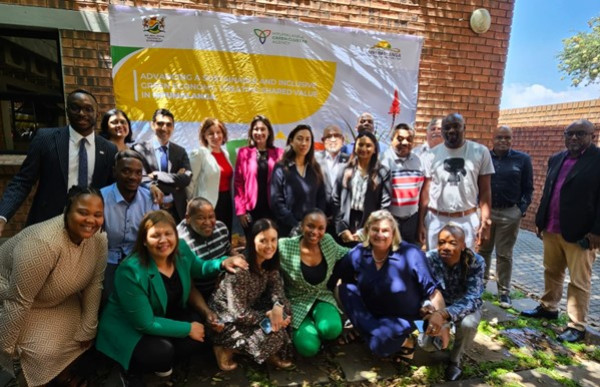
A series of impactful events held between November 12-15 marked several strides forward in advancing gender equality in South Africa's Just Energy Transition.  

Organized by the Mpumalanga Green Cluster Agency, the Project Implementation Unit, with support from the Climate Investment Funds (https://apo-opa.co/4iDmV0s) and the African Development Bank, the week-long programme's centre-piece was a one-day workshop on gender. 

It also combined with several other events, most notably as the official launch of South Africa's Just Energy Transition Jobs First Project, the visit of Patricia Pena, Assistant Deputy Minister at Global Affairs Canada and the training of the Project Implementation Unit and provincial governmental officials on the Bank's procurement, financial management, and disbursement rules and regulations.  

“We are proud to support the Gender Equality in Just Energy Transition Workshop and South Africa's Jobs First Project, advancing Mpumalanga's green economy goals, job creation, and a just, low-carbon transition,” stated Nkosinathi Nkonyane, Mpumalanga Green Cluster Agency CEO. 

Assistant Deputy Minister Pena of Global Affairs Canada remarked: “We congratulate the Government of South Africa for the leadership, ambition, and partnership with us. Through the Climate Investment Funds, we are supporting advocacy and outreach programmes to build leadership from within.” 

These events gathered stakeholders from national and provincial government officials, Just Energy Transition Project Management Unit, civil society organizations including women's groups and youth organizations, bilateral and multilateral development agencies, academia, and the private sector to drive inclusive and sustainable change. 

Through direct engagement with local voices, the Project is fostering a collaborative environment where grassroots insights are prioritized, building a foundation for a more inclusive energy transition that centres around community needs. 

A highlight of the week was the launch of South Africa's Just Energy Transition Jobs First Project. Supported by the African Development Bank, Climate Investment Funds, Irish Aid, Agence Française de Développement, and ABSA Bank, this project focuses on strengthening institutions, and empowering local communities in Mpumalanga by creating sustainable employment opportunities through gender equality, social inclusion, and skills development.  

Dr Babatunde Omilola, Human Development division manager at the African Development Bank underscored: "This project is a key milestone in advancing a just energy transition for South Africa, prioritizing sustainable energy, job creation, gender equity, and social inclusion—ensuring the shift to a green economy benefits all, especially in Mpumalanga." 

South Africa's Just Energy Transition Jobs First project activities were discussed with one of the strategic partners UVU Africa on a female farmers project in Bushbackridge.  

Beneficiaries will receive training on sustainable and smart agriculture and receive a digital kit (tablets and data) to support their work. Suhana Bisnath Head Strategy and Product Design at UVU Africa stated: "We look forward to further collaborating with partners across sectors to ensure the ‘just' in Just Energy Transition is realised in every corner of Mpumalanga and beyond. Together, we can create a model of progress that prioritises inclusivity and innovation, building a future where no one is left behind".   

Other initiatives discussed include the creation of a Gender Desk within the Mpumalanga Green Cluster Agency to facilitate dialogue among women actors, mapping of women entrepreneurs, and increased collaboration among women networks in the province. AFD's mandate in South Africa supports the Just Energy Transition by addressing poverty, inequality, and the social dimensions of energy transition through a policy-based loan focused on governance, energy access, and economic diversification. Gender equality is a key priority, with AFD collaborating with the Mpumalanga Green Cluster Agency to integrate gender considerations into the SAJJOF project. 

Together, the gender workshop and the South Africa's Just Energy Transition Jobs First project reflect a commitment by the Bank and its partners to integrate gender and social inclusion into climate initiatives. These efforts align with the wider goal to foster the “just” part of the Just Energy Transition leaving no one behind especially women, children and vulnerable households.  

“We are very excited to be supporting the SAJJOF project and look forward to welcoming the rising stars of South Africa's energy transition who are showing the world how women can lead the way” said Nina Kolybashkina, Gender and Social Inclusion Lead at Climate Investment Funds. 

For more information, explore the Women-led Coal Transitions report here (https://apo-opa.co/4gca7gc). 

Distributed by APO Group on behalf of African Development Bank Group (AfDB).

Media contact: 
Sonia Borrini
Climate Change and Green Growth Department
s.borrini@afdb.org  

For more information on South Africa's Just Energy Transition Jobs First Project please contact:
Elaheebocus, Nawsheen : n.elaheebocus@afdb.org. 

Media files
African Development Bank Group (AfDB)
Download logo
Read moreAdvancing Gender Equality in South Africa’s Just Energy Transition
13 December 2024

Call to expand SA-Angola trade and investment 

Location: News

Call to expand SA-Angola trade and investment 

President Cyril Ramaphosa has called for the expansion of bilateral trade and investment between South Africa and Angola.

“During our official engagement, we reached a shared understanding that significant opportunities exist to further strengthen and expand our bilateral trade and investment relations,” President Ramaphosa said on Thursday.

The President made the remark during the South Africa-Angola Business Forum held at the CSIR International Conventional Centre in Pretoria. This as he hosted his Angolan counterpart, President João Manuel Gonçalves Lourenço, who was in South Africa for a State Visit at the Union Buildings earlier in the day.

READ | SA, Angola deepen ties

Speaking at the inaugural South Africa-Angola Business Forum, President Ramaphosa said it was heartening and encouraging to see a broad representation of business from the two countries. 

“This is in itself a solid demonstration of confidence; confidence in the strength of the region’s two largest economies; confidence in the potential that exists for deepening trade and investment ties; confidence that the governments of both countries are taking the necessary steps to ensure that the business operating environment is improved so investments can be safe and secured,” the President explained.

The first citizen said in his engagements with President Lourenço and the respective delegations, a wide array of critical political, economic and social issues of mutual concern were discussed.

More than 20 South African entities are already investing in Angola in a range of sectors including rail, agriculture, industrial parks, oil refineries, manufacturing, IT, financial services and logistics.

“By way of example, the Development Bank of Southern Africa is financing port development, railway rehabilitation, oil and gas infrastructure and renewable energy development in Angola. 

“The Export Credit Insurance Corporation of South Africa has also maintained a healthy pipeline in Angola in infrastructure development, and the Industrial Development Corporation is involved in financing the Cabinda Oil Refinery and the Cabinda phosphate project. We would like to see substantially more Angolan FDI [foreign direct investment] inflows into the South African economy,” said President Ramaphosa.

In addition, between 2003 and 2024, “only a handful” of Angolan companies were investing in South Africa in communications, financial services and the metal sector.

With respect to trade, though South Africa’s exports to Angola have grown by approximately 11% since 2019, they account for just 3% of Angola’s total imports. 

South Africa’s imports from Angola have declined by some 19% since 2019.

“Casting the net wider presents immense possibilities for improving both trade and investment flows. South Africa is pursuing an ambitious economic development agenda based on export-led industrialisation.

“We seek to revitalise our industrial base, modernise our infrastructure network, and strengthen logistics and supply chain connectivity with the rest of the continent,” President Ramaphosa said, noting that this presents opportunities for cooperation in various sectors such as agriculture and agro-processing, energy and rail rolling stock.

Energy and infrastructure development

On energy matters, the President said the rapid growth of key clean energy manufacturing industries, as part of the global transition to a low-carbon economy, is an area that must be explored urgently. 

“The global energy transition offers new opportunities to upgrade and diversify into technology-intensive global value chains. The transition to a low-carbon economy therefore presents scope for collaboration around critical minerals, specifically with regards to value addition and beneficiation.”

The President said infrastructure development that unlocks intra-Africa trade is a priority.

“We must build on the work already underway on the Lobito Corridor to create sustainable industries in the region. South Africa is ready to partner with Angola in the development of strategic corridors, including the Central, North and South Corridors, with the aim of transforming them into dynamic economic infrastructure projects that can promote growth.”

Cutting red tape

President Ramaphosa called on business and government to use the forum proactively.

“As government and business, we must use this forum to engage proactively around not just the possibilities that exist, but also how to resolve the challenges in the business operating environment. Companies in both Angola and South Africa have challenges that make it difficult to do business.

“Stringent business visa requirements, high export costs, onerous import processes, taxation issues and bureaucratic red tape are just some of these. 

“We must be able to emerge from this forum with a clear understanding of what the main challenges are and what steps will be taken to facilitate greater market access on both sides.

“Promoting greater economic growth for the benefit of Angola and South Africa necessitates that we are agile, adaptable and responsive as both the public and private sectors,” he said. - SAnews.gov.za

Edwin
Fri, 12/13/2024 - 09:42

297 views
Read moreCall to expand SA-Angola trade and investment 
13 December 2024

African Development Bank Celebrates 60 Years of Transformative Impact in Africa Southern Region

Location: News
African Development Bank Group (AfDB)

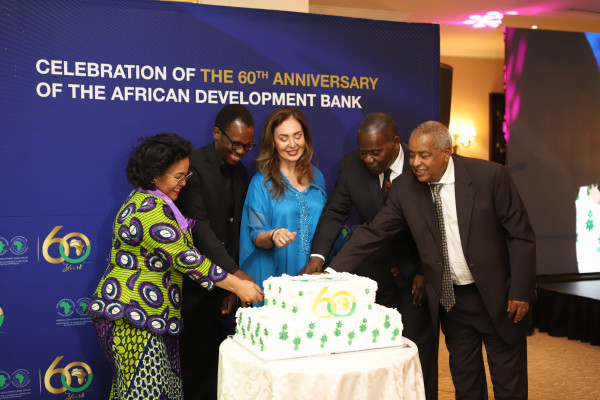
The African Development Bank (AfDB) (www.AfDB.org) proudly celebrates its Diamond Jubilee, marking 60 years of driving social and economic transformation across the African continent. The Southern African regional celebration, held in Johannesburg, brought together leaders, stakeholders, and partners to reflect on the institution's remarkable journey and its vision for a prosperous future.

Speaking at the event, Ms Leila Farah Mokaddem, Director General of the African Development Bank Group, highlighted the Bank's legacy of impact and transformation. "Sixty years ago, the African Development Bank was born out of a vision for a better Africa. Today, we celebrate not just numbers but the lives transformed and communities uplifted through our work," she said.

Key Achievements in Southern Africa

With an active portfolio of 226 projects worth USD 11 billion, the Bank's unwavering commitment to fostering sustainable growth and integration in Southern Africa is evident. Notable achievements include:

  • SADC Sub-Regional Transport and Facilitation Project: A USD 231.3 million investment connecting Malawi and Mozambique, fostering trade, and mitigating regional fragility.
  • Lesotho Highlands Water Project: A USD 2.1 billion initiative enhancing water transfer and hydroelectric power, essential for energy security.
  • Kazungula Bridge Project: A USD 81.6 million investment strengthening connectivity between Zambia and Botswana along the North-South Corridor.
  • Support for Transnet: A recent USD 1 billion sovereign-guaranteed corporate loan to aid South Africa's freight transport recovery and growth.

The celebration also underscored the deep partnership between the Bank and the Government of South Africa. Honourable Minister Enoch Godongwana shared his reflections on this enduring collaboration:

"The Government of the Republic of South Africa celebrates this significant milestone with the African Development Bank. Our region, and indeed South Africa, continues to enjoy a fruitful partnership with the Bank as we work together toward a shared goal of creating a better Africa for future generations.

As we gather to celebrate the many achievements of our collaborative efforts, we also recognise the need to continue advancing Africa's development agenda. This milestone energises us and strengthens our commitment to a shared vision for the next 60 years!"

Looking Ahead: A Vision for the Future

As the Bank embarks on its new Ten-Year Strategy, it prioritises integrated regional projects and climate resilience. Projects like the Lobito Rail Integrated Corridor, connecting Angola, DRC, and Zambia, promise to drive economic growth, agriculture value chains and renewable energy investments.

"Our work is far from over," Ms Mokaddem noted. "We invite all partners—governments, private sector actors, and international institutions—to join us in building a more inclusive and sustainable Africa. Together, we can address climate-related challenges and mobilise resources to ensure no one is left behind."

A Commitment to Africa's Development

Under the leadership of President Dr Akinwumi A. Adesina, the Bank has maintained its AAA rating and authorised capital of USD 318 billion, with nearly 2,000 staff serving all 54 African countries. The institution continues to champion its “High 5s” priorities: lighting up and powering Africa, feeding Africa, industrialising Africa, integrating Africa, and improving the quality of life for the people of Africa.

The 60th-anniversary celebrations are a testament to the Bank's resilience and the enduring support of its partners. The African Development Bank remains steadfast in its mission to transform lives and catalyse growth across the continent.

To view our anniversary video that encapsulates these achievements and our vision for the future, please click here: Anniversary Video (https://apo-opa.co/4g8Y2s3).

Distributed by APO Group on behalf of African Development Bank Group (AfDB).

Media contact:
Natalie Naudé,
Communication and External Relations Department
n.naude@afdb.org

Join the Conversation:
#AfDB60 #AfricaRising #EconomicTransformation #MakingADifference

About the African Development Bank Group:
The African Development Bank Group (AfDB) is the premier multilateral financing institution dedicated to Africa's development. It comprises three distinct entities: the African Development Bank (AfDB), the African Development Fund (ADF) and the Nigeria Trust Fund (NSF). The AfDB has a field presence in 41 African countries, with an external office in Japan, and contributes to the economic development and social progress of its 54 regional member states. For more information: www.AfDB.org

Media files
African Development Bank Group (AfDB)
Download logo
Read moreAfrican Development Bank Celebrates 60 Years of Transformative Impact in Africa Southern Region
13 December 2024

SA, Angola well positioned to capitalise on trade and investment opportunities

Location: News

SA, Angola well positioned to capitalise on trade and investment opportunities

The Deputy Director General: Trade Branch at the Department of Trade, Industry and Competition (the dtic), Ambassador Xolelwa Mlumbi-Peter, says South Africa and Angola are well positioned to capitalise on trade and investment opportunities that exist in both countries.

Mlumbi-Peter was speaking at a Business Forum hosted by South Africa and Angola in Pretoria on Thursday.

“Boosting intra-Africa trade has to be a core objective for both our countries. We need to identify what is produced in our countries, but also what we are importing from elsewhere, so that we can identify obvious products that can be traded among ourselves.

“Many economies globally are adopting strategic autonomy policies and are reconfiguring supply chains to bring them closer to home to promote economic resilience and address strategic vulnerabilities. Promoting intra-Africa trade has to be a strategic objective,” said Mlumbi-Peter.

She encouraged the private sector to identify opportunities for sourcing key inputs and products from each other to boost bilateral trade.

Speaking at the Forum, Chief Executive Officer of Business Unity South Africa, Khulekani Mathe, said as the South African business community, they recognised Angola as a vital market for their products. 

He said the African Continental Free Trade Agreement (AfCFTA), provides significant potential for expansion of trade between the two markets.

“The presence of South African companies in sectors such as mining, banking, retail, logistics, and food services underscores Angola's importance as an investment destination for South Africa to facilitate trade, we need to develop appropriate infrastructure.

“In addition to physical infrastructure, establishing and strengthening business organisations, such as chambers of commerce, is critical,” he said.

He added that the South Africa-Angola Chamber of Commerce was an important building block of trade infrastructure. He encouraged businesses from both countries to join and strengthen this organisation.

“Currently, both economies face challenges with weak growth, registering less than one percent of the Gross Domestic Product (GDP) growth in 2023. 

“Another shared characteristic is our dependence on raw natural resources in our exports, which means that while we export our commodities, we are also exporting jobs to countries that transform these resources into finished products."

The President of the Angola-South Africa Chamber of Commerce, Paula Xavier, said as a chamber they once again called upon businesses from South Africa and Angola to create, strengthen and deepen businesses, partnerships and investments in favour of the multi-sectoral sustainability.

She said for this to be possible, a few essential elements were needed, namely; the alignment of the heads of state, the involvement of entrepreneurs in business partnerships and the cultural dream of people from both countries.

The Chief Executive Officer of Black Business Council, Kganki Matabane said the role of the two economies in the Southern African Development Community (SADC) region were critical as the two countries have a strong partnership that includes trade and investment.

“Our role as partners is crucial in the implementation of the AfCFTA as we are poised to exploit the opportunities as key players within the region. 

“At the crux of our respective economies is the need to improve livelihoods. Our bilateral interaction provides an opportunity to contribute not only to regional growth but growth of the global economy,” said Matabane.

He added that the most important opportunities that can be explored by businesspeople from both countries were the beneficiation of mineral resources and localisation, as they are important for job creation, and to promote sustainable development. – SAnews.gov.za


Edwin
Fri, 12/13/2024 - 10:25

75 views
Read moreSA, Angola well positioned to capitalise on trade and investment opportunities
12 December 2024

Tears of joy as flood-damaged Kariega bridge reopened

Location: News

Tears of joy as flood-damaged Kariega bridge reopened

Kariega residents could not hold back tears of joy when Nelson Mandela Bay Municipality Mayor, Babalwa Lobishe, unveiled the newly refurbished Cuyler Bridge, which was damaged during the October floods that hit the Eastern Cape Province.

Unveiled this week, the R3.8 million refurbished bridge promises to bring relief to Kariega residents as an early Christmas gift, revitalising local economic activity, enhancing transportation, and reconnecting the communities which have been isolated by the disaster.

Speaking at the unveiling of the newly refurbished bridge, Lobishe said the successful reconstruction of Cuyler Bridge marks the triumphant completion of Phase 1 of the project.

Lobishe said the project has transitioned to Phase 2, focusing on enhancing the surrounding water management system, including clearing of the riverbank to restore natural flow, and cleaning the canal and drainage system to mitigate flood risks.

"We are thrilled to announce the successful completion of the first project, as the closure of the bridge was negatively affecting the economic zone of the area. We wouldn’t want businesses to be affected any further. As part of my 100 Days [in office] priorities, we are driving impactful, agile and quality infrastructural development to boost Kariega’s growth,” Lobishe said.

Lobishe announced that several key projects are underway, including the rebuilding of the Jubilee Canal and Gibbon Bridge in Kariega, all valued at approximately R6.2 million.

Lobishe said efforts to rebuild Kariega are accelerating rapidly. She highlighted the municipality’s commitment to revitalising infrastructure in Kariega.

“The infrastructure projects underway are racing ahead of schedule, with the Jubilee Canal project significantly exceeding expectations. Moreover, the Matanzima Bridge, initially set to be completed in 24 months, is now scheduled for completion in just less than 10 months,” Lobishe said.

The Mayor also warned residents against littering in rivers, storm water drains and canals, emphasising how littering negatively affects river overflows and contributes to floods during heavy rains.

Acting Director of Project Management, Sisanda Njanjula said the city is racing to complete the project before the festive season begins.

“Following regular site inspections, we noted that the canal is closer to the community, posing a safety risk, particularly for children playing in the area. To mitigate this, contractors are working diligently, including on weekends,” Njanjula said.

Kariega community member, Belinda Snam, expressed her heartfelt gratitude to the municipality, especially the Mayor, for prioritising Kariega’s development within her 100 Days initiative.

“We are thrilled to see our roads open. We will definitely enjoy our festive season,” Snam said. – SAnews.gov.za


GabiK
Thu, 12/12/2024 - 12:51

220 views
Read moreTears of joy as flood-damaged Kariega bridge reopened
12 December 2024

South Africa-Angola elevate bilateral relations 

Location: News

South Africa-Angola elevate bilateral relations 

President Cyril Ramaphosa has emphasised that increasing trade and investment between South Africa and Angola remains a top priority.

“Increasing trade and investment between the two countries remains our foremost objective. South Africa must become the destination of choice for Angolan goods, products and services, and vice versa,” he said.

The President was delivering opening remarks during official talks with Angolan President João Manuel Gonçalves Lourenço at the Union Buildings in Pretoria, on Thursday.

President Lourenço of the Republic of Angola is in South Africa on a State Visit at the invitation of President Ramaphosa. 
The Heads of State are using the occasion to solidify relations between the two countries who share deep historical ties.

WATCH | Official Talks between HE President Cyril Ramaphosa and HE President João Lourenço 


President Ramaphosa highlighted the decision to elevate the structured bilateral mechanism between South Africa and Angola from a Joint Commission of Cooperation to a Bi-National Commission (BNC), reflecting a deepening commitment to collaboration. 

The inaugural BNC session will take place in Angola next year, coinciding with the 50th anniversary of Angolan independence.
“Co-chairing this first session with you will be an honour, especially given that it will be during the 50th anniversary celebrations of Angolan independence.”

The President underscored the strong economic ties between the two nations, noting the presence of 20 South African companies in Angola and their diversification into sectors beyond oil. 

South African foreign direct investment (FDI) into Angola has been in a range of sectors such as financial services, IT, food and beverage, transportation, warehousing and tourism.

South Africa’s Industrial Development Corporation (IDC) also has investment projects in Angola, namely in the Cabinda Oil Refinery and the Cabinda phosphate project.

“We want to see more Angolan companies in South Africa. Opportunities exist in infrastructure development, agriculture, construction, mining, financial services, telecoms and manufacturing, to name but a few,” the President explained.

Collaboration in Economic Growth

The leaders discussed leveraging the African Continental Free Trade Agreement (AfCFTA) to drive industrialisation and trade.
President Ramaphosa also emphasised the potential for joint strategies in mineral beneficiation, particularly as global demand grows for critical minerals essential to the energy transition. 

He highlighted Angola’s Lobito Trans-Africa Corridor as a promising development for regional integration and trade.
“We see the African Continental Trade Agreement as a catalyst for inclusive economic growth, and we must take advantage of the system of preferential terms provided to signatories.

“As both Angola and South Africa strive to accelerate the pace of industrialisation, we need to build mutually complementary capabilities in manufacturing and value-addition of products,” he said.

Commitment to Peace and Multilateralism

The leaders’ discussions extended to shared efforts in promoting peace and security across the continent. 

Angola’s contributions to peacebuilding, particularly its role in the Southern African Development Community (SADC) and initiatives like the Luanda Process were praised.

“We must continue to deepen our collaboration towards resolving the conflict in the Eastern DRC, the civil war in Sudan and the post-electoral crisis in Mozambique.

“Silencing the Guns across Africa is a necessary precondition for stability, economic growth and development. As African countries, we must be at the forefront of promoting the peaceful resolution of conflict, particularly at a time when the future of multilateralism is at stake,” he said.

On the global stage, President Ramaphosa advocated for reforming international institutions, including the UN Security Council, to better represent the Global South. He reaffirmed South Africa’s commitment to multilateralism, calling for respect for the United Nations Charter and international law.

Africa at the forefront

With South Africa having assumed the G20 Presidency, President Ramaphosa pledged to prioritise Africa’s developmental goals, particularly those outlined in Agenda 2063. 

According to the African Union, Agenda 2063 is Africa's development blueprint to achieve inclusive and sustainable socio-economic development over a 50-year period.

The President highlighted that South Africa will host the first G20 Summit on African soil in 2025, signalling a historic moment for the continent.

“Working with the African Union and fellow African countries will ensure that the issues of strategic importance to Africa and the Global South are highlighted.”

The President further extended a warm welcome to President Lourenço and his delegation saying his visit marks a significant step in strengthening bilateral ties between the two nations. 

“Your presence here testifies to the strong ties of solidarity and friendship between our two countries.” – SAnews.gov.za


DikelediM
Thu, 12/12/2024 - 13:52

294 views
Read moreSouth Africa-Angola elevate bilateral relations 
12 December 2024

SA, Angola deepen ties

Location: News

SA, Angola deepen ties

President Cyril Ramaphosa has reaffirmed South Africa's commitment to strengthening its partnership with Angola, focusing on shared economic growth, continental integration and sustainable development.

Addressing a media briefing during the Angola State Visit on Thursday, President Ramaphosa said South Africa is keen to see more Angolan investors enter the South African economy. 

“South Africa looks forward to deepening its ties with Angola in the cause of mutually beneficial growth, continental economic integration and sustainable development,” the President said. 

President João Manuel Gonçalves Lourenço of the Republic of Angola is in South Africa for a State Visit at the Union Buildings in Tshwane. 

President Ramaphosa conferred the Order of South Africa on President Lourenço, meaning he shall henceforth be honored as an esteemed member of the country’s National Orders. 

“The people of South Africa collectively salute President Lourenço on being conferred with this very high honor of the order of South Africa. I congratulate you for being honored in this manner by South Africa,” President Ramaphosa said. 

The two Heads of State will address a Business Forum later today. President Ramaphosa said this serves as a chance to connect Angolan and South African businesses and they look forward to participating.

“For our part as governments, we will be expanding on the structural economic reforms underway in both countries to improve the investment climate and business operating environment,” President Ramaphosa said. 

With respect to bilateral cooperation, President Ramaphosa said the two countries agreed on an audit of existing agreements and Memoranda of Understanding. 

“Since formal diplomatic relations were established between Angola and South Africa, we have signed more than 44 agreements. They are at varying stages of implementation. This stock-take is necessary in the interests of strengthening the strategic partnership going forward,” the President said. 

With respect to collaboration on peace and security in the region and across Africa, President Ramaphosa commended President Lourenço for his efforts in mediating between the Democratic Republic of Congo and Rwanda, as President of the International Conference on the Great Lakes, and as Facilitator of the Luanda Process. 

The President said that South Africa and Angola are deeply troubled by the deteriorating situation in Sudan and the ensuing humanitarian crisis. 

President Lourenço serves on the AU Presidential Ad-Hoc Committee for the Republic of Sudan. 

“South Africa pledges its full support for all efforts to bring about an end to the conflict in Sudan. We are equally concerned at the post-electoral crisis in Mozambique and have agreed to work together to enable our region to better respond to peace and security challenges in Africa,” the President said. 

President Ramaphosa further congratulated President Lourenço on his re-election, highlighting that this has been a year of major elections across the continent, including in Angola and South Africa.

“We have a shared sense of optimism regarding the state of multiparty democracy in Africa, which has proven to be robust and in good health.

“We have commended SADC for supporting these democratic processes through election observer missions, as well as for providing valuable recommendations on electoral processes going forward,” he said. – SAnews.gov.za

DikelediM
Thu, 12/12/2024 - 15:27

86 views
Read moreSA, Angola deepen ties
12 December 2024

BRICS Antitrust Authorities Turned against Covantis

Location: News
BRICS Competition Law and Policy Centre

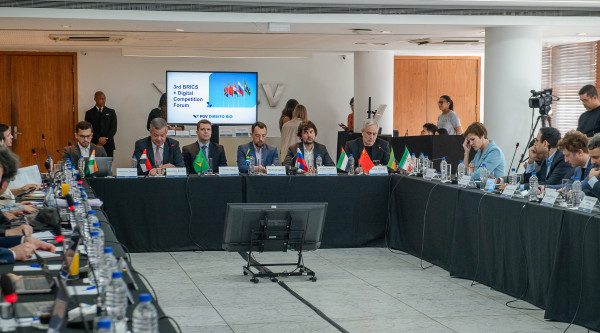
At the 3rd BRICS + (Brazil, Russia, India, China, South Africa, Egypt, Iran, Arab Emirates, Ethiopia + partners) Digital Competition Forum, the BRICS Competition Law and Policy Centre (www.BRICSCompetition.org) presented a new methodological approach to analyzing and regulating food markets that takes into account their accelerating digitalization. Specific tools that are being developed within the BRICS framework were also announced. One of the targeted tools will be the food market and restrictions on the activities of monopolists like Covantis.

Alexey Ivanov, Director of the BRICS Competition Law and Policy Centre, highlighted that digitalization strengthens the global power of large corporations, which, as a result, poses a threat of market monopolization. He urged BRICS antitrust regulators to pay close attention to a similar example of increasing market power through digitalization — the blockchain platform Covantis. The platform aims to digitize the entire agribusiness trade process, from contract management to final shipping. Founded by the largest agro-traders of the ABCCD group (ADM, Bunge, Cargill and Louis Dreyfus and COFCO) and Viterra, Covantis avoids antitrust scrutiny due to its structure. At the same time, the platform collects valuable commercial information about production from farmers and agricultural traders. The platform has already become a dominant player in grain trade. For example, in Brazil, 76% of grain exports go through the platform. In 2023, 53% of grain exports from the US, 34% from Canada and 51% from Argentina went through the Covantis platform. At the same time, the owners of the platform do not allow most of the local big players to enter. In essence, it is an exclusive platform, a quasi-cartel.

“Global food prices have reached the highest level in the last year and a half. Virtually all BRICS countries are currently undergoing antitrust investigations into the egg and chicken meat markets. Competitive agencies must take a new approach to regulating the food industry, not just by jointly analysing global food chains, but by analysing them taking into account all the implications of digitalization. This is the only way we will be able to tackle food security, which is particularly acute for the BRICS and partner countries. For example, the Covantis platform can be used by traders to share confidential information and vertical pressure on farmers. And of course the exclusionary behaviour of Covantis towards local players is of utmost importance. This should be the focus of attention of our countries' competition authorities” – Ivanov explained.

Based on the developed fair organized (exchange) trade in commodities and commodity derivatives within the BRICS framework, it is proposed to solve the problems related to market concentration and, as a consequence, insufficient consideration of the interests of small, medium and large enterprises, which will help to resolve issues related to the violation of the balance of interests of financial market players and producers and consumers of the real sector.

It is proposed to create within the BRICS framework representative indicators of exchange quotations and price indices for OTC transactions based on representative samples of actual transactions, reflecting the competitive composition of sellers and buyers and ensuring the use of universal means of delivery of traded goods. New approaches will contribute to the elimination of unproductive intermediation and increase stability in global commodity markets.

The development of a derivatives market based on reliable exchange and OTC cash commodity prices will create opportunities for BRICS economies to manage risks and pool resources, lead to positive consequences for business and society, strengthen cooperation and stimulate economic growth. Targeted subsidies and exchange mechanism will improve fiscal policy and infrastructure development.

Earlier this year, BRICS Competition Law and Policy Centre (BRICS Center) with the leadership of the Competition Policy and Assessment Center of the State Administration of Market signed a memorandum on long-term cooperation announced the launch and development of the Russian-Chinese exchange and trade platform in consumer goods and commodities which will become a basis for the further development of the universal exchange platform for all BRICS member-countries.

“If entrepreneurs of Russia and China work directly, through modern exchange mechanisms, which will not only allow to establish direct long-term ties, but also reduce prices for goods for end consumers, as it will eliminate the use of intermediary schemes. The task of experts and researchers in this regard is to develop a system of organizational, legal and economic measures and analyze the necessary conditions for the creation of exchange platforms and the development of exchange trade, including in the BRICS format” – Fu Hongwei, Director, Competition Policy and Assessment Center, SAMR; explained.

Distributed by APO Group on behalf of BRICS Competition Law and Policy Centre.

About the 3rd BRICS + Digital Competition Forum:
The BRICS + (Brazil, Russia, India, China, South Africa, Egypt, Iran, Arab Emirates, Ethiopia + partners) Digital Competition Forum, which is being held this year on the margins of the G20 Summit, brings together heads and representatives of competition authorities from all BRICS countries and partners, as well as researchers and visionaries in the field of digital regulation from around the world. The Forum includes the BRICS Working Group on the Study of Competition Issues in Digital Markets. This year's main topics include regulation of digital ecosystems, the challenges and opportunities that artificial intelligence brings to antitrust law, and the digitalization of global food chains.

The Forum is organized by the HSE University BRICS Competition Law and Policy Centre together with the FGV University School of Law (Getulio Vargas Foundation) with the support of the Brazilian Competition Authority (CADE).

Media files
BRICS Competition Law and Policy Centre
Download logo
Read moreBRICS Antitrust Authorities Turned against Covantis
12 December 2024

Financial injustice a hindrance to Africa’s development

Location: News

Financial injustice a hindrance to Africa’s development

The transformation of global financial institutions remains critical in addressing Africa’s mounting debt challenges, as they perpetuate financial injustice, says United Nations (UN) Secretary-General António Guterres.

“The G20 must lead in delivering financial justice. Financing is fundamental -- from inclusive economic growth, to supporting industrialisation and food security or addressing inequalities,” Guterres said during the closing session for the Joint Sherpa-Finance and Central Banks Deputies' Meeting, held in Johannesburg, on Wednesday.

Guterres explained that global financial systems "load" countries with debt service costs, while denying them access to sufficient low-cost financing to fight poverty, inequality and hunger and advance the Sustainable Development Goals (SDGs).

According to the UN, in 2022, public debt in Africa reached USD 1.8 trillion.

“Developing countries must be represented fairly in their governance. These institutions must also protect economies, particularly from global shocks. It is time to mend the global safety nets that were discovered during the COVID-19 pandemic that they were no longer fit for purpose.

“This continent’s potential is without question. Africa is home to a young and growing population, rich cultural and natural diversity, and a tremendous entrepreneurial spirit. But this enormous potential continues to be held back by injustices that are deeply rooted in the history of colonialism.

“Injustice in worsening climate chaos - which Africans did virtually nothing to cause - that fuels floods, storms, hunger and deadly droughts. I stand side-by-side with President Ramaphosa and the people of Africa in this fight for justice on all fronts. Africa needs financial justice,” Guterres said.

In September, world leaders adopted the Pact for the Future, which includes commitments for ambitious reforms to make the international financial architecture representative of today’s global economy and put the needs of developing countries front and centre.  

The pact covers a broad range of issues including peace and security, sustainable development, climate change, digital cooperation, human rights, gender, youth and future generations, and the transformation of global governance.

“It calls for action to move forward with an SDG Stimulus… to substantially increase the lending capacity of Multilateral Development Banks to make them bigger, bolder and better to support developing countries.

“... And to mobilise more international and domestic resources, public and private, for vital investments. Last week I appointed a group of leading experts to galvanize international support for action on debt, and I’m delighted that Trevor Manuel will be part of this important work,” he said.

As part of the work for South Africa’s G20 Presidency, Guterres participated in the first series of the more than 130 meetings that will precede the G20 Summit in 2025.

On 1 December 2024, South Africa assumed the Presidency of the G20, which comprises many of the world's largest developing and developed economies.

The G20 was established to tackle pressing global economic and financial issues. Together, G20 members account for around 85% of global gross domestic product (GDP) and 75% of international trade. 

The G20 comprises 19 countries including Argentina, Australia, Brazil, Canada, China, France, Germany, India, Indonesia, Italy, Japan, Republic of Korea, Mexico, Russia, Saudi Arabia, South Africa, Türkiye, United Kingdom, and United States and two regional bodies, namely the European Union and the African Union.

The grouping therefore plays a critical role in influencing global policy making and fostering global economic stability.

South Africa's G20 Presidency is the fourth consecutive emerging market Presidency, and it is also the first African Presidency, followed by the admission of the African Union (AU) as the second permanent African member. - SAnews.gov.za

nosihle
Thu, 12/12/2024 - 08:51

211 views
Read moreFinancial injustice a hindrance to Africa’s development
12 December 2024

G20 Africa Expert Panel to support Finance Track

Location: News

G20 Africa Expert Panel to support Finance Track

Finance Minister Enoch Godongwana says a G20 Africa Expert Panel will be established to support the work of the G20 Finance Track.

He was speaking during the first day of the G20 Finance and Central Banks Deputies’ Meeting, held in Johannesburg, on Wednesday.

The Minister explained that the panel will consist of leading African economic, development and finance experts from the public sector, think tanks, academia and international financial institutions.

“We intend to use our Presidency to advance an African agenda. To further this agenda and ensure that we strengthen the manner in which the G20 respond to the social and economic needs of our continent, we intend to establish a G20 Africa Expert Panel to support the G20 Finance Track. 

“One of the areas we will request the G20 Africa Expert Panel to advise us on is how we can ensure that the various African initiatives, including the compact with Africa, can be strengthened to the benefit of the continent,” Godongwana said.

On the need to reform the international financial architecture, the Minister said focus will now be on implementation on the agreement reached in the previous G20 Summit held in Brazil, last month.

The agreement – included in the G20 Rio de Janeiro Leaders’ Declaration – states that the group of countries will accelerate the reform of the international financial architecture “so that it can meet the urgent challenges of sustainable development, climate change and efforts to eradicate poverty”.

“The G20 Roadmap towards Better, Bigger and More Efficient [Multilateral Development Banks] was a milestone achievement under Brazil’s Presidency. Now the focus turns to implementation and monitoring. 

“The discussions under South Africa's G20 Presidency will take place alongside the 5th Finance in Common Summit that will take place at the Cape Town International Convention Centre… from 26 to 28 February 2025, as well as the 4th International Conference on Financing for Development in Spain in June 2025. 

“Both these events provide a critical opportunity for countries to commit to closing the development financing gap and investing in the [Sustainable Development Goals],” Godongwana said. 

Turning to debt sustainability, Godongwana said challenges in this area require a “comprehensive approach”.

“We will also keep our focus on enhancing debt sustainability, through improving the implementation of the Common Framework. We are aware that there are countries whose debt is sustainable, but which are facing acute liquidity challenges, which, if not addressed, could result in solvency challenges. 

“These challenges necessitate a comprehensive approach towards debt sustainability, which means there is no one size fits all approach. 

“It also forces us to acknowledge that debt sustainability cannot be solved through the Common Framework alone but must be solved through a focus on putting in place the measures for countries to make the right investments and undertake appropriate reforms to support sustainable and inclusive economic growth,” he said.

The Minister said although challenges are “formidable”, he expressed confidence that the G20 has the “will, capacity and determination to address them” if countries work together.

“In 2025 let us execute our work programme with urgency, ambition and confidence. Let us work together to ensure strong, sustainable, balanced and inclusive growth. 

“And through the G20 Presidency for 2025, and propelled by your support, let us go even further as the G20, by going together,” Godongwana concluded. – SAnews.gov.za

NeoB
Thu, 12/12/2024 - 09:48

252 views
Read moreG20 Africa Expert Panel to support Finance Track
12 December 2024

Mashatile calls on Chinese-funded businesses to increase investments to create jobs in SA

Location: News

Mashatile calls on Chinese-funded businesses to increase investments to create jobs in SA

Deputy President Paul Mashatile has encouraged Chinese-funded enterprises in South Africa to increase their investments in crucial sectors of the economy, particularly the automotive industry and infrastructure development.

“Your participation and investment in our country is critical for creating jobs and promoting economic growth and development,” the Deputy President said on Wednesday. 

The country’s second-in-command was speaking at the launch of the corporate social responsibility report of Chinese-funded enterprises in South Africa. 

At the South Africa-China Economic Trade and Association (SACETA) event, Mashatile cknowledged the organisation’s substantial contributions to the country’s economic and social development. 

SACETA was established in April 2011 and serves as a vital platform for fostering economic and trade collaboration between China and South Africa.

Mashatile told attendees that the 200 Chinese-funded enterprises locally serve as role models for businesses, demonstrating that profitability should be balanced with social good. 

As the global landscape continues to evolve rapidly, he believes it is essential for nations to cultivate strong partnerships to thrive and navigate the challenges of the modern world.

“We should leverage our expertise to navigate towards a more sustainable path, guided by the principles of joint pursuit and a shared future. Our countries have complementary strengths and resources, making us ideal economic partners.”

The Deputy President described China as one of the world’s greatest economies, providing a massive market for South African goods and services.

“In return, South Africa provides rich resources, such as minerals, agricultural products, and skilled labour, to support China’s rising economy.” 

Mashatile is of the view that improving trade connections between South Africa and China benefits both countries directly and has a positive ripple effect throughout the region. 

“Increased trade creates jobs, stimulates economic growth, and improves living standards for the people of both countries.”

However, the Deputy President acknowledged that the trade structure has been imbalanced, noting that last year’s value of China’s imports far exceeded its exports. 

According to Mashatile, total bilateral trade increased from R614 billion in 2022 to R692 billion in 2023, while China’s R146 billion deficits remained the highest among any of the country’s trading partners.

He announced that government intends to work with China in addressing the trade deficit and structure of bilateral trade by broadening its export basket, especially to export more value-added products.

“South Africa mostly exports minerals and agricultural products to China while importing mostly manufactured goods from China. At a time when African economies are becoming more integrated, China’s technological prowess may help Africa industrialise and export more than just raw materials.

“Instead of exporting raw agricultural items, South Africa may export processed foods that are more valuable.”

Mashatile stressed that China could lend a helping hand by streamlining import procedures and lowering regulatory hurdles, which could make China a larger market for local products, benefiting both South African producers and Chinese customers.

He said Chinese-funded enterprises must seize opportunities in emerging fields such as artificial intelligence, the digital economy and green energy.

Last year, Chinese businesses pledged to invest up to R15 billion at South Africa’s fifth Investment Conference. 

“In that same year, we witnessed the signing of significant purchase agreements totalling US$2.2 billion with companies in both nations. Therefore, our positive trade relations continue to be crucial in combating unemployment, inequality, and poverty,” Mashatile said.

He said South Africa and China share a strong and longstanding relationship, and that the bond between the nations has deepened, revealing the potential for collaboration to promote inclusive and equitable growth.

The Deputy President also touched on President Cyril Ramaphosa’s recent State Visit to China and told attendees that both Heads of State committed to providing a stable, fair, and enabling business environment for companies.

He welcomed the report that highlights the contributions of Chinese-funded enterprises to environmental conservation, community development, education, and healthcare. 

“As we move forward, let us reaffirm our commitment to expanding South African-Chinese trade and investment cooperation. Together, we can build a more successful and sustainable future for our countries.” – SAnews.gov.za

Gabisile
Wed, 12/11/2024 - 13:54

22 views
Read moreMashatile calls on Chinese-funded businesses to increase investments to create jobs in SA
11 December 2024

Atlanta Mayor Andre Dickens Strengthens u.s. – SA Ties During Groundbreaking Official Visit

Location: Business

U.S. Embassy & Consulates in South Africa
Download logo

Atlanta Mayor Andre Dickens concluded a landmark official visit to South Africa, accompanied by a delegation of 35 Atlantan political, business, and community leaders.  The December 4-11 visit marked a significant milestone in Atlanta Phambili—a subnational diplomacy initiative centered on deepening U.S.-South Africa partnership through the City of Atlanta– and reaffirmed the shared commitment to advancing economic, cultural, and educational collaboration between the two nations.

“This trip was a celebration of the enduring bonds between Atlanta and South Africa, built on shared histories and common goals,” said Mayor Dickens.  “Atlanta Phambili embodies our joint vision for progress and collaboration, creating opportunities for both our citizens and economies.”

The visit followed the launch of Atlanta Phambili in March 2024 with a trade and investment roadshow hosted in Atlanta, featuring senior South African business executives and government officials.

South Africa and Atlanta United in Progress

The South African government, in partnership with Standard Bank, BrandSA, Amazon, and the American Chamber of Commerce in South Africa, hosted a robust program focused on trade and investment, science and innovation, and the creative economy.  This was led by the Department of International Relations and Cooperation (DIRCO), the Department of Trade, Industry, and Competition (DTIC), the Department of Sports, Arts and Culture (DSAC), the Department of Science and Innovation (DSI), the Gauteng and Western Cape provincial governments, and the cities of Johannesburg and Cape Town.

“The South African government's partnership on the Atlanta Phambili initiative is a testament to the strength of our bilateral ties and the shared potential of our cities to drive innovation, inclusion, and prosperity,” said U.S. Ambassador to South Africa Reuben Brigety, II.

Visit Milestones

Atlanta Phambili Pledge

The visit kicked off with the unveiling of the Atlanta Phambili Pledge on December 5 at the Standard Bank Trade and Investment Seminar in Johannesburg.  This open call to action seeks to mobilize stakeholders across both nations to deepen collaboration in trade, investment, and entrepreneurship.  The pledge reflects Atlanta's and South Africa's shared commitment to fostering inclusive economic growth and creating opportunities for small and medium-sized enterprises (SMEs).

Go Global Trade Expo: Strengthening Black-Owned Business Connections
On December 5, Ambassador Brigety announced a collaboration between the U.S. Agency for International Development (USAID) and the Atlanta Black Chambers to support the Chambers' Go Global Trade Expo.  The program will bring a delegation of Black-owned South African businesses to Atlanta in 2025, connecting them with the Chamber's extensive network and U.S. buyers.

Through this agreement, export-ready businesses will build connections with Atlanta-based platforms to foster trade and investment between South Africa and the United States.

FAME Week Africa 2025: Atlanta Announced as the Feature Destination
On December 9 in Cape Town, Mayor Dickens announced Atlanta will be the Feature Destination for FAME Week Africa 2025, the continent's premier gathering for professionals in film, television, music, fashion, and animation.  This recognition highlights Atlanta's emergence as a global creative hub and its strong historic and Diaspora ties to Africa.

“Atlanta being recognized as the Feature Destination for FAME Week 2025 is an excellent fit,” said Mayor Dickens.  “Our city is uniquely poised to satisfy the growing demand in the United States for African content and support production innovations.”

This honor also grants Atlanta a dedicated pavilion and events at FAME Week 2025, scheduled to take place in Cape Town from September 1-6, 2025.

Business-to-Business Engagements in Johannesburg and Cape Town

  • Standard Bank Trade and Investment Seminar:  This December 5 event convened leading South African and Atlanta-based companies, government officials, and entrepreneurs to explore opportunities for investment and trade.
  • Wesgro Business Briefing: In Cape Town on December 9, the official tourism, trade and investment promotion agency for Cape Town and the Western Cape, Wesgro, hosted a vibrant networking event where Atlanta delegates met with South African exporters and investors, fostering connections that will drive future partnerships.

Empowering Entrepreneurs and Celebrating Culture

  • A tour of the Mamelodi Business Hub on December 6 showcased collaboration with Georgia State University students supporting township entrepreneurs.
  • Discussions with South African leaders and creatives at Freedom Park on December 6 emphasized the shared cultural and historical connections between South Africa and Atlanta.
  • Visits to Amazon's African headquarters and The Wine Arc on December 9 and 10, respectively, highlighted e-commerce opportunities and Black-owned wine brands breaking into international markets.
  • A tour of Nike's Shapa Center in Soweto on December 4 modeled how private investments in sports support community growth and development.

Strengthening Historic Ties

Atlanta Phambili builds on a historic relationship between South Africa and Atlanta, from collaboration between U.S. civil rights activists and members of the South African anti-Apartheid movement to Nelson Mandela's historic 1990 speech at Georgia Tech.  This trip further cements Atlanta as a gateway for South African businesses to access U.S. markets and strengthens South Africa's position as a premier investment destination for Atlanta's private sector.

“Our visit reflects a robust partnership that will continue to grow as we move forward together,” said Mayor Dickens. “The commitment of the South African government and its people has been vital in shaping this initiative.  I look forward to building on these foundations for years to come.”

Ambassador Brigety added “From trade and investment to culture, sports, and education, Atlanta and South Africa are charting a future defined by innovation, inclusion, and opportunity.  The future economic partnership between Atlanta and South Africa is built to last and poised for growth.”

A Shared Vision for the Future

The U.S. Embassy in South Africa and the City of Atlanta extend their gratitude to the South African government and all participating partners for making this visit a success.  Together, Atlanta and South Africa are moving forward—Phambili—toward an even brighter, shared future.

Distributed by APO Group on behalf of U.S. Embassy & Consulates in South Africa.

Read moreAtlanta Mayor Andre Dickens Strengthens u.s. – SA Ties During Groundbreaking Official Visit
11 December 2024

Big investment needed to drive sustainable development

Location: News

Big investment needed to drive sustainable development

National Treasury Director-General (DG), Dr Duncan Pieterse, has called for large scale and sustainable investments to ensure the global community meets its commitments to end poverty, protect the planet and build prosperous societies.

“Financing gaps for sustainable development are large and growing. The estimates by our international organisations indicate that around $4 trillion in additional investments is needed annually for developing countries,” Pieterse said on Wednesday in Johannesburg.

He was speaking during the two-day Group of Twenty (G20) Joint Sherpa and Finance Track meeting.

According to the United Nations (UN), the world may miss many of the Sustainable Development Goals (SDGs) targets by 2030 due to the delay in development progress, which may even be reversed under the combined weight of climate disasters, conflict, economic downturn and the lingering aftermath of the COVID-19 pandemic.

The Sustainable Development Goals are a universal call to action to end poverty, protect the planet and improve the lives and prospects of everyone, everywhere. 

“To achieve the SDGs by the 2030 deadline, an urgent large scale and sustainable investments push is needed,” Pieterse said.

The DG said South Africa’s G20 Presidency will strongly focus on the challenges facing emerging markets and developing countries, especially those on the African continent.

“We will also focus our attention on policies and mechanisms that support sustainable development. Many developing countries, including those in Africa experience growth that is insufficient to reduce poverty, as well as tough financing conditions and high levels of public debt that crowd out resources or development spending

“During our Presidency, there will be a very strong focus on enhancing debt sustainability through a comprehensive approach, which will include... finding ways to improve debt structuring, supporting countries with liquidity challenges and encouraging the development of local currency markets to attract domestic savings and improve debt transparency,” Pieterse said.

South Africa will also continue to obtain borrower country perspectives on debt, including through an African outreach event, with broad participation of the borrower countries.

On 1 December 2024, South Africa assumed the Presidency of the G20 group of countries, which comprises many of the world's largest developing and developed economies.

“The global economy has been put to the test over the last four years, marked by an unprecedented pandemic, escalation in geopolitical conflict and extreme weather events that have disrupted supply chains. 

“The latest assessment by the International Monetary Fund that global growth is expected to remain stable, yet underwhelming, remains a concern. Higher growth is essential to improve prosperity and living standards to reduce debt, and create policy space to tackle our spending pressures,” Pieterse said.

In 2025, South Africa’s G20 Presidency will focus on strengthening macroeconomic fundamentals, accelerating climate transition and boosting productivity growth.

This week's discussion under the South Africa G20 Presidency takes place ahead of two very important events -- the 5th Finance in Common Summit (FiCS), taking place in Cape Town in February 2025, and the Fourth International Conference on Financing for Development (FfD), which will take place in Spain in June 2025.

“We see these events as very important opportunities to strengthen the development finance ecosystem, scale up and redirect financing to meet our global sustainable challenges, and bring impactful changes in relation to climate and biodiversity needs.

“As we prepare to submit our Nationally Determined Contribution (NDC) in 2025, it is clear that our very ambitious climate action goals cannot be achieved without unlocking a similarly ambitious set of climate instruments.

“The G20 must continue to play a leading role to address the critical issues of our age, so that we can achieve both global sustainable development and development that is inclusive, equitable and leaves no one behind,” Pieterse said.

South Africa's G20 Presidency is the fourth consecutive emerging market Presidency, and it is also the first African Presidency, followed by the admission of the African Union (AU) as the second permanent African member. 

The G20 was established to tackle pressing global economic and financial issues. Together, G20 members account for around 85% of global GDP and 75% of international trade. 

The G20 comprises 19 countries including Argentina, Australia, Brazil, Canada, China, France, Germany, India, Indonesia, Italy, Japan, Republic of Korea, Mexico, Russia, Saudi Arabia, South Africa, Türkiye, United Kingdom, and United States and two regional bodies, namely the European Union and the African Union.

The grouping therefore plays a critical role in influencing global policy making and fostering global economic stability. - SAnews.gov.za

nosihle
Wed, 12/11/2024 - 11:19

231 views
Read moreBig investment needed to drive sustainable development
11 December 2024

President Ramaphosa Concludes Meeting with Mpumalanga Provincial Executive

Location: News

The Presidency of the Republic of South Africa
Download logo

President Cyril Ramaphosa has concluded a constructive meeting with the Mpumalanga provincial executive.

This was a 3rd session between the National Executive and a provincial executive council following meetings with the provincial leadership of Limpopo and KwaZulu-Natal.

Over the next year the National Executive is planning to meet with the leadership of all other provinces. The meeting acknowledged the great potential that exists in Mpumalanga that can be harnessed to resolve the many challenges facing the province. Therefore, inclusive economic growth and job creation must therefore be at the forefront of the efforts of government and all social partners.

The President welcomed the detailed approach applied by the provincial leadership on areas that are focused on economic growth and job creation. 

The meeting welcomed the province's articulated vision on future catalytic projects that will inject more growth opportunities in Mpumalanga. 

President Ramaphosa encouraged the province to explore project funding mechanisms that are not wholly dependent on the national fiscus. 

Relevant state agencies will work closely with the province in the packaging of catalytic projects for private sector partnership and funding. 

The meeting agreed on further enhancing inter-governmental cooperation in addressing pressing issues in the provision of basic services such as water and sanitation and electricity. 

President Ramaphosa applauded the Mpumalanga province for its investments into social infrastructure such as boarding schools and hospitals. 

Distributed by APO Group on behalf of The Presidency of the Republic of South Africa.

Read morePresident Ramaphosa Concludes Meeting with Mpumalanga Provincial Executive
  • Previous
  • Page 1
  • Interim pages omitted …
  • Page 29
  • Page 30
  • Page 31
  • Page 32
  • Page 33
  • Interim pages omitted …
  • Page 36
  • Next

Copyright © 2026 · MyZA · All Rights Reserved · Powered by Stratlec Online