• Skip to main content
  • Skip to header right navigation
  • Skip to after header navigation
  • Skip to site footer
MyZA

MyZA

News, Directory, Events and Other Stuff

  • Social Media
  • Sport
  • World News
  • Home
  • Submit News
  • Directory
  • Events
  • Stratlec
  • TFSA
  • News
    • APO
    • Today’s Sport News
    • Todays Social Media and Tech Headlines
    • Today’s World News
    • Today’s SA Financial News
  • Contact
You are here: Home / Archives for growth

growth

27 November 2024

S&P upgrades Eskom’s credit ratings from stable to positive

Location: News

S&P upgrades Eskom’s credit ratings from stable to positive

S&P Global Ratings Agency (S&P) has upgraded power utility Eskom's long-term global scale foreign and local currency ratings from stable to positive.

S&P affirmed Eskom’s ‘B’ issue rating on the group’s senior unsecured debt from ‘CCC+’ and the ‘BB-’ foreign currency issue rating on the government-guaranteed debt.

Furthermore, Eskom’s South Africa national scale issuer credit rating was upgraded to ‘zaBBB+’ from ‘zaBBB’, with the short-term national scale rating of ‘zaA-2’ reaffirmed.

Eskom's ratings are supported by government bailouts, including a R254 billion financial support package introduced through the Eskom Debt Relief Act, which was signed into law in 2023.

This package ensures Eskom can meet its debt servicing and repayment commitments through 2026, significantly reducing liquidity risks and bolstering its financial stability.

Eskom’s Group Chief Executive, Dan Marokane, said the upgrade clearly indicates the progress made in strengthening Eskom’s financial and operational foundation.

“It sends a positive message to investors and stakeholders, reinforcing trust in our ability to deliver energy security while driving long-term sustainability.

“Our success in improving generation performance and achieving over R16 billion in diesel savings highlights the efficiency gains we are driving. Sustaining this momentum will support Eskom’s path to profitability and reduce our reliance on fiscal support in the future,” Marokane said.

Meanwhile, the power utility said this credit rating upgrade underscored the progress in restoring Eskom’s financial health and operational reliability.

Eskom said it was committed to delivering on its mandate to power South Africa’s economic future while creating value for all stakeholders.

“Eskom will continue to focus on implementing generation recovery, strengthening governance, and tackling crime and corruption while futureproofing the organisation to enable energy security, growth, and long-term sustainability for the benefit of South Africa and sub-Saharan Africa.” – SAnews.gov.za

Gabisile
Wed, 11/27/2024 - 09:30
223 views
Read moreS&P upgrades Eskom’s credit ratings from stable to positive
27 November 2024

Low Credit Ratings for African Countries See High Borrowing Costs and Liquidity Challenges

Location: News

United Nations Economic Commission for Africa (ECA)
Download logo

Low credit ratings for African countries are leading to high borrowing costs and liquidity challenges. This is according to panellists at a plenary session on harnessing sovereign credit ratings power for Africa's economic transformation, organised by the Economic Commission for Africa at the 2024 African Economic Conference (AEC) in Gaborone, Botswana.

Zuzana Schwidrowski, Director of the ECA's Macroeconomic, Finance and Governance Division at the ECA said low credit ratings contribute to high borrowing costs and more broadly to a vicious spiral of liquidity challenges as well as debt accumulation for African countries. Despite the overall challenges in credit ratings, she emphasized some positive developments and turnarounds in selected credit ratingtrajectories of African sovereigns, such as Moody's upgrade of Tanzania or S&Ps positive outlook on South Africa. However, the overall double-digit inflation prevents African Central Banks to reduce policy rates, which is another factor behind high borrowing costs and overall subdued growth, especially among resource (and fuel)-intensive exporters. 

In her presentation on credit ratings in Africa, Sonia Essobmadje, Chief of ECA's Innovative Finance and Capital Markets Section, said, “Improving Africa's fundamentals and implementing a structural reform program would certainly over time contribute to better ratings, but more importantly to sustainable, inclusive growth and the well-being of the population. The development of African national and regional financial markets should be a priority, as this would reduce excessive dependence on external debt and improve the transmission of monetary policy.”

Misheck Mutize, Lead Expect on Credit Ratings, African Union cautioned that excessive reliance on credit ratings can amplify market instability and lead to pro-cyclicality. Interestingly, it is a rule under the EU Regulation 1060 of 2009, adopted following the crisis, that sovereign credit ratings should only be published on a Friday after close of business to avoid market disruptions and overreactions as well as reduce asymmetric information, as different markets are open at different times. This practice gives the investors a chance to digest the information and undertake their own analysis over the weekend.”

For his part, Marcus Courage, CEO of Africa Practice, said recent analysis and data collected by Africa Practice and Africa No Filter indicates that stereotypical media narratives about Africa are costing African nations $4.2 billion a year in inflated interest on sovereign debt due to poor international media coverage, often underpinned by conflict and war.

Daniel Cash, a non-resident Fellow at UNU-CPR, said, “To overcome the current 'credit rating impasse', large-scale architectural reform is needed. African countries need support and investment from partners to inject knowledge, skills, and nuance into their capacity to navigate the credit rating process. 

“Now is the time for partners to come together and offer a unified service to African Countries, and the rest of the Global South, so that the new environment that surrounds them need not be so punitive and regressive,” he added.

Distributed by APO Group on behalf of United Nations Economic Commission for Africa (ECA).

Read moreLow Credit Ratings for African Countries See High Borrowing Costs and Liquidity Challenges
26 November 2024

African Sub-Sovereign Government Leaders and Businesses Meet in Kisumu City, Kenya to Discuss Inclusive Growth, Trade Decentralization and Investment Opportunities

Location: News
Afreximbank

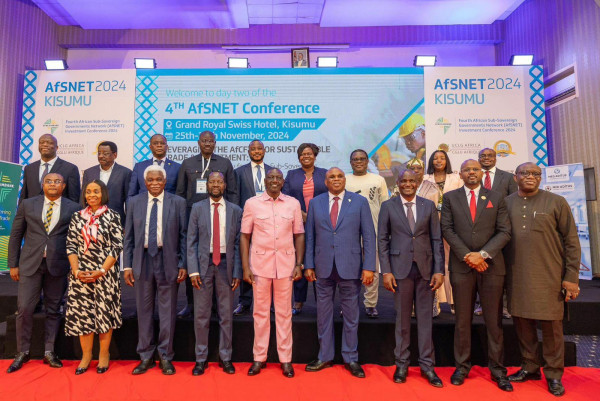
Over 250 Sub-Sovereign government leaders from across Africa are today meeting in Kisumu, Kenya, for the the fourth edition of the African Sub-Sovereign Governments Network (AfSNET) Conference. Taking place between the 25th and 27th of November, the event provides a platform for Sub-Sovereign leaders and businesses to discuss how their local governments can attract investments in the region in order foster and accelerate inclusive growth and development.

Organised by African Export-Import Bank (Afreximbank), in collaboration with the County Government of Kisumu and the United Cities and Local Governments of Africa (UCLG Africa), the conference's overarching theme is ‘Leveraging the AfCFTA for Sustainable Trade and Investment: A Development Pathway for African Sub-Sovereigns'. The event's main objectives include strengthening the role of Africa's Sub-Sovereign governments in driving intra-African trade and investment, and the successful implementation of the African Continental Free Trade Area (AfCFTA).

Africa's Sub-Sovereign governments, comprising states, counties, provinces, municipalities and regional authorities, play a critical role in economic development of African countries. According to the African Union, Africa's economic outlook is projected at 3.7% GDP growth in 2024, slightly higher than the global average of 3.2%. This growth elevates the integral role of Sub Sovereign governments for African economies and its people.

Understanding this, Afreximbank has committed USD $2 billion for these critical actors, to support these governments and businesses in African countries.

While delivering his keynote address at the AfSNET conference in Kisumu, Kenya, H. E. Dr. William Ruto, President of the Republic of Kenya acknowledged the Bank's support for African governments including Kenya:

“I want to thank Professor Benedict Oramah for making time to join us for this conference. Your presence here is yet another example of the unique approaches that the Bank, under your leadership, employs in order to deepen its footprint by engaging with shareholders throughout the continent, including sub-national entities like Africities, and devolved governments like Kisumu. Afreximbank has consistently demonstrated innovative approaches in advancing credit to African governments and the public sector while facilitating deeper collaboration among sub-Saharan nations and Kenya is an example. This spirit of innovation aligns seamlessly with the aspirations of the African Continental Free Trade Area, creating a dynamic network of ambitious, future ready institutions and governments. Such collaborations will drive transformative engagements at the grassroots level, enabling Africa to achieve an unparalleled position in the global value chains and make substantial contributions to their bottom-up transformation.”

Speaking on the importance of the conference, President Ruto noted: “By promoting peer to peer learning, this forum strengthens cooperation among Sub-Sovereign governments. And devolution, a tremendous innovation established under Kenya's 2010 constitution, has evolved into an exemplary success story that Kenyans are very proud of, as it has brought services closer to the people, empowered grassroot participation in government, safeguarded minority rights and enhanced equity in resource mobilization and allocation.”

Professor Benedict Oramah, President and Chairman of the Board of Directors of Afreximbank, commented:

“The African Sub-Sovereign Governments Network (AfSNET) initiative thrives due to the concerted efforts and unwavering commitment of partners who recognise the tremendous potential of sub-sovereign governments as the engines for broad-based economic development that extends to the grassroots of our societies. At Afreximbank, we strongly believe that for developmental initiatives to succeed in our economies, they must, of necessity, be decentralized; development needs must originate and flow from the periphery towards the centre. In alignment with the African Continental Free Trade Agreement (AfCFTA), we are passionately implementing the AfSNET initiative to promote intra-regional trade and investment. We collectively recognize that cities, states, and provinces within a nation exhibit remarkable diversity—differing in population sizes, resource endowments, skill sets, and sectoral specializations.”

Professor Oramah continued that this conference is a key prelude to the upcoming Intra Africa Trade Fair (IATF2025) scheduled to take place from 4 to 10 September 2025 in Algiers, Algeria, and delegates are welcomed to contribute to the discourse that can be elevated at the IATF2025.

AfSNET was established by Afreximbank as a platform for promoting intra-African trade and investment, educational and cultural exchanges and the fostering of effective engagement among sub-sovereigns in Africa's development and prosperity in the context of the AfCFTA.

Distributed by APO Group on behalf of Afreximbank.

Media Contact:
Vincent Musumba
Communications and Events Manager (Media Relations)
Email: press@afreximbank.com

Follow us on:
Twitter: http://apo-opa.co/3Z521i8
Facebook: http://apo-opa.co/4eNjNMs
LinkedIn: http://apo-opa.co/4eJyWyh
Instagram: http://apo-opa.co/4eNjO2Y

About Afreximbank:
African Export-Import Bank (Afreximbank) is a Pan-African multilateral financial institution mandated to finance and promote intra-and extra-African trade. For 30 years, the Bank has been deploying innovative structures to deliver financing solutions that support the transformation of the structure of Africa's trade, accelerating industrialization and intra-regional trade, thereby boosting economic expansion in Africa. A stalwart supporter of the African Continental Free Trade Agreement (AfCFTA), Afreximbank has launched a Pan-African Payment and Settlement System (PAPSS) that was adopted by the African Union (AU) as the payment and settlement platform to underpin the implementation of the AfCFTA. Working with the AfCFTA Secretariat and the AU, the Bank is setting up a US$10 billion Adjustment Fund to support countries effectively participating in the AfCFTA. At the end of December 2023, Afreximbank's total assets and guarantees stood at over US$37.3 billion, and its shareholder funds amounted to US$6.1 billion. Afreximbank has investment grade ratings assigned by GCR (international scale) (A), Moody's (Baa1), Japan Credit Rating Agency (JCR) (A-) and Fitch (BBB). Afreximbank has evolved into a group entity comprising the Bank, its impact fund subsidiary called the Fund for Export Development Africa (FEDA), and its insurance management subsidiary, AfrexInsure (together, "the Group"). The Bank is headquartered in Cairo, Egypt.

For more information, visit: www.Afreximbank.com

About UCLG Africa (UCLG Africa (United Cities and Local Governments of Africa):
The umbrella organization for African local governments, was founded in 2005 in the City of Tshwane, South Africa as a result of the unification of three continental groups of local governments, namely the African Union of Local Authorities (AULA); the Union des Villes Africaines (UVA); and the Africa Chapter of the União das Ciudades e Capitães Lusófonas Africanas, (UCCL AFRICA). The founding congress of the organization was held in May 2005 in the city of Tshwane, South Africa. UCLG Africa brings together 51 national associations of local and regional governments from all regions of Africa, as well as 2,000 cities with more than 100,000 inhabitants. UCLG Africa represents over 350 million African citizens. A founding member of the world organization UCLG, UCLG Africa is the regional representative for Africa with its headquarters based in Rabat, capital of the Kingdom of Morocco, where it enjoys diplomatic status as a Pan-African International Organization. It also has regional offices on the continent.

Media files
Afreximbank
Download logo
Read moreAfrican Sub-Sovereign Government Leaders and Businesses Meet in Kisumu City, Kenya to Discuss Inclusive Growth, Trade Decentralization and Investment Opportunities
26 November 2024

National Treasury committed to improving procurement systems

Location: News

National Treasury committed to improving procurement systems

National Treasury has asserted that it will take proactive steps to address the areas that need improvement in the country’s procurement systems.

An assessment based on the internationally recognised Methodology for Assessing Procurement Systems (MAPS) has revealed important strengths, as well as areas that need improvement within the country’s procurement framework.

“While the report identifies several areas that need additional attention, we view these findings as opportunities for continuous growth and improvement.

“National Treasury is deeply committed to the ongoing improvement of procurement systems. The MAPS report will serve as a roadmap, as we strive to uphold the highest standards of efficiency, accountability, and value for all stakeholders,” National Treasury said on Monday.

In 2023, National Treasury took the initiative to engage the Organisation for Economic Co-operation and Development (OECD) to assess the South African public procurement system. 

The assessment was carried out collaboratively by the OECD, the World Bank, the African Development Bank, National Treasury, and various public, private and civil society organisations.

The report acknowledges the significant advancement in areas such as the recent Public Procurement Act (Act 28 of 2024), which was signed into law by President Cyril Ramaphosa on 23 July 2024. 

This Act addresses many of the gaps identified in the report, including consolidating procurement provisions from multiple legislative instruments into a single framework, thereby reducing complexity and promoting a more coherent system.

Areas that were identified for improvement include an extensive, complex and fragmented legal and regulatory framework; the lack of comprehensive procurement planning; insufficient use of e-procurement systems as well as challenges in maintaining confidentiality and transparency.

In addition, the report highlights inadequate professionalisation and capacity-building initiatives; the substantial lack of information and visibility during the execution phase of contracts; delays in payments and limited access to procurement statistics as areas that need to be addressed.

Further areas of improvement include minimal involvement of civil society organisations in the procurement process; internal control and audit weaknesses; an ineffective multi-agency approach to combatting corruption characterised by limited capacity to investigate and prosecute corruption; and inadequate protection for whistleblowers.

“These findings underscore the need for improvements in these critical areas. In response, we are taking proactive steps to address the highlighted issues by introducing the Public Procurement Act and regulations; developing a sustainable public procurement strategy; strengthening the adherence to the publication of procurement information; improving the transparency of procurement data; enhancing the control and audit framework; overhauling the digital environment of the procurement system; increasing the use of open contracting data standards. 

“Additionally, we will implement a professionalisation roadmap for Supply Chain Management; contribute to a strong anti-corruption strategy; assist in strengthening whistleblower protection; and develop a framework to monitor and evaluate the implementation of the action plan. These reforms aim to enhance compliance, streamline our processes, and strengthen oversight in procurement,” National Treasury said.

National Treasury said it welcomes the opportunity to collaborate with partners and stakeholders as it implements these recommendations as part of the department’s broader Public Procurement Improvement Programme. - SAnews.gov.za


nosihle
Tue, 11/26/2024 - 08:00

96 views
Read moreNational Treasury committed to improving procurement systems
25 November 2024

Ekurhuleni Investment Conference to be held this week

Location: News

Ekurhuleni Investment Conference to be held this week

The City of Ekurhuleni is expected to hold the Ekurhuleni Investment Conference 2024 from Tuesday.

The conference will be held under the theme: Ekurhuleni Economic Partnerships: Unlocking Opportunities, Building a Sustainable Future.

Keynote addresses at the conference are expected to be delivered by Minister of Trade, Industry and Competition, Parks Tau, and Gauteng Premier, Panyaza Lesufi.

In a statement, the city said it expected the conference to serve as a “catalyst for renewed investor confidence, economic growth, and sustainable development in the region”.

“This year’s conference will showcase the city’s industrial strengths and vast investment opportunities across key sectors such as manufacturing, infrastructure, and township economies. 

“With a clear focus on public-private partnerships, the event will facilitate strategic collaborations, advance our 10-Point Economic Plan, and drive job creation and economic revitalisation,” the statement read.

Key focus areas during the conference include:

  • Aerotropolis and airport city development: The city aims to strengthen partnerships and advance the Aerotropolis Master Plan, leveraging its strategic airport infrastructure to attract significant investment.
  • Industrial estate development: The conference will support local manufacturing growth, investor retention, and the promotion of industrial parks.
  • Critical infrastructure development: The city will engage the private sector in investing in data centers, energy solutions, and critical infrastructure to enhance service delivery.
  • Township economic development: Empowering township economies through entrepreneurship and inclusive growth initiatives remains a priority.
  • CBD and industrial estate revitalisation: The focus will be on urban renewal, fiscal incentives, and infrastructure improvements.

“Ekurhuleni, known as South Africa’s industrial powerhouse and home to the busiest airport in Africa, OR Tambo International Airport, has faced substantial challenges in recent years, including global economic shocks, energy instability, and infrastructure strains. However, our city remains a prime destination for investment, strategically poised to lead the continent in industrial and economic development.

“Ekurhuleni is committed to creating a vibrant, investment-friendly environment. By collaborating with key stakeholders, including InvestSA Gauteng, Airports Company South Africa (ACSA), and the Gauteng Industrial Development Zone (GIDZ), we are set to drive economic transformation and attract both domestic and international investors.

“As we move forward, this conference represents a crucial moment to transform challenges into opportunities, ensuring that the City of Ekurhuleni continues to be a place where people and businesses can grow and thrive,” the city said. – SAnews.gov.za

NeoB
Mon, 11/25/2024 - 10:53

206 views
Read moreEkurhuleni Investment Conference to be held this week
25 November 2024

Mahabeer Sets Sights on Glory at the 2024 T20 Blind Cricket World Cup

Location: Sport

JOHANNESBURG: One of South Africa’s trailblazing female head coaches, Asheta Mahabeer, will lead the Blind Cricket South Africa (BCSA) National Team...

Read moreMahabeer Sets Sights on Glory at the 2024 T20 Blind Cricket World Cup
24 November 2024

SA’s MSME celebrated for their resilience and job-creation efforts

Location: News

SA’s MSME celebrated for their resilience and job-creation efforts

In a room alive with entrepreneurial energy and determination, South Africa's Micro, Small, and Medium Enterprises (MSMEs) were celebrated for their resilience and job-creation efforts at the Presidential MSMEs and Cooperatives Awards. 

Hosted by the Department of Small Business Development, the awards aim to spotlight and reward South Africa’s top-performing MSMEs, cooperatives, and ecosystem enablers driving growth and transformation. 

The Minister of Small Business Development, Stella Ndabeni-Abrahams, led the event at the Gallagher Convention Centre in Midrand, with President Cyril Ramaphosa delivering the keynote address. 

The ceremony honoured businesses that embody innovation, commitment to local development, and entrepreneurial spirit. 

Two Lifetime Achievement Awards were presented to business icons Dr. Mike Nkuna, the founder and Executive Chairman of the Masingita Group of Companies, and Dr. Gloria Serobe, the co-founder of Women Investment Portfolio Holdings (Wiphold) and Chancellor of the Tshwane University of Technology. 

Arion Power, a start-up founded by three young entrepreneurs, Brian Gadisi, Alan Gie, and Themba Hadebe, emerged as a major winner. 

Their product, WiBox, a mini-UPS that powers routers during outages, has earned them two prestigious awards -- Youth-led MSME of the Year and MSME of the Year. 

Speaking to SAnews, Gadisi expressed pride in their achievement. 

“This award reassures the hard work we've put into research and development, the sleepless nights, and our efforts to crack technology often dominated by the East and West. It shows that Africa has the capability to innovate on par with global leaders,” he said. 

Another standout was Kedibone Segole, the 30-year-old founder of Moipone Aesthetics, a black-owned township start-up based in Mabopane, Pretoria. Her company, which manufactures high-quality natural personal care products, won the Township MSME of the Year award and a cash prize of R200 000. 

Speaking to SAnews, Segole encouraged aspiring entrepreneurs to start small and stay persistent. 

“What I would like to say to young and upcoming entrepreneurs, along with unemployed graduates and youth, start something, work on it and believe in it. Push. Your breakthrough will come. Whatever you have, the little you have, use it. It can make you reach boundaries that you have never even imagined. 

Segole said winning the award means that they are recognised, acknowledged and important. 

“The President acknowledges our efforts, and he believes in the strides that we are making in an effort to come out of poverty, unemployment and the social ills we are affected by in the townships. It's in our hands. Vuk' uzenzele (get up and do it for yourself)!” she said. 

Segole revealed her business journey began with just R600 from a UIF payout after losing her job in 2016. With support from stakeholders like the National Youth Development Agency (NYDA) and Innovation Hub, her perseverance has transformed her business into a success story. 

“I was fortunate enough that along the way there has been government assistance from the NYDA, as well and the Innovation Hub, among other stakeholders. As a started, I used the little that I had and look where it has gotten me today,” she said. 

Another inspiring recipient was Dimakatso Kanyane, the 32-year-old founder of Dillets Sanitary Towels. Her innovative product, designed for African women, won the Start-up Business of the Year Award. 

Motivated by her own experience with her cycle, Kanyane developed a product that addresses a critical need. 

Kanyane told SAnews that the award was a full circle moment for her. 

“This award affirms a lot of things, that no matter how hard the journey is, with authenticity and perseverance, you can overcome any obstacle. To those who are aspiring to be on this journey -- stay ambitious, trust and believe that perseverance will lead you to the fulfilment of your dreams. 

“I used to have heavy flows and severe period pains and there wasn’t a sanitary towel that catered to my specific needs. It was this search that eventually led me to the development of Dillets Sanitary Towels, a sanitary towel designed for African women by an African woman,” she said. 

The Presidential MSMEs and Cooperatives Awards underscore the vital role of small businesses in driving economic growth, fostering innovation, and creating sustainable opportunities across South Africa. – SAnews.gov.za

DikelediM
Sat, 11/23/2024 - 00:26

71 views
Read moreSA’s MSME celebrated for their resilience and job-creation efforts
24 November 2024

President Ramaphosa calls on financial institutions to make money available for businesses

Location: News

President Ramaphosa calls on financial institutions to make money available for businesses

President Cyril Ramaphosa has used his address at the Presidential Micro, Small and Medium Enterprises and Cooperatives Awards to call on banks to make money available for businesses. 

Speaking at the awards held at the Gallagher Convention Centre in Gauteng on Friday, the President emphasised that with interest rates declining, this is an opportune time to make funding more accessible to drive economic growth. 

“As interest rates are coming down and are bound to come down even further, this is the time to make finance available within obviously the various consideration that you have to take into account. 

“This is the time to make finance available and pump energy and life into our economy because when small and medium enterprises are given enabling energy by our financial institutions... they will be able to run businesses to be creative, to create jobs and our economy can grow.

“I call on the banks and financial institutes to make money available so that our businesses can grow,” the President said. 

Hosted by the Department of Small Business Development, the Presidential Micro, Small and Medium Enterprises (MSMEs) and Cooperatives Awards are aimed at highlighting and rewarding the achievements of South Africa’s top-performing MSMEs, cooperatives, and ecosystem enablers who drive growth and transformation across the nation.

The ceremony honoured businesses that embody innovation, commitment to local development and entrepreneurial spirit. 

The President also took a moment to address the recent spate of foodborne illnesses that have been linked to spaza shops and informal traders in townships. He said this has thrown into sharp focus the issues of regulation, health and safety. 

At the same time, he said the issue has highlighted the critical role small businesses play in communities, providing much-needed services and supporting local economies. 

“That is why it is so important to bring small businesses into the mainstream of the economy, and that we provide the necessary support for them to do this. 

“International experience shows that MSMEs are drivers of sustainable growth. Countries with more MSMEs tend to have lower levels of inequality. Entrepreneurs are the drivers of innovation,” he said. 

However, the President acknowledged that rates of entrepreneurship in South Africa are low by continental standards. 

He told entrepreneurs and delegates at the awards that it is essential that they encourage entrepreneurship. 

“It is vital that we enable the emergence and growth of MSMEs and cooperatives. We must focus on targeted interventions to address financial exclusion and onerous regulatory requirements.

“We must provide access to funding, capacity building and other support. The success of the finalists here this evening shows that with the right support, small businesses can succeed, expand and be sustainable,” the President said. 

The President said that the Government of National unity has made inclusive growth and job creation its apex priority, and supporting small enterprises is an integral part of these efforts.

President Ramaphosa said the National Planning Commission estimates that the country needs 5.8 million MSMEs to meet job creation targets. 

The President said that this means there is a need to double the number of MSMEs in the country. 

“We are encouraged by the efforts underway to capacitate the sector. One of these is the merging of SEFA [Small Enterprise Finance Agency], SEDA [Small Enterprise Development Agency] and the Cooperatives Bank Development Agency into the newly-formed Small Enterprise Development Finance Agency.

“Of the R730 million disbursed by the new agency to date, R101 million has gone to township enterprises and R261 million to rural enterprises,” he said. 

The Small Enterprise Development Finance Agency has also provided non-financial business support to more than 15 000 township and rural enterprises. 

The President said that legislation is in the pipeline to streamline business licensing. 

An e-registration system that integrates the work of the South African Revenue Service and the Companies and Intellectual Property Commission (CIPC) is under development. 

“If we are to fully unlock entrepreneurial potential, there must be a razor-sharp focus on start-up growth, especially in the burgeoning tech sector. We must ensure that we are not left behind in the global transition to knowledge and innovation-based economies. 

“As part of this, we must scale up the adoption of advances like mobile payments and digitised record-keeping by small businesses,” he said. 

President Ramaphosa said he was encouraged by the work of the Department of Small Business Development and the Department of Science and Innovation around a national start-up policy.

Among other things, this policy will deal with issues such as intellectual property registration and foreign exchange controls.

“Even as this is all work in progress, we recognise the urgency with which we must scale up support for small businesses in South Africa. They are the driving force of our economy.

“The finalists and recipients of this year’s awards are a shining example of what can be achieved. Allow me to congratulate all the winners and runners-up. You have done well. You are a fine example to other South Africans who want to follow their entrepreneurial dreams,” the President said. 

The President also took a moment to thank the organisers of the awards, the generous sponsors and the millions of entrepreneurs who make the country work and the economy grow. 

“These are the micro, small and medium enterprises and cooperatives that create livelihoods and jobs. They provide communities with vital services. They create value that goes far beyond turnover or profit.

“They contribute in a million different ways to building a more equal, more prosperous and more productive society. These awards are a celebration of all the entrepreneurs in a country. It is a token of our gratitude and admiration,” the President said. – SAnews.gov.za

DikelediM
Fri, 11/22/2024 - 23:01

56 views
Read morePresident Ramaphosa calls on financial institutions to make money available for businesses
22 November 2024

President Ramaphosa concludes inaugural PICC under 7th administration

Location: News

President Ramaphosa concludes inaugural PICC under 7th administration

President Cyril Ramaphosa says the seventh administration has prioritised its commitment to scale up investment in infrastructure, as government seeks to boost the economy, create jobs, improve access to basic services, and the quality of life for citizens. 

President Ramaphosa said this at the conclusion of the inaugural Presidential Infrastructure Commission Council (PICC) under the seventh administration. 

The council convened to discuss, amongst others, a plan on dealing with crime and extortion at construction sites, the level of implementation of priority infrastructure projects and programmes, as well as strategic initiatives that are being developed to accelerate the pace and quality of infrastructure investments in the country.

“This administration has prioritised scaling up investment in infrastructure, as we seek to grow the economy, create more jobs, improve access to basic services, and improve the quality of life of our citizens. 

“Continuing the work of the sixth administration, we are working to involve the private sector in achieving our infrastructure development goals. It is encouraging that after a period of declining infrastructure spend, public sector capital expenditure is on the rise for the second straight year. 

“According to Statistics South Africa, last year, public sector institutions had a combined capital expenditure of R233 billion. This is an 11% increase on the previous year,” President Ramaphosa said. 

The council is constituted by the President, Deputy President, Ministers designated by the President, Premiers of provinces, Executive Mayors of metropolitan councils and the chairperson of the South African Local Government Association. 

Per the Infrastructure Development Act, the Council is tasked with, inter alia:

  • Coordinating the development, maintenance, implementation and monitoring of the national infrastructure plan; 
  • Coordinating the determination of priorities for infrastructure development;
  • Ensuring that infrastructure development in respect of any strategic integrated project is given priority in planning, approval and implementation;
  • Ensuring co-operation between organs of state affected by projects undertaken, and
  • Promoting investment and identifying and develop strategies to cause the removal of impediments to investment.

Implementation of Strategic Integrated Projects

The council noted that there are 19 completed Strategic Integrated Projects (SIPs) valued at R26 billion.

Of these projects, six are in transport, three in water and sanitation, one in energy, four in human settlements and five in student accommodation. 

Currently, 82 projects, valued at R437 billion, are in construction.

In addition to providing technical assistance and resources to help project sponsors prepare comprehensive business cases, ensuring they are economically viable and socially beneficial, Infrastructure South Africa (ISA) has played a pivotal role in supporting project sponsors to expedite approvals, authorisations, licences, permissions and exemptions with the relevant authorities. 

Over 654 requests for regulatory unblocking were lodged with ISA between 2020 and 2024. To date, 497 approvals have been granted and 157 are currently in progress.

The total project value of SIP projects gazetted between 2020 and 2024 has grown to R3 trillion, with the key drivers being the Eskom Programme (SIP 8, 9 and 10), the Embedded Generation National Programme and the Green Hydrogen National Programme (SIP 20E).

Aiding municipalities

The council agreed that there is a need to enhance the Municipal Infrastructure Service Delivery Model using ISA’s methodology, which emphasises project preparation using the Five-Case Model, which is planning and prioritisation, development of business cases, mobilisation of funds from private and public sectors, implementation of innovative solutions and effective monitoring.

This model will be piloted in four local municipalities and leverage external resources and technical capacity stemming from local and international partners. 

The following four municipalities will benefit from the “Adopt a Municipality” pilot initiative: Govan Mbeki Local Municipality in Mpumalanga, Kagisano-Molopo Local Municiapity in the North West, Umngeni Municipality in KwaZulu-Natal and Metsemaholo Local Municipality in the Free State.

This initiative, spearheaded by ISA, will address critical service delivery challenges, including persistent incomplete projects and infrastructure issues. ISA aims to drive urgent improvements over the next 24 months, with some projects being completed during this timeframe. ISA will hold further consultations on the next cohort of municipalities to be added to the initiative.

Crime and Extortion on Construction Sites

The council has lauded the contribution of the construction industry to job growth in the second and third quarters. 

According to the Quarterly Labour Force Survey released by Statistics South Africa earlier this month, the construction sector added 176 000 jobs, playing a pivotal role in reducing the national unemployment rate by 1.4% in the third quarter.

The council said the construction industry is vital for socio-economic development, employment and infrastructure improvement.

"Crime and extortion on construction sites must be condemned in the strongest possible terms," the council said, while welcoming efforts by the police in addressing criminal and extortion cases.

The council further noted that there is an indication of increasing trends in criminal activities on construction sites, despite government's efforts to embed social facilitation and involve law enforcement. Effective mitigation will require coordinated efforts from all stakeholders.

The council has made the following recommendations on the matter:

  • Law enforcement must be allocated more resources to deal with criminal activity and violence on construction sites.
  • Policy reforms in the construction sector must be prioritised.
  • Industry must adopt best practices in social facilitation and invest in security measures.
  • Infrastructure project leads must enhance community engagement and encourage communities to actively participate in project planning.

Programme of Action for the PICC Council in the 7th administration 

The PICC Council has identified eight pathways to driving infrastructure investment and growth in the next five years. 

These pathways will underpin the infrastructure investment plan of the 7th administration.

The eight pathways include:

Pathway 1: Institutional Coordination

Affirming Infrastructure South Africa as a single point of entry for priority infrastructure projects.

Pathway 2: Centralised Planning and Prioritisation

Establish a gateway mechanism for projects and programme that are deemed strategic/catalytic.

Pathway 3: Budget Reforms

Accelerate the implementation of broader reforms to enable infrastructure investment.

Pathway 4: Address Regulatory Bottlenecks

Streamline regulatory and approval processes to fast-track implementation of infrastructure projects.

Pathway 5: Municipal Bulk Infrastructure

Address funding and financing of municipal bulk infrastructure.

Pathway 6: Unlocking other sources of funding

Increase and diversify sources of funding for both project preparation and infrastructure funding & financing.

Pathway 7: Economic Regulation in Construction

Strengthen regulatory framework governing construction industry.

Pathway 8: Cancellation of Tenders, Social Unrest, Damage to Infrastructure and Crime

Improving governance of infrastructure projects and ensure close collaboration with law enforcement agencies. - SAnews.gov.za

DikelediM
Fri, 11/22/2024 - 11:01

76 views
Read morePresident Ramaphosa concludes inaugural PICC under 7th administration
22 November 2024

Faye Tunnicliffe: Back In The Proteas Women Fold, Stronger Than Ever Ahead Of T20I Series

Location: Sport

EAST LONDON: For Faye Tunnicliffe, the journey back to the Proteas Women’s T20 International (T20I) squad has been anything but...

Read moreFaye Tunnicliffe: Back In The Proteas Women Fold, Stronger Than Ever Ahead Of T20I Series
21 November 2024

Basketball Africa League to Tip off Milestone Fifth Season on April 5 With First Games in Morocco

Location: Sport

  • South Africa to Host BAL Playoffs and Finals for the First Time 
  • Fans Can Visit BAL.NBA.com to Register Their Interest in Tickets

The Basketball Africa League (BAL) (www.BAL.NBA.com) today announced that the league's milestone fifth season will tip off on Saturday, April 5, 2025, at the Prince Moulay Abdellah Sports Complex in Rabat, Morocco and culminate with the 2025 BAL Finals on Saturday, June 14 at the SunBet Arena in Pretoria, South Africa, marking the first BAL games in Morocco and the first time the BAL Finals will be held in South Africa.  The 2025 BAL season will feature the top 12 club teams from 12 African countries playing 48 games in Rabat; Dakar, Senegal; Kigali, Rwanda; and Pretoria.

The 12 teams will once again be divided into three conferences of four teams each.  Each conference will play a 12-game group phase during which each team will face the other three teams in its conference twice.  The Kalahari Conference group phase will take place from April 5 – Sunday, April 13 in Rabat.  The Sahara Conference group phase will take place from Saturday, April 26 – Sunday, May 4 at the Dakar Arena in Senegal.  The Nile Conference group phase will take place from Saturday, May 17 – Sunday, May 25 at BK Arena in Kigali.  Eight teams from across the three conferences will qualify for the Playoffs in Pretoria, which will tip off on Friday, June 6 and culminate with the 2025 BAL Finals on Saturday, June 14.  Beginning today, fans can register their interest in tickets to games in all four markets at BAL.NBA.com.

“We have seen tremendous growth over the BAL's first four seasons in the level of on-court competition, attendance, and engagement from fans and partners in Africa and globally,” said BAL President Amadou Gallo Fall.  “Our milestone fifth season will build on that momentum and further showcase the level of talent and passion for basketball in Africa, including through the first BAL games in Morocco and the first BAL Finals in South Africa.”

“The Kalahari Conference marks another expansion of the BAL into a new country on our continent, and we are more than satisfied,” said Anibal Manave, President of FIBA Africa.  “Year after year, this competition grows, giving greater exposure to our sport and helping to elevate the level of basketball in Africa by making the league more and more competitive.”

This season, the national league champions from seven countries – Angola, Egypt, Morocco, Nigeria, Rwanda, Senegal, and Tunisia – will automatically qualify for the BAL.  The other five teams will qualify through the Road to the BAL qualifying tournaments (http://apo-opa.co/3B0yqhx) conducted by FIBA Africa across the continent from October – December 2024. 

In addition to the games, the BAL will once again collaborate with its partners to conduct youth development and social impact programming in all four markets, including Jr. NBA, coaching and referee clinics, environmental days of service, the fourth BAL Innovation Summit, networking sessions to engage with members of the media, and a series of camps and workshops for young women as part of BAL4HER, the league's platform for advancing gender equality in the African sports ecosystem. 

Rwanda Development Board, NIKE, Jordan Brand, and Wilson will return as BAL Foundational Partners.  The league's roster of marketing partners also includes Castle Lite, Hennessy and RwandAir. 

On June 1, Angola's Petro de Luanda became the first sub-Saharan African team to win the BAL Finals after previous champions from Egypt and Tunisia.  The 2024 BAL season reached fans in 214 countries and territories in 17 languages, set an attendance record of more than 120,000 fans across the four host countries, and generated more than 1.2 billion impressions across NBA and BAL social media channels.  

Additional information about the 2025 BAL season will be announced in the coming months.

Distributed by APO Group on behalf of Basketball Africa League (BAL).

Contact:
Edwin Eselem,
Basketball Africa League,
+221 78 615 42 87,
EEselem@theBAL.com

About the BAL:
The Basketball Africa League (BAL), a partnership between the International Basketball Federation (FIBA) and NBA Africa, is a professional league featuring 12 club teams from across Africa that completed its fourth season in June 2024.  Headquartered in Dakar, Senegal, the BAL builds on the foundation of club competitions FIBA Africa has organized across the continent and marks the NBA's first collaboration to operate a league outside North America.  Fans can follow the BAL (@ theBAL) on Facebook (https://apo-opa.co/3ZkyXTZ), Instagram (https://apo-opa.co/3Z2tuRc), Threads (https://apo-opa.co/3ZkyZez), X (https://apo-opa.co/3Zlxn5u), and YouTube (https://apo-opa.co/3Z2L7jY) and register their interest in receiving more information at BAL.NBA.com.

Media files
Basketball Africa League (BAL)
Download logo
Read moreBasketball Africa League to Tip off Milestone Fifth Season on April 5 With First Games in Morocco
21 November 2024

President Ramaphosa to Officiate National Presidential Micro, Small and Medium Enterprises & Cooperative Awards

Location: News

The Presidency of the Republic of South Africa
Download logo

President Cyril Ramaphosa will on Friday, 22 November 2024 address the National Presidential MSME & Cooperatives Awards ceremony at Gallagher Convention Centre, Midrand.

This premier event is dedicated to recognising outstanding Micro, Small and Medium Enterprises (MSMEs) and Cooperatives and is hosted by the Department of Small Business Development (DSBD).

The awards aim to spotlight and reward the achievements of South Africa's top-performing MSMEs, Cooperatives, and ecosystem enablers who drive growth and transformation across the nation.

This ceremony will honour businesses that embody innovation, commitment to local development, and entrepreneurial spirit. The selected finalists have advanced through rigorous district and provincial pitches and demonstrated their excellence and resilience across various categories.

This year's finalists are an eclectic group of companies that span various key sectors of the economy in both the formal and informal businesses. These small businesses have also shown a lot of creativity, ingenuity, and resilience in penetrating sectors that are normally hard to enter.

Categories for this year's MSME Awards include, but not limited to:
- Youth-Led MSME of the Year
- Township SMME of the Year
- Women-led SMME of the Year
- MSMEs Owned by Persons with Disabilities of the Year
- Cooperative of the Year
- Best Employing Cooperative of the Year
- Best Performing Rural Community-Based Initiative of the Year
- Best Performing Urban (Township) Community-Based Initiative of the Year

Small Businesses are a strategic tool for economic transformation, inclusive economic growth and job creation in South Africa. This celebration is a testament to the remarkable achievements of MSMEs and cooperatives, which have shown resilience and adaptability, particularly in challenging economic conditions.

The 2024 National Presidential MSME & Cooperatives Awards ceremony will take place during Global Entrepreneurship Week (GEW), an initiative celebrated in over 200 countries to inspire and empower entrepreneurs around the world.

GEW highlights innovative solutions and resilient businesses that shape economies and enrich societies, resonating with the core values of the National Presidential MSME & Cooperatives Awards.

President Cyril Ramaphosa will officiate the award hand out ceremony to the winners, underscoring the importance of MSME development in advancing South Africa's broader economic goals.

Distributed by APO Group on behalf of The Presidency of the Republic of South Africa.

Read morePresident Ramaphosa to Officiate National Presidential Micro, Small and Medium Enterprises & Cooperative Awards
21 November 2024

President Ramaphosa to officiate National Presidential MSME and Cooperative Awards

Location: News

President Ramaphosa to officiate National Presidential MSME and Cooperative Awards

The importance of Micro, Small and Medium Enterprises (MSMEs) and cooperatives’ development in advancing South Africa’s broader economic goals will come in to focus at the National Presidential MSME and Cooperatives Awards on Friday.

President Cyril Ramaphosa is expected to address the awards ceremony at Gallagher Convention Centre, in Midrand. 

This premier event, hosted by the Department of Small Business Development, is dedicated to recognising outstanding Micro, Small and Medium Enterprises (MSMEs) and cooperatives. 

The awards aim to reward the achievements of South Africa’s top-performing MSMEs, cooperatives, and ecosystem enablers who drive growth and transformation across the nation.

“This ceremony will honour businesses that embody innovation, commitment to local development, and entrepreneurial spirit.

The selected finalists have advanced through rigorous district and provincial pitches and demonstrated their excellence and resilience across various categories.

“This year’s finalists are an eclectic group of companies that span various key sectors of the economy in both the formal and informal businesses. These small businesses have also shown a lot of creativity, ingenuity, and resilience in penetrating sectors that are normally hard to enter,” the Presidency said in a statement.

Categories for this year’s MSME Awards include, but not limited to: 
- Youth-Led MSME of the Year
- Township SMME of the Year
- Women-led SMME of the Year
- MSMEs Owned by Persons with Disabilities of the Year
- Cooperative of the Year
- Best Employing Cooperative of the Year
- Best Performing Rural Community-Based Initiative of the Year
- Best Performing Urban (Township) Community-Based Initiative of the Year 

“Small Businesses are a strategic tool for economic transformation, inclusive economic growth and job creation in South Africa. This celebration is a testament to the remarkable achievements of MSMEs and cooperatives, which have shown resilience and adaptability, particularly in challenging economic conditions,” the Presidency said.

The 2024 National Presidential MSME and Cooperatives Awards ceremony takes place during Global Entrepreneurship Week, an initiative celebrated in over 200 countries to inspire and empower entrepreneurs around the world. 

Global Entrepreneurship Week highlights innovative solutions and resilient businesses that shape economies and enrich societies, resonating with the core values of the National Presidential MSME and Cooperatives Awards. – SAnews.gov.za

DikelediM
Thu, 11/21/2024 - 10:38

41 views
Read morePresident Ramaphosa to officiate National Presidential MSME and Cooperative Awards
21 November 2024

Ministry Confirms No Restriction on Amount of Sewage Cape Town May Pump Out to Sea

Location: News

Clarity given after City’s claim that it is still limited by historic licence conditions

Read moreMinistry Confirms No Restriction on Amount of Sewage Cape Town May Pump Out to Sea
21 November 2024

SA sets sights on industrialisation opportunities presented by decarbonisation

Location: News

SA sets sights on industrialisation opportunities presented by decarbonisation

South Africa is making the most of the available opportunities to drive industrialisation through global decarbonisation efforts, says Trade, Industry and Competition Minister Parks Tau.

Tau on Wednesday led a team of officials from the Department of Trade, Industry and Competition (dtic) to a joint briefing session of Parliament’s Portfolio Committees on Trade and Industry and Science, Technology and Innovation. The aim of the session was to engage on South Africa’s Green Hydrogen Commercialisation Strategy and the White Paper on Electric Vehicles.

Tau told the Members of the Portfolio Committee that South Africa has committed itself to reducing greenhouse gas emission, as envisaged in the national Just Energy Transition. Above its own contributions to reduce emissions, South Africa has partnered with the rest of the world to decarbonise.

Tau said South Africa has to decarbonise its own economy but also position itself to commercially benefit from the global shift to greener technologies.

“Green hydrogen presents an opportunity to export natural resources such as sunshine and wind, which South Africa has in abundance. 

“The global demand for green hydrogen presents ample industrialisation opportunities not only for South Africa but for other African countries, so we need to collaborate and integrate efforts to drive the industrialisation agenda for the continent as a whole. 

“The speed with which we move will determine whether we are able to take full advantage of the transition or we are left behind,” he said.

Linked to decarbonisation efforts is the worldwide move to electric vehicles, which Tau described as advancing at a fast pace.

Through the White Paper on Electric Vehicles and support for the automotives industry, South Africa is embracing the transition and adapting its Automotive Strategy to current global trends. 

The White Paper on Electric Vehicles outlines a commitment to ensuring that the transition is not just about decarbonisation but is also leveraged for growth by deepening the automotive value chain, fostering local industry growth, and aligning with economic priorities, the approach aims to be pro-growth and pro-investment.

Regarding the carbon intensity of the South African economy, Tau indicated that government is  cognisant of the fact that some of the measures, such as the Carbon Border Adjustment Mechanism introduced by the European Union, do require that the country challenge them at the level of the World Trade Organisation, as they likely to have a negative impact on economic growth efforts. – SAnews.gov.za

Edwin
Wed, 11/20/2024 - 15:21

24 views
Read moreSA sets sights on industrialisation opportunities presented by decarbonisation
20 November 2024

Government simplifies the process to apply for spaza shop permits

Location: News

Government simplifies the process to apply for spaza shop permits

Government has introduced a new standard draft by-law for township economies, which offers a simplified permitting and registration process.

The move is aimed at creating an enabling environment for small businesses in townships; supports economic inclusion, job creation and community empowerment.

The by-law was issued in accordance with the Local Government: Municipal Systems Act of 2000 by Minister of Cooperative Governance and Traditional Affairs (COGTA), Velenkosini Hlabisa, on 7 November 2024. 

“We are excited about this by-law as it is more than just a regulatory tool. It reflects our vision for township economies as key contributors to South Africa’s growth. 

“Through inclusive, streamlined, and supportive governance, this initiative lays a foundation for sustainable economic activity in historically underserved areas, empowering individuals to participate meaningfully in the economy,” the Minister said earlier this month.

The new by-law is a statement of the department’s commitment to transforming townships into vibrant economic hubs that provide sustainable opportunities for residents. 

“This regulation is designed to harmonise township business ecosystems by providing standardised norms and facilitating easier entry and operation for both formal and informal businesses. 

“It supports businesses with tailored resources, including permit registration processes and designated trading spaces, ensuring streamlined operations within municipal jurisdictions,” the department said.

Key features of the by-law include:

  • Enhanced freedom for business activities. Any individual with a business license may now conduct business within designated areas, subject to local quotas that ensure equitable opportunities for South African citizens and residents. This regulation aligns with the Constitutional right to freedom of trade, supporting entrepreneurial efforts that contribute to township vitality.
  • Designated business zones. Municipalities are empowered to establish business zones, creating spaces specifically tailored to retail, industrial, and mixed-use enterprises. This targeted approach ensures an efficient use of space, aligning township development with broader spatial planning goals to attract investment and infrastructure improvements.
  • Business support and capacity building. To further support township businesses, municipalities will facilitate workshops, training, and access to essential resources such as infrastructure and markets. This proactive approach helps small business owners improve operational capacity, while also promoting compliance with relevant laws and standards.
  • Simplified permitting and registration. The new standard draft by-law introduces an efficient permit and registration system that provides clear guidelines for businesses, including both physical and online access to application forms. Municipal officials will assist applicants in the process, ensuring timely approvals and smooth operations for new and existing businesses.
  • Safety and compliance assurance. The by-law mandates that all business activities align with public health and safety regulations. Regular inspections and public awareness campaigns will ensure that township businesses uphold the highest standards, protecting both entrepreneurs and the communities they serve.
  • Inclusive growth strategy. Recognising the economic significance of townships, the by-law places a strong emphasis on skills development, mentorship, and market access initiatives to support businesses and help them thrive within local and broader markets.

CoGTA said it remained dedicated to engaging communities and stakeholders in the implementation of the by-law, ensuring that its benefits reach every corner of South Africa’s townships.

To read the full gazette go to https://www.cogta.gov.za/index.php/docs/local-government-municipal-systems-act-2000/. - SAnews.gov.za

nosihle
Wed, 11/20/2024 - 14:25

182 views
Read moreGovernment simplifies the process to apply for spaza shop permits
20 November 2024

Vodacom Group Launches Initiative to Upskill 1 Million Young People Across Africa

Location: News

Vodacom Group
Download logo

Vodacom Group (www.Vodacom.com) has partnered with technology providers to provide young people on the continent with access to digital skills as part of its commitment to driving digital literacy for Africa's next generation. Together with AWS, Microsoft, Skillsoft and other collaborating organisations Vodacom aims to bridge the digital skills gap across eight African countries and upskill 1million young people by 2027.

The Vodacom Group Digital Skills Hub is available in South Africa, Ethiopia, Tanzania, Mozambique, Lesotho, Egypt (Talimy), the Democratic Republic of Congo (VodaEduc), and in Kenya (Industry Digital Talent Program) to empower the next generation of digital innovators, enabling Africa's digital society and leveraging existing e-learning platforms in the respective markets.

According to the International Finance Corporation (IFC), over 230 million jobs will require digital skills in Africa by 2030, yet the continent faces a significant gap in supply and demand for digital expertise.

“The African continent is plagued in many countries with high levels of unemployment, gender inequality, income disparity and limited access to education, healthcare and essential services. These challenges inform our purpose and drives our strategy to connect for a better future, leveraging digital technologies to drive inclusion into the future for the betterment of people. The launch of the Digital Skills Hub is testament to our commitment to pioneering the path to a digital and more inclusive Africa”, says Shameel Joosub, Vodacom Group CEO.

The Vodacom Digital Skills Hub provides access to self-paced, digital skills training for those aged between 18 and 35. This is in addition to Vodacom Group's existing free, e-learning platforms across its markets. E-learning and digital classrooms have made it possible for students in remote or underserved areas to access quality education with platforms such as Talimy in Egypt, e-Fahamu in Tanzania, VodaEduc in the Democratic of Congo (DRC), Faz Crescer in Mozambique and an e-learning platform in South Africa, providing a wealth of online resources, which cater to different learning needs.

“We are extremely excited about this initiative which seeks to inspire the next wave of digital innovators. Our main aim with this initiative is to not only address the digital skills shortage on the continent but to also nurture a pipeline of young talent and in turn advance Africa's digital future, boosting opportunities for empowerment in an inclusive digital economy,” adds, Matimba Mbungela, Chief Human Resources Officer at Vodacom Group.

The Vodacom Digital Skills Hub is designed to empower the next generation, to consider a career in science, technology, engineering, and mathematics (STEM), and entails fun and engaging practical digital skills training for young people on the continent. AWS Educate is one of the first programs to be offered through the Digital Skills Hub and an additional program to Vodacom's various existing online learning platforms. AWS Educate offers beginners an extensive library of self-paced online training that covers a range of topics from cloud fundamentals to artificial intelligence and machine learning.

“With over 400 million young people between the ages of 15 and 35 in Africa, the continent has the youngest population in the world. Digital is the new currency, it is therefore imperative that we invest in them and provide them with the necessary digital skills that will not only boost their growth and development but that of the continent too,” concludes Joosub.

To access the Digital Skills Hub, click here (http://apo-opa.co/4hQ1ysJ).

Distributed by APO Group on behalf of Vodacom Group.

Read moreVodacom Group Launches Initiative to Upskill 1 Million Young People Across Africa
20 November 2024

Yellow Card Secures Crypto Asset Service Provider Licence in South Africa

Location: News
Yellow Card Financial

Yellow Card (www.YellowCard.io), Africa's leading stablecoin-based infrastructure provider, has been issued a Crypto Asset Service Provider (CASP) licence by the Financial Sector Conduct Authority (FSCA) in South Africa.  

Commenting on the FSCA's decision to issue the licence to Yellow Card Financial South Africa, Chris Maurice, Yellow Card's co-founder and CEO, said, “The CASP licence underscores Yellow Card's commitment to its customers in South Africa and regulatory compliance across the continent.This achievement reflects our dedication to providing secure, compliant and transformative solutions for our customers both in South Africa and across Africa.  

Stablecoin adoption is surging throughout Africa, with sub-Saharan Africa having the highest adoption rate in the world at 9.2%. In South Africa alone, where the number of total users of crypto assets is estimated to amount to 5.8 million people, stablecoins have experienced growth of 50% month over month since October 2023, displacing bitcoin as the country's most popular cryptocurrency.  Yellow Card is excited to play a pivotal role in this financial revolution in South Africa. 

Yellow Card, which launched in South Africa in 2020, has facilitated over US$3 billion in transactions in the last several years and now operates in 20 countries across the continent. The company recently completed a US$33 million Series C financing, led by Blockchain Capital and existing investors, including Polychain Capital, Valar Ventures, Third Prime Ventures, Coinbase Ventures, and Block, Inc. (Square/Cash App), reflecting strong investor confidence in its mission.   

As the stablecoin landscape continues to evolve, Yellow Card is committed to leading the charge in making digital assets accessible and secure for businesses across Africa. With the recent licensing and funding, the company plans to expand its B2B offerings by enhancing its stablecoin rails, upgrading infrastructure, and advancing its B2B API and Widget. These efforts will empower businesses with seamless solutions for liquidity management and their general operations. 

To learn more about Yellow Card, visit: https://YellowCard.io/. 

Distributed by APO Group on behalf of Yellow Card Financial.

Media files
Yellow Card Financial
Download logo
Read moreYellow Card Secures Crypto Asset Service Provider Licence in South Africa
19 November 2024

Brazil officially hands over G20 Presidency to South Africa

Location: News

Brazil officially hands over G20 Presidency to South Africa

By Gabisile Ngcobo

Rio de Janeiro - Brazil has officially transferred the historic Group of 20 (G20) Presidency to South Africa at the closing ceremony of the annual summit that was held in Rio de Janeiro, Brazil.

South Africa will make history as the first African country to preside over the G20, with approximately 130 meetings planned for 2025.

The ceremonial handover was conducted by President Cyril Ramaphosa and Brazilian President Luiz Inácio Lula da Silva, who both struck the ceremonial gavel before exchanging handshakes and smiles.

The prominent G20 Leaders’ Summit kicked off yesterday with Heads of State and their delegates being welcomed at the Museum of Modern Art. 

“It is an honour to accept, on behalf of the people of South Africa, the responsibility of the Presidency of the G20 for the next year,” the President said on Tuesday.

He took the time to congratulate the Brazilian President, a long-time friend, for a successful G20 Presidency that elevated the participation of social and civil society groups and convened the first-ever G20 Social Summit.

“South Africa firmly believes that civil society serves as a bridge between the G20 leaders and the people who have the greatest interest in their deliberations.”

The President has committed to maintaining this innovative platform for engagement throughout the country’s Presidency.

He said he believed that efforts during the Brazilian Presidency have tackled some of the world’s most urgent global challenges. 

President Ramaphosa praised the increased attention on the development agenda for developing countries and said they would build on the work that has already begun.

“We applaud all G20 members, led by Brazil, in finalising the G20 Rio de Janeiro Leaders’ Declaration, which outlines the actions we must take together to build a better world.  

“We appreciate that once sufficient consensus was reached on the declaration, those members who still had points of disagreement did not stand in the way of adopting the declaration.”

The Head of State said South Africa was committed to advancing the G20’s efforts to achieve greater global economic growth and sustainable development.

“We will work to ensure no one is left behind.”

Furthermore, he said South Africa would strive to harness global collective efforts to address the challenges worsened by the fragility of global solidarity, crippling underdevelopment, and increasing inequality.  

President Ramaphosa announced that South Africa had adopted the G20 presidency theme of “Solidarity, Equality, and Sustainability”.

“In line with this theme, we will seek to strengthen and advance our common pursuit of the Sustainable Development Goals and the Pact for the Future.”

He emphasised that achieving the Sustainable Development Goals by 2030 should be a priority for the next five G20 Presidencies. 

“Through our G20 Presidency, we will seek to strengthen solidarity. Whether it is in Gaza, Sudan, or Ukraine, we must all stand in solidarity with those people who are facing hardship and suffering.”

READ I Lamola urges global citizens to hold G20 leaders accountable

He expressed his support for nations who are most vulnerable to pandemics and other global public health crises, highlighting that many countries in Africa are currently facing mpox outbreaks that require urgent international action.

He stressed that through the country’s G20 Presidency, they will address inequality, a major threat to global economic growth and stability.

“The disparities in wealth and development within and between countries are unjust and unsustainable. These disparities show themselves in the lack of predictable and sustainable financing and capacity building for climate action.”

He said they were using the moment to firmly place the development priorities of the African continent and the Global South on the G20 agenda.

The focus areas include inclusive economic growth, industrialisation, employment, inequality and food security.

“South Africa looks forward to working with all G20 members and invited guests and I am honoured to welcome you all to South Africa in the year ahead.” – SAnews.gov.za


Gabisile
Tue, 11/19/2024 - 19:32

78 views
Read moreBrazil officially hands over G20 Presidency to South Africa
19 November 2024

Lamola urges global citizens to hold G20 leaders accountable

Location: News

Lamola urges global citizens to hold G20 leaders accountable

By Gabisile Ngcobo

Rio de Janeiro- International Relations and Cooperation Minister Ronald Lamola says global citizens must hold the leaders of the Group of 20 (G20) accountable. 

This comes after various declarations and commitments were made during the summit that opened on Monday in Rio de Janeiro, Brazil.

The first day of the G20 Leaders’ Summit came to an end on Monday, with important results for the future of the planet and crucial commitments such as the fight against hunger, sustainable development and the taxation of billionaires.

“Each of them was speaking and committing. I think the people of the world will have to make the leaders accountable for their commitments that are being made at the G20. 

“They will be a platform next year in South Africa to take stock of the commitments of how far the world has progressed,” he told the South African media.

In their G20 declaration, the leaders said they remain resolute in their dedication to fighting hunger, poverty, and inequality, promoting sustainable development in its economic, social, and environmental dimensions, and reforming global governance. 

They also acknowledged that what was needed was a political will to create conditions to expand access to food and welcomed the launch of the Global Alliance against Hunger and Poverty under Brazil’s G20 Presidency.

Meanwhile, the document referred to the “catastrophic humanitarian situation in the Gaza and the escalation in Lebanon,” and highlighted the urgent need to expand humanitarian assistance and reinforce the protection of civilians.

They also touched on the war in Ukraine, stressing the human suffering and the negative impact it has on global food and energy security, supply chains, macro-financial stability, inflation and growth.

The leaders also committed to scaling up urgent action to address challenges posed by climate change, biodiversity loss, desertification, ocean and land degradation, drought and pollution.

This prominent gathering of world leaders pledged to work for a reinvigorated and strengthened multilateral system, rooted in the United Nations Charter and International Law, with renewed institutions and reformed governance that is more representative and reflect the realities of the 21st century.

Lamola strongly believes the commitments made will be fulfilled. 

“As you’re aware, we continue to look for the implementation of the Paris Agreement on climate change and the people of the world must do the same and we’ll ensure that there’s implementation on what is committed.”

South Africa’s G20

Brazil will hand over the reins this afternoon as South Africa is set to assume the Chair of the G20 from Brazil on 1 December with the preparations to host the summit next year currently underway.

South Africa’s G20 Presidency will focus on solidarity, equality, and sustainability. 

He told the media that the country will also have a sharp focus on artificial intelligence (AI), including innovation for Africa. 

The Minister described AI and innovation as crosscutting in various sectors and believed they could help “leapfrog” the African continent to par with developed countries. 

In addition, he said the country’s G20 Presidency will also zoom into the Pact of the Future which was adopted by the world leaders at the Summit of the Future in September this year. 

The United Nations General Assembly (UNGA) adopted this pact that aims to make the organisation more relevant and effective on the global stage in the 21st century.

“Indeed, the agenda is loaded but we believe from the declaration read here in Brazil will be able to build a consensus and also shine the spotlight on the number of issues for the Global South and African continent and the marginalised people of the world,” Lamola said. 

Meanwhile, the Minister said the value of hosting the G20 Leaders’ Summit far surpasses any amount injection into the gross domestic product (GDP) and spoke about the boom in tourism. 

“You can see that the City of Rio is alive, and it has been like this for the whole year of Rio hosting several Ministerial Meetings, working groups, task teams and task forces. People were flocking to Brazil, and it has shone a spotlight on the issues of the world and the economy.” 

Lamola is also of the view that the money that will be injected into the country hosting the summit will be a worthy investment. – SAnews.gov.za
 

Gabisile
Tue, 11/19/2024 - 13:19

115 views
Read moreLamola urges global citizens to hold G20 leaders accountable
19 November 2024

Construction mafia disrupts projects worth R63bn

Location: News

Construction mafia disrupts projects worth R63bn

Since 2019, construction site disruptions by criminal syndicates have disrupted over 180 projects worth R63 billion, using tactics such as extortion, intimidation, violence and sabotage.

“Their demands for up to 30% of contract value undermine the integrity of our procurement systems and delay critical infrastructure delivery,” the Deputy Minister of Finance, Ashor Sarupen, said on Tuesday in Durban.

Addressing the National Construction Summit on site disruption, the Deputy Minister said while the construction industry faces numerous challenges, none is more urgent than the persistent site disruptions by criminal syndicates and community protests.

South Africa’s construction industry is a vital cog in the economy as it contributes around 3% to gross domestic product (GDP), employs over 1.3 million South Africans, with 176 000 jobs added just in the third quarter of 2024. 

This sector is a lifeline for low-skilled workers, who often struggle to find opportunities elsewhere, however the disruptions undermine the sector’s potential.

“Construction projects also have an unmatched multiplier effect. For every R1 million invested in construction, more than three jobs are created. This is the highest multiplier across all sectors in our economy.

“It is no surprise that the government has identified infrastructure development as a cornerstone of our economic recovery. The 2024 Medium-Term Budget Policy Statement (MTBPS) reaffirmed our commitment to shifting government spending from consumption to investment. 

“This aligns with the President’s call to transform South Africa into a “construction site” to drive inclusive growth and job creation,” the Deputy Minister said.

Over the next three years, government plans to invest over R900 billion in the construction sector.

“Our reforms in procurement, infrastructure investment, and structural economic transformation are concrete commitments to changing the lived realities of millions of South Africans.

“However, to fulfill these ambitions, we must recognize that the construction mafia and site disruptions reveal deeper socio-economic fractures within our country.

“These disruptions are not merely an operational challenge. It is not only businesses that are being disrupted but the lives and livelihoods of our people,” the Deputy Minister said.

They also represent a critical stress test for the broader economic governance architecture, revealing the fragile interdependencies between formal institutional frameworks and reality on the ground.
 
“For now, these disruptions show how easily our carefully planned economic rules break down when they meet real-world challenges.

“They show just how difficult it is to conduct honest business in an environment of deepening unemployment, poverty, and the desperation it often leads to.

“To address this crisis, we need a holistic response—one that combines stricter law enforcement, improved governance, and community engagement to address the root causes of these disruptions,” Sarupen said. 

Government’s intervention
To address these challenges, the government is pursuing a three-pronged strategy, which includes Reforming Public Procurement; Expanding Public-Private Partnerships (PPPs) and Increasing Infrastructure Investment.

“The Public Procurement Act, signed into law earlier this year, lays the foundation for a more transparent, efficient, and inclusive procurement system.

“Under the new regulations, subcontracting will be allowed only where feasible and must follow due process to prevent abuse.

“Government entities will have the option to pay subcontractors directly, eliminating the delays and exploitation often experienced under the current system,” the Deputy Minister said.

He said these reforms are designed to empower small and emerging contractors while safeguarding the integrity of our procurement processes.

Government’s R900 billion in planned investments is supported by capital budgeting reforms to ensure that projects are well-planned and implemented on time, mobilising private sector funding to augment limited public resources and prioritising integrated urban development to create dynamic cities that enable economic activity.

“This is not just about bricks and mortar; it is about transforming lives by providing the infrastructure needed for housing, education, healthcare and transport.

“Our efforts to revitalize the construction sector are part of the broader reform agenda under Operation Vulindlela, a joint initiative between the National Treasury and the Presidency,” Sarupen said. 

Since its launch in 2020, Operation Vulindlela has delivered significant progress in:

1. Stabilising the electricity supply.
2. Reducing the cost and improving the quality of digital communications.
3. Securing sustainable water supply.
4. Enhancing the efficiency of freight transport.
5. Reforming the visa regime to attract skills and grow tourism.

“Phase 2 of Operation Vulindlela focuses on creating dynamic and integrated cities to support urbanization and economic growth. This will require substantial contributions from the construction sector to build the housing, schools, and transport infrastructure needed for our rapidly growing urban population,” the Deputy Minister said. - SAnews.gov.za

nosihle
Tue, 11/19/2024 - 11:08

6 views
Read moreConstruction mafia disrupts projects worth R63bn
19 November 2024

AEW to Return to Cape Town in 2025

Location: News
African Energy Chamber

Serving as the leading platform for deal-making, energy partnerships and capital investment in Africa's energy sector, African Energy Week (AEW): Invest in African Energies will return to Cape Town, South Africa in 2025, in partnership with the Government of South Africa, S&P Global Commodity Insights and Afreximbank.

Featuring a strong lineup of industry leaders dedicated to securing a sustainable energy future for the continent, Africa's largest energy sector gathering will take place from September 29 to October 3 at the Cape Town International Convention Center 2. Building on the success of previous editions, the event continues to solidify its status as the premier gathering for the African energy industry.

With over 125 million barrels of proven oil reserves, 620 trillion cubic feet of natural gas and abundant renewable resources, Africa holds the potential to become a global energy leader. With African energy demand expected to more than double by 2050 and fossil fuels projected to comprise up to 60% of the energy mix by 2040, AEW: Invest in African Energies 2025 aims to eradicate energy poverty by 2030 through an influx of investment and innovation across the continent.

With a tailored program addressing key challenges and opportunities within Africa's energy sector, AEW: Invest in African Energies 2025 promises impactful sessions, innovative showcases and unparalleled networking opportunities. This premier gathering will bring together industry visionaries, African governments, national oil companies and key stakeholders across the energy value chain to tackle the complexities and seize the opportunities within Africa's thriving energy landscape.

AEW: Invest in African Energies 2025 will feature workshops, discussions and presentations covering critical topics such as investment in upstream development, legislative and regulatory policies, infrastructure growth strategies, the downstream sector and Africa's role in the global energy transition.

With just one year to go, AEW: Invest in African Energies 2025 aims to build on the momentum of the 2024 edition. The impressive five-day agenda featured seven premium stages, five content stages, two technical hubs and a pre-event workshop day. Delegates in 2025 can look forward to new project updates, industry highlights, investment opportunities and strategies that align with Africa's energy and sustainability goals.

“AEW was established with the mission to make energy poverty history by 2030. As a central pillar of Africa's energy sector, the conference offers an unparalleled platform to forge partnerships, share knowledge and drive progress,” said NJ Ayuk, Executive Chairman of the African Energy Chamber. “Having grown into one of the continent's largest energy events, we look forward to welcoming everyone back in 2025, with next year's edition promising to surpass all prior events. We are thrilled to bring together delegates from around the world to address Africa's pressing energy needs.”

Entering its fifth year, AEW: Invest in African Energies 2025 reaffirms its position as the preferred platform for project operators, financiers, technology providers and government leaders.

Distributed by APO Group on behalf of African Energy Chamber.

Media files
African Energy Chamber
Download logo
Read moreAEW to Return to Cape Town in 2025
18 November 2024

World leaders urged to intensify fight against poverty, hunger 

Location: News

World leaders urged to intensify fight against poverty, hunger 

By Gabisile Ngcobo

Rio de Janeiro - President Cyril Ramaphosa has used the opening of the G20 Leaders’ Summit to urge world leaders to intensify efforts to eliminate poverty and hunger.

“We must advance gender equality. And we must overcome the planetary crises of climate change, biodiversity loss, environmental degradation and pollution,” he said on Monday.

The President was delivering a statement on social inclusion and the fight against poverty and hunger during the first working session on the first day of the G20 Leaders’ Summit in Rio de Janeiro, Brazil.

READ | Two-day G20 Summit kicks off in Brazil

The Global Alliance Against Hunger and Poverty, an initiative launched today at the summit under Brazil’s G20 Presidency, takes a significant step towards its operationalisation with the announcement of the first members of its Board of Champions.

Brazilian President Luiz Inácio Lula da Silva emphasised that hunger and poverty are not the result of scarcity or natural phenomena, but rather a product of political decisions that perpetuate the exclusion of a large part of humanity.

President Ramaphosa has thrown his weight behind the Brazilian Presidency’s focus on social inclusion and the fight against hunger. 

The alliance is an initiative dedicated to mobilising resources and coordinating actions among countries, institutions, and organisations to achieve ambitious goals of reducing hunger and poverty, working to find solutions for the United Nations’ Sustainable Development Goals (SDG) 1 of no poverty and SDG 2 (zero hunger).

The Board of Champions will consist of up to 50 members, including 25 countries and 25 organisations, with South Africa still yet to announce its representative. 

“It is only through an integrated and comprehensive system of social support that we will be able to assist the most vulnerable in society,” the President told leaders.

According to the World Bank, nearly 700 million people are currently living in extreme poverty, with sub-Saharan Africa accounting for 67% of this population.

“At the same time, countries with developing economies are faced with declining growth prospects, declining investments and rising debt.”

The Head of State said the challenges could derail development gains and progress toward achieving the SDGs.

This is why he called for a renewed effort to eliminate poverty and hunger.

Since the start of democracy 30 years ago, the President said South Africa has invested significant effort and resources into alleviating poverty and reducing inequality.

“Through its substantial social protection programmes, our government has provided vital support to millions of South Africans, lifting many out of extreme poverty and ensuring that our communities meet most of their basic needs.”

These social protection measures include the provision of free basic services, healthcare, basic education, higher education, social housing and transport.

“South Africa is committed to ending poverty, malnutrition and hunger in line with our National Development Plan.”

In addition, he told his counterparts that food security will be one of the high-level priorities of South Africa’s G20 Presidency.

Preparations are underway for South Africa’s G20 Presidency and the hosting of the G20 Summit in 2025.

South Africa is set to assume the Chair of the G20 from Brazil on 1 December next month.

“As the G20, we need to ensure that the achievement of the Sustainable Development Goals remains at the forefront of international financing decisions. 

“We need to ensure that long outstanding commitments are met. And we need to ensure that new, at-scale, affordable and accessible funding is mobilised to support sustainable development. We must leave no one behind,” he added. – SAnews.gov.za

Gabisile
Mon, 11/18/2024 - 18:19

39 views
Read moreWorld leaders urged to intensify fight against poverty, hunger 
18 November 2024

Cape Town May Pump as Much Sewage Into the Sea as It Likes

Location: News

Environment minister has lifted quantity restrictions on the city’s three marine outfalls

Read moreCape Town May Pump as Much Sewage Into the Sea as It Likes
  • Previous
  • Page 1
  • Interim pages omitted …
  • Page 32
  • Page 33
  • Page 34
  • Page 35
  • Page 36
  • Next

Copyright © 2026 · MyZA · All Rights Reserved · Powered by Stratlec Online