• Skip to main content
  • Skip to header right navigation
  • Skip to after header navigation
  • Skip to site footer
MyZA

MyZA

News, Directory, Events and Other Stuff

  • Social Media
  • Sport
  • World News
  • Home
  • Submit News
  • Directory
  • Events
  • Stratlec
  • TFSA
  • News
    • APO
    • Today’s Sport News
    • Todays Social Media and Tech Headlines
    • Today’s World News
    • Today’s SA Financial News
  • Contact
You are here: Home / Archives for Insurance

Insurance

25 March 2025

President Ramaphosa pays heartfelt tribute to nurses for their role during COVID

Location: News

President Ramaphosa pays heartfelt tribute to nurses for their role during COVID

President Cyril Ramaphosa has expressed gratitude for the vital role nurses played during the COVID-19 pandemic. 

The President addressed the 9th National Congress of the Democratic Nursing Organisation of South Africa (DENOSA) today. This was the first time the President addressed DENOSA since the outbreak, highlighting the lasting impact of healthcare workers in the fight against the virus.

President Ramaphosa reflected on the significant changes caused by the pandemic, including the loss of lives and the challenges encountered by healthcare workers.

“We lost a number of nurses and healthcare workers, brave men and women who were at the frontline of the pandemic. Brave is not an adequate word to describe them. Many of you faced the danger of being infected and death, but you still went on to care for those who were affected.”

He encouraged attendees to observe a moment of silence in honor of the brave nurses and healthcare professionals, who made the ultimate sacrifice while serving on the front lines.

“For you who are in the profession, nursing is a calling. It requires a strength of character and commitment to service that is rare.” 

The President highlighted the long history of struggle for equity in the nursing profession, particularly among black nurses during apartheid, who fought tirelessly for their rights amid systemic inequalities.

“Black nurses were expected to only care for black patients in black-only hospitals. The hospitals and clinics assigned to serve the country’s majority were under resourced and chronically underfunded. 

“Black nurses had unfavourable working conditions, were paid less than their white counterparts, and had fewer opportunities for advancement.” 

He reiterated his statements made during this year’s State of the Nation Address (SONA), that government will allocate resources to the health sector, build hospitals and clinics, and strengthen the healthcare system.

“This is the commitment that we’re going to achieve, and this is what we’re going to do.” 

The President also took the time to commend DENOSA for its nearly three decades of advocacy and service, and emphasised the organisation’s pivotal role in shaping nursing policy in South Africa. 

“We all appreciate the difficult balance that must be struck between advocacy and activism, on the one hand, and fulfilling the rights of patients to treatment and care, on the other hand,” he said.

President Ramaphosa outlined key strategic priorities for the next five years, including driving inclusive growth, reducing poverty, and building a capable, ethical developmental State. 

He underscored the integral role of nurses in achieving these goals, particularly in contributing to a capable State.

Meanwhile, despite a recent uptick in nursing registrations, he raised concerns about declining training numbers due in part to accreditation delays. 

President Ramaphosa urged DENOSA to engage proactively in policy development to ensure that the nursing profession evolves alongside the changing landscape of healthcare.

“In an environment where South Africa has a shortage of nurses, we are encouraged that the issue of South African nurses being recruited in large numbers by other countries is also on the agenda.”

NHI

Meanwhile, he said the support of DENOSA will be pivotal as the country prepares for the National Health Insurance (NHI).  

He is of the view that the NHI will bring the country closer to its aspiration of being a society where the human dignity of all is upheld at all times. 

“The right to dignity matters most when people are sick and need help, and when they are most vulnerable. Our nurses will be the backbone of the NHI.”

He urged the union to be at the forefront of discussions around skilling and training, health systems strengthening, and other crucial matters. 

The President called on the union to continue its leadership in advocating for nursing, while addressing the broader health needs of communities. 

“I’d like to thank you all once again for being frontline soldiers of our people’s health... you... are the ones who take your heart and full dedication to serving the people of South Africa, and we’re eternally grateful for that,” he added. – SAnews.gov.za
 

Gabisile
Tue, 03/25/2025 - 12:33
683 views
Read morePresident Ramaphosa pays heartfelt tribute to nurses for their role during COVID
25 March 2025

President Ramaphosa pays heartfelt tribute to nurses five years after COVID-19 pandemic

Location: News

President Ramaphosa pays heartfelt tribute to nurses five years after COVID-19 pandemic

President Cyril Ramaphosa has expressed gratitude for the vital role nurses played during the COVID-19 pandemic. 

The President addressed the 9th National Congress of the Democratic Nursing Organisation of South Africa (DENOSA) today. This was the first time the President addressed DENOSA since the outbreak, highlighting the lasting impact of healthcare workers in the fight against the virus.

President Ramaphosa reflected on the significant changes caused by the pandemic, including the loss of lives and the challenges encountered by healthcare workers.

“We lost a number of nurses and healthcare workers, brave men and women who were at the frontline of the pandemic. Brave is not an adequate word to describe them. Many of you faced the danger of being infected and death, but you still went on to care for those who were affected.”

He encouraged attendees to observe a moment of silence in honor of the brave nurses and healthcare professionals, who made the ultimate sacrifice while serving on the front lines.

“For you who are in the profession, nursing is a calling. It requires a strength of character and commitment to service that is rare.” 

The President highlighted the long history of struggle for equity in the nursing profession, particularly among black nurses during apartheid, who fought tirelessly for their rights amid systemic inequalities.

“Black nurses were expected to only care for black patients in black-only hospitals. The hospitals and clinics assigned to serve the country’s majority were under resourced and chronically underfunded. 

“Black nurses had unfavourable working conditions, were paid less than their white counterparts, and had fewer opportunities for advancement.” 

He reiterated his statements made during this year’s State of the Nation Address (SONA), that government will allocate resources to the health sector, build hospitals and clinics, and strengthen the healthcare system.

“This is the commitment that we’re going to achieve, and this is what we’re going to do.” 

The President also took the time to commend DENOSA for its nearly three decades of advocacy and service, and emphasised the organisation’s pivotal role in shaping nursing policy in South Africa. 

“We all appreciate the difficult balance that must be struck between advocacy and activism, on the one hand, and fulfilling the rights of patients to treatment and care, on the other hand,” he said.

President Ramaphosa outlined key strategic priorities for the next five years, including driving inclusive growth, reducing poverty, and building a capable, ethical developmental State. 

He underscored the integral role of nurses in achieving these goals, particularly in contributing to a capable State.

Meanwhile, despite a recent uptick in nursing registrations, he raised concerns about declining training numbers due in part to accreditation delays. 

President Ramaphosa urged DENOSA to engage proactively in policy development to ensure that the nursing profession evolves alongside the changing landscape of healthcare.

“In an environment where South Africa has a shortage of nurses, we are encouraged that the issue of South African nurses being recruited in large numbers by other countries is also on the agenda.”

NHI

Meanwhile, he said the support of DENOSA will be pivotal as the country prepares for the National Health Insurance (NHI).  

He is of the view that the NHI will bring the country closer to its aspiration of being a society where the human dignity of all is upheld at all times. 

“The right to dignity matters most when people are sick and need help, and when they are most vulnerable. Our nurses will be the backbone of the NHI.”

He urged the union to be at the forefront of discussions around skilling and training, health systems strengthening, and other crucial matters. 

The President called on the union to continue its leadership in advocating for nursing, while addressing the broader health needs of communities. 

“I’d like to thank you all once again for being frontline soldiers of our people’s health... you... are the ones who take your heart and full dedication to serving the people of South Africa, and we’re eternally grateful for that,” he added. – SAnews.gov.za
 

Gabisile
Tue, 03/25/2025 - 12:33
284 views

Read morePresident Ramaphosa pays heartfelt tribute to nurses five years after COVID-19 pandemic
24 March 2025

Home Affairs upgrades digital verification system

Location: News

Home Affairs upgrades digital verification system

The Department of Home Affairs has announced a comprehensive upgrade to its digital verification system, a crucial component of national security, as well as both public and private sector services in South Africa.

The verification system enables government departments, including National Treasury and the South African Social Security Agency (SASSA), as well as financial sector businesses, to confirm client identities using biometric features, such as fingerprints and facial recognition, against the National Population Register.

In recent years, the system has, however, been plagued by inefficiencies, with users reporting a failure rate of up to 50% on these verification “hits” against the National Population Register. It also routinely took up to 24 hours for the system to respond, and when responses did arrive, they often contained errors that required manual verification.

The Department of Home Affairs has, over the past few months, worked to resolve these errors.

Testing has confirmed that the upgraded system is not only capable of dramatically faster performance, but that it now delivers an error rate of well below 1%. 

The department is ready to roll out access to the upgraded verification service to all its valued clients across the public and private sectors.

As part of ensuring the ongoing maintenance of this vastly improved system and after obtaining concurrence from the Minister of Finance, Home Affairs Minister Dr Leon Schreiber has gazetted a new set of fees associated with the use of this verification service. 

In order to better fund the maintenance of the National Population Register, fees for the use of the Home Affairs digital verification service by private sector companies will increase for the first time in over a decade, with effect from 1 April 2025.

However, public sector users of the service, including numerous government departments and agencies, will be unaffected by the increase, as government users remain exempted from fees. 

This approach, according to the Department of Home Affairs, enables the department to balance the need to invest in the National Population Register, while not negatively affecting public finances.

“The rollout of a reliable, efficient and secure verification service supports both the public and private sectors to improve service delivery. 

“This marks the most significant upgrade to the Home Affairs verification service since it was launched and will dramatically reduce waiting times whenever a client needs to verify their identity with the Department to obtain a social grant or open a bank account. The upgrade is also of immense importance to supporting private sector economic growth,” Minister Schreiber said. 

“When this vital Home Affairs system is down, slow, or littered with errors, it negatively impacts upon the ability of banks, insurance companies and other financial service providers to verify clients and conduct business.

“This investment in our population register is not only overdue, but also important for delivering on the vision for digital ID, as outlined by President Cyril Ramaphosa during the State of the Nation Address, as a secure and efficient population register forms the cornerstone of digital ID.

“The launch of the reformed verification system is further proof of the progress that Home Affairs is making on our journey of digital transformation to deliver dignity for all,” Schreiber said. – SAnews.gov.za


Edwin
Mon, 03/24/2025 - 14:04
317 views

Read moreHome Affairs upgrades digital verification system
24 March 2025

CBE to host inaugural Public Works Infrastructure Summit

Location: News

CBE to host inaugural Public Works Infrastructure Summit

The Council for the Built Environment (CBE) is set to host the Inaugural Public Works Infrastructure Summit.

Public Works and Infrastructure Minister Dean Macpherson is expected to deliver the keynote address at the summit, which will be held on 1 April 2025. 

The summit -- to be hosted under the theme: “Turning South Africa into a construction site: Growing the economy and creating jobs” -- will explore strategies for optimising asset life cycles, using public-private partnerships and ensuring equitable infrastructure investments.

Additionally, discussions will include issues that relate to the infrastructure audit; the promotion of ethical governance; exploring innovative measures for effective asset management, property management, and green social infrastructure, while maximising its commercial value for public good. 

Addressing Parliament earlier this month, Macpherson committed that the department will formalise its approach to public asset management with the introduction of technical task teams in cities across the country. 

It is envisaged that the approach will attract private sector investment to revitalise these assets for productive use. 

In attendance will be CEOs and leaders of the broader built environment and construction industry, financial institutions, insurance companies, developers, asset and property managers, real estate entities, the Minister and his deputy, and MECs to discuss and agree on collaborative efforts to achieve the goal of turning South Africa into a construction site. 

About the CBE 

The CBE, an entity of the Department of Public Works and Infrastructure, is a regulator of the built environment professions practicing and providing regulatory frameworks within the various statutory councils. 

It played a leadership role and provides strategic direction, and advises the Minister of Public Works and Infrastructure on policy matters that impact the built environment sector. – SAnews.gov.za

Edwin
Mon, 03/24/2025 - 10:12
94 views

Read moreCBE to host inaugural Public Works Infrastructure Summit
21 March 2025

Employment and Labour Committee Supports Interventions to Avert Job Losses at AMSA

Location: News

Republic of South Africa: The Parliament
Download logo

The Portfolio Committee on Employment and Labour supports government's intervention and engagement with ArcelorMittal South Africa (AMSA) regarding potential job losses due to the company's decision to wind down its long steel business, exploring avenues to avert job losses and support affected workers.

AMSA raised concerns about possible job losses in the KwaZulu-Natal and Gauteng provinces as a result of possible closure of the company. The briefing the committee received from the Department of Employment and Labour yesterday was appreciative of the cooperation between the departments of Employment and Labour; Trade, Industry and Competition; and other role-players to secure the possible return of AMSA.

Regarding the report of the performance of the Department of Employment and Labour's entities – the Unemployment Insurance Fund (UIF) and the Compensation Fund (CF) – in the third quarter, the committee noted areas of overachievement in the quarter from both entities in the area of service delivery.

However, the committee raised concerns about a pervasive culture in the department of not filling vacant positions and of employing people in long-standing acting positions. The department should lead by example by filling vacancies to promote a culture of doing so in the entire government system, as this is a problem across all spheres of government, the committee said.

The department was unable to respond to questions on this issue from the committee about why these posts were not filled permanently with suitable and competent people. The department asked to be granted another opportunity to provide the committee with a comprehensive response on this issue.

On the Labour Activation Programme (LAP), the committee Chairperson, Mr Boyce Maneli, said this is a noble project that creates employment opportunities and promotes entrepreneurial development. In this regard, Mr Maneli said the committee is happy with the funding of LAP projects in the Western Cape, Eastern Cape and in North West, which launched recently. “We know that this project will cover all the provinces at the end,” he said.

Distributed by APO Group on behalf of Republic of South Africa: The Parliament.

Read moreEmployment and Labour Committee Supports Interventions to Avert Job Losses at AMSA
14 March 2025

North West takes steps to tackle unemployment

Location: News

North West takes steps to tackle unemployment

Over 24 000 job opportunities are expected to help tackle the unemployment challenge in the North West province.

This was revealed during a roundtable discussion involving North West Premier Lazarus Kagiso Mokgosi, Deputy Minister of Employment and Labour Judith Nemadzinga-Tshabalala, as well as representatives from organised labour, business, and civil society.

The initiative, which involves collaborative work between the North West Provincial Government and the Department of Employment and Labour, will be implemented through a Labour Activation Plan (LAP). 

The LAP initiative, funded by the Unemployment Insurance Fund (UIF), aims to enhance employability, enable entrepreneurship, and preserve jobs through skills training, enterprise development, and other intervention measures. 

“This initiative has been in the pipeline for some time, and I am happy that it is coming to fruition. This is one of the policy announcements I made during the State of the Province Address [SOPA] to help find solutions to high levels of unemployment in the province,” Mokgosi said on Thursday. 

In the SOPA delivered last month, the Premier reaffirmed the government’s commitment to creating job opportunities through public employment programs, such as expanded public works, community health workers, community works, and labour activation programmes.

These initiatives aim to create over 150 000 job opportunities in the next five years, targeting women, youth, and persons with disabilities.
READ | Over R20 million allocated to boost North West economy 

At the roundtable, Deputy Minister Nemadzinga-Tshabalala said the roll-out of the programme is in full swing in various provinces and that the North West is the latest beneficiary.

“Young people will be trained in various fields such as engineering, agriculture and artisanal work in preparation for the job market and consequently placed in various industries,” Nemadzinga-Tshabalala added. – SAnews.gov.za


Gabisile
Fri, 03/14/2025 - 09:36
290 views

Read moreNorth West takes steps to tackle unemployment
12 March 2025

Social grants set to increase in April

Location: News

Social grants set to increase in April

All social grants, barring the Social Relief of Distress (SRD) grant, are expected to increase from April this year.

Delivering the 2025 Budget Speech in Parliament on Wednesday, Finance Minister Enoch Godongwana said the number of social grant beneficiaries – excluding those receiving the SRD grant – is expected to rise to some 19 million in 2025/26 and 19.3 million in 2027/28 due to a growing population of older persons.

Godongwana said for 2025/26, social grants will be allocated some RR284.7 billion.

“As announced by the President in the State of the Nation Address, the SRD will be used as a basis for the introduction of a sustainable form of income support for unemployed people.

“The future form and nature of the SRD will be informed by the outcome of the review of active labour market programmes. This is expected to be completed by September 2025.

“The truth is that ours is one of the most comprehensive social safety nets among emerging economies. This reflects our commitment to addressing poverty and inequality, while keeping our spending sustainable,” he said.

The grant increases this year include:

  • Old age grant will increase from R2185 to R2315
  • War veterans grant will increase from R2205 to R2335
  • Disability grant will go up from R2185 to R2315
  • Foster care grant rises from R1180 to R1250
  • Care dependency grant will increase from R2185 to R2315
  • Child support grant will go up from R530 to R560
  • The grant-in-aid will increase from R530 to R560

In the Budget Review, National Treasury said the budget for social grants is “increased by R8.2 billion over the medium term to account for higher costs of living”. 

“An amount of R35.2 billion is allocated to extend the payment at the current [SRD] R370 per month per beneficiary, including administration costs,” the department said.

The Department of Social Development, which administers social grants, has been allocated R422.3 billion in 2025/26, which is expected to increase to R452.7 billion in 2027/28, at an average annual growth rate of 4.5%.

“This funding supports poverty reduction through social grants, the provision of risk benefits through social insurance and the delivery of welfare services, development initiatives, empowerment programmes, gender equality initiatives and advocacy for children, women, youth, the elderly and individuals with disabilities.

“Social grant spending makes up 81 percent of the allocation for this function. At an average annual growth rate of 5.3 percent, social protection spending increases above inflation over the medium term; however, social grant reform and efficiency savings will be necessary to ensure the sustainability of the social security system.

“[The] sector’s operational budget will be subject to conditions, including the need to improve biometric verification of recipients to achieve savings,” the National Treasury said. – SAnews.gov.za

NeoB
Wed, 03/12/2025 - 13:57
1791 views

Read moreSocial grants set to increase in April
12 March 2025

City of Ekurhuleni offers support to bereaved families of bus accident

Location: News

City of Ekurhuleni offers support to bereaved families of bus accident

The City of Ekurhuleni Mayor Nkosiphindile Xhakaza, has assured the families of the 13 victims who lost their lives in an accident on Tuesday morning, that the city will provide them with the necessary support during this difficult time.

“We will ensure that we support them during this difficult time,” Xhakaza said.

Addressing the media on Wednesday, Xhakaza wished the injured passengers a speedy recovery. 

“The accident which claimed the lives of 13 people happened yesterday [Tuesday] morning at about 6:32am, and the time, the bus was from Katlehong travelling to Kempton Park,” he said.

Xhakaza said the South African National Roads Agency (SANRAL) is assisting in the investigation into the accident and will be checking the surveillance cameras in the area.

Xhakaza confirmed that 77 passengers were transported to various hospitals across Ekurhuleni for medical care following the crash.

“We appreciate the manner in which our emergency services responded to the accident and assisted the injured. The city will provide counselling services to the affected family,” he said.

Xhakaza said the investigation into the cause of the accident is ongoing.

He confirmed that the bus involved in the crash belongs to the City of Ekurhuleni and was roadworthy at the time of the incident.

The mayor said the bus driver is an experienced professional, with both a valid driver’s license and a Professional Driving Permit (PDP), adding that at the time of the accident, the bus was carrying 89 passengers.

On Tuesday, Ekurhuleni Member of the Mayoral Committee (MMC) for Roads and Transport Planning, Andile Mngwevu extended his condolences to the families of the deceased.

According to the Road Traffic Management Corporation (RTMC), the crash involved a collision between the bus and a light motor vehicle (LMV). 

RTMC spokesperson, Simon Zwane, said preliminary reports suggest that both vehicles were travelling in the third lane (from the right) of the R21.

"It is alleged that the LMV suddenly applied brakes after missing the off-ramp exit lane. In an attempt to avoid a collision, the bus driver also braked and swerved, resulting in the bus losing control, rotating clockwise, overturning, and coming to a rest in the off-ramp lane, facing south," Zwane said.

Meanwhile, President Cyril Ramaphosa has offered his condolences to the families who lost their loved ones.

"The President offers his condolences to the bereaved families and wishes survivors of the incident a speedy and full recovery,” the Presidency said in a statement.

The President said the country must reflect on driver behaviour.

“Incidents such as these impact on people’s ability to earn a living; they impact on our health and emergency services; they drive up insurance and result in expensive vehicle repairs, and they affect business who lose personnel in this process.

“As we reflect on the lives that have been lost, we must also reflect on the responsibility and conduct of everyone who gets in behind the wheel of a vehicle, big and small, in our country,” said the President. – SAnews.gov.za


Edwin
Wed, 03/12/2025 - 14:13
363 views

Read moreCity of Ekurhuleni offers support to bereaved families of bus accident
12 March 2025

Government allocates R19.1 billion for teachers over the medium term 

Location: News

Government allocates R19.1 billion for teachers over the medium term 

The government has added R19.1 billion over the medium term to keep approximately 11 000 teachers in classrooms.

“Our learner-teacher ratios remain higher than we would like, meaning that we still need more teachers in classrooms,” Minister of Finance Enoch Godongwana said on Wednesday in Parliament.

According to the Minister, paying salaries constitute 76% of provincial education budgets. 

“This means that only R24 out of every R100 of their budget is left for funding school infrastructure, meals for learners from poor backgrounds, and stationery and textbooks, amongst others.

“To prevent compensation of employees from crowding out other equally important areas of spending, R19.1 billion is added over the medium term to keep approximately 11 000 teachers in classrooms,” the Minister said during the Budget Speech.

He said the foundation to building the next generation of citizens who contribute economically and socially to the nation is in early childhood development (ECD).

“Despite this, the subsidy for ECD has not increased from the 2019 level of R17 per day, per child. To remedy this, an additional R10 billion over the medium term is allocated to increase the subsidy to R24 per day per child. The extra funding will also support increased access to ECD for approximately 700 000 more children, up to the age of four years old.”

Meanwhile, the Department of Higher Education is implementing a pilot student funding model for the “missing middle”, which refers to students from families with annual incomes ranging from R350 000 to R600 000. 

The National Student Financial Aid Scheme will manage these loans using funds provided by the National Skills Fund, amounting to R1.5 billion in 2024/25 and R3 billion over the Medium-Term Expenditure Framework (MTEF) period.

“The apprenticeship and skills development levy systems will be reviewed. The goal, in collaboration with the private sector, is to double the number of artisans completing trade tests in the next three years through increased work-based learning opportunities.

“The arts, culture, sport and recreation sector is allocated R38.4 billion over the medium term to support school sports, national recreation events and selected sporting codes, as well as to preserve and promote the cultural, heritage and linguistic diversity of South Africa,” Treasury’s  2025 Budget Review document noted.

Health

Health spending will grow from R277 billion in 2024/25 to R329 billion in 2027/28 to support the equitable provision of public health services, including free primary healthcare.

“Like in provincial education, a significant portion of the provincial health budget is spent on the salaries and wages. R28.9 billion is added to the health budget, mainly to keep about 9 300 healthcare workers in our hospitals and clinics.

“It will also be used to employ 800 post-community service doctors, and to ensure that our pharmacies do not run out of medicines,” the Minister said.

National Health Insurance (NHI) policy

As part of strengthening the health system and preparing for the National Health Insurance (NHI) policy, the Department of Health will fund the development of a patient information system, a centralised chronic medicine dispensing and distribution system, and a facility medicine stock surveillance system. 

Over the MTEF period, the indirect and direct conditional grants for NHI are allocated R8.5 billion and R1.4 billion respectively.
“Sustained allocations for direct and indirect infrastructure grants, including potential additional funding through the Budget Facility for Infrastructure (BFI), as outlined in the 2024 MTBPS, will focus on new or replacement buildings, upgrades, rehabilitation and maintenance. 

“The total infrastructure allocation is R37.4 billion over the MTEF period, including provisional allocations from the BFI and new allocations for Siloam District Hospital and Tygerberg Hospital equipment through a public-private partnership in 2027/28,” National Treasury said. -SAnews.gov.za


nosihle
Wed, 03/12/2025 - 14:23
403 views

Read moreGovernment allocates R19.1 billion for teachers over the medium term 
12 March 2025

Condolences for R21 bus crash victims

Location: News

Condolences for R21 bus crash victims

President Cyril Ramaphosa has offered his condolences to the families who lost loved ones in a bus crash on the R21 highway, near the OR Tambo International Airport, in Gauteng.

"The President offers his condolences to the bereaved families and wishes survivors of the incident a speedy and full recovery,” the Presidency said in a statement.

As of today, the death toll from the bus crash has risen to 16. Initially, 12 passengers were declared dead at the scene, with four additional fatalities occurring in the hospital.

According to the Road Traffic Management Corporation (RTMC), the crash involved a passenger bus owned by the City of Ekurhuleni and a light motor vehicle (LMV). The bus was carrying passengers from Katlehong to Pomona.

RTMC spokesperson Simon Zwane said preliminary reports suggest that both vehicles were travelling in the third lane (from the right) of the R21.

"It is alleged that the LMV suddenly applied brakes after missing the off-ramp exit lane.

"In an attempt to avoid a collision, the bus driver also braked and swerved, resulting in the bus losing control, rotating clockwise, overturning, and coming to a rest in the off-ramp lane, facing south," Zwane said.

The injured were transported to OR Tambo, Tembisa and Edenvale hospitals.

The President said the country must reflect on driver behaviour.

“Incidents such as these impact on people’s ability to earn a living; they impact on our health and emergency services; they drive up insurance and result in expensive vehicle repairs, and they affect business who lose personnel in this process.

“As we reflect on the lives that have been lost, we must also reflect on the responsibility and conduct of everyone who gets in behind the wheel of a vehicle, big and small, in our country,” said the President.

He further added that “when we ask how safe our roads are, we actually need to ask how safe we are as drivers and pedestrians. The biggest factor in crashes is human error, not law enforcement or road conditions.”

“Drivers must ensure vehicles are roadworthy and must obey the rules of the road. They are there to keep us safe. Where drivers ignore these rules, they stand a chance of losing their lives or being critically injured. And where they survive, they will end up in our courts and correctional centres,” the President said.

Call for caution 

Meanwhile, the Minister of Transport Barbara Creecy and her Deputy Mkhuleko Hlengwa have joined the President in expressing their condolences to the families and loved ones of those who perished in Tuesday’s crash.

The Minister and Deputy Minister expressed deep concern over the spate of recent road crashes involving passenger busses where lives were lost.

The Minister and Deputy Minister have called for heightened caution and vigilance from all motorists and road users to ensure they stay safe on the roads at all times.

They also wished the injured a speedy recovery.

In his statement, President Ramaphosa said his thoughts were also with the families of at least nine bus passengers who lost their lives in an incident in KwaZulu-Natal at this past weekend, in which 39 people were injured as well.

“While the causes of these recent incidents are still under investigation, we are reminded that tragedies such as these leave more than physical scars, as they cause trauma that affects family relationships and the lives of survivors,” he said.

The accident occurred on Sunday afternoon when a bus, transporting members of the Twelve Apostles Church in Trinity from Richards Bay to Shakaskraal, near KwaDukuza, experienced a tyre burst.

READ | Condolences following N2 bus crash

The incident caused the driver to lose control of the vehicle.

Additionally, Minister Creecy has also expressed her concern at the spate of bus accidents.

“The Minister is extremely concerned that this is the third serious bus accident in the past week. Accordingly, she has instructed the RTMC to convene a meeting with all bus operators within the next week to discuss ways to enhance passenger safety in the bus industry,” said the department.

READ | RTMC to convene bus stakeholder engagement
-SAnews.gov.za


Edwin
Tue, 03/11/2025 - 17:14
297 views

Read moreCondolences for R21 bus crash victims
11 March 2025

President Saddened by Loss of 16 Lives in Ekurhuleni Bus Crash

Location: News

The Presidency of the Republic of South Africa
Download logo

President Cyril Ramaphosa is deeply saddened by the reported deaths of 16 persons  in a bus crash on the R21 near OR Tambo International Airport earlier today, Tuesday 11 March 2025.

The President offers his condolences to the bereaved families and wishes survivors of the incident a speedy and full recovery.

President Ramaphosa's thoughts are also with the families of at least nine bus passengers who lost their lives in an incident in KwaZulu-Natal this past weekend, in which 39 people were injured as well.

The President said: “While the causes of these recent incidents are still under investigation, we are reminded that tragedies such as these leave more than physical scars, as they cause trauma that affects family relationships and the lives of survivors.

Incidents such as these impact on people's ability to earn a living; they impact in our health and emergency services; they drive up insurance and result in expensive vehicle repairs, and they affect business who lose personnel in this process.

As we reflect on the lives that have been lost, we must also reflect on the responsibility and conduct of everyone who gets in behind the wheel of a vehicle, big and small, in our country.

When we ask how safe our roads are, we actually need to ask how safe we are as drivers and pedestrians. The biggest factor in crashes is human error, not law enforcement or road conditions.

Drivers must ensure vehicles are roadworthy and must obey the rules of the road. They are there to keep us safe.

Where drivers ignore these rules, they stand a chance of losing their lives or being critically injured. And where they survive, they will end up in our courts and correctional centres.”

Distributed by APO Group on behalf of The Presidency of the Republic of South Africa.

Read morePresident Saddened by Loss of 16 Lives in Ekurhuleni Bus Crash
10 March 2025

My Five-Hour Wait for Treatment at Mamelodi Hospital

Location: News

Gauteng Health MEC has said Mamelodi Regional Hospital meets National Health Insurance standards, but my experience was not good

Read moreMy Five-Hour Wait for Treatment at Mamelodi Hospital
26 February 2025

Global challenges require G2O countries to work together

Location: News

Global challenges require G2O countries to work together

President Cyril Ramaphosa has emphasised the importance of the Group of 20 (G20) members working together to overcome unprecedented challenges, including slow and uneven growth, rising debt burdens, persistent poverty and inequality, and the existential threat of climate change.

“We are not moving quickly enough or boldly enough to address these global challenges. We must collectively target a step-change in our efforts to improve the lives of all of our people and protect future generation,” the President said on Wednesday.

Addressing the opening of the first meeting of the Group of 20 (G20) Finance Ministers and Central Bank Governors in Cape Town, the President said at this time of global uncertainty and escalating tension, it is now more important than ever that the members of the G20 work together.

“The erosion of multilateralism presents a threat to global growth and stability. We know from the experience of past decades that a fair, transparent and inclusive rules-based international order is an essential requirement for economic stability and for sustained growth.

“At this time of heightened geopolitical contestation, a rules-based order is particularly important as a mechanism for managing disputes and resolving conflict. It is vital to ensuring that the rights and interests of the vulnerable are not trampled beneath the ambitions of the powerful,” he explained.

The first citizen said one of the greatest impediments to growth, development and stability is the persistence of inequality within and between countries.

“The pursuit of the United Nations Sustainable Development Goal on reducing inequality is as much of an economic imperative as a social imperative. As the G20 we need deliberate and coordinated efforts to focus on inclusive growth based on responsive trade and investment to grow the incomes of poor nations and the poorest in society.

“We need to ensure equal access to opportunities, especially for women and young people. For nations to flourish, equality and prosperity must be available to everyone – regardless of gender, race, religious beliefs or economic status.

“The pursuit of equality is an imperative for wealthy and poor countries alike. That is why South Africa has placed solidarity, equality and sustainability at the centre of its G20 Presidency,” the President said.

Priorities 

In line with the original mandate of the G20 to promote strong, sustainable, balanced and inclusive growth, South Africa has identified four priorities for its G20 Presidency.

The first priority is to take action to strengthen disaster resilience and response.

“The increasing rate of climate-induced natural disasters is disproportionately affecting countries that can least afford the costs of recovery and rebuilding.

“When repeated disasters lead to widespread damage of infrastructure, economic activity is disrupted and livelihoods are destroyed,” the President said.

He said innovative financing and insurance mechanisms must be put in place by the global community – including international financial institutions, development banks and the private sector – to scale up funding for disaster prevention and post-disaster reconstruction.

“Our second priority is to ensure debt sustainability for developing economies. In recent years, low- and middle-income countries have seen their levels of sovereign debt and the cost of servicing that debt rise substantially.

“The combined external debt stock of low-income countries more than doubled in the decade to 2022. Debt service costs are increasingly crowding out spending on education, healthcare and other social services, as well as infrastructure needed for economic development,” the President said.

He stressed that the work of the International Financial Architecture Working Group and other working groups will be particularly important in improving the Common Framework for Debt Treatment, accelerating the reform of multilateral development banks, and strengthening capital flows to emerging markets.

“Our G20 Presidency will be addressing the high cost of capital faced by developing economies as one of the main barriers to sustainable growth. The G20 must show leadership in addressing the imbalances that persist in the global economy and filling the significant gap in funding required to achieve the Sustainable Development Goals.

“The third priority of South Africa’s G20 Presidency is to mobilise finance for a just energy transition. Significantly more funding is required to limit global temperature rise in line with the goals of the Paris Agreement, and to do so in a manner that is equitable and just.”

South Africa has pioneered the use of country platforms to coordinate funding through the Just Energy Transition Partnership.

“We continue to advocate for greater concessional and grant funding to support the energy transition in developing economies. G20 member countries should lead the way in demonstrating ambition on climate action in the lead-up to COP30 in Brazil later this year.

“The need to rapidly scale up adaptation funding is particularly important, as those countries which have contributed the least to climate change are now most vulnerable to its effects. We must also scale up the use of innovative financing instruments, improve coordination among funders, and unlock the potential of carbon markets to create new and diverse sources of funding,” the President said.

South Africa’s fourth priority for the G20 Presidency is to harness critical minerals for inclusive growth and sustainable development.

“We need a G20 framework on green industrialisation and investment that promotes value addition to critical minerals close to the source of extraction. We need to promote the development of low-carbon manufacturing value chains which can support decarbonisation while promoting growth.

“As minerals extraction accelerates to match the needs of the energy transition, the countries and local communities endowed with these resources must be the ones to benefit the most,” said President Ramaphosa. - SAnews.gov.za
 

nosihle
Wed, 02/26/2025 - 09:39
175 views

Read moreGlobal challenges require G2O countries to work together
26 February 2025

Seven Chinese nationals found guilty of human trafficking

Location: News

Seven Chinese nationals found guilty of human trafficking

The seven Chinese nationals standing trial for human trafficking and child labour have been found guilty on 160 counts in the Gauteng South Division Court in Johannesburg. 

Judge David Mhango said it was common course that the accused were in charge of Beautiful City and managing its operations; that the factory employed foreign nationals - mainly Malawians; that a number of employees sustained injuries during operations of Beautiful City and that the Malawians were illegal in South Africa.

He further said employees at the factory worked from Monday to Sunday and the company paid wages below the National Minimum Wage (NMW) which is a statutory requirement in the country. 

Kevin Tsao Shu-Uei, Chen Hui, Qin Li, Jiaqing Zhou, Ma Biao, Dai Junying, and Zhang Zhilian were facing schedule six offences. 

The Chinese nationals were found guilty on not registering with the Compensation Fund and declaring their operations; failure to keep records of their earnings; failure to submit their return on earnings; failure to pay and declare assessments; failure to maintain a safe workplace; failure to report incidents; failure to register and declare with the Unemployment Insurance Fund Commissioner; failure to inform the Commissioner on Unemployment Insurance changes; guilty of human trafficking; aiding/facilitating human trafficking; bondage; benefiting from victims of human trafficking and assisting illegal persons to remain in South Africa. 

The Chinese nationals were arrested on 12 November 2019 in a joint operation carried out at their premises Beautiful City Pty Ltd based at Village Deep in Johannesburg. 

They were arrested during the joint inspection blitz carried out by the Department of Employment and Labour’s Inspection and Enforcement Services (IES) branch together with the South African Police Service (SAPS)/ Hawks Unit and the Department of Home Affairs. 

The factory produced cotton fibre sheets. 

“The joint operation uncovered illegal immigrants some of whom were minors working under horror conditions and kept in the locked premises of Beautiful City,” said the Department of Employment of Labour.

the department's Gauteng Provincial Chief Inspector, Advocate Michael Msiza said the judgment was a landmark ruling for labour laws. 

He said the judgment sent a strong message to those that continue to employ illegal immigrants, that illegality will not be tolerated. 

All the accused were remanded in custody except for number six, Dai Junying who is still out on bail and was kept outside on medical grounds. 

Sentencing proceedings will resume on 7 March 2025. – SAnews.gov.za

Janine
Wed, 02/26/2025 - 10:13
175 views

Read moreSeven Chinese nationals found guilty of human trafficking
25 February 2025

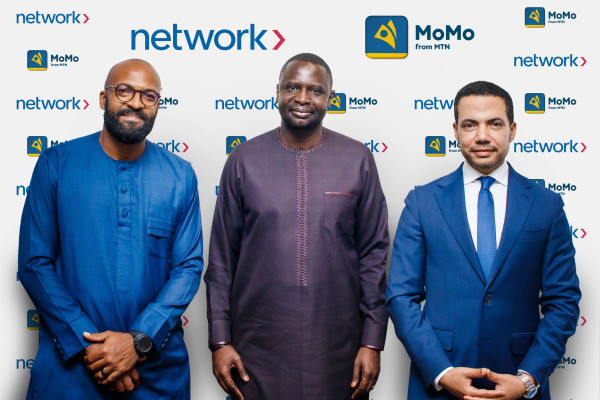
Network International appointed as Payment Processing Partner by MTN Group Fintech

Location: News
Network International

Network International (Network) (www.Network.ae), a leading enabler of digital commerce across the Middle East and Africa (MEA), has been appointed as a Payment Processor – Issuing partner for MTN Group Fintech, Africa's leading mobile financial services provider. This partnership marks a significant extension of Network's portfolio of issuer processing collaborations throughout the African continent. 

With a footprint spanning over 50 countries and serving over 250 financial institutions, Network International brings its expertise to this partnership which will enhance MTN Fintech's cutting-edge mobile services and provide even greater value to stakeholders and customers across Africa. 

The partnership will focus on rolling out card issuance products across key MTN Fintech markets, starting with Rwanda which is already operational. Soon   Uganda, Ivory Coast, and Nigeria will also be covered under this collaboration.  Network International will provide a comprehensive range of services, including transaction processing, card management and online fraud prevention. MTN Fintech users will benefit from a seamless experience accessing both traditional mobile services and innovative digital payment solutions. 

Dr. Reda Helal, Group Managing Director – Processing, Africa and Co-Head Group Processing at Network International commented: “Our collaboration with MTN Group Fintech marks a major milestone for our outsourced payments services in Africa. It demonstrates our ability to successfully serve Mobile Network Operators (MNOs) via our fully-fledged processing solutions and our continued dedication and commitment to the African region. We are excited to support MTN Group Fintech's growth strategy, and its business development plans across the continent.”  

Cedric N'guessan, Executive for Payment and E-commerce at MTN Group Fintech added, "This collaboration with Network International is pivotal in enhancing financial inclusion across Africa and beyond. It enables our customers to actively engage in the global economy, aligning perfectly with our strategic goals alongside Mastercard to broaden access to digital financial services across the continent." Read More (https://apo-opa.co/43aKuII) 

MTN Group provides voice, data, fintech, enterprise wholesale and API services to more than 288 million customers in 14 African markets.   

Distributed by APO Group on behalf of Network International.

For more information, please contact:  
MTN Group Press Office
MTNGroup.PressOffice@mtn.com 

MTN Group Fintech (Proprietary) Limited: 
Head Office: 216-14th Avenue Fairland 2195, Private Bag 9955 Cresta 2118 South Africa 
Tel +2711 912 3000 
Fax +2711 912 4093 
Website www.MTN.com

Corporate Communications: 
Network International 
Dubai, UAE 
Tel: +971 4 303 2431 
lambert.espedido@network.global   

Follow us:
X: https://apo-opa.co/3QwQZht
Linkedin: https://apo-opa.co/4khrvCr

About MTN Group Fintech:
MTN Fintech, the platform business of MTN Group, is dedicated to revolutionising global financial services through innovative digital technology solutions. Leveraging MTN's extensive reach and expertise in telecommunications, MTN Fintech is committed to advancing financial inclusion for all and empowering communities in Africa. With a primary focus on pioneering mobile financial services, digital payments, e-commerce, short-term insurance, and remittance capabilities, MTN Fintech strives to establish seamless, accessible, and secure financial ecosystems that shape the future of digital finance. 

About Network International:
Network International is the Middle East and Africa's largest and leading digital payments company. Our purpose is to help businesses and economies grow by simplifying payments and commerce. We operate in 50+ countries serving governments, banks, fintechs, merchants and public sector companies. We have 2,000+ employees based in our markets serving over 250 financial institutions and 130,000+ merchants.  

Media files
Network International
Download logo
Read moreNetwork International appointed as Payment Processing Partner by MTN Group Fintech
24 February 2025

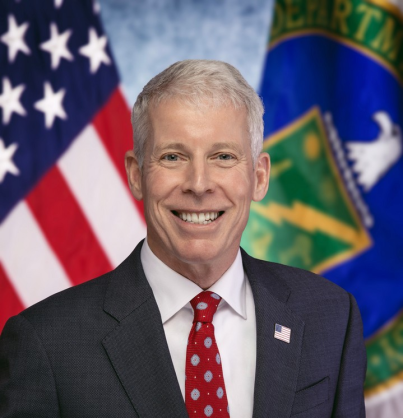
u.s. Secretary of Energy Chris Wright to Deliver Keynote Address at 10th Powering Africa Summit

Location: News
EnergyNet Ltd.

Secretary Chris Wright, U.S. Department of Energy, has been confirmed as a speaker and guest of honour at the 10th Powering Africa Summit (PAS), taking place at JW Marriott Washington, D.C. across March 6-7. This is an important step to provide an answer to the question that all of African energy is now asking: how will the new Administration approach the strategic energy relationship between the U.S. and Africa

Under the Summit theme, The Future of the US & Africa Energy Partnership, U.S. Secretary of Energy Chris Wright will deliver a keynote address at the 10th annual Powering Africa Summit. Wright will be joined by representatives from the U.S. Department of State: Ambassador Troy Fitrell, Senior Bureau Official, Bureau of African Affairs; Kimberly Harrington, Acting Principal Deputy Assistant Secretary, Bureau of Energy Resources; and Stephen Banks, Acting Deputy Assistant Secretary for Energy Diplomacy, Bureau of Energy Resources. All will share their vision for this future relationship between African countries and the US-based investors that are so vital to realizing their energy ambitions.

“As Secretary of Energy, I am committed to unleashing all forms of affordable, reliable and secure energy here at home and advancing that mission of energy security around the world – and nowhere is that more critical than the continent of Africa. I look forward to joining the Summit to reaffirm the strategic energy partnership between the U.S. and Africa and share my vision for advancing innovation and removing barriers to energy access, both at home and around the world,” Secretary Wright said.

Ministers and governments from 19 African countries will arrive in Washington D.C., where the Africa Welcome Address will be given by H.E. Honourable Adebayo Adelabu, Minister of Power, Nigeria. Together with H.E. Honourable Jeremiah Kpan Koung, Vice President, Liberia; H.E. Honourable Dr. Dele Alake, Minister for Solid Minerals Development, Nigeria; H.E. Honourable Mahmoud Mustafa Esmat, Minister of Electricity & Renewable Energy, Egypt; H.E. Honourable Karim Badawi, Minister of Petroleum & Mineral Resources, Egypt; H.E. Honourable Bogolo Joy Kenewendo, Minister of Minerals & Energy, Botswana; H.E. Honourable Alex Wachira, Principal Secretary, Ministry of Energy & Petroleum, Kenya; and Amina Benkhadra, Director General, Office National des Hydrocarbures et des Mines (ONHYM), Morocco, he will meet distinguished Ministers and leaders from South Africa, Senegal, Ethiopia, Zimbabwe, Togo, Sierra Leone and more to drive energy development across the continent.

Flagship ministerial boardrooms and regional energy cooperation sessions will discuss and debate   derisking projects, South Africa's energy future, the need for West African regulatory reforms, and the role of hydrogen in North Africa. New areas of opportunity such as bitcoin mining and data centers will be discussed through an East African lens. The Mission 300 initiative, set to provide electricity access to 300 million people in sub-Saharan Africa by 2030, is also high on the agenda.

The 10th Anniversary Gala Drinks Reception sponsored by Genesis Energy, will celebrate International Women's Day, ahead of March 8.

Critical to the week's discussions will be a host of private players including Alliant Insurance Services, GE Vernova, ARM-Harith Infrastructure Investment, Globeleq, Africa50, Nextracker, Schneider Electric, Newmarket Capital and the summit's general sponsor, Sun Africa, who are looking to a new future for the U.S.-Africa relationship.   

Sun Africa CEO, Adam Cortese said: “We are seeing a sea change in how the U.S. participates in foreign infrastructure development and our unique model of development is an excellent illustration of how U.S. energy companies can thrive in emerging markets on a strictly commercial basis. Sun Africa remains committed to harnessing Africa's immense energy resources through innovative structures, state-of-the-art technology and strong alliances while maintaining our long-standing market-based approach to development.  At Sun Africa, we believe energy development on the continent truly represents an opportunity for win-win partnerships and look forward to sharing our experience.”

Simon Gosling, MD of EnergyNet added: “This summit has always been about bringing together African countries seeking investment with U.S.-based investors who see the vast potential on the continent.  It is more important than ever to establish the crucial energy projects that Africa needs. PAS25 will put the continent center stage and make sure that both sides have a future relationship to be excited about.”

Media Credentials Requited for Powering Africa Summit

The Secretary will open the Summit on 6 March, delivering a Keynote Speech at 09:45, followed by a Fireside Chat with Mission 300 Accelerator CEO, Andrew Herscowitz.

Distributed by APO Group on behalf of EnergyNet Ltd..

For more information, please get in touch with 
Poliana@EnergyNet.co.uk
Senior Marketing Manager

Media files
EnergyNet Ltd.
Download logo
Read moreu.s. Secretary of Energy Chris Wright to Deliver Keynote Address at 10th Powering Africa Summit
24 February 2025

Transparent tariff determination needed to address high private healthcare costs

Location: News

Transparent tariff determination needed to address high private healthcare costs

Minister of Trade, Industry and Competition, Parks Tau, has emphasised the importance of regulating private healthcare costs to guarantee that affordable healthcare remains accessible to the majority of South Africans.

“There is a serious concern about access to private healthcare in the country, given the high levels of market concentration and high prices,” he said on Tuesday. 

The Minister was speaking at a joint media briefing with Health Minister Dr Aaron Motsoaledi to share progress on implementing the recommendations from the Health Market Inquiry (HMI) into the private healthcare sector.

The HMI, conducted five years ago by the Competition Commission and chaired by former Chief Justice of South Africa, Justice Sandile Ngcobo, identified numerous factors that impede competition within the private healthcare sector.

Key issues highlighted include an unregulated supply side in service provision, a lack of transparency in pricing, exclusive contracts, and various anticompetitive practices that create barriers for new entrants.

In addition, the HMI noted that the absence of a tariff determination framework, among other factors, contributes significantly to these inefficiencies.

“Importantly, given the lack of a structured price determination framework, the HMI found that there has been abuse in the pricing of Prescribed Minimum Benefits, as well as non-Prescribed Minimum Benefits, in the form of overutilisation of services and co-payments, thus driving up the cost of healthcare.”

On 14 February 2025, Tau published the Draft Interim Block Exemption for Tariffs Determination in the Healthcare Sector after engaging in consultations with both the Competition Commission and the National Department of Health.

This exemption is designed to fill the regulatory gap in tariff determination, aligning with the recommendations put forth in the 2019 HMI.

Its primary objectives are to establish a collaborative multi-stakeholder framework for regulating healthcare tariffs, enhance price transparency, and ultimately drive down costs for consumers.

Currently, Tau said there is no structured and transparent framework for determining tariffs for healthcare services.

“Due to the lack of a formal tariff determination framework, consumers are faced with uncertainty on prices, potential balance billing, and tariffs which are not determined through a transparent process. 

“As a result of this gap in tariff determination, patients, medical schemes, and even smaller healthcare providers are often disadvantaged.” 

The draft block exemption enables healthcare stakeholders to collaborate effectively on tariff-setting and related issues, aiming to enhance affordability and lower costs.

It encompasses agreements for the collective determination of tariffs for healthcare services, the establishment of standardised diagnosis codes, and the implementation of quality measurement criteria.

This multi-stakeholder framework introduces a transparent and structured approach to tariff determination, ensuring that the interests of all parties involved are balanced and represented.

To facilitate this process, the Tariffs Governing Body (TGB) and the Multilateral Negotiating Forum (MNF) have been established to oversee and promote collaborative tariff-setting.

He noted that the framework excludes private hospitals due to their considerable market power, promoting collective bargaining among medical schemes and healthcare providers to ensure that services remain affordable for consumers.

According to the Minister, the exclusion of private hospitals from the block exemption pertains specifically to their dominant market position, which applies only to hospital fees related to admission and does not extend to treatment fees.

“The publication of the draft interim block exemption marks a critical step towards addressing the cost of access to healthcare and promoting transparency in the healthcare market.” 

Meanwhile, Motsoaledi noted the escalating cost of private healthcare in South Africa, with medical price inflation (MPI) at 9.5% compared to a consumer price index of 4.5 to 4.6%. 

According to the Health Minister, the lack of structured tariff setting has led to varying prices and blame towards the State. 

He said the Competition Commission’s 2004 ruling prohibited collective negotiation of prices, leading to a “lacuna” in tariff-setting.

According to Motsoaledi, various attempts to regulate prices, including the National Health Reference Price List and the Health Professions Council of South Africa’s guidelines, faced opposition and legal challenges.

“In our country, it is generally agreed that the cost of private healthcare is now beyond the reach of most South Africans. 

“We would be right to assert that it has become an uncontrollable expenditure. This affects every aspect of South African life.”

The Minister noted the HMI recommended the establishment of an independent Supply-Side Regulator for Healthcare (SSRH) restructuring licensing, creating a single data repository, and negotiating private sector prices through a multilateral forum. 

The inquiry also advocated for eradicating the fee-for-service payment system and implementing a standard benefit package under National Health Insurance (NHI). 

However, Motsoaledi said he noted the National Treasury’s reluctance to form new public entities, which poses a challenge. 

“It is for these reasons that we are implementing some of the recommendations of HMI as a temporary stop-gap measure which will be progressively upgraded to the levels envisaged. 

“We are doing this because naturally the phased-in implementation of NHI is going to take longer and we need the interim to relieve the pressure which people experience when seeking healthcare services,” he added. – SAnews.gov.za


Gabisile
Mon, 02/24/2025 - 12:21
163 views

Read moreTransparent tariff determination needed to address high private healthcare costs
23 February 2025

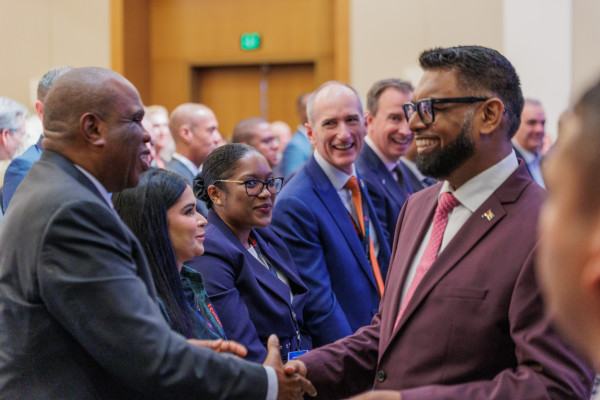
Afreximbank to Set up $1 Billion Oil Service Financing Facility in Guyana

Location: Business
Afreximbank

In a significant announcement at the Guyana Energy Conference and Supply Chain Expo being held from, February 18 - 21, Prof. Benedict Oramah, President and Chairman of the Board of Directors of African Export-Import Bank (Afreximbank) (www.Afreximbank.com), declared the multilateral Bank's intention to establish a $1 billion oil service financing facility in Guyana. This initiative aims to enhance local participation in the country's fast growing oil industry, in alignment with the government's local content policies. The Bank will deploy the $1 billion facility directly to qualifying corporate clients or through a factoring line via local banks, enabling them to finance invoices from local contractors.

President Oramah highlighted the transformative potential of Guyana's estimated 12 billion barrels of crude oil reserves. Emphasising the transformative power in proactive resource management, he advised Guyana to aggressively harness and build capital from its oil resources.

He said, "Given the level of oil production in Guyana and its offshore location, I estimate that the oil service sector would amount to 5 to 8 billion US dollars annually. But where will it go? Most of it would be paid to oil service companies abroad, if Guyana does nothing to avoid that. A 50% retention in Guyana would increase Guyana's GDP by 29% to 47%.” As such, he called for robust local content policies that would enable Guyanese entrepreneurs to become significant players in the oil value chain.

Based on Afreximbank's rich history of supporting commodity-dependent economies, President Oramah shared insights to complement the ongoing efforts of the Guyanese government. He acknowledged the inherent risks associated with dependency on a single commodity and laid stress on the importance of diversification.

He cautioned, “The commodity market is prone to volatility and cyclicality; hence, the reliance on crude revenues as a primary source of government funding could expose the national economy to volatile commodity markets." As such, he advised the government to secure long-term off-take contracts with oil service companies, which will enhance market access and price stability.

In the spirit of deepening Afri-Caribbean partnership, President Oramah remarked that skilled oil service companies from Ghana, Egypt, and South Africa, are "ready and willing to support Guyanese... And of course, Afreximbank is there to underwrite the marriage.”

He added that: “These measures are necessary if Guyana and other new entrants in the Caribbean and Africa are to avoid the painful "Dutch Disease. We make these suggestions based on the three long decades of financing oil and gas activities across Africa. We have witnessed oil-dependent economies transform for better or worse through these periods. In all these, the difference reflected the policy choices the leaders made.”

Distributed by APO Group on behalf of Afreximbank.

Media Contact:
Vincent Musumba
Communications and Events Manager (Media Relations)
Email: press@afreximbank.com

Follow us on:
X: apo-opa.co/436nryI
Facebook: apo-opa.co/3ENmLEu
LinkedIn: apo-opa.co/4bcByVp
Instagram: apo-opa.co/3Xb0g2y

About Afreximbank:
African Export-Import Bank (Afreximbank) is a Pan-African multilateral financial institution mandated to finance and promote intra-and extra-African trade. For over 30 years, the Bank has been deploying innovative structures to deliver financing solutions that support the transformation of the structure of Africa's trade, accelerating industrialization and intra-regional trade, thereby boosting economic expansion in Africa. A stalwart supporter of the African Continental Free Trade Agreement (AfCFTA), Afreximbank has launched a Pan-African Payment and Settlement System (PAPSS) that was adopted by the African Union (AU) as the payment and settlement platform to underpin the implementation of the AfCFTA. Working with the AfCFTA Secretariat and the AU, the Bank is setting up a US$10 billion Adjustment Fund to support countries effectively participating in the AfCFTA. At the end of December 2023, Afreximbank's total assets and contingencies stood at over US$37.3 billion, and its shareholder funds amounted to US$6.1 billion. Afreximbank has investment grade ratings assigned by GCR (international scale) (A), Moody's (Baa1), Japan Credit Rating Agency (JCR) (A-) and Fitch (BBB). Afreximbank has evolved into a group entity comprising the Bank, its impact fund subsidiary called the Fund for Export Development Africa (FEDA), and its insurance management subsidiary, AfrexInsure (together, "the Group"). The Bank is headquartered in Cairo, Egypt.

For more information, visit: www.Afreximbank.com

Media files
Afreximbank
Download logo
Read moreAfreximbank to Set up $1 Billion Oil Service Financing Facility in Guyana
12 February 2025

GNU will ensure SONA commitments made become a ’lived reality’

Location: News

GNU will ensure SONA commitments made become a ’lived reality’

Cooperative Governance and Traditional Affairs (CoGTA) Minister, Velenkosini Hlabisa, has assured President Cyril Ramaphosa that the Government of National Unity (GNU) will work to ensure that commitments made to the nation become a reality.

“Honourable President, the GNU will ensure that the commitments you made to the nation do not become empty promises, but a lived reality, “ he said in remarks at the State of the Nation Address (SONA) debate in Parliament on Tuesday. 

This as Members of Parliament (MPs) discussed President Ramaphosa’s SONA which was delivered last Thursday.

MPs addressed various issues, including tensions with the United States and the fallen soldiers in the eastern Democratic Republic of Congo (DRC), among other topics.

The President’s address emphasised economic growth, job creation, infrastructure development, and the reduction of household expenses.

“At the heart of this vision is a government that works for its people. The GNU must, therefore, be applauded, for it is committed to building a capable, ethical, and developmental State, comprising of ethical, skilled, and properly qualified public servants. 

“This work has already begun, under the capable leadership of the Minister of Public Service and Administration, the Honourable Inkosi [Mzamo] Buthelezi.” 

Hlabisa said he was encouraged that the President highlighted the important role that traditional leaders can play in improving services to the people. 

State of municipalities 

As the CoGTA Minister, he stated that he is heeding citizens’ outcry over the dire state of many municipalities over the failures of local government, and the need for municipalities to work. 

“Basic services must be delivered, and delivered efficiently,” he told MPs. 

Hlabisa said the crisis stems from the resource constraints faced by many municipalities. 

He believes that the current funding model for local government is unsustainable and exacerbates inequality between the wealthy and the impoverished.

“A new funding model is a must; one that considers each municipality's unique needs and challenges and provides a more equitable distribution of resources.”

Infrastructure development

He welcomed the President’s emphasis on new infrastructure development but believes it should also involve the maintenance and upgrading of existing infrastructure.

“To rebuild South Africa, we need to rebuild our education system, rebuild our healthcare system and rebuild our economy.”

Public healthcare 

He also threw his weight behind the National Health Insurance (NHI) but also raised concern about the feasibility and affordability of it in its current form.
 
“Government must prioritise strengthening the existing public healthcare system, which is plagued by inefficiencies and shortages of equipment and medical personnel. “

Growing the economy 

Hlabisa also welcomed government’s commitment to creating jobs and stimulating economic growth. 

“We look forward to the implementation of the Medium-Term Development Plan [MTDP] , particularly in relation to the three strategic priorities of driving inclusive growth and job creation, reducing poverty, and tackling the high cost of living.”

The MTDP is a five-year strategic framework that outlines the government’s priorities and serves as a roadmap for translating the commitments of the seventh administration into actionable programs and policies.

Global developments 

Shifting his focus to international matters, Hlabisa mentioned that unfolding events and the international, diplomatic fallout around the Expropriation Act is “deeply concerning.” 

“We condemn those who spread misinformation and work against our collective, national interest to rebuild South Africa. Having said that, Honourable President, the IFP [Inkatha Freedom Party] believes that greater clarity and certainty must be provided on key issues of the Act, such as compensation and the definition of public interest.”

The Minister also took the time to honour the 14 fallen soldiers who died at the hands of M23 as fighting in the Goma region intensified, with the rebel group engaging fiercely against the Congolese armed forces.

The South African National Defence Force (SANDF) soldiers are part of the Southern African Development Community Mission in the Democratic Republic of Congo (SAMIDRC), which aims to help restore peace, security, and stability in Africa’s second-largest country.

“Their selfless sacrifice will never be forgotten. [We] support initiatives to restore peace across the continent, knowing that peace and stability are essential for economic development, social justice, and human dignity. Abrupt withdrawal would not be in the interests of the continent.” 

The SONA debate will continue today at 2 pm. – SAnews.gov.za
 

Gabisile
Wed, 02/12/2025 - 10:20

99 views
Read moreGNU will ensure SONA commitments made become a ’lived reality’
10 February 2025

1,500 Lesotho Health Workers Sent Home After US Aid Suspended

Location: News

Trump blocking aid threatens vital health services

Read more1,500 Lesotho Health Workers Sent Home After US Aid Suspended
10 February 2025

Gauteng’s first MitraClip Implants a ‘gamechanger’ for heart valve treatment

Location: News

Gauteng's first MitraClip Implants a 'gamechanger' for heart valve treatment

The Charlotte Maxeke Johannesburg Academic Hospital (CMJAH) has performed the first successful MitraClip implants on three State-funded patients in the province.

The minimally invasive procedure is designed to treat Mitral Regurgitation, a heart condition where the mitral valve does not close properly, causing blood to leak backwards into the heart.

The Gauteng Health Department explained that the MitralClip itself is a “minute clip passed through a catheter, which aids the mitral valve in sealing properly, subsequently restoring normal blood flow through the heart”.

Gauteng MEC for Health and Wellness, Nomantu Nkomo-Ralehoko welcomed the successful completion of the procedures, which were carried out last week.

“This procedure is but an example of the many inroads we continue to make in the healthcare system through collaboration between the public and private sector. 

“We have the advantage of academic hospitals, which boasts leading experts in many fields locally and internationally. This allows us to pioneer new ways of improving patient care,” the MEC said.

Director of the Cardiac Catheterisation Laboratory and Interventional Cardiologist at CMJAH, Dr Arthur Mutyaba, who was part of the team performing the procedures, said that with this new capability, more patients living with the condition and ineligible for open-heart surgery can now be assisted.

 “With this procedure now accessible, we are able to help these patients get back to a normal life without having to expose them to the risk that open heart surgery would have disposed them to,” Mutyaba said.

The department revealed that, to date, at least 15 MitraClip procedures have been completed in South Africa, all performed in public institutions.

“The Charlotte Maxeke procedure marks the fourth round of MitraClip implants in South Africa, following the first 12 successful procedures performed at Groote Schuur and Tygerberg hospitals in Cape Town. 

“What makes this program unique is that both public and private patients have access to this cutting-edge therapy through these leading academic hospitals in the country. At present, MitraClip therapy is not yet available in private healthcare facilities, making these institutions the sole centres for this life-changing intervention,” the department said.

Game changing solution

The Gauteng Health Department described that the procedure as a “game changer” which marks a “significant advancement in minimally invasive heart valve therapy” in both the private and public sector.

“The procedure’s key benefits include drastically reduced recovery times, often just one or two days post-insertion, making it a game-changer for elderly or high-risk mitral regurgitation patients who are unsuitable candidates for open heart surgery.

“With its availability through academic hospitals and the ongoing tracking of patient outcomes, this pioneering therapy is set to transform the treatment landscape for mitral regurgitation in South Africa,” the department said.

The successful procedures will now be recorded on the national registry to track advancements in treatments in South Africa.

“What makes the procedures even more unique is that, despite most of the patients having full medical insurance, a decision was made to perform these procedures in a controlled academic hospital environment. 

“This approach ensures that all cases are recorded in a national registry, allowing for the tracking of long-term outcomes and contributing to the advancement of structural heart disease treatment in South Africa,” the department said. – SAnews.gov.za


NeoB
Mon, 02/10/2025 - 12:52

32 views
Read moreGauteng’s first MitraClip Implants a ‘gamechanger’ for heart valve treatment
7 February 2025

Ministers welcome President’s focus on economic growth, job creation

Location: News

Ministers welcome President’s focus on economic growth, job creation

Government Ministers have thrown their weight behind President Cyril Ramaphosa’s State of the Nation Address (SONA), which focused on economic growth, job creation, infrastructure development and reducing household expenses.

“Our most urgent task is to grow our economy so that we can create jobs, reduce poverty, and improve the lives of all South Africans,” the President told Members of Parliament (MPs) and guests on Thursday evening. 

The President emphasised that the nation urgently requires a robust economy that benefits everyone. 

To achieve this virtuous cycle of investment, growth and job creation, the President said economic growth must surpass 3%.

Minister of Agriculture, John Steenhuisen, has echoed the President’s sentiments, stating that South Africa needs to transform its economy.

“We’ve got to be able to show more jobs. We need to bring in the private sector so that we can get more agricultural products to the world a lot quicker and expand. 

“The citrus industry told me that they could quadruple the production over the medium-term if they have reliable ports and can get their products to the market.” 

Steenhuisen believes that the Head of State and Government has demonstrated a clear focus.

“Now, we can [move with] the urgency that’s required and I wish I could see more of those deadlines around when we’re going to achieve these things.

“I think the President diagnosed the problem perfectly – it’s about growth and jobs. That’s why we’re in the GNU [Government of National Unity].” 

The Minister also expressed his satisfaction with the plans presented by the President. 

He also welcomed the investment in infrastructure, the commitments made toward Early Childhood Development (ECD), and the transformation of Social Relief of Distress (SRD) grants into income protection for impoverished South Africans.

The President announced that this grant will serve as the foundation for introducing a sustainable income support system for the unemployed. 

He also stated that the Funza Lushaka Bursary Scheme will continue to prioritise students who wish to pursue a career in teaching, particularly in the foundation phase. 

In addition, government will work to expand access to ECD services for all children.

“We can’t be sitting within the 2029 election and going to the electorate with some of these projects languishing in the drawing board. I think now we have to unpack; take all of these things and move them with speed and urgency,” Steenhuisen added. 

Deputy Minister for Women, Youth, and Persons with Disabilities, Mmapaseka Steve Letsike, believes that the President has issued a clear call regarding the government’s mid-term development plan, focusing on actions and priorities.

“Part of the non-negotiable... is job creation and economic growth in all sectors. No sector must be left behind - whether it’s infrastructure, construction, agriculture or finance. 

“Our President has said our country is capable and we must make sure that the capability and the potential of young people that we often find neither in employment, education nor training must be brought to the table.” 

Letsike believes that the President is prioritising women, youth and persons with disabilities. 

She welcomed the Transformation Fund, which is worth R20 billion a year over the next five years, to support black-owned and small business enterprises.

“It’s already telling us its action plan. This public purse must reach the relevant people.” 

Letsike also welcomed President Ramaphosa’s commitment to reform the energy and water sectors, which are essential for service delivery to the people.

“When he wrapped it up, he said our nation is capable and we can’t leave anyone behind.”

Health Minister, Dr Aaron Motsoaledi, expressed his satisfaction that the President addressed the importance of building the economy to create jobs.

“That has been a very big problem for about two decades in our country and he tried his best to tackle it,” he said. 

Motsoaledi also welcomed the three significant announcements related to his department, which include advancing the National Health Insurance (NHI), enhancing public health infrastructure, and working towards the elimination of HIV and AIDS. 

“I’ve been telling people that improving public health infrastructure and implementing the NHI aren’t mutually exclusive and don’t have to follow one another, and that we can do it simultaneously .

“The President just announced a huge hospital bill programme and so, we’re forging ahead with NHI and we’re going to put this massive infrastructure.” 

According to the Minister, the infrastructure will complement improvements in public health facilities.

“South Africans must not accept or get used to the idea that we’re going to live with HIV/Aids forever and it’s part of life. It’s not. At some stage, we need to bring it to an end and we’re targeting 2030.”

While he acknowledged that the country may not be able to completely eradicate the disease, he stressed that government is working tirelessly to eliminate it as a public threat. 

To achieve this goal, approximately 1.1 million more people need to be on antiretroviral therapy (ARVs) between now and November of this year.

“People have been asking me where are you going to get money (sic). But I tell them, when you want to save people, don’t ask about money. Look at the human beings you want to save first and money will follow when you have that determination.” 

Minister in the Presidency, Khumbudzo Ntshavheni, has echoed the President’s sentiments of providing universal healthcare for all South Africans.

“We must do the basic things that need to be done. We must put the health infrastructure in place, so that there are hospitals and clinics that our people can access,” Ntshavheni said.

Home Affairs Minister, Dr Leon Schreiber, stated that the President’s adoption of digital technology in his department has been crucial.

He told SAnews that this aligns with the vision of Home Affairs and how the department wishes to turn it into a digitally first department - the first component of this initiative will be delivered this year. 

Schreiber also highlighted the part of the address where the Head of State discussed tourism and attracting skills for investment.

“One of the big issues is getting visas. That’s why the electronic travel authorisation concept and the automated visa process are important. No more papers, no more space for human intervention and it’s going to deal with corruption and it’s going to deliver with efficiency.” 

Meanwhile, the President of the Congress of the South African Trade Union Federation (Cosatu), Zingiswa Losi, also welcomed this year’s address. 

“We’re happy because he touched on most of the things we expected the President to touch on -- the issue of the Social Relief of Distress grant and continuing with it to form the basic income grant. It has been the call Cosatu has been making for years now and we’re happy that the President is not talking about taking that away,” she said. 

Losi believes that the State must ensure that unemployed individuals can sustain themselves.

“I’m also happy that he was also able to link that to Technical, Vocational, Education and Training (TVET) colleges because we’ve seen that now our kids have passed Grade 12. Most of them are devastated because they’re unable to get to universities but we’re not talking about artisans and skills that this economy is going to need.”

According to the Cosatu President, if government is planning to spend R940 billion on infrastructure over the next three years, the country will require a wide range of skills to revitalise roads and bridges, build dams and waterways, and modernise ports and airports.

“The emphasis by the President about the TVET Colleges and also spending R943 billion that has been allocated to infrastructure says we’re going in the right direction. But we must make sure that the construction mafias don’t take this away,” Losi said. – SAnews.gov.za

Gabisile
Thu, 02/06/2025 - 23:47

114 views
Read moreMinisters welcome President’s focus on economic growth, job creation
5 February 2025

Afreximbank Challenges Africa’s Miners to Take Bold Steps to Own the Continent’s Resources

Location: News
Afreximbank

Africa must take bold steps to own its resources, create jobs and build industries that sustain prosperity for generations, African Export-Import Bank (Afreximbank) (www.Afreximbank.com) has told African leaders, policymakers, mining industry leaders and global partners at the African Mining Indaba 2025 in Cape Town, South Africa, on Sunday.

In a keynote address at the ministerial symposium of the Indaba, Mr. Denys Denya, Senior Executive Vice President of the Afreximbank Group, argued that the continent was standing at a crossroads and could either continue exporting its wealth and remain a marginal player in the global economy or take the bold steps to own its resources.

He noted that “While the global mining industry generated approximately US$1.7 trillion in revenue in 2023, Africa's share of this wealth remains disproportionately low. Our continent extracts the raw materials that power the world's industries, yet it is estimated that we retain as little as between four per cent and 20 per cent of the total value of our minerals due to minimal local processing and limited downstream development. The result? Lost economic opportunities, exposure to volatile commodity cycles and a persistent reliance on external markets for refined products derived from our own resources.” “The choice is ours. The time to act is now. Let us work together: governments, financial institutions, investors, and industry players to build an Africa where mining is not just about extraction but about transformation, innovation and wealth creation,” said Mr. Denya. “Africa has the resources, the market potential, and the policy frameworks to transition from a resource-dependent continent to an industrial powerhouse. However, success will depend on bold, decisive action from all stakeholders. Policymakers must implement clear, enforceable regulations that mandate local value addition and create investment-friendly environments. Private sector investors must step up with capital and technology to develop processing, refining, and manufacturing facilities.”

Reversing this trend demanded bold, coordinated action, he argued. “We must move beyond extraction and invest in refining, smelting and advanced manufacturing. African nations must increase local processing capacity for minerals such as bauxite, lithium, cobalt and iron ore.”

He added that regional collaboration was essential as no single country could build a mining value chain in isolation.

Mr. Denya highlighted the importance of the African Continental Free Trade Area (AfCFTA) in developing intra-African mineral value chains and strengthening cross-border collaboration and said that attracting capital for mining-related infrastructure, technology transfer and skills development were critical.

“Our mining policies must also prioritise environmental, social and governance standards, ensuring that mining benefits communities rather than displacing them,” he said, adding that the approach would create millions of skilled jobs for the youth and reduce reliance on volatile global markets while strengthening intra-African trade.

Reiterating Afreximbank's commitment to supporting Africa's mining sector and ensuring that mineral wealth drove economic growth rather than perpetuate resource dependency, Mr. Denya announced that, over the past three years, the Bank had approved more than US$1 billion in support of mining and mineral sector projects across the continent, including financing the development and construction of a bauxite processing plant in Guinea, supporting the expansion of a manganese processing plant in Gabon and providing working capital financing to a diamond company in Botswana.

Other major projects being supported by the Bank include a petrochemical fertilizer plant in Angola, a titanium dioxide pigment plant in South Africa and the feasibility study for the development of a limestone mine processing plant in Malawi, he added.

Mr. Denya said that the establishment of the US$10-billion AfCFTA Adjustment Fund, managed by FEDA, Afreximbank's impact investment subsidiary, would provide critical financial support to countries and businesses transitioning to the new trade regime, including those in the mining sector, and that the Bank's efforts to harmonise standards and implement the Africa Collaborative Transit Guarantee Scheme would also facilitate seamless movement of minerals and mining equipment across borders, reducing logistical bottlenecks.

Afreximbank was also leveraging digital platforms, such as the Africa Trade Gateway and the Pan-African Payment and Settlement System, to enable efficient transactions and market access, which would ensure that Africa's vast mineral wealth was utilised to drive industrialisation, value addition and economic resilience across the continent, he added.

Mr. Denya also noted that Afreximbank, in collaboration with development partners, was driving the development and expansion of industrial parks and special economic zones (SEZs) to address infrastructure challenges that hinder industrial growth.

One of the most transformative initiatives under that pillar was the DRC/Zambia Electric Vehicle Battery Manufacturing Special Economic Zones - a project that positions Africa at the centre of the global energy transition by the implementation of battery precursor SEZs aimed at making the two countries globally competitive investment destinations for the battery electric vehicle value chain.

The African Mining Indaba 2025, taking place from 3 to 6 February, is the premier gathering where Africa policymakers, industry leaders and global partners work to shape the future of the African mining sector.

Distributed by APO Group on behalf of Afreximbank.

Media Contact:
Vincent Musumba
Communications and Events Manager (Media Relations)
Email: press@afreximbank.com

Follow us on:
X: https://apo-opa.co/4116jsN 
Facebook: https://apo-opa.co/4aLcd4I 
LinkedIn: https://apo-opa.co/3Et8gFS 
Instagram: https://apo-opa.co/4aOinBd

About Afreximbank:
African Export-Import Bank (Afreximbank) is a Pan-African multilateral financial institution mandated to finance and promote intra-and extra-African trade. For 30 years, the Bank has been deploying innovative structures to deliver financing solutions that support the transformation of the structure of Africa's trade, accelerating industrialization and intra-regional trade, thereby boosting economic expansion in Africa. A stalwart supporter of the African Continental Free Trade Agreement (AfCFTA), Afreximbank has launched a Pan-African Payment and Settlement System (PAPSS) that was adopted by the African Union (AU) as the payment and settlement platform to underpin the implementation of the AfCFTA. Working with the AfCFTA Secretariat and the AU, the Bank is setting up a US$10 billion Adjustment Fund to support countries effectively participating in the AfCFTA. At the end of December 2023, Afreximbank's total assets and contingencies stood at over US$37.3 billion, and its shareholder funds amounted to US$6.1 billion. Afreximbank has investment grade ratings assigned by GCR (international scale) (A), Moody's (Baa1), Japan Credit Rating Agency (JCR) (A-) and Fitch (BBB). Afreximbank has evolved into a group entity comprising the Bank, its impact fund subsidiary called the Fund for Export Development Africa (FEDA), and its insurance management subsidiary, AfrexInsure (together, "the Group"). The Bank is headquartered in Cairo, Egypt.

For more information, visit: www.Afreximbank.com

Media files
Afreximbank
Download logo
Read moreAfreximbank Challenges Africa’s Miners to Take Bold Steps to Own the Continent’s Resources
31 January 2025

SA’s economy on recovery trajectory

Location: News

SA’s economy on recovery trajectory

South Africa’s economic growth prospects are poised to recover in 2025 following a lacklustre economic performance for the past two years.

According to an economic and financial assessments by the International Monetary Fund (IMF), the real Gross Domestic Product (GDP) output growth is expected to accelerate from an estimated 0.8 percent in 2024 to 1.5 percent in 2025 driven by improved electricity generation, monetary policy easing, and a return of investor and consumer confidence post elections.

On Thursday, the IMF published the findings of its Article IV Consultation with South Africa, which was held from 11-25 November 2024. 

As part of the surveillance role, the IMF conducts periodic economic and financial assessments with each member country.

The IMF acknowledged progress in banking-resolution and safety-net reforms and praised macro-prudential measures to bolster capital buffers. However, it raised concerns on the rising public debt and the challenges South Africa’s faces to meet climate goals.

In addition, the IMF welcomed the ongoing electricity and logistics reforms aimed at alleviating critical supply constraints and called for the ambitious implementation of these reforms. 

The Fund indicated that meeting South Africa’s climate goals requires further efforts to increase effective carbon taxation and accelerate the rollout of renewable energy.

The IMF projects growth to reach 1.8 percent by the end of the decade, supported by ongoing electricity and logistics reforms. 

“Risks are tilted to the downside, related to a possible intensification of geoeconomic fragmentation and protectionist policies in the context of an uncertain global environment.

“With fiscal deficits moderating but still elevated over the medium term, the IMF projects public debt to continue to rise under its baseline scenario, recommending a more-ambitious-than-envisaged fiscal consolidation,” the IMF said.

The IMF expects inflation to stabilise around the midpoint of the central bank’s target range. 

The Fund recommended that the central bank continues to manage the normalization of the policy rate toward the neutral level in a flexible and data-driven manner.

The IMF argues that transitioning from a target band to a lower point target with a well-calibrated tolerance band at an appropriate time can help strengthen macroeconomic stability.

National Treasury’s response

National Treasury noted that the IMF’s concerns are aligned with government’s response to addressing immediate and long-term economic challenges.

“The National Treasury is committed to implementing reforms that will enhance inclusive economic growth, achieve a sustainable public debt level, further repair and strengthen network industries, and strengthen state capacity to support economic activity.”

In its 2024 Medium Term Budget Policy Statement (MTBPS), the National Treasury estimated economic growth to increase from 1.1 percent in 2024 to 1.7 percent in 2025.

It attributed the gains in the economy to household consumption gradually increasing, supported by rising purchasing power, employment recovery and wealth gains.

“South Africa is committed to fiscal consolidation and to setting debt on a sustainable path. The fiscal year 2023/24 was a significant success, with the first primary surplus in 15 years being recorded in 2023/24. 

“An overall main budget deficit of 4.7 per cent of GDP is expected for the current fiscal year. This is projected to decline to 4.3 per cent in 2025/26. Meanwhile, debt as a percentage of GDP is expected to stabilize in the 2025/26 financial year, with debt-service costs as a percentage of revenue also peaking at the same time,” National Treasury said.

The current focus of South Africa’s reform agenda includes the stabilisation of the electricity grid, enhancing the efficacy of freight and ports operations, implementing e-Visas, as well as prioritizing the advancement of targeted industries to enhance the business climate and promoting equitable growth. 

Nearly 94 percent of the reforms aimed for implementation by 2024 have been accomplished or are significantly progressing. 

“Following its successful first phase, Operation Vulindlela, will be going into its second phase with new initiatives aimed at reversing local government decline, tackling spatial inequality and advancing a digital government to improve service delivery,” National Treasury said.

These enhance the key focus areas of the first phase  - namely, reducing power cuts, improving the performance of the logistics system, lowering data costs, improving water supply and enabling the country to attract critical skills.

The SARB performed its first stress test of South Africa's key insurance firms during the 2023/24 cycle, of which climate-related risks were prominent. Ongoing efforts to exit the Financial Action Task Force (FATF) grey list during 2025 are well underway, with 16 out of 22 action items having been addressed,” National Treasury said. - SAnews.gov.za


nosihle
Fri, 01/31/2025 - 09:07

103 views
Read moreSA’s economy on recovery trajectory
  • Previous
  • Page 1
  • Page 2
  • Page 3
  • Page 4
  • Page 5
  • Page 6
  • Interim pages omitted …
  • Page 18
  • Next

Copyright © 2026 · MyZA · All Rights Reserved · Powered by Reach Trust