• Skip to main content
  • Skip to header right navigation
  • Skip to after header navigation
  • Skip to site footer
MyZA

MyZA

News, Directory, Events and Other Stuff

  • Social Media
  • Sport
  • World News
  • Home
  • Submit News
  • Directory
  • Events
  • Stratlec
  • TFSA
  • News
    • APO
    • Today’s Sport News
    • Todays Social Media and Tech Headlines
    • Today’s World News
    • Today’s SA Financial News
  • Contact
You are here: Home / News / Transparent tariff determination needed to address high private healthcare costs

Transparent tariff determination needed to address high private healthcare costs

24 February 2025 by Guest

Transparent tariff determination needed to address high private healthcare costs

Minister of Trade, Industry and Competition, Parks Tau, has emphasised the importance of regulating private healthcare costs to guarantee that affordable healthcare remains accessible to the majority of South Africans.

“There is a serious concern about access to private healthcare in the country, given the high levels of market concentration and high prices,” he said on Tuesday. 

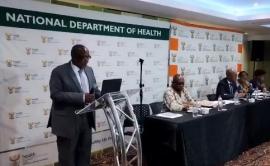
The Minister was speaking at a joint media briefing with Health Minister Dr Aaron Motsoaledi to share progress on implementing the recommendations from the Health Market Inquiry (HMI) into the private healthcare sector.

The HMI, conducted five years ago by the Competition Commission and chaired by former Chief Justice of South Africa, Justice Sandile Ngcobo, identified numerous factors that impede competition within the private healthcare sector.

Key issues highlighted include an unregulated supply side in service provision, a lack of transparency in pricing, exclusive contracts, and various anticompetitive practices that create barriers for new entrants.

In addition, the HMI noted that the absence of a tariff determination framework, among other factors, contributes significantly to these inefficiencies.

“Importantly, given the lack of a structured price determination framework, the HMI found that there has been abuse in the pricing of Prescribed Minimum Benefits, as well as non-Prescribed Minimum Benefits, in the form of overutilisation of services and co-payments, thus driving up the cost of healthcare.”

On 14 February 2025, Tau published the Draft Interim Block Exemption for Tariffs Determination in the Healthcare Sector after engaging in consultations with both the Competition Commission and the National Department of Health.

This exemption is designed to fill the regulatory gap in tariff determination, aligning with the recommendations put forth in the 2019 HMI.

Its primary objectives are to establish a collaborative multi-stakeholder framework for regulating healthcare tariffs, enhance price transparency, and ultimately drive down costs for consumers.

Currently, Tau said there is no structured and transparent framework for determining tariffs for healthcare services.

“Due to the lack of a formal tariff determination framework, consumers are faced with uncertainty on prices, potential balance billing, and tariffs which are not determined through a transparent process. 

“As a result of this gap in tariff determination, patients, medical schemes, and even smaller healthcare providers are often disadvantaged.” 

The draft block exemption enables healthcare stakeholders to collaborate effectively on tariff-setting and related issues, aiming to enhance affordability and lower costs.

It encompasses agreements for the collective determination of tariffs for healthcare services, the establishment of standardised diagnosis codes, and the implementation of quality measurement criteria.

This multi-stakeholder framework introduces a transparent and structured approach to tariff determination, ensuring that the interests of all parties involved are balanced and represented.

To facilitate this process, the Tariffs Governing Body (TGB) and the Multilateral Negotiating Forum (MNF) have been established to oversee and promote collaborative tariff-setting.

He noted that the framework excludes private hospitals due to their considerable market power, promoting collective bargaining among medical schemes and healthcare providers to ensure that services remain affordable for consumers.

According to the Minister, the exclusion of private hospitals from the block exemption pertains specifically to their dominant market position, which applies only to hospital fees related to admission and does not extend to treatment fees.

“The publication of the draft interim block exemption marks a critical step towards addressing the cost of access to healthcare and promoting transparency in the healthcare market.” 

Meanwhile, Motsoaledi noted the escalating cost of private healthcare in South Africa, with medical price inflation (MPI) at 9.5% compared to a consumer price index of 4.5 to 4.6%. 

According to the Health Minister, the lack of structured tariff setting has led to varying prices and blame towards the State. 

He said the Competition Commission’s 2004 ruling prohibited collective negotiation of prices, leading to a “lacuna” in tariff-setting.

According to Motsoaledi, various attempts to regulate prices, including the National Health Reference Price List and the Health Professions Council of South Africa’s guidelines, faced opposition and legal challenges.

“In our country, it is generally agreed that the cost of private healthcare is now beyond the reach of most South Africans. 

“We would be right to assert that it has become an uncontrollable expenditure. This affects every aspect of South African life.”

The Minister noted the HMI recommended the establishment of an independent Supply-Side Regulator for Healthcare (SSRH) restructuring licensing, creating a single data repository, and negotiating private sector prices through a multilateral forum. 

The inquiry also advocated for eradicating the fee-for-service payment system and implementing a standard benefit package under National Health Insurance (NHI). 

However, Motsoaledi said he noted the National Treasury’s reluctance to form new public entities, which poses a challenge. 

“It is for these reasons that we are implementing some of the recommendations of HMI as a temporary stop-gap measure which will be progressively upgraded to the levels envisaged. 

“We are doing this because naturally the phased-in implementation of NHI is going to take longer and we need the interim to relieve the pressure which people experience when seeking healthcare services,” he added. – SAnews.gov.za


Gabisile
Mon, 02/24/2025 – 12:21
163 views

Minister of Trade, Industry and Competition, Parks Tau, has emphasised the importance of regulating private healthcare costs to guarantee that affordable healthcare remains accessible to the majority of South Africans.

“There is a serious concern about access to private healthcare in the country, given the high levels of market concentration and high prices,” he said on Tuesday. 

The Minister was speaking at a joint media briefing with Health Minister Dr Aaron Motsoaledi to share progress on implementing the recommendations from the Health Market Inquiry (HMI) into the private healthcare sector.

The HMI, conducted five years ago by the Competition Commission and chaired by former Chief Justice of South Africa, Justice Sandile Ngcobo, identified numerous factors that impede competition within the private healthcare sector.

Key issues highlighted include an unregulated supply side in service provision, a lack of transparency in pricing, exclusive contracts, and various anticompetitive practices that create barriers for new entrants.

In addition, the HMI noted that the absence of a tariff determination framework, among other factors, contributes significantly to these inefficiencies.

“Importantly, given the lack of a structured price determination framework, the HMI found that there has been abuse in the pricing of Prescribed Minimum Benefits, as well as non-Prescribed Minimum Benefits, in the form of overutilisation of services and co-payments, thus driving up the cost of healthcare.”

On 14 February 2025, Tau published the Draft Interim Block Exemption for Tariffs Determination in the Healthcare Sector after engaging in consultations with both the Competition Commission and the National Department of Health.

This exemption is designed to fill the regulatory gap in tariff determination, aligning with the recommendations put forth in the 2019 HMI.

Its primary objectives are to establish a collaborative multi-stakeholder framework for regulating healthcare tariffs, enhance price transparency, and ultimately drive down costs for consumers.

Currently, Tau said there is no structured and transparent framework for determining tariffs for healthcare services.

“Due to the lack of a formal tariff determination framework, consumers are faced with uncertainty on prices, potential balance billing, and tariffs which are not determined through a transparent process. 

“As a result of this gap in tariff determination, patients, medical schemes, and even smaller healthcare providers are often disadvantaged.” 

The draft block exemption enables healthcare stakeholders to collaborate effectively on tariff-setting and related issues, aiming to enhance affordability and lower costs.

It encompasses agreements for the collective determination of tariffs for healthcare services, the establishment of standardised diagnosis codes, and the implementation of quality measurement criteria.

This multi-stakeholder framework introduces a transparent and structured approach to tariff determination, ensuring that the interests of all parties involved are balanced and represented.

To facilitate this process, the Tariffs Governing Body (TGB) and the Multilateral Negotiating Forum (MNF) have been established to oversee and promote collaborative tariff-setting.

He noted that the framework excludes private hospitals due to their considerable market power, promoting collective bargaining among medical schemes and healthcare providers to ensure that services remain affordable for consumers.

According to the Minister, the exclusion of private hospitals from the block exemption pertains specifically to their dominant market position, which applies only to hospital fees related to admission and does not extend to treatment fees.

“The publication of the draft interim block exemption marks a critical step towards addressing the cost of access to healthcare and promoting transparency in the healthcare market.” 

Meanwhile, Motsoaledi noted the escalating cost of private healthcare in South Africa, with medical price inflation (MPI) at 9.5% compared to a consumer price index of 4.5 to 4.6%. 

According to the Health Minister, the lack of structured tariff setting has led to varying prices and blame towards the State. 

He said the Competition Commission’s 2004 ruling prohibited collective negotiation of prices, leading to a “lacuna” in tariff-setting.

According to Motsoaledi, various attempts to regulate prices, including the National Health Reference Price List and the Health Professions Council of South Africa’s guidelines, faced opposition and legal challenges.

“In our country, it is generally agreed that the cost of private healthcare is now beyond the reach of most South Africans. 

“We would be right to assert that it has become an uncontrollable expenditure. This affects every aspect of South African life.”

The Minister noted the HMI recommended the establishment of an independent Supply-Side Regulator for Healthcare (SSRH) restructuring licensing, creating a single data repository, and negotiating private sector prices through a multilateral forum. 

The inquiry also advocated for eradicating the fee-for-service payment system and implementing a standard benefit package under National Health Insurance (NHI). 

However, Motsoaledi said he noted the National Treasury’s reluctance to form new public entities, which poses a challenge. 

“It is for these reasons that we are implementing some of the recommendations of HMI as a temporary stop-gap measure which will be progressively upgraded to the levels envisaged. 

“We are doing this because naturally the phased-in implementation of NHI is going to take longer and we need the interim to relieve the pressure which people experience when seeking healthcare services,” he added. – SAnews.gov.za


Watch a Transparent tariff determination needed to address high private healthcare costs related video:

Stunning South Africa:

Have you visited MyPR?

MyPR.co.za offers free to publish press releases for your news site, blog or offline publication. Use the handy REPUBLISH facility or the Full Text RSS Feeds or just copy and paste.

Straton Electrical | Straton Solar | Straton Prepaid | Straton Plumbing | Straton IoT | Straton eBikes | BA Systems | Mbane Contracting | Reach Trust

Share this:

  • Share on X (Opens in new window) X
  • Share on Facebook (Opens in new window) Facebook
  • Print (Opens in new window) Print
  • Email a link to a friend (Opens in new window) Email
  • Share on LinkedIn (Opens in new window) LinkedIn
  • Share on Tumblr (Opens in new window) Tumblr
  • Share on WhatsApp (Opens in new window) WhatsApp
  • Share on Mastodon (Opens in new window) Mastodon
Category: NewsTag: Africa, African, challenge, critical, data, health, health insurance, Healthcare, Insurance, Market, new, NHI, SA News, South Africa, Video

If you feel strongly about this article then feel free to send MyZA a ‘Letter to the Editor’ using the submission form below:


Letter to the Editor

This field is for validation purposes and should be left unchanged.
If this is in response to an article please include that article title here or as the lead in for the first paragraph of your Letter below.

Separate tags with commas

Localise your letter by naming the city your words are about. Add relevant words describing your subject. Single comma separated words of no more than 5
Your Name(Required)
Your Name will be linked to the website below.
Your personal, business or social media web site
Choose NO to not set up a user account on MyZA. User Accounts will allow you to submit letters under your own Author Name

3 Latest Letters to the Editor:

  • Fun South African fact

    Dear Editor Fun South African fact: towns like Franschhoek and Stellenbosch are home to world-class wine farms set in stunning, scenic surroundings. Regards Aressa Smith In Response to/From: Luxury Properties Seized in New Lottery Crackdown

    27 January 2026
  • Condolences on the Passing of Lusanda Dumke

    Statement by Leander Kruger MPL – DA Buffalo City Constituency Leader: The Democratic Alliance in Buffalo City Metropolitan Municipality mourns the passing of Springbok Women’s rugby player and Mdantsane trailblazer, Lusanda Dumke, who lost her battle with cancer at the age of 28. South Africa has lost an exceptional athlete, a leader, and a source…

    17 December 2025
  • Rape Kits Delivered, But…

    Statement by Nicholas Gotsell MP – DA NCOP Member on Security & Justice: The DA can confirm that 2 840 rape kits arrived in Cape Town on Monday, following sustained DA oversight and pressure after multiple police stations across the Western Cape were found to be without this critical forensic evidence tool. While this delivery…

    17 December 2025

About Guest

Previous Post:Parties Hold Their Breath in Battle Over R300-Million Stellenbosch Mountain Estate
Next Post:8 Unique Team-Building Getaways to Try on the KZN South Coast

Reader Interactions

Comments

  1. Stealth

    24 February 2025 at 4:25 pm

    A South African, an Australian and an Englishman are all having a drink

    The Englishman and South African both drink from Pint Glasses, the Australian from a bottle.

    The South African, upon draining his glass, drops in back down on the bar, pulls out a pistol, and shoots the glass.

    \”In South Africa, there is so much sand that I never drink from the same glass twice!\”

    The Australian, having drained his bottle, sets it down upon the bar and, upon seizing the South African\’s pistol, shoots his bottle.

    \”In Australia, there is so much booze that I never drink from the same brand twice!\”

    The Englishman, likewise having drained his glass, sets his glass upon the table, seizes the pistol the pistol from the Australian, and shoots the South African and the Australian, quite dead.

    \”In England, there are so many of you bastards that I never drink with the same two twice!\”

  2. Reno Monarch

    24 February 2025 at 4:25 pm

    Van der Merwe was watching a rugby test against the British Lions at Loftus Versfeld stadium in Pretoria. In the packed stadium, there was only one empty seat – next to Van der Merwe.

    \”Who does that seat belong to?\” asked his neighbour.

    \”It\’s for my wife.\”

    \”But why isn\’t she here?\”

    \”She died.\”

    \”So why didn\’t you give the ticket to one of your friends?\”

    \”They\’ve all gone to the funeral.\”

Copyright © 2026 · MyZA · All Rights Reserved · Powered by Reach Trust