• Skip to main content
  • Skip to header right navigation
  • Skip to after header navigation
  • Skip to site footer
MyZA

MyZA

News, Directory, Events and Other Stuff

  • Social Media
  • Sport
  • World News
  • Home
  • Submit News
  • Directory
  • Events
  • Stratlec
  • TFSA
  • News
    • APO
    • Today’s Sport News
    • Todays Social Media and Tech Headlines
    • Today’s World News
    • Today’s SA Financial News
  • Contact
You are here: Home / Archives for Market

Market

10 April 2025

Nornickel Presents Palladium Technology Development Strategy for the PGM Industry in South Africa
Location: Business
Nornickel’s Palladium Centre

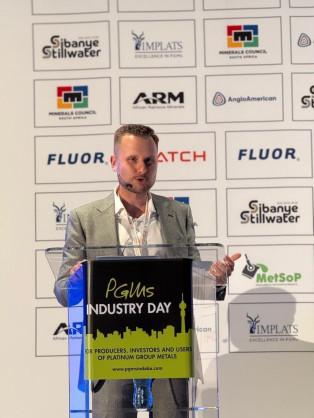
Nornickel (https://NorNickel.com) has unveiled its strategy for the development of palladium-based technologies at the PGMs Industry Day, an international conference held in South Africa. The company's experts shared insights into new technological developments that have the potential to redefine the use of platinum group metals (PGMs) extracted on the African continent, particularly in the fields of energy, electronics, and green technology. 

The presentation attracted considerable interest from conference participants. Industry representatives noted the practical relevance of Nornickel's innovations for the market, as well as the significant potential of palladium in emerging high-tech applications. 

Nornickel is the world's largest producer of palladium and high-grade nickel, and one of the leading global suppliers of platinum, copper, cobalt, and other precious and base metals. The company's Palladium Centre focuses on the development and implementation of innovative palladium-based solutions aimed at enhancing industrial efficiency. 

Palladium is the most extracted metal among the PGMs and benefits from a geographically diversified supply chain. Russia and South Africa, the two major producing regions, ensure stable global supply. 

From a chemical perspective, PGMs complement each other in many applications. Nornickel's research shows that palladium alloys with other PGMs frequently outperform individual metals in terms of efficiency and durability. 

Nornickel's approach to palladium innovation is closely aligned with key global megatrends: the energy transition, sustainable development, and digitalisation. Promising application areas include solar and hydrogen energy, biofuels, and next-generation electronics, where palladium can help reduce the cost of conductive components, hard drives, and OLED displays. In existing markets, the company is focused on improving performance and economics for end users. 

Nornickel is actively building a global partnership network to co-develop and commercialise palladium-based solutions. The company is committed to long-term collaboration with scientists, manufacturers, and end users to accelerate the adoption of advanced technologies and products. 

"Our goal is to become a technological partner for producers of PGM-based products. We focus on identifying applications where palladium delivers a strong competitive edge, bringing together leading scientific teams to develop prototypes, conducting large-scale industrial trials, optimising the product, and transferring the technology to manufacturers. This approach allows us to create more efficient materials and open up new markets for palladium applications," said Dmitry Izotov, CEO of Nornickel's Palladium Centre. 

Since its launch, the Centre has built a portfolio of 25 products. By 2030, the portfolio is expected to exceed 100 projects, generating an additional annual demand of 40–50 tonnes of palladium. 

Distributed by APO Group on behalf of Nornickel’s Palladium Centre.
Media files
Nornickel’s Palladium Centre
Download logo
Read moreNornickel Presents Palladium Technology Development Strategy for the PGM Industry in South Africa
10 April 2025

Collaborative efforts key to tackling global challenges, KZN Premier

Location: News

Collaborative efforts key to tackling global challenges, KZN Premier

KwaZulu-Natal Premier, Thamsanqa Ntuli, has reaffirmed the province’s commitment to driving inclusive, equitable, and sustainable economic growth.

Delivering his keynote address at the opening of G20 2nd Employment Working Group (EWG) meeting, Ntuli emphasised the importance of collaborative efforts to tackle persistent global challenges, such as gender inequality in the workplace and widening labour income disparities.

Held from 8 to 11 April 2025, the meeting is focused on advancing gender equality in the workforce and addressing the growing gap in the labour income share, aligning with South Africa's G20 Presidency theme of “Solidarity, Equality, Sustainability."

“This platform offers us a chance to collectively reflect and develop progressive labour market policies that respond to the realities faced by women, youth, and vulnerable workers across both developed and developing economies,” Ntuli said.

The Premier stressed that meaningful transformation requires international solidarity and shared responsibility, highlighting that collaborative policymaking is essential for a fairer global labour market.

He also highlighted that KwaZulu-Natal is actively pursuing economic policies that centre people and planet, in line with global calls for just and inclusive transitions.

He outlined provincial initiatives aimed at reducing unemployment, improve women’s participation in economic activity, and ensuring sustainable, inclusive growth.

“As a province, we are committed to building a future of dignity, fairness, and equal opportunity. The EWG’s focus on gender equity and income justice could not be more relevant or urgent,” he said.

The EWG meeting brings together senior officials and technical experts from G20 member states to shape policy approaches, ahead of the G20 Labour and Employment Ministers’ Meeting, scheduled to take place later this year.

The key issues under discussion include, enhancing social protection systems, reducing gender and wage gaps, and ensuring equal access to decent work for all.

The G20, which includes 19 of the world’s largest economies along with the African Union and the European Union, represents approximately:
• 85% of global Gross Domestic Product (GDP),
• Over 75% of international trade,
• And two-thirds of the world’s population.

The meeting is taking place at the Arch Convention Centre, in Umhlanga, north of Durban. – SAnews.gov.za


GabiK
Thu, 04/10/2025 - 13:20
67 views

Read moreCollaborative efforts key to tackling global challenges, KZN Premier
10 April 2025

South Africa Could Do Far More for Congolese Refugees

Location: News

The long war in the Democratic Republic of Congo has displaced millions of people

Read moreSouth Africa Could Do Far More for Congolese Refugees
9 April 2025

Africa Finance Corporation Tops Us$1 Billion Revenue for First Time as Landmark Projects Unlock Growth Across the Continent

Location: Business
Africa Finance Corporation (AFC)

Africa Finance Corporation (AFC) (www.AfricaFC.org), the continent's leading infrastructure solutions provider, has announced its strongest financial performance to date, with total revenue for the year ended 31 December 2024 surpassing US$ 1 billion for the first time in the Corporation's history.

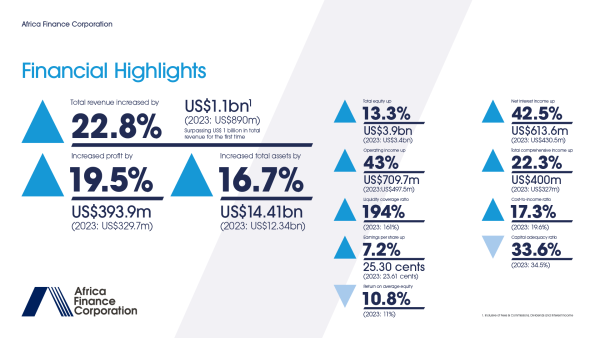
This record performance marks a significant milestone in AFC's mission to close Africa's infrastructure gap through scalable, de-risked investments that attract global capital and deliver tangible development outcomes. The Corporation posted a 22.8% increase in total revenue to US$1.1 billion and a 22.3% rise in total comprehensive income to US$400 million, up from US$327 million in 2023.

AFC's earnings growth was driven by improved asset yields, prudent cost-of-funds management and sustained traction in advisory mandates.  

Further significant financial highlights include:

  • Net interest income up 42.5% to US$ 613.6 million
  • Fee and commission income rose to US$109 million, the highest in over five years
  • Operating income climbed 42.7% to US$709.7 million
  • Total assets reached a record US$14.4 billion, a 16.7% year-on-year increase
  • Liquidity coverage ratio strengthened to 194%, providing over 34 months of cover
  • Cost-to-income ratio improved to 17.3% from 19.6% in 2023

Throughout 2024, AFC continued to scale its impact by mobilising capital for landmark projects across energy, transport, and natural resources. These included the Lobito Corridor – a cross-border railway development spanning Angola, the Democratic Republic of Congo (DRC), and Zambia. AFC led the initiative to secure a concession agreement within one year of the initial Memorandum of Understanding (MoU), an unprecedented achievement for a project of its scale. In the DRC, AFC also invested US$150 million in the Kamoa-Kakula Copper Complex, Africa's largest copper producer and one of the most sustainable globally, thanks to its high-grade ore and renewable-powered smelter.

Other milestones transactions included financing support for the commissioning of the Dangote Refinery, the largest in Africa, and continued progress on AFC-backed Infinity Power Holding's 10 GW clean energy ambition, with power purchase agreements secured in Egypt and South Africa. AFC also invested in the 15GW Xlinks Morocco-UK Power Project, providing US$14.1 million to support early-stage development of a transcontinental renewable energy pipeline between North Africa and Europe.

AFC strengthened its capital base and expanded its investor network through several landmark funding initiatives. These included a US$ 1.16 billion syndicated loan - the largest in its history, a US$500 million perpetual hybrid bond issue, and the successful execution of Nigeria's first-ever domestic dollar bond, which raised US$900 million at 180% oversubscription. AFC also returned to the Islamic finance market after eight years, closing a US$400 million Shariah-compliant facility.

The year also saw strong momentum in equity mobilisation, with US$181.8 million in new capital raised from ten institutional investors. These included Turk Eximbank - AFC's first non-African sovereign shareholder - the Arab Bank for Economic Development in Africa (BADEA), and several major pension funds spanning Cameroon, Seychelles, Mauritius, and South Africa. Ratings agencies affirmed AFC's robust credit profile, with AAA ratings from S&P Global (China) and China Chengxin International, and a stable A3 Outlook from Moody's.

“These results send a clear message that strategic investment in African infrastructure creates lasting value for both beneficiaries and investors,” said Samaila Zubairu, President & CEO of AFC. “In 2024, we exceeded the billion-dollar revenue mark, delivered game-changing projects, and reinforced our financial resilience—demonstrating the scalability of our unique model that blends purpose with performance to accelerate Africa's economic transformation.”

Read the full annual report here (https://apo-opa.co/424qlmR)

Distributed by APO Group on behalf of Africa Finance Corporation (AFC).

Media Enquiries:
Yewande Thorpe
Communications
Africa Finance Corporation
Mobile: +234 1 279 9654
Email: yewande.thorpe@africafc.org

About AFC:
AFC was established in 2007 to be the catalyst for pragmatic infrastructure and industrial investments across Africa. AFC's approach combines specialist industry expertise with a focus on financial and technical advisory, project structuring, project development, and risk capital to address Africa's infrastructure development needs and drive sustainable economic growth.

Seventeen years on, AFC has developed a track record as the partner of choice in Africa for investing and delivering on instrumental, high-quality infrastructure assets that provide essential services in the core infrastructure sectors of power, natural resources, heavy industry, transport, and telecommunications. AFC has 45 member countries and has invested over US$15 billion in 36 African countries since its inception. www.AfricaFC.org

Media files
Africa Finance Corporation (AFC)
Download logo
Read moreAfrica Finance Corporation Tops Us$1 Billion Revenue for First Time as Landmark Projects Unlock Growth Across the Continent
9 April 2025

Government empowers spaza shops 

Location: News

Government empowers spaza shops 

With the launch of the R500 million Spaza Shop Support Fund (SSSF), government is ready to assist entrepreneurs who want to establish startups, expand their businesses, and gain essential business skills to improve the performance of their enterprises.

This is according to the Minister of Small Business Development, Stella Ndabeni.

With the recent drive to have spaza shops registered, government has received 87 407 applications and of these, a total 53% is from South African-owned spaza shops.

“Our commitment with this fund is to support those who heeded the President’s call to register their spaza shops. As the Department of Small Business Development (DSBD), we can help you when you have an idea and want to start a business.

“We have incubators that help new and startup businesses. We can help you from being an informal trader to a formal trader, to start a spaza shop and to own a wholesale or an entire distribution channel. We will be working with you to help you to turn things around,” said Ndabeni.

The support fund was launched on Tuesday in Soweto to support South African-owned township community convenience shops, including spaza shops, to increase their participation in the townships and rural areas retail trade sector.

READ | Government launches R500 million Spaza Shop Support Fund 

Jointly administered by the National Empowerment Fund (NEF) and the Small Enterprise Development Finance Agency (SEFDA), the fund provides critical financial and non-financial support to township businesses, including community convenience stores and spaza shops.

The fund provides various types of support, including the initial purchase of stock via delivery channel partners, upgrading of building infrastructure, systems, refrigeration, shelving and security, as well as training programmes, which includes point of sale devices, business skills, digital literacy, credit health, food safety and business compliance.

“The fund will address economy of scale disadvantages by linking spaza shops to buying groups for aggregation and bulk purchasing; building business capacity through training and support to improve shop operations; and enhancing market competitiveness to help spaza shops compete with larger retailers," the Minister said.

The fund will be rolled out nationally to impact spaza shops across all major townships, as well as rural areas.

The Minister said government endeavours to work with entrepreneurs to localise supply chain opportunities for township and rural enterprises.

This will ensure that spaza shops do not procure imported products or simply use the platforms of large companies.

“To achieve this, we will utilise other instruments like the Small Enterprise Manufacturing Support Programme, Township and Rural Entrepreneurship Programmes (TREP), the Informal and Micro Enterprise Development Programme (IMEDP), Asset Assist, and our Shared Economic Infrastructure Facility.

“These programmes in turn have the potential to attract municipalities, the private sector, business and informal trader associations, and other stakeholders to work together in contributing their facilities, expertise and resources in support of new localised supply chains and distribution networks for spaza shops. 

“Logistics management partners will offer logistics management services, including warehousing and delivery solutions. They will ensure that products are stored safely and delivered efficiently, reducing transportation costs, and improving the overall supply chain efficiency for spaza shops,” the Minister said.

DSBD Connect

The department has recruited 52 Business Regulation Officers across all districts and metros to support business registration using the DSBD Connect system.

DSBD Connect is a platform which will be used to collaborate or put together small business to collaborate and/or work together on a particular project. 

This can be businesses within the same industries or different industries but need each other for specific skills or qualifications. 

The platform will put together small businesses within the same geographical area, interests, and skills. 

“Despite their importance, spaza shops face several challenges, including access to capital, security concerns, and competition from formal retailers, like larger retail stores and supermarkets which are encroaching on their markets.

"South African-owned spaza shops also face intense competition from foreign-operated spaza shops, who use more organised supply chains to gain competitiveness.

“Therefore, I want to encourage you to collaborate and establish cooperatives so that you can leverage resources, knowledge, and work together on projects, sharing best practices,” Ndabeni said.

Access to funding 

To access the funding, applicants need to apply to the National Empowerment Fund (NEF) and the Small Enterprise Development Finance Agency (SEFDA) through the prescribed application process outlined on the relevant institution's website.

The following website can be used to apply for funding:

Spaza Shop Support Fund - www.spazashopfund.co.za 
NEF - www.nefcorp.co.za 
SEDFA - https://systems.sefa.org.za/SMMEPortal/

The contact details for the Spaza Shop Support Fund call centre are 01 1 305 8080 or via email: Spazafund@nefcorp.co.za.

Contact details for the NEF call centre are 0861 843633, SEDFA call centre 012 748 9600 or an email can be sent to helpline@sefa.org.za. - SAnews.gov.za

nosihle
Wed, 04/09/2025 - 10:27
162 views

Read moreGovernment empowers spaza shops 
9 April 2025

Western Cape Promises Progress on Inner-City Housing Projects

Location: News

Several social housing projects in Cape Town will go to tender this year

Read moreWestern Cape Promises Progress on Inner-City Housing Projects
8 April 2025

World Liquid Gas Association Joins IAE 2025

Location: News
Energy Capital & Power

Michael Kelly, Chief Advocacy Officer, World Liquid Gas Association (WLGA) will speak at the Invest in African Energy (IAE) 2025 Forum in Paris next month. As a key leader in global energy advocacy, Kelly's participation will provide valuable insights into the growing role of liquid gas in the global energy transition, particularly within the African context.

The WLGA is dedicated to promoting the use of liquid gas as a cleaner alternative to conventional fuels, advocating for policy reforms that support the global expansion of this energy source. In Africa, the association's efforts focus on helping governments and businesses explore liquid gas solutions as part of the broader energy mix, driving both energy access and economic development across the continent. In December 2024, the WLGA launched a new roadmap aimed at expanding access to clean cooking solutions across Africa, specifically through increased availability and uptake of LPG. This comprehensive roadmap not only emphasizes the establishment of a clear regulatory framework to scale the LPG market, but also calls for the implementation of consumer financing and payment plans to address economic barriers and highlights the need for investment in infrastructure and roads.

IAE 2025 (Invest-Africa-Energy.com) is an exclusive forum designed to facilitate investment between African energy markets and global investors. Taking place May 13-14, 2025 in Paris, the event offers delegates two days of intensive engagement with industry experts, project developers, investors and policymakers. For more information, please visit www.Invest-Africa-Energy.com. To sponsor or participate as a delegate, please contact sales@energycapitalpower.com.

Africa's LPG sector is experiencing significant growth, with several large-scale projects focused on expanding production, storage and distribution capabilities. Last month, Nigeria commissioned its first modular LPG extraction plant and a 20 MW gas-to-power project, both of which are set to boost domestic gas utilization and enhance energy access. Sahara Group is developing a 12,000-ton LPG storage facility in Ivory Coast, which will increase the country's LPG storage capacity by 60% and significantly improve imports and distribution for neighboring countries in the region. The company is also in talks with Kenya to construct a 30,000-ton facility for handling and storing LPG.

Meanwhile, Petredec and South Africa's state-owned Transnet announced a rail freight project in September 2024, featuring a dedicated train system and a modern LPG intermodal hub and storage facility. This hub will receive bulk LPG via rail, introducing the country's first scheduled LPG train system. Other high-profile projects include the Dangote Refinery in Nigeria, a $20 billion initiative designed to meet the country's fuel demands while reducing dependency on imports and introducing LPG into the Nigerian market. These projects reflect Africa's growing commitment to leveraging its natural gas resources to enhance energy infrastructure, drive economic development and improve access to cleaner, more affordable energy across the continent.

Distributed by APO Group on behalf of Energy Capital & Power.

Media files
Energy Capital & Power
Download logo
Read moreWorld Liquid Gas Association Joins IAE 2025
8 April 2025

Hotel Development Booms in Africa

Location: News
The Bench

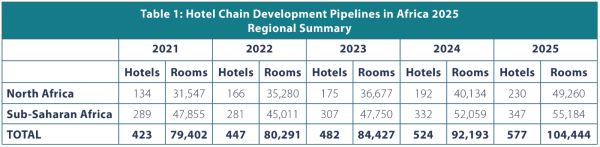
This year's Hotel Development Pipeline Report, the definitive study of international hospitality development projects in Africa, reveals record activity. There are 577 hotels and resorts, with 104,444 rooms, in the development pipeline, up by 13.3% on 2024, way ahead of the single digit pipeline growth reported globally by the leading international chains.

The report, compiled by Lagos-based W Hospitality Group, with data from 50 international and regional hotel chains, shows that development activity has been growing impressively in North Africa, which saw a 23% year-on-year increase, compared to a 6% increase in sub-Saharan Africa. Over the past five years, the hotel development pipeline has grown at an annualised rate of 4% in sub-Saharan Africa, 12% in North Africa and 7% overall.

Egypt continues to lead the way in terms of development, with 143 hotels and 33,926 rooms in the pipeline there. This is almost four times the number of rooms in second-placed Morocco, which has 8,579 rooms in 58 hotels. The following eight countries, ranked by number of rooms, comprise Nigeria, 7,320; Ethiopia, 5,648; Cape Verde, 5,565; Kenya, 4,344; Tunisia, 4,336; South Africa, 4,076; Tanzania, 3,432; and Ghana, 3,125. International hotel chains have deals signed in 42 of Africa's 54 countries.

Despite its clear leadership in the absolute pipeline numbers, Egypt has fewer than 50% of rooms under construction, a significantly lower proportion than second-placed Morocco, with over 72%. Of the top 10 countries, Ethiopia has the highest ratio of rooms “on site”, followed by Morocco and Ghana. Cape Verde, Nigeria and Tanzania have some of the lowest percentages. However, “under construction” does not necessarily mean that there is activity and progress towards completion and opening – many of the sites in Nigeria and Ghana, for example, have been closed for several years, with hardly a hard hat in sight.

A more granular analysis, looking at the location of planned properties, reveals an extraordinary boom in Cairo, with 17,757 new rooms projected in over 70 hotels. The contrast with the second-placed location, Sharm El Sheikh, is dramatic, where 4,231 rooms are planned in fewer than 10 properties. The cities and resorts with the next largest pipelines by number of rooms are Lagos, 3,709; Boa Vista, 3,650; Addis Ababa, 3,369; Casablanca, 2,939; Accra, 2,652; Abuja, 2,570; Zanzibar, 2,523; and Dakar, 2,334.

The growth is being driven strongly by the major international hotel chains, with Marriott International leading the way, 165 hotels with 29,639 rooms. It is followed by Hilton, 93 hotels with 17,040 rooms; Accor, 73 hotels with 15,013 rooms; IHG, 40 hotels with 7,951 rooms; Radisson Hotel Group, 32 hotels with 6,346 rooms; TUI Hotels & Resorts, 11 hotels with 2,954 rooms; Barceló Hotels & Resorts, 7 hotels with 2,193 rooms; The Ascott, 15 hotels with 1,897 rooms; Kerten Hospitality, 13 hotels with 1,881 rooms and Wyndham Hotels & Resorts, 7 hotels with 1,706 rooms.

In the race for dominance, Hilton added slightly more rooms to its African pipeline last year than Marriott International and achieved a higher percentage growth. Barceló Hotels & Resorts recorded the largest percentage growth, more than doubling its pipeline to 2,193 rooms, with three large resort signings in North Africa.

Below the headline numbers, there are three notable trends. First, the actualisation rate (actual openings vs. expected openings), which has nearly doubled from 21% in 2023 to 38% in 2024. While it's substantially less than the 75% actualisation rate achieved in 2019, it shows a continuing recovery from the economic devastation of COVID-19. Of the total 104,444 rooms in the pipeline, over 50,000 rooms (nearly 50%) in 304 hotels are expected to open in 2025 and 2026. 

Second, resort projects are increasing much faster than city or airport hotels, both in percentage terms and in absolute numbers, driven by the number of signings and by the larger average size of the developments, 210 keys vs. 170.  Also, almost half of the rooms that opened last year were in resorts.

Third, there is a definite movement by the chains towards the franchise model, with 108 projects representing almost 19% of the total, compared to less than 10% in 2020. A major factor is the emergence of quality, international, white-label operators such as Aleph Hospitality and Valor Hospitality, and some indigenous operators in Nigeria, Kenya and elsewhere, that are increasing confidence that brand standards will be met. 

The full report will be discussed at FHS Africa (formerly AHIF) 17-19 June in Cape Town. It is the leading hospitality investment conference in the region, which brings together senior decision-makers to shape the future of the industry. Matthew Weihs, Managing Director of the Bench, which organises FHS Africa, said: “The growth in hotel development across Africa is a testament to the continent's economic and tourism potential. Furthermore, the commitment from the international hotel chains makes it clear that global players see Africa as a strategic opportunity."

Trevor Ward, Managing Director of W Hospitality Group, concluded: “Despite the various trials that the continent faces, the fact that hotel chains signed 125 new deals last year, with 21,000 rooms, is evidence that opportunities for further development abound. According to the Global Cities Institute, by the year 2100, 10 of the world's 16 largest cities will be in Africa, with all but one of them (Cairo) in sub-Saharan Africa. So, one might say that development activity in Africa has barely scratched the surface.”

Distributed by APO Group on behalf of The Bench.

For further information and high-resolution images, please contact:
David Tarsh
+44 (0) 20 7602 5262
+44 (0) 7770 816 070
Email: David@Tarsh.com.

About W Hospitality Group:
The W Hospitality Group, a member of Hotel Partners Africa, specialises in the provision of advisory services to the hotel, tourism and leisure industries, providing a full range of services to clients who have investments in the sector, or who are looking to enter them through development, acquisition or other means. In sub-Saharan Africa W Hospitality Group is regarded as the market leader due to the market and financial expertise of its staff, its worldwide knowledge, and its commitment to its clients.  In Africa, W Hospitality Group has to date worked in 40 countries on the continent, from its Lagos and Addis Ababa offices.

www.W-HospitalityGroup.com

About FHS Africa (Formerly AHIF):
For over a decade, the Future Hospitality Summit Africa (FHS Africa) has been the launchpad for hospitality investment in Africa, driving growth, connecting visionaries, and transforming the continent's tourism and hospitality landscape. As a beacon of opportunity, FHS Africa brings together global investors, developers, operators, and industry leaders committed to turning potential into reality.

www.AHIF.com

Strategic Partners: Accor, BWH Hotels, Hilton, IHG Hotels & Resorts, Marriott International, Radisson Hotel Group
Headline Sponsors: CHIC, Hansgrohe, TUI Hotels & Resorts
Sponsors: Aleph Hospitality, CityBlue Hotels, Equate, JLL, Knight Frank, St Helena Island, STR, TIME Hotels, TV5 Monde, Valor Hospitality Partners
Official Carriers: Discover Airlines, Kenya Airways
Supporter: South Africa Tourism

About The Bench:
The Bench has a legacy of delivering world-leading investment forums and conferences in Europe, Africa, the Middle East, and Latin America. The key principle behind these events is "dealmaking'. Transforming the way businesses connect; the Bench has developed a reputation for creating innovative and high-impact industry meetings.

For over two decades, government leaders, tourism ministries, global travel & tourism associations, the world's most influential hospitality brands, hotel owners & investors, renowned restaurant groups, airlines & aviation authorities, destination developers, asset managers, financial groups, and consultants have been participating in the Bench's events. These include FHS Africa, FHS World, FHS Saudi Arabia and AviaDev, where industry players showcase their brands, position themselves as thought leaders and innovators, and connect with the right individuals, opportunities and knowledge.

Learn more at TheBench.com

Media files
The Bench
Download logo
Read moreHotel Development Booms in Africa
8 April 2025

G20 must tackle inequality, gender gaps to build just labour markets – Minister Meth

Location: News

G20 must tackle inequality, gender gaps to build just labour markets – Minister Meth

Employment and Labour Minister Nomakhosazana Meth has called on G20 member states to urgently address growing inequality and the erosion of labour income share, warning that these trends threaten global economic stability and social cohesion.

The Minister was delivering the keynote address at the second G20 Employment Working Group meeting in Umhlanga, KwaZulu-Natal on Tuesday. 

“The growing erosion of labour's share of national income poses a significant threat to broader economic resilience and inclusivity goals by widening wealth disparities, weakening the social fabric, and limiting upward mobility. Addressing this trend is crucial for global progress,” the Minister said.

Meth emphasised that economic progress must not be measured solely by GDP or trade metrics, but by the ability to uplift vulnerable communities through decent work, fair wages, and inclusive opportunities. 

She underscored the need to close gender gaps in employment and pay, describing it as both a moral imperative and a driver of innovation and prosperity.

“We find ourselves at a critical juncture, where the global landscape is marked by increasing disparities threatening the fundamental principles upon which just and dignified societies are built. 

“Millions of workers worldwide remain mired in precarious employment conditions, receiving stagnant wages and experiencing shrinking opportunities for social mobility. Policies and initiatives that aim to alleviate poverty and economic despair encounter resistance from those who prioritise narrow economic interests over workers' inherent dignity and rights,” she said. 

However, Meth said it must be clear that economic growth must not be evaluated solely through GDP metrics, trade balances or other numerical indicators. While such measures are important, she said, they cannot be the only barometers of success.

“Genuine progress must be evident in our collective commitment to uplift the most vulnerable of our society. The real test of our achievements is ensuring that economic expansion leads to substantive social justice, employment figures correspond to quality jobs with decent pay, and that work provides financial stability, dignity, fulfilment and security,” the Minister said. 

She emphasised that at the core of the discussions was the principle that labour is not a commodity, workers are human beings with rights, not disposable economic inputs. 

Meth stressed that an international system prioritising profit over people is unsustainable and unethical, calling for the rejection of transactional approaches that compromise fairness, equity, and dignity.

As the G20 President, South Africa remains steadfast in upholding the values of solidarity, equality and sustainability.

“These are not abstract ideals or rhetorical flourishes; they serve as the foundation upon which our policies, governance structures and international engagements are built. We categorically reject any notion that human suffering can be reduced to a mere footnote in pursuing political expediency or economic dominance,” she said. 

Youth jobs and gender equality top of the labour agenda

The Minister said that the Employment Working Group was prioritising youth employment and women’s economic empowerment, with bold targets such as the Nelson Mandela Bay Goal to reduce global youth unemployment by 5% by 2030. 

“This is not merely an employment target; it represents an investment in the future of our societies. We must actively create quality jobs, foster skills development and champion youth-led innovation to ensure young people have a place in the evolving labour market,” she said.

The group is also pushing to renew and expand commitments like the Brisbane-eThekwini Target to close gender gaps in labour force participation. 

Minister Meth emphasised that workplace equality and youth inclusion are essential for sustainable growth, warning that the cost of inaction would be far greater than intervention.

Call for resilient labour policies amid global trade shifts

Minister Meth raised concern over disruptive global trade developments, warning they risk driving economic stagnation and widespread job losses, especially in developing countries. 

She urged G20 like-minded G20 countries to rise to the occasion and forge resilient labour market policies that protect jobs, safeguard economic stability, and ensure that economies remain viable despite mounting global uncertainties.

“South Africa stands firm and shall not waver in pursuing fairness, inclusion and social justice. We will continue to advocate for decent work, robust labour protections and equitable economic opportunities for all. 

“We will resist any effort, whether domestic or international, that seeks to undermine our sovereignty, our people’s dignity and the fundamental rights of workers,” she said.

The Minister told delegates to remain mindful that deliberations have profound real-world implications. 

“The decisions we make today will shape the future of work for millions of people across the globe. Our efforts must not be confined to policy frameworks alone, but must translate into tangible, measurable improvements in people’s lives,” Meth said. – SAnews.gov.za

DikelediM
Tue, 04/08/2025 - 14:35
13 views

Read moreG20 must tackle inequality, gender gaps to build just labour markets – Minister Meth
8 April 2025

It’s your country, explore it!

Location: News

It's your country, explore it!

With the Easter long weekend fast approaching, Tourism Minister Patricia de Lille has called on local and international travelers alike to explore the country’s breathtaking landscapes, rich culture and vibrant communities.

De Lille launched the Easter campaign with an activation at Twin Venture, which is based at the Atlantis Dunes in Cape Town, specialising in quad biking and sandboarding experiences. 

The activation was aimed at showcasing the variety of experiences for visitors across South Africa, especially in smaller towns.

Speaking at the event on Monday, which was attended by tourism business owners, industry associations, media and content creators, De Lille emphasised the importance of both domestic and international travel in sustaining and growing the tourism sector.

Domestic tourism: A growing market

Domestic tourism in South Africa continues to perform well, with travellers increasingly looking for affordable and unique experiences. 

Recent insights from the 2024 Sho’t Left Travel Week campaign highlighted key trends shaping local travel, including:

-                Affordability remains a priority. Travelers are looking for more budget-friendly accommodation and experiences, making initiatives like Sho’t Left vital in ensuring more South Africans can explore their own country.

-               Lesser-known destinations are in demand. More South Africans are seeking off-the-beaten-path adventures, opting for places with fewer crowds and deeper cultural experiences.

-               Personalised travel experiences are key. Families, solo travellers, seniors, and adventure-seekers are all looking for tailored travel options, including accessible tourism and wellness retreats.

“Every night spent in a guesthouse, every meal at a local restaurant and every souvenir bought from a market contributes to our economy. By supporting local tourism, we ensure that the benefits of travel extend beyond major cities promoting inclusive economic growth,” De Lille said.

International tourism on the rise

International visitors remain a key part of South Africa’s tourism strategy. In the first two months of 2025 alone, the country welcomed nearly 1.8 million international visitors, an increase of 4.7% compared to the same period last year.

“International travellers are drawn to South Africa for its diverse cultures, breath-taking landscapes, and warm hospitality. We must continue showcasing what makes our country special and keep igniting the spirit of exploration,” De Lille said.

South Africa Awaits – Come Find Your Joy!

To further promote tourism, South African Tourism recently launched its new global brand campaign: ‘South Africa Awaits – Come Find Your Joy!’ This campaign encourages travellers -- both local and international -- to rediscover South Africa with the wonder and excitement of a first-time visitor.

“This is more than a tourism campaign; it’s an invitation. Whether you’re a young family, a group of friends, an adventure junkie, or someone who just needs a break, South Africa has something for you,” the Minister said.

De Lille urged travellers to take advantage of the upcoming long weekends to explore, experience and support local businesses.

“Take the trip. Book the stay. Discover the dorpie. Dance at the festival. Visit the market. Eat the magwinya. Support local. Make the memory. Take that Sho’t Left! Our country is calling. South Africa Awaits – Come Find Your Joy!” the Minister said. – SAnews.gov.za

Edwin
Tue, 04/08/2025 - 10:03
49 views

Read moreIt’s your country, explore it!
5 April 2025

South Africa’s Response to the US Government’s Imposition of Tariffs

Location: News

Republic of South Africa: Department of International Relations and Cooperation
Download logo

South Africa's Strategic Adaptation to US Tariffs: Advancing National Interests through Policy and Strategy

The new tariff regime arising from the decision by the United States of America, which have been directed not only to South Africa, but the entire world necessitates strategic responses to maintain and grow our industrial base, as a crucial avenue to pursue inclusive growth.

In response to the US Government's imposition of tariffs, South Africa will continue to navigate the challenges and opportunities these measures present with resilience and innovation. Guided by its national interests and aligned with its broader trade and industrial policy, South Africa is committed to ensuring economic growth, industrial development, and the well-being of its citizens.

South Africa intends to:

1. Negotiate Favourable Agreements

South Africa will work to secure opportunities, in a context of a rapid withdrawal of favourable arrangements giving our exports preferential access to the United States of America. This might involve securing additional exemptions and favourable quota agreements, ensuring our industries maintain critical access to the US market, including through sectoral cooperation. This aligns with the national interest of promoting economic prosperity and safeguarding the livelihoods of South Africans.

2. Diversify and Expand Trade Relations

Efforts will intensify to diversify export destinations, targeting markets across Africa, as well as in Asia, Europe, Middle East, and Americas.

Moreover, such efforts will also, where deemed appropriate involve bilateral arrangements where these allow for the pursuance of our national interest. In our presidency of the G20, as the recent engagements at the G20 trade and investment working group (TIWG) indicate, the issue of supply chain geographical diversification is a challenge confronting all open market economies the world over.

This diversification supports South Africa's industrial strategy and reduces dependency on single destination markets for our exports or single sources for our intermediate input requirements. Fostering resilience in line with national economic priorities.

3. Enhance Regional Trade Collaboration

South Africa will leverage the African Continental Free Trade Area (AfCFTA) to bolster intra-African trade, fostering stronger regional economic integration and cooperation. This approach aligns with the national interest of contributing to a better Africa and world.

4. Focus on Value-Added Production

Industries will prioritise transforming raw materials into higher value finished goods, reducing tariff exposure and driving innovation to improve profitability. This supports South Africa's industrial policy objectives of boosting local manufacturing and creating jobs.

5. Stimulate Domestic Growth

The government will invest strategically in industries impacted by the tariffs, supporting economic growth through modernisation and targeted infrastructure development. This aligns with the national interest of ensuring the well-being of South African citizens.

6. Forge Global Alliances

South Africa will continue to build strategic partnerships with other nations enhancing collaboration and our influence in international trade negotiations. This reflects the national interest of strengthening global diplomatic and economic ties.

South Africa's tariff and industrial strategy are designed to support industrial development, employment growth, and economic resilience. By aligning these policies with the national interest, South Africa will ensure that its economy emerges stronger, more diversified, and resilient in the face of global trade complexities.

This approach will also apply to the 7 February Executive Order, which is currently being attended by an interdepartmental team which includes the departments affected by the executive order.

The 31% tariff implemented by the US Administration will be effective from 9 April 2025. South Africa's average tariff is 7.6% and therefore South Africa needs clarity on the basis for the 31% to be implemented by the US.

It is important to note that products such as copper, pharmaceuticals, semiconductors, lumber articles, certain critical minerals, and energy and energy products have been exempted from the reciprocal tariffs. Some of these materials are already key parts of the United States of America's sourcing requirements. According to the United States Geological Survey, 97% of their chrome ore requirements come from South Africa, 6% of fluorspar import requirements and 24% of the United States manganese requirements. These reciprocal tariffs will not apply to products already facing Section 232 tariffs of 25% such as steel, aluminium, automobiles and auto parts.

The reciprocal tariffs effectively nullify the preferences that Sub-Saharan Africa countries enjoy under the Africa Growth and Opportunity Act (AGOA). The sweeping tariff measures will affect several sectors of our economy, including automotive industry, agriculture, processed food and beverage, chemical, metals, and other segments of manufacturing, with implications for jobs and growth.

The US represented 7.45% of South Africa's total exports in 2024, while South Africa accounted for only 0.4% of US total imports. As such, South Africa does not constitute a threat to US and where there is a trade imbalance in favour of South Africa, it is mainly on agriculture products which are counter-cyclical and on minerals which are inputs in US industries.

South Africa will continue building domestic supply resilience, reducing cost of doing business and increasing competitiveness of our economy. Further, South Africa will continue with efforts to diversify export markets as part of its resilience building strategy.

The significant market access opportunities both through trade agreements and through strategic partnerships with countries across the globe present huge opportunities for our exports. The recently concluded Africa Continental Free Trade Area (AfCFTA) remains untapped, beyond the Southern Africa Development Community (SADC).

Furthermore, South Africa enjoys preferential market access through the Southern Africa Customs Union, SADC, SADC-EU Economic Partnership Agreement (EPA), SACU+Mozambique-UK EPA, the European Free Trade Association (EFTA), MERCUSUR (that includes Argentina, Brazil, Paraguay and Uruguay) and Japan Generalised System of Preferences. In addition, government is strengthening relations with countries in Asia and the Middle East to open new market access opportunities. Some of these efforts are bearing fruit with new market access opportunities for our agriculture products.

To re-iterate the Presidency, whilst South Africa remains committed to a mutually beneficial trade relationship with the United States, unilaterally imposed and punitive tariffs are a concern and serve as a barrier to trade and shared prosperity. The tariffs affirm the urgency to negotiate a new bilateral and mutually beneficial agreement with the US, that will establish more fair-trade relations with the US as an essential step to secure long-term trade certainty.

Distributed by APO Group on behalf of Republic of South Africa: Department of International Relations and Cooperation.

Read moreSouth Africa’s Response to the US Government’s Imposition of Tariffs
4 April 2025

ConstructAfrica Hosts First-Ever CIAB Town Hall

Location: Business
ConstructAfrica

ConstructAfrica (https://ConstructAfrica.com) successfully convened its inaugural ConstructAfrica Industry Advisory Board Town Hall Meeting today, bringing together influential stakeholders from across Africa's construction and infrastructure sectors.  

The gathering marked a key milestone in the company's mission to provide thought leadership, strategic insights, and actionable intelligence, for the construction and infrastructure sectors in African. 

The African construction and infrastructure market is projected to reach approximately $2 trillion in 2025, driven by rapid urbanization, population growth, improved governance and increased investment in infrastructure projects. The continent's need for infrastructure development is underscored by an estimated $130 billion annual financing gap, highlighting the critical need for strategic investments and innovative solutions. 

The event featured participation from distinguished leaders across the infrastructure and construction ecosystem, including CEOs of engineering and construction firms, directors of multilateral development finance institutions, academic experts, and current and former senior executives in international finance. Participants hailed from various parts of the continent, including Nigeria, South Africa, Zimbabwe, Ethiopia, and Seychelles, as well as internationally from the U.K. and Australia - underscoring the pan-African and global outlook of the board. 

A key outcome of the meeting was the formation of the ConstructAfrica Industry Advisory Board (CIAB) - a strategic body of high-level professionals that will support ConstructAfrica's growth, guide its content and engagement strategy, and strengthen its reach and relevance across African markets. 

The composition of the board will be announced in the coming weeks. 

“Today marks a pivotal moment for Africa's construction and infrastructure landscape. By collaborating with industry leaders through the CIAB, we are not just shaping policy; we are driving transformative change that will empower communities and foster sustainable growth across the continent.” said Dr. Segun Faniran, Founder & Publisher at ConstructAfrica 

ConstructAfrica delivers actionable market intelligence, construction project updates, and infrastructure data through its online platform (https://apo-opa.co/4iQdKcQ). With a focus on equipping industry players, investors, and policymakers with actionable insights, ConstructAfrica plays a vital role in building a more sustainable and better-connected construction industry across Africa. 

Distributed by APO Group on behalf of ConstructAfrica.

For more inquiries, contact: 
Name: Dr. Segun Faniran
email: hello@constructafrica.com
Phone: +971 56 566 4792
ConstructAfrica 

Media files
ConstructAfrica
Download logo
Read moreConstructAfrica Hosts First-Ever CIAB Town Hall
4 April 2025

SA unveils strategic economic diversification plan amid US tariffs

Location: News

SA unveils strategic economic diversification plan amid US tariffs

South Africa has unveiled a comprehensive strategy to mitigate the economic impact of new United States tariffs, focusing on export diversification, value-added production, and strengthening regional trade partnerships.

This is after United States President, Donald Trump, announced global reciprocal tariffs on most imported goods, with South Africa facing a 31% tariff increase.

“The new tariff regime arising from the decision by the United States of America, which have been directed not only to South Africa, but the entire world, necessitates strategic responses to maintain and grow our industrial base, as a crucial avenue to pursue inclusive growth,” the Minister of International Relations and Cooperation, Ronald Lamola, said on Friday. 

Lamola was speaking during a joint media briefing with the Minister of Trade, Industry and Competition, Parks Tau. 

He informed journalists that South Africa will continue to tackle the challenges and seize opportunities with resilience and innovation, as the country moves forward with ensuring economic growth, industrial development, and the well-being of its citizens.

Lamola outlined plans to navigate the challenges posed by the 31% tariffs set to take effect from 9 April 2025.

These include negotiating favourable trade agreements with the United States; leveraging the African Continental Free Trade Area (AfCFTA) to boost intra-African trade; and prioritising high-value manufacturing to reduce tariff exposure. 

In addition, he said government remains committed to building economic resilience, exploring alternative market access through existing trade agreements and strategic partnerships with countries across various regions.

“We will intensify efforts to diversify export destinations, targeting markets across Africa, Asia, Europe, the Middle East, and the Americas,” the Minister stated. 

According to Lamola, government aims to reduce dependence on single export markets and foster economic resilience.

Meanwhile, he announced that the State will invest strategically in industries impacted by the tariffs, supporting economic growth through modernisation and targeted infrastructure development.

The sweeping tariff measures will affect several sectors of South Africa’s economy, including automotive, industrial agriculture, processed food and beverage, chemical, metals, and other segments of manufacturing.

According to Lamola, South Africa’s tariff and industrial strategy are designed to support industrial development, employment growth, and economic resilience. 

“By aligning these policies with the national interest, South Africa will ensure that its economy emerges stronger, more diversified, and resilient in the face of global trade complexities,” he explained.

This approach will also apply to the 7 February Executive Order, which led to the withdrawal from the Just Energy Transition (JET) partnership with South Africa.

“South Africa’s average tariff is 7.6% and therefore South Africa needs clarity on the basis for the 31% to be implemented by the US.”

Lamola clarified that products such as copper, pharmaceuticals, semiconductors, lumber articles, certain critical minerals, and energy and energy products, have been exempted from the reciprocal tariffs.

These reciprocal tariffs will also not apply to products already facing Section 232 tariffs of 25%, such as steel, aluminium, automobiles, and auto parts.

Currently, the Minister said the United States represents 7.45% of South Africa’s total exports, while South Africa accounts for only 0.4% of the United States’ imports.

“As such, South Africa does not constitute a threat to the US, and there is a trade imbalance in favour of South Africa. It is mainly on agricultural products, which are counter-cyclical, and on minerals, which are inputs in US industries.”

Highlighting the potential impact, Lamola noted that the tariffs “effectively nullify the preference that Sub-Saharan African countries enjoy under the Africa Growth and Opportunity Act (AGOA).”

However, despite the challenges, Lamola said government remains optimistic. 

“The tariffs affirm the urgency to negotiate a new bilateral and mutually beneficial agreement with the US, that will establish more fair-trade relations with the US as an essential step to secure long-term trade certainty,” Lamola added. 

Transparency in tariff calculations

Meanwhile, Tau stressed the need for confirmation from the United States on how they arrived at the tariff number, referencing international norms and standards.

He also highlighted the importance of transparency in tariff calculations, using World Trade Organisation (WTO) standards and the most favoured nations mechanism.

“And that’s why we are advocating for a reform of the World Trade Organisation and ensuring that it’s able to adapt to current reality, but also ensuring that we’re able to reinforce a multilateral system of trade and transparency across the board. Otherwise, you’re going to have an environment where there are no global rules,” Tau added. – SAnews.gov.za
 

Gabisile
Fri, 04/04/2025 - 13:08
177 views

Read moreSA unveils strategic economic diversification plan amid US tariffs
3 April 2025

Trump Is Punishing Poor Countries Which Export More to the US Than They Import

Location: News

People in developing countries will lose jobs and poverty will rise

Read moreTrump Is Punishing Poor Countries Which Export More to the US Than They Import
3 April 2025

African Mining Week Unveils 2025 Program, Connecting Investors to African Projects

Location: News

Energy Capital & Power
Download logo

The African Mining Week (AMW) conference and exhibition has officially launched its 2025 program, unveiling key topics and lucrative opportunities across Africa's mining value chain. The three-day program will foster collaboration on investment, value addition, local content development and industrialization. Bringing together African regulators, key mining stakeholders and global partners, AMW serves as a critical platform for shaping the future of African mining.

Download the program here: https://apo-opa.co/42kb940

Scheduled for October 1–3 in Cape Town, AMW takes place under the theme, From Extraction to Beneficiation: Unlocking Africa's Mineral Wealth. The event is co-located with the African Energy Week: Invest in African Energies conference, providing attendees a strategic opportunity to gain insight into opportunities across both the energy and mining sectors in Africa.

The AMW program features the Ministerial Forum, where African and global mining ministers will connect to showcase investment opportunities, discuss regulatory frameworks and highlight efforts to drive local beneficiation and value addition. Through policy revitalization and strategic partnerships, African markets are increasingly positioning themselves as attractive destinations for global investors.

A series of Country Spotlights will offer a deep dive into Africa's diverse mineral wealth, featuring insights into Botswana and Angola's diamond resources, Zambia's copper reserves and the Democratic Republic of Congo's cobalt market. Spotlights will also examine the latest developments within South Africa's platinum group metals, Zimbabwe's lithium, Mali's uranium and Malawi and Tanzania's rare earths industries.

AMW's Critical Minerals Track will explore emerging trends and opportunities within a sector that is crucial to the global energy transition. With Africa holding 30% of the world's critical minerals, the continent is attracting substantial interest from international players eager to unlock its vast potential. AMW will spotlight Africa's growing role in mineral diplomacy, as countries strengthen investment ties and infrastructure collaboration with global partners, including China, the U.S., Canada, the UAE, Australia and the European Union. Meanwhile, AMW Roundtables will facilitate deal signings and enhanced cooperation among African stakeholders and international investors.

Innovation will take center stage at the Technology Forum, set to explore the transformative role of digital technologies, AI and machine learning in modernizing mineral exploration and production. African markets are increasingly leveraging advanced tools to accelerate exploration, with companies such as Botswana Diamonds utilizing AI-driven solutions to diversify beyond traditional diamond mining. Meanwhile, KoBold Metals is using AI to unlock new copper discoveries in Zambia, supporting the country's ambition to ramp up production to 3.1 million tons annually by 2031.

The Investment Track will bring together global investors, including public financiers and international development finance institutions to explore funding opportunities across the mining value chain. Discussions will focus on optimizing financial mechanisms, such as loans, private placements and equity funding, to maximize capital flows to Africa's mining sector. Additionally, the Junior Miners Forum will provide a platform for small-scale mining firms to pitch their projects to investors, potential partners and industry experts, enhancing their contributions to the sector's growth. Join AMW 2025 today and be part of the discussion on Africa's mining future.

African Mining Week serves as a premier platform for exploring the full spectrum of mining opportunities across Africa. The event is held alongside the African Energy Week: Invest in African Energies 2025 conference from October 1-3 in Cape Town. Sponsors, exhibitors and delegates can learn more by contacting sales@energycapitalpower.com. To download the working program, please visit www.African-MiningWeek.com

Distributed by APO Group on behalf of Energy Capital & Power.

Read moreAfrican Mining Week Unveils 2025 Program, Connecting Investors to African Projects
2 April 2025

Equinix Strengthens Commitment to Nigeria’s Digital Economy

Location: Business
Equinix

Equinix, Inc. (Nasdaq: EQIX) (www.Equinix.com), the world's digital infrastructure company™, has officially opened its latest data center expansion in Lagos. Called LG2.3, the facility will support Nigeria's growing digital transformation efforts, providing state-of-the-art colocation and secure interconnection solutions which will empower businesses across the region.  It also signifies Equinix's unwavering dedication to advancing Nigeria's position in the global digital economy, reinforcing the company's commitment to the region. 

As part of the inauguration, Bruce Owen, President of EMEA at Equinix, along with other Equinix executives, led the ribbon-cutting ceremony at the newly expanded site. In addition to an official visit to the Governor of Lagos State, Equinix hosted an exclusive customer engagement event, bringing together key customers and partners from Nigeria's business and technology sectors. Attendees discussed shared successes and Equinix's role in facilitating digital transformation, while also connecting directly with Bruce Owen for insights into how Equinix's solutions drive innovation and business agility in the region.

Equinix executives also took part in a tree-planting ceremony, symbolising Equinix's continued investment in sustainable initiatives across the globe and highlighting the company's broader goal of reducing its carbon footprint while supporting greener practices across its operations worldwide. 

Speaking about the expansion, Bruce Owen, President of EMEA at Equinix said “Nigeria is a crucial market for Equinix. Today's opening is a clear demonstration of our continued commitments to invest and grow digital infrastructure that will benefit the many thousands of businesses in Nigeria and on the continent as a whole. I am deeply encouraged by the enthusiastic partnerships and innovations emerging from this dynamic region, which continue to inspire our commitment to Nigeria's digital and sustainable future.” 

Adding to this, Wole Abu, Managing Director of Equinix West Africa, highlighted the critical role of data centers in driving economic growth stating “Data centers continue to play a pivotal role in driving economic development in Nigeria, serving as critical infrastructure that supports digital transformation and economic growth. As governments and enterprises increasingly acknowledge their significance, global demand for data center capacity is poised to rise. While Africa's demand for data solutions is still evolving compared to more mature markets, the continent is demonstrating strong potential for digital adoption and innovation. To meet this growing need, Equinix is actively advancing three major data center projects in Nigeria, with future expansion plans for Ghana, Côte d'Ivoire, and South Africa.”

Equinix remains steadfast in its mission to enable secure, scalable, and sustainable digital growth for economies across the world.

Distributed by APO Group on behalf of Equinix.

Equinix Media Relations:
press@equinix.com

Equinix Investor:
invest@equinix.com

About Equinix:
Equinix (Nasdaq: EQIX) (www.Equinix.com) is the world's digital infrastructure company™. Digital leaders harness Equinix's trusted platform to bring together and interconnect foundational infrastructure at software speed. Equinix enables organizations to access all the right places, partners and possibilities to scale with agility, speed the launch of digital services, deliver world-class experiences and multiply their value, while supporting their sustainability goals.

Forward-Looking Statements:

This press release contains forward-looking statements that involve risks and uncertainties. Actual results may differ materially from expectations discussed in such forward-looking statements. Factors that might cause such differences include, but are not limited to, risks to our business and operating results related to the current inflationary environment; foreign currency exchange rate fluctuations; stock price fluctuations; increased costs to procure power and the general volatility in the global energy market; the challenges of acquiring, operating and constructing IBX® and xScale® data centers and developing, deploying and delivering Equinix products and solutions; unanticipated costs or difficulties relating to the integration of companies we have acquired or will acquire into Equinix; a failure to receive significant revenues from customers in recently built out or acquired data centers; failure to complete any financing arrangements contemplated from time to time; competition from existing and new competitors; the ability to generate sufficient cash flow or otherwise obtain funds to repay new or outstanding indebtedness; the loss or decline in business from our key customers; risks related to our taxation as a REIT; risks related to regulatory inquiries or litigation and other risks described from time to time in Equinix filings with the Securities and Exchange Commission. In particular, see recent and upcoming Equinix quarterly and annual reports filed with the Securities and Exchange Commission, copies of which are available upon request from Equinix. Equinix does not assume any obligation to update the forward-looking information contained in this press release.

Media files
Equinix
Download logo
Read moreEquinix Strengthens Commitment to Nigeria’s Digital Economy
1 April 2025

Minister Meth hands over R514m contract to 15 LAP partners

Location: News

Minister Meth hands over R514m contract to 15 LAP partners

Employment and Labour Minister Nomakhosazana Meth, has officially handed over R514 million in contracts to 15 Labour Activation Programme (LAP) partner companies in Mpumalanga, aimed at stimulating job creation in the province. 

The 15 LAP partner companies are expected to provide training to over 9 600 job seekers after signing a pledge committing to the absorption of these jobseekers in key sectors of the economy. 

Speaking at the handover event held at Mbombela Stadium on Monday, Meth said the handover is not just about launching projects but also igniting opportunities that will reach thousands of individuals, uplift families, and strengthen communities. 

“We are investing not just in businesses, but in people, skills, and making dreams that deserve to be realised a possibility. This is what real economic transformation looks like - not just numbers on a page, but real impact on the lives of those who call Mpumalanga home,” the Minister said.

The Minister said that the partners whom the contracts have been handed over to have been given a condition to guarantee jobs for beneficiaries.

“I have made it a requirement that all the LAP partners recruit at least 70% of the beneficiaries from the Employment Services of South Africa (ESA) platform, which is a government system placed to connect job seekers with available opportunities,” she said. 

She moved to highlight that Mpumalanga is a province of movement, boasting infrastructure that connects the nation to greater possibilities. It is home to one of the most important economic corridors, the Maputo Corridor, a vital route that links us to the Port of Maputo and connects South Africa to the rest of the world. 

“Through this corridor, we export our agricultural produce, our minerals, and our manufactured goods, which fuel the country’s economy. It is this very corridor that has the power to transform small businesses into major players, to take local industries and give them a global footprint,” she said. 

The Minister also noted that approximately 1 million young South Africans become available to the labour market. However, only 400 000 find steady work, 300 000 find some work, while about 300 000 never find work. 

She stressed that without decisive and intentional interventions from the government, in collaboration with relevant societal partners, the situation is unlikely to improve. 

Young people continue to face challenges in entering the labour market due to a lack of work experience, and in some cases, possessing skills that do not align with market demands.

“It is for this reason I emphasise that our response must be decisive, and I dare say – aggressive.

“I am pleased and equally excited that today, at this municipality of Mbombela we gather to handover the Labour Activation Program contracts to 15 partners, who will create job opportunities for 9 616 beneficiaries to the value of over R514 million across 4 districts and spanning to over 11 local municipalities,” the Minister said. 

The Minister said the Labour Activation Program is the department’s direct policy response to unemployment, affording job seekers opportunities to improve their employability and connect them to the world of work. 

“Our focus should combine skills training, work experience, and job placement services to help participants transition into the labour market. 

“With these projects, we are saying to the people of Mpumalanga: we see you, we believe in you, and we are committed to your success. We are saying to the youth that there is space for you in this economy, that your talents and skills are needed, as the future belongs to you. We are saying to businesses that you are not alone, the government is here to support you and to open doors to break down barriers that have held back growth for too long,” the Minister said. 

The Minister added that government is strengthening private sector partnerships to collaborate in creating more job opportunities and ensure training programs are relevant to industry needs. 

“We need every South African to believe in the power of collective action. This drive grew stronger after President Ramaphosa established an Inter-Ministerial Committee of government and business partnership on unemployment, skills development and SMME support, which is chaired by me as the Minister of the Department of Employment and Labour.

“Throughout this partnership, our targeted interventions for groups disproportionately affected by unemployment, such as youth, women and people with disabilities remain our priority.

“Let us continue working together to build a better country- collectively working together, we can change the trajectory of unemployment,” the Minister said. – SAnews.gov.za

DikelediM
Tue, 04/01/2025 - 09:04
223 views

Read moreMinister Meth hands over R514m contract to 15 LAP partners
1 April 2025

North West traditional horse racing gives the economy a leg up

Location: News

North West traditional horse racing gives the economy a leg up

The inaugural Lobelo la Dipitsi Traditional Horse Racing event, held at Bloomtech Lodge in Vryburg at the weekend, celebrated the rich cultural heritage of the North West province while also stimulating local economic growth.

According to the North West Provincial Government (NWPG), Lobelo la Dipitsi represents a significant milestone in the province’s initiative to use traditional sports for economic development.

The race attracted an influx of visitors from across the province and neighbouring countries such as Botswana and Namibia, boosting tourism and fostering cross-border collaboration.

A key feature of the event was the small, medium, and micro enterprises (SMME) exhibition, which showcased 69 stalls supported by the Department of Economic Development, Conservation, Environment, and Tourism (DEDECT)and Dr Ruth Segomotsi Mompati District Municipality.

These enterprises, ranging from flea market vendors to informal traders, displayed a variety of artisanal products, including handcrafted African-themed clothing, footwear, organic herbs, spices, perfumes, and wooden vases.

The gathering was attended by Premier Lazarus Mokgosi and the DEDECT MEC, Bitsa Lenkopane with the MEC emphasising the race’s role in economic transformation, saying it is not just a celebration of cultural heritage but also a strategic initiative to drive local business growth. 

This platform empowers Black entrepreneurs, facilitates job creation, and strengthens the local economy.

“Through the North West Gambling Board, we envisage empowering emerging race associations with compliance in terms of acquiring relevant licenses with gambling legislations.” 

During a walkabout of the flea market, the MEC engaged directly with small business owners to assess their experiences and the impact of the event on their enterprises. 

She alluded to the fact that the department will continue to offer support to small businesses and cooperatives to ensure that their products are well packaged, properly labelled, and adhere to the South African Bureau of Standards (SABS) requirements. 

“The economic activity generated by the event reaffirmed the potential of public-private partnerships in promoting sustainable economic development.” 

The event reached its highlight with an exciting prize-giving ceremony, officiated by the province’s leadership. 

Lenkopane commended the participation of young riders and the involvement of regional partners from Botswana, Namibia, and Lesotho, highlighting the significance of this initiative in fostering strong economic and cultural ties. 

“I am confident that Lobelo la Dipitsi has the potential to grow into a flagship event on North West’s tourism calendar,” she added. 

She further extended her gratitude to the event sponsors, including GBets, Goldrush, Sunbets, CGM and other contributors, for their commitment to making the event a reality.

She also expressed gratitude to community members and horse riders for their enthusiastic participation and support.
Lobelo la Dipitsi will be rotated annually across the districts of the province, ensuring continued economic impact, cultural preservation, and regional integration. 

This groundbreaking initiative has reinforced the NWPG’s commitment to empowering local communities through strategic events and sustainable economic initiatives. – SAnews.gov.za


Gabisile
Tue, 04/01/2025 - 10:03
1 view

Read moreNorth West traditional horse racing gives the economy a leg up
1 April 2025

JSC Must Urgently Fill Vacant Posts and Hold Judges to Account

Location: News

This week the Judicial Services Commission will hold interviews for judges and decide on two important disciplinary matters

Read moreJSC Must Urgently Fill Vacant Posts and Hold Judges to Account
31 March 2025

Call for localised gender-responsive value chains

Location: News

Call for localised gender-responsive value chains

Minister in the Presidency responsible for Women, Youth and Persons with Disabilities, Sindisiwe Chikunga, has underscored the need to localise gender-responsive value chains and ensure the full and equal participation of women in the economy.

“Localising gender-responsive value chains require a clearly articulated infant industry development strategy. When one examines how parts of Asia became the manufacturing hub of the world, the literature is clear: their governments have been a patient investor of first resort, with a much higher risk appetite than their private sector,” Chikunga said.

The Minister was speaking at the 3rd Annual Women Economic Assembly (WECONA), held in Modderfontein, Johannesburg, on Friday.

WECONA is at the forefront of driving a gender-equal economy, bringing together influential business leaders from a variety of sectors.

It serves as a powerful platform dedicated to advancing women's economic empowerment, fostering collaboration, and sparking deliberate, meaningful action.

Leaders from industries, including finance, technology, and manufacturing, unite to share insights, tackle key challenges, and advocate for policies that drive change.

Delivering her keynote address, the Minister emphasised the need for bold, measurable, and accountable actions aimed at transforming South Africa’s supply chains.

She said WECONA needs to urgently study the anatomy of government expenditure, as well as supply chain patterns of every product and every service that has and continues to be procured.

She stressed the need to break free from the monopolies that entrench barriers to market entry and reimagine a women-led industrial and productive revolution adding that “no sector should be beyond our reach.”

The Minister also emphasised the need to contend with ways to introduce supplier diversity policies in procurement guidelines that formally mandate the engagement of women-owned suppliers.

“Thirty years into our democracy, we now know that the mere presence of laws does not translate into their implementation, let alone our lived realities. More work needs to be done. We need enforcement powers that come with the ability to monitor, evaluate and ensure accountability in the implementation of the act.”

Capacity building 

The Minister further highlighted the need to modernise and build the capacity of women owned businesses, through access to the latest manufacturing technologies and production equipment, to ensure that they produce, supply, and distribute the best quality of goods and services.

“In highly regulated sectors, we need to find ways to simplify the certification process and provide assistance with obtaining certifications needed to bid for public contracts. Without dedicated and tailor-made financial support, we will be setting up women for failure.

“We need to work with both established and emerging financial institutions to provide women-owned businesses with access to credit, grants, and low-interest loans. Some governments have set up funds specifically to finance women-owned businesses participating in public procurement, without this instrument failure is almost guaranteed,” the Minister explained.
She said delayed payments remain one of the most potent killers of women owned businesses.

Women’s Empowerment Working Group

Meanwhile, with South Africa's G20 Presidency well underway, Chikunga said she is looking forward to seeing the participation of different streams of WECONA at the Women’s Empowerment Working Group.

The working group has put forward three priorities for consideration by G20 nations and beyond. These include policy perspectives on the care economy, promoting financial inclusion of and for women, and addressing gender-based violence and femicide (GBVF).

“In each of these priority areas, we intend to establish G20 Legacy Projects that will not only outlive our G20 presidency but also reach ordinary women who are normally not part of G20 proceedings,” she said. – SAnews.gov.za
 

GabiK
Mon, 03/31/2025 - 12:00
312 views

Read moreCall for localised gender-responsive value chains
31 March 2025

A Thriving Black Market for Medicines Has Emerged in Johannesburg

Location: News

Immigrants shunned by clinics resort to buying unregulated medicines from illegal vendors

Read moreA Thriving Black Market for Medicines Has Emerged in Johannesburg
27 March 2025

Gautrain looks to adapt to evolving ridership environment

Location: News

Gautrain looks to adapt to evolving ridership environment

In response to the changing ridership patterns post-COVID-19, the Gautrain is identifying underserved customer groups and their specific needs and will be adapting its products and services to make travel more accessible for a diverse range of passengers.

The pandemic drastically and permanently altered the transit industry. Former frequent commuters continue to work from home in hybrid or remote positions. 

“The days of a predictable 9-to-5, Monday through Friday commute are over. Passengers are demanding that we run a frequent service throughout the day and offer dynamic pricing to suit their hybrid work schedules. And with the rising cost of living, cost is increasingly becoming the sole determinant when choosing a mode of transport,” Gautrain Management Agency CEO, Tshepo Kgobe, said on Thursday.

Across the world, rail operators continue to adjust to changing ridership patterns by adapting their service offerings accordingly.

The Gautrain recently commissioned a brand study, which found that the rapid rail link has maintained its brand positioning as a safe, efficient, clean, and convenient service. 

However, there is an indication that the brand is perceived as inaccessible to some market segments. 

“This presents an opportunity to respond innovatively to changing customer needs, preferences and patterns,” Kgobe said.

In November 2023, the Gautrain kick-started the process to appoint a new delivery partner who will operate, maintain, modernise, innovate, and upgrade the Gautrain system when the current Gautrain concession agreement comes to an end in March 2026. 

“A new Public-Private Partnership agreement presents an opportunity to rethink the Gautrain business model, ensuring financial sustainability and operational excellence. Under the new agreement, we will be able to consider a range of fare policies and pricing incentives, introduce products and services that address the needs of a diverse range of passengers, and advance equity in transportation.

“Public transport systems such as the Gautrain should indeed be inclusive, ensuring accessibility and ease of movement for diverse market segments. We are resilient and adaptable, this is an opportune time to rethink, redesign, renew, and build on a highly functional, world-class system,” the CEO said.

Gauteng, South Africa's most populous province, faces significant road congestion due to high traffic volumes and a rapidly growing population, impacting economic activity and daily commutes. 

Kgobe said the rapid rail extensions from current Gautrain stations, mostly in the suburbs, to other economic nodes and townships like Soweto and Mamelodi, will significantly increase the customer base, boost ridership, and enable inclusive transport connectivity.

“As part of the diversification strategy, we have already introduced vehicle licensing services at Gautrain stations, and we will be transforming Gautrain stations into hubs for business, retail, and social activities. 

“Gauteng, with its diverse attractions, is also an entertainment playground, so we are striving to position the Gautrain as the mobility of choice for large-scale social, sport and lifestyle events, and places of fun and entertainment,” he said. - SAnews.gov.za

nosihle
Thu, 03/27/2025 - 13:28
32 views

Read moreGautrain looks to adapt to evolving ridership environment
27 March 2025

City of Cape Town Proposes Affordable Housing on Prime Green Point Site

Location: News

The land value of the site ranks “among the highest in the southern hemisphere”

Read moreCity of Cape Town Proposes Affordable Housing on Prime Green Point Site
25 March 2025

Chinese Traditional Culture Presented in Pretoria Market

Location: News

Embassy of the People's Republic of China in the Republic of South Africa
Download logo

On 22 February 2025, the Chinese Embassy in South Africa held a Lantern Festival themed activity at the famous Boeremark in Pretoria to promote traditional Chinese culture. Minister Li Zhigang attended the event.

A number of exhibition areas were set up on the spot. Locals were invited to taste tangyuan, the traditional Chinese delicacy. They received Chinese culture themed books and souvenirs, watched Chinese martial arts and dance performances, and learned about the origin and customs of the Lantern Festival, as well as the 24 solar terms and 12 zodiac signs. Traditional Chinese culture was presented in a graphic, vivid way. The game of pitch-pot was played and the 12 zodiac seals were presented to attract more people to participate and feel the charm of Chinese culture.

Chinese culture is profound and has a long history. This event allowed the local people to appreciate the profound Chinese culture in a relaxing and pleasant atmosphere, and to enjoy the festivity while savouring the delicious food. It not only showed the unique charm of traditional Chinese culture, but also built a bridge of communication and understanding for people of different cultural backgrounds.

Distributed by APO Group on behalf of Embassy of the People's Republic of China in the Republic of South Africa.

Read moreChinese Traditional Culture Presented in Pretoria Market
  • Previous
  • Page 1
  • Interim pages omitted …
  • Page 11
  • Page 12
  • Page 13
  • Page 14
  • Page 15
  • Interim pages omitted …
  • Page 31
  • Next

Copyright © 2026 · MyZA · All Rights Reserved · Powered by Stratlec Online