Hundreds march in the rain in Durban to demand municipal jobs
The workers also want the eThekwini municipality to pay them on a higher salary scale

MyZA
News, Directory, Events and Other Stuff
The workers also want the eThekwini municipality to pay them on a higher salary scale
President Cyril Ramaphosa will on Thursday, 02 November 2023, engage with Members of Parliament (MPs) on diverse national issues when he responds to Questions for Oral Reply in the National Assembly.
Among issues MPs have raised with the President are:
• the mandate of the South African Reserve Bank (SARB) and its accountability to Parliament;
• commissions of inquiry established by the President;
• combating violence against women and children;
• insights gained from the Census 2022 for macro-economic policy;
• fiscal discipline within Government.
The President will also discuss the state of readiness of the South African National Defence Force (SANDF) and its capacity to fulfill its constitutional mandate.
Parliamentary Questions for Oral and Written Reply are one of the mechanisms through which Parliament holds the Executive to account.
The Questions session will start at 14h00.
Distributed by APO Group on behalf of The Presidency: Republic of South Africa.
Spotlight on gender transformation in the mining sector
Gender equality transformation hearings in the mining sector, where companies will be accounting for the state of gender transformation in their businesses and workplaces, are expected to kick off this week.
The Commission for Gender Equality (CGE) will host the hearings on 31 October 2023 and 01 November 2023 at the commission’s office in Braamfontein, Johannesburg.
They are a follow-up to the research study undertaken by the commission in 2017, entitled Bold Claims and Small Gains: Reluctance to promote gender equality in the mining sector in South Africa.
CGE spokesperson Javu Baloyi said despite a plethora of legislative frameworks and the amended Mining Charter, compliance with gender transformation remains a concern for the commission.
“The study, among other things, found that there is a disproportionate representation of gender on corporate boards of Directors, Executive Management and general workforce at most mining companies,” Baloyi said.
Through the transformation hearings, the commission seeks to assess compliance with employment equity legislation and related policies; address institutional and systematic barriers to economic and gender diversity in the workplace on the progress of women and persons with disabilities as well as raise awareness on relevant international commitments to gender transformation and the importance of compliance.
The hearings will start with Samancor Chrome Limited on 31 October, followed by Wesizwe Platinum and AngloGold Ashanti on 01 November 2023. – SAnews.gov.za
GabiK
Tue, 10/31/2023 - 12:23
Member of the Boomtown Brand Design team, graphic designer Michelle Conway-Cleaves, has designed her third Brands & Branding South Africa in a row – the hat-trick began with Brands & Branding 2021, continued with Brands & Branding 2022 and now, with the publication of Brands & Branding 2023, comes full circle. Boomtown typically briefs two …
South Africa is a world-renowned travel destination. From coast-to-coast all the way into the heart of the country, South Africa offers a variety of travel options. Whether you’re an adventure seeker, a wildlife enthusiast, a culture connoisseur, or simply looking to unwind in stunning landscapes, these curated travel options promise unforgettable experiences at every turn. …
Springbok supporters await arrival of their champions
Scores of jubilant South Africans donning the Springbok colours have arrived at OR Tambo International Airport to welcome the world champions back home after their victory at the 2023 Rugby World Cup.
The national side triumphed over New Zealand in the final match of the 2023 Rugby World Cup tournament, beating New Zealand 12-11 on Saturday to lift the Webb Ellis Cup once more.
The supporters, who have braved the cold and rainy weather to get a glimpse of the team, are in high spirits, singing and dancing. The team will address the nation at a media conference that has been scheduled upon their arrival from France on Tuesday.
Boks head coach Jacques Nienaber, Captain Siya Kolisi and other squad members are expected to attend a media briefing at 12pm.
The team arrives in South Africa on Tuesday (10:55am) and will commence a four-day trophy tour to major regional population centres from Thursday.
The tour has been meticulously planned to convey the team’s appreciation and proudly showcase the trophy as it embarks on another four-year journey in South Africa.
The tour will start in Pretoria, Johannesburg and Soweto – concluding at FNB Stadium – on Thursday, 2 November. It will then continue in Cape Town (Friday, 3 November) and Durban (Saturday, 4 November) before concluding in the Eastern Cape (East London) on Sunday, 5 November.
“The locations have been selected for population size in the first three instances and because of the Eastern Cape’s rugby significance in the fourth. Satellite tours to Bloemfontein, Nelson Mandela Bay and other centres will be scheduled for 2024. Such tours following the 2019 victory had to be abandoned because of the COVID-19 pandemic.
“The route for each tour has been prepared in consultation with the respective local authorities and the South African Police Service,” SA Rugby said on Sunday.
Route maps and timings will be published at www.springboks.rugby, on SA Rugby’s social media channels and by local authorities in due course. – SAnews.gov.za
nosihle
Tue, 10/31/2023 - 10:09
JOHANNESBURG: Cricket South Africa (CSA) extends its gratitude to President Cyril Ramaphosa for his unwavering support for the Proteas at the...

Fanta® is excited to announce the release of its newest creation in the ‘What The Fanta' (WTF) line - a unique dessert-themed flavour that for the first time ever combines scrumptious dessert-inspired notes with an enticing purple hue.
Brace yourself, Fanta community! The same Fanta® that you adore has been reinvented with a taste of dessert and a dash of fruity flavour bringing you an unforgettable fizzy adventure. Our newest release under the WTF umbrella, which forms part of The Coca-Cola Company's ambition to continuously innovate and provide choices across our beverage portfolio, swirls the joy of a premium dessert experience with an aesthetically pleasing, Instagrammable purple colour.
"With great delight, 'What The Fanta' is back after a triumphant run in 2022 that clinched six prestigious awards, including gold at the New Generation Social & Digital Media Awards and SMARTIES Creator Economy, along with a NielsenIQ BASES Top Breakthrough Innovations in South Africa accolade," says Ramokone Ledwaba, Marketing Director for The Coca-Cola Company in South Africa.
With no added sugar and the perfect balance of tangy and sweet, the new purple ‘What The Fanta' is a delicious mystery waiting to be solved. Each sip will reveal a riddle for the taste buds, encasing an undisclosed dessert-themed flavour.
“Fanta® is renowned for exciting and engaging consumers with fun new flavours and inspiring campaigns. #WhatTheFanta brings together everything Fanta does best – disrupting the category by entertaining its growing fanbase while bringing innovative new flavours to market in exciting new ways to recruit new fans,” concludes Ledwaba.
Are you still on the hunt for more clues? Our thrilling adventure extends beyond just the clues on our website. We'll take you on a fun and exciting journey as you run through the streets of Mzansi to find Novel Fanta Token (NFT) clues, which have been carefully dispersed among our participating retailers. This will help you submit your guesses for the indulgent new #WhatTheFanta flavour. Everything hides in plain sight, it won't be a breeze, but it will be worth the while. This campaign will also be amplified through influencer partnerships, digital executions, a television commercial, and exciting instant wins.
Figuring out the mystery flavour can win you amazing prizes, including colour-popping Crocs, the new iPhone 15, Airbnb experiences, vouchers, and more. Don't miss out on this mystery flavour hunt! For more about the indulgent, mystery flavour and to submit your guesses and join the hunt, visit (https://apo-opa.info/3scZohK) and follow the ‘What The Fanta' fun on social media.
Everyone is invited to explore this new flavour, take a guess, and savour the mystery.
Distributed by APO Group on behalf of Coca-Cola.
About The Coca-Cola Company:
The Coca-Cola Company (NYSE: KO) is a total beverage company with products sold in more than 200 countries and territories. Our company's purpose is to refresh the world and make a difference. We sell multiple billion-dollar brands across several beverage categories worldwide. Our portfolio of sparkling soft drink brands includes Coca-Cola, Sprite and Fanta. Our water, sports, coffee and tea brands include Dasani, smartwater, vitaminwater, Topo Chico, BODYARMOR, Powerade, Costa, Georgia, Gold Peak and Ayataka. Our juice, value-added dairy and plant-based beverage brands include Minute Maid, Simply, innocent, Del Valle, fairlife and AdeS. We're constantly transforming our portfolio, from reducing sugar in our drinks to bringing innovative new products to market. We seek to positively impact people's lives, communities and the planet through water replenishment, packaging recycling, sustainable sourcing practices and carbon emissions reductions across our value chain. Together with our bottling partners, we employ more than 700,000 people, helping bring economic opportunity to local communities worldwide. Learn more at www.Coca-ColaCompany.com and follow us on Instagram (https://apo-opa.info/3ONNWlI), Facebook (https://apo-opa.info/43DKtu5) and LinkedIn (https://apo-opa.info/408cAAi).
SA in numbers
78% – the percentage of households in formal dwellings in 2011, which rose to 89% in 2022.
89% – the percentage of households in formal dwellings in 2022, which rose from 78% in 2011.
3 – years since government embarked on the Economic Reconstruction and Recovery Plan, by 30 October 2023.
More than 2 million – jobs lost due to the negative economic effects of the Coronavirus pandemic.
2 million – the increase in the number of people with jobs over the last two years, bringing the level of employment close to its pre-pandemic level.
R350 – the value of the Social Relief of Distress Grant introduced by government in 2020 to keep millions of people out of poverty, and continues to provide much-needed support for those who are unemployed.
Over 1.2 million – employment opportunities created by the Presidential Employment Stimulus since its establishment, representing the largest expansion of public employment in South Africa’s history.
Over 4 million – young people registered on the SAYouth online platform, by 30 October 2023.
More than 1 million – young people registered on the SAYouth online platform, who have been able to access opportunities for learning and earning, by 30 October 2023.
26 – commuter rail corridors, out of 40, whose operations had been restored by the Passenger Rail Agency of South Africa, by 30 October 2023.
R50 billion – the amount to be spent over the next three years to modernise South Africa’s passenger rail network.
R17 billion – the value of the investment into the Mzimvubu Water Project in the Eastern Cape.
Over 12 000 – megawatts of confirmed projects in development as part of regulatory reforms government has initiated to enable a massive increase in private investment in electricity generation.
Over 4 500 – megawatts of installed rooftop solar that have more than doubled in the last year following the introduction of tax incentives and financing mechanisms.
20 – Economic Infrastructure Task Teams established by the South African Police Service throughout the country to protect critical infrastructure and tackle the “construction mafia”.
880 – members of the South African National Defence Force to be employed to support the police in combating criminal activity that targets critical economic infrastructure.
Over 3 000 – people arrested for illegal mining.
34 – State capture and corruption cases taken to court by the National Prosecuting Authority’s Investigating Directorate over the last four years, involving 205 accused persons.
205 – accused persons involved in 34 State capture and corruption cases taken to court by the National Prosecuting Authority’s Investigating Directorate over the last four years.
R14 billion – the value of freezing orders granted to the Asset Forfeiture Unit for State capture related cases.
Around R5.4 billion – the value of money recovered by the Asset Forfeiture Unit and returned to the State, by 30 October 2023.
18 cents – the amount for every rand that government collects in revenue that goes towards servicing South Africa’s national debt.
Over 6 months – the period during which government will accelerate the implementation of economic reforms.
4 – the number of times the Springboks became the world champions since the advent of democracy in South Africa in 1994.
15 December – the Friday in December 2023 that President Cyril Ramaphosa has declared a public holiday in celebration of the Springboks’ momentous achievement and the achievements of all other sportsmen and sportswomen – and as a tribute to the resolve of the united nation. It is a day of hope, celebration and unity.
Matona
Tue, 10/31/2023 - 09:02
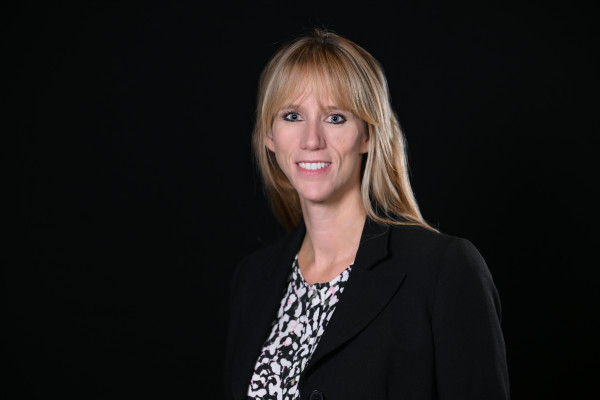
By Miranda Abraham, Head of Loan Syndications at RMB in London (www.RMB.co.za)
Yield-chasing investors have poured money into the continent but an emerging, recent challenge for Africa is that in a now higher interest rate environment, investors don't need to come to Africa to find higher returns.
Even US treasuries are now yielding far more attractive yields than just a month ago: 3-month government bonds offer 5.32% and while 2-year bonds offer a yield above 5%. Yields have risen in part in response to Fitch's recent downgrade of the US from AAA to AA+, echoing S&P's move in 2011.
African bond issuers, spooked by the high-interest rate environment and refusing to issue bonds above the psychological barrier of double-digit yields for Sub-Saharan African bonds, continue to wait it out on the sidelines.
But with interest rates continuing to climb, the wait-and-see strategy is no longer looking like a sensible approach. Issuers are running out of cash and the more stable and resilient syndicated loan market – with its heavily relationship-driven pricing, is increasingly proving to be an alluring alternative to the bond market.
African governments should therefore bring forward planned borrowing before the capital shifts away, as it is already starting to do, and the cost of borrowing rises further still.
The syndicated loan market is dominated by relationship banks, who will consciously and willingly price a loan at very low yields, in order to secure a lead mandate and lock in the ancillary opportunities and revenues that come with being a core relationship bank.
Banks do this knowing that they will also be able to persuade other relationship banks to join the deal as well. This is why syndicated loans always tend to price at a subsidized level when compared to bonds – where investors are more agnostic and definitely less loyal – focusing instead on the relative value of opportunities across the market.
However, while bond prices have skyrocketed, the loan market has hardly moved in terms of pricing. Yes, base rates are higher, resulting in higher all-in costs for borrowers, but on an all-in basis, when compared to bonds, issuing a syndicated loan is definitely the cheaper option for borrowers.
But why have African issuers managed to price debt at such attractive levels for so long?
There are three main reasons:
So finite supply leads to fierce competition for these prestigious African clients and the fact that these credits are complex and difficult to understand exacerbates the problem.
As a result of these factors, African risk is often not being priced fairly. South Africa is a good example of how African risk can be underpriced. Despite losing its investment grade rating in 2017, South African corporates and State-Owned Enterprises (SOEs) continue to price their debt like they are in Western Europe. This is because there is a limited pool of opportunities for those banks that prefer to lend in ZAR to invest in.
Relationship pricing works for the banks because they are able to use the revenues from ancillary business to subsidize their commitment to the loan, but for regular investors (who are typically looking on an asset play basis) they can end up being short-changed. This means that investors may be taking on more risk than they realise, for a relatively low return.
However, instead of adjusting pricing upwards, the imbalance is being addressed another way - by adjusting risk.
Reducing the risk keeps pricing low and so address issuers concerns around paying double-digit yields.
Risk mitigation tools (in the form of ECA wraps, DFI guarantees or insurance wraps) are being embedded into loans and so while pricing remains low, investors improve their returns through adjusting the risk.
These type of credit risk mitigated deals, result in investment grade ratings, but with a substantial African premium. In the EUR 1bn Bank of Industry deal, BOI/AFC pays a yield of about 200bps versus an average yield of 75ps for an A3 rated credit in Europe. It is the only way for many international and European banks – who typically shy away from low BB or single B African risk - to fill their African buckets.
These investors have a whole world of investment opportunities available to them, from AAA through to single B risk, usually across the globe, so they can pick and choose their deals. Consequently, in order to attract their investment into Africa, pricing on these credit enhanced deals has to be highly attractive relative to other similarly opportunities globally.
However for those emerging market investors or African banks focused on Africa, their return hurdle requirements mean that the credit enhanced deals do not work for them.
Instead, they are obliged to find African opportunities that represent real, uncovered African risk. However, the market paralysis created by a difficult credit environment, combined with the fact that a large proportion of those deals that do come to market include some form of credit enhancement, means that the pool of deals offering pure, uncovered African risk is now much smaller.
And this is where supply and demand dynamics take over.
African banks and investors are desperate for assets and are very comfortable assessing and understanding sub investment grade African risk. However this dynamic of fewer deals but strong investor demand has led to plentiful pent up liquidity down the credit curve.
Ironically, once African investors get over the hurdle of higher return requirements (often driven by higher cost of funding) there is such relief that pricing works from a returns perspective, that they can then end up effectively under-pricing the actual credit risk. So we end up with BB- loans paying only 450bps versus BB average bond yields of 12%.
Investors in Africa are a finite pool who know and understand African risk. They deserve to be fairly compensated for the risk they take.
Distributed by APO Group on behalf of Rand Merchant Bank.
We’ve made progress but the quality of the data is poor, especially the latest census
Government partners with business to tackle economic challenges
Government has established a partnership with business to work together in four critical areas, including energy, logistics, crime and corruption, and employment to give impetus to efforts currently being undertaken.
President Cyril Ramaphosa said this while delivering an address to the nation updating on the Economic Recovery progress on Monday.
“We continue to collaborate with organised labour and civil society to ensure a whole-of-society approach to addressing the most important challenges our country faces. All of this gives us hope that we are turning the tide on the many challenges that we face,” the President said.
This month marks three years since government embarked on the Economic Reconstruction and Recovery Plan, which outlined the actions that it would take to rebuild the economy and create jobs in the wake of the COVID pandemic.
The President acknowledged that the last three years have been extremely challenging, as the country emerges from more than a decade of stagnant economic growth, compounded by the impact of the pandemic.
“We are working to reverse the legacy of the past era of corruption and mismanagement of our State-owned enterprises, which has left us with a persistent energy crisis and an inefficient ports and rail network.
“And we are contending with a range of global and domestic pressures which have set back our economic recovery. And yet, there are clear signs that our efforts are showing results. Electricity supply is improving. Jobs are being created.
“Houses, roads, bridges and dams are under construction. Law enforcement agencies are cracking down on criminal syndicates. The proceeds of State capture are being recovered. These are reasons for hope,” President Ramaphosa said.
Since then, in the midst of severe load shedding and increased global volatility, he highlighted that the economy has continued growing, albeit too slowly. He added that the economy has shown a significant degree of resilience and is now larger than it was before the pandemic.
Reforms – Energy Action Plan
Turning to one of the main challenges in the country, President Ramaphosa told the nation that progress is being made towards ending load shedding.
“We are making progress towards ending load shedding. Our greatest priority has been to reduce the severity and frequency of load shedding to achieve energy security. Over the last few months, there has been a measurable decline in the severity of load shedding,” the President said.
He noted that the Energy Action Plan he announced in July last year is showing positive results, “giving us greater confidence that we will bring load shedding to an end”.
The President said that regulatory reforms that have been initiated have enabled a massive increase in private investment in electricity generation, with over 12 000MW of confirmed projects in development.
Following the introduction of tax incentives and financing mechanisms, he said that the amount of installed rooftop solar has more than doubled to over 4 500MW in the last year.
“The steady progress we are making in resolving the energy crisis is a reason for hope,” he said.
Infrastructure
Another commitment made in the Reconstruction and Recovery Plan was to fix South Africa’s infrastructure through renewed investment in maintenance and construction of new projects.
The President highlighted that several significant infrastructure projects are underway.
“These projects are both contributing to greater economic activity and jobs, and providing much-needed infrastructure for the growth of our economy and the needs of our people.
“These infrastructure projects range from social housing, road construction, rural bridges, and dam constructions,” he said.
President Ramaphosa further highlighted that the Passenger Rail Agency of South Africa has to date restored operations on 26 out of 40 commuter rail corridors.
To continue with the restoration of the country’s commuter rail corridors, he said R50 billion will be spent over the next three years to modernise the passenger rail network.
As part of the infrastructure build, the President said that the sixth administration is undertaking significant water infrastructure projects. These include Phase II of the Lesotho Highlands Water Project and the Mzimvubu water project in the Eastern Cape, which will involve an investment of R17 billion.
“Around the country, water treatment works are being upgraded, pumping stations are being repaired, and pipes are being laid to get water to under-serviced areas,” he noted.
Logistics system
President Ramaphosa said the country is making progress in restoring its logistics system to world-class standards, so that SA can export goods to global markets.
The National Logistics Crisis Committee is overseeing a range of interventions to stabilise and improve the performance of the logistics system in the short term, in addition to ongoing reform to improve its efficiency and competitiveness in the long term.
He said the Transnet board has developed a turnaround plan, which aims to increase volumes transported on SA’s network.
“Progress is also being made with the introduction of private sector participation in container terminals. I want to make it clear that South Africa’s port, rail and electricity infrastructure are strategic national assets, and that they will remain in public ownership.
“However, introducing competition in operations – both in electricity and logistics – will create greater efficiency and reduce prices in the long term, just as the introduction of competition in the telecommunications sector has led to greater choice and enormous benefits for consumers,” he said. – SAnews.gov.za
DikelediM
Mon, 10/30/2023 - 21:50
Social protection key to SA’s ongoing recovery plan
The introduction of measures designed to cushion the effects of the economic downturn exacerbated by the COVID pandemic has played a substantial role in keeping millions out of poverty in South Africa.
Speaking to the nation on Monday evening, President Cyril Ramaphosa said one of the key pillars of the reconstruction and recovery plan, post COVID-19, was the expansion of social protection and public employment.
The President was frank about the mammoth task that lies ahead in moving the country forward, in terms of creating the requisite jobs and expanding the economy. However, he commended the role played by the country’s commitment to strengthening social protection through initiatives designed to propel the recovery trajectory.
“Over the last two years, the number of people with jobs has increased by two million, bringing the level of employment close to its pre-pandemic level.
“The special SRD [Social Relief of Distress] Grant, known as the R350 grant, which we introduced in 2020, has kept millions of people out of poverty, and continues to provide much-needed support for those who are unemployed.
“The Presidential Employment Stimulus has created over 1.2 million opportunities since its establishment, representing the largest expansion of public employment in South Africa’s history,” the President said.
To date, over four million young people have registered on the SAYouth online platform, and more than one million of them have been able to access opportunities for learning and earning.
“Every one of those jobs created is a reason for hope. Every person who no longer lives in poverty is a reason for hope,” President Ramaphosa said.
Acknowledging the sustained challenges imposed by domestic and global pressures on the South Africa economy, the President made it clear that constraints to growth, including load shedding and the underperformance of the ports and rail network, must be overcome if the country is to realise its own economic growth targets.
Government spending, the President noted, has exceeded revenue since the 2008 global financial crisis, without a commensurate increase in economic growth.
“As the Minister of Finance has noted, for every rand that government collects in revenue, 18 cents go towards servicing our national debt. This means that we are now paying more in interest on our national debt than we are budgeting for the police force.
“Ultimately, more rapid and inclusive growth is the only solution to unemployment, poverty and inequality. Growth is also necessary for the sustainability of public finances.”
The President reiterated the commitment to stabilising the levels of debt and adopting a responsible fiscal policy, saying that the Minister of Finance will set out government’s plans to achieve this trajectory in the Medium Term Budget Policy Statement (MTBPS) on Wednesday, 1 November.
Strengthening municipal performance
The President said urgent and necessary interventions are being undertaken at municipal level in order to improve service delivery in the areas of water and sanitation, electricity, roads and waste collection.
“These interventions are accelerating service delivery where basic services have collapsed.
“While addressing the immediate problems, we are introducing necessary institutional reforms and professionalisation in the appointment of senior municipal officials.”
Spending on health, education, policing and other essential services will be protected as far as possible, the President said.
“As we move to target spending on programmes that are working for the poor, we need to acknowledge that our social grants, including the SRD Grant, as well as our public employment programmes, are vital in supporting those who are vulnerable.
“These programmes have not only reduced poverty, but have enabled recipients to search for jobs and to engage in other economic activity to support their livelihoods.”
The Minister of Finance is expected to provide more details on these and other spending priorities when he presents the MTBPS on Wednesday.
Tackling crime and corruption
The President said the South African Police Service has established 20 Economic Infrastructure Task Teams throughout the country to protect critical infrastructure and tackle the “construction mafia”.
“We are seeing results in arrests for illegal mining, cash-in-transit heists, cable theft, drug smuggling and similar crimes. Increasing the number of police men and women will further strengthen our capacity to curb acts of criminality.
“I have also extended the employment of 880 members of the SANDF [South African National Defence Force] to support the police in combating criminal activity that targets critical economic infrastructure. The police have arrested several people for extortion at construction sites and made over 3 000 arrests for illegal mining.
“Through the intensive efforts of our law enforcement agencies, dozens of illegal mines, unregulated coal yards and unregistered second hand dealers have been shut down.”
Additionally, the Economic Infrastructure Task Teams have confiscated significant quantities of copper cable, rail tracks, coal and other metals.
Turning to State capture, the President acknowledged that over the last four years, the National Prosecuting Authority (NPA) Investigating Directorate has taken 34 State capture and corruption cases to court, involving 205 accused persons.
Freezing orders of R14 billion have now been granted to the Asset Forfeiture Unit for State capture related cases. Around R5.4 billion has to date been recovered and returned to the State.
“As recommended by the State Capture Commission, we are putting in place laws, institutions and practices that reduce the potential for corruption of any sort and on any scale.
“We are continuing to build meaningful compacts with key stakeholders in a number of areas,” said President Ramaphosa. – SAnews.gov.za
Matona
Mon, 10/30/2023 - 22:13
Centre for Applied Legal Studies argues that the Ugandan Parliament violated its own rules of procedure to pass the law
Minister Aaron Motsoaledi and Director-General Livhuwani Makhode must pay from their own pockets part of legal costs for Lawyers For Human Rights
Springboks to embark on a four-day trophy tour
South Africans will get an opportunity see the 2023 Rugby World Cup trophy when the Springboks rugby team tour the country this week.
The world champions will embark on a four-day Trophy Tour to major regional population centres from Thursday. The team arrives back in South Africa on Tuesday (10:55am) at OR Tambo International Airport and will commence the tour 48 hours later.
This as the national side triumphed over New Zealand in the final match of the tournament, beating New Zealand 12-11 on Saturday to lift the Webb Ellis trophy.
The tour will start in Pretoria, Johannesburg and Soweto – concluding at FNB Stadium – on Thursday, 2 November. It will then continue in Cape Town (Friday, 3 November) and Durban (Saturday, 4 November) before concluding in the Eastern Cape (East London) on Sunday, 5 November.
“The locations have been selected for population size in the first three instances and because of the Eastern Cape’s rugby significance in the fourth. Satellite tours to Bloemfontein, Nelson Mandela Bay and other centres will be scheduled for 2024. Such tours following the 2019 victory had to be abandoned because of the COVID-19 pandemic.
“The route for each tour has been prepared in consultation with the respective local authorities and the South African Police Service,” SA Rugby said on Sunday.
Route maps and timings will be published at www.springboks.rugby, on SA Rugby’s social media channels and by local authorities in due course. –SAnews.gov.za
nosihle
Mon, 10/30/2023 - 09:34
The Gold Avenue provides a comprehensive guide for anyone looking to navigate the complex world of jewellery. Whether you’re buying, selling, or simply seeking knowledge, their articles offer invaluable insights. Below, we highlight key resources to enhance your understanding and confidence in jewellery transactions. Ethical and Sustainable Jewellery Choices Learn how to make responsible …
Cape Town, October 2023 – In the quest for a healthier lifestyle, small changes in your diet can make all the difference. By changing something as simple as your cooking oil, you may reduce your risk of getting certain cancers. Throughout the month of October, in alignment with Cancer Awareness Month, B-well took an even …
Cape Town industrial property continues to see positive growth as the city is seen as the better place to live and do business. Urban Growth Property Group (Urban Growth) is not letting this opportune moment pass it by and is taking the lead and growing its property portfolio. Urban Growth is an independent property investment …
South Africans are developing an ever-growing fondness for this extraordinary vegetable, and its popularity is soaring in households. Unlike its plain cousin, regular broccoli, Tenderstem® is the lush, luxurious, and leggy vegetable that stands head and shoulders above all others. David Samuels, EMEA Brand Director for Tenderstem®, expresses his delight: “We’re thrilled see the Tenderstem® …
Save the Children has reported that the number of children killed in Gaza over the last three weeks has surpassed the annual number of children killed across all the world's conflict zones since 2019. Since 07 October, more than 3 257 children are reported to have been killed. This includes at least 3 195 in Gaza, 33 in the West Bank and 29 in Israel. Children make up more than 40% of the 7 703 people killed in Gaza. Save the Children estimates that these numbers are likely to go up given that over 1000 children are missing with many trapped under the ruins and rubble as a result of Israel's indiscriminate airstrikes on Gaza.
All of these children killed since 7 October are non-combatants and those responsible for their deaths must be held accountable for war crimes, crimes against humanity and in the case of the scale of deaths in Gaza and increasingly in the West Bank, the crime of genocide must also be investigated. The scale of deaths in Gaza are a direct result of the unlawful actions by Israel on the peoples of Gaza. As South Africa and the majority of countries stated at the United Nations General Assembly on 27 October 2023, as part of the debate on a resolution where more than two-thirds of the General Assembly responded positively to a call for an immediate ceasefire, under the laws of occupation, which forms part of the law of armed conflict, Israel does not have the ‘right to defend itself' using military means as Israel is an occupying power. This is a fact, not an allegation. It has been confirmed by the International Court of Justice. As the occupying power, Israel can use tools applicable to the rule of law, including policing powers to deal with criminal actions. An occupying state cannot exercise control over territory it occupies and simultaneously militarily attack that territory on the claim that it is “foreign” and poses an exogenous national security threat. The notion of Israel's right to defend itself through military means has been used erroneously by some, and deliberately by others to justify the unlawful use of force by Israel on people of Palestine in Gaza and the West Bank.
Those that have encouraged and materially supported the unlawful use of force by Israel in the current situation should therefore be investigated for aiding and abetting the breaches of international law. The numbers of non-combatants killed, especially the numbers of children killed, requires that the world to show that it is serious about global accountability. The ICC has charged Russian President Vladimir Putin with unlawfully taking children out of Ukraine to Russia. Consequently, the wilful killing of children in Gaza surely requires the ICC prosecutor to use his independent powers to initiate prosecutions urgently. Failure to do so will serve to exacerbate the growing cynicism that international criminal law is applied selectively for political purposes.
While we cite numbers, which some world leaders shamefully sought to minimise, as a means to illustrate the scale of the atrocities, this should not mask the very real human tragedy. Entire generations of families have been wiped out in Gaza over the last three weeks. It is estimated that over 80 entire families have been wiped out by Israeli armed action over the last three weeks. On Sunday 29 October, members of the family of one of a senior Palestinian diplomat based in Pretoria were killed in an Israeli air strike in their apartment building in Gaza. Another member of the Palestinian community living in Johannesburg had 25 members of their family killed in an Israeli air strike this morning. South Africa extends its deepest condolences to the families of all victims.
It is in the light of these atrocities that the unethical way the Deputy head of the South African Jewish Board of Deputies, Mr Zev Krengel's, commentary on South Africa's stance on this matter should be condemned. Mr Krengel has repeated discredited information related to the beheading of children in Israel. This disinformation is part of the arsenal of dehumanisation tactics used to justify a ‘by any means necessary' approach to dealing with Hamas, which has resulted in the huge casualties we see today. He also misled the South African public about the nature and process of Minister Naledi Pandor's call from Hamas and of her official visit as an envoy to Iran. Given the potential libellous nature of his utterances, more commentary on this will be done at a later stage. It is important to raise it as Krengel and the organisation on whose behalf he represented these views are out of step with the views of most South Africans and people across the world. This includes scores of Jewish people in South Africa and across the world who have called out the actions of Hamas and the Government of Israel. Millions of people, many under the banners of Jewish Voice for Peace, have marched in New York, London, Turkey and other cities over the last few days. They have all called for an immediate cease-fire in Gaza and called for investigations into the breaches of international crimes.
One of these crimes, the crime of genocide, sadly looms large. President Lula da Silva of Brazil has called the attacks on Gaza a genocide. Minister Pandor too, reminded the international community not to stand idle while another genocide is unfolding. At the United Nations Security Council debate in New York last week, she stated the following: “We all recall that in 1994 a genocide occurred on the African continent with much of the whole world watching as innocent people were massacred. History cannot keep repeating such cruelty, we should establish a system of global governance that is fair, equitable, and has the capacity to respond to the needs of all persons in situations of threat and harm – a system that is not just a tool for the most powerful countries of the world but that provides protection for the most vulnerable”.
South Africa echoes the United Nations General Assembly's resolution that called for an immediate ceasefire and the immediate opening of a humanitarian corridor to provide food, medical supplies and fuel. South Africa also calls on the United Nations to deploy a rapid protection force to protect the civilian population from further bombardment.
All countries genuinely committed to a rules-based system underpinned by international law must act immediately.
Distributed by APO Group on behalf of Republic of South Africa: Department of International Relations and Cooperation.
The fourth generation, family-owned German textile group FALKE has appointed Michael de Koker to manage their South African operations. De Koker has a well-rounded background in the manufacturing, retail, and distribution industries. Having headed up some of the largest and well-known brands specifically Guess SA/Africa, being retail director of Guess Australia and more recently the …
Warning against circulating harmful information
The Department of Communications and Digital Technologies (DCDT) has warned the public against sharing a message that is circulating and promising free data.
“The department would like to warn members of the public to desist from participating in sharing the false information and cautions against opening such links as they are fake and harmful,” the DCDT said on Monday.
The department said government is striving to ensure that it brings about digital equilibrium by ensuring that it embarks on various activities aimed at connecting the unconnected and leveraging opportunities for everyone to participate in the digital economy.
“DCDT has been by far deliberate on digital inclusion by spearheading programmes such as South Africa Connect Phase 2, which seeks to fast track internet penetration in all public institutions and the community at large.
“The 2 step approach towards the conclusion of Broadcast Digital Migration is another example of moving our country towards a digital economy as this will see the roll out of the High Demand Frequency Spectrum and will result in the decrease of data costs,” it said. –SAnews.gov.za
nosihle
Mon, 10/30/2023 - 14:49
On Monday, 30 October 2023, the Western Cape Government signed a Letter of Intent with Hisense South Africa for the establishment of a Tevolution Museum in Cape Town.
This venture stems from the agreement with the Shandong province, which is now in its 25th year. The Director-General for the Department of the Premier, Harry Malila, opened today's engagement by thanking China and the Shandong province for the continued relationship and emphasized the renewed focus on the economy, tourism and growth going forward. Hisense already has a footprint in the Atlantis area and will now build on this partnership through the establishment of this museum, working closely with the Western Cape Department of Cultural Affairs and Sport (DCAS), which is responsible for museums in the province.
The envisioned museum will tell the story of household appliances in South Africa but will also aim at providing opportunities for youth to go into the field of technology. The museum will incorporate an art studio which will provide opportunities for youth to grow their skills in technology, animation and other related fields such as coding. It will also use technology to bring innovative exhibitions to visitors for them to experience Cape Town's rich and diverse cultural heritage. DCAS will identify potential sites where the museum will be hosted.
Head of Department for Cultural Affairs and Sport, Guy Redman, emphasized the important role that museums play in bringing hope to people. “The museum we are creating is a museum of the future. We want to inspire South Africans to imagine alternate futures for themselves and believe in their abilities to create that desired future. We want them to appreciate what could be, and give them the tools to make it happen.” he said.
Minister of Cultural Affairs and Sport, Anroux Marais, thanked the delegation for the ongoing partnership between the two governments: “It is very important that we have this ongoing relationship and that we continue to strengthen it as it continues to bring new economic opportunities to our youth. We are also looking forward to hosting young people from Shandong later this year for sailing events.” she said.
The Western Cape Government looks forward to this exciting new project, which will not only bring in economic growth through tourism but will also support young people in pursuing new career opportunities.
Distributed by APO Group on behalf of Republic Of South Africa: Western Cape Provincial Government.