• Skip to main content
  • Skip to header right navigation
  • Skip to after header navigation
  • Skip to site footer
MyZA

MyZA

News, Directory, Events and Other Stuff

  • Social Media
  • Sport
  • World News
  • Home
  • Submit News
  • Directory
  • Events
  • Stratlec
  • TFSA
  • News
    • APO
    • Today’s Sport News
    • Todays Social Media and Tech Headlines
    • Today’s World News
    • Today’s SA Financial News
  • Contact
You are here: Home / Archives for Technology

Technology

15 April 2025

CMAG Appoints APO Group Founder, Nicolas Pompigne-Mognard, to Advisory Board
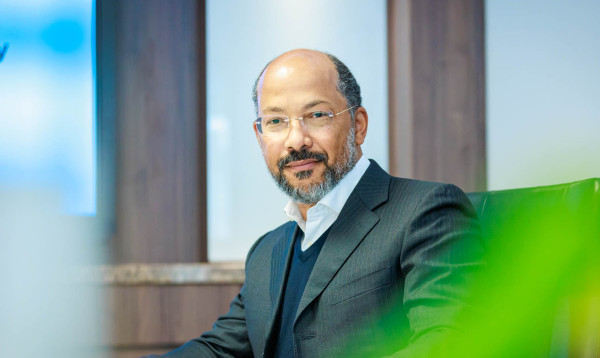
Location: News
APO Group

APO Group (www.APO-opa.com), the award-winning pan-African communications consultancy and leading press release distribution service, is pleased to announce that its Founder and Chairman, Nicolas Pompigne-Mognard (www.Pompigne-Mognard.com), has been appointed to the newly formed Advisory Board of the Critical Minerals Africa Group (CMAG).

With its mission being to position Africa as a leader in critical minerals, CMAG (www.CMAGAfrica.com) is dedicated to advancing responsible sourcing and sustainable development of Africa's critical mineral resources, while ensuring that local economies benefit from the continent's mineral wealth. With approximately 40% of the world's essential minerals reserves estimated to be held in Sub-Saharan Africa alone, the region plays a key role in the global energy transition and advanced technologies.

Pompigne-Mognard's appointment to the Advisory Board follows the announcement of a strategic partnership between APO Group and CMAG aimed at raising the global prominence of Africa's critical minerals sector. The partnership leverages APO Group's public relations and strategic communications expertise and CMAG's industry leadership. Complementing this, Pompigne-Mognard's ability to connect clients with key stakeholders from governments, private companies, and organisations of all sizes will be invaluable in showcasing Africa's role in the global essential resources supply chain and elevating the profile of Africa's critical minerals sector.

Nicolas Pompigne-Mognard brings a wealth of experience and expertise to the CMAG Advisory Board. His vast network across industries, governments, and institutions, his deep understanding of Africa's media and technology landscapes, and his extensive business experience will equip him to work alongside fellow Advisory Board members to shape positive perceptions of Africa's critical minerals sector amongst global stakeholders and audiences.

A Franco-Gabonese entrepreneur named among the 100 Most Influential Africans in 2023 and 2024, Nicolas Pompigne-Mognard serves on multiple high-profile advisory boards and international committees. These include the Senior Advisory Board of the Canada-Africa Chamber of Business and the Leadership Council of the Africa Tech Festival, as well as the Advisory Boards of the African Energy Chamber, World Football Summit, Africa Hotel Investment Forum (AHIF), Bloomberg New Economy Gateway Africa, Sports Africa Investment Summit, EurAfrican Forum, and All Africa Music Awards (AFRIMA). He is also a strategic advisor to the Chief Executive Officer of the Royal African Society of the United Kingdom, a strategic advisor to the EU-Africa Chamber of Commerce, and a special advisor to the President of Rugby Africa, the governing body of rugby in Africa.

Nicolas' wholly-owned company, APO Group, is the premier award-winning Pan-African communications consultancy and press release distribution service. It serves more than 300 clients, including global giants such as Canon, Nestlé, Western Union, UNDP, Network International, the African Energy Chamber, Mercy Ships, Marriott, Africa's Business Heroes, and Liquid Intelligent Technologies.

“Being appointed to the Critical Minerals Africa Group Advisory Board is an immense honour. CMAG is vital in safeguarding Africa's critical minerals for future generations. In my advisory role, I look forward to supporting all initiatives as CMAG showcases Africa's critical minerals potential in a responsible and sustainable manner,” said Nicolas Pompigne-Mognard, Founder and Chairman of APO Group.

Other members of the Advisory Board include Natznet Tesfay, Executive Director, Head of Insights and Analytics, S&P Global, and Richard Morgan, Former Head of Government Relations, Anglo-American PLC.

Distributed by APO Group on behalf of APO Group.

Media contact:
marie@apo-opa.com

About APO Group:
Founded in 2007, APO Group (www.APO-opa.com) is the leading award-winning pan-African communications consultancy and press release distribution service. Renowned for our deep-rooted African expertise and expansive global perspective, we specialise in elevating the reputation and brand equity of private and public organisations across Africa. As a trusted partner, our mission is to harness the power of media, crafting bespoke strategies that drive tangible, measurable impact both on the continent and globally.  

Our commitment to excellence and innovation has been recognised with multiple prestigious awards, including the PRovoke Media Global SABRE Award and multiple PRovoke Media Africa SABRE Awards. In 2023, we were named the Leading Public Relations Firm Africa and the Leading Pan-African Communications Consultancy Africa in the World Business Outlook Awards, and the Best Public Relations and Media Consultancy of the Year South Africa in 2024 in the same awards. In 2025, Brands Review Magazine acknowledged us as the Leading Communications Consultancy in Africa for the second consecutive year. They also named us the Best PR Agency and the Leading Press Release Distribution Platform in Africa in 2024.  

APO Group's esteemed clientele, which includes global giants such as Canon, Nestlé, Western Union, the UNDP, Network International, African Energy Chamber, Mercy Ships, Marriott, Africa's Business Heroes, and Liquid Intelligent Technologies, reflects our unparalleled ability to navigate the complex African media landscape. With a multicultural team across Africa, we offer unmatched, truly pan-African insights, expertise, and reach across the continent. APO Group is dedicated to reshaping narratives about Africa, challenging stereotypes, and bringing inspiring African stories to global audiences, with our expertise in developing and supporting public relations campaigns worldwide uniquely positioning us to amplify brand messaging, enhance reputations, and connect effectively with target audiences.
Media files
APO Group
Download logo
Read moreCMAG Appoints APO Group Founder, Nicolas Pompigne-Mognard, to Advisory Board
15 April 2025

Eskom, Exxaro sign agreement to reduce carbon emissions

Location: News

Eskom, Exxaro sign agreement to reduce carbon emissions

Exxaro Resources and Eskom have signed a Memorandum of Understanding (MoU) to collaborate on strategic initiatives, research, and projects aimed at reducing carbon emissions, improving air quality and facilitating the Just Transition.

According to a joint statement, this move is consistent with South Africa’s commitment to achieving the goals of the Paris Agreement, international environmental standards, and national regulatory frameworks.

“The agreement focuses on jointly measuring, managing, and reducing Scope 1, 2, and 3 emissions and potentially investing in innovative technologies to drive decarbonisation. 

“It also emphasises inclusive and focused transition initiatives such as skills development, job creation in green sectors, and stakeholder engagement to ensure climate resilience,” the statement read. 

In addition, the MoU, which was signed on Monday, includes provisions for data sharing and transparent reporting to track progress and ensure accountability.

Exxaro Resources CEO, Ben Magara, believes that this collaboration marks a significant step forward in the company’s commitment to enabling a Just Transition and building a climate-resilient and low-carbon future. 

“By leveraging our deep experience in the diversified mining and energy solutions sectors, we aim to drive innovation that not only decarbonises and reduces air pollution in our operations but also delivers meaningful socio-economic benefits for the communities we serve.

“The collaboration with Eskom is important as we work to accelerate practical and scalable solutions that support South Africa’s energy security and environmental ambitions as part of our purpose of Powering Better lives in Africa and beyond,” Magara said. 

Exxaro is a South Africa-based diversified resources company with a coal business and acquisitive growth prospects in minerals and energy. 

The company stated that the initial focus of the collaboration will be to identify the necessary investments and stakeholders required to develop technology-based solutions for the challenges associated with the transition to a low-carbon economy. 
This effort will align with the country’s Integrated Resource Plan (IRP).

Eskom Group Chief Executive Dan Marokane said both organisations are committed to driving the transition to a more sustainable energy future while ensuring the country’s electricity supply remains secure. 

“This initiative forms part of Eskom’s focus both in this country and internationally to identify the latest developments and strategies to reduce carbon emissions and other air pollutants,” Marokane added. 

Meanwhile, Exxaro stated that it remains steadfast in advancing its Sustainable Growth and Impact strategy by embedding key Environmental, Social, and Governance (ESG) priorities into its operations. 

The company is of the view that through partnerships such as this one, it is well-positioned to become carbon-neutral by 2050.
Meanwhile, Eskom’s Research, Testing & Development (RT&D) business unit will lead this partnership. 

The RT&D is dedicated to finding technology solutions that can be applied primarily within the company to embrace innovation, enhance efficiency and improve operations, improvements related to emissions management, and greenhouse gas (GHG) abatement.

“Eskom remains focused on a balanced and diversified energy mix based on existing coal and nuclear and introducing gas for baseload power, as well as renewables, energy storage systems including battery energy storage systems and pumped hydro, to achieve overall security of supply and to meet South Africa’s growing electricity demand sustainably,” said the power utility. – SAnews.gov.za


Gabisile
Tue, 04/15/2025 - 11:18

111 views

Read moreEskom, Exxaro sign agreement to reduce carbon emissions
14 April 2025

Vuyani Jarana appointed as G20 start-up engagement group

Location: News

Vuyani Jarana appointed as G20 start-up engagement group

The Minister of Small Business Development, Stella Tembisa Ndabeni, has announced the appointment of Vuyani Jarana as Chairperson for the Startup20 Engagement Group for South Africa’s Group of Twenty (G20) Presidency.

In a statement on Monday, the Department of Small Business Development (DSBD) said it has been entrusted with leading South Africa’s Startup20 Engagement Group, one of the officially recognised G20 Engagement Groups.

As Chairperson, Jarana will lead Startup20’s strategic direction, appoint task force chairs, coordinate high-level meetings and events, and guide the development of the Startup20 Policy Communiqué, which will contribute to the official G20 Leaders’ Declaration.

The Minister also appointed 22 On Sloane as the Secretariat of the Startup20 Engagement Group for South Africa’s G20 Presidency. 

Startup20 advocates for startups and micro, small, and medium enterprises (MSMEs) at the G20 level, developing policy recommendations to advance the global startup ecosystem and foster inclusive innovation.

“To support this effort, 22 On Sloane has been appointed as the Country Secretariat for Startup20 during South Africa’s G20 Presidency. Twenty-two (22) On Sloane is Africa’s largest startup campus, playing a pivotal role in advancing the startup and MSME ecosystem across the continent. 

“Twenty-two (22) On Sloane serves as headquarters for the Global Entrepreneurship Network (GEN) Africa, which is represented in 43 African countries, and as the country headquarters of GEN Global which has a presence in 180 countries globally aimed at supporting entrepreneurs to start and scale,” the department said.

As Secretariat, 22 On Sloane will support Jarana to coordinate and manage all Startup20 activities in South Africa, including stakeholder engagements, task force operations, international collaboration efforts, policy drafting, and logistical delivery of the Startup20 agenda. 

The organisation will also facilitate multi-stakeholder dialogues and policy consultations to ensure that Africa’s entrepreneurial voice is firmly embedded in the ensuing global conversations.

According to the department, Jarana brings a wealth of experience to this crucial role, with more than 25 years of leadership in the Information and Communications Technology (ICT) sector. 

A seasoned business transformation leader, Jarana previously served as Group Chief Operating Officer and Chief Executive Officer of Vodacom Business within the Vodacom Group. 

He also held the role of Chief Executive Officer of South African Airways, where he spearheaded critical restructuring efforts.

Currently he is the Founder and CEO of Ilitha Telecommunications, a company dedicated to delivering superfast, affordable broadband to underserved peri-urban and rural communities. 

He also serves as Chairperson of the Council for Scientific and Industrial Research (CSIR), a key institution driving South Africa’s scientific, industrial, and technological innovation agenda.

“His extensive experience and expertise will be invaluable in driving our efforts to promote entrepreneurship and innovation in Africa. He is a respected and seasoned business leader whom I am confident will lead the Startup20 Engagement Group with dedication and focus, ensuring that this serves as a legacy for our country and the ecosystem,” the Minister said.

The G20 is an international forum of both developing and developed countries, which seeks to find solutions to global economic and financial issues. 

South Africa’s G20 Presidency commenced on 1 December 2024 and will run until 30 November 2025. It is taking place under the theme: “Solidarity, Equality, and Sustainability.” - SAnews.gov.za

nosihle
Mon, 04/14/2025 - 15:03
57 views

Read moreVuyani Jarana appointed as G20 start-up engagement group
13 April 2025

Government reiterates commitment to water security

Location: News

Government reiterates commitment to water security

The Deputy Minister of Water and Sanitation, David Mahlobo, has reaffirmed government's commitment to ensuring water security for all South Africans through innovative partnerships and transformative solutions.

“Water is the lifeblood of our nation's development. By combining government's resources with the innovation and expertise of the private sector, particularly through organisations like the Black Business Council in the Built Environment (BBCBE) that champion transformation, we can overcome our water challenges and build a resilient future for all South Africans,” the Deputy Minister said on Friday.

He was addressing the BBCBE Built Environment Indaba at the Gallagher Convention Centre in Midrand, which was taking place under theme: "Built Environment Partnering with Our Government to Deliver Infrastructure Projects through Innovative Funding and Delivery Models.”

The Deputy Minister urged the built environment sector to leverage its expertise and global networks to drive innovation, mentorship, and investment. 

“Water challenges as experienced in most parts of the country require bold and collaborative solutions from all of us. Together, we can harness technology, finance, and partnerships to achieve Sustainable Development Goal (SDG) 6 on clean water and sanitation for all,” he said.

This as the Department of Water and Sanitation remains steadfast in its mission to secure South Africa’s water future. 

Mahlobo’s address underscored the need for unity across government, the private sector, academia, and civil society to transform challenges into opportunities for sustainable growth. -SAnews.gov.za


nosihle
Sun, 04/13/2025 - 10:03
66 views

Read moreGovernment reiterates commitment to water security
12 April 2025

Court Victory for Freedom of Expression: IDC Ungags Itself

Location: News

“There is no absolute right to be protected from being the subject of defamatory allegations” says acting judge

Read moreCourt Victory for Freedom of Expression: IDC Ungags Itself
11 April 2025

Minister reaffirms commitment to efficient policing

Location: News

Minister reaffirms commitment to efficient policing

Police Minister Senzo Mchunu has reaffirmed the South African Police Service’s (SAPS) commitment to realising an efficient, effective, and responsible police service.

“… I want to reaffirm our commitment. We are committed to realising an efficient, effective, and responsible police service; one that reflects the values and aspirations of our democracy. This is non-negotiable,” the Minister said.

Mchunu was addressing a media briefing on the outcomes of the recently held three-day National Policing Summit. 

“The people of South Africa demand policing that is efficient, effective, and accountable. The people of South Africa demand a police service that is worthy of their trust, and most importantly, the people of South Africa demand that we act.”

WATCH | 

At Friday’s briefing in Pretoria, the Minister said that the priorities of the police are to reduce murder, remove unnecessary firearms from communities, remove drugs, fight gender-based violence and femicide (GBVF) and organised crime.

The police are also aware of the increases in crimes such as kidnappings, extortion, cash-in-transit heists and stock theft.

Additionally, police have classified the provinces of Gauteng, KwaZulu Natal, the Eastern Cape and Western Cape as hotspots.

“As a means of effectively reducing crime, we have identified several key enablers, inclusive of using and improving our technology, strengthening our crime intelligence, capacitating and upskilling our detective services, improving and expanding our forensic services and improving the general environment under which police officers work.

“We have made mention of the budgetary constraints, but we have also committed to maximising the budget allocated and the resources at our disposal. 

“Business has also come on board and through that partnership, there are projects aimed at capacitating, particularly our detective services, improving our technology and increasing our laboratories,” he explained.

Operations Room

Meanwhile, National Police Commissioner Fannie Masemola said that the summit engaged with seasoned researchers, academic leaders, the business sector, subject matter experts and community structures. The engagements were focused on how to turn the the tide, recalibrate and reposition the SAPS for the future.

“During the summit deliberations, we assessed the current state and performance of the SAPS, focussed on operational inefficiencies. We identified pragmatic strategies that will improve and advance maximum effectiveness in policing while strategically repositioning the SAPS to ensure long-term relevance, heightened professionalism and the restoration of public trust.

“The SAPS will establish a National Policing Summit Operations Room. This facility will house a permanent scoreboard that will track and trace progress on the resolutions of the summit periodically for the next five years. 

“We believe that this significant move will hold the management of the SAPS accountable to the nation, as we commit to turnaround the policing direction of this country,” Masemola explained.

Visibility 

The Commissioner added that the summit’s focus was not on theoretical discussion alone, but rather on diagnosing real operational challenges, understanding community perceptions and analysing systemic shortcomings.

“The summit placed special emphasis on rethinking how SAPS can maximise its impact within existing constraints while repositioning itself for long-term relevance, professionalism, and enhancing public trust in policing.

“The first day of the summit interrogated the difference between being seen and being felt in communities. While the SAPS often reports on patrols and deployments, the quality and impact of these efforts on safety perceptions was central to the conversation.”
Masemola explained that the discussions reflected a disconnect between visible policing efforts and actual community safety outcomes, prompting a call for a more intentional, impact-focused presence.

Masemola also hinted that the Summit touched on technology as a transformative tool in the modernisation of policing.
“Summit discussions addressed real-time crime tracking, GIS [ geographic information system] mapping, AI-driven analytics, and predictive policing. Participants discussed how these technologies can help SAPS anticipate criminal activity and deploy resources more efficiently.

“Emphasis was placed on data quality, interoperability of systems and the critical need for digital literacy within SAPS,” said the Commissioner.

President Cyril Ramaphosa officially opened the summit that was held at Emperors Palace Convention Centre in Gauteng on Tuesday.

READ | President calls for holistic overhaul of policing

The Summit, among other things, addressed the high levels of crime in South Africa by reflecting on current policing approaches and developing more effective methods for the South African Police Service. – SAnews.gov.za


Edwin
Fri, 04/11/2025 - 12:48
33 views

Read moreMinister reaffirms commitment to efficient policing
10 April 2025

Technology to aid SA’s border management efforts  

Location: News

Technology to aid SA’s border management efforts  

Four advanced unmanned aerial vehicles, commonly known as drones and 40 body-worn cameras will be deployed for the first time at the country’s ports of entry over the coming Easter long weekend.

The drones are equipped with some of the most advanced night vision cameras in the world, including thermal detection technology.

Powered by Artificial Intelligence (AI), the devices are able to recognise and lock onto heat sources, moving people, or vehicles. They can also travel at speeds up to 43 kilometres per hour and are capable of operating in remote rural areas without access to GPS and even underground.

Speaking at a media briefing on Thursday, Home Affairs Minister Dr Leon Schreiber said the launch of technology marks the biggest step forward for enhancing border security and management.

“Data shows that when we first trialled the use of drones over the festive season, the number of attempted illegal crossings that were successfully prevented, increased by 215%,” said the Minister.

WATCH | 

He added that the Border Management Authority (BMA) will now permanently deploy this cutting-edge technology on a fulltime basis.

“Our message to would-be illegal immigrants and smugglers is clear. We are now watching the borderline during the day, we are watching at night, we can see your body heat wherever you try to hide, and we will catch you. 

“As we roll out more and more cutting-edge technology, there are fewer and fewer places to hide for criminals who undermine our national security,” he said.

Schreiber explained that the cameras will be fitted to officials working in the port environment to detect and punish acts of corruption, while also monitoring the efficiency of officials.

“Importantly, the cameras are linked to a dedicated Digital Evidence Management System which ensures that all footage is admissible in court to ensure successful convictions.”

BMA Commissioner Dr Micheal Masiapato said the 2025 Easter Operation follows the successfully implemented 2024/25 Festive Season Plan which saw a steady increase of 5 084 251 travellers processed across 71 ports of entry.

“This plan builds on the successes and lessons learned from our previous operations, ensuring the advancement of robust mechanisms for safe and secure travel,” Masiapato said.

Heightened operations

Speaking at the media briefing in Pretoria, the Commissioner said that through the assistance of drone technology, previous deployments in the December-January operations were responsive and reactional to illegal movements.

“The increase in festive season movements prompted the BMA to officially begin with the Easter Planning Phase on the 1st of February 2025 through to the 14th of April 2025. 

“The Execution phase of the BMA’s Easter Operational Plan will run for a period of 10 days starting from the 15th to the 24th of April 2025, during which period deployments and intensified border operations will be heightened.
“We are here to serve the citizens of the country to deter any illegality at our ports of entry and border law enforcement area without fear or favour,” he said.

Masiapato said the Easter period is traditionally characterised by a significant spike in the movement of people and goods across the country’s ports, placing increased demand on the BMA to maintain optimal operational readiness.

“During this period, families travel for religious observances, holidays, and cultural gatherings, while traders and transporters increase activity in preparation for the long Easter weekend. 

“With the expected increase in attendance from the Zion Christian Church in Limpopo, more travellers are expected to move from our neighbouring countries into South Africa. These heightened activities bring both opportunities and risks, requiring a concerted and integrated operational response,” he said.

The BMA is undertaking training to equip eight officers to become expert drone pilots. They will operate the devices on a shift basis and will move around different ports in the country. – SAnews.gov.za
 

Edwin
Thu, 04/10/2025 - 12:39
252 views

Read moreTechnology to aid SA’s border management efforts  
10 April 2025

Nzimande, UN Secretary-General’s Envoy on Technology meet on Global Digital Compact

Location: News

Nzimande, UN Secretary-General’s Envoy on Technology meet on Global Digital Compact

The Minister of Science, Technology and Innovation, Professor Blade Nzimande, met with Mandeep Gill, the Undersecretary and Special Envoy of the United Nations Secretary-General for Digital and Emerging Technologies, on Wednesday.

The meeting primarily focused on South Africa’s role in implementing the UN’s Global Digital Compact (GDC) and the opportunities this presents for developing the country’s digital economy.

The GDC forms part of the UN’s Pact for the Future, which was adopted during the Summit of the Future in 2024. 

The Department of Science, Technology and Innovation (DSTI) said this compact was a comprehensive framework for global digital cooperation and governance, particularly regarding artificial intelligence. 

Its primary objective is to harness the potential of digital technology for the benefit of humanity while also addressing the challenges and risks associated with it. 

During the meeting with Gill, Nzimande stressed the importance of digital and emerging technologies.

“As one of the African countries with the largest public science systems, South Africa recognises the importance of developing our capabilities in digital and emerging technologies such as artificial intelligence and their potential to help in the development of solutions for some of the challenges of our time such as inequality, climate change and environmental degradation, pandemics and transnational conflict,” the Minister said. 

He believes the current geopolitical moment required a stronger and consistent commitment to international collaboration, the free exchange of scientific knowledge, and multilateralism.

“These, we believe present us with a better chance at a sustainable future for humanity. It is for this reason that meaningful partnerships and the development of our capabilities in the digital economy are some of the strategic pillars of our country’s Decadal Plan for Science, Technology, and Innovation,” he stated. 

Outlining the potential benefits for South Africa’s participation in the GDC, the Minister said South Africa’s participation in the GDC presents the country with several unique opportunities to address national priorities and position it as a leader in regional digital transformation. 

“We believe our participation in the GDC can further enhance our capabilities in such areas as infrastructure development, digital skills enhancement, digital entrepreneurship and innovation support, digital inclusion, data governance and privacy and human rights protection,” Nzimande stressed. 

Nzimande used the meeting to update Gill on the department’s artificial intelligence (AI) initiatives, which include the Foundation Digital Capabilities Research (FDCR).

One of the initiatives within the FDCR platform that is AI-focused is the Centre for Artificial Intelligence Research (CAIR).

There is also the South African Research Chairs Initiative (SARChi), which currently includes Research Chairs in information and communication technology (ICT) development, with two specifically focused on AI.

All the DSTI’s AI and digital economy initiatives are designed to support the objectives of South Africa’s Digital Economy Masterplan, which is the responsibility of the Department of Communication and Digital Technologies. – SAnews.gov.za

Gabisile
Thu, 04/10/2025 - 14:38
84 views

Read moreNzimande, UN Secretary-General’s Envoy on Technology meet on Global Digital Compact
10 April 2025

Nornickel Presents Palladium Technology Development Strategy for the PGM Industry in South Africa

Location: Business
Nornickel’s Palladium Centre

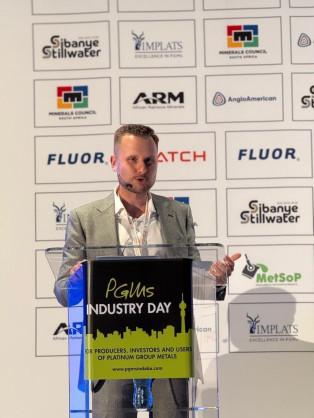
Nornickel (https://NorNickel.com) has unveiled its strategy for the development of palladium-based technologies at the PGMs Industry Day, an international conference held in South Africa. The company's experts shared insights into new technological developments that have the potential to redefine the use of platinum group metals (PGMs) extracted on the African continent, particularly in the fields of energy, electronics, and green technology. 

The presentation attracted considerable interest from conference participants. Industry representatives noted the practical relevance of Nornickel's innovations for the market, as well as the significant potential of palladium in emerging high-tech applications. 

Nornickel is the world's largest producer of palladium and high-grade nickel, and one of the leading global suppliers of platinum, copper, cobalt, and other precious and base metals. The company's Palladium Centre focuses on the development and implementation of innovative palladium-based solutions aimed at enhancing industrial efficiency. 

Palladium is the most extracted metal among the PGMs and benefits from a geographically diversified supply chain. Russia and South Africa, the two major producing regions, ensure stable global supply. 

From a chemical perspective, PGMs complement each other in many applications. Nornickel's research shows that palladium alloys with other PGMs frequently outperform individual metals in terms of efficiency and durability. 

Nornickel's approach to palladium innovation is closely aligned with key global megatrends: the energy transition, sustainable development, and digitalisation. Promising application areas include solar and hydrogen energy, biofuels, and next-generation electronics, where palladium can help reduce the cost of conductive components, hard drives, and OLED displays. In existing markets, the company is focused on improving performance and economics for end users. 

Nornickel is actively building a global partnership network to co-develop and commercialise palladium-based solutions. The company is committed to long-term collaboration with scientists, manufacturers, and end users to accelerate the adoption of advanced technologies and products. 

"Our goal is to become a technological partner for producers of PGM-based products. We focus on identifying applications where palladium delivers a strong competitive edge, bringing together leading scientific teams to develop prototypes, conducting large-scale industrial trials, optimising the product, and transferring the technology to manufacturers. This approach allows us to create more efficient materials and open up new markets for palladium applications," said Dmitry Izotov, CEO of Nornickel's Palladium Centre. 

Since its launch, the Centre has built a portfolio of 25 products. By 2030, the portfolio is expected to exceed 100 projects, generating an additional annual demand of 40–50 tonnes of palladium. 

Distributed by APO Group on behalf of Nornickel’s Palladium Centre.

Media files
Nornickel’s Palladium Centre
Download logo
Read moreNornickel Presents Palladium Technology Development Strategy for the PGM Industry in South Africa
10 April 2025

President engages with various technologies at the CSIR 

Location: News

President engages with various technologies at the CSIR 

President Cyril Ramaphosa engaged with various researchers and technologies on his visit to the Council for Scientific and Industrial Research (CSIR) earlier this week.

The President was hosted by the Minister of Science, Technology, and Innovation, Professor Blade Nzimande when he toured several facilities at the CSIR on Tuesday.

Among the technologies the President interacted with, was the Oceans and Coastal Information Management System (OCIMS), a sophisticated digital platform developed by the CSIR. 

It enables South Africa to monitor, protect, and sustainably manage its extensive coastal and oceanic zones through real-time, data-driven insights.

The initiative is led by Dr Lulama Wakaba, Executive Cluster Manager of the Next-Gen Enterprises and Institutions Cluster. The initiative is a collaboration between the CSIR, the Department of Forestry, Fisheries and the Environment, the South African Environmental Observation Network, and the South African Weather Service. 

“Many people don’t realise this, but South Africa’s exclusive economic zone, our marine territory, is larger than our land mass. That gives us an extraordinary opportunity in the blue economy, which holds immense potential for GDP [gross domestic product] growth, job creation, and sustainable development,” Wakaba explained. 

According to the CSIR, OCIMS is not just a data repository, but also an integrated, scalable system that forms the backbone of multiple research projects used by the state to manage and safeguard marine environments.  

These range from coastal erosion monitoring and maritime traffic control, to harmful algal bloom forecasting, oil spill detection, and marine spatial planning.  

By using satellite data, sensor networks, and intelligent analytics, the system ensures that South Africa’s coastal resources are preserved and fully utilised for economic benefits.

“What we’re showcasing is a living example of applied science. This system translates complex marine data into actionable insights that policymakers and environmental authorities can use to make informed decisions. It’s about turning scientific research into national impact,” Wakaba explained. 

The importance of OCIMS is amplified by South Africa’s strategic position at the meeting point of two oceans, with more than 3 000 km of coastline.  

The country’s location, combined with the rising threats of climate change and unsustainable exploitation, make the need for intelligent ocean governance urgent.

“For us, the real breakthrough lies in unlocking the power of science and innovation to support the state's capacity to manage this frontier responsibly,” he said. 

“From supporting marine biodiversity to bolstering economic development, OCIMS is a cornerstone in building resilient, knowledge-based ocean governance.”

The CSIR said having President Ramaphosa visit the exhibition was both a validation and a celebration of the platform’s significance.

“What we hope to communicate is the strategic power we can unlock when we take up the mantle of what the CSIR stands for, applying cutting-edge science and technology to our national priorities. In this instance, it’s the blue economy, a massive frontier that, if fully harnessed, can transform our country’s economic trajectory.”

The CSIR’s work on OCIMS also supports international obligations, including the United Nations’ Sustainable Development Goals, climate resilience efforts, and commitments under the UN Convention on the Law of the Sea.  

It also provides South African citizens and coastal communities with tools to better understand and protect the natural wealth that surrounds them.

“Our oceans are not just scenic landscapes; they are vital economic assets and ecosystems,” he said. 

“OCIMS is about equipping our country with the means to both care for and benefit from those assets responsibly and sustainably.”

With this bold initiative, the CSIR  said OCIMS stands as a beacon of what is possible when innovation meets vision and when digital infrastructure is aligned with national imperatives.

During  his visit, the President hailed the CSIR as a “South African success story” as the institution marks 80 years since its establishment.

READ | CSIR critical for innovative solutions to resolve challenges - President Ramaphosa

The President was delivering remarks at the institution’s headquarters following a tour of the facility on Tuesday afternoon.  – SAnews.gov.za


Gabisile
Thu, 04/10/2025 - 09:47
136 views

Read morePresident engages with various technologies at the CSIR 
9 April 2025

Germany Sets Sights on Africa’s Energy Future With Major Investment Pledge

Location: News

African Energy Chamber
Download logo

Germany is eyeing expanded investments in Africa's energy sector, having pledged €4 billion for green energy projects by 2030 and advancing hydrogen and gas partnerships through the European Union's (EU) Global Gateway initiative. These investments aim to enhance conditions for private sector involvement and infrastructure development, underscoring Germany's commitment to sustainable development and economic growth across the continent.

In South Africa, Germany committed R5.2 billion last December to support the country's energy transition and deepen bilateral cooperation. This funding is directed towards facilitating South Africa's shift from coal to renewable energy sources, addressing both environmental concerns and energy security. Earlier this month, the EU also announced a €4.7 billion investment in South Africa to support green energy initiatives and vaccine production, reflecting a broader commitment to sustainable development in the region.

Further strengthening these efforts, Germany and the African Development Bank announced joint initiatives last month to accelerate energy access and private sector growth across Africa. This partnership includes support for the Mission 300 initiative, which aims to provide electricity access to 300 million Africans by 2030, and expanded financing for youth entrepreneurship programs.

Meanwhile, German companies are optimistic about their prospects in South Africa, signaling growing confidence in the country's economic stability, expanding trade opportunities and the potential for long-term partnerships in energy and industrial sectors. A recent survey by KPMG Germany and the Southern African-German Chamber of Commerce and Industry revealed that 64% of German companies expect rising revenues in South Africa, with 44% planning to invest in the country within the next three years.

Germany has already been active in Africa's green hydrogen sector, recognizing the continent's vast potential for renewable energy production. In Namibia, German investors have partnered on the $10 billion Hyphen Green Hydrogen Project, aiming to harness the country's abundant solar and wind resources to produce green ammonia for global export. Additionally, Germany mobilized €150 billion through the Global Gateway initiative earlier this year to enhance its energy engagement in Africa, with green hydrogen as a key focus. West African countries alone have the potential to produce up to 165,000 TWh of green hydrogen annually – far exceeding Germany's projected demand for 2030.

Beyond renewable initiatives, Germany remains open to cooperating with African countries on natural gas and blue hydrogen production. This approach reflects Germany's updated Africa policy guidelines, which emphasize the importance of African energy resources – including renewable electricity, green hydrogen and, under specific conditions, natural gas – for a successful energy transition in both Africa and Europe.

"Germany's growing investment in Africa's energy sector signals a transformative shift toward sustainable development and economic growth. With a clear focus on green hydrogen, renewables and responsible fossil fuel cooperation, the country is positioning itself as a key partner in Africa's energy future. African Energy Week 2025 will serve as a vital platform to advance these partnerships, unlocking new opportunities and accelerating Africa's energy transition,” said Tomás Gerbasio, Vice President of Commercial and Strategic Engagement at the African Energy Chamber.

The upcoming African Energy Week (AEW) 2025: Invest in African Energies conference presents a strategic platform for German investors to explore and engage with energy opportunities across the continent. AEW 2025 aims to drive forward the momentum established in previous years, offering a dynamic space for leaders, policymakers and stakeholders to address regional and global energy challenges while advancing Africa's position as a leader in sustainable energy solutions.

AEW: Invest in African Energies is the platform of choice for project operators, financiers, technology providers and government, and has emerged as the official place to sign deals in African energy. Visit www.AECWeek.com for more information about this exciting event.

Distributed by APO Group on behalf of African Energy Chamber.

Read moreGermany Sets Sights on Africa’s Energy Future With Major Investment Pledge
9 April 2025

CSIR critical for innovative solutions to resolve challenges – President Ramaphosa

Location: News

CSIR critical for innovative solutions to resolve challenges - President Ramaphosa

President Cyril Ramaphosa has hailed the Council for Scientific and Industrial Research (CSIR) as a “South African success story” as the institution marks 80 years since its establishment.

The President was delivering remarks at the institution’s headquarters following a tour of the facility on Tuesday afternoon.

“Over many decades, the CSIR has been [at the forefront]… of developing groundbreaking technologies and solutions that have profoundly shaped our country’s scientific and industrial progress.

“With the advent of democracy in 1994, the CSIR embarked on a trajectory of aligning itself with the values of our Constitution. The CSIR is a true treasure for our nation,” he said.

The President told the gathering that as the country – and the world – dealt with the COVID-19 pandemic, the CSIR stepped in to assist the country in fighting the virus.

During the pandemic, CSIR engineers produced some 18 000 ventilators, which were vital for the care of patients across the country.

It also developed a platform to track the impact of the pandemic, which assisted government to direct its response.

“At a moment of great crisis and danger, it was Minister [Blade] Nzimande who said let’s go to the CSIR, and indeed, we came rushing because you had already developed certain capabilities to help us deal with the crisis not only our country was facing.

“We came in a rush, and you distinguished yourselves as a truly capable facility and centre, and today you have displayed to me and us precisely what you true capabilities are. They range from... having the capability to develop missiles and aeroplanes, and cyber security systems,” President Ramaphosa said.

The President called on government to make more use of the CSIR’s capabilities to deliver on South Africa’s developmental mandate.

“In government, we don’t use… the CSIR enough. You are a government owned entity, and you do a great deal of work for others in other countries. We have used you, and you have demonstrated that you are more than capable.

“We are going to have a special Cabinet session where [the CSIR] comes and outlines... precisely what you do and also give us insights on how we can use you. I can’t think of a better way of State capability [building] other than through science, technology and innovation,” he said.

The President further emphasised the institution’s critical role in building State capacity.

“We are one of those countries where, at the advent of democracy, we deindustrialised. The manufacturing base in our country started receding and it is this that we now need to build back.

“[The CSIR] being the centre for industrial research, and who are so adept in a number of areas, can help us to address the challenges in relation to job creation, reducing poverty and also ensuring that there is inclusive growth,” President Ramaphosa said. – SAnews.gov.za 

NeoB
Wed, 04/09/2025 - 10:10
22 views

Read moreCSIR critical for innovative solutions to resolve challenges – President Ramaphosa
8 April 2025

Mchunu prioritises fight against GBV

Location: News

Mchunu prioritises fight against GBV

Police Minister Senzo Mchunu has reiterated government’s intensifying efforts to tackle gender-based violence and femicide (GBVF), and organised crime and corruption.

Speaking at the inaugural National Policing Summit in Kempton Park, Gauteng, Mchunu highlighted the urgency of addressing crimes targeting women and children, which he described as a top priority.

“We are very concerned about this, and it is our priority. We are equally concerned about the murder rate in the country, the easy availability of firearms -- especially illegal firearms -- and drugs,” Mchunu said on Tuesday.

The summit, themed “Efficiency in Action: Optimising South Africa's Policing Potential”, aligns with Chapter 12 of the National Development Plan (NDP), which focuses on building safer communities by 2030. 

The three-day event brings together police leaders, crime experts, and stakeholders to evaluate SAPS strategies and chart a way forward.

Mchunu noted the recent decline in third-quarter crime statistics but said the overall levels remain unacceptably high. He identified organised crime, including gang violence, kidnappings, extortion, cash-in-transit heists, and stock theft, as a major contributor to crime in the country.

“We believe we can substantially minimise, if not eliminate, gang-related violence in the country,” he said.

Efforts are underway to bolster border security in collaboration with the Border Management Authority and the Department of Home Affairs, Mchunu said. He also acknowledged the pressing issue of internal corruption within the SAPS, stating that decisive measures are being taken.

The summit will address key focus areas such as proactive policing, infrastructure, crime intelligence, and the integration of technology. Mchunu revealed plans to implement a restructured SAPS organisational model designed to enhance crime-fighting capacity.

On the technology front, SAPS is set to pilot automated police stations and digitise its docket management system. Partnerships with the private sector will support these initiatives, including the expansion of forensic laboratories and the introduction of an electronic laboratory (e-lab).

Mchunu said the outcomes of a recent SAPS Employee Health and Wellness Workshop will contribute to the summit’s deliberations, aiming to improve morale and overall well-being within the service.

“We have a number of identified projects which we will implement together with business. Amongst these are automating police stations and digitising our docket management systems.”

The summit includes breakaway sessions on modern policing strategies, technology, intelligence-led investigations, and workforce development. Participants will share best practices, explore innovative approaches, and strengthen networks aimed at improving public safety. – SAnews.gov.za

Edwin
Tue, 04/08/2025 - 12:22
254 views

Read moreMchunu prioritises fight against GBV
8 April 2025

President calls for holistic overhaul of policing

Location: News

President calls for holistic overhaul of policing

President Cyril Ramaphosa has called for a bold, coordinated, and community-driven approach to crime-fighting, describing policing in South Africa as being at a crossroads that demands urgent reform and collaboration from across all sectors of society.

The President was delivering the keynote address at the 2025 Policing Summit held in Ekurhuleni on Tuesday. 

President Ramaphosa applauded the Ministry of Police for convening what he termed a “critical” gathering, which brings together government, civil society, business, interfaith groups, labour, and communities to reshape the country’s safety and security strategy.

“Safeguarding our nation’s safety and security requires that we are proactive, innovative and solution-oriented in our approach… Just as crime is an all-of-society problem, overcoming crime must be an all-of-society effort.

“In doing so, we must marshall our full support behind the hardworking men and women of the South African Police Service," the President said. 

The President said crime has a direct impact on the economy, as it discourages investment, disrupts business activity and leads to increased security costs for companies. 

He noted that social ills such as poverty and inequality, unemployment, lack of opportunity, patriarchy and misogyny, and broken family structures are just some of the issues that contribute to crime and criminality. 

“Addressing crime without understanding its root causes is like a doctor treating a patient for a fever without diagnosing the underlying illness. 
 
“It is therefore encouraging that this summit has as one of its key objectives adopting a more holistic approach to law-enforcement, encompassing not just the police but the entire policing system,” the President said. 

The President emphasised that policing must be grounded in the Batho Pele principles of service delivery, which include respect, empathy, accessibility, and accountability. 

He said that the policing terrain of today is complex and multi-faceted and the police strive to fulfil their mandate in the context of emerging threats. 
 
These threats, he said, include transnational organised crime, illegal mining, extortion syndicates, the theft of economic infrastructure, money laundering and terror financing. 
 
“And yet, even in this extremely challenging environment, the South African Police Service continues to register successes in fighting crime in its various operations,” the president said.

Restoring public trust 

The President warned that restoring public trust in the police is critical to winning the fight against crime.

“We need to improve the relationships between the police and the communities they serve. We need to work to improve the morale of SAPS members, many of whom are battling heavy workloads, insufficient resources and outdated systems. 
 
“Even as the SAPS budget has increased over the past ten years, the reality is that the number of police personnel has been declining while the country’s population has been growing,” the President said. 
 
President Ramaphosa stressed that policing cannot succeed without the active involvement of communities. 

He called for a stronger role for Community Policing Forums (CPFs), citizen empowerment, and partnerships with the private sector, which has already played a crucial role in equipping victim support centres and bolstering frontline capacity.

“We know that communities are the most potent resource for fighting crime. Crimes happen in communities and criminals are often known to communities. 
 
“From this summit we need a clear plan on how to better involve communities in crime prevention and detection, and on harnessing the potential of CPFs in line with relevant legislation and regulations,” he said. 
 
The role of technology and data

The President welcomed and backed the focus of the summit on exploring the role of technology in modern policing, investigation and intelligence.

“We need to harness modern technologies to support crime-fighting. Technology is particularly crucial when analysing crime trends and patterns. It is also valuable in empowering citizens,” President Ramaphosa said.

He further advocated for applying a socio-economic lens to crime data to better tailor responses for example, by examining links between substance abuse and robbery, or alcohol abuse and gender-based violence.

“Data plays a pivotal role in policing and law-enforcement. And we need to apply a socio-economic lens when analysing such data. The data may tell us, for example, about a community with a high prevalence of housebreaking and robbery, in which substance abuse is also rife. 
 
“Understanding the connections revealed by this data should inform the approach to policing in that community. There is ample data on the linkages between alcohol abuse and the prevalence of gender-based violence,” the President said.

He added that a holistic policing approach would, for example, need to involve working with local authorities to enforce municipal by-laws for establishments selling alcohol. 

As part of facilitating access to SAPS services, the President said it is encouraging that discussions are planned for how to leverage innovative digital platforms such as mobile apps, online reporting systems and virtual communication channels to improve the public’s interaction with the police. 
 
“To turn the tide against crime, we need better collaboration among the different agencies in the law-enforcement space,” he said.

The President further highlighted that there is a proliferation of organised crime in South Africa, including the manufacture of illicit drugs, kidnapping for ransom and money laundering. 

He said this is taking place alongside a growth in illegal mining, extortion in the construction sector, and the theft of public infrastructure.
 
Addressing corruption

The President urged police to stay away from corrupt activities, stressing that corruption has infiltrated every part of society, including the SAPS. 

He said while prosecuting corrupt officers is important, it is equally crucial to instil a culture of honesty and integrity within the police service. 

The President emphasised the need to strengthen the fundamentals of policing through ethics, accountability, and professionalism. 

He expressed hope that the summit would focus on promoting ethical conduct, restoring public trust in law enforcement, and upholding the rule of law. 

Key initiatives include protecting whistleblowers, implementing the National Anti-Corruption Strategy, and improving recruitment and training to attract the right calibre of candidates to the SAPS. 

“If the SAPS is to fulfil its crucial mandate, we have to emerge from these few days with a clear plan on how to address the systemic deficiencies that are negatively impacting policing. 
 
“As a country we owe the SAPS our full support. As government we remain committed to turning the tide against crime and to making our communities safer. 
 
“It is our hope that the recommendations emerging from this summit translate into deeper collaboration, more effective methods and a promising future for policing in South Africa,” he said. – SAnews.gov.za

DikelediM
Tue, 04/08/2025 - 13:57
366 views

Read morePresident calls for holistic overhaul of policing
8 April 2025

IDC Challenges Court Order Preventing It From Interviewing Whistleblowers

Location: News

R90-million awarded to ARTsolar under investigation

Read moreIDC Challenges Court Order Preventing It From Interviewing Whistleblowers
7 April 2025

Tygervalley Home Affairs office opens its doors to the public

Location: News

Tygervalley Home Affairs office opens its doors to the public

A new state-of-the-art Home Affairs office, located in Tygervalley Shopping Centre in Bellville, Cape Town, served its first clients this morning in the presence of Home Affairs Minister Dr Leon Schreiber.

The Minister officially opened the office earlier in the day.

The new office features upgraded technology that integrates a camera at the counter, eliminating the need to queue for photos. It also only accepts prior bookings, ensuring that there are no queues. 

“We are guided by our vision to deliver 'Home Affairs @home'. This means that we are gradually bringing services closer to the people, including through our presence in malls. This process will eventually culminate in Home Affairs services also being offered at many more bank branches, and through online devices,” Minister said.

“The people of Bellville and surrounds will now experience the meaning of our commitment to deliver dignity for all. Every day, we are making progress, together,” the Minister said.

On Saturday, the Minister also opened a Home Affairs office in Mitchells Plain.

The new office is modern and spacious, with 250 seats (it previously had 50). It also includes upgraded technology like cameras installed directly at each counter, which eliminates the need to queue to take photos.

“This new office serves as tangible proof to the people of Mitchells Plain that Home Affairs is delivering dignity for all. The vastly improved facilities and technology will transform their daily interactions with our services.

“We have brought Home Affairs closer than ever to the people of Mitchells Plain and in the coming months, our plans to expand access to services through many more bank branches will take us closer still to delivering 'Home Affairs @ home,” Schreiber said.

At the time, the Minister was accompanied by the Western Cape MEC for Cultural Affairs and Sport, Ricardo Mackenzie, and Executive Mayor of the City of Cape Town, Geordin Hill-Lewis. – SAnews.gov.za

Edwin
Mon, 04/07/2025 - 14:59

120 views

Read moreTygervalley Home Affairs office opens its doors to the public
7 April 2025

SA advocates for linguistic equity in AI at G20

Location: News

SA advocates for linguistic equity in AI at G20

South Africa has called on the Group of Twenty (G20) members to support initiatives that develop Artificial Intelligence (AI) in low-resource languages and share data and tools to make this possible.

Addressing the Meeting of the G20 Digital Economy Working Group Task Force on AI, Minister of Communications and Digital Technologies, Solly Malatsi, said there were over 7 000 languages spoken in the world, yet most AI models and digital content is trained on a tiny fraction of these – predominantly English and a handful of others.

“We know that AI is only as good as the data and algorithms it is built on and currently, both of these have serious gaps. One glaring gap is the linguistic and cultural diversity deficit in AI systems.

“This linguistic inequity is not just a cultural loss; it’s a practical barrier that threatens to exclude billions from the AI-driven digital economy,” the Minister said on Monday in Gqeberha.

He emphasised that AI must not only be looked at from a technology perspective, but from the standpoint of social impact. 

“We must investigate how AI can help us achieve the Sustainable Development Goals. How can it improve healthcare, education, agriculture, and governance? Beyond language, ethical AI governance requires addressing issues of bias, transparency, and accountability. 

“We have seen instances of AI algorithms that exhibit racial or gender bias in hiring, lending, or policing. These are systemic harms we have to root out. During our Task Force discussions, we must consider how G20 nations can share best practices on AI governance, including regulatory approaches and standards to ensure AI safety and trustworthiness,” Malatsi said.

South Africa’s G20 Presidency has set inclusion and equity at the heart of the digital agenda.

The G20 Presidency will focus on four key pillars that include bridging the digital divide with meaningful connectivity; building inclusive digital public infrastructure; nurturing innovation ecosystems for local development and championing ethical AI that respects diverse languages, cultures, and values.

“We cannot allow a new form of digital inequality to take hold in our world. We need to unite our efforts, North and South, public and private, to invest in connectivity for all. This means mobilising financing for digital infrastructure, sharing innovations to lower costs, and collaborating on policies to make internet access affordable for the poorest,” the Minister said.

The International Telecommunication Union indicates that roughly 2.9 billion people still don’t have internet access at all.

“While most of these individuals live within range of mobile broadband networks, they remain offline due to multiple factors ranging from high data costs, lack of affordable smart devices and limited digital skills. Infrastructure alone is no longer enough; the real barriers are economic, educational, and linguistic. 

“And they demand our immediate collective attention. The socio-economic benefits of closing the digital divide are enormous. We cannot allow a new form of digital inequality to take hold in our world,” he said.

According to the Global System for Mobile Communications Association (GSMA), bringing the currently offline population onto the internet could add $3.5 trillion to the global economy by 2030, with 90% of the benefits flowing to developing countries. 

“We propose that G20 members share strategies on supporting start-ups and micro, small and medium enterprises (MSMEs) – from startup financing initiatives to innovation hubs and tech parks, from simplifying regulatory burdens to providing mentorship networks. 

“Let us commit to growing the digital innovation ecosystem in all our countries. As we discuss policy frameworks, we must also consider the idea of an innovation fund or facility to support digital entrepreneurship in underserved regions, an idea that has been floated with the notion of a possible global fund for AI and digital innovation. 

“If we want a truly global digital economy, we must ensure that innovation knows no borders – that brilliant ideas from Africa, Asia, or Latin America can find the resources and support to grow,” Malatsi said. - SAnews.gov.za

nosihle
Mon, 04/07/2025 - 14:42
37 views

Read moreSA advocates for linguistic equity in AI at G20
6 April 2025

Police summit to elevate crime fighting efforts

Location: News

Police summit to elevate crime fighting efforts

President Cyril Ramaphosa will address the opening of the Police Summit on Tuesday in Ekurhuleni, Gauteng. 

The inaugural Police Summit takes place under the theme: “Efficiency in Action: Optimising South Africa's Policing Potential", aligning with Chapter 12 of the National Development Plan (NDP) on Building Safer Communities.

“The summit will address the high levels of crime in South Africa by reflecting on current policing approaches and developing more effective methods for the South African Police Service (SAPS),” the Presidency said in a statement.

To achieve the 2030 NDP objective, the three-day summit will focus on enhancing the efficiency and effectiveness of SAPS in combating crime.

“It will cover four broad themes with related breakaway discussions, focusing on proven policing strategies that have reduced crime and enhanced community safety, adaptation to dynamic changes in modern policing, the transformative role of technology in modern policing, investigation and intelligence, and building a skilled and professional workforce.

“The Police Summit will have in attendance experts and practitioners, who will have the opportunity to share critical views, ideas, and build networks for advancing social justice. It will facilitate engagement with various stakeholders, learning from good practices, and participating in discussions on innovative solutions and best practices,” the Presidency said. – SAnews.gov.za

Edwin
Sun, 04/06/2025 - 11:52
4 views

Read morePolice summit to elevate crime fighting efforts
6 April 2025

State-of-the-art Home Affairs office opens in Mitchells Plain

Location: News

State-of-the-art Home Affairs office opens in Mitchells Plain

Home Affairs Minister Dr Leon Schreiber on Saturday officially opened a new state-of-the-art office in Mitchells Plain, Cape Town. 

He was joined by the Western Cape MEC for Cultural Affairs and Sport, Ricardo Mackenzie, and Executive Mayor of the City of Cape Town, Geordin Hill-Lewis.

The new office is modern and spacious, with 250 seats (it previously had 50). It also includes upgraded technology like cameras installed directly at each counter, which eliminates the need to queue to take photos.

“This new office serves as tangible proof to the people of Mitchells Plain that Home Affairs is delivering dignity for all. The vastly improved facilities and technology will transform their daily interactions with our services. 

“We have brought Home Affairs closer than ever to the people of Mitchells Plain and in the coming months, our plans to expand access to services through many more bank branches will take us closer still to delivering 'Home Affairs @ home',” Schreiber said. 

READ | Work underway to transform government services 

– SAnews.gov.za

Edwin
Sun, 04/06/2025 - 09:09
83 views

Read moreState-of-the-art Home Affairs office opens in Mitchells Plain
4 April 2025

Work underway to transform government services 

Location: News

Work underway to transform government services 

An agreement between several government entities is set to digitally transform and revolutionise government services.

The Department of Home Affairs, the Border Management Authority (BMA), Government Printing Works (GPW) and the South African Revenue Service (SARS) concluded the agreement on Thursday.

“The agreement marks a new era that will fundamentally reform and improve the way that government works in the Republic of South Africa. In terms of the agreement, the service ecosystem composed of Home Affairs, the BMA and GPW will leverage the world-class technology capacity within SARS to revolutionise all civics and immigration services,” said the Department of Home Affairs.

As a direct result of the successful conclusion of this agreement, the public can look forward to the following improvements:

•    Launch of a world-class Electronic Travel Authorisation (ETA) system to digitalise and automate immigration procedures to eliminate inefficiency and fraud;
•    Integration of Home Affairs services with banking platforms to expand access to Smart ID and passport services to hundreds of bank branches as well as to banking apps;
•    Creation of an option to select secure courier delivery of documents that eliminates the requirement to collect documents only at Home Affairs offices;
•    Upgrading of the Movement Control System (MCS) at all ports of entry; and
•    Introduction of Smart IDs for naturalised citizens and permanent residents.

“This list of reforms also represents only the most immediate priorities for the next twelve months, with many more to follow over the term of the seventh administration in pursuit of our vision to deliver ‘Home Affairs @ home,’” said the department.

Additionally, it added that work to roll out the improvements is now in full swing, and that it will announce their activation on an ongoing basis. 

Home Affairs Minister, Dr Leon Schreiber said: “It is difficult to overstate the significance of what we have jointly achieved with [the] adoption of this historic agreement. SARS is a world-class institution that must never be taken for granted, and I want to thank the Commissioner and his team for their visionary commitment to breaking down silos in the interests of South Africa.”

The Minister also applauded the unwavering commitment of the Home Affairs, BMA and GPW teams in embracing the power of digital transformation.”

“The beauty of this shared approach is that delivering on our vision to digitally transform Home Affairs services will yield major benefits to both us and SARS. For example, the creation of a biometrically secured digital identity platform will enhance the ability to crack down on fraud and collect outstanding revenues, while the digitalisation and automation of immigration processes through the ETA will improve customs collection,” he said.

The agreement was jointly signed by SARS Commissioner Edward Kieswetter, Home Affairs Director-General Tommy Makhode, BMA Commissioner Michael Masiapato, and GPW Chief Executive Officer Alinah Fosi. -SAnews.gov.za


Edwin
Fri, 04/04/2025 - 11:52
105 views

Read moreWork underway to transform government services 
4 April 2025

Ministers Nzimande and Nkabane talk science 

Location: News

Ministers Nzimande and Nkabane talk science 

In a move to strengthen collaboration between science and education sectors, Science, Technology, and Innovation Minister Blade Nzimande and Higher Education Minister Nobuhle Nkabane have held a high-level meeting to align their departments' efforts in research, technology, and skills development. 

The talks focused on enhancing coordination in infrastructure, human resource development, and shared projects within universities and TVET colleges, ensuring that science and innovation play a central role in shaping South Africa’s future.

“The meeting with Minister Nkabane focused on several critical issues in the science, technology, and innovation, and post-school education and training landscape.

“There was a strong emphasis on the need for the DSTI [Department of Science, Technology and Innovation] and DHET [Department of Higher Education & Training] to ensure greater coordination in such areas as research and infrastructure, technology, and human resources development and the common projects undertaken by both departments within universities and TVET [Technical and Vocational Education and Training] colleges,” the Ministry of Science, Technology and Innovation said in a statement.

Wednesday’s meeting was part of Minister Nzimande’s ongoing programme to engage with departments focused on science.

The department’s main objective for this engagement was to ensure that the mandate of the DSTI is fulfilled. 
This will be achieved by securing support from key State departments for the critical focus areas outlined in the DSTI’s Decadal Plan for Science, Technology, and Innovation (2022-2032).

Nzimande’s programme to engage science-intensive State departments is also informed by the DSTI’s recently adopted mantra, which is: “Placing Science, Technology and Innovation at the Centre of Government, Education, Industry and Society.”

Through this mantra, the DSTI seeks to significantly raise the profile and impact of science, technology, and innovation within government and across key sectors of society.

The Ministers also stressed the importance of facilitating access for both departments to strategic national and international platforms and networks, strategic partnerships, and opportunities. 

The two leaders also reaffirmed their commitment to strengthening cooperation and the exchange of critical information between the two departments.

“The Ministers further agreed to set up an inter-departmental committee that will coordinate key joint projects and the overall cooperation between the two departments.

“The Ministers further agreed to a follow-up meeting, which will be held soon to assess progress on some of the commitments made in the meeting. The meeting was very cordial and productive,” the Ministry said on Thursday.  – SAnews.gov.za
 

Gabisile
Fri, 04/04/2025 - 10:47
19 views

Read moreMinisters Nzimande and Nkabane talk science 
3 April 2025

MARS Awards 2024 Winners: 5 Outstanding Researchers from 5 African Countries Honored

Location: News
Merck Foundation

  • Merck Foundation announced the winners of Merck Foundation Africa Research Summit – MARS Awards winners 2024, 5 Researchers from 5 different African Countries recognized under two categories - Best African Women Researchers and Best Young African Researchers. 
  • Merck Foundation also announced the Call for Applications for new edition of Merck Foundation Africa Research Summit – MARS Awards 2025 to empower Women and Youth in STEM in Africa with special focus on ‘The Role of Scientific Research in Women Health and Reproductive Care'. 

Merck Foundation (www.Merck-Foundation.com), the philanthropic arm of Merck KGaA Germany, announced the Winners of Merck Foundation Africa Research Summit (MARS) Awards 2024, in partnership with International Federation of Fertility Societies -IFFS, Africa Reproductive Care Society - ARCS, Manipal University and African Union Scientific Technical Research Commission to recognize African Researchers for their valuable research work and contribution to empowering women and youth in STEM in Africa with special focus on ‘The Role of Scientific Research in Women Health and Reproductive Care'. 

Senator Dr. Rasha Kelej, CEO of Merck Foundation and Chairperson of Merck Foundation Africa Research Summit - MARS expressed, “Since 2016, I have taken immense pride in recognizing the achievements of our MARS Awards winners. This year, we honor Six Winners in two categories: ‘Best African Women Researchers Awards' and ‘Best African Young Researchers Awards.'  

These awards celebrate their significant contributions to research, particularly highlighting the efforts of African women researchers, who remain underrepresented in this field. Through the MARS Awards, our mission is to empower young researchers in Africa and to specifically encourage and support women researchers by enhancing their research capabilities and promoting their vital roles in STEM (Science, Technology, Engineering, and Mathematics).” 

The winners of ‘Best African women Researchers Awards' and ‘Best Young African Researcher Awards' will be enrolled into research training at a premier research institute in India. 

“And I am also very happy to share with you all that as promised, we provided an opportunity to our first-place winner of each category to attend the 11th Edition of Merck Foundation Africa Asia Luminary which was recently conducted in Tanzania, however, only Mr. Jules Irenge Mongane was able to attend it”, shared Senator Rasha Kelej. 

Merck Foundation is committed to improving the lives of people and has been transforming the Patient care landscape and making history together with its partners in Africa, Asia, and beyond, by providing 2080 Scholarships for doctors from 52 Countries in 44 critical and underserved medical specialties. 

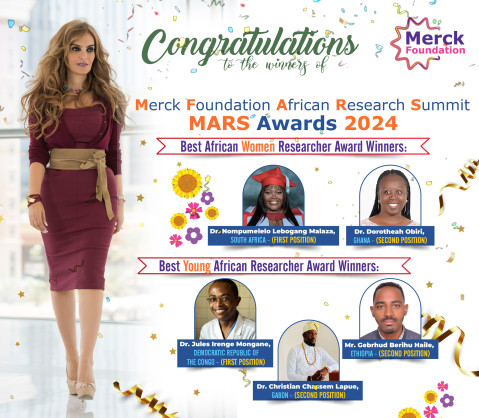
The MARS 2024 Award Winners are: 

Winners of “MARS Best Women African Researchers Awards” 2024  

1. Nompumelelo Lebogang Malaza, SOUTH AFRICA (First Position) 
TOPIC: Association Between Biochemical And Epigenetic Markers With Glycaemic Control And Neonatal Outcomes In Diabetic Pregnancies 

2. Dorotheah Obiri, GHANA (Second Position) 
TOPIC: Immune dysregulation in placental malaria and hypertensive disorders of pregnancy 

Winners of “MARS Best Young African Researchers Awards” 2024 

1. Jules Irenge Mongane, DEMOCRATIC REPUBLIC OF THE CONGO (First Position) 
TOPIC: Association Between Bacterial Vaginosis, Chlamydia Trachomatis Infection And Tubal Factor Infertility In Bukavu, Democratic Republic Of Congo 

2. Christian Chassem Lapue, GABON (Second Position) 
TOPIC: Epidemiology of helminthiases in women of reproductive age living in Lambaréné and its surroundings, Gabon 

3. Gebrhud Berihu Haile, ETHIOPIA (Second Position) 
TOPIC: Incidence of neonatal mortality and factors influencing neonate survival in  neonatal intensive care unit in Northern Ethiopia: a prospective cohort study 

“I am also excited to announce the Call for Applications for the new edition of the Merck Foundation Africa Research Summit (MARS) Awards 2024. This year, special focus will be again on “The Role of Scientific Research in Women Health and Reproductive Care,” added Senator, Dr. Rasha Kelej. 

Merck Foundation Africa Research Summit - MARS 2025 will have scientific support from African Union Scientific-Technical and Research Commission (AU-STRC); African Reproductive Care Society (ARCS), and Manipal Academy of Higher Education (MAHE). 

Details for MARS AWARDS 2025 

Abstracts are invited from final year African PhD students and young investigators involved in research related to either of the following topics: 

1) Women Health 
2) Infertility and Reproductive Health  

All applicants should be primarily based at African Research Institutes and Universities, although collaboration within Africa as well as outside is also welcome.  

Last Date of Submission: 

Applications can be submitted till 30th June 2025 

How to apply:  

Apply by clicking: https://apo-opa.co/3R1Vhhq

Alternatively, the Applications and abstracts can be submitted via email to mars@merck-foundation.com, along with CV (including Name, Gender, Country, University/Hospital Name, Email address, Mobile Number) and the abstract document as an attachment. 

Other Details: 

  • All Abstracts will be peer reviewed. 
  • Research Awards will be dedicated for two categories of Best African Women Researchers and Best Young Africa Researchers. 
  • Winners will be eligible for Research Training in prestigious Research Institute in India. 
  • Top Winners will be invited to attend the 12th Edition of Merck Foundation Africa Asia Luminary 2025. 

Distributed by APO Group on behalf of Merck Foundation.

Contact details:
Mehak Handa
Community Awareness Program Manager
+91 9310087613 / +91 9319606669
mehak.handa@external.merckgroup.com

Join the conversation on our social media platforms below and let your voice be heard! 
Facebook: https://apo-opa.co/41VyNEY
X: https://apo-opa.co/3FTjdRz
Youtube: https://apo-opa.co/42klehm
Instagram: https://apo-opa.co/4crisLN
Threads: https://apo-opa.co/447LYnA
Flickr: https://apo-opa.co/4ckHufy
Website: www.Merck-Foundation.com
Download Merck Foundation App: https://apo-opa.co/43E0Da6

About Merck Foundation: 
The Merck Foundation, established in 2017, is the philanthropic arm of Merck KGaA Germany, aims to improve the health and wellbeing of people and advance their lives through science and technology. Our efforts are primarily focused on improving access to quality & equitable healthcare solutions in underserved communities, building healthcare & scientific research capacity, empowering girls in education and empowering people in STEM (Science, Technology, Engineering, and Mathematics) with a special focus on women and youth. All Merck Foundation press releases are distributed by e-mail at the same time they become available on the Merck Foundation Website.  Please visit www.Merck-Foundation.com to read more. Follow the social media of Merck Foundation: Facebook (https://apo-opa.co/41VyNEY), X (https://apo-opa.co/3FTjdRz), Instagram (https://apo-opa.co/4crisLN), YouTube (https://apo-opa.co/42klehm), Threads (https://apo-opa.co/447LYnA) and Flickr (https://apo-opa.co/4ckHufy). 

The Merck Foundation is dedicated to improving social and health outcomes for communities in need. While it collaborates with various partners, including governments to achieve its humanitarian goals, the foundation remains strictly neutral in political matters. It does not engage in or support any political activities, elections, or regimes, focusing solely on its mission to elevate humanity and enhance well-being while maintaining a strict non-political stance in all of its endeavors. 

Media files
Merck Foundation
Download logo
Read moreMARS Awards 2024 Winners: 5 Outstanding Researchers from 5 African Countries Honored
3 April 2025

African Mining Week Unveils 2025 Program, Connecting Investors to African Projects

Location: News

Energy Capital & Power
Download logo

The African Mining Week (AMW) conference and exhibition has officially launched its 2025 program, unveiling key topics and lucrative opportunities across Africa's mining value chain. The three-day program will foster collaboration on investment, value addition, local content development and industrialization. Bringing together African regulators, key mining stakeholders and global partners, AMW serves as a critical platform for shaping the future of African mining.

Download the program here: https://apo-opa.co/42kb940

Scheduled for October 1–3 in Cape Town, AMW takes place under the theme, From Extraction to Beneficiation: Unlocking Africa's Mineral Wealth. The event is co-located with the African Energy Week: Invest in African Energies conference, providing attendees a strategic opportunity to gain insight into opportunities across both the energy and mining sectors in Africa.

The AMW program features the Ministerial Forum, where African and global mining ministers will connect to showcase investment opportunities, discuss regulatory frameworks and highlight efforts to drive local beneficiation and value addition. Through policy revitalization and strategic partnerships, African markets are increasingly positioning themselves as attractive destinations for global investors.

A series of Country Spotlights will offer a deep dive into Africa's diverse mineral wealth, featuring insights into Botswana and Angola's diamond resources, Zambia's copper reserves and the Democratic Republic of Congo's cobalt market. Spotlights will also examine the latest developments within South Africa's platinum group metals, Zimbabwe's lithium, Mali's uranium and Malawi and Tanzania's rare earths industries.

AMW's Critical Minerals Track will explore emerging trends and opportunities within a sector that is crucial to the global energy transition. With Africa holding 30% of the world's critical minerals, the continent is attracting substantial interest from international players eager to unlock its vast potential. AMW will spotlight Africa's growing role in mineral diplomacy, as countries strengthen investment ties and infrastructure collaboration with global partners, including China, the U.S., Canada, the UAE, Australia and the European Union. Meanwhile, AMW Roundtables will facilitate deal signings and enhanced cooperation among African stakeholders and international investors.

Innovation will take center stage at the Technology Forum, set to explore the transformative role of digital technologies, AI and machine learning in modernizing mineral exploration and production. African markets are increasingly leveraging advanced tools to accelerate exploration, with companies such as Botswana Diamonds utilizing AI-driven solutions to diversify beyond traditional diamond mining. Meanwhile, KoBold Metals is using AI to unlock new copper discoveries in Zambia, supporting the country's ambition to ramp up production to 3.1 million tons annually by 2031.

The Investment Track will bring together global investors, including public financiers and international development finance institutions to explore funding opportunities across the mining value chain. Discussions will focus on optimizing financial mechanisms, such as loans, private placements and equity funding, to maximize capital flows to Africa's mining sector. Additionally, the Junior Miners Forum will provide a platform for small-scale mining firms to pitch their projects to investors, potential partners and industry experts, enhancing their contributions to the sector's growth. Join AMW 2025 today and be part of the discussion on Africa's mining future.

African Mining Week serves as a premier platform for exploring the full spectrum of mining opportunities across Africa. The event is held alongside the African Energy Week: Invest in African Energies 2025 conference from October 1-3 in Cape Town. Sponsors, exhibitors and delegates can learn more by contacting sales@energycapitalpower.com. To download the working program, please visit www.African-MiningWeek.com

Distributed by APO Group on behalf of Energy Capital & Power.

Read moreAfrican Mining Week Unveils 2025 Program, Connecting Investors to African Projects
2 April 2025

Internet connectivity can aid SA’s development 

Location: News

Internet connectivity can aid SA’s development 

Internet connectivity has the potential to boost employment while also broadening access to education, healthcare and the speeding up of service delivery, says Deputy Minister of Science, Technology and Innovation Nomalungelo Gina.

Internet connectivity also has the potential to broaden modern agricultural practices, mobility, and banking services.

“Internet connectivity’s potential to boost productivity and employment is well documented,” the Deputy Minister said during a parliamentary session on Tuesday.

Gina cited a study encompassing 14 countries that found a 10 percentage-point increase in 3G coverage raised the employment rate by 2.1 percentage points, as faster internet connections create better job opportunities.

The Deputy Minister was addressing a joint session of Parliament’s Portfolio Committees on Communications and Digital Technologies and Science, Technology and Innovation with the Deputy Minister of Communications and Digital Technologies, Mondli Gungubele. 

The Departments of Communications and Digital Technologies (DCDT) and Science, Technology and Innovation (DSTI) are collaborating in the development of a satellite communication strategy for South Africa.

The strategy is aimed at the establishment of a domestically owned satellite system that provides affordable, reliable, and secure communication infrastructure.

Over the past three years, the departments and their entities, Sentech and the South African National Space Agency (SANSA), have worked to develop the strategy, which is expected to significantly enhance digital inclusion, support economic growth, and bolster essential services such as e-government, telemedicine, and rural telephony.

“Following extensive consultations and feasibility studies, the strategy has received sign-off from the Presidency on the Social Economic Impact Assessment System process. The next phase involves further government cluster consultations and public engagement before final Cabinet approval.” 

While commending the progress, committee members stressed the urgency of implementation, the need for gender representativity, and the establishment of required capabilities to complete the project.

The Chairperson of the Portfolio Committee on Science, Technology and Innovation, Tsakani Shiviti, said that both committees were hopeful that quarterly reports on the strategy would encourage the two departments to expedite the process for final Cabinet approval.

Acting Deputy Director-General at the DCDT, Dr Tinyiko Ngobeni, said the strategy would be submitted to Cabinet to obtain approval to publish it for comment from the public. Additionally, a national workshop will also be convened to explore substantive issues.

According to the DSTI, South Africa currently spends approximately R100 billion a year on foreign communication service providers. 

“In contrast, a locally owned satellite system with a lifespan of up to 20 years would require a one-time capital investment of approximately R6 billion. This comparison shows the immense cost-saving potential of a domestic satellite system.” 

Meanwhile, the department believes that a domestic system would also strengthen South Africa’s sovereign capabilities, as required by the national defence and security clusters. 

The acquisition and operation of the satellite will be managed by a national satellite organisation through a strategic partnership with an international satellite fleet operator, ensuring sovereignty over critical communication infrastructure.

“The satellite industry presents vast opportunities for skills development, job creation, industrial growth, and self-reliance in national security matters. 

“The satellite communication strategy initiative will foster new technical expertise throughout the satellite’s lifecycle – from design and construction to launch, operation, and maintenance – creating sustainable, high-skilled jobs and stimulating the local space industry,” said the Department of Science, Technology and Innovation.

SANSA, with its extensive expertise in satellite operations, will play a key role in driving the initiative forward.

The project underscores the government’s commitment to a digitally inclusive society, where all citizens have access to reliable and affordable communication services. – SAnews.gov.za


Gabisile
Wed, 04/02/2025 - 10:37
432 views

Read moreInternet connectivity can aid SA’s development 
  • Previous
  • Page 1
  • Interim pages omitted …
  • Page 6
  • Page 7
  • Page 8
  • Page 9
  • Page 10
  • Interim pages omitted …
  • Page 68
  • Next

Copyright © 2026 · MyZA · All Rights Reserved · Powered by Stratlec Online