• Skip to main content
  • Skip to header right navigation
  • Skip to after header navigation
  • Skip to site footer
MyZA

MyZA

News, Directory, Events and Other Stuff

  • Social Media
  • Sport
  • World News
  • Home
  • Submit News
  • Directory
  • Events
  • Stratlec
  • TFSA
  • News
    • APO
    • Today’s Sport News
    • Todays Social Media and Tech Headlines
    • Today’s World News
    • Today’s SA Financial News
  • Contact
You are here: Home / Archives for Zambia

Zambia

10 November 2024

Africa’s Energy Infrastructure Can Only Succeed with Enhanced Transmission
Location: News
African Energy Chamber

As the demand for electricity continues to rise across the African continent, it is imperative for countries to act swiftly to enhance transmission capabilities and develop robust infrastructure to secure new energy integration sources over the next 25 years.

A recent report by consulting firm McKinsey & Company estimates that $400 billion will be required to enhance electricity transmission and distribution capacity across Africa by 2050. This investment is critical for modernizing energy infrastructure and ensuring energy security for the continent.

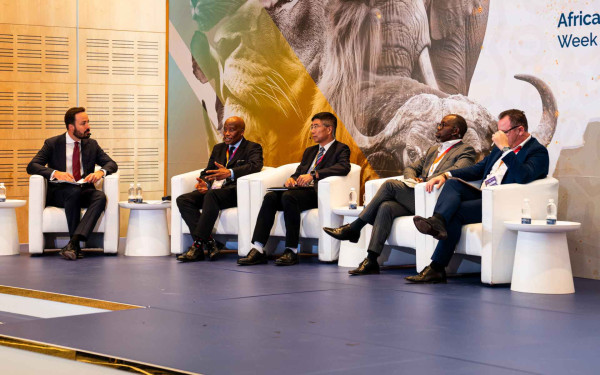
During a panel discussion titled ‘Optimizing Africa's Grid Capacity' at the African Energy Week: Invest in African Energies 2024 conference, Eskom's Transmission Group Executive, Segomoco Scheppers, highlighted the potential of the Electricity Regulation Amendment Act 38 of 2024 for South Africa and its neighboring countries.

This legislation will facilitate the establishment of a market operator in South Africa, creating opportunities for diverse players in the energy sector. “This shift signifies a transformative period in our industry as we adapt to new market dynamics,” he stated.

Despite having interconnections of 400 kV with neighboring countries, Scheppers acknowledged existing challenges. “Strengthening these connections is essential for enhancing regional cooperation and ensuring a reliable energy supply across borders. The reliance on thermal generation in the south, particularly to support countries like Zambia, underscores the need for stronger interconnections,” he explained.

Eskom is further embarking on an extensive domestic expansion program aimed at rapid development – an endeavor that also presents significant challenges. “Learning from global leaders in infrastructure development, particularly from experiences in China, could provide valuable insights into scaling our efforts efficiently,” Scheppers added.

Wang Wenan, Chief Representative, African Representative Office at the State Grid of China, discussed the successful completion of major projects, including the largest long-distance transmission project on the continent — a 500 kV DC line from Ethiopia to Kenya.

However, he noted that fostering private participation in energy projects remains a primary obstacle. “Engaging in dialogues about investment barriers and sharing best practices is crucial for unlocking potential growth in Africa's energy sector,” he emphasized.

Also speaking on the panel, Willy Ireri, Executive Director of Osprey Renewables, highlighted that while East Africa has abundant renewable resources such as wind, solar, and geothermal energy, access to reliable transmission infrastructure in this region also remained a critical challenge. “We are therefore committed to collaborate with state utilities and private investors to ensure that generated electricity reaches emerging green industries in the region,” he said.

With favorable legislation for private investment in transmission expected to be operational by 2025, Osprey Renewables aims to play a vital role in facilitating access to renewable energy for consumers.

“Our mandate at Osprey extends beyond generation; we actively engage across the entire value chain and we are seeing growing interest in green manufacturing and hybrid data centers,” Ireri added, noting that the Kenyan government has initiated proposals inviting independent transmission projects, signaling a positive shift toward increased private sector participation.

Power and Grid Segment President at Schneider Electric, Gary Lawrence, highlighted that a modernization of power grids was also needed. “The traditional grid was designed over a century ago for one-directional flow; today's needs require a bidirectional grid that allows seamless interaction between producers and consumer.”

The industry is balancing supply and demand effectively through initiatives such as collaborating with Egypt's Ministry of Electricity and Renewable Energy to develop distribution control centers that enhance grid intelligence and implementing distributed energy management systems in South Africa.

Distributed by APO Group on behalf of African Energy Chamber.
Media files
African Energy Chamber
Download logo
Read moreAfrica’s Energy Infrastructure Can Only Succeed with Enhanced Transmission
8 November 2024

Africa’s Mineral Wealth and Path to Economic Transformation Showcased at CMA 2024

Location: News
Energy Capital & Power

Africa's holds significant reserves of minerals critical for the global energy transition. The continent boasts roughly 30% of the world's mineral reserves, including immense deposits of cobalt, manganese, natural graphite, copper, nickel, lithium and iron ore.  

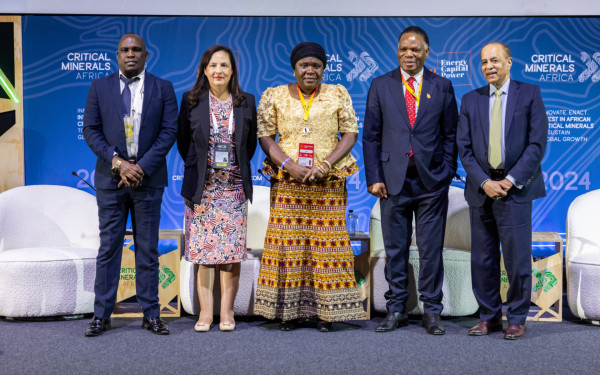
As such, this year's Critical Minerals Africa (CMA) 2024 Summit – held from November 6-7 in Cape Town – convened industry leaders, policymakers, service providers and investors to address the urgent demands of Africa's critical mineral value chain. The Summit featured a robust agenda that sought to shine a spotlight on opportunities for Africa to accelerate its mining sector while utilizing its natural resources to promote value addition and drive socioeconomic development. 

CMA 2024 featured a Ministerial Forum that included the participation of mining ministries from Eswatini, Malawi and Argentina, as well as representatives from Tanzania. High-level speakers during the forum showcased a number of projects aimed at maximizing mineral production while discussing how to leverage mineral resources to promote economic growth and sustainability. 

The Republic of Malawi's Minister of Mining Monica Chang'anamuno highlighted several ongoing projects in the country, such as the Kasongo Initiative, which aims to increase the production of rare earth metals, graphite and lithium resources. 

Meanwhile, Eswatini's Minister of Natural Resources and Energy Prince Lonkhokhela announced ambitious targets to raise to the contribution of the country's mining sector to its GDP. With aims to increase the share from 1% to 50% in the short- to medium-term, the strategy is supported by new surveys revealing commercial deposits of lithium, copper, cobalt and other base metals.  

To bolster investment in mid- and downstream infrastructure, the Summit also featured the participation the President of the Chamber of Mines of Zimbabwe Thomas Gono, who stated, “Historically, we exported raw materials, missing out on the potential benefits. With Africa's young workforce, we now have an opportunity to drive revenue and create jobs through skills development and local beneficiation.” 

With the participation of Tanzania's Chamber of Mines, it was announced that the country aims to expand exploration in critical mineral-rich basins from 16% to 50% as part of a strategic push into rare earths, lithium and tanzanite production. Meanwhile, Zambia's Chamber of Mines discussed ongoing strategies aimed at helping the country address logistics and energy deficit challenges in the mining sector. 

The Summit featured a panel discussion with high-level representatives from mining companies and development institutions including Pensana, the Africa Policy Research Institute and the U.S. Development Finance Corporation. The panel also featured the participation of Clifford Chance, Frost & Sullivan and Chatham House and explored how regional initiatives – such as the Lobito Corridor – have the potential to fast-track Africa's critical minerals market expansion.  

An Investment Forum held during the Summit showcased innovative financing measures to advance the flow of capital across the African market. The session featured representatives from finance institutions the World Bank, ABSA, Moshe Capital, the African Finance Corporation and ASAFO & Co. 

Additionally, midstream and downstream opportunities were showcased during a panel session that featured the participation of organizations such as Orion Minerals, AZ Arnaturen, Women in Green Hydrogen, Isondo Previous Metals and the Southern African – German Chamber of Commerce and Industry. The panel also featured representatives from Konrad Adenauer Stiftung, the SA-DRC Chamber of Commerce, the Curtin Institute for Energy Transition, the Electric Mobility Association of Kenya and the Congolese Battery Council. 

At CMA 2024, research firms including Rystad Energy, Moore Global and Project Blue presented insights on market trends in the global mining industry, while Tronic Metals, Tanzania's State Mining Corporation and South Sudan's state-owned Nilepet provided updates on their activities across the mining value chain. 

A Leaders Forum during the Summit featured the participation of international mining companies Glencore DRC and KoBold Metals as well as representatives from the University of Cape Town and the Minerals Council of South Africa. The forum showcased how governments across Africa can promote innovation in the continent's mining space to attract new investment and increase critical minerals production to drive socioeconomic and GDP growth.  

Distributed by APO Group on behalf of Energy Capital & Power.

Media files
Energy Capital & Power
Download logo
Read moreAfrica’s Mineral Wealth and Path to Economic Transformation Showcased at CMA 2024
8 November 2024

Upstream Players Highlight Innovative Financing Critical Mineral Projects at CMA

Location: News
Energy Capital & Power

Players within Africa's energy transition sector highlighted innovative financing mechanisms which can help drive the industry maximize value addition and beneficiation to local economies during the Leaders Forum at Critical Minerals Africa Summit on Thursday.

Marie-Chantal Kaninda, President, Glencore DRC announced that the firm contributed approximately $1 billion in revenue for the Democratic Republic of Congo (DRC) through royalty taxes in 2023.

She said the firm invested in processing facilities at two of its operational mines in the DRC (https://apo-opa.co/3AvKgjI) to enhance value addition of copper and cobalt resources.

“We export hydroxide cobalt, which is an intermediary product, and produce copper cathodes ready for cable manufacturing,” Kaninda explained, adding that 95% of Glencore's workforce in the DRC is sourced locally, with many employees holding senior positions.

Speaking on the challenges facing Africa's mineral value addition efforts, Carlos Lopes, Professor at the Nelson Mandela School of Public Governance, University of Cape Town, noted that a lack of adequate funding is a primary barrier.

Despite Africa's GDP having doubled since 2000, he said, the continent is still perceived as a high-risk market by some investors. Lopes called for innovative local financial solutions to meet capital needs for value-addition projects.

“Africa pays the world's highest interest rates, yet our potential is undervalued. We must be strategic in policy-making to fully capitalize on our resources,” he stated, emphasizing the drawbacks of exporting raw minerals for overseas processing.

Mfikeyi Makayi, CEO of KoBold Metals, underscored the role of innovation in reducing the high costs associated with critical mineral exploration and value addition. She highlighted the company's AI-enabled exploration efforts backed by Silicon Valley investment, stating, “With 60 projects across 40 countries, including flagship initiatives in Zambia and new ventures in Namibia and Botswana, we're focused on leveraging digital mining solutions to drive industrialization across the continent.”

Makayi added that the data generated through digital mining is vital for attracting investment and creating a more competitive and inclusive sector.

Sietse van de Woude, Senior Executive of Modernization and Safety at the Minerals Council South Africa, discussed the Mandela Mining Precinct initiative, a public-private partnership designed to fund and support mining sector innovation.

“Innovation is essential for critical minerals mining,” van de Woude said, adding that the initiative offers a platform for industry stakeholders to share best practices and collaborate on advancing operational efficiency and safety.

Distributed by APO Group on behalf of Energy Capital & Power.

Media files
Energy Capital & Power
Download logo
Read moreUpstream Players Highlight Innovative Financing Critical Mineral Projects at CMA
4 November 2024

Coca-Cola Beverages Africa Invests $50 Million in Namibia, Boosting Production Capacity by 30%

Location: News
Coca Cola Beverages Africa

Coca-Cola Beverages Africa (CCBA) (www.CCBAGroup.com) has invested $50 million in a new bottling line in Namibia, capable of producing 27,000 bottles per hour. This upgrade will increase the plant's output capacity by 30% and stimulate growth throughout the company's value chain.

The investment also includes the installation of a water treatment plant with state-of-the-art water recovery technology, designed to reduce water consumption. Additionally, the integration of advanced technology, including artificial intelligence, will require skills training for employees, contributing to the development of a future-ready workforce for both the business and the country.

“We've ensured that this production line goes beyond output numbers,” said Pottie de Bruyn, General Manager of Coca-Cola Beverages Africa in Namibia. “It's about creating shared opportunities across the value chain. The increased production also provides a boost to local businesses that supply us with raw materials and services.”

Sunil Gupta, Chief Executive Officer of CCBA, echoed the sentiment, adding, “This investment is a clear demonstration of our continued belief in the future of Namibia.”

Gupta also highlighted CCBA's broader goals: “As a customer-centric, digitally enabled, growth-driven business, we are committed to excellence across our value chain. Efficient operations allow us to offer faster delivery and superior service. This new production line is another step in our journey to achieve even greater levels of execution excellence.” 

Distributed by APO Group on behalf of Coca Cola Beverages Africa.

Media Contacts:
Enid Johr 
PACS Director 
CCBA in Namibia 
Tel: +264 81 778 5381 
Email: ejohr@ccbagroup.com 

Wendy Thole-Muir 
Head: Reputation and Communication 
Coca-Cola Beverages Africa  
Tel: +27 83 795 8524 
Email: WThole-Muir@ccbagroup.com 

Judith Wilhem
+264813473538

Follow us on:
LinkedIn: https://apo-opa.co/3AsnQje

About CCBA:
CCBA is the 8th largest Coca-Cola bottling partner in the world by revenue, and the largest on the continent. It accounts for over 40% of all Coca-Cola products sold in Africa by volume. With over 18,000 employees in Africa, CCBA services more than 720,000 customers with a host of international and local brands. The group was formed in July 2016 after the successful combination of the southern and east Africa bottling operations of the non-alcoholic ready-to-drink beverages businesses of The Coca-Cola Company, SABMiller plc and Gutsche Family Investments. CCBA shareholders are currently: The Coca-Cola Company 66.5% and Gutsche Family Investments 33.5%. CCBA operates in 15 countries, including its six key markets of South Africa, Kenya, Ethiopia, Uganda, Mozambique and Namibia, as well as Tanzania, Botswana, Ghana, Zambia, the islands of Comoros and Mayotte, Eswatini, Lesotho, and Malawi.

Learn more at  https://www.CCBAGroup.com

Media files
Coca Cola Beverages Africa
Download logo
Read moreCoca-Cola Beverages Africa Invests $50 Million in Namibia, Boosting Production Capacity by 30%
30 October 2024

Afreximbank Calls for Increased Collaboration to Accelerate the Green Energy Transition in Africa

Location: News
Afreximbank

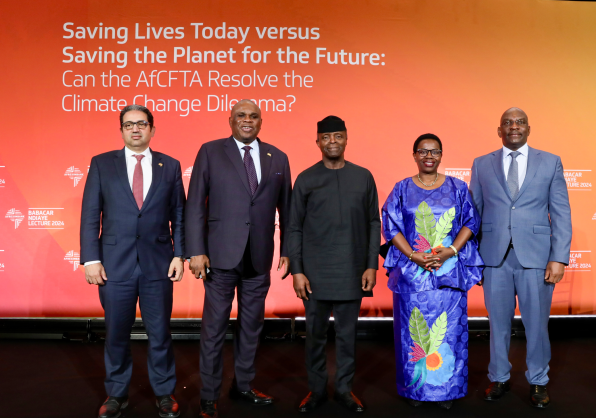
The eighth Babacar Ndiaye Lecture held at the Four Seasons Hotel in Washington D.C., on 26 October 2024, under-scored the need for African nations to strike a balance between short-term development imperatives and long-term climate goals. 

Under the theme “Saving Lives Today versus Saving the Planet for the Future: Can the AfCFTA Resolve the Climate Change Dilemma” discussions centred on how the African Continental Free Trade Area (AfCFTA), Africa's most ambitious trade initiative, could serve as a vehicle for economic growth and environmental sustainability, positioning the continent as a leader in the global green transition.  

The Lecture drew a distinguished audience of policymakers, academics, financial experts and climate advocates.  

Speaking about Dr. Babacar Ndiaye in his opening remarks, H.E. Professor Benedict Oramah, President and Chairman of the Board of Directors of Afreximbank Group, said “Dr Babacar Ndiaye was most concerned by the long-term threats posed to humanity by climate change. He once said, "Climate change is the greatest threat to development, particularly in Africa, where millions of people depend on the environment for their livelihoods … Africa's economic transformation cannot happen without addressing climate change.”  

Dr. Ndiaye's reflection on the impact of climate change was spot-on and intellectually deep.” But, “disappointingly, the global debate on climate has been so much focused on emissions reduction with the question of reducing its impact on Africa and other developing countries always reduced to a footnote. A call for Africa to decarbonise, when the continent has not even carbonised, poses a serious threat to the socio-economic development of a gas-rich continent that has at least six hundred million people without electricity.” 

The African Continental Free Trade Area Agreement “is seen as a potent means of reducing carbon emissions as it is helping to domesticate industrial activities and minimise the carbon emissions caused by shipping of commodities to far-away lands for value addition and reshipping to Africa and elsewhere. We believe that The AfCFTA could offer a pathway to a just transition, enabling local industrial value addition while protecting the planet.”  

Professor Yemi Osinbajo, SAN, GCON, the Immediate Past Vice President of the Federal Republic of Nigeria, delivered a powerful address titled “Sustainable Infrastructure for Africa's Future: Harnessing Innovation and Partnerships.” He spoke passionately about the advantages of the AfCFTA and its potential to transform Africa's trade landscape, reduce carbon emissions and foster innovation in green industries. 

“There are two obvious advantages to a fully operational AfCFTA.The first is that 42% of African countries, aside from North Africa, now have legislation prohibiting the export of raw ores or minerals before being processed. This legislation gives African countries the benefit of jobs and revenues from local processing and manufacturing.  

“The second advantage of the AfCFTA is that shipping is a major source of carbon emissions. Under current trade practices, a large share of African raw materials are exported to other regions, where they are processed or manufactured into finished products, usually using fossil fuel power sources, before being shipped back to Africa for consumption. This cycle contributes to higher emissions and constitutes a loss for African countries that do not reap the value chain gain from beneficiation. Intra-African trade in finished goods will substantially reduce this massive cause of global emissions,” he said. 

The reduction of emissions by intra-African trade has been the subject of several empirical studies. Professor Osinbajo referred to a recent ECA/ CEPII study titled “Greening the African Continental Free Trade Area Agreement's Implementation" published in December 2023, which found, inter alia, that implementing the AfCFTA can boost intra-African trade by 35% in 2045 while increasing GHG emissions by less than 1%, compared to no AfCFTA or climate policies.  

These studies do not factor in using renewable energy sources in the processing and manufacturing of traded goods, an assumption of the Climate Positive Growth paradigm, which would again substantially reduce emissions.  

Professor Osinbajo cited mining bauxite in Guinea as an example. If Guinea, which has 25% of global deposits of bauxite, processed the bauxite it mines to aluminium with renewable energy in readiness for export, Guinea could save the world 335 million tonnes of carbon dioxide equivalent (CO2e) per year, which is approximately 1% of global emissions, and create 280,000 jobs and generate $37 billion of additional revenue. If it chooses to sell the aluminium within Africa, it will again save the huge shipping cost to countries thousands of miles away.  

A Bloomberg study done for the African Development Bank (AfDB) in 2021 on the manufacture of battery precursors found that manufacturing battery precursors in the Democratic Republic of the Congo (DRC), which has plenty of lithium and cobalt, is three times cheaper than manufacturing it in the US, EU and China. Manufacturing in the DRC would extend value chain opportunities to other African countries, they would need manganese from Zambia, Tanzania, Gabon and South Africa to contribute to its capacity to produce these battery precursors. Manufacturing using renewable energy could significantly reduce the cost of manufacturing. Africa's abundant renewable energy has very low seasonality or intermittency, making it possible to reliably provide a renewable baseload to power continuous industrial production.  

“The AfCFTA empowers African countries first to add value to materials and specialise in areas of national comparative advantage, and also to work together to trade more beneficially with the rest of the world,” said Prof Osinbajo. 

He futher said that “Most African countries depend on fossil fuels for their energy needs and for fossil fuel rich African countries, this is also a major source of export earnings and fiscal revenues. Ostensibly in keeping with their net zero obligations, there has been a growing trend amongst development finance institutions to withdraw from fossil fuel investment. These actions include the World Bank's decision to cease funding for upstream oil and gas development in Africa and the restrictions on financing downstream gas development by the European Union, the United Kingdom, and the United States. Clearly, the implications of these actions are dire, where there are no immediate alternative sources of power and the cost of the transition to cleaner fuels may be prohibitive. Some studies show that divesting from fossil fuels could reduce GDP by as much as USD$30 billion for Nigeria, USD$22 billion for Algeria, and USD$19.3 billion for Angola.” 

H.E. Dr Rania A Al-Mashat, Minister for Planning, Economic Development and International Co-operation, Arab Republic of Egypt said that while the “African continent is the least responsible for carbon emissions, it has the biggest burden in terms of financing climate change for developmental needs - such as food and water security, and access to energy. 

She called for greater collaboration with national and international stakeholders “We need to work together; we need to bring the experiences from other places so that Africa can push forward with respect to development and sustainable economic growth.” 

In her Goodwill Message, Ms. Amina J. Mohammed, Deputy Secretary-General of the United Nations and Chair of the United Nations Sustainable Development Group, spoke about the rapidly closing window to prevent the worst impacts of climate change. She addressed the fact that many African countries are mired in debt, exacerbated by extended crises with little access to long-term concessional financing to invest in sustainable development. 

“With adequate access to financial resources at a reasonable cost, renewables can dramatically boost economies, grow new industries, create jobs and drive development, including by reaching the over 600 million Africans living without access to power,” said Ms Mohammed. 

She also stressed the importance of prioritising inclusive policies that empower women and youth when building climate-resilient economies.  

“By harnessing the collective might of the AfCFTA, Africa can make strides in addressing both climate action and sustainable development by promoting regional integration and fostering green industrialisation.  

“The AfCFTA can help build climate-resilient economies while creating jobs, reducing poverty and strengthening food security.”  

The eighth Babacar Ndiaye Lecture also reinforced Afreximbank's commitment to leadership in financing sustainable infrastructure and trade policies across the continent. 

Distributed by APO Group on behalf of Afreximbank.

Media Contact: 
Vincent Musumba 
Communications and Events Manager (Media Relations) 
Email: press@afreximbank.com 

For more information, visit: www.Afreximbank.com  
Follow us on X | Facebook (https://apo-opa.co/3YJR7iS)| LinkedIn (https://apo-opa.co/3Cet3eR) | Instagram (https://apo-opa.co/4ht2qDa)

About the Babacar Ndiaye Lecture 
The Babacar Ndiaye Lecture is an annual event designed to foster dialogue around Africa's development challenges and explore practical solutions through policy, trade and diplomacy.  

The Lecture honours Babacar Ndiaye, a former President of the African Development Bank, for his visionary leadership in advancing Africa's economic growth. 

Afreximbank has hosted this Lecture every year since 2017 in honour of the late Dr. Babacar Ndiaye, the fifth President of the African Development Bank. Dr. Ndiaye transformed the Bank during his decade-long leadership and was also instrumental in establishing several other enduring Pan-African institutions, including Afreximbank, Shelter Afrique and the African Business Roundtable. 

About Afreximbank 
African Export-Import Bank (Afreximbank) is a Pan-African multilateral financial institution mandated to finance, facilitate and promote intra and extra-African trade. For over 30 years, the Bank has been deploying innovative instruments to deliver financing solutions that support the transformation of the structure of Africa's trade, accelerating industrialisation and intra-regional trade, thereby boosting economic expansion in Africa. A stalwart supporter of the African Continental Free Trade Area (AfCFTA), Afreximbank has in partnership with the African Union Commission and the AfCFTA Secretariat launched the Pan-African Payment and Settlement System (PAPSS) that was adopted by the African Union (AU) as the payment and settlement platform to underpin the implementation of the AfCFTA agreement. The AfCFTA Secretariat and the Bank have created a US$10 billion Adjustment Fund to support countries to effectively participate in the AfCFTA.  

At the end of December 2023, Afreximbank's total assets and guarantees stood at over US$37.3 billion, and its shareholder funds amounted to US$6.1 billion. Afreximbank has investment grade ratings assigned by GCR (international scale) (A), Moody's (Baa1), Japan Credit Rating Agency (JCR) (A-) and Fitch (BBB). Afreximbank has evolved into a group entity comprising the Bank, its impact fund subsidiary the Fund for Export Development Africa (FEDA), and its insurance management subsidiary, AfrexInsure, (together, “the Group”). The Bank is headquartered in Cairo, Egypt.  

Media files
Afreximbank
Download logo
Read moreAfreximbank Calls for Increased Collaboration to Accelerate the Green Energy Transition in Africa
30 October 2024

Tanzania President, Merck Foundation Chairman and CEO with 15 First Ladies inaugurate their 11th Africa Asia Luminary 2024

Location: News
Merck Foundation

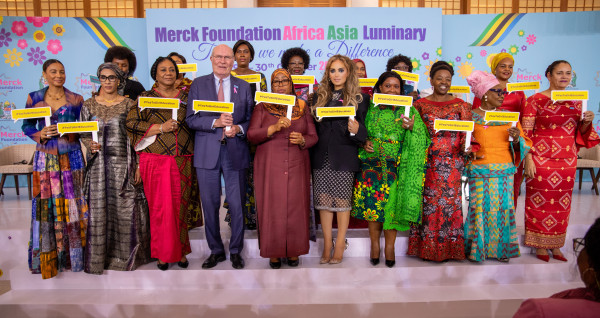
  • The 11th Edition of Merck Foundation Africa Asia Luminary was officially inaugurated by The President of the United Republic of Tanzania, H.E. Dr. SAMIA SULUHU HASSAN, Chairman of Merck Foundation Board of Trustees, Prof. Dr. Frank Stangenberg-Haverkamp and Merck Foundation CEO, Senator, Dr. Rasha Kelej.

  • The First Ladies of Burundi, Cabo Verde, Central African Republic, Democratic Republic of The Congo, Gabon, The Gambia, Ghana, Kenya, Liberia, Malawi, Maldives, Mozambique, Democratic Republic of São Tomé and Príncipe, Zimbabwe and Zanzibar were the Guests of Honor and Keynote Speakers for the 11th Edition of Merck Foundation's Annual Conference.
  • More than 6,000 healthcare providers, policymakers and media from over 70 English, French, Spanish and Portuguese speaking countries attended the Luminary through hybrid model to benefit from five parallel scientific and social sessions to advance healthcare capacity and awareness in 44 critical and underserved medical specialties.
  • Celebrating 7th Anniversary of Merck Foundation and marking 12-year journey of their development programs, during 2024 Luminary. 
  • Link to Live Stream of Inaugural Session of Merck Foundation Africa Asia Luminary 2024: https://apo-opa.co/40tsLex

Merck Foundation (www.Merck-Foundation.com), the philanthropic arm of Merck KGaA Germany, conducted the 11th Edition of their annual conference, “Merck Foundation Africa Asia Luminary”, under the patronage of The President of Tanzania, and in partnership with the Government of Tanzania on 29th and 30th October, in Dar es Salaam, Tanzania. The conference was officially inaugurated by H.E. Dr. SAMIA SULUHU HASSAN, The President of the United Republic of Tanzania together with Prof. Dr. Frank Stangenberg-Haverkamp, Chairman of Merck Foundation Board of Trustees and Senator, Dr. Rasha Kelej, CEO of Merck Foundation, along with First Ladies of 15 Countries, who joined as the Guests of Honor and Keynote Speakers.

While inaugurating the conference, The President of United Republic of Tanzania, H.E Dr. SAMIA SULUHU HASSAN emphasized “I am delighted to host this prestigious conference in Tanzania. It is a great honor to inaugurate the conference alongside the First Ladies of Africa and Asia. I am certain that this conference will help us to achieve our shared mission — to make a transformation in the health and well-being of our people. I deeply appreciate the programs of Merck Foundation that are building healthcare capacity, breaking infertility stigma, and supporting girl education.”

Senator Dr. Rasha Kelej, CEO of Merck Foundation and Chairperson of Merck Foundation Africa Asia Luminary emphasized, “I am delighted to have Her Excellency, Dr. SAMIA SULUHU HASSAN, The President of the United Republic of Tanzania, inaugurate our annual conference. I also extend my heartfelt thanks to our partner, the Government of Tanzania, for their unwavering support in making it a success. Moreover, I am honored to welcome our esteemed Guests of Honor and Keynote Speakers, the First Ladies of African and Asian Countries, also the Ambassadors of the “Merck Foundation More Than a Mother”. Together, we shared experiences and engaged in meaningful discussions on the impact of our programs, aimed at transforming patient care and raising awareness on a wide range of critical social and health issues."

Prof. Dr. Frank Stangenberg Haverkamp, Chairman of Merck Foundation Board of Trustees added, “I would like to thank H.E. Dr. SAMIA SULUHU HASSAN, The President of Tanzania, our partners, The First Ladies of Africa and Asia, along with African Ministers, Health Experts, Policy Makers, Government Officials, Academia and Media from over 70 countries for joining hands with us to realize the Merck Foundation's vision that  “Everyone can lead a Healthy and Happy life.”

The First Ladies of 15 Countries, who joined as the Guests of Honor and Keynote Speakers are:

  • H.E. Madam ANGELINE NDAYISHIMIYE, The First Lady of the Republic of Burundi
  • H.E. Dr. DÉBORA KATISA CARVALHO, The First Lady of the Republic of Cabo Verde
  • H.E. Madam BRIGITTE TOUADERA, The First Lady of Central African Republic
  • H.E. Madam DENISE NYAKERU TSHISEKEDI, The First Lady of the Democratic Republic of The Congo
  • H.E. Madam ZITA OLIGUI NGUEMA, The First Lady of the Gabonese Republic
  • H.E. Mrs. FATOUMATTA BAH-BARROW, The First Lady of the Republic of The Gambia
  • H.E. Mrs. REBECCA AKUFO-ADDO, The First Lady of the Republic of Ghana
  • H.E. Mrs. RACHEL RUTO, The First Lady of Kenya
  • H.E. Mrs. KARTUMU YARTA BOAKAI, The First Lady of the Republic of Liberia
  • H.E. Mrs. MONICA CHAKWERA, The First Lady of the Republic of Malawi
  • H.E. Mrs. SAJIDHA MOHAMED, The First Lady of the Republic of Maldives
  • H.E. Mrs. ISAURA FERRÃO NYUSI, The First Lady of the Republic of Mozambique
  • H.E. Mrs. MARIA DE FATIMA VILA NOVA, The First Lady of the Democratic Republic of São Tomé and Príncipe
  • H.E Mrs. MARIAM MWINYI, The First Lady of Zanzibar
  • H.E. Amai Dr. AUXILLIA MNANGAGWA, The First Lady of the Republic of Zimbabwe

“I am proud to share that Merck Foundation has provided more than 2080 scholarships to young doctors from 50 countries in 42 critical and underserved specialties such as Oncology and Cancer care, Diabetes, Endocrinology, Cardiovascular, Fertility Care, Embryology, Sexual & Reproductive Medicine, Internal Medicine, Respiratory Medicine, Acute Medicine, Critical Care, Pediatric Emergency, Gastroenterology, Rheumatology, Clinical Psychiatry, Urology, Ophthalmology, General Surgery, Trauma & Orthopedic, Dermatology, Neonatal Care, Pain Management, Clinical Microbiology & Infectious Diseases, Advanced Surgical Practice, Neuroimaging for Research and more. Many of them are becoming the first specialists in their countries”, added Senator Kelej.  

During the 11th Edition of Merck Foundation Africa Asia Luminary, two important occasions were marked; the 7th Anniversary of Merck Foundation and 12 years of Merck Foundation's development programs that started in 2012.

On the first day of the conference, the Plenary Session of the Merck Foundation Africa Asia Luminary 2024 took place, featuring a high-level panel discussion with the participating First Ladies of Africa and Asia. Moreover, two high-level ministerial panel discussion were held with African Ministers and top healthcare experts from across the globe.

The Day 2 of the conference will have five key parallel medical and scientific sessions, covering topics such as oncology, diabetes and hypertension, fertility and reproductive care, and medical capacity building in other specialties like respiratory care, acute care, emergency pediatric and neonatal care, and more. Additionally, a community awareness session, Merck Foundation Health Media Training, will be conducted for African journalists. This session will emphasize the critical role of the media in influencing communities and driving cultural change, with regards to a wide range of social and health issues like Breaking Infertility Stigma, Supporting Girls' Education, Stopping GBV, Ending Child Marriage & FGM, Empowering Women, Diabetes and Hypertension Awareness.

Countries participating in the 11th Edition of Merck Foundation Africa Asia Luminary include:

Angola, Bangladesh, Benin, Botswana, Burkina Faso, Burundi, Cameroon, Canada, Central Africa Republic, Cambodia, Chad, Côte d'Ivoire, Republic of the Congo, Democratic Republic of the Congo, Egypt, Ethiopia, France, Gabon, Germany, Ghana, Guinea – Bissau, Guinea – Conakry, India, Indonesia, Kenya, Lesotho, Liberia, Malawi, Malaysia, Mali, Mauritania, Mauritius, Mexico, Mozambique, Myanmar, Namibia, Nepal, Niger, Nigeria, Peru, Philippines, Russia, Rwanda, Senegal, Sierra Leone, Somalia, South Africa, Sri Lanka, Sudan, Tanzania, Thailand, The Gambia, Togo, Tunisia, U.A.E, UK, Uganda, US, Vietnam, Zambia, Zimbabwe and more.

The 11th Edition of Merck Foundation Africa Asia Luminary 2024 is streamed live on the social media handles of Merck Foundation and Senator, Dr. Rasha Kelej, CEO of Merck Foundation:

@ Merck Foundation: Facebook (http://apo-opa.co/3Yq65sX), X (http://apo-opa.co/40p49nc), Instagram (http://apo-opa.co/3Uwqqvl), and YouTube (http://apo-opa.co/3NLGJAS).

@ Rasha Kelej: Facebook (http://apo-opa.co/3Uulqrf), X (http://apo-opa.co/3Yq65Jt), Instagram (http://apo-opa.co/40krkip), and YouTube (http://apo-opa.co/40nOp3t).

Link to the Facebook live stream of Inaugural Session of Merck Foundation Africa Asia Luminary & African First Ladies High Level Panel: https://apo-opa.co/40tsLex

Merck Foundation is transforming the Patient care landscape and making history together with their partners in Africa, Asia, and beyond, through:

• 2080+ Scholarships provided by Merck Foundation for doctors from 52 Countries in 42 critical and underserved medical specialties.  

Merck Foundation is also creating a culture shift and breaking the silence about a wide range of social and health issues in Africa and underserved communities through:

• 3500+ Media Persons from more than 35 countries trained to better raise awareness about different social and health issues

• 8 Different Awards launched annually for best media coverage, fashion designers, films, and songs,

• Around 30 songs to address health and social issues, by local singers across Africa

• 8 Children's Storybooks in three languages - English, French, and Portuguese

• 7 Awareness Animation films in five languages - English, French, Portuguese, Spanish and Swahili to raise awareness about prevention and early detection of Diabetes & Hypertension and supporting girl education.

• Pan African TV Program "Our Africa by Merck Foundation” addressing Social and Health Issues in Africa through “Fashion and ART with Purpose” Community

• 700+ Girls from 15 African countries supported through scholarships or school items, annually.

• 15 Social Media Channels with more than 6 Million Followers.

Distributed by APO Group on behalf of Merck Foundation.

Contact details:
Mehak Handa
Community Awareness Program Manager
+91 9310087613 / +91 9319606669
mehak.handa@external.merckgroup.com

Join the conversation on our social media platforms below and let your voice be heard!
Facebook: https://apo-opa.co/3Yq65sX
X (Twitter): https://apo-opa.co/3O4YBa5
YouTube: https://apo-opa.co/3NLGJAS
Instagram: https://apo-opa.co/3Uwqqvl
Flickr: https://apo-opa.co/40nL051
Threads: https://apo-opa.co/3NJN9jN
Website: www.Merck-Foundation.com
Download Merck Foundation App: https://apo-opa.co/40njaFK

About Merck Foundation:
The Merck Foundation, established in 2017, is the philanthropic arm of Merck KGaA Germany, aims to improve the health and wellbeing of people and advance their lives through science and technology. Our efforts are primarily focused on improving access to quality & equitable healthcare solutions in underserved communities, building healthcare & scientific research capacity, empowering girls in education and empowering people in STEM (Science, Technology, Engineering, and Mathematics) with a special focus on women and youth. All Merck Foundation press releases are distributed by e-mail at the same time they become available on the Merck Foundation Website.  Please visit www.Merck-Foundation.com to read more. Follow the social media of Merck Foundation: Facebook (https://apo-opa.co/3UrWznZ), X (https://apo-opa.co/3NLcqtQ), Instagram (https://apo-opa.co/3UtDmlT), YouTube (https://apo-opa.co/3UqOAaF), Threads (https://apo-opa.co/3UvSCP8) and Flickr (https://apo-opa.co/3Yo1jfw).

The Merck Foundation is dedicated to improving social and health outcomes for communities in need. While it collaborates with various partners, including governments to achieve its humanitarian goals, the foundation remains strictly neutral in political matters. It does not engage in or support any political activities, elections, or regimes, focusing solely on its mission to elevate humanity and enhance well-being while maintaining a strict non-political stance in all of its endeavors.

Media files
Merck Foundation
Download logo
Read moreTanzania President, Merck Foundation Chairman and CEO with 15 First Ladies inaugurate their 11th Africa Asia Luminary 2024
29 October 2024

One Week to Go Until Investors Unite at AEW

Location: News
African Energy Chamber

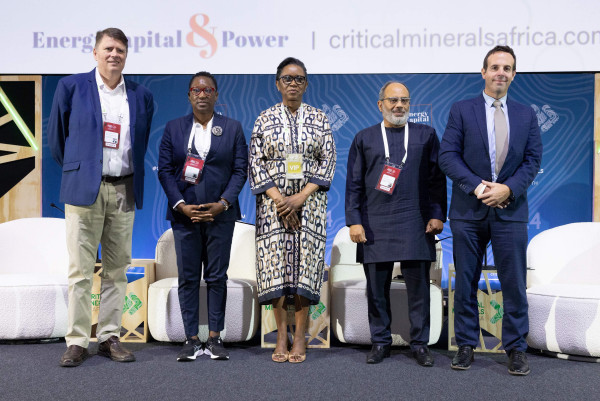
The largest gathering of energy stakeholders on the African continent is gearing up to welcome global and African energy stakeholders for five days of dialogue and deals. African Energy Week (AEW): Invest in African Energy 2024 – dubbed the premier event for the African energy sector – will take place from November 4-8 in Cape Town, South Africa. The foremost platform to sign deals and further the agenda towards making energy poverty history by 2030, the conference will feature seven stages, including five content stages, two technical hubs and a full day of pre-event workshops.

With over 125 million barrels of proven oil reserves, 620 trillion cubic feet of natural gas and abundant opportunities in solar, wind and green hydrogen, Africa has the potential to become a global hub for energy. African energy demand is projected to more than double by 2050, with fossil fuels anticipated to account for up to 60% of the continent's energy mix by 2040. As such, this year's conference promises to drive a new wave of investment across the African energy sector, with industry experts and thought-leaders, African governments and national oil companies (NOCs), and energy investors leading discussions on the challenges and opportunities found on the continent.

AEW: Invest in African Energy is the platform of choice for project operators, financiers, technology providers and government, and has emerged as the official place to sign deals in African energy. Visit www.AECWeek.com for more information about this exciting event.

Africa's energy industry is both the backbone of the continent's economy and a catalyst for sustainable growth worldwide. As such, the AEW: Invest in African Energy 2024 conference will feature a series of pre-event interactive workshops, providing an opportunity for companies to share in-depth knowledge and exchange ideas with a targeted group of delegates. The workshops, hosted by companies such as Rystad Energy, NCDMB, CLG, Energeo Alliance and S&P Global Commodity Insights, will cover various topics including energizing Africa amid the global energy transition; legislative and regulatory context for promoting investment in exploration; and facilitating investments and mergers and acquisitions across the continent.

A high-level opening ceremony will kick off at the Cape Town International Convention Center (CTICC) on the first day of the event. The opening ceremony will feature addresses from Angola's Minister of Mineral Resources and Petroleum Diamantino Azevedo and South Africa's Minister of Electricity and Energy Kgosientsho Ramokgopa, and discussions with the likes of Dr. Omar Farouk, Secretary General of the African Petroleum Producers' Organization and Chairman and CEO of upstream oil company Kosmos Energy Andy Inglis. The AEW: Invest in African Energy 2024 opening will kick off a week of intense dialogue on the future of the African energy industry. The opening will also feature a number of panel discussions focusing on the vital role Africa plays in addressing global energy security, as well as keynote addresses from the heads of some of the largest energy companies in the world.

Representing the entire energy value chain from oil and gas to renewable energy to power and infrastructure, AEW: Invest in African Energy 2024 will feature a massive slate of regional ministers with the aim of unpacking the continent's strategies to make energy poverty history by 2030. Ministers from Libya and Algeria are poised to showcase North Africa's ambitious production targets while aiming to plug Europe's energy gap and enhance domestic energy access. Southern Africa's ripe opportunities in energy and mining will be put on display by ministers from Mozambique, Angola, South Africa, Zambia and Namibia while West African ministers from the MSGBC region, Nigeria, Ghana and Burkina Faso will provide updates on ongoing projects. With major producers such as Equatorial Guinea, Gabon and the Republic of the Congo (ROC) inviting investors to support diversification efforts in production and refining, regional ministers from Central Africa will share insight into available opportunities in oil and gas, mining and infrastructure. Meanwhile, as a frontier market, East Africa is incentivizing exploration in both on- and offshore basins while driving infrastructure and field development projects forward and will be represented by energy and mining ministers from Ethiopia, Uganda, and South Sudan.

Africa is accelerating the pace of upstream projects with the aim of boosting production and intra-African petroleum distribution. Across both mature and emerging hydrocarbon markets, investment opportunities continue to emerge, and as such, AEW: Invest in African Energy 2024 will feature a strong lineup of VIP speakers from energy supermajors Eni, bp, Chevron and TotalEnergies. The event will also feature representatives from some of the continent's most important energy players including Azule Energy, ReconAfrica, Etu Energias, Africa Oil Corp., Wood Mackenzie and Adarco Energy, among many more. The oil industries of African countries will be represented by NOCs from Angola, Namibia, South Africa, Tanzania, Uganda, among others.

With two technical hubs on the exhibition floor of the CTICC, the conference serves as a prime platform for companies to provide presentations on various industry-leading technical themes. The AEW: Invest in African Energy 2024 technical track features a dedicated stage for asset owners, engineers and technology innovators to present projects, provide deep insights into cutting-edge solutions, and share best practices to foster knowledge. Attendees will gain valuable insights into the future of energy and learn about ground-breaking projects while discovering new opportunities for collaboration and investment. An exclusive exhibition-only pass grants delegates access to both the innovative exhibition floor and the technical track.

Rounding off AEW: Invest in African Energy 2024's strong program, a series of technical excursions and site visits across Cape Town offer participants the unique opportunity to gain insight into ongoing projects and developments in South Africa. A guided tour of the Hydrogen Project at the University of the Western Cape will focus on industry technology and development. The tour will also take delegates to the South African Renewable Energy Technology Center at the Cape Peninsula University of Technology, which stands as the country's inaugural sustainable energy development technology facility. The excursion will feature a tour of the Atlantis Special Economic Zone, which stands as a promising landmark in Africa's energy landscape while showcasing advancements in sustainable energy solutions, economic development and innovation. Rounding off the site visits, the tour will also take participants to the Eskom Palmiet Power Station, a hydroelectric pumped storage facility that plays a key role in stabilizing the national power grid.

“AEW 2024 stands at the center of African energy and provides an unparalleled platform to forge partnerships, share knowledge and drive progress in the continent's energy sector. It is our collective responsibility to prioritize energy poverty alleviation and sustainable development, ensuring a brighter future for all Africans. We look very much forward to kicking off this exciting event and welcoming hundreds of delegates from all over the world to drive Africa's energy needs,” states NJ Ayuk, Executive Chairman of the African Energy Chamber.

During the AEW: Invest in African Energy 2024 conference, delegates will be exposed to project updates, industry highlights, investment opportunities and strategies that address the continent's goals for eradicating energy poverty and promoting environmental sustainability. With one week to go, the conference is already stacking up to become the foremost energy event of its kind once again on the African continent.

Distributed by APO Group on behalf of African Energy Chamber.
Media files
African Energy Chamber
Download logo
Read moreOne Week to Go Until Investors Unite at AEW
24 October 2024

Freedom fighter Basil February’s remains finally handed over to his family

Location: News

Freedom fighter Basil February’s remains finally handed over to his family

Western Cape MEC for Cultural Affairs and Sport Ricardo Mackenzie and Head of Department Guy Redman have officially handed over custodianship of the remains of struggle stalwart, Basil February, to his family. 

The ceremony took place at St George’s Cathedral in Cape Town on Wednesday. 

February, who died in combat in 1967 while exiled in Zimbabwe, was one of 49 struggle stalwarts repatriated to South Africa in September 2024. 

February is one of three stalwarts, whose remains will be returned to their home province -- the Western Cape.

February’s remains were buried for over five decades in an unmarked grave in Bulawayo.

The Repatriation and Reburial Project for Liberation Stalwarts is a collaborative effort involving several government departments and entities. 

The entities involved include the Presidency, the National Department of Sport, Arts and Culture, the South African Heritage Resources Agency, the Department of Home Affairs, the National Prosecuting Authority’s Missing Persons Task Team, the Department of Defence and Military Veterans, as well as various provincial departments.

The project also works closely with local communities, historical experts and governments at various levels to ensure a smooth and dignified process.

In his address, Mackenzie said: “Today, we hand over custodianship of the mortal remains of Basil February, a liberation hero recently repatriated to South Africa, who died in combat fighting against apartheid. 

“We honour his family and their sacrifice, and we hope that his return home brings a measure of peace.”

The MEC said February’s story is part of the national heritage, and his fight for justice, equality, and human dignity will inspire future generations.

The Western Cape Department of Cultural Affairs and Sport has stated that it will continue its involvement in the Repatriation and Reburial Project for Liberation Stalwarts. 

The department has also committed to providing support to the families affected throughout this process on behalf of the provincial government.

Last month, the State hosted the repatriation and restitution homecoming ceremony for the 42 South African freedom fighters who perished in Zambia and Zimbabwe during the apartheid era.

READ | Honouring SA’s liberation heroes and heroines 

The remains included that of former African National Congress (ANC) Secretary-General Duma Nokwe; Head of the ANC Women’s Section Florence Mophoshe; composer, musician and journalist, Todd Matshikiza, and other unsung liberation fighters.

In his address last month, President Cyril Ramaphosa said the repatriation and restitution marks not just the end of a long journey, but the beginning of healing for the families they left behind. 

The President stressed the importance of South Africans recognising and honouring the former liberation heroes and heroines who have returned to their home country, acknowledging their vital role in securing the nation’s freedom.

“South Africans need to know the names and appreciate the contributions of these returned freedom fighters. I ask that we read out the names of these patriots for all our people to know them.”

READ | South Africans must know the names of struggle heroes and heroines

The country’s commander-in-chief has since tasked Mackenzie with establishing a Heroes' Acre to celebrate the nation’s struggle heroes. 

"As I travel to other countries like Zimbabwe, Namibia and Mozambique, they have created incredible Heroes' Acres, where the heroes of their struggle are buried, and those memorial sites have, in many ways, become sacred places of the nation. 

“Of course, we may well argue that our leaders and heroes are buried all over the country, but it does not mean that monuments that memorialise them cannot be brought together at a Heroes' Acre,” the President said then. – SAnews.gov.za


Gabisile
Thu, 10/24/2024 - 10:09

170 views
Read moreFreedom fighter Basil February’s remains finally handed over to his family
15 October 2024

African Development Bank and Absa Unveil Multi-Billion Rand Financial Package to Expand Sustainable Capital Markets, Boost Economic Growth for Women and Youth

Location: Business

African Development Bank Group (AfDB)
Download logo

The African Development Bank (www.AfDB.org) and Absa Group, one of Africa's leading financial services providers, today celebrated a landmark agreement to mark the execution of a transformative financial package aimed at increasing funding for underserved segments, across South Africa and the continent. The target audience includes women-owned businesses, youth entrepreneurs, and small and medium-sized enterprises (SMEs).

In addition to enhancing Absa's regulatory capital, the facility will promote access to finance, deepen domestic capital markets, and ensure continued access to global supply chains for issuing banks in regional member countries, including low-income and fragile states.

The financial package includes:

  • A subordinated sustainability-linked (Tier 2) loan amounting to R1.7 billion, complemented by a non-financial support package of R18 million for capacity building and technical assistance targeted at SMEs, youth, and women-owned enterprises.
  • Subscription of R1 billion into Absa's inaugural social (Tier 2) bond issuance, with proceeds earmarked for providing affordable housing loans to female homeowners.
  • A trade finance Risk Participation Agreement (RPA) facility valued at $150 million, designed to underwrite the risks of trade transactions originated by African issuing banks, reinforcing Absa's role as a regional bank.

Several components of the package have already been executed, including the successful issuance of Absa's first Tier 2 social bond on the Johannesburg Stock Exchange in July 2024. The R1 billion proceeds from this bond will be allocated towards affordable housing loans specifically targeting women, empowering them as first-time homeowners in low-income segments.

Leila Mokaddem, Director General of the African Development Bank's Southern Africa Region, stated: “This partnership with Absa Group underscores our commitment to driving sustainable and inclusive economic growth across Africa. Through this financial package, we are not only fortifying Absa's capital base but also ensuring that essential funding reaches women, youth, and entrepreneurs, fostering a more equitable and prosperous continent. This collaboration aligns seamlessly with our strategic priorities of supporting Africa's industrialization and enhancing the quality of life for its people. “

Absa has secured a R1.7 billion sustainability-linked Tier 2 loan aimed at general corporate business purposes while incentivizing the extension of finance products to women-owned SMEs as a key performance indicator. As part of this agreement, Absa is collaborating with the African Development Bank to enhance skills among both Absa staff and women business owners. A capacity-building training program has been launched to address the unique challenges faced by female and youth entrepreneurs, by providing mentorship and financial solutions.

Charles Russon, Absa Group interim CEO designate remarked: “The finalisation of this package concludes a three-year process that significantly enhances our capacity to fund social initiatives aligned with our commitment to being a force for good. This partnership enables us to increase funding for women and youth in South Africa while facilitating greater trade opportunities across the continent. “

“This partnership aligns with the African Development Bank's strategic objectives of advancing green, social, and sustainability instruments in the domestic capital markets, supporting African capital market development and regional financial integration,” said Ahmed Attout, Director of the Financial Sector Development Department at the African Development Bank. He emphasised that it is designed to empower Absa to effectively disburse funds for highly impactful social and sustainable economic development initiatives.

The $150 million trade finance facility will drive trade support across Africa, addressing the continent's annual trade finance gap of over $100 billion. This initiative will enhance access to financing for key sectors such as agriculture, transport, and manufacturing, while fostering financial sector development and regional integration.

Distributed by APO Group on behalf of African Development Bank Group (AfDB).

Contact:             
African Development Bank:  

Natalie Naudé,
Communication and External Relations Department,
email: media@afdb.org

Technical Contacts:
Peter Onyango,
Chief Capital Markets Officer,
Financial Sector Development Department,

Bleming Nakati,
Regional Lead,
Private Sector Operations, Southern Africa

Absa:
Carli Cooke,
Head of Media Relations,
email : prmedia@absa.afrca

About the African Development Bank Group:
The African Development Bank Group is Africa's premier development finance institution. It comprises three distinct entities: the African Development Bank (AfDB), the African Development Fund (ADF) and the Nigeria Trust Fund (NTF). On the ground in 41 African countries with an external office in Japan, the Bank contributes to the economic development and the social progress of its 54 regional member states. For more information: www.AfDB.org

About Absa Group:
Absa Group Limited (‘Absa Group') is listed on the Johannesburg Stock Exchange and is one of Africa's largest diversified financial services groups.  Absa Group offers an integrated set of products and services across personal and business banking, corporate and investment banking, wealth and investment management and insurance.  

Absa Group owns majority stakes in banks in Botswana, Ghana, Kenya, Mauritius, Mozambique, Seychelles, South Africa, Tanzania (Absa Bank Tanzania and National Bank of Commerce), Uganda and Zambia and has insurance operations in Botswana, Kenya, Mozambique, South Africa and Zambia. Absa also has offices in China, Namibia, Nigeria and the United States, as well as securities entities in the United Kingdom and the United States, along with technology support colleagues in the Czech Republic. 

For further information about Absa Group Limited, visit www.Absa.africa. 

Read moreAfrican Development Bank and Absa Unveil Multi-Billion Rand Financial Package to Expand Sustainable Capital Markets, Boost Economic Growth for Women and Youth
11 October 2024

AEW 2024 Ministerial Lineup to Foster Strategies to Alleviate Energy Poverty in Africa

Location: News
African Energy Chamber

Energy and hydrocarbon ministers from across Africa have joined the African Energy Week (AEW): Invest in African Energy conference to discuss investment opportunities while engaging with financiers and project developers. Representing the entire energy value chain from oil and gas to renewable energy to power and infrastructure, regional ministers will unpack the continent's strategies to make energy poverty history by 2030.  

North African countries such as Libya and Algeria have set ambitious production targets for the coming years, aiming to plug Europe's energy gap while enhancing domestic energy access. Libya aims to boost output to 2 million barrels per day (bpd) in the next two to three years while Algeria aims to produce over 1.5 million bpd in 2025. Meeting production goals requires accelerated exploration, with both countries promoting investments in upstream drilling. At AEW: Invest in African Energy 2024, North African energy and hydrocarbon ministers will provide insight into these opportunities. They are joined by ministers representing global and African oil and gas organizations, including:  

  • Khalifa Abdulsadek, Minister of Oil & Gas, Libya 
  • Mohamed Arkab, Minister of Energy and Mines, Algeria 
  • Haitham Al Ghais, Secretary General, OPEC 
  • Omar Farouk Ibrahim, Secretary General of APPO 

In Southern Africa, the region is ripe with opportunity. An estimated 11 billion barrels has been found off Namibia's coast since 2022; over 100 trillion cubic feet (tcf) of gas found offshore Mozambique; and an estimated 200 tcf likely held onshore South Africa. While Angola - the second largest oil producer in sub-Saharan Africa – still offers significant potential in both on- and offshore basins, Southern African countries such as Zambia are largely underexplored, presenting strategic opportunities for exploration companies. At AEW: Invest in African Energy 2024, Southern African energy and hydrocarbon ministers will outline strategic basins and upcoming projects. Speakers include:  

  • Carlos Zacarias, Minister, Ministry of Natural Resources & Energy, Mozambique 
  • Diamantino Pedro Azevedo, Minister of Mineral Resources and Petroleum, Angola 
  • Gwede Mantashe, Minister, Ministry of Mineral Resources and Energy, South Africa 
  • Kgosientsho Ramokgopa, Minister of Electricity, South Africa 
  • Situmbeko Musokotwane, Minister of Finance and National Planning, Zambia 
  • Tom Alweendo, Minister of Mines and Energy, Namibia 

Recent offshore projects have positioned West Africa as a global hydrocarbon hotspot. Mauritania and Senegal's Greater Tortue Ahmeyim LNG project will start production this year, following the start of operations at Senegal's Sangomar Oil Project in mid-2024. Nigeria's Dangote Refinery – the largest in Africa at 650,000 bpd – recently secured a 400,000-bpd feedstock supply from the government a year after its start while Ivory Coast's Belaine project – the first net-zero upstream development in Africa – plans to commence phase two operations this December. Regional ministers will provide an update on ongoing projects, future investments and efforts to unlock additional reserves at AEW: Invest in African Energy 2024. Ministers include:  

  • Aboubacar Camara, Minister of Energy, Hydropower and Hydrocarbons, Guinea Conakry 
  • Birame Soulèye Diop, Minister of Energy, Oil and Mines Republic of Senegal 
  • Chief. Adebayo Adelabu, Minister of Power, Federal Republic of Nigeria 
  • Collins Adomako-Mensah, Deputy Minister of Energy in Charge of Power, Ghana 
  • Ekperikpe Ekpo, Minister of State for Petroleum Resources (Gas), Nigeria 
  • Foday Mansaray, Director General, PDSL 
  • Heineken Lokpobiri, Minister of State for Petroleum Resources (Oil), Nigeria 
  • Matthew Opoku Prempeh, Minister of Energy, Ghana 
  • Mohamed Ould Khaled, Minister of Petroleum & Energy, Ministry of Petroleum, Mines & Energy, Mauritania 
  • Nani Juwara, Minister of Energy and Petroleum, The Gambia 
  • Viriato Luis Soares Cassama, Minister of Environment & Biodiversity, Guinea-Bissau 
  • Yacouba Zabré Gouba, Minister of Energy and Mines, Burkina Faso 

Central Africa – with major producers such as Equatorial Guinea, Gabon and the Republic of Congo – are inviting investors to support diversification efforts in production and refining. Leveraging natural gas, these markets aim to unlock reserves in both domestic and regional basins while boosting export capacity and intra-African trade. The Republic of Congo exported its first LNG cargo in 2024 from the Tango FLNG facility, targeting 3 million tons per year by 2025, while Equatorial Guinea forged an agreement with Nigeria to import and process gas at its Punta Europa facility. At AEW: Invest in African Energy 2024, regional ministers will outline these initiatives, while sharing insight into available opportunities in natural gas. Ministers include:  

  • Antonio Uburu Ondo, Minister of Mines and Hydrocarbons, Equatorial Guinea 
  • Bruno Jean-Richard Itoua, Minister of Hydrocarbons, the Republic of Congo 
  • Marcel Abeke, Minister of Petroleum, Republic of Gabon 

As a frontier market, East Africa is incentivizing exploration in both on- and offshore basins while driving infrastructure and field development projects forward. Uganda inked a deal with Ethiopia in 2024 to export crude via pipeline while South Sudan is seeking diversified export routes and promoting exploration onshore. Regional ministers will share more insights at AEW: Invest in African Energy 2024. Speakers include:   

  • Ing Habtamu Itefa Geleta, Minister of Water and Energy, Ethiopia 
  • Okasaai Sidronious Opolot, Minister of state for Energy, Ministry of Energy and Mineral Development, Uganda 
  • Puot Kang Chol, Minister Petroleum, South Sudan 

AEW: Invest in African Energy is the platform of choice for project operators, financiers, technology providers and government, and has emerged as the official place to sign deals in African energy. Visit www.AECWeek.com for more information about this exciting event.  

Distributed by APO Group on behalf of African Energy Chamber.
Media files
African Energy Chamber
Download logo
Read moreAEW 2024 Ministerial Lineup to Foster Strategies to Alleviate Energy Poverty in Africa
27 September 2024

Honouring SA’s liberation heroes and heroines 

Location: News

Honouring SA’s liberation heroes and heroines 

An emotional and befitting ceremony to honour the men and women who died in exile while fighting for the freedom that South Africans enjoy today was held in Pretoria on Friday.

Phrases such as “you have fought a good fight and “you have finished the race,” were the order of the day at the ceremony held for those who lost their lives in the fight for South Africa’s liberation.

This as government hosted the repatriation and restitution homecoming ceremony of 42 South African freedom fighters who perished in Zambia and Zimbabwe during the apartheid era.

The remains included that of former African National Congress (ANC) secretary-general Duma Nokwe, head of the ANC Women’s Section, Florence Mophoshe, journalist Todd Matshikiza, Wankie Campaigner, Basil February and other unsung liberation fighters. 

These struggle heroes and heroines, who sacrificed their lives in exile, were honoured as their remains returned home to a country that now enjoys the very freedom they fought for.

President Cyril Ramaphosa led and officiated the historic homecoming ceremony where the remains of the freedom fighters were returned to their families for a final, dignified farewell on home soil.

Speaking during the ceremony, Zambian High Commissioner to South Africa Mazuba Monze said: "May the spirits of our heroes and heroines continue to inspire us as we continue to move forward in friendship and collaboration. You have fought the good fight, you have finished the race, good and faithful servants, come and rest at peace in the land that you have so valiantly fought for.”

Edna Mophosho Tshabalala, 83, travelled from Naturena in Gauteng to receive the remains of her aunt, Florence Mophosho.

Overcome with emotion, Tshabalala expressed the family’s sense of closure.

“As a family, we are very happy, and we are finally going to have closure now. Every time we miss her, we will go to Westpark Cemetery to visit her,” Tshabalala said of her aunt who was a revered stalwart known for her unwavering commitment and fiery spirit.

She recalled how her aunt was her mother’s bridesmaid and co-worker at the old Johannesburg Hospital. The family had no knowledge of Mophosho’s involvement in the liberation struggle until the day she vanished. 
Years later, the family was devastated to learn of her passing.

"In 1985, I heard the news that she had passed on. Otherwise, we really missed her a lot because she was a loving person, and we all didn't expect that there would be a day that we hear about her death. Fortunately, because God is great, the day has come.”

Tshabalala also recounted her emotional journey to Zambia to locate her aunt’s grave after volunteering to represent the family.

"Unfortunately, in Zambia, we struggled to identify her grave. Eventually we found it and we sang for her, and we were happy. I was treated as a VIP and airlifted everywhere. Today, we are here to receive her from Zambia,” she explained.

Bringing healing

Defence and Military Veterans Minister Angie Motshekga explained that while the government initially announced that it was repatriating the remains of 49 people, there had been delays in the DNA verification process.

Motshekga made a commitment to the other families that they too, would receive the remains of their loved ones.

"The repatriation of the remains of our struggle stalwarts is not just about laying to rest those who fought for freedom, it is about bringing healing to their families, and I hope it really does that because these are not just names in history. 

“They are our families; they gave their lives so that we might live in freedom. They left our shores to fight a system that dehumanised our people and in doing so, they became symbols of resilience, courage and hope.”

Motshekga said the South African government had previously repatriated the remains of the likes of JB Marks and Moses Kotane.

She also extended her gratitude to the Minister of Sports, Arts and Culture Gayton McKenzie for giving the project "the necessary energy," as well as other departments which her department collaborated with, and various political party formations.

McKenzie said the repatriation process was a collective effort and that it has been a joy to work with the families of the struggle heroes. 

He acknowledged that while the process has been a sombre one, the patience and understanding shown by the families reaffirm his belief that the government is on the right path. 

“This was not an instruction; it was a labour of love. My mother died of a broken heart because my younger brother was never found, my mother never spoke about him, but I could feel the pain. 

“I saw what my mother went through that is why I was rushing the process because I don’t want any other woman, children or father to go[through] what she went through. To the children that are here, the President is resolute, he is intentional that we must bring back all the soldiers that fought for freedom,” McKenzie said. 

Heroes Acre

President Ramaphosa has now tasked Minister McKenzie with establishing a Heroes Acre to celebrate the nation’s struggle heroes. 

"As I travel to other countries like Zimbabwe, Namibia, and Mozambique, they have created incredible Heroes Acres where the heroes of their struggle are buried, and those memorial sites have, in many ways, become sacred places of the nation. 

“Of course, we may well argue that our leaders and heroes are buried all over the country, but it does not mean that monuments that memorialise them cannot be brought together at a Heroes Acre," the President said. 

The repatriation and restitution marks not just the end of a long journey, but the beginning of healing for the families they left behind. 

The President also stressed the importance of South Africans recognising and honouring the former liberation heroes and heroines who have returned to their home country, acknowledging their vital role in securing the nation's freedom.

“South Africans need to know the names and appreciate the contributions of these returned freedom fighters. I ask that we read out the names of these patriots for all our people to know them.”

READ | South Africans must know the names of struggle heroes and heroines

“Their names will forever be inscribed here at the Wall of Names in Freedom Park so that we may never forget. Any nation that values its freedom holds its liberation heroes and heroines in high regard,” the President said. -SAnews.gov.za
 

DikelediM
Fri, 09/27/2024 - 16:22

89 views
Read moreHonouring SA’s liberation heroes and heroines 
27 September 2024

South Africans must know the names of struggle heroes and heroines

Location: News

South Africans must know the names of struggle heroes and heroines

President Cyril Ramaphosa has stressed the importance of South Africans recognising and honouring the former liberation heroes and heroines who have returned to their home country, acknowledging their vital role in securing the nation's freedom.

The President was speaking during the repatriation and restitution homecoming ceremony of 42 South African freedom fighters who lost their lives in Zambia and Zimbabwe during the apartheid era.

The ceremony was held at the Freedom Park Heritage Site and Museum in Tshwane, Pretoria on Friday with families of the freedom fighters present. 

The occasion was also graced by former President Thabo Mbeki, Minister of Defence Angie Motshekga, and the Minister of Sports, Arts and Culture Gayton Mckenzie.

“South Africans need to know the names and appreciate the contributions of these returned freedom fighters. I ask that we read out the names of these patriots for all our people to know them.

“Their names will forever be inscribed here at the Wall of Names in Freedom Park so that we may never forget. Any nation that values its freedom holds its liberation heroes and heroines in high regard,” the President said.

The repatriation of the freedom fighters’ remains from Zambia and Zimbabwe forms part of the Resistance and Liberation Heritage Route Project (RLHR). The RLHR is a national memory project aimed at commemorating, celebrating, educating, promoting, preserving, conserving and providing a durable testament of South African’s road to freedom.

The repatriation initiative is part of a broader effort to bring the remains of freedom fighters who died in exile to their final resting places.

As the country celebrates the return of the struggle heroes and heroines, the President said through the act of repatriation, their citizenship has been reinstated.

“We return them to the land of their birth. We restore them to their families and their people. Decades ago, these freedom fighters left a country that was at war with itself.

“They left a country in which the fundamental rights of its people were brutally and cruelly suppressed by apartheid, which was declared a crime against humanity. Today, their remains return to a free and democratic South Africa,” he said. 

The President said it will forever remain a source of regret that they were never to see the dawn of the freedom to which they dedicated their lives. 

He emphasised that it was fitting that the country gathers at Freedom Park to honour them. 

“It is here at Freedom Park that we remember our struggle for liberation and the many men and women who fought so that we may be free. It is here that we celebrate the achievement of our democracy.

“And it is here that we pledge to strive together, sparing neither strength nor courage, until the fundamental freedoms of every person are realised,” the President said. 

Through the reparation of the remains of these freedom fighters, President Ramaphosa said the country is giving further effect to the Preamble of its Constitution.

He added that while these freedom fighters belonged to different political traditions, they were united by a common vision of a free South Africa. 

“And though they departed this life many years ago, their ideals and their values continue to guide the South Africa we are building. Their activism and their sacrifices continue to inspire our efforts to build a better life for all,” he said. 

The President extended his gratitude to the countries that offered these freedom fighters shelter, support and, in the end, a fitting resting place.

“We are grateful in this instance to the governments and peoples of Zambia and Zimbabwe for having taken great care of our compatriots and for enabling their remains to be repatriated,” the President said.

Preserving the nation’s liberation heritage

President Ramaphosa said government is making every effort to preserve the nation’s liberation heritage. 

“To do so, we must honour all those who authored this history by taking part in the struggle to free our country. This we must continue to do because our freedom can never be taken for granted. 

“We must continue to honour those men and women whose love for their country and its people motivated them to sacrifice their lives for freedom,” he said. 

The President spoke in detail about a few of the struggle horoes and heroines who were well known. 

One of the prominent names was that of Duma Nokwe who was the Secretary-General of the African National Congress at a crucial moment in the nation’s struggle for liberation. 

“In exile, he was a prominent voice on the continent and around the world in support of the cause of the South African people.

“It is perhaps a sign of his esteemed place in the history of the liberation movement that his remains were exhumed still wearing the ANC scarf in which he was buried in Lusaka in 1978,” the President said. 

Another prominent name is that of John Nyathi Pokela who was Chairman of the Pan Africanist Congress who spent more than a decade on Robben Island for his activities as a member of the Azanian People's Liberation Army, then known as Poqo. 

He is remembered for the vital role he played in forging unity within the PAC. He passed away in Harare in 1985.

Another prominent leader of the Pan Africanist Congress was Edwin Letsholo Makoti. 

He was a founding member of the PAC and was Secretary for Publicity and Information in the PAC Central Committee at the time of his passing in Harare in 1989.

The President spoke of the well-known Florence Mophosho, a stalwart of the struggle who is remembered for her commitment, sacrifice and fiery spirit.

“She was a great leader of our movement and a pioneer in the struggle for women’s rights. She helped us understand that no society can be free until its women are free,” he said. 

The name of Basil February is also written large in the history of the nation’s struggle. As a member of the Luthuli Detachment of Umkhonto we Sizwe, he was killed in action in the then-Rhodesia during the Wankie Campaign.

“There are other freedom fighters we honour here today whose names are not as familiar. And yet their sacrifice and their contribution to our freedom is no less profound and is no less valued,” the President said. – SAnews.gov.za


DikelediM
Fri, 09/27/2024 - 15:19

228 views
Read moreSouth Africans must know the names of struggle heroes and heroines
26 September 2024

President Ramaphosa to lead homecoming ceremony for struggle heroes

Location: News

President Ramaphosa to lead homecoming ceremony for struggle heroes

President Cyril Ramaphosa is expected to officiate the repatriation and restitution homecoming ceremony for the remains of South African freedom fighters, who lost their lives in Zambia and Zimbabwe during the apartheid era.

The ceremony is expected to be held at the Freedom Park Heritage Site and Museum in Tshwane on Friday. 

“Ahead of addressing the homecoming ceremony on Friday… President Ramaphosa will lead a wreath-laying procession at the Wall of Names.

“The Wall of Names is inscribed with the names of heroes and heroines, who died fighting for humanity and freedom during the major conflicts in South African history, namely: the Pre-Colonial Wars, Slavery, Genocide, Wars of Resistance, the South African War, the First and Second World War and the Struggle for Liberation,” the Presidency said in a statement on Wednesday.

The repatriation and restitution homecoming ceremony forms part of Heritage Month, observed under the theme: “Celebrating the Lives of Our Heroes and Heroines Who Laid Down Their Lives for Our Freedom”.

On Wednesday, the South African government received the remains of 49 liberation fighters at Waterkloof Airforce Base in the presence of their families.

The Presidency explained that the repatriation formed part of the Resistance and Liberation Heritage Route Project (RLHR).

“The RLHR is a national memory project aimed at commemorating, celebrating, educating, promoting, preserving, conserving and providing a durable testament of South Africa’s road to freedom.

“The repatriation initiative is part of a broader effort to bring the remains of freedom fighters, who died in exile, to their final resting places. 

“This is not only a gesture of honour to the individuals and their families but also an effort to strengthen the bonds of friendship, solidarity, and development with the host countries through memorialisation,” the statement read. – SAnews.gov.za

NeoB
Thu, 09/26/2024 - 10:21

110 views
Read morePresident Ramaphosa to lead homecoming ceremony for struggle heroes
26 September 2024

Repatriation of remains of fallen struggle heroes a moment of reflection

Location: News

Repatriation of remains of fallen struggle heroes a moment of reflection

The South African government has received the remains of 49 liberation fighters who died in exile in Zimbabwe and Zambia.

The remains were received at the Waterkloof Airforce Base on an emotional Wednesday evening (25 September 2024) for families of the fallen freedom fighters.

Speaking to SAnews, Minister of Defence and Military Veterans, Angie Motshekga, said the handover of the remains was a moment of sombre reflection on the sacrifices it took for South Africa to gain its freedom.

“The message is of gratitude to…families who have daughters, sons, fathers and mothers who gave the ultimate price for our freedom. We are able to be here because they gave the final sacrifice. 

“It is also for us as a people, to remember where we came from because this didn’t come easy. There are people who died, and we should not be casual about how we use that power because it is a power that came from people who gave their lives,” Motshekga said.

The Minister added that the repatriation of struggle heroes will continue as there are more struggle heroes who died outside of the country.

“The plan is to now do mass repatriations and that’s what has been in the plans for the past two years. But because it takes time, we’ll see if we can do it in gaps of two years. This has been a good lesson in terms of mass repatriations and when we move to other countries…we will have learnt the lessons on how to deal with most of the issues,” she said.

Families remember their heroes

The remains of freedom fighter  Basil February – who died in Zimbabwe – arrived with the cohort.
Speaking to SAnews, his brother Terry said the return of his remains marks the beginning of healing for the family.

“My mother died 11 years ago and…I would like my mother to have been here. I would have liked for this occasion to have happened 12 or 15 years ago, so that she could have been here. My mother died when she was 92 years old. She asked me to make her a promise that I will bring Basil’s remains home and I said I will. Today is such a historic day for our family.

“It does not yet bring closure. It will take a little while. This whole process has…opened some old, deep wounds and it will take a while for those wounds to heal. 

“But I can feel that the process has already started. That closure is starting to kick in. I feel a relief and I feel a genuine excitedness because Basil is finally coming home,” February said.

Onica Mahlangu – whose brother Bennet Sibanyoni died in Zambia nearly 40 years ago – described to SAnews, the peacefulness that her brother’s remains brings as the brutal Apartheid security forces took everything that belonged to him – leaving them with nothing to remember him by.

“I have mixed emotions. I feel like this is the first time I have been informed of his death. That’s how much it still hurts. Unfortunately, my mother died with a broken heart…crying for her son. She pleaded with us not to stop searching for his remains. I feel happy that government has not forgotten us and has helped us.

“The repatriation will bring peace to our spirits...our family was tortured. We didn’t even have a photo of him because the Apartheid government took everything that belonged to him and left us with nothing that we could look at and remember him by,” Mahlangu said.

Makabelo Msiza remarked to SAnews that without government, they would not have been able to bring her brother home.

“I am filled with joy because we finally have my sibling back. I know where I will bury him and even when I miss him, I will now know where to go to visit him at his gravesite. I will bury him near my parents’ graves.

“President [Cyril] Ramaphosa has done such a big thing for us. I have been on this road [of trying to get the remains] since Mandela was alive. I have knocked on many doors with no help but today, because of President Cyril Ramaphosa, everything has now been resolved and we can bury our loved ones in peace,” Msiza said. 

President Ramaphosa is expected to lead a repatriation and restitution ceremony for the remains at the Freedom Park Heritage Site and Museum in Tshwane on Friday.

In a statement on Monday, the Government Communication and Information System (GCIS) said that following the arrival of the remains,  government will host the official homecoming ceremony to mark the return of these liberation fighters to the country of their birth.

“Thereafter, reburial ceremonies will be held in the provinces of their origin, ensuring they are laid to rest with the dignity and respect they deserve,” said the GCIS.

The Exile Repatriation Programme is guided by the National Policy of Repatriation and Restitution of Human Remains and Heritage Objects of 2021. This policy was adopted as part of South Africa's broader commitment to ensuring that former liberation fighters who died in exile are returned home and buried with dignity.

The repatriation process is being conducted in close collaboration with regional governments, historical experts, and local communities to guarantee a respectful and well-coordinated return.

READ | Homecoming ceremony for former liberation fighters

 – SAnews.gov.za

NeoB
Thu, 09/26/2024 - 09:23

103 views
Read moreRepatriation of remains of fallen struggle heroes a moment of reflection
24 September 2024

Kosher Safari Vacation Adventures in Africa

Location: MyPR

Kosher Safari Adventures: Your Next Kosher Vacation Awaits! Planning a vacation that aligns with your kosher lifestyle can sometimes feel overwhelming, especially when it comes to remote destinations. But when the stunning beauty of Africa is paired with an itinerary tailored to your dietary and religious needs, you have a travel experience like no other. …

Read moreKosher Safari Vacation Adventures in Africa
24 September 2024

Heritage sites key tourist destinations – Mashatile

Location: News

Heritage sites key tourist destinations - Mashatile

Acting President Paul Mashatile has urged the South Africans to seize the opportunity to highlight heritage sites as key tourist destinations, contributing to socio-economic development, fostering people-to-people connections, and promoting social cohesion.

Mashatile was delivering the keynote address during the Heritage Day commemoration at Meqheleng Stadium, Ficksburg, on Tuesday. 

“As we celebrate Heritage Month, which coincides with Tourism Month, we should use this opportunity to showcase to the nation the significance of our heritage sites across the country as tourist destinations of choice that have the potential to contribute to socio-economic development, promote people-to-people relations and enhance social cohesion.

“On this day, we should also celebrate our cultural diversity, our inherited sense of family identity, our traditions, cultural wealth, and artefacts passed down through the generations, particularly since the dawn of democracy,” he said. 

The Acting President told South Africans to reflect on 30 years of democracy, which in itself is a milestone that underlines the nation’s diversity and heritage. 

He noted that it is also critical that the country recognise and remember the courageous individuals such as JB Marks and Moses Kotane and many others who gave their all for the great gift of our freedom. 

The 2024 Heritage Day is celebrated under the theme: "Celebrating the Lives of Our Heroes and Heroines Who Laid Down Their Lives for Our Freedom. 

Mashatile said the theme is fitting because it allows the country to honour the lives of those who confronted adversity with unflinching bravery, and stood up against injustice and oppression. 

“The commemoration of our heritage is a result of the sacrifices and efforts of those who came before us, fighting against apartheid and championing social justice and human rights.

“It is therefore important that we, as a nation, preserve the memory of those who fought for our freedom. They have dedicated and sacrificed their lives to the defence of our country, as well as the assertion of the values and principles that must be upheld. It is because of their bravery, resilience, and resolute commitment that we have a brighter future for generations to come,” he said. 

Mashatile emphasised the importance of honouring struggle heroes and educating future generations about their sacrifices.

As part of this process, and in honour of the freedom fighters who have made the ultimate sacrifice, Mashatile highlighted that the country will be honouring those who have fallen outside of the borders. 

A homecoming ceremony will take place this Friday in which President Ramaphosa will officially receive the repatriated remains from Zambia and Zimbabwe. 

As South Africa marks three decades of democracy, the nation reflects on its rich heritage while acknowledging ongoing challenges such as unemployment, poverty, and inequality. 

Acting President also urged citizens to unite and celebrate diversity in the pursuit of a more equal society where opportunities are not dictated by colour, gender, class, or religion.

“To tackle these ongoing challenges, we must unite and celebrate our diversity while striving to create a more equal society where opportunities are not determined by colour, gender, class, or religion.

“This would entail increasing people's skills through access to equal education opportunities, quality health care for all, and provision of basic amenities, as well as facilitating work opportunities and shifting economic ownership patterns,” he said. 

Furthermore, Mahsatile said government, interfaith, civil society formations and traditional leaders must work together to eliminate persisting inequalities and Gender-Based Violence and Femicide (GBVF) which is prevalent in our communities. He added that all acts of criminality, and GBVF undermine government efforts to foster the culture of social cohesion and moral regeneration.

“We must not let anybody conceal evil acts of abuse under the guise of one’s belief system and culture. It has to be said that no nation can condone any form of abuse against women, children and those most vulnerable within society, including the LGBTQIA+ community. To demonstrate our commitment to the fight against GBVF, the government has introduced new laws protecting women and children,” he said. 

He highlighted that on 24 May 2024, the President signed the National Council on Gender-Based Violence and Femicide Bill into law.

This new legislation is a significant step towards protecting women and children from abuse and violence, by way of establishing a council to provide strategic leadership in the fight against Gender-Based Violence and Femicide.

Mashatile called for the confrontation of issues related to heritage resources in public spaces, which continue to pose a challenge in defining a collective cultural identity and building a nation united in its diversity.

“In our country, the impact of apartheid remains visible, and the wounds of past divisions and inequalities remain unresolved. Therefore, we need to continue to build on that which unites us and deal with issues that seek to divide us as a nation. 

“It is through understanding and celebrating our shared heritage that we can begin to bridge the gaps that divide us and move forward as a united and inclusive society,” he said. 

He added that the reality of the nation’s political climate under the Government of National Unity, also gives an opportunity to collectively re-imagine what the heritage of good governance in South Africa can look like. 

“Our ability to look beyond our differences and converge on the shared agenda to bring about inclusive growth, job creation and poverty reduction is one of the examples that the government is showing its commitment to uniting through diversity,” he said. 

Mashatile further called on different sectors of society to collaborate with the South African Heritage Resource Agency to develop community abilities and capacities to help identify and protect heritage resources.

“We have to guard and protect our heritage from forms of neglect and threats such as natural disasters, urbanisation, globalisation and developments that pose challenges to the preservation of our most treasured landmarks, artefacts, and traditions. 

“All communities from the Free State Province, including Ficksburg, have the responsibility to protect and preserve historical sites like the Old Prison Cells and the General Fick Museum. We must educate young people about the significance of such sites because they are an important part of who we are and where we come from,” he said. 

He also called for a renewed commitment to heritage conservation, emphasising its importance not only in preserving the past but also in shaping South Africa's future. 

"Our heritage is more than a collection of artefacts; it defines who we are and where we are headed as a nation,” he said. 

Mashatile stressed the need to protect both tangible and intangible heritage, highlighting the connections among diverse communities through shared living heritage, including oral histories, belief systems, cultural practices, and indigenous knowledge. 

He noted that these elements are foundational to the nation's identity, saying, “Preserving intangible cultural heritage is vital to maintaining our integrity, values, and mutual respect.”

He urged all stakeholders - families, NGOs, traditional and interfaith leaders, educational institutions, businesses, and media to engage in promoting and protecting intangible cultural heritage

Mashatile encouraged pride in native languages and urged South Africans to learn each other's dialects to foster mutual understanding and respect.

The Acting President called on intellectuals and language practitioners, along with organisations like the Pan South African Language Board, to implement programmes aimed at preventing linguistic knowledge extinction, especially among younger generations.

“As South Africa continues to develop, it is crucial to preserve our heritage for generations to come. We must cherish, protect, and celebrate the monuments, sites, and traditions that define our unique identities, ensuring that they are passed on to future generations.

“Most importantly, while we celebrate our rich past and unique culture, we must remember the sacrifices made by those who fought for our independence. May we never forget the price paid for our freedom, and may we always remember the lives of our heroes and heroines who sacrificed everything for our country,” he said. 

In closing, Mashatile called for collective action to preserve the nation's legacy and shape a better future for all South Africans. – SAnews.gov.za

DikelediM
Tue, 09/24/2024 - 15:53

148 views
Read moreHeritage sites key tourist destinations – Mashatile
23 September 2024

Homecoming ceremony for former liberation fighters

Location: News

Homecoming ceremony for former liberation fighters

Government will receive the remains of 49 former liberation fighters who passed away in exile in Zimbabwe and Zambia this week.

The remains are set to arrive at Waterkloof Air Force Base in Pretoria on 25 September 2024.

“Following their arrival, the government will host an official homecoming ceremony on the 27th of September 2024 at Freedom Park, also in Pretoria, to mark the return of these liberation fighters to the country of their birth.

“Thereafter, reburial ceremonies will be held in the provinces of their origin, ensuring they are laid to rest with the dignity and respect they deserve,” said the Government Communication and Information System (GCIS) in a statement on Monday.

The Exile Repatriation Program is guided by the National Policy of Repatriation and Restitution of Human Remains and Heritage Objects of 2021. This policy was adopted as part of South Africa's broader commitment to ensuring that former liberation fighters who died in exile are returned home and buried with dignity.

The repatriation process is being conducted in close collaboration with regional governments, historical experts, and local communities to guarantee a respectful and well-coordinated return.

The South African Heritage Resources Agency (SAHRA), through its legislative framework, the National Heritage Resources Act No 25 of 1999, (NHRA) protects and manage all sites associated South Africa’s rich liberation struggle and anti-colonial resistance history.

According to GCIS, SAHRA’s Heritage Protection Unit receives submissions from all provinces, for serial nomination of sites for declaration as National Heritage Sites.

“The selected sites are then graded and accorded a local, provincial and national status due a unique cultural and historical significance that bear footprints and pay homage to individuals, communities, events and places that collectively shaped the country ‘s struggle for freedom.

“This heritage fosters unity across society and must be preserved and celebrated for future generations.

“This initiative underscores South Africa's continued dedication to recognizing the sacrifices made during the liberation struggle,” the statement said.

In the past, repatriations were conducted on an ad-hoc basis and on individual basis, usually at the request of families to local authorities and provincial governments.

However, said the GCIS, since the government has adopted an inclusive country-to-country repatriation model, which will be formally launched during the homecoming ceremony. This model aims to accelerate the repatriation process, beginning with countries that have high numbers of liberation fighter remains – Zimbabwe and Zambia.

As South Africa commemorates 30 years of freedom and democracy, the government, led by the Minister of Sport, Arts and Culture Gayton Mackenzie will receive the remains at Waterkloof Airforce Base between 16:00 and 18:00.

The homecoming ceremony will start at 10h00 on 27 September 2024.

“South Africa remains forever indebted to the heroes of its liberation struggle, and this initiative represents a significant milestone in honoring their legacy and contribution to the 30 years of freedom and democracy milestone,” said GCIS. – SAnews.gov.za

Janine
Mon, 09/23/2024 - 14:56

179 views
Read moreHomecoming ceremony for former liberation fighters
20 September 2024

Homecoming ceremony for deceased liberation struggle heroes

Location: News

Homecoming ceremony for deceased liberation struggle heroes

The South African government will receive the human remains of freedom fighters and anti-Apartheid political leaders who died in Zambia and Zimbabwe in a ceremony expected to be held next week.

The ceremony is expected to take place at the Waterkloof Airforce Base in Pretoria.

While briefing the media on the Cabinet meeting held this week, Minister in the Presidency Khumbudzo Ntshavheni said the remains are that of Advocate Duma Nokwe, Florence Mophosho and Basil February.
“Cabinet received an update on the preparations to repatriate the mortal remains of South Africa’s freedom fighters who are buried in Zimbabwe and Zambia.

“The repatriation of the remains from Zambia and Zimbabwe forms part of the Resistance and Liberation Heritage Route Project [RLHR]. The RLHR is a national memory project aimed at commemorating, celebrating, educating, promoting, preserving, conserving and providing a durable testament of South African’s road to freedom.

“A Homecoming Ceremony will take place at the Waterkloof Airforce base on 27 September 2024 when the mortal remains arrive in South Africa,” Ntshavheni said on Friday.

Briefing media earlier this month, Presidential Spokesperson Vincent Magwenya said the repatriation is in line with the pronouncement by President Cyril Ramaphosa in the statement of the January 8, 2020, and subsequently State of the Nation Address.

“In that pronouncement, he made a commitment that the repatriation and reburial of liberation stalwarts, namely Dumalisile Nokwe and Florence Maphosho, in both Zambia and Basil February in Zimbabwe, would mark the Road to Freedom and Democracy. The two countries were strategically prioritized for the implementation of the project,” Mangwenya told a media briefing at the time.

READ | Call to visit heritage sites to honour liberation struggle stalwarts

-SAnews.gov.za

NeoB
Fri, 09/20/2024 - 13:16

83 views
Read moreHomecoming ceremony for deceased liberation struggle heroes
19 September 2024

Rising Debt In Sub-Saharan Africa Costing Lives

Location: News

UN News
Download logo

The report details how this debt crisis is jeopardising progress aimed at ending AIDS in Sub-Saharan African countries, which account for a significant majority of people living with HIV globally – 25.9 million people of the nearly 40 million total.

If debt payments and stifled budgets are unaddressed in the next three to five years, countries will be “under-resourced to fund their HIV responses,” according to the UN agency's report.

Further data reveals that “the region's success in having reduced new HIV infections by 56 per cent since 2010 will not be sustained if fiscal space is constrained.”

Paying back sovereign debt now exceeds half of government revenue in Angola, Kenya, Malawi, Rwanda, Uganda, and Zambia.

UNAIDS said that even after debt relief measures, Zambia will still be handing over two-thirds of its budget for debt servicing between 2024 and 2026.

UNAIDS Executive Director Winnie Byanyima said that “public debt needs to be urgently reduced and domestic resource mobilisation strengthened to enable the fiscal space to fully fund the global HIV response and end AIDS.”

Debt servicing

Ms. Byanyima noted that global health security is put at risk when countries are unable to meet healthcare needs due to debt payments.

This has been evident in Western and Central Africa as there has been a noticeable decline in HIV response spending since 2017.

A news release based on the report reveals that Western and Central Africa will need to mobilise $4.18 billion to fully fund the HIV response in 2024. “This will climb to $7.9 billion by 2030 unless efforts are scaled up today to stop new HIV infections.”

It was noted that $20.8 billion was allocated for the HIV response in 2022 in low and middle-income countries through different donations, but it was not enough to effectively finance the HIV response.

To fully respond to HIV needs in 2024, Eastern and Southern Africa needs $12 billion, which will escalate to $17 billion by 2030 unless new HIV infections decline.

Necessary measures

The UNAIDS report says sub-Saharan African countries need to strengthen their tax systems and see an increase in financial donations to garner more domestic resources to effectively respond to their “pandemics.”

UNAIDS chief, Ms. Byanyima said, “World leaders cannot let a resource crunch derail global progress to end AIDS as a public health threat by 2030.”

Youth activists heading to New York

The UNAIDS chief said that young people are playing an active role in driving the progress made in the HIV response.

UNAIDS has partnered with two social media influencers living with HIV from Kenya and South Africa to attend the Summit of the Future and the UN General Assembly meetings in New York to urge leaders to invest in health systems and services that will support young people living with HIV.

Jerop Limo, the young Kenyan HIV activist, said, “I want leaders to leave New York knowing that we are not beneficiaries, we are equal rights holders.”

“We want meaningful and ethical engagement of adolescents and young people in all spaces of the AIDS response,” she continued.

South African advocate, Ibanomonde Ngema, said the meetings will not be enough to end AIDS – solutions need to be involved.

Young people living with HIV play a critical role in the fight against AIDS in communities.

Include us in the conversation

“The world can only benefit when young people are included in the global HIV response,” Ms. Ngema said. “No conversation about HIV should take place without us, from policy to practice in communities.”

As young people living with HIV also face stigma and discrimination, including from doctors, they will be lobbying world leaders at the General Assembly to “uphold the human rights of young people as key to ending AIDS as a public health threat.”

Distributed by APO Group on behalf of UN News.

Read moreRising Debt In Sub-Saharan Africa Costing Lives
18 September 2024

Payretailers Expands Further Into Africa, Boosting Financial Inclusion Across Eight Additional Key Markets

Location: Business
PayRetailers

Expansion includes Burkina Faso, Cameroon, Kenya, Ivory Coast, Ghana, Senegal, South Africa, Nigeria; Leveraging success in Latin America to provide underbanked populations in Africa with efficient payment functions. 

PayRetailers, the leading payment processor for Latin America, has today announced further expansion into Africa. With coverage now across 12 countries, the company offers a unified simple payment solution that will be a game changer for cross-border online merchants looking at Africa as their next move for strategic growth.

PayRetailers offer a simple, user-friendly, and scalable experience to businesses looking to grow their regional operations and give them access to major local payment methods like MPESA, Airtel, and MTN. The further expansion includes Burkina Faso, Cameroon, Kenya, Ivory Coast, Ghana, Senegal, South Africa and Nigeria, having recently launched in Rwanda, Zambia, Uganda, and Tanzania three months ago.

This expansion effort further solidifies PayRetailers' ability to unlock new growth opportunities for their clients, giving them easy access to additional emerging markets. For existing clients, in fact, this process requires zero integration efforts, as it is all handled via the same API.

With many populations across Africa being underbanked, PayRetailers accelerates financial inclusion across the region by supporting businesses with their growth journey. The market is increasingly mobile and connected, with global businesses seeking to tap into the strong growth opportunities across Africa.

The expansion marks a significant milestone in PayRetailers' ambitious growth plans, with further expansion planned into more African countries as well as Europe. Leveraging its extensive experience in Latin America, the company is well equipped to address the unique needs of African consumers and businesses.

Jonathan Vintner, Global Head of Sales at PayRetailers, said:

“Expanding into eight new markets marks a significant milestone for PayRetailers as we continue our mission to bring tailored payment solutions to diverse regions. Africa is a vibrant and varied continent, with payment preferences that differ from region to region. For example, our launch in Kenya enables merchants to access M-Pesa, the country's leading mobile money provider, while in South Africa, we're offering a blend of card and cash solutions to meet local demands. All of this is seamlessly integrated into our existing API, allowing merchants to access the top payment methods across Latin America and now Africa through a single connection—with more countries on the horizon”.

Distributed by APO Group on behalf of PayRetailers.

For media inquiries, please contact:
Issie Rees-Davies
Account Manager
Lansons
payretailers@lansons.com
07712447161

About PayRetailers: 
Founded in 2017, PayRetailers is a global payment processing solution for secure and efficient transactions in Latin America and Africa. The company is a trusted partner for businesses seeking customized payment solutions. With a flexible platform supported by a direct API and commercial agreements, PayRetailers provides access to 300+ local payment methods, adapting rapidly to market demands. Its own technological architecture is highly flexible and scalable, allowing rapid innovation to meet the demands of constantly evolving markets. For more information about PayRetailers, visit www.PayRetailers.com

Media files
PayRetailers
Download logo
Read morePayretailers Expands Further Into Africa, Boosting Financial Inclusion Across Eight Additional Key Markets
13 September 2024

The Coca-Cola System in Africa Unveils Water Stewardship Initiative

Location: Business

Coca-Cola
Download logo

The Coca-Cola Company in Africa (www.Coca-ColaCompany.com) and its bottling partners Coca-Cola Beverages Africa (CCBA), Equatorial Coca-Cola Bottling Company (ECCBC) and Coca-Cola HBC announced a nearly USD 25 million investment to help address critical water-related challenges in local communities in 20 African countries, starting this year through 2030. The work will be led by Global Water Challenge (GWC) and implemented by a consortium of partners, including The Nature Conservancy (TNC), The International Union for Conservation of Nature (IUCN) and the World Wildlife Fund (WWF).

The effort, called ‘The Coca-Cola System's Africa Water Stewardship Initiative', was introduced in Cape Town, South Africa, in presence of executives from the Coca-Cola system in Africa and NGO partners. During the event, Karyn Harrington, Vice President of Public Affairs, Communications and Sustainability at The Coca-Cola Company's Africa Operating Unit indicated “Water is a priority for The Coca-Cola Company and its local bottling partners because it is essential to life, the communities we serve and our beverages. As we face increasing water insecurity worldwide, with demand outstripping supply in many regions such as Africa, Coca-Cola is taking steps to help accelerate efforts to address water stress, protect local water resources, and build community climate resilience. Our 2030 Water Security Strategy focuses on helping enhance water security where we operate, source ingredients, and touch lives.”

“One in three Africans face water insecurity. The Global Water Challenge and ‘The Coca-Cola System's Africa Water Stewardship Initiative' partner coalition will seek to improve water security for millions across the African continent, helping advance community health and resilience through abundant, clean water. We applaud Coca-Cola's continued leadership on African water security” said Monica Ellis, CEO of GWC.

‘The Coca-Cola System's Africa Water Stewardship Initiative' aims to help protect and enhance the health of important watersheds and to help improve access to water and sanitation services in local communities. We will have projects in Algeria, Botswana, Cabo Verde, Comoros, Egypt, Eritrea, Eswatini, Ethiopia, Kenya, Mayotte, Morocco, Mozambique, Namibia, Nigeria, Somalia, South Africa, Tanzania, Uganda, Zambia and Zimbabwe.  

“CCBA has a responsibility to help those who face water scarcity and to help protect local water resources where we operate, especially in places with the biggest challenges. We are proud to partner with The Coca-Cola Company on this project,” says Layla Jeevanantham, Chief Public Affairs, Communication and Sustainability Officer at CCBA.

“We are proud to partner with The Coca-Cola Company and fellow bottlers on this critical initiative to help tackle water challenges across Africa. By working together, we can leverage the expertise of our partners and the knowledge of local communities to help create sustainable solutions that enhance water access and safeguard vital water resources,” said Sonia Ventosa, Public Affairs, Communications & Sustainability Manager at ECCBC.

“Coca-Cola HBC has been part of African communities for more than 70 years, and sustainability is an important part of how we operate. We're very happy to see this new water initiative come to life and to support the system's water stewardship efforts,” said Marcel Martin, Chief Corporate Affairs & Sustainability Officer, Coca-Cola HBC.

Recognizing that partnerships are critical to support this work, the company and its bottlers are collaborating with governments, businesses, and civil society organizations to design and implement strategic interventions. In addition to supporting the company's water strategy, this effort also aims to contribute to advancing the United Nations' Sustainable Development Goal 6, which focuses on ensuring availability and sustainable management of water and sanitation. 

This water initiative will build upon The Coca-Cola Foundation (TCCF)'s Replenish Africa Initiative (RAIN), a groundbreaking collaboration with key partners and co-funders which helped improve access to clean water, sanitation and hygiene for 6 million people across African countries between 2009 and 2019. Through 120 projects, the initiative positively impacted homes, schools and healthcare clinics in more than 4,000 communities.

Distributed by APO Group on behalf of Coca-Cola.

Contacts: 
Amel Benchikh El Houcine 
abenchikh@coca-cola.com

About The Coca-Cola Company:
The Coca‑Cola Company (NYSE: KO) is a total beverage company with products sold in more than 200 countries and territories. Our company's purpose is to refresh the world and make a difference. We sell multiple billion-dollar brands across several beverage categories worldwide. Our portfolio of sparkling soft drink brands includes Coca‑Cola, Sprite and Fanta. Our water, sports, coffee and tea brands include Dasani, smartwater, vitaminwater, Topo Chico, BODYARMOR, Powerade, Costa, Georgia, Gold Peak and Ayataka. Our juice, value-added dairy and plant-based beverage brands include Minute Maid, Simply, innocent, Del Valle, fairlife and AdeS. We are constantly transforming our portfolio, from reducing sugar in our drinks to bringing innovative new products to market. We seek to positively impact people's lives, communities and the planet through water replenishment, packaging recycling, sustainable sourcing practices and carbon emissions reductions across our value chain. Together with our bottling partners, we employ more than 700,000 people, helping bring economic opportunity to local communities worldwide. Learn more at www.Coca-ColaCompany.com and follow us on Instagram (http://apo-opa.co/3Ttw0hL), Facebook (http://apo-opa.co/3ToqwVu) and LinkedIn (http://apo-opa.co/4db5D6V).

 Forward-Looking Statements:
This update may contain statements, estimates or projections that constitute “forwardlooking statements” as defined under U.S. federal securities laws. Generally, the words “believe,” “expect,” “intend,” “estimate,” “anticipate,” “project,” “will” and similar expressions identify forwardlooking statements, which generally are not historical in nature. Statements about our sustainability goals, aspirations and anticipated progress also constitute “forwardlooking statements.” Forwardlooking statements are subject to certain risks and uncertainties that could cause The CocaCola Company's actual results to differ materially from its historical experience and our present expectations or projections. These risks include, but are not limited to, evolving sustainability regulatory requirements and expectations, including evolving processes, controls and methodologies for identifying, measuring, assuring and reporting sustainability metrics and data, which could result in significant revisions to our previously reported data; increasing concerns about the environmental impact of plastic bottles and other packaging materials; water scarcity and poor quality; increased demand for food products, decreased agricultural productivity and increased regulation of ingredient sourcing due diligence; climate change and legal or regulatory responses thereto; adverse weather conditions; unfavorable economic and geopolitical conditions; disruption of our supply chain, including increased commodity, raw material, packaging, energy, transportation and other input costs; an inability to successfully integrate and manage our acquired businesses, brands or bottling operations or an inability to realize a significant portion of the anticipated benefits of our joint ventures or strategic relationships; and other risks discussed in our filings with the Securities and Exchange Commission (the SEC), including our Annual Report on Form 10K for the year ended December 31, 2023, and our subsequently filed Quarterly Reports on Form 10Q, which filings are available through the SEC's website. You should not place undue reliance on forwardlooking statements, which speak only as of the date they are made. We undertake no obligation to publicly update or revise any forward looking statements. 

Read moreThe Coca-Cola System in Africa Unveils Water Stewardship Initiative
13 September 2024

Mandela Washington Fellowship for Young African Leaders

Location: News

U.S. Embassy in Namibia
Download logo

The Mandela Washington Fellowship, begun in 2014, is the flagship program of President Obama's Young African Leaders Initiative (YALI) that empowers young leaders through academic coursework, leadership training, and networking. In 2016, the Fellowship provided nearly 1,000 outstanding young leaders from Sub-Saharan Africa with the opportunity to hone their skills at a U.S. higher education institution with support for professional development after they return home.

Ideal candidates are self-identified leaders, aged 25 to 35, with proven accomplishment in promoting innovation and positive change in their organizations, institutions, communities, and countries.

U.S.-based Activities

Academic and Leadership Institutes: Each Mandela Washington Fellow takes part in a six- week academic and leadership institute at a U.S. university or college in one of three tracks: business and entrepreneurship, civic leadership, or public management.

Summit: Following the academic component of the Fellowship, the Fellows visit Washington, D.C. for a summit. During the three-day event, Fellows take part in networking and panel discussions with U.S. leaders from the public, private, and non-profit sectors.

Professional Development Experience: Selected Fellows remain in the U.S. to participate in a six-week professional development experience with U.S. non-governmental organizations, private companies, and governmental agencies related to their professional interests and goals.

Africa-based Activities

Upon returning to their home countries, Fellows continue to build the skills they have developed during their time in the United States through support from U.S. embassies, Regional Leadership Centers, the YALI Network, and customized programming from affiliated partners. Mandela Washington Fellows have access to ongoing professional development opportunities, mentoring, networking and training, and seed funding to support their ideas, businesses, and organizations.

Application Information

The application includes basic information and questions about the applicant's professional and academic experience, including educational background; honors and awards received; extracurricular and volunteer activities; and English language proficiency.  A résumé is also requested (with dated educational and professional background), and personal information (name, address, phone, email, country of citizenship). Additional elements, such as letters of recommendation or university transcripts, are OPTIONAL and may supplement your application.

Who is eligible to apply?

Applicants will not be discriminated against on the basis of race, color, gender, religion, socio-economic status, disability, sexual orientation, or gender identity.  The Mandela Washington Fellowship is open to young African leaders who meet the following criteria:

  • Are between the ages of 25 and 35 on or before the application deadline, although exceptional applicants ages 21-24 will be considered;
  • Are not U.S. citizens or permanent residents of the United States;
  • Are eligible to receive a United States J-1 visa;
  • Are not employees or immediate family members of employees of the U.S. Government (including a U.S. embassy or consulate, USAID, and other U.S. Government entities);
  • Are proficient in reading, writing, and speaking English (applicants who are deaf should refer to the English Language instructions on the Resources page);
  • Are citizens of one of the following countries: Angola, Benin, Botswana, Burkina Faso, Burundi, Cameroon, Cabo Verde, Central African Republic, Chad, Comoros, Democratic Republic of the Congo (DRC), Republic of the Congo, Cote d'Ivoire, Djibouti, Equatorial Guinea, Eritrea, Eswatini, Ethiopia, Gabon, The Gambia, Ghana, Guinea, Guinea-Bissau, Kenya, Lesotho, Liberia, Madagascar, Malawi, Mali, Mauritania, Mauritius, Mozambique, Namibia, Niger, Nigeria, Rwanda, Sao Tome and Principe, Senegal, Seychelles, Sierra Leone, Somalia, South Africa, South Sudan, Sudan, Tanzania, Togo, Uganda, Zambia, or Zimbabwe;
  • Are residents of one of the above countries; and
  • Are not Alumni of the Mandela Washington Fellowship.

Please note that Fellows are not allowed to have dependents, including spouses and children, accompany them during the Fellowship. The U.S. Department of State and IREX reserve the right to verify all information included in the application.  In the event of a discrepancy, or if information is found to be false, the application will immediately be declared invalid and the applicant ineligible.

Selection Process

The Mandela Washington Fellowship selection process is a merit-based open competition.  After the deadline, all eligible applications will be reviewed by independent readers.  Following this review, chosen semi-finalists will be interviewed by the U.S. embassies or consulates in their home countries.  Selected semi-finalists will be required to participate in these in-person interviews in their home country within Africa.  If advanced to the semi-finalist round, applicants must provide a copy of their international passport (if available) or other government-issued photo identification at the time of the interview.  Selected Finalists are required to attend the mandatory Pre-Departure Orientation in their home country within Africa. The following criteria will be used to evaluate applications (not in order of importance):

  • A proven record of leadership and accomplishment in business or entrepreneurship, civic engagement, and/or public/government service;
  • ​A demonstrated commitment to public or community service, volunteerism, or mentorship;
  • ​The ability to work cooperatively in diverse groups and to respect the opinions of others;
  • ​Strong social and communication skills;
  • ​An energetic, positive, and flexible attitude;
  • ​A demonstrated knowledge of, interest in, and professional experience in the preferred sector/Fellowship track and concrete goals for applying lessons knowledge and skills gained from the Fellowship to current and/or future work; and
  • ​A commitment to return to Sub-Saharan Africa and contribute skills and talents to build and serve their communities.

Learn More

Application Resources

Got questions? Visit our Frequently Asked Questions about the Fellowship application to learn answers to common queries.

Check out our Resources page to download and learn more about:

  • Instructions for the Fellowship Application
  • Information for Prospective Fellows with Disabilities
  • Information for Prospective Fellows Who Are or May Become Pregnant

Distributed by APO Group on behalf of U.S. Embassy in Namibia.

Read moreMandela Washington Fellowship for Young African Leaders
5 September 2024

Economic spinoffs of direct Munich-Joburg flight

Location: News

Economic spinoffs of direct Munich-Joburg flight

The significance of a direct flight from Munich in Germany to Johannesburg is “incalculable” for Gauteng’s economy, according to the Gauteng Department of Economic Development (GDED).

This follows the inaugural landing of the Lufthansa direct flight from Munich to Johannesburg on Wednesday.

The airliner is expected to operate at least three weekly flights between the two cities.

“The significance of this route to the Gauteng provincial economy is incalculable. Munich, the third largest metropolitan region in the European Union by gross domestic product is the nerve centre of the south German economy and a global city that serves as the headquarters for many international companies in the manufacturing, finance, telecommunications, automotive, media and logistics sectors. 

“Thus, this new direct Johannesburg-Munich flight brings better connectivity to corporate companies who are headquartered in southern Germany, facilitating the further economic development and strong business relations between Germany and South Africa in general, and the Gauteng City Region in particular,” the department said in a statement.

The GDED said the launch of the route during South Africa’s Tourism Month is also significant.

Last year, some 245 259 German tourists visited South Africa – a rise from 173 146 the previous year.

“[This is] a period dedicated to shining a spotlight on tourism, its impact on the economy and livelihood. Munich is a particularly popular destination amongst tourists visiting Germany, as such, this direct flight will offer residents of Gauteng and South Africa broadly, an opportunity to explore the world with greater ease.

“Destination Gauteng is also positioned to welcome more international tourists from Germany and the broader European Union, where they will explore and enjoy the many diverse tourism offerings that the province has to offer including paleo-sciences, gastronomy, sports tourism, and quality township tourism experiences,” the statement read.

The department revealed that since the devastation of the COVID-19 pandemic, which caused a “severe loss of airlift and new routes development work”, it has been hard at work to implement a programme of, among others, route development.

“Together with our marketing partners, the [department] has implemented a protracted programme of air routes development, aggressive recruitment of new airline routes into the destination’s main international airports and support for freight, cargo and film crews, private charters, and medical rescue services.

“The Tourism Business Council of South Africa…supported this targeted work by the Gauteng Provincial Government in improving airlift capacity in the province. 

“With their R5 million injection, we managed to power our marketing and coordination work resulting in the province welcoming new routes from Sao Paulo in Brazil, Abidjan in Ivory Coast, Lusaka in Zambia, Perth in Australia, eSwatini Airways, Qantas Airline and now Munich in Germany,” the GDED statement said. – SAnews.gov.za

NeoB
Thu, 09/05/2024 - 13:27

230 views
Read moreEconomic spinoffs of direct Munich-Joburg flight
4 September 2024

Basketball Tournament Gets off to Rocky Start After Bungling

Location: Sport

SA boys’ team only had three days with their coach

Read moreBasketball Tournament Gets off to Rocky Start After Bungling
  • Previous
  • Page 1
  • Interim pages omitted …
  • Page 3
  • Page 4
  • Page 5
  • Page 6
  • Page 7
  • Interim pages omitted …
  • Page 10
  • Next

Copyright © 2026 · MyZA · All Rights Reserved · Powered by Stratlec Online