• Skip to main content
  • Skip to header right navigation
  • Skip to after header navigation
  • Skip to site footer
MyZA

MyZA

News, Directory, Events and Other Stuff

  • Social Media
  • Sport
  • World News
  • Home
  • Submit News
  • Directory
  • Events
  • Stratlec
  • TFSA
  • News
    • APO
    • Today’s Sport News
    • Todays Social Media and Tech Headlines
    • Today’s World News
    • Today’s SA Financial News
  • Contact
You are here: Home / News / Upstream Players Highlight Innovative Financing Critical Mineral Projects at CMA

Upstream Players Highlight Innovative Financing Critical Mineral Projects at CMA

8 November 2024 by Guest
Energy Capital & Power

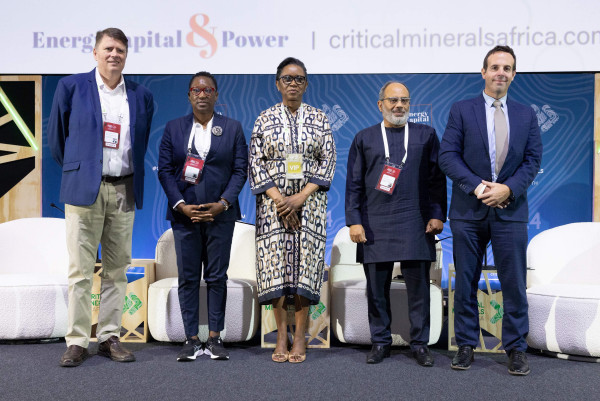
Players within Africa’s energy transition sector highlighted innovative financing mechanisms which can help drive the industry maximize value addition and beneficiation to local economies during the Leaders Forum at Critical Minerals Africa Summit on Thursday.

Marie-Chantal Kaninda, President, Glencore DRC announced that the firm contributed approximately $1 billion in revenue for the Democratic Republic of Congo (DRC) through royalty taxes in 2023.

She said the firm invested in processing facilities at two of its operational mines in the DRC (https://apo-opa.co/3AvKgjI) to enhance value addition of copper and cobalt resources.

“We export hydroxide cobalt, which is an intermediary product, and produce copper cathodes ready for cable manufacturing,” Kaninda explained, adding that 95% of Glencore’s workforce in the DRC is sourced locally, with many employees holding senior positions.

Speaking on the challenges facing Africa's mineral value addition efforts, Carlos Lopes, Professor at the Nelson Mandela School of Public Governance, University of Cape Town, noted that a lack of adequate funding is a primary barrier.

Despite Africa’s GDP having doubled since 2000, he said, the continent is still perceived as a high-risk market by some investors. Lopes called for innovative local financial solutions to meet capital needs for value-addition projects.

“Africa pays the world’s highest interest rates, yet our potential is undervalued. We must be strategic in policy-making to fully capitalize on our resources,” he stated, emphasizing the drawbacks of exporting raw minerals for overseas processing.

Mfikeyi Makayi, CEO of KoBold Metals, underscored the role of innovation in reducing the high costs associated with critical mineral exploration and value addition. She highlighted the company's AI-enabled exploration efforts backed by Silicon Valley investment, stating, “With 60 projects across 40 countries, including flagship initiatives in Zambia and new ventures in Namibia and Botswana, we’re focused on leveraging digital mining solutions to drive industrialization across the continent.”

Makayi added that the data generated through digital mining is vital for attracting investment and creating a more competitive and inclusive sector.

Sietse van de Woude, Senior Executive of Modernization and Safety at the Minerals Council South Africa, discussed the Mandela Mining Precinct initiative, a public-private partnership designed to fund and support mining sector innovation.

“Innovation is essential for critical minerals mining,” van de Woude said, adding that the initiative offers a platform for industry stakeholders to share best practices and collaborate on advancing operational efficiency and safety.

Distributed by APO Group on behalf of Energy Capital & Power.

Media files
Energy Capital & Power
Download logo
Players within Africa’s energy transition sector highlighted innovative financing mechanisms which can help drive the industry maximize value addition and beneficiation to local economies during the Leaders Forum at Critical Minerals Africa Summit on Thursday.

Marie-Chantal Kaninda, President, Glencore DRC announced that the firm contributed approximately $1 billion in revenue for the Democratic Republic of Congo (DRC) through royalty taxes in 2023.

She said the firm invested in processing facilities at two of its operational mines in the DRC to enhance value addition of copper and cobalt resources.

“We export hydroxide cobalt, which is an intermediary product, and produce copper cathodes ready for cable manufacturing,” Kaninda explained, adding that 95% of Glencore’s workforce in the DRC is sourced locally, with many employees holding senior positions.

Speaking on the challenges facing Africa’s mineral value addition efforts, Carlos Lopes, Professor at the Nelson Mandela School of Public Governance, University of Cape Town, noted that a lack of adequate funding is a primary barrier.

Despite Africa’s GDP having doubled since 2000, he said, the continent is still perceived as a high-risk market by some investors. Lopes called for innovative local financial solutions to meet capital needs for value-addition projects.

“Africa pays the world’s highest interest rates, yet our potential is undervalued. We must be strategic in policy-making to fully capitalize on our resources,” he stated, emphasizing the drawbacks of exporting raw minerals for overseas processing.

Mfikeyi Makayi, CEO of KoBold Metals, underscored the role of innovation in reducing the high costs associated with critical mineral exploration and value addition. She highlighted the company’s AI-enabled exploration efforts backed by Silicon Valley investment, stating, “With 60 projects across 40 countries, including flagship initiatives in Zambia and new ventures in Namibia and Botswana, we’re focused on leveraging digital mining solutions to drive industrialization across the continent.”

Makayi added that the data generated through digital mining is vital for attracting investment and creating a more competitive and inclusive sector.

Sietse van de Woude, Senior Executive of Modernization and Safety at the Minerals Council South Africa, discussed the Mandela Mining Precinct initiative, a public-private partnership designed to fund and support mining sector innovation.

“Innovation is essential for critical minerals mining,” van de Woude said, adding that the initiative offers a platform for industry stakeholders to share best practices and collaborate on advancing operational efficiency and safety.

Per Kind Favour of APO

Africa Fact: African Continental Free Trade Agreement went into force May 30th 2019. As of July 2019, 27 African countries had ratified the agreement and all African countries besides Eritrea had signed the CFTA.

Share this:

  • Share on X (Opens in new window) X
  • Share on Facebook (Opens in new window) Facebook
  • Print (Opens in new window) Print
  • Email a link to a friend (Opens in new window) Email
  • Share on LinkedIn (Opens in new window) LinkedIn
  • Share on Tumblr (Opens in new window) Tumblr
  • Share on WhatsApp (Opens in new window) WhatsApp
  • Share on Mastodon (Opens in new window) Mastodon
Category: NewsTag: Africa, AI, APO, Cape Town, critical, data, digital, DRC, Energy, Innovation, Interest Rates, Manufacturing, Market, mining, Namibia, Nelson Mandela, new, Partnership, solutions, South Africa, Summit, Zambia

If you feel strongly about this article then feel free to send MyZA a ‘Letter to the Editor’ using the submission form below:


Letter to the Editor

This field is for validation purposes and should be left unchanged.
If this is in response to an article please include that article title here or as the lead in for the first paragraph of your Letter below.

Separate tags with commas

Localise your letter by naming the city your words are about. Add relevant words describing your subject. Single comma separated words of no more than 5
Your Name(Required)
Your Name will be linked to the website below.
Your personal, business or social media web site
Choose NO to not set up a user account on MyZA. User Accounts will allow you to submit letters under your own Author Name

3 Latest Letters to the Editor:

  • Older Persons Grants Land Today — No Need to Queue at Dawn

    Dear Editor, Older Persons grants are paid today, 30 October, under SASSA’s revised November payment schedule — with disability grants on Monday 2 November, children’s grants on Tuesday 3 November, and grants under review on Thursday 5 November. Two things every beneficiary should know. First, grant money does not expire on payment day. It stays…

    30 October 2026
  • November Grants Pay Early – No Need to Queue at Dawn

    Dear Editor, I run SAGrant (sagrant.co.za), a free resource helping South Africans navigate SASSA grants. November grants pay earlier than usual. Older Persons grants are paid on Friday 30 October, Disability grants on 2 November, and Child Support and other grants on 3 November. Grants still under review are paid on 5 November. The money…

    27 October 2026
  • NSFAS 2027 applications close on 31 October — SASSA households, apply now

    Dear Editor, I run SAGrant (sagrant.co.za), a free resource helping South Africans navigate SASSA grants. NSFAS applications for the 2027 academic year close on Friday 31 October 2026, and no extension is expected. If your household receives a SASSA grant, your child already passes the NSFAS financial eligibility test — but they still have to…

    25 October 2026

About Guest

Previous Post:BMA to meet with Mozambican leadership on border post closure
Next Post:Extortion poses serious threat to State and citizens, says Mashatile

Reader Interactions

Comments

  1. Taffy Duchess

    16 September 2026 at 5:29 pm

    Why was Dr. Jekyll banned from South Africa? Because he was a part Hyde

  2. Duckduck

    15 September 2026 at 9:14 am

    Fun South African Fact: South Africa is the only country in the entire world that has voluntarily abandoned its nuclear weapons programme.

Copyright © 2026 · MyZA · All Rights Reserved · Powered by Stratlec Online