• Skip to main content
  • Skip to header right navigation
  • Skip to after header navigation
  • Skip to site footer
MyZA

MyZA

News, Directory, Events and Other Stuff

  • Social Media
  • Sport
  • World News
  • Home
  • Submit News
  • Directory
  • Events
  • Stratlec
  • TFSA
  • News
    • APO
    • Today’s Sport News
    • Todays Social Media and Tech Headlines
    • Today’s World News
    • Today’s SA Financial News
  • Contact
You are here: Home / News / A blended approach is key for climate finance

A blended approach is key for climate finance

25 February 2025 by Guest

A blended approach is key for climate finance

The South African Reserve Bank (SARB) Deputy Governor, Fundi Tshazibana, has emphasised that emerging markets and developing economies need a blended approach to finance both climate change mitigation and adaptation.

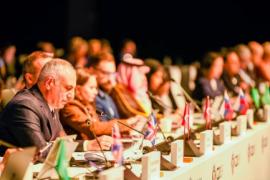
Moderating the Group of Twenty (G20) side event on enhancing the global sustainable financial architecture in Cape Town on Tuesday, Tshazibana highlighted the crucial role of climate finance in driving climate transition efforts.

“The Climate Policy Initiative (CPI) global landscape of climate finance has found that concessional finance at present is only at about 11% of total climate finance for the bulk of our governments, especially in emerging markets and developing countries.

“We know that the fiscal space for governments is quite tight, which means governments cannot go this journey alone. In this regard, private sector finance, which compromises of a third of the world’s economic activities will be vital to close the financing gap. However, private investment will require a catalyst to mitigate certain risks and to facilitate market development,” she said.

Although climate financing has doubled from 2018 to 2022, the financing gap remains large.

“In 2022, we reached the $1trillion milestone in climate finance but analysis by the CPI shows that although climate finance has doubled since 2018 having grown from $674 billion US dollars to about $1.4 trillion in 2022, there are still significant gaps in terms of what needs to be funded in this space,” the Deputy Governor said.

According to the CPI estimates, about $7.4 trillion is needed every year this decade to keep the world on track and limit global temperature rises by 1.5°C.

“To reach these levels we need to have conversations around how to direct capital flows that are needed in this regard. The largest climate investment gaps in absolute terms have been observed in the transport sector but we know that we need increased investment in agriculture, forestry and other land use as well industrial initiatives as well. Financing needs are also significant in the area of adaption,” she said.

Tshazibana explained that the work done by various organisations including the Network for Greening, the Financial System and the World Bank shows that a blended approach to financing for both climate change mitigation and adaptation is required.

She said co-financing can increase total project funding and provide a mix of financial instruments to mobilise private finance.

“Partnerships and collaboration involving multiple development actors can unlock private funding and accelerate global climate investment and increase efficiency of the use of scarce concessional funds,” the Deputy Governor said.

She said these partnerships leverage distinct and complementary institutional advantages and could take many forms, such as co-financing, project preparation, capacity building, policy support and risk mitigation. – SAnews.gov.za

nosihle
Tue, 02/25/2025 – 15:52
55 views

The South African Reserve Bank (SARB) Deputy Governor, Fundi Tshazibana, has emphasised that emerging markets and developing economies need a blended approach to finance both climate change mitigation and adaptation.

Moderating the Group of Twenty (G20) side event on enhancing the global sustainable financial architecture in Cape Town on Tuesday, Tshazibana highlighted the crucial role of climate finance in driving climate transition efforts.

“The Climate Policy Initiative (CPI) global landscape of climate finance has found that concessional finance at present is only at about 11% of total climate finance for the bulk of our governments, especially in emerging markets and developing countries.

“We know that the fiscal space for governments is quite tight, which means governments cannot go this journey alone. In this regard, private sector finance, which compromises of a third of the world’s economic activities will be vital to close the financing gap. However, private investment will require a catalyst to mitigate certain risks and to facilitate market development,” she said.

Although climate financing has doubled from 2018 to 2022, the financing gap remains large.

“In 2022, we reached the $1trillion milestone in climate finance but analysis by the CPI shows that although climate finance has doubled since 2018 having grown from $674 billion US dollars to about $1.4 trillion in 2022, there are still significant gaps in terms of what needs to be funded in this space,” the Deputy Governor said.

According to the CPI estimates, about $7.4 trillion is needed every year this decade to keep the world on track and limit global temperature rises by 1.5°C.

“To reach these levels we need to have conversations around how to direct capital flows that are needed in this regard. The largest climate investment gaps in absolute terms have been observed in the transport sector but we know that we need increased investment in agriculture, forestry and other land use as well industrial initiatives as well. Financing needs are also significant in the area of adaption,” she said.

Tshazibana explained that the work done by various organisations including the Network for Greening, the Financial System and the World Bank shows that a blended approach to financing for both climate change mitigation and adaptation is required.

She said co-financing can increase total project funding and provide a mix of financial instruments to mobilise private finance.

“Partnerships and collaboration involving multiple development actors can unlock private funding and accelerate global climate investment and increase efficiency of the use of scarce concessional funds,” the Deputy Governor said.

She said these partnerships leverage distinct and complementary institutional advantages and could take many forms, such as co-financing, project preparation, capacity building, policy support and risk mitigation. – SAnews.gov.za


Watch a A blended approach is key for climate finance related video:

Stunning South Africa:

Have you visited MyPR?

MyPR.co.za offers free to publish press releases for your news site, blog or offline publication. Use the handy REPUBLISH facility or the Full Text RSS Feeds or just copy and paste.

Straton Electrical | Straton Solar | Straton Prepaid | Straton Plumbing | Straton IoT | Straton eBikes | BA Systems | Mbane Contracting | Reach Trust

Share this:

  • Share on X (Opens in new window) X
  • Share on Facebook (Opens in new window) Facebook
  • Print (Opens in new window) Print
  • Email a link to a friend (Opens in new window) Email
  • Share on LinkedIn (Opens in new window) LinkedIn
  • Share on Tumblr (Opens in new window) Tumblr
  • Share on WhatsApp (Opens in new window) WhatsApp
  • Share on Mastodon (Opens in new window) Mastodon
Category: NewsTag: Africa, African, agriculture, Architecture, Cape Town, Event, global, Market, SA News, South Africa, Video

If you feel strongly about this article then feel free to send MyZA a ‘Letter to the Editor’ using the submission form below:


Letter to the Editor

This field is for validation purposes and should be left unchanged.
If this is in response to an article please include that article title here or as the lead in for the first paragraph of your Letter below.

Separate tags with commas

Localise your letter by naming the city your words are about. Add relevant words describing your subject. Single comma separated words of no more than 5
Your Name(Required)
Your Name will be linked to the website below.
Your personal, business or social media web site
Choose NO to not set up a user account on MyZA. User Accounts will allow you to submit letters under your own Author Name

3 Latest Letters to the Editor:

  • Fun South African fact

    Dear Editor Fun South African fact: towns like Franschhoek and Stellenbosch are home to world-class wine farms set in stunning, scenic surroundings. Regards Aressa Smith In Response to/From: Luxury Properties Seized in New Lottery Crackdown

    27 January 2026
  • Condolences on the Passing of Lusanda Dumke

    Statement by Leander Kruger MPL – DA Buffalo City Constituency Leader: The Democratic Alliance in Buffalo City Metropolitan Municipality mourns the passing of Springbok Women’s rugby player and Mdantsane trailblazer, Lusanda Dumke, who lost her battle with cancer at the age of 28. South Africa has lost an exceptional athlete, a leader, and a source…

    17 December 2025
  • Rape Kits Delivered, But…

    Statement by Nicholas Gotsell MP – DA NCOP Member on Security & Justice: The DA can confirm that 2 840 rape kits arrived in Cape Town on Monday, following sustained DA oversight and pressure after multiple police stations across the Western Cape were found to be without this critical forensic evidence tool. While this delivery…

    17 December 2025

About Guest

Previous Post:Navigating International Dividend Taxation: A Comprehensive Guide for Global Investors
Next Post:Women Workers Win Major Victory on Minimum Wage

Reader Interactions

Comments

  1. Wanted Candy

    25 February 2025 at 4:16 pm

    Fun South African Fact: South Africa is part of BRICS.

  2. Cool Whip

    25 February 2025 at 4:14 pm

    Fun South African Fact: South Africa’s natural and human fossil history dates back hundreds of thousands, even millions, of years. Early dinosaur fossils have been discovered in the Western Cape and up to 80% of mammalian fossils found so far have been discovered in the Karoo.

Copyright © 2026 · MyZA · All Rights Reserved · Powered by Reach Trust