• Skip to main content
  • Skip to header right navigation
  • Skip to after header navigation
  • Skip to site footer
MyZA

MyZA

News, Directory, Events and Other Stuff

  • Social Media
  • Sport
  • World News
  • Home
  • Submit News
  • Directory
  • Events
  • Stratlec
  • TFSA
  • News
    • APO
    • Today’s Sport News
    • Todays Social Media and Tech Headlines
    • Today’s World News
    • Today’s SA Financial News
  • Contact
You are here: Home / News / Concern over learner dropouts and repetition

Concern over learner dropouts and repetition

14 March 2024 by Guest

Concern over learner dropouts and repetition

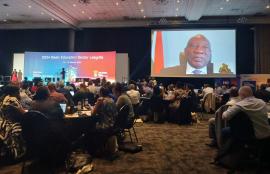
President Cyril Ramaphosa has expressed concern over the persistently high rates of learner dropouts and repetition urging stakeholders within the education sector to intensify their efforts in tackling these issues.

The President addressed the opening of the 2024 Basic Education Sector Lekgotla Conference taking place at the Birchwood Conference Centre in Boksburg on Thursday.

Taking place under the theme “Equipping learners with knowledge and skills for a changing world,” the 2024 Basic Education Sector Lekgotla aims to deepen the understanding of advancements made within the sector with a special focus on developments achieved over the last decade.

“With a sense of achievement, we report our progress towards universal access to basic education, which currently stands at an impressive 98 %.

“However, dropout and repetition rates are still unacceptably high. I have spoken about this to you all in the past and I have urged all of us to work hard to reduce the dropout rates as well as to attend to the repetition rates,” the President said in his virtual address. 

The President highlighted that poverty, youth criminality, teenage pregnancy, and general violence in some communities as some of the reasons for these high rates.

He added that the burden placed on young people to look after their aged parents and grandparents was also contributing to learner dropout and repetition.

The President told the Lekgotla that government is actively pursuing policies to try to address the obstacles hindering progress in basic education. 

“As the Government, we have continued to pursue pro-poor policies to systematically tackle the multifaceted factors impeding progress in basic education. These policies encompass the establishment of non-fee-paying schools; indeed, 80% of schools in our country do not require fees. 

“Moreover, more than 9.6 million children benefit from the national school nutrition programme, free textbooks, scholar transport, and child support grants provided by the Department of Social Development.”

President Ramaphosa commended numerous efforts aimed at offering educational assistance in areas with the highest need.

He said these concerted efforts signify government’s commitment to enhancing the educational landscape of South Africa, ensuring that every child has the opportunity to succeed, irrespective of their background.

“By addressing these challenges head-on, we reaffirm our dedication to fulfilling Mandela’s vision of education as the most powerful weapon we can use to change the world. 

“We aim to prepare every child in our country for success in a rapidly evolving global context.

“Our commitment is demonstrated through the Three-Stream Curriculum Model, which incorporates technical, vocational and occupational subjects into basic education. This aligns with the nation’s skill requirements and economic objectives, moving beyond traditional academic subjects to expand learners’ prospects,” he said. 

The President highlighted that in the coming year, government is poised to expand the occupational stream into the Further Education and Training Phase. He said this expansion is a testament to government’s resolve to ensure that no learner is left behind.

Early Childhood Development

He further emphasised that Early Childhood Development (ECD) is a key priority for government.

Consequently, government has developed the 2030 Strategy for Early Childhood Development Programmes. The strategy outlines a comprehensive plan to achieve universal access to quality ECD programmes by 2030.

“To ensure that we reach universal access to ECD programmes for children aged 3-5, we will need to provide quality access to an additional 830,000 children. This is over and above the 2.2 million children in this age group who are already accessing ECD programmes.

“We can agree that the essence of a quality education system lies in the professionalism and quality of teachers, who are fundamental at the school level. They are crucial for developing the skills, knowledge and competencies our country needs for faster economic growth,” he said. 

Investing in teachers

Last week, South Africa hosted the 14th International Teacher Task Force Policy Dialogue Forum which emphasised the need for qualified teachers to achieve sustainable development goals and support the Africa Agenda 2063. 

The forum concluded that global investment in teachers is essential to ensuring their competence, professionalism and support.

“We will do everything possible to continue supporting our teachers, who are the combatants for the silent revolution happening in basic education.”

Mother tongue instruction

Turning his attention to the importance of mother tongue instruction, he said it is the cornerstone of the “essential reforms we undertake in basic education and speaks to the broader imperative of decolonising education.”

The President said this goes beyond merely ensuring that children can read with comprehension and that it is a vital component of government’s commitment to educational transformation.

He further expressed his deep support for this development, acknowledging its significance in the journey towards basic education reforms. 

He said the country’s history reminds one of the profound impact of language as a tool of subjugation and oppression.

In recognising this, the country’s commitment to decolonisation and transformation becomes even more urgent, ensuring that language is a bridge to knowledge and empowerment rather than a barrier. 

The President further highlighted that today, all national African Union Agenda 2063 frameworks and international organisations such as the United Nations Educational, Scientific and Cultural Organization (UNESCO) endorse the implementation of mother tongue instruction as a pivotal strategy for addressing literacy challenges.

“This widespread support recognises the fundamental role of education in one’s first language in enhancing learning outcomes and improving literacy rates.

“In conclusion, let us double our efforts to ensure our children stand on equal footing. This means all shall have access to public schools, the assurance of being taught by a qualified teacher, and the provision of ample workbooks, textbooks and stationery.

“It also means having the necessary learning tools, dignified sanitation facilities, clean running water, basic electricity, and a clean, welcoming environment that guarantees safety for both learners and teachers,” he said. – SAnews.gov.za


DikelediM
Thu, 03/14/2024 – 14:29

165 views

President Cyril Ramaphosa has expressed concern over the persistently high rates of learner dropouts and repetition urging stakeholders within the education sector to intensify their efforts in tackling these issues.

The President addressed the opening of the 2024 Basic Education Sector Lekgotla Conference taking place at the Birchwood Conference Centre in Boksburg on Thursday.

Taking place under the theme “Equipping learners with knowledge and skills for a changing world,” the 2024 Basic Education Sector Lekgotla aims to deepen the understanding of advancements made within the sector with a special focus on developments achieved over the last decade.

“With a sense of achievement, we report our progress towards universal access to basic education, which currently stands at an impressive 98 %.

“However, dropout and repetition rates are still unacceptably high. I have spoken about this to you all in the past and I have urged all of us to work hard to reduce the dropout rates as well as to attend to the repetition rates,” the President said in his virtual address. 

The President highlighted that poverty, youth criminality, teenage pregnancy, and general violence in some communities as some of the reasons for these high rates.

He added that the burden placed on young people to look after their aged parents and grandparents was also contributing to learner dropout and repetition.

The President told the Lekgotla that government is actively pursuing policies to try to address the obstacles hindering progress in basic education. 

“As the Government, we have continued to pursue pro-poor policies to systematically tackle the multifaceted factors impeding progress in basic education. These policies encompass the establishment of non-fee-paying schools; indeed, 80% of schools in our country do not require fees. 

“Moreover, more than 9.6 million children benefit from the national school nutrition programme, free textbooks, scholar transport, and child support grants provided by the Department of Social Development.”

President Ramaphosa commended numerous efforts aimed at offering educational assistance in areas with the highest need.

He said these concerted efforts signify government’s commitment to enhancing the educational landscape of South Africa, ensuring that every child has the opportunity to succeed, irrespective of their background.

“By addressing these challenges head-on, we reaffirm our dedication to fulfilling Mandela’s vision of education as the most powerful weapon we can use to change the world. 

“We aim to prepare every child in our country for success in a rapidly evolving global context.

“Our commitment is demonstrated through the Three-Stream Curriculum Model, which incorporates technical, vocational and occupational subjects into basic education. This aligns with the nation’s skill requirements and economic objectives, moving beyond traditional academic subjects to expand learners’ prospects,” he said. 

The President highlighted that in the coming year, government is poised to expand the occupational stream into the Further Education and Training Phase. He said this expansion is a testament to government’s resolve to ensure that no learner is left behind.

Early Childhood Development

He further emphasised that Early Childhood Development (ECD) is a key priority for government.

Consequently, government has developed the 2030 Strategy for Early Childhood Development Programmes. The strategy outlines a comprehensive plan to achieve universal access to quality ECD programmes by 2030.

“To ensure that we reach universal access to ECD programmes for children aged 3-5, we will need to provide quality access to an additional 830,000 children. This is over and above the 2.2 million children in this age group who are already accessing ECD programmes.

“We can agree that the essence of a quality education system lies in the professionalism and quality of teachers, who are fundamental at the school level. They are crucial for developing the skills, knowledge and competencies our country needs for faster economic growth,” he said. 

Investing in teachers

Last week, South Africa hosted the 14th International Teacher Task Force Policy Dialogue Forum which emphasised the need for qualified teachers to achieve sustainable development goals and support the Africa Agenda 2063. 

The forum concluded that global investment in teachers is essential to ensuring their competence, professionalism and support.

“We will do everything possible to continue supporting our teachers, who are the combatants for the silent revolution happening in basic education.”

Mother tongue instruction

Turning his attention to the importance of mother tongue instruction, he said it is the cornerstone of the “essential reforms we undertake in basic education and speaks to the broader imperative of decolonising education.”

The President said this goes beyond merely ensuring that children can read with comprehension and that it is a vital component of government’s commitment to educational transformation.

He further expressed his deep support for this development, acknowledging its significance in the journey towards basic education reforms. 

He said the country’s history reminds one of the profound impact of language as a tool of subjugation and oppression.

In recognising this, the country’s commitment to decolonisation and transformation becomes even more urgent, ensuring that language is a bridge to knowledge and empowerment rather than a barrier. 

The President further highlighted that today, all national African Union Agenda 2063 frameworks and international organisations such as the United Nations Educational, Scientific and Cultural Organization (UNESCO) endorse the implementation of mother tongue instruction as a pivotal strategy for addressing literacy challenges.

“This widespread support recognises the fundamental role of education in one’s first language in enhancing learning outcomes and improving literacy rates.

“In conclusion, let us double our efforts to ensure our children stand on equal footing. This means all shall have access to public schools, the assurance of being taught by a qualified teacher, and the provision of ample workbooks, textbooks and stationery.

“It also means having the necessary learning tools, dignified sanitation facilities, clean running water, basic electricity, and a clean, welcoming environment that guarantees safety for both learners and teachers,” he said. – SAnews.gov.za

Read More at the Source

Share this:

  • Share on X (Opens in new window) X
  • Share on Facebook (Opens in new window) Facebook
  • Print (Opens in new window) Print
  • Email a link to a friend (Opens in new window) Email
  • Share on LinkedIn (Opens in new window) LinkedIn
  • Share on Tumblr (Opens in new window) Tumblr
  • Share on WhatsApp (Opens in new window) WhatsApp
  • Share on Mastodon (Opens in new window) Mastodon
Category: NewsTag: 2024, Africa, African, Boksburg, Education, Environment, global, Government, head, Investing, ONE, Ramaphosa, Running, SA News, South Africa, Water

If you feel strongly about this article then feel free to send MyZA a ‘Letter to the Editor’ using the submission form below:


Letter to the Editor

This field is for validation purposes and should be left unchanged.
If this is in response to an article please include that article title here or as the lead in for the first paragraph of your Letter below.

Separate tags with commas

Localise your letter by naming the city your words are about. Add relevant words describing your subject. Single comma separated words of no more than 5
Your Name(Required)
Your Name will be linked to the website below.
Your personal, business or social media web site
Choose NO to not set up a user account on MyZA. User Accounts will allow you to submit letters under your own Author Name

3 Latest Letters to the Editor:

  • Re: R8.5 Million Lotto Winner Claims Prize in Gqeberha

    Dear Editor This is indeed an exciting story for the community. Congratulations to the winner and may this bring positive change to Nomathamsanqa. As someone from KwaMashu, I understand the impact such winnings can have on township communities. Wishing the grandfather all the best. Regards Themba Zulu In Response to/From: R8.5 Million Lotto Winner Claims…

    18 September 2026
  • Re: Minister Tolashe and Postbank Black Cards

    Dear Editor I appreciate the Minister’s assurance regarding the smooth transition to Postbank Black Cards for grant beneficiaries. As a concerned citizen, I hope the government will ensure that all beneficiaries, especially elderly and vulnerable populations in areas like Soweto, receive adequate assistance during this transition period. The expansion of card replacement locations to include…

    18 September 2026
  • Lotto Winner Story

    Dear Editor This is indeed an exciting story for the community. Congratulations to the winner and may this bring positive change to Nomathamsanqa. Regards Willem Pieterse In Response to/From: R8.5 Million Lotto Winner Claims Prize in Gqeberha

    16 September 2026

About Guest

Previous Post:Take a Stand for Clean Waterways!
Next Post:Debunking the misconceptions that young professionals have about wills

Reader Interactions

Comments

  1. Mafia Princess

    10 September 2026 at 11:12 pm

    The only thing that a man who hangs around a beautiful lady without saying a word can do is to fetch water during her wedding day

  2. lady fantastic

    7 September 2026 at 6:16 pm

    Fun South African Fact: In 2006, South Africa became the first African country and the fifth country in the world to recognize same-sex marriage.

Copyright © 2026 · MyZA · All Rights Reserved · Powered by Stratlec Online