• Skip to main content
  • Skip to header right navigation
  • Skip to after header navigation
  • Skip to site footer
MyZA

MyZA

News, Directory, Events and Other Stuff

  • Social Media
  • Sport
  • World News
  • Home
  • Submit News
  • Directory
  • Events
  • Stratlec
  • TFSA
  • News
    • APO
    • Today’s Sport News
    • Todays Social Media and Tech Headlines
    • Today’s World News
    • Today’s SA Financial News
  • Contact
You are here: Home / News / Eliminate red tape to make it easier for African entrepreneurs to do business – Mashatile

Eliminate red tape to make it easier for African entrepreneurs to do business – Mashatile

13 March 2024 by Guest

Eliminate red tape to make it easier for African entrepreneurs to do business – Mashatile

Deputy President Paul Mashatile has called for the elimination of red tape to facilitate cross-border trade for African entrepreneurs.

“Countries on our continent typically perform poorly in various categories related to corporate performance and competitiveness due to an unfriendly environment, particularly in terms of intra-continental trade,” the Deputy President said on Wednesday. 

This is the reason he believes that countries should take advantage of the African Continental Free Trade Area (AfCFTA) agreement, which seeks to eliminate barriers to trade in Africa. 

READ | Africa is an oyster for young entrepreneurs

“The AfCFTA will significantly boost intra-African trade, particularly trade in value-added production and trade across all sectors of Africa’s economy,” Mashatile said.

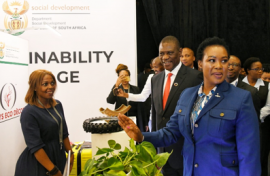
The country’s second-in-command was delivering a keynote address at the Global Entrepreneurship Congress (GEC+ Africa) at the Cape Town International Convention Centre.

GEC+ Africa is a gathering of entrepreneurs and leaders from more than 50 African nations committed to advancing entrepreneurial activity throughout their own countries in Africa.

Hosted by the Department of Small Business Development, the two-day event includes other international leaders who have become a part of the Global Entrepreneurship Network (GEN) movement that advances entrepreneurship as a means of building economies and expanding human welfare.

“As policymakers, we have to create an enabling environment for our entrepreneurs,” Mashatile said. 

He told delegates that leaders should ensure that the core foundations of the digital economy are in place, including digital infrastructure, digital skills, cybersecurity capabilities, and affordable and accessible data.

Mashatile said nations need to do more to implement the African Union’s Digital Transformation Agenda, adopted at its Summit of Heads of State in 2019.

“We must ensure that by 2030, every individual, business, and government on the continent will be digitally enabled and ready to support a growing digital economy.” 

He emphasised the need to enhance governance systems, such as combating corruption, improving macroeconomic management, and resolving disputes through negotiation rather than violent conflict.

“We must do more to shift the narrative that Africa is a difficult place to do business.” 

SMMEs

Mashatile said it was crucial to address the Small, Medium and Micro Enterprises (SMME) and start-up credit gap. 

“Africa has 18% of the world’s population but attracts only 2% of global capital, and even less global venture capital for start-ups.

“In South Africa, Minister of Small Business Development Stella Ndabeni-Abrahams has proposed a SMME and Cooperative Funding Policy, which was recently gazetted for public comment,” he announced.  

The policy requires that the Business Development Service providers in South Africa institutionalise the practice of assisting SMMEs and cooperatives with pre-funding support. 

“Without funding, our best start-ups are leaving for tech hubs abroad,” Mashatile said. 

Skilled labour force

The Deputy President believes it is crucial to retain skilled professionals within the continent’s borders.

“The loss of skilled professionals, also known as ‘brain-drain’ is one of the major reasons for the unsteady growth in our respective countries.

“To prevent this, we need to make it easier for skills to move across the continent and increase the number of people who can learn new skills, especially in areas that are important to the digital economy.” 

However, he said South Africa was making inroads in reforming visa requirements, which allows high-tech expertise to work in the country and develop the economy. 

“This move is supported by the underpinning principles of the AfCFTA, and propels us towards the integrated Africa that we want.”

In addition, the Deputy President called on the continent to work together to achieve socio-economic transformation that benefits everyone and one way to start is by assisting small businesses.

“Together, this and the AfCFTA are important steps towards the Africa we want. I am confident that this inaugural GEC+ Africa Congress will provide the appropriate policy advice and partnerships to take us there.”

Trade

The Deputy President has described Africa as a continent overflowing with untapped potential, a hub of innovation and invention waiting to be re-awakened.

“However, Africa still plays a subordinate role in global value chains, and is confronted by deeply established structural constraints that stem from our previous position as an exporter of unprocessed raw commodities.”

South Africa, like the rest of the continent, according to the Deputy President, needs to be strategic in increasing its competitiveness in higher-productivity trade-able commodities and services, as well as in becoming ready for a digital and environmentally friendly future.

“We must recognise that there is a link between the environment, economy, and agriculture. All economic activities either affect or are affected by natural and environmental resources.”

He also called on farmers to adapt to current farming methods that increase production efficiency. 

“African innovators and entrepreneurs have the power to transform our economy, which will eventually allow us to participate in the global economy as players with equal status.” – SAnews.gov.za

Gabisile
Wed, 03/13/2024 – 15:05

118 views

Deputy President Paul Mashatile has called for the elimination of red tape to facilitate cross-border trade for African entrepreneurs.

“Countries on our continent typically perform poorly in various categories related to corporate performance and competitiveness due to an unfriendly environment, particularly in terms of intra-continental trade,” the Deputy President said on Wednesday. 

This is the reason he believes that countries should take advantage of the African Continental Free Trade Area (AfCFTA) agreement, which seeks to eliminate barriers to trade in Africa. 

READ | Africa is an oyster for young entrepreneurs

“The AfCFTA will significantly boost intra-African trade, particularly trade in value-added production and trade across all sectors of Africa’s economy,” Mashatile said.

The country’s second-in-command was delivering a keynote address at the Global Entrepreneurship Congress (GEC+ Africa) at the Cape Town International Convention Centre.

GEC+ Africa is a gathering of entrepreneurs and leaders from more than 50 African nations committed to advancing entrepreneurial activity throughout their own countries in Africa.

Hosted by the Department of Small Business Development, the two-day event includes other international leaders who have become a part of the Global Entrepreneurship Network (GEN) movement that advances entrepreneurship as a means of building economies and expanding human welfare.

“As policymakers, we have to create an enabling environment for our entrepreneurs,” Mashatile said. 

He told delegates that leaders should ensure that the core foundations of the digital economy are in place, including digital infrastructure, digital skills, cybersecurity capabilities, and affordable and accessible data.

Mashatile said nations need to do more to implement the African Union’s Digital Transformation Agenda, adopted at its Summit of Heads of State in 2019.

“We must ensure that by 2030, every individual, business, and government on the continent will be digitally enabled and ready to support a growing digital economy.” 

He emphasised the need to enhance governance systems, such as combating corruption, improving macroeconomic management, and resolving disputes through negotiation rather than violent conflict.

“We must do more to shift the narrative that Africa is a difficult place to do business.” 

SMMEs

Mashatile said it was crucial to address the Small, Medium and Micro Enterprises (SMME) and start-up credit gap. 

“Africa has 18% of the world’s population but attracts only 2% of global capital, and even less global venture capital for start-ups.

“In South Africa, Minister of Small Business Development Stella Ndabeni-Abrahams has proposed a SMME and Cooperative Funding Policy, which was recently gazetted for public comment,” he announced.  

The policy requires that the Business Development Service providers in South Africa institutionalise the practice of assisting SMMEs and cooperatives with pre-funding support. 

“Without funding, our best start-ups are leaving for tech hubs abroad,” Mashatile said. 

Skilled labour force

The Deputy President believes it is crucial to retain skilled professionals within the continent’s borders.

“The loss of skilled professionals, also known as ‘brain-drain’ is one of the major reasons for the unsteady growth in our respective countries.

“To prevent this, we need to make it easier for skills to move across the continent and increase the number of people who can learn new skills, especially in areas that are important to the digital economy.” 

However, he said South Africa was making inroads in reforming visa requirements, which allows high-tech expertise to work in the country and develop the economy. 

“This move is supported by the underpinning principles of the AfCFTA, and propels us towards the integrated Africa that we want.”

In addition, the Deputy President called on the continent to work together to achieve socio-economic transformation that benefits everyone and one way to start is by assisting small businesses.

“Together, this and the AfCFTA are important steps towards the Africa we want. I am confident that this inaugural GEC+ Africa Congress will provide the appropriate policy advice and partnerships to take us there.”

Trade

The Deputy President has described Africa as a continent overflowing with untapped potential, a hub of innovation and invention waiting to be re-awakened.

“However, Africa still plays a subordinate role in global value chains, and is confronted by deeply established structural constraints that stem from our previous position as an exporter of unprocessed raw commodities.”

South Africa, like the rest of the continent, according to the Deputy President, needs to be strategic in increasing its competitiveness in higher-productivity trade-able commodities and services, as well as in becoming ready for a digital and environmentally friendly future.

“We must recognise that there is a link between the environment, economy, and agriculture. All economic activities either affect or are affected by natural and environmental resources.”

He also called on farmers to adapt to current farming methods that increase production efficiency. 

“African innovators and entrepreneurs have the power to transform our economy, which will eventually allow us to participate in the global economy as players with equal status.” – SAnews.gov.za

Read More at the Source

Share this:

  • Share on X (Opens in new window) X
  • Share on Facebook (Opens in new window) Facebook
  • Print (Opens in new window) Print
  • Email a link to a friend (Opens in new window) Email
  • Share on LinkedIn (Opens in new window) LinkedIn
  • Share on Tumblr (Opens in new window) Tumblr
  • Share on WhatsApp (Opens in new window) WhatsApp
  • Share on Mastodon (Opens in new window) Mastodon
Category: NewsTag: 2024, Africa, African, agreement, agriculture, business, Cape Town, Continental, Cybersecurity, data, digital, Do More, Environment, Event, Farming, global, Government, infrastructure, micro, new, ONE, production, SA News, South Africa, Summit, UPS

If you feel strongly about this article then feel free to send MyZA a ‘Letter to the Editor’ using the submission form below:


Letter to the Editor

This field is for validation purposes and should be left unchanged.
If this is in response to an article please include that article title here or as the lead in for the first paragraph of your Letter below.

Separate tags with commas

Localise your letter by naming the city your words are about. Add relevant words describing your subject. Single comma separated words of no more than 5
Your Name(Required)
Your Name will be linked to the website below.
Your personal, business or social media web site
Choose NO to not set up a user account on MyZA. User Accounts will allow you to submit letters under your own Author Name

3 Latest Letters to the Editor:

  • Older Persons Grants Land Today — No Need to Queue at Dawn

    Dear Editor, Older Persons grants are paid today, 30 October, under SASSA’s revised November payment schedule — with disability grants on Monday 2 November, children’s grants on Tuesday 3 November, and grants under review on Thursday 5 November. Two things every beneficiary should know. First, grant money does not expire on payment day. It stays…

    30 October 2026
  • November Grants Pay Early – No Need to Queue at Dawn

    Dear Editor, I run SAGrant (sagrant.co.za), a free resource helping South Africans navigate SASSA grants. November grants pay earlier than usual. Older Persons grants are paid on Friday 30 October, Disability grants on 2 November, and Child Support and other grants on 3 November. Grants still under review are paid on 5 November. The money…

    27 October 2026
  • NSFAS 2027 applications close on 31 October — SASSA households, apply now

    Dear Editor, I run SAGrant (sagrant.co.za), a free resource helping South Africans navigate SASSA grants. NSFAS applications for the 2027 academic year close on Friday 31 October 2026, and no extension is expected. If your household receives a SASSA grant, your child already passes the NSFAS financial eligibility test — but they still have to…

    25 October 2026

About Guest

Previous Post:COSATU opposes Bill to stabilise public debt
Next Post:Expropriation Bill riddled with procedural irregularity

Reader Interactions

Comments

  1. Mammoth 2

    2 September 2026 at 1:01 am

    Ukraine: You have two cows. One of them feeds on American grass, the other feeds on Russian grass.

  2. Doughboy

    28 August 2026 at 11:13 pm

    Eina! – ouch! [Ay-na] Usually expressed when someone experiences a sharp pain of some sort.

Copyright © 2026 · MyZA · All Rights Reserved · Powered by Stratlec Online