
- Nearly all (89.9%) suspected digital fraud at African businesses occurred at account login in H1 2026
- Six in ten (60%) South Africans aware of being targeted by a digital fraud scheme
- Sixty-two percent of South Africans said identity theft is the cyber threat they’re most concerned about
South Africans are extremely concerned about identity theft as digital fraud evolves beyond traditional credential theft and increasingly relies on manipulated trust, stolen identities and sophisticated impersonation tactics.
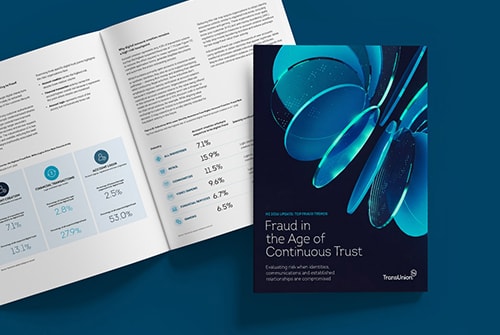
According to TransUnion’s H2 2026 Update: Fraud in the Age of Continuous Trust, six in ten (60%) South Africans were aware of being targeted by a digital fraud scheme in a recent three-month period, while 11% of them said they fell victim. The most frequently reported ways that victims lost money were money/gift card scams, phishing (email scams) and vishing (voice call scams).
In a related TransUnion Q3 Consumer Pulse Survey, nearly two-thirds (62%) reported identity theft as the cyber threat they are most concerned about, ahead of credit or payment card fraud (49%) and data breaches (39%).
The findings come as fraudsters adopt increasingly sophisticated tactics powered by AI, enabling them to create convincing scams at scale and target consumers through trusted channels such as WhatsApp, SMS, email, social media and voice communications.
TransUnion’s H2 Fraud Update also found that 94.3% of suspected digital fraud activity for African businesses in H1 2026 occurred during account login, with the same being true for 89.9% of clients in South Africa. Both are significantly higher than the 53.0% reported globally. The trend suggests the majority of the time cybercriminals are leveraging compromised credentials, stolen identities and account takeover techniques to impersonate legitimate users and gain access to trusted digital environments.
“Traditional measures of digital fraud no longer capture the full scope of today’s threat landscape,” said Amritha Reddy, Chief Product Officer at TransUnion Africa.
“Artificial intelligence has changed the economics of fraud by enabling criminals to automate activities that historically required significant human effort. From generating convincing content and synthetic identities to personalising attacks and interacting with victims, AI is improving the precision, scale and adaptability of fraud campaigns,” she added.
As fraud becomes more sophisticated, consumers are becoming increasingly aware of the potential consequences of compromised personal information.
Among South Africans surveyed:
- 70% are concerned that someone could use their identity to commit a crime.
- 44% worry their identity could be used to fraudulently claim government benefits.
- 39% fear criminals could use their personal information to submit a false tax return.
South African consumers are also increasingly alert to the methods used by criminals to obtain personal information. When asked which identity attack methods, they’re most concerned about becoming a victim of:
- 54% said data breaches.
- 50% answered fake social media profiles.
- 42% reported email phishing attacks.
These concerns reflect a growing awareness that fraud often begins long before a transaction takes place, with criminals first attempting to establish trust, harvest credentials or gather enough personal information to convincingly impersonate legitimate consumers.
Fraud Increasingly Begins with Trusted Communications
While organisations may well have invested heavily in strengthening authentication controls over the past decade, fraudsters have evolved their tactics in response.
Rather than relying solely on password theft, criminals are increasingly exploiting trusted communication channels like email, phone calls and text messages, account recovery processes and social engineering techniques to persuade consumers to share information, approve transactions or provide access to accounts.
“Trusted communications are often the first stage of account fraud,” said Reddy. “Criminals use familiar channels and convincing messages to create urgency, earn confidence or persuade a person to share information, approve an action or send funds. Businesses should therefore treat communications as part of the trust journey, rather than simply as marketing or service channels. They can improve defences by connecting communication events with identity, device and account behaviour so elevated risk can be recognised before access becomes loss.”
AI is Accelerating the Scale and Sophistication of Fraud
TransUnion identifies AI-enabled adaptive attacks as one of the defining global fraud trends of 2026 and 42% of business leaders it surveyed globally said the increasing scale and/or sophistication of fraud is putting significant to severe pressure on their organisations.
AI allows fraudsters to automate activities that historically required significant human effort (e.g., creating identities and content, targeting attacks and interacting with victims), improving the precision, scale and adaptiveness of attacks. It has enabled criminals to raise their attack success rates with unprecedented speed and scale to the point of industrialising the full fraud value chain.
It lowers the cost of executing sophisticated schemes and enables criminals to exploit legitimate business processes across industries, steal assets and launder proceeds into hard-to-trace assets.
“AI is not creating new fraud – it’s making existing fraud faster, cheaper, more convincing and dramatically more scalable,” added Reddy. “The future fraudster may not be a criminal syndicate with thousands of members. It may be a small, highly automated operation powered by generative AI.”
Financial Services Industry Sees Greatest Rate of Suspected Digital Fraud
The financial services industry recorded the highest suspected digital fraud rate for TransUnion South Africa clients at 3.0%, which reflects growing challenges associated with digital banking, lending, real-time payments and mobile financial services.
As digital ecosystems continue to expand, organisations are being encouraged to adopt smarter, risk-based approaches that balance security with customer experience.
“Identity verification remains essential when an account is opened, but login activity, device changes, account recovery requests and payment transactions often require additional context,” said Reddy.
“Linking identity to trusted devices, monitoring behavioural changes and applying real-time risk assessment through a layered approach can help organisations distinguish a genuine customer from a criminal using valid credentials. The objective is not to create more friction for legitimate customers, but to strengthen verification when risk signals indicate it is necessary.”
Most data cited in this press release is in TransUnion’s H2 2026 Update: Fraud in the Age of Continuous Trust. However, some other data cited is drawn from TransUnion commissioned business and consumer surveys, such as the Q3 2026 Consumer Pulse Survey of 1,000 respondents, as well as insights derived from TransUnion’s proprietary global intelligence network.
#ENDS.
Vpr
South Africa is ranked 62nd overall in the latest edition of the World Economic Forum’s Travel and Competitiveness Report 2013, which surveys 140 countries on their policies to develop the travel and tourism sector. (66th in 2011).